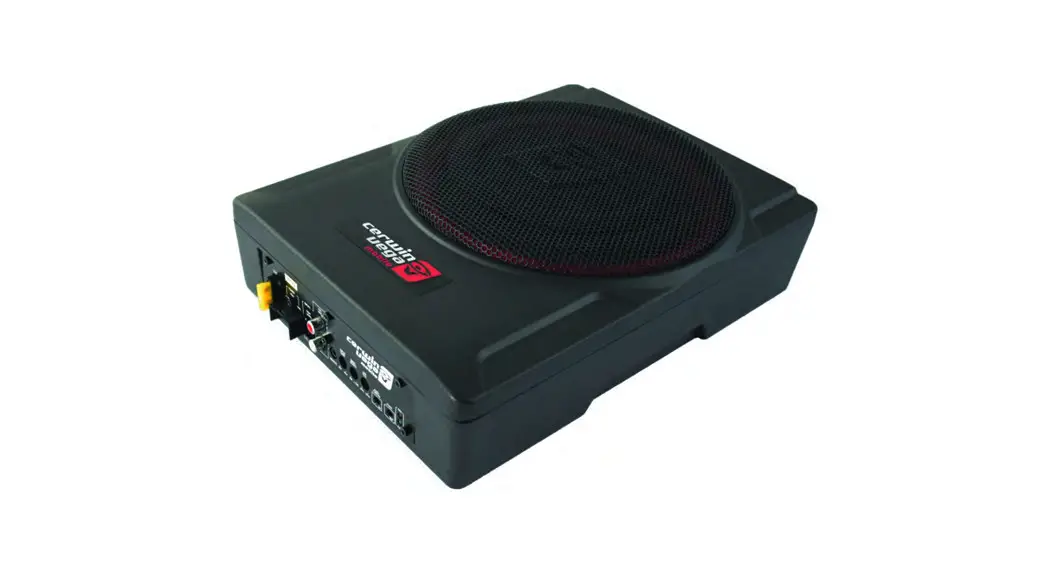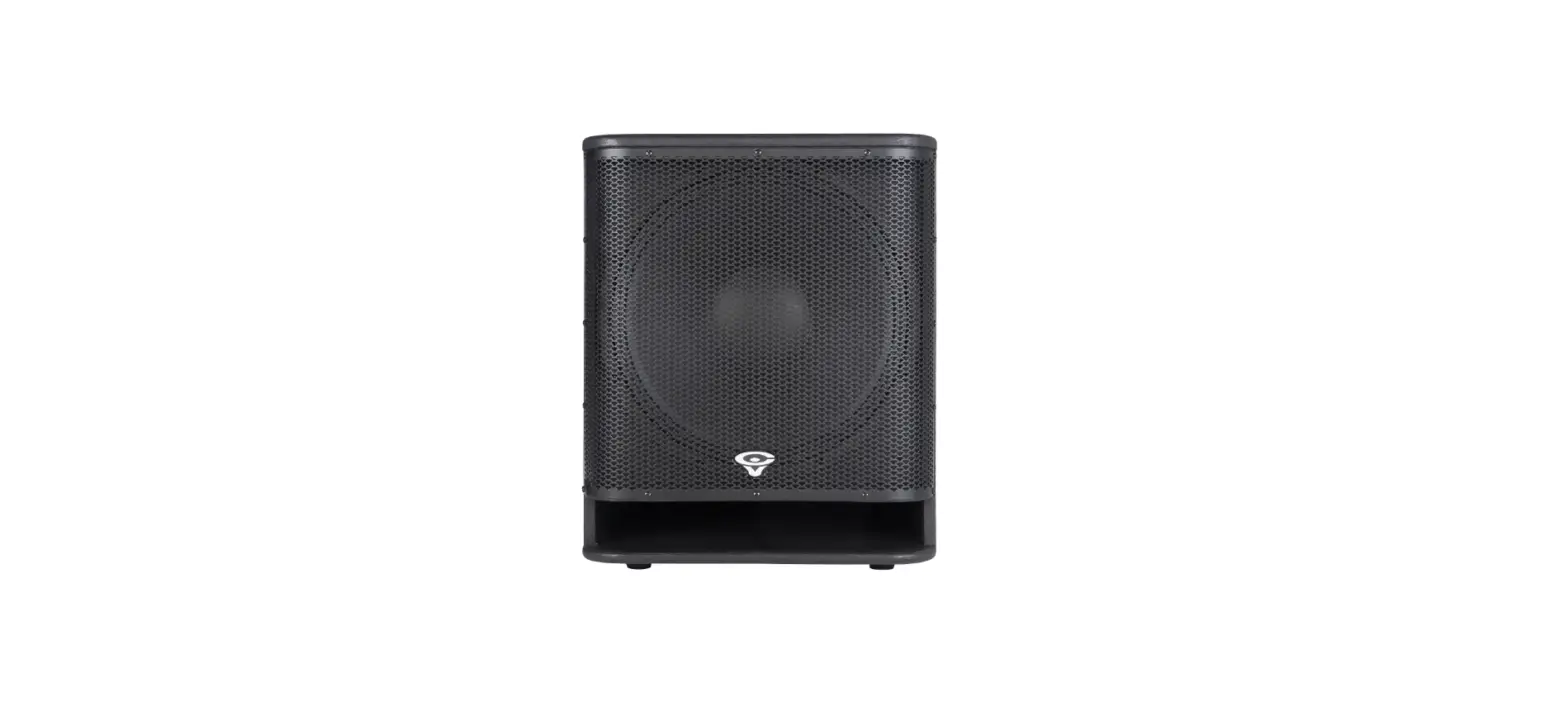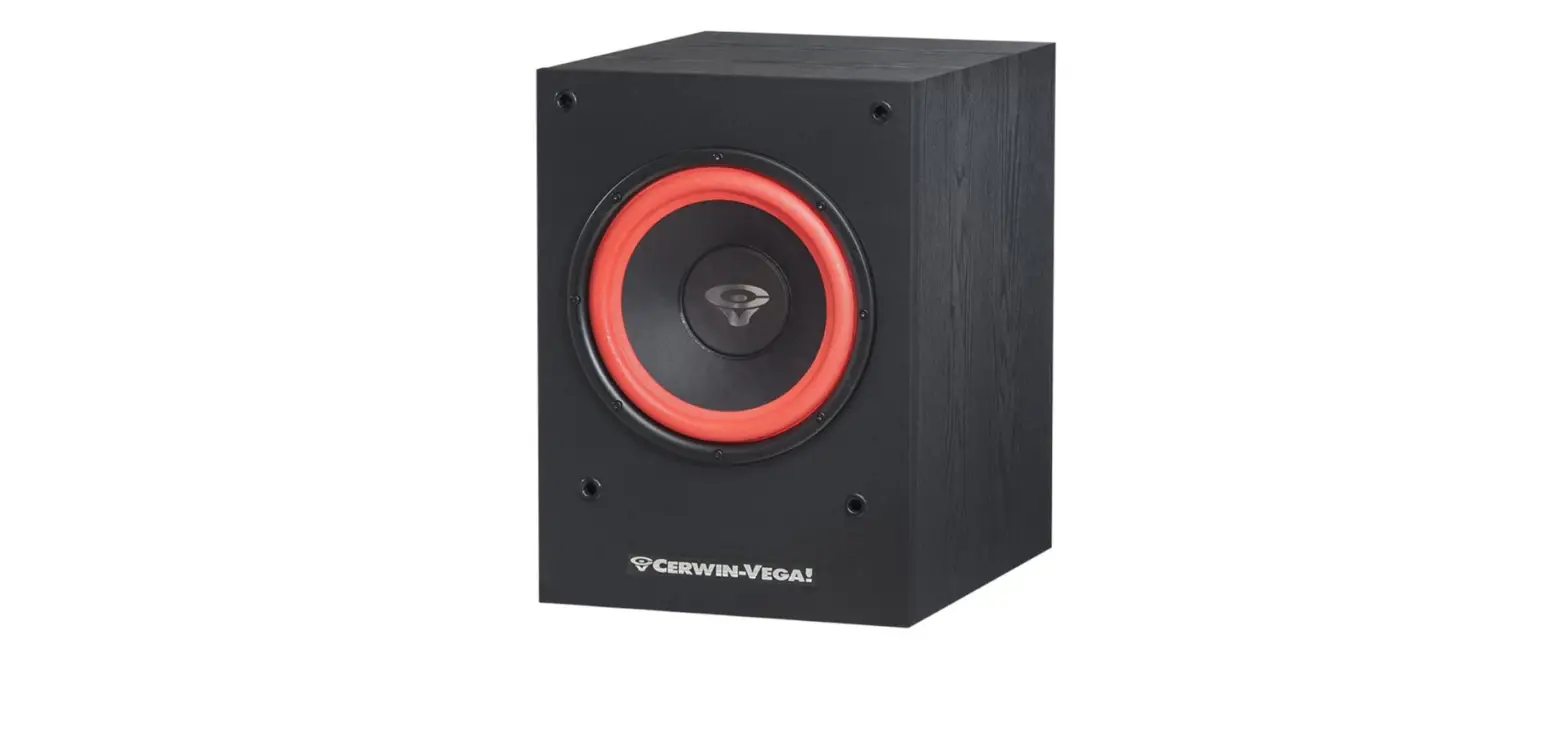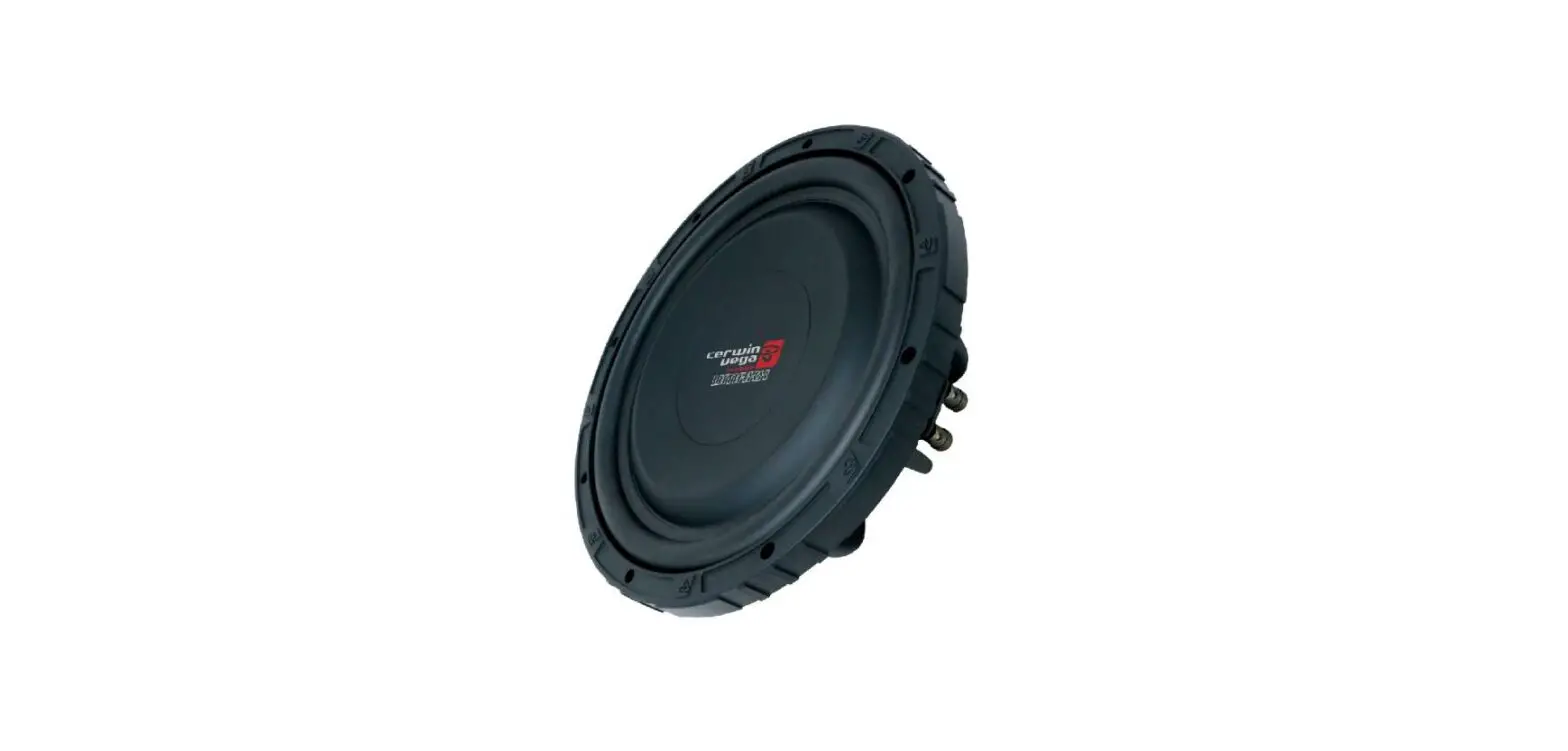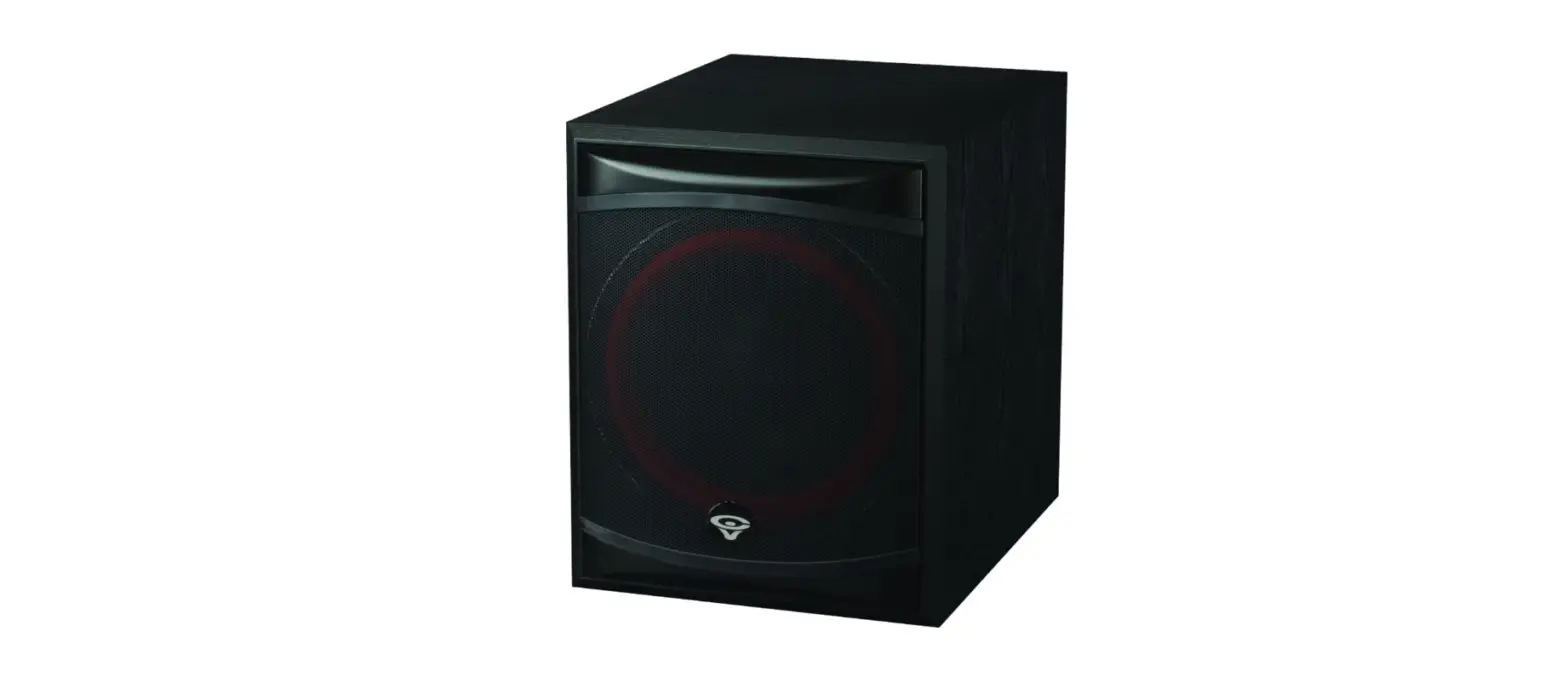

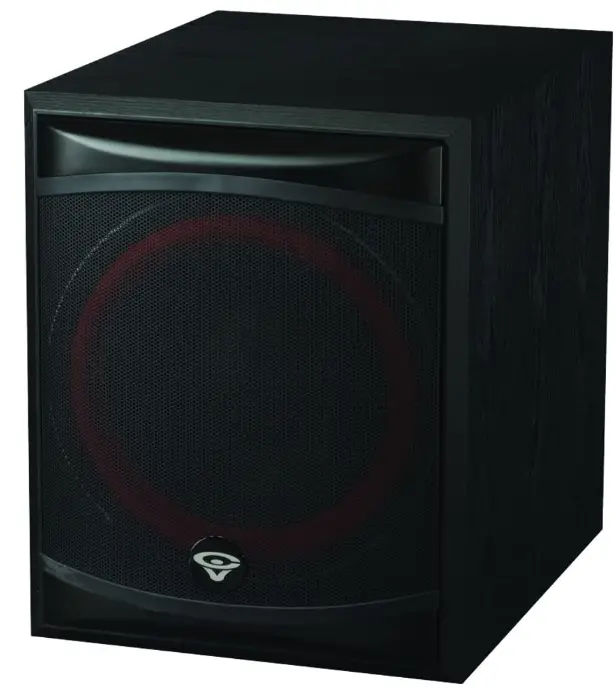
Cerwin-Vega XLS-12S Powered Subwoofer
Introduction
This manual covers operation information for the Cerwin-Vega’s XLS-12S & XLS-15S Subwoofers. Illustrations of control locations and hook-up wiring may differ in physical appearance and location than those shown on the actual product you own. However, the operation information is still the same.www.cerwin-vega.com
SUBWOOFER INSTALLATION
PRIOR INSTALLATION
Carefully unpack your subwoofer and save the box and all of the packing material. At some point, you may need to transport, ship, or move your subwoofer. Before continuing with the installation, please make sure the subwoofer is unplugged and the power switch is turned “OFF.”
Warning: Severe damage may result from improperly selected voltage. Refer to qualified service personnel to select voltage.
INSTALLATION
Please read the following to determine which installation procedure is best for your audio/video system. For additional hook-up connections, you may want to refer to your A/V receiver, processor, preamplifier, or amplifier’s manual.
Note: Read carefully the “Important Symbols and Safety Instructions” page before starting the installation.
Control descriptions
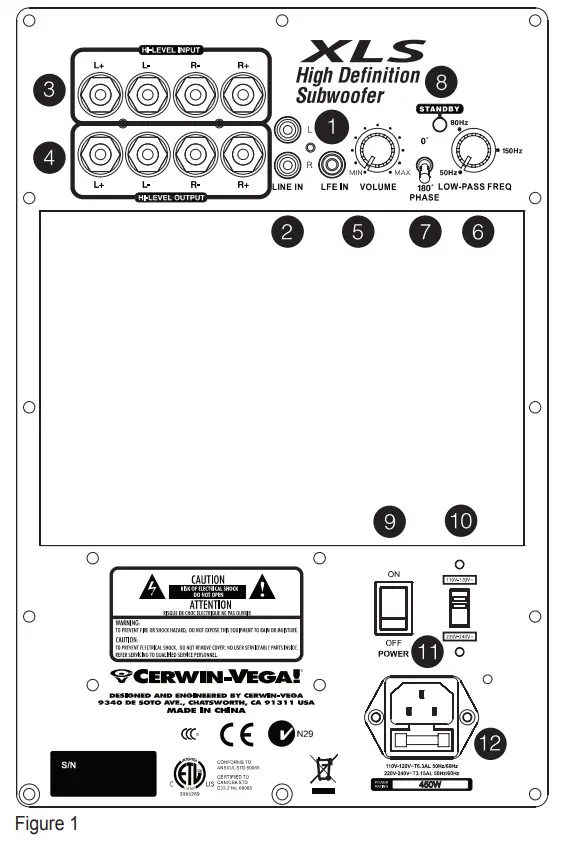
The following controls are located on the XLS subwoofer’s rear panel (Figure 1), page 2.
Attention! The Cerwin-Vega’s XLS Subwoofers have LFE, Line Level, and SPEAKER-LEVEL input connections. Please choose one option only for hook-up. Do not hook up more than one option!
- LFE INPUT: Mono “low frequency effects” connection. Use this input if receiver/preamp/processor has a dedicated LFE or subwoofer OUT. Refer to the owner’s manual provided by your receiver/preamp/processor manufacturer. Set receiver’s crossover to 150 Hz.
- LINE LEVEL INPUT : Stereo low-level input to subwoofer. Connect to “LINE-OUT”, “MAIN-OUT or PREAMP-OUT,” of your receiver/ preamp/processor using a dual RCA patchcord (not supplied). Refer to the owner’s manual provided by your receiver/preamp/processor manufacturer. Set receiver’s crossover to 150 Hz.
- SPEAKER LEVEL INPUT: Stereo high-level inputs to subwoofer. Use these terminals when line level connections are not available from A/V receiver/preamp/processor. Connect to SPEAKER outputs on receiver using high-quality speaker wire (16-gauge or heavier). Set the front left and right speaker settings to large or full range.
- SPEAKER LEVEL OUTPUT: Audio loop of stereo high-level (SPEAKER LEVEL) inputs. Use to loop (continue) signal to speaker connections to the left and right main speakers.
- VOLUME CONTROL: Controls volume level of subwoofer. Use to balance the output of the subwoofer with the main speaker output.
- CROSSOVER FREQUENCY: The crossover control allows you to adjust the upper limit of the subwoofer’s frequency response from 50 to 150 Hz. The subwoofer’s response will begin rolling off above the set frequency.
Note: Crossover control does not function when LFE input is used.
- PHASE: This switch allows you to compensate for having the subwoofer in a different location than the main speakers. This control allows the signal to be delayed 180 degrees so the output of the subwoofer will blend in with the main speakers. Slide the PHASE switch to “180.” At the listening position, listen to the mid bass output. If it sounds weak, set PHASE back to “0.”
- POWER LED: Power indicator lamp. Glows green in “ON” mode if audio signal is present. Glows red in both “OFF” mode and “ON” mode if receiving AC power, and if audio signal is not present after approximately 30 minutes.
- POWER: Two-position power switch. In the “ON” mode, the subwoofer’s amplifier is automatically activated if an audio signal is present and will automatically become inactive when there is no audio signal present after approximately 30 minutes. In the “OFF” mode, power is shut off to the amplifier.
- VOLTAGE SELECTION: XLS products have 120 V and 240 V capabilities and are shipped with voltage specific fuses: (110 V – 120 V – T6.3AL / 220 V – 240 V – T3.15ALAC).
Warning: Severe damage may result from improperly selected voltage. Refer to qualified service personnel to select voltage. - POWER CORD RECEPTA CLE: Connect the IEC cord to this receptacle (supplied with the subwoofer). If the IEC cord does not fit in your AC outlet, please purchase another AC cord from your audio dealer or electrical supply store.
- REPLACEABLE FUSE: Protects system from overload. Refer to qualified service personnel to change the fuse.
PLACEMENT
Your XLS Series Powered Subwoofer produces low frequencies which are omnidirectional. As a result, placement requirements for your subwoofer are flexible and subject to your listening room’s acoustic characteristics. To determine the best position for your subwoofer, start by positioning it along the same wall, or plane, as your main speakers. Experiment with various locations until you find the location that sounds best to you.
Note: Typically, your powered subwoofer will sound best when placed between the front main satellites.
Caution! Do not place heavy objects of any type, such as televisions on top of any Cerwin-Vega! speaker unless otherwise recommended by Cerwin-Vega! XLS Series speakers are for residential applications only.
* Refer to the owner’s manual provided by your main speaker manufacturer to determine your main speaker’s low-end frequency response.
CONNECTING YOUR SUBWOOFER
Live LEVEL CONNECTIONS
Connect the LFE Output of an A/V receiver to the LFE Input (1) of the XLS subwoofer, or connect the left and right line level outputs of an AV receiver to the left and right Line Level Inputs (2) of the XLS subwoofer. (Figure 2). See your A/V receiver’s bass management instructions for proper integration into your system.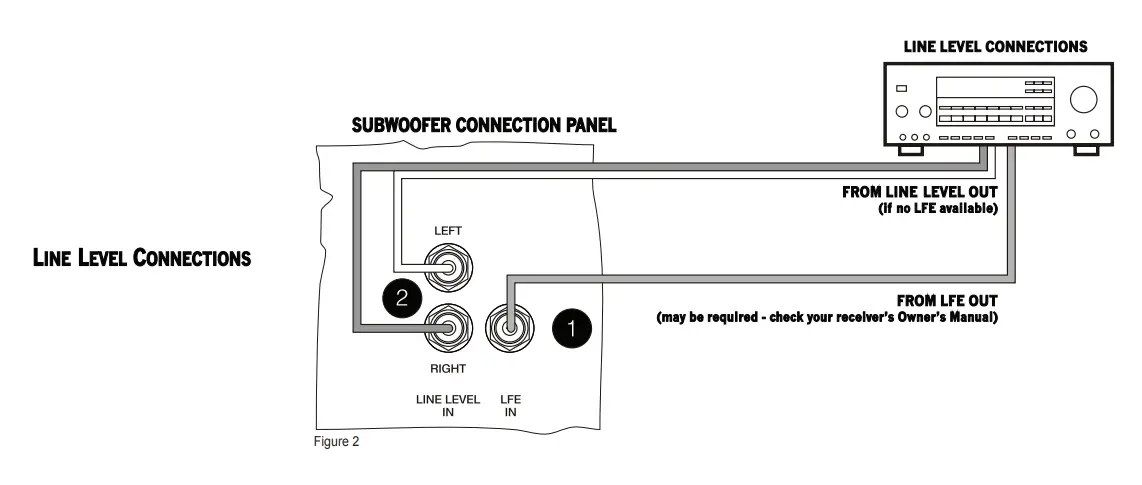
SPEAKER LEVEL CONNECTIONS
Connect the left and right speaker-level outputs of an A/V receiver to the Left and Right Speaker-Level Inputs (3) of the XLS subwoofer.
Then connect the Left and Right Speaker Level Outputs (4) of the XLS subwoofer to the left and right speakers on your system. Remember to maintain left to left, right to right, (+) to (+) and (-) to (-) connections. (Figure 3).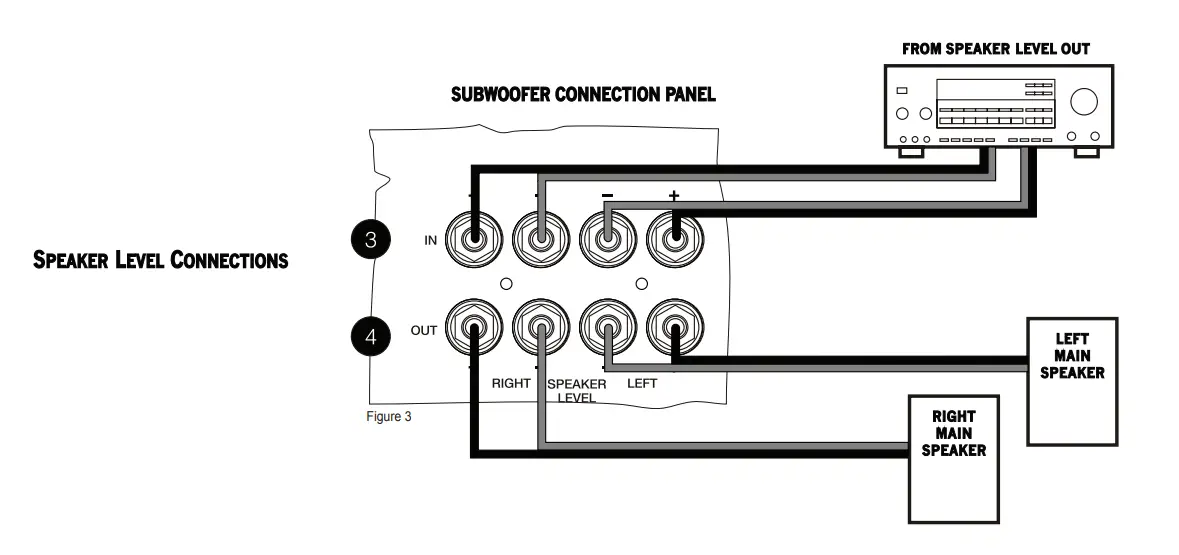
Troubleshooting
| Symptoms | Causes | Solutions |
| Bass sounds distorted | Amplifier is at maximum output Receiver tone controls are set too high | Lower volume or receiver level control Set bass flat; use tone controls sparingly |
| Distortion with volume control near minimum | Defective receiver or preamplifier, or shorted speaker wires | Repair defective receiver, preamplifier or replace speaker wires |
| Distortion on music peaks or sound effects | Dynamic soundtrack (e.g., explosions) | Turn down volume control to lower overall range |
| Buzz, hum, or crackle when connecting wires | Connecting wires with power on causes transient signal spikes | Connect wires only when system power is Off |
| Buzz or hum when system is On | Grounding problem or ground loop | Check receiver or preamplifier manual for help in eliminating a ground loop |
| No sound after listening at high-levels | Amplifier’s thermal protection has been temporarily activated | Lower subwoofer volume and allow amplifier to cool down; sound should resume automatically |
SPeCiFiCationS
| Subwoofer | CVHF-a21S | CVHF-a18S |
| description | 21 inch Active Subwoofer | 18 inch Active Subwoofer |
| Frequency response | 35 Hz – 120 Hz | 36 Hz – 120 Hz |
| Frequency range | (-10 dB) 1: 28 Hz – 150 Hz | (-10 dB) 1: 28 Hz – 150 Hz |
| Power (continuous / peak watts) | 1200 / 2400 | 700 / 1400 |
| Crossover | Variable LPF: 65 Hz to 130 Hz HPF: 25 Hz | Variable LPF: 65 Hz to 130 Hz HPF: 25 Hz |
| Controls | HPF: 65 Hz, 85 Hz, 130 Hz
Variable LPF: 65 Hz, 130 Hz Polarity Switch, 0 – 180 | HPF: 65 Hz, 85 Hz, 130 Hz
Polarity Switch, 0 – 180 |
| Parametric equalizer | Gain, Frequency, Q | N/A |
| lF driver | 21” Paper cone double roll cast frame woofer | 18” Paper cone double roll cast frame woofer |
| input Connectors | L&R XLR/RCA In and Through XLR/RCA Link Out | L&R XLR/RCA In and Through XLR/RCA Link Out |
| dimensions (H x w x d) | 31.7 inch x 24.1 inch x 23.3 inch 803 mm x 610 mm x 592 mm | 25.7 inch x 21.1 inch x 23.7 inch 653 mm x 534 mm x 602 mm |
| net weight | 194.5 lb / 88.3 kg | 125.5 lb / 57 kg |
Cerwin-Vega’s Limited Warranty
Welcome to the family!
First off, you have great taste in loudspeakers. At Cerwin-Vega!,
deep bass and great highs are a way of life. Nice to know there are a few people out there who share our passion for music. You’ll be glad to know that this company has been in business since 1953.
And we consider you to be the newest member of the family. We hope your speakers give you years of enjoyment. Of course, in the event of a problem, make sure you familiarize yourself with this warranty. We like to think that while you’re sitting in front of your speakers, we’re standing behind them. And now a few choice words from our lawyer. (Hey, every family has one).
Who’s covered by this warranty?
Cerwin-Vega’s Limited Warranty on residential speakers extends only to the original purchaser as evidenced by the original Bill of Sale and only to the residential speakers purchased from authorized Cerwin-Vega! dealers. Ten words of advice: retain the original bill of sale, in a safe place!
What’s covered by this warranty?
Cerwin-Vega! warrants that all new residential speakers shall be free from defects in material and workmanship, under normal and proper use. Cerwin-Vega! agrees to repair or replace (at our option) all such defective parts at no charge for labor or materials.
What’s not covered by this warranty?
This Limited Warranty does not apply to defective equipment that: has been altered or repaired by other than factory approved procedures; has been subjected to negligence, misuse or accident; has been damaged by improper line voltage; had its serial number or any part of it altered, defaced, or removed; has been used for other than home entertainment purposes; or has been used in a way that is contrary to Cerwin-Vega’s written instructions. Except as provided by statute, this Limited Warranty does not cover losses, consequential or otherwise, resulting from the improper use of, or inability to operate, any Cerwin-Vega! product.
How long does the warranty extend?
Cerwin-Vega’s Limited Warranty extends for a period of (5) years for all system speaker components , two (2) years for all associated electronics components, including amplifier and controller devices, and one (1) year for speaker stands and wall mount brackets, from the date of purchase as shown on the original Bill of Sale. The warranty period will be extended if the warranty repairs have not been performed due to delays caused by Cerwin-Vega! or a representative of Cerwin-Vega!, or if the warranty repairs did not remedy the defect and the original purchaser notifies Cerwin-Vega! or the original dealer or an Authorized Cerwin-Vega! Service Center of the failure of the repairs within 30 days after they were completed.
How do you get warranty service?
In order to obtain warranty service, contact your original dealer or distributor, or an Authorized Cerwin-Vega! Service Center. If, for some reason, you have trouble locating a service representative, contact Cerwin-Vega’s Customer Service Department for assistance:
Cerwin-Vega! Customer Service Dept 772 S. Military Trail
Deerfield Beach, FL 33442
+1 (954) 949-9601
[email protected]
In some cases, the Customer Service Department can solve a service problem without any return of equipment, thereby avoiding transit delays. For more information visit http://www.cerwin-vega.com/service_support.php
What if the product must be returned?
If the Customer Service Department determines that the equipment must be returned to Cerwin-Vega! for service, a Return Authorization will be issued by mail, and the defective merchandise may be shipped directly to the above address freight prepaid, along with a copy of both the Return Authorization and the original Bill of Sale.
The product will be replaced or repaired (at our option) and returned to the original purchaser. Only the return postage will be paid by Cerwin-Vega! Cerwin-Vega! will not be responsible for damage occurring in shipment from the original purchaser or due to improper packing materials. Remember to pack all equipment carefully and in the original carton if possible. Additional charges may be added if new packing materials are required for return shipment. Save your original packing materials!
What are other remedies under the law?
The exercise of any of the provisions under the Limited Warranty does not affect the protections or remedies of the original purchaser under other laws. If you have additional questions about service, write or call the Customer Service Department. This Limited Warranty applies to all residential speakers, and supersedes all previous warranty statements. Cerwin-Vega! reserves the right to make changes in product design and specifications at any time. EXCEPT AS PROVIDED HEREIN AND BY APPLICABLE LAW, CERWIN-VEGA! MAKES NO ADDITIONAL REPRESENTATION OR WARRANTY OF ANY NATURE WHATSOEVER, EXPRESSED OR IMPLIED, AS TO THE EQUIPMENT, INCLUDING BUT NOT LIMITED TO, THE MERCHANTABILITY, FITNESS FOR A PARTICULAR PURPOSE, DESIGN CONDITION OR WORKMANSHIP OF THE EQUIPMENT, OR THE QUALITY OF THE MATERIAL INCLUDED THEREIN, THIS LIMITED WARRANTY CONSTITUTES THE SOLE AND ENTIRE AGREEMENT BETWEEN CERWIN-VEGA! AND THE ORIGINAL PURCHASER.
All information included in this User Manual is subject to change without notice.
772 S. Military Trail • Deerfield Beach, FL 33442
Phone: +1 (954) 949-9601
Fax: +1 (954) 949-9590
E-mail: [email protected]
www.cerwin-vega.com
FAQS
What are the parts of a subwoofer?
The parts of a subwoofer are the woofer or driver, the cabinet, cone, surround, magnet, and voice coil. Other subwoofer parts are the top and bottom plate, spider, basket, and dust cap. These components function together to produce low-frequency sounds.
What can damage a subwoofer?
When a subwoofer has been damaged, or blown to some degree, one of two things has happened: it’s either received too much power or too much signal. Clipped signals are the culprit of many damaged subwoofers, as well as putting too much pressure on your subwoofer with too much power.
What is the best sound setting for a subwoofer?
If you have large floor-standing main speakers, set the subwoofer’s crossover between 40Hz and 60Hz. If you have smaller bookshelf speakers, set the crossover slightly higher at around 50Hz to 80Hz. For small satellite speakers, set the crossover between 80Hz and 160Hz.
What ohms are better for bass?
If you are looking for more bass, then you will want to go with a 4 ohm speaker. However, if you are looking for a more balanced sound, then a 2 ohm speaker is probably a better choice.
What size subwoofer is best for music?
As mentioned, an 8″ sub will do an excellent job with more acoustic music like jazz or classical. The smaller more agile cone will give you a quick and detailed response to the frequencies that this type of music contains.
What wattage is best for a subwoofer?
The most common cause of a subwoofer not working is the wiring or the connections of the subwoofer with the rest of the sound system. Leaks, breakage, twists, corrosion, loose connections and incorrect wiring are all quite common and can create problems with the subwoofer even if the amp has power.
Is Cerwin Vega subwoofers any good?
The Cerwin Vega VPAS10 can be a great subwoofer with excellent quality sound. It isn’t going to make your windows rattle in most cases, but it’s an excellent-quality low-profile subwoofer that can fit under your car’s seats.
What is the hardest hitting 18 subwoofer?
The hardest-hitting 18-inch subwoofer is the Harmony Audio HA-ML182. It has a peak power rating of 3,500 watts and an RMS 1,750 watts.
Can a subwoofer speaker be repaired?
Yes, you can fix a blown subwoofer especially when it is partially blown sub-damaged cone. However, a damaged voice coil will be difficult to replace. Depending on the extent of the problem, the best solution is to purchase a new subwoofer.
How do you pick a subwoofer size?
If your system consists of compact satellite or bookshelf speakers, an 8″ or 10″ sub will pair nicely with them. On the other hand, if you have big floor-standing speakers and a huge center channel, a 12″ sub is a better sonic match.
How many dB is a good subwoofer?
Most people find that 70 or 75 dB on your SPL meter at your listening seat is a comfortable playback level.
Does higher watts mean more bass?
Bass, as with most things, demands a comparison of quality vs quantity. More bass does not necessarily mean better bass. The power is determined by the wattage of the subwoofer in question, where a higher wattage demonstrates a more powerful subwoofer.
What happens if you overpower a subwoofer?
It’s great to turn it up, but that extra volume starts to distort the music. Not only does it sound bad, but it can damage your speakers and subs, especially if you do this all the time.
Do subwoofers have internal fuses?
Subs do have fuses.
What causes sub to cut out?
Check the cables or speaker wires for proper connection between the subwoofer and the main unit. If using an active subwoofer, ensure it is connected to a working AC outlet. To reduce the possibility of an electrical short, do not connect the subwoofer to an extension cord or power strip.