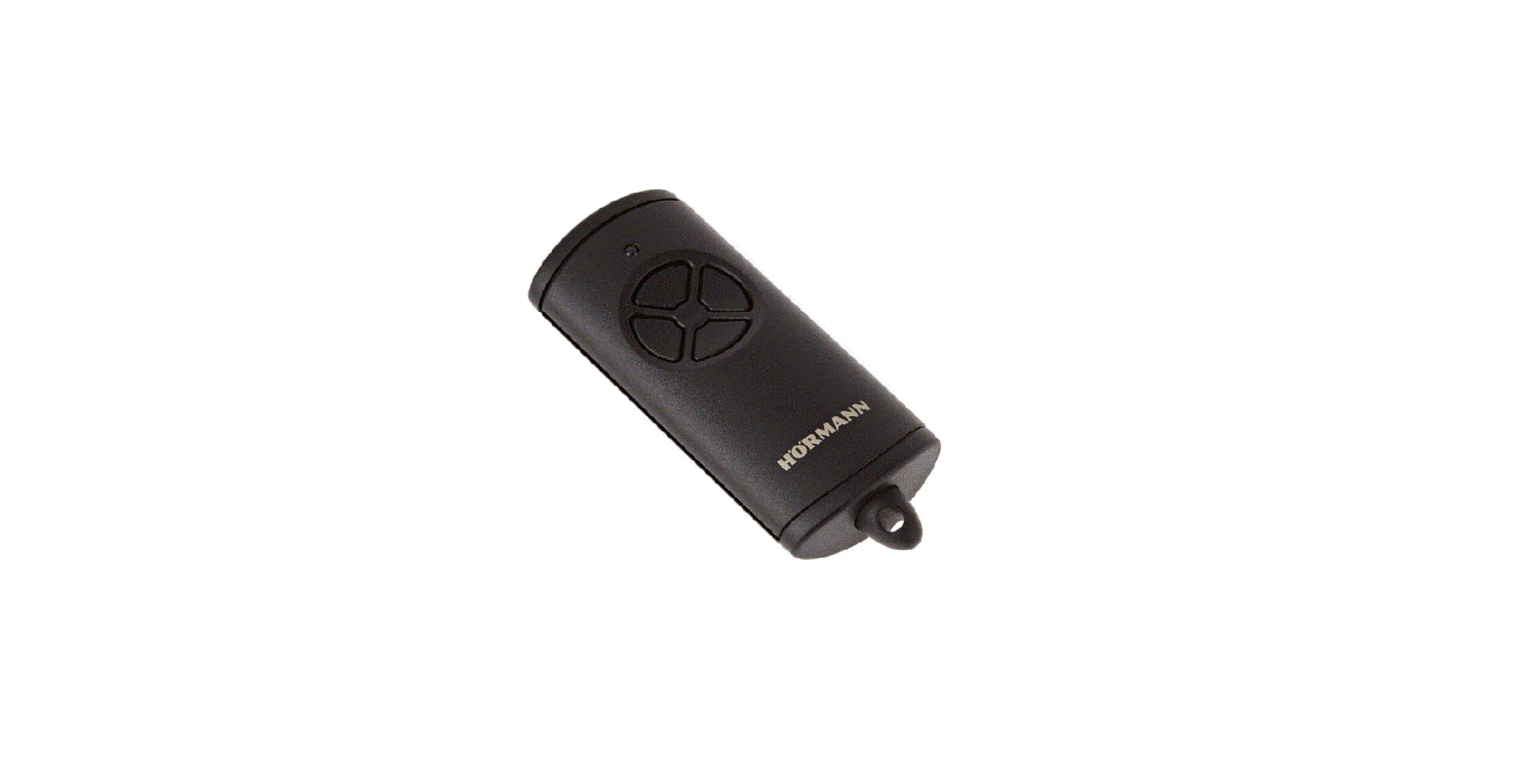
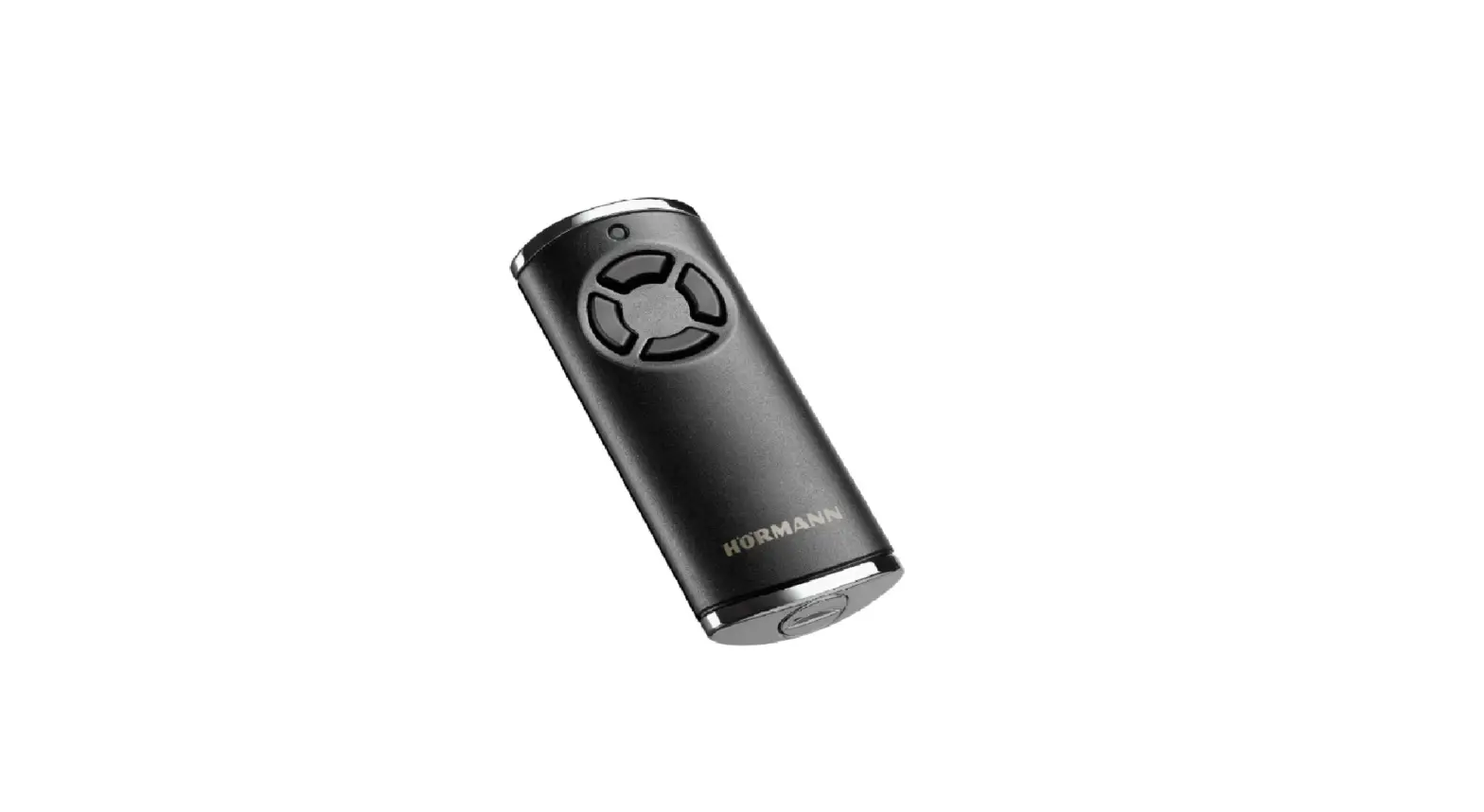
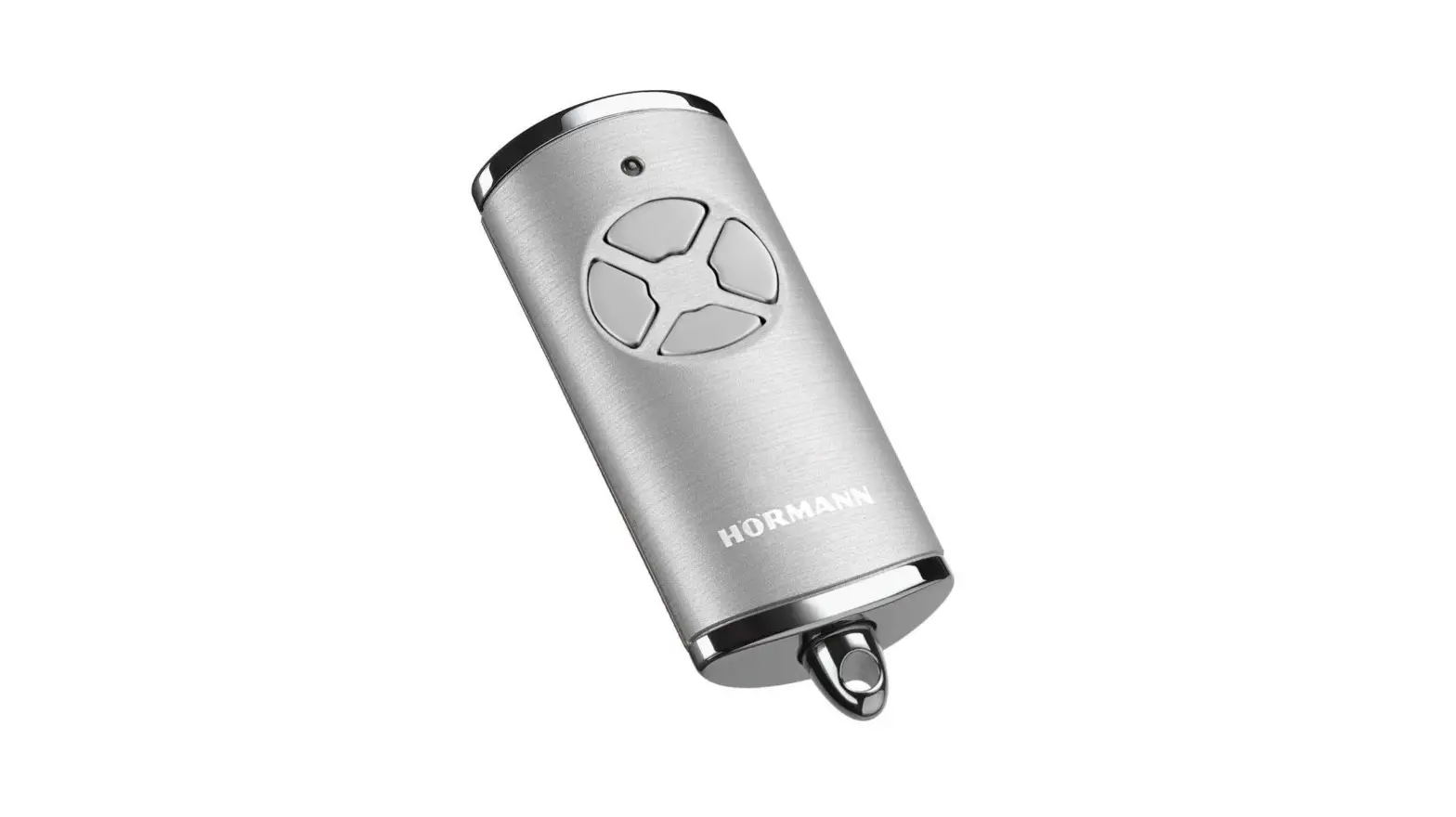
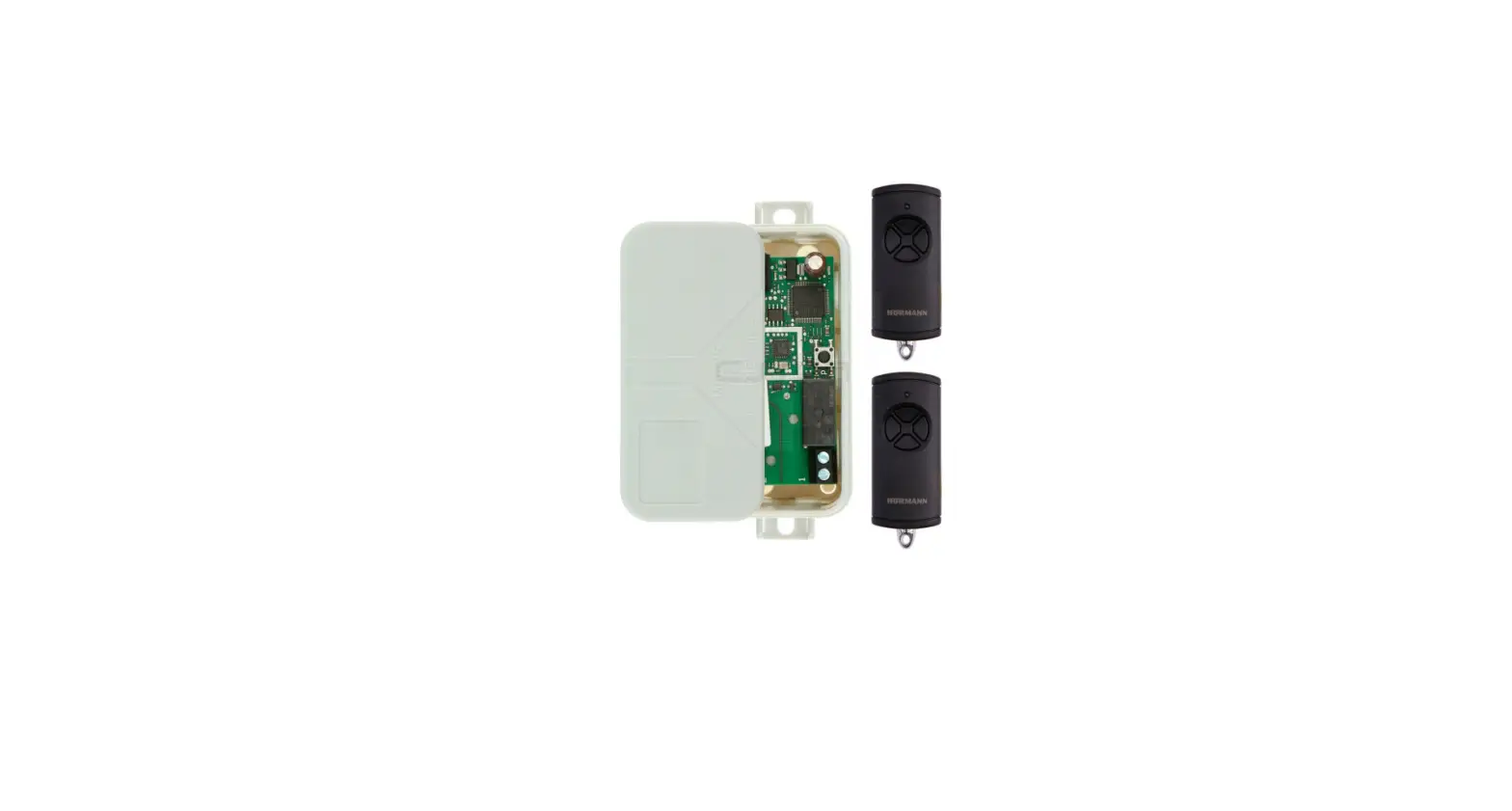
4553847 Hand Transmitter HSD 2 BiSecur
Product Information: Handsender HSD 2 BiSecur
The Handsender HSD 2 BiSecur is a remote control device used to
operate doors, gates, and other electrical equipment that are
compatible with its frequency. It has a bicolor LED, two buttons, a
battery compartment, and a battery isolation film. The device
operates on a specific type of battery and has a learning function
that allows it to inherit codes from other remote controls.
Safety Instructions
It is important to read and understand the safety instructions
before using the device. The manual contains safety instructions
for both learning and operation of the device.
Package Contents
The package contains the Handsender HSD 2 BiSecur remote control
device, a battery, and the user manual.
Product Description
The device has a bicolor LED, two buttons for operating
equipment, and a battery compartment located on the back. It also
has a battery isolation film that should be removed before use.
Getting Started
After removing the battery isolation film, the device is ready
for use. To change the battery, follow the instructions in the
manual.
Usage Instructions
To learn and inherit codes from other remote controls:
- Hold down button A on the Handsender HSD 2 BiSecur remote
control device. - Press button B on the other remote control device that you want
to inherit the code from. - Release both buttons at the same time. The code has been
inherited and can now be used to operate equipment.
If the code inheritance is not successful within 15 seconds,
repeat the process.
To operate equipment:
- Ensure that the device is within range of the equipment.
- Press the appropriate button on the remote control device to
operate the equipment.
Technical Specifications
The Handsender HSD 2 BiSecur operates on a specific frequency
and requires a specific type of battery. Refer to the manual for
more detailed technical specifications.
DE
Bedienungsanleitung Handsender HSD 2 BiSecur
EN
Operating instructions Hand transmitter HSD 2 BiSecur
FR
Instructions d’utilisation Emetteur HSD 2 BiSecur
NL
Bedieningshandleiding Handzender HSD 2 BiSecur
IT
Istruzioni d’uso Telecomando HSD 2 BiSecur
ES
Instrucciones de servicio Emisor manual HSD 2 BiSecur
4553847 B0 / 04-2023 / DX
PT
Instruções de funcionamento Emissores portátil HSD 2 BiSecur
DEUTSCH . . . . . . . . . . 3 ENGLISH . . . . . . . . . . 14 FRANÇAIS . . . . . . . . . 23 NEDERLANDS . . . . . . 33 ITALIANO . . . . . . . . . . 42 ESPAÑOL . . . . . . . . . . 52 PORTUGUÊS . . . . . . . 62
2
4553847 B0 / 04-2023 / DX
Inhaltsverzeichnis
DEUTSCH
1
Sicherheitshinweise . . . . . . . . . . . . . . . . . . . . . . . . . . . . . . . . . . . . . . . . . . . . . . . . . . . . . . .4
1.1 Bestimmungsgemäße Verwendung ……………………………4
1.2 Sicherheitshinweise zum Einlernen und Betrieb …………..4
2
Lieferumfang . . . . . . . . . . . . . . . . . . . . . . . . . . . . . . . . . . . . . . . . . . . . . . . . . . . . . . . . . . . . . . . . . . .5
3
Produktbeschreibung (siehe Bild 1 ) . . . . . . . . . . . . . . . . . . . . . . . . .5
4
Inbetriebnahme . . . . . . . . . . . . . . . . . . . . . . . . . . . . . . . . . . . . . . . . . . . . . . . . . . . . . . . . . . . . . .5
4.1 Batterie wechseln (siehe Bild 2 ) ………………………………6
5
Betrieb . . . . . . . . . . . . . . . . . . . . . . . . . . . . . . . . . . . . . . . . . . . . . . . . . . . . . . . . . . . . . . . . . . . . . . . . . . . . .6
6
Lernen und Vererben / Senden eines Funkcodes . . . . . . . .7
6.1 Lernen eines Funkcodes (siehe Bild 3 ) …………………….7
6.2 Mischbetrieb / BiSecur und Festcode 868 MHz……………8
7
Geräte-Reset . . . . . . . . . . . . . . . . . . . . . . . . . . . . . . . . . . . . . . . . . . . . . . . . . . . . . . . . . . . . . . . . . .8
7.1 Festcode 868 MHz einstellen…………………………………….9
8
Befestigung am Schlüssel (siehe Bild 4 ) . . . . . . . . . . . . . . . . . .9
9
LED-Anzeige . . . . . . . . . . . . . . . . . . . . . . . . . . . . . . . . . . . . . . . . . . . . . . . . . . . . . . . . . . . . . . . . . . .9
10 Reinigung . . . . . . . . . . . . . . . . . . . . . . . . . . . . . . . . . . . . . . . . . . . . . . . . . . . . . . . . . . . . . . . . . . . . . .10
11 Entsorgung . . . . . . . . . . . . . . . . . . . . . . . . . . . . . . . . . . . . . . . . . . . . . . . . . . . . . . . . . . . . . . . . . . .10 11.1 Entsorgung von Elektroaltgeräten in Deutschland ………11
12 Technische Daten . . . . . . . . . . . . . . . . . . . . . . . . . . . . . . . . . . . . . . . . . . . . . . . . . . . . . . . . .12
13 EU-Konformitätserklärung . . . . . . . . . . . . . . . . . . . . . . . . . . . . . . . . . . . . . . . . . .13
Diese Anleitung gliedert sich in einen Text- und Bildteil. Sie enthält wichtige Informationen zum Produkt, insbesondere Sicherheits- und Warnhinweise.
Lesen Sie die Anleitung sorgfältig. Bewahren Sie die Anleitung sicher auf.
Weitergabe sowie Vervielfältigung dieses Dokuments, Verwertung und Mitteilung seines Inhalts sind verboten, soweit nicht ausdrücklich gestattet. Zuwiderhandlungen verpflichten zu Schadenersatz. Alle Rechte für den Fall der Patent-, Gebrauchsmuster- oder Geschmacksmustereintragung vorbehalten. Änderungen vorbehalten.
4553847 B0 / 04-2023 / DX
3
DEUTSCH
1 Sicherheitshinweise
1 .1 Bestimmungsgemäße Verwendung
Der Handsender HSD 2 BiSecur ist ein unidirektionaler Sender für Antriebe und deren Zubehör. Er kann mit dem BiSecur-Funk sowie mit dem Festcode 868 MHz betrieben werden.
Andere Anwendungsarten sind unzulässig. Der Hersteller haftet nicht für Schäden, die durch bestimmungswidrigen Gebrauch oder falsche Bedienung verursacht werden.
1 .2 Sicherheitshinweise zum Einlernen und Betrieb
WARNUNG
Verletzungsgefahr bei beabsichtigter oder unbeabsichtigter Tor- / Türbewegung
Stellen Sie sicher, dass Handsender nicht in Kinderhände gelangen und nur von Personen benutzt werden, die in die Funktionsweise der ferngesteuerten Toranlage eingewiesen sind!
Bedienen Sie den Handsender generell mit Sichtkontakt zum Tor / zur Tür, wenn dieses nur über eine Sicherheitseinrichtung verfügt!
Durchfahren bzw. durchgehen Sie die Tor- / Türöffnungen erst, wenn das Tor / die Tür in der Endlage Auf steht!
Bleiben Sie niemals im Bewegungsbereich des Tors / der Tür stehen.
Beachten Sie, dass es durch versehentliche Tastenbetätigung am Handsender zu einer Tor- / Türfahrt kommen kann.
Achten sie darauf, dass sich beim Einlernen des Funk-Systems keine Personen oder Gegenstände im Bewegungsbereich von Tor / Tür befinden.
4
4553847 B0 / 04-2023 / DX
DEUTSCH
HINWEIS
· Wenn kein separater Zugang vorhanden ist, Änderungen oder Erweiterung von Funksystemen innerhalb des Gebäudes durchführen.
· Nach dem Programmieren oder Erweitern des Funk-Systems muss eine Funktionsprüfung durchgeführt werden.
· Örtliche Gegebenheiten können Einfluss auf die Reichweite des Funk-Systems haben.
2 Lieferumfang
· Handsender HSD 2 BiSecur · 1 × 3 V Batterie, Typ: CR2025, Lithium · Schlüssel · Bedienungsanleitung
3 Produktbeschreibung (siehe Bild 1 )
1 LED, bicolor
2 Handsendertasten
3 Batteriefachdeckel 4 Batterie
5 Schlüsseldraht
6 Schraubhülsen
7 Schlüssel zum
8 Batterie-Isolatorfolie
· Öffnen / Schließen
des Batteriefach-
deckels und
· Anziehen / Lösen
der Schraub-
hülsen
4 Inbetriebnahme
Nach dem Entfernen der Batterie-Isolatorfolie ist der Handsender betriebsbereit (siehe Bild 1 , 8 ).
4553847 B0 / 04-2023 / DX
5
DEUTSCH
4 .1 Batterie wechseln (siehe Bild 2 )
WARNUNG Explosionsgefahr durch falschen Batterietyp Verwenden Sie nur diesen Batterietyp:
1 × 3 V Batterie, Typ: CR2025, Lithium Entfernen Sie die Batterie, wenn der Hand-
sender längere Zeit nicht benutzt wird.
WARNUNG Lebensgefahr durch Verschlucken Wenn die Batterie verschluckt wird, können schwere innere Verbrennungen innerhalb von 2 Stunden auftreten und zum Tode führen. Batterien gehören nicht in Kinderhände!
Fachgerechte Entsorgung: siehe Kapitel 11
5 Betrieb
Jeder Handsendertaste ist ein Funkcode zugeordnet. Drücken Sie die Handsendertaste, deren Funk-
code gesendet werden soll. Die LED leuchtet 2 Sekunden blau. Der Funkcode wird gesendet.
Lernverhalten vererbter Funkcodes Wenn der Funkcode einer Handsendertaste zuvor von einem Handsender vererbt und zum ersten Mal verwendet wird, dann entsprechend dem Produkt so vorgehen:
6
4553847 B0 / 04-2023 / DX
DEUTSCH
Garagentor-Antrieb Serie 4, Garagen-RolltorAntrieb Serie 2, Empfänger ESE BS HCP Drücken und halten Sie die Handsendertaste so
lange, bis die LED abwechselnd rot und blau blinkt und die gewünschte Funktion ausgeführt wird.
Alle weiteren Produkte Drücken Sie die Handsendertaste ein zweites
Mal.
6 Lernen und Vererben / Senden eines Funkcodes
WARNUNG
Verletzungsgefahr bei beabsichtigter oder unbeabsichtigter Tor- / Türbewegung Siehe Warnhinweis Kapitel 1.2
6 .1 Lernen eines Funkcodes (siehe Bild 3 ) 1 . Halten Sie den Handsender A, der den Funkcode
lernen soll, links neben den Handsender B. 2 . Drücken Sie die Handsendertaste vom Hand-
sender B, dessen Funkcode vererbt werden soll und halten Sie diese gedrückt. Die LED leuchtet 2 Sekunden blau und erlischt. Nach 5 Sekunden blinkt die LED abwechselnd
rot und blau. Der Handsender sendet den Funkcode. 3 . Drücken Sie die Handsendertaste vom Handsender A, die den Funkcode lernen soll und halten Sie diese gedrückt. Die LED leuchtet 2 Sekunden blau und erlischt. Die LED blinkt langsam blau.
4553847 B0 / 04-2023 / DX
7
DEUTSCH
Wenn der Funkcode erkannt ist, blinkt die LED schnell blau.
Nach 2 Sekunden erlischt die LED.
4 . Lassen Sie beide Handsendertasten los. Der Funkcode der Handsendertaste ist gelernt .
HINWEIS Zum Vererben / Senden des Funkcodes sind 15 Sekunden Zeit. Wenn innerhalb dieser Zeit das Vererben / Senden nicht erfolgreich ist, den Vorgang wiederholen.
6 .2 Mischbetrieb / BiSecur und Festcode 868 MHz
Bei eingestelltem BiSecur-Funk ist ein Mischbetrieb (BiSecur und Festcode 868 MHz) möglich. Der Handsender kann Funkcodes von älteren Handsendern (graue Handsender mit blauen Tasten oder Gerätekennzeichnung HSD2-868) mit Festcode 868 MHz lernen.
7 Geräte-Reset
Jeder Handsendertaste wird durch folgende Schritte ein neuer Funkcode zugeordnet.
1 . Öffnen Sie den Batteriefachdeckel. 2 . Entnehmen Sie die Batterie für 10 Sekunden. 3 . Drücken Sie eine Handsendertaste und halten Sie
diese gedrückt. 4 . Legen Sie die Batterie ein.
Die LED blinkt 4 Sekunden langsam blau. Die LED blinkt 2 Sekunden schnell blau. Die LED leuchtet lange blau. 5 . Lassen Sie die Handsendertaste los. Alle Funkcodes sind neu zugeordnet . 6 . Schließen Sie den Batteriefachdeckel.
8
4553847 B0 / 04-2023 / DX
DEUTSCH
HINWEIS Wird die Handsendertaste vorzeitig losgelassen, werden keine neuen Funkcodes zugeordnet.
7 .1 Festcode 868 MHz einstellen
1 . Führen Sie die Schritte 1 4 des Geräte-Resets durch.
2 . Halten Sie die Handsendertaste weiterhin gedrückt. Die LED blinkt 4 Sekunden langsam rot. Die LED blinkt 2 Sekunden schnell rot. Die LED leuchtet lange rot.
3 . Lassen Sie die Handsendertaste los. Der Festcode 868 MHz ist eingestellt .
4 . Schließen Sie das Gehäuse.
HINWEIS Wird die Handsendertaste vorzeitig losgelassen, bleibt der BiSecur-Funk eingestellt.
Weitere Informationen unter www .hoermann .com
8 Befestigung am Schlüssel (siehe Bild 4 )
9 LED-Anzeige
Blau (BU)
Zustand
Funktion
leuchtet 2 Sek.
ein Funkcode wird gesendet
blinkt langsam
Handsender befindet sich im Modus Lernen
blinkt schnell nach beim Lernen wurde ein güllangsamem Blinken tiger Funkcode erkannt
blinkt 4 Sek. langsam, Geräte-Reset wird durchgeblinkt 2 Sek. schnell, führt und abgeschlossen leuchtet lang
4553847 B0 / 04-2023 / DX
9
DEUTSCH
Rot (RD)
Zustand
Funktion
blinkt 2 ×, anschließend Batterie sollte in Kürze wird der Funk-Code ersetzt werden noch gesendet
blinkt 2 ×, anschließend Batterie muss umgehend wird der Funk-Code ersetzt werden nicht mehr gesendet
Blau (BU) und Rot (RD)
Zustand
Funktion
abwechselndes Blinken Handsender befindet sich im Modus Vererben / Senden
10 Reinigung
ACHTUNG
Beschädigung des Handsenders durch falsche Reinigung Reinigen Sie den Handsender nur mit einem
sauberem weichem Tuch.
HINWEIS Regelmäßiger Gebrauch von Desinfektionsmitteln kann Schäden am Handsender verursachen.
11 Entsorgung
Verpackung sortenrein entsorgen.
Elektro- und Elektronik-Geräte müssen in den dafür eingerichteten Annahme- und Sammelstellen abgegeben werden.
10
4553847 B0 / 04-2023 / DX
DEUTSCH
Batterien getrennt entsorgen. Jeder Verbraucher ist gesetzlich verpflichtet, Batterien bei einer Sammelstelle seiner Gemeinde, seines Stadtteils oder im Handel abzugeben.
11 .1 Entsorgung von Elektroaltgeräten in Deutschland
Wichtige Informationen nach dem Elektro- und Elektronikgerätegesetz (ElektroG)
Wir weisen Besitzer von Elektro- und Elektronikaltgeräten darauf hin, dass Elektroaltgeräte gemäß den geltenden gesetzlichen Vorschriften einer vom Siedlungsabfall getrennten Entsorgung zuzuführen sind.
Entsorgung
In den Elektroaltgeräten enthaltene Batterien und Akkumulatoren, die nicht fest vom Elektroaltgerät umschlossen sind, sowie Lampen, die zerstörungsfrei aus dem Elektroaltgerät entnommen werden können, sind vor deren Abgabe an einer Entsorgungsstelle zerstörungsfrei von diesem zu trennen und einer vorgesehenen Entsorgung zuzuführen. Soweit unsere Geräte Batterien oder Akkumulatoren enthalten, entnehmen Sie weitere Informationen zum Typ und chemischen System der Batterie sowie zu deren Entnahme, der Bedienungsanleitung des jeweiligen Geräts.
Das folgend dargestellte und auf Elektro- und Elektronikaltgeräten aufgebrachte Symbol einer durchgestrichenen Abfalltonne weist zusätzlich auf die Pflicht zur getrennten Entsorgung hin.
4553847 B0 / 04-2023 / DX
11
DEUTSCH
Rückgabe im Einzelhandel oder beim Entsorgungsträger
Elektrofachmärkte und Lebensmittelläden sind nach § 17 ElektroG unter bestimmten Voraussetzungen zur Rücknahme von Elektro- und Elektronikaltgeräten verpflichtet. Stationäre Vertreiber müssen bei Verkauf eines neuen Elektro- und Elektronikgeräts ein Elektroaltgerät der gleichen Art kostenfrei zurücknehmen (1:1-Rücknahme). Dies gilt auch bei Lieferungen nach Hause. Diese Vertreiber müssen außerdem bis zu 3 kleine Elektroaltgeräte ( 25 cm) zurücknehmen, ohne dass dies an einen Neukauf geknüpft werden darf (0:1-Rücknahme).
Daneben ist die Rückgabe von Elektroaltgeräten auch bei einer offiziellen Abgabestelle der öffentlich-rechtlichen Entsorgungsträger möglich.
Löschung personenbezogener Daten
Für die Löschung personenbezogener Daten auf den zu entsorgenden Elektroaltgeräten sind Sie als Endnutzer vor der Abgabe selbst verantwortlich.
12 Technische Daten
Handsender HSD 2 BiSecur
Modell
HSD2-868-BS
Frequenz
868 MHz
Sendeleistung
max. 10 mW (EIRP)
Spannungsversorgung 1 × 3 V Batterie,
Typ: CR2025, Lithium
zul. Umgebungstempe- 0 °C bis +50 °C
ratur
max. Luftfeuchtigkeit 93 % nicht kondensierend
Schutzart
IP 20
Abmessungen
32 × 66 × 13 mm
(B × H × T)
12
4553847 B0 / 04-2023 / DX
DEUTSCH
13 EU-Konformitätserklärung
Hiermit erklärt die Hörmann KG Verkaufsgesellschaft, dass der Funkanlagentyp Handsender HSD 2 BiSecur der Richtlinie 2014/53/EU entspricht. Der vollständige Text der EU-Konformitätserklärung kann der folgenden Internetadresse entnommen werden:
www.hoermann-docs.com/277106
4553847 B0 / 04-2023 / DX
13
ENGLISH
Contents
1
Safety instructions . . . . . . . . . . . . . . . . . . . . . . . . . . . . . . . . . . . . . . . . . . . . . . . . . . . . . . .15
1.1 Intended use …………………………………………………………15
1.2 Safety instructions for teach-in and operation……………15
2
Scope of delivery . . . . . . . . . . . . . . . . . . . . . . . . . . . . . . . . . . . . . . . . . . . . . . . . . . . . . . . . . .16
3
Product description (see Figure 1 ) . . . . . . . . . . . . . . . . . . . . . . . . .16
4
Initial start-up . . . . . . . . . . . . . . . . . . . . . . . . . . . . . . . . . . . . . . . . . . . . . . . . . . . . . . . . . . . . . . .16
4.1 Changing the battery (see Figure 2 ) ………………………..17
5
Operation . . . . . . . . . . . . . . . . . . . . . . . . . . . . . . . . . . . . . . . . . . . . . . . . . . . . . . . . . . . . . . . . . . . . . .17
6
Learning and inheriting / transmitting a radio code . .18
6.1 Teaching in a radio code (see Figure 3 ) ………………….18
6.2 Mixed operation / BiSecur and fixed code 868 MHz……19
7
Reset . . . . . . . . . . . . . . . . . . . . . . . . . . . . . . . . . . . . . . . . . . . . . . . . . . . . . . . . . . . . . . . . . . . . . . . . . . . . .19
7.1 Setting the fixed code 868 MHz……………………………….20
8
Fixing to a keychain (see Figure 4 ) . . . . . . . . . . . . . . . . . . . . . . . . .20
9
LED display . . . . . . . . . . . . . . . . . . . . . . . . . . . . . . . . . . . . . . . . . . . . . . . . . . . . . . . . . . . . . . . . . . .20
10 Cleaning . . . . . . . . . . . . . . . . . . . . . . . . . . . . . . . . . . . . . . . . . . . . . . . . . . . . . . . . . . . . . . . . . . . . . . . .21
11 Disposal . . . . . . . . . . . . . . . . . . . . . . . . . . . . . . . . . . . . . . . . . . . . . . . . . . . . . . . . . . . . . . . . . . . . . . . .21
12 Technical data . . . . . . . . . . . . . . . . . . . . . . . . . . . . . . . . . . . . . . . . . . . . . . . . . . . . . . . . . . . . . .22
13 EU and UK Declaration of Conformity . . . . . . . . . . . . . . . . . . . . . . .22
These instructions are divided into a text section and an illustrated section. They contain important information on the product, and especially safety instructions and warnings.
Read through the instructions carefully. Keep these instructions in a safe place.
Dissemination as well as duplication of this document and the use and communication of its content are prohibited unless explicitly permitted. Noncompliance will result in damage compensation obligations. All rights reserved in the event of patent, utility model or design model registration. Subject to changes.
14
4553847 B0 / 04-2023 / DX
ENGLISH
1 Safety instructions
1 .1 Intended use
The HSD 2 BiSecur is a unidirectional transmitter for operators and their accessories. It can be operated via BiSecur radio and the fixed code 868 MHz.
Other types of application are prohibited. The manufacturer is not liable for damage caused by improper use or incorrect operation.
1 .2 Safety instructions for teach-in and operation
WARNING
Risk of injury during intended or unintended door travel Make sure that hand transmitters are kept
away from children and can only be used by people who have been instructed on how the remote-controlled door system functions! If the door has only one safety device, only operate the hand transmitter if you are within sight of the door! Drive or walk through the door openings only when the door is in the Open end-of-travel position! Never stand in the door’s area of travel.
Note that accidentally pressing a button on the hand transmitter can result in door travel.
Make sure that no persons or objects are in the door’s area of travel when teaching in the radio system.
4553847 B0 / 04-2023 / DX
15
ENGLISH
NOTE
· If there is no separate entrance, perform changes and extensions of radio systems while standing in the facility.
· After programming or extending the radio system, you have to perform a function check.
· Local conditions may affect the range of the radio system.
2 Scope of delivery
· Hand transmitter HSD 2 BiSecur · 1 × 3 V battery, type: CR2025, lithium · Key · Operating instructions
3 Product description (see Figure 1 )
1 LED, bi-colour
2 Hand transmitter buttons
3 Battery compartment 4 Battery cover
5 Key cable
6 Bolt sleeve
7 Key for
8 Battery insulation foil
· opening / closing
the battery com-
partment cover
and
· tightening / loose-
ning the screw-in
sleeves
4 Initial start-up
After removing the battery insulation foil, the hand transmitter is ready for operation (see Figure 1 , 8 ).
16
4553847 B0 / 04-2023 / DX
ENGLISH
4 .1 Changing the battery (see Figure 2 )
WARNING Risk of explosion due to incorrect battery type Use only this battery type: 1 × 3 V battery,
type: CR2025, lithium Remove the battery from the hand transmitter
if it is out of use for a long period of time.
WARNING Danger to life due to swallowing battery If the battery is swallowed, serious internal burns can occur within 2 hours and result in death. Keep batteries out of the reach of children!
Proper disposal: See section 11
5 Operation
Each hand transmitter button is assigned a radio code. Press the button of the hand transmitter whose
radio code you want to transmit. The LED is illuminated blue for 2 seconds. The radio code is transmitted.
Learning behaviour of inherited radio codes If the radio code for the hand transmitter button has been inherited from a hand transmitter and is being used for the first time, proceed as follows depending on the product:
4553847 B0 / 04-2023 / DX
17
ENGLISH
Garage door operator series 4, roller garage door operator series 2, receiver ESE BS HCP Press and hold the hand transmitter button until
the LED flashes alternately in red and blue and the desired function is performed.
All other products Press the hand transmitter button a second time.
6 Learning and inheriting / transmitting a radio code
CAUTION
Danger of injuries due to unintended door travel See warning in section 1.2
6 .1 Teaching in a radio code (see Figure 3 )
1 . Hold hand transmitter A that is to be taught in the radio code to the left of hand transmitter B.
2 . Press the hand transmitter button on hand transmitter B, whose radio code is to be inherited, and keep it pressed. The LED is illuminated blue for 2 seconds and then goes out. After 5 seconds, the LED alternates flashing in red and blue. The hand transmitter sends the radio code.
3 . Press the hand transmitter button on hand transmitter A that is to be taught in the radio code, and keep it pressed. The LED is illuminated blue for 2 seconds and then goes out. The LED flashes slowly in blue. If the radio code is recognised, the LED flashes rapidly in blue. After 2 seconds, the LED goes out.
18
4553847 B0 / 04-2023 / DX
ENGLISH
4 . Release the two hand transmitter buttons. The radio code of the hand transmitter button has been taught in .
NOTE You have 15 seconds to inherit / transmit the radio code. If inheriting / transmitting the code was not successful within this period of time, repeat the process.
6 .2 Mixed operation / BiSecur and fixed code 868 MHz
If BiSecur radio is configured, mixed operation (BiSecur and fixed code 868 MHz) is possible. The hand transmitter can learn radio codes from older hand transmitters (grey hand transmitter with blue buttons or device designation HSD2-868) with fixed code 868 MHz.
7 Reset
Each hand transmitter button is assigned a new radio code by means of the following steps.
1 . Open the battery compartment cover. 2 . Remove the battery for 10 seconds. 3 . Press a hand transmitter button and keep it
pressed. 4 . Insert the battery.
The LED flashes slowly in blue for 4 seconds. The LED flashes rapidly in blue for 2 seconds. The LED is illuminated blue for a prolonged
period of time. 5 . Release the hand transmitter button.
All radio codes have been newly assigned . 6 . Close the battery compartment cover.
NOTE If the hand transmitter button is released prematurely, no new radio codes are assigned.
4553847 B0 / 04-2023 / DX
19
ENGLISH
7 .1 Setting the fixed code 868 MHz
1 . Carry out steps 1 4 of the device reset. 2 . Keep the hand transmitter button pressed.
The LED slowly flashes in red for 4 seconds. The LED flashes rapidly in red for 2 seconds. The LED is illuminated red for a prolonged
period of time.
3 . Release the hand transmitter button. The fixed code 868 MHz has been set .
4 . Close the housing.
NOTE If the hand transmitter button is released prematurely, the BiSecur radio connection will remain active.
For more information, visit www .hoermann .com
8 Fixing to a keychain (see Figure 4 )
9 LED display
Blue (BU)
Status
Function
Illuminated for 2 seconds A radio code is being transmitted
Flashes slowly
Hand transmitter is in teach-in mode
Flashes rapidly after slow A valid radio code was
flashing
detected during the
teach-in procedure
Flashes slowly for 4 seconds, flashes rapidly for 2 seconds, illuminated for a prolonged period
Device reset is being performed and completed
20
4553847 B0 / 04-2023 / DX
ENGLISH
Red (RD)
Status
Function
Flashes twice; following The battery should be this, the radio code con- replaced soon tinues to be transmitted
Flashes twice; following The battery must be this, the radio code is no replaced immediately longer transmitted
Blue (BU) and Red (RD)
Status Flashing alternately
Function
Hand transmitter is in inherit / transmit mode
10 Cleaning
ATTENTION
Damaging the hand transmitter by faulty cleaning Only clean the hand transmitter with a clean,
soft cloth.
NOTE Regular use of disinfectants can cause damage to the hand transmitter.
11 Disposal
Dispose of the packaging sorted by materials
Electrical and electronic devices must be returned to the appropriate recycling facilities.
4553847 B0 / 04-2023 / DX
21
ENGLISH
Dispose of the batteries separately. Each consumer is legally required to leave batteries with a collection point in their community, their district, or with a trader.
12 Technical data
Hand transmitter HSD 2 BiSecur
Model
HSD2-868-BS
Frequency
868 MHz
Transmitting power
max. 10 mW
(EIRP)
Power supply
1 × 3 V battery,
type: CR2025, lithium
Perm. ambient tempe- 0 °C to +50 °C
rature
Max. humidity
93%, non-condensing
Protection category
IP 20
Dimensions (W × H × D) 32 × 66 × 13 mm
13 EU and UK Declaration of Conformity
Hörmann KG Verkaufsgesellschaft and Hörmann UK Ltd. herewith declares that the radio equipment type hand transmitter HSZ 1 / 2 BiSecur complies with the EU Directive 2014/53/EU and the UK Regulations 2017 No. 1206.
The complete text of the EU Declaration of Conformity and of the UK Declaration of Conformity can be found on the following website:
www.hoermann-docs.com/277106
22
4553847 B0 / 04-2023 / DX
Table des matières
FRANÇAIS
1
Consignes de sécurité . . . . . . . . . . . . . . . . . . . . . . . . . . . . . . . . . . . . . . . . . . . . . . . . .24
1.1 Utilisation appropriée ……………………………………………..24
1.2 Consignes de sécurité concernant l’apprentissage et le
fonctionnement ……………………………………………………..24
2
Matériel livré . . . . . . . . . . . . . . . . . . . . . . . . . . . . . . . . . . . . . . . . . . . . . . . . . . . . . . . . . . . . . . . . .25
3
Description produit (voir Fig . 1 ) . . . . . . . . . . . . . . . . . . . . . . . . . . . . . . . .25
4
Mise en service . . . . . . . . . . . . . . . . . . . . . . . . . . . . . . . . . . . . . . . . . . . . . . . . . . . . . . . . . . . . .26
4.1 Changement de la pile (voir Fig. 2 ) …………………………26
5
Fonctionnement . . . . . . . . . . . . . . . . . . . . . . . . . . . . . . . . . . . . . . . . . . . . . . . . . . . . . . . . . . .26
6
Apprentissage et transmission / envoi d’un
code radio . . . . . . . . . . . . . . . . . . . . . . . . . . . . . . . . . . . . . . . . . . . . . . . . . . . . . . . . . . . . . . . . . . . . .27 6.1 Apprentissage d’un code radio (voir Fig. 3 ) ……………..27 6.2 Mode de fonctionnement mixte / BiSecur et code fixe
868 MHz ……………………………………………………………….28
7
Réinitialisation de l’appareil . . . . . . . . . . . . . . . . . . . . . . . . . . . . . . . . . . . . . . . .28
7.1 Réglage du code fixe 868 MHz ………………………………..29
8
Fixation à la clé (voir Fig . 4 ) . . . . . . . . . . . . . . . . . . . . . . . . . . . . . . . . . . . . . .30
9
Affichage à LED . . . . . . . . . . . . . . . . . . . . . . . . . . . . . . . . . . . . . . . . . . . . . . . . . . . . . . . . . . . .30
10 Nettoyage . . . . . . . . . . . . . . . . . . . . . . . . . . . . . . . . . . . . . . . . . . . . . . . . . . . . . . . . . . . . . . . . . . . . . .31
11 Elimination . . . . . . . . . . . . . . . . . . . . . . . . . . . . . . . . . . . . . . . . . . . . . . . . . . . . . . . . . . . . . . . . . . . .31
12 Données techniques . . . . . . . . . . . . . . . . . . . . . . . . . . . . . . . . . . . . . . . . . . . . . . . . . . . .32
13 Déclaration de conformité UE . . . . . . . . . . . . . . . . . . . . . . . . . . . . . . . . . . . . .32
Les présentes instructions se composent d’une partie texte et d’une partie illustrée. Elles comprennent des informations importantes sur le produit, notamment des consignes de sécurité et des avertissements.
Veuillez lire ces instructions attentivement. Conservez les instructions en lieu sûr.
Toute transmission ou reproduction de ce document, toute exploitation ou communication de son contenu sont interdites, sauf autorisation expresse. Tout manquement à cette règle est illicite et expose son auteur au versement de dommages et intérêts. Tous droits réservés en cas de dépôt d’un brevet, d’un modèle d’utilité ou d’agrément. Sous réserve de modifications.
4553847 B0 / 04-2023 / DX
23
FRANÇAIS
1 Consignes de sécurité
1 .1 Utilisation appropriée
L’émetteur HSD 2 BiSecur est un émetteur unidirectionnel pour les motorisations et leurs accessoires. Il peut être utilisé avec le système radio BiSecur ainsi qu’avec le code fixe 868 MHz.
Tout autre type d’utilisation est interdit. Le fabricant décline toute responsabilité en cas de dommages provenant d’une utilisation inappropriée ou incorrecte.
1 .2 Consignes de sécurité concernant l’apprentissage et le fonctionnement
AVERTISSEMENT
Risque de blessure en cas de mouvement intentionnel ou non de portail / porte Assurez-vous que les émetteurs restent hors
de portée des enfants et qu’ils sont uniquement utilisés par des personnes déjà initiées au fonctionnement de l’ensemble de porte télécommandé ! De manière générale, commandez l’émetteur avec contact visuel direct à la porte ou au portail si ces derniers ne disposent que d’un dispositif de sécurité ! N’empruntez les ouvertures de porte / portail en véhicule ou à pied que lorsque la porte / le portail s’est immobilisé(e) en position finale Ouvert ! Ne restez jamais dans la zone de débattement de la porte / du portail. Veuillez noter que l’actionnement par inadvertance d’une touche d’émetteur peut provoquer un trajet de porte / portail.
24
4553847 B0 / 04-2023 / DX
FRANÇAIS
Lors de l’apprentissage du système radio, veillez à ce qu’aucune personne ni aucun objet ne se trouvent dans la zone de débattement de la porte / du portail.
AVIS
· En l’absence d’un accès séparé, toute modification ou extension des systèmes radio doit avoir lieu à l’intérieur même du bâtiment.
· Après la programmation ou l’extension du système radio, un essai de fonctionnement doit être effectué.
· Les conditions locales peuvent influer sur la portée du système radio.
2 Matériel livré
· Emetteur HSD 2 BiSecur · 1 × pile 3 V, type : CR2025, lithium · Clé · Instructions d’utilisation
3 Description produit (voir Fig . 1 )
1 LED bicolore
2 Touches d’émetteur
3 Couvercle du loge- 4 Pile
ment des piles
5 Anneau porte-clés fle- 6 Douilles de fixation
xible
7 Clé destinée à
8 Feuille isolante de la
· Ouvrir et fermer le pile
couvercle du
logement des
piles et
· Serrer et desserrer
les douilles de
fixation
4553847 B0 / 04-2023 / DX
25
FRANÇAIS
4 Mise en service
Une fois la feuille isolante de la pile retirée, l’émetteur est opérationnel (voir Fig . 1 , 8 ). 4 .1 Changement de la pile (voir Fig . 2 )
AVERTISSEMENT
Risque d’explosion en cas de type de pile incorrect Utilisez uniquement le type de pile suivant :
1 × pile 3 V, type : CR2025, lithium Si vous n’utilisez pas l’émetteur sur une
période prolongée, retirez la pile de celui-ci.
AVERTISSEMENT
Danger de mort en cas d’ingestion Si la pile est avalée, cela peut provoquer dans les 2 heures qui suivent de graves brûlures internes pouvant entraîner la mort. Gardez les piles hors de portée des enfants !
Elimination appropriée : voir chapitre 11
5 Fonctionnement
Un code radio est affecté à chaque touche d’émetteur. Appuyez sur la touche d’émetteur dont le code
radio doit être envoyé. La LED s’allume en bleu pendant 2 secondes. Le code radio est envoyé.
26
4553847 B0 / 04-2023 / DX
FRANÇAIS
Apprentissage des codes radio transmis Si le code radio d’une touche d’émetteur a été transmis depuis un autre émetteur et qu’il est utilisé pour la première fois, il faut procéder comme suit en fonction du produit :
Motorisation de porte de garage série 4, motorisation de porte de garage enroulable série 2, récepteur ESE BS HCP Appuyez sur la touche d’émetteur et mainte-
nez-la enfoncée jusqu’à ce que la LED clignote en alternance en rouge et en bleu et que la fonction souhaitée soit exécutée.
Tous les autres produits Appuyez une seconde fois sur la touche d’émet-
teur.
6 Apprentissage et transmission / envoi d’un code radio
ATTENTION
Risque de blessure dû à un mouvement de porte / portail involontaire Voir avertissement au chapitre 1.2
6 .1 Apprentissage d’un code radio (voir Fig . 3 ) 1 . Placez l’émetteur A devant apprendre le code
radio à gauche de l’émetteur B. 2 . Appuyez sur la touche d’émetteur de l’émet-
teur B dont le code radio doit être transmis et maintenez-la enfoncée.
4553847 B0 / 04-2023 / DX
27
FRANÇAIS
La LED s’allume en bleu pendant 2 secondes, puis s’éteint.
Après 5 secondes, la LED clignote en alternance en rouge et en bleu.
L’émetteur envoie le code radio.
3 . Appuyez sur la touche d’émetteur de l’émetteur A devant apprendre le code radio et maintenez-la enfoncée. La LED s’allume en bleu pendant 2 secondes, puis s’éteint. La LED clignote lentement en bleu. Lorsque le code radio est reconnu, la LED clignote rapidement en bleu. La LED s’éteint après 2 secondes.
4 . Relâchez les deux touches d’émetteur. Le code radio de la touche d’émetteur a bien été appris .
AVIS Pour procéder à la transmission / l’envoi d’un code radio, vous disposez de 15 secondes. Si l’opération n’a pas été effectuée avec succès dans cet intervalle, elle doit être répétée.
6 .2 Mode de fonctionnement mixte / BiSecur et code fixe 868 MHz
Lorsque le système radio BiSecur est enclenché, un fonctionnement mixte est possible (BiSecur et code fixe 868 MHz). L’émetteur peut apprendre les codes radio d’anciens émetteurs (boîtier gris avec touches bleues ou désignation d’appareil HSD2-868) avec code fixe 868 MHz.
7 Réinitialisation de l’appareil
Les étapes suivantes permettent d’affecter un nouveau code radio à chaque touche d’émetteur.
1 . Ouvrez le couvercle du logement des piles. 2 . Retirez la pile durant 10 secondes.
28
4553847 B0 / 04-2023 / DX
FRANÇAIS
3 . Appuyez sur une touche d’émetteur et maintenez-la enfoncée.
4 . Introduisez la pile. La LED clignote lentement en bleu pendant 4 secondes. La LED clignote rapidement en bleu pendant 2 secondes. La LED s’allume longuement en bleu.
5 . Relâchez la touche d’émetteur. Tous les codes radio sont réattribués .
6 . Fermez le couvercle du logement des piles.
AVIS Si vous relâchez la touche d’émetteur trop tôt, aucun nouveau code radio ne sera affecté.
7 .1 Réglage du code fixe 868 MHz
1 . Effectuez les étapes 1 à 4 de la réinitialisation de l’appareil.
2 . Maintenez la touche d’émetteur enfoncée. La LED clignote lentement en rouge pendant 4 secondes. La LED clignote rapidement en rouge pendant 2 secondes. La LED s’allume longuement en rouge.
3 . Relâchez la touche d’émetteur. Le code fixe 868 MHz est à présent réglé .
4 . Fermez le boîtier.
AVIS Si vous relâchez la touche d’émetteur trop tôt, le système radio BiSecur restera enclenché.
Informations complémentaires sur www .hoermann . com
4553847 B0 / 04-2023 / DX
29
FRANÇAIS
8 Fixation à la clé (voir Fig . 4 ) 9 Affichage à LED
Bleu (BU)
Etat
Fonction
S’allume 2 s
Code radio en cours d’envoi
Clignote lentement
Emetteur en mode Apprentissage
Clignote rapidement Reconnaissance d’un code
après clignotement radio valide lors de
lent
l’apprentissage
Clignote 4 s lente- Une réinitialisation de
ment, 2 s rapidement, l’appareil est effectuée et
reste longtemps
terminée
allumée
Rouge (RD)
Etat
Fonction
La LED clignote 2 × et La pile doit être remplacée
le code radio est
sous peu
encore émis
La LED clignote 2 × et La pile doit être remplacée le code radio n’est immédiatement plus émis
Bleu (BU) et rouge (RD)
Etat
Clignote en alternance
Fonction
Emetteur en mode Transmission / Envoi
30
4553847 B0 / 04-2023 / DX
10 Nettoyage
FRANÇAIS
ATTENTION
Endommagement de l’émetteur dû à un nettoyage incorrect Nettoyez l’émetteur uniquement à l’aide d’un
chiffon doux et propre.
AVIS L’utilisation régulière de désinfectants peut endommager l’émetteur.
11 Elimination
Eliminez les emballages par type.
Les appareils électriques et électroniques doivent être remis aux points de collecte prévus à cet effet.
4553847 B0 / 04-2023 / DX
31
FRANÇAIS
Jetez les piles séparément. Chaque utilisateur a le devoir légal de restituer les piles dans un centre de collecte de sa commune, de son quartier ou du commerce.
12 Données techniques
Emetteur HSD 2 BiSecur
Modèle
HSD2-868-BS
Fréquence
868 MHz
Puissance d’émission Max. 10 mW (PIRE)
Alimentation en tension 1 × pile 3 V, type : CR2025,
lithium
Temp. ambiante admise De 0 °C à +50 °C
Humidité de l’air max. 93 % sans condensation
Indice de protection IP 20
Dimensions (L × H × P) 32 × 66 × 13 mm
13 Déclaration de conformité UE
Par la présente, la société Hörmann KG Verkaufsgesellschaft déclare que le type d’installation sans fil Emetteur HSD 2 BiSecur satisfait à la directive 2014/53/UE.
Le texte intégral de la déclaration de conformité UE est disponible à l’adresse Internet suivante :
www.hoermann-docs.com/277106
32
4553847 B0 / 04-2023 / DX
Inhoudsopgave
NEDERLANDS
1
Veiligheidsinstructies . . . . . . . . . . . . . . . . . . . . . . . . . . . . . . . . . . . . . . . . . . . . . . . . . . .34
1.1 Gebruik volgens de voorschriften …………………………….34
1.2 Veiligheidsinstructies voor het inleren en de bediening .34
2
Leveringsomvang . . . . . . . . . . . . . . . . . . . . . . . . . . . . . . . . . . . . . . . . . . . . . . . . . . . . . . . . .35
3
Productbeschrijving (zie afbeelding 1 ) . . . . . . . . . . . . . . . . . . . .35
4
Ingebruikname . . . . . . . . . . . . . . . . . . . . . . . . . . . . . . . . . . . . . . . . . . . . . . . . . . . . . . . . . . . . . .35
4.1 Batterij vervangen (zie afbeelding 2 ) ……………………….36
5
Bediening . . . . . . . . . . . . . . . . . . . . . . . . . . . . . . . . . . . . . . . . . . . . . . . . . . . . . . . . . . . . . . . . . . . . . .36
6
Instellen en doorgeven / verzenden van een
radiocode . . . . . . . . . . . . . . . . . . . . . . . . . . . . . . . . . . . . . . . . . . . . . . . . . . . . . . . . . . . . . . . . . . . . . .37 6.1 Aanleren van een radiocode (zie afbeelding 3 ) …………37 6.2 Gemengde werking / BiSecur en vaste code 868 MHz .38
7
Toestel resetten . . . . . . . . . . . . . . . . . . . . . . . . . . . . . . . . . . . . . . . . . . . . . . . . . . . . . . . . . . . .38
7.1 Vaste code 868 MHz instellen ………………………………….39
8
Bevestiging aan de sleutel (zie afbeelding 4 ) . . . . . . . . .39
9
LED-weergave . . . . . . . . . . . . . . . . . . . . . . . . . . . . . . . . . . . . . . . . . . . . . . . . . . . . . . . . . . . . . .39
10 Reiniging . . . . . . . . . . . . . . . . . . . . . . . . . . . . . . . . . . . . . . . . . . . . . . . . . . . . . . . . . . . . . . . . . . . . . . .40
11 Verwijdering . . . . . . . . . . . . . . . . . . . . . . . . . . . . . . . . . . . . . . . . . . . . . . . . . . . . . . . . . . . . . . . . . .40
12 Technische gegevens . . . . . . . . . . . . . . . . . . . . . . . . . . . . . . . . . . . . . . . . . . . . . . . . . .41
13 EU-conformiteitsverklaring . . . . . . . . . . . . . . . . . . . . . . . . . . . . . . . . . . . . . . . . .41
Deze handleiding is samengesteld uit een tekstdeel en illustraties. De handleiding bevat belangrijke informatie over het product, met name veiligheidsinstructies en waarschuwingsinformatie.
Lees de handleiding zorgvuldig. Bewaar deze handleiding zorgvuldig.
Het doorgeven evenals vermenigvuldigen van dit document, het gebruik en het openbaar maken van de inhoud ervan zijn verboden indien niet uitdrukkelijk toegestaan. Overtredingen verplichten tot schadevergoeding. Alle rechten voor het inschrijven van een octrooi, een gebruiksmodel of een monster voorbehouden. Wijzigingen voorbehouden.
4553847 B0 / 04-2023 / DX
33
NEDERLANDS
1 Veiligheidsinstructies
1 .1 Gebruik volgens de voorschriften
De handzender HSD 2 BiSecur is een unidirectionele zender voor aandrijvingen en het toebehoren ervan. Deze knop kan met de BiSecur draadloze code en met de vaste code 868 MHz worden gebruikt.
Andere toepassingswijzen zijn niet toegestaan. De fabrikant is niet aansprakelijk voor schade die door ongeoorloofd gebruik of een verkeerde bediening wordt veroorzaakt.
1 .2 Veiligheidsinstructies voor het inleren en de bediening
WAARSCHUWING
Gevaar voor persoonlijk letsel bij een opzettelijke of onopzettelijke garagedeur-/deurbeweging
Zorg ervoor dat handzenders niet in kinderhanden terechtkomen en alleen door personen worden gebruikt, die vertrouwd zijn met de werkwijze van de garagedeurinstallatie met afstandsbediening!
Als de (garage)deur slechts over één veiligheidsvoorziening beschikt, bedien de handzender dan over het algemeen wanneer u zicht hebt op de (garage)deur!
Rijd of loop pas door de garagedeur-/deuropening wanneer die in de eindpositie “Open” staat!
Blijf nooit binnen het bewegingsbereik van de (garage)deur staan.
Houd er rekening mee dat de garagedeur/deur kan bewegen door het onopzettelijk indrukken van een toets op de handzender.
Let erop dat er zich bij het instellen van het radiosysteem geen personen of voorwerpen binnen het bewegingsbereik van de (garage) deur bevinden.
34
4553847 B0 / 04-2023 / DX
NEDERLANDS
LET OP
· Wanneer er geen aparte toegang aanwezig is, dient u wijzigingen of uitbreidingen van radiosystemen binnenin het gebouw uit te voeren.
· Na het programmeren of uitbreiden van het radiosysteem dient er een functietest te worden uitgevoerd.
· Plaatselijke omstandigheden kunnen het bereik van het radiosysteem beïnvloeden.
2 Leveringsomvang
· Handzender HSD 2 BiSecur · 1 × 3 V-batterij, type: CR2025, lithium · Sleutel · Gebruiksaanwijzing
3 Productbeschrijving (zie afbeelding 1 )
1 LED, bicolor
2 Handzendertoetsen
3 Deksel van het batteri- 4 Batterij jvak
5 Sleuteldraad
6 Schroefhulzen
7 Sleutel om
8 Isolatorfolie voor
· het deksel van het
batterij
batterijvak te
openen / sluiten en
· aanhalen / los-
schroeven van de
schroefhulzen
4 Ingebruikname
Na het verwijderen van de isolatiefolie van de batterij is de handzender klaar voor gebruik (zie afbeelding 1 , 8 ).
4553847 B0 / 04-2023 / DX
35
NEDERLANDS
4 .1 Batterij vervangen (zie afbeelding 2 )
WAARSCHUWING
Explosiegevaar door verkeerd batterijtype Gebruik uitsluitend dit type batterij: 1 × 3 V bat-
terij, type: CR2025, lithium Verwijder de batterij wanneer de handzender
gedurende een langere periode niet wordt gebruikt.
WAARSCHUWING
Levensgevaar door inslikken Wanneer de batterij wordt ingeslikt, kunnen zich binnen 2 uur zware inwendige verbrandingen voordoen die kunnen leiden tot de dood. Batterijen horen niet in kinderhanden!
Juiste afvoer: zie het hoofdstuk 11
5 Bediening
Aan elke handzendertoets is een radiocode toegewezen. Druk op de handzendertoets waarvan u de radio-
code wilt verzenden. De LED brandt 2 seconden blauw. De radiocode wordt verzonden.
Leergedrag van doorgegeven radiocodes Als de radiocode van de handzendertoets eerder is doorgegeven door een andere handzender en u wilt deze voor het eerst gebruiken, dan gaat u overeenkomstig het product als volgt te werk:
36
4553847 B0 / 04-2023 / DX
NEDERLANDS
Garagedeuraandrijving serie 4, garageroldeuraandrijving serie 2, ontvanger ESE BS HCP Houd de handzendertoets net zolang ingedrukt
totdat de led afwisselend rood en blauw knippert en de gewenste functie wordt uitgevoerd.
Alle andere producten Druk de handzendertoets een tweede keer in.
6 Instellen en doorgeven / verzenden van een radiocode
VOORZICHTIG
Gevaar voor lichamelijk letsel door onopzettelijke (garage)deurbeweging Zie de waarschuwingsinformatie in hoof-
dstuk 1.2
6 .1 Aanleren van een radiocode (zie afbeelding 3 )
1 . Houd handzender A waarin de radiocode moet worden ingesteld, links naast handzender B.
2 . Druk op de handzendertoets van handzender B waarvan de radiocode moet worden doorgegeven en houd deze ingedrukt . De LED brandt 2 seconden blauw en gaat dan uit. Na 5 seconden knippert de LED afwisselend rood en blauw. De handzender verzendt de radiocode.
3 . Druk op de handzendertoets van handzender A die de radiocode moet aanleren en houd deze ingedrukt . De LED brandt 2 seconden blauw en gaat dan uit. De LED knippert langzaam blauw.
4553847 B0 / 04-2023 / DX
37
NEDERLANDS
Wanneer de radiocode is herkend, knippert de LED snel blauw.
Na 2 seconden gaat de LED uit.
4 . Laat beide handzendertoetsen los. De radiocode van de handzendertoets is ingesteld .
LET OP Voor het doorgeven / zenden van de radiocode heeft u 15 seconden tijd. Wanneer het doorgeven / zenden binnen deze tijd niet is gelukt, moet u de procedure herhalen.
6 .2 Gemengde werking / BiSecur en vaste code 868 MHz
Als BiSecur-radio is ingesteld, is een gemengde werking (BiSecur en vaste code 868 MHz) mogelijk. De handzender kan radiocodes van oudere handzenders (grijze handzenders met blauwe toetsen of met apparaatidentificatie HSD2-868) met de vaste code 868 MHz aanleren.
7 Toestel resetten
Aan iedere handzendertoets wordt d.m.v. de volgende stappen een nieuwe radiocode toegewezen.
1 . Open het deksel van het batterijvak. 2 . Verwijder de batterij gedurende 10 seconden. 3 . Druk op een handzendertoets en houd deze inge-
drukt. 4 . Plaats de batterij.
De LED knippert 4 seconden langzaam blauw. De LED knippert 2 seconden snel blauw. De LED brandt langdurig blauw. 5 . Laat de handzendertoets los. Alle radiocodes zijn opnieuw toegewezen . 6 . Sluit het deksel van het batterijvak.
38
4553847 B0 / 04-2023 / DX
NEDERLANDS
LET OP Als de handzendertoets te vroeg wordt losgelaten worden er geen nieuwe radiocodes toegewezen.
7 .1 Vaste code 868 MHz instellen
1 . Voer de stappen 14 van de apparaatreset uit. 2 . Houd de handzendertoets ingedrukt.
De LED knippert 4 seconden langzaam rood. De LED knippert 2 seconden snel rood. De LED brandt langdurig rood.
3 . Laat de handzendertoets los. De vaste code 868 MHz is ingesteld .
4 . Sluit de behuizing.
LET OP Wanneer de handzendertoets te vroeg wordt losgelaten, blijft de BiSecur-radiofunctie ingesteld.
Meer informatie vindt u op www .hoermann .com
8 Bevestiging aan de sleutel (zie afbeelding 4 )
9 LED-weergave
Blauw (BU)
Toestand
Functie
brandt 2 sec.
er wordt een radiocode verzonden
knippert langzaam
handzender bevindt zich in de modus instellen
knippert snel na lang- bij het instellen werd een gel-
zaam knipperen
dige radiocode herkend
knippert 4 sec. lang- toestel resetten wordt uitgezaam, knippert 2 sec. voerd en beëindigd snel, brandt lang
4553847 B0 / 04-2023 / DX
39
NEDERLANDS
Rood (RD)
Toestand
Knippert 2 ×, daarna wordt de radiocode nog verzonden
Knippert 2 ×, daarna wordt de radiocode niet meer verzonden
Functie De batterij moet binnenkort worden vervangen
De batterij moet onmiddellijk worden vervangen
Blauw (BU) en rood (RD)
Toestand
Functie
afwisselend knipperen De handzender bevindt zich in de modus overnemen/verzenden
10 Reiniging
OPGELET
Beschadiging van de handzender door verkeerde reiniging Reinig de handzender alleen met een schone,
zachte doek.
LET OP Regelmatig gebruik van desinfectiemiddelen kan leiden tot schade aan de handzender.
11 Verwijdering
Voer de verpakking af naar het juiste soort afval.
40
4553847 B0 / 04-2023 / DX
NEDERLANDS
Elektrische en elektronische apparaten moeten bij de daarvoor bestemde aanneemen verzamelpunten worden afgegeven.
Voer batterijen apart af. Elke verbruiker is wettelijk verplicht om batterijen in te leveren bij een inzamelpunt van de plaatselijke gemeente, wijk of in de handel.
12 Technische gegevens
Handzender HSD 2 BiSecur
Model
HSD2-868-BS
Frequentie
868 MHz
Zendvermogen
max. 10 mW (EIRP)
Stroomverzorging
1 × 3 V-batterij, type:
CR2025, lithium
Toegest. omgevings- 0 °C tot +50 °C
temperatuur
Max. luchtvochtigheid 93 %, niet condenserend
Beschermingsgraad IP 20
Afmetingen (BxHxD) 32 × 66 × 13 mm
13 EU-conformiteitsverklaring
Hörmann KG Verkaufsgesellschaft verklaart hierbij dat het radiosysteemtype Handzender HSD 2 BiSecur voldoet aan richtlijn 2014/53/EU.
De volledige tekst van de EU-conformiteitsverklaring vindt u op het volgende internetadres:
www.hoermann-docs.com/277106
4553847 B0 / 04-2023 / DX
41
ITALIANO
Indice
1
Indicazioni di sicurezza . . . . . . . . . . . . . . . . . . . . . . . . . . . . . . . . . . . . . . . . . . . . . . .43
1.1 Uso conforme………………………………………………………..43
1.2 Indicazioni di sicurezza per l’apprendimento e il
funzionamento……………………………………………………….43
2
Fornitura . . . . . . . . . . . . . . . . . . . . . . . . . . . . . . . . . . . . . . . . . . . . . . . . . . . . . . . . . . . . . . . . . . . . . . . .44
3
Descrizione del prodotto (vedere figura 1 ) . . . . . . . . . . . .44
4
Messa in funzione . . . . . . . . . . . . . . . . . . . . . . . . . . . . . . . . . . . . . . . . . . . . . . . . . . . . . . . .44
4.1 Sostituzione della batteria (vedere figura 2 ) …………….45
5
Funzionamento . . . . . . . . . . . . . . . . . . . . . . . . . . . . . . . . . . . . . . . . . . . . . . . . . . . . . . . . . . . . .45
6
Apprendimento e trasmissione / invio di un codice
radio . . . . . . . . . . . . . . . . . . . . . . . . . . . . . . . . . . . . . . . . . . . . . . . . . . . . . . . . . . . . . . . . . . . . . . . . . . . . . . .46 6.1 Apprendimento di un codice radio (vedere figura 3 ) …46 6.2 Modalità mista / BiSecur e codice fisso 868 MHz ……….47
7
Reset del dispositivo . . . . . . . . . . . . . . . . . . . . . . . . . . . . . . . . . . . . . . . . . . . . . . . . . . . .47
7.1 Impostazione del codice fisso 868 MHz ……………………48
8
Fissaggio sulla chiave (vedere figura 4 ) . . . . . . . . . . . . . . . . .48
9
Indicatori LED . . . . . . . . . . . . . . . . . . . . . . . . . . . . . . . . . . . . . . . . . . . . . . . . . . . . . . . . . . . . . . .48
10 Pulizia . . . . . . . . . . . . . . . . . . . . . . . . . . . . . . . . . . . . . . . . . . . . . . . . . . . . . . . . . . . . . . . . . . . . . . . . . . . .49
11 Smaltimento . . . . . . . . . . . . . . . . . . . . . . . . . . . . . . . . . . . . . . . . . . . . . . . . . . . . . . . . . . . . . . . . . .50
12 Dati tecnici . . . . . . . . . . . . . . . . . . . . . . . . . . . . . . . . . . . . . . . . . . . . . . . . . . . . . . . . . . . . . . . . . . . .50
13 Dichiarazione di conformità UE . . . . . . . . . . . . . . . . . . . . . . . . . . . . . . . . . .51
Queste istruzioni si suddividono in testo e parte illustrata. Contengono informazioni importati relative al prodotto, in particolar modo le indicazioni e le avvertenze di sicurezza.
Si prega di leggere attentamente le istruzioni. Conservare le istruzioni in un luogo sicuro.
Il trasferimento di dati a terzi e la copia del documento stesso, utilizzando il contenuto per scopi diversi da quelli preposti, sono vietati, salvo espressamente accordato per iscritto dalla società. La mancanza di piena adesione a queste condizioni potrà causare la richiesta di risarcimento danni. Tutti i diritti riferiti a registrazioni di modelli di brevetti, di utilità o di disegni sono riservati. Con riserva di modifiche.
42
4553847 B0 / 04-2023 / DX
ITALIANO
1 Indicazioni di sicurezza
1 .1 Uso conforme
Il telecomando HSD 2 BiSecur è un trasmettitore unidirezionale per motorizzazioni e relativi accessori. Può essere utilizzato con il codice radio BiSecur e con il codice fisso 868 MHz.
Altri tipi di applicazione non sono consentiti. Il produttore non si assume alcuna responsabilità per i danni provocati da un uso non a norma o non corretto.
1 .2 Indicazioni di sicurezza per l’apprendimento e il funzionamento
AVVERTENZA
Pericolo di lesioni causate dal movimento volontario o involontario del portone / della porta
Assicurarsi che i telecomandi siano lontano dalla portata dei bambini e siano utilizzati solo da persone istruite sulle modalità di funzionamento del sistema di chiusura con comando a distanza!
In presenza di un solo dispositivo di sicurezza, usare il telecomando solo se la serranda / la porta è in vista!
Attraversare i varchi di porte / portoni solo se la porta / il portone si trova in posizione di finecorsa di Apertura!
Non sostare mai nel range di movimento della porta / del portone.
Si rammenta che un’azionamento del tasto del telecomando inatteso può causare una manovra involontaria del portone / della porta.
Durante l’apprendimento del sistema radio, assicurarsi che persone od oggetti non si trovino nel range di movimento del portone / della porta.
4553847 B0 / 04-2023 / DX
43
ITALIANO
AVVISO
· In mancanza di un accesso secondario, eseguire modifiche o l’ampliamento dei sistemi radio all’interno dell’edificio.
· Al termine della programmazione o dell’ampliamento del sistema radio, è necessario effettuare la prova di funzionamento.
· Le caratteristiche architettoniche sul posto possono eventualmente influire sulla portata del sistema radio.
2 Fornitura
· Telecomando HSD 2 BiSecur · 1 × batteria da 3 V, tipo: CR2025, litio · Chiave · Istruzioni per l’uso
3 Descrizione del prodotto (vedere figura 1 )
1 LED, bicolore
2 Tasti del telecomando
3 Coperchio del vano 4 Batteria
batteria
5 Filo chiave
6 Boccole a vite
7 Chiave per
8 Lamina di isolamento
· aprire / chiudere il della batteria
coperchio del
vano batterie e
· serrare / allentare
le boccole a vite
4 Messa in funzione
Dopo la rimozione della lamina di isolamento della batteria il telecomando è pronto all’uso (vedere figura 1 , 8 ).
44
4553847 B0 / 04-2023 / DX
4 .1 Sostituzione della batteria (vedere figura 2 )
ITALIANO
AVVERTENZA
Pericolo di esplosione con batteria di tipo errato Utilizzare solo questo tipo di batteria: 1 × bat-
teria da 3 V, tipo: CR2025, litio Se il telecomando non viene utilizzato per un
periodo di tempo prolungato. rimuovere la batteria.
AVVERTENZA
Pericolo di morte dovuto all’ingestione L’ingestione della batteria può causare gravi ustioni interne che potrebbero sopraggiungere entro 2 ore e causare la morte. Non lasciare le batterie nelle mani dei bambini!
Smaltimento corretto: vedere capitolo 11
5 Funzionamento
Ad ogni tasto del telecomando è assegnato un codice radio. Premere il tasto del telecomando di cui si vuole
trasmettere il codice radio. Il LED si accende di blu per 2 secondi. Il codice radio viene inviato.
Comportamento di apprendimento del codice radio trasmesso
Se il codice radio del tasto di un telecomando è stato trasmesso da un altro telecomando e viene utilizzato per la prima volta, procedere nell’utilizzo del prodotto come riportato di seguito:
4553847 B0 / 04-2023 / DX
45
ITALIANO
Azionamento del portone da garage serie 4, azionamento della serranda avvolgibile da garage serie 2, ricevitore ESE BS HCP Premere e tenere premuto il tasto del teleco-
mando fino a quando il LED lampeggia alternatamente in rosso e il blu e la funzione desiderata viene eseguita.
Tutti gli altri prodotti Premere una seconda volta il tasto del teleco-
mando.
6 Apprendimento e trasmissione / invio di un codice radio
ATTENZIONE
Pericolo di lesioni a causa della manovra involontaria del portone / della porta Vedere l’avvertenza al capitolo 1.2
6 .1 Apprendimento di un codice radio (vedere figura 3 )
1 . Tenere il telecomando A che deve apprendere il codice radio a sinistra, accanto al telecomando B.
2 . Premere e tenere premuto il tasto del telecomando B, il cui codice radio deve essere trasmesso. Il LED si accende per 2 secondi di blu e si spegne. Dopo 5 secondi il LED lampeggia alternativamente di rosso e blu. Il telecomando invia il codice radio.
3 . Premere il tasto del telecomando A, che deve apprendere il codice radio e tenerlo premuto.
46
4553847 B0 / 04-2023 / DX
ITALIANO
Il LED si accende per 2 secondi di blu e si spegne.
Il LED lampeggia lentamente di blu. Se il codice radio viene riconosciuto, il LED
lampeggia velocemente di blu. Dopo 2 secondi il LED si spegne.
4 . Rilasciare entrambi i tasti del telecomando. Il codice radio del tasto del telecomando è ora appreso .
AVVISO La trasmissione / l’invio del codice radio richiedono 15 secondi. Se in questo lasso di tempo i codici radio non vengono trasmessi/ inviati correttamente, l’operazione deve essere ripetuta.
6 .2 Modalità mista / BiSecur e codice fisso 868 MHz
Con la modalità radio BiSecur è possibile una modalità mista (BiSecur e codice fisso 868 MHz). Il telecomando è in grado di apprendere il codice radio di vecchi telecomandi (telecomandi grigi con tasti blu o denominazione dell’apparecchio HSD2-868) con codice fisso 868 MHz.
7 Reset del dispositivo
A ogni tasto del telecomando viene assegnato un nuovo codice radio attraverso i seguenti passaggi.
1 . Aprire il coperchio del vano batteria. 2 . Rimuovere la batteria per 10 secondi. 3 . Premere un tasto del telecomando e tenerlo
premuto. 4 . Inserire la batteria.
Il LED lampeggia lentamente di blu per 4 secondi.
Il LED lampeggia velocemente di blu per 2 secondi.
Il LED rimane acceso a lungo di blu.
4553847 B0 / 04-2023 / DX
47
ITALIANO
5 . Rilasciare il tasto del telecomando. Tutti i codici radio sono stati riassegnati .
6 . Chiudere il coperchio della batteria.
AVVISO Se il tasto del telecomando viene rilasciato troppo presto, non vengono assegnati nuovi codici radio.
7 .1 Impostazione del codice fisso 868 MHz
1 . Eseguire i passaggi 1 4 del reset dell’apparecchio.
2 . Continuare a tenere premuto il tasto del telecomando. Il LED lampeggia lentamente di rosso per 4 secondi. Il LED lampeggia velocemente di rosso per 2 secondi. Il LED rimane acceso a lungo di rosso.
3 . Rilasciare il tasto del telecomando. Il codice fisso 868 MHz è impostato .
4 . Chiudere la custodia.
AVVISO
Se il tasto del telecomando viene rilasciato troppo presto, il codice radio BiSecur rimane impostato.
Ulteriori informazioni all’indirizzo www .hoermann . com
8 Fissaggio sulla chiave (vedere figura 4 )
9 Indicatori LED
Blu (BU)
Condizione
Funzione
Si accende per 2 sec. Viene inviato un codice radio
Lampeggia lentamente
Il telecomando si trova in modalità Apprendimento
48
4553847 B0 / 04-2023 / DX
ITALIANO
Lampeggia rapida- Durante l’apprendimento è
mente dopo un lento stato riconosciuto un codice
lampeggiamento
radio valido
lampeggia lentamente Viene effettuato e portato a
per 4 sec., lampeggia termine il reset del disposi-
velocemente per
tivo
2 sec., rimane acceso
a lungo
Rosso (RD)
Condizione
Funzione
lampeggia 2 volte, in La batteria andrebbe sostiseguito viene inviato tuita entro breve tempo ancora il codice radio
lampeggia 2 volte, La batteria deve essere sostisuccessivamente non tuita immediatamente viene più inviato il codice radio
Blu (BU) e rosso (RD)
Condizione Lampeggio alternato
Funzione
Il telecomando si trova in modalità Trasmissione/Invio
10 Pulizia
ATTENZIONE
Danneggiamento del telecomando a causa di una pulizia errata Pulire il telecomando solo con un panno pulito
e morbido.
4553847 B0 / 04-2023 / DX
49
ITALIANO
AVVISO L’utilizzo regolare di disinfettanti può danneggiare il telecomando.
11 Smaltimento
Smaltire l’imballaggio in base alla tipologia.
Gli apparecchi elettrici ed elettronici devono essere consegnati presso gli appositi punti di accettazione e raccolta.
Smaltire separatamente le batterie. Ogni consumatore è tenuto per legge a smaltire le batterie presso un punto di raccolta della rispettiva comunità o a consegnarle a un rivenditore.
12 Dati tecnici
Telecomando HSD2 BiSecur
Model
HSD2-868-BS
Frequenza
868 MHz
Potenza di trasmissione max. 10 mW
(EIRP)
Alimentazione elettrica 1 × batteria da 3 V,
tipo: CR2025, litio
Temperatura ambiente da 0 °C a +50 °C
consentita
umidità atmosferica
93 % non condensante
max.
Tipo di protezione
IP20
Dimensioni (L × H × P) 32 × 66 × 13 mm
50
4553847 B0 / 04-2023 / DX
ITALIANO
13 Dichiarazione di conformità UE
Con la presente Hörmann KG Verkaufsgesellschaft dichiara che il tipo di apparecchio radio tastiera HSD 2 BiSecur è conforme alla direttiva 2014/53/UE. Il testo completo della dichiarazione di conformità UE sono disponibili al seguente indirizzo Internet:
www.hoermann-docs.com/277106
4553847 B0 / 04-2023 / DX
51
ESPAÑOL
Índice
1
Indicaciones de seguridad . . . . . . . . . . . . . . . . . . . . . . . . . . . . . . . . . . . . . . . . . .53
1.1 Aplicación prevista …………………………………………………53
1.2 Indicaciones de seguridad para el aprendizaje y
funcionamiento………………………………………………………53
2
Volumen de suministro . . . . . . . . . . . . . . . . . . . . . . . . . . . . . . . . . . . . . . . . . . . . . . . .54
3
Descripción del producto (ver figura 1 ) . . . . . . . . . . . . . . . . . .54
4
Puesta en marcha . . . . . . . . . . . . . . . . . . . . . . . . . . . . . . . . . . . . . . . . . . . . . . . . . . . . . . . .54
4.1 Cambio de la pila (ver figura 2 ) ………………………………55
5
Funcionamiento . . . . . . . . . . . . . . . . . . . . . . . . . . . . . . . . . . . . . . . . . . . . . . . . . . . . . . . . . . . .55
6
Memorizar y transferir / emitir un código de
radiofrecuencia . . . . . . . . . . . . . . . . . . . . . . . . . . . . . . . . . . . . . . . . . . . . . . . . . . . . . . . . . . . .56 6.1 Aprendizaje de un código de radiofrecuencia
(ver figura 3 ) ………………………………………………………..56 6.2 Funcionamiento mixto/BiSecur y código fijo
de 868 MHz…………………………………………………………..57
7
Restablecimiento de los ajustes del aparato . . . . . . . . . . . .57
7.1 Ajuste del código fijo de 868 MHz ……………………………58
8
Fijación en la llave (ver figura 4 ) . . . . . . . . . . . . . . . . . . . . . . . . . . . . . .59
9
Indicación LED . . . . . . . . . . . . . . . . . . . . . . . . . . . . . . . . . . . . . . . . . . . . . . . . . . . . . . . . . . . . .59
10 Limpieza . . . . . . . . . . . . . . . . . . . . . . . . . . . . . . . . . . . . . . . . . . . . . . . . . . . . . . . . . . . . . . . . . . . . . . . .60
11 Reciclaje . . . . . . . . . . . . . . . . . . . . . . . . . . . . . . . . . . . . . . . . . . . . . . . . . . . . . . . . . . . . . . . . . . . . . . . .60
12 Datos técnicos . . . . . . . . . . . . . . . . . . . . . . . . . . . . . . . . . . . . . . . . . . . . . . . . . . . . . . . . . . . . . .60
13 Declaración UE de conformidad . . . . . . . . . . . . . . . . . . . . . . . . . . . . . . . . .61
Estas instrucciones están divididas en una parte con texto y otra parte con ilustraciones. Contiene información importante sobre el producto, en particular indicaciones de seguridad y advertencia.
Lea estas instrucciones detenidamente. Guarde estas instrucciones a buen recaudo.
Quedan prohibidas la divulgación y la reproducción de este documento, así como su uso indebido y la comunicación del contenido, salvo por autorización explícita. Cualquier infracción comporta la obligación de prestar indemnización por daños y perjuicios. Se reservan todos los derechos, en particular para el caso de concesión de patente, de modelo de utilidad o industrial. Reservado el derecho a modificaciones.
52
4553847 B0 / 04-2023 / DX
ESPAÑOL
1 Indicaciones de seguridad
1 .1 Aplicación prevista
El emisor manual HSD 2 BiSecur es un emisor monodireccional para automatismos y sus complementos. Puede operarse con la radiofrecuencia BiSecur, así como con el código fijo de 868 MHz.
No están permitidos otros usos. El fabricante no asume responsabilidad alguna por daños resultantes de un uso no previsto o un manejo incorrecto.
1 .2 Indicaciones de seguridad para el aprendizaje y funcionamiento
ADVERTENCIA
Riesgo de lesiones durante el recorrido de la puerta intencional o involuntario
Asegúrese de que los emisores manuales no estén al alcance de los niños, y solo los utilicen personas instruidas en el funcionamiento de la instalación de puerta controlada a distancia.
Si la puerta solo dispone de un dispositivo de seguridad, utilice el emisor manual si la puerta se encuentra en su campo de visión.
No atraviese el hueco de puerta mientras la puerta no se encuentre en su posición final de apertura.
No permanezca parado nunca en la zona de movimiento de la puerta.
Tenga en cuenta que accionar los pulsadores accidentalmente en el emisor manual puede hacer que la puerta se desplace.
Al memorizar el sistema de radiofrecuencia preste atención a que no se encuentren personas u objetos en la zona de movimiento de la puerta.
4553847 B0 / 04-2023 / DX
53
ESPAÑOL
AVISO
· Si no hay ningún acceso separado, realice cambios o ampliaciones de los sistemas de radiofrecuencia dentro del edificio.
· Después de la programación o la ampliación del sistema de radiofrecuencia debe realizarse una comprobación de funcionamiento.
· Las condiciones locales pueden influir sobre el alcance del sistema de radiofrecuencia.
2 Volumen de suministro
· Emisor manual HSD 2 BiSecur · 1 pila de 3 V, tipo CR2025, litio · Llaves · Instrucciones de servicio
3 Descripción del producto (ver figura 1 )
1 LED, bicolor
2 Pulsadores del emisor manual
3 Tapa del compartimiento de las pilas
4 Pila
5 Alambre de llavero 6 Casquillos roscados
7 Llave para · abrir / cerrar la
8 Lámina de aislamiento de la pila
tapa del comparti-
mento de la pila, y
· apretar / aflojar los
casquillos atornil-
lados
4 Puesta en marcha
Tras retirar la lámina de aislamiento de la pila, el emisor manual está operativo (ver figura 1 , 8 ).
54
4553847 B0 / 04-2023 / DX
ESPAÑOL
4 .1 Cambio de la pila (ver figura 2 )
ADVERTENCIA Riesgo de explosión por tipo de pila incorrecto Utilice únicamente este tipo de pila: 1 batería
de 3 V, tipo: CR2025, litio Retire la pila si no se va a utilizar el emisor
manual durante un periodo de tiempo prolongado.
ADVERTENCIA
Peligro de muerte por ingestión Si se traga la pila, pueden producirse quemaduras internas graves en 2 horas y provocar la muerte. ¡Las pilas no deben estar al alcance de los niños!
Reciclaje adecuado: ver el capítulo 11
5 Funcionamiento
Cada pulsador del emisor manual tiene asignado un código de radiofrecuencia. Presione el pulsador del emisor manual cuyo
código de radiofrecuencia se desee enviar. El LED se enciende en azul durante
2 segundos. Se envía el código de radiofrecuencia.
Aprendizaje de códigos de radiofrecuencia transferidos
Si el código de radiofrecuencia de un pulsador del emisor manual es transferido previamente de un emisor manual y se utiliza por primera vez, proceda de la siguiente manera según el producto:
4553847 B0 / 04-2023 / DX
55
ESPAÑOL
Automatismo de puerta de garaje Serie 4, automatismo de puerta de garaje enrollable Serie 2, receptor ESE BS HCP Presione y mantenga presionado el pulsador del
emisor manual hasta que los LED parpadeen de forma alterna en rojo y azul y se ejecute la función deseada.
Todos los demás productos Presione el pulsador del emisor manual por
segunda vez.
6 Memorizar y transferir / emitir un código de radiofrecuencia
ATENCIÓN
Riesgo de lesiones por un recorrido de puerta accidental Ver indicación de advertencia, capítulo 1.2
6 .1 Aprendizaje de un código de radiofrecuencia (ver figura 3 )
1 . Sostenga el emisor manual A que debe memorizar el código de radiofrecuencia a la izquierda del emisor manual B.
2 . Presione el pulsador del emisor manual B cuyo código de radiofrecuencia se desea transferir y manténgalo presionado. El LED se enciende en azul durante 2 segundos y se apaga. Después de 5 segundos el LED parpadea alternadamente en color rojo y azul. El emisor manual envía el código de radiofrecuencia.
56
4553847 B0 / 04-2023 / DX
ESPAÑOL
3 . Presione el pulsador del emisor manual A en el que desea memorizar el código de radiofrecuencia y manténgalo presionado. El LED se enciende en azul durante 2 segundos y se apaga. El LED parpadea lento en color azul. Si se ha reconocido el código de radiofrecuencia, el LED parpadea rápido en azul. Después de 2 segundos se apaga el LED.
4 . Suelte ambos pulsadores de los emisores manuales. El código de radiofrecuencia del pulsador del emisor manual está memorizado .
AVISO Hay 15 segundos de tiempo para transferir / enviar el código de radiofrecuencia. Si la transferencia/emisión no se realiza correctamente en este tiempo, repita el proceso.
6 .2 Funcionamiento mixto/BiSecur y código fijo de 868 MHz
Si está ajustada la radiofrecuencia BiSecur, se permite un funcionamiento mixto (BiSecur y código fijo de 868 MHz). El emisor manual puede aprender códigos de radiofrecuencia de emisores manuales más antiguos (emisores manuales de color gris con pulsadores azules o con denominación del aparato HSD2-868) con código fijo de 868 MHz.
7 Restablecimiento de los ajustes del aparato
A cada pulsador del emisor manual se le asigna un nuevo código de radiofrecuencia siguiendo los siguientes pasos.
1 . Abra la tapa del compartimento de la pila. 2 . Retire la pila durante 10 segundos.
4553847 B0 / 04-2023 / DX
57
ESPAÑOL
3 . Presione un pulsador del emisor manual y manténgalo presionado.
4 . Vuelva a insertar la batería. El LED parpadea lento durante 4 segundos en color azul. El LED parpadea rápidamente durante 2 segundos en color azul. El LED brilla prolongadamente en color azul.
5 . Suelte el pulsador del emisor manual. Todos los códigos de radiofrecuencia están asignados nuevamente .
6 . Cierre la tapa del compartimento de la pila.
AVISO Si se suelta antes de tiempo el pulsador del emisor manual, no se asignan códigos de radiofrecuencia nuevos.
7 .1 Ajuste del código fijo de 868 MHz
1 . Ejecute los pasos 1 a 4 del restablecimiento de los ajustes del aparato.
2 . Continúe con el pulsador del emisor manual accionado. El LED parpadea lento durante 4 segundos en color rojo. El LED parpadea rápido durante 2 segundos en color rojo. El LED brilla prolongadamente en color rojo.
3 . Suelte el pulsador del emisor manual. El código fijo de 868 MHz está ajustado .
4 . Cierre la carcasa.
AVISO Si se suelta el pulsador del emisor manual antes de tiempo, seguirá ajustado el sistema de radiofrecuencia BiSecur.
Encontrará más información en www .hoermann .com
58
4553847 B0 / 04-2023 / DX
ESPAÑOL
8 Fijación en la llave (ver figura 4 ) 9 Indicación LED
Azul (BU)
Estado
Función
Se ilumina 2 s
Se está enviando un código de radiofrecuencia
Parpadea lento
El emisor manual se encuentra en el modo de aprendizaje
Parpadea rápido después del parpadeo lento
Durante el aprendizaje se ha reconocido un código de radiofrecuencia válido
Parpadea lentamente Se realiza y concluye un resdurante 4 s, parpadea tablecimiento de los ajustes rápidamente durante del aparato 2 s, permanece encendido
Rojo (RD)
Estado
Parpadea 2 veces; a continuación, aún se envía el código de radiofrecuencia
Parpadea 2 veces; a continuación, ya no se envía el código de radiofrecuencia
Función Deberían cambiarse las pilas en breve
Deben cambiarse las pilas inmediatamente
4553847 B0 / 04-2023 / DX
59
ESPAÑOL
Azul (BU) y rojo (RD)
Estado
Función
Parpadeo intermitente El emisor manual se encuentra en el modo de transferencia / envío
10 Limpieza
ATENCIÓN
Daños en el emisor manual por una limpieza incorrecta Limpie el emisor manual únicamente con un
paño suave y limpio.
AVISO El uso continuo de desinfectantes puede dañar el emisor manual.
11 Reciclaje
Elimine el embalaje de forma diferenciada.
Los dispositivos eléctricos y electrónicos deben entregarse en los puntos de recogida previstos para ello.
Deseche las pilas por separado. Cada consumidor está legalmente obligado a entregar las pilas en un punto de recogida local, regional o en un comercio.
12 Datos técnicos
Emisor manual HSD 2 BiSecur
Modelo
HSD2-868-BS
60
4553847 B0 / 04-2023 / DX
ESPAÑOL
Frecuencia
868 MHz
Potencia de transmisión máx. 10 mW (EIRP)
Alimentación de tensión 1 pila de 3 V, tipo CR2025,
litio
Temperatura ambiente 0 °C hasta +50 °C
admisible
Máx. humedad atmos- 93 % sin condensación
férica
Índice de protección IP 20
Medidas (An × Al × Pr) 32 × 66 × 13 mm
13 Declaración UE de conformidad
Por la presente, Hörmann KG Verkaufsgesellschaft declara que el tipo de instalación por radiofrecuencia del emisor manual HSD 2 BiSecur cumple con la normativa 2014/53/UE.
En la siguiente dirección de internet podrá encontrar el texto completo de la declaración de conformidad de la UE:
www.hoermann-docs.com/277106
4553847 B0 / 04-2023 / DX
61
PORTUGUÊS
Índice
1
Instruções de segurança . . . . . . . . . . . . . . . . . . . . . . . . . . . . . . . . . . . . . . . . . . . . .63
1.1 Utilização segundo as disposições…………………………..63
1.2 Instruções de segurança relativas à programação e ao
funcionamento ………………………………………………………63
2
Volume de entrega . . . . . . . . . . . . . . . . . . . . . . . . . . . . . . . . . . . . . . . . . . . . . . . . . . . . . . .64
3
Descrição do produto (consultar a figura 1 ) . . . . . . . . . .64
4
Colocação em funcionamento . . . . . . . . . . . . . . . . . . . . . . . . . . . . . . . . . . . .65
4.1 Substituição da pilha (consultar a figura 2 )……………..65
5
Funcionamento . . . . . . . . . . . . . . . . . . . . . . . . . . . . . . . . . . . . . . . . . . . . . . . . . . . . . . . . . . . . .65
6
Programação e memorização / Transmissão de um
código de radiofrequência . . . . . . . . . . . . . . . . . . . . . . . . . . . . . . . . . . . . . . . . . .66 6.1 Programação de um código de radiofrequência
(consultar a figura 3 )…………………………………………….66 6.2 Funcionamento misto / BiSecur e código fixo 868 MHz 67
7
Reset ao equipamento . . . . . . . . . . . . . . . . . . . . . . . . . . . . . . . . . . . . . . . . . . . . . . . . .67
7.1 Ajustar o código fixo de 868 MHz…………………………….68
8
Fixação na chave (consultar a figura 4 ) . . . . . . . . . . . . . . . . .69
9
Indicação de LED . . . . . . . . . . . . . . . . . . . . . . . . . . . . . . . . . . . . . . . . . . . . . . . . . . . . . . . . .69
10 Limpeza . . . . . . . . . . . . . . . . . . . . . . . . . . . . . . . . . . . . . . . . . . . . . . . . . . . . . . . . . . . . . . . . . . . . . . . . .70
11 Eliminação . . . . . . . . . . . . . . . . . . . . . . . . . . . . . . . . . . . . . . . . . . . . . . . . . . . . . . . . . . . . . . . . . . . .70
12 Dados técnicos . . . . . . . . . . . . . . . . . . . . . . . . . . . . . . . . . . . . . . . . . . . . . . . . . . . . . . . . . . . . .71
13 Declaração CE de conformidade . . . . . . . . . . . . . . . . . . . . . . . . . . . . . . . .71
Este manual divide-se numa parte escrita e numa parte ilustrada. Contêm informações importantes sobre o produto, sobretudo instruções de segurança e de aviso.
Leia o manual cuidadosamente. Guarde o manual num local seguro.
É proibida a divulgação e a reprodução do presente documento, bem como a utilização e a comunicação do seu teor sem a devida autorização expressa para o efeito. O incumprimento obriga ao pagamento de indemnizações. Reservados todos os direitos de registos de patentes, de modelos de utilidade ou de modelos de apresentação. Reservado o direito a alterações.
62
4553847 B0 / 04-2023 / DX
PORTUGUÊS
1 Instruções de segurança
1 .1 Utilização segundo as disposições
O emissor portátil HSD 2 BiSecur é um emissor unidirecional para automatismos e seus acessórios. O mesmo pode ser operado com a radiofrequência BiSecur bem como com o código fixo de 868 MHz.
Não são permitidos outros tipos de aplicação. O fabricante não se responsabiliza por danos resultantes do uso contrário às disposições ou de manuseamento incorreto.
1 .2 Instruções de segurança relativas à programação e ao funcionamento
ATENÇÃO
Perigo de lesões devido ao movimento intencional ou não intencional do portão/da porta Certifique-se que os emissores portáteis não
estejam ao alcance das crianças e só sejam utilizados por pessoas que estejam devidamente instruídas sobre o modo de funcionamento do dispositivo de porta comandado à distância! De modo geral, opere o emissor portátil com contacto visual para o portão / a porta, se o mesmo / a mesma só tiver um dispositivo de segurança! Transponha as aberturas do portão / da porta apenas se o portão / a porta se encontrar na posição final aberta! Nunca permaneça na área de movimento do portão / da porta. Tenha em consideração que o acionamento inadvertido de teclas no emissor portátil pode causar uma deslocação do portão / da porta.
4553847 B0 / 04-2023 / DX
63
PORTUGUÊS
Aquando da programação do sistema de radiofrequência, certifique-se de que, na área de movimento da porta / do portão, não se encontrem pessoas ou objetos.
AVISO
· Se não existir um acesso separado, realize qualquer alteração ou extensão de sistemas de radiofrequência dentro do edifício.
· Após a programação ou a extensão do sistema de radiofrequência deve ser realizado um ensaio de funções.
· As circunstâncias locais podem ter influência no alcance do sistema de radiofrequência.
2 Volume de entrega
· Emissor portátil HSD 2 BiSecur · 1 × pilha de 3 V, tipo: CR2025, lítio · Chave · Manual de instruções
3 Descrição do produto (consultar a figura 1 )
1 LED, bicolor
2 Teclas do emissor portátil
3 Tampa do compartimento das pilhas
4 Pilha
5 Arame de chave
6 Buchas roscadas
7 Chave para
8 Película isoladora de
· Abertura / fecho da pilha
tampa do comparti-
mento da pilha e
· Apertar / soltar as
buchas roscadas
64
4553847 B0 / 04-2023 / DX
PORTUGUÊS
4 Colocação em funcionamento
Após a remoção da película isoladora de pilha, o emissor portátil está operacional (consultar a figura 1 , 8 ). 4 .1 Substituição da pilha (consultar a figura 2 )
ATENÇÃO
Perigo de explosão devido a tipo de pilha incorreto Utilize apenas este tipo de pilha: 1 × pilha de
3 V, tipo: CR2025, lítio Remova a pilha se o emissor portátil não for
utilizado durante um longo período.
ATENÇÃO
Perigo de morte devido a ingestão Se a pilha for engolida, podem ocorrer queimaduras internas graves no espaço de 2 horas e resultar em morte. As pilhas não devem estar acessíveis a crianças!
Eliminação profissional: consultar o capítulo 11
5 Funcionamento
A cada tecla do emissor portátil está atribuído um código de radiofrequência. Prima a tecla do emissor portátil cujo código de
radiofrequência deve ser transmitido. O LED fica iluminado durante 2 segundos a
azul. O código de radiofrequência é transmitido.
4553847 B0 / 04-2023 / DX
65
PORTUGUÊS
Programação de um código de radiofrequência transmitido Se o código de radiofrequência de uma tecla do emissor portátil for previamente transmitido de um emissor portátil e utilizado pela primeira vez, então proceda de acordo com o produto:
Automatismo para porta de garagem Serie 4, automatismo para porta de enrolar de garagem Série 2, recetor ESE BS HCP Prima a tecla do emissor portátil e mantenha-a
premida até o LED piscar alternadamente a vermelho e azul e a função pretendida ser executada.
Todos os outros produtos Prima a tecla do emissor portátil uma segunda vez.
6 Programação e memorização / Transmissão de um código de radiofrequência
CUIDADO
Perigo de lesão devido a deslocação inadvertida do portão / da porta Ver instrução de aviso no capítulo 1.2
6 .1 Programação de um código de radiofrequência (consultar a figura 3 )
1 . Coloque o emissor portátil A, no qual deve ser programado o código de radiofrequência, junto ao lado esquerdo do emissor portátil B.
2 . Prima a tecla do emissor portátil B, cujo código de radiofrequência deve ser transmitido e mantenha-a premida.
66
4553847 B0 / 04-2023 / DX
PORTUGUÊS
O LED fica iluminado a azul durante 2 segundos e desliga-se.
Após 5 segundos, o LED pisca alternadamente a vermelho e a azul.
O emissor portátil transmite o código de radiofrequência.
3 . Prima a tecla do emissor portátil A, no qual deve ser programado o código de radiofrequência, e mantenha-a premida. O LED fica iluminado a azul durante 2 segundos e desliga-se. O LED pisca lentamente a azul. Quando o código de radiofrequência for reconhecido, o LED pisca rapidamente a azul. Após 2 segundos, o LED desliga-se.
4 . Solte ambas as teclas do emissor portátil. O código de radiofrequência da tecla do emissor portátil está programado .
AVISO Para memorização / transmissão do código de radiofrequência dispõe de 15 segundos. Se, durante esse período, a memorização / transmissão não for bem-sucedida, repita o procedimento.
6 .2 Funcionamento misto / BiSecur e código fixo 868 MHz
No caso de radiofrequência BiSecur ajustada, é possível um funcionamento misto (BiSecur e código fixo 868 MHz). O emissor portátil pode memorizar códigos de radiofrequência de emissores portáteis mais antigos (emissores portáteis cinzentos com teclas azuis ou identificação do equipamento HSD2-868) com código fixo de 868 MHz.
7 Reset ao equipamento
É atribuído um novo código de radiofrequência a cada tecla do emissor portátil através dos seguintes passos.
4553847 B0 / 04-2023 / DX
67
PORTUGUÊS
1 . Abra a tampa do compartimento da pilha. 2 . Retire a pilha durante 10 segundos. 3 . Prima uma tecla do emissor e mantenha-a pre-
mida. 4 . Coloque a pilha.
O LED pisca lentamente a azul durante 4 segundos.
O LED pisca rapidamente a azul durante 2 segundos.
O LED permanece iluminado a azul durante um longo período de tempo.
5 . Largue a tecla do emissor. Todos os códigos de radiofrequência estão reatribuídos .
6 . Feche a tampa do compartimento das pilhas.
AVISO Se a tecla do emissor for largada antes de tempo, não será atribuído qualquer novo código de radiofrequência.
7 .1 Ajustar o código fixo de 868 MHz
1 . Realize os passos 1 4 do reset ao equipamento. 2 . Continue a manter a tecla do emissor premida.
O LED pisca lentamente durante 4 segundos a vermelho.
O LED pisca rapidamente durante 2 segundos a vermelho.
O LED permanece iluminado a vermelho por muito tempo.
3 . Solte a tecla do emissor portátil. O código fixo de 868 MHz encontra-se programado .
4 . Feche a caixa.
AVISO Se a tecla do emissor for largada antes de tempo, a radiofrequência BiSecur permanece ajustada.
Consulte mais informações em www .hoermann .com
68
4553847 B0 / 04-2023 / DX
PORTUGUÊS
8 Fixação na chave (consultar a figura 4 )
9 Indicação de LED
Azul (BU)
Estado
Função
iluminado durante 2 seg.
Está a ser transmitido um código de radiofrequência
pisca lentamente
O emissor portátil encontrase no modo de programação
pisca rapidamente Aquando da programação foi
depois de piscar len- reconhecido um código de
tamente
radiofrequência válido
pisca 4 segundos len- O reset ao equipamento é
tamente, pisca
executado e concluído
2 segundos rapida-
mente, fica iluminado
durante um longo
período
Vermelho (RD)
Estado
Função
pisca 2 ×, em seguida A pilha deverá ser substituída
ainda é enviado o
em breve
código de radiofre-
quência
pisca 2 ×, em seguida A pilha terá de ser substijá não é enviado o tuída de imediato código de radiofrequência
4553847 B0 / 04-2023 / DX
69
PORTUGUÊS
Azul (BU) e vermelho (RD)
Estado
Função
pisca alternadamente O emissor portátil encontra-se no modo de memorização / transmissão
10 Limpeza
ATENÇÃO
Danos no emissor portátil devido a uma limpeza incorreta Limpe o emissor portátil apenas com um pano
limpo e macio.
AVISO A utilização regular de desinfetantes pode causar danos no emissor portátil.
11 Eliminação
Descarte a embalagem de acordo com o tipo.
Os equipamentos elétricos e eletrónicos devem ser entregues em pontos de recolha e entrega estabelecidos para o efeito.
Elimine as pilhas separadamente. Cada consumidor é legalmente obrigado a entregar pilhas num centro de recolha local, municipal, ou comercial.
70
4553847 B0 / 04-2023 / DX
PORTUGUÊS
12 Dados técnicos
Emissor portátil HSD 2 BiSecur
Modelo
HSD2-868-BS
Frequência
868 MHz
Potência de trans-
máx. 10 mW
missão (PIRE)
Alimentação de tensão 1 × pilha de 3 V,
tipo: CR2025, lítio
Temperatura ambiente 0 °C a +50 °C
permitida
Humidade máx. do ar 93 %, sem condensação
Índice de proteção
IP 20
Dimensões (L × A × P) 32 × 66 × 13 mm
13 Declaração CE de conformidade
A Hörmann KG Verkaufsgesellschaft declara que o emissor portátil HSD 2 BiSecur com sistema de radiofrequência cumpre a diretiva 2014/53/UE.
O texto completo da declaração de conformidade UE pode ser encontrado no seguinte endereço de Internet:
www.hoermann-docs.com/277106
4553847 B0 / 04-2023 / DX
71
72
4553847 B0 / 04-2023 / DX
4553847 B0 / 04-2023 / DX
73
74
4553847 B0 / 04-2023 / DX
1
7
8
2
3
0…2 cm
4
4553847 B0 / 04-2023 / DX
75
HSD 2 BiSecur
Hörmann KG Verkaufsgesellschaft Upheider Weg 94 98 33803 Steinhagen Deutschland
4553847 B0
 hoermann-docs.com/277106