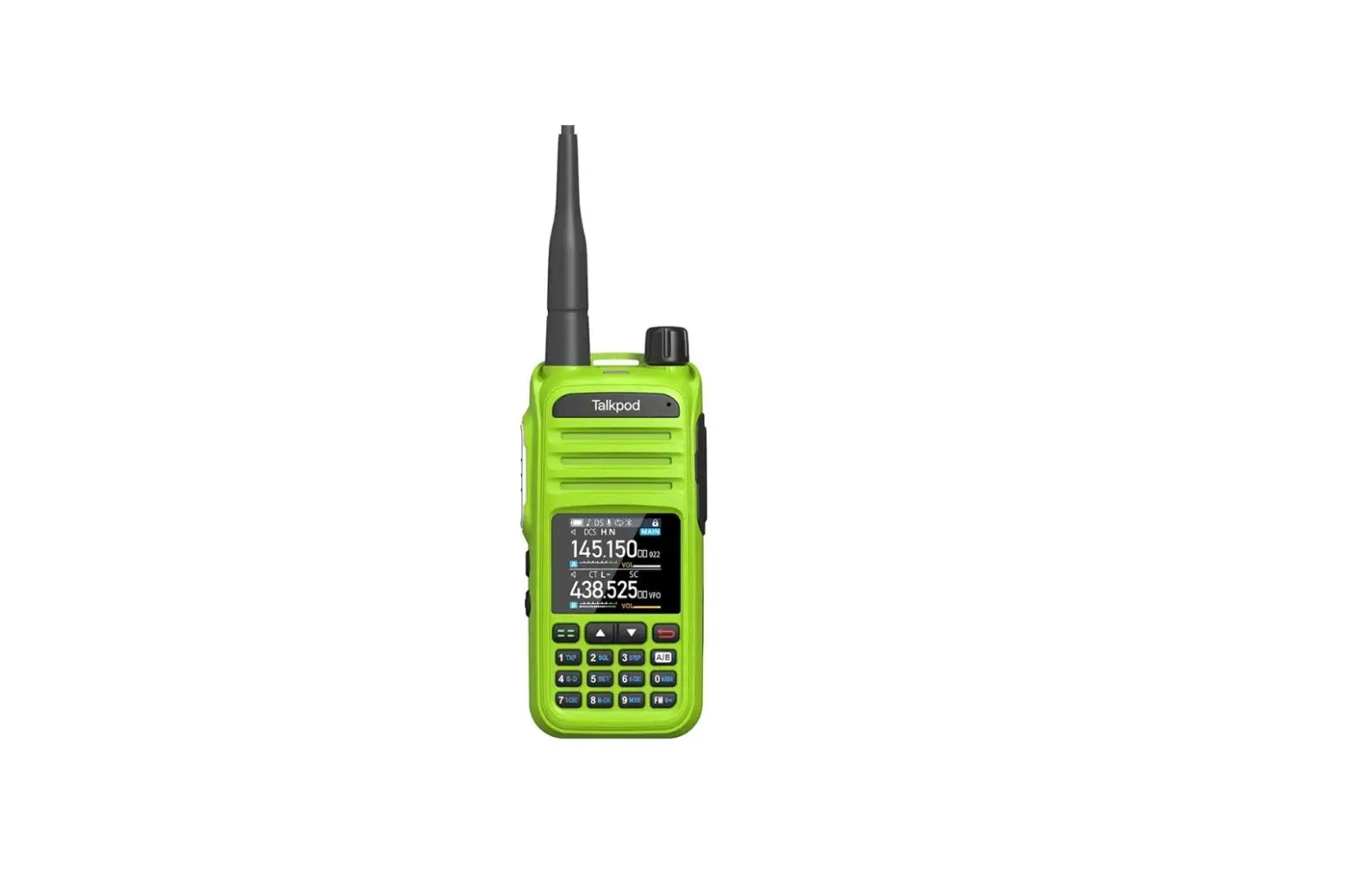
Talkpod A36plus Multi Band Radio Transceiver User Manual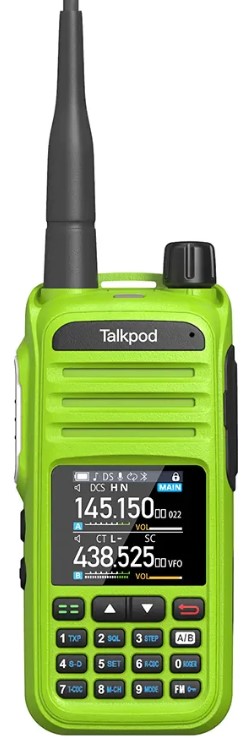
FCC Statement:
Any Changes or modifications not expressly approved by the party responsible for compliance could void the user’s authority to operate the equipment.
SAR tests are conducted using standard operating positions accepted by FCC with the device transmitting at its highest certified power level in all tested frequency bands, although the SAR is determined at the highest certified power level, the actual SAR level of the device while operating can be well below the maximum value. Before a new model is a available for sale to the public, it must be tested and certified to the FCC that is does not exceed the exposure limit established by the FCC. Tests for each product are performed in positions and locations as required by the FCC.
For body worn operation, this device has been tested and meets the FCC RF exposure guidelines when used with and accessory designated for this product or when used with and accessory that contains no metal.
To maintain compliance with FCC RF exposure guidelines hold the transmitter and antenna at least 1 inch (2.5 centimeters) from your face and speak in a normal voice, with the antenna pointed up and away from the face.
The equipment complies with FCC radiation exposure limits set forth for and uncontrolled environment. In order to comply with the FCC RF exposure requirement, the antenna installation must comply with following:
Users must be fully aware of the hazards of the exposure and able to exercise control over their
RF exposure to qualify for the higher exposure limits.
Your wireless hand-held portable transceiver contains a low power transmitter. This product sends out radio frequency (RF) signals when the Push- – to- Talk(PTT) button is pressed.
The device is authorized to operate at a duty factor not to exceed 50%
Note: This equipment has been tested and found to comply with the limits for a Class B
digital device, pursuant to part 15 of the FCC Rules. These limits are designed to provide
reasonable protection against harmful interference in a residential installation. This equipment generates, uses and can radiate radio frequency energy and, if not installed and used in accordance with the instructions, may cause harmful interference to radio communications. However, there is no guarantee that interference will not occur in a particular installation.
If this equipment does cause harmful interference to radio or television reception, which can be determined by turning the equipment off and on, the user is encouraged to try to correct the interference by one or more of the following measures:
- Reorient or relocate the receiving antenna.
- Increase the separation between the equipment and receiver.
- Connect the equipment into an outlet on a circuit different from that to which the receiver is connected.
- Consult the dealer or an experienced radio/TV technician for help.
Thanks for your favor in our product.
This manual is helpful for you to quickly know how to use the product.
This manual is applicable to the following product:
Multi Band Transceiver
Welcome to the world of Talkpod technology
Congratulations on your purchase of a high quality Talk pod product. Your 2-way radio represents state-of-the-art high-tech engineering. Designed for GMRS (General Mobile Radio Service) operation, this compact package is big on performance. It is a quality piece of electronic equipment, skillfully constructed with the finest components. The circuitry is all solid-state and mounted on rugged printed circuit board. Your two way radio is designed for reliable and trouble-fr performance for years to come
Features
This device complies with Part 15 of the FCC Rules. Operation is subject to the following two conditions: (1) this device does not cause harmful interference, and (2) this radio must accept any interference that may cause undesired operation. To maintain compliance with FCC’s RF exposure guidelines, for body-worn operation, this radio has been tested and meets the FCC RF expos ure guidelines when used with Quanshun Communication Technology Co., Ltd. accessories supplied or designated for this product. Keypad Lock Whisper Function SOS Siren Power HI/LO Settings Speaker / Microphone Jacks Battery Meter / Battery Low Indicator Use of other accessories may not ensure compliance with FCC RF exposure guidelines.
| 30 GMRS Channels | Monitor Functio |
| 142 Privacy Codes (38 CTCSS / 104 DCS) | Roger Beep Tone |
| Waterproof JIS4 Standard | Silent Operation |
| VOX | Keypad Lock |
| Selectable Call Alert (5 additional Animal Sounds on GXT1050) | Whisper Function |
| NOAA Weather Radio | SOS Siren |
| NOAA Weather Alert | Power HI/LO Settings |
| NOAA Weather Scan | Speaker / Microphone Jacks |
| Dual Watch | Battery Meter / Battery Low Indicator |
| Vibrate Alert |
This device complies with Part 15 of the FCC Rules. Operation is subject to the following two conditions: (1) this device does not cause harmful interference, and (2) this radio must accept any interference that may cause undesired operation. To maintain compliance with FCC’s RF exposure guidelines, for body-worn operation, this radio has been tested and meets the FCC RF expos ure guidelines when used with Quanshun Communication Technology Co., Ltd. accessories supplied or designated for this product. Use of other accessories may not ensure compliance with FCC RF exposure guidelines.
Important Notice
FCC LICENSE REQUIRED FOR GMRS OPERATION
(Only Applicable for GMRS Radio Use in the United States) The radios operates on GMRS (General Mobile Radio Service) frequencies which require an FCC (Federal Communications Commission) license. You must be licensed prior to operating on channels 1 – 7 or 15 – 22, which comprise the GMRS channels of the radios. Serious penalties could result from unlicensed use of GMRS channels, in violation of FCC rules, as stipulated in the Communications Acts Sections 501 and 502 (amended).
You will be issued a call sign by the FCC which should be used for station identification when operating the radio on GMRS channels. You should also cooperate by engaging in permissible transmissions only, avoiding channel interference with other GMRS users, and being prudent with the length of your transmission time.
To obtain a license or ask questions about the license application, contact the FCC at 1 888-CALLFCC or go to the FCC’s website: http://www.fcc.gov and request form 605. Exposure To Radio Frequency Energy
IMPORTANT: Changes or modifications to this unit not expressly approved by Quanshun Communication Technology Co., Ltd could void your right to operate this unit. Your radiois set up to transmit a regulated signal on an assigned frequency. It is against the law to alter or adjust thesettings inside the COMMUNICATOR to exceed those limitations. Any adjustment to your radio must be made by qualified technicians.
General information
Preface
Thanks for your favor in our product. This manual is helpfulfor you to quickly know how to use the prodcut
This manual is applicable to the following product:A36plus, A36, ÿA36P, ÿA361, ÿA37, ÿA371, UV-37, UV-A37, EP-UVA37, UV36, UV37
RF Radiation Profile
Radio Frequency (RF) is a frequency of electromagnetic radiation in the range at which radio signals are transmitted. RF technology is widely used in communication, medicine, food processing and other fields. It may generate radiation during use.
RF Radiation Safety
In order to ensure user health, experts from relevant industries including science, engineering, medicine andhealth work with international organizations to develop standards for safe exposure to RF radiation. These standards consist of:
- United States Federal Communications Commission, Code of Federal Regulations; 47CFR part 2 sub-part J;
- American National Standards Institute (ANSI)/Instituteof Electrical and
- Electronic Engineers (IEEE) C95. 1-1992;
- Institute of Electrical and Electronic Engineers (IEEE) C95. 1 – 1999;
- International Commission on Non-Ionizing Radiation Protection User Manual 03 (ICNIRP) 1998;
EU Regulatory Conformance
As certified by the qualified laboratory, the product is in compliance with the essential
requirements and other relevant provisions of the Directive 1999/5/EC. Please note that the above information is applicable to EU countries only.
Radio Structure
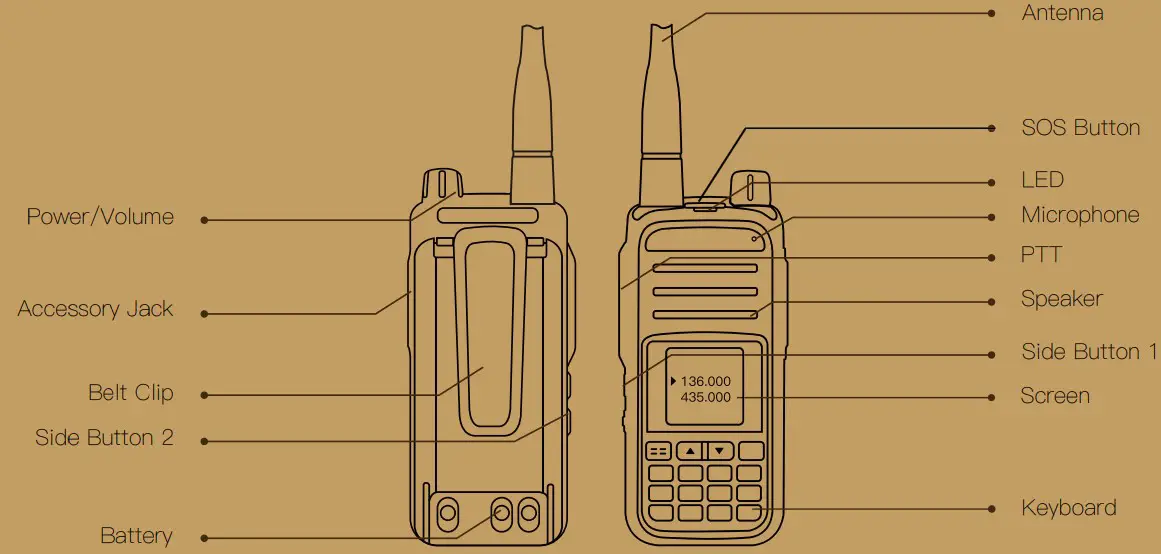
| NO | Icon | Name | Description |
| 1 |  | LED Light | Green: RX Red: TX |
| 2 |  | PTT | Press to Talk |
| 3 |  | Side Button 1 | Programable Side button |
| 4 |  | Side Button 2 | Programable Side button (Better use Long press S2 for SOS) |
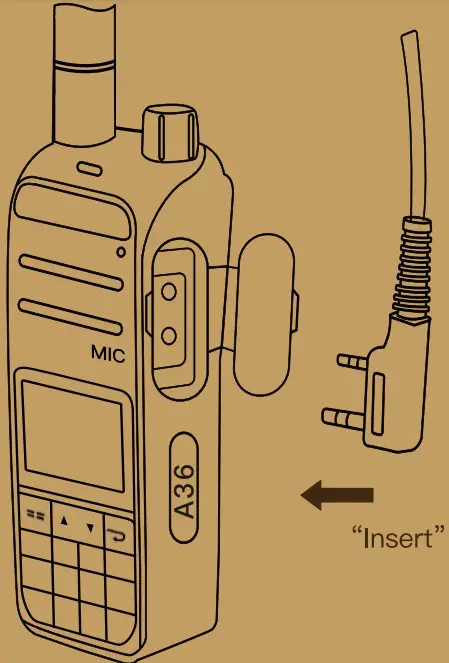
| 5 |  | Accessory Jack | For Headsets, Program Cable |
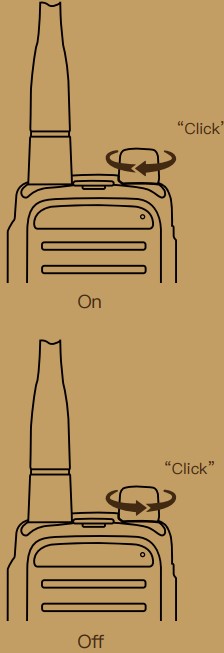
| 6 |  | Power Knob | Turn clockwise to power on and increase the volumeTurn counterclockwise to power off the power and decrease the volume |
| 7 |  | SOS button on the top | One click on SOS alarm |
| 8 |  | Keyboard | Multifunction keyboard |
Specifications
| Regular | |
| Model Name | A36plus |
| TX/RX:462.5500-462.7250MHz, | |
| 462.5625-462.7125MHz | |
| 467.5500-467.7250MHz, | |
| Frequency Range | 467.5625-467.7125MHzFM broadcast Receiving:65-108MHz |
| AM Receiving:108-136MHz | |
| NOAA Receiving: 161.65-163.275MHz | |
| VHF Receiving:136-260MHz | |
| UHF Receiving:350-520MHz | |
| Scanning:136-520MHz | |
| Number of channels | 30 channels(GMRS) |
| Work Mode | Analog |
| Frequency Stability | 2.5ppm, 5.0ppm |
| SOS Alarm | 1 |
| Weight | 210g |
| Size | 108*52*28(mm) |
| Program Key | 2 |
| Battery | Standard 1500mAh,7.4V |
| Antenna Impedance | 50Ω |
| IP Rating | IP54 |
| Working Temperature | -30℃ ~ +50℃ |
The above specifications are tested according to applicable standards. Due to the continuous development of technology, the above index data is subject to change without notice.
| Receive | |
| Receiving sensitivity | <0.20uv(12dB SINAD) |
| Squelch sensitivity | <0.2uV |
| Intermodulation anti-interference | 65dB |
| Audio distortion | <5% |
| Audio power | 1W |
| Receive current | ≤380mA |
| Audio Response | +1 ~ -3dB |
| Clutter resistance | ≥65dB |
| launch Part | |
| Emission current | ≤1.3A |
| Maximum deviation frequency | ≤5KHz/≤2.5KHz |
| Stray power | ≤ 7.5uW |
| Adjacent channel power | ≤-65dB |
| QT/DQT Frequency deviation | 0.7± 0.1KHz/0.4±0.1KHz |
| Signal-to-noise ratio | ≥-45dB/≥-40dB |
| Modulation sensitivity | 8-12mV |
| Output Power | 462MHz Main Channels:34.21dBm 462MHz interstitial Channels:34.56dBm 467MHz Main Channels:34.1dBm467MHz interstitial Channels:24.24dBm |
Attach Battery
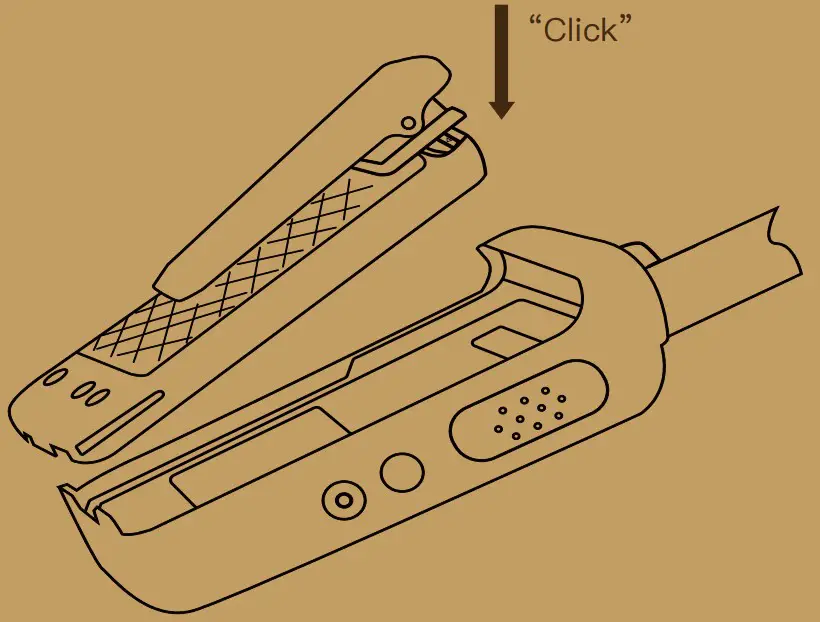
Note
- Turn off the radio before removing the battery.
- If not assembled with battery specified by Company, the radio will give alarm tone to remind you when powering on. Afterwards, it will operate normally.
Assemble Antenna
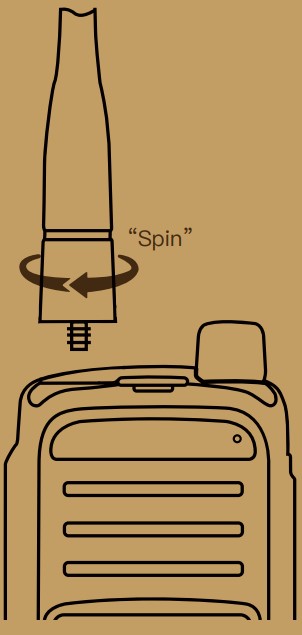
Note
Do not swing the radio when holding it by the antenna, so as to avoid lowering the performance and shortening the life span of the antenna.
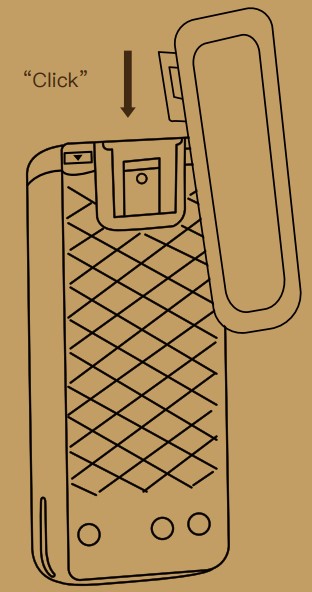
Assembling the Belt Clip
LED Indicator
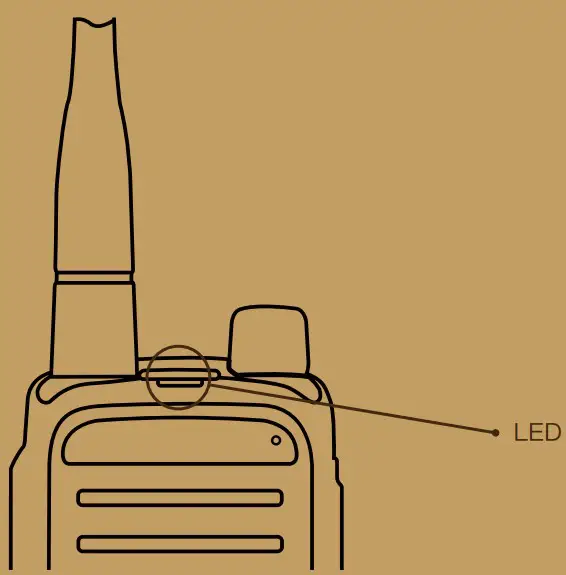
| LED Status | Product Status |
| Steady Green | Receiving |
| Steady Red | Transmitting |
Assembling the Accessories
Powering On/Of
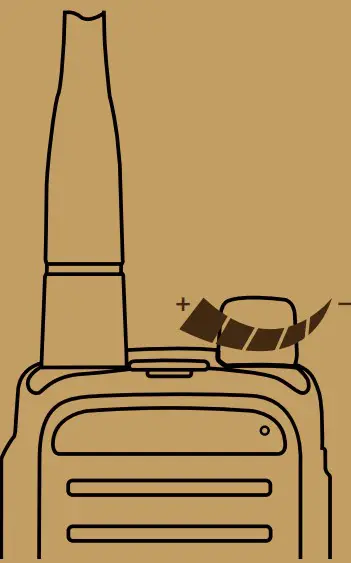
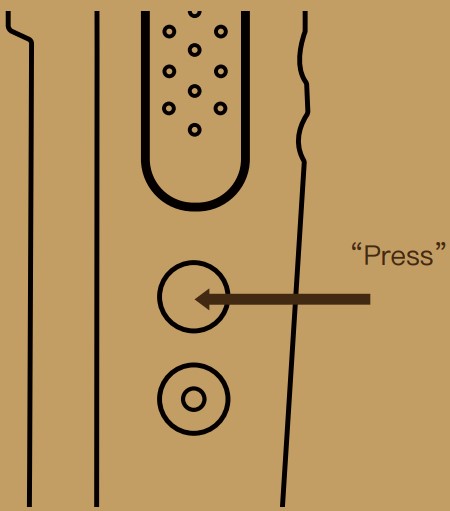
According to different models and user habits, side buttons can be set to group/member/friend selection,SOS or to broadcast current groups.
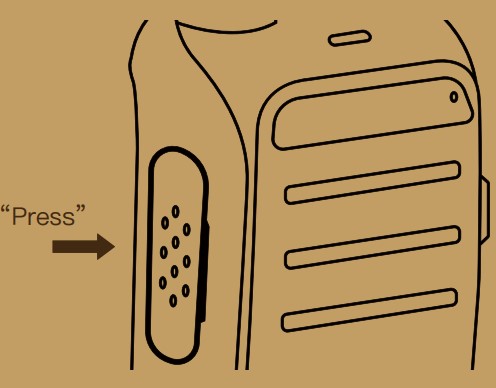
In different interfaces,press PTT button to make group call,single call, private call.
Multi-Band Portable Transceiver User Manual 11 menu description
| No | Function function | Secondary menu | Setting instructions |
| 1 | SQL | 0,…,9 | The lower the squelch level, the easier it is to interfere,the higher the level, the worse the sensitivity, and the setting should be moderate |
| 2 | STEP | 2.50K | In the frequency mode, press the up and down keys to change the step value of the frequency |
| 5.00K | |||
| 6.25K | |||
| 10.00K | |||
| 12.50K | |||
| 20.00K | |||
| 25.00K | |||
| 30.00K | |||
| 50.00K | |||
| 3 | MEMCH | 000,…,256 | Indicate the channel number to be stored while store channel. If ‘CH’ in front of number means this channel already has a channel parameter. |
| 4 | DELCH | 000,…,256 | Delete the channel parameters of the specified channel. If there is no CH- means that the channel has no parameters and the operation is invalid. |
| 5 | R-CTCSS | OFF | None CTCSS |
| 67.0HZ,…,254.1HZ | Standard CTCSS. Input standard or nonstandard CTCSS via keypad. | ||
| 6 | R-DCS | OFF | None DCS |
| D023N,…,D754I | Standard DCS | ||
| 7 | T-CTCSS | OFF | None CTCSS |
| 67.0HZ,…,254.1HZ | Standard CTCSS. Input standard or nonstandard CTCSS via keypad. |
| No | Function function | Secondary menu | Setting instructions |
| 8 | T-DCS | OFF | None DCS |
| D023N,…,D754I | Standard DCS | ||
| 9 | VOICEPRI | OFF | |
| Encryption 1 | |||
| Encryption 2 | |||
| Encryption 3 | |||
| Encryption 4 | |||
| 10 | CH-NAME | COMMOM NAME LIST | |
| 11 | TOT | 30,60,…480s | The number is from 30 to 480s, and the maximum time for PTT transmission is indicated in 30s steps. |
| 12 | SAVE | OFF | Off Battery Saving |
| 1 | Off Battery Saving | ||
| 2 | Normal Saving | ||
| 3 | Super Saving | ||
| 13 | ROGER | OFF | Turn Off |
| ON | Turn On | ||
| 14 | RESET | VFO | Menu back to factory setting |
| ALL | Menu and channel back to factory setting |
| No | Function function | Secondary menu | Setting instructions | ||
| 15 | VOX | OFF | Turn off VOX function, transmitting without PTT pressing. | ||
| 1,2,…9 | Activate the sound pressure intensity of voice control, level 1 issensitive. | the | most | ||
| 16 | W/N | WIDE | Wide mode | ||
| NARR | Narrow mode | ||||
| 17 | VOICE | OFF | Turn off voice prompt | ||
| ON | Turn on voice prompt | ||||
| 18 | BEEP | OFF | Turn off operation prompt | ||
| ON | Turn on operation prompt | ||||
| 19 | LANGUAGE | ENGLISH | English | ||
| CHINESE | Chinese | ||||
| 20 | BCL | OFF | OFF | ||
| ON | ON | ||||
| 21 | ABR | ON | Background light is always on. | ||
| 5s,10s,…3min | Time between the background light ON to automatically OFF. | ||||
| 22 | OFFSET | 00.000,…,99.995 | In frequency mode, the difference between the transmitting and receiving frequencies. | ||
| No | Function function | Secondary menu | Setting instructions |
| 23 | SC-REV | TO | Time scanning, the walkie-talkie pauses scanning when it detects a signal, and after staying stopped for about 5 seconds, the walkie-talkiewill continue scanning even if the signal is still there. |
| CO | Carrier scanning, the two-way radio pauses scanning when a channel is detected and keeps it on the same frequency until the signal disappears. There is a 2 second delay between the disappearance of the signal and the resumption of scanning to allow time for the response to begin transmission. | ||
| SE | Search scanning, the walkie-talkie exits scanning when it detects a signal and stays at this frequency. | ||
| 24 | PF2 | ||
| 25 | PF2 LONG PRESS | ||
| 26 | PF3 | ||
| 27 | SFT-D | OFF | In frequency mode, turn off the difference between the transmitting and receiving frequencies. |
| + | In frequency mode, the TX frequency=RX frequency plus frequency difference | ||
| – | In frequency mode, the TX frequency=RX frequency minus frequency difference | ||
| 28 | SCAN CTCSS |
| No | Function function | Secondary menu | Setting instructions |
| 29 | SCAN DCS | ||
| 30 | CDCSS SAVE MODE | ALL | ALL |
| RX | Receiving | ||
| TX | Transmitting | ||
| 31 | POWER ON MSG | LOGO | Photo |
| VOL TAGE | Battery voltage | ||
| 32 | ANI NAME | NUM1…NUM60 | No.1—No.50 radio. The radio name of 51-60 can be set |
| 33 | S-CODE | 1,2,3…15 | |
| 34 | DTMF CODE | OFF | Turn off |
| BOT | Press PTT to transmitting DTMF | ||
| EOT | Release PTT to transmitting DTMF | ||
| BOTH | BOTH | ||
| 35 | AUTOLK | OFF | Turn off auto keypad look |
| 5s,10s,…3min | Turn on the keypad timing automatic lock function |
| No | Function function | Secondary menu | Setting instructions |
| 36 | DTMFST | OFF | No DTMF prompt when press key to transmitting DTMF |
| DT-ST | DTMF prompt when press key to transmitting DTMF | ||
| ANI-ST | DTMF prompt when automatically transmitting DTM | ||
| DT+ANI | DTMF prompt when automatically transmitting DTMF and press key to transmitting DTMF | ||
| 37 | SCAN ADD | ||
| 38 | TONE | 1000,1450,1750,2100Hz | |
| 39 | PTT-LT | 0,100,…,1000 | Delay time before automatic DTMF transmitting |
| 40 | MENU EXIT TIME | 5,10,…60s | Control the time of menu automatically exit |
| 41 | VOX DELAY | 0.5SEC… 2.0SEC | Due to the delay of the repeater, noise appears when receive instant signal. |
| 42 | RP_STE | OFF | OFF: Adjust to eliminate the tail. If want to ensure if the repeater is workor not, set OFF. |
| 1,2,3,4,5,…10s | |||
| 43 | RPT-RL | OFF | OFF: Adjust the length of time the tail sound appears, if not needed, set it to off. |
| 1,2,3,4,5,…10s |
| No | Function function | Secondary menu | Setting instructions |
| 44 | ANI FUNCTION | OFF | Turn off |
| ON | Turn on | ||
| 45 | MDF-A | FREQ | A band displays as frequency in channel mode |
| CH | A band displays as channel in channel mode | ||
| NAME | A band displays as channel name in channel mode | ||
| 46 | MDF-B | FREQ | B band displays as frequency in channel mode |
| CH | B band displays as channel in channel mode | ||
| NAME | B band displays as channel name in channel mode | ||
| 47 | TX-A/B | OFF | In dual standby mode, transmitting current frequency band |
| A | In dual standby mode, press PTT to transmitting A band for cross-band TX/RX | ||
| B | In dual standby mode press PTT to transmitting B band for cross-band TX/RX |
| No Function function | Secondary menu | Setting instructions |
| 48 TDR | OFF | Turn off |
| Turn on | ||
| 49 STE | OFF | After releasing the PTT, the radio will send a turn-off code to suppress the instant noise of the receiver. |
| After releasing the PTT, the radio will send a turn-off code to suppress the instant noise of the receiver. | ||
| 50 AL-MOD | SITE | On-site Emergency |
| SOUND | Send emergency voice | |
| CODE | Send emergency code | |
| 51 DISPLAY | OFF | Turn off |
| ON | Turn on | |
| 52 | ||
| 53 | ||
Product Care
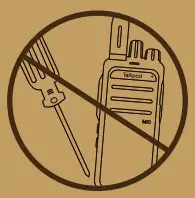 Do not pierce or scrape the product with any edged instruments or hard objects.
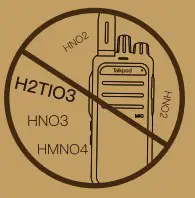 Keep the product far away frpm substances that can corrode the circuit.
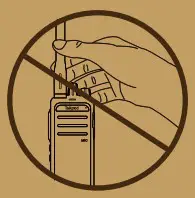 Do not hold the product by its antenna directly
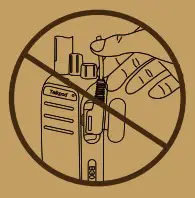 Do not hold the product by its earpiece cable directly.
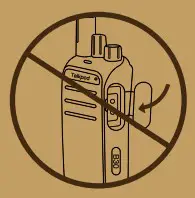 Attach the accessory jack cover when the product is not in use Keep the product far away frpm substances that cancorrode the circuit.
Troubleshooting
| Phenomen | Analysi | Solution |
| Power-on Fallure | The battery may be improperly installed. | Remove the battery and reassemble it. |
| The battery power may be used up | Remove or replace the battery. | |
| The battery is poorly connected due to dirtied or damaged battery contacts | Clean the battery contacts.If the problem cannot be solved, contact your dealer or authorized service center for inspection and repair. | |
| During receving, the voice is weak, discontinuous or totally inactive. | Low battery voltage | Recharge or replace the battery. |
| Low volume leve | Increase the volume by rotating the Volume Control knob. | |
| The antenna may be loosened or improperly installed. | Reassemble the antenna after turning off the radio. | |
| The speaker may be blocked or damaged | Clean the surface of the speaker.If the problem cannot be solved, contact your dealer or authorized service center for inspection and repair. | |
| Unable to communicate with other members. | The frequency or signaling may be inconsistent with that of other members | Set your TX/RX frequency and signaling to the same as that of other members |
| The channel type(digital/anaiog)may be set inconsistently | Make sure all members are on the same digital/analog channel. | |
| You may be interrupted by radios using the same frequency | Change the frequency,or adjust the squelch level. |
| Phenomena | Analysis | Solution |
| Irrelevant communication or noise is heard on the channel. | You may be interrupted by radio using the same frequency. | Change the frequency, or adjust the squelch level. |
| The radio may be set with no signaling. | Set signaling for all member radios to avoid inference at the same frequency.And change the signaling settings for all portable radios at the same time. | |
| The noise is too loud. | You may be too far away from otjer members. | Move towards other members. |
| You may locate in an unfavorable position.For example, your communication may be blocked by high buildings or frustarted in the underground areas. | Move to an open and flat area, and restart the radio to try again. | |
| You may suffer from external disturbance(such as electromagnetic interference). | Stay away from equipment that may cause interference. |
Optional Accessories
The following items are main optional accessories for the radio. For more information of other accessories, olease consult your local dealer
Note
The following items are main optional accessories for the radio. For more information of other accessories, olease consult your local dealer. accessories.
| Protective case | |
|
| Semi-packed nylon cover / adhesive type / with oblique lanyard / small |
| Semi-packed leather holster / button type / oversized iron back clip / with diagonal strap / medium | |
| All-inclusive leather holster / button type / thick leather pattern / with diagonal strap / large | |
| Wearable chest bag protector / all black | |
| Wearable chest bag protective cover / fluorescent strip | |
| Waterproof bag | |

| Data line / write frequency line | |
 | Universal K head dual hole USB to serial port programming cable / N4 / N5 / D4 / B3 universal |
| USB to Micro cable / OD3.8PVC / common to all series | |
| Headset | |
|
| 2-Wire Earloop with On-MIC PTT |
| 2-Wire D-Ring Earphone with On-MIC PTT | |
| 2-Wire Acoustic Tube with On-MIC PTT | |
| Earloop with In-line Microphone | |
| D-Ring Earphone with In-line Microphone | |
| Acoustic Tube with In-line Microphone | |
| 3-Wire Acoustic Tube Surveillance Kit (Black) | |
| Rotatable ear-hook type oval clip PTT headset | |
| Right earhook type oval clip PTT headset | |
| C-type ear-hook oval clip PTT headset | |
| Ear hook + earplug type oval clip PTT headset | |

| Back clip | |
 | 2 Series / 3 Series Belt Clip / Spring Type / 7CM |
| Hand microphone | |
 | Speaker Microphone |
| Speaker Microphone With Volume Control | |
| Power Adapter | |
|
| Power adapter / 12V2A / GB |
| Power adapter / 12V2A / European regulations | |
| Power adapter / 12V2A / British regulations | |
| Power adapter / 12V2A / Australia regulations | |
| Power adapter USB interface / 5V2A | |
| Power adapter USB interface / 5V1A | |
| Power adapter / 12V1A / GB | |
| Power adapter / 12V1A / European regulations | |
| Power adapter / 12V1A / British regulations | |
| Power adapter / 12V1A / Australia regulations | |

Technical Information
| Channel Type | Channel Number | Frequency (MHz) | Channel Type | Channel Number | Frequency (MHz) |
|
462 MHz Main Channels | 1 | 462.5500 |
467 MHz Main Channels | 1 | 467.5500 |
| 2 | 462.5750 | 2 | 467.5750 | ||
| 3 | 462.6000 | 3 | 467.6000 | ||
| 4 | 462.6250 | 4 | 467.6250 | ||
| 5 | 462.6500 | 5 | 467.6500 | ||
| 6 | 462.6750 | 6 | 467.6750 | ||
| 7 | 462.7000 | 7 | 467.7000 | ||
| 8 | 462.7250 | 8 | 467.7250 | ||
| 462 MHz interstitial channels | 1 | 462.5625 | 467 MHz interstitial channels | 1 | 467.5625 |
| 2 | 462.5875 | 2 | 467.5875 | ||
| 3 | 462.6125 | 3 | 467.6125 | ||
| 4 | 462.6375 | 4 | 467.6375 | ||
| 5 | 462.6625 | 5 | 467.6625 | ||
| 6 | 462.6875 | 6 | 467.6875 | ||
| 7 | 462.7125 | 7 | 467.7125 |
 Federal Communications Commission | The United States of America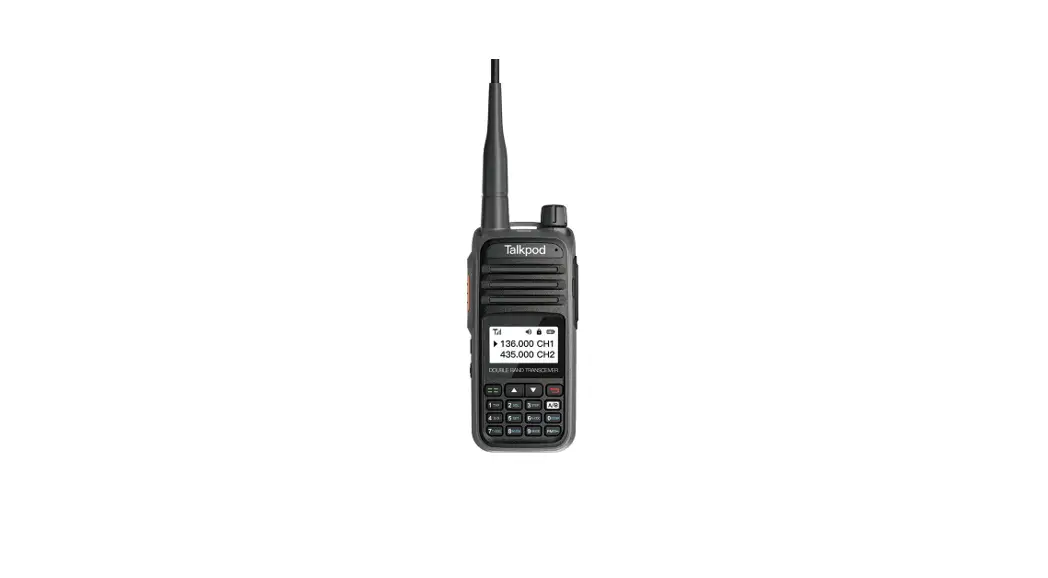


![Tws True Wireless Stereo Earphones User Manual [airpod Look-a-likes]](https://static-data1.manualsee.com/1/img/443/3788/2019/02/TWS-True-Wireless-Stereo-Earphones-AirPod-Look-a-Likes-featured.png "Tws True Wireless Stereo Earphones User Manual [airpod Look-a-likes]")