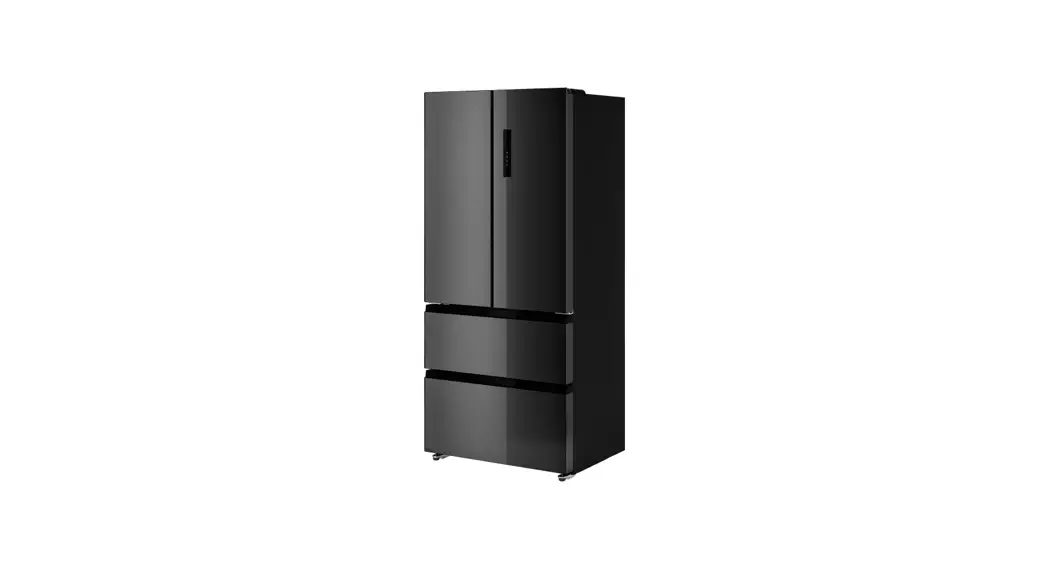
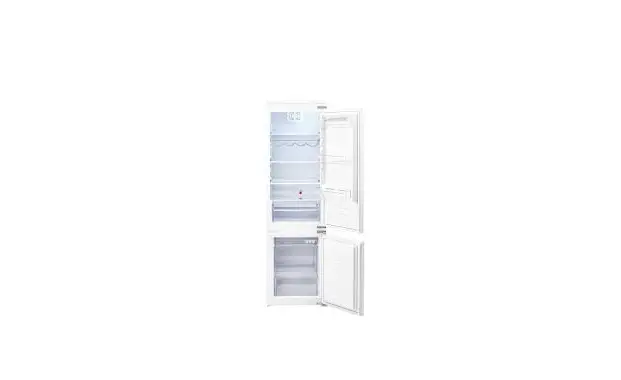
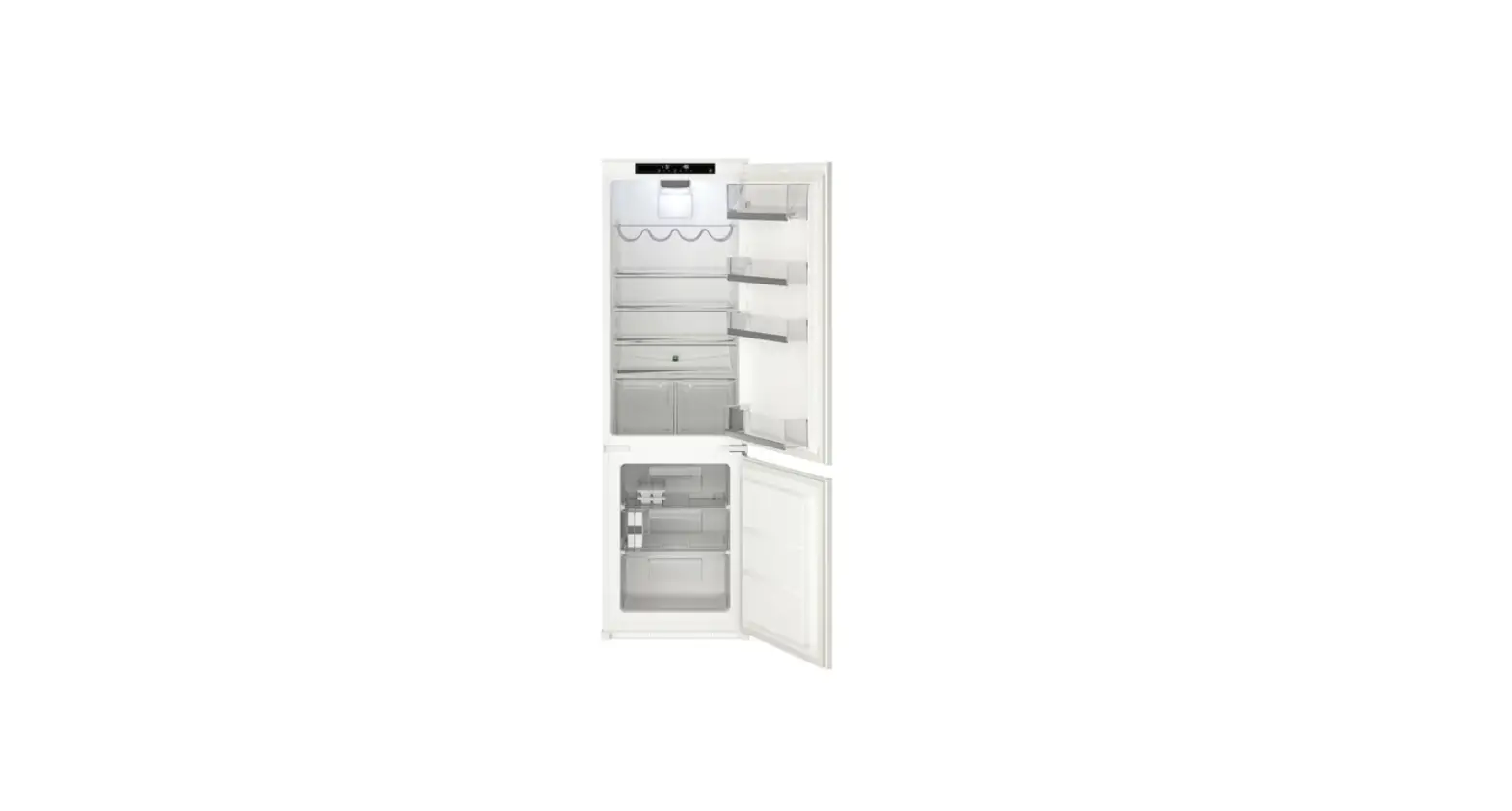
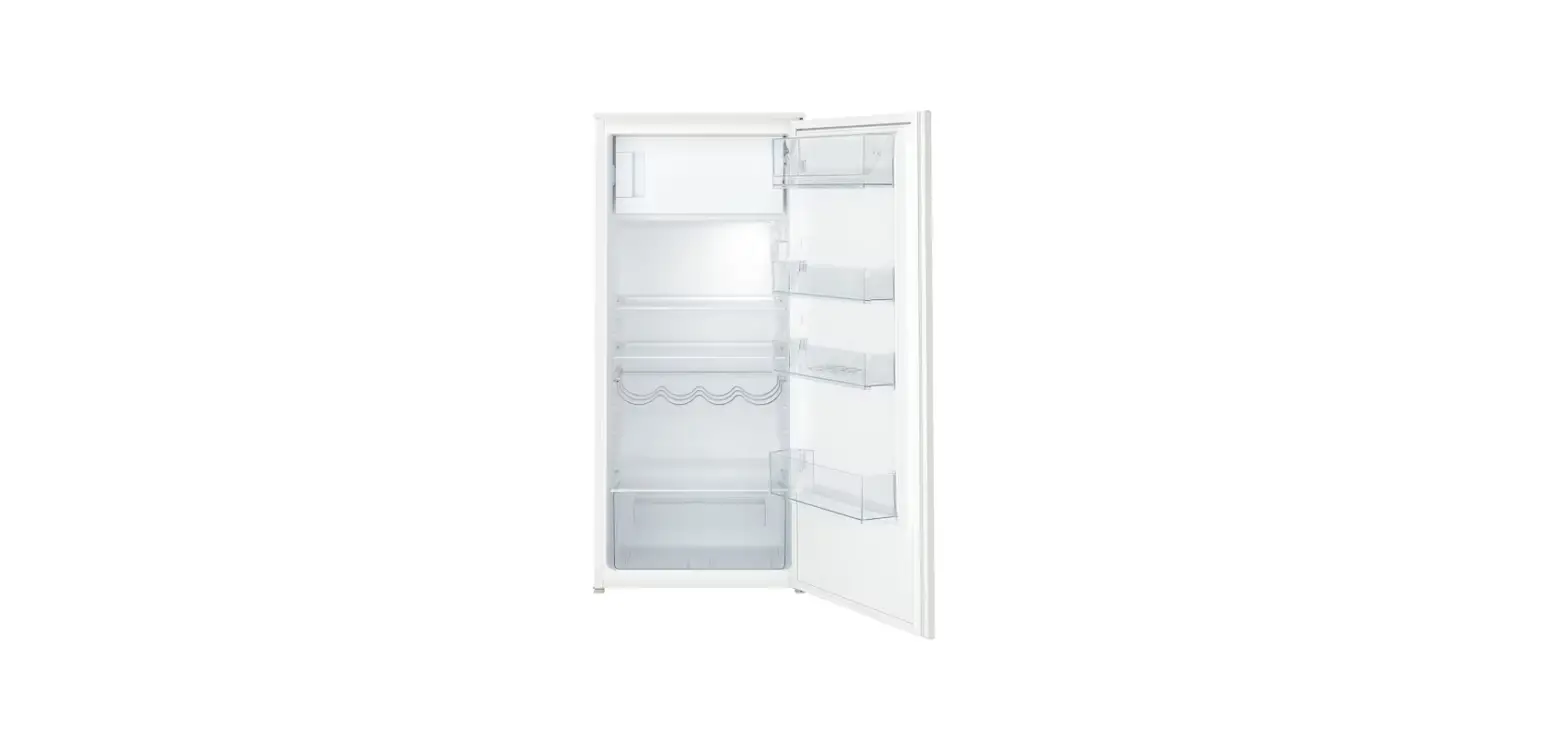
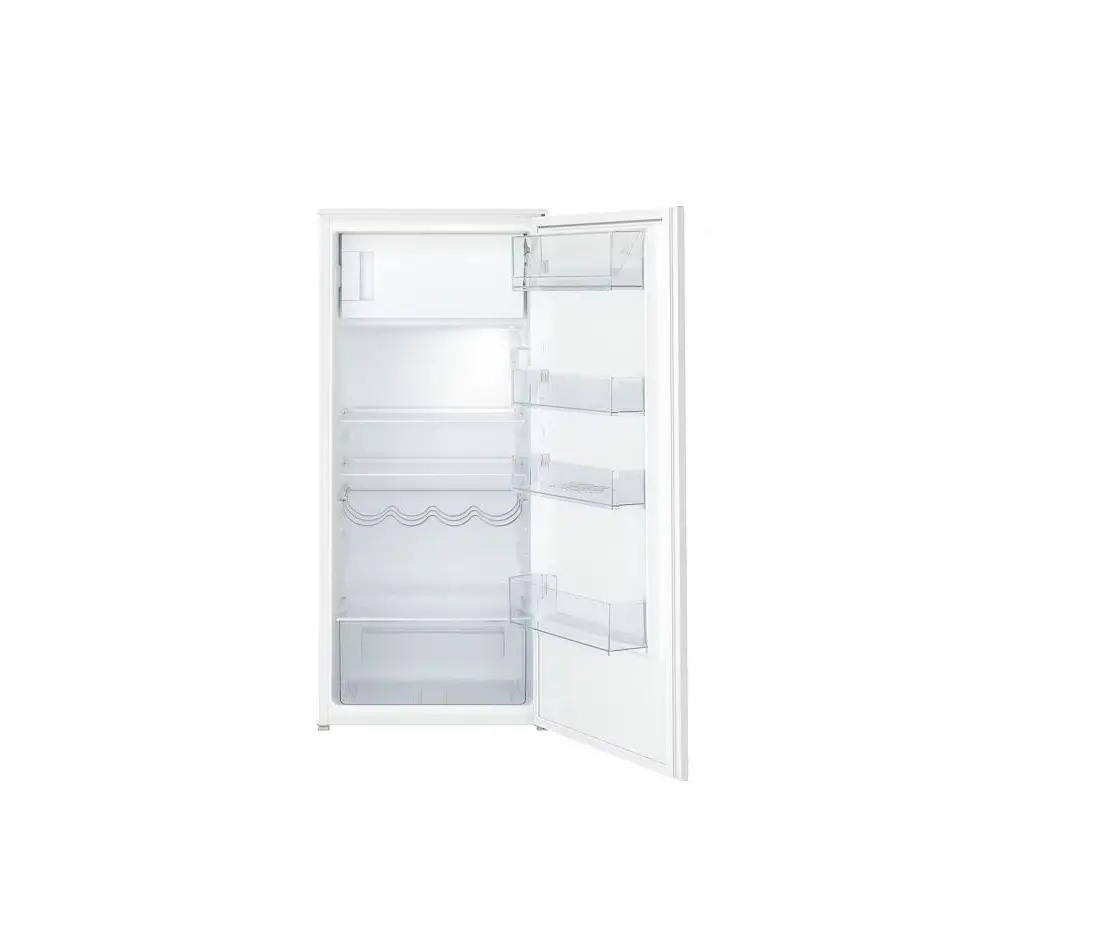
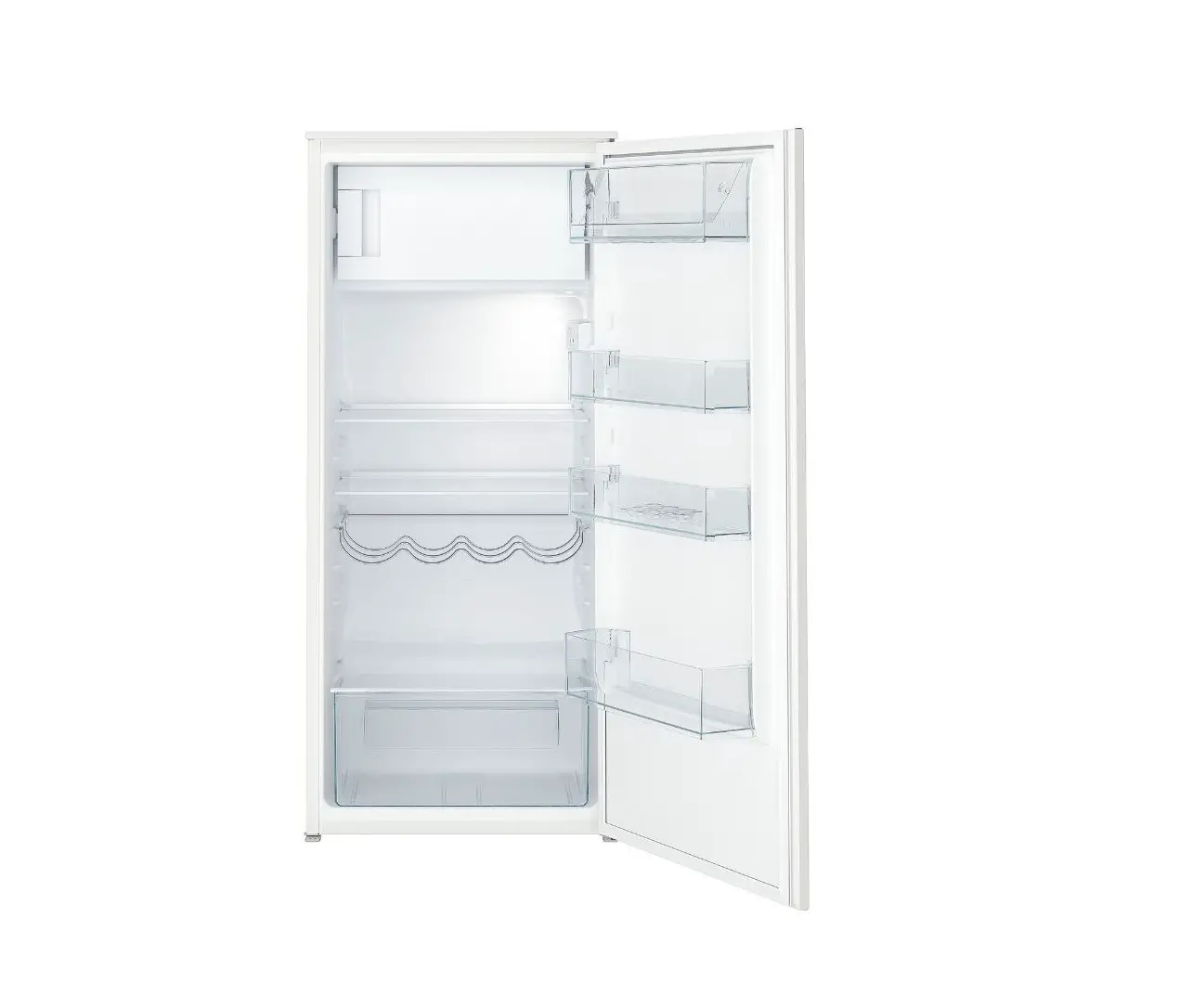
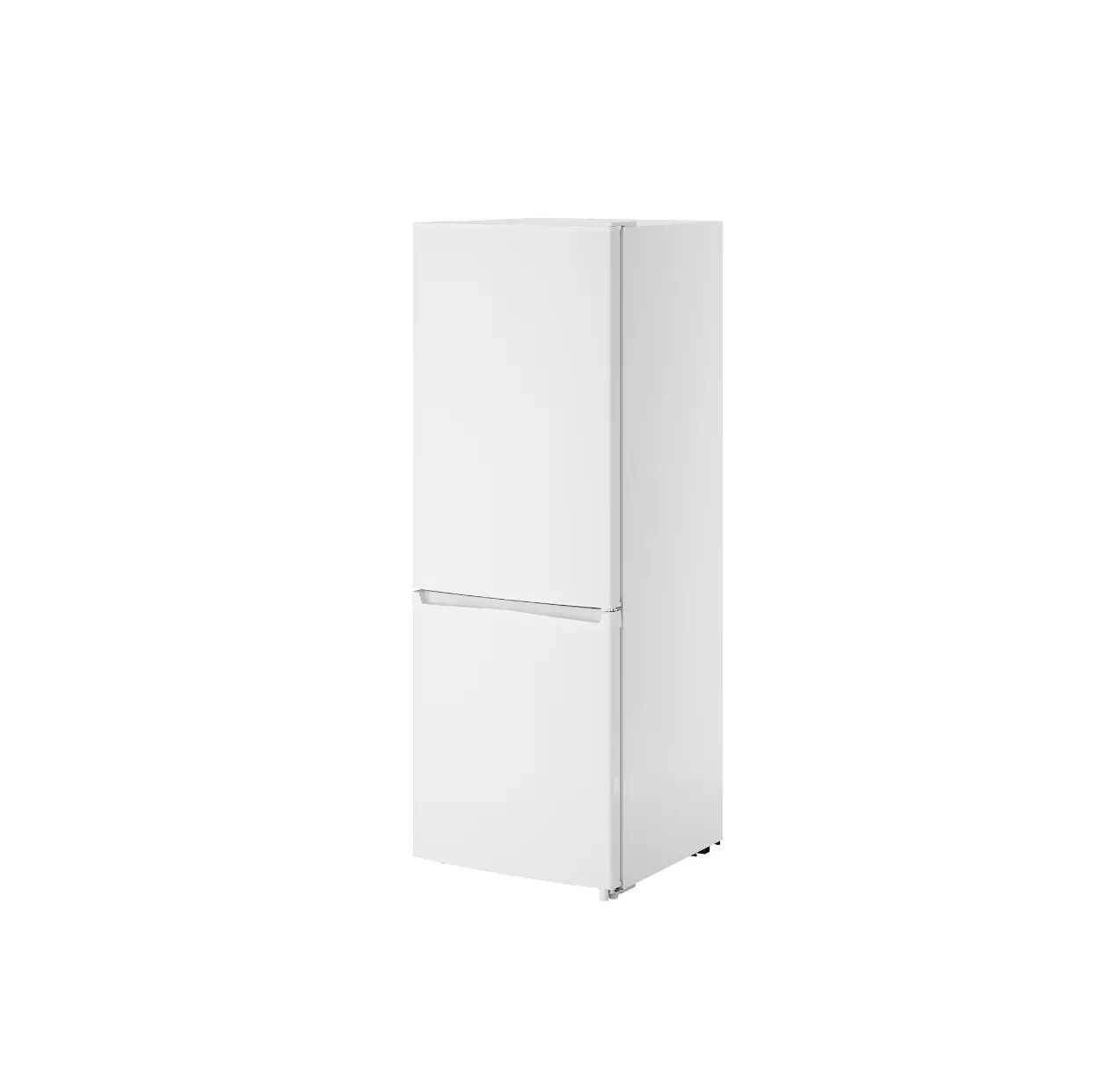
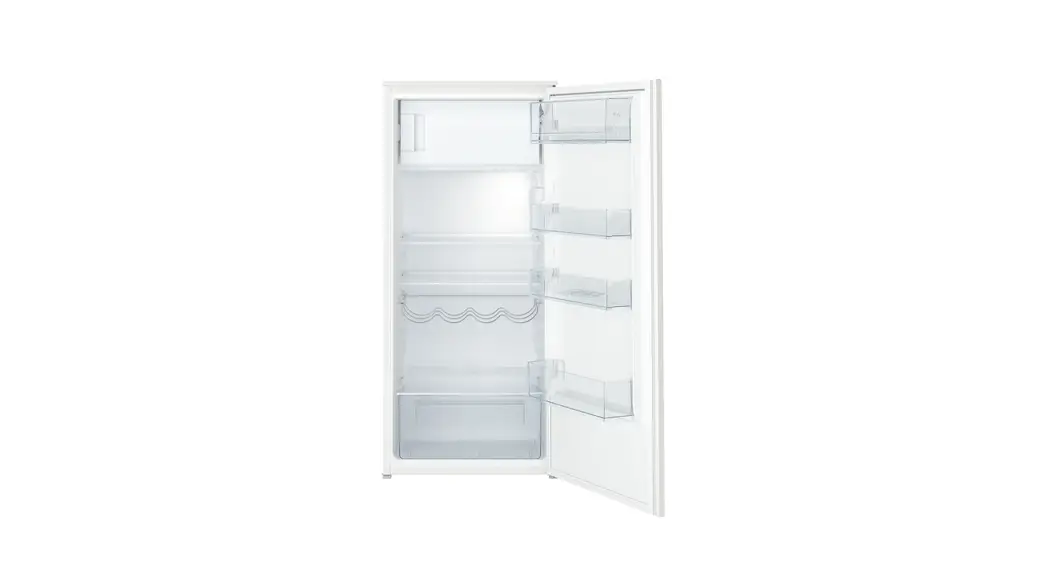
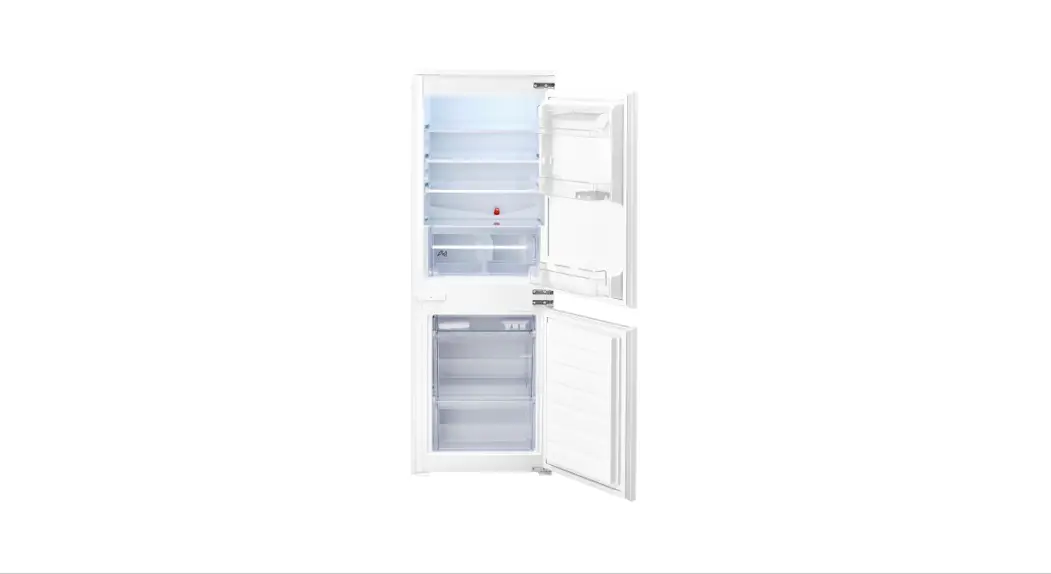
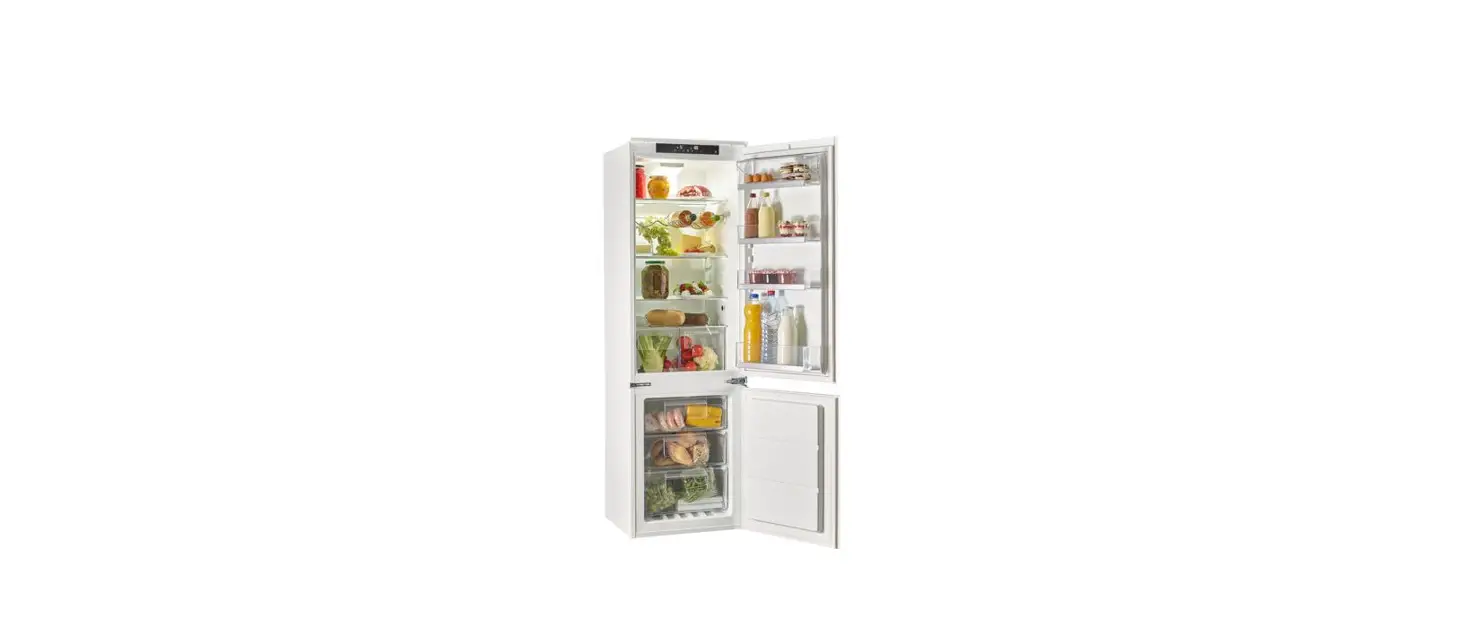
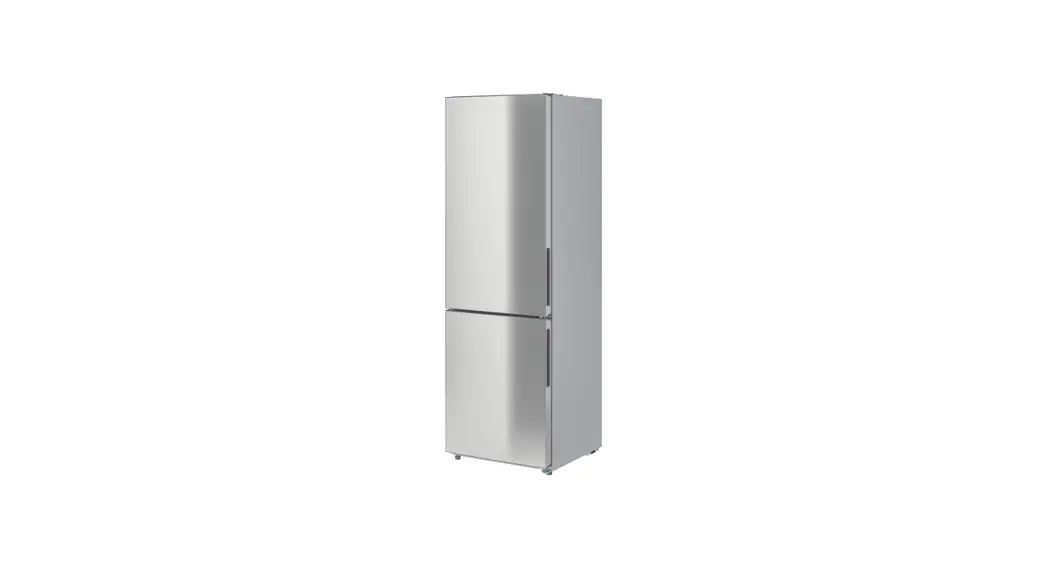
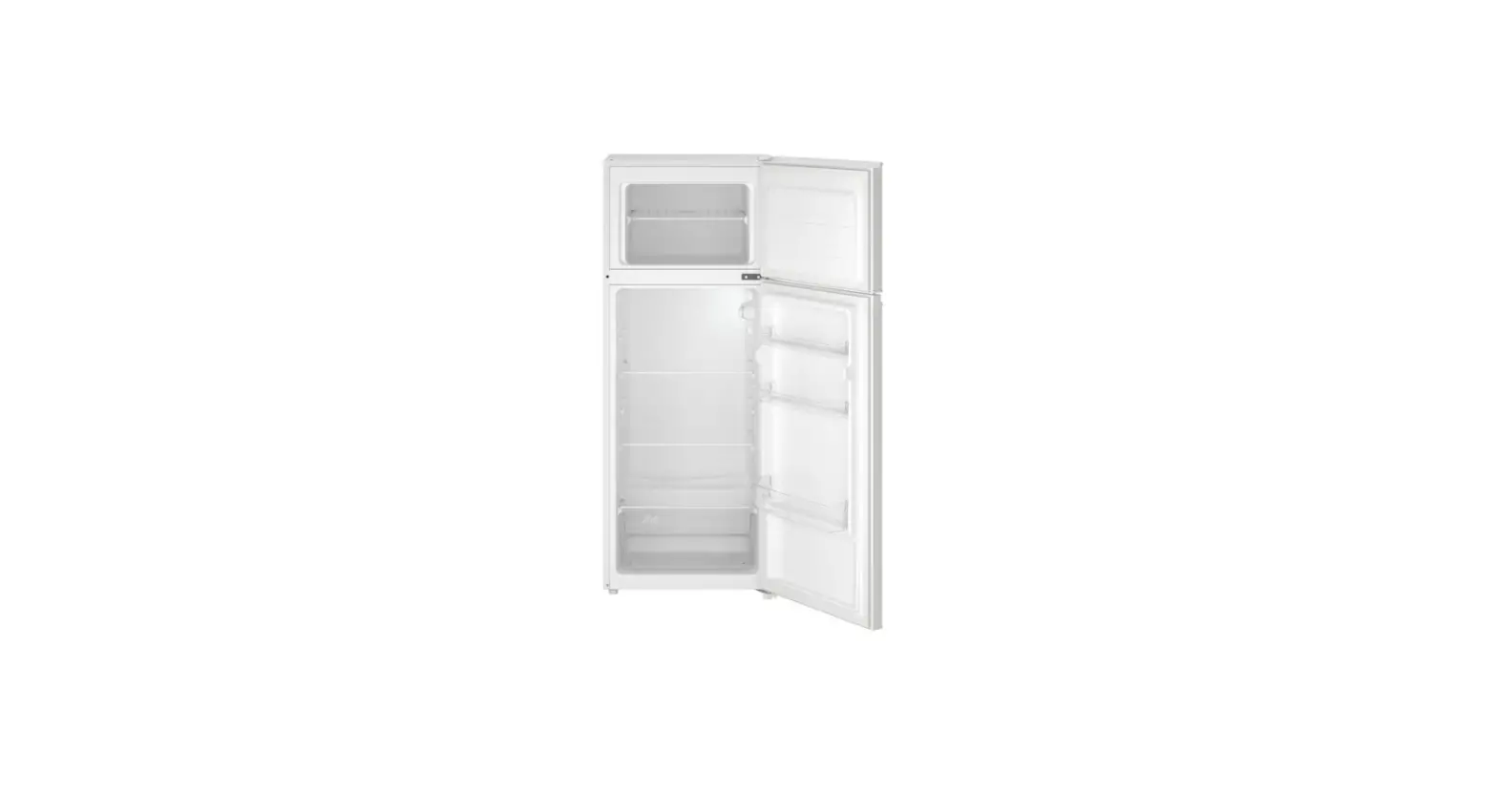
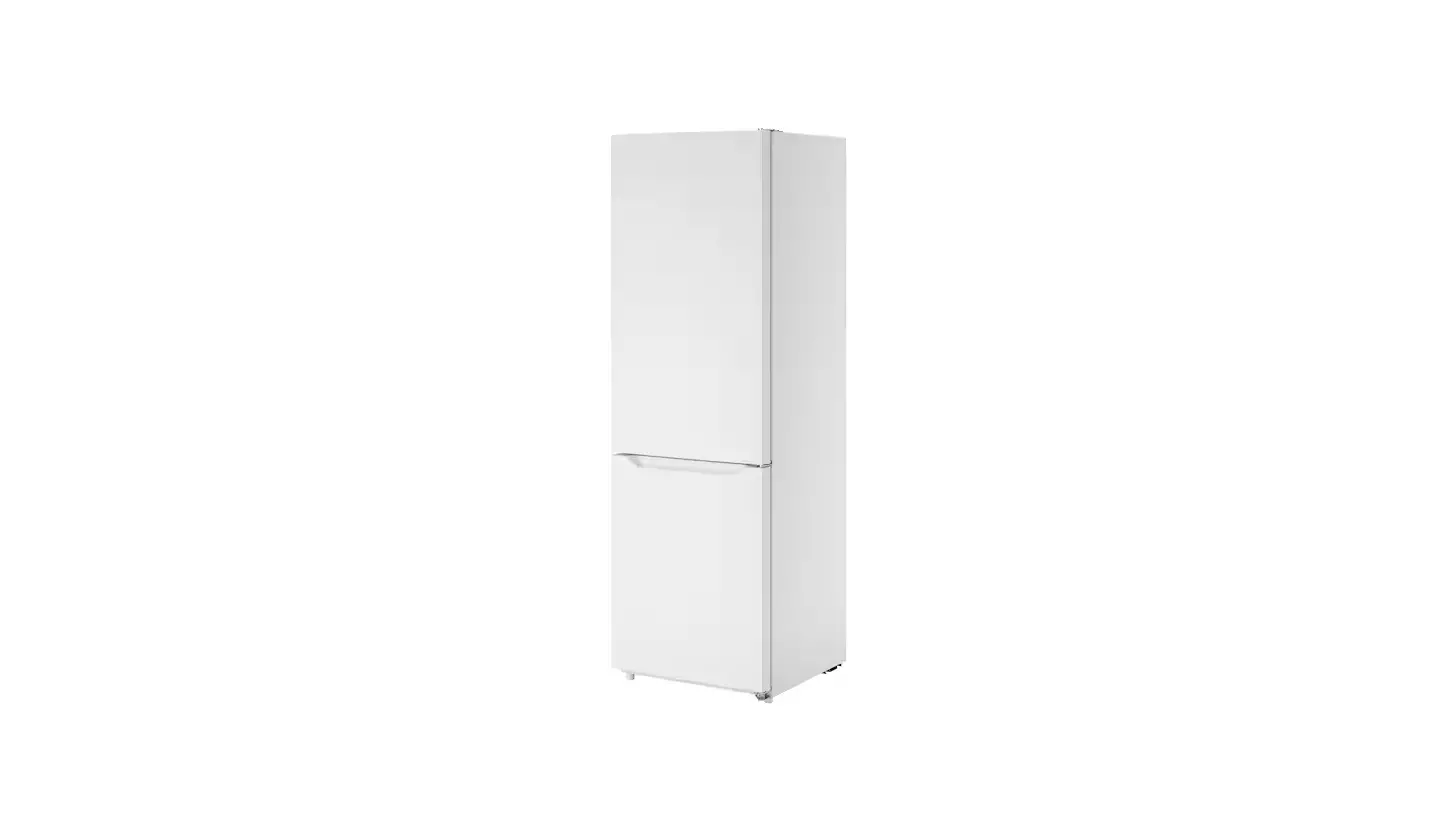
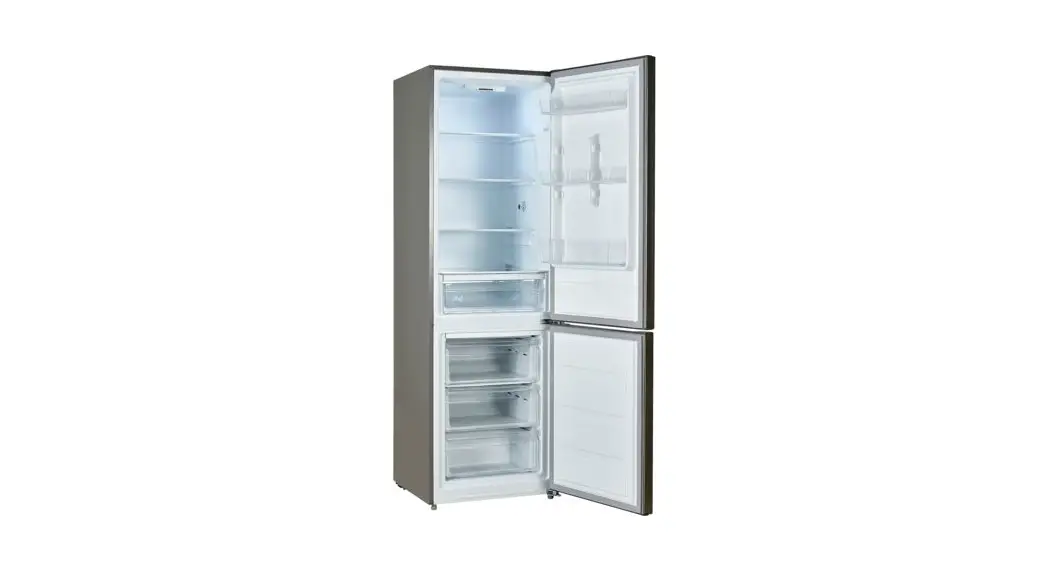
104.964.63 FÖRKYLD Fridge Freezer
Product Information: Refrigerator/Freezer
The refrigerator/freezer from IKEA is a household appliance
designed to keep your food fresh and frozen for longer. It has a
gross capacity of XXX liters and a freezing capacity of X kg/24h.
The appliance is energy efficient with a 50 Hz 1.0 A electrical
connection and uses isobutane (R600a) as its refrigerant.
Safety Information
- Before installation and use, carefully read the supplied
instructions to prevent any injuries or damage that may occur from
incorrect installation or usage. - Only a qualified person should install this appliance.
- Do not use multi-plug adapters and extension cables.
- Be careful not to cause damage to the refrigerant circuit
containing isobutane. - Keep the appliance out of reach of children and vulnerable
people.
Installation
- Refer to the installation instruction document to install your
appliance in accordance with safety instructions. - Fix the appliance in accordance with installation instruction
document to avoid instability. - Ensure the supply cord is not trapped or damaged when
positioning the appliance.
Product Usage
- Control Panel: The control panel allows you to
set the temperature for the fridge and freezer compartments. It
also shows the current temperature in each compartment. - First Use: Before initial use, clean the
interior of the appliance with a damp cloth and mild detergent. Do
not use abrasive cleaners or sharp objects that may damage the
interior. Allow the appliance to reach its operating temperature
before storing food. - Daily Use: Ensure that the appliance is always
properly closed to maintain the temperature. Do not overload the
appliance and ensure good air circulation within the compartments.
Avoid placing hot food or drinks in the appliance and do not store
any flammable substances within the appliance. - Hints and Tips: Defrost your appliance
regularly to avoid ice buildup, which can cause increased energy
consumption. Store food in sealed containers to prevent any odors
from spreading and to maintain freshness for longer. - Care and Cleaning: Switch off the appliance
before cleaning. Clean the interior and exterior with a damp cloth
and mild detergent. Remove any shelves or drawers for easier
cleaning. Do not use abrasive cleaners or sharp objects that may
damage the interior or exterior of the appliance. - Troubleshooting: If you experience any issues
with your appliance, refer to the troubleshooting section of the
manual for guidance. If the issue persists, contact an IKEA
appointed After Sales Service Provider.
Remember to follow the inspection checklist before using your
appliance to ensure its proper functioning. If any answer is NO,
follow the relevant action. Also, remember to write down the
product serial number and article number as required and attach
your receipt to the manual.
FÖRKYLD
GB DE
ENGLISH Please refer to the last page of this manual for the full list of IKEA appointed After Sales Service Provider and relative national phone numbers.
DEUTSCH Auf der letzten Seite dieser Broschüre finden Sie eine vollständige Liste der offiziellen IKEA After-Sales-Dienstleister mit den jeweiligen nationalen Telefonnummern.
ENGLISH
4
DEUTSCH
29
ENGLISH
4
Contents
Safety information Safety instructions Installation Product description Control panel First use Daily Use Hints and tips
4
Care and cleaning
18
6
Troubleshooting
20
8
Noises
24
12
Technical data
24
12
Information for test institutes
25
13
Environmental concerns
26
14
IKEA guarantee
26
16
Subject to change without notice.
Safety information
Before the installation and use of the appliance, carefully read the supplied instructions. The manufacturer is not responsible for any injuries or damage that are the result of incorrect installation or usage. Always keep the instructions in a safe and accessible location for future reference.
Children and vulnerable people safety
· This appliance can be used by children aged from 8 years and above and persons with reduced physical, sensory or mental capabilities or lack of experience and knowledge if they have been given supervision or instruction concerning the use of the appliance in a safe way and understand the hazards involved.
· Children aged from 3 to 8 years are allowed to load and unload the appliance provided that they have been properly instructed.
· This appliance may be used by persons with very extensive and complex disabilities provided that they have been properly instructed.
· Children of less than 3 years of age should be kept away from the appliance unless continuously supervised.
ENGLISH
5
· Children should be supervised to ensure that they do not play with the appliance.
· Children shall not carry out cleaning and user maintenance of the appliance without supervision.
· Keep all packaging away from children and dispose of it appropriately.
General Safety
· This appliance is for storing food and baverages only. · This appliance is designed for single household domestic
use in an indoor environment. · This appliance may be used in, offices, hotel guest rooms,
bed & breakfast guest rooms, farm guest houses and other similar accommodation where such use does not exceed (average) domestic usage levels. · To avoid contamination of food respect the following instructions: do not open the door for long periods; clean regularly surfaces that can come in contact with
food and accessible drainage systems; store raw meat and fish in suitable containers in the
refrigerator, so that it is not in contact with or drip onto other food. · WARNING: Keep ventilation openings, in the appliance enclosure or in the built-in structure, clear of obstruction. · WARNING: Do not use mechanical devices or other means to accelerate the defrosting process, other than those recommended by the manufacturer. · WARNING: Do not damage the refrigerant circuit. · WARNING: Do not use electrical appliances inside the food storage compartments of the appliance, unless they are of the type recommended by the manufacturer. · Do not use water spray and steam to clean the appliance.
ENGLISH
6
· Clean the appliance with a moist soft cloth. Only use neutral detergents. Do not use abrasive products, abrasive cleaning pads, solvents or metal objects.
· When the appliance is empty for long period, switch it off, defrost, clean, dry and leave the door open to prevent mould from developing within the appliance.
· Do not store explosive substances such as aerosol cans with a flammable propellant in this appliance.
· If the supply cord is damaged, it must be replaced by the manufacturer, its Authorised Service Centre or similarly qualified persons in order to avoid a hazard.
Safety instructions
Installation
Warning! Only a qualified person must install this appliance.
· Remove all the packaging. · Do not install or use a damaged
appliance. · Do not use the appliance before installing
it in the built-in structure due to safety manner. · Follow the installation instructions supplied with the appliance. · Always take care when moving the appliance as it is heavy. Always use safety gloves and enclosed footwear. · Make sure the air can circulate around the appliance. · At first installation or after reversing the door wait at least 4 hours before connecting the appliance to the power supply. This is to allow the oil to flow back in the compressor. · Before carrying out any operations on the appliance (e.g. reversing the door), remove the plug from the power socket. · Do not install the appliance close to radiators or cookers, ovens or hobs. · Do not expose the appliance to the rain. · Do not install the appliance where there is direct sunlight.
· Do not install this appliance in areas that are too humid or too cold.
· When you move the appliance, lift it by the front edge to avoid scratching the floor.
Electrical connection
Warning! Risk of fire and electric shock.
Warning! When positioning the appliance, ensure the supply cord is not trapped or damaged.
Warning! Do not use multi-plug adapters and extension cables.
· The appliance must be earthed. · Make sure that the parameters on the
rating plate are compatible with the electrical ratings of the mains power supply. · Always use a correctly installed shockproof socket. · Make sure not to cause damage to the electrical components (e.g. mains plug, mains cable, compressor). Contact the Authorised Service Centre or an electrician to change the electrical components.
ENGLISH
7
· The mains cable must stay below the level of the mains plug.
· Connect the mains plug to the mains socket only at the end of the installation. Make sure that there is access to the mains plug after the installation.
· Do not pull the mains cable to disconnect the appliance. Always pull the mains plug.
Use
Warning! Risk of injury, burns, electric shock or fire.
The appliance contains flammable gas, isobutane (R600a), a natural gas with a high level of environmental compatibility. Be careful not to cause damage to the refrigerant circuit containing isobutane.
· Do not change the specification of this appliance.
· Any use of the built-in product as freestanding is strictly prohibited.
· Do not put electrical appliances (e.g. ice cream makers) in the appliance unless they are stated applicable by the manufacturer.
· If damage occurs to the refrigerant circuit, make sure that there are no flames and sources of ignition in the room. Ventilate the room.
· Do not let hot items to touch the plastic parts of the appliance.
· Do not put soft drinks in the freezer compartment. This will create pressure on the drink container.
· Do not store flammable gas and liquid in the appliance.
· Do not put flammable products or items that are wet with flammable products in, near or on the appliance.
· Do not touch the compressor or the condenser. They are hot.
· Do not remove or touch items from the freezer compartment if your hands are wet or damp.
· Do not freeze again food that has been thawed.
· Follow the storage instructions on the packaging of frozen food.
· Wrap the food in any food contact material before putting it in the freezer compartment.
Internal lighting
Warning! Risk of electric shock.
· This product contains a light source of energy efficiency class G.
· Concerning the lamp(s) inside this product and spare part lamps sold separately: These lamps are intended to withstand extreme physical conditions in household appliances, such as temperature, vibration, humidity, or are intended to signal information about the operational status of the appliance. They are not intended to be used in other applications and are not suitable for household room illumination.
Care and cleaning
Warning! Risk of injury or damage to the appliance.
· Before maintenance, deactivate the appliance and disconnect the mains plug from the mains socket.
· This appliance contains hydrocarbons in the cooling unit. Only a qualified person must do the maintenance and the recharging of the unit.
· Regularly examine the drain of the appliance and if necessary, clean it. If the drain is blocked, defrosted water collects in the bottom of the appliance.
Service
· To repair the appliance contact the Authorised Service Centre. Use original spare parts only.
· Please note that self-repair or nonprofessional repair can have safety consequences and might void the guarantee.
· The following spare parts will be available for 7 years after the model has been
ENGLISH
8
discontinued: thermostats, temperature sensors, printed circuit boards, light sources, door handles, door hinges, trays and baskets. Please note that some of these spare parts are only available to professional repairers, and that not all spare parts are relevant for all models. · Door gaskets will be available for 10 years after the model has been discontinued.
Disposal
Warning! Risk of injury or suffocation.
· Disconnect the appliance from the mains supply.
Installation
· Cut off the mains cable and discard it. · Remove the door to prevent children and
pets to be closed inside of the appliance. · The refrigerant circuit and the insulation
materials of this appliance are ozonefriendly. · The insulation foam contains flammable gas. Contact your municipal authority for information on how to discard the appliance correctly. · Do not cause damage to the part of the cooling unit that is near the heat exchanger.
Warning! Refer to Safety chapters.
Warning! Refer to installation instruction document to install your appliance.
Inspection checklist
Warning! Fix the appliance in accordance with installation instruction document to avoid a risk of instability of the appliance.
Please follow the inspection checklist before using your appliance. If any answer is “NO”, follow the relevant action. Remember to write down the product serial number and article number as required and attach your receipt to this page.
Product serial number (Ser. No.): ………………………………. Product article number (Art. No.): ………………………………. Purchasing date: ……………………………….
Art. No.
GROSS CAPACITY BRUTTO INHALT
XXX l
REFRIGERATOR NET CAPACITY KUEHLSCHRANK NUTZINHALT
XXX l
FREEZER NET CAPACITY GEFRIERSCHRANK NUTZINHALT
XX l
FREEZING CAPACITY GEFRIERVERMOEGEN
X kg/24h
RISING TIME LAGERZEIT BEI STORUNG
XX h
CLASS KLASSE
XX/X/XX/X
TYPE-TYP XXXXXXXXXX
230-240V
REFRIGERANT KAELTEMITTEL
DEFROST HEATER ABTAUWIDERSTAND
50 Hz 1.0 A XXXXXXXXX XXX W
Made in Hungary @ Inter IKEA Systems B.V. 1999
XXXXXXXXX xxxxx IKEA of Sweden AB
SE 343 81 Älmhult
MODEL
XXXXXXXXXXXX
PNC
XXXXXXXXX XX
SER.N.
XXXXXXXX
TYPE I
Ser. No.
PQM
xxxx
ENGLISH
9
To check
Check if the evaporative tray above the compressor is placed under the water outlet (refer to section “Evaporative tray”).
If the answer is YES No action
If the answer is NO
Place the evaporative tray under the water outlet.
Make sure gasket seals all around the door when the door is closed.
No action
Refer to the assembly instruction door alignment.
Check if there is no collision No action between parts/furniture while opening and closing the door.
Refer to the assembly instruction door alignment.
Install the appliance in the built-in structure.
No action
Follow the assembly instruction for the proper installation.
Make sure that at first installa- tion or after reversing the door the appliance stands in vertical position for at least 4 hours before it is connected to the power supply.
No action
Wait 4 hours before connecting the appliance to the power supply.
Evaporative tray
Before using the appliance make sure that evaporative tray above the compressor is placed below the melting water outlet.
ENGLISH
Dimensions
D1 D2
D3
10
W1 90°
W3 W2
A
H1
B
Overall dimensions ¹
H1
mm
1218
W1*
mm
548
D1
mm
549
¹ the height, width and depth of the appliance without the handle
* including the width of the bottom hinges (8 mm)
Space required in use ²
H2 (A+B)
mm
1261
W2*
mm
548
Space required in use ²
D2
mm
551
A
mm
1225
B
mm
36
² the height, width and depth of the appliance including the handle, plus the space necessary for free circulation of the cooling air
* including the width of the bottom hinges (8 mm)
ENGLISH
11
Overall space required in use ³
H3 (A+B)
mm
1261
W3*
mm
548
D3
mm
1071
³ the height, width and depth of the appliance including the handle, plus the space necessary for free circulation of the cooling air, plus the space necessary to allow door opening to the minimum angle permitting removal of all internal equipment
* including the width of the bottom hinges (8 mm)
Location
To ensure appliance’s best functionality, you should not install the appliance in the nearby of the heat source (oven, stoves, radiators, cookers or hobs) or in a place with direct sunlight. Make sure that air can circulate freely around the back of the cabinet.
This appliance should be installed in a dry, well ventilated indoor position.
This appliance is intended to be used at ambient temperature ranging from 10°C to 43°C.
The correct operation of the appliance can only be guaranteed within the specified temperature range.
If you have any doubts regarding where to install the appliance, please turn to the vendor, to our customer service or to the nearest Authorised Service Centre.
It must be possible to disconnect the appliance from the mains power supply. The plug must therefore be easily accessible after installation.
Electrical connection
Before plugging in, ensure that the voltage and frequency shown on the rating plate correspond to your domestic power supply.
The appliance must be earthed. The power supply cable plug is provided with a contact for this purpose. If the domestic power supply socket is not earthed, connect the appliance to a separate earth in compliance with current regulations, consulting a qualified electrician.
The manufacturer declines all responsibility if the above safety precautions are not observed.
This appliance complies with the E.E.C. Directives.
Ventilation requirements
The airflow behind the appliance must be sufficient.
5 cm
min. 200 cm2
min. 200 cm2
Caution! Refer to the installation instructions for the installation.
Door reversibility
Please refer to the separate document with instructions on installation and door reversal.
Caution! At every stage of reversing the door protect the floor from scratching with a durable material.
ENGLISH
12
Product description
123 4 5
10
9
6
7
1 Drawer glass cover
2 Bottle rack
3 Glass shelf
4 Freezer compartment
5 Control unit and LED light
6 Dairy compartment with lid
7 Door balconies
8 Bottle balcony with holder
9 Vegetable drawer
10 Rating plate
Least cold zone
Intermediate temperature zone
Coldest zone 8
Control panel
1
2
4
3
1. Temperature indicator LED 2. Fast Freezing indicator 3. Fast Freezing button 4. Temperature regulator
ON/OFF button
Switching on
1. Insert the plug into the wall socket. 2. Touch the temperature regulator button
if all LED indicators are off.
Switching off
Keep touching the temperature regulator button for 3 seconds. All indicators light off.
Temperature regulation
To operate the appliance, touch the temperature regulator until the LED corresponding to the required temperature lights up. Selection is progressive, varying from 2°C to 8°C. Recommended setting is 4°C.
1. Touch temperature regulator.
ENGLISH
13
Current temperature indicator blinks. Any time you touch the temperature regulator, the setting moves by one position. The corresponding LED blinks for a while. 2. Touch the temperature regulator until
the required temperature is selected.
The set temperature will be reached within 24 hours. After a power failure the set temperature remains stored.
Fast Freezing function
The Fast Freezing function is used to perform pre-freezing and fast freezing in sequence in the freezer compartment. This function accelerates the freezing of fresh food and, at the same time, protects food products already stored in the freezer compartment from undesirable warming.
To freeze fresh food activate the Fast Freezing function at least 24 hours before placing the food to complete pre-freezing.
To activate Fast Freezing function press the Fast Freezing button. The Fast Freezing indicator switches on.
This function stops automatically after 52 hours.
It is possible to deactivate the function at any time by pressing Fast Freezing button again. The Fast Freezing indicator switches off.
Door open alarm
If the fridge door is left open for approximately 5 minutes, the sound is on.
During the alarm the sound can be muted by pressing any button. The sound switches off automatically after around one hour to avoid disturbing.
The alarm deactivates after closing the door.
First use
Cleaning the interior
Before using the appliance for the first time, the interior and all internal accessories should be washed with lukewarm water and some neutral soap to remove the typical smell of a brand-new product, then dried thoroughly.
Caution! Do not use detergents, abrasive powders, chlorine or oilbased cleaners as they will damage the finish.
Caution! The accessories and parts of the appliance are not suitable for washing in a dishwasher.
ENGLISH Daily Use
Accessories Egg tray
Ice tray
Ice scraper
14
Positioning the door balconies
x1
x1
To permit storage of food packages of various sizes, the door balconies can be placed at different heights. To make these adjustments proceed as follows: gradually pull upwards the balcony until it comes free, then reposition as desired.
x1 Movable shelves
The walls of the refrigerator are equipped with a series of runners so that the safety glass shelves can be positioned as desired.
ENGLISH
15
Caution! Do not move the glass shelf above the vegetable drawer to ensure correct air circulation. Bottle rack Place the bottles (with the opening facing front) in the pre-positioned rack.
If the rack is positioned horizontally, place only closed bottles.
This bottle rack can be tilted to store unsealed bottles. To obtain this result, place front hooks of the rack one level higher than the rear hooks.
Use the bottle rack only to store bottles. Vegetable drawer There is a special drawer in the bottom part of the appliance suitable for storage of fruits and vegetables.
Freezing fresh food
The freezer compartment is suitable for freezing fresh food and storing frozen and deep-frozen food for a long time.
To freeze fresh food activate the Fast Freezing function at least 24 hours before placing the food to be frozen in the freezer compartment.
Store the fresh food evenly distributed in all compartments or drawers.
The maximum amount of food that can be frozen without adding other fresh food during 24 hours is specified on the rating plate (a label located inside the appliance).
When the freezing process is complete, the appliance automatically returns to the previous temperature setting (see “Fast Freezing Function”).
In this condition, the temperature inside the refrigerator might change slightly.
For more information refer to “Hints for freezing”.
Storage of frozen food
When activating an appliance for the first time or after a period out of use, before putting the products in the compartment let the appliance run at least 3 hours with the Fast Freezing function switched on.
Keep the food no closer than 15 mm from the door.
Caution! In the event of accidental defrosting, for example due to a power failure, if the power has been off for longer than the value shown on rating plate under “rising time”, the defrosted food must be consumed quickly or cooked immediately then cooled and then re-frozen.
ENGLISH
16
Thawing
Deep-frozen or frozen food, prior to being consumed, can be thawed in the refrigerator or inside a plastic bag under cold water.
This operation depends on the time available and on the type of food. Small pieces may even be cooked still frozen.
Ice-cube production
This appliance is equipped with one or more trays for the production of ice-cubes.
Do not use metallic instruments to remove the trays from the freezer.
1. Fill these trays with water. 2. Put the ice trays in the freezer
compartment.
Hints and tips
Hints for energy saving
· Fridge: Most efficient use of energy is ensured in the configuration with the drawers in the bottom part of the appliance and shelves evenly distributed. Position of the door bins does not affect energy consumption.
· Do not open the door frequently or leave it open longer than necessary.
· Freezer: The colder the temperature setting, the higher the energy consumption.
· Fridge: Do not set too high temperature to save energy unless it is required by the characteristics of the food.
· If the ambient temperature is high and the temperature control is set to low temperature and the appliance is fully loaded, the compressor may run continuously, causing frost or ice formation on the evaporator. In this case, set the temperature control toward higher temperature to allow automatic defrosting and to save energy this way.
· Ensure a good ventilation. Do not cover the ventilation grilles or holes.
Hints for freezing
· Activate Fast Freezing function at least 24 hours before placing the food inside the freezer compartment.
· Before freezing wrap and seal fresh food in: aluminium foil, plastic film or bags, airtight containers with lid.
· For more efficient freezing and thawing divide food into small portions.
· It is recommended to put labels and dates on all your frozen food. This will help to identify foods and to know when they should be used before their deterioration.
· The food should be fresh when being frozen to preserve good quality. Especially fruits and vegetables should be frozen after the harvest to preserve all of their nutrients.
· Do not freeze bottles or cans with liquids, in particular drinks containing carbon dioxide – they may explode during freezing.
· Do not put hot food in the freezer compartment. Cool it down at room temperature before placing it inside the compartment.
· To avoid increase in temperature of already frozen food, do not place fresh unfrozen food directly next to it. Place food at room temperature in the part of the freezer compartment where there is no frozen food.
· Do not eat ice cubes, water ices or ice lollies immediately after taking them out of the freezer. Risk of frostbites.
· Do not re-freeze defrosted food. If the food has defrosted, cook it, cool it down and then freeze it.
ENGLISH
17
Hints for storage of frozen food
· Freezer compartment is the one marked
with
.
· The medium temperature setting ensures
good preservation of frozen food
products.
Higher temperature setting inside the
appliance may lead to shorter shelf life.
· The whole freezer compartment is
suitable for storage of frozen food
products.
· Leave enough space around the food to
allow air to circulate freely.
· For adequate storage refer to food
packaging label to see the shelf life of
food.
· It is important to wrap the food in such a
way that prevents water, humidity or
condensation from getting inside.
Shelf life for freezer compartment
Bread
Type of food
Fruits (except citrus)
Vegetables
Leftovers without meat
Dairy food:
Butter Soft cheese (e.g. mozzarella) Hard cheese (e.g. parmesan, cheddar)
Seafood:
Fatty fish (e.g. salmon, mackerel) Lean fish (e.g. cod, flounder) Shrimps Shucked clams and mussels Cooked fish
Meat:
Shopping tips
After grocery shopping: · Ensure that the packaging is not
damaged – the food could be deteriorated. If the package is swollen or wet, it might have not been stored in the optimal conditions and defrosting may have already started. · To limit the defrosting process buy frozen goods at the end of your grocery shopping and transport them in a thermal and insulated cool bag. · Place the frozen foods immediately in the freezer after coming back from the shop. · If food has defrosted even partially, do not re-freeze it. Consume it as soon as possible. · Respect the expiry date and the storage information on the package.
Shelf life (months) 3
6 – 12
8 – 10
1 – 2
6 – 9 3 – 4 6
2 – 3 4 – 6 12 3 – 4 1 – 2
ENGLISH
18
Poultry Beef Pork Lamb Sausage Ham Leftovers with meat
Type of food
Hints for fresh food refrigeration
· Good temperature setting that ensures preservation of fresh food is a temperature less than or equal to +4°C. Higher temperature setting inside the appliance may lead to shorter shelf life of food.
· Cover the food with packaging to preserve its freshness and aroma.
· Always use closed containers for liquids and for food, to avoid flavours or odours in the compartment.
· To avoid the cross-contamination between cooked and raw food, cover the cooked food and separate it from the raw one.
· It is recommended to defrost the food inside the fridge.
· Do not insert hot food inside the appliance. Make sure it has cooled down at room temperature before inserting it.
· To prevent food waste the new stock of food should always be placed behind the old one.
Hints for food refrigeration
· Fresh food compartment is the one
marked (on the rating plate) with .
Care and cleaning
Warning! Refer to Safety chapters.
Periodic cleaning The equipment has to be cleaned regularly:
Shelf life (months) 9 – 12 6 – 12 4 – 6 6 – 9 1 – 2 1 – 2 2 – 3
· Meat (all types): wrap in a suitable packaging and place it on the glass shelf above the vegetable drawer. Store meat for at most 1-2 days.
· Fruit and vegetables: clean thoroughly (eliminate the soil) and place in a special drawer (vegetable drawer).
· It is advisable not to keep the exotic fruits like bananas, mangos, papayas etc. in the refrigerator.
· Vegetables like tomatoes, potatoes, onions, and garlic should not be kept in the refrigerator.
· Butter and cheese: place in an airtight container or wrap in an aluminium foil or a polythene bag to exclude as much air as possible.
· Bottles: close them with a cap and place them on the door bottle shelf, or (if available) on the bottle rack.
· Always refer to the expiry date of the products to know how long to keep them.
1. Clean the inside and accessories with lukewarm water and some neutral soap.
2. Regularly check the door seals and wipe them clean to ensure they are clean and free from debris.
3. Rinse and dry thoroughly.
ENGLISH
19
Defrosting of the refrigerator
Frost is automatically eliminated from the evaporator of the refrigerator compartment every time the motor compressor stops, during normal use. The defrost water drains out through a trough into a special container at the back of the appliance, over the motor compressor, where it evaporates. It is important to periodically clean the defrost water drain hole in the middle of the refrigerator compartment channel to prevent the water overflowing and dripping onto the food inside. For this purpose use the tube cleaner provided in the accessory bag.
Defrosting of the freezer
Caution! Never use sharp metal tools to scrape off frost from the evaporator as you could damage it. Do not use a mechanical device or any artificial means to speed up the thawing process other than those recommended by the manufacturer. Do not use the supplied ice scraper to prepare food.
About 12 hours prior to defrosting set a lower temperature in order to build up sufficient chill reserve in case of any interruption in operation.
A certain amount of frost will always form on the freezer shelves and around the top compartment.
Defrost the freezer when the frost layer reaches a thickness of about 3-5 mm.
1. Switch off the appliance or pull out electrical plug from the wall socket.
2. Remove any stored food and put it in a cool place.
Caution! A temperature rise of the frozen food packs during defrosting may shorten their safe storage life. Do not touch frozen goods with wet hands. Hands can freeze to the goods.
3. Leave the door open. Protect the floor from the defrosting water e.g. with a cloth or a flat vessel.
4. In order to speed up the defrosting process, place a pot of warm water in the freezer compartment. In addition, remove pieces of ice that break away before defrosting is complete. Use the supplied ice scraper for this purpose.
5. When defrosting is complete, dry the interior thoroughly. Keep the ice scraper for the future use.
6. Switch on the appliance and close the door.
7. Set the temperature regulator to obtain the maximum coldness and run the appliance for at least 3 hours using this setting.
Only after this time put the food back into the freezer compartment.
Period of non-operation
When the appliance is not in use for long period, take the following precautions:
1. Disconnect the appliance from electricity supply.
2. Remove all food. 3. Defrost the appliance. 4. Clean the appliance and all accessories. 5. Leave the doors open to prevent
unpleasant smells.
ENGLISH
20
Troubleshooting
Warning! Refer to Safety chapters.
What to do if…
Problem
Possible cause
Solution
The appliance does not oper- The appliance is switched off. Switch on the appliance. ate.
The appliance does not oper- The mains plug is not con-
ate.
nected to the mains socket
correctly.
Connect the mains plug to the mains socket correctly.
The appliance does not oper- There is no voltage in the
ate.
mains socket.
Connect a different electrical appliance to the mains sock- et. Contact a qualified electri- cian.
The appliance is noisy.
The appliance is not suppor- Check if the appliance stands
ted properly.
stable.
The following noises can be heard: bubbling, whirring, hissing, cracking or clicking.
This is normal. Refer to “Noises” chapter.
Acoustic or visual alarm is on. The cabinet has been recent- Refer to “Door Open Alarm”
ly switched on.
or “High Temperature
Alarm”.
Acoustic or visual alarm is on. The temperature in the appli- Refer to “Door Open Alarm”
ance is too high.
or “High Temperature
Alarm”.
Acoustic or visual alarm is on. The door is left open.
Close the door.
The compressor operates continually.
Temperature is set incorrect- Refer to “Control Panel”
ly.
chapter.
The compressor operates continually.
Many food products were put Wait a few hours and then
in at the same time.
check the temperature again.
The compressor operates continually.
The room temperature is too Refer to “Installation” chap-
high.
ter.
The compressor operates continually.
Food products placed in the appliance were too warm.
Allow food products to cool to room temperature before storing.
ENGLISH
21
Problem
The compressor operates continually.
Possible cause
The door is not closed cor- rectly.
Solution
Refer to “Closing the door” section.
The compressor operates continually.
The Fast Freezing function is Refer to “Fast Freezing func-
switched on.
tion” section.
The compressor does not start immediately after press- ing the “Fast Freezing”, or af- ter changing the tempera- ture.
The compressor starts after a period of time.
This is normal, no error has occurred.
Door is misaligned or inter- The appliance is not levelled. Refer to installation instruc-
feres with ventilation grill.
tions.
Door does not open easily.
You attempted to re-open the Wait a few seconds between
door immediately after clos- closing and re-opening of the
ing.
door.
The lamp does not work.
The lamp is in stand-by mode.
Close and open the door.
The lamp does not work.
The lamp is defective.
Contact the nearest Author- ized Service Centre.
There is too much frost and The door is not closed cor-
ice.
rectly.
Refer to “Closing the door” section.
There is too much frost and The gasket is deformed or
ice.
dirty.
Refer to “Closing the door” section.
There is too much frost and Food products are not wrap- Wrap the food products bet-
ice.
ped properly.
ter.
There is too much frost and Temperature is set incorrect- Refer to “Control Panel”
ice.
ly.
chapter.
There is too much frost and ice.
Appliance is fully loaded and Set a higher temperature. Re-
is set to the lowest tempera- fer to “Control Panel” chap-
ture.
ter.
There is too much frost and ice.
Temperature set in the appli- Set a higher temperature. Re- ance is too low and the ambi- fer to “Control Panel” chapter ent temperature is too high. and “Location” section.
Water flows on the rear plate During the automatic de-
of the refrigerator.
frosting process, frost melts
on the rear plate.
This is correct.
ENGLISH
22
Problem
Possible cause
There is too much condensed Door was opened too fre- water on the rear wall of the quently. refrigerator.
Solution
Open the door only when necessary.
There is too much condensed Door was not closed com- water on the rear wall of the pletely. refrigerator.
Make sure the door is closed completely.
There is too much condensed Stored food was not wrap- water on the rear wall of the ped. refrigerator.
Wrap food in suitable pack- aging before storing it in the appliance.
Water flows inside the refrig- Food products prevent the
erator.
water from flowing into the
water collector.
Make sure that food products do not touch the rear plate.
Water flows inside the refrig- The water outlet is clogged. Clean the water outlet. erator.
Water flows on the floor.
The evaporative tray above the compressor is not placed below the melting water out- let.
Make sure the tray is placed below the melting water out- let.
Water flows on the floor.
Door was left open for a long Open the door only when
time.
necessary.
Water flows on the floor.
The gasket is deformed or damaged.
Contact the Authorised Serv- ice Centre.
Temperature cannot be set.
The “Fast Freezing function” is switched on.
Switch off “Fast Freezing function” manually, or wait until the function deactivates automatically to set the tem- perature. Refer to “Fast Freezing function” section.
The temperature in the appli- The temperature is not set
ance is too low/too high.
correctly.
Set a higher/lower tempera- ture.
The temperature in the appli- The door is not closed cor-
ance is too low/too high.
rectly.
Refer to “Closing the door” section.
The temperature in the appli- The food products’ tempera- Let the food products tem-
ance is too low/too high.
ture is too high.
perature decrease to room
temperature before storage.
The temperature in the appli- Many food products are stor- Store less food products at
ance is too low/too high.
ed at the same time.
the same time.
ENGLISH
23
Problem
Possible cause
The temperature in the appli- The thickness of the frost is
ance is too low/too high.
greater than 4-5 mm.
The temperature in the appli- The door has been opened
ance is too low/too high.
often.
The temperature in the appli- The Fast Freezing function is
ance is too low/too high.
switched on.
Some specific surfaces inside the fridge compartment are warmer at some times.
Temperature setting LEDs flash at the same time.
An error has occurred in measuring the temperature.
Solution Defrost the appliance.
Open the door only if neces- sary.
Refer to “Fast Freezing func- tion” section.
This is a normal state.
Contact the nearest Author- ised Service Centre. The cool- ing system will continue to keep food products cold, but temperature adjustment will not be possible.
If the advice does not lead to the desired result, call the nearest Authorized Service Centre.
Replacing the lamp
The appliance is equipped with a longlife LED interior light.
Only service is allowed to replace the lighting device. Contact your Authorised Service Centre.
Closing the door
1. Clean the door gaskets. 2. If necessary, adjust the door. Refer to the
assembly instructions. 3. If necessary, replace the defective door
gaskets. Contact the Authorised Service Centre.
ENGLISH Noises
SSSRRR!
CLICK!
BLUBB!
24
BRRR! HISSS!
Technical data
Product category Product Type Installation Type Product dimensions Height Width Depth Net volume
Refrigerator Built-in only
1218 mm 548 mm 549 mm
ENGLISH
25
Fresh food compartment (Fridge) 4 Star compartment (Freezer) Defrost system Fresh food compartment (Fridge) 4 Star compartment (Freezer) Star rating
Rising time Freezing capacity Annual energy consumption Airborne acoustical noise emissions Energy efficiency class Voltage Frequency
The technical information (including the serial number) is situated in the rating plate on the internal left side of the appliance and in the energy label.
174 l 14 l
auto manual
8 h 1.35 kg/12h 182 kWh/y 35 dB (A) F 230 – 240 V 50 Hz
GROSS CAPACITY BRUTTO INHALT REFRIGERATOR NET CAPACITY KUEHLSCHRANK NUTZINHALT
XXX l XXX l
Made in Hungary @ Inter IKEA Systems B.V. 1999
XXXXXXXXX
FREEZER NET CAPACITY GEFRIERSCHRANK NUTZINHALT
XX l xxxxx IKEA of Sweden AB SE 343 81 Älmhult
FREEZING CAPACITY GEFRIERVERMOEGEN
X kg/24h MODEL XXXXXXXXXXXX
RISING TIME LAGERZEIT BEI STORUNG
XX h PNC
XXX XXX XXX
CLASS KLASSE
XX/X/XX/X
TYPE-TYP XXXXXXXXXX
SER.N. XXXXXXXX
230-240V 50 Hz 1.0 A
REFRIGERANT KAELTEMITTEL
xxxxxxxxx
DEFROST HEATER ABTAUWIDERSTAND
XXX W
TYPE I
PQMxxxx
Information for test institutes
Installation and preparation of the appliance for any EcoDesign verification shall be compliant with EN 62552. Ventilation requirements, recess dimensions and minimum rear clearances shall be as stated
in this User Manual at Chapter 3. Please contact the manufacturer for any other further information, including loading plans.
ENGLISH
26
Environmental concerns
Recycle materials with the symbol . Put the packaging in relevant containers to recycle it. Help protect the environment and human health by recycling waste of electrical and electronic appliances. Do not dispose of
appliances marked with the symbol with the household waste. Return the product to your local recycling facility or contact your municipal office.
For Switzerland: Where should you take your old equipment? Anywhere that sells new equipment or hand it in to official SENS collection points or official SENS recycling firms. The list of official SENS collection points can be found at www.erecycling.ch
IKEA guarantee
How long is the IKEA guarantee valid?
This guarantee is valid for 5 years from the original date of purchase of your appliance at IKEA. The original sales receipt is required as proof of purchase. If service work is carried out under guarantee, this will not extend the guarantee period for the appliance.
Who will execute the service?
IKEA service provider will provide the service through its own service operations or authorized service partner network.
What does this guarantee cover?
The guarantee covers faults of the appliance, which have been caused by faulty construction or material faults from the date of purchase from IKEA. This guarantee applies to domestic use only. The exceptions are specified under the headline “What is not covered under this guarantee?” Within the guarantee period, the costs to remedy the fault e.g. repairs, parts, labour and travel will be covered, provided that the appliance is accessible for repair without special expenditure. On these conditions the EU guidelines (Nr. 99/44/EG) and the respective local regulations are applicable. Replaced parts become the property of IKEA.
What will IKEA do to correct the problem?
IKEA appointed service provider will examine the product and decide, at its sole discretion, if it is covered under this guarantee. If considered covered, IKEA service provider or its authorized service partner through its own service operations, will then, at its sole discretion, either repair the defective product or replace it with the same or a comparable product.
What is not covered under this guarantee?
· Normal wear and tear. · Deliberate or negligent damage, damage
caused by failure to observe operating instructions, incorrect installation or by connection to the wrong voltage, damage caused by chemical or electro-chemical reaction, rust, corrosion or water damage including but not limited to damage caused by excessive lime in the water supply, damage caused by abnormal environmental conditions. · Consumable parts including batteries and lamps. · Non-functional and decorative parts which do not affect normal use of the appliance, including any scratches and possible color differences.
ENGLISH
27
· Accidental damage caused by foreign objects or substances and cleaning or unblocking of filters, drainage systems or soap drawers.
· Damage to the following parts: ceramic glass, accessories, crockery and cutlery baskets, feed and drainage pipes, seals, lamps and lamp covers, screens, knobs, casings and parts of casings. Unless such damages can be proved to have been caused by production faults.
· Cases where no fault could be found during a technician’s visit.
· Repairs not carried out by our appointed service providers and/or an authorized service contractual partner or where nonoriginal parts have been used.
· Repairs caused by installation which is faulty or not according to specification.
· The use of the appliance in a nondomestic environment i.e. professional use.
· Transportation damages. If a customer transports the product to their home or other address, IKEA is not liable for any damage that may occur during transport. However, if IKEA delivers the product to the customer’s delivery address, then damage to the product that occurs during this delivery will be covered by this guarantee.
· Cost for carrying out the initial installation of the IKEA appliance. However, if an IKEA service provider or its authorized service partner repairs or replaces the appliance under the terms of this guarantee, the service provider or its authorized service partner will re-install the repaired appliance or install the replacement, if necessary.
This restriction do not apply to fault-free work carried out by a qualified specialist using our original parts in order to adapt the appliance to the technical safety specifications of another EU country.
How country law applies
The IKEA guarantee gives you specific legal rights, which covers or exceed local demands. However these conditions do not
limit in any way consumer rights described in the local legislation.
Area of validity
For appliances which are purchased in one EU country and taken to another EU country, the services will be provided in the framework of the guarantee conditions normal in the new country. An obligation to carry out services in the framework of the guarantee exists only if the appliance complies and is installed in accordance with:
· the technical specifications of the country in which the guarantee claim is made;
· the Assembly Instructions and User Manual Safety Information;
The dedicated After Sales Service for IKEA appliances:
Please do not hesitate to contact IKEA After Sales Service to:
1. make a service request under this guarantee;
2. ask for clarification on installation of the IKEA appliance in the dedicated IKEA kitchen furniture. The service won’t provide clarifications related to: · the overall IKEA kitchen installation; · connections to electricity (if machine comes without plug and cable), to water and to gas since they have to be executed by an authorized service engineer.
3. ask for clarification on user manual contents and specifications of the IKEA appliance.
To ensure that we provide you with the best assistance, please read carefully the Assembly Instructions and/or the User Manual section of this booklet before contacting us.
How to reach us if you need our service
ENGLISH
28
Please refer to the last page of this manual for the full list of IKEA appointed contacts and relative national phone numbers.
In order to provide you with a quicker service, we recommend that you use the specific phone numbers listed at the end of this manual. Always refer to the numbers listed in the booklet of the specific appliance you need an assistance for. Before calling us, assure that you have to hand the IKEA article number (8 digit code) and the Serial Number (8 digit code that can be found on the rating plate) for the appliance of which you need our assistance.
SAVE THE SALES RECEIPT! It is your proof of purchase and required for the guarantee to apply. Note that the receipt reports also the IKEA article name and number (8 digit code) for each of the appliances you have purchased.
Do you need extra help?
For any additional questions not related to After Sales of your appliances, please contact our nearest IKEA store call centre. We recommend you read the appliance documentation carefully before contacting us.
DEUTSCH
29
Inhaltsverzeichnis
Sicherheitshinweise Sicherheitsanweisungen Montage Gerätebeschreibung Bedienfeld Erste Inbetriebnahme Täglicher Gebrauch Tipps und Hinweise
29
Reinigung und Pflege
45
31
Fehlersuche
47
34
Geräusche
51
38
Technische Daten
51
39
Informationen für Prüfinstitute
52
40
Umwelttipps
53
40
IKEA Garantie
53
42
Änderungen vorbehalten.
Sicherheitshinweise
Lesen Sie vor der Montage und dem Gebrauch des Geräts zuerst die Bedienungsanleitung. Bei Verletzungen oder Schäden infolge nicht ordnungsgemäßer Montage oder Verwendung übernimmt der Hersteller keine Haftung. Bewahren Sie die Anleitung zum Nachschlagen an einem sicheren und zugänglichen Ort auf.
Sicherheit von Kindern und schutzbedürftigen Personen
· Das Gerät kann von Kindern ab 8 Jahren und Personen mit eingeschränkten physischen, sensorischen oder geistigen Fähigkeiten oder mit mangelnder Erfahrung/mangelndem Wissen benutzt werden, wenn sie durch eine für ihre Sicherheit zuständige Person beaufsichtigt werden oder von dieser Person Anweisungen erhalten haben, wie das Gerät sicher zu bedienen ist und welche Gefahren bei nicht ordnungsgemäßer Bedienung bestehen.
· Kinder zwischen 3 und 8 Jahren dürfen das Gerät be- und entladen, vorausgesetzt, sie wurden ordnungsgemäß eingewiesen.
DEUTSCH
30
· Dieses Gerät kann von Personen mit schweren und komplexen Behinderungen benutzt werden, vorausgesetzt, sie wurden ordnungsgemäß eingewiesen.
· Halten Sie Kinder unter 3 Jahren vom Gerät fern, wenn sie nicht ständig beaufsichtigt werden.
· Kinder sollten beaufsichtigt werden, um sicherzustellen, dass sie nicht mit dem Gerät.
· Kinder dürfen keine Reinigung und Wartung des Geräts ohne Beaufsichtigung durchführen.
· Halten Sie sämtliches Verpackungsmaterial von Kindern fern und entsorgen Sie es ordnungsgemäß.
Allgemeine Sicherheit
· Dieses Gerät ist nur für die Aufbewahrung von Lebensmitteln und Getränken bestimmt.
· Dieses Gerät ist für den Hausgebrauch in einem Einfamilienhaus in Innenräumen bestimmt.
· Dieses Gerät darf in Büros, Hotelzimmern, Gästezimmern in Pensionen, Bauernhöfen und anderen ähnlichen Unterkünften verwendet werden, wenn diese Nutzung das (durchschnittliche) Nutzungsniveau im Haushalt nicht überschreitet.
· Um eine Kontaminierung von Lebensmitteln zu vermeiden, beachten Sie die folgenden Hinweise: Öffnen Sie die Tür nicht über längere Zeit hinweg; Reinigen Sie regelmäßig Oberflächen, die mit Lebensmitteln in Kontakt kommen können, und zugängliche Ablaufsysteme; Lagern Sie rohes Fleisch und Fisch in geeigneten Behältern im Kühlschrank, so dass sie nicht mit anderen Lebensmitteln in Berührung kommen oder auf diese tropfen.
DEUTSCH
31
· WARNUNG: Halten Sie die Lüftungsöffnungen im Gerätegehäuse oder in der Einbaunische frei von Hindernissen.
· WARNUNG: Versuchen Sie nicht, den Abtauvorgang durch andere als vom Hersteller empfohlene mechanische oder sonstige Hilfsmittel zu beschleunigen.
· WARNUNG: Achten Sie darauf, den Kältekreislauf nicht zu beschädigen.
· WARNUNG: Betreiben Sie in den Lebensmittelfächern des Geräts keine anderen als die vom Hersteller empfohlenen Elektrogeräte.
· Reinigen Sie das Gerät nicht mit Wasserspray oder Dampf. · Reinigen Sie das Gerät mit einem weichen, feuchten Tuch.
Verwenden Sie ausschließlich Neutralreiniger. Verwenden Sie keine Scheuermittel, Scheuerschwämme, scharfe Reinigungsmittel oder Metallgegenstände. · Wenn das Gerät längere Zeit leer steht, schalten Sie es aus, tauen Sie es ab, reinigen und trocknen Sie es und lassen Sie die Tür offen, um Schimmelbildung im Gerät zu vermeiden. · Bewahren Sie keine explosiven Substanzen wie Aerosoldosen mit brennbarem Treibgas in diesem Gerät auf. · Wenn das Netzkabel beschädigt ist, muss es vom Hersteller, einem autorisierten Kundendienst oder einer ähnlich qualifizierten Person zur Vermeidung einer Gefahrenquelle ersetzt werden.
Sicherheitsanweisungen
Montage
WARNUNG! Die Montage des Geräts darf nur von einer qualifizierten Fachkraft durchgeführt werden.
· Entfernen Sie das gesamte Verpackungsmaterial.
· Montieren Sie ein beschädigtes Gerät nicht und benutzen Sie es nicht.
· Verwenden Sie das Gerät aus Sicherheitsgründen nicht, bevor es in den Einbauschrank gesetzt wird.
· Halten Sie sich an die mitgelieferte Montageanleitung.
· Seien Sie beim Umsetzen des Gerätes vorsichtig, da es sehr schwer ist. Tragen
DEUTSCH
32
Sie stets Sicherheitshandschuhe und festes Schuhwerk. · Stellen Sie sicher, dass die Luft um das Gerät zirkulieren kann. · Warten Sie nach der Montage oder dem Wechsel des Türanschlags mindestens 4 Stunden, bevor Sie das Gerät an die Stromversorgung anschließen. So kann das Öl in den Kompressor zurückfließen. · Ziehen Sie den Stecker aus der Steckdose, bevor Sie am Gerät arbeiten (z.B. Wechsel des Türanschlags). · Stellen Sie das Gerät nicht in der Nähe von Heizkörpern, Herden, Backöfen oder Kochfeldern auf. · Setzen Sie das Gerät nicht dem Regen aus. · Installieren Sie das Gerät nicht an einem Ort mit direkter Sonneneinstrahlung. · Stellen Sie dieses Gerät nicht in Bereichen auf, die zu feucht oder kalt sind. · Wenn Sie das Gerät verschieben, heben Sie es an der Vorderkante an, um den Fußboden nicht zu verkratzen.
Elektrischer Anschluss
WARNUNG! Brand- und Stromschlaggefahr.
WARNUNG! Achten Sie bei der Montage des Geräts darauf, dass das Netzkabel nicht eingeklemmt oder beschädigt wird.
WARNUNG! Verwenden Sie keine Mehrfachsteckdosen oder Verlängerungskabel.
· Das Gerät muss geerdet sein. · Stellen Sie sicher, dass die Daten auf dem
Typenschild mit den elektrischen Nennwerten der Netzspannung übereinstimmen. · Schließen Sie das Gerät nur an eine ordnungsgemäß installierte Schutzkontaktsteckdose an. · Achten Sie darauf, elektrische Bauteile (wie Netzstecker, Netzkabel und Kompressor) nicht zu beschädigen. Wenden Sie sich an den autorisierten
Kundendienst oder einen Elektriker, um die elektrischen Bauteile auszutauschen. · Das Netzkabel muss unterhalb des Netzsteckers verlegt werden. · Stecken Sie den Netzstecker erst nach Abschluss der Montage in die Steckdose. Stellen Sie sicher, dass der Netzstecker nach der Montage noch zugänglich ist. · Ziehen Sie nicht am Netzkabel, wenn Sie das Gerät von der Stromversorgung trennen möchten. Ziehen Sie stets am Netzstecker.
Gebrauch
WARNUNG! Es besteht Verletzungs-, Verbrennungs-, Stromschlag- oder Brandgefahr.
Das Gerät enthält Isobutan (R600a), ein brennbares Erdgas mit einem hohen Grad an Umweltverträglichkeit. Achten Sie darauf, den Kältekreislauf, der Isobutan enthält, nicht zu beschädigen.
· Nehmen Sie keine technischen Änderungen am Gerät vor.
· Jegliche Verwendung des eingebauten Produkts als freistehendes Produkt ist strengstens untersagt.
· Stellen Sie keine elektrischen Geräte (z. B. Eisbereiter) in das Gerät, wenn solche Geräte nicht ausdrücklich vom Hersteller für diesen Zweck zugelassen sind.
· Wird der Kältekreislauf beschädigt, stellen Sie bitte sicher, dass keine Flammen und Zündquellen im Raum vorhanden sind. Lüften Sie den Raum.
· Achten Sie darauf, dass keine heißen Gegenstände auf die Kunststoffteile des Geräts gelangen.
· Geben Sie keine Softdrinks in das Gefrierfach. Dadurch entsteht Druck auf den Getränkebehälter.
· Lagern Sie keine brennbaren Gase und Flüssigkeiten im Gerät.
· Platzieren Sie keine entflammbaren Produkte oder Gegenstände, die mit entflammbaren Produkten benetzt sind,
DEUTSCH
33
im Gerät, auf dem Gerät oder in der Nähe des Geräts. · Berühren Sie nicht den Kompressor oder den Kondensator. Diese sind heiß. · Nehmen Sie keine Gegenstände aus dem Gefrierfach und berühren Sie diese nicht, falls Ihre Hände nass oder feucht sind. · Frieren Sie aufgetaute Lebensmittel nicht wieder ein. · Befolgen Sie die Hinweise auf der Verpackung zur Aufbewahrung tiefgekühlter Lebensmittel. · Wickeln Sie die Lebensmittel in Lebensmittelkontaktmaterial ein, bevor Sie sie in das Gefrierfach legen.
Innenbeleuchtung
WARNUNG! Stromschlaggefahr.
· Dieses Produkt enthält eine Lichtquelle der Energieeffizienzklasse G.
· Bezüglich der Lampe(n) in diesem Gerät und separat verkaufter Ersatzlampen: Diese Lampen müssen extremen physikalischen Bedingungen in Haushaltsgeräten standhalten, wie z.B. Temperatur, Vibration, Feuchtigkeit, oder sollen Informationen über den Betriebszustand des Gerätes anzeigen. Sie sind nicht für den Einsatz in anderen Geräten vorgesehen und nicht für die Raumbeleuchtung geeignet.
Reinigung und Pflege
WARNUNG! Verletzungsgefahr sowie Risiko von Schäden am Gerät.
· Schalten Sie das Gerät immer aus und ziehen Sie den Netzstecker aus der Steckdose, bevor Reinigungsarbeiten durchgeführt werden.
· Der Kältekreis des Gerätes enthält Kohlenwasserstoffe. Das Gerät muss von einer qualifizierten Fachkraft gewartet und nachgefüllt werden.
· Prüfen Sie regelmäßig den Wasserabfluss des Geräts und reinigen Sie ihn gegebenenfalls. Bei verstopftem
Wasserabfluss sammelt sich das Abtauwasser am Boden des Geräts an.
Wartung
· Wenden Sie sich zur Reparatur des Geräts an den autorisierten Kundendienst. Dabei dürfen ausschließlich Originalersatzteile verwendet werden.
· Bitte beachten Sie, dass eigene Reparaturen oder Reparaturen, die nicht von Fachkräften durchgeführt werden, die Sicherheit des Geräts beeinträchtigen und zum Erlöschen der Garantie führen können.
· Die folgenden Ersatzteile werden auch nach dem Auslauf des Modells 7 Jahre lang vorgehalten: Thermostate, Temperatursensoren, Platinen, Lichtquellen, Lichtquellen, Türscharniere, Backbleche und Körbe. Bitte beachten Sie, dass einige dieser Ersatzteile nur an Reparaturbetriebe geliefert werden können und nicht alle Ersatzteile für alle Modelle relevant sind.
· Türdichtungen sind innerhalb von 10 Jahren nach Produkteinstellung des Modells erhältlich.
Entsorgung
WARNUNG! Verletzungs- und Erstickungsgefahr.
· Trennen Sie das Gerät von der Stromversorgung.
· Schneiden Sie das Netzkabel ab, und entsorgen Sie es.
· Entfernen Sie die Tür, um zu verhindern, dass sich Kinder oder Haustiere in dem Gerät einschließen.
· Der Kältekreislauf und die Isolierungsmaterialien dieses Gerätes sind ozonfreundlich.
· Die Isolierung enthält entzündliches Gas. Für Informationen zur korrekten Entsorgung des Gerätes wenden Sie sich an Ihre kommunale Behörde.
· Achten Sie darauf, dass die Kühleinheit in der Nähe des Wärmetauschers nicht beschädigt wird.
DEUTSCH
34
Montage
WARNUNG! Siehe Kapitel Sicherheitshinweise.
WARNUNG! Lesen Sie zur Installation des Geräts die Montageanleitung.
Inspektions-Checkliste
WARNUNG! Befestigen Sie das Gerät gemäß der Montageanleitung, um das Risiko eines instabilen Geräts zu vermeiden.
Bitte befolgen Sie die Checkliste für die Inspektion, bevor Sie Ihr Gerät benutzen. Ist eine Antwort ,,NEIN”, folgen Sie der entsprechenden Aktion. Denken Sie daran, die Produkt-Seriennummer und die Artikelnummer nach Bedarf aufzuschreiben und Ihre Quittung an diese Seite anzuheften.
PQM
xxxx
Produkt-Seriennummer (Ser. No.): ………………………………. Produktartikelnummer (Art. No.): ………………………………. Kaufdatum: ……………………………….
Art. No.
GROSS CAPACITY BRUTTO INHALT
XXX l
REFRIGERATOR NET CAPACITY KUEHLSCHRANK NUTZINHALT
XXX l
FREEZER NET CAPACITY GEFRIERSCHRANK NUTZINHALT
XX l
FREEZING CAPACITY GEFRIERVERMOEGEN
X kg/24h
RISING TIME LAGERZEIT BEI STORUNG
XX h
CLASS KLASSE
XX/X/XX/X
TYPE-TYP XXXXXXXXXX
230-240V
REFRIGERANT KAELTEMITTEL
DEFROST HEATER ABTAUWIDERSTAND
50 Hz 1.0 A XXXXXXXXX XXX W
Made in Hungary @ Inter IKEA Systems B.V. 1999
XXXXXXXXX xxxxx IKEA of Sweden AB
SE 343 81 Älmhult
MODEL
XXXXXXXXXXXX
PNC
XXXXXXXXX XX
SER.N.
XXXXXXXX
TYPE I
Ser. No.
Zur Überprüfung
Prüfen Sie, ob die EvaporatorSchale über dem Kompressor unter dem Wasserauslass steht (siehe Abschnitt ,,Evapo- rator-Schale”).
Wenn die Antwort JA Wenn die Antwort NEIN lautet lautet
Keine Aktion
Setzen Sie die Evaporator-Schale unter den Wasserauslass.
Achten Sie darauf, dass die Dichtung beim Schließen der Tür dicht schließt.
Keine Aktion
Siehe Montageanleitung – Türaus- richtung.
Überprüfen Sie beim Öffnen und Schließen der Tür, ob kei- ne Kollision zwischen Teilen/ Möbeln auftritt.
Keine Aktion
Siehe Montageanleitung – Türaus- richtung.
Installieren Sie das Gerät in der Einbaukonstruktion.
Keine Aktion
Beachten Sie die Montageanleitung für die ordnungsgemäße Installati- on.
DEUTSCH
35
Zur Überprüfung
Wenn die Antwort JA Wenn die Antwort NEIN lautet lautet
Stellen Sie sicher, dass das Ge- Keine Aktion rät bei der ersten Installation oder nach dem Wechsel der Tür mindestens 4 Stunden lang in vertikaler Position steht, bevor Sie es an die Stromversorgung anschließen.
Warten Sie 4 Stunden, bevor Sie das Gerät an die Stromversorgung an- schließen.
Evaporator-Schale
Stellen Sie vor der Verwendung des Gerätes sicher, dass die Evaporator-Schale über dem Kompressor unter der Tauwasseröffnung steht.
DEUTSCH
Abmessungen
D1 D2
D3
36
W1 90°
W3 W2
A
H1
B
Gesamtabmessungen ¹
H1
mm
1218
W1*
mm
548
D1
mm
549
¹ Höhe, Breite und Tiefe des Geräts ohne Griff
* einschließlich der Breite der unteren Scharniere (8 mm)
Platzbedarf während des Betriebs ²
H2 (A+B)
mm
1261
W2*
mm
548
Platzbedarf während des Betriebs ²
D2
mm
551
A
mm
1225
B
mm
36
² Höhe, Breite und Tiefe des Geräts einschließlich Griff und zuzüglich des notwendigen Freiraums für die Zirkulation der Kühlluft
* einschließlich der Breite der unteren Scharniere (8 mm)
DEUTSCH
37
Platzbedarf insgesamt während des Be- triebs ³
H3 (A+B)
mm
1261
W3*
mm
548
D3
mm
1071
³ Höhe, Breite und Tiefe des Geräts einschließlich Griff plus des notwendigen Freiraums für die Zirkulation der Kühlluft, zuzüglich des Platzes, der notwendig ist, um eine Türöffnung bis zu dem minimalen Winkel zu ermöglichen, der die Entfernung der gesamten Innenausstattung erlaubt
* einschließlich der Breite der unteren Scharniere (8 mm)
Standort
Um die beste Funktionalität des Gerätes zu gewährleisten, sollten Sie das Gerät nicht in der Nähe von Wärmequellen (Backöfen, Heizöfen, Heizkörpern, Herden oder Kochfeldern) oder an einem Ort mit direkter Sonneneinstrahlung installieren. Stellen Sie sicher, dass die Luft frei um die Geräterückseite zirkulieren kann.
Dieses Gerät sollte in einem trockenen, gut belüfteten Innenbereich aufgestellt werden.
Dieses Gerät ist für den Einsatz bei einer Umgebungstemperatur von 10°C bis 43°C vorgesehen.
Der ordnungsgemäße Betrieb des Geräts wird nur innerhalb des angegebenen Temperaturbereichs gewährleistet.
Bei Fragen zum Aufstellungsort des Geräts wenden Sie sich an den Verkäufer, unseren Kundendienst oder nächstgelegenen autorisierten Kundendienst.
Es muss möglich sein, das Gerät vom Netz zu trennen. Daher muss der Stecker nach der Installation zugänglich bleiben.
Elektrischer Anschluss
Kontrollieren Sie vor der ersten Benutzung des Geräts, ob die Netzspannung und frequenz Ihres Hausanschlusses mit den auf dem Typenschild angegebenen Anschlusswerten übereinstimmen.
Das Gerät muss geerdet sein. Zu diesem Zweck ist der Netzstecker mit einem Schutzkontakt ausgestattet. Falls die Steckdose Ihres Hausanschlusses nicht geerdet sein sollte, lassen Sie das Gerät gemäß den geltenden Vorschriften von einem qualifizierten Elektriker erden.
Der Hersteller übernimmt keinerlei Haftung bei Missachtung der vorstehenden Sicherheitshinweise.
Das Gerät entspricht den EWG-Richtlinien.
Anforderungen an die Belüftung
Der Luftstrom hinter dem Gerät muss ausreichend sein.
5 cm
min. 200 cm2
min. 200 cm2
Vorsicht! Lesen Sie die Montageanleitungen für die Installation.
DEUTSCH
38
Wechselbare Anschlagseite der Tür Informationen zu Montage und zum Wechseln des Türanschlags finden Sie in einer separaten Anleitung.
Gerätebeschreibung
Vorsicht! Wenn Sie den Türanschlag wechseln, schützen Sie den Boden mit einem strapazierfähigem Material vor Verkratzungen.
123 4 5
10
9
6
7
1 Glasabdeckung der Schublade
2 Flaschenhalter
3 Glasablage
4 Gefrierraum
5 Steuerung und LED-Licht
6 Milchfach mit Deckel
7 Türfächer
8 Flaschenfach mit Halter
9 Gemüseschublade
10 Typenschild
Wärmster Bereich
Bereich mit mittlerer Temperatur
Kältester Bereich 8
DEUTSCH
39
Bedienfeld
1
2
4
3
1. Temperaturanzeige-LED 2. Anzeige Schnellgefrieren 3. Taste Schnellgefrieren 4. Temperaturregler
Taste EIN/AUS
Einschalten des Geräts
1. Stecken Sie den Stecker in die Netzsteckdose.
2. Berühren Sie den Temperaturregler, wenn alle LEDs ausgeschaltet sind.
Ausschalten des Geräts
Halten Sie die Taste des Temperaturreglers länger als 3 Sek. gedrückt. Alle Anzeigen erlöschen.
Temperaturregelung
Zur Inbetriebnahme des Geräts, berühren Sie den Temperaturregler, bis die LED der gewünschten Temperatur aufleuchtet. Die Wahl erfolgt schrittweise von 2 °C bis 8 °C. Empfohlene Einstellung: 4 °C.
1. Berühren Sie den Temperaturregler. Die Kontrolllampe der aktuellen Temperatur blinkt. Mit jeder Berührung des Temperaturreglers ändert sich die Einstellung um eine Position. Die entsprechende LED blinkt eine Zeit lang.
2. Berühren Sie den Temperaturregler wiederholt, bis die gewünschte Temperatur ausgewählt ist. Die eingestellte Temperatur wird innerhalb von 24 Stunden erreicht. Nach einem Stromausfall bleibt die eingestellte Temperatur gespeichert.
Funktion Schnellgefrieren
Die Schnellgefrieren Funktion dient dazu das Gefrierfach auf das Vorgefrieren und anschließende Schnellgefrieren der Lebensmittel vorzubereiten. Sie ist eine Schnellgefrierfunktion, die die Tiefkühlung neu hinzukommender Lebensmittel beschleunigt und gleichzeitig die bereits im Gefrierfach eingelagerten Lebensmittel vor unerwünschter Erwärmung schützt.
Um frische Lebensmittel einzufrieren, schalten Sie die Schnellgefrieren-Funktion mindestens 24 Stunden, bevor Sie die einzufrierenden Lebensmittel in das Gefrierfach hinein legen, ein.
Drücken Sie zum Einschalten der Funktion Schnellgefrieren die Taste Schnellgefrieren. Die Kontrolllampe Schnellgefrieren leuchtet.
Diese Funktion endet automatisch nach 52 Stunden.
Diese Funktion kann jederzeit durch erneutes Drücken der Taste Schnellgefrieren ausgeschaltet werden. Die Kontrolllampe Schnellgefrieren erlischt.
Alarm Tür offen
Wenn die Kühlschranktür etwa 5 Minuten geöffnet bleibt, ertönt der Signalton.
In der Alarmphase kann der Signalton durch Drücken einer beliebigen Taste ausgeschaltet werden. Der Ton schaltet sich
DEUTSCH
40
nach etwa einer Stunde automatisch ab, um nicht zu stören.
Erste Inbetriebnahme
Reinigen des Innenraums Bevor Sie das Gerät in Betrieb nehmen, beseitigen Sie den typischen Neugeruch am besten durch Reinigen der Innenteile mit lauwarmem Wasser und einer neutralen Seife. Sorgfältig nachtrocknen.
Vorsicht! Verwenden Sie keine chemischen Reinigungsmittel, Scheuerpulver, chlor- oder ölhaltige Reinigungsmittel, da diese die Oberfläche beschädigen.
Täglicher Gebrauch
Zubehör
Eierablage
Der Signalton schaltet sich aus, wenn die Tür geschlossen wird.
Vorsicht! Das Zubehör des Geräts und die Innenteile eignen sich nicht für die Reinigung im Geschirrspüler.
Kunststoffschaber
x1 x1
Eiswürfelschale
x1
DEUTSCH
Positionieren der Türablagen
41
Vorsicht! Die Glasablage über der Gemüseschublade sollte jedoch nicht verstellt werden, um eine korrekte Luftzirkulation zu gewährleisten.
Flaschenhalter Im voreingestellten Flaschenhalter können Flaschen (mit der Öffnung nach vorn) gelagert werden.
Die Türablagen können in verschiedener Höhe positioniert werden; damit ermöglichen sie das Lagern verschieden großer Lebensmittelpackungen.
Gehen Sie folgendermaßen vor: Ziehen Sie die Ablage langsam nach oben, bis sie sich herausnehmen lässt, und schieben Sie sie in die gewünschte Position ein.
Verstellbare Ablagen
In horizontaler Stellung ist der Flaschenhalter nur für geschlossene Flaschen geeignet.
Die Wände des Kühlschranks sind mit einer Reihe von Führungsschienen ausgestattet, die verschiedene Möglichkeiten für das Einsetzen der Ablagen bieten.
Der Flaschenhalter kann gekippt werden, um geöffnete Flaschen zu lagern. Stellen Sie hierfür die vorderen Haken des Halters eine Ebene höher als die hinteren Haken ein.
Verwenden Sie den Flaschenhalter nur zum Aufbewahren von Flaschen.
DEUTSCH
42
Obst- / Gemüseschublade
Im unteren Teil des Geräts befindet sich eine spezielle Schublade, die sich zur Aufbewahrung von Obst und Gemüse eignet.
Einfrieren frischer Lebensmittel
Das Gefrierfach eignet sich zum Einfrieren frischer Lebensmittel und zur langfristigen Aufbewahrung gefrorener und tiefgefrorener Lebensmittel.
Um frische Lebensmittel einzufrieren, aktivieren Sie bitte die SchnellgefrierenFunktion mindestens 24 Stunden, bevor Sie die einzufrierenden Lebensmittel in das Gefrierfach legen.
Lagern Sie frische Lebensmittel gleichmäßig verteilt in allen Fächern oder Schubladen.
Die maximale Menge an Lebensmitteln, die ohne Hinzufügen von anderen frischen Lebensmittel innerhalb von 24 Stunden eingefroren werden kann, ist auf dem Typenschild (einem Schild im Gerät) angegeben.
Nach Abschluss des Gefriervorgangs kehrt das Gerät automatisch auf die vorherige Temperatureinstellung zurück (siehe ,,Schnellgefrieren-Funktion”).
In diesem Fall kann sich die Temperatur innerhalb des Kühlschranks gering verändern.
Weitere Informationen finden Sie unter ,,Tipps zum Einfrieren”.
Lagerung von Tiefkühlgerichten
Lassen Sie das Gerät vor der ersten Inbetriebnahme oder nach einer Zeit, in der
Tipps und Hinweise
Tipps zum Energiesparen
· Kühlschrank: Die effizienteste Energienutzung wird erreicht, wenn die Schubladen im unteren Teil des Geräts
das Gerät nicht benutzt wurde, mindestens 3 Stunden lang mit eingeschalteter Funktion Schnellgefrieren laufen, bevor Sie Lebensmittel in das Fach legen.
Lagern Sie die Lebensmittel mit einem Mindestabstand von 15 mm zur Tür.
Vorsicht! Kam es zum Beispiel zum Auftauen durch einen Stromausfall, der länger dauerte, als der auf dem Typenschild angegebene Wert unter Lagerzeit bei Störung, dann müssen die aufgetauten Lebensmittel schnell verbraucht oder sofort gekocht und nach dem Abkühlen wieder eingefroren werden.
Abtauen
Tiefgefrorene oder gefrorene Lebensmittel können vor dem Verzehr im Kühlschrank oder in einem Plastikbeutel unter kaltem Wasser aufgetaut werden.
Dieser Vorgang hängt von der verfügbaren Zeit und der Lebensmittelart ab. Kleinere Gefriergutteile können sogar noch gefroren gekocht werden.
Herstellen von Eiswürfeln
Dieses Gerät ist mit einer oder mehreren Schalen für die Herstellung von Eiswürfeln ausgestattet.
Verwenden Sie zum Entnehmen der Schalen aus dem Gefrierfach keine Gegenstände aus Metall.
1. Füllen Sie die Schalen mit Wasser. 2. Stellen Sie die Eisschalen in das
Gefrierfach.
eingesetzt und die Ablagen gleichmäßig angeordnet sind. Die Position der Türablagen wirkt sich nicht auf den Energieverbrauch aus.
DEUTSCH
43
· Öffnen Sie die Tür nicht zu häufig, und lassen Sie diese nicht länger offen als notwendig.
· Gefriergerät: Je kälter die Temperatureinstellung, desto höher der Energieverbrauch.
· Kühlschrank: Stellen Sie die Temperatur nicht zu hoch ein, um Energie zu sparen, es sei denn, dies ist wegen der Beschaffenheit des Lebensmittels erforderlich.
· Wenn die Umgebungstemperatur hoch ist, der Temperaturregler auf eine niedrige Temperatur eingestellt und das Gerät voll beladen ist, kann es zu andauerndem Betrieb des Kompressors und damit zu Reif- oder Eisbildung am Verdampfer kommen. Stellen Sie in diesem Fall den Temperaturregler auf eine höhere Temperatur, um das automatische Abtauen zu ermöglichen und Energie zu sparen.
· Sorgen Sie für eine gute Belüftung. Bedecken Sie die Belüftungsgitter oder öffnungen nicht.
Tipps zum Einfrieren
· Schalten Sie die Schnellgefrieren-Funktion mindestens 24 Stunden, bevor Sie die Lebensmittel in das Gefrierfach hinein legen, ein.
· Verpacken Sie frische Lebensmittel vor dem Einfrieren in Aluminiumfolie, Plastikfolie oder -beutel oder luftdichte Behälter mit Deckel.
· Teilen Sie die Lebensmittel in kleine Portionen, um das Einfrieren und Auftauen zu erleichtern.
· Es wird empfohlen, tiefgekühlte Lebensmittel mit Etiketten und Datum zu versehen. So können Sie die Lebensmittel identifizieren und erkennen, wann sie verzehrt werden sollten, bevor sie verderben.
· Die Lebensmittel sollten beim Einfrieren frisch sein, um eine gute Qualität zu bewahren. Besonders Obst und Gemüse sollte direkt nach der Ernte eingefroren werden, um alle Nährstoffe zu erhalten.
· Frieren Sie keine Flaschen oder Dosen mit Flüssigkeiten, insbesondere kohlensäurehaltige Getränke, ein die Gefäße können beim Einfrieren explodieren.
· Geben Sie keine heißen Lebensmittel in den Gefrierraum. Vergewissern Sie sich, dass sie auf Raumtemperatur abgekühlt sind, bevor Sie sie in das Fach legen.
· Um eine Erwärmung bereits eingefrorener Lebensmittel zu verhindern, legen Sie frische, nicht gefrorene Lebensmittel nicht direkt neben sie. Legen Sie Lebensmittel mit Raumtemperatur in Gefrierfächer, die keine gefrorenen Lebensmittel enthalten.
· Essen Sie keine Eiswürfel, Wassereis oder Eis am Stiel, wenn sie direkt aus dem Gefriergerät genommen wurden. Gefahr von Erfrierungen.
· Frieren Sie aufgetaute Lebensmittel nicht wieder ein. Wenn Lebensmittel aufgetaut wurden, kochen Sie sie, lassen Sie sie abkühlen und frieren Sie sie dann ein.
Hinweise zur Lagerung von Tiefkühlgerichten
· Das Gefrierfach ist mit gekennzeichnet.
· Eine mittlere Einstellung stellt eine gute Konservierung von Tiefkühlgerichten sicher. Eine höhere Temperatureinstellung im Gerät kann die Haltbarkeit verkürzen.
· Der gesamte Gefrierraum ist für die Lagerung von Tiefkühlprodukten geeignet.
· Lassen Sie ausreichend Platz um die Lebensmittel herum, damit die Luft frei zirkulieren kann.
· Die Haltbarkeit von Lebensmitteln ist auf dem Etikett der Lebensmittelverpackung angegeben.
· Es ist wichtig, die Lebensmittel so zu verpacken, dass kein Wasser, Feuchtigkeit oder Kondenswasser ins Innere gelangt.
Einkaufstipps
Nach dem Lebensmitteleinkauf:
DEUTSCH
44
· Achten Sie darauf, dass die Verpackung nicht beschädigt ist – die Lebensmittel könnten verdorben sein. Wenn die Verpackung aufgequollen oder nass ist, wurde das Lebensmittel möglicherweise nicht unter den optimalen Bedingungen gelagert und das Auftauen hat eventuell bereits begonnen.
· Um den Auftauprozess zu minimieren, kaufen Sie Tiefkühlware am Ende Ihres Einkaufs und transportieren Sie diese in einer Isoliertasche.
Lagerdauer im Gefrierfach
Brot
Lebensmittel
Früchte (außer Zitrusfrüchten)
Gemüse
Reste ohne Fleisch
Molkereiprodukte:
Butter Weichkäse (z. B. Mozzarella) Hartkäse (z. B. Parmesan, Cheddar)
Meeresfrüchte:
Fetthaltiger Fisch (z. B. Lachs, Makrele) Fettarmer Fisch (z. B. Dorsch, Flunder) Shrimps Muscheln und Miesmuscheln ohne Schale Gekochter Fisch
Fleisch:
Geflügel Rindfleisch Schweinefleisch Lamm Wurst Schinken Reste mit Fleisch
Tipps für die Kühlung frischer Lebensmittel
· Eine gute Temperatureinstellung, die die Konservierung von frischen
· Legen Sie die tiefgefrorenen Lebensmittel sofort nach der Rückkehr aus dem Laden in das Gefriergerät.
· Wenn Lebensmittel auch nur teilweise aufgetaut sind, dürfen sie nicht wieder eingefroren werden. Verzehren Sie sie schnell wie möglich.
· Beachten Sie das Haltbarkeitsdatum und die Lagerinformationen auf der Verpackung.
Lagerdauer (Monate) 3
6 – 12
8 – 10
1 – 2
6 – 9 3 – 4 6
2 – 3 4 – 6 12 3 – 4 1 – 2
9 – 12 6 – 12 4 – 6 6 – 9 1 – 2 1 – 2 2 – 3
Lebensmitteln sicherstellt, ist eine Temperatur von weniger oder gleich +4 °C.
DEUTSCH
45
Eine höhere Temperatureinstellung im Gerät kann die Haltbarkeit der Lebensmittel verkürzen. · Decken Sie die Lebensmittel mit Verpackungsmaterial ab, um ihre Frische und ihr Aroma zu bewahren. · Verwenden Sie immer geschlossene Behälter für Flüssigkeiten und Lebensmittel, um Düfte oder Gerüche im Fach zu vermeiden. · Um eine Kreuzkontamination zwischen gekochten und rohen Lebensmitteln zu vermeiden, decken Sie die gekochten Lebensmittel ab und trennen Sie sie von den rohen. · Es wird empfohlen, Lebensmittel im Kühlschrank aufzutauen. · Stellen Sie keine warmen Lebensmittel in das Gerät. Vergewissern Sie sich, dass sie auf Raumtemperatur abgekühlt sind, bevor Sie sie in das Gerät stellen. · Um eine Verschwendung von Lebensmitteln zu vermeiden, sollten neue Lebensmittel immer hinter die alten gelegt werden.
Hinweise für die Kühlung von Lebensmitteln
· Das Fach für frische Lebensmittel ist (auf dem Typenschild) gekennzeichnet mit
.
· Fleisch (alle Sorten): Wickeln Sie Fleisch in geeignetes Material und legen Sie dieses auf die Glasablage über der Gemüseschublade. Lagern Sie Fleisch höchstens 1 – 2 Tage.
· Obst und Gemüse: Gründlich reinigen (Erde entfernen) und in die spezielle Schublade (Obst- und Gemüseschublade) legen.
· Es wird empfohlen, exotische Früchte wie Bananen, Mangos, Papayas usw. nicht im Kühlschrank aufzubewahren.
· Gemüse wie Tomaten, Kartoffeln, Zwiebeln und Knoblauch sollten nicht im Kühlschrank aufbewahrt werden.
· Butter und Käse: Diese sollten stets in luftdichten Behältern verpackt sein oder in Aluminiumfolie bzw. in Polyäthylenbeutel eingepackt werden, um so wenig Luft wie möglich in der Verpackung zu haben.
· Flaschen: Sie sollten mit Deckel in der Flaschenablage in der Tür oder im Flaschenhalter (falls vorhanden) aufbewahrt werden.
· Achten Sie auf das Haltbarkeitsdatum der Lebensmittel, damit Sie wissen, wie lange sie gelagert werden können.
Reinigung und Pflege
WARNUNG! Siehe Kapitel Sicherheitshinweise.
Regelmäßige Reinigung
Das gesamte Gerät muss regelmäßig gereinigt werden:
1. Reinigen Sie das Innere und die Zubehörteile mit lauwarmem Wasser und etwas Neutralseife.
2. Prüfen und säubern Sie die Türdichtungen in regelmäßigen Abständen, um zu gewährleisten, dass
diese sauber und frei von Fremdkörpern sind. 3. Spülen und trocknen Sie diese sorgfältig ab.
DEUTSCH
46
Abtauen des Kühlschranks
Bei normalem Betrieb wird Reif bei jedem Anhalten des Kompressors automatisch vom Verdampfer des Kühlschranks entfernt. Das Tauwasser sammelt sich in einer Auffangrinne und läuft durch eine Abflussöffnung in einen speziellen Behälter an der Rückseite des Geräts über dem Kompressor, wo es verdampft. Reinigen Sie deshalb regelmäßig die Abflussöffnung in der Mitte der Auffangrinne an der Rückwand des Kühlraums, damit das Tauwasser nicht überläuft und auf die eingelagerten Lebensmittel tropft. Benutzen Sie hierfür den Rohrreiniger, der sich im Zubehörbeutel befindet.
Abtauen des Gefriergeräts
Vorsicht! Verwenden Sie niemals scharfe Metallwerkzeuge zum Abkratzen von Reif aus dem Verdampfer, da Sie diesen beschädigen könnten. Verwenden Sie kein anderes mechanisches Gerät oder jegliche künstliche Hilfsmittel, um den Abtauprozess zu beschleunigen, als was der Hersteller vorgeschlagen hat. Verwenden Sie den mitgelieferten Eiskratzer nicht zum Zubereiten von Speisen.
Stellen Sie ungefähr 12 Stunden vor dem Abtauen eine niedrigere Temperatur ein, um ausreichend Kältereserve für die Betriebsunterbrechung aufzubauen.
Auf den Ablagen des Gefriergeräts und um das obere Fach bildet sich immer eine gewisse Menge Reif.
Tauen Sie das Gefriergerät ab, wenn die Reifschicht eine Stärke von etwa 3 bis 5 mm erreicht hat.
1. Schalten Sie das Gerät aus oder ziehen Sie den Netzstecker aus der Steckdose.
2. Entnehmen Sie die eingelagerten Lebensmittel und lagern Sie sie an einem kühlen Ort.
Vorsicht! Ein Temperaturanstieg der gefrorenen Lebensmittelpakete während des Abtauens kann deren Haltbarkeitsdauer verkürzen. Berühren Sie gefrorene Lebensmittel nicht mit nassen Händen. Die Hände können an den Lebensmitteln festfrieren.
3. Lassen Sie die Tür offen. Schützen Sie den Boden vor dem Abtauwasser, z. B. mit einem Tuch oder einem flachen Behälter.
4. Stellen Sie einen Topf mit warmem Wasser in das Gefrierfach, um den Abtauprozess zu beschleunigen. Entfernen Sie bereits während des Abtauprozesses vorsichtig Eisstücke, die sich lösen lassen. Verwenden Sie dazu den mitgelieferten Eiskratzer.
5. Wenn der Gefrierraum vollständig abgetaut ist, wischen Sie das Innere sorgfältig trocken. Bewahren Sie den Eiskratzer für den zukünftigen Gebrauch auf.
6. Schalten Sie das Gerät ein und schließen Sie die Tür.
7. Drehen Sie den Temperaturregler auf eine höhere Einstellung, um die maximal
DEUTSCH
47
mögliche Kühlung zu erreichen, und lassen Sie das Gerät mindestens 3 Stunden mit dieser Einstellung laufen. Legen Sie das Gefriergut erst nach dieser Zeit wieder in das Gefrierfach.
Stillstandszeiten
Bei längerem Stillstand des Geräts müssen Sie folgende Vorkehrungen treffen:
Fehlersuche
1. Trennen Sie das Gerät von der Stromversorgung.
2. Entfernen Sie alle Lebensmittel. 3. Tauen Sie das Gerät ab. 4. Reinigen Sie das Gerät und alle
Zubehörteile. 5. Lassen Sie die Türen geöffnet, um
unangenehme Gerüche zu vermeiden.
WARNUNG! Siehe Kapitel Sicherheitshinweise.
Was zu tun ist, wenn …
Störung
Mögliche Ursache
Lösung
Das Gerät funktioniert nicht. Das Gerät ist ausgeschaltet. Schalten Sie das Gerät ein.
Das Gerät funktioniert nicht.
Der Netzstecker ist nicht rich- Stecken Sie den Netzstecker tig in die Netzsteckdose ein- richtig in die Netzsteckdose. gesteckt.
Das Gerät funktioniert nicht.
Die Netzsteckdose hat keine Netzspannung.
Schließen Sie ein anderes Elektrogerät an der Netz- steckdose an. Wenden Sie sich an einen qualifizierten Elektriker.
Das Gerät ist laut.
Das Gerät ist nicht ordnungs- Prüfen Sie, ob sich das Gerät
gemäß abgestützt.
in einer stabilen Position be-
findet.
Folgende Geräusche sind zu hören: Blubbern, Surren, Zi- schen, Knacken oder Klicken.
Das ist normal. Siehe Kapitel ,,Geräusche”.
Es wird ein akustisches oder Das Gerät wurde vor kurzem Siehe ,,Alarm: Tür offen” oder
optisches Alarmsignal ausge- eingeschaltet.
,,Alarm: Hochtemperatur”.
löst.
Es wird ein akustisches oder Die Temperatur im Gerät ist optisches Alarmsignal ausge- zu hoch. löst.
Siehe ,,Alarm: Tür offen” oder ,,Alarm: Hochtemperatur”.
Es wird ein akustisches oder Die Tür ist offen. optisches Alarmsignal ausge- löst.
Schließen Sie die Tür.
DEUTSCH
48
Störung
Der Kompressor arbeitet ständig.
Mögliche Ursache
Lösung
Die Temperatur ist falsch ein- Siehe Kapitel ,,Bedienfeld”. gestellt.
Der Kompressor arbeitet ständig.
Es wurden viele Lebensmittel Warten Sie einige Stunden
gleichzeitig hineingelegt.
und prüfen Sie erneut die
Temperatur.
Der Kompressor arbeitet ständig.
Die Raumtemperatur ist zu hoch.
Siehe Kapitel ,,Montage”.
Der Kompressor arbeitet ständig.
Die Lebensmittel, die im Ge- rät aufbewahrt werden, wa- ren zu warm.
Lassen Sie die Lebensmittel vor deren Aufbewahrung auf Raumtemperatur abkühlen.
Der Kompressor arbeitet ständig.
Die Tür ist nicht richtig ge- schlossen.
Siehe Abschnitt ,,Schließen der Tür”.
Der Kompressor arbeitet ständig.
Die Funktion Schnellgefrieren Siehe Abschnitt ,,Funktion
ist eingeschaltet.
Schnellgefrieren”.
Der Kompressor schaltet sich nicht sofort ein, nachdem Sie ,,Schnellgefrieren” gedrückt oder die Temperatur auf ei- nen anderen Wert eingestellt haben.
Der Kompressor startet nach einer gewissen Zeit.
Das ist normal; es ist kein Fehler aufgetreten.
Die Tür ist falsch ausgerichtet Das Gerät ist nicht ausgerich- Siehe Montageanleitung. oder beeinträchtigt das Lüf- tet. tungsgitter.
Die Tür lässt sich nicht leicht öffnen.
Sie haben versucht, die Tür Warten Sie einige Sekunden
unmittelbar nach dem Schlie- zwischen dem Schließen und
ßen erneut zu öffnen.
erneutem Öffnen der Tür.
Die Lampe funktioniert nicht. Die Lampe ist im StandbyModus.
Schließen Sie die Tür und öff- nen Sie die Tür wieder.
Die Lampe funktioniert nicht. Die Lampe ist defekt.
Wenden Sie sich an das nächste autorisierte Service- zentrum.
Zu viel Frost und Eis.
Die Tür ist nicht richtig ge- schlossen.
Siehe Abschnitt ,,Schließen der Tür”.
Zu viel Frost und Eis.
Die Dichtung ist verzogen oder verschmutzt.
Siehe Abschnitt ,,Schließen der Tür”.
Zu viel Frost und Eis.
Die Lebensmittel sind nicht richtig verpackt.
Verpacken Sie die Lebensmit- tel besser.
DEUTSCH
49
Störung Zu viel Frost und Eis.
Mögliche Ursache
Lösung
Die Temperatur ist falsch ein- Siehe Kapitel ,,Bedienfeld”. gestellt.
Zu viel Frost und Eis.
Das Gerät ist voll von Lebens- Stellen Sie eine höhere Tem- mitteln und auf die niedrig- peratur ein. Siehe Kapitel ste Temperatur eingestellt. ,,Bedienfeld”.
Zu viel Frost und Eis.
Die Temperatur im Gerät ist Stellen Sie eine höhere Tem-
zu niedrig und die Umge-
peratur ein. Siehe Kapitel
bungstemperatur ist zu hoch. ,,Bedienfeld” und Abschnitt
,,Standort”.
Wasser fließt an der Rück- wand des Kühlschranks he- runter.
Während des automatischen Das ist richtig. Abtauprozesses taut das Eis an der Rückwand ab.
An der Rückwand des Kühl- Die Tür wurde zu häufig ge- schranks befindet sich zu viel öffnet. Kondenswasser.
Öffnen Sie die Tür nur bei Be- darf.
An der Rückwand des Kühl- Die Tür wurde nicht vollstän- Achten Sie darauf, dass die
schranks befindet sich zu viel dig geschlossen.
Tür vollständig geschlossen
Kondenswasser.
ist.
An der Rückwand des Kühl- Die aufbewahrten Lebens- schranks befindet sich zu viel mittel waren nicht verpackt. Kondenswasser.
Packen Sie die Lebensmittel richtig ein, bevor Sie diese in das Gerät legen.
Wasser fließt im Innern des Kühlschranks herunter.
Lebensmittel verhindern das Achten Sie darauf, dass die
Abfließen des Wassers in den Lebensmittel nicht die Rück-
Wassersammler.
wand berühren.
Wasser fließt im Innern des Der Wasserablauf ist ver-
Kühlschranks herunter.
stopft.
Reinigen Sie den Wasserab- lauf.
Wasser fließt auf den Boden.
Die Verdampfungsschale über dem Kompressor befin- det sich nicht unter dem Schmelzwasserauslass.
Stellen Sie sicher, dass sich die Schale unter dem Schmelzwasserauslass befin- det.
Wasser fließt auf den Boden. Die Tür wurde über einen längeren Zeitraum offen ge- lassen.
Öffnen Sie die Tür nur bei Be- darf.
Wasser fließt auf den Boden. Die Dichtung ist verzogen oder beschädigt.
Wenden Sie sich an den auto- risierten Kundendienst.
DEUTSCH
50
Störung Die Temperatur kann nicht eingestellt werden.
Die Temperatur im Gerät ist zu niedrig/zu hoch. Die Temperatur im Gerät ist zu niedrig/zu hoch. Die Temperatur im Gerät ist zu niedrig/zu hoch.
Die Temperatur im Gerät ist zu niedrig/zu hoch.
Die Temperatur im Gerät ist zu niedrig/zu hoch. Die Temperatur im Gerät ist zu niedrig/zu hoch. Die Temperatur im Gerät ist zu niedrig/zu hoch. Bestimmte Oberflächen im Innern des Kühlraums sind zu bestimmten Zeiten wär- mer. Die TemperatureinstellungsLEDs blinken gleichzeitig.
Mögliche Ursache
Die ,,Funktion Schnellgefrie- ren,, ist eingeschaltet.
Lösung
Schalten Sie die ,,Funktion Schnellgefrieren” manuell aus, oder warten Sie mit dem Einstellen der Temperatur, bis die Funktion automatisch ausgeschaltet wird. Siehe Ab- schnitt ,,Funktion Schnellge- frieren”.
Die Temperatur ist nicht rich- Stellen Sie eine höhere/nied-
tig eingestellt.
rigere Temperatur ein.
Die Tür ist nicht richtig ge- schlossen.
Siehe Abschnitt ,,Schließen der Tür”.
Die Temperatur der Lebens- mittel ist zu hoch.
Lassen Sie die Lebensmittel auf Raumtemperatur abküh- len, bevor Sie diese in das Kühlgerät legen.
Viele Lebensmittel werden gleichzeitig in das Kühlgerät gelegt.
Legen Sie weniger Lebens- mittel gleichzeitig in das Kühlgerät.
Die Frostschicht ist größer als Tauen Sie das Gerät ab. 4 – 5 mm.
Die Tür wurde zu oft geöff- net.
Öffnen Sie die Tür nur bei Be- darf.
Die Funktion Schnellgefrieren Siehe Abschnitt ,,Funktion
ist eingeschaltet.
Schnellgefrieren”.
Das ist ein normaler Zustand.
Beim Messen der Temperatur Wenden Sie sich an das
ist ein Fehler aufgetreten.
nächste autorisierte Service-
zentrum. Das Kühlsystem
hält zwar die Lebensmittel
weiterhin kalt, doch eine
Temperatureinstellung ist
nicht mehr möglich.
Wenn die Ratschläge nicht zum gewünschten Ergebnis führen, wenden Sie sich an das nächste autorisierte Servicezentrum.
Austauschen der Lampe
Das Gerät ist mit einer langlebigen LEDInnenbeleuchtung ausgestattet.
DEUTSCH
51
Die Beleuchtung darf nur von einer Fachkraft ausgetauscht werden. Wenden Sie sich an Ihren autorisierten Kundendienst.
Schließen der Tür 1. Reinigen Sie die Türdichtungen.
Geräusche
2. Stellen Sie die Tür nach Bedarf ein. Siehe die Montageanleitung.
3. Ersetzen Sie die defekten Türdichtungen, falls erforderlich. Wenden Sie sich an den autorisierten Kundendienst.
SSSRRR!
BRRR!
CLICK!
BLUBB!
HISSS!
Technische Daten
Produktkategorie Gerätetyp Montageart Produktabmessungen
Kühlschrank Nur Einbaugerät
DEUTSCH
52
Höhe Breite Tiefe Nettovolumen Fach für frische Lebensmittel (Kühlschrank) 4-Sterne-Fach (Gefrierschrank) Abtausystem Fach für frische Lebensmittel (Kühlschrank) 4-Sterne-Fach (Gefrierschrank) Sternebewertung
Anstiegszeit Gefrierkapazität Jährlicher Energieverbrauch Luftgetragene Geräuschemissionen Energieeffizienzklasse Spannung Frequenz
1218 mm 548 mm 549 mm
174 l 14 l
automatisch Manuell
8 h 1.35 kg/12 h 182 kWh/Jahr 35 dB (A) F 230 – 240 V 50 Hz
Die technischen Daten (einschließlich der Seriennummer) befinden sich auf dem Typenschild innen links im Gerät sowie auf der Energieplakette.
GROSS CAPACITY BRUTTO INHALT REFRIGERATOR NET CAPACITY KUEHLSCHRANK NUTZINHALT
XXX l XXX l
Made in Hungary @ Inter IKEA Systems B.V. 1999
XXXXXXXXX
FREEZER NET CAPACITY GEFRIERSCHRANK NUTZINHALT
XX l xxxxx IKEA of Sweden AB SE 343 81 Älmhult
FREEZING CAPACITY GEFRIERVERMOEGEN
X kg/24h MODEL XXXXXXXXXXXX
RISING TIME LAGERZEIT BEI STORUNG
XX h PNC
XXX XXX XXX
CLASS KLASSE
XX/X/XX/X
TYPE-TYP XXXXXXXXXX
SER.N. XXXXXXXX
230-240V 50 Hz 1.0 A
REFRIGERANT KAELTEMITTEL
xxxxxxxxx
DEFROST HEATER ABTAUWIDERSTAND
XXX W
TYPE I
PQMxxxx
Informationen für Prüfinstitute
Die Installation und die Vorbereitung des Geräts für eine eventuelle EcoDesignPrüfung müssen mit EN 62552
übereinstimmen. Die Lüftungsanforderungen, die Einbaunische und die Mindestabstände sind in dieser
DEUTSCH
53
Bedienungsanleitung in Kapitel 3 beschrieben. Weitere Informationen
erhalten Sie vom Hersteller, einschließlich Beladungspläne.
Umwelttipps
Recyceln Sie Materialien mit dem Symbol . Entsorgen Sie die Verpackung in den entsprechenden Recyclingbehältern. Recyceln Sie zum Umwelt- und Gesundheitsschutz elektrische und elektronische Geräte. Entsorgen Sie Geräte
mit diesem Symbol nicht mit dem Hausmüll. Bringen Sie das Gerät zu Ihrer örtlichen Sammelstelle oder wenden Sie sich an Ihr Gemeindeamt.
Für die Schweiz: Wohin mit den Altgeräten? Überall dort wo neue Geräte verkauft werden oder Abgabe bei den offiziellen SENS-Sammelstellen oder offiziellen SENS-Recyclern. Die Liste der offiziellen SENS-Sammelstellen findet sich unter www.erecycling.ch
IKEA Garantie
Wie lang ist die IKEA Garantie gültig?
Diese Garantie ist 5 Jahre ab dem Originalkaufdatum Ihres Gerätes bei IKEA gültig. Als Kaufnachweis müssen der Originalkassenbon oder die Originalrechnung vorgelegt werden. Arbeiten, die im Rahmen der Garantie ausgeführt werden, verlängern nicht die Garantiezeit für das Gerät.
Wer übernimmt den Kundendienst?
Der IKEA Kundendienst wird diesen Service über seinen eigenen Kundendienst oder über ein autorisiertes Partner-Netzwerk durchführen lassen.
Was deckt die Garantie ab?
Die Garantie deckt Material- und Produktionfehler ab. Sie gilt ab dem Datum, an dem das Elektrogerät bei IKEA gekauft wurde. Diese Garantie gilt nur für private Haushalte. Die Ausnahmen sind unter der Rubrik “Was ist nicht durch diese Garantie abgedeckt?” beschrieben. Innerhalb des Garantiezeitraums werden die Kosten zur Behebung eines Fehlers wie Reparaturen,
Ersatzteile, Arbeitszeit und Fahrtkosten abgedeckt, vorausgesetzt, dass das Gerät ohne besonderen Kostenaufwand für die Reparatur zugänglich ist und dass der Fehler direkt auf einen Konstruktionsfehler oder einen Materialfehler zurückgeht, der durch die Garantie abgedeckt ist. Bei diesen Bedingungen gelten die EU-Richtlinien (Nr. 99/44/EG) und die entsprechenden gesetzlichen Vorschriften. Teile, die ersetzt wurden, gehen in das Eigentum von IKEA über.
Was wird IKEA zur Lösung des Problems tun?
IKEA hat Kundendienste, die das Produkt untersuchen und eigenständig entscheiden, ob das Problem durch die Garantie abgedeckt ist oder nicht. Wenn entschieden wird, dass der Fall unter die Garantie fällt, repariert der IKEA Kundendienst oder ein autorisierter Service-Partner über seinen eigenen Service eigenständig das defekte Produkt, oder sie ersetzen es durch ein gleiches oder durch ein gleichwertiges Produkt.
DEUTSCH
54
Was ist nicht durch diese Garantie abgedeckt?
· Der normale Verschleiß. · Bewusste oder durch Fahrlässigkeit
entstandene Schäden, die durch eine Missachtung der Bedienungsanweisung, eine unsachgemäße Installation oder durch den Anschluss an eine falsche Spannung, sowie Schäden, die durch eine chemische oder elektrochemische Reaktion (Rost, Korrosion oder Wasserschäden eingeschlossen – aber nicht darauf beschränkt) – Schäden, die durch übermäßigen Kalk in der Wasserzuleitung entstanden sind, und Schäden, die durch ungewöhnliche Umweltbedingungen entstanden sind. · Verbrauchsgüter wie Batterien und Lampen. · Nicht-funktionale und dekorative Teile, die den normalen Betrieb des Gerätes nicht beeinträchtigen, einschließlich Kratzer und möglicher Farbunterschiede. · Versehentliche Beschädigung durch Fremdobjekte der Substanzen und Reinigung oder Loslösen von Filtern, Drainagesystemen oder Reinigungsmittel-Schubladen. · Beschädigung folgender Teile: Glaskeramik, Zubehör, Geschirr und Besteckkörbe, Zuleitungen und Drainageschläuche-/rohre, Lampen und Lampenabdeckungen, Knöpfe/ Wählschalter, Gehäuse und Teile des Gehäuses; es sei denn, es kann nachgewiesen werden, dass diese Schäden durch Produktionsfehler verursacht wurden. · Fälle, in denen bei einem Besuch des Kundendienstes kein Fehler gefunden werden konnte. · Reparaturen, die nicht durch unser autorisiertes Kundendienstpersonal und/ oder das autorisierte Kundendienstpersonal unserer Vertragspartner ausgeführt wurden, oder Fälle, in denen keine Originalteile verwendet wurden.
· Reparaturen, die durch fehlerhafte und nicht gemäß der Anleitung durchgeführte Installation verursacht wurden.
· Die Nutzung des Gerätes in einer professionellen Art und Weise, d.h. nicht im privaten Haushalt.
· Transportschäden. Wenn ein Kunde das Produkt nach Hause oder an eine andere Adresse transportiert, haftet IKEA nicht für Schäden, die während dieses Transports entstehen. Liefert IKEA das Produkt an die Lieferadresse des Kunden aus, dann sind Schäden, die während der Auslieferung des Produktes entstehen, von der Garantie abgedeckt.
· Die Kosten zur Durchführung der Erstinstallation des IKEA Gerätes. Falls der IKEA Kundendienst oder sein autorisierter Service-Partner das Gerät als Garantiefall instandsetzt oder ersetzt, installiert der Kundendienst oder sein autorisierter Service-Partner bei Bedarf das Gerät auch wieder oder er installiert das Ersatzgerät.
Diese Einschränkung gilt nicht für fehlerfreie Arbeiten, die von qualifiziertem Fachpersonal durchgeführt wurden, um das Gerät an den technischen Sicherheitsstandard eines anderen EULandes anzupassen.
Wie gilt die geltende Gesetzgebung des Landes
Die IKEA Garantie gibt Ihnen spezielle gesetzliche Rechte, die alle lokalen gesetzlichen Anforderungen abdecken oder übertreffen, die einer Änderung von Land zu Land unterworfen sind.
Gültigkeitsbereich
Für Geräte, die in einem EU-Land gekauft und in ein anderes EU-Land mitgenommen werden, stehen die Kundendienstleistungen im Rahmen der Garantiebedingungen bereit, die im neuen Land gültig sind. Eine Verpflichtung, Dienstleistungen im Rahmen der Garantie auszuführen, besteht nur dann, wenn:
· das Gerät den technischen Spezifikationen des Landes, in dem der Garantieanspruch gemacht wird,
DEUTSCH
55
entspricht, und es in Übereinstimmung mit diesen technischen Spezifikationen des Landes installiert wurde; · das Gerät in Übereinstimmung mit den Montageanleitungen und den Sicherheitsinformationen im Benutzerhandbuch installiert wurde und diesen Anleitungen und Informationen entspricht. Der spezielle Kundendienst (Service) für IKEA Geräte:
Bitte zögern Sie nicht, den speziellen IKEA Kundendienst (Service) zu kontaktieren für:
1. einen Anspruch unter dieser Garantie; 2. die Bitte um Klärung von Fragen zur
Installation des IKEA Gerätes im speziellen IKEA Küchenmöbel. Der Kundendienst kann keine Fragen beantworten zu: · der gesamten IKEA
Kücheninstallation; · Anschlüsse an die Elektrik (falls das
Gerät ohne Netzkabel und Stecker kommt), Anschlüsse an Wasser und Gas, da diese Arbeiten von einem autorisierten Kundendiensttechniker ausgeführt werden müssen. 3. die Bitte um Klärung von Fragen zu Inhalten des Benutzerhandbuchs und zu Spezifikationen des IKEA Geräts. Um sicherzustellen, dass wir Sie stets optimal unterstützen, lesen Sie bitte die Montageanleitung und/oder den Bedienungsanleitungsabschnitt dieser Broschüre durch, bevor Sie sich an uns wenden.
Wie können Sie uns erreichen, wenn Sie uns benötigen?
Damit Sie bei Fragen rasch die zuständige Stelle erreichen, empfehlen wir Ihnen, die am Ende dieser Broschüre aufgelisteten speziellen Telefonnummern zu benutzen. Beziehen Sie sich bitte stets auf die Telefonnummern, die in der Broschüre zu dem jeweiligen Gerät aufgelistet sind, zu dem Sie Fragen haben. Bevor Sie uns anrufen, vergewissern Sie sich, dass Sie die IKEA-Artikelnummer (8-stelliger Code) und die Seriennummer (8-stelliger Code, der auf dem Typenschild zu finden ist) für das Gerät, für das Sie unsere Hilfe benötigen, abgeben müssen.
BITTE BEWAHREN SIE DEN KAUFBELEG AUF! Er ist Ihr Kaufnachweis und für einen Garantieanspruch unerlässlich. Bitte beachten Sie, dass auf diesem Kaufbeleg auch die IKEA Artikelbezeichnung und die Nummer (der 8-stellige Zifferncode) für jedes der Geräte, die Sie gekauft haben, vermerkt sind.
Benötigen Sie zusätzlich Hilfe?
Für alle weiteren Fragen, die sich nicht auf den Kundendienst Ihres Gerätes beziehen, wenden Sie sich bitte an das Call Center der nächsten IKEA-Einrichtung. Wir empfehlen Ihnen, die Dokumentation des Geräts sorgfältig durchzulesen, bevor Sie uns kontaktieren.
Auf der letzten Seite dieser Broschüre finden Sie eine vollständige Liste mit offiziellen IKEA Kundendienststellen und den jeweiligen nationalen Telefonnummern.
56
Country België
Belgique
Ceská Republika Danmark
Phone number 070 246016
+359 2 492 9397 246 019721 70 15 09 09
Deutschland
+49 1806 33 45 32*
España France
Hrvatska
Ireland Ísland
Italia
211 176 8276 91 1875537 0170 36 02 05
00385 1 6323 339
0 14845915 +354 5852409
02 00620818
22 030 529
Lietuva Magyarország
Nederland Luxembourg
Norge Österreich
Polska
Portugal România Schweiz
Suisse Svizzera
5 230 06 99 06-1-252-1773 0900 – 235 45 32 (0900-BEL IKEA) 0031 – 50 316 8772 (internationaal)
22 72 35 00 +43-1-2056356 801 400 711 and +48 22 749 60 99
211557985 021 211 08 88 8 495 6662929
031 5500 324
Slovenija Slovensko
Suomi
+38618108621 (02) 3300 2554 030 6005203
Sverige
0775 700 500
United Kingdom
020 3347 0044
+381 11 7 555 444 ( )
011 7 555 444 ( )
Eesti, Latvija,
Call Fee
Opening time
Binnenlandse gesprekskosten
8 tot 20 Weekdagen
Tarif des appels nationaux
8 à 20. En semaine
8:30 17:30
Cena za místní hovor
8 az 20 v pracovních dnech
Landstakst
* 0,20 /Verbindung aus dem Festnetz max. 0,60 /Verbindung aus dem Mobilfunknetz
man. – fre. 09.00 – 20.00 lør. – søn. 09.00 – 18.00
Werktags von 8.00 bis 20.00
8 20
Tarifa de llamadas nacionales
De 8 a 20 en días laborables
Tarif des appels nationaux
9 à 21. En semaine
Cijena ovisi o pruzatelju telefonske usluge korisnika
radnim danom od ponedjeljka do petka od 08:00 do 16:00
National call rate
8 till 20 Weekdays
Innanlandsgjald fyrir síma
9 til 18. Virka daga
a applicata alle chiamate nazionali
dalle 8 alle 20 nei giorni feriali
8.30 16.30
Nacionalini pokalbi tarifai
Pr. – Ketv.: 8:00 – 12:00, 12:45 – 17:00 Pnkt.: 8:00 – 12:00, 12:45 – 15:45
Belföldi díjszabás
Hétköznap 8.00 és 17.00 óra között
Geen extra kosten. Alleen lokaal tarief.
ma-vr: 8.00 – 21.00 zat: 9.00 – 21.00
zon / pub. vakantie: 10.00 – 18.00
Takst innland max. 10 Cent/min.
8 til 20 ukedager Mo – Fr 8.00 – 20.00 Uhr
Koszt zgodny z taryf operatora
Od 8 do 20 w dni robocze
Chamada Nacional
Tarif apel naional
Tarif für Anrufe im Bundesgebiet
Tarif des appels nationaux a applicata
alle chiamate nazionali lokalni strosek je obicajna trzna vrednost, odvisna od ponudnika telefonije
Cena vnútrostátneho hovoru
pvm/mpm
lokalsamtal (lokal taxa)
National call rate
9 às 21. Dias de Semana *excepto feriados
8 – 20 în zilele lucrtoare 8 20
8 bis 20 Werktage 8 à 20. En semaine
dalle 8 alle 20 nei giorni feriali
8.00 16.00 ob delavnikih
8 az 20 v pracovných doch Ma To 8:00 -18:00 Pe 9:00 -16:00 mån-fre 8.30 – 20.00 lör-sön 9.30 – 18.00 9 till 21. Weekdays
: 09 20 : 09 18
www.ikea.com
*
© Inter IKEA Systems B.V. 2021
21552
AA-2242198-3
211628121-B-492021
 Hej! Welcome to IKEA Global
 SENS eRecycling – Stiftung für Recycling von Elektro- und Elektronikgeräten