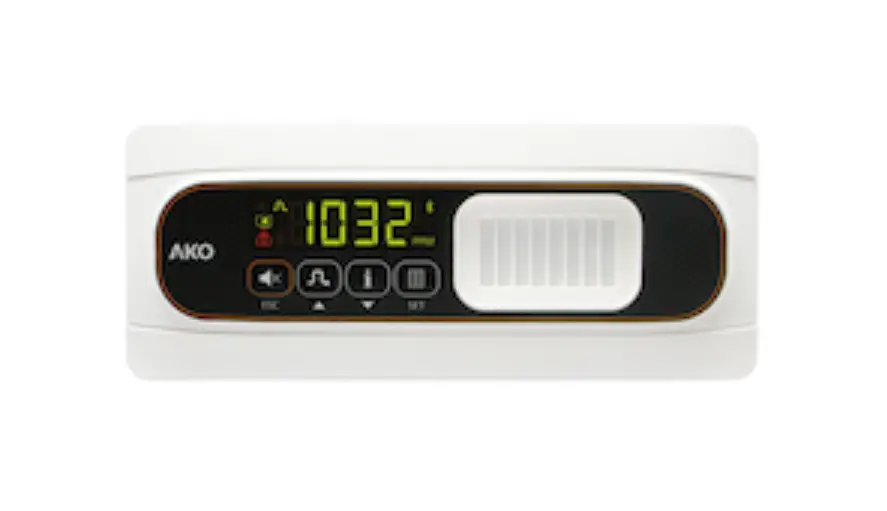
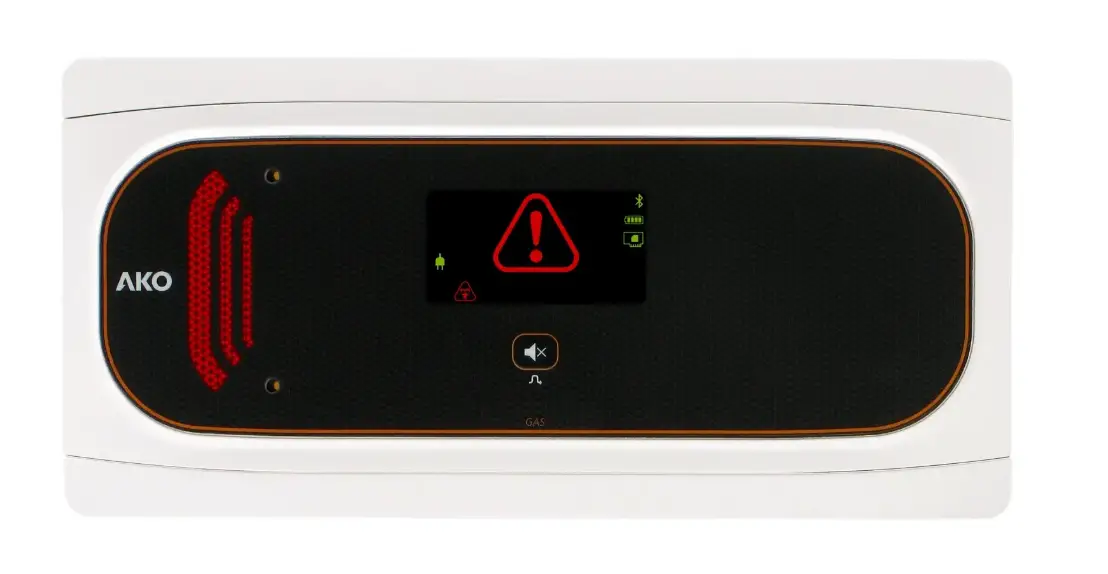
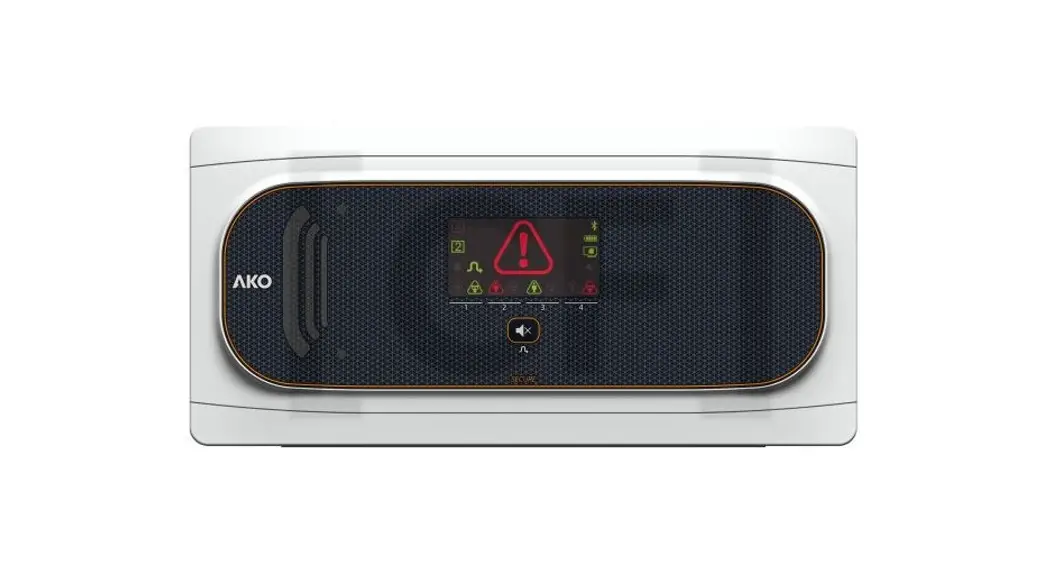
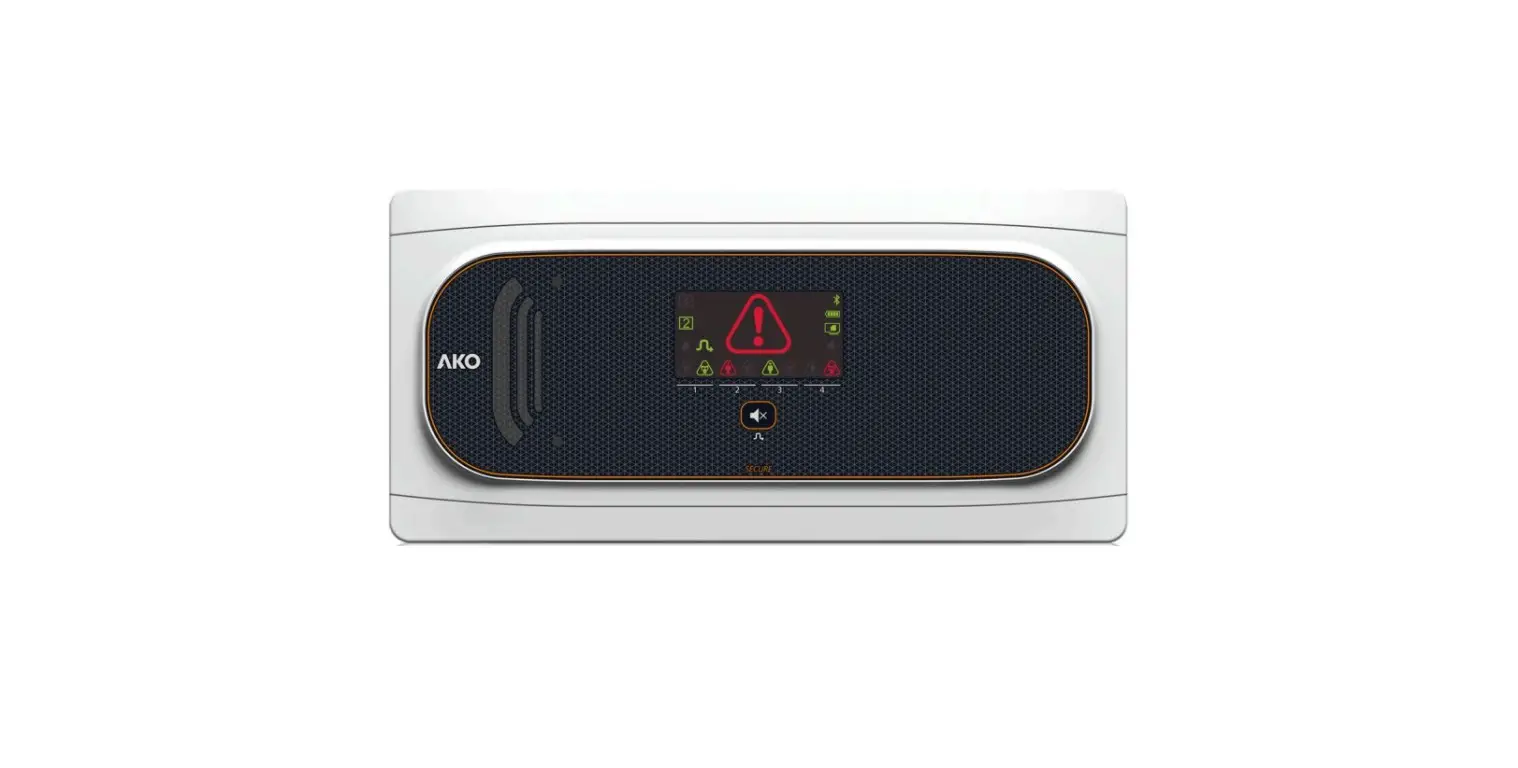
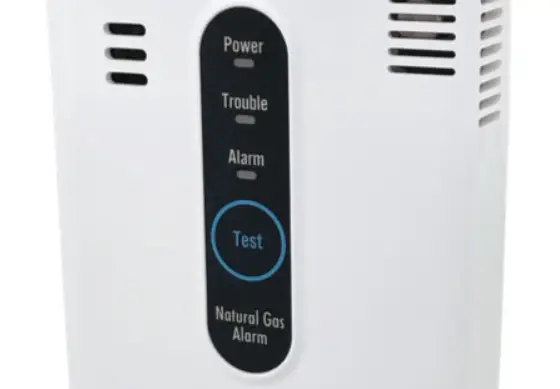
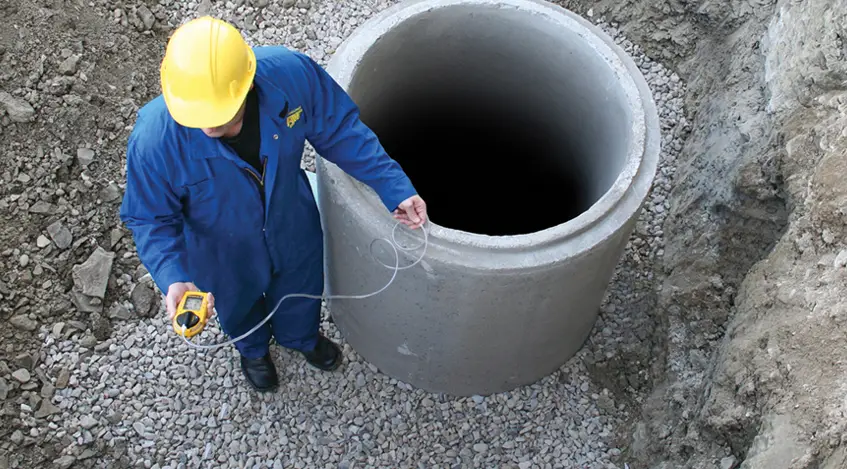
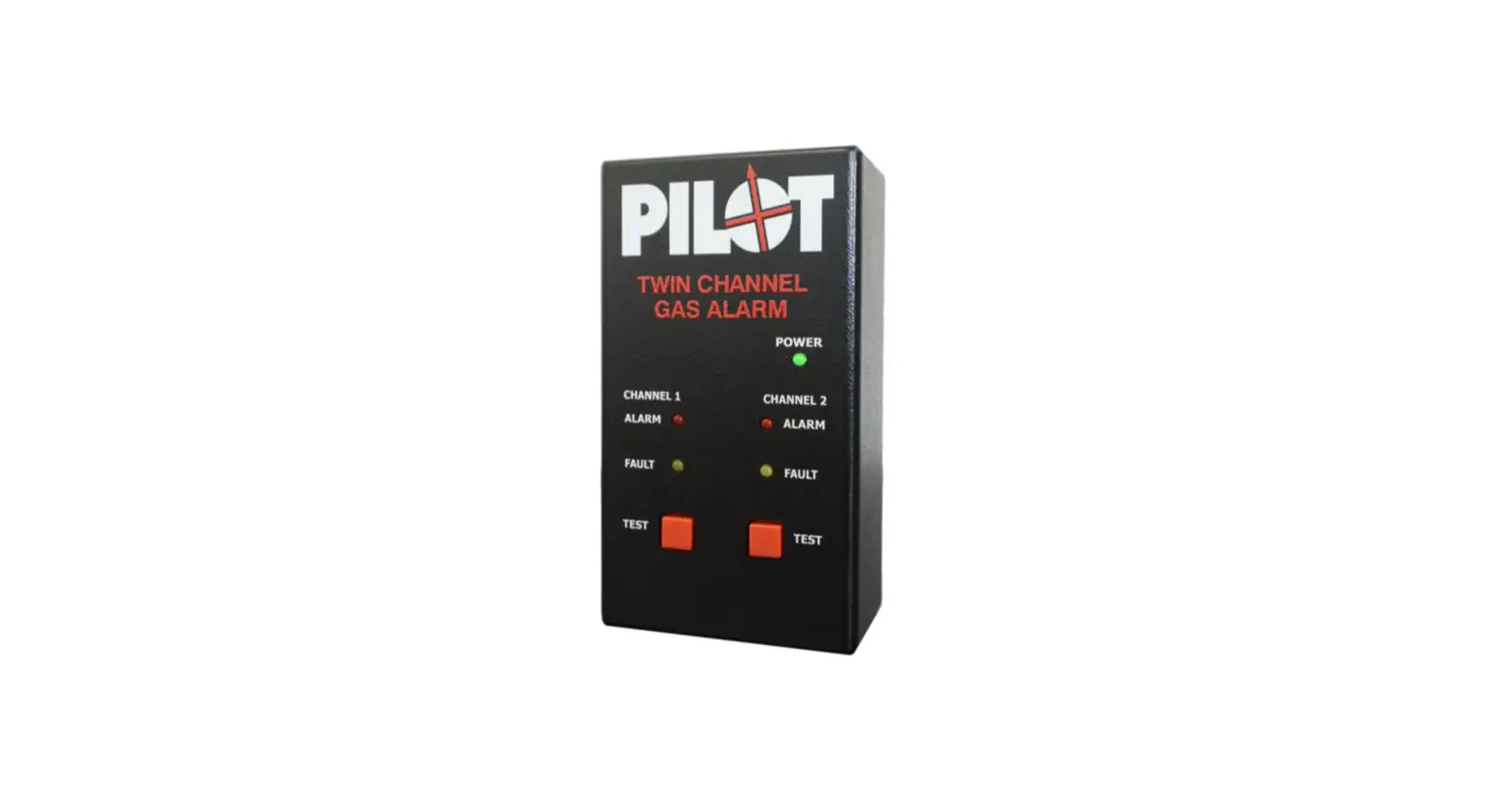
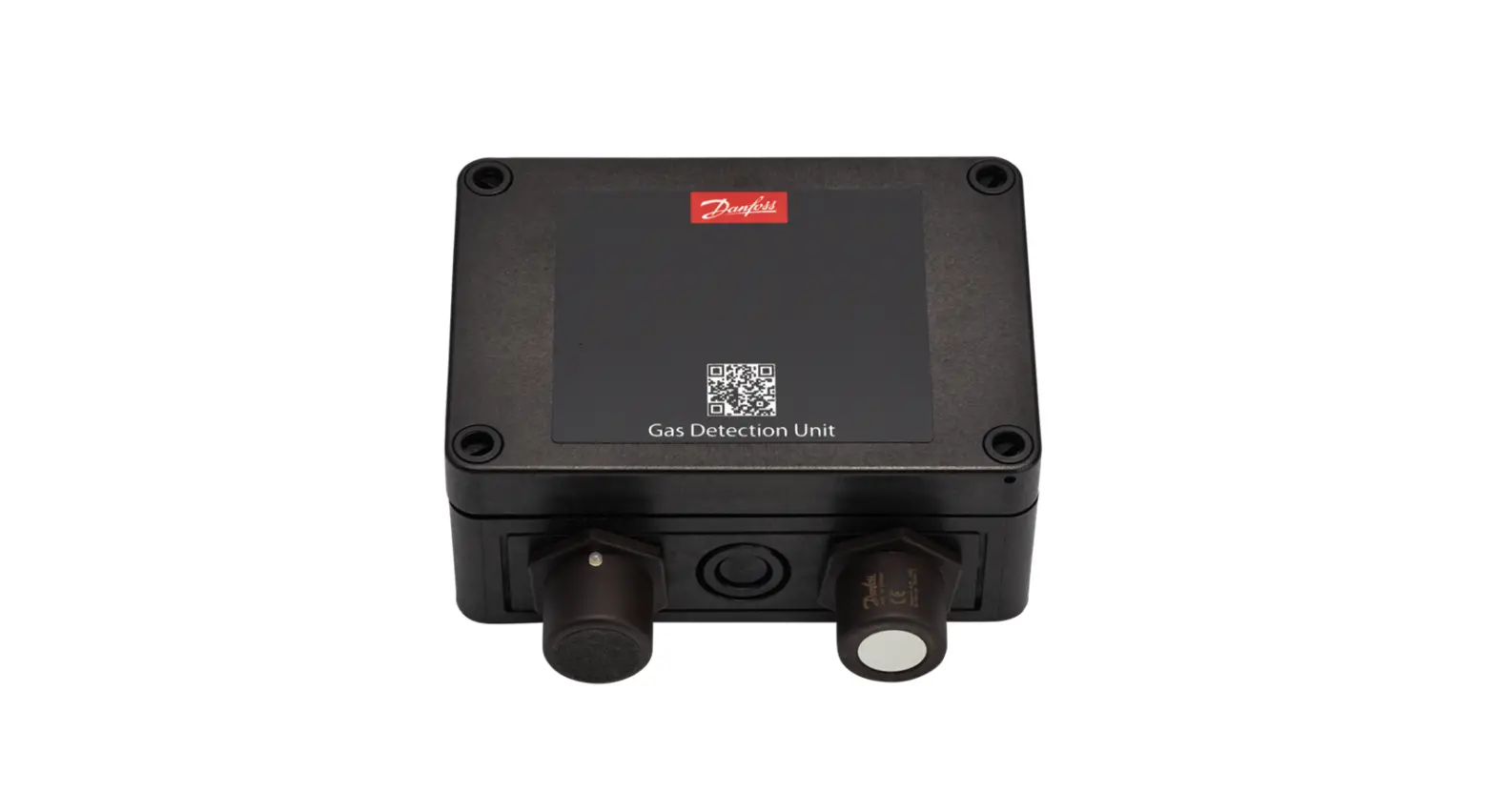
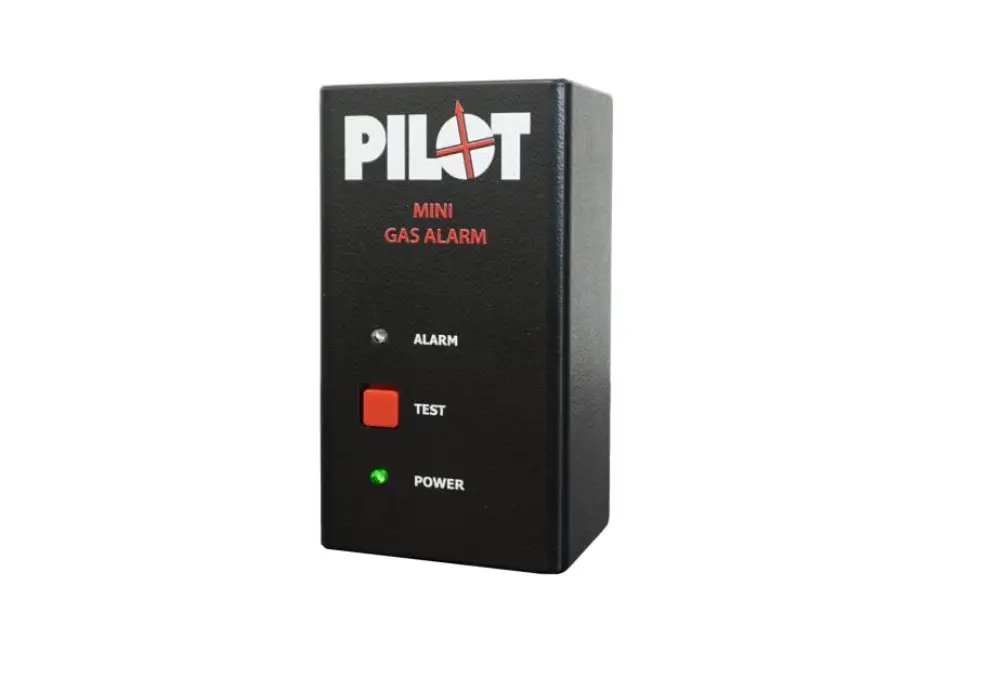
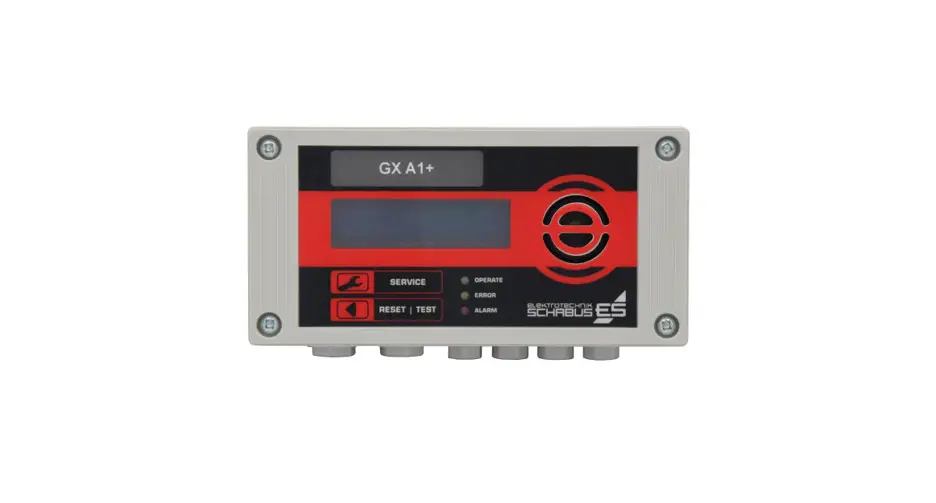
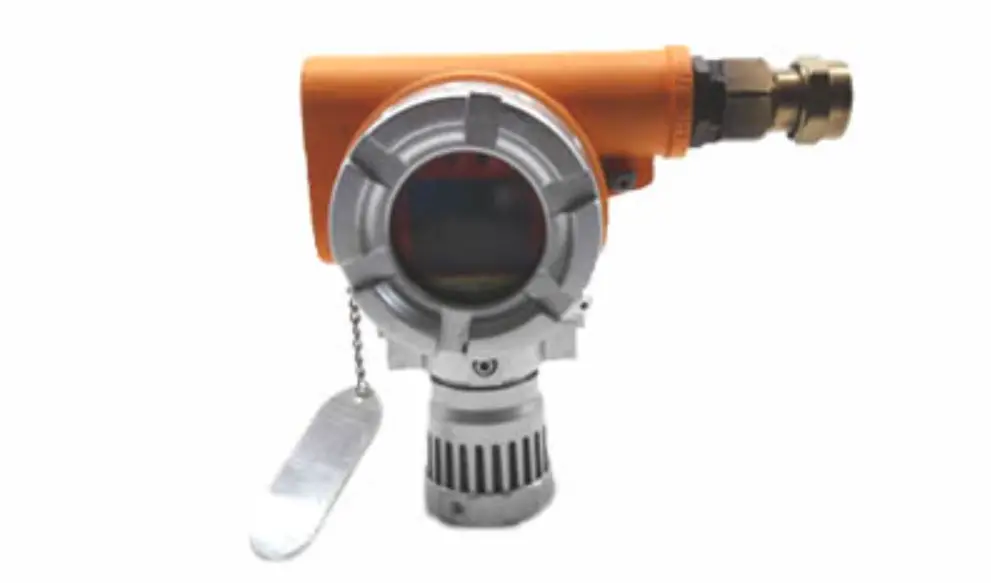
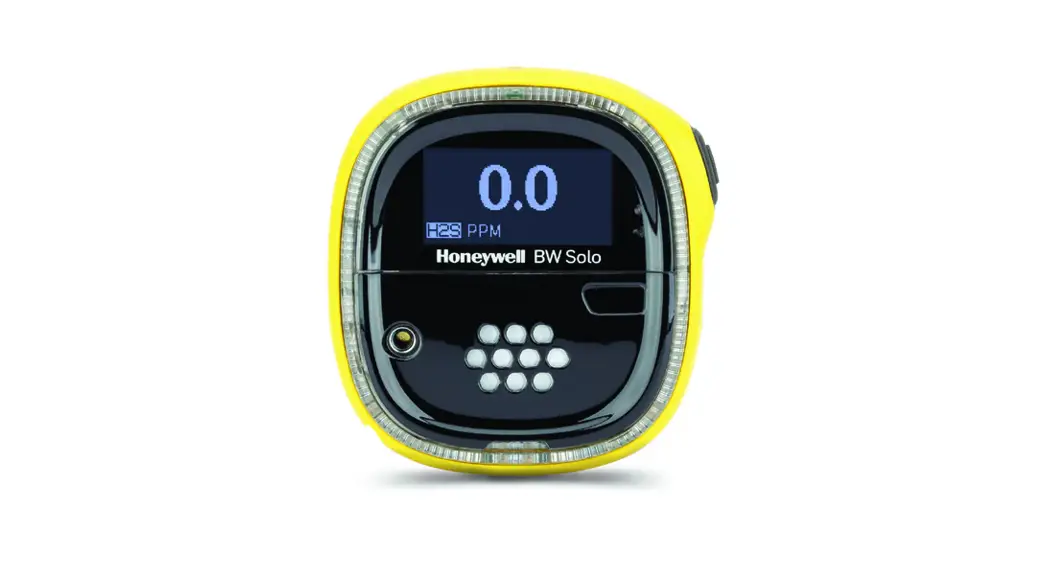
AKO-55624 1 Channel Gas Detection Alarm Station
Product Information: AKOGas Alarm for Refrigerated
Installations
The AKOGas alarm is designed to detect refrigerator gas in
refrigerated facilities. The AKO-55624 / 55724 series gas alarms
have two different models, depending on the type of gas used. The
AKO-57613 Gas detector is designed for ammonia (R-717), the
AKO-57614 Universal gas detector can detect R-134a, R-22, R-404A,
R-407A, R-407C, R-407F, R-409A, R-408A, R-410A, R-422A, R-422D,
R-424A, R-434A, R-442A, R-448A, R-449A, R-450A, R-452A, R-453A,
R-507A, and R-513A gases, and the AKO-57615 Gas detector is
designed for CO2 (R-744). The alarm stations come with 1 or 4
inputs and can detect different gases depending on the detectors
connected.
The detectors have pre-alarm and alarm levels set at 500 ppm and
1000 ppm for most gases by default. The levels can be adjusted as
per the user’s requirement. The detectors must be installed in a
place with the least risk of receiving knocks possible. The sensors
of the detectors used to control the concentration should be
positioned at eye height.
Product Usage Instructions
- Choose the correct version of the alarm model depending on the
type of gas used in the refrigerated facility. - Determine the location of the detector based on the type of
refrigerant/s used. Refer to the table to see each detector’s
sensitivity. - Avoid installing the detector in areas where it may be affected
by environmental conditions like smoke outlets, solvents, paints,
fermentation and ripening processes of products, or strong
ventilation. - Do not install the detector near products or devices that might
give off CO2. Human breathing near the detector may increase the
level of CO2 and generate false alarms. - Keep the detector work environment free of chemical agents like
solvents, paints, alcohol, cleaning products, silicone and
derivatives, ethylene, etc. - The detector should have a free area (without objects,
cupboards, pipes, etc.) with about 50 cm around it to allow the air
to circulate. - Do not pile up material near to the detector as it could hinder
air circulation, which will prevent leaks being correctly
detected. - The pre-alarm and alarm relays are designed to provoke a
reaction in the facility when they detect refrigerator gas to
minimize possible problems it may cause.
en
5760H002 Ed.02
Use of the AKOGas alarm in refrigerated installations
AKO-55624 / 55724 series gas alarms have been designed to detect refrigerator gas in refrigerated facilities. There are two different alarm models, depending on the type of gas in use, make sure you choose the correct version from the table below.
Detector location
The location of the detector is key to optimising leak detection, and several factors should be born in mind to define it:
Type of refrigerant/s used The type of refrigerant gas to be detected affects the choice of the type of detector, and when different types of gas are used, you may have to use more than one d etector to make your facility safe. Look at the following table to see each detector’s sensitivity.
DESCRIPTION AKO-57613 Gas detector for ammonia (R-717)
AKO-57614 Universal gas detector
AKO-57615 Gas detector for CO2 (R-744) AKO-55624 Alarm station with 1 input AKO-55724 Alarm station with 4 inputs
GASES DETECTED
R-717 (NH3 / ammonia) R-134a, R-22, R-404A, R-407A, R-407C, R-407F, R-409A, R-408A, R-410A, R-422A, R-422D, R-424A, R-434A, R-442A, R-448A, R-449A, R-450A, R-452A, R-453A, R-507A, R-513A R-744 (CO2) Depending on the detector connected Depending on the detectors connected
DEFAULT LEVELS
PRE-ALARM ALARM
500 ppm
1000 ppm
500 ppm
1000 ppm
4000 ppm –
8000 ppm –
SECOND SET OF LEVELS
PRE-ALARM ALARM
–
–
1500 ppm 3000 ppm
5000 ppm –
10000 ppm –
Environmental conditions Some environmental conditions may affect the detector and trigger false alarms, for example:
Smoke outlets located in confined spaces or from engines, generators or motorised machinery (fork-lift trucks, etc.). Rooms where solvents, paints or refrigerator gases are handled Areas where fermentation and ripening processes of products (bread, pizza, fruit, etc.) may occur. Areas with strong ventilation (leaks are not detected due to high air renewal) Please avoid installing the detector in the described areas, or in any case, install it in a place where it is the least affected.
Avoid installing the detector near products or devices that might give off CO2 .Human breathing near the detector may increase the level of CO2 and generate false alarms.
Keep the detector work environment free of chemical agents (solvent, paints, alcohol, cleaning products, silicone and derivatives, ethylene, etc.).
Installation location If the detector is installed in outdoor areas, it should be located in a place protected from the rain, sun and inclemency of the weather in general, but near to areas with possible leak sources (joints, valves, etc.), as a leak not accumulating in a specific area is more probable in these areas. If you install it inside a chamber, avoid placing it next to the evaporator, as it will be affected by strong air currents, and a good place could be the chamber’s recirculation exit, as if a leak occurs, the air currents will take it there. If the installation place is the compressor room, look for the place where gas is most likely to accumulate, bearing in mind the environmental conditions and attempt for it to be near to possible points with a risk of leaks (joints, valves, etc.).
General standards After choosing the location, please follow the standards listed below:
The detector should have a free area (without objects, cupboards, pipes, etc.) with about 50 cm around it to allow the air to circulate, and be situated in a place with the least risk of receiving knocks possible.
You should not pile up material near to the detector as it could hinder air circulation, which will prevent leaks being correctly detected.
Taking into account the characteristics of the used cooling gas, the sensors of the detectors used to control the concentration should be positioned at eye height.
Advertencias Detectors measure gas concentration in a point, if the gas leak does not reach the detector, the alarm will not activate. Detectors cannot supervise areas, and if perimeter supervision is required, several detectors should be installed surrounding the area to be supervised. Thoroughly studying the location of the detector/s is recommended, bearing in mind the areas most sensitive to suffering leaks, the type of gas used, the size and shape of the room, the air flows, the maintenance work, etc. The detectors described have been designed to detect gas concentrations capable of affecting the environmental conditions of the room (movement of oxygen), and the detection of small coolant leaks is not guaranteed.
50 cm 50 cm
en
5760H002 Ed.02
Pre-alarm and alarm relays
Application
The pre-alarm and alarm relays are designed to provoke a reaction in the facility when they detect refrigerator gas to minimise possible problems it may cause.
PRE-ALARM
Activation: Signalling:
Small gas concentrations, false detections caused by external agents (CO2, solvents, etc.) or initial detection of higher concentrations. The latter will cause a subsequent alarm activation as the gas concentration increases.
AKO-55624 / 55724 CENTRAL
AKO-5761x DETECTOR
FLASHING
FIXED*
FIXED
FLASHING
FIXED
FLASHING**
Pre-alarm relay: As a rule, this will be used to activate the room’s forced ventilation and this way rule out possible transitory leaks or false detections.
Wiring
AKO-55624 / 55724
100 – 240 V~
50/60 Hz
LN
GAS
Gas
Gas
Pre-Alarm Alarm
RY2
RY3
NC C NO NC C NO Vac
Air extractor 230 V~
LN
ALARM Activation: Signalling:
Considerable gas concentrations in the facility, may affect personal safety and in the medium-term, damage the products stored in the coldroom.
AKO-55624 / 55724 CENTRAL
AKO-5761x DETECTOR
Alarm relay: Wiring
FLASHING
FIXED*
FIXED
TWO-TONE SOUND
FLASHING
TWO-TONE SOUND**
Using this output is recommended to stop the installation connecting the alarm relay in series with the installation’s safety chain.
AKO-55624 / 55724
100 – 240 V~
50/60 Hz
LN
GAS
Gas
Gas
Pre-Alarm Alarm
RY2
RY3
NC C NO NC C NO Vac
Facility’s safety chain High/Low pressure controller
LP
HP
*The input indicator corresponding to the active detector will turn on. ** Depending on the configuration
AKO ELECTROMECÁNICA , S.A.L. Avda. Roquetes, 30-38 08812 · Sant Pere de Ribes. Barcelona · Spain.
www.ako.com
We reserve the right to supply materials slightly different to those described in our Data Sheets. Updated information in our web site.
x 355760002 REV.01 2023
 Industrial refrigeration: control and safety | AKO Group