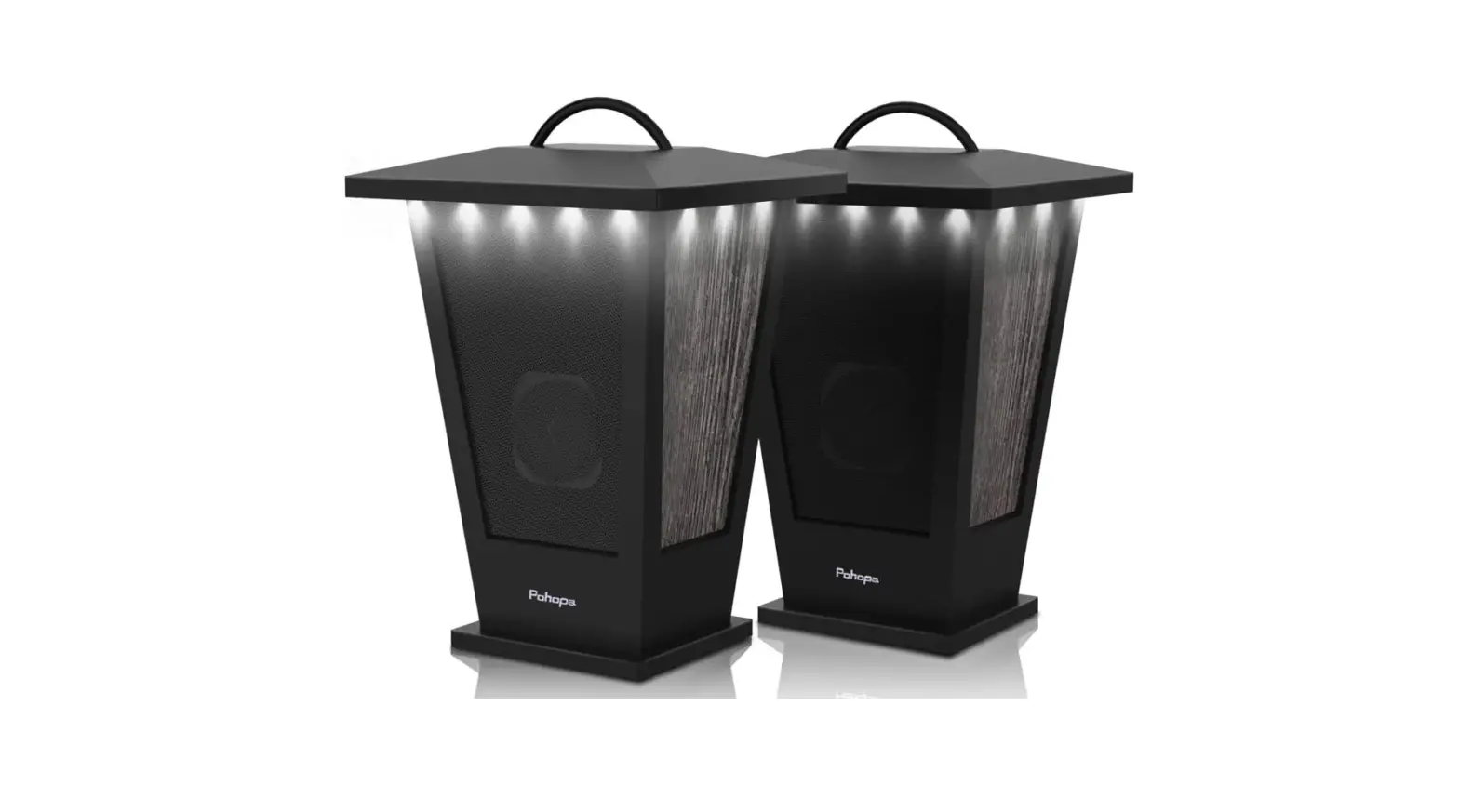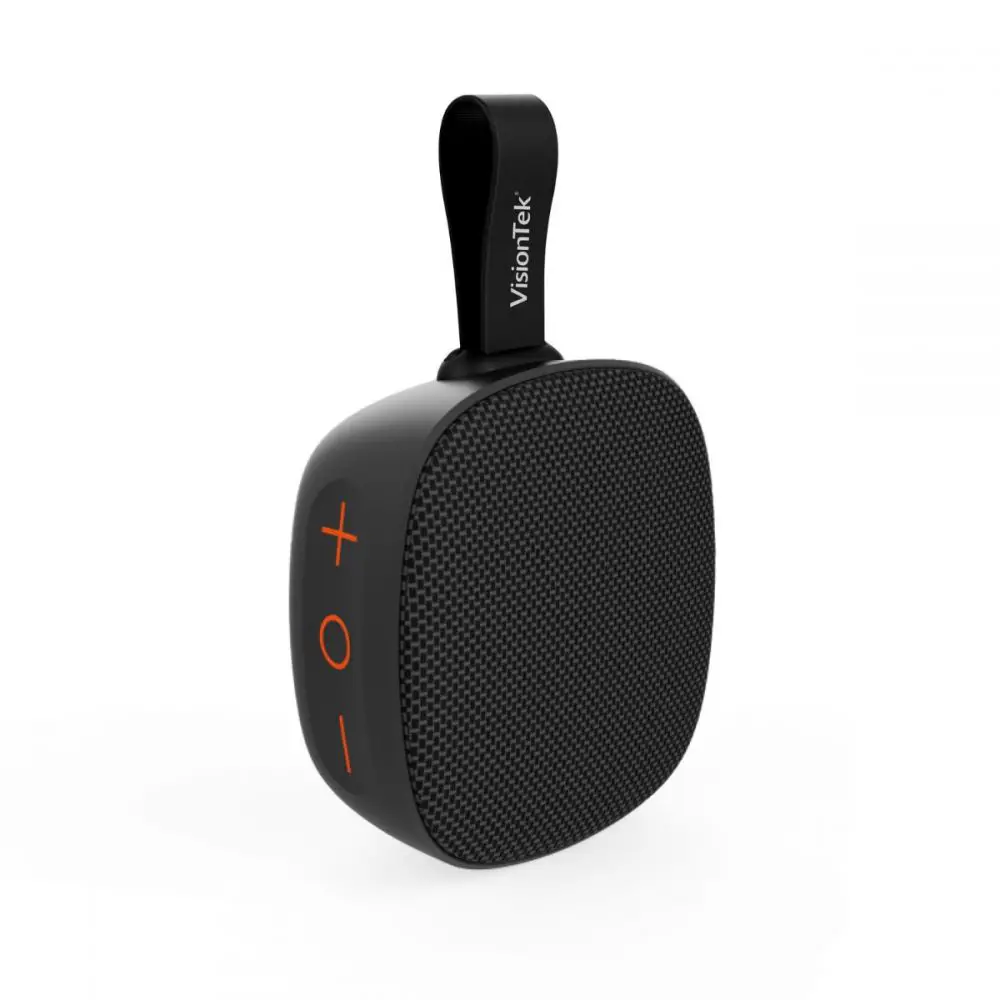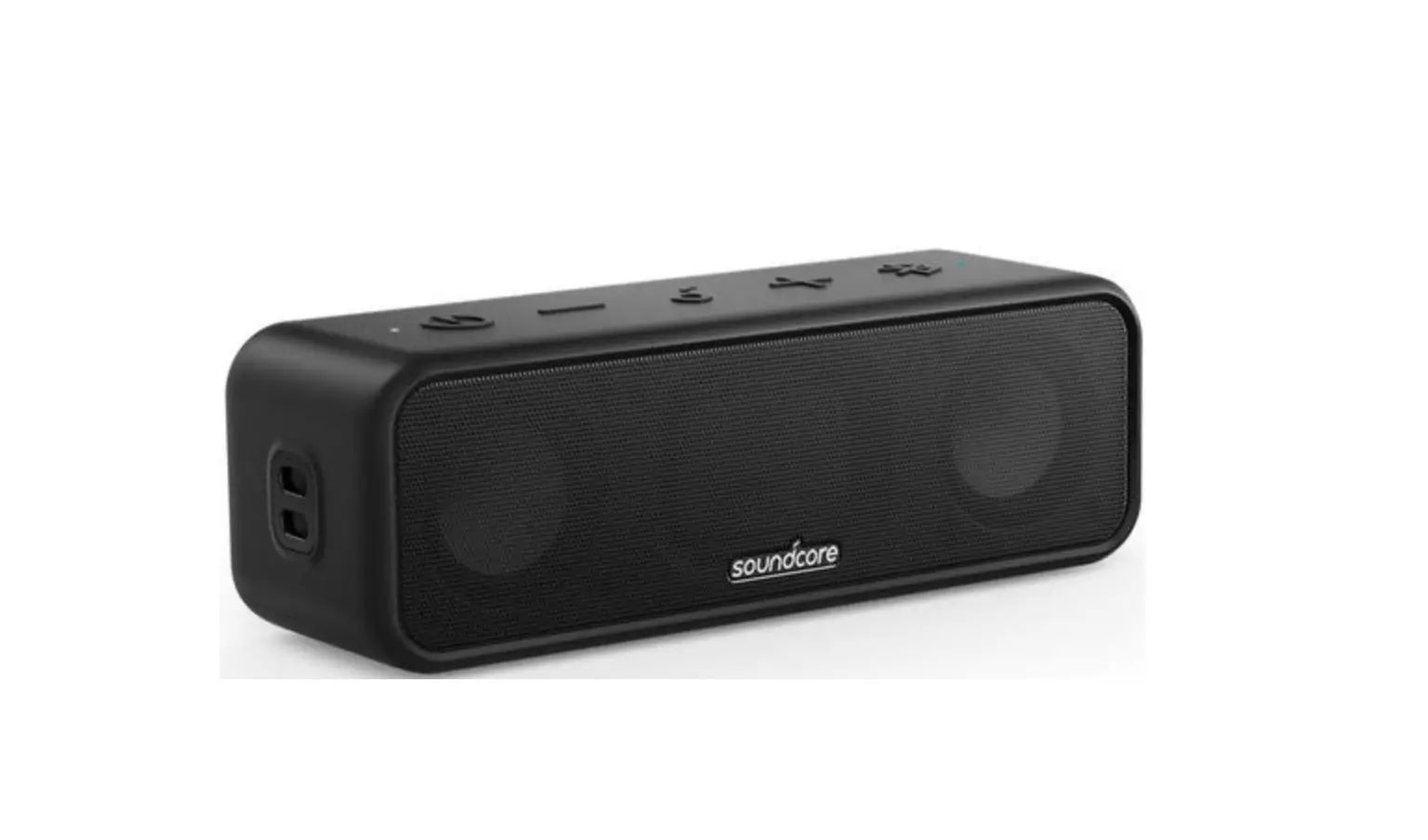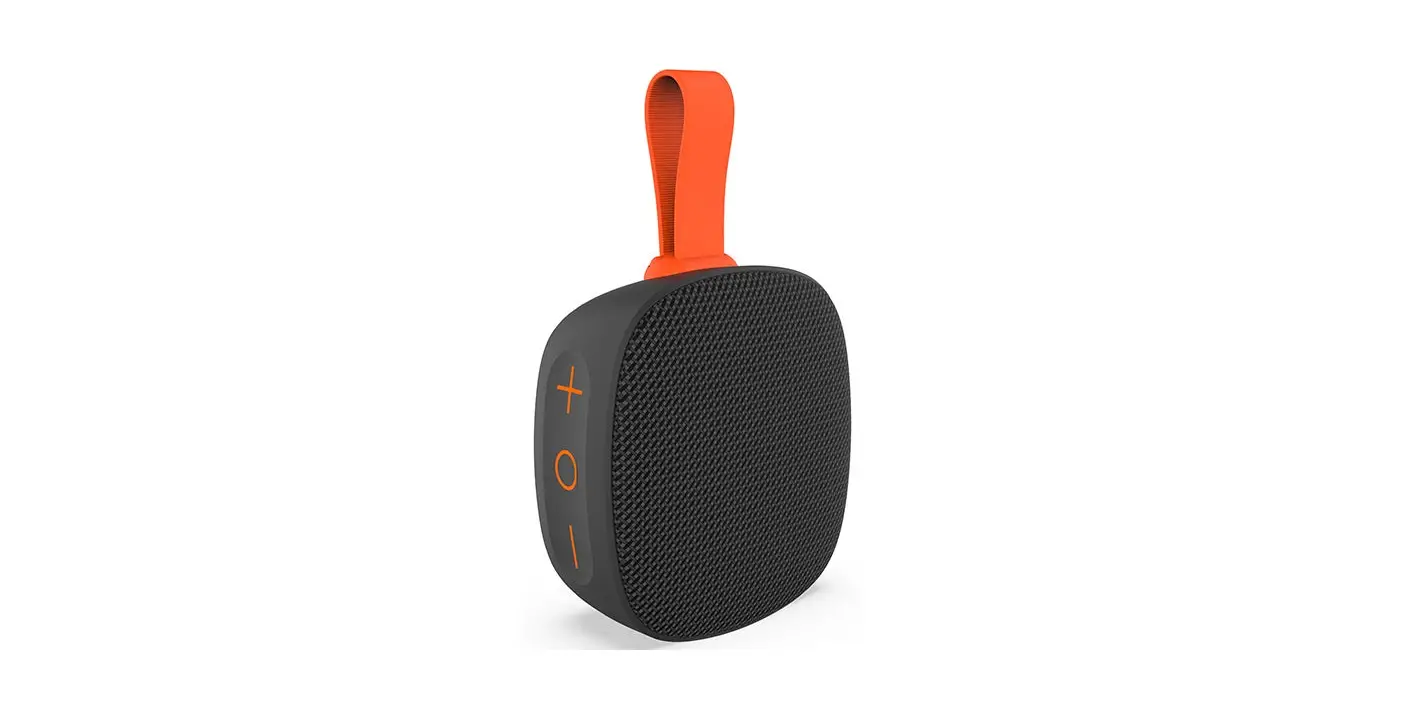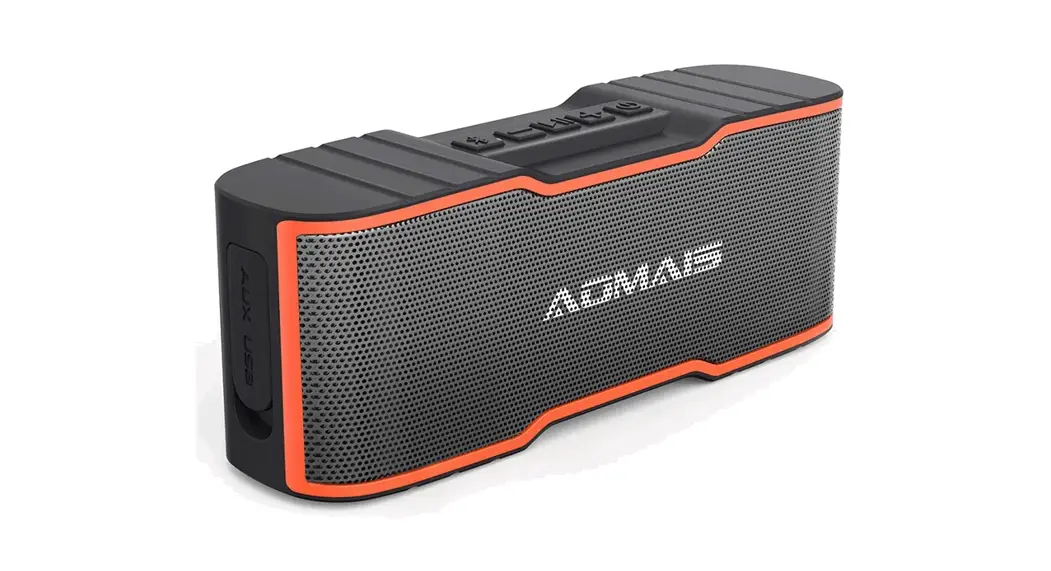

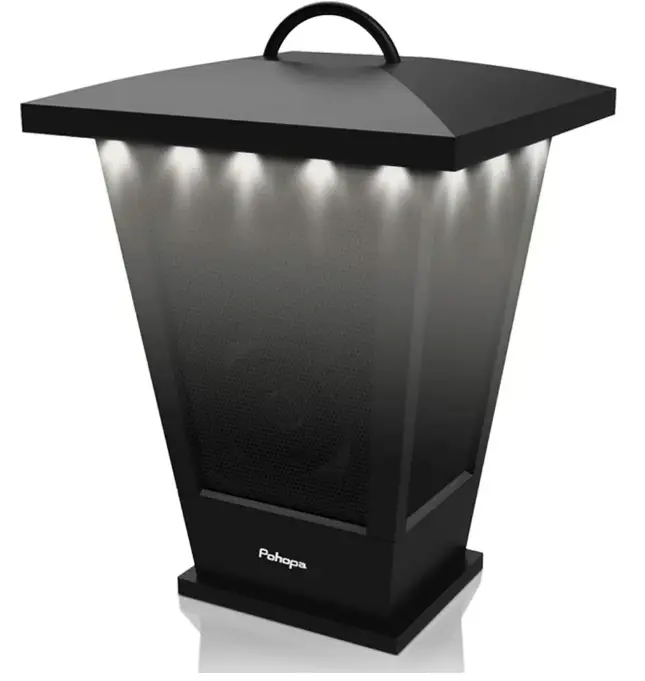
Pohopa B210D Bluetooth Speaker Waterproof
INCOUD IN
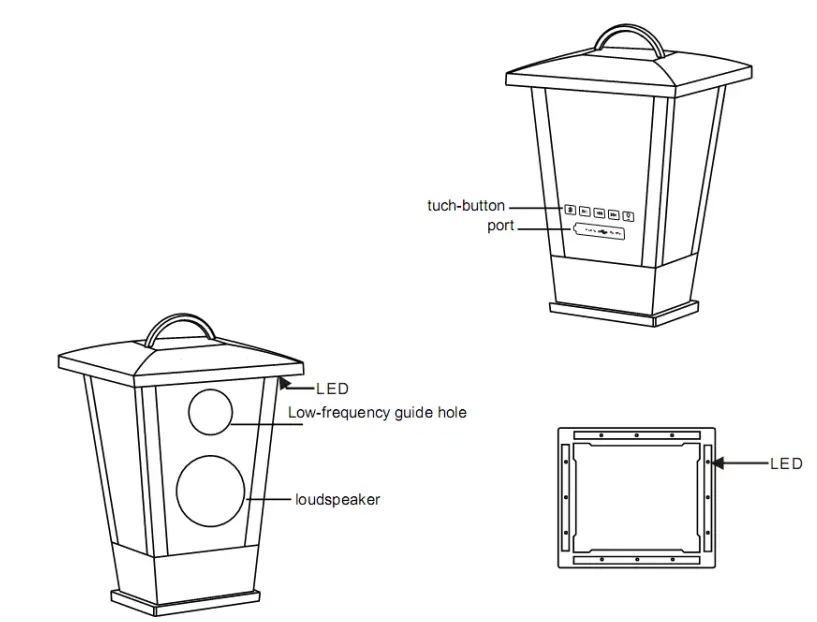
USE ENVIRONMENT
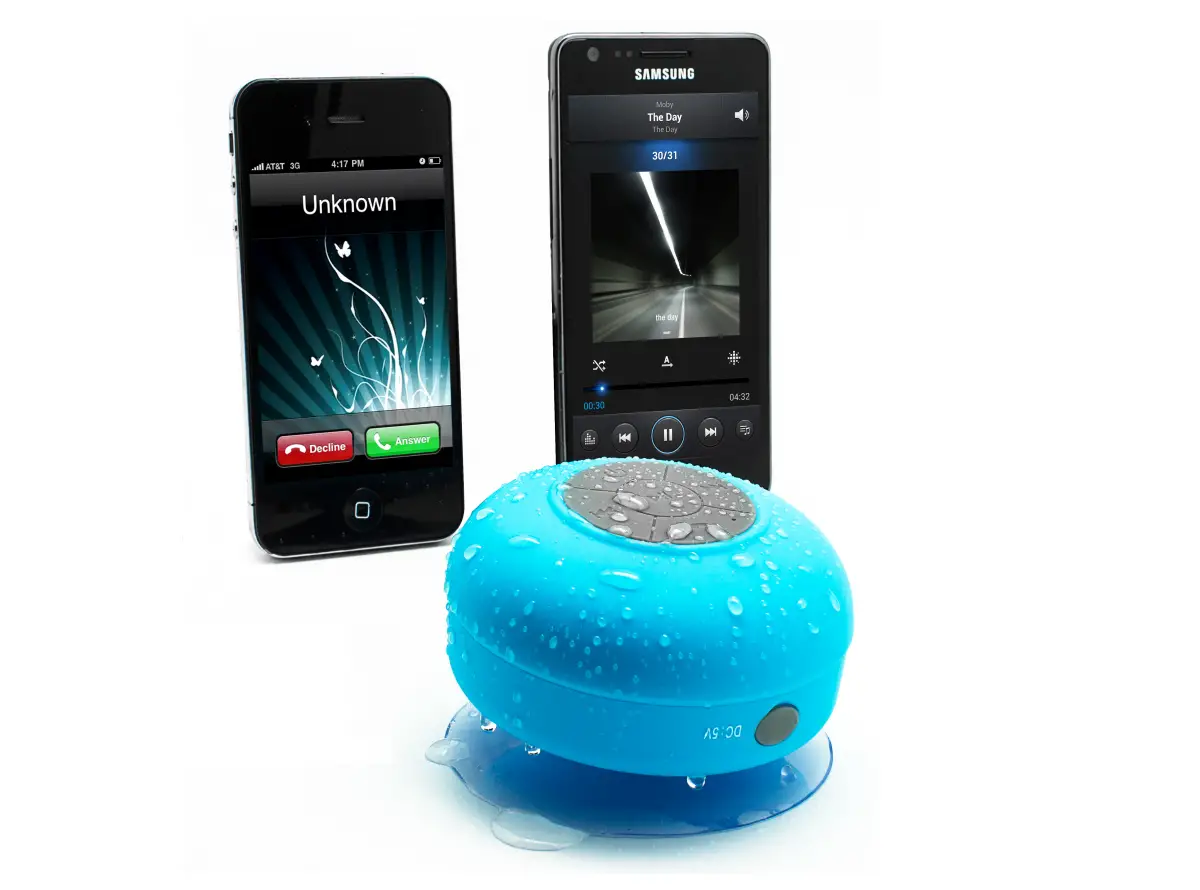
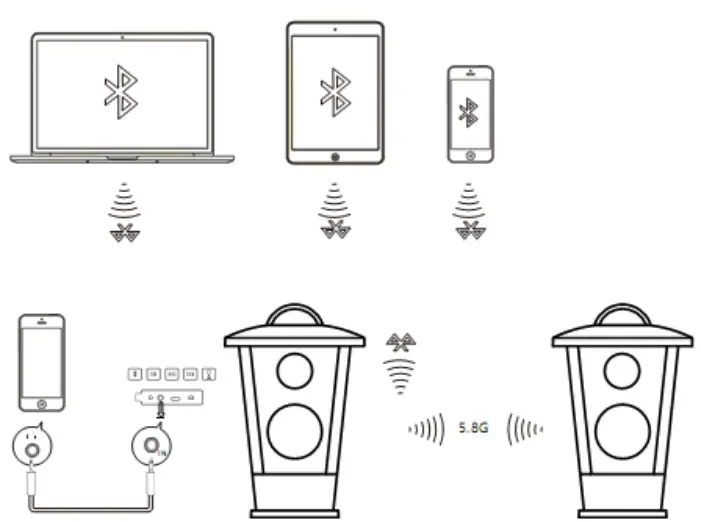
There are two ways to connect a B210D speaker to your Bluetooth device via a Bluetooth wireless connection or an AUX cable. Such as iPad, iPhone, Android phone or laptop. To get more powerful sound. Two, three or more 210D speakers can be connected via a 5.8G wireless connection.
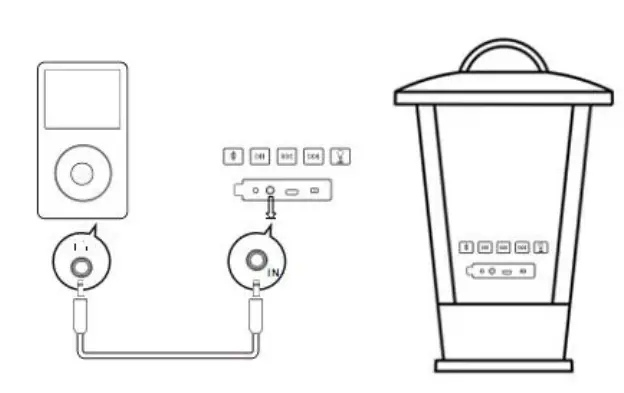
Through the 3.5mm AUX cable, you can also connect the speakers to the audio device. Such as an MP3 player.
OPEN AND CONNECT
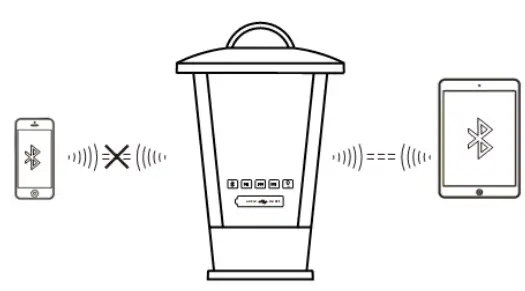
Switch the power switch to the ON position and enter the Bluetooth pairing status. The blue LED flashes quickly. Turn on the Bluetooth function on your Bluetooth device and search for B210D and click OK. The success of the blue light is on. The next time you turn on the B210D, the speaker will automatically connect to the last paired device.
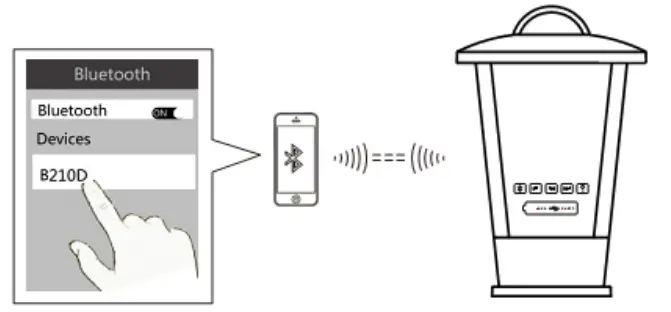
Note: Connect the B210D to another Bluetooth device. Please turn off Bluetooth on the current Bluetooth device.
PLAYING
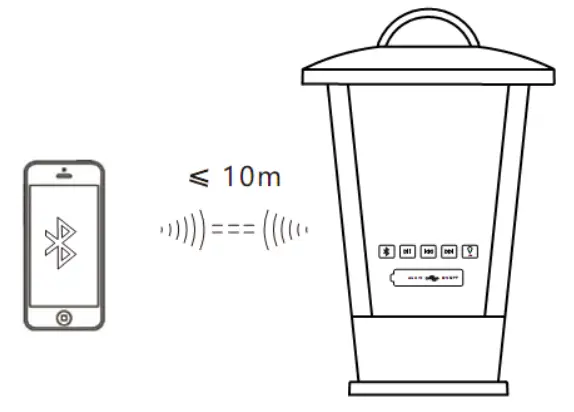
The music transmission distance is 10m, which may affect the distance or interruption due to obstructions between the device and the B210D (such as walls or other equipment operating at the same frequency nearby).
LED LIGHTS UP AND OFF
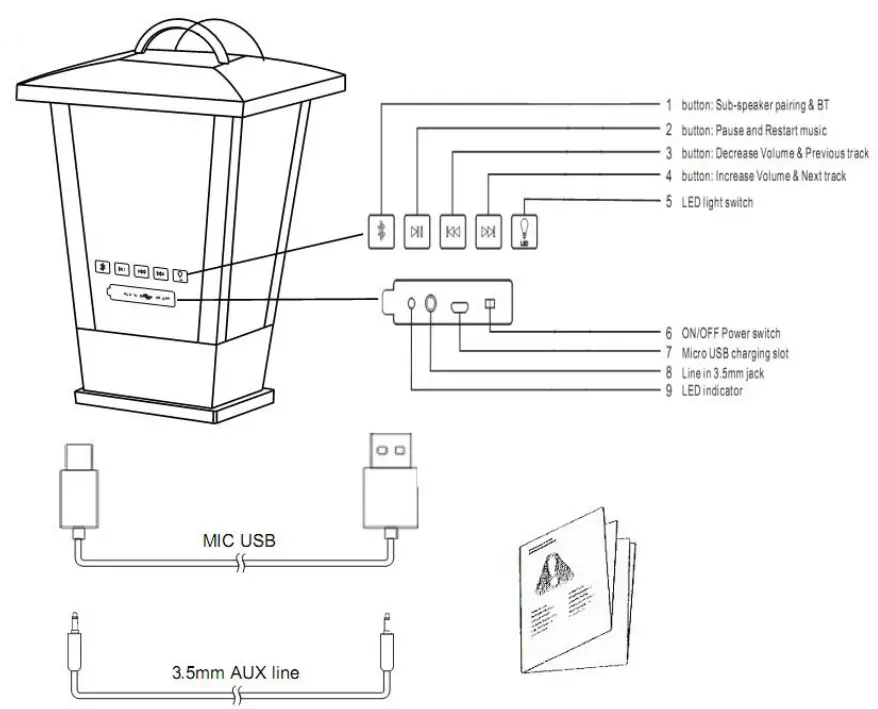
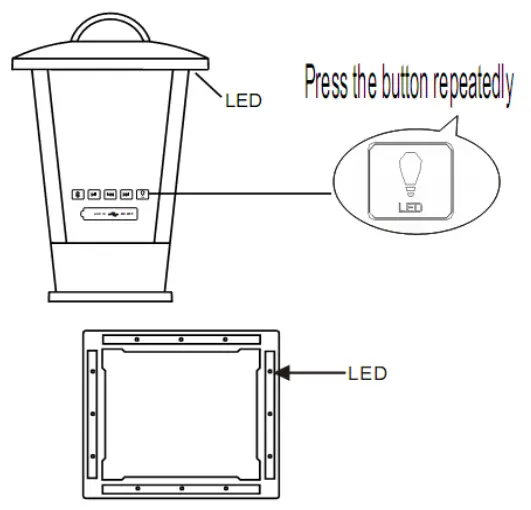
Press this button to turn On or OFF the LED.lights
MULTIPLE B210D SPEAKERS TO PLAY SYNC
First according to (5) operation connect B210D with the phone or other Bluetooth devices.to connected, the second or more B210D long press the Bluetooth key to automatically connect the host B210D to play music.
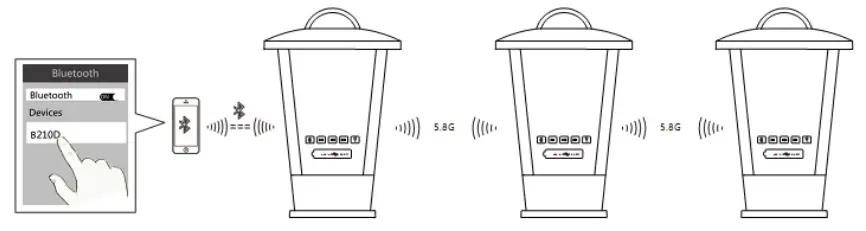
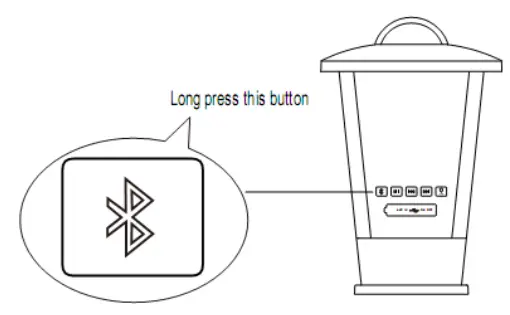
Switch power on then long press the Bluetooth key hear of prompt beep sound, SECOND B210D connect FIRST B210D via 5.8GHz wireless technology .At the same time play music sync.
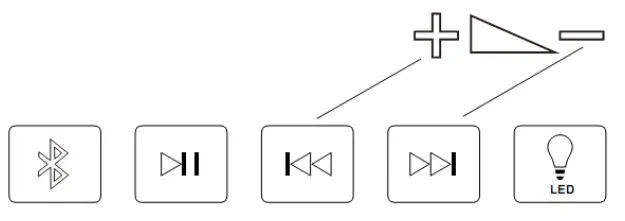
Short press this key for the previous track selection, long press for the volume reduction function;
short press this button for the next track selection, long press for the volume increase function
CHARGING
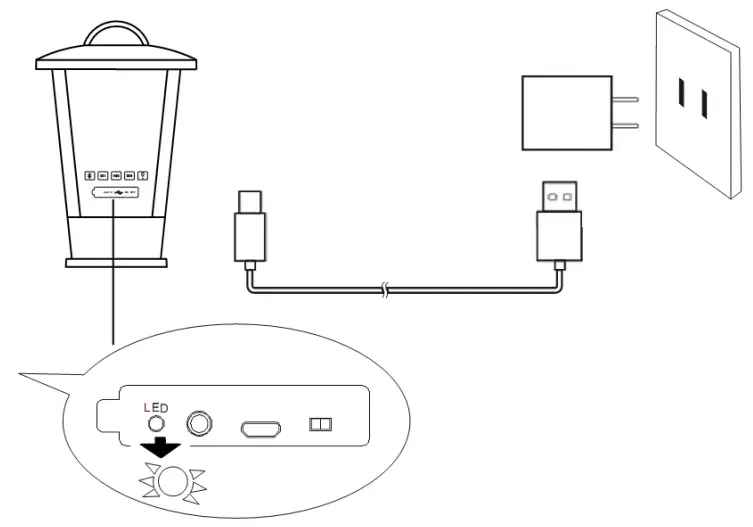
In any state, including the shutdown, insert the microUSB with micro usb cable to your iphone charger, the red light is on, you can charge the speaker, filled with the red light goes out.
PARAMETER
- BLUETOOTH VERSION: 1+EDR, 5.8GHZ
- FREQUENCY: 402~2.480GHZ ISM band, 5729-5797MHz
- DISTANCE: 10m(open space)
- RATED POWER OUTPUT: 5W TMD 10%
- FREQUENCY RESPONSE: 100HZ-18KHZ
- S/N RATIO: 80dB
- POWER: Micro USB 5V 1.5A
- BATTERY: 7V 4400MA
- POWER CONSUMPTION: 5W
- TEMPERATURE AND HUMIDITY: 0℃ to 45℃, 5% to 90% humidity, suitable for a variety of climate work. 40℃ to 60℃ and 5% to 95% humidity for storage
- PRODUCT SIZE: 75"*7"*11.75"
- NET WEIGHT: 1kg
FCC
This device complies with Part 15 of the FCC Rules. Operation is subject to the following two conditions:
- This device may not cause harmful interference, and
- This device must accept any interference received, including interference that may cause undesired operation.
Changes or modifications not expressly approved by the party responsible for compliance could void the user’s authority to operate the equipment.
NOTE: This equipment has been tested and found to comply with the limits for a Class B digital device, pursuant to Part 15 of the FCC Rules. These limits are designed to provide reasonable protection against harmful interference in a residential installation. This equipment generates, uses instructions, may cause harmful interference to radio communications. However, there is no guarantee that interference will not occur in a particular installation. If this equipment does cause harmful interference to radio or television reception, which can be determined by turning the equipment off and on, the user is encouraged to try to correct the interference by one or more of the following measures:
- Reorient or relocate the receiving antenna.
- Increase the separation between the equipment and receiver.
- Connect the equipment into an outlet on a circuit different from that to which the receiver is connected.
- Consult the dealer or an experienced radio/TV technician for help.
Frequently Asked Questions
Yes, overcharging your speakers will cause the rechargeable batteries irreversible damage. Please make sure that Bluetooth speakers are unplugged from their power source before each use when transporting them to another location, like a friend’s house, etc., for the optimum performance.
Although wireless in theory, outdoor Bluetooth® and Wi-Fi speakers still need to be plugged into a standard AC outlet to get power. If you connect these speakers to your phone, tablet, or wireless-enabled receiver, you can enjoy outdoor audio whenever and wherever you like.
Outdoor speakers should be fully waterproof and have an IPX7 rating if you plan to leave them outside all the time. Outdoor speakers ought to have some degree of water resistance. The connection of the speakers is the next item you ought to consider. There is a need for a power source due to the numerous connected outside speakers.
If you are using a Bluetooth speaker with a built-in battery, it is perfectly acceptable to keep it charging over night. However, if the battery is changeable, it is not advisable to leave your Bluetooth speaker charging over night.
The CHARGE indicator will not illuminate if the battery is completely charged. The speaker’s CHARGE indicator may not turn on while it is being charged, depending on the model. If the battery is charging when the speaker is off, the CHARGE indicator will come on.
Even if you leave the Bluetooth speaker connected all day, the battery will still suffer damage. Perhaps after the battery has reached its full capacity, charging the speaker further runs the risk of the battery overheating and even exploding.
Outdoor speakers can frequently survive up to ten years if they are well-maintained. The quality of the wiring, mounting hardware, and weatherproof sealing, as well as the local climate’s temperature and humidity, sunlight exposure, proximity to water (including swimming pools), owner care, and other factors, all affect how long outdoor speakers last.
Since many outdoor speakers are weather-resistant rather than waterproof, they will need some protection. Do your eaves touch the ground or the deck in close proximity? To protect them from the elements, bury the speakers. However, don’t mount them more than 10 feet above the listening area.
Since most outdoor speakers lack built-in amplification, they are passive devices and so need power to operate.
As most outdoor speakers need at least 40 watts per channel of power, make sure your receiver can provide that.
If you position them higher, the sound will go further but become thinner. We advocate keeping speakers under 10 feet away from any installation. If you must install the loudspeakers in an exposed location, angle them slightly downward to help with drainage.
Generally speaking, you can leave them in the cold as long as they aren’t in contact with moisture. For permanently mounted outdoor speakers, it would be excellent if you built some type of shelter to protect them from the elements. The cold alone won’t cause irreparable damage to your speakers.
A Bluetooth speaker must, of course, have a built-in battery in order to be portable. The normal battery life of a portable speaker is 6 to 12 hours, while some models can last up to 24 hours.
The generally recognised auditory frequency range is 20 Hz to 20,000 Hz, even though most people can hear less than this entire range and as they age, the range tends to shorten on both ends.
The five most important elements to take into account when buying a portable Bluetooth speaker are portability, durability, sound quality, battery life, and price. Websites usually prominently identify these components, making it simple to compare different devices.