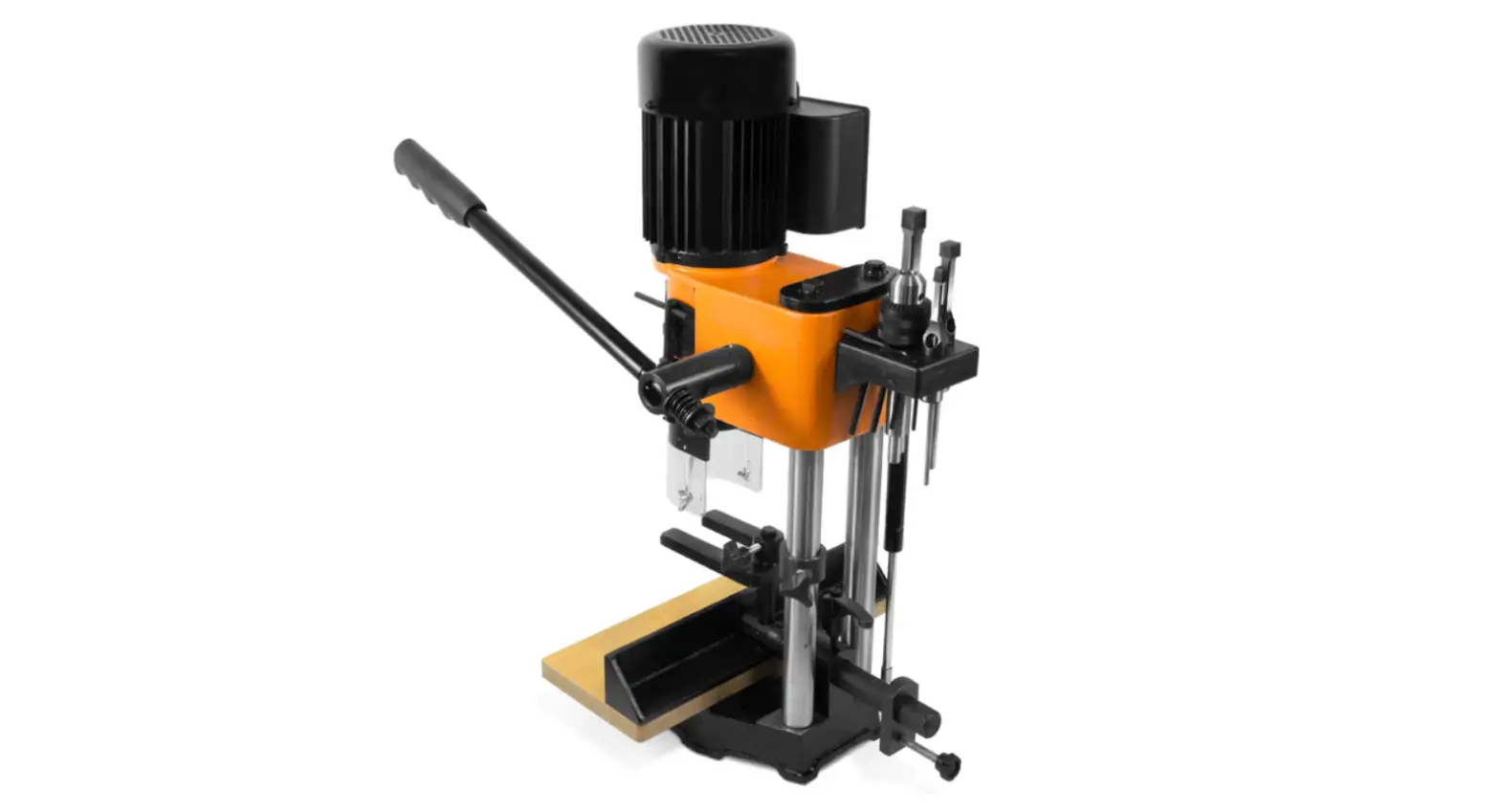
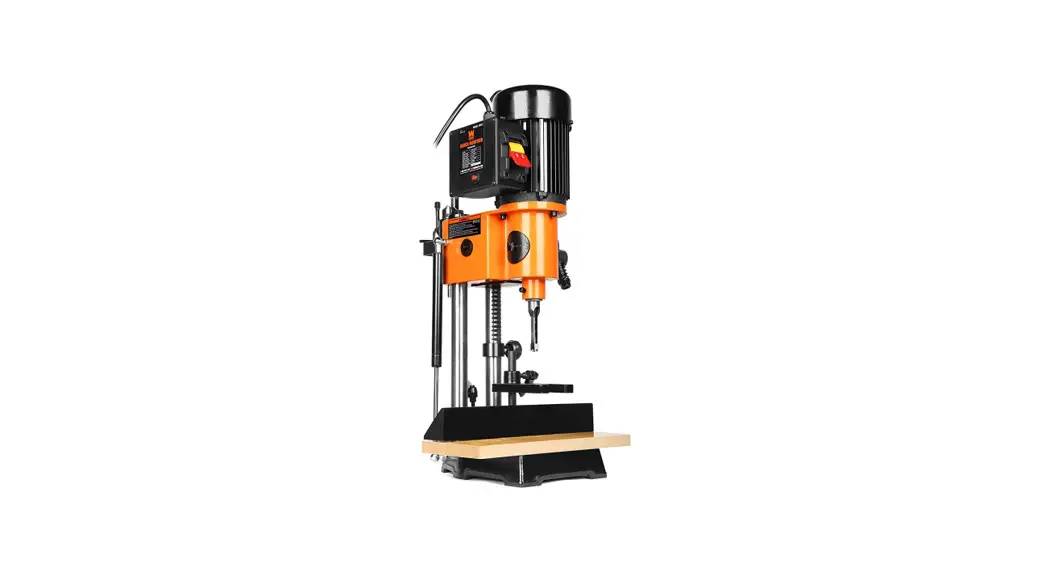
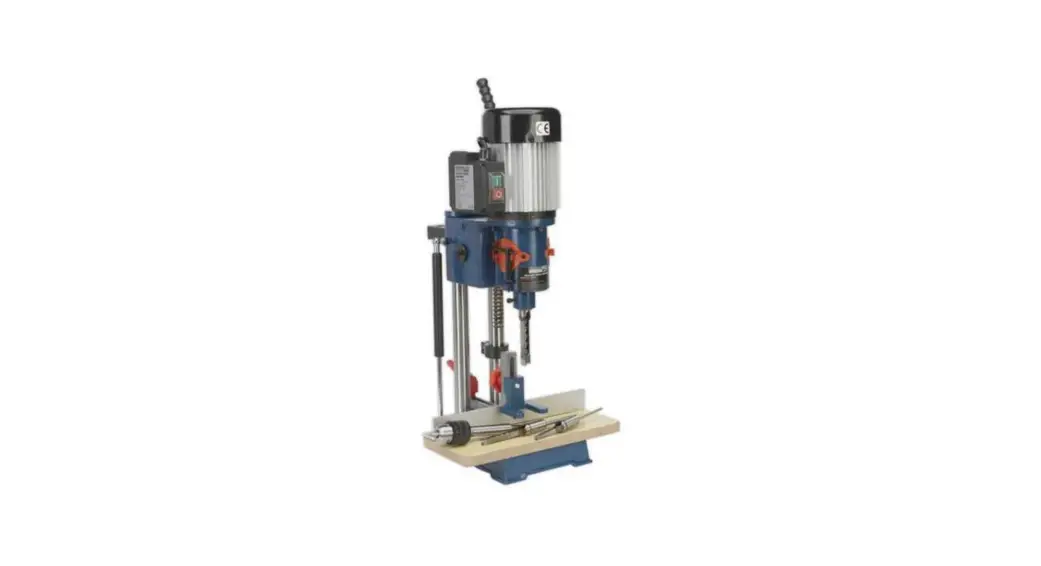
JBM-5 Benchtop Mortiser
Product Information
| Product | Brand | Manufacturer | Machinery Directive | ISO Standards |
|---|---|---|---|---|
| Mortiser | JET | JPW (Tool) AG | 2006/42/EC | EN ISO 12100:2010, EN 60204-1:2006+A1:2009 |
Product Usage Instructions
Safety
Authorized use:
This mortiser is designed for mortising wood and similar
materials only. Machining of other materials is not permitted and
may be carried out in specific cases only after consulting with the
manufacturer.
The workpiece must allow to safely be loaded and clamped for
machining.
The proper use also includes compliance with the operating and
maintenance instructions given in this manual.
The machine must be operated only by persons familiar with its
operation and maintenance and who are familiar with its
hazards.
The required minimum age must be observed.
The machine must only be used in a technically perfect
condition.
When working on the machine, all safety mechanisms and covers
must be mounted.
In addition to the safety requirements contained in these
operating instructions and your country’s applicable regulations,
you should observe the generally recognized technical rules
concerning the operation of woodworking machines.
Any other use exceeds authorization. In the event of
unauthorized use of the machine, the manufacturer renounces all
liability and the responsibility is transferred exclusively to the
operator.
Warranty
The JPW (Tool) AG guarantees that the supplied product is free
from material defects and manufacturing faults.
This warranty does not cover any defects which are caused,
either directly or indirectly, by incorrect use, carelessness,
accidental damage, repair, inadequate maintenance or cleaning and
normal wear and tear.
Any warranty details (i.e. warranty period) can be found in the
General Terms and Conditions (GTC) that are integral part of the
contract. These GTC can be viewed at the website of your dealer or
sent to you upon request.
JBM-5
Original:
EN Operating Instructions
Translations:
D Gebrauchsanleitung
F Mode d´emploi
BENCHTOP MORTISER
JPW (Tool) AG Tämplerlistrasse 5 CH-8117 Fällanden Switzerland Phone +41 44 806 47 48 Fax +41 44 806 47 58 www.jettools.com
M-708580M
2017 -06
CE-Conformity Declaration CE-Konformitätserklärung Déclaration de conformité CE
Product / Produkt / Produit:
Mortiser /Stemmmaschine / Mortaiseuse
JBM-5 Brand / Marke / Marque:
JET
Manufacturer / Hersteller / Fabricant:
JPW (Tool) AG, Tämperlistrasse 5, CH-8117 Fällanden, Switzerland We hereby declare that this product complies with the regulations Wir erklären hiermit, dass dieses Produkt der folgenden Richtlinie entspricht Par la présente, nous déclarons que ce produit correspond aux directives suivantes
2006/42/EC Machinery Directive / Maschinenrichtlinie / Directive Machines
2014/30/EU electromagnetic compatibility / elektromagnetische Verträglichkeit / compatibilité électromagnétique
designed in consideration of the standards und entsprechend folgender zusätzlicher Normen entwickelt wurde et été développé dans le respect des normes complémentaires suivantes
EN ISO 12100:2010 EN 60204-1:2006+A1:2009
Responsible for the Documentation / Dokumentations-Verantwortung / Résponsabilité de Documentation:
Hansjörg Meier
Head Product-Mgmt / Leiter Produkt-Mgmt./ Resp. de Gestions Produits JPW (Tool) AG
2017-06-06 Alain Schmid, General Manager
JPW (Tool) AG, Tämperlistrasse 5, CH-8117 Fällanden, Schweiz / Suisse / Switzerland
2
EN – ENGLISH Operating Instructions
Dear Customer,
Many thanks for the confidence you have shown in us with the purchase of your new JET-machine. This manual has been prepared for the owner and operators of a JET JBM-5 mortiser to promote safety during installation, operation and maintenance procedures. Please read and understand the information contained in these operating instructions and the accompanying documents. To obtain maximum life and efficiency from your machine, and to use the machine safely, read this manual thoroughly and follow instructions carefully.
…Table of Contents
1. Declaration of conformity
2. Warranty
3. Safety Authorized use General safety notes Remaining hazards
4. Machine specifications Technical data Noise emission Contents of delivery
5. Transport and start up Transport and installation Assembly Mains connection Dust collection Starting operation
6. Machine operation
7. Setup and adjustments Installing chisel and bit 180° Head rotation Sharpening chisel and bit
8. Maintenance and inspection
9. Trouble shooting
10. Environmental protection
11. Available accessories
1. Declaration of conformity
On our own responsibility we hereby declare that this product complies with the regulations* listed on page2.
Designed in consideration with the standards**.
JPW (Tool) AG reserves the right to make changes to the product and accessories at any time.
3. Safety
3.1 Authorized use
This mortiser is designed for mortising wood and similar materials only. Machining of other materials is not permitted and may be carried out in specific cases only after consulting with the manufacturer.
The workpiece must allow to safely be loaded and clamped for machining.
The proper use also includes compliance with the operating and maintenance instructions given in this manual.
The machine must be operated only by persons familiar with its operation and maintenance and who are familiar with its hazards.
The required minimum age must be observed.
The machine must only be used in a technically perfect condition.
When working on the machine, all safety mechanisms and covers must be mounted.
In addition to the safety requirements contained in these operating instructions and your country’s applicable regulations, you should observe the generally recognized technical rules concerning the operation of woodworking machines.
Any other use exceeds authorization. In the event of unauthorized use of the machine, the manufacturer renounces all liability and the responsibility is transferred exclusively to the operator.
3.2 General safety notes
Woodworking machines can be dangerous if not used properly. Therefore the appropriate general technical rules as well as the following notes must be observed.
2. Warranty
The JPW (Tool) AG guarantees that the supplied product is free from material defects and manufacturing faults.
This warranty does not cover any defects which are caused, either directly or indirectly, by incorrect use, carelessness, accidental damage, repair, inadequate maintenance or cleaning and normal wear and tear.
Any warranty details (i.e. warranty period) can be found in the General Terms and Conditions (GTC) that are integral part of the contract. These GTC can be viewed at the website of your dealer or sent to you upon request.
Read and understand the entire instruction manual before attempting assembly or operation.
Keep this operating instruction close by the machine, protected from dirt and humidity, and pass it over to the new owner if you part with the tool.
No changes to the machine may be made. Daily inspect the function and existence of the safety appliances before you start the machine. Do not attempt operation in this case, protect the machine by unplugging the power cord. Before operating the machine, remove tie, rings, watches, other jewellery, and roll up sleeves above the elbows. Remove all loose clothing and confine long hair. Wear safety shoes; never wear leisure shoes or sandals. Always wear the approved working outfit: – safety goggles – ear protection – dust protection
Do not wear gloves while operating this machine.
Install the machine so that there is sufficient space for safe operation and workpiece handling. Keep work area well lighted. The machine is designed to operate in closed rooms and must be bolted stable on firm and levelled table surface Make sure that the power cord does not impede work and cause people to trip. Keep the floor around the machine clean and free of scrap material, oil and grease. Stay alert! Give your work undivided attention. Use common sense. Do not operate the machine when you are tired. Keep an ergonomic body position. Maintain a balanced stance at all times. Do not operate the machine under the influence of drugs, alcohol or any medication. Be aware that medication can change your behaviour.
Never reach into the machine while it is operating or running down.
Do not operate the electric tool near inflammable liquids or gases. Observe the fire fighting and fire alert options, for example the fire extinguisher operation and place. Do not use the machine in a dump environment and do not expose it to rain. Wood dust is explosive and can also represent a risk to health. Dust form some tropical woods in particular, and from hardwoods like beach and oak, is classified as a carcinogenic substance. Always use a suitable dust collection device Before machining, remove any nails and other foreign bodies from the workpiece. Work only with well sharpened tools. Machine only stock which rests securely on the table. Always close the chuck cover before you start the machine. Specifications regarding the maximum or minimum size of the workpiece must be observed. Do not remove chips and workpiece parts until the machine is at a standstill. Do not stand on the machine. Connection and repair work on the electrical installation may be carried out by a qualified electrician only.
Have a damaged or worn power cord replaced immediately. Make all machine adjustments or maintenance with the machine unplugged from the power source.
3.3 Remaining hazards When using the machine according to regulations some remaining hazards may still exist. The rotating drill bit can cause injury. Thrown workpieces and workpiece parts can lead to injury. Dust and noise can be health hazards. Be sure to wear personal protection gear such as safety goggles and dust mask. Use a suitable dust collection system. The use of incorrect mains supply or a damaged power cord can lead to injuries caused by electricity.
Keep children and visitors a safe distance from the work area.
Never leave a running machine unattended. Before you leave the workplace switch off the machine.
4. Machine specifications
4.1 Technical data
Motor speed…………………………………………………………1450 rpm Drill chuck capacity…………………………………………………….10mm Chisel capacity ……………………………………………… 12,7 x 12,7mm Chisel bushings ………………………………………… 5/8″, 3/4″, 13/16″
Head stroke …………………………………………………………….120mm Vertical distance table to chisel bushing max……………….208mm
Distance chisel centre to fence max. …………………………….90mm Fence size ……………………………………………………….. 40 x 320mm Under holddown capacity………………………………………….100mm
Net weight ………………………………………………………………… 20kg
Mains ………………………………………………………. 1~230V, PE, 50Hz Motor output power………………………………. 0,37 kW (0,5 HP) S1 Reference current ………………………………………………………….3 A Extension cord (H07RN-F):……………………………………..3×1.5mm²
Installation fuse protection …………………………………………….10A Protection class…………………………………………………………………. I
4.2 Noise emission
Acoustic pressure level (EN ISO 11202):
Idling …………………………………………………………. LpA 67,4 dB (A) In operation ……………………………………………….. LpA 75,5 dB (A)
The specified values are emission levels and are not necessarily to be seen as safe operating levels. As workplace conditions vary, this information is intended to allow the user to make a better estimation of the hazards and risks involved only.
4.3 Content of delivery
10mm drill chuck Chuck key Spindle extension 5/8″ (15,87mm) chisel bushing 3/4″ (19.05mm) chisel bushing 13/16″ (20,64mm) chisel bushing Fence assembly Work hold down MDF table Handle Gas spring Operating manual Spare parts list.
Fig 1
Use the handle to raise the machine head to the up position. The handle is spring loaded and can be repositioned by pulling the handle away from the head, and turned to the desired angle. Press the gas spring onto the two fittings (D and E). Attach the MDF table to the base using two screws (A, Fig 2).
5. Transport and start up
5.1 Transport and installation
The machine is designed to operate in closed rooms and must be bolted stable on a firm and levelled table surface.
5.2 Assembly
If you notice transport damage while unpacking, notify your supplier immediately. Do not operate the machine!
Dispose of the packing in an environmentally friendly manner.
Clean all rust protected surfaces with a mild solvent.
Screw the handle (A, Fig 1) into the pinion shaft (B, Fig 1) and tighten (C, Fig 1).
Fig 2
Insert bar of fence assembly (B) through the hole in the column. Use the indexable knob (C) to adjust the fence assembly.
Attach the hold down (D) to the vertical post using locking handle (E).
5.3 Mains connection
Mains connection and any extension cords used must comply with applicable regulations.
The mains voltage must comply with the information on the machine licence plate.
The mains connection must have a 10 A surge-proof fuse.
Only use power cords marked H07RN-F.
Connections and repairs to the electrical equipment may only be carried out by qualified electricians.
After the first cut, the workpiece is moved. The direction of movement must allow the chips to clear freely (Fig 4).
5.4 Dust collection Use a suitable dust collection and filtration system to avoid a high dust concentration in the air. Dust the machine down after each use and as necessary.
5.5 Starting operation You can start the machine with the green on button. The red button on the main switch stops the machine.
6. Machine operation Set the depth stop rod (B, Fig 3) to the required depth of cut.
Fig 4
When cutting deep mortises, make the cut in several stages of approx. 25mm each, to allow chips to clear.
To prevent breakout at the back of the workpiece when cutting through mortises, use a piece of scrap material under the workpiece as support.
Warning: Make sure the machine is attached to a firm and stable support surface, to prevent it from tipping during operation. Four holes in the base are supplied for this purpose.
Always keep your hands well clear of the rotating bit.
Always close the chuck cover before you start the machine.
Support long workpieces with helping roller stands.
7. Setup and adjustments
General note:
Setup and adjustment work may only be carried out after the machine is protected against accidental starting by pulling the mains plug.
Fig 3
Adjust the fence.
Adjust the hold down so it touches the top of the workpiece and allows it to slide left or right.
Turn on the machine and feed chisel and bit steadily into the workpiece by pulling down the operating handle.
NOTE: The rate of feed must be fast enough to prevent burning at the tip of the drill bit, but not so fast as to cause the machine to stall. The different rates of feed for different woods must be learned by experience.
7.1 Installing chisel and bit Disconnect the machine from the power source (unplug). Open the chuck access doors on both sides of the head. Insert the chisel bushing (3, Fig 5) with the hole facing forward into the head. Insert chisel and bit together. Tighten the screw (2) just enough to hold the chisel (4) in place.
7.2 180° Head rotation Remove the three hex socket cap screws at the base and rotate head and column 180°. Doing this will enable you to outboard mortise taller items.
7.3 Sharpening chisel and bit: The chisel and bit should be kept sharp for best performance. Sharpen the bit by using a small file, following the original shape of the bit. File the inside edge of the spur (A, Fig7), the sides of the centre point (B) and the cutting edge inwards toward the flute of the bit (C).
Fig 5
NOTE: The slot in the chisel should face to the right or left side only. The opening will allow chips to escape during operation.
Push the chisel up as far as possible into the head. Then lower the chisel 1,5 to 4mm, depending on the type of wood being worked. Tighten the screw to hold the chisel in place.
Push the bit up through the chisel opening as far as it will go. Lock the drill bit in place with the chuck key.
Loosen the screw and push the chisel up against the bushing and tighten the screw. This should provide the proper distance between the points of the chisel and the bit.
NOTE: The chisel should be adjusted parallel. Use the workpiece as a gauge (Fig 6).
Fig 7 Do not file the outside edges of the spur as this will affect the diameter of the bit. Sharpen the chisel on the cutting edge inside only.
8. Maintenance and inspection General notes: Maintenance, cleaning and repair work may only be carried out after the machine is protected against accidental starting by pulling the mains plug. The mortise requires only minor maintenance, such as lubrication, routine adjustments and sharpening of chisel and bit. Clean the machine regularly. Defective safety devices must be replaced immediately. Repair and maintenance work on the electrical system may only be carried out by a qualified electrician.
Fig 6 Close the chuck access doors before starting the machine.
Using bits with shorter shanks: It will be necessary to attach the spindle extension. Place a 10mm open spanner on the motor spindle and use the chuck key to unscrew the chuck. Attach the spindle extension to the chuck and reinstall.
9. Trouble shooting
Motor doesn’t start *No electricitycheck mains and fuse.
*Defective switch, motor or cordconsult an electrician.
Chisel clogged with chips *Clearance chisel to bit not enoughset bit 1,5 to 4mm below chisel.
*chips cannot clear the chiselobserve chisel slot and working order.
Burned Wood *Feed too slowincrease feedrate. *Worn chisel or bitsharpen chisel and bit.
10. Environmental protection Protect the environment. Your appliance contains valuable materials which can be recovered or recycled. Please leave it at a specialized institution.
11. Available accessories Stock number 708579 50mm riser block Refer to the JET-Pricelist for various tools and work holding.
DE – DEUTSCH Gebrauchsanleitung
Sehr geehrter Kunde,
vielen Dank für das Vertrauen, welches Sie uns beim Kauf Ihrer neuen JET-Maschine entgegengebracht haben. Diese Anleitung ist für den Inhaber und die Bediener zum Zweck einer sicheren Inbetriebnahme, Bedienung und Wartung der Stemm-Maschine JBM-5 erstellt worden. Beachten Sie bitte die Informationen dieser Gebrauchsanleitung und der beiliegenden Dokumente. Lesen Sie diese Anleitung vollständig, insbesondere die Sicherheitshinweise, bevor Sie die Maschine zusammenbauen, in Betrieb nehmen oder warten. Um eine maximale Lebensdauer und Leistungsfähigkeit Ihrer Maschine zu erreichen befolgen Sie bitte sorgfältig die Anweisungen.
Inhaltsverzeichnis
1. Konformitätserklärung
2. Garantie
3. Sicherheit Bestimmungsgemäße Verwendung Allgemeine Sicherheitshinweise Restrisiken
4. Maschinenspezifikation Technische Daten Schallemission Lieferumfang
5. Transport und Inbetriebnahme Transport und Aufstellung Montage Elektrischer Anschluss Absaug-Anschluss Inbetriebnahme
6. Betrieb der Maschine
7. Rüst- und Einstellarbeiten Stemmmeißel Montage Kopfdrehung um 180° Meißel Nachschärfung
8. Wartung und Inspektion
9. Störungsabhilfe
10. Umweltschutz
11. Lieferbares Zubehör
1. Konformitätserklärung Wir erklären in alleiniger Verantwortlichkeit, dass dieses Produkt mit den auf Seite 2 angegebenen Richtlinien* übereinstimmt. Bei der Konstruktion wurden folgende Normen** berücksichtigt.
entnehmen. Die AGB sind auf der Internetseite ihres Händlers einzusehen oder werden auf Anfrage per Post zugestellt.
JPT (Tool) AG behält sich das Recht vor, jederzeit Änderungen am Produkt und Zubehör vorzunehmen
3. Sicherheit
3.1 Bestimmungsgemäße Verwendung
Diese Stemm-Maschine ist ausschließlich zum Stemmen von Holz und Holzersatzstoffen geeignet. Die Bearbeitung anderer Werkstoffe ist nicht zulässig bzw. darf in Sonderfällen nur nach Rücksprache mit dem Maschinenhersteller erfolgen.
Es dürfen nur Werkstücke bearbeitet werden welche sicher aufgelegt und gespannt werden können.
Die bestimmungsgemäße Verwendung beinhaltet auch die Einhaltung der vom Hersteller angegebenen Betriebs- und Wartungsanweisungen.
Die Maschine darf ausschließlich von Personen bedient werden, die mit Betrieb und Wartung vertraut und über die Gefahren unterrichtet sind.
Das gesetzliche Mindestalter ist einzuhalten.
Neben den in der Gebrauchsanleitung enthaltenen Sicherheitshinweisen und den besonderen Vorschriften Ihres Landes sind die für den Betrieb von Holzbearbeitungsmaschinen allgemein anerkannten fachtechnischen Regeln zu beachten.
Jeder darüber hinaus gehende Gebrauch gilt als nicht bestimmungsgemäß und für daraus resultierende Schäden haftet der Hersteller nicht. Das Risiko trägt allein der Benutzer.
3.2 Allgemeine Sicherheitshinweise
Holzbearbeitungsmaschinen können bei unsachgemäßem Gebrauch gefährlich sein. Deshalb ist zum sicheren Betreiben die Beachtung der zutreffenden Unfallverhütungs- Vorschriften und der nachfolgenden Hinweise erforderlich.
2. Garantie
JPW (Tool) AG garantiert, dass das gelieferte Produkt frei von Material- und Fertigungsfehlern ist. Diese Garantie trifft nicht auf jene Defekte zu, welche auf direkten oder indirekten, nicht fachgerechten Gebrauch, Unachtsamkeit, Unfallschaden, Reparatur, mangelhafte Wartung bzw. Reinigung sowie normalen Verschleiß zurückzuführen sind.
Die ausführlichen Garantieleistungen (z.B. Gewährleistungsfrist) sind den Allgemeinen Geschäftsbedingungen (AGB) zu
Lesen und verstehen Sie die komplette Gebrauchsanleitung bevor Sie mit Montage oder Betrieb der Maschine beginnen.
Bewahren Sie die Bedienungsanleitung, geschützt vor Schmutz und Feuchtigkeit, bei der Maschine auf, und geben Sie sie an einen neuen Eigentümer weiter. An der Maschine dürfen keine Veränderungen, An- und Umbauten vorgenommen werden. Überprüfen Sie täglich vor dem Einschalten der Maschine die einwandfreie Funktion und das Vorhandensein der erforderlichen Schutzeinrichtungen. Festgestellte Mängel an der Maschine oder den Sicherheitseinrichtungen sind zu melden und von den beauftragten Personen zu beheben. Nehmen Sie die Maschine in solchen Fällen nicht in Betrieb, sichern Sie die Maschine gegen Einschalten durch Ziehen des Netzsteckers. Zum Schutz von langem Kopfhaar Mütze oder Haarnetz aufsetzen. Enganliegende Kleidung tragen, Schmuck, Ringe und Armbanduhren ablegen. Tragen Sie Schutzschuhe, keinesfalls Freizeitschuhe oder Sandalen. Verwenden Sie die durch Vorschriften geforderte persönliche Schutzausrüstung. – Augenschutz – Ohrenschutz – Staubschutz
Beim Arbeiten an der Maschine keine Handschuhe tragen.
Die Maschine so aufstellen, dass genügend Platz zum Bedienen und zum Führen der Werkstücke gegeben ist. Sorgen Sie für gute Beleuchtung. Achten Sie darauf, dass die Maschine standsicher auf fester und ebener Tischfläche festgeschraubt ist. Beachten Sie dass die elektrische Zuleitung nicht den Arbeitsablauf behindert und nicht zur Stolperstelle wird. Den Arbeitsplatz frei von behindernden Werkstücken, etc. halten. Niemals in die laufende Maschine greifen. Seien Sie aufmerksam und konzentriert. Gehen Sie mit Vernunft an die Arbeit. Achten Sie auf ergonomische Körperhaltung. Sorgen Sie für sicheren Stand und halten Sie jederzeit das Gleichgewicht. Arbeiten Sie niemals unter dem Einfluss von Rauschmitteln wie Alkohol und Drogen an der Maschine. Beachten Sie, dass auch Medikamente Einfluss auf Ihr Verhalten nehmen können.
Niemals in die laufende Maschine greifen.
Halten Sie Unbeteiligte, insbesondere Kinder vom Gefahrenbereich fern. Die laufende Maschine nie unbeaufsichtigt lassen. Vor dem Verlassen des Arbeitsplatzes die Maschine ausschalten. Benützen Sie die Maschine nicht in der Nähe von brennbaren Flüssigkeiten oder Gasen. Beachten Sie die Brandmelde- und Brandbekämpfungsmöglichkeiten z.B. Standort und Bedienung von Feuerlöschern. Benützen Sie die Maschine nicht in feuchter Umgebung und setzen Sie sie nicht dem Regen aus. Achten Sie stets darauf, dass keine zu große Staubkonzentration entsteht verwenden Sie stets eine geeignete Absauganlage Holzstaub ist explosiv und kann gesundheitsschädigend sein. Insbesondere tropische Hölzer und harte Hölzer wie Buche und Eiche sind als krebserregend eingestuft. Vor der Bearbeitung Nägel und andere Fremdkörper aus dem Werkstück entfernen. Nur mit gut geschärften Werkzeugen arbeiten. Bearbeiten Sie nur ein Werkstück, das sicher auf dem Tisch aufliegt. Arbeiten Sie nie bei geöffneten Bohrfutterdeckeln. Angaben über die min. und max. Werkstückabmessungen müssen eingehalten werden. Späne und Werkstückteile nur bei stehender Maschine entfernen. Nicht auf der Maschine stehen. Arbeiten an der elektrischen Ausrüstung der Maschine dürfen nur durch eine Elektrofachkraft vorgenommen werden.
Tauschen Sie ein beschädigtes Netzkabel sofort aus. Umrüst-, Einstell- und Reinigungsarbeiten nur im Maschinenstillstand und bei gezogenem Netzstecker vornehmen.
3.3 Restrisiken Auch bei vorschriftsmäßiger Benutzung der Maschine bestehen die nachfolgend aufgeführten Restrisiken. Verletzungsgefahr durch den rotierenden Bohrer. Gefährdung durch wegfliegende Werkstücke und Werkstückteile. Gefährdung durch Lärm und Staub. Unbedingt persönliche Schutzausrüstungen wie Augen-, Gehörund Staubschutz tragen. Eine geeignete Absauganlage einsetzen!
Gefährdung durch Strom, bei nicht ordnungsgemäßer Verkabelung.
4. Maschinenspezifikation
4.1 Technische Daten
Motor Drehzahl ………………………………………………1450 U/min Bohrfutter Kapazität ………………………………………………. 10mm Stemmmeißel max……………………………………… 12,7 x 12,7mm Schaftaufnahmen …………………………………. 5/8″, 3/4″, 13/16″ Bohrhub ……………………………………………………………… 120mm Abstand Tisch bis Adapterhülse max. ……………………… 208mm
Spindel Ausladung vom Anschlag max………………………. 90mm Anschlaggröße ………………………………………………. 40 x 320mm Niederhalter Kapazität………………………………………….. 100mm
Maschinengewicht ………………………………………………….. 20 kg
Netzanschluss …………………………………………1~230V, PE, 50Hz Abgabeleistung …………………………………… 0,37 kW ( 0,5 PS) S1 Betriebsstrom …………………………………………………………….. 3A Anschlussleitung (H07RN-F): ……………………………… 3×1,5mm²
Bauseitige Absicherung ……………………………………………… 10A Isolations Schutzklasse …………………………………………………….I
5.2 Montage Wenn Sie beim Auspacken einen Transportschaden feststellen, benachrichtigen Sie umgehend Ihren Händler, nehmen Sie das Gerät nicht in Betrieb. Entsorgen Sie die Verpackung bitte umweltgerecht. Entfernen Sie das Rostschutzfett mit einem milden Lösungsmittel.
Entfernen Sie das Rostschutzfett mit einem milden Lösungsmittel. Schrauben Sie den Handhebel (A, Fig 1) mit einem Gabelschlüssel (C) im Kupplungsstück (B) fest.
4.2 Schallemission
Schalldruckpegel (nach EN ISO 11202):
Leerlauf…………………………………………………….. LpA 67,4 dB(A) Bearbeitung ………………………………………………. LpA 75,5 dB(A)
Die angegebenen Werte sind Emissionspegel und sind nicht notwendigerweise Pegel für sicheres Arbeiten. Sie sollen dem Anwender eine Abschätzung der Gefährdung und des Risikos ermöglichen.
4.3 Lieferumfang
10mm Bohrfutter Bohrfutterschlüssel Spindelverlängerung 5/8″ (15,87mm) Adapterhülse 3/4″ (19,05mm) Adapterhülse 13/16″ (20,64mm) Adapterhülse Anschlag Niederhalter MDF Tisch Handhebel Gasdruckfeder Gebrauchsanleitung Ersatzteilliste
Fig 1
Bringen Sie den Kopf in die oberste Stellung. Der Handhebel kann umgesetzt werden. Ziehen Sei dazu das Kupplungsstück vom Kopf weg und lassen Sie es in der gewünschten Winkelstellung wieder einrasten.
Drücken Sie die Gasdruckfeder auf die beiden Kugelbolzen (D und E).
Montieren Sie die MDF Tischplatte mit den beiden gelieferten Schrauben (A, Fig 2).
5. Transport und Inbetriebnahme
5.1. Transport und Aufstellung
Die Aufstellung der Maschine sollte in geschlossenen Räumen erfolgen, tischlerübliche Bedingungen in der Werkstatt sind dabei ausreichend.
Die Maschine muss kippsicher auf einer belastbaren Tischfläche festgeschraubt werden.
Fig 2 Stecken Sie die Führungssäule des Anschlags (B) in die Vertikalsäule und klemmen Sie mit dem Indexiergriff (C). Befestigen Sie den Niederhalter (D) mit der Klemmschraube (E).
5.3 Elektrischer Anschluss Der kundenseitige Netzanschluss sowie die verwendeten Verlängerungsleitungen müssen den Vorschriften entsprechen. Die Netzspannung und Frequenz müssen mit den Leistungsschilddaten an der Maschine übereinstimmen. Die bauliche Absicherung muss dabei 10A betragen. Verwenden Sie nur Anschlussleitungen mit Kennzeichnung H05VV-F Anschlüsse und Reparaturen der elektrischen Ausrüstung dürfen nur von einen Elektrofachkraft durchgeführt werden.
5.4 Absaug-Anschluss Vermeiden Sie eine hohe Luftstaubkonzentration. Setzen Sie ein geeignetes Absaug- bzw. Filtersystem ein. Die Maschine nach jedem Gebrauch und je nach Bedarf absaugen.
Fig 3
Positionieren Sie den Anschlag.
Senken Sie den Niederhalter auf das Werkstück ab, so dass sich dieses noch seitlich bewegen lässt.
Starten Sie die Maschine.
Ziehen sie am Handhebel und stemmen Sie zügig in das Werkstück.
HINWEIS: Der Bohrvorschub muss schnell genug erfolgen um ein Verbrennen der Oberfläche zu vermeiden, jedoch darf auch der Motor nicht gestoppt werden. Die richtige Vorschubgeschwindigkeit je Holzart bedarf der Erfahrung.
Nach dem ersten Stemmvorgang wird das Werkstück seitlich versetzt. Wählen Sie die Arbeitsrichtung so dass der Späneauswurf nicht behindert wird (Fig 4).
5.5 Inbetriebnahme
Mit dem grünen Ein-Taster am Hauptschalter kann die Maschine gestartet werden: Mit dem roten Aus-Taster kann die Maschine stillgesetzt werden.
6. Betrieb der Maschine
Stellen Sie den Tiefenanschlag (B, Fig 3) auf die gewünschte Bohrtiefe.
Fig 4
Tiefe Bohrlöcher werden stufenweise jeweils ca. 25mm tiefer ausgeführt. Dadurch bleibt die Späne-abfuhr gewährleistet.
Für Durchgangslöcher unterlegen Sie das Werkstück mit einem Stück Abfallholz um ein Ausbrechen der Unterkanten zu vermeiden.
Achtung: Befestigen Sie die Maschine auf einer belastungsfähigen Unterlage, um ein Kippen während der Arbeit zu verhindern. Im Maschinensockel befinden sich dazu vier Montagebohrungen.
Halten Sie immer ausreichend Abstand zum rotierenden Bohrer.
Arbeiten Sie nie bei geöffneten Bohrfutterdeckeln. Lange Werkstücke durch Rollenböcke abstützen.
7. Rüst- und Einstellarbeiten
Allgemeine Hinweise Vor Rüst- und Einstellarbeiten muss die Maschine gegen Inbetriebnahme gesichert werden. Netzstecker ziehen!
7.1 Stemm-meißel Montage
Die Stromzufuhr durch Ziehen des Netzsteckers trennen.
Die Bohrfutterdeckel beidseits des Kopfes öffnen.
Montieren Sie die Adapterhülse (3, Fig5), die Bohrung zeigt dabei nach vorne.
Bohr- und Stemm-meißel gemeinsam einführen.
Klemmen Sie mit der Schraube (2) den Stemm-meißel (4) leicht fest.
Fig 6
Beide Bohrfutterdeckel wieder schließen.
Für Kurzschaft Stemm-meißel: Für Stemm-meißel mit kurzem Schaft benötigen Sie die gelieferte Spindelverlängerung. Halten Sie die Motorspindel mit einem 10mm Gabelschlüssel fest und verwenden Sie den Futterschlüssel zum Lösen des Bohrfutters. Montieren Sie die Spindelverlängerung auf das Bohrfutter bevor Sie dieses wieder einsetzen.
7.2 Kopfdrehung um 180° Entfernen Sie die drei Innensechskantschrauben vom Sockel und setzen Sie die Vertikalsäule um 180° gedreht wieder auf. Dadurch wird die fliegende Bearbeitung größerer Werkstücke möglich.
Fig 5
HINWEIS: Der Schlitz des Stemm-meißels sollte nur nach links oder rechts zeigen. Dadurch wird bei der Bearbeitung die Späneabfuhr nicht beeinträchtigt.
Schieben sie den Stemm-meißel ganz nach oben und senken Sie ihn dann, abhängig von der Werkstück-Holzart, 1,5 4mm ab. Klemmen Sie den Stemmmeißel mit der Schraube fest.
Schieben Sie den Bohrer ganz nach oben und spannen Sie ihn im Bohrfutter fest.
Lösen Sie die Schraube, schieben Sie den Stemm-meißel nach oben und klemmen Sie ihn fest. Dadurch ergibt sich der gewünschte Abstand zwischen Bohrerschneide und Stemm-meißel.
HINWEIS: Der Stemm-meißel sollte parallel ausgerichtet sein. Verwenden Sie dazu das Werkstück als Lehre (Fig 6).
7.3 Meißel Nachschärfung Scharfe Bohrer und Stemmmeißel sind eine Voraussetzung für gute Arbeitsergebnisse. Schärfen Sie die Bohrerschneiden mit einer kleinen Feile und folgen Sie dabei der Originalform des Bohrers. Feilen Sie an der Innenseite des Vorschneiders (A, Fig 7), an den Seitenflächen der Zentrierspitze (B) und an der Spanfläche der Hauptschneide (C).
Fig 7 Feilen Sie nicht an der Außenseite des Vorschneiders da sich dadurch der Bohrdurchmesser verändert. Schärfen Sie den Stemmmeißel nur an der Schneiden Innenkante.
8. Wartung und Inspektion
Allgemeine Hinweise:
Vor Wartungs- Reinigungs- und Reparaturarbeiten muss die Maschine gegen Inbetriebnahme gesichert werden. Netzstecker ziehen!
Der Wartungsumfang der Stemmmaschine beschränkt sich auf leichte Schmierung, Routineeinstellungen und Stemmmeißel Nachschärfung.
Reinigen Sie die Maschine in regelmäßigen Zeitabständen.
Beschädigte Sicherheitseinrichtungen sofort ersetzen.
Anschlüsse und Reparaturen der elektrischen Ausrüstung dürfen nur von einer Elektrofachkraft durchgeführt werden.
10. Umweltschutz Schützen Sie die Umwelt! Ihr Gerät enthält mehrere unterschiedliche, wieder verwertbare Werkstoffe. Bitte entsorgen Sie es nur an einer spezialisierten Entsorgungsstelle.
11. Lieferbares Zubehör Artikel Nummer 708579 50 mm Säulenverlängerung
Werkzeuge und Spannmittel siehe JET-Preisliste.
9. Störungsabhilfe
Motor startet nicht *Kein StromNetzsicherung prüfen.
*Motor, Schalter oder Kabel defektElektrofachkraft kontaktieren.
Stemmmeißel verstopft *Abstand Bohrer zu Meißel zu geringBohrer 1,5 bis 4mm unter Meißel stellen.
*Späne können nicht entweichenMeißelschlitz und Arbeitsfolge beachten.
Oberfläche verbrannt *Vorschub zu langsamschneller bohren.
*Bohr-/Stemmmeißel stumpfnachschärfen.
FR – FRANCAIS Mode d`emploi
Cher client, Nous vous remercions de la confiance que vous nous portez avec l’achat de votre nouvelle machine JET. Ce manuel a été préparé pour l’opérateur de la mortaiseuse JBM-5. Son but, mis à part le fonctionnement de la machine, est de contribuer à la sécurité par l’application des procédés corrects d’utilisation et de maintenance. Avant de mettre l’appareil en marche, lire les consignes de sécurité et de maintenance dans leur intégralité. Pour obtenir une longévité et fiabilité maximale de votre machine, et pour contribuer à l’usage sûr de la machine, veuillez lire attentivement ce mode d’emploi et suivre les instructions.
Table des Matières
1. Déclaration de conformité
2. Garantie
3. Sécurité Utilisation conforme Consignes de sécurité Risques
4. Spécifications Indications techniques Emission de bruit Contenu de la livraison
5. Transport et montage Transport Montage Raccordement au réseau électrique. Raccordement au collecteur de poussières Mise en exploitation
6. Fonctionnement de la machine
7. Réglages Montage mèche pour mortaiser Rotation de la tête de 180° Réaffûtage de l’outil 8. Entretien et inspection
9. Détecteur de pannes
10. Protection de l’environnement
11. Accessoires
1. Déclaration de conformité
Par le présent et sous notre responsabilité exclusive, nous déclarons que ce produit satisfait aux normes conformément aux lignes directrices indiquées page 2.
être consultées sur le site web de votre revendeur ou vous être envoyées sur demande.
JPW (Tool) AG se réserve le droit d’effectuer des changements sur le produit et les accessoires à tout moment.
3. Sécurité
3.1 Utilisation conforme Cette mortaiseuse convient au mortaisage du bois et des dérivés du bois. Le travail d’autres matériaux est interdit et ne peut être effectué que dans des cas spéciaux et après accord du fabricant de la machine. La pièce doit pouvoir être posée et serrée sans problèmes. L’utilisation conforme implique le strict respect des instructions de service et de maintenance indiquées dans ce manuel.
La machine doit être exclusivement utilisée par des personnes familiarisées avec le fonctionnement, la maintenance et la remise en état, et qui sont informées des dangers correspondants. L’âge requis par la loi est à respecter. Toutes les directives relatives à la prévention des accidents ainsi que les consignes de sécurité doivent être respectées scrupuleusement. En cas d’utilisation non-conforme de la machine, le fabricant décline toute responsabilité qui est en tel cas rejetée exclusivement sur l’utilisateur.
3.2 Consignes de sécurité L’utilisation non-conforme d`une mortaiseuse peut être très dangereux.
2. Garantie
JPW (Tool) AG garantit que le produit fourni est exempt de défauts matériels et de défauts de fabrication.
Cette garantie ne couvre pas les défauts qui sont causés, directement ou indirectement, par l’utilisation incorrecte, la négligence, les dommages accidentels, la réparation, la maintenance ou le nettoyage incorrects et l’usure normale.
Les détails sur la garantie (période de garantie par exemple) peuvent être trouvés dans les conditions générales (GTC) faisant partie intégrante du contrat. Ces conditions générales peuvent
C’est pourquoi vous devez lire attentivement ce mode d’emploi avant de monter ou d’utiliser votre appareil.
Conserver à proximité de la machine tous les documents fournis avec l’outillage (dans une pochette en plastique, à l’abri de la poussière, de l’huile et de l’humidité) et veiller à joindre cette documentation si vous cédez l`appareil.
Ne pas effectuer de modification à la machine. Utiliser les accessoires recommandés, des accessoires incorrects peuvent être dangereux. Contrôler chaque jour avant d’utiliser la machine les dispositifs de protection et le fonctionnement impeccable. En cas de défauts à la machine ou aux dispositifs de protection avertir les personnes compétentes et ne pas utiliser la machine. Déconnecter la machine du réseau. Avant de mettre la machine en marche, retirer cravate, bagues, montres ou autres bijoux et retrousser les manches jusqu’aux coudes. Enlever tout vêtement flottant et nouer les cheveux longs. Porter des chaussures de sécurité, surtout pas de tenue de loisirs ou de sandales. Porter un équipement de sécurité personnel pour travailler à la machine. – des lunettes protectrices, – une protection acoustique – une masque anti poussières.
Ne pas porter de gants.
Eloigner de la machine toutes personnes incompétentes surtout les enfants.
Ne jamais laisser la machine en marche sans surveillance. Arrêter la machine avant de quitter la zone de travail.
Ne pas mettre la machine à proximité de liquides ou de gaz inflammables.
Préserver la machine de l’humidité et ne jamais la mettre sous la pluie.
Retirer les clous et autres corps étrangers de la pièce avant de débuter l`usinage.
Travailler seulement avec des outils bien aiguisés.
Seulement usiner une pièce, qui se laisse bien poser sur la table.
Ne jamais travailler avec les couvercles des mandrins de perceuse ouverts.
Se tenir aux spécifications concernant la dimension maximale ou minimale de la pièce à usiner.
Ne pas enlever les copeaux et les pièces usinées avant que la machine ne soit à l`arrêt.
Ne pas se mettre sur la machine.
Tous travaux de branchement et de réparation sur l’installation électrique doivent être exécutés uniquement par un électricien qualifié.
Placer la machine de sorte à laisser un espace suffisant pour la manoeuvre et le guidage des pièces à usiner.
Veiller à un éclairage suffisant.
Placer la machine sur une surface stable et plat.
Visser la machine sur une surface de table en assurant la stabilité au déversement. S’assurer que le câble d’alimentation ne gêne pas le travail ni risque de faire trébucher l`opérateur.
Conserver le sol autour de la machine propre, sans déchets, huile ou graisse.
Ne jamais mettre la main dans la machine pendant le travail.
Prêter grande attention à votre travail et rester concentré.
Eviter toute position corporelle anormale. Veiller à une position stable et garder un bon équilibre à tout moment. Ne pas travailler sous l’influence de drogues, d’alcool ou de médicaments.
Remplacer immédiatement tout câble endommagé ou usé. Faire tous les travaux de réglage ou de maintenance seulement après avoir débranché la machine du réseau.
3.3 Risques Même en respectant les directives et les consignes de sécurité existe les risques suivants. Risque de blessures par le perceur en rotation. Danger de pièces éjectées. Risque de santé par poussières de bois, copeaux et bruit. Porter équipement de sécurité personnel tel que lunettes, cachevisage pour travailler à la machine. Utiliser un collecteur de poussières! Danger par câble électrique endommagé, usé ou mal branché.
Ne jamais mettre la main dans la machine pendant le travail.
4. Spécifications 719A, 719AS
4.1 Indications techniques
Vitesse de rotation ……………………………………………..1450 T/min Capacité du mandrin …………………………………………………. 10mm Mèche pour mortaiser ……………………………max. 12,7 x 12,7mm Porte-mèche…………………………………………….5/8″, 3/4″, 13/16″
Perçage………………………………………………………………….. 120mm Distance entre table et porte-mèche max ………………….. 208mm
Distance entre broche et guide butée …………………. max. 90mm Dimension du guide butée……………………………………40x320mm Capacité serre-flan……………………………………………………100mm
Poids net ………………………………………………………………….. 20 kg
Voltage…………………………………………………….. 1~230V, PE, 50Hz Puissance ……………………………………………… 0,37 kW (0,5 CV) S1 Courant électrique…………………………………………………………..3A Raccordement (H07RN-F) : …………………………………… 3×1,5mm²
Fusible du secteur électrique…………………………………………..10A Classe de protection électrique ………………………………………….. I
4.2 Emission de bruit
Niveau de pression sonore (selon EN ISO 11202):
Marche à vide ……………………………………………… LpA 67,4 dB (A) Usinage ………………………………………………………. LpA 75,5 dB (A)
Les indications données sont des niveaux de bruit et ne sont pas forcément les niveaux pour un travail sûr. Ainsi l’utilisateur peut estimer les dangers et les risques possibles.
4.3 Contenu de la livraison
Mandrin 10mm Clé de mandrin Rallonge d`arbre Adaptateur mandrin 5/8″ (15,87mm) Adaptateur mandrin 3/4″ (19,05mm) Adaptateur mandrin 13/16″(20,64mm) Guide Mainteneur des pièces à usiner Dessus de table en bois (MDF) Levier Cylindre de compensation de pression Mode d`emploi Liste pièces de rechange
Fig 1
Mener la tête en position plus élevée. Le levier peut être déplacé. Pour cela retirer la pièce d’accouplement de la tête et la rebloquer en position souhaitée.
Presser le cylindre de compensation de pression sur les deux boulons à rotule (D et E).
Monter le dessus de table en bois avec les deux vis livrées (A, Fig 2).
5. Transport et mise en exploitation
5.1. Transport
Effectuer le montage de la machine dans un local fermé ou un atelier respectant les conditions de menuiserie.
Visser la machine sur une surface de table en assurant la stabilité au déversement.
5.2 Montage
Avertir immédiatement votre vendeur si vous constatez des pièces endommagées par le transport et ne pas monter la machine.
Eliminer l`emballage en respectant l`environnement.
Enlever la protection antirouille avec un dissolvant.
Visser le levier (A, Fig 1) avec une clé à fourche (C) dans la pièce d`accouplement (B).
Fig 2
Positionner la barre de guidage (B) dans la barre verticale et bloquer avec la manche d`index (C). Fixer le mainteneur (D) avec la vis d`arrêt (E).
5.3 Raccordement au réseau électrique.
Le raccordement ainsi que les rallonges utilisées doivent correspondre aux instructions. Le voltage et la fréquence doivent être conforme aux données inscrites sur la machine.
Le fusible de secteur électrique doit avoir 10A.
Utiliser pour le raccordement des câbles H07RN-F.
Tous travaux de branchement et de réparation sur l’installation électrique doivent être exécutés uniquement par un électricien qualifié.
Après le premier procédé de mortaisage, déplacer la pièce
latéralement. Choisir la direction de travail de manière à ne pas gêner l’évacuation des copeaux (Fig 4).
5.4 Raccordement collecteur de poussières Utiliser un collecteur de poussières afin d’éviter une production de poussières trop élevée. Aspirer la machine après chaque utilisation ou quand nécessaire.
5.5 Mise en exploitation Mettre la machine en route avec le bouton vert. Arrêter la machine avec le bouton rouge.
Fig 4 Effectuer les perçages profonds par étapes d’env. 25mm plus profond. Ainsi l’évacuation des copeaux est assurée.
Pour des perçages à travers placer un bout de bois en dessous de la pièce pour éviter des éclats à la face inférieure.
6. Fonctionnement de la machine
Ajuster le guide de mèche (B, Fig 3) à la profondeur de perçage souhaitée.
Attention: Fixer la machine sur une surface qui peut supporter cette charge, pour éviter un basculement pendant le travail. Il y a quatre perçages pour ce montage dans le socle de machine.
Garder toujours une distance suffisante au perceur en rotation.
Ne jamais travailler avec les couvercles des mandrins de perceuse ouverts.
Poser des pièces longues sur des supports roulants.
7. Réglages
Attention : Faire tous les travaux de maintenance ou de réglage après avoir débranché la machine du réseau.
Fig 3
Positionner le guide.
Faire descendre le mainteneur sur la pièce à usiner, de manière à ce que la pièce se laisse encore déplacer latéralement.
Mettre la machine en marche.
Tirer le levier et mortaiser sans interruption dans la pièce.
REMARQUE: Effectuer le perçage rapidement pour éviter des brûlures sur la surface, mais ne pas stopper le moteur. La vitesse d’avance idéale pour chaque type de bois demande de l`expérience.
7.1 Montage mèche pour mortaiser Déconnecter la machine du réseau. Ouvrir les couvercles des mandrins des deux côtés de la tête. Monter l’adaptateur mandrin (3, Fig 5), le creux vers le devant. Insérer la mèche pour percer et mortaiser ensemble. Bloquer légèrement avec la vis (2) la mèche pour mortaiser (4).
Pour mèche à queue courte:
Pour une mèche à queue courte vous aurez besoin de la rallonge d’arbre livrée. Tenir l’arbre du moteur avec une clé à fourche 10mm et utiliser la clé de mandrin pour desserrer le mandrin. Fixer la rallonge d’arbre sur le mandrin avant de le reinstaller.
7.2 Rotation de la tête de 180°
Dévisser les trois vis à six pans creux du socle de machine et repositionner la barre verticale après l’avoir tournée de 180°. Ceci permet le travail mobile de grandes pièces.
Fig 5
REMARQUE: La fente de la mèche pour mortaiser doit seulement montrer vers la gauche ou la droite. Ainsi l’évacuation des copeaux n’est pas atteinte pendant le travail.
Pousser la mèche pour mortaiser complétement en haut et ensuite faire descendre, dépendant du type de bois de la pièce, de 1,5 4mm. Bloquer la mèche pour mortaiser avec la vis.
Pousser le perceur en haut et fixer le dans le mandrin.
Desserrer la vis, pousser la mèche pour mortaiser en haut et bloquer la. Ainsi vous aurez la distance souhaitée entre le taillant et la mèche.
REMARQUE: La mèche pour mortaiser doit être située parallèle. Utiliser pour ceci la pièce comme aide directive (Fig 6).
7.3 Réaffûtage de l`outil Des mèches pour percer et mortaiser affûtées sont une condition pour un bon résultat de travail. Affûter le taillant de l’outil avec une petite lime en suivant la forme originale de l`outil. Limer à la face intérieure de l’ébaucheur (A, Fig 7), sur les côtés de la pointe de centrage (B) et à la face de coupe du tranchant principal (C).
Fig 7 Ne pas limer à la face extérieure de l’ébaucheur car ceci pourrait modifier le diamètre de perçage. Affûter la mèche pour mortaiser seulement à la face intérieure du taillant.
Fig 6 Refermer les deux couvercles des mandrins.
8. Entretien et inspection
Attention:
Faire tous les travaux de maintenance, réglage ou nettoyage après avoir débranché la machine du réseau!
L’entretien de la mortaiseuse se limite au graissage, réglages de routine et réaffûtage des outils.
Nettoyer la machine régulièrement.
Remplacer immédiatement les dispositifs de protection endommagés ou usés.
Tous travaux de branchement et de réparation sur l’installation électrique doivent être exécutés uniquement par un électricien qualifié.
9. Détecteur de pannes
Moteur ne se met pas en route *Pas de courantVérifier le voltage.
*Défaut au moteur, bouton ou câbleContacter un électricien qualifié.
Mèche pour mortaiser bouchée *Distance mèche pour percer à la mèche pour mortaiser insuffisantePlacer la mèche pour percer 1,5 – 4mm en-dessous de la mèche pour mortaiser.
*Copeaux ne peuvent pas évacuerTenir compte de l’encoche du mortaiseur et du déroulement du travail.
Brûlures à la surface des pièces *Avance pas assez viteAugmenter la vitesse.
*Mèche pour percer/mortaiser uséeRéaffûter.
11. Accessoires Numéro d´article 708579 Rallonge de colonne 50 mm
Outils et moyens de tension voir liste de prix JET.
10. Protection de l’environnement
Protégez l’environnement !
Votre appareil comprend plusieurs matières premières différentes et recyclables. Pour éliminer l’appareil usagé, veuillez l’apporter dans un centre spécialisé de recyclage.
 jettools.com