ESP8266 User Manual
List of applicable FCC rules
FCC Part 15.247
RF exposure considerations
This equipment complies with the FCC RF radiation exposure limits set forth for an uncontrolled environment. This equipment should be installed and operated with a minimum distance of 20cm between the radiator and any part of your body.
Label and compliance information
FCC ID label on the final system must be labeled with “Contains FCC ID:
2A54N-ESP8266” or “Contains transmitter module FCC ID: 2A54N-ESP8266”.
Information on test modes and additional testing requirements
Contact Shenzhen HiLetgo E-Commerce Co., Ltd will provide a stand-alone modular transmitter test mode. Additional testing and certification may be necessary when multiple
modules are used in a host.
Additional testing, Part 15 Subpart B disclaimer
To ensure compliance with all non-transmitter functions the host manufacturer is responsible for ensuring compliance with the module(s) installed and fully operational. For
example, if a host was previously authorized as an unintentional radiator under the Supplier’s Declaration of Conformity procedure without a transmitter certified module and a module is added, the host manufacturer is responsible for ensuring that the after the module is installed and operational the host continues to be compliant with the Part 15B unintentional radiator requirements. Since this may depend on the details of how the module is integrated with the host, Shenzhen HiLetgo E-Commerce Co., Ltd shall provide guidance to the host manufacturer for compliance with the Part 15B requirements.
FCC Warning
This device complies with Part 15 of the FCC Rules. Operation is subject to the following two conditions:
(1) This device may not cause harmful interference, and (2) this device must accept any interference received, including interference that may cause undesired operation.
NOTE 1: Any changes or modifications to this unit not expressly approved by the party responsible for compliance could void the user’s authority to operate the equipment.
FCC Radiation Exposure Statement:
This equipment complies with FCC radiation exposure limits set forth for an uncontrolled environment. End-users must follow the specific operating instructions for satisfying RF exposure compliance.
Note 1: This module is certified that complies with RF exposure requirements under mobile or fixed conditions, this module is to be installed only in mobile or fixed applications.
A mobile device is defined as a transmitting device designed to be used in other than fixed locations and to generally be used in such a way that a separation distance of at least 20 centimeters is normally maintained between the transmitter’s radiating structure(s) and the body of the user or nearby persons. Transmitting devices designed to be used by consumers or workers that can be easily re-located, such as wireless devices associated with a personal computer, are considered to be mobile devices if they meet the 20-centimeter separation requirement.
A fixed device is defined as a device that is physically secured at one location and is not able to be easily moved to another location.
Note 2: Any modifications made to the module will void the Grant of Certification, this module is limited to OEM installation only and must not be sold to end-users, end-user have no manual instructions to remove or install the device, only software or operating procedure shall be placed in the end-user operating manual of final products.
Note 3: The module may be operated only with the antenna with which it is authorized. Any antenna that is of the same type and of equal or less directional gain as an antenna that is authorized with the intentional radiator may be marketed with and used with, that intentional radiator.
Note 4: For all products market in the US, OEM has to limit the operation channels in CH1 to CH11 for 2.4G band by supplied firmware programming tool. OEM shall not supply any tool or info to the end-user regarding Regulatory Domain change.
Preambles
The module supports standard IEEE802.11 b/g/n agreement, a complete TCP/IP protocol stack. Users can use the add modules to an existing device networking or building a
separate network controller.
ESP8266 is high integration wireless SOCs, designed for space and power-constrained mobile platform designers. It provides an unsurpassed ability to embed Wi-Fi capabilities
within other systems, or to function as a standalone application, with the lowest cost, and minimal space requirement.
ESP8266 offers a complete and self-contained Wi-Fi networking solution; it can be used to host the application or to offload Wi-Fi networking functions from another
application processor.
When ESP8266EX hosts the application, it boots up directly from an external flash. It has an integrated cache to improve the performance of the system in such applications.
Alternately, serving as a Wi-Fi adapter, wireless internet access can be added to any microcontroller-based design with simple connectivity (SPI/SDIO or I2C/UART interface).
ESP8266 is among the most integrated WiFi chip in the industry; it integrates the antenna switches, RF balun, power amplifier, low noise receive amplifier, filters, power
management modules, it requires minimal external circuitry, and the entire solution, including the front-end module, is designed to occupy a minimal PCB area.
ESP8266 also integrates an enhanced version of Tensilica’s L106 Diamond series 32-bit processor, with on-chip SRAM, besides the Wi-Fi functionalities. ESP8266EX is often
integrated with external sensors and other application-specific devices through its GPIOs; codes for such applications are provided in examples in the SDK.
Features
- 802.11 b/g/n
- Integrated low power 32-bit MCU
- Integrated 10-bit ADC
- Integrated TCP/IP protocol stack
- Integrated TR switch, balun, LNA, power amplifier, and matching network
- Integrated PLL, regulators, and power management units
- Supports antenna diversity
- Wi-Fi 2.4 GHz, support WPA/WPA2
- Support STA/AP/STA+AP operation modes
- Support Smart Link Function for both Android and iOS devices
- SDIO 2.0, (H) SPI, UART, I2C, I2S, IRDA, PWM, GPIO
- STBC, 1×1 MIMO, 2×1 MIMO
- A-MPDU & A-MSDU aggregation and 0.4s guard interval
- Deep sleep power < 5uA
- Wake up and transmit packets in < 2ms
- Standby power consumption of < 1.0mW (DTIM3)
- +20dBm output power in 802.11b mode
- Operating temperature range -40C ~ 85C
Parameters
Table 1 below describes the major parameters.
Table 1 Parameters
| Categories | Items | Values |
| Win Parameters | Wifi Protocols | 802.11 b/g/n |
| Frequency Range | 2.4GHz-2.5GHz (2400M-2483.5M) | |
| Hardware Parameters | Peripheral Bus | UART/HSPI/12C/12S/Ir Remote Contorl |
| GPIO/PWM |
| Operating Voltage | 3.3V | |
| Operating Current | Average value: 80mA | |
| Operating Temperature Range | -400-125° | |
| Ambient Temperature Range | Normal temperature | |
| Package Size | 18mm*20mm*3mm | |
| External Interface | N/A | |
| Software Parameters | Wi-Fi mode | station/softAP/SoftAP+station |
| Security | WPA/WPA2 | |
| Encryption | WEP/TKIP/AES | |
| Firmware Upgrade | UART Download / OTA (via network) / download and write firmware via host | |
| Software Development | Supports Cloud Server Development / SDK for custom firmware development | |
| Network Protocols | IPv4, TCP/UDP/HTTP/FTP | |
| User Configuration | AT Instruction Set, Cloud Server, Android/iOS APP |
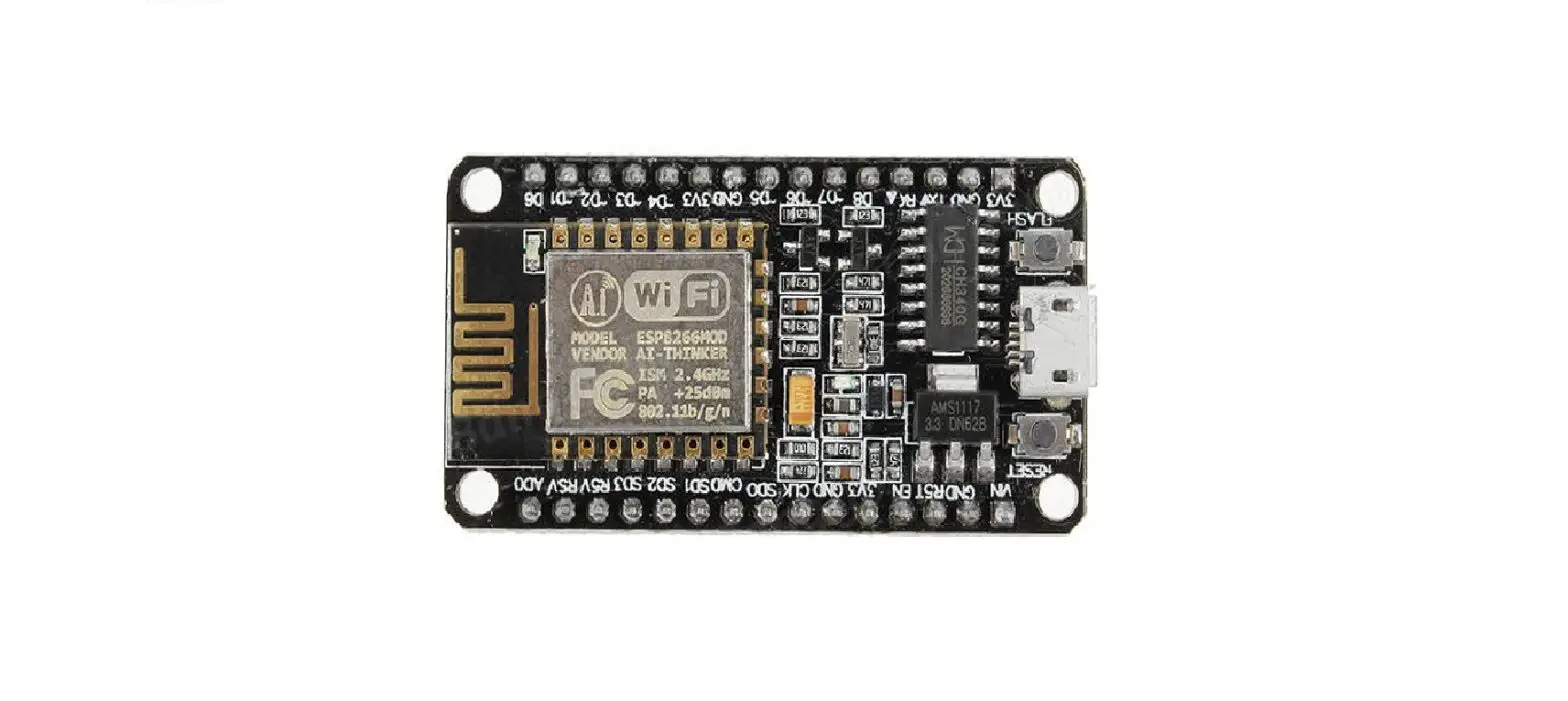
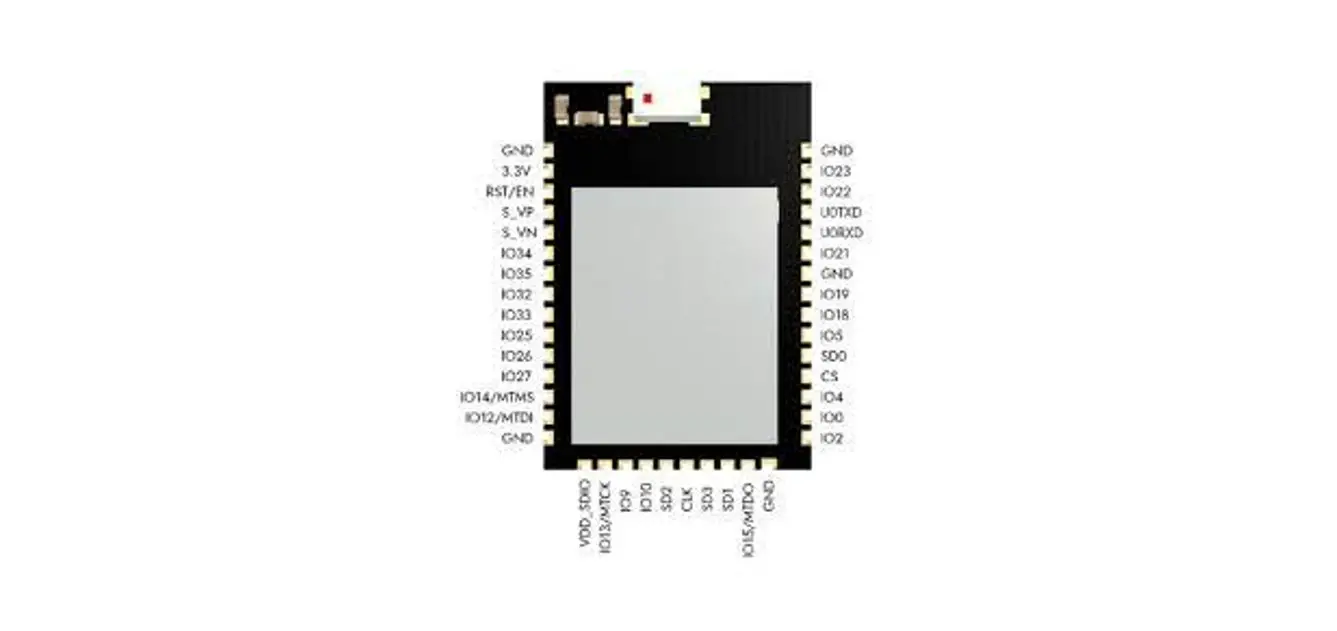
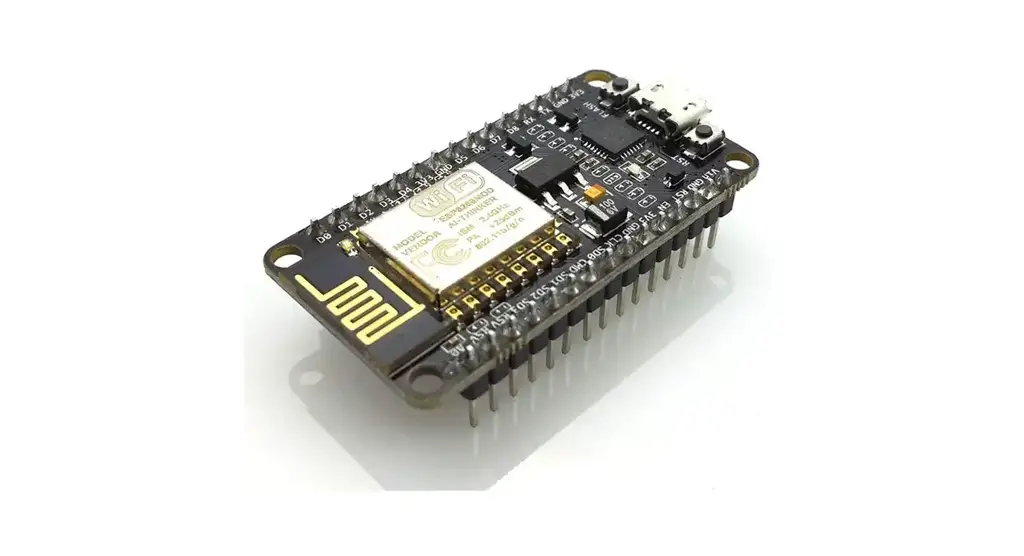
Pin Descriptions
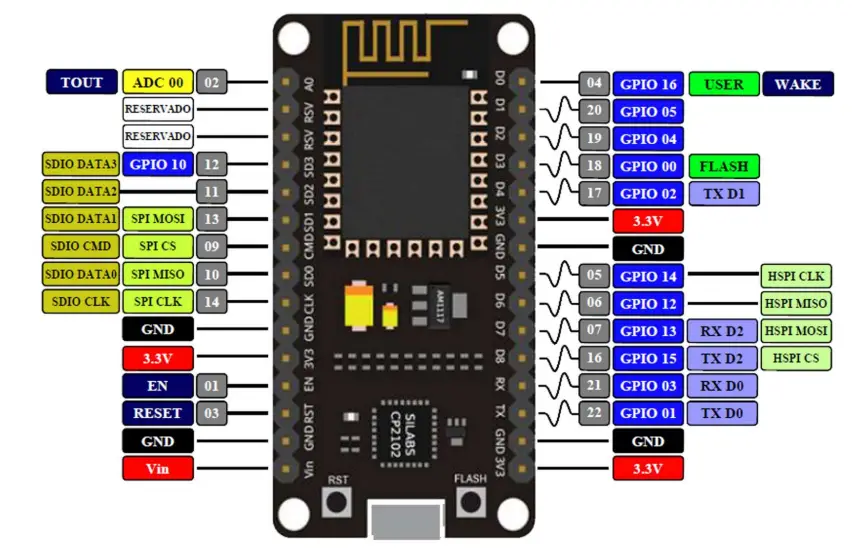
| Pin No. | Pin Name | Pin Description |
| 1 | 3V3 | Power Supply |
| 2 | GND | Ground |
| 3 | TX | GP101,UOTXD,SPI_CS1 |
| 4 | RX | GPIO3, UORXD |
| 5 | D8 | GPI015, MTDO, UORTS, HSPI CS |
| 6 | D7 | GPIO13, MTCK, UOCTS, HSPI MOST |
| 7 | D6 | GPIO12, MTDI, HSPI MISO |
| 8 | D5 | GPIO14, MTMS, HSPI CLK |
| 9 | GND | Ground |
| 10 | 3V3 | Power Supply |
| 11 | D4 | GPIO2, U1TXD |
| 12 | D3 | GPIOO, SPICS2 |
| 13 | D2 | GPIO4 |
| 14 | D1 | GPIOS |
| 15 | DO | GPIO16, XPD_DCDC |
| 16 | AO | ADC,TOUT |
| 17 | RSV | RESERVED |
| 18 | RSV | RESERVED |
| 19 | SD3 | GPI010, SDIO DATA3, SPIWP, HSPIWP |
| 20 | SD2 | GPIO9, SDIO DATA2, SPIHD, HSPIHD |
| 21 | SD1 | GPIO8, SDIO DATA1, SPIMOSI, U1RXD |
| 22 | CMD | GPIO11, SDIO CMD, SPI_CSO |
| 23 | SDO | GPIO7, SDIO DATAO, SPI_MISO |
| 24 | CLK | GPIO6, SDIO CLK, SPI_CLK |
| 25 | GND | Ground |
| 26 | 3V3 | Power Supply |
| 27 | EN | Enable |
| 28 | RST | Reset |
| 29 | GND | Ground |
| 30 | Vin | Power Input |