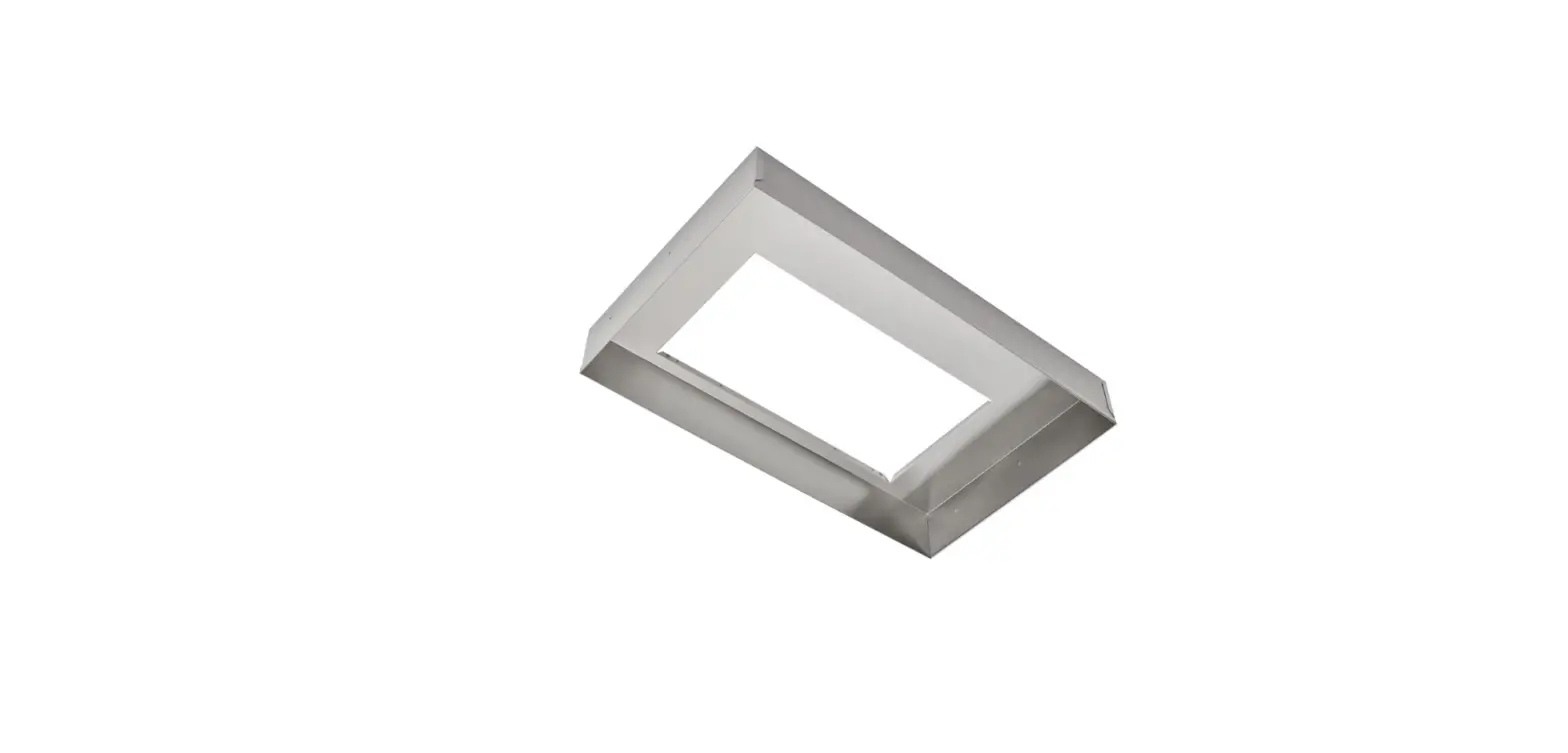
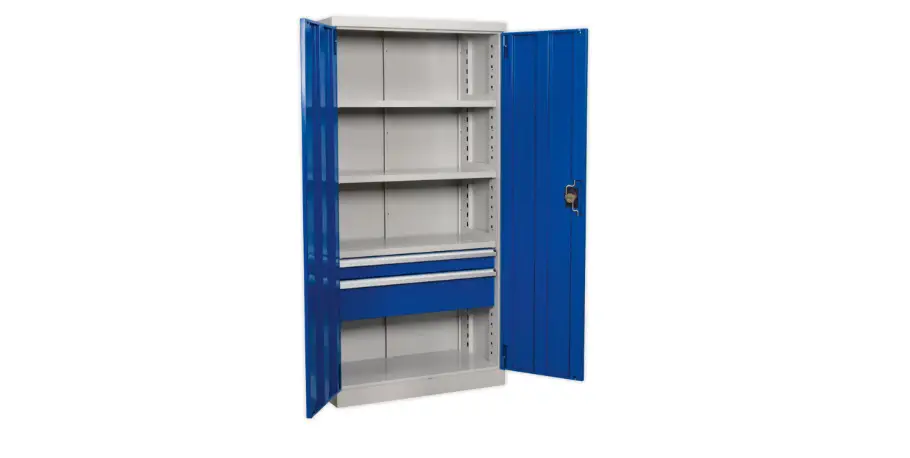
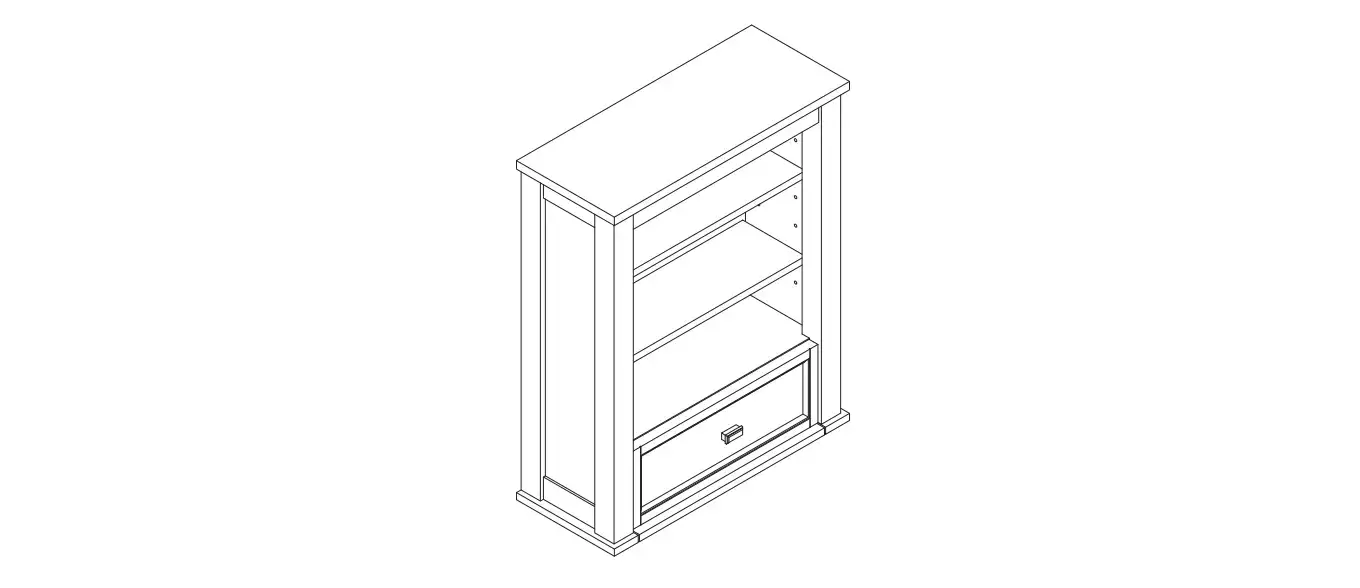
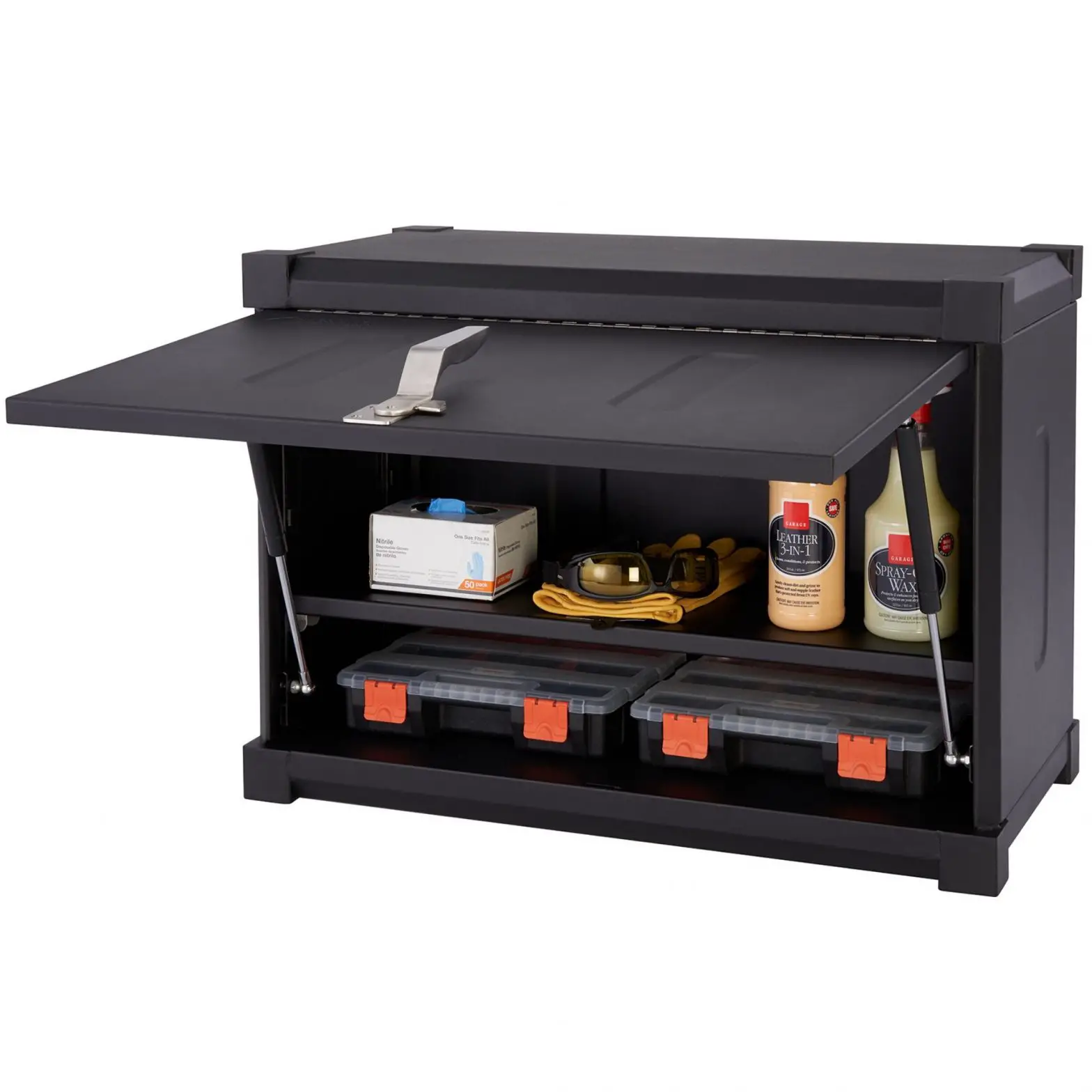
F330 Omaha Unfinished Cabinet Fill Strip
Product Information
The product is a measuring guide designed to assist customers in
accurately measuring their space for remodeling projects. It
provides step-by-step instructions on creating drawings and
gathering the necessary information for the design process. The
guide includes sections on floor plan drawing, wall elevation
drawings, construction details, appliances, and photography.
It also provides important notes about measuring for
renovations, including the use of inches for measurements, rounding
down for walls and openings, and rounding up for appliances. The
guide emphasizes the use of metal measuring tapes for accuracy and
recommends recording dimensions in inches.
Helpful tips are provided on properly measuring the space,
locating windows and doors, measuring doors and windows, recording
measurements, locating range hoods, outlets, switches, water and
utility lines, and 220-volt outlets.
Product Usage Instructions
- Start by using a metal measuring tape to accurately measure
your space in inches. Record all dimensions on your drawings. - Locate windows and doors by measuring from the wall to the
outside edge of the trim. - Measure the width and height of each door and window, including
the trim. - Record the width of the window sill.
- If you have an existing range hood vent or over-the-range
microwave, note its location on your drawing. Specify if it
exhausts back into the room or has ducts that go outside. - Locate outlets and switches by measuring horizontally to the
center of the wall plate and vertically from the floor. - Mark the center line location of the sink, water lines, drains,
gas lines, and heating/air conditioning vents. - Show any 220-volt outlets on your drawing if you have an
electric stove or any other appliances that require them.
Remember to double-check your measurements for accuracy and use
a metal measuring tape to avoid stretching and measuring errors.
The drawings should be recorded in inches, not feet and inches, as
cabinets and appliances are measured in inches.
MEASURING GUIDE
CUSTOMER NAME DESIGNER NAME APPOINTMENT DATE
PHONE PHONE TIME
MEASURING YOUR SPACE
Accurate measuring is a critical step in the remodeling process. delays and costly overruns.
Obtaining a professional measurement of your space is highly recommended talk to your designer for more details.
Before your designer can begin to design your new space and help you select your cabinetry and appliances, they will need to know the size of your space and the important construction details.
This guide walks you through the 5 easy steps to create a drawing and provide the information necessary for your kitchen designer to start the design process.
Floor Plan Drawing…………………………..pg 4
A birds-eye view of your space
Wall Elevation Drawings……………………pg 4
A vertical and horizontal map of each wall, from a straight-on view
Construction Details…………………………pg 5
Important information for your renovation project
Appliances………………………………………pg 5
Dimensions and manufacturer’s specs for your appliances
Photography…………………………………….pg 5
Photos of your space before renovation
IMPORTANT NOTES ABOUT MEASURING FOR RENOVATIONS
Measure in INCHES
Cabinets and appliances are measured in inches, so your drawings should be recorded in inches, not feet and inches.
Example: 138-1/8-in, NOT 11-ft 6-1/8-in
For walls and openings, ROUND DOWN
When you measure ceilings, walls and openings, round down to the nearest 1/8-in.
Example: 138-1/8-in, NOT 138-3/16-in
For appliances, ROUND UP
When you measure appliances round up to the nearest inch.
Example: 34-in, NOT 33-11/16-in
Recording your measurements
drawings. It is much more important to record accurate dimensions, rather than draw your room to scale. Be sure to write the actual dimensions on your drawings for all the elements in your space.
USE ONLY METAL MEASURING TAPES
Cloth or plastic tapes may stretch, causing measuring errors.
Standard construction materials are measured in inches. Use a imperial tape measure and record your dimensions in inches, not feet and inches.
MEASURING TIPS
Here are helpful tips on how to properly measure your space and record the correct window, door and
drawings.
Always double-check your measurements!
Locate windows and doors
Measure from the wall to the outside edge of the trim on all your doors and windows.
Measuring doors and windows
Your designer needs to know the exact location of windows and doors, as well as the size of each opening (including the trim) in order to plan your new space.
Record all of the measurements:
A. Width, including trim B. Height, including trim C. D. E. Width of the window sill
Range hoods
If you have an existing range hood vent or over the range will be microwave, note the location on your drawing. Specify if it exhausts back into the room, or if it has ducts that went to outside.
Locate outlets and switches
Measure horizontally to the center of the wall plate, and vertically from the
Locate water and utility lines
Mark the center line location of the sink, water lines, drains, gas lines and heating / air conditioning vents.
220 volt outlets
Be sure to show any 220 volt outlets on your drawing. Do you have an electric stove? Then you’ll have a 220 volt outlet for your stove. Your outlet may not look exactly like the example shown here, but it will look different from standard 110 volt outlets.
IMPORTANT!
Be sure to write the measurements on your
drawings!
Most grid paper is to scale, but your designer won’t know what size your space is unless you write down the dimensions.
CREATING WALL ELEVATION DRAWINGS
Elevation drawings are a straight-on view of each wall, with all the features measured vertically and horizontally, placing them on the wall space. This helps your designer locate your new cabinets and appliances along your walls.
Start with the sink wall, go clockwise from there
Start measuring your room with the sink wall. Label this wall A. Then go clockwise around your room, labeling the walls B, C, and D.
Draw a rough sketch
Start by drawing a rough sketch (or two!) of each wall on a separate sheet of paper.
Measure the width of the wall
Measure the full width of each wall, beginning in the left corner. Check the width at two locations, 6 inches above
Locate the openings
Measure to the outside edge of the trim. Then measure from the outside trim edge to the next opening, or to the far wall. Follow our measuring tips to capture all the important details about windows and doors.
Measure horizontally to the center of outlets, switches, water lines and other utilities. Also measure the distance
mark their location and size. Follow our measuring tips for accuracy.
Transfer measurements to grid
Transfer all of your measurements to the grid pages in this guide. Label your drawings Wall A, Wall B, Wall C and Wall D
smallest dimension.
Measure the height of the wall
Measure the full height of each wall, beginning in the left corner. Check the height at two other locations. Use the smallest dimension.
If your space is L-shaped or has a bump-out area, you can still draw an elevation view straight-on. Just use a vertical line to show where the wall comes forward.
like this drawing…
…your elevation view will look like this drawing.
Always double-check your measurements! The total of your wall segments should equal your overall length.
CONSTRUCTION DETAILS
ENTRANCES AND ACCESS
through doorways into your space, record the actual openings for doors and hallways.
Entry Door: ____________ inches
Interior Door 1: ____________ inches
Interior Door 2: ____________ inches
Hallway:
____________ inches
Is there a basement or crawl space under the room that provides access to plumbing and heating ducts?
Yes
No
section that is built out at the ceiling level, usually in the area above wall cabinets.
Yes
No
in the diagram to the right.
Yes
No
after the renovation?
Yes
No
WARNING
typically contain electrical and plumbing elements that can’t be relocated. Consult a professional on your remodel.
APPLIANCES
Use this page to provide the dimensions of your appliances or appliance cut-outs.
Refrigerator Model No.
Sink Model No.
Microwave
W__________ H__________ D__________
Double Door Single Door Left Right Model No. W__________ H__________ D__________ Free-standing Built-in (Cut-out) Over Range
Single 1-1/2 Double
W__________ D__________
Model No. Single Oven (Cut-out Dimensions)
W__________ H__________ D__________
Range
Model No.
W__________
H__________
D__________
Slide-in
Raised Back
Cooktop Model No. (Cut-out Dims.)
W__________
Model No.
Double Oven (Cut-out
Dimensions)
W__________ H__________ D__________
H__________ D__________
Front Controls Top Controls Dishwasher Model No.
Other Appliances Description _____________________
W__________ H__________ D__________
W__________ H__________ D__________
Description _____________________ W__________ H__________ D__________
PHOTOGRAPHY
Take photos of your space and share them with your kitchen designer. Label your photos to match your walls: A, B, C, D.
Straight-on views of each wall: A (the sink wall), B, C, D (go clockwise around the room).
Close-ups of anything unusual in your space: air vents, plumbing or gas lines, entrances or access notes.