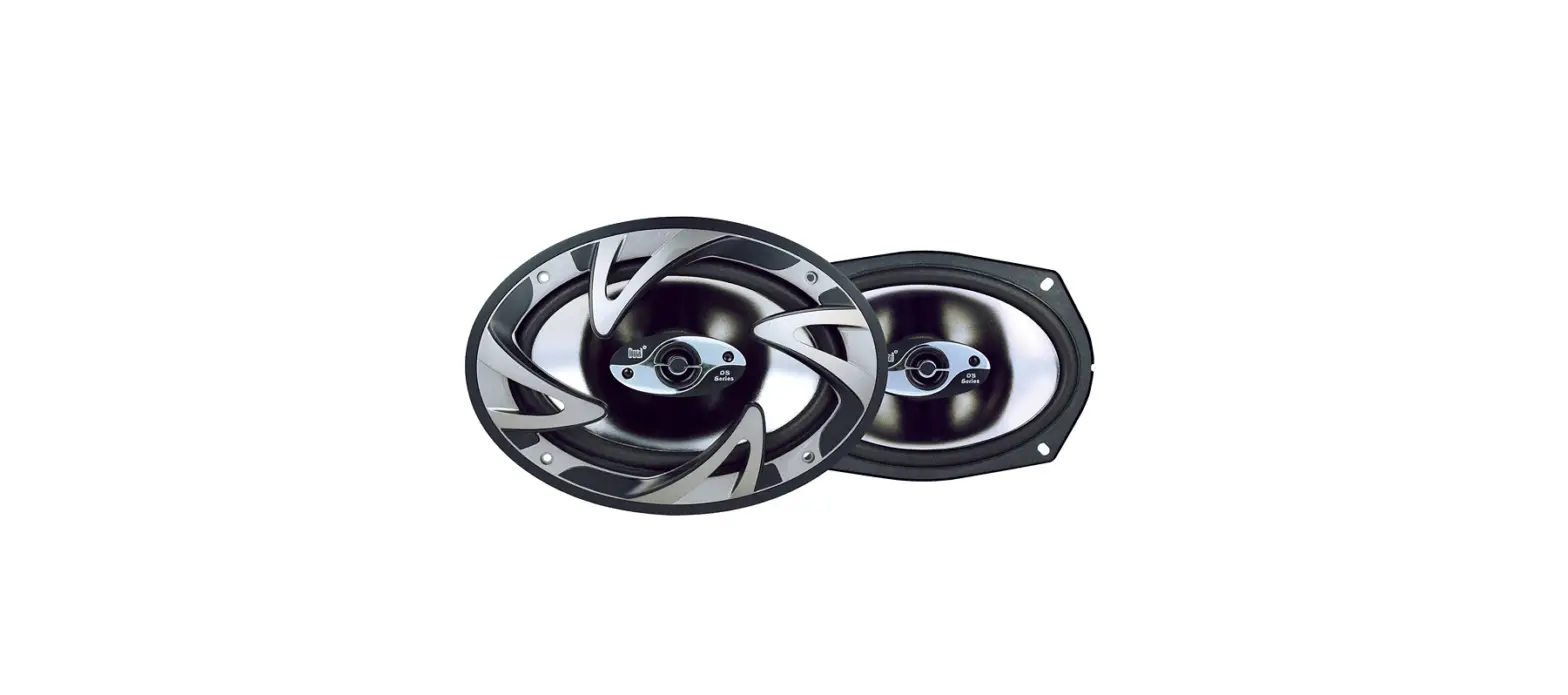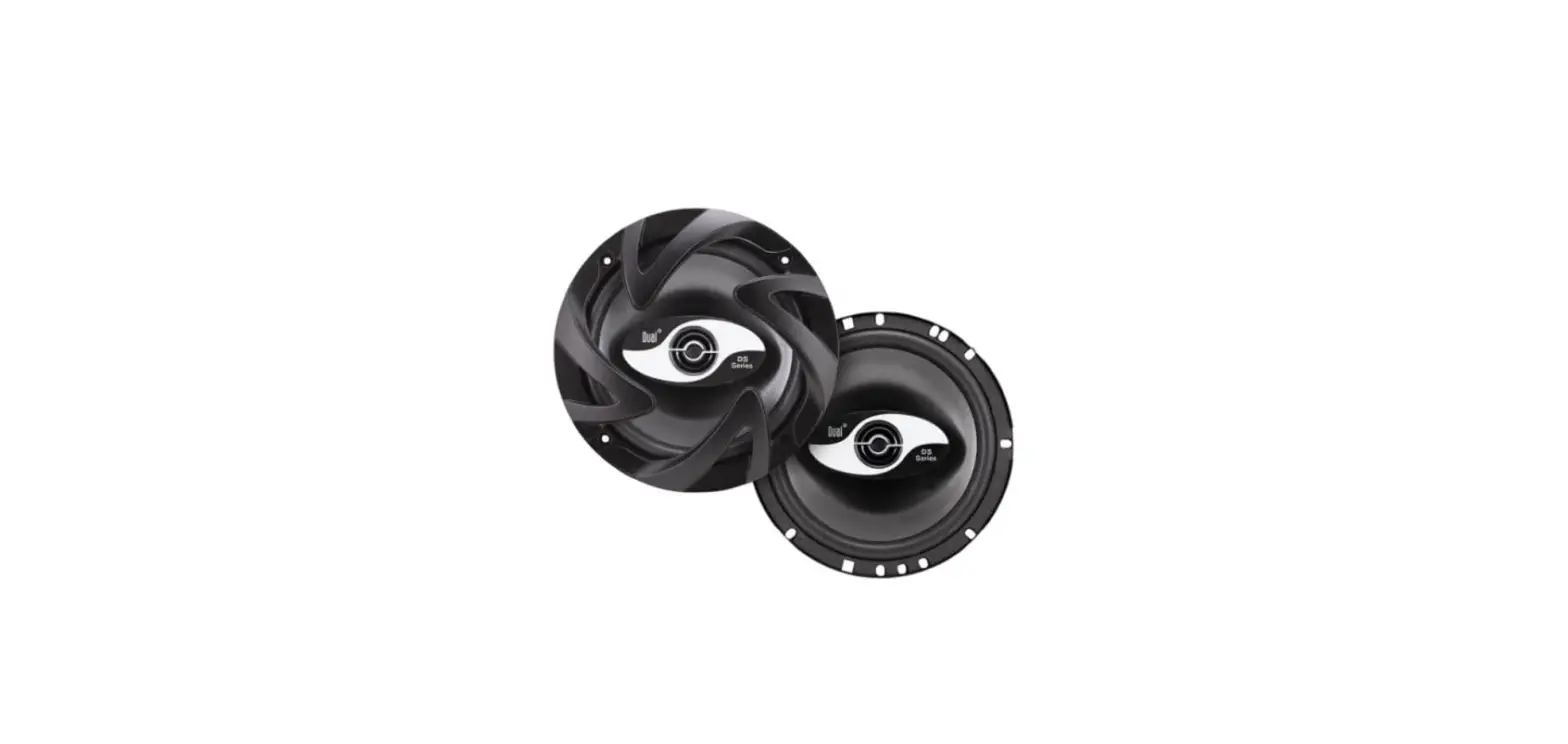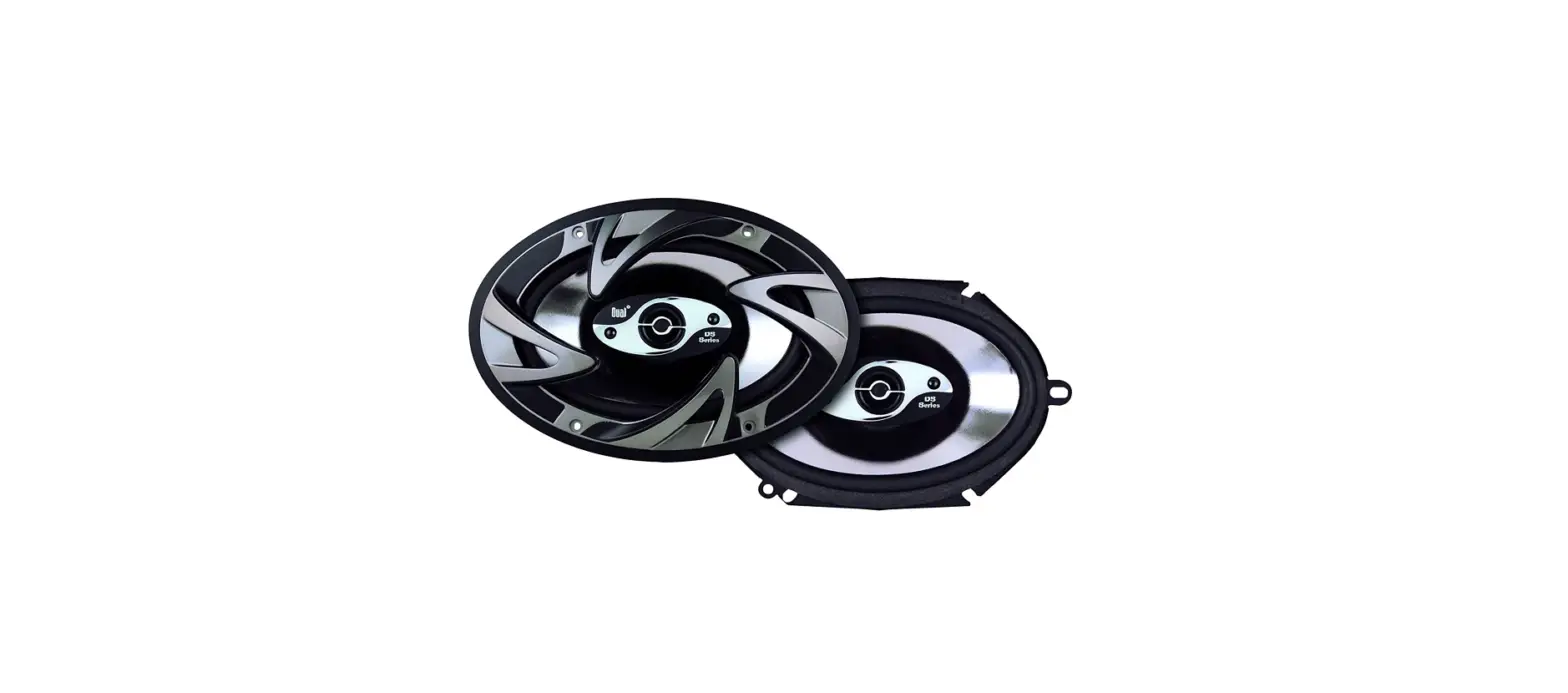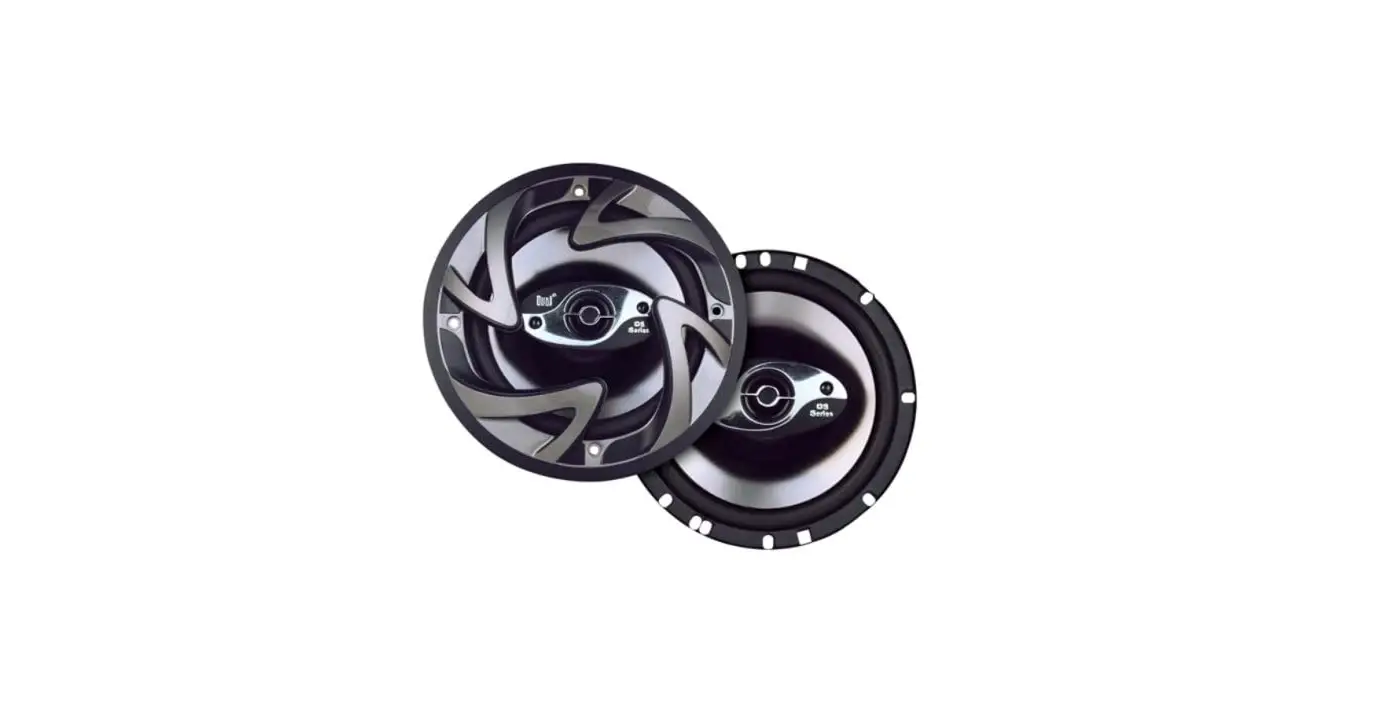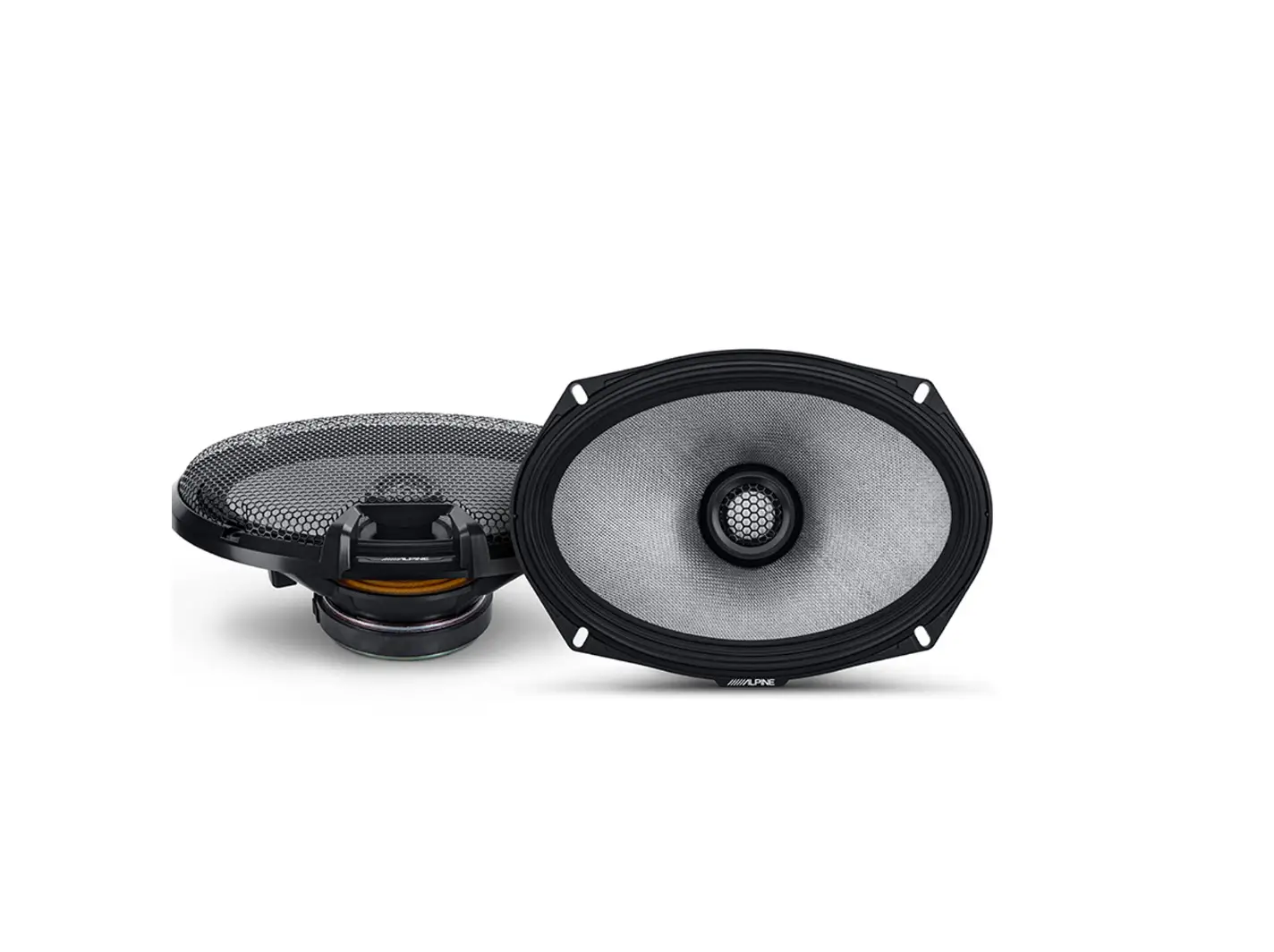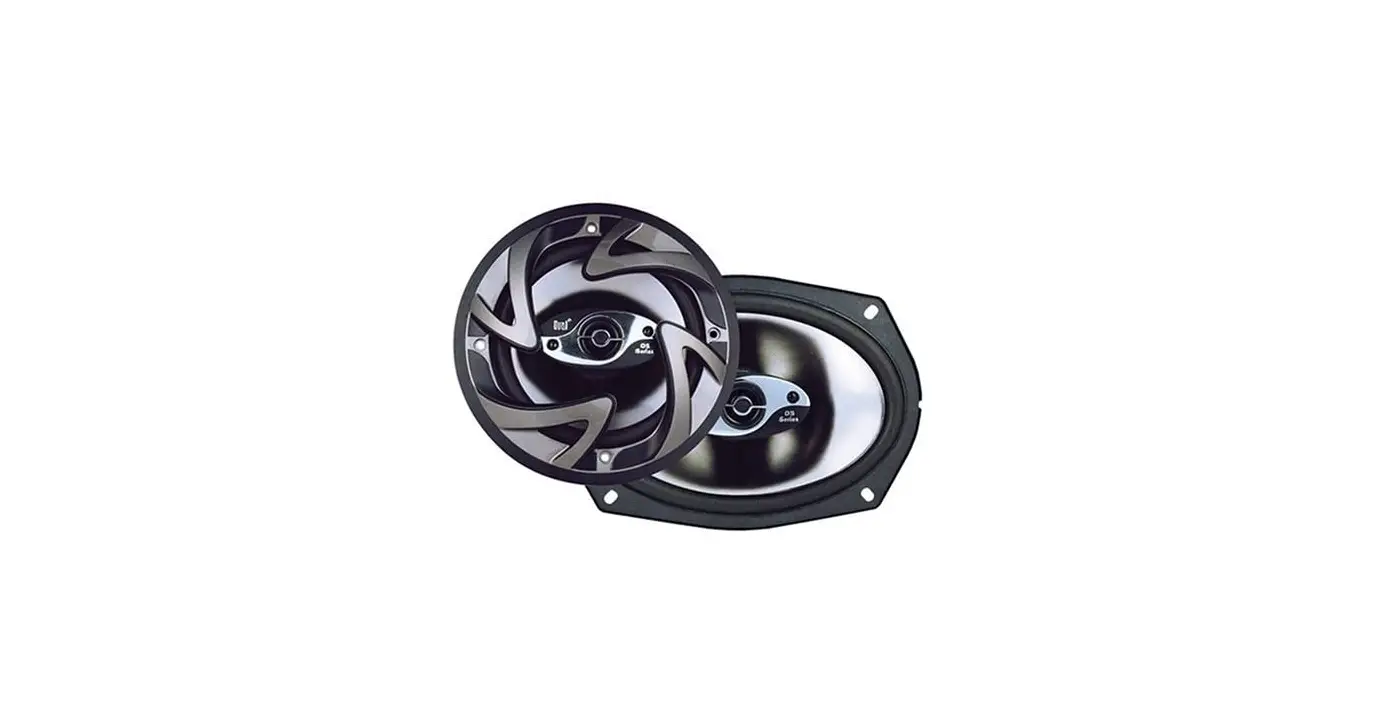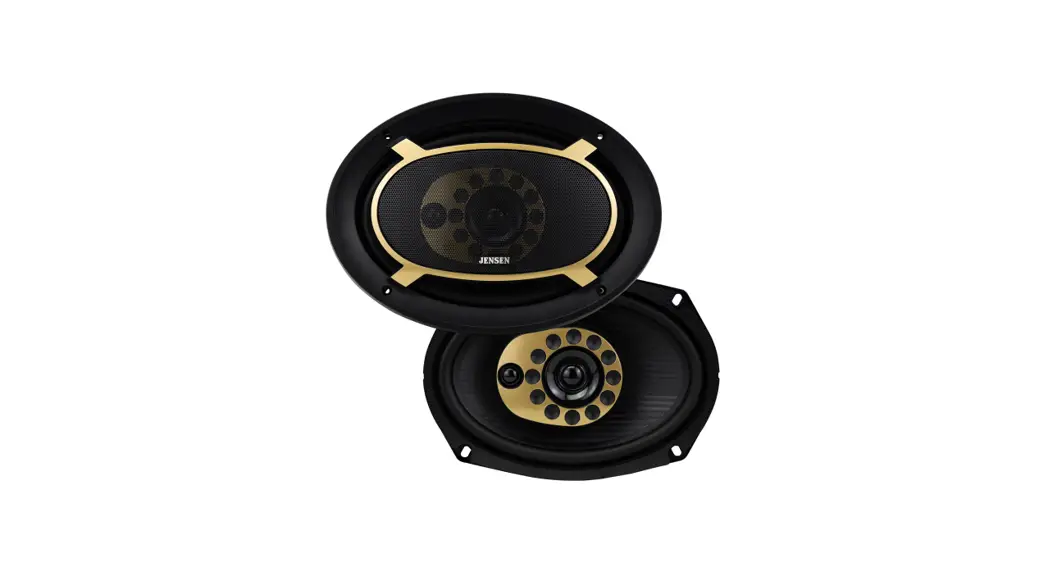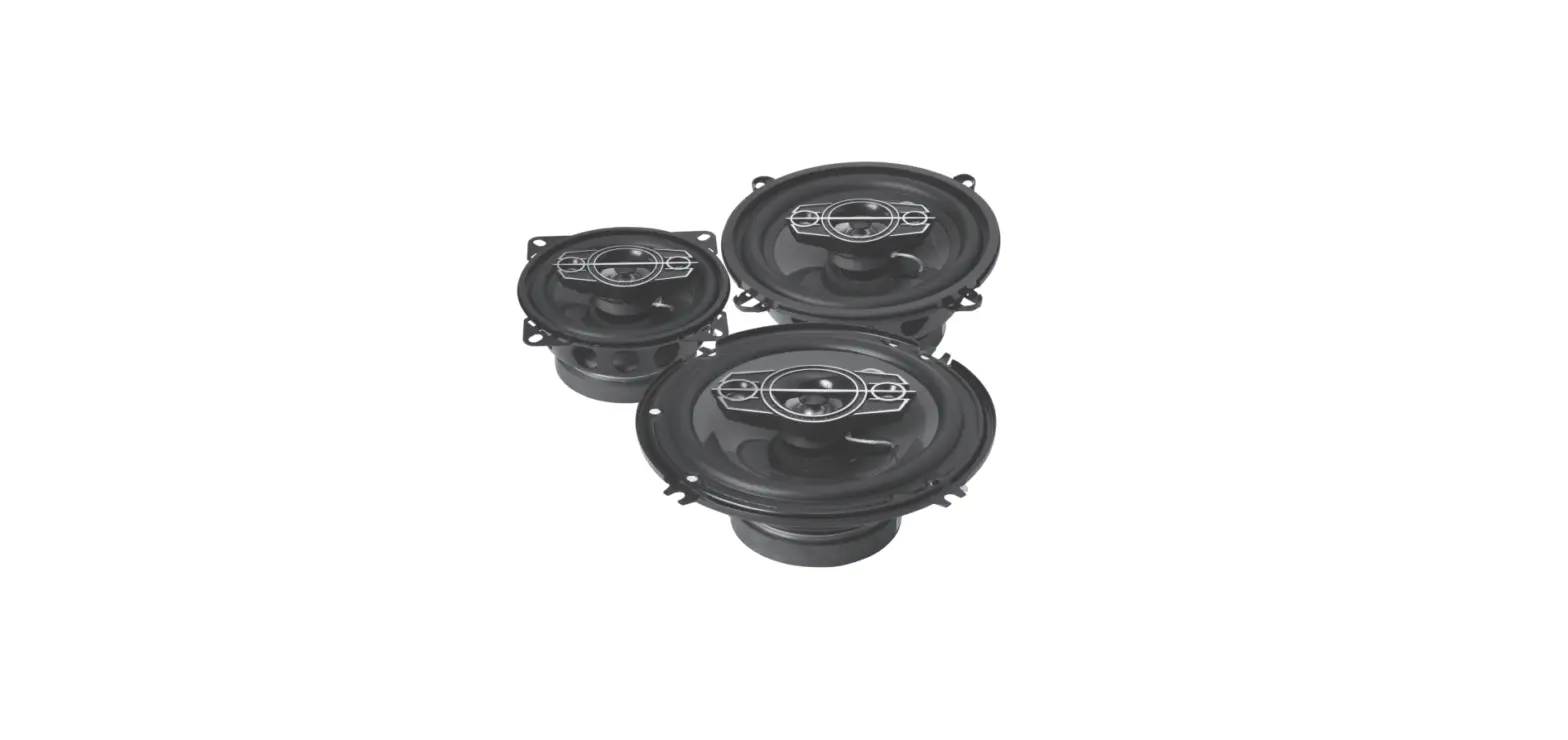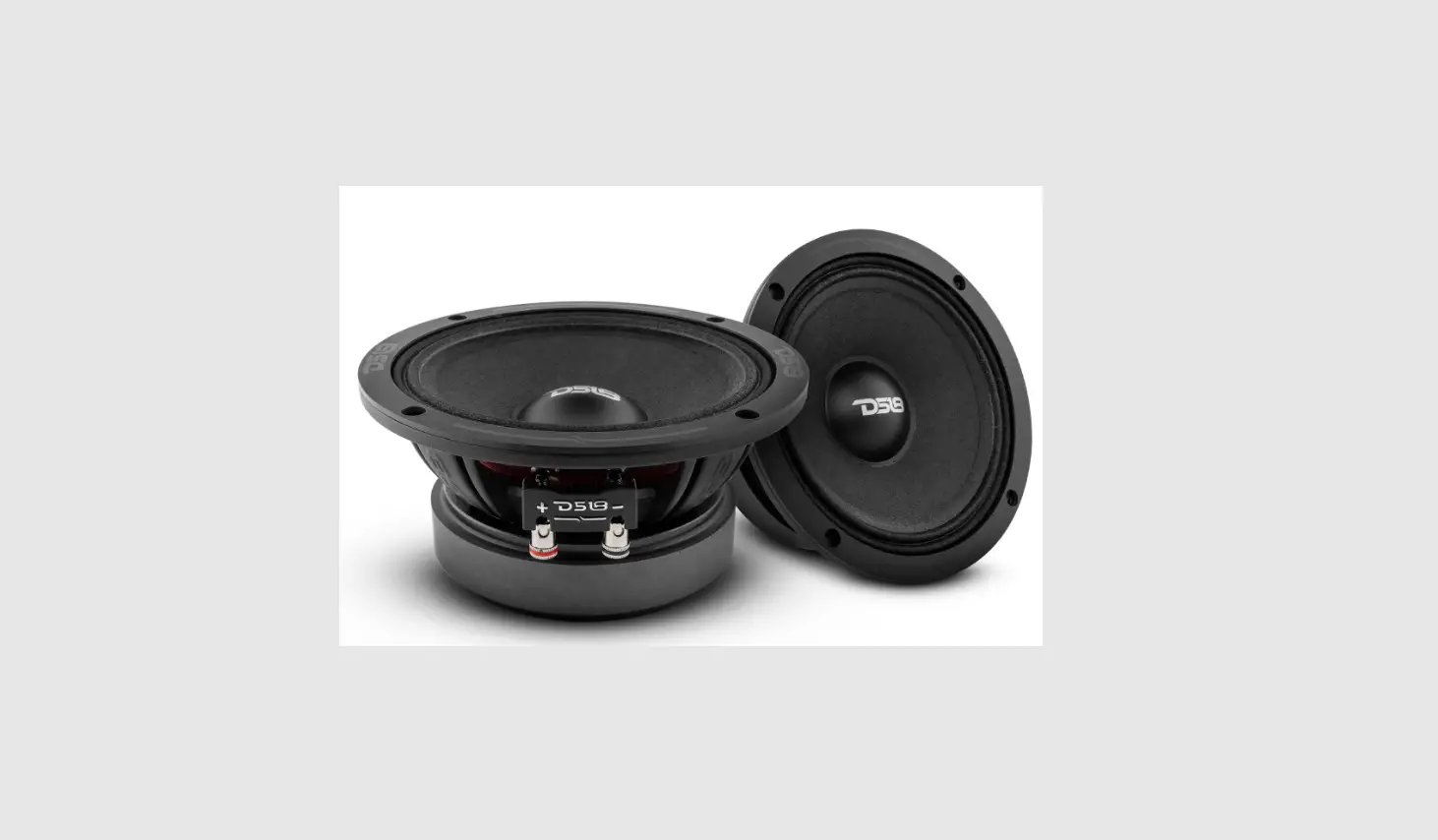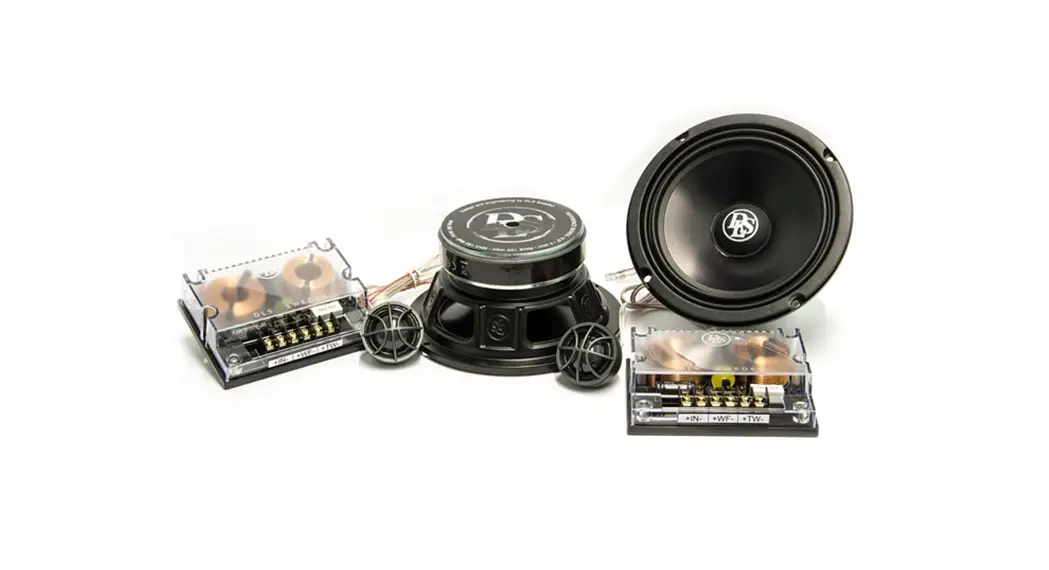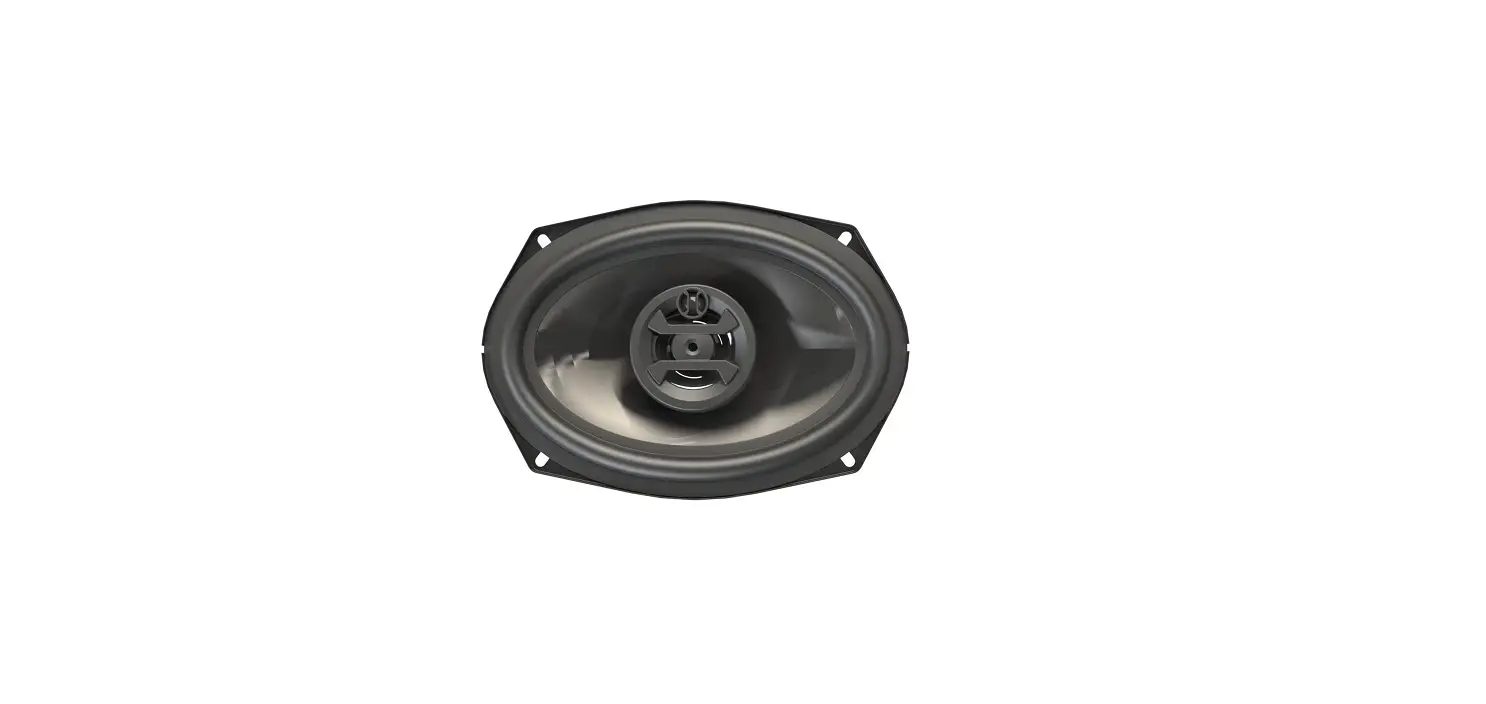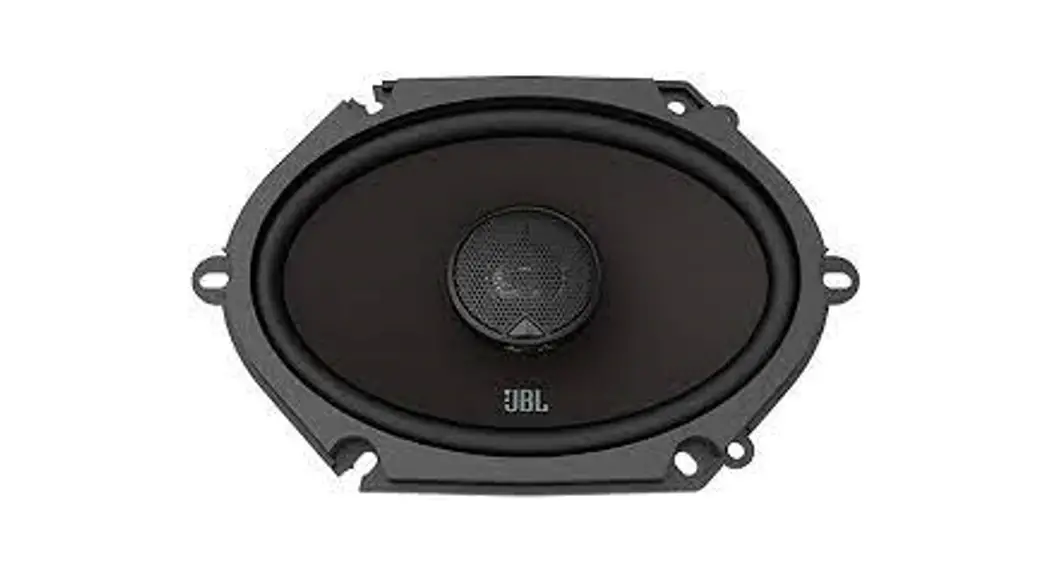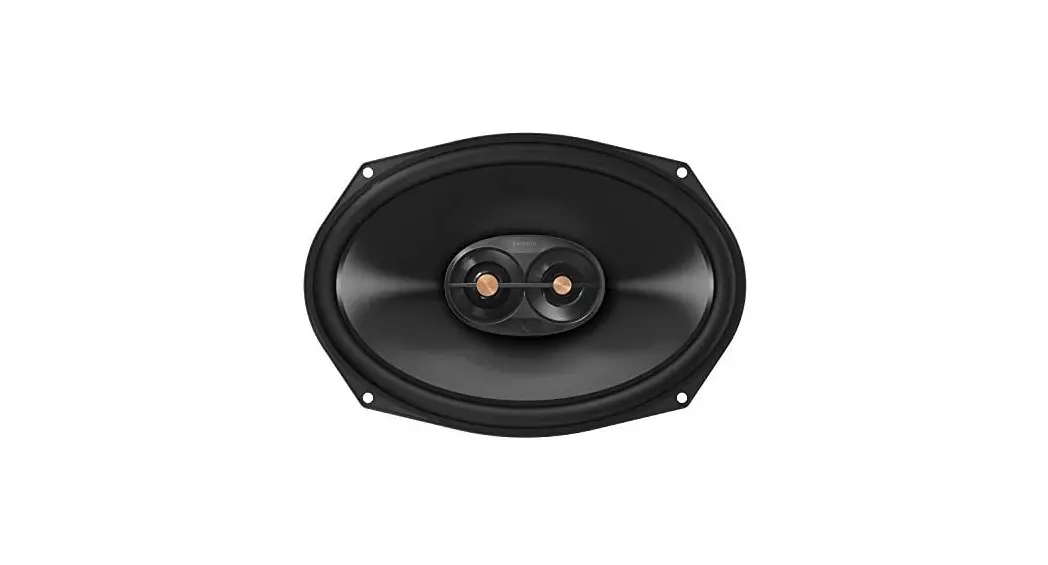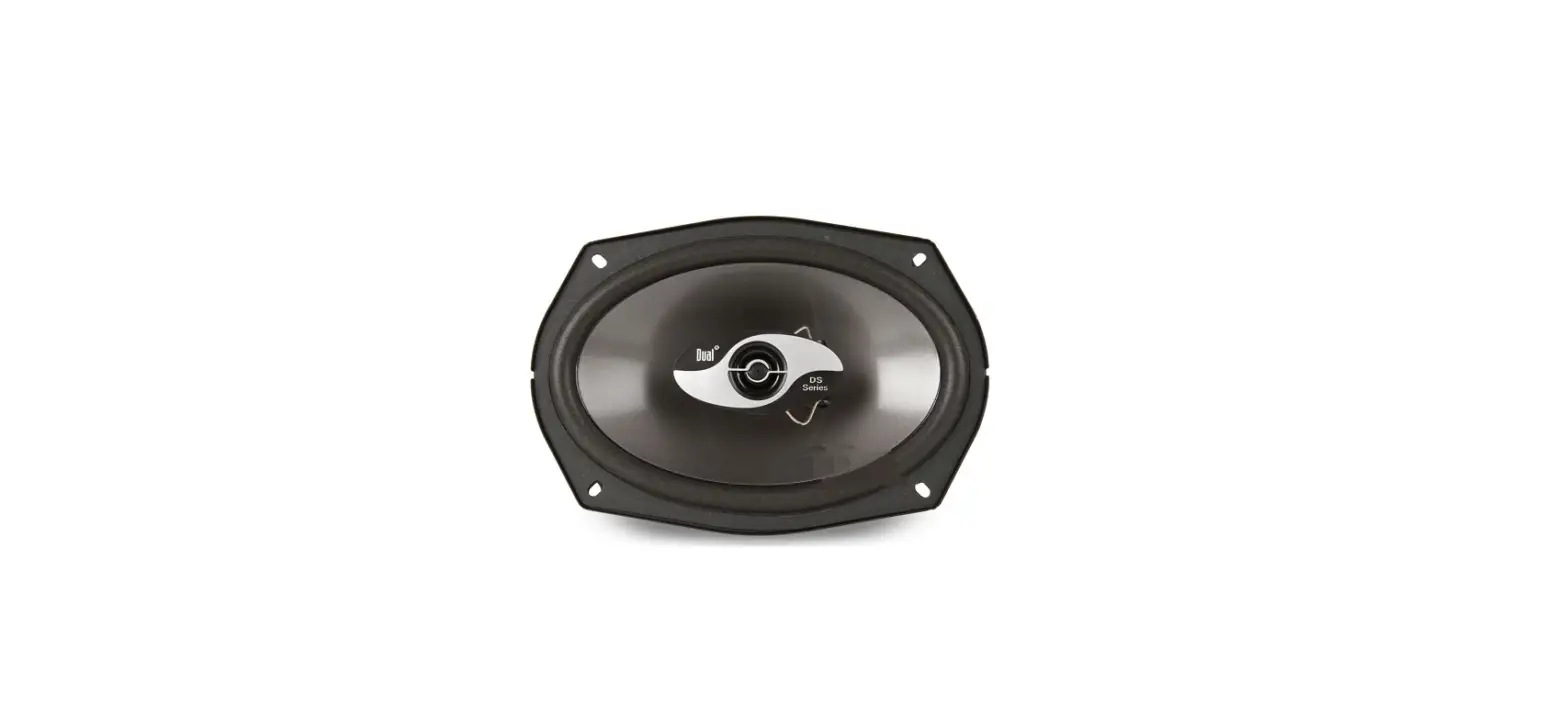

Dual Electronics DS52 100 Watt 5.25″ 2-Way Car Coaxial Speakers
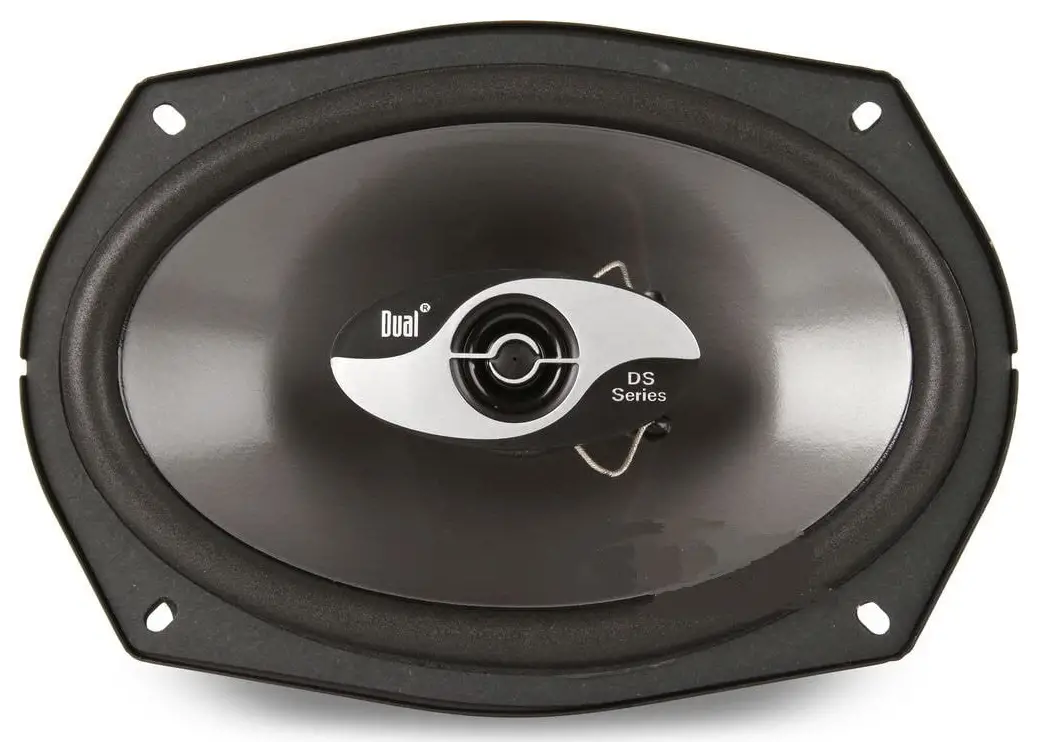
Getting Started
Thank you for purchasing the DS Series car speakers. Although Dual has attempted to make sure all of the information contained within this manual is accurate, please be aware that any part of it is subject to change without notice.
Safety
CAUTION
This symbol is intended to alert the user to the presence of important instructions. Failure to heed these instructions can result in injury or unit damage.
CAUTION
To prevent injury and damage to the unit, please read and follow the instructions in this manual.
CAUTION
If you feel unsure about installing this system yourself, have it installed by a qualified audio technician.
CAUTION
Before installation, disconnect the battery negative (-) terminal to prevent damage to the unit, fire and/or possible injury.
CAUTION
The following installation instructions are very basic. If you feel unsure about personally installing this speaker system, Dual recommends acquiring the services of a professional car audio installation center.
Before installation, please follow these guidelines:
- Be sure to carefully read and understand the instructions before attempting to install this product.
- For safety, disconnect the negative terminal from the battery prior to beginning the installation.
- For easier assembly: If additional wiring is required, we recommend running all wires prior to mounting your speaker in place.
- Use the highest quality connectors for a reliable installation and to minimize signal or power loss.
- Use caution before you drill or cut! Be careful not to cut or drill into gas tanks, fuel lines, brake or hydraulic lines, vacuum lines or electrical wiring when working on any vehicle.
- Never run speaker wires underneath your vehicle. Running speaker wires inside the vehicle provides the best protection from exhaust heat and environmental elements.
- Avoid running wires over, near, or through sharp edged surfaces. We suggest you also use rubber grommets to protect any wires routed through metal.
- When running the speaker cable from the amplifier, avoid running it near sources of high current (i.e. wiring harnesses, battery cables).
Mounting
- Determine where the speakers will be mounted. Make sure the area is large enough for the speaker to mount evenly. Also ensure the mounting location is deep enough for the speaker to fit.
- Refer to the specification chart to determine the proper diameter hole to cut for your speaker model.
- If needed, use the grille as a template to mark the locations for the mounting screws. Drill the holes with a 3/32″ bit.
- Be sure to observe proper polarity when connecting the wires. The speaker’s positive terminal is indicated with a “+” symbol.
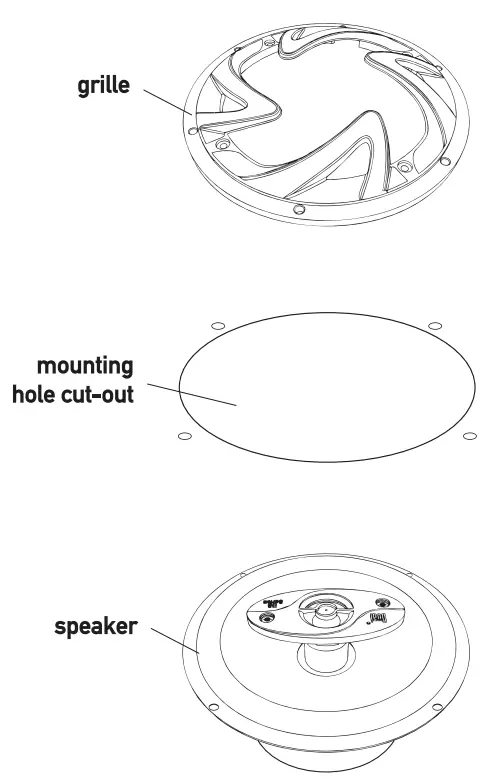
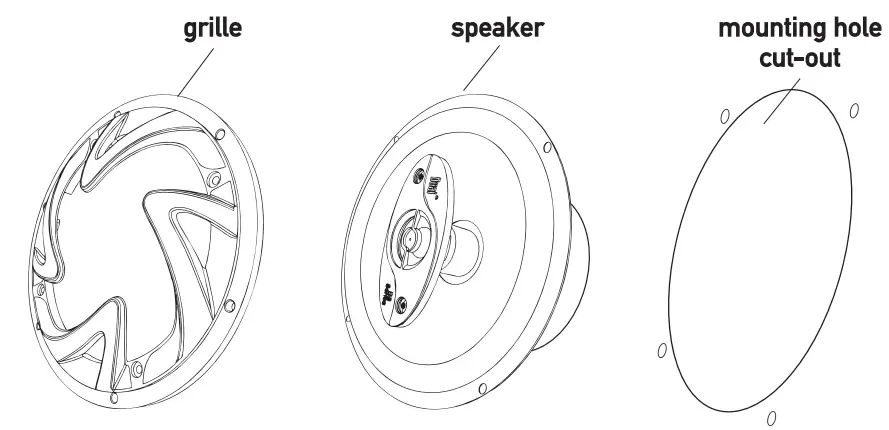
- Fit the speaker to the hole cut-out. Mount the speaker using the supplied screws. If the speaker grill is to be used, insert 4 screws into the grill holes and then mount the speaker.
Standard Rear Deck Installation
Standard Door Installation
Specifications
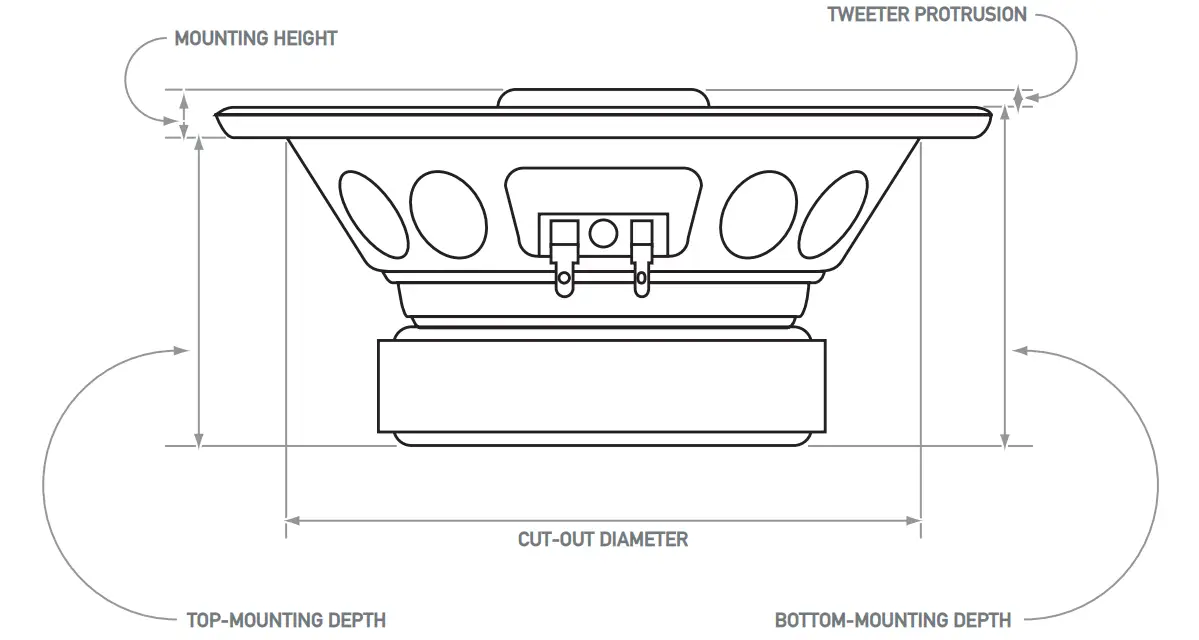
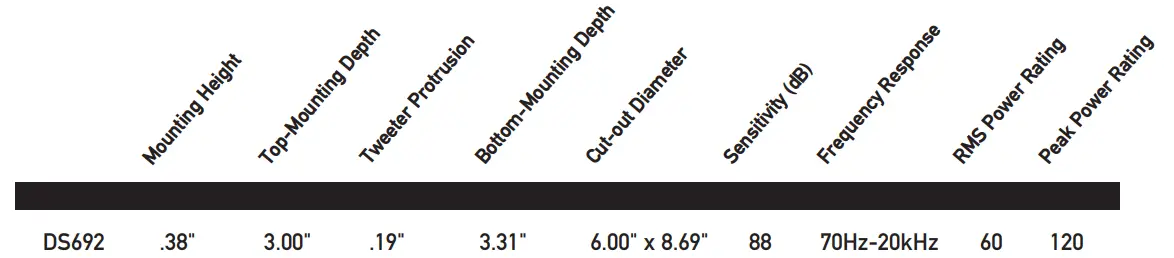
The diagram featured above is to be used in conjunction with the specifications matrix guide below:
Limited One Year Warranty
This warranty gives you specific legal rights. You may also have other rights which vary from state to state.
Dual Electronics Corp. warrants this product to the original purchaser to be free from defects in material and workmanship for a period of one year from the date of the original purchase.
Dual Electronics Corp. agrees, at our option, during the warranty period, to repair any defect in material or workmanship or to furnish an equal new, renewed or comparable product (whichever is deemed necessary) in exchange without charges, subject to verification of the defect or malfunction and proof of the date of purchase. Subsequent replacement products are warranted for the balance of the original warranty period.
Who is covered?
This warranty is extended to the original retail purchaser for products purchased and used in the U.S.A.
What is covered?
This warranty covers all defects in material and workmanship in this product. The following are not covered: installation/removal costs, damage resulting from accident, misuse, abuse, neglect, product modification, improper installation, incorrect line voltage, unauthorized repair or failure to follow instructions supplied with the product, or damage occurring during return shipment of the product.
What to do?
- Before you call for service, check the troubleshooting guide in your owner’s manual.
A slight adjustment of any custom controls or connections discussed in your instruction booklet may save you a service call. - If you require service during the warranty period, you must carefully pack the product (preferably in the original package) and ship it by prepaid transportation with a copy of the original receipt from the retailer to an authorized service center.
- Please describe your problem in writing and include your name, a return UPS shipping address (P.O. Box not acceptable), and a daytime phone number with your shipment.
- For more information and for the location of the nearest authorized service center please contact us by one of the following methods:
Call us toll-free at 1-866-382-5476
E-mail us at [email protected]
Exclusion of Certain Damages:
This warranty is exclusive and in lieu of any and all other warranties, expressed or implied, including without limitation the implied warranties of merchantability and fitness for a particular purpose and any obligation, liability, right, claim or remedy in contract or tort, whether or not arising from the company’s negligence, actual or imputed. No person or representative is authorized to assume for the company any other liability in connection with the sale of this product. In no event shall the company be liable for indirect, incidental or consequential damages.
FAQs
Although there is no bulge because the tweeter is flush with the speaker, it does protrude once the box’s accompanying covers are attached.
The primary benefit of a 2-way speaker is the passive crossover that is integrated into the speaker box, allowing the speaker to operate as effectively as possible. If a signal is only divided into high frequencies and low frequencies, the sound quality is typically better.
Parallel and series connections are the only real ways to connect two speakers to a single amplifier. If the impedance of your speakers is 8 ohms or greater, you can usually connect them in parallel. If the total impedance of your speakers is less than 8 ohms, connect them in series.
Two-way speakers are good for bass because they have a dedicated woofer. The woofer handles the low frequency, but if you want to hear the low bass tones better and have a better listening experience, you can add an additional subwoofer.
Yes, it will be noisier. Since intensity adds quadratically rather than linearly to sound waves, the simplest case is that you would actually get four times the intensity if you could replicate the exact signal over space.
3-way speakers provide more options and generally better sound quality because they contain an additional driver, a dedicated subwoofer that only handles low frequencies. Some of the leading speaker manufacturers offer three-way speaker models. Heightened vocal clarity A successful cross-over will prevent distortion from happening.
A two-way speaker is used to deliver high and low frequencies. typically has a tweeter for highs and a woofer or mid bass for lows. An external amplifier that resembles a stereo receiver powers this passive speaker. An active speaker is one that has its own amplifier integrated into it.
For the best sound, 2 way speakers are often linked in the manner of a subwoofer 1 and a subwoofer 2, as opposed to coaxial speakers, which are frequently coupled in the manner of a woofer and a tweeter.
A three-way speaker setup may consist of a midrange, tweeter, and super tweeter in addition to a two-way speaker with a subwoofer and a tweeter. However, that’s pretty much where it ends. Component speakers, on the other hand, allow for virtually any customization.
Main speakers in cars: The main speaker crossovers’ primary job is to block low-end bass at frequencies between 50 and 60 Hz (frequencies 80 Hz and below) For two-way speakers, 3–3.5 kHz (high pass) The midrange spans 1–3.5 kHz. In a three-way system, 300 Hz and 3.5 kHz.
In 2-way speakers, there are two separate types of drivers: the woofer and the tweeter. A tweeter is designed to reproduce high-frequency sounds, whereas a speaker known as a woofer is intended primarily to reproduce low-frequency sounds. The 3-way speaker, often known as the midrange, woofer, and tweeter drivers, produce sound.
The 2-way speaker’s crossover will divide the audio signal into high-frequency and low-frequency bands. A tweeter typically receives high frequencies, while a woofer often receives low frequencies. The crossover frequency is typically around 2 kHz, though it differs from speaker to speaker.
Although adding a subwoofer to a set of speakers nearly always makes sense, especially for smaller bookshelf speakers, a subwoofer is not required for speakers to function.
Although turning the volume up excessively loud and maintaining it there for a long period is the most common cause of blown speakers, there are numerous other, more technical causes as well. It’s also possible that poor sound system design makes the speakers more likely to blow up in the end.
The average volume range for a car sound system is 90 to 130 dB. To put that into perspective, the pain threshold is thought to be 130 dB, whereas 90 dB is comparable to strong street noise from five feet away.
When it comes to creating automobile audio speakers, a speaker with a larger cone can move more air for a given amount of power from an amplifier and so offer more efficiency. Due to its lower resonance frequency and larger cone size, this suspension system will be able to produce more bass with a larger cone.