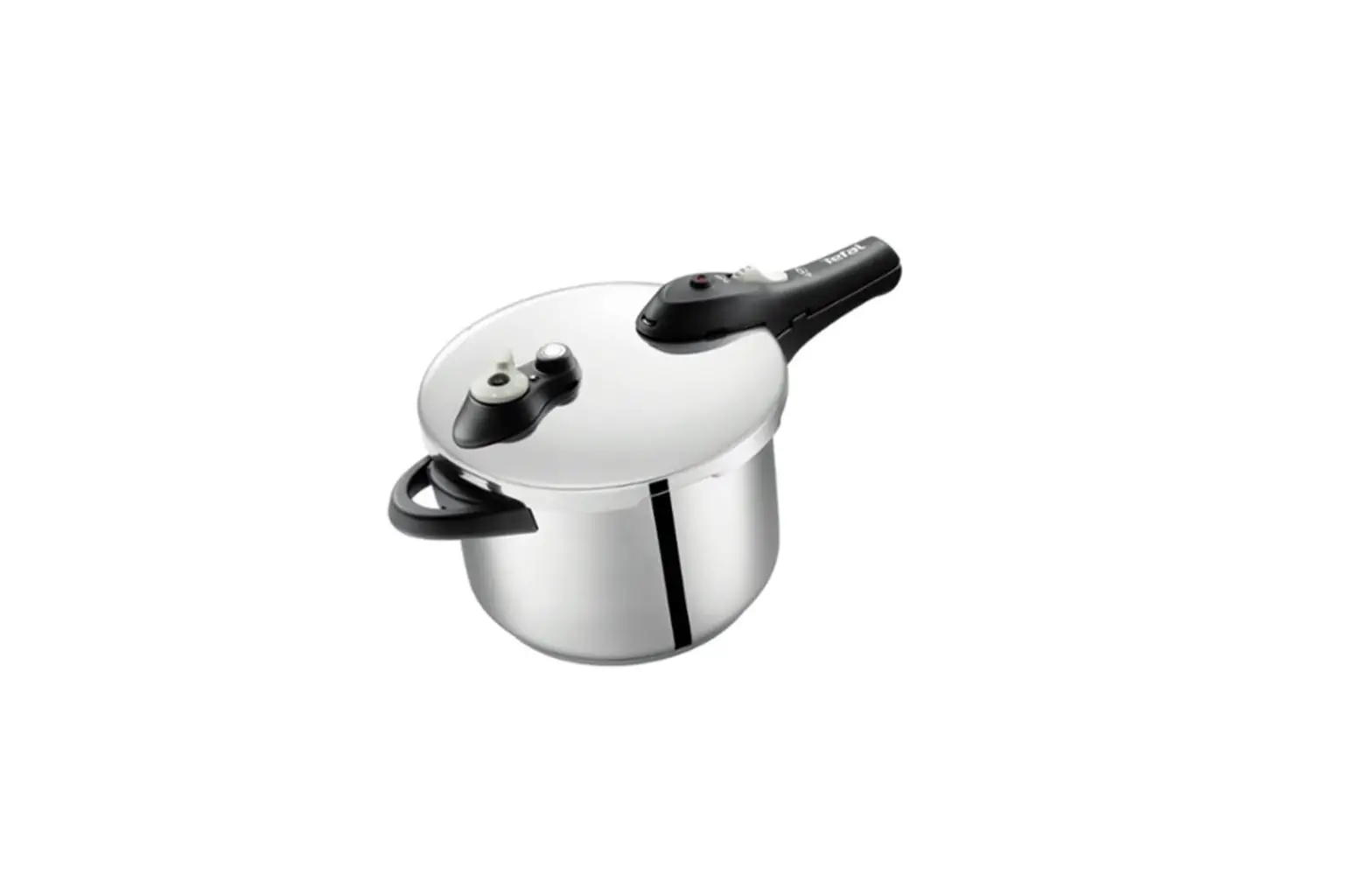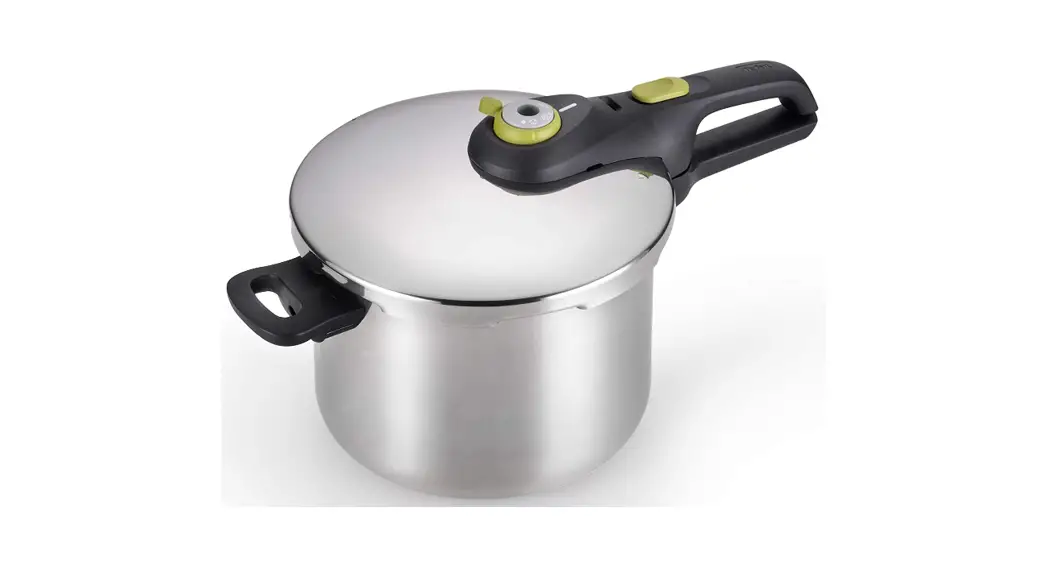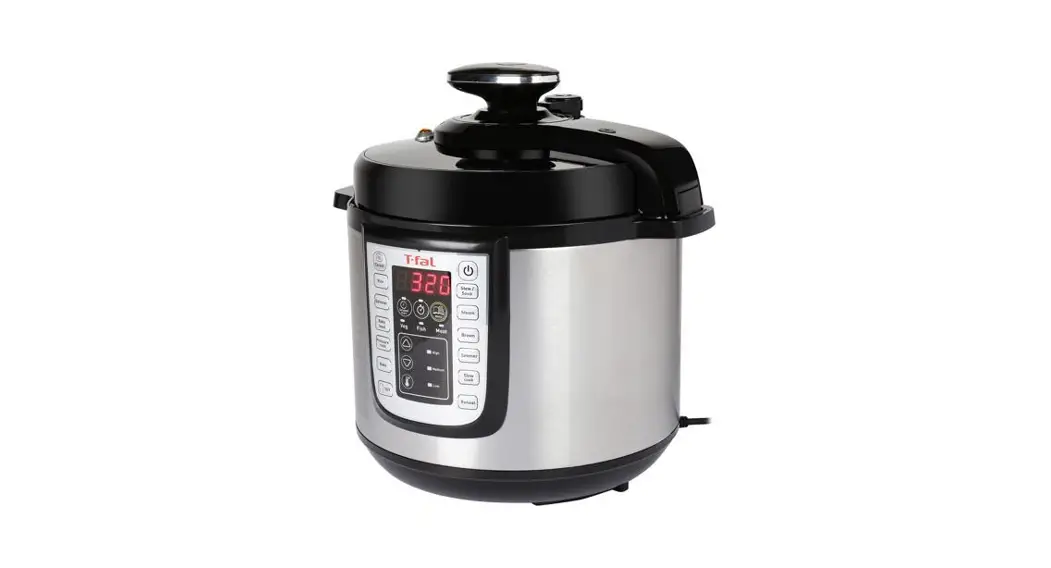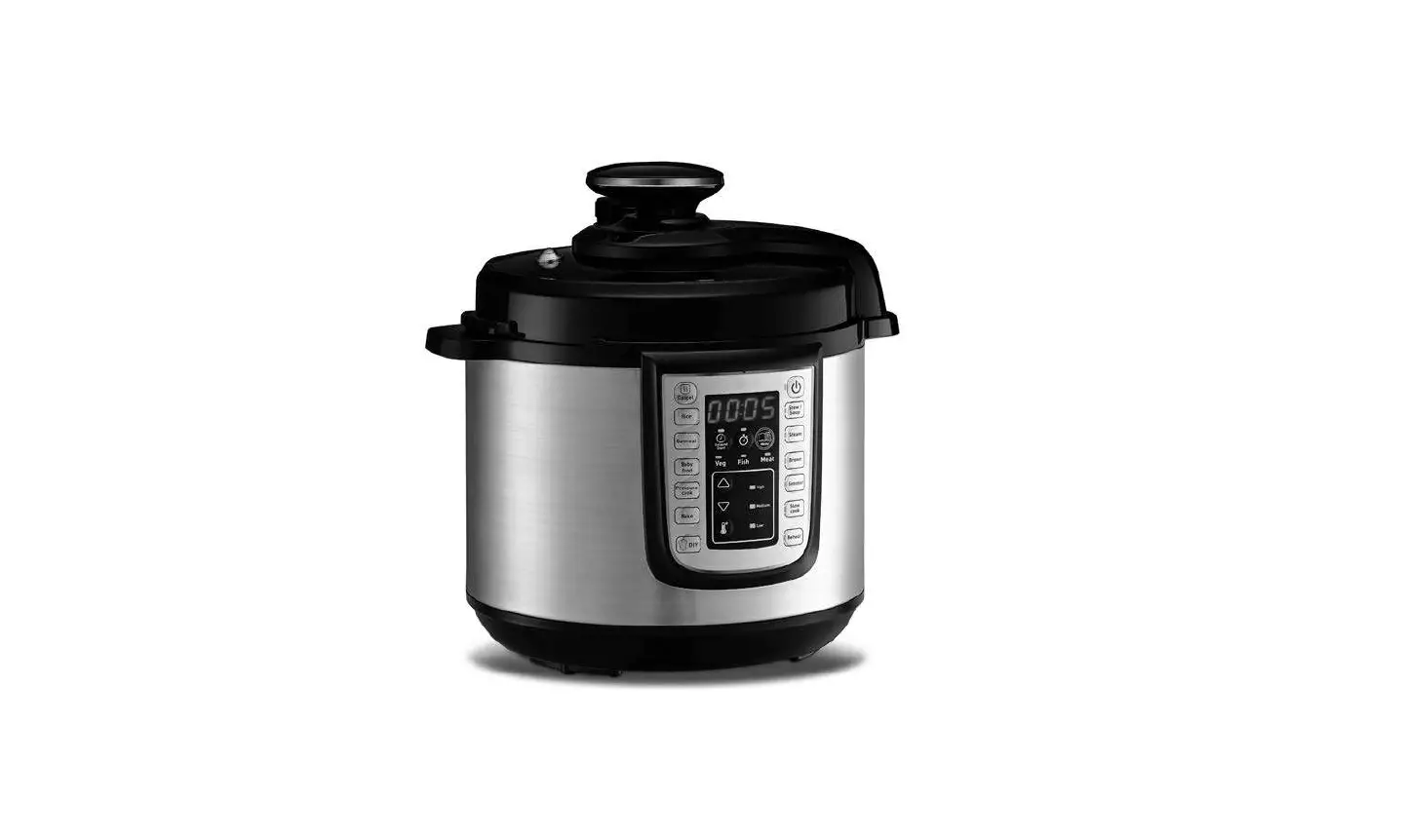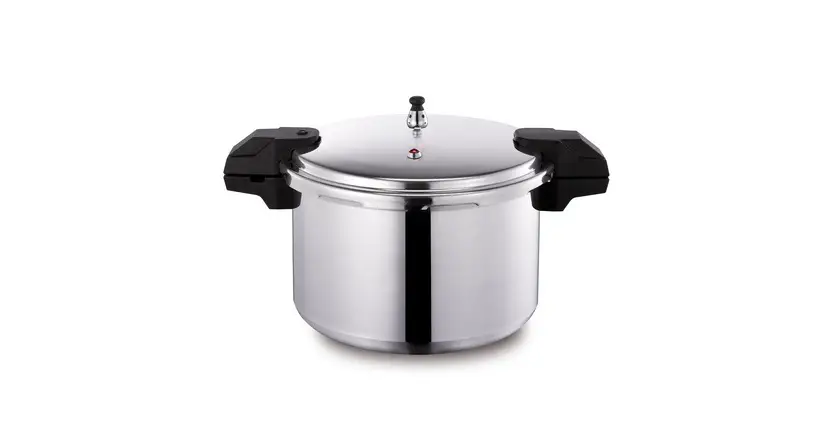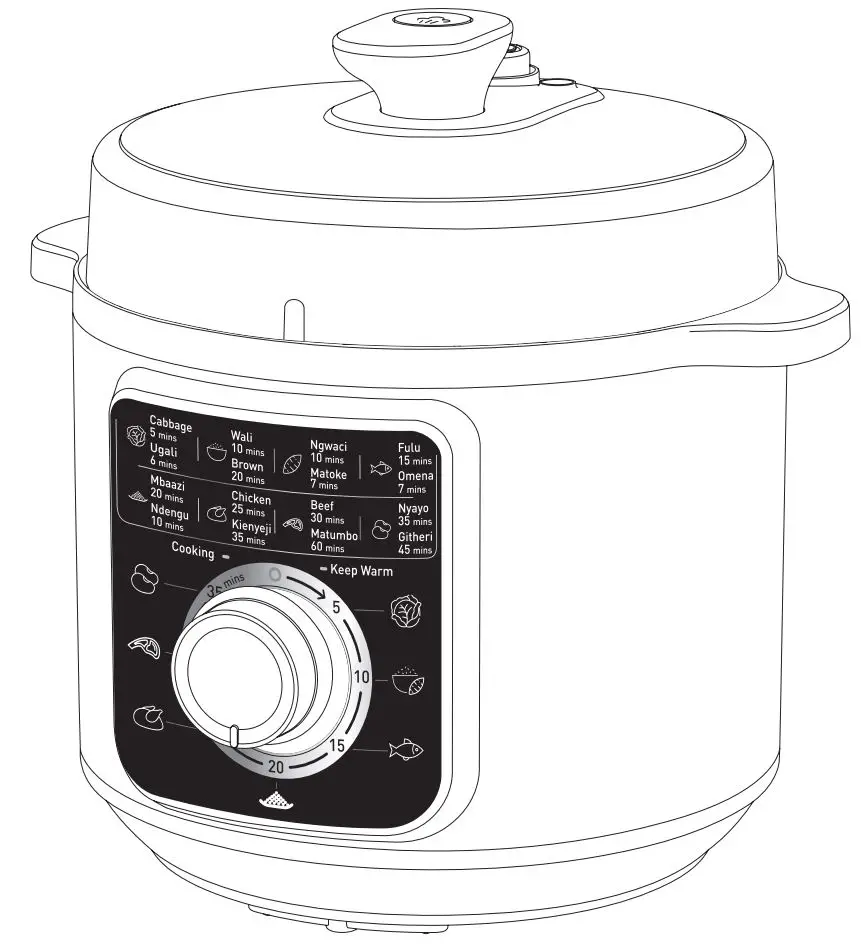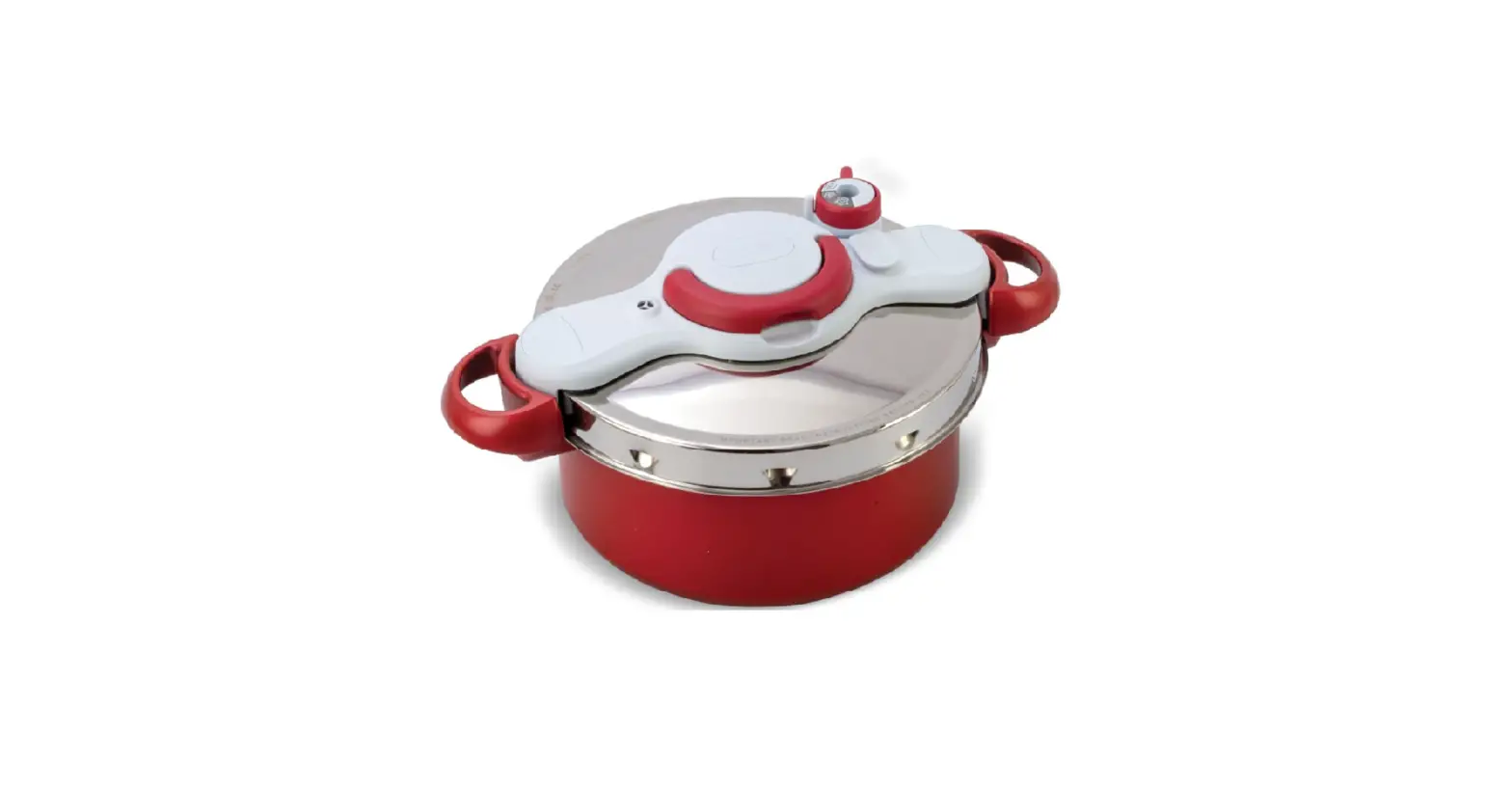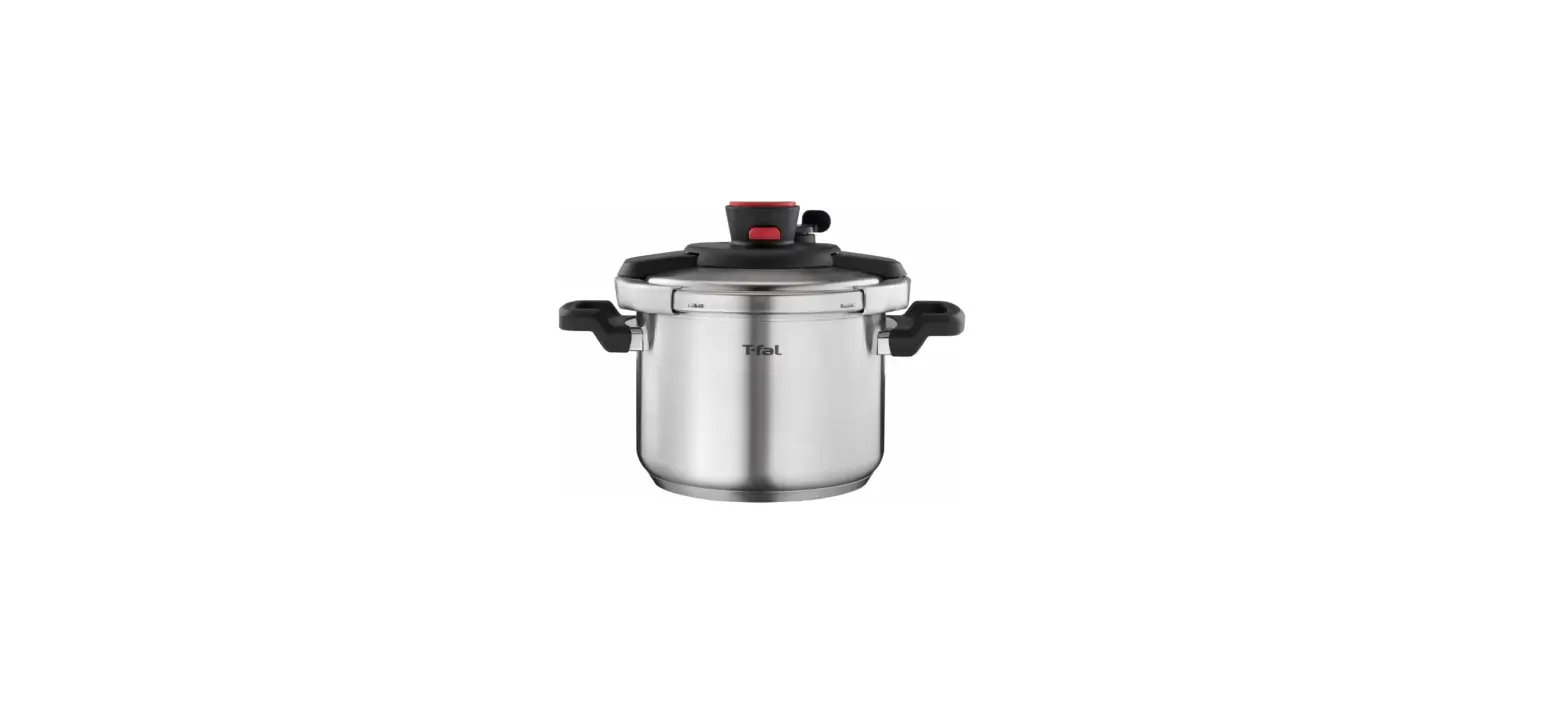

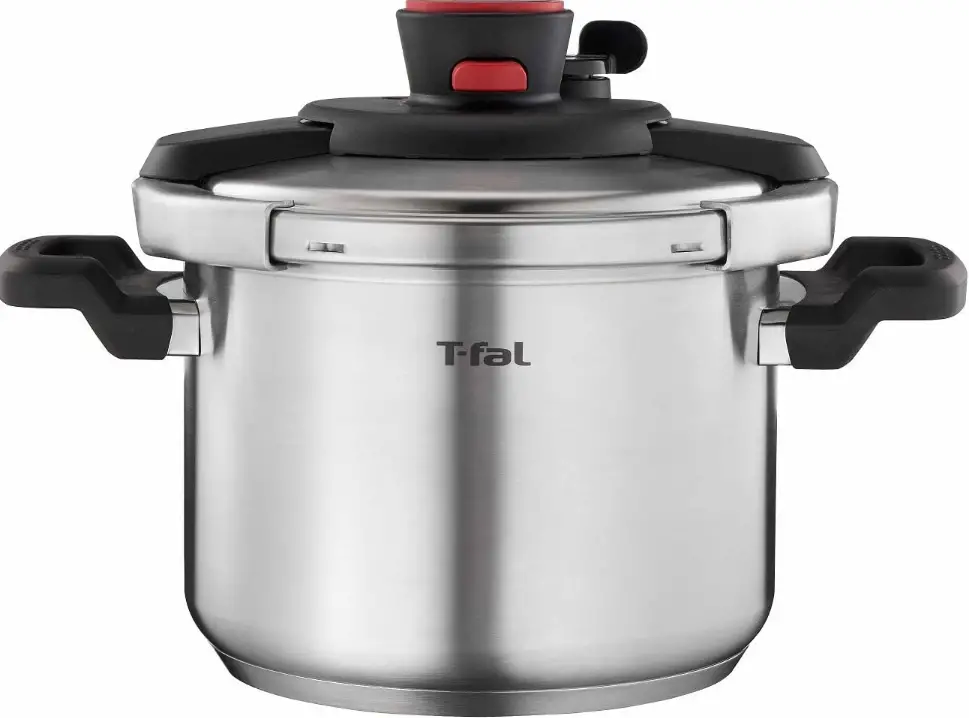
T-fal P4500736 Stainless Dishwasher Pressure Cooker
Description
IMPORTANT SAFEGUARDS
- Read all instructions.
- Do not touch hot surfaces. Use handles or knobs.
- Close supervision is necessary when the pressure cooker is used near children.
- Do not place the pressure cooker in a heated oven.
- Extreme caution must be used when moving a pressure cooker containing hot liquids.
- Regularly check that the handles of the pressure cooker are fitted correctly. Tighten them if necessary.
- Do not use pressure cooker for other than intended use.
- This appliance cooks under pressure. Improper use may result in scalding injury. Make certain unit is properly closed before operating. See “Operating Instructions.”
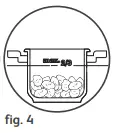
- Do not fill the unit over 2/3 full. When cooking foods that expand during cooking such as rice or dried vegetables, do not fill the unit over ½ full. Over filling may cause a risk of clogging the vent pipe and developing excess pressure. See “Food Preparation Instructions.”
- Be aware that certain foods, such as applesauce, cranberries, pearl barley, oatmeal or other cereals, split peas, noodles, macaroni, rhubarb, or spaghetti can foam, froth, and sputter, and clog the pressure release device (steam vent). These foods should not be cooked in a pressure cooker.
- Always check the pressure release devices for clogging before use.Do not open the pressure cooker until the unit has cooled and all internal pressure has been released. If the handles are difficult to push apart, this indicates that the cooker is still pressurized – do not force it open. Any pressure in the cooker can be hazardous. See “Operating Instructions”.
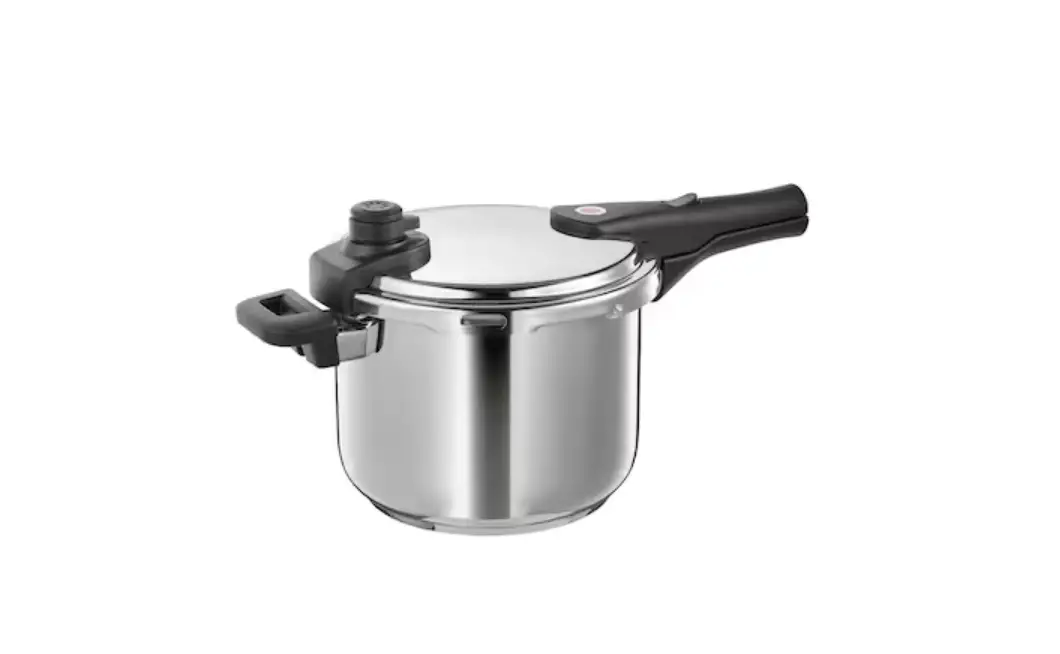
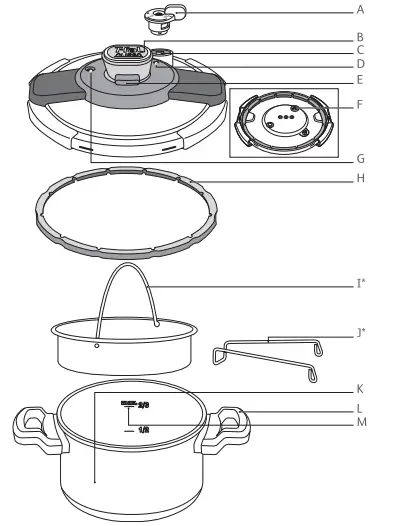
Descriptive diagram
- A. Operating valve
- B. Closing button
- C. Steam release outlet
- D.Valve positioning mark
- E. Opening button
- F. Safety valve
- G. Pressure indicator
- H. Seal
- I. Steam basket*
- J. Tripod*
- K. Pan
- L. Pan handle
- M. Maximum fill mark
Specifications
| Capacity | Ø Pan diameter | Ø Base diameter | CLIPSO® | Pan and lid material |
| 6 L / 6,3qt | 22 cm / 8,6’’ | 19 cm / 7,5’’ | P45007 | Inox |
Compatible heat sources
- Your pressure cooker can be used on all heat sources including induction.
- On a solid hotplate, use a plate with a diameter equal to or less than that of the pressure cooker base.
- On glass ceramic cooktops, make sure that the base of the pan is clean and dry.
- On gas, the flame should not extend beyond the diameter of the pan.
- For all heat sources, make sure that your pressure cooker is well centered
T-FAL spare parts
| Accessory | Reference number |
| Gasket | X9010501 |
Operating Instructions
Opening
- Press the opening button (E) on the lid and lift the lid off.

- Do not open the pressure cooker until the unit has cooled and all internal pressure has been released.
- If the handles are difficult to push apart, this indicates that the cooker is still pressurized – do not force it open.
- Any pressure in the cooker can be hazardous
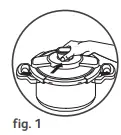
Closing
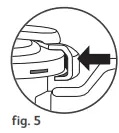
- Place the lid on the pan (K) and then press down on the closing button (B)

- The jaws must be in contact with the edge of the pan (K)

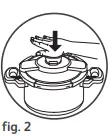
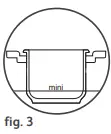
Minimum and maximum filling
- Minimum 25 cl (2 glasses)

- Maximum 2/3rd of the depth of the pan (M) For some foods:

- For foods that expand during cooking, like rice or dried vegetables or stewed fruit, etc., do not fill your pressure cooker more than half full. For soups, we recommend you carry out a fast decompression (refer to section “End of cooking”).
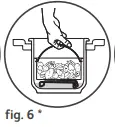
Using the steam basket
- Place the tripod* (J) in the base of the pan (K).
- Pour 75 cl of water into the base of the pan (K).
- Place the basket* (I) on the tripod*

Food Preparation Instructions
Do not fill the unit over 2/3 full. When cooking foods that expand during cooking such as rice or dried vegetables, do not fill the unit over ½ full. Over filling may cause a risk of clogging the vent pipe and developing excess pressure
Using the operating valve
- Place the valve (A) on the steam release outlet (C) aligning the pictogram • on the valve with the valve positioning mark (D)


- Press it down and turn to the cooking position

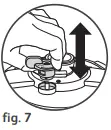
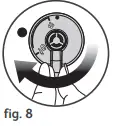
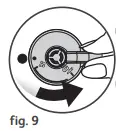
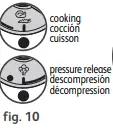
To cook food:
- Position the pictogram on the valve opposite the positioning mark (D)
- To remove the operating valve:
- Press down on the operating valve (A) and align the pictogram • with the positioning mark (D)
- Remove it
First use
- Place the tripod* (J) in the base of the pan (K).
- Place the steam basket* (I) on the tripod*
- Fill the pressure cooker up to 2/3rd full with water (M).
- Close the pressure cooker.
- Place the operating valve (A) and position it on
- Place the pressure cooker on a heat source set to maximum power.
- When steam starts escaping through the valve, reduce the heat source and set the timer to 20 minutes.
- After 20 minutes, turn off the heat.
- Turn the operating valve to position
Before cooking
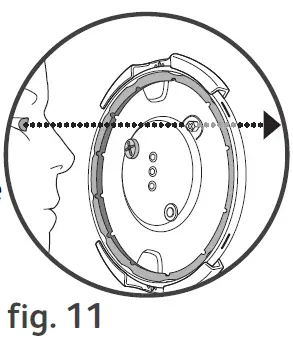
- Every time you use your cooker, first check visually and in plain daylight that the steam release outlet (C) is not blocked

- Also check that the safety valve moves freely (refer to section “Cleaning and maintenance”).
- Close the pressure cooker
- Fit the valve (A)
- Press it down and turn to the cooking position
- Make sure that the pressure cooker is properly closed before bringing it up to pressure
- Place the pressure cooker on a heat source set to maximum power.
During cooking
- When steam escapes through the operating valve continuously, and a regular hissing sound (PSCHHHT) is heard, reduce the heat source.
- Set a timer for the cooking time stated in your recipe.
- During cooking, check that the valve murmurs regularly. If there is not enough steam, increase the heat source slightly; if there is too much steam, reduce the heat source
End of cooking
If the pressure indicator (G) does not drop, dip your pressure cooker until the pan handles level of the body into a sink filled with cold water Never interfere with the pressure indica
To release the steam:
- After the heat has been turned off you have two alternatives:
- Slow pressure release: turn the operating valve (A) choosing the speed at which you want to release the pressure until it stops
Cleaning and maintenance
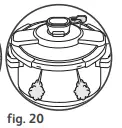
- To ensure the correct operation of your pressure cooker, follow these cleaning and maintenance recommendations after each use.
- Wash the pressure cooker after each use using warm water with dishwashing liquid in it. Follow the same procedure for the basket*.
- Never use bleach or products containing chlorine.
- Do not overheat your pan when empty.
- To clean the inside of the pan:
- Wash with a scouring pad and dishwashing liquid.
- If the interior of the steel pan has an iridescent sheen, clean it using white vinegar.
- To clean the outside of the pan:
- Wash using a sponge and dishwashing liquid.
To clean the lid:
- The lid is dishwasher safe, except for seal and pressure valve. The lid can also be washed using a sponge and dishwashing liquid.
Safety
Your pressure cooker is fitted with several safety devices:
• Closing safety: – The jaws must be in contact with the edge of the lid Otherwise, there is a steam leak in the pressure indicator (G) and the pressure cooker cannot be put under pressure.
Opening safety: – If the pressure cooker is under pressure, the opening button cannot be pressed. Never try to force the pressure cooker open. Above all do not touch the pressure indicator. – Make sure that the interior pressure has fallen.
Two safety devices against overpressure: First device: the safety valve (F) releases the pressure Second device: the seal (H) allows steam to escape from between the lid and the pan 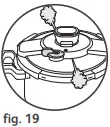
Warranty
- When used under the conditions set out in these instructions, the pan of your new T-FAL pressure cooker comes with a 10-year warranty against:
- Any defects relating to the metal structure of your pan
- Any premature deterioration of the metal base.
- For other parts, a one year parts and labor warranty is provided (except where applicable law in your own country states otherwise). This warranty covers any defects or manufacturing faults.
- The contractual warranty cover is provided only on presentation of a valid proof of purchase which shows the date of purchase.
The warranty cover excludes:
- Any damage consecutive to a failure to follow the major recommendations made or due to negligent use, especially:
- Knocks, falls, placing in an oven, etc.
- Washing the lid without removing seal and pressure valve in the dishwasher.
- Only T-FAL Approved Service Centers are authorized to provide service under this warranty.
- Please call the Helpline number below for the address of your nearest T-FAL Approved Service Center.
Groupe SEB Canada
- In the USA call toll free 800-395-8325
- In CANADA call 800-418-3325
- T-fal Canada, a division of Groupe SEB Canada, inc.
- 345 Passmore Ave, Toronto ON- Canada- M1V3N8
Regulatory markings
| Marking | Location |
| Identification of manufacturer or commercial brand | Closing button |
| Production year and batch | Inside of the lid |
| Capacity Model reference Maximum safety pressure (PS) Maximum operating pressure (PF) | On the exterior base of the pan |
T-FAL answers your questions
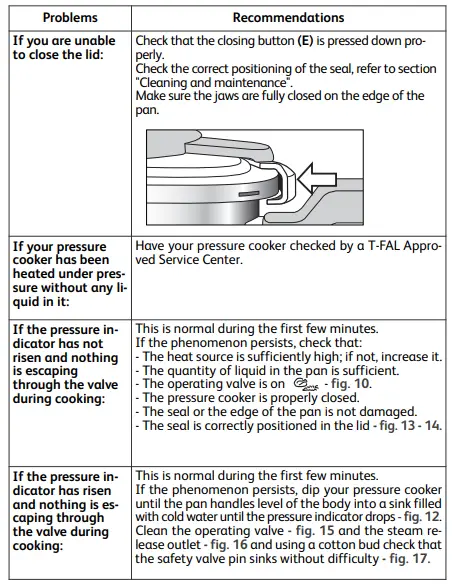
| Problems | Recommendations |
| If steam leaks from around the lid, check: | The correct closure of the lid. The position of the lid seal. The condition of the seal; replace it if necessary. The cleanliness of the lid, the seal and its groove in the lid. The condition of the edge of the pan. |
| If steam is escaping around the lid accom- panied by a shrill noise: | Check that the seal is not pinched between the pan and the lid. |
| If you are unable to open the lid: | Check that the pressure indicator is in the lowered position. If not, decompress and if necessary dip your pres- sure cooker until the pan handles level of the body into a sink filled with cold water – fig. 12. Never interfere with the pressure indicator. |
| If the food is not cooked or is burned, check: | The cooking time. The power of the heat source. The correct position of the operating valve. The quantity of liquid. |
| If food has burned in the pressure cooker: | Leave the pan to soak before cleaning it. Never use bleach or products containing chlorine. |
| If one of the overpressure safety systems is triggered: | Turn off the heat source. Let the pressure cooker cool down without moving it. Wait for the pressure indicator to drop and open the pressure cooker. Check and clean the operating valve, the steam discharge outlet, the safety valve and the seal. If the problem persists, have your pressure cooker checked by a T-FAL Approved Service Center. |
FAQS
Is Tefal pressure cooker dishwasher safe?
Its exclusive security system offers perhaps the safest way to cook. Made with stainless steel, it works on all heat sources including induction and is dishwasher compatible (only pot, no lid).
Is the T Fal pressure cooker?
TWO PRESSURE SETTINGS – choose between 10 and 15 PSI to cook various types of meals. DURABLE STAINLESS STEEL CONSTRUCTION – ensures optimal cooking and long-lasting performance.
Can we put stainless steel pressure cooker in dishwasher?
The inner pot of the cooker (the stainless steel cooking pot), the sealing ring, the lid, and the steam rack are all dishwasher safe—yet another way in which your cooker makes cooking and cleanup extremely easy
Is Tefal stainless steel dishwasher safe?
Easy to clean and nearly all items are dishwasher safe for quick and efficient clean up. Variety – whether it be hard anodised, stainless steel or aluminium non-stick, Tefal offers a range of products to suit all cooking occassions.
How much water do you put in a TFAL pressure cooker?
Fill the cooker: minimum 250 ml of liquid, maximum 2/3 of its height or even less (depending on type of food and the recipe).
Is Tefal a good brand for pressure cooker?
A brand known for reliability, the Tefal All-in-One is a versatile, electric pressure cooker that offers more programs and functions that you’ll ever need (it’s in the name!).
What is the difference between Tefal and T-fal?
In the United States, Tefal is marketed as T-fal. This is to comply with DuPont’s objection that the name “Tefal” was too close to DuPont’s trademark “Teflon”. The T-fal brand is also used in Canada and Japan.
Which T-fal is the best?
Best nonstick pan overall: T-fal E76597 Ultimate Hard Anodized Nonstick Fry Pan with Lid.
Is T-fal aluminum or stainless steel?
The glass lids that come with this T-fal 10-piece cookware set helps to trap the heat, moisture and nutrients while cooking
Why is Tefal so good?
Tefal are the doyens of non-stick cooking. “They sell a huge amount of pans for a reason: they work well, and they’re inexpensive
How long do T-fal pans last?
Non-stick pans coated with PTFE (Teflon) generally last at least three years, and ceramic-coated non-stick pans last an average of two years.
Is Tefal worth the money?
Despite its bargain price, this Day by Day pan from Tefal is far more than simply a cost-effective buy.
How do you clean T-fal stainless steel pans?
For regular care, clean your pans with hot water, liquid detergent and a sponge (scouring powder and scouring pads are not recommended).
Are T-fal pans safe when scratched?
TEFAL non-toxic cookware products are designed to be long lasting without deteriorating. However, inadvertently swallowing a piece of the coating is quite harmless.
Can you wash t fal in the dishwasher?
he even heat base delivers reliable cooking results for delicious meals that will make you proud. This cookware is also dishwasher safe and oven safe to 350°F. T-fal covers Simply Cook pots and pans with a Lifetime Limited Warranty. Safe to clean in the dishwasher.