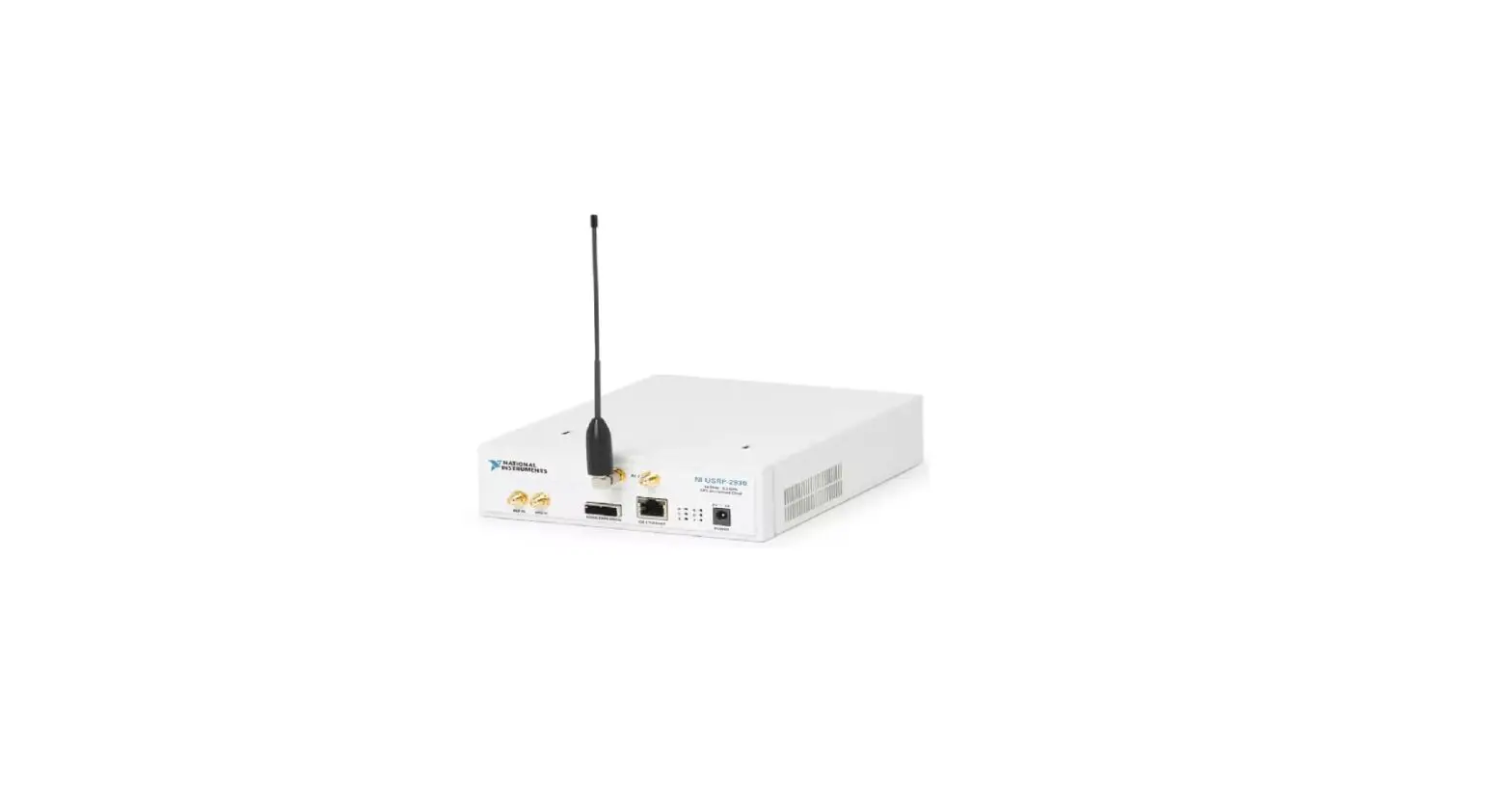
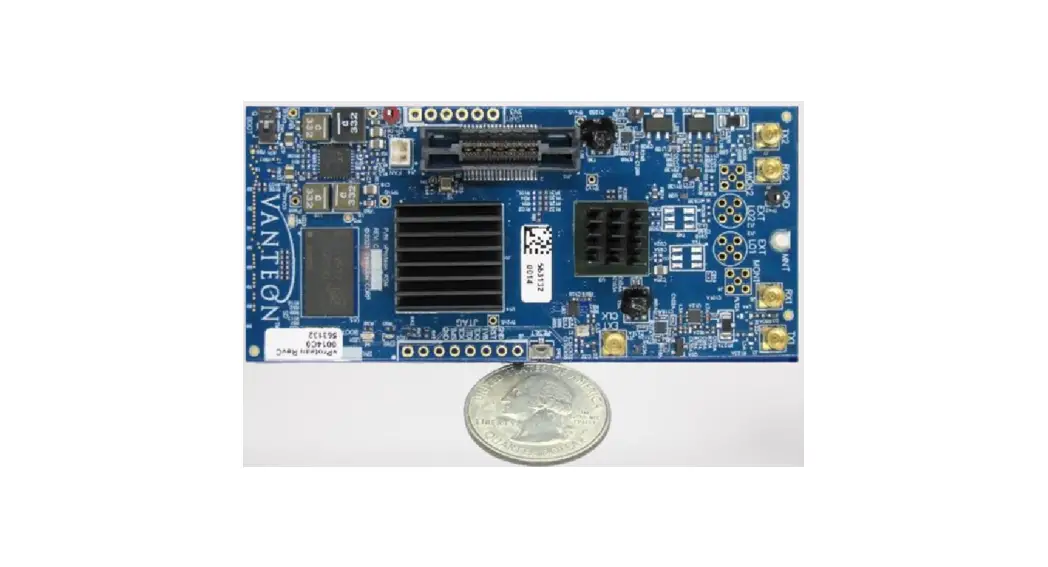
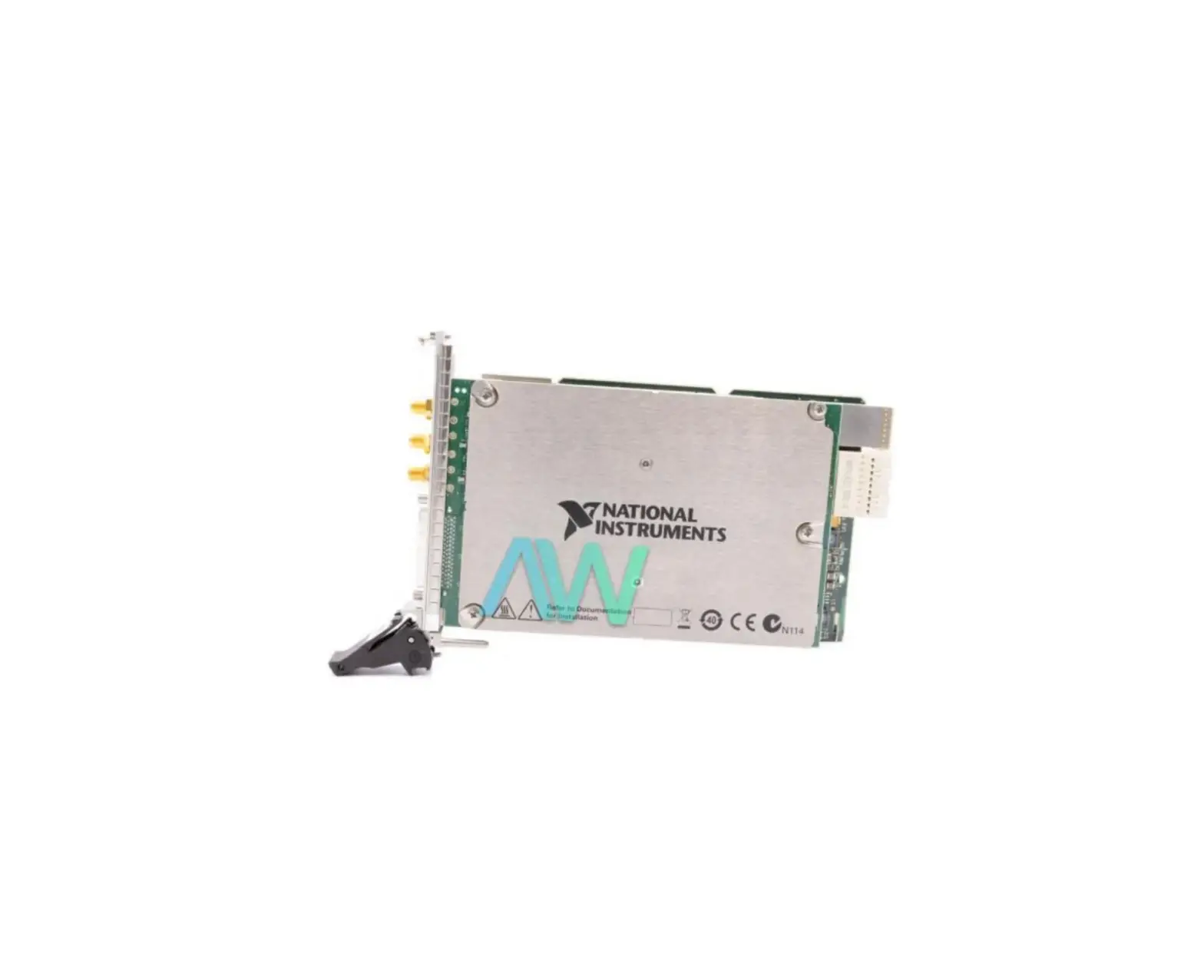
USRP Software Defined Radio Device
Product Information: USRP-2920
The USRP-2920/2921/2922 is a software-defined radio device that
can send and receive signals for various communications
applications. It comes with the NI-USRP instrument driver, which
allows you to program the device for use.
Contents:
- Verifying the System Requirements
- Unpacking the Kit
- Verifying the Kit Contents
- Environmental Guidelines
- Installing the Software
Verifying the System Requirements:
In order to use the NI-USRP instrument driver, your system must
meet certain requirements. Please refer to the product readme,
available on the driver software media or online at ni.com/manuals,
for detailed information about minimum system requirements,
recommended systems, and supported application development
environments (ADEs).
Unpacking the Kit:
Notice: To prevent electrostatic discharge
(ESD) from damaging the device, ground yourself using a grounding
strap or by holding a grounded object, such as your computer
chassis.
- Touch the antistatic package to a metal part of the computer
chassis. - Remove the device from the package and inspect it for loose
components or any other signs of damage. - Unpack any other items and documentation from the kit.
- Store the device in the antistatic package when not in
use.
Verifying the Kit Contents:
The kit includes the following items:
- USRP Device
- AC/DC Power Supply and Power Cable
- Shielded Ethernet Cable
- SMA (m)-to-SMA (m) Cable
- 30 dB SMA Attenuator
- Getting Started Guide (This Document) and Safety,
Environmental, and Regulatory Information Document
Notice: If you directly connect or cable a
signal generator to your device, or if you connect multiple USRP
devices together, you must connect a 30 dB attenuator to the RF
input (RX1 or RX2) of each receiving USRP device.
Other Required Item(s): In addition to the kit
contents, you must provide a computer with an available gigabit
Ethernet interface.
Environmental Guidelines:
Notice: This model is intended for use in
indoor applications only.
Environmental Characteristics:
- Operating temperature
- Operating humidity
- Pollution Degree
- Maximum altitude
Installing the Software:
You need to be an Administrator to install NI software on your
computer.
- Install an application development environment (ADE), such as
LabVIEW or LabVIEW.
USRP-2920
GETTING STARTED GUIDE
USRP-2920/2921/2922
USRP Software Defined Radio Device
This document explains how to install, configure, and test the following USRP devices: · USRP-2920 Software Defined Radio Device · USRP-2921 Software Defined Radio Device · USRP-2922 Software Defined Radio Device
The USRP-2920/2921/2922 device can send and receive signals for use in various communications applications. This device ships with the NI-USRP instrument driver, which you can use to program the device.
Contents
Verifying the System Requirements………………………………………………………………………………2 Unpacking the Kit……………………………………………………………………………………………………… 2
Verifying the Kit Contents…………………………………………………………………………………… 3 Environmental Guidelines……………………………………………………………………………………………4
Environmental Characteristics……………………………………………………………………………… 4 Installing the Software……………………………………………………………………………………………….. 4
Installing the Software Using NI Package Manager………………………………………………… 4 Installing the Software Using the Driver Download Page………………………………………… 5 Installing the Device………………………………………………………………………………………………….. 5 Synchronizing Multiple Devices (Optional)…………………………………………………………… 5 Configuring the Device………………………………………………………………………………………………. 6 Setting Up the Network (Ethernet Only)……………………………………………………………….. 6 Programming the Device……………………………………………………………………………………………. 9 NI-USRP Instrument Driver………………………………………………………………………………… 9 NI-USRP Examples and Lessons…………………………………………………………………………..9 Verifying the Device Connection (Optional)………………………………………………………… 10 Troubleshooting………………………………………………………………………………………………………..11 Device Troubleshooting…………………………………………………………………………………….. 11 Network Troubleshooting………………………………………………………………………………….. 13 Front Panels and Connectors………………………………………………………………………………………15 Direct Connections to the Device……………………………………………………………………….. 15 USRP-2920 Front Panel and LEDs………………………………………………………………………15 USRP-2921 Front Panel and LEDs………………………………………………………………………17 USRP-2922 Front Panel and LEDs ……………………………………………………………………..19 Where to Go Next……………………………………………………………………………………………………. 21 Worldwide Support and Services……………………………………………………………………………….. 21
Verifying the System Requirements
To use the NI-USRP instrument driver, your system must meet certain requirements. Refer to the product readme, which is available on the driver software media or online at ni.com/manuals, for more information about minimum system requirements, recommended system, and supported application development environments (ADEs).
Unpacking the Kit
Notice To prevent electrostatic discharge (ESD) from damaging the device, ground yourself using a grounding strap or by holding a grounded object, such as your computer chassis. 1. Touch the antistatic package to a metal part of the computer chassis. 2. Remove the device from the package and inspect the device for loose components or any other sign of damage.
Notice Never touch the exposed pins of connectors. Note Do not install a device if it appears damaged in any way. 3. Unpack any other items and documentation from the kit. Store the device in the antistatic package when the device is not in use.
2 | ni.com | USRP-2920/2921/2922 Getting Started Guide
Verifying the Kit Contents
NI USRP-2920R
1
2
3
4
5
6
1. USRP Device 2. AC/DC Power Supply and Power Cable 3. Shielded Ethernet Cable
4. SMA (m)-to-SMA (m) Cable
5. 30 dB SMA Attenuator
6. Getting Started Guide (This Document) and Safety, Environmental, and Regulatory Information Document
Notice If you directly connect or cable a signal generator to your device, or if you connect multiple USRP devices together, you must connect a 30 dB attenuator to the RF input (RX1 or RX2) of each receiving USRP device.
Other Required Item(s)
In addition to the kit contents, you must provide a computer with available gigabit Ethernet interface.
Optional Items
· LabVIEW Modulation Toolkit (MT), available for download at ni.com/downloads and included in LabVIEW Communications System Design Suite, which includes MT VIs and functions, examples, and documentation
Note You must install the LabVIEW Modulation Toolkit for proper operation of the NI-USRP Modulation Toolkit example VIs. · LabVIEW Digital Filter Design Toolkit, available for download at ni.com/downloads and included in LabVIEW Communications System Design Suite · LabVIEW MathScript RT Module, available for download at ni.com/downloads
USRP-2920/2921/2922 Getting Started Guide | © National Instruments | 3
· USRP MIMO sync and data cable, available at ni.com, to synchronize clock sources
· Additional SMA (m)-to-SMA (m) cables to connect both channels with external devices or to use the REF IN and PPS IN signals
Environmental Guidelines
Notice This model is intended for use in indoor applications only.
Environmental Characteristics
Operating temperature Operating humidity Pollution Degree Maximum altitude
0 °C to 45 °C 10% to 90% relative humidity, noncondensing 2 2,000 m (800 mbar) (at 25 °C ambient temperature)
Installing the Software
You must be an Administrator to install NI software on your computer. 1. Install an application development environment (ADE), such as LabVIEW or LabVIEW
Communications System Design Suite. 2. Follow the instructions below that correspond with the ADE that you installed.
Installing the Software Using NI Package Manager
Ensure that you have installed the latest version of NI Package Manager. To access the download page for NI Package Manager, go to ni.com/info and enter info code NIPMDownload.
Note NI-USRP versions 18.1 to current are available to download using NI Package Manager. To download another version of NI-USRP, refer to Installing the Software Using the Driver Download Page. 1. To install the latest NI-USRP instrument driver, open NI Package Manager. 2. On the BROWSE PRODUCTS tab, click Drivers to display all available drivers. 3. Select NI-USRP and click INSTALL. 4. Follow the instructions in the installation prompts.
Note Windows users may see access and security messages during installation. Accept the prompts to complete the installation.
Related Information
Refer to the NI Package Manager Manual for instructions on installing drivers using NI Package Manager.
4 | ni.com | USRP-2920/2921/2922 Getting Started Guide
Installing the Software Using the Driver Download Page
Note NI recommends using NI Package Manager to download NI-USRP driver software. 1. Visit ni.com/info and enter the Info Code usrpdriver to access the driver download page for all versions of NI-USRP software. 2. Download a version of NI-USRP driver software. 3. Follow the instructions in the installation prompts.
Note Windows users may see access and security messages during installation. Accept the prompts to complete the installation. 4. When the installer completes, select Shut Down in the dialog box that prompts you to restart, shut down, or restart later.
Installing the Device
Install all the software you plan to use before you install the hardware.
Note The USRP device connects to a host computer using a standard gigabit Ethernet interface. Refer to the documentation for your gigabit Ethernet interface for installation and configuration instructions. 1. Power on the computer. 2. Attach the antenna or cable to the front panel terminals of the USRP device as desired. 3. Use the Ethernet cable to connect the USRP device to the computer. For maximum throughput over Ethernet, NI recommends that you connect each USRP device to its own dedicated gigabit Ethernet interface on the host computer. 4. Connect the AC/DC power supply to the USRP device. 5. Plug the power supply into a wall outlet. Windows automatically recognizes the USRP device.
Synchronizing Multiple Devices (Optional)
You can connect two USRP devices so that they share clocks and the Ethernet connection to the host. 1. Connect the MIMO cable to the MIMO EXPANSION port of each device.
NI USRP-292X
NI USRP-292X
USRP-2920/2921/2922 Getting Started Guide | © National Instruments | 5
2. If you have not already done so, attach antennas to the USRP devices.
If you want to use one USRP device as a receiver and the other as a transmitter, attach one antenna to the RX 1 TX 1 port of the transmitter, and attach another antenna to the RX 2 port of the receiver.
The NI-USRP driver ships with some examples that you can use to explore the MIMO connection, including USRP EX Rx Multiple Synchronized Inputs (MIMO Expansion) and USRP EX Tx Multiple Synchronized Outputs (MIMO Expansion).
Configuring the Device
Setting Up the Network (Ethernet Only)
The device communicates with a host computer over gigabit Ethernet. Set up the network to enable communication with the device.
Note The IP addresses for the host computer and each connected USRP device must be unique.
Configuring the Host Ethernet Interface with a Static IP Address
The default IP address for the USRP device is 192.168.10.2. 1. Ensure the host computer uses a static IP address.
You may need to modify the network settings for the local area connection using the Control Panel on the host computer. Specify the static IP address in the Properties page for Internet Protocol Version 4 (TCP/IPv4). 2. Configure the host Ethernet interface with a static IP address on the same subnet as the connected device to enable communication, as shown in the following table.
Table 1. Static IP Addresses Component
Address
Host Ethernet interface static IP address Host Ethernet interface subnet mask Default USRP device IP address
192.168.10.1 255.255.255.0 192.168.10.2
Note NI-USRP uses user datagram protocol (UDP) broadcast packets to locate the device. On some systems, the firewall blocks UDP broadcast packets. NI recommends that you change or disable the firewall settings to allow communication with the device.
Changing the IP Address
To change the USRP device IP address, you must know the current address of the device, and you must configure the network.
6 | ni.com | USRP-2920/2921/2922 Getting Started Guide
1. Verify that your device is powered on and connected to your computer using the gigabit Ethernet interface.
2. Select Start»All Programs»National Instruments»NI-USRP»NI-USRP Configuration Utility to open the NI-USRP Configuration Utility, as shown in the following figure.
Your device should appear in the list on the left side of the tab. 3. Select the Devices tab of the utility. 4. In the list, select the device for which you want to change the IP address.
If you have multiple devices, verify that you selected the correct device. The IP address of the selected device displays in the Selected IP Address textbox. 5. Enter the new IP address for the device in the New IP Address textbox. 6. Click the Change IP Address button or press <Enter> to change the IP address. The IP address of the selected device displays in the Selected IP Address textbox. 7. The utility prompts you to confirm your selection. Click OK if your selection is correct; otherwise, click Cancel. 8. The utility displays a confirmation to indicate the process is complete. Click OK. 9. Power cycle the device to apply the changes. 10. After you change the IP address, you must power cycle the device and click Refresh Devices List in the utility to update the list of devices.
Confirming Network Connection
1. Select Start»All Programs»National Instruments»NI-USRP»NI-USRP Configuration Utility to open the NI-USRP Configuration Utility.
2. Select the Devices tab of the utility.
USRP-2920/2921/2922 Getting Started Guide | © National Instruments | 7
Your device should appear in the Device ID column.
Note If your device is not listed, verify that your device is powered on and correctly connected, then click the Refresh Devices List button to scan for USRP devices.
Configuring Multiple Devices with Ethernet
You can connect multiple devices in the following ways: · Multiple Ethernet interfaces–One device for each interface · Single Ethernet interface–One device connected to the interface, with additional devices
connected using an optional MIMO cable · Single Ethernet interface–Multiple devices connected to an unmanaged switch
Tip Sharing a single gigabit Ethernet interface among devices may reduce overall signal throughput. For maximum signal throughput, NI recommends that you connect no more than one device per Ethernet interface.
Multiple Ethernet Interfaces To configure multiple devices connected to separate gigabit Ethernet interfaces, assign each Ethernet interface a separate subnet, and assign the corresponding device an address in that subnet, as shown in the following table.
Device USRP Device 0 USRP Device 1
Table 2. Multiple Host Ethernet Interface Configuration
Host IP Address
Host Subnet Mask
Device IP Address
192.168.10.1
255.255.255.0
192.168.10.2
192.168.11.1
255.255.255.0
192.168.11.2
Single Ethernet Interface–One Device
You can configure multiple devices using a single host Ethernet interface when the devices are connected to each other using a MIMO cable. 1. Assign each device a separate IP address in the subnet of the host Ethernet interface, as
shown in the following table.
Table 3. Single Host Ethernet Interface–MIMO Configuration
Device
Host IP Address
Host Subnet Mask
Device IP Address
USRP Device 0 192.168.10.1
255.255.255.0
192.168.10.2
USRP Device 1 192.168.10.1
255.255.255.0
192.168.10.3
2. Connect Device 0 to the Ethernet interface and connect Device 1 to Device 0 using a MIMO cable.
8 | ni.com | USRP-2920/2921/2922 Getting Started Guide
Single Ethernet Interface–Multiple Devices Connected to an Unmanaged Switch
You can connect multiple USRP devices to a host computer through an unmanaged gigabit Ethernet switch that allows a single gigabit Ethernet adapter on the computer to interface with multiple USRP devices connected to the switch. Assign the host Ethernet interface a subnet, and assign each device an address in that subnet, as shown in the following table.
Table 4. Single Host Ethernet Interface–Unmanaged Switch Configuration
Device
Host IP Address
Host Subnet Mask
Device IP Address
USRP Device 0
192.168.10.1
255.255.255.0
192.168.10.2
USRP Device 1
192.168.10.1
255.255.255.0
192.168.10.3
Programming the Device
You can use the NI-USRP instrument driver to create communications applications for the USRP device.
NI-USRP Instrument Driver
The NI-USRP instrument driver features a set of functions and properties that exercise the capabilities of the USRP device, including configuration, control, and other device-specific functions.
Related Information
Refer to the NI-USRP Manual for information about using the instrument driver in your applications.
NI-USRP Examples and Lessons
NI-USRP includes several examples and lessons for LabVIEW, LabVIEW NXG, and LabVIEW Communications System Design Suite. They can be used individually or as components of other applications.
NI-USRP examples and lessons are available in the following locations.
USRP-2920/2921/2922 Getting Started Guide | © National Instruments | 9
Content Type
Description
Examples NI-USRP includes several ·
example applications that
serve as interactive tools,
programming models, and
building blocks in your own
applications. NI-USRP
includes examples for
getting started and other
·
software-defined radio
(SDR) functionality.
Note You can access additional examples from the Code Sharing Community at ni.com/usrp.
LabVIEW
LabVIEW NXG 2.1 to Current or LabVIEW
Communications System Design Suite
2.1 to Current
From the Start ·
menu at Start»
All Programs»
National
Instruments»NI-
USRP»
Examples.
·
From the
LabVIEW
Functions palette
at Instrument
I/O»Instrument
Drivers»NI-
USRP»
Examples.
From the Learning tab, select Examples» Hardware Input and Output»NIUSRP.
From the Learning tab, select Examples» Hardware Input and Output»NI USRP RIO.
Lessons
NI-USRP includes lessons that guide you through the process of identifying and demodulating an FM signal with your device.
From the Learning tab, select Lessons»Getting Started»Demodulating FM Signals with the NI… and choose a task to accomplish.
Note The NI Example Finder does not include NI-USRP examples.
Verifying the Device Connection (Optional)
Verifying the Device Connection Using LabVIEW NXG or LabVIEW Communications System Design Suite 2.1 to Current
Use USRP Rx Continuous Async to confirm that the device receives signals and is connected correctly to the host computer. 1. Navigate to Learning»Examples »Hardware Input and Output»NI-USRP»NI-USRP. 2. Select Rx Continuous Async. Click Create. 3. Run USRP Rx Continuous Async.
10 | ni.com | USRP-2920/2921/2922 Getting Started Guide
If the device is receiving signals you will see data on the front panel graphs. 4. Click STOP to conclude the test.
Verifying the Device Connection Using LabVIEW
Perform a loopback test to confirm that the device transmits and receives signals and is connected correctly to the host computer. 1. Attach the included 30 dB attenuator to one end of the SMA (m)-to-SMA (m) cable. 2. Connect the 30 dB attenuator to the RX 2 TX 2 connector on the front panel of the USRP
device and connect the other end of the SMA (m)-to-SMA (m) cable to the RX 1 TX 1 port. 3. On the host computer, navigate to <NIDIR>»National Instruments»LabVIEW <Year>»examples»instr»niUSRP. 4. Open the niUSRP EX Tx Continuous Async example VI and run it.
If the device is transmitting signals, the I/Q graph displays I and Q waveforms. 5. Open the niUSRP EX Rx Continuous Async example VI and run it.
If the device is transmitting signals, the I/Q graph displays I and Q waveforms.
Troubleshooting
If an issue persists after you complete a troubleshooting procedure, contact NI technical support or visit ni.com/support.
Device Troubleshooting
Why Doesn’t the Device Power On?
Check the power supply by substituting a different adapter.
Why Does USRP2 Appear Instead of the USRP Device in the NI-USRP Configuration Utility?
· An incorrect IP address on the computer may cause this error. Check the IP address and run the NI-USRP Configuration Utility again.
· An old FPGA or firmware image on the device may also cause this error. Upgrade the FPGA and firmware using the NI-USRP Configuration Utility.
Should I Update Device Firmware and FPGA Images?
USRP devices ship with firmware and FPGA images compatible with NI-USRP driver software. You may need to update the device for compatibility with the latest version of the software.
When you use the NI-USRP API, a default FPGA loads from persistent storage on the device.
The driver software media also includes the NI-USRP Configuration Utility, which you can use to update the devices.
USRP-2920/2921/2922 Getting Started Guide | © National Instruments | 11
Updating Device Firmware and FPGA Images (Optional) The firmware and FPGA images for USRP devices are stored in the device internal memory. You can reload the FPGA image or firmware image using the NI-USRP Configuration Utility and an Ethernet connection, but you cannot create custom FPGA images using the Ethernet connection. 1. If you have not already done so, connect the host computer to the device using the
Ethernet port. 2. Select Start»All Programs»National Instruments»NI-USRP»NI-USRP
Configuration Utility to open the NI-USRP Configuration Utility. 3. Select the N2xx/NI-29xx Image Updater tab. The utility automatically populates the
Firmware Image and FPGA Image fields with the paths to the default firmware and FPGA image files. If you want to use different files, click the Browse button next to the file you want to change, and navigate to the file you want to use. 4. Verify that the firmware and FPGA image paths are entered correctly. 5. Click the Refresh Device List button to scan for USRP devices and update the device list.
If your device does not appear in the list, verify that the device is on and is correctly connected to the computer. If your device still does not appear in the list, you can manually add the device to the list. Click the Manually Add Device button, enter the IP address of the device in the dialog box that displays, and click OK. 6. Select the device to update from the device list and verify that you selected the correct device. 7. Verify that the version of the FPGA image file matches the board revision for the device you are updating. 8. To update the device, click the WRITE IMAGES button. 9. A confirmation dialog box displays. Confirm your selections and click OK to continue.
A progress bar indicates the status of the update. 10. When the update completes, a dialog box prompts you to reset the device. A device reset
applies the new images to the device. Click OK to reset the device.
Note The utility is unresponsive while it verifies that the device reset correctly.
11. Close the utility.
Related Information
Refer to the Load the Images onto the On-board Flash (USRP-N Series Only) section of the UHD – USRP2 and N Series Application Notes
Why Doesn’t the USRP Device Appear in MAX?
MAX does not support the USRP device. Use the NI-USRP Configuration Utility instead. Open the NI-USRP Configuration Utility from the Start menu at Start»All Programs» National Instruments»NI-USRP»NI-USRP Configuration Utility.
12 | ni.com | USRP-2920/2921/2922 Getting Started Guide
Why Doesn’t the USRP Device Appear in the NI-USRP Configuration Utility?
1. Check the connection between the USRP device and the computer. 2. Ensure that the USRP device is connected to a computer with a gigabit-compatible
Ethernet adapter. 3. Ensure that a static IP address of 192.168.10.1 is assigned to the adapter in your
computer. 4. Allow up to 15 seconds for the device to completely start up.
Why Don’t NI-USRP Examples Appear in the NI Example Finder in LabVIEW?
NI-USRP does not install examples into the NI Example Finder.
Related Information
NI-USRP Examples and Lessons on page 9
Network Troubleshooting
Why Doesn’t the Device Respond to a Ping (ICMP Echo Request)?
The device should reply to an internet control message protocol (ICMP) echo request. Complete the following steps to ping the device and receive a response. 1. To ping the device, open a Windows command prompt and enter ping 192.168.10.2,
where 192.168.10.2 is the IP address for your USRP device. 2. If you do not receive a response, verify that the host network interface card is set to a
static IP address corresponding to the same subnet as the IP address of the corresponding device. 3. Verify that the device IP address is set properly. 4. Repeat step 1.
Related Information
Changing the IP Address on page 6
Why Doesn’t the NI-USRP Configuration Utility Return a Listing for My Device?
If the NI-USRP Configuration Utility does not return a listing for your device, search for a specific IP address. 1. Navigate to <Program Files>National InstrumentsNI-USRP. 2. <Shift>-right-click the utilities folder, and select Open command window here
from the shortcut menu to open a Windows command prompt.
USRP-2920/2921/2922 Getting Started Guide | © National Instruments | 13
3. Enter uhd_find_devices –args=addr=192.168.10.2 in the command prompt, where 192.168.10.2 is the IP address for your USRP device.
4. Press <Enter>.
If the uhd_find_devices command does not return the listing for your device, the firewall may be blocking replies to UDP broadcast packets. Windows installs and enables a firewall by default. To allow UDP communication with a device, disable any firewall software associated with the network interface for the device.
Why Doesn’t the Device IP Address Reset to the Default?
If you cannot reset the default device IP address, your device may be on a different subnet than the host network adapter. You can power cycle the device in a safe (read-only) image, which sets the device to the default IP address of 192.168.10.2. 1. Open the device enclosure, making sure to take appropriate static precautions. 2. Locate the safe-mode button, a push-button switch (S2), inside the enclosure. 3. Press and hold the safe-mode button while you power cycle the device. 4. Continue to press the safe-mode button until the front panel LEDs blink and remain solid. 5. While in safe-mode, run the NI-USRP Configuration Utility to change the IP address
from the default, 192.168.10.2, to a new value. 6. Power cycle the device without holding the safe-mode button to return the normal mode.
Note NI recommends that you use a dedicated network with no other USRP devices connected to the host computer to avoid the possibility of an IP address conflict. Also, verify that the static IP address of the host network adapter on the computer that runs the NI-USRP Configuration Utility is different from the device default IP address of 192.168.10.2 and different from the new IP address to which you want to set the device.
Note If the device IP address is on a different subnet from the host network adapter, the host system and configuration utility cannot communicate with and configure the device. For example, the utility recognizes, but cannot configure a device with an IP address of 192.168.11.2 connected to a host network adapter with a static IP address of 192.168.10.1 and a subnet mask of 255.255.255.0. To communicate with and configure the device, change the host network adapter to a static IP address on the same subnet as the device, such as 192.168.11.1, or change the subnet mask of the host network adapter to recognize a wider range of IP addresses, such as 255.255.0.0.
Related Information
Changing the IP Address on page 6
Why Does the Device Not Connect to the Host Interface?
The host Ethernet interface must be a gigabit Ethernet interface to connect to the USRP device. Ensure the connection between the host network interface card and the device cable connection is valid and both the device and computer are powered on.
14 | ni.com | USRP-2920/2921/2922 Getting Started Guide
A lit green LED in the upper left corner of the gigabit Ethernet connection port on the device front panel indicates a gigabit Ethernet connection.
Front Panels and Connectors
Direct Connections to the Device
The USRP device is a precision RF instrument that is sensitive to ESD and transients. Ensure you take the following precautions when making direct connections to the USRP device to avoid damaging the device.
Notice Apply external signals only while the USRP device is powered on. Applying external signals while the device is powered off may cause damage. · Ensure you are properly grounded when manipulating cables or antennas connected to the USRP device TX 1 RX 1 or RX 2 connector. · If you are using nonisolated devices, such as a nonisolated RF antenna, ensure the devices are maintained in a static-free environment. · If you are using an active device, such as a preamplifier or switch routed to the USRP device TX 1 RX 1 or RX 2 connector, ensure that the device cannot generate signal transients greater than the RF and DC specifications of the USRP device TX 1 RX 1 or RX 2 connector.
USRP-2920 Front Panel and LEDs
REF IN
PPS IN
RX 1 TX 1
RX 2
NI USRP-2920
50 MHz – 2.2 GHz
MIMO EXPANSION
A
B
C
D
E
F
GB ETHERNET
6V 3A POWER
Connector RX 1 TX 1
RX 2
Table 5. Connector Descriptions
Description
Input and output terminal for the RF signal. RX 1 TX 1 is an SMA (f) connector with an impedance of 50 and is a single-ended input or output channel.
Input terminal for the RF signal. RX 2 is an SMA (f) connector with an impedance of 50 and is a single-ended input channel.
USRP-2920/2921/2922 Getting Started Guide | © National Instruments | 15
Connector REF IN
PPS IN
MIMO EXPANSION GB ETHERNET POWER
Table 5. Connector Descriptions (Continued)
Description
Input terminal for an external reference signal for the local oscillator (LO) on the device. REF IN is an SMA (f) connector with an impedance of 50 and is a single-ended reference input. REF IN accepts a 10 MHz signal with a minimum input power of 0 dBm (.632 Vpk-pk) and a maximum input power of 15 dBm (3.56 Vpk-pk) for a square wave or sine wave.
Input terminal for the pulse per second (PPS) timing reference. PPS IN is an SMA (f) connector with an impedance of 50 and is a singleended input. PPS IN accepts 0 V to 3.3 V TTL and 0 V to 5 V TTL signals.
The MIMO EXPANSION interface port connects two USRP devices using a compatible MIMO cable.
The gigabit Ethernet port accepts an RJ-45 connector and gigabit Ethernet compatible cable (Category 5, Category 5e, or Category 6).
The power input accepts a 6 V, 3 A external DC power connector.
Table 6. LED Indicators
LED
Description
Color
Indication
A Indicates the transmit status of the device.
B Indicates the status of the physical MIMO cable link.
C Indicates the receive status of the device.
D Indicates the firmware status of the device.
Off Green Off
Green
Off Green Off Green
The device is not transmitting data. The device is transmitting data. The devices are not connected using the MIMO cable. The devices are connected using the MIMO cable. The device is not receiving data. The device is receiving data. The firmware is not loaded. The firmware is loaded.
16 | ni.com | USRP-2920/2921/2922 Getting Started Guide
Table 6. LED Indicators (Continued)
LED
Description
Color
Indication
E Indicates the reference lock status of Off the LO on the device.
There is no reference signal, or the LO is not locked to a reference signal.
Blinking The LO is not locked to a reference signal.
Green The LO is locked to a reference signal.
F Indicates the powers status of the device.
Off Green
The device is powered off. The device is powered on.
USRP-2921 Front Panel and LEDs
REF IN
PPS IN
RX 1 TX 1
RX 2 TX 2
NI USRP-2921
2.4 – 2.5 GHz, 4.9 – 5.85 GHz
MIMO EXPANSION
GB ETHERNET
A
B
C
D
E
F
6V 3A POWER
Connector RX 1 TX 1 RX 2
REF IN
Table 7. Connector Descriptions
Description
Input and output terminal for the RF signal. RX 1 TX 1 is an SMA (f) connector with an impedance of 50 and is a single-ended input or output channel.
Input terminal for the RF signal. RX 2 is an SMA (f) connector with an impedance of 50 and is a single-ended input channel.
Input terminal for an external reference signal for the local oscillator (LO) on the device. REF IN is an SMA (f) connector with an impedance of 50 and is a single-ended reference input. REF IN accepts a 10 MHz signal with a minimum input power of 0 dBm (.632 Vpk-pk) and a maximum input power of 15 dBm (3.56 Vpk-pk) for a square wave or sine wave.
USRP-2920/2921/2922 Getting Started Guide | © National Instruments | 17
Connector PPS IN
MIMO EXPANSION GB ETHERNET POWER
Table 7. Connector Descriptions (Continued)
Description
Input terminal for the pulse per second (PPS) timing reference. PPS IN is an SMA (f) connector with an impedance of 50 and is a singleended input. PPS IN accepts 0 V to 3.3 V TTL and 0 V to 5 V TTL signals.
The MIMO EXPANSION interface port connects two USRP devices using a compatible MIMO cable.
The gigabit Ethernet port accepts an RJ-45 connector and gigabit Ethernet compatible cable (Category 5, Category 5e, or Category 6).
The power input accepts a 6 V, 3 A external DC power connector.
Table 8. LED Indicators
LED
Description
Color
Indication
A Indicates the transmit status of the device.
B Indicates the status of the physical MIMO cable link.
C Indicates the receive status of the device.
D Indicates the firmware status of the device.
E Indicates the reference lock status of the LO on the device.
Off
The device is not transmitting data.
Green The device is transmitting data.
Off
The devices are not connected
using the MIMO cable.
Green The devices are connected using the MIMO cable.
Off
The device is not receiving data.
Green The device is receiving data.
Off
The firmware is not loaded.
Green The firmware is loaded.
Off
There is no reference signal, or the
LO is not locked to a reference
signal.
Blinking The LO is not locked to a reference signal.
Green The LO is locked to a reference signal.
18 | ni.com | USRP-2920/2921/2922 Getting Started Guide
Table 8. LED Indicators (Continued)
LED
Description
Color
Indication
F Indicates the powers status of the device.
Off Green
The device is powered off. The device is powered on.
USRP-2922 Front Panel and LEDs
REF IN
PPS IN
RX 1 TX 1
RX 2
NI USRP-2922
400 MHz – 4.4 GHz
MIMO EXPANSION
A
B
C
D
E
F
GB ETHERNET
6V 3A POWER
Connector RX 1 TX 1 RX 2 REF IN
PPS IN
MIMO EXPANSION
Table 9. Connector Descriptions
Description
Input and output terminal for the RF signal. RX 1 TX 1 is an SMA (f) connector with an impedance of 50 and is a single-ended input or output channel.
Input terminal for the RF signal. RX 2 is an SMA (f) connector with an impedance of 50 and is a single-ended input channel.
Input terminal for an external reference signal for the local oscillator (LO) on the device. REF IN is an SMA (f) connector with an impedance of 50 and is a single-ended reference input. REF IN accepts a 10 MHz signal with a minimum input power of 0 dBm (.632 Vpk-pk) and a maximum input power of 15 dBm (3.56 Vpk-pk) for a square wave or sine wave.
Input terminal for the pulse per second (PPS) timing reference. PPS IN is an SMA (f) connector with an impedance of 50 and is a singleended input. PPS IN accepts 0 V to 3.3 V TTL and 0 V to 5 V TTL signals.
The MIMO EXPANSION interface port connects two USRP devices using a compatible MIMO cable.
USRP-2920/2921/2922 Getting Started Guide | © National Instruments | 19
Connector GB ETHERNET
POWER
Table 9. Connector Descriptions (Continued) Description
The gigabit Ethernet port accepts an RJ-45 connector and gigabit Ethernet compatible cable (Category 5, Category 5e, or Category 6). The power input accepts a 6 V, 3 A external DC power connector.
Table 10. LED Indicators
LED
Description
Color
Indication
A Indicates the transmit status of the device.
B Indicates the status of the physical MIMO cable link.
C Indicates the receive status of the device.
D Indicates the firmware status of the device.
E Indicates the reference lock status of the LO on the device.
F Indicates the powers status of the device.
Off
The device is not transmitting data.
Green The device is transmitting data.
Off
The devices are not connected
using the MIMO cable.
Green The devices are connected using the MIMO cable.
Off
The device is not receiving data.
Green The device is receiving data.
Off
The firmware is not loaded.
Green The firmware is loaded.
Off
There is no reference signal, or the
LO is not locked to a reference
signal.
Blinking The LO is not locked to a reference signal.
Green The LO is locked to a reference signal.
Off
The device is powered off.
Green The device is powered on.
20 | ni.com | USRP-2920/2921/2922 Getting Started Guide
Where to Go Next
Refer to the following figure for information about other product tasks and associated resources for those tasks.
Located online at ni.com/manuals
EXPLORE
the application development environment (ADE)
for your application.
LEARN
about hardware features or review device specifications.
CREATE
custom applications within an application programming
interface (API).
LabVIEW Help
USRP Device Specifications
NI-USRP Help*
NI-USRP Instrument Driver NI-USRP Sample Projects* NI-USRP Help*
RF Solutions ni.com/rf
DISCOVER
more about your products through ni.com.
Services ni.com/services
*This item is also installed with the driver software.
Updates ni.com/updates
Worldwide Support and Services
The NI website is your complete resource for technical support. At ni.com/support, you have access to everything from troubleshooting and application development self-help resources to email and phone assistance from NI Application Engineers.
Visit ni.com/services for information about the services NI offers.
Visit ni.com/register to register your NI product. Product registration facilitates technical support and ensures that you receive important information updates from NI.
NI corporate headquarters is located at 11500 North Mopac Expressway, Austin, Texas, 78759-3504. NI also has offices located around the world. For support in the United States, create your service request at ni.com/support or dial 1 866 ASK MYNI (275 6964). For support outside the United States, visit the Worldwide Offices section of ni.com/niglobal to access the branch office websites, which provide up-to-date contact information.
USRP-2920/2921/2922 Getting Started Guide | © National Instruments | 21
Information is subject to change without notice. Refer to the NI Trademarks and Logo Guidelines at ni.com/trademarks for information on NI trademarks. Other product and company names mentioned herein are trademarks or trade names of their respective companies. For patents covering NI products/technology, refer to the appropriate location: Help»Patents in your software, the patents.txt file on your media, or the National Instruments Patent Notice at ni.com/patents. You can find information about end-user license agreements (EULAs) and third-party legal notices in the readme file for your NI product. Refer to the Export Compliance Information at ni.com/legal/export-compliance for the NI global trade compliance policy and how to obtain relevant HTS codes, ECCNs, and other import/export data. NI MAKES NO EXPRESS OR IMPLIED WARRANTIES AS TO THE ACCURACY OF THE INFORMATION CONTAINED HEREIN AND SHALL NOT BE LIABLE FOR ANY ERRORS. U.S. Government Customers: The data contained in this manual was developed at private expense and is subject to the applicable limited rights and restricted data rights as set forth in FAR 52.227-14, DFAR 252.227-7014, and DFAR 252.227-7015.
© 2011–2019 National Instruments. All rights reserved.
376358B-01 December 19, 2019
References
 Engineer Ambitiously - NI
-
Software and Driver Downloads - NI
-
Using Info Codes - NI
-
Trade Compliance - NI
-
Product Documentation - NI
-
Contact Us - NI
-
National Instruments Patents - NI
-
Product Documentation - NI
-
USRP Hardware Driver and USRP Manual: USRP2 and N2x0 Series
-
Log In - National Instruments
-
5G and 6G Technology - NI
-
NI Services - NI
-
Support - NI
-
NI Trademarks and Logo Guidelines - NI
-
Software and Driver Downloads - NI
-
What is a USRP Software Defined Radio? - NI
-
Software and Driver Downloads - NI
-
Using Info Codes - NI
-
Product Documentation - NI
-
Contact Us - NI
-
Product Documentation - NI
-
Log In - National Instruments
-
NI Services - NI
-
Support - NI
 USRP-2920 National Instruments Software Defined Radio Device | Apex Waves
 Engineer Ambitiously - NI
 Software and Driver Downloads - NI
 USRP-2920 National Instruments Software Defined Radio Device | Apex Waves