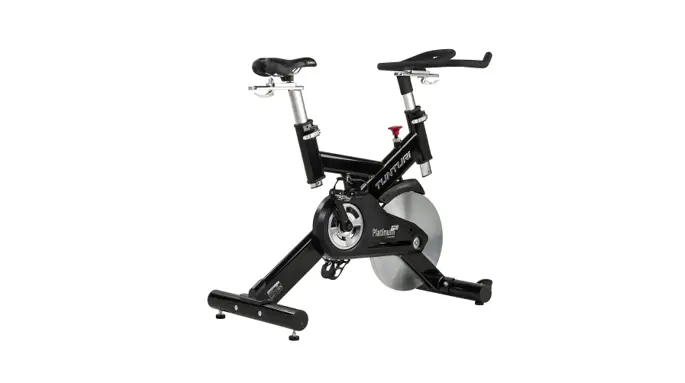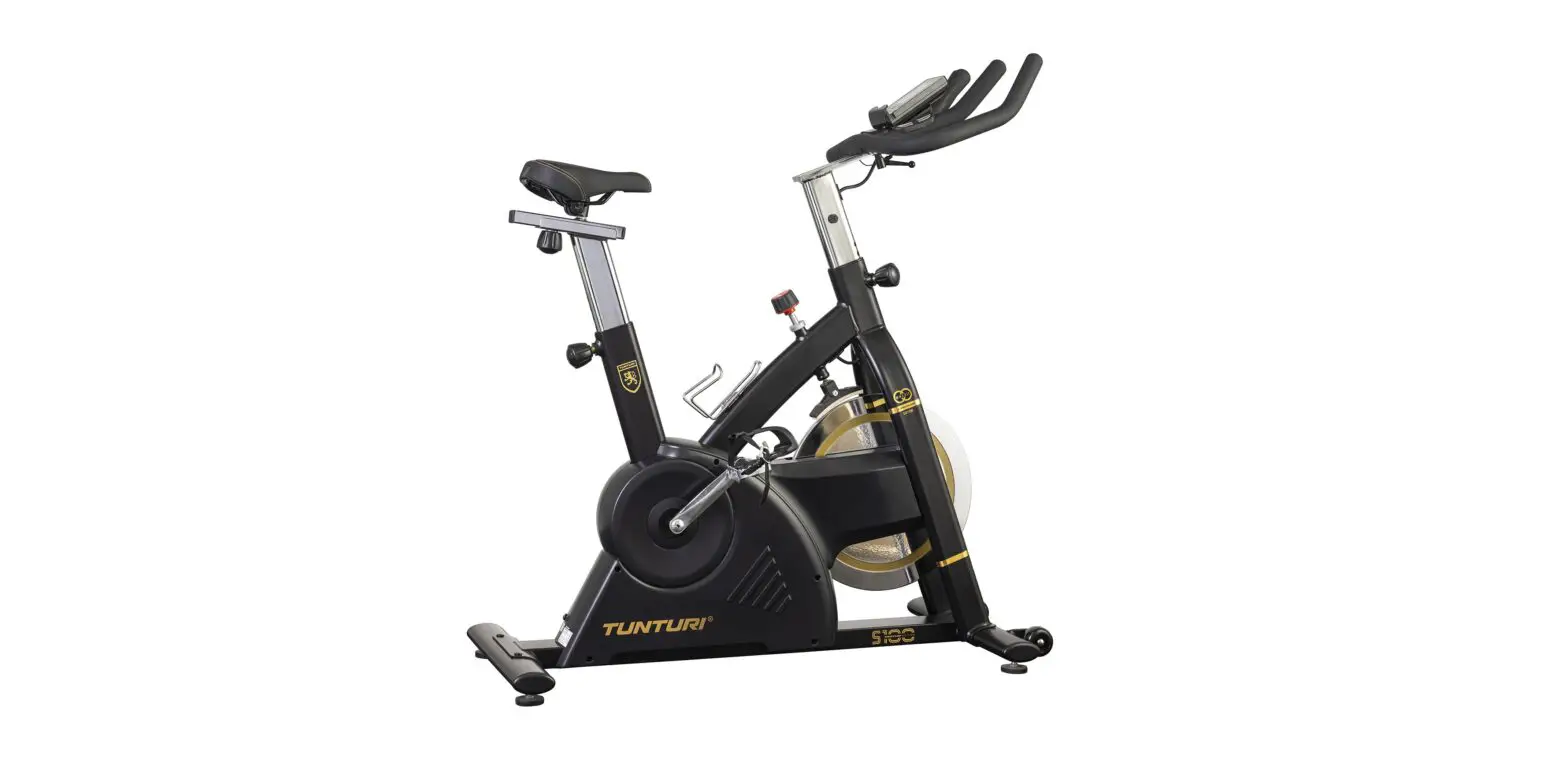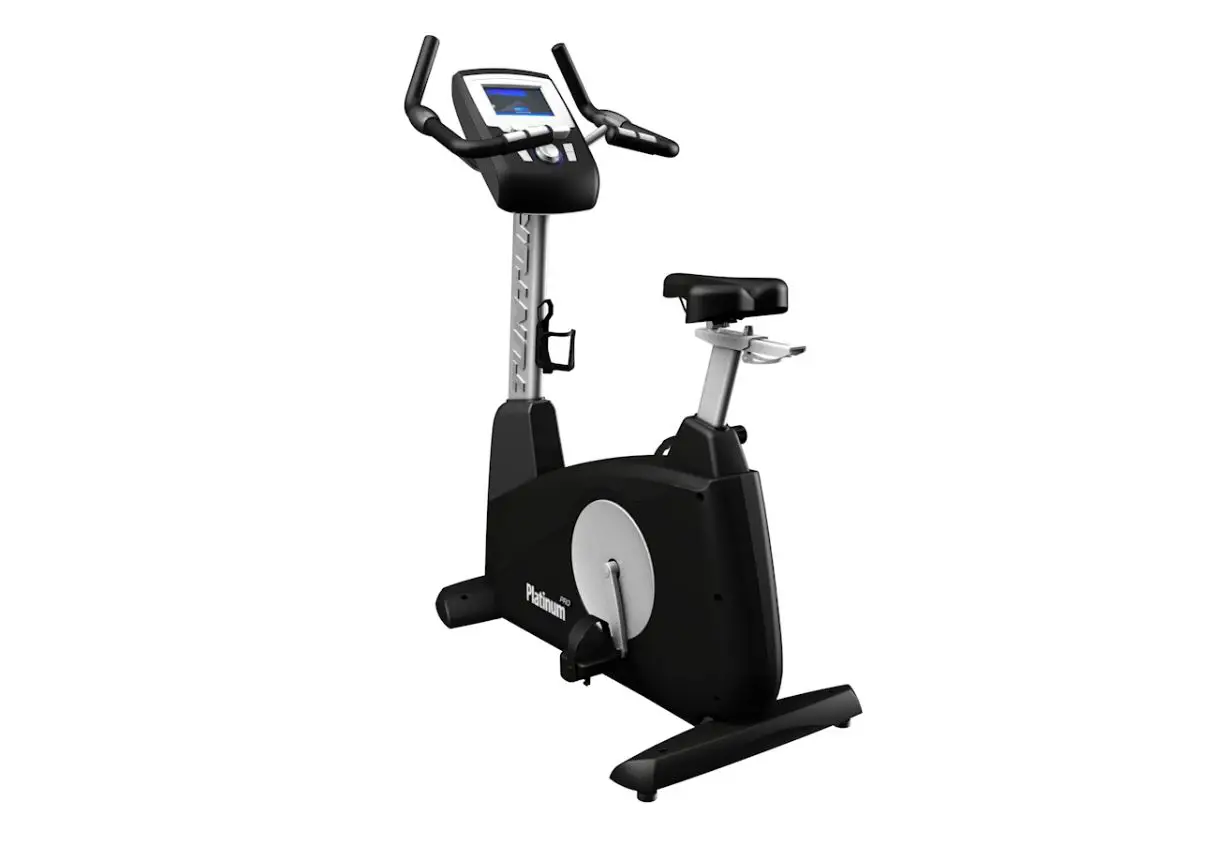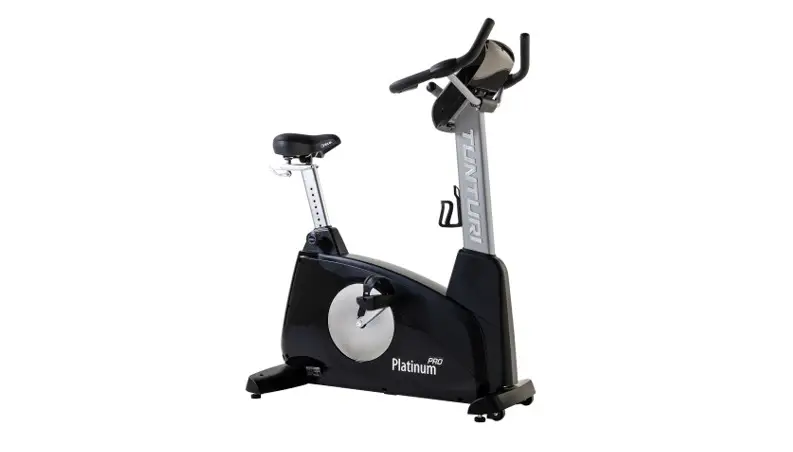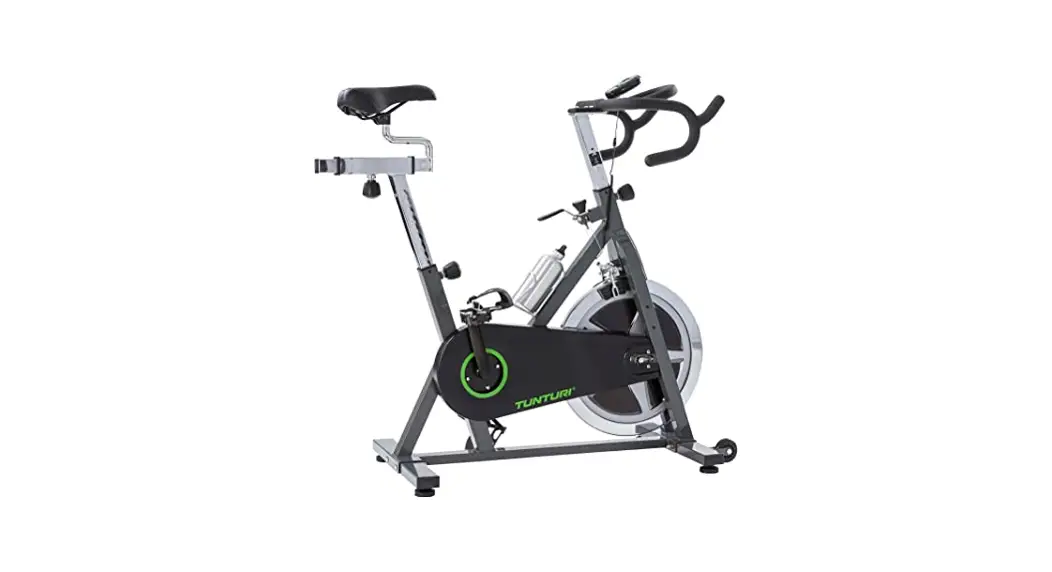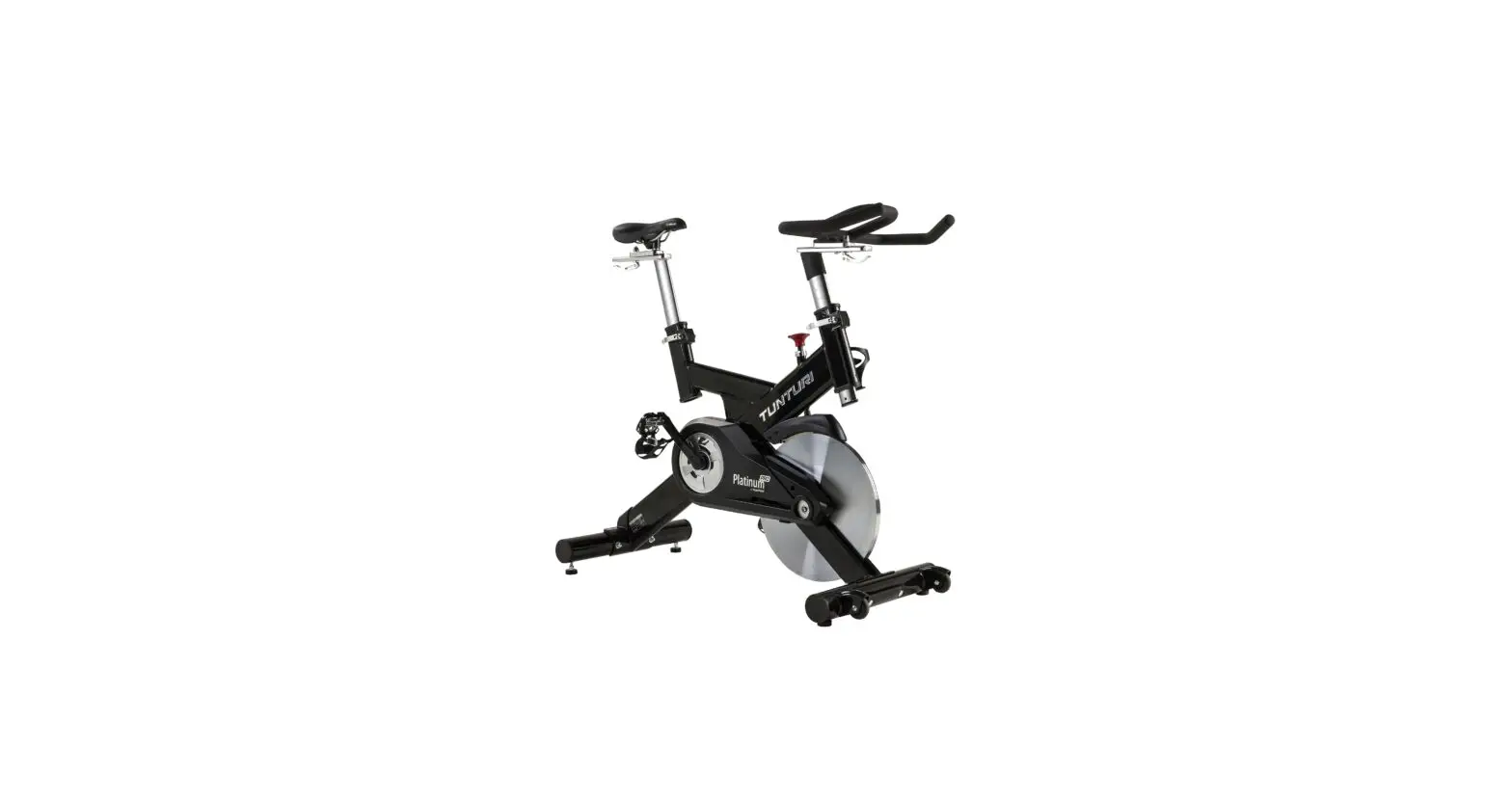

TUNTURI 14PTSB2000 Platinum PRO Sprinter Bike
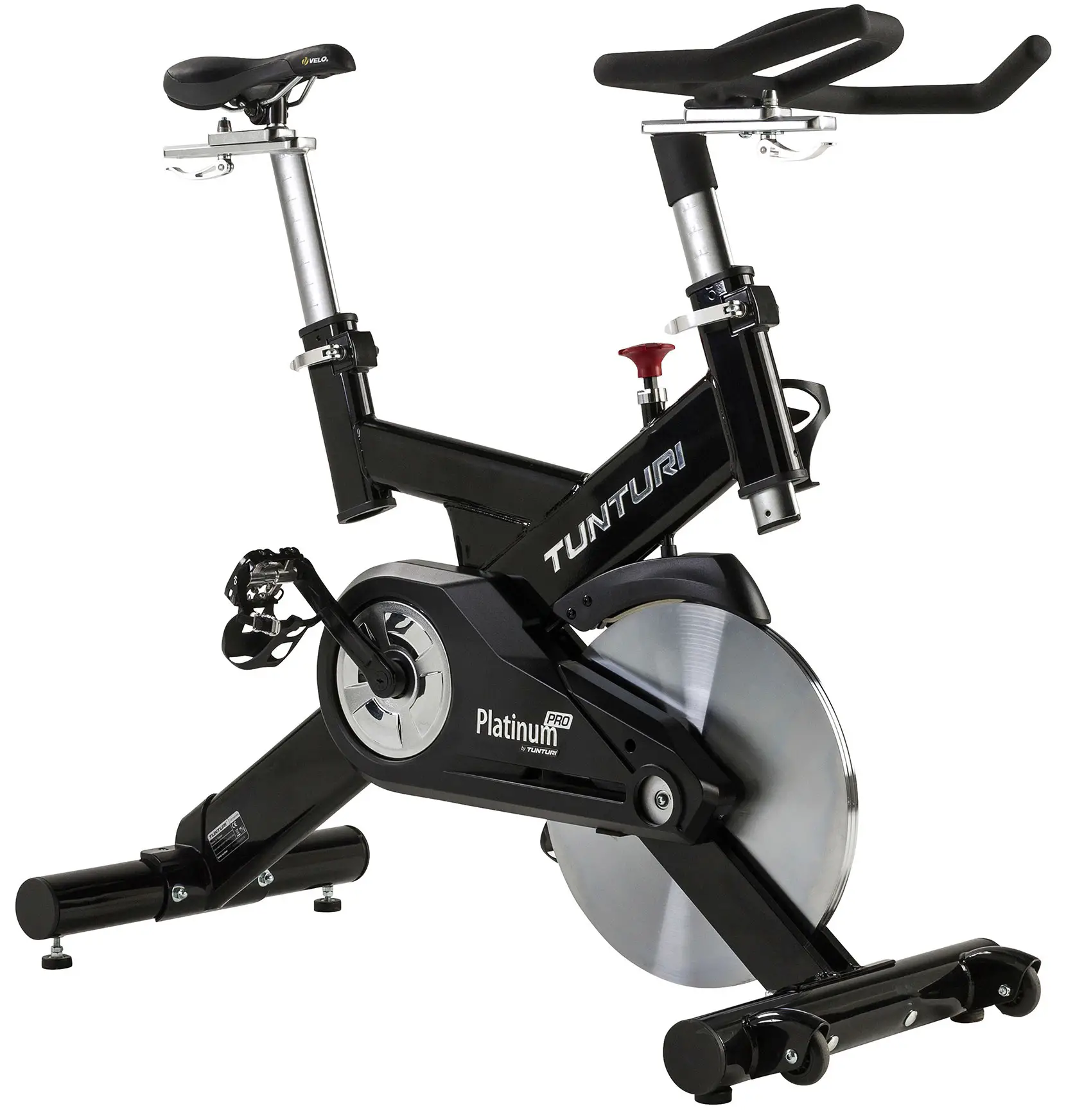
Product Information
SPRINTER BIKE PRO USER MANUAL
Thank you for choosing Tunturi exercising equipment. This product is designed to help you achieve your fitness goals with high quality, safe and motivating features. Please visit our website at www.tunturi.com for more information about using your exercise equipment and efficient training.
Safety Instructions
Please read this guide carefully before assembling, using, or servicing your fitness equipment. Keep the guide in a safe place for future reference.
- Always follow the instructions carefully.
- Place the equipment on a level surface.
- Use a protective base to avoid any damages to the floor beneath
the equipment. - Allow at least 100 cm of clearance around the equipment.
Product Usage Instruction
Assembly
The packaging includes a silicate bag that absorbs moisture during storage and transportation. Please dispose of the bag once you have unpacked the equipment. To assemble the product, follow these steps:
Step 1: Front and rear support post Assembly
- #81. 3/8×3-1/2 Carriage bolt 4pcs.
- #82. 3/8 Cap nut 4pcs.
- #83. 3/8x23x1.5 Curved washer 4pcs.
- #85. 14 – 15mm Wrench 1pcs.
Step 2: Rear cover
- Install the rear support post cover with two M5 x 10mm screws (91).
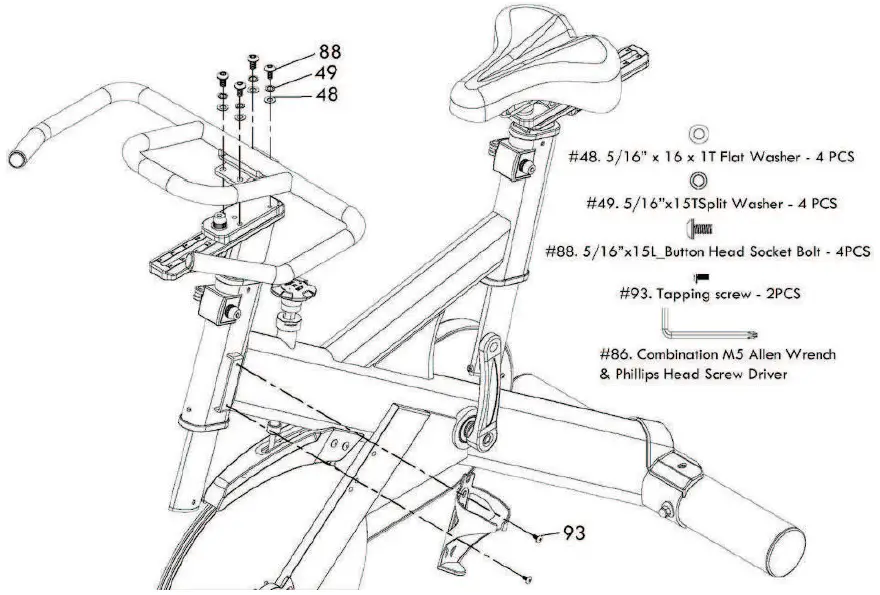
Step 3: Handlebar and bottle holder
- Install the handlebar with four 5/16 x 15mm bolts (88), 5/16 split washers (49) and four 5/16 flat washers (48).
- Tighten the bolts securely.
- Install the bottle holder to the main frame with two Philips head screws (93).
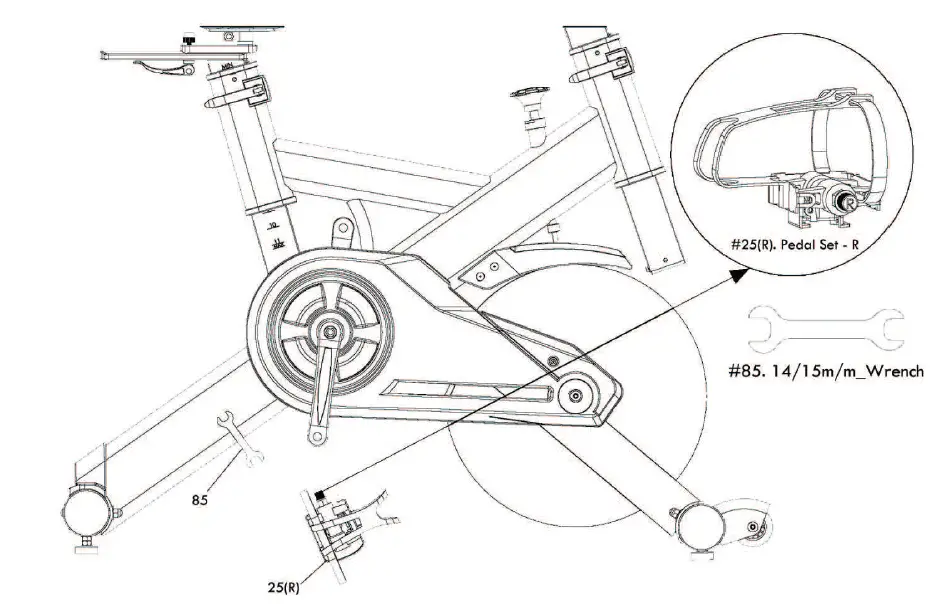
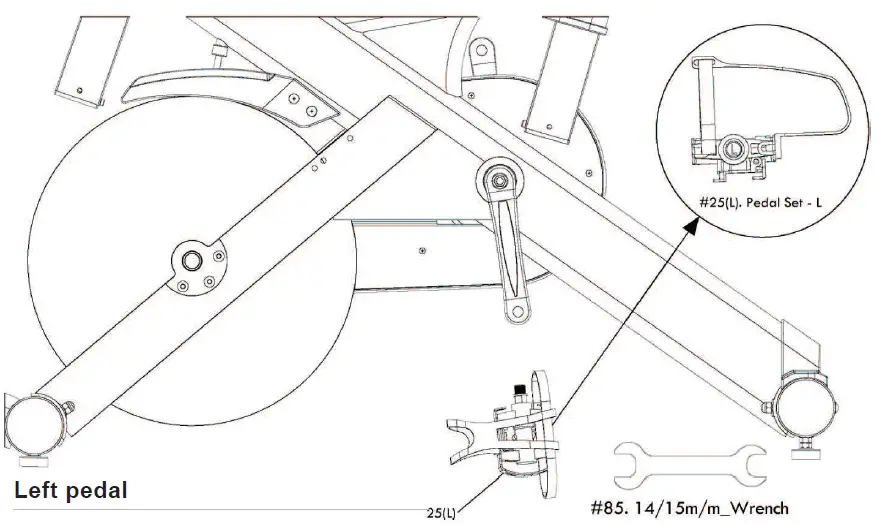
Step 4: Pedal assembly
- Install the Left (25L) and Right (25R) pedal to the crank arm.
- Please note that the Left pedal has a reverse threaded bolt and needs to be tightened in a counterclockwise direction.
- The pedals are identified by either an R or L stamped into the end of the bolt.
Adjustments & Setup
The following adjustments can be made to ensure optimal usage:
Adjustment of seat position
To adjust the seat position, loosen the knob under the seat and move the seat forward or backward to your desired position. Tighten the knob to secure the seat in place.
Handlebar adjustment
To adjust the handlebar position, loosen the knob on the handlebar stem and move the handlebar up or down to your desired position. Tighten the knob to secure the handlebar in place.
How to use our dual function pedal
The dual function pedal can be used with regular athletic shoes or with cycling shoes. To use with regular athletic shoes, use the toe cage on one side of the pedal. To use with cycling shoes, clip into the SPD cleat on the other side of the pedal.
Moving and Storage
When moving or storing the equipment, make sure it is on a level surface and use a protective base to avoid any damages to the floor beneath the equipment.
Troubleshooting
If you experience any issues with your equipment, please refer to the troubleshooting section in the user manual for assistance.
Specifications
Please refer to the specifications section in the user manual for details on product dimensions, weight capacity, and other technical information.
Spare Parts List
Please refer to the spare parts list section in the user manual for details on replacement parts and their corresponding part numbers.
Exploded View
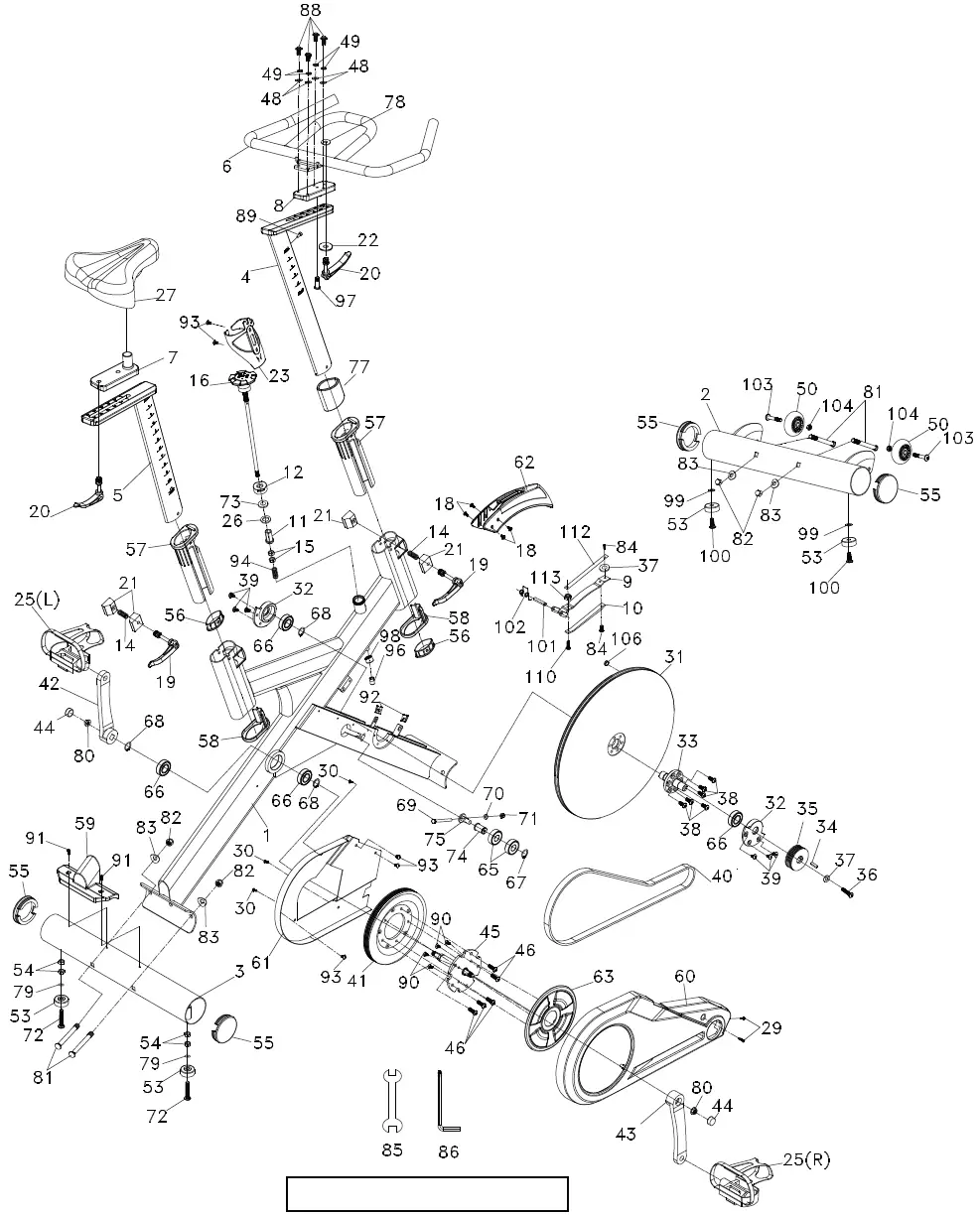
Please refer to the exploded view section in the user manual for a detailed diagram of the product and its parts.
Welcome to the world of Tunturi exercising!
Your choice shows that you really want to invest in your well being and condition; it also shows you really value high quality, safe and motivating product as your training partner. Whatever your goal in training, we are certain this is the training equipment to get you there. You’ll find information about using your exercise equipment and what makes for efficient training at Tunturi’s website at www.tunturi.com.
Safety Instructions
Read this guide through carefully before assembling, using or servicing your fitness equipment. Please keep the guide somewhere safe; it will provide you now and in the future with the information you need to use and maintain your equipment. Always follow these instructions with care.
Note about your health
- Before you start any training, consult a physician to check your state of health.
- If you experience nausea, dizziness or other abnormal symptoms while exercising, stop your workout at once and consult a physician.
- To avoid muscular pain and strain, begin each workout by warming up and end it by cooling down (slow pedaling at low resistance). Don’t forget to stretch at the end of the workout.
Note about the exercise environment
- The equipment is not to be used outdoors.
- Place the equipment on a firm, level surface. Place the equipment on a protective base to avoid any damages to the floor beneath the equipment.
- Make sure that the exercising environment has adequate ventilation. To avoid catching cold, do not exercise in a draughty place.
- In training, the equipment tolerates an environment measuring +10°C to + 35°C. The equipment can be stored in temperatures ranging between -15°C and +40°C. Air humidity in the training or storage environment must never exceed 90%.
Note about the equipment
- If children are allowed to use the equipment, they should be supervised and taught to use the equipment properly, keeping in mind the child’s physical and mental development and their personality.
- Before you start using the equipment, make sure that it functions correctly in every way. Do not use faulty equipment.
- Press the keys with the tip of the finger; your nails may damage the key membrane.
- Never lean on the interface.
- Never remove the side covers. Do not step on the frame casing.
- Only one person may use the equipment at a time.
- Hold the handlebar for support when getting on or off the equipment.
- Wear appropriate clothing and shoes when exercising.
- Protect the meter from sunlight and always dry the surface of the meter if there are any drops of sweat on it.
- Further information on warranty terms can be found in the warranty booklet included with the product.
- Please note that the warranty does not cover damage due to shipping or negligence of adjustment or maintenance instructions described in this manual.
- The equipment must not be used by persons weighing over 150 kg.
- Do not attempt any servicing or adjustments other than those described in this guide.
- Everything else must be left to someone familiar with the maintenance of electromechanical equipment and authorized under the laws of the country in question to carry out maintenance and repair work.
- Never drop or insert any object into any openings.
- Do not use outdoors.
- Do not use excessive pressure on console control keys. They are precision set to properly function with little finger pressure. Pushing harder is not going to make the unit go faster or slower. If you feel the buttons are not functioning properly with normal pressure, contact your dealer.
SAVE THIS INSTRUCTION MANUAL
Assembly
Start by unpacking the equipment. The detailed assembly instructions can be found at the back of this guide. Follow the instructions in given order. Before assembly, check the contents of the package. If a part is missing, please contact your dealer with the model, equipment serial no. And spare part no. of the missing part. You’ll find a spare part list at the back of this guide. The hardware kit contents are marked with * in the spare parts list. The directions left, right, front and back are defined as seen from the exercising position. Keep the assembly tools, as you may need them e.g. for adjusting the equipment. Note that two people are needed for the assembly.
The packaging includes a silicate bag for absorbing moisture during storage and transportation. Please dispose of the bag once you have unpacked the equipment. Allow at least 100 cm of clearance around the equipment. We also recommend opening the package and assembling the product on a protective base.
Step 1:
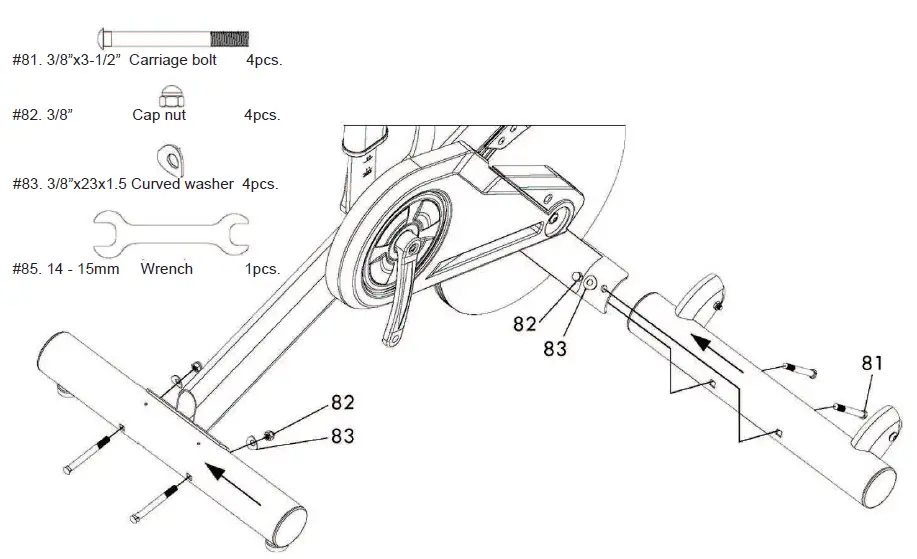
Front and rear support post Assembly
- Install the front and rear support post with four 3/8”×3-1/2” carriage bolts (81), four 3/8” curved washers(83) and four 3/8” cap nuts(82). The front and rear support post are different. Be sure to assemble the support post with the transport wheels onto the front of the bike.

Step 2:
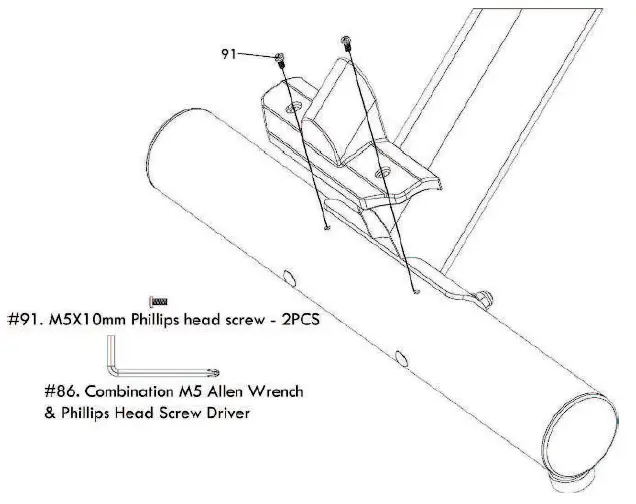
Rear cover
- Install the rear support post cover with two M5 x 10mm screws (91).

Step 3:
Handlebard and bottleholder
Install the handlebar with four 5/16” x 15mm bolts (88), 5/16” split washers (49) and four 5/16” flat washers (48). Tighten the bolts securely. Install the bottleholder to the main frame with two Philips head screws (93).
Step 4:
Pedal assembly
Install the Left (25L) and Right (25R) pedal to the crank arm. Please note that the Left pedal has a reverse threaded bolt and needs to be tightened in a counterclockwise direction. The pedals are identified by either an R or L stamped into the end of the bolt.
Adjustments & setup
Take some time to learn how to properly adjust the bike to your body; it will make your workouts more pleasant and a safer experience too. Riding the bike when it is incorrectly adjusted can result in discomfort and increase your risk of injury.
Adjustment of seat position
Seat height adjustment:
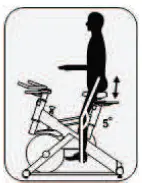
- Standing next to the bike, adjust seat until it is about hip height.
- Rotate crank arms until the pedals are in the vertical position
- Place your foot in toe cage of pedal closest to the floor and mount the bike. Ensure that the ball of your foot is over the center of pedal. Your leg should be slightly bent at the knee, about 5 degrees.
- If your leg is too straight or your foot cannot touch pedal you will need to lower seat height. If your leg is bent too much you will need to raise seat height.
- Dismount the bike. Loosen the quick release lever on seat tube and adjust up or down as necessary.
- When seat is in the desired position, tighten the quick release lever to secure the seat tube.
- Note the final position mark on the seat tube for future reference.
Forward adjustments:
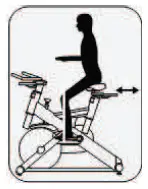
- Sit on bike with crank arms in the 3 and 9 o’clock positions. For road bike training, a proper forward/aft position of the seat is achieved when small bump at the top of the shin is above pedal axle.
- Dismount the bike. Loosen the quick release lever under the seat and slide the seat forward or backward as desired; then tighten the quick release lever.
Handlebar adjustment
Handlebar Height Adjustment
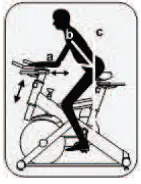
- The Handlebar height is a matter of preference. Start with a handlebar height that is the same as the seat’s height. Adjusting the handlebar higher will give the rider a more upright position; lower will result in a more crouched position.
- Raise or lower the handlebar by loosening quick release lever on handlebar tube and adjust by sliding the handlebar mount up or down as desired. Then tighten the quick release lever to secure the handlebar tube. Note the final position mark on handlebar tube for future reference.
Adjustment of Handlebar’s Forward/Aft Position:
- Loosen the quick-release lever under the handlebar and slide the handlebar forward or backward as desired. Suitable forward/aft position should allow the rider to comfortably grasp the handlebar with a slight bend at the elbow.
- Tighten the quick-release lever to secure the handlebar.
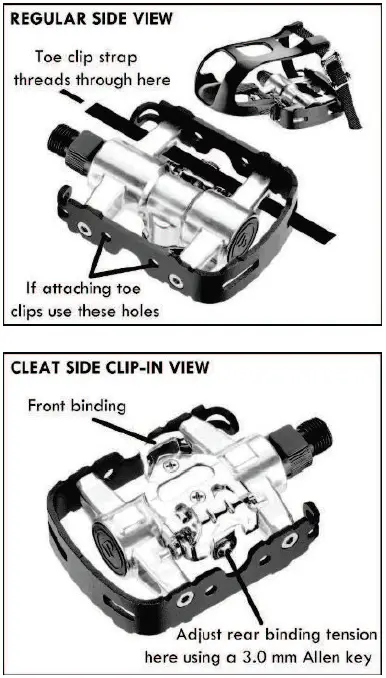
How to use our dual-function pedal
Attaching Cleats to Your Shoes:
If you have questions it is recommended that you consult a bicycle dealer for assistance, or refer to your shoe manufacturer’s instructions. When fixing the cleat the lateral center line should be under the center of the ball of the foot. Adjust forward and backward via the slots in the shoe sole. Adjust laterally via play between cleat washer and cleat. Tighten cleats very firmly. Cleat position can be fine-tuned, according to personal preference, after trial use. It may take time to find your optimum cleat set-up.
Toe Clips:
All standard toe clips can be attached to the pedals. Use fixing hardware and installation instructions supplied with toe clips and ensure the attachment screws are firmly tightened before use.
To Use Pedals:
Engage cleated shoes in pedals by placing cleat between bindings while pushing down. Disengage by twisting heel outwards away from exercise bike. Binding tension is adjustable and should be set so that cleat and shoe do not disengage when pedaling. Use an Allen key to turn tension adjusting screws, clockwise to increase binding tension, counterclockwise to decrease binding tension.
Basic operation
Now that you have established a proper riding position, take a few minutes to ride the bike and determine that your position is comfortable. Start pedaling at a slow pace with your toes and knees pointed directly forward. Hold the handlebar lightly and in a position that allows your shoulders and upper body to relax. Pedal easily, at a low resistance until you feel confident that you could ride in that position for the duration of your workout.
NOTE!
If at any time during your workout, you feel chest pain, experience severe muscular discomfort, feel faint, or are short of breath, stop exercising at once. If condition persist, you should consult your medical doctor immediately
- Pedaling resistance is controlled by the brake tension knob. Resistance can be changed at any time by turning brake tension knob: clock-wise for more resistance; counterclockwise for less resistance.
- For emergencies or braking, press the red resistance knob firmly to stop the flywheel.
- Before dismounting, apply the brake to stop flywheel, or increase resistance and let flywheel come to a stop.
- If the product is not stable, adjust the stabilizing screws under the rear support appropriately.
Basics on exercising
Working out with this device is excellent aerobic exercise, the principle being that the exercise should be suitably light, but of long duration. Aerobic exercise is based on improving the body’s maximum oxygen uptake, which in turn improves endurance and fitness. The ability of the body to burn fat as a fuel is directly dependent on its oxygen-uptake capacity. Aerobic exercise should be above all pleasant. You should work up a light sweat but you should not get out of breath during the workout.
You should exercise at least three times a week, 30 minutes at a time, to reach a basic fitness level. Maintaining this level requires a few exercise sessions each week. Once the basic condition has been reached, it is easily improved, simply by increasing the number of exercise sessions. You should start slowly at a low pedaling speed and low resistance, because for an overweight person strenuous exercise may subject the heart and circulatory system to excessive strain. As fitness improves, resistance and pedaling speed can be increased gradually. To set the exercising level, adjust the tension knob on the handlebar for a higher resistance.
For a higher resistance, turn the tension knob clockwise, for a lower resistance turn the tension knob counter-clockwise.
Maintenance
- Do not service internal parts of pedals. If they are found to be worn internally, we recommend replacing the pedal.
- Use of lubricants or cleaning solutions other than those so specified will result in diminished performance and a shorter life span for that part.
Maintenance Schedule
Pedals:
- Ensure that pedals are tight in crank arms; that all screws on pedals are tight; and that the pedal straps are not frayed.
- Before each use.
Frame:
- Wipe down by using a soft damp clean cloth.
- Daily.
- Water.
Flywheel:
- Wipe down by spraying on a rag and applying a light coat to sides of the flywheel.
- Weekly.
- WD-40 spray.
Brake pad:
- Inspect for excessive wear or a dry leather brake pad.
- Weekly.
- 3-IN-ONE Oil or 10W oil. Do not use silicone-based lubricants.
moving and storage
Please follow these instructions when carrying and moving the equipment, because lifting it incorrectly may strain your back or risk other accidents:
- Standing in front of the device, tilt the device slowly towards you, and push from the front and push along the floor on the wheels at the front support. We recommend that you use a protective base when transporting the equipment.
- To prevent the equipment malfunctioning, store in a dry place with as little temperature variation as possible and protected from dust.
Troubleshoot
Despite continuous quality control, defects and malfunctions caused by individual components may occur in the equipment. In most cases it’s unnecessary to take the whole device in for repair, as it’s usually sufficient to replace the defective part. Always give the model, serial number of your equipment and in case of malfunctions also conditions of use, nature of malfunction and any error code. When you encounter unusual behaviour from the device, contact your local Tunturi dealer for service. If you require spare parts, always give the model, serial number of your equipment and the spare part number for the part you need. The spare part list is at the back of this manual. Use only spare parts mentioned in the spare part list.
Specifications
- Length…………………………………….107cm
- Width ………………………………………54 cm
- Height ……………………………………103cm
- Weight …………………………………….68 kg
The Sprinter l meets the requirements of the EU’s and therefore carries the CE label. The Sprinter meets EN precision and safety standards (EN-957). Class S and shall be used in a supervised environment. Due to our continuous policy of product development, Tunturi reserves the right to change specifications without notice.
NOTE!
The instructions must be followed carefully in the assembly, use and maintenance of your equipment.The warranty does not cover damage due to negligence of the assembly, adjustment and maintenance instructions decribed herein. Changes of modifications not expressly approved by Tunturi Fitness BV will void the user’s authority to operate the equipment.
We wish you many enjoyable trainings!
Spare parts list
| Buble | Description | Qty |
| 1 | Main frame | 1 |
| 2 | Front support post | 1 |
| 3 | Rear support post | 1 |
| 4 | Handlebar post | 1 |
| 5 | Seat post | 1 |
| 6 | Handlebar | 1 |
| 7 | Sliding seat mount | 1 |
| 8 | Sliding handlebar mount (front) | 1 |
| 9 | Braking pad holder | 1 |
| 10 | Brake pad – wool felt | 1 |
| 11 | Bushing | 1 |
| 12 | Nut | 1 |
| 14 | Spring (Ø13×Ø10×16L) | 2 |
| 15 | Nut (M10x3T) | 2 |
| 16 | Brake tension knob | 1 |
| 18 | Phillips head screw (M6×15m/m) | 4 |
| 19 | Quick release lever (8×40m/m) | 2 |
| 20 | Quick release lever (8×25m/m) | 2 |
| 21 | Handlebar locking blocks | 4 |
| 22 | Flat washer (5/1”×35×3.0T) | 1 |
| 23 | Bottle holder | 1 |
| 25 | Pedal pair | 1 |
| 26 | Anti rotation washer | 1 |
| 27 | Seat | 1 |
| 29 | Tapping screw (5×16m/m) | 2 |
| 30 | Sheet metal screw (3.5×12m/m) | 3 |
| 31 | Flywheel (& 32~38,66,68) | 1 |
| 32 | Bearing housing | 2 |
| 33 | Flywheel Axle | 1 |
| 34 | Woodruff key (5×18L) | 1 |
| 35 | Flywheel pulley (Ø66×22m/m) | 1 |
| 36 | Button head socket bolt (5/16”×3/4”) | 1 |
| 37 | Flat washer (5/16”×20×3.0T) | 2 |
| 38 | Button head socket bolt (5/16”×3/4”) | 6 |
| 39 | Phillips head screw (M6×10m/m) | 6 |
| 40 | Belt | 1 |
| 41 | Flywheel pulley (Ø209×21m/m) | 1 |
| 42 | Crank arm (L) | 1 |
| 43 | Crank arm (R) | 1 |
| 44 | Crank arm end cap (M22×1.0/ Ø23) | 2 |
| 45 | Crank axle | 1 |
| 46 | Button head socket bolt (5/16”×1/2”) | 5 |
| 48 | Flat washer (5/16”×16×1T) | 4 |
| 49 | Split washer (5/16”×1.5T) | 4 |
| 50 | Transport wheel | 2 |
| 53 | Foot pad (& 54,72,79) | 4 |
| 54 | Nut 3/8” | 4 |
| 55 | Support post end cap | 4 |
| 56 | Lower tube sleeve | 2 |
| 57 | Upper seat tube sleeve | 2 |
| 58 | Bottom end cap, eye tube | 2 |
| 59 | Rear support post cover | 1 |
| 60 | Chain cover (RH) | 1 |
| 61 | Chain cover (LH) | 1 |
| 62 | Flywheel cover | 1 |
| 63 | Pulley cover | 1 |
| 65 | Bearing (6203) | 2 |
| 66 | Bearing (6004) | 4 |
| 67 | C Ring Ø17 | 1 |
| 68 | C Ring | 3 |
| 69 | Hex head bolt (1/4”×3”) | 1 |
| 70 | Hex head bolt (1/4”) | 1 |
| 71 | Nyloc nut (1/4”×5.5T) | 1 |
| 72 | Flat head socket bolt (3/8”×2”) | 2 |
| 73 | Star washer (25.5×Ø16) | 1 |
| 74 | Belt tightener axle (& 65,67,69,70,71) | 1 |
| 75 | Belt tightener carriage bolt | 1 |
| 77 | Foam stop handlebar tube (30×60×4T×63L) | 1 |
| 78 | Flat washer (Ø5/16”×23×2T) | 1 |
| 79 | Flat washer (3/8”×19×1.5T) | 2 |
| 80 | Nut (M10×1.25m/m) | 2 |
| 81 | Carriage bolt (3/8”×3-1/2”) | 4 |
| 82 | Cap nut (3/8”) | 4 |
| 83 | Curved washer (3/8”×23×1.5) | 4 |
| 84 | M5x12mm Tapping screw | 2 |
| 85 | Wrench (14.15m/m) | 1 |
| 86 | Combo M5 allen wrench & PH screw driver | 1 |
| 88 | Button head socket bolt (5/16”×5/8”) | 4 |
| 89 | M5x10mm Socket head cap bolt | 1 |
| 90 | Tapping screw (Ø5×10m/m) | 4 |
| 91 | Phillips head screw (M5×10m/m) | 2 |
| 92 | Speed nut clip (M5) | 2 |
| 93 | Tapping screw (M5×10m/m) | 5 |
| 94 | Tension control spring | 1 |
| 96 | Speaker end cap | 1 |
| 97 | Phillips head screw (5/16”×1”) | 1 |
| 98 | Tension control sleeve bushing | 1 |
| 99 | Flat washer (3/8”×21×2T) | 2 |
| 100 | Button head socket bolt (3/8”×3/4”) | 2 |
| 101 | Spring shaft, brake | 1 |
| 102 | Recovery spring, brake | 1 |
| 103 | Button head socket bolt (5/16”×1-3/4”) | 2 |
| 104 | Nyloc nut (5/16” × 7T) | 2 |
| 106 | N35 Magnet | 1 |
| 110 | PH screw ( M5x30) | 1 |
| 112 | Spring plate (190x25x1.2T) | 1 |
| 113 | Nyloc nut (M5x5T) | 1 |
| Assembly kit | 1 |
Exploded view
TUNTURI FITNESS B.V.
P.O. BOX 60001 1320 AA THE NETHERLANDS.
www.tunturi.com.
Version 20140513
 Tunturi Fitness | Feel Better Every Day - Tunturi New Fitness B.V.