
Sunbelt SDS HARGROVE GRADE PALM COAST
5.25% SODIUM HYPOCHLORITE SOLUTION – Household Bleach
Product Identification
- Synonyms: A solution of chlorine in alkaline water
- CAS Number: 7681-52-9
- Product Name: Smart Bleach
- Part Numbers: 210
- UPC Codes: 017926002100
- Supplier GLN: 00179264004142
- GTIN: 00179260021008
Hazard Identification
Emergency Overview
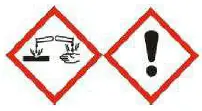
DANGER
- Causes severe skin burns and eye damage.
- May cause respiratory irritation.
- Onset of symptoms may be delayed following exposure.
- Toxic to aquatic life.
Note to Physician: Consider oral administration of sodium thiosulfate solutions if sodium hypochlorite is ingested. Do not administer neutralizing agents, exothermic reaction may result and cause further damage.
Product Ingredients
Component
Sodium Hypochlorite
- CAS Number: 7681-52-9
- GHS Classification: Corrosive 1B, STOT-SE 3, Acute Aquatic 1; H314, H335, H400
Sodium Hydroxide
- CAS Number: 1310-73-2
- GHS Classification: Corrosive 1B, STOT-SE 3; H314, H335
Water
- CAS Number: 7732-18-5
- GHS Classification: Not considered hazardous according to GHS criteria.
First Aid Measures
- Inhalation: Remove to fresh air. If not breathing, give artificial respiration. If breathing is difficult, give oxygen. Seek immediate medical attention.
- Ingestion: If swallowed DO NOT INDUCE VOMITING. Give large quantities of water. Never give anything by mouth to an unconscious person. Seek immediate medical attention.
- Skin Contact: In case of contact with liquid, immediately flush with plenty of water for at least 15 minutes while removing contaminated clothing and shoes. Wash clothing before reuse. Thoroughly clean shoes before reuse. Seek immediate medical attention.
- Eye Contact: Immediately flush eyes with plenty of flowing water for at least 15 minutes, while lifting upper and lower eyelids. Seek immediate medical attention.
Fire Fighting Measures
- NFPA 704 ratings: Health 2 Flammability 0 Reactivity 1 Other Hazards: Corrosive
- Fire: Not considered to be a fire hazard. Releases oxygen when heated, causing increased severity of an existing fire.
- Explosion: Not considered to be an explosion hazard.
- Fire Extinguishing Media: Water or water spray to cool fire exposed containers. Use any means to extinguish surrounding fire.
- Special Information: In the event of fire, wear full protective clothing and NIOSH approved self contained breathing apparatus (SCBA), with full face shield, operated in positive pressure mode. Stay away from ends of tanks. Cool tanks and drums with water spray until well after fire is out.
Accidental Release Measures
Adequately ventilate area of leak or spill. Wear appropriate personal protective equipment (PPE), as specified in Section 8. Isolate area to keep unprotected personnel from entering. Stop the leak if possible. Contain and recover liquid when possible. Absorb spilled liquid with an inert material, such as vermiculite, sand, or earth and place recovered material in an approved,compatible chemical waste container. Do not use combustible materials such as cardboard or saw dust as an absorbent. EPA regulations require reporting spills and releases to the soil, airand water, in excess of the reportable quantity (103.4 gallons of solution), to the National Response Center, telephone number 1-800-424-8802. Reporting to the State Emergency Response Commission (SERC) warning point and local authorities (911) is also required. Notify CHEMTREC, for specific information, in the event of any transportation related spills or leaks. (1-800-424-9300). See Section 13 of this MSDS for more information.
Handling and Storage
Store in a cool, dry, ventilated storage area with good drainage. Protect from physical damage. Keep out of sunlight, away from direct heat, water and incompatible materials. Do not wash out container and use it for other purposes. Observe all warnings and precautions stated on the container label. Wear personal protective equipment when handling, opening containers and using hypochlorite solutions.
Exposure Control and Personal Protection
Airborne Exposure Limits
- OSHA PEL: 1 ppm as Cl2(TWA )
- OSHA STEL: 3 ppm as Cl2
- WEEL (AIHA): 2 mg/m3, 15 minute TWA as Cl2
- ACGIH TLV and TWA: 0.5 ppm as Cl2
- ACGIH STEL: 1 ppm as Cl2
NIOSH Immediately Dangerous Level (IDLH) unavailable.
Ventilation: A system of local and/or general exhaust is recommended to keep exposure below the Airborne Exposure Limits. Local exhaust ventilation is generally preferred because it can control the emissions of the contaminant at its source, preventing dispersion into occupied areas.
Personal Respirators (NIOSH Approved): If exposure limits are exceeded and engineering controls are not feasible, a full face respirator, with an acid gas cartridge, may be worn up to 50 times the permissible exposure limit (PEL). For emergencies or instances where the exposure levels are not known, use full face, positive pressure, air supplied respirator. WARNING, Air purifying respirators do not provide protection in oxygen deficient atmospheres.
Skin Protection: Rubber or neoprene gloves and additional protection including impervious boots, apron, or coveralls, as needed in areas of unusual exposure to prevent skin contact.
Eye Protection: Use chemical safety goggles and/or a full face shield where splashing is possible. Maintain eye wash fountain and quick drench facilities (safety shower) in work areas.
Physical and Chemical Properties
- Appearance: Yellow to light green liquid.
- Solubility: Infinitely soluble in water.
- Percent Volatile: n/a
- Vapor Density: unavailable
- Evaporation Rate: < 1 (butyl acetate = 1)
- Odor: Bleach-like odor.
- Specific Gravity: 1.075 – 1.080
- Boiling Point: 180 OF decomposes slightly
- Vapor Pressure: 17.5 @ 68 F
- pH: 11 to 14
Stability and Reactivity
Stability: Slowly decomposes on contact with air. Decomposition rate increases with concentration and temperature. Exposure to sunlight accelerates decomposition. Sodium hypochlorite solutions become less toxic with age.
Hazardous Decomposition Products: When heated to decomposition, emits toxic chlorine fumes and will react with water or steam to produce heat and toxic, corrosive fumes. Thermal decomposition results in the emission of chlorine oxides. Hazardous Polymerization: Will not occur.
Incompatibilities: Ammonia (chloramine gas may evolve), amines, ammonium salts, acids, methanol, cellulose, reducing agents, oxidizing metals, and bisulfates.
Toxicological Information
- Acute Oral LD50 in rats: >8200 mg/kg
- Acute dermal LD50 in rabbits: >10,000 mg/kg
- Inhalation LC50 – no data
- Not listed on the OSHA, NTP, ACGIH or IARC list of carcinogens or potential carcinogens.
Ecological Information
- Environmental Fate: Degrades slowly to sodium chloride, sodium chlorate and oxygen.
- Environmental Toxicity: Highly toxic to aquatic organisms.
Disposal Considerations
In case of a spill, flood area with large quantities of water. Small quantities of spilled or unusable product should be diluted with water before disposal to a sanitary sewer (through toilet). State and local disposal regulations may slightly differ from Federal regulations. Dispose of waste in a facility permitted for non-hazardous waste. Do not reuse empty container. Triple rinse container and place into trash or recycle bin where facilities accept pigmented white HDPE bottles. Do not allow product to enter storm drains, lakes, streams or other bodies of water. Not harmful to septic systems.
Transport Information
- Proper Shipping Name: DOT Not Regulated
Full Shipping Description: N/A
Regulatory Information
U.N GHS Classification & Labeling Information
- Classification: Corrosive 1B
- Specific Target Organ Toxicity (STOT)
- Single Exposure 3
- Acute Aquatic
- Signal Word: Danger
- H Statements: H314: Causes severe skin burns and eye damage
- H335: May cause respiratory irritation
- H401: Toxic to aquatic life
- P Statements: P307+315: If exposed, get immediate medical attention.
- P301+P330+P331: IF SWALLOWED: Rinse mouth. Do NOT induce vomiting.
- P280: Wear protective gloves/protective clothing/eye protection/face protection.
- P264: Wash thoroughly after handling.
- P273: Avoid release into the environment.
Regulated Ingredients
- Sodium Hypochlorite (CAS # 7681-52-9)
- Sodium Hydroxide (CAS # 1310-73-2)
OSHA Classification: Physical Hazards: Reactivity Health Hazards: Acute Health Hazard, Corrosive
TSCA Inventory Listed: All components are listed in TSCA inventory (40CFR 710)
- CERLA RQ: 100 lbs. of sodium hypochlorite(211.4 gals of solution)
- CERCLA Hazardous Material: Yes
- SARA Title III, Section 302: Not listed TPQ: N/A
- SARA Title III, Section 311/312: Acute Health Hazard
- Acute: Yes
- Chronic: No
- Fire: No
- Pressure: No
- Reactivity: No
- SARA Title III, Section 313: Not subject to Toxic Chemical Release Inventory Reporting
- RCRA Hazardous Waste: Not a listed Hazardous Waste. May be a D002 (characteristic corrosive) waste based upon pH value.
- EPA Clean Air Act: Not a Listed Hazardous Air Pollutant (HAP)
- EPA Clean Water Act: Listed
- EPA FIFRA: Not a registered pesticide
Canadian Regulatory Information
- WHMIS Category: Class E Corrosive Material
- Ingredient Disclosure List: Listed
- Domestic Substances List (DSL): Listed
Other Information
Label Hazard Warning
IRRITANT, HARMFUL IF SWALLOWED OR INHALED. CAUSES IRRITATION TO EYES
Label Precautions: Do not get in eyes, on skin, or on clothing. Avoid breathing vapor or mist. Keep the container closed when not in use. Use with adequate ventilation. Wash thoroughly after handling. KEEP OUT OF REACH OF CHILDREN.
Label First Aid: If swallowed, DO NOT INDUCE VOMITING. Give large quantities of water. Never give anything by mouth to an unconscious person. If inhaled, remove to fresh air. If not breathing, give artificial respiration. If breathing is difficult, give oxygen. In case of contact, immediately flush eyes or skin with plenty of water, for at least 15 minutes. Remove contaminated clothing and shoes. Wash clothing before reuse. SEEK MEDICAL ATTENTION. AND RESPIRATORY TRACT. CAUSES SUBSTANTIAL, BUT TEMPORARY, EYE INJURY.
Disclaimer & Copyright Notice
This information is furnished without warranty, expressed or implied, except that it is accurate to the best knowledge of Sunbelt Chemicals Corp. at the time it was prepared. Sunbelt Chemicals Corp. does not assume any liability whatsoever for the accuracy or completeness of the information contained herein. Final determination of suitability of any material is the sole responsibility of the user. All materials may present unknown hazards and should be used with caution. Although certain hazards are described herein, Sunbelt Chemicals Corp. cannot guarantee that these are the only hazards that exist. Sunbelt Chemicals Corp. assumes no legal responsibility for loss, damage or expense arising out of, or in any way connected with, the handling, storage, use or disposal of this product.
24-Hour Emergency Telephone Number CHEMTREC 1-800-424-9300
SUNBELT CHEMICALS CORP. 71 HARGROVE GRADE PALM COAST, FLORIDA 32137
All non-emergency questions should be directed to Customer Service (1-386-446-4595) for assistance.