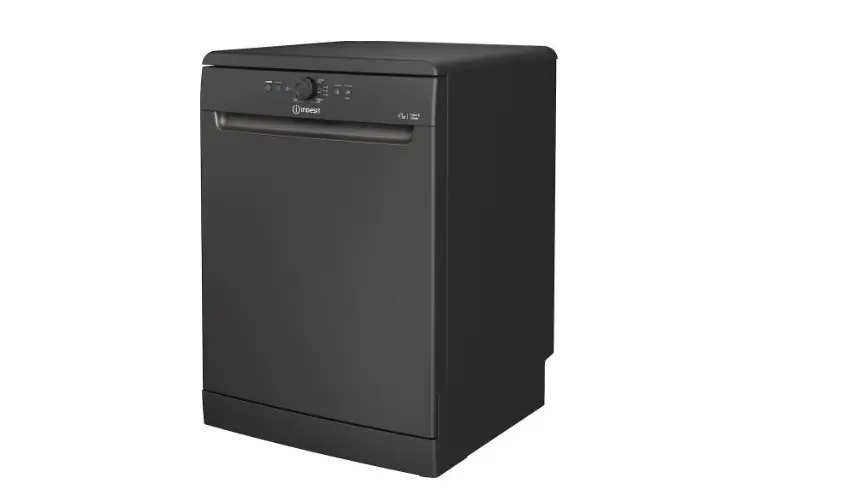
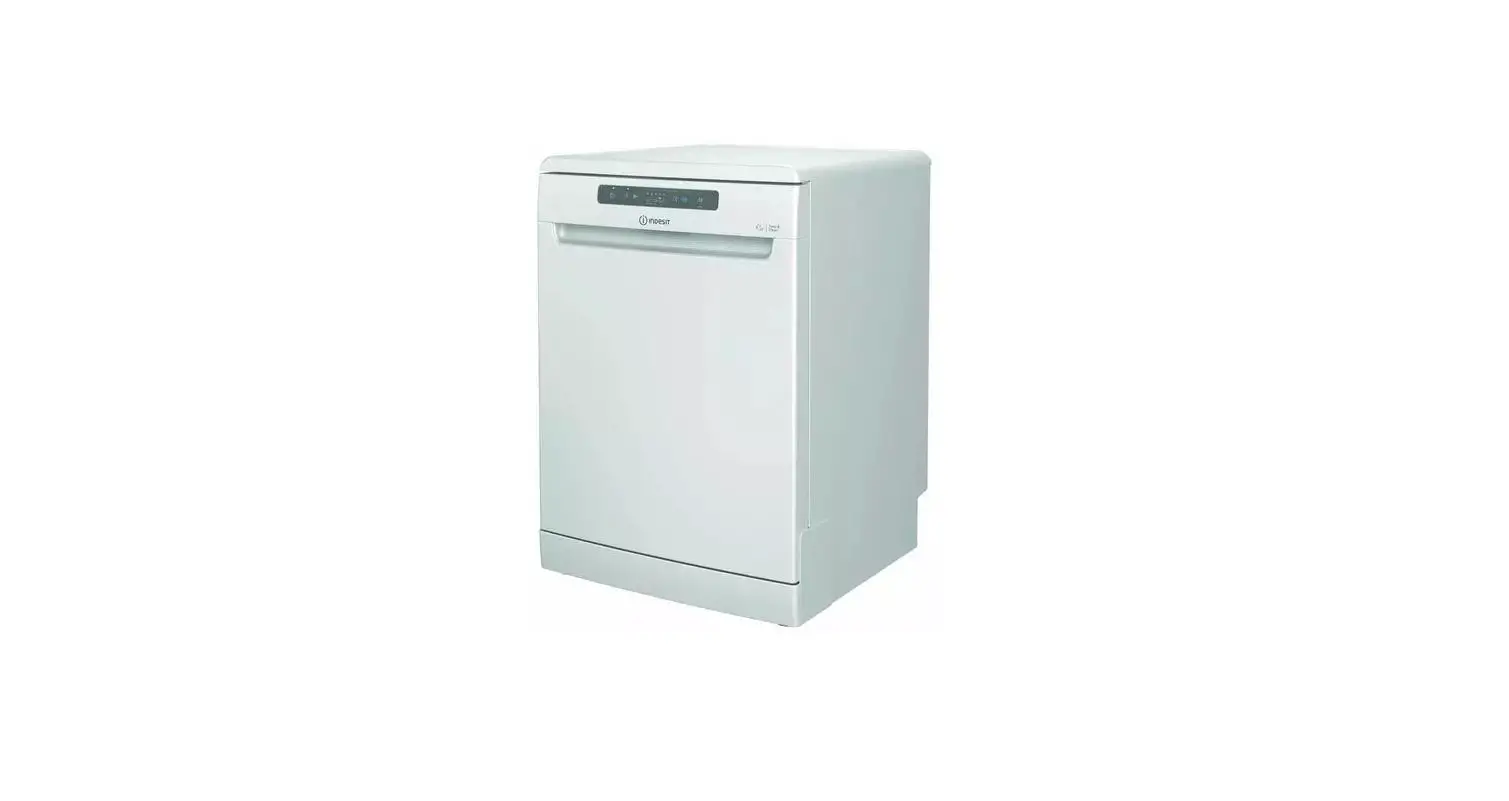
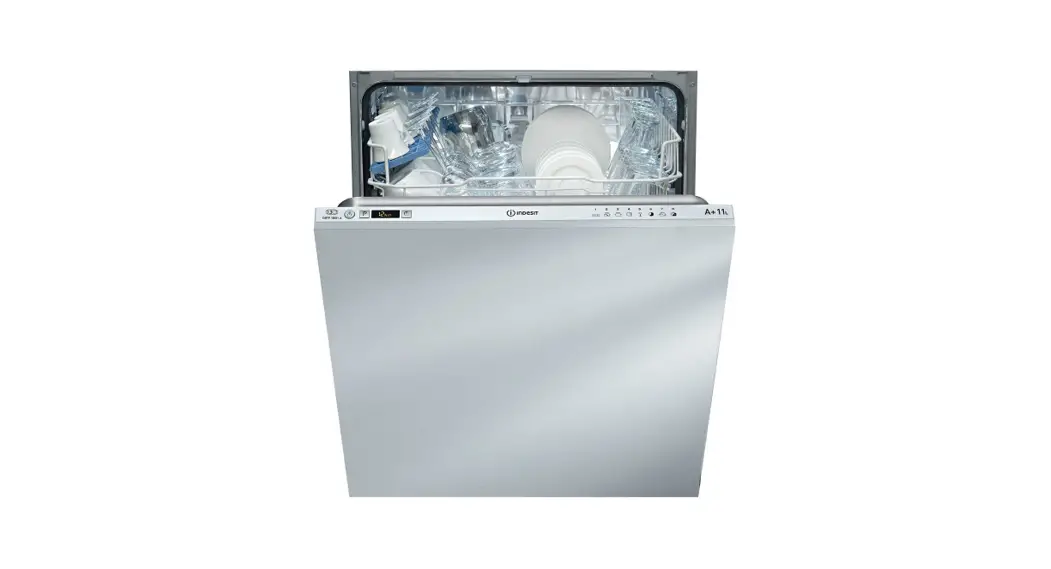
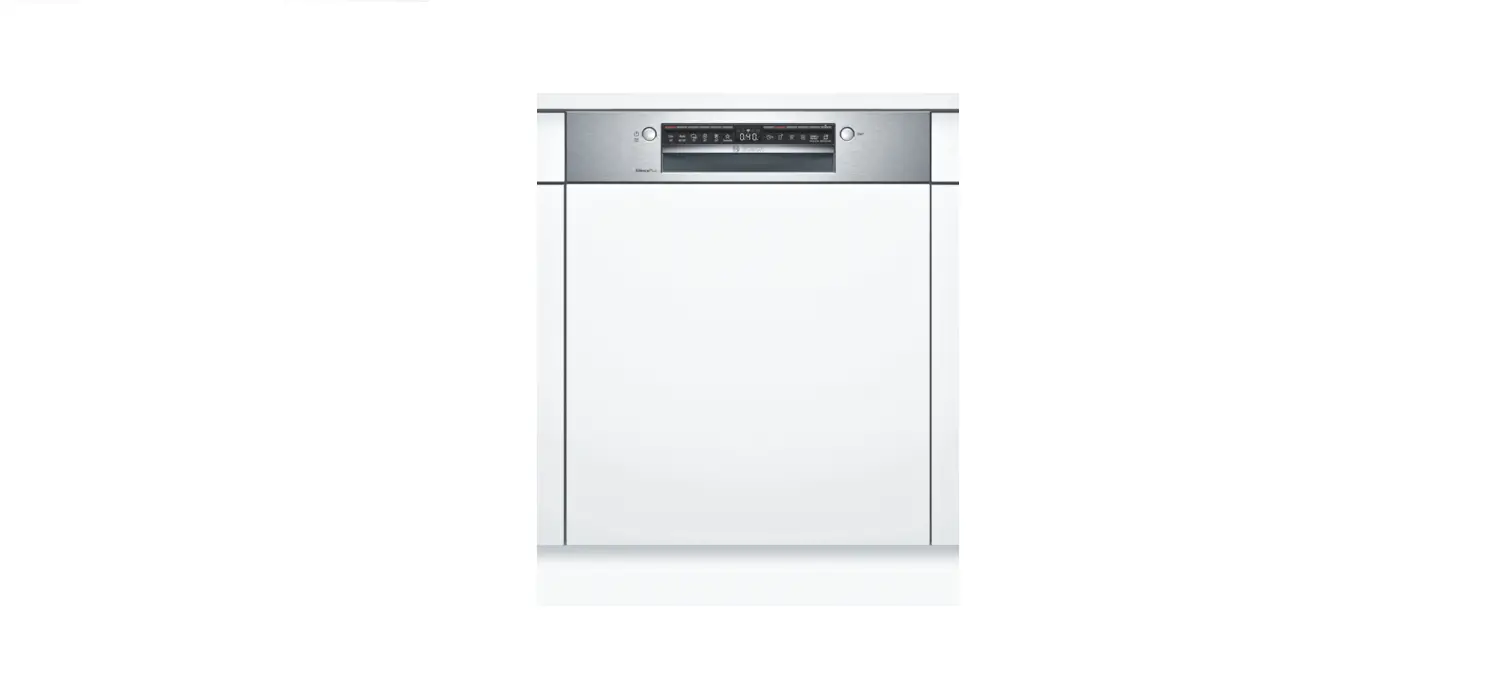
D2I HD524 A Integrated Dishwasher
Product Information:
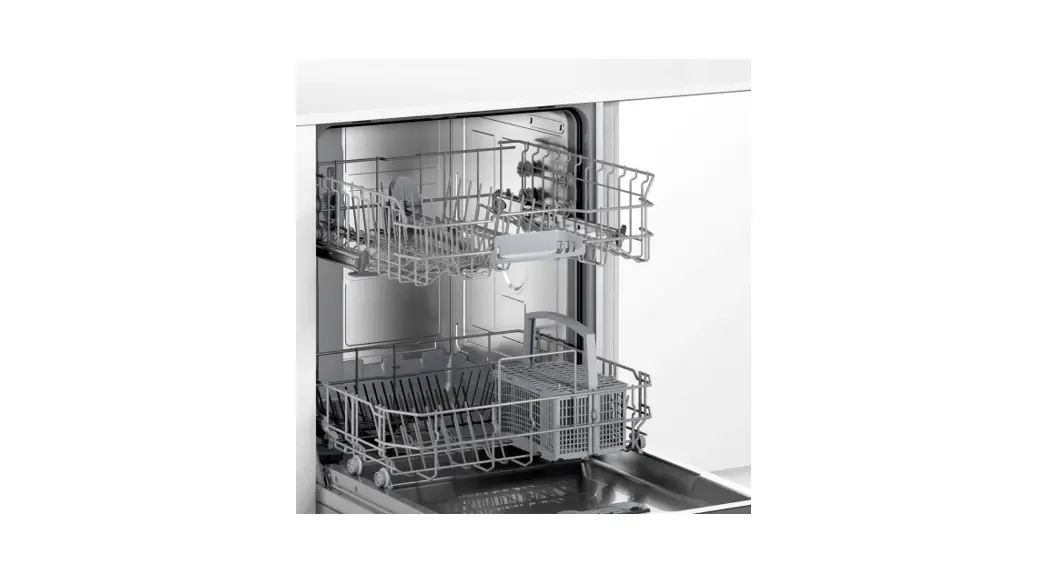
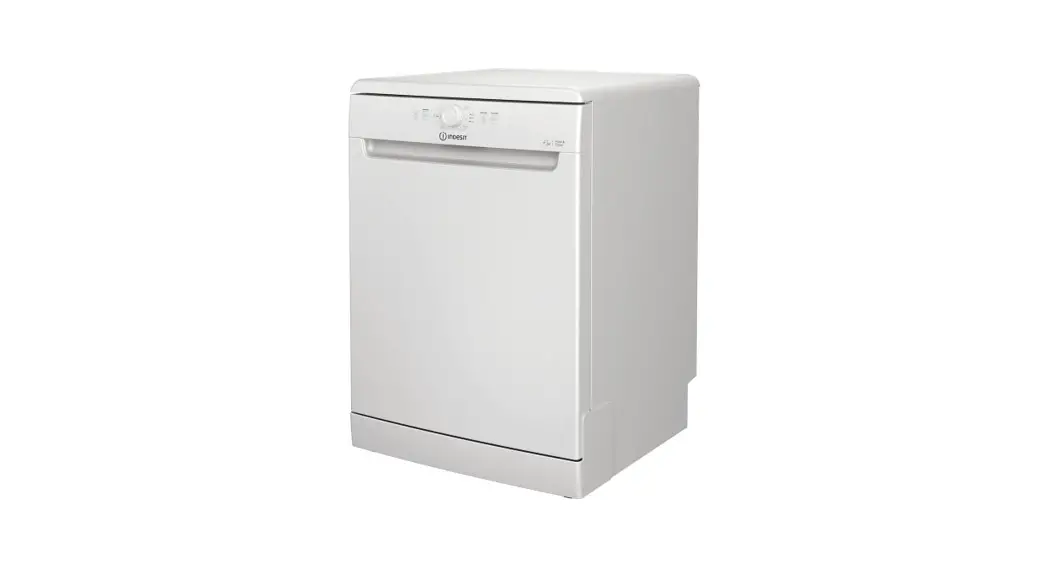
The product is an Indesit dishwasher. It has several features and
components, including: – Upper rack with foldable flaps – Upper
rack height adjuster – Upper spray arm – Lower rack – Cutlery
basket – Lower spray arm – Filter Assembly – Salt reservoir –
Detergent and Rinse Aid dispensers – Rating plate – Control panel
with various buttons and indicator lights Product Usage
Instructions:
1. Before using the appliance, carefully read the Safety
Instructions guide. 2. Register your appliance on the website
www.indesit.com/register for complete assistance. 3. Download the
Safety Instructions and User Manual from the website
docs.indesit.eu, following the instructions on the back of the user
manual booklet. 4. For first-time use, follow these steps to fill
the salt reservoir: a. Remove the lower rack and unscrew the
reservoir cap (anticlockwise). b. Fill the salt reservoir with
water (only for the first time). c. Position the funnel and fill
the salt reservoir up to its edge (approximately 1 kg). d. Remove
the funnel and wipe any salt residue away from the opening. e.
Ensure the cap is tightly screwed on to prevent detergent from
entering the container during the wash program. f. It is mandatory
to add salt before the beginning of each washing cycle to avoid
corrosion. 5. Set the water hardness based on the actual water
hardness in your house. Refer to the Water Hardness Table provided
in the manual. 6. Run a program without loading after completing
the water hardness setting. 7. Only use salt specifically designed
for dishwashers. 8. After filling the salt, the SALT REFILL
indicator light will switch off. Failure to fill the salt container
may result in damage to the water softener and heating element due
to limescale accumulation. 9. It is recommended to use salt with
any type of dishwasher detergent. 10. To fill the rinse aid
dispenser, follow the instructions provided in the user manual (not
mentioned in the given text-extract).
DAILY REFERENCE GUIDE
THANK YOU FOR BUYING AN INDESIT PRODUCT. In order to receive a more complete assistance, please register your appliance on: www.indesit.com/register
EN
You can download the Safety Instructions and the User Manual, by visiting our website docs.indesit.eu and following the Instructions on the back of this booklet.
Before using the appliance carefully read Safety Instructions guide.
PRODUCT DESCRIPTION
APPLIANCE
7 8
9
11
Service: 0000 000 00000
1 2
3 4 5 6
10
1. Upper rack 2. Foldable flaps 3. Upper rack height adjuster 4. Upper spray arm 5. Lower rack 6. Cutlery basket 7. Lower spray arm 8. Filter Assembly 9. Salt reservoir 10. Detergent and Rinse Aid dispensers 11. Rating plate 12. Control panel
12
CONTROL PANEL
1
2 34 5 67
1. On-Off/Reset button with indicator light 2. Program selection button 3. Salt refill indicator light 4. Rinse Aid refill indicator light 5. Program number and delay time indicator
8
9
10
6. Tablet (Tab) indicator light 7. Display 8. Push&GO button 9. Delay button 10. START/Pause button with indicator light/ Tablet (Tab)
1
FIRST TIME USE SALT, RINSE AID AND DETERGENT
ADVICE REGARDING THE FIRST TIME USE
After installation, remove the stoppers from the racks and the retaining elastic elements from the upper rack.
FILLING THE SALT RESERVOIR
The use of salt prevents the formation of LIMESCALE on the dishes and on the machine’s functional components. · It is mandatory that THE SALT RESERVOIR NEVER BE EMPTY. · It is important to set the water hardness.
The salt reservoir is located in the lower part of the dishwasher (see PRODUCT DESCRIPTION) and must be filled when the SALT REFILL indicator light in the control panel is lit.
1. Remove the lower rack and unscrew the reservoir cap (anticlockwise).
2. Only the first time you do this: fill the salt reservoir with water.
3. Position the funnel (see figure) and fill the salt reservoir right up to its edge (approximately 1 kg); it is not unusual for a little water to leak out.
4. Remove the funnel and wipe any salt residue away from the opening.
Make sure the cap is screwed on tightly, so that no detergent can get into the container during the wash program (this could damage the water softener beyond repair). Whenever you need to add salt, it is mandatory to complete the procedure before the beginning of the washing cycle to avoid corrosion.
SETTING THE WATER HARDNESS
To allow the water softener to work in a perfect way, it is essential that the water hardness setting is based on the actual water hardness in your house. This information can be obtained from your local water supplier. The factory sets the default value for the water hardness.
· Switch on the appliance by pressing the ON/OFF button.
· Switch off the appliance by pressing the ON/OFF button.
· Hold down button P for 5 seconds, until you hear a beep.
· Switch on the appliance by pressing the ON/OFF button.
· The current selection level number and the salt indicator light both flash.
· Press button P to select the desired hardness level (see WATER HARDNESS TABLE).
Level
Water Hardness Table
°dH
°fH
German degrees French degrees
°Clark English degrees
1 Soft
0 – 6
0 – 10
0 – 7
2 Medium
7 – 11
11 – 20
8 – 14
3 Average
12 – 16
21 – 29
15 – 20
4 Hard
17 – 34
30 – 60
21 – 42
5 Very hard
35 – 50
61 – 90
43 – 62
· Switch off the appliance by pressing the ON/OFF button.
Setting is complete!
As soon as this procedure is complete, run a program without loading. Only use salt that has been specifically designed for dishwashers.
After the salt has been poured into the machine, the SALT REFILL indicator light switches off. If the salt container is not filled, the water softener and the heating element may be damaged as a result of limescale accumulation. Using of Salt is recommended with any type of dishwasher detergent.
FILLING THE RINSE AID DISPENSER
Rinse aid makes dish DRYING easier. The rinse aid dispenser A should be filled when the RINSE AID REFILL indicator light in the control
panel is lit.
A
B
1. Open the dispenser B by pressing and pulling up the tab on the lid. 2. Pour in the rinse aid (max.110 ml), making sure it does not overflow
from the dispenser. If this happens, clean the spill immediately with a dry cloth. 3. Press the lid down until you hear a click to close it. NEVER pour the rinse aid directly into the appliance tub.
ADJUSTING THE DOSAGE OF RINSE AID
If you are not completely satisfied with the drying results, you can adjust the quantity of rinse aid used.
· Switch the dishwasher on using the ON/OFF button.
· Switch it off using the ON/OFF button.
· Press button P three times – a beep will be heard.
· Switch it on using the ON/OFF button.
· The current selection level number and rinse aid indicator light flash.
· Press button P to select the level of rinse aid quantity to be supplied.
· Switch it off using the ON/OFF button
Setting is complete!
If the rinse aid level is set to ZERO, no rinse aid will be supplied. The LOW RINSE AID indicator light will not be lit if you run out of rinse aid.
A maximum of 5 levels can be set according to the dishwasher model. The factory setting is specific to the model, please follow instruction above to check this for your machine. · If you see bluish streaks on the dishes, set a low number (1-2). · If there are drops of water or limescale marks on the dishes, set a
mid-range number (3-4).
FILLING THE DETERGENT DISPENSER
To open the detergent dispenser use the opening device C. Introduce the detergent into the dry dispenser D only. Place the amount of detergent for pre-washing directly inside the tub.
1. When measuring out the detergent
refer to the mentioned earlier infor-
mation to add the proper quantity.
D
Inside the dispenser D there are indi-
cations to help the detergent dosing.
C
2. Remove detergent residues from
the edges of the dispenser and clo-
se the cover until it clicks.
3. Close the lid of the detergent di-
spenser by pulling it up until the
closing device is secured in place.
The detergent dispenser automatically opens up at the right time
according to the program. If all-in-one detergents are used, we recommend using the TABLET
button, because it adjusts the program so that the best washing and
drying results are always achieved. Usage of detergent not designed for dishwashers may cause malfunction or damage to the appliance.
2
EN
PROGRAMS TABLE
Program
Drying phase
Available options *)
Duration of wash program
(h:min)**)
Water consumption
(litres/cycle)
Energy consumption
(kWh/cycle)
1 Eco
50°
2 Intensive
65°
3:35
9.5
0.95
2:40
18.0
1.60
3 Mixed 4 Fast&Clean 28′ 5 Night 6 Extra Hygiene 7 Prewash 8 Self Clean 9 Push&GO
55°
50° –
50° 65°
-65° –
50°
2:15
16.0
1.40
0:28
9.0
0.50
3:35
16.6
1.30
2:00
12.0
1.50
0:12
4.7
0.01
0:50
10.0
0.80
1:30
11.5
1.30
ECO program data is measured under laboratory conditions according to European Standard EN 60436:2020.
Note for Test Laboratories: For information on comparative EN testing conditions, please send an email to the following address: [email protected]
Pre-treatment of the dishes is not needed before any of the programs.
*) Not all options can be used simultaneously.
**) Values given for programs other than the program Eco are indicative only. The actual time may vary depending on many factors such as temperature and pressure of the incoming water, room temperature, amount of detergent, quantity and type of load, load balancing, additional selected options and sensor calibration. The sensor calibration can increase program duration up to 20 min.
PROGRAMS DESCRIPTION
Instructions on wash cycle selection.
1 ECO
Eco programme is suitable to clean normally soiled tableware, that for this use, it is the most efficient programme in terms of its combined energy and water consumption, and that it is used to assess compliance with the EU Ecodesign legislation.
2 INTENSIVE
Program for heavily soiled dishes and pans (not to be used for delicate items).
3 MIXED
Mixed soil. For normally soiled dishes with dried food residues.
4 FAST&CLEAN 28′
Program to be used for half load of lightly-soiled dishes with no dried food residues. Does not include drying phase.
5 NIGHT
Suitable for night-time operation of the appliance. Ensures optimal cleaning and drying performance with the lowest noise emission.
6 EXTRA HYGIENE
Normally or heavily soiled crockery, with additional antibacterial wash. Can be used to perform maintenance of the dishwasher.
7 PREWASH
Use to refresh crockery planned to be washed later. No detergent to be used with this program.
8 SELF CLEAN
Program to be used to perform maintenance of the dishwasher, to be carried out only when the dishwasher is EMPTY using specific detergents designed for dishwasher maintenance.
9 PUSH&GO
Everyday wash and dry cycle that ensures great cleaning performance in a short time without the need to pre-treat dishes.
Notes: Please note that cycle Fast&Clean 28′ is dedicated for lightly soiled dishes.
3
OPTIONS AND FUNCTIONS
OPTIONS can be selected directly by pressing the corresponding button (see CONTROL PANEL). If an option is not compatible with the selected program (see PROGRAMS TABLE), the corresponding LED flashes rapidly 3 times and beeps will sound. The option will not be enabled.
PUSH & GO
Push&GO button is an easily distinguishable button that allows you direct access to the Push&GO program, a wash and dry cycle that ensures great cleaning performance in a short time. You don’t have to worry which program to choose, Push&GO cycle will do the work for you. To select Push&GO program, switch on appliance, press only Push&GO button for 3 seconds and close the door within 4 seconds.
TABLET (Tab)
This setting allows you to optimize the performance of the program according to the type of detergent used. Press the START/Pause button for 3 seconds (the corresponding symbol will light up) if you use combined detergents in tablet form (rinse aid, salt and detergent in 1 dose). If you use powder or liquid detergent, this option should be off.
DELAY
The start time of the program may be delayed for a period of time between 1 and 12 hours. 1. Press the DELAY button: the corresponding «h» symbol
appears on the display; each time you press the button, the time (1h, 2h, etc. up to max. 12h) from the start of the selected wash cycle will be increased. 2. Select the wash program, press the START/PAUSE button and within 4 seconds close the door: the timer will begin counting down. 3. Once this time has elapsed, the indicator light «h» switches off and the wash cycle begins.
To adjust the delay time and select a shorter period of time, press the DELAY button. To cancel it, press the button repeatedly until the selected delayed start indicator light «h» switches off.
The DELAY function cannot be set once a wash cycle has been started.
4
EN
LOADING THE RACKS
UPPER RACK
Load delicate and light dishes: glasses, cups, saucers, low salad bowls.
LOWER RACK
For pots, lids, plates, salad bowls, cutlery etc. Large plates and lids should ideally be placed at the sides to avoid interferences with the spray arm. The lower rack has tip-up supports which can be used in a vertical position when arranging plates or in a horizontal position (lower) to load pans and salad bowls easily.
(loading example for the upper rack)
ADJUSTING THE HEIGHT OF THE UPPER RACK
The height of the upper rack can be adjusted: high position to place bulky crockery in the lower basket and low position to make the most of the tip-up supports by creating more space upwards and avoid collision with the items loaded into lower rack. The upper rack is equipped with a Upper Rack height adjuster (see figure), without pressing the levers, lift it up by simply holding the rack sides, as soon as the rack is stable in its upper position. To restore to the lower position, press the levers A at the sides of the rack and move the basket downwards.
We strongly recommend that you do not adjust the height of the rack when it is loaded.
NEVER raise or lower the basket on one side only.
(loading example for the lower rack)
CUTLERY BASKET
It is fitted with top grids for improved cutlery arrangement. The cutlery basket should be positioned only at the front of the lower rack.
FOLDABLE FLAPS WITH ADJUSTABLE POSITION
The side foldable flaps can be fold or unfold to optimize the arrangement of crockery inside the rack. Wine glasses can be placed safely in the foldable flaps by inserting the stem of each glass into the corresponding slots. Depending on the model: · to unfold the flaps there is needed
to slide it up and rotate or release it from the snaps and pull it down. · to fold the flaps there is needed to rotate it and slide flaps down or pull it up and attach flaps to the snaps.
Knives and other utensils with sharp edges must be placed in the cutlery basket with the points facing downwards or they must be positioned horizontally in the tip-up compartments on the upper rack.
5
DAILY USE
1. CHECK WATER CONNECTION Check that the dishwasher is connected to the water supply and that the tap is open.
2. SWITCH ON THE DISHWASHER Open the door and press the ON/OFF button.
3. LOAD THE RACKS (see LOADING THE RACKS).
4. FILLING THE DETERGENT DISPENSER
5. CHOOSE THE PROGRAM AND CUSTOMISE THE CYCLE Select the most appropriate program in accordance with the type of crockery and its soiling level (see PROGRAMS DESCRIPTION) by pressing the P button. Select the desired options (see OPTIONS AND FUNCTIONS).
6. START Start the wash cycle by pressing START/Pause button (led is lit) and closing the door within 4 sec. When the program starts you hear a single beep. If the door was not closed within 4sec., the alarm sound will be played. In this case, open the door, press START/Pause button and close the door again within 4 sec.
7. END OF WASH CYCLE The end of the wash cycle is indicated by beeps and by the flashing of the wash cycle number on the display. Open the door and switch off the appliance by pressing the ON/OFF button. Wait for a few minutes before removing the crockery – to avoid burns. Unload the racks, beginning with the lower one.
The machine will switch off automatically during certain extended periods of inactivity, in order to minimise electricity consumption. If the crockery is only lightly soiled or if it has been rinsed with water before being placed in the dishwasher, reduce the amount of detergent used accordingly.
MODIFYING A RUNNING PROGRAM
If a wrong program was selected, it is possible to change it, provided that it has only just begun: open the door, press and hold the ON/OFF button, the machine will switch off. Switch the machine back on using the ON/OFF button and select the new wash cycle and any desired options; Start the wash cycle by pressing START/Pause button (led is lit) and closing the door within 4 sec.
ADDING EXTRA CROCKERY
Without switching off the machine, open the door (START/Pause led starts blinking) (be ware of HOT steam!) and place the crockery inside the dishwasher. Press the START/Pause button and close the door within 4 sec., the cycle will resume from the point at which it was interrupted.
ACCIDENTAL INTERRUPTIONS
If the door is opened during the wash cycle, or if there is a power cut, the cycle stops. Press the START/Pause button and close the door within 4 sec., the cycle will resume from the point at which it was interrupted.
ADVICE AND TIPS
TIPS
Before loading the baskets, remove all food residues from the crockery and empty the glasses. You do not need to rinse beforehand under running water. Arrange the crockery so that it is held in place firmly and does not tip over; and arrange the containers with the openings facing downwards and the concave/convex parts placed obliquely, thus allowing the water to reach every surface and flow freely. Warning: lids, handles, trays and frying pans do not prevent the sprayer arms from rotating. Place any small items in the cutlery basket. Very soiled dishes and pans should be placed in the lower basket because in this sector the water sprays are stronger and allow a higher washing performance. After loading the appliance, make sure that the sprayer arms can rotate freely.
UNSUITABLE CROCKERY
· Wooden crockery and cutlery. · Delicate decorated glasses, artistic handicraft and antique crockery.
Their decorations are not resistant. · Parts in synthetic material which do not withstand high temperatures. · Copper and tin crockery. · Crockery soiled with ash, wax, lubricating grease or ink. The colours of glass decorations and aluminium/silver pieces can change and fade during the washing process. Some types of glass (e.g. crystal objects) can become opaque after a number of wash cycles too.
DAMAGE TO GLASS AND CROCKERY
· Only use glasses and porcelain guaranteed by the manufacturer as dishwasher safe.
· Use a delicate detergent suitable for crockery · Collect glasses and cutlery from the dishwasher as soon as the wash
cycle is over.
TIPS ON ENERGY SAVING
· When the household dishwasher is used according to the manufacturer’s instructions, washing tableware in a dishwasher usually consumes less energy and water than hand dishwashing.
· In order to maximize dishwasher efficiency it is recommended to initiate the wash cycle once dishwasher is fully loaded. Loading the household dishwasher up to the capacity indicated by the manufacturer will contribute to energy and water savings. Information on correct loading of tableware can be found in Loading chapter. In case of partial loading it is recommended to use dedicated wash options if available (Half load/ Zone Wash, Multizone), fiilling up only selected racks. Incorrect loading or overloading the dishwasher may increase resources usage (such as water, energy and time, as well as increase noise level), reducing cleaning and drying performance.
· Manual pre-rinsing of tableware items leads to increased water and energy consumption and is not recommended.
HYGIENE
To avoid odour and sediment which can be accumulated in the dishwasher please run a high temperature program at least one a month. Use a tea spoon of detergent and run it without the loading to clean your appliance.
6
EN
CARE AND MAINTENANCE
CLEANING THE FILTER ASSEMBLY
Regularly clean the filter assembly so that the filters do not clog and that the waste water flows away correctly.
Using dishwasher with clogged filters or foreign objects inside filtration system or sprayarms may cause unit malfunction resulting in lose of performance, noisy work or higher resources usage. The filter assembly consists of three filters which remove food residues from the washing water and then recirculate the water.
The dishwasher must not be used without filters or if the filter is loose.
At least once per month or after each 30 cycles, check the filter assembly and if necessary clean it thoroughly under running water, using a non-metallic brush and following the instructions below:
1. Turn the cylindrical filter A in an anti-clockwise direction and pull it out (Fig 1).
2. Remove the cup filter B by exerting a slight pressure on the side flaps (Fig 2).
3. Slide out the stainless-steel plate filter C (Fig 3).
4. In case you find foreign objects (such as broken glass, porcelain, bones, fruit seeds etc.) please remove them carefully.
5. Inspect the trap and remove any food residues. NEVER REMOVE the wash-cycle pump protection (black detail) (Fig 4).
CLEANING THE SPRAY ARMS
On occasions, food residue may become encrusted onto the spray arms and block the holes used to spray the water. It is therefore recommended that you check the arms from time to time and clean them with a small non-metallic brush.
To remove the upper spray arm, turn the plastic locking ring in a clockwise direction. The upper spray arm should be replaced so that the side with the greater number of holes is facing upwards.
1
2
B
The lower spray arm may be removed by pulling it upwards.
A
A
C
3
4
After cleaning the filters, re-place the filter assembly and fix it in position correctly; this is essential for maintaining the efficient operation of the dishwasher.
WATER SOFTENING SYSTEM
Water softener automatically reduces water hardness, consequently preventing scale buildup on heater, contributing also to better cleaning efficiency. This system regenerates itself with salt, therefore it is required to refill salt container when empty. Frequency of regeneration depends on water hardness level setting regeneration takes place once per 6 Eco cycles with water hardness level set to 3. Regeneration process starts in final rinse and finishes in drying phase, before cycle ends. · Single regeneration consumes: ~3.5L of water; · Takes up to 5 additional minutes for the cycle; · Consumes below 0.005kWh of energy.
CLEANING THE WATER INLET HOSE
If the water hoses are new or have not been used for an extended period of time, let the water run to make sure it is clear and free of impurities before performing the necessary connections. If this precaution is not taken, the water inlet could become blocked and damage the dishwasher.
7
TROUBLESHOOTING
In case your dishwasher doesn’t work properly, check if the problem can be solved by going through the following list. For other errors or issues please contact authorized After-sales Service which contact details can be found in the warranty booklet. Spare parts will be available for a period of either up to 7 or up to 10 years, according to the specific Regulation requirements.
PROBLEMS POSSIBLE CAUSES
SOLUTIONS
Salt
Salt reservoir is empty. (After refill the salt indica- Refill reservoir with salt (for more information – see page 2).
indicator is lit tor may remain lit for several wash cycles).
Adjust water hardness – see table, page 2.
Rinse aid indicator is lit
Rinse aid dispenser is empty. (After refill the rinse aid indicator may remain lit for several wash cycles).
Refill dispenser with rinse aid (for more information – see page 2).
The dishwasher won’t start or does not respond to commands.
The appliance has not been plugged in properly. Insert the plug into the socket.
Power outage.
For safety reasons, dishwasher will not re-start automatically when power returns. Open dishwasher door, press START/Pause button and close the door within 4 seconds.
The dishwasher door is not closed.
Vigorously push the door until you hear the “click”.
Cycle is interupted by door opening for more than 4 seconds.
Press START/Pause and close the door within 4 seconds.
It does not respond to commands. Display shows: 9 or 12 and On/Off LED is blinking rapidly
Switch off the appliance by pressing the ON/OFF button, switch it back on after approximately one minute and restart the program. If problem persists, unplug the appliance for 1 minute, then plug it back in.
The dishwasher won’t drain.
Display shows: 3 and On/Off LED is blinking rapidly
The wash cycle has not finished yet. The drain hose is bent. The sink drain pipe is blocked. The filter is clogged up with food residues.
Wait until the wash cycle finishes. Check that the drain hose is not bent (see INSTALATION INSTRUCTION). Clean the sink drain pipe. Clean the filter (see CLEANING THE FILTER ASSEMBLY).
The dishwasher makes excessive noise.
The dishes are rattling against each
Position the crockery correctly (see LOADING THE RACKS).
The detergent has not been measured out correctly or it is not suitable for use in dish-
An excessive amount of foam has been produced.
washers (see FILLING THE DETERGENT DISPENSER). Restart the current cycle by switching OFF the dishwasher, then switch it on again, select a new program, press
START/Pause and close the door within 4 seconds. Please do not add any detergent.
The dishes are not clean.
The crockery has not been arranged properly. Arrange the crockery correctly (see LOADING THE RACKS).
The spray arms cannot rotate freely, being hindered by the dishes.
Arrange the crockery correctly (see LOADING THE RACKS).
The wash cycle is too gentle.
Select an appropriate wash cycle (see PROGRAMS TABLE).
An excessive amount of foam has been produced.
The detergent has not been measured out correctly or it is not suitable for use in dishwashers (see FILLING THE DETERGENT DISPENSER).
The cap on the rinse aid compartment has not been shut correctly.
Make sure the cap of the rinse aid dispenser is closed.
The filter is soiled or clogged.
Clean the filter assembly (see CARE AND MAINTENANCE).
The dishwasher does not fill the water. Display shows: H, 6 and On/Off LED is blinking rapidly
There is no salt.
Fill the salt reservoir (see FILLING THE SALT RESERVOIR).
No water in the water supply or the tap is closed. Make sure there is water in the water supply or the tap running.
The inlet hose is bent.
Make sure the inlet hose is not bent (see INSTALLATION) reprogram the dishwasher and reboot.
The sieve in the water inlet hose is clogged; it is After having carried out the verification and cleaning, turn off and turn on the dishwa-
necessary to clean it
sher and restart a new program.
Dishwasher finishes the cycle prematurely. Display shows: 15 and On/Off LED is blinking rapidly
Drain hose positioned too low or siphoning into home sewage system. Air in water supply.
Check if end of drain hose is placed at correct height (see INSTALLATION).Check for siphoning into home sewage system, install air admittance valve if necessary. Check water supply for leaks or other issues letting air inside.
Policies, standard documentation, ordering of spare parts and additional product information can be found by: · Visiting our website docs.indesit.eu and parts-selfservice.whirlpool.com · Using QR Code · Alternatively, contact our After-sales Service (See phone number in the warranty booklet).
When contacting our After-sales Service, please state the codes provided on your product’s identification plate.
The model information can be retrieved using the QR-Code reported in the energy label. The label also includes the model identifier that can be used to consult the portal of the registry at https://eprel.ec.europa.eu.
IEC 436
:
400011659681C 03/2023 ks – Xerox Fabriano
8
BG
, INDESIT. – , : www.indesit.com/register
, docs.indesit.eu .
, .
7 8
9
11
Service: 0000 000 00000
1 2
3 4 5 6
10
1. 2. 3. 4. 5. 6. 7. 8. 9. 10.
11. 12.
12
1
2 34 5 67
8
9
10
1. .-. / 2. 3. 4.
5.
6. (Tab) 7. 8. “Push&GO” 9. 10. / / (Tab)
1
,
.
. ·
.
· . (. ,, “) , .
1.
(
). 2. :
. 3. (. )
(
1 kg); .
4. .
, ,
( ). , , .
, . . . · , ./. · , ./. · P 5 ,
. · , ./.
· .
· P, (. ).
°dH
°fH
°Clark
1
0 – 6
0 – 10
0 – 7
2
7 – 11
11 – 20
8 – 14
3
12 – 16
21 – 29
15 – 20
4
17 – 34
30 – 60
21 – 42
5
35 – 50
61 – 90
43 – 62
· , ./. !
. , .
,
. , . .
. A , i .
A B
1. B, .
2. (110 ml) – . , .
3. , , . .
, . · ./. · ./. · P – . · ./. ·
. · P,
. · ./. ! (), . , . 5 . ; -, . · , (1-2). · ,
(3-4).
FILLING THE DETERGENT DISPENSER
,
C. D. –
.
1.
-,
. D ,
D
.
C
2.
,
.
3.
, ,
.
. ,
,
– .
, –
, .
2
BG
1
*)
(:)**)
(/)
(kWh/)
50°
3:35
9,5
0,95
2
65°
2:40
18,0
1,60
3
55°
2:15
16,0
1,40
4 Fast&Clean 28′
50° –
0:28
9,0
0,50
5
50°
3:35
16,6
1,30
6
7
8
65°
-65° –
2:00
12,0
1,50
0:12
4,7
0,01
0:50
10,0
0,80
9 Push&GO
50°
1:30
11,5
1,30
EN 60436:2020. : EN : [email protected] . *) .
**) , , Eco, . , , , , , , . 20 .
.
1 EO
Eo , , – .
2
, , ( ).
3
. .
4 FAST&CLEAN 28′
, . .
5
. – .
6
, . , .
7
, -. .
8
, , , .
9 PUSH&GO
, , .
: , Fast&Clean28′ .
3
(. ).
, (. ), 3 . .
PUSH&GO
Push&GO , Push&GO, . , Push&GO . Push&GO, , 3 Push&GO 4 .
TABLET (Tab)
. / 3 ( ),
( ,
1 ). , .
1 12 . 1. :
«h»; (1 , 2 .. . 12 ) . 2. , / 4 : . 3. «h» . , . , , «h» .
.
4
BG
: , , .
, , , .. , . , .
( )
:
,
. (. ), ,
,
–
.
– , A
. , . .
( )
– . .
, . , . : · ,
. · , .
.
5
1. .
2. ./.
3. (. )
4.
5. – (. ) P. (. ).
6. , / ( ) 4 . , . 4 , . , / 4 .
7. . , ./.. , , . , .
, . , .
, , -: , ./., . ./. ; , / 4 .
, ( / ) ( !) . / 4 , , .
, . , , / 4 .
, . . , ; / , . : , , . . , – – . , .
· . · ,
. . · ,
. · . · , , . / . (. ) .
· , , .
· ,
· .
· , – .
· , , . , , . . (Half load/ Zone Wash/ Multizone), . ( , , ), .
· , .
, , , – . , .
6
BG
, . , , . , : – .
.
– 30 , -: 1. A
(. 1). 2. B,
(. 2). 3. – C (. 3).
4. ( , , , .), .
5. . ( ) (. 4).
1
2
. .
, . , – .
, .
A
C 3
B A
4
, . , , . – 6 Eco , 3. , .
· : ~3,5 ;
· 5 ;
· – 0,005 kWh .
; .
, , , , . , .
7
, , . , . 7 10 , .
. ( ).
( . . 2). , . 2.
.
. ( ( . . 2). ).
. .
.
. , / 4 .
. , .
4 .
/ 4 .
.
, ./,
: 9 12 . ,
./.
1 .
.
.
– .
: 3 ./.
.
.
.
.
.
.
, .
. (. ).
. (. ). (. ). (. ). , , , / 4 . . (. ).
(. ).
.
( ).
.
(. ).
,
.
.
.
(. ).
.
(. ).
– . .
: H, 6 –
.
, .
, ( ), .
./.
; . .
. :
.
15 ./.
.
( ). , .
, .
, , :
· docs.indesit.eu parts-selfservice.whirlpool.com · QR ·
( ). , .
QR . , https://eprel.ec.europa.eu.
IEC 436
:
400011659681C 03/2023 ks – Xerox Fabriano
8
PÍRUCKA
PRO KAZDODENNÍ POUZITÍ
DKUJEME VÁM, ZE JSTE SI ZAKOUPILI VÝROBEK ZNACKY INDESIT. Pro získání komplexnjsí asistence zaregistrujte prosím svj spotebic na: www.indesit.com/register
CS
Bezpecnostní pokyny a Návod k obsluze, si mzete stáhnout na nasí webové stránce docs.indesit.eu podle postupu na zadní stran této brozury.
Ped pouzití spotebice si pecliv pectte Bezpecnostní pokyny.
POPIS SPOTEBICE
SPOTEBIC
7 8
9
11
Service: 0000 000 00000
12
1 2
3 4 5 6
10
1. Horní kos 2. Sklopné klapky 3. Výskové nastavení horního kose 4. Horní ostikovací rameno 5. Dolní kos 6. Kosík na píbory 7. Dolní ostikovací rameno 8. Sestava filtru 9. Zásobník na sl 10. Dávkovace mycího prostedku a lestidla 11. Typový stítek 12. Ovládací panel
OVLÁDACÍ PANEL
1
2 34 5 67
8
1. Tlacítko ,,zapnout-vypnout/vynulovat” s kontrolkou 2. Tlacítko volby programu 3. Kontrolka ,,Doplnní soli” 4. Kontrolka ,,Nedostatek lestidla” 5. Ukazatel císla programu a indikátor doby zpozdní
9
10
6. Kontrolka,,Prásek/Tableta” (Tab) 7. Displej 8. Tlacítko,,Push&GO” 9. Tlacítko ,,Odlozený start” 10. Tlacítko,,SPUSTIT/Pauza” s kontrolkou/,,Tableta” (Tab)
1
PRVNÍ POUZITÍ SL, LESTIDLO A MYCÍ PÍPRAVEK
RADY PRO PRVNÍ POUZITÍ
Po instalaci odstrate zarázky z kos a pruzné upevovací prvky
z horního kose.
NAPLNNÍ ZÁSOBNÍKU SOLI
Pouzití soli vede k pedcházení usazování VODNÍHO KAMENE na nádobí a funkcních soucástech mycky. · ZÁSOBNÍK NA SL nesmí NIKDY ZSTAT PRÁZDNÝ. · Nastavení tvrdosti vody je dlezité. Zásobník na sl se nachází ve spodní cásti mycky (viz POPIS SPOTEBICE) a je nutné jej naplnit, kdyz se na ovládacím panelu rozsvítí kontrolka DOPLNNÍ SOLI .
1. Vytáhnte spodní kos a odsroubujte vícko zásobníku (proti smru hodinových rucicek).
2. Následující kroky provádjte pouze pi prvním pouzití: Naplte zásobník soli vodou.
3. Umístte trychtý (viz obrázek) a naplte zásobník solí az po okraj (piblizn 1 kg); odtékání urcitého mnozství vody je pitom normální.
4. Vyjmte trychtý a otete z otvoru pebytecnou sl.
Ujistte se, ze je vícko pevn dotazeno, aby se do zásobníku nedostal pi mytí zádný mycí prostedek (to by mohlo vést k neopravitelnému poskození zmkcovace vody). Pokud potebujete doplnit sl, je nutné tento proces dokoncit ped zacátkem mycího cyklu, aby se pedeslo korozi.
NASTAVENÍ TVRDOSTI VODY
Aby mohl zmkcovac vody ádn fungovat, je nezbytné nastavit tvrdost vody podle skutecných hodnot platných pro vodu ve vasem dom. Informaci o tvrdosti vody v adu získáte od místního dodavatele vody. Tovární nastavení urcuje implicitní nastavení hodnoty pro tvrdost vody.
· Zapnte spotebic stiskem tlacítka,,ZAPNOUT/VYPNOUT”.
· Vypnte spotebic stiskem tlacítka,,ZAPNOUT/VYPNOUT”.
· Podrzte tlacítko P stisknuté po dobu 5 sekund, dokud neuslysíte pípnutí.
· Zapnte spotebic stiskem tlacítka,,ZAPNOUT/VYPNOUT”.
· Aktuální nastavení úrovn a kontrolka soli blikají.
· Stisknte tlacítko P pro výbr pozadované úrovn tvrdosti vody (viz TABULKA TVRDOSTI VODY).
Tabulka tvrdosti vody
Stupe
1
Mkká
2 Stední
3 Stedn tvrdá
4
Tvrdá
5 Velmi tvrdá
°dH Nmecké stupn
0 – 6
7 – 11
12 – 16
17 – 34
35 – 50
°fH Francouzské
stupn 0 – 10
11 – 20
21 – 29
30 – 60
61 – 90
°Clark Anglické stupn
0 – 7 8 – 14 15 – 20 21 – 42 43 – 62
· Vypnte spotebic stiskem tlacítka,,ZAPNOUT/VYPNOUT”. Nastavení je hotové!
Po dokoncení tohoto úkonu spuste mycí program naprázdno (bez nádobí).
Pouzívejte výhradn sl urcenou pro mycky nádobí.
Poté, co do mycky nasypete sl, zhasne kontrolka ,,DOPLNNÍ SOLI”. Pokud není zásobník na sl doplnn, mze to vést k poskození zmkcovace vody a topného tlesa v dsledku nahromadní vodního kamene. Sl doporucujeme pouzívat s kazdým typem prostedku na mytí nádobí.
DOPLNNÍ DÁVKOVACE LESTIDLA
Díky lestidlu nádobí lépe schne. Zásobník lestidla A by ml být doplnn pokazdé, kdyz se na ovládacím panelu rozsvítí kontrolka,,NEDOSTATEK LESTIDLA” .
A B
1. Stlacením a zatazením pácky na víku zásobník B otevete. 2. Opatrn nalijte lestidlo az po maximální hodnotu (110ml) vyznacenou
ryskou v hrdle zásobníku zabrate jeho pelití. Pokud dojde k rozlití, setete tekutinu okamzit suchým hadrem. 3. Stisknte vícko, dokud se s cvaknutím nezave. NIKDY nelijte lestidlo pímo do mycky.
NASTAVENÍ DÁVKOVÁNÍ LESTIDLA
Nejste-li pln spokojeni s výsledky susení, mzete nastavit mnozství pouzitého lestidla.
· Zapnte spotebic stiskem tlacítka,,ZAPNOUT/VYPNOUT”.
· Vypnte jej stiskem tlacítka,,ZAPNOUT/VYPNOUT”.
· Stisknte tlacítko P tikrát a uslysíte pípnutí.
· Zapnte spotebic stiskem tlacítka,,ZAPNOUT/VYPNOUT”.
· Aktuální nastavení a kontrolka lestidla blikají.
· Stiskem tlacítka P zvolte úrove dávkování lestidla.
· Vypnte jej stiskem tlacítka,,ZAPNOUT/VYPNOUT”.
Nastavení je hotové!
Je-li úrove dávkování lestidla nastavena na,,NULA” (EKO), nebude dávkováno zádné lestidlo. Dojde-li lestidlo, kontrolka,,NEDOSTATEK LESTIDLA” se nerozsvítí. V závislosti na konkrétním modelu mycky lze nastavit maximáln 5 úrovn. Tovární nastavení je specifické pro daný model. ite se prosím výse uvedeným pokynem, abyste ovili konkrétní nastavení vasí mycky. · Pokud jsou na nádobí patrné modravé odlesky, nastavte nízké
hodnoty (1-2). · Jsou-li na nádobí stopy vodního kamene, nastavte vyssí císlo (3-4).
DOPLNNÍ DÁVKOVACE MYCÍHO PROSTEDKU
K otevení zásobníku mycího prostedku pouzijte otevírací prvek C.
Dávkujte mycí prostedek výhradn do suchého zásobníku D.
Prostedek pro pedmytí dávkujte pímo do prostoru mycky.
1. Pi dávkování mycího prostedku se
ite pedchozími pokyny, abyste
odmili správné mnozství. Uvnit
zásobníku D se nacházejí znacky,
D
které pomohou pi dávkování
mycího prostedku.
C
2. Odstrate zbytky mycího prosted-
ku z okraje zásobníku a pak jej
zavete tak, aby bylo slyset cvaknutí.
3. Tahem zavete vícko zásobníku
mycího prostedku, dokud zavírací
prvek nezapadne na své místo.
Zásobník se automaticky oteve v pravou chvíli v závislosti na pouzitém
programu.
Pouzíváte-li tablety typu,,vse v jednom”, doporucujeme stisknout tlacít-
ko TABLET, címz se program pizpsobí, aby bylo mozno dosáhnout
ideálních mycích výsledk.
Pouzití cisticího prostedku, který není urcený pro mycky nádobí,
mze zpsobit nesprávný chod nebo poskození spotebice.
2
CS
TABULKA PROGRAM
Fáze susení
Program
Dostupné funkce *)
Délka mycího programu (h:min)**)
Spoteba
vody (litry/cyklus)
Spoteba
energie (kWh/cyklus)
1 Úsporný program
50°
3:35
9,5
0,95
2 Intenzivní
65°
2:40
18,0
1,60
3 Smísené
55°
2:15
16,0
1,40
4 Fast&Clean 28′
50° –
0:28
9,0
0,50
5 Nocní
50°
3:35
16,6
1,30
6 Extra Hygiena
65°
2:00
12,0
1,50
7 Pedmytí
—
0:12
4,7
0,01
8 Autocistní
65° –
0:50
10,0
0,80
9 Push&GO
50°
1:30
11,5
1,30
Údaje pro ,,ÚSPORNÝ PROGRAM” jsou meny v laboratorních podmínkách podle pokyn evropské normy EN 60436:2020.
Poznámka pro zkusební laboratoe: Pro informace o zkusebních podmínkách srovnávací zkousky EN napiste na adresu: [email protected]
Zádný z program nevyzaduje jakékoli pedchozí osetení nádobí.
*) Ne vsechny moznosti lze pouzívat zárove.
**) Hodnoty uvedené pro ostatní programy krom Eco jsou pouze piblizné. Skutecná doba se mze lisit v závislosti na mnoha vlivech, jako je nap. teplota, tlak vstupní vody, teplota okolí, mnozství mycího prostedku, mnozství a typ nádobí, vyvázení nádobí, zvolené doplkové moznosti a kalibrace snímac. Kalibrace snímac mze program prodlouzit az o 20min.
POPIS PROGRAM
Pokyny pro výbr mycího cyklu.
1 ÚSPORNÝ PROGRAM
Program ECO je vhodný k mytí bzn zaspinného nádobí, který je pro tento úcel nejvýhodnjsím programem s ohledem na spotebu energie a vody a který se vyuzívá k vyhodnocení shody spotebice s pedpisy Ecodesign EU.
2 INTENZIVNÍ
Program doporucený pro velmi spinavé nádobí, hlavn hrnce a pánve (nepouzívat Ina jemné nádobí).
3 SMÍSENÉ
Mix nádobí s rznou nárocností odstranní znecistní. Pro bzn zaspinné nádobí se zaschlými necistotami.
4 FAST&CLEAN 28′
Program urcený pro polovicní naplnní lehce zaspinným nádobím bez zaschlých zbytk. Nezahrnuje fázi susení.
5 NOCNÍ
Ideální pro nocní provoz spotebice. Zajisuje optimální úcinnost mytí a susení pi minimální hladin hluku.
6 EXTRA HYGIENA
Program s doplkovým antibakteriálním úcinkem je urcen pro bzn az siln zaspinné nádobí. Lze pouzít za úcelem údrzby mycky.
7 PEDMYTÍ
Pouzívejte pro opláchnutí nádobí, které plánujete mýt pozdji. V tomto programu se nepouzívá zádný mycí prostedek.
8 AUTOCISTNÍ
Program slouzí k údrzb mycky nádobí. Spoustjte pouze v pípad, ze je mycka PRÁZDNÁ a s pouzití speciálního cisticího prostedku urceného k údrzb mycky.
9 PUSH & GO
Kazdodenní mycí a susicí cyklus, který zajistí vynikající úcinnost mytí v krátkém case bez poteby nádobí pedem osetovat.
Poznámka: Upozorujeme, ze cyklus Fast&Clean 28′ je urcený pro mírn zaspinné nádobí.
3
MOZNOSTI A FUNKCE
MOZNOSTI lze volit pímo stiskem píslusného tlacítka (viz OVLÁDACÍ PANEL). Není-li moznost kompatibilní se zvoleným programem (viz TABULKA PROGRAM), píslusná kontrolka tikrát rychle zabliká a ozve se zvukové znamení. Moznost nebude zvolena.
PUSH & GO
Tlacítko ,,Push&GO” je snadno rozpoznatelné tlacítko, které vám umozní pímý pístup k programu ,,Push&GO”, coz je mycí a susicí cyklus, jenz dokáze zajistit vynikající úcinnost mytí v krátkém case. Nemusíte si dlat starosti, který program vybrat, mycí cyklus ,,Push&GO” udlá tuto práci za vás. Pejete-li si zvolit program Push&GO, spotebic zapnte a stisknte pouze tlacítko Push&GO, které po dobu 3 sekund podrzte a následn do 4 sekund zavete dvíka.
,,PRÁSEK/TABLETA”
Toto nastavení vám umozuje pizpsobit prbh programu typu pouzitého mycího prostedku. Stisknte tlacítko ,,SPUSTIT/Pauza” na 3 sekundy (rozsvítí se píslusný symbol), pouzíváte-li kombinované mycí prostedky ve form tablet (lestidlo, sl a mycí prostedek v jedné dávce).
Pouzíváte-li mycí prostedek v prásku, mla by být tato moznost vypnuta.
ODLOZENÝ START
Spustní programu lze odlozit o 1 az 12 hodin.
1. Stisknte tlacítko ,,ODLOZENÝ START”. Na displeji se objeví píslusný ,,h” symbol; kazdým stiskem tlacítka se prodluzuje doba odlození zacátku mycího programu (1 h, 2 h atd. az do max. 12 h).
2. Zvolte mycí program, stisknte tlacítko ,,SPUSTIT/Pauza” a do 4 sekund zavete dvíka: casovac zacne odpocítávat.
3. Po vyprsení stanoveného casu svtelná kontrolka ,,h” zhasne a mycí program se automaticky spustí.
Chcete-li upravit dobu odlozeného startu a zvolit kratsí, stisknte tlacítko,,Odlozený start”. Pro zrusení stisknte tlacítko opakovan, dokud nezhasne kontrolka,,ODLOZENÝ START”,,h”.
Funkci,,ODLOZENÝ START” nelze zvolit, pokud jiz program bzí.
4
PLNNÍ KOS
HORNÍ KOS
Sem vkládejte jemné a lehké nádobí: sklenice, hrnky, tácky a mlké salátové mísy.
CS
DOLNÍ KOS
Je urcen na hrnce, tácy, talíe, salátové mísy, píbory atp. Velké talíe a poklice by mly být umístny po stranách, aby se pedeslo jejich kontaktu s ostikovacími rameny. Dolní kos je vybaven oprkami, které lze ve svislé poloze pouzít k umístní talí nebo v horizontální (dolní) poloze ke snadnému umístní hrnc a salátových misek.
(píklad naplnní horního kose)
NASTAVENÍ VÝSKY HORNÍHO KOSE
Výsku horního kose lze nastavit: Pi umístní do vyssí polohy lze do spodního kose vkládat objemnjsí kusy, v nizsí poloze pak lze nejlépe vyuzít sklopných oprek v horní cásti se tak vytvoí vtsí prostor a pedejde se kolizím s pedmty ulozenými ve spodním kosi.
Horní kos je vybaven zaízením pro nastavení výsky horního kose (viz obr.), bez nutnosti pouzívat páky. Stací kos prost zvednout za strany, dokud nezapadne do stabilní horní polohy.
Pro návrat kose zpt do dolní polohy stisknte páky A po stranách kose a zatlacte kos dol.
Drazn doporucujeme nemnit polohu kose, je-li plný. NIKDY nesnizujte ani nezvysujte polohu kose pouze na jedné stran.
(píklad plnní dolního kose)
KOSÍK NA PÍBORY
Je vybaven horními otvory umozujícími lepsí uspoádání píbor. Musí být umístn v pední cásti dolního kose.
SKLOPNÉ OPRKY S NASTAVITELNOU POLOHOU
Postranní sklopné oprky lze sklopit nebo vyklopit za úcelem lepsího uspoádání nádobí v kosi. Do sklopných oprek je mozno bezpecn umístit sklenice na víno, a to tak, ze stopku kazdé z nich opeme do píslusného vybrání. Podle modelu: · vyklopení oprek: je teba je po-
sunout nahoru a otocit jimi nebo je uvolnit z píchytek a zatáhnout smrem dol; · sklopení oprek: je teba jimi otocit a posunout je dol, nebo je vytáhnout smrem nahoru a pipnout do píchytek.
Noze a dalsí ostré nástroje musí být umístny svisle v kosi na píbory ostím smrem dol nebo vodorovn na sklopných oprkách horního kose.
5
DENNÍ POUZÍVÁNÍ
1. ZKONTROLUJTE PIPOJENÍ K VODOVODNÍ SÍTI Zkontrolujte, zda je mycka pipojená k vodovodní síti a zda je vodovodní kohoutek otevený.
2. ZAPNTE MYCKU Otevete dvíka a stisknte tlacítko ,,ZAPNOUT/VYPNOUT”.
3. VLOZTE NÁDOBÍ (viz PLNNÍ KOS)
4. PLNNÍ DÁVKOVACE MYCÍHO PROSTEDKU
5. VYBERTE PROGRAM A PIZPSOBTE CYKLUS Vyberte nejvhodnjsí program vzhledem k druhu nádobí a míe jeho zaspinní (viz POPIS PROGRAM) pomocí tlacítka P. Vyberte pozadované moznosti (viz MOZNOSTI A FUNKCE).
6. START Mycí cyklus spustíte stiskem tlacítka SPUSTIT/Pauza (led kontrolka svítí) s následným uzavením dvíek do 4 sekund. Jakmile program zacne, uslysíte jedno pípnutí. Pokud dvíka nejsou do 4 sekund uzavena, rozezní se výstrazné upozornní. V takovém pípad je otevete, stisknte tlacítko SPUSTIT/Pauza a znovu je uzavete s dodrzením 4 sekundového casového limitu.
7. KONEC MYCÍHO CYKLU Konec mycího cyklu je indikován pípáním a blikáním císla mycího cyklu na displeji. Otevete dvíka a vypnte spotebic stiskem tlacítka ,,ZAPNOUT/VYPNOUT”. Ped vyklízením nádobí chvíli pockejte, pedejdete tak popálení. Vyklite nádobí z kos zacnte spodním.
Spotebic se pi delsí necinnosti vypne, aby tak setil elektrickou energii. Je-li nádobí znecistno pouze lehce nebo bylo-li ped umístním do mycky opláchnuto, snizte pimen dávkování mycího prostedku.
MODIFIKACE BZÍCÍHO PROGRAMU
Doslo-li k výbru nesprávného programu, je mozné jej zmnit za pedpokladu, ze od jeho spustní uplynula pouze krátká chvíle: otevete dvíka, stisknte a podrzte tlacítko ,,ZAPNOUT/VYPNOUT” a spotebic se vypne. Stisknutím tlacítka,,ZAPNOUT/VYPNOUT” spotebic opt zapnte a zvolte nový mycí program spolu s pozadovanými moznostmi. Mycí cyklus spustíte stiskem tlacítka SPUSTIT/Pauza (rozsvítí se kontrolka) s následným uzavením dvíek do 4 sekund.
PIDÁNÍ DALSÍHO NÁDOBÍ
Aniz byste spotebic vypínali, otevete dvíka (rozbliká se led kontrolka SPUSTIT/Pauza (bute opatrní na HORKOU páru!) a vlozte nádobí do mycky. Stisknte tlacítko SPUSTIT/Pauza a do 4 sekund uzavete dvíka. Cyklus se optovn spustí od místa, ve kterém byl perusen.
NÁHODNÁ PERUSENÍ
Dojde-li v prbhu mycího cyklu k otevení dvíek nebo výpadku elektrického napájení, cyklus se zastaví. Stisknte tlacítko SPUSTIT/Pauza a do 4 sekund uzavete dvíka. Cyklus se optovn spustí od místa, ve kterém byl perusen.
DOPORUCENÍ A TYPY
RADY
Ped plnním kos odstrate z nádobí vsechny zbytky jídel a vyprázdnte sklenice. Nádobí není teba oplachovat pod tekoucí vodou. Uspoádejte nádobí vmycce tak, aby pevn lezelo na míst a nepepadávalo; nádoby vkládejte dnem vzhru a vydutými vypuklými povrchy sikmo, aby voda mla pístup ke vsem povrchm a zárove mohla voln odtékat. Varování: Víka, madla, podnosy a pánve nesmí bránit ostikovacím ramenm mycky v pohybu. Drobné pedmty vkládejte do kose na píbory. Velmi znecistné nádobí a hrnce umisuje do spodního kose, protoze v této cásti mycky je proud vody silnjsí, a lze tak dosáhnout lepsí výkonnosti. Po naplnní mycky ovte, ze se ostikovací ramena mohou voln otácet.
NEVHODNÉ NÁDOBÍ
· Devné nádobí a píbory. · Jemné zdobené sklenice, umlecké, rucn vyrobené a starozitné nádobí.
Jejich zdobení není dostatecn odolné. · Cásti z plastu neodolávající vysokým teplotám. · Mdné a cínové nádobí. · Nádobí zaspinné popelem, voskem, mazacím tukem ci inkoustem. Barva ozdob na skle a hliníkových/stíbrných kus nádobí mze bhem mytí vyblednout. Nkteré druhy skla (nap. kisálové pedmty) mohou po nkolika mycích cyklech zmatnt.
TIPY K ÚSPOE ENERGIE
· Pokud se mycka nádobí do domácnosti pouzívá v souladu s pokyny výrobce, je spoteba ENERGIE a vody pi mytí nádobí v mycce NIZSÍ nez pi mytí v ruce.
· Pro maximální úspornost mycky nádobí doporucujeme mycí cyklus spustit az ve chvíli, kdy je mycka zcela zaplnná. Naplnní mycky nádobí az do plné kapacity uvedené výrobcem pispívá k úspoe energie a vody. Informace o správném vkládání nádobí najdete v kapitole PLNNÍ KOS. V pípad pouze cástecného zaplnní doporucujeme pouzití píslusného mycího programu, je-li k dispozici (Half load / Zone Wash / Multi Zone) a plnní pouze píslusných kos. Nesprávné nebo nadmrné naplnní mycky mze vést ke zvýsení spoteby (vody, energie a casu i zvýsení hlucnosti) a k snízení úcinnosti mytí a susení.
· Rucní pedmývání nádobí vede ke zvýsené spoteb vody a energie a nedoporucujeme jej.
HYGIENA
Aby se pedeslo vzniku usazenin a zápachu v mycce, spuste nejmén jednou msícn program s vysokou teplotou. Pouzijte cajovou lzicku mycího prostedku a vsypte ji do prázdné mycky.
POSKOZENÍ SKLA A NÁDOBÍ
· Pouzívejte výhradn sklenice a porcelán, u nichz výrobce zarucuje moznost mytí v mycce.
· Pouzívejte jemný mycí pípravek vhodný na porcelánové nádobí · Vyjmte sklo a píbory z mycky hned po skoncení mycího cyklu.
6
CS
ÚDRZBA A CISTNÍ
CISTNÍ SESTAVY FILTRU
Pravideln cistte sestavu filtru, aby nebyla ucpaná a voda mohla ádn odtékat. Pouzívání mycky s ucpanými filtry nebo cizími pedmty ve filtracním systému ci rozstikovacích mze zpsobit nesprávný chod spotebice, ztrátu úcinnosti, hlucný chod nebo vyssí spotebu. Sestava filtru se skládá ze tí filtr, které pomáhají zmycí vody odstranit zbytky potravin a umozují její následnou recirkulaci.
Mycka nesmí být pouzívána bez filtr nebo s nedotazenými filtry.
Nejmén jednou msícn nebo po kazdých 30 cyklech zkontrolujte sestavu filtru a v pípad poteby jej dkladn vymyjte pod tekoucí vodou za pomoci nekovového kartáce podle pokyn níze:
1. Otocte válcovým filtrem A proti smru chodu hodinových rucicek a vyjmte jej (obr. 1).
2. Mírným tlakem na postranní klapky vyjmte miskový filtr B (obr. 2).
3. Vysute nerezový deskový filtr C (obr. 3).
4. Pokud naleznete cizí pedmty (nap. úlomky skla, porcelánu, kostí, semínka z ovoce), opatrn je odstrate.
5. Prohlédnte prostor pod filtrem a odstrate pípadné zbytky jídla. NIKDY NEODSTRAUJTE ochranu cerpadla mycího cyklu (detail v cerné barv) (obr. 4).
CISTNÍ OSTIKOVACÍCH RAMEN
Nkdy se stane, ze se do ostikovacích ramen dostane zbytek jídla a ucpe nkterou z jeho trysek. Doporucujeme proto obcasnou kontrolu ramen a jejich vycistní malým nekovovým kartáckem.
Horní ostikovací rameno sejmete pootocením plastového upevovacího krouzku ve smru pohybu hodinových rucicek. Horní rameno lze otocit tak, ze jeho strana s vtsím mnozstvím otvor smuje vzhru.
1
2
A
C 3
B A
4
Spodní ostikovací rameno lze vyjmout zatazením smrem nahoru.
SYSTÉM PRO ZMKCOVÁNÍ VODY
Zmkcovac vody automaticky snizuje tvrdost vody, a zabrauje tak nahromadní vodního kamene na ohívaci a pispívá k vyssí úcinnosti mytí. Tento systém k regeneraci vyuzívá sl, proto je nutné doplovat zásobník na sl, kdyz se vyprázdní. Cetnost regenerace zálezí na nastavení úrovn tvrdosti vody s úrovní tvrdosti nastavené na 3 probíhá regenerace jednou za 6 Eco cykl. Regeneracní proces se spustí po závrecném oplachu a dokoncí se bhem susení ped skoncením cyklu. · Spoteba bhem jedné regenerace: ~ 3,5 l vody; · Prodlouzení cyklu az o 5 minut; · Spoteba mén nez 0,005 kWh energie.
Po vycistní filtry vrate na jejich místo a zajistte je; je to zásadní pro zachování funkcnosti mycky.
CISTNÍ PÍVODNÍ HADICE
Je-li pívodní hadice nová nebo nebyla-li dlouho pouzívána, propláchnte ji vodou a zkontrolujte, zda neobsahuje necistoty. Teprve pak provete pipojení. Nedodrzíte-li tento postup, mze dojít k ucpání vstupu vody a poskození mycky.
7
ODSTRAOVÁNÍ ZÁVAD
Pokud vase mycka nádobí nefunguje správn, pokuste se problém vyesit za pomoci informací uvedených v tomto seznamu. V pípad jiných problém nebo dotaz se obrate na autorizovaný poprodejní servis, jehoz kontaktní údaje najdete v zárucním list. Náhradní díly budou k dispozici po dobu az 7 nebo az 10 let podle konkrétních pozadavk naízení.
PROBLÉMY
Kontrolka soli svítí
Kontrolka lestidla svítí
Mycka se nespoustí nebo nereaguje na povely.
MOZNÉ PÍCINY
ESENÍ
Zásobník na sl je prázdný. (Kontrolka soli mze Doplte do zásobníku sl (dalsí informace viz strana 2). zstat svítit po nkolik mycích cykl po doplnní). Nastavte tvrdost vody viz tabulka, strana 2.
Zásobník lestidla je prázdný. (Kontrolka lestidla mze zstat svítit po nkolik mycích cykl po doplnní).
Doplte do zásobníku lestidlo (dalsí informace viz strana 2).
Spotebic není správn pipojen do zásuvky.
Zasute zástrcku do zásuvky.
Výpadek proudu.
Mycka nádobí se z bezpecnostních dvod po obnovení napájení znovu automaticky nespustí. Otevete dvíka mycky, stisknte tlacítko SPUSTIT/Pauza a poté dvíka do 4 sekund znovu zavete.
Dvee mycky nejsou dobe zavené.
Dkladn zavete dvee, dokud neuslysíte ,,cvaknutí”.
Mycka nevypoustí vodu. Na displeji se zobrazuje: 3 a kontrolka ,,ZAPNOUT/VYPNOUT” rychle bliká. Mycka je pílis hlucná.
Nádobí není umyté.
Cyklus byl perusen otevením dveí na více nez 4 sekundy. Mycka nereaguje na povely. Na displeji se zobrazuje: 9 nebo 12 a kontrolka ,,ZAPNOUT/VYPNOUT” rychle bliká. Jest neskoncil mycí cyklus. Vypoustcí hadice je ohnutá. Odpad dezu je ucpaný. Filtr je ucpaný zbytky jídla. Nádobí na sebe narází.
Vzniká nadmrné mnozství pny.
Nádobí nebylo v mycce správn uspoádáno.
Stisknte tlacítko SPUSTIT/Pauza a do 4 sekund zavete dvíka mycky.
Vypnte spotebic stisknutím tlacítka ,,ZAPNOUT/VYPNOUT” a po cca jedné minut jej znovu zapnte a restartujte program. Pokud problém petrvává, spotebic na 1 minutu odpojte od napájení a poté jej znovu zapojte Pockejte, dokud mycí cyklus neskoncí. Zkontrolujte, zda vypoustcí hadice není ohnutá (viz NÁVOD K INSTALACI). Vycistte odtok dezu. Vycistte filtr (viz CISTNÍ SESTAVY FILTRU). Nádobí správn rozmístte (viz PLNNÍ KOS). Mycí prostedek nebyl správn nadávkován nebo není vhodný pro pouzití v myckách nádobí (viz PLNNÍ ZÁSOBNÍKU MYCÍHO PROSTEDKU). Restartujte aktuální cyklus vypnutím a optovným zapnutím mycky. Poté zvolte nový program, stisknte tlacítko SPUSTIT/Pauza a bhem 4 sekund zavete dvíka. Nepidávejte prosím zádný mycí prostedek. Nádobí správn rozmístte (viz PLNNÍ KOS).
Ostikovací ramena se nemohou voln otácet brání jim nádobí.
Nádobí správn rozmístte (viz PLNNÍ KOS).
Mycí cyklus je pílis jemný.
Vyberte vhodný mycí cyklus (viz TABULKA PROGRAM).
Vzniká nadmrné mnozství pny.
Mycí prostedek nebyl správn nadávkován nebo není vhodný pro pouzití v myckách nádobí (viz PLNNÍ ZÁSOBNÍKU MYCÍHO PROSTEDKU).
Vícko zásobníku lestidla není dobe uzaveno. Pesvdcte se, ze je vícko na zásobníku lestidla dobe zavené.
Filtr je znecistný ci ucpaný.
Vycistte sestavu filtr (viz PÉCE A ÚDRZBA).
Dosla sl.
Doplte zásobník na sl (viz DOPLOVÁNÍ ZÁSOBNÍKU NA SL).
Mycka nenapoustí V potrubí není voda nebo je uzavený pívodní
vodu.
ventil.
Na displeji se zobra-
zuje: H, 6
Pívodní hadice je ohnutá.
a kontrolka ,,ZAPNO-
UT/VYPNOUT” rychle Sítko v pívodní hadici je ucpané; je teba jej
bliká.
vycistit.
Zkontrolujte, zda je v potrubí voda a zda je otevený pívodní ventil. Zajistte, aby pívodní hadice nebyla ohnutá (viz INSTALACE), nastavte nový program a spuste mycku znovu. Po kontrole a vycistní vypnte a opt zapnte mycku a spuste nový program.
Mycka nádobí ukoncila cyklus pedcasn. Na displeji se zobra-
Vypoustcí hadice je umístna pílis nízko ci
Zkontrolujte, je-li vypoustcí hadice umístna ve správné výsce (viz INSTALACE). Zkon-
dochází k vypoustní do domácího kanalizacního trolujte, zda nedochází k vypoustní do domácího kanalizacního systému a v pípad
systému.
poteby nainstalujte vzduchovou klapku.
zuje: 15 a kontrolka ,,ZAPNOUT/VYPNOUT” Vzduch v pívodní hadici. rychle bliká.
Zkontrolujte, zda z pívodní hadice neuniká voda nebo jestli nevykazuje jiné narusení, které by mohlo zpsobovat vnikání vzduchu.
Firemní zásady, standardní dokumentaci, objednávky náhradních díl a dalsí informace o výrobku získáte:
· Návstvou naseho webu docs.indesit.eu a parts-selfservice.whirlpool.com,
· Pomocí naskenování QR kódu,
· Pípadn kontaktujte nás poprodejní servis (telefonní císlo najdete v zárucním list).
Pi kontaktování naseho poprodejního servisu prosím uvete kódy na identifikacním stítku produktu.
:
IEC 436
Informace o modelu získáte pes QR kód na energetickém stítku. Na stítku rovnz najdete identifikacní
císlo modelu, které mzete pouzít k vyhledávání v rejstíku na portálu https://eprel.ec.europa.eu.
400011659681C
03/2023 ks – Xerox Fabriano
8
BEDIENUNGSANLEITUNG
DE
GUIDE
DANKE, DASS SIE SICH FÜR EIN INDESIT PRODUKT ENTSCHIEDEN HABEN. Für eine umfassendere Unterstützung melden Sie Ihr Gerät bitte an unter: www.indesit.com/register
Um die Sicherheitshinweise und die Bedienungsanleitung, herunterzuladen, besuchen Sie unsere Website docs.indesit.eu und befolgen Sie die Anweisungen auf der Rückseite dieser Broschüre.
Lesen Sie vor Inbetriebnahme des Geräts sorgfältig die Sicherheitshinweise.
PRODUKTBESCHREIBUNG
GERÄT
7 8
9
11
Service: 0000 000 00000
1 2
3 4 5 6
10
1. Oberkorb 2. Faltbare Klappen 3. Oberkorb Höhenversteller 4. Oberer Sprüharm 5. Unterkorb 6. Besteckkorb 7. Unterer Sprüharm 8. Filtereinheit 9. Salzbehälter 10. Spülmittel und Klarspülerspender 11. Typenschild 12. Bedienfeld
12
BEDIENTAFEL
1
2 34 5 67
8
1. Ein-Aus/Reset Taste mit Anzeigelicht 2. Programmwahl-Taste 3. Anzeigelicht zum Salz auffüllen 4. Anzeigelicht zum Klarspüler auffüllen 5. Programmnummer und Verzögerungszeit-Anzeige
9
10
6. Tab Anzeigelicht 7. Anzeige 8. Push&GO-Taste 9. Startvorwahl-Taste 10. START/Pause Taste mit Anzeigelicht / Tab
1
ERSTER GEBRAUCH SALZ, KLARSPÜLER UND SPÜLMITTEL
HINWEISE ZUR ERSTEN INBETRIEBNAHME
Nach Abschluss der Installation die Puffer an den Körben und die Rückhaltegummis vom oberen Korb entfernen.
SALZBEHÄLTER BEFÜLLEN
Mit der Verwendung von Salz werden KALKABLAGERUNGEN auf dem Geschirr und den funktionalen Komponenten des Geschirrspülers verhindert. · DER SALZBEHÄLTER DARF NIE LEER SEIN! · Es ist wichtig, die Wasserhärte einzustellen.
Der Salzbehälter befindet sich im Geschirrspülerboden (siehe PRODUKTBESCHREIBUNG) und muss aufgefüllt werden, wenn die SALZNACHFÜLLANZEIGE der Bedienblende leuchtet.
1. Ziehen Sie den Unterkorb heraus und schrauben Sie den Salzbehälterdeckel gegen den Uhrzeigersinn ab.
2. Nur beim ersten Mal: Befüllen Sie den Salzbehälter mit Wasser.
3. Setzen Sie den Trichter auf (siehe Abbildung) und füllen Sie den Behälter bis zum Rand mit Salz (ca. 1 kg), es ist normal,wenn etwas Wasser ausläuft.
4. Den Trichter abnehmen und die Salzreste vom Öffnungsrand entfernen.
Sicherstellen, dass der Deckel fest angeschraubt ist, so dass kein Spülmittel während dem Waschprogramm in den Behälter gelangt (dies könnte den Wasserenthärter irreparabel beschädigen).
Immer wenn Sie Salz zugeben müssen, ist es zwingend vorgeschrieben, diesen Vorgang vor dem Beginn des Spülgangs auszuführen, um Korrosion zu vermeiden.
WASSERHÄRTE EINSTELLEN
Damit der Wasserenthärter perfekt arbeiten kann, muss die Wasserhärte je nach der aktuellen Wasserhärte in Ihrem Haus eingestellt werden. Diese Information erhalten sie bei Ihrem örtlichen Wasserversorger. Das Werk stellt den Standardwert für die Wasserhärte ein.
· Die Geschirrspülmaschine mit der Taste EIN/AUS einschalten. · Mit der Taste EIN/AUS ausschalten. · Die Taste P 5 Sekunden lang gedrückt halten, bis Sie einen Piepton
hören. · Mit der Taste EIN/AUS einschalten. · Die Nummer der aktuell ausgewählten Stufe und die Salznachfüllanzeige
blinken. · Drücken Sie die Taste P um die gewünschte Härtestufe auszuwählen
(siehe WASSERHÄRTE-TABELLE).
Wasserhärte-Tabelle
Stufe
°dH Deut. Härtegr.
°fH Französischer
Härtegr.
1
Weich
0 – 6
0 – 10
2
Mittel
7 – 11
11 – 20
3 Durchschnittlich 12 – 16
21 – 29
4
Hart
17 – 34
30 – 60
5
Sehr hart
35 – 50
61 – 90
°Clark Engl. Härtegr.
0 – 7 8 – 14 15 – 20 21 – 42 43 – 62
· Mit der Taste EIN/AUS ausschalten. Die Einstellung ist abgeschlossen!
Sobald dieses Verfahren abgeschlossen ist, ein Programm ohne Beladung laufen lassen.
Verwenden Sie bitte nur Spezialsalz für Geschirrspüler.
Nach dem Einfüllen des Salzes erlischt die SALZNACHFÜLLANZEIGE. Wenn der Salzbehälter nicht gefüllt ist, könnten Kesselsteinablagerungen den Wasserenthärter und das Heizelement beschädigen. Die Verwendung von Salz wird bei jeder Art von Geschirrspülmittel empfohlen.
KLARSPÜLERSPENDER AUFFÜLLEN
Klarspüler macht das TROCKNEN von Geschirr einfacher. Der Klarspülerspender A muss aufgefüllt werden, wenn das KLARSPÜLER AUFFÜLLEN Anzeigelicht auf der Bedienblende leuchtet.
A 1. Den Behälter B durch BDrücken und Anheben der Zunge am Deckel öffnen. 2. Den Klarspüler vorsichtig bis zur maximalen Füllstandsmarkierung (110
ml) an der Füllöffnung einfüllen und ein Überlaufen vermeiden. Andernfalls sofort mit einem trockenen Tuch abwischen. 3. Den Deckel schließen bis er einrastet. Füllen Sie den Klarspüler NIEMALS direkt ins Innere des Geschirrspülers.
KLARSPÜLERDOSIERUNG
Sollte das Trockenergebnis unzufrieden stellend sein, kann die Klarspülerdosierung neu eingestellt werden.
· Die Geschirrspülmaschine mit der Taste EIN/AUS einschalten.
· Mit der Taste EIN/AUS ausschalten.
· Drücken Sie die Taste P drei Mal – ein Piepton ertönt.
· Mit der Taste EIN/AUS einschalten. · Die Nummer der aktuell ausgewählten Stufe und die
Klarspülernachfüllanzeige blinken. · Drücken Sie die Taste P, um den Stand der gelieferten Klarspülermenge
auszuwählen.
· Mit der Taste EIN/AUS ausschalten.
Die Einstellung ist abgeschlossen!
Die Klarspülerstufe kann auf NULL eingestellt werden. In diesem Fall wird kein Klarspüler ausgegeben. Die Kontrollleuchte zur ANZEIGE DES FEHLENDEN KLARSPÜLERS leuchtet nicht mehr auf. Je nach Gerätemodell können bis max. 5 Stufen eingestellt werden. Die Werkseinstellung ist abhängig vom Modell. Bitte befolgen Sie die Anweisungen oben, um dies für Ihr Gerät zu überprüfen. · Wenn Sie bläuliche Streifen auf dem Geschirr sehen, stellen Sie eine
niedrigere Zahl ein (1-2). · Wenn Wassertropfen oder Kalkablagerungen auf dem Geschirr sind,
eine höhere Zahl einstellen (3-4)
EINFÜLLEN DES SPÜLMITTELS
Zum Öffnen des Spülmittelbehäters
den Öffnungsmechanismus C drücken.
Füllen Sie das Spülmittel ausschließlich
in das trockene Fach D ein.
D
Die für den Vorspülgang benötigte
Spülmittelmenge wird direkt in den
C
Geschirrspüler gegeben.
1. Hinsichtlich der Dosierung verweisen wir
auf die zuvor erwähnte Information, in der
die richtige Menge angegeben ist. Im Fach
D sind Anzeigen die bei der Spülmitteldo-
sierung helfen.
2. Entfernen Sie eventuelle Spülmittelrückstände von den Kanten der
Kammern und schließen Sie den Deckel so, dass er einrastet.
3. Schieben Sie den Deckel der Spülmittelkammer zum Schließen nach
oben, bis er einrastet.
Die Spülmittelkammer öffnet sich automatisch zum richtigen Zeit-
punkt des jeweils gewählten Programms.
Werden Kombispülmittel verwendet, dann empfehlen wir, die Option
TAB zu verwenden. Damit werden die Programme dem verwendeten
Spülmittel angepasst, um das bestmögliche Spülergebnis zu erhalten.
Die Verwendung von Reinigungsmitteln, die nicht für Geschirr-
spüler bestimmt sind, kann zu Fehlfunktionen oder Schäden am
Gerät führen.
2
DE
PROGRAMMTABELLE
Trocken – phase
Programm
Verfügbare Zusatzfunktionen
*)
Programmdauer Wasserverbrauch Energieverbrauch
(Std:Min)**)
(Liter/ Zyklus)
(kWh/ Zyklus)
1 Eco
50°
3:35
9,5
0,95
2 Intensiv
65°
2:40
18,0
1,60
3 Gemischt
55°
2:15
16,0
1,40
4 Fast&Clean 28′ 5 Nachtspülen
50° –
50°
0:28
9,0
0,50
3:35
16,6
1,30
6 Extra Hygiene 7 Vorwäsche 8 Selbstreinigend 9 Push&GO
65°
-65° –
50°
2:00
12,0
1,50
0:12
4,7
0,01
0:50
10,0
0,80
1:30
11,5
1,30
Die ECO-Programmdaten sind Labormessdaten, die gemäß der europäischen Vorschrift EN 60436:2020 erfasst wurden. Hinweis für die Prüflabors: Informationen hinsichtlich der Bedingungen des EN-Vergleichstests sind unter nachfolgender Adresse anzufordern: [email protected]
Eine Vorbehandlung des Geschirrs ist vor keinem Programm erforderlich. *) Nicht alle Optionen können gleichzeitig verwendet werden. **) Werte, die für andere Programme als das ECO-Programm angegeben werden, sind nur Richtwerte. Die aktuelle Zeit kann auf Grundlage von mehreren Faktoren, wie Temperatur und Druck des eintretenden Wassers, Raumtemperatur, Spülmittelmenge, Menge und Art der Beladung, Lastausgleich, zusätzlich gewählte Optionen und Sensoreichung variieren. Die Sensoreichung kann die Programmdauer bis zu 20 Min. erhöhen.
PROGRAMMBESCHREIBUNG
Anweisungen bezüglich der Auswahl des Waschzyklus.
1 ECO
Das ECO-Programm eignet sich, um normal verschmutztes Geschirr zu reinigen. In Bezug auf den kombinierten Energie- und Wasserverbrauch ist es das effizienteste Programm, das auch zur Prüfung der Einhaltung der Ökodesign-Richtlinie verwendet wird.
2 INTENSIV
Programm für stark verschmutztes Geschirr und Töpfe (nicht für empfindliche Gegenstände geeignet).
3 GEMISCHT
Vermischte Verschmutzung. Für normal verschmutztes Geschirr mit trockenen Speiseresten.
4 FAST&CLEAN 28′
Programm für halbe Beladung von leicht verschmutztem Geschirr ohne getrocknete Speisereste. Hat keine Trocknungsphase.
5 NACHTSPÜLEN
Geeignet für den Nachtbetrieb des Gerätes. Garantiert optimale Reinigungs- und Trockenleistung bei niedrigstem Lärmpegel.
6 EXTRA HYGIENE
Normal oder stark verschmutztes Geschirr mit zusätzlichem antibakteriellen Spülgang. Kann für die Wartung des Geschirrspülers verwendet werden.
7 VORWÄSCHE
Verwendet, um Geschirr einzuweichen, das später gespült werden soll. Für dieses Programm wird kein Spülmittel verwendet.
8 SELBSTREINIGEND
Programm, das für die Pflege des Geschirrspüler zu verwenden ist. Es ist nur bei LEEREM Geschirrspüler und mit speziellen Reinigungsmitteln für die Pflege des Geschirrspülers auszuführen.
9 PUSH&GO
Täglicher Spül- und Trockenzyklus, der beste Reinigungsleistung in kurzer Zeit ohne Vorbehandlung des Geschirrs garantiert.
Hinweise: Bitte beachten Sie, dass das Programm Fast&Clean 28′ für leicht verschmutztes Geschirr geeignet ist.
3
OPTIONEN UND FUNKTIONEN
OPTIONEN kann direkt durch Drücken der entsprechenden Taste ausgewählt werden (siehe BEDIENBLENDE).
Wenn eine Option nicht mit dem ausgewählten Programm kompatibel ist (siehe PROGRAMMTABELLE), blinken die entsprechenden LED 3 Mal schnell und ein Piepton ertönt. Die Option wird nicht aktiviert.
PUSH & GO
Die Push&GO-Taste ist eine einfach zu erkennende Taste, mit der Sie direkt auf das Push&GO-Programm zugreifen können, ein Wasch- und Trockenzyklus, der beste Reinigungsleistung in kurzer Zeit gewährleistet. Sie müssen sich keine Gedanken darüber machen, welches Programm zu wählen ist, der Push&GO-Zyklus erledigt die Arbeit für Sie. Für die Auswahl des Push&GO Programms schalten Sie das Gerät ein. Drücken Sie 3 Sekunden lang nur die Push&GO Taste und schließen Sie innerhalb von 4 Sekunden die Tür.
TAB
Diese Einstellung erlaubt, die Spülleistung des Programms je nach verwendetem Spülmitteltyp zu optimieren.
Drücken Sie die START/Pause-Taste 3 Sekunden lang (das entsprechende Symbol leuchtet), wenn Sie kombinierte Spülmittel in Tablettenform verwenden (Klarspüler, Regeneriersalz und Spülmittel in 1 Dosierung). Wenn Sie Pulver oder Flüssigspülmittel verwenden, muss diese Option ausgeschaltet sein.
STARTVORWAHL
Die Programmstartzeit kann um eine Zeit von 1 bis 12 Stunden verzögert werden. 1. Drücken Sie die Taste STARTVORWAHL: Das entsprechende
Symbol «h» erscheint auf dem Display; bei jedem Drücken der Taste, erhöht sich die Zeit (1 Std., 2 Std., usw. bis zu max. 12 Std.) ab dem Start des ausgewählten Spülprogramms. 2. Wählen Sie das Waschprogramm, drücken Sie die Taste START/Pause-Taste und schließen Sie die Tür innerhalb von 4 Sekunden: die Zeitschaltuhr beginnt mit der Rückzählung. 3. Nach Ablauf dieser Zeit, schaltet sich das Anzeigelicht «h» aus und das Programm beginnt automatisch. Um die Startverzögerung anzupassen und eine kürzere Dauer auszuwählen, die Taste STARTVORWAHL drücken. Um abzubrechen, die Taste wiederholt drücken, bis das ausgewählte Startverzögerung-Anzeigelicht «h» aus geht. Bei bereits in Gang gesetztem Programm ist eine Startvorwahl nicht mehr möglich.
4
DE
KÖRBE BELADEN
OBERKORB
Hier sortieren Sie empfindliches und leichtes Geschirr ein: Gläser, Tassen, kleine Teller, flache Schüsseln.
UNTERKORB
Für Töpfe, Deckel, Teller, Salatschüsseln, Besteck usw. Große Teller und Deckel sollten idealerweise an die Seiten gelegt werden, um nicht mit dem Sprüharm in Kontakt zu kommen. Der Unterkorb verfügt über klappbare Ablagen, die in vertikaler Stellung für Teller oder in horizontaler (niedriger) Position für Pfannen und Salatschüsseln verwendet werden können.
(Sortierbeispiel für den Oberkorb)
HÖHENEINSTELLUNG DES OBERKORBES
Der Oberkorb kann in der Höhe verstellt werden: stellen Sie ihn in die oberste Position, wenn Sie großes Geschirr in den Unterkorb einräumen wollen. Wenn Sie eher die klappbaren Bereiche nutzen wollen, dann stellen Sie ihn in die untere Position. Somit vermeiden Sie Zusammenstoßen mit dem Geschirr im Unterkorb. Der Oberkorb ist mit einem Oberkorb Höhenversteller (siehe Abbildung) ausgestattet. Ohne Drücken der Hebel kann er einfach durch Heben der Korbseiten angehoben werden, sobald der Korb stabil in seiner unteren Stellung ist. Um den Korb zurück in die untere Stellung zu bringen, drücken Sie die Hebel A an den Seiten des Korbs und schieben Sie ihn nach unten.
Es empfiehlt sich, die Höhe des Oberkorbes bei leerem Korb zu regulieren. Heben oder senken Sie den Korb NIEMALS nur an einer Seite.
KLAPPBARE KLAPPEN MIT VERSTELLBARER POSITION
Die seitlich, klappbaren Ablagen können ein- oder aufgeklappt werden, um die Anordnung des Geschirrs im Korb zu optimieren. Stielgläser können an den Ablagen stabilisiert werden, indem sie mit dem Stiel in die vorgesehene Aussparung gestellt werden.
Je nach Modell:
– Zum Ausklappen der Ablagen, müssen diese nach oben geschoben und gedreht oder aus den Schnappern gelöst und nach unten gezogen werden.
– Zum Einklappen der Ablagen, müssen diese gedreht und nach unten geschoben oder nach oben gezogen und an den Schnappern befestigt werden.
(Sortierbeispiel für den Unterkorb)
BESTECKKORB
Er ist oben mit Gittern versehen, um das Besteck besser einzuordnen. Er darf nur im vorderen Teil des unteren Korbes eingesetzt werden.
Messer und andere Küchenutensilien mit scharfen Spitzen sind mit nach unten gerichteten Spitzen in den Besteckkorb einzuordnen oder waagerecht auf die Ablagen des oberen Geschirrkorbs zu legen.
5
TÄGLICHER GEBRAUCH
1. ANSCHLUSS AN DIE WASSERLEITUNG PRÜFEN Sicherstellen, dass der Geschirrspüler an die Wasserleitung angeschlossen und der Wasserhahn auf ist.
2. SCHALTEN SIE DEN GESCHIRRSPÜLER EIN Tür öffnen und EIN-/AUS-Taste drücken.
3. KÖRBE BELADEN (siehe KÖRBE BELADEN)
4. EINFÜLLEN DES SPÜLMITTELS 5. PROGRAMM WÄHLEN UND DAS PROGRAMM ANPASSEN
Das am besten geeignete Programm je nach Besteckart und Verschmutzungsgrad auswählen (siehe PROGRAMMBESCHREIBUNG) durch Drücken der Taste P. Die gewünschten Optionen auswählen (siehe OPTIONEN UND FUNKTIONEN). 6. START Starten Sie das Spülprogramm mit der Taste START/Pause (LED leuchtet) und schließen Sie die Tür innerhalb von 4 Sek. Bei Programmstart ertönt ein einzelner Piepton. Wenn die Tür nicht innerhalb von 4 Sek. geschlossen wurde, ertönt der akustische Alarm. Öffnen Sie in diesem Fall die Tür, drücken Sie die Taste START/ Pause und schließen Sie die Tür erneut innerhalb von 4 Sekunden. 7. ENDE DES SPÜLPROGRAMMS Das Ende des Spülvorgangs wird durch Pieptöne und das Blinken der Programmnummer auf dem Display angezeigt. Die Tür öffnen und das Gerät mit der EIN/AUS-Taste ausschalten. Vor Entnahme des Bestecks einige Minuten warten – um Verbrennungen zu vermeiden. Die Körbe entladen, mit dem Unteren beginnen. Die Maschine schaltet sich automatisch während bestimmter überschrittener Zeiten der Inaktivität aus, um den Stromverbrauch zu reduzieren. Für nur leicht verschmutztes Geschirr, oder für Geschirr, das vorher unter laufendem Wasser abgespült wurde, kann die Spülmittelmenge erheblich reduziert werden.
EIN LAUFENDES PROGRAMM ÄNDERN
Wenn ein falsches Programm ausgewählt wurde, kann es geändert werden, wenn es gerade erst gestartet wurde: die Tür öffnen, die EIN-/AUS-Taste drücken und gedrückt halten, um die Maschine auszuschalten. Die Maschine mit der EIN-/AUS-Taste wieder einschalten und das neue Spülprogramm und die gewünschten Optionen auswählen; das Spülprogramm durch Drücken der Taste START/Pause starten und innerhalb von 4 Sek. die Tür schließen.
HINZUFÜGEN VON WEITEREM GESCHIRR
Ohne die Maschine auszuschalten, die Tür öffnen (START/Pause LED beginnt zu blinken) (Vorsicht HEISSER Dampf!) und das Geschirr in den Geschirrspüler geben. Die Taste START/Pause drücken und innerhalb von 4 Sek. die Tür schließen; das Programm läuft automatisch weiter, wo es unterbrochen wurde.
VERSEHENTLICHE UNTERBRECHUNGEN
Wird während des Spülgangs die Gerätetür geöffnet, oder sollte ein Stromausfall stattfinden, wird der Spülgang unterbrochen. Damit das Programm wieder an dem Punkt startet, an dem es unterbrochen wurde, die Taste START/Pause drücken und innerhalb von 4 Sek. die Tür schließen.
HINWEISE UND TIPPS
EMPFEHLUNGEN Bevor Sie das Geschirr in den Geschirrspüler einräumen, befreien Sie es von Speiserückständen und entleeren Sie Gläser und Behälter von Flüssigkeitsresten. Es ist nicht notwendig, das Geschirr unter fließendem Wasser vorzuspülen. Stellen Sie das Geschirr so ein, dass es fest steht und nicht umfallen kann Behälter müssen mit der Öffnung nach unten eingestellt werden und hohle oder gewölbte Teile müssen schräg stehen, damit das Wasser alle Oberflächen erreicht und dann abfließen kann. Achtung : Achten Sie darauf, dass Deckel, Griffe, Töpfe und Tabletts die Drehung der Sprüharme nicht behindern. Stellen Sie kleine Gegenstände in den Besteckkorb. Stark verschmutztes Geschirr und Töpfe sollten in dem Unterkorb untergebracht werden, da in diesem Bereich die Wasserstrahlen stärker sind und eine höhere Spülleistung garantieren. Stellen Sie nach Einräumen des Geschirrs sicher, dass sich die Sprüharme frei bewegen können.
UNGEEIGNETES GESCHIRR · Besteck und Geschirr aus Holz. · Empfindliche Dekorgläser, handgemachte Teller und antikes Ge-
schirr. Die Dekore sind nicht spülmaschinenfest. · Nicht temperaturbeständige Kunststoffteile. · Geschirr aus Kupfer und Zinn. · Mit Asche, Wachs, Schmieröl oder Tinte verschmutztes Geschirr. Glasde-
kore, Aluminium- und Silberteile können während des Spülgangs die Farbe verändern und ausbleichen. Auch einige Glasarten (z.B. Kristallgegenstände) können nach mehreren Spülgängen matt werden.
SCHÄDEN AN GLAS UND GESCHIRR · Spülen Sie nur Gläser und Geschirr in Ihrem Geschirrspüler, die vom
Hersteller als spülmaschinenfest ausgezeichnet sind. · Verwenden Sie ein Feinspülmittel für Geschirr. · Nehmen Sie Gläser und Besteck so bald wie möglich nach Ablauf
des Programm aus der Spülmaschine.
ENERGIESPARTIPPS
· Sofern man die Herstelleranweisungen beim Einsatz beachtet, verbraucht das Waschen von Geschirr im Geschirrspüler in der Regel WENIGER ENERGIE und Wasser als Handspülen.
· Um die Effizienz des Geschirrspülers zu maximieren, empfiehlt es sich, das Spülprogramm bei voll beladenem Gerät zu starten. Wenn der Geschirrspüler bis zur vom Hersteller angegebenen Kapazität beladen wird, hilft dies, Energie und Wasser zu sparen. Angaben über die korrekte Beladung von Geschirr finden Sie im Kapitel BELADEN DER KÖRBE. Bei Teilbeladung empfiehlt es sich, die speziellen Spülprogramme (Halbe Beladung / Zone Wash / Multizone) zu verwenden und nur die entsprechenden Körbe zu beladen. Bei einer fehlerhaften Beladung oder Überladung des Geschirrspülers könnten mehr Ressourcen verbraucht (z. B. Wasser, Energie und Zeit), der Geräuschpegel erhöht und die Reinigungs- und Trocknungsleistung verringert werden.
· Das manuelle Vorspülen von Geschirr führt zu erhöhtem Wasserund Energieverbrauch und wird nicht empfohlen.
HYGIENE Um Gerüche und Ablagerung, die sich in dem Geschirrspüler ansetzen können zu vermeiden, bitte mindestens einmal monatlich ein Hochtemperaturprogramm laufen lassen. Einen Teelöffel Spülmittel verwenden und ohne Geschirr laufen lassen, um Ihr Gerät zu reinigen.
6
DE
PFLEGE UND WARTUNG
REINIGUNG DER FILTEREINHEIT
Die Filtereinheit regelmäßig reinigen, damit die Filter nicht verstopfen und das Abwasser korrekt abfließen kann.
Wenn die Filter beim Einsatz des Geschirrspülers verstopft sind oder falls Fremdkörper im Filtersystem oder in den Spülarmen gelangen, könnten Störungen im Gerät auftreten, was zu Leistungseinbußen, lautem Betrieb oder höherer Ressourcennutzung führt. Die Filtereinheit setzt sich aus drei Filtern zusammen, die Spülwasser reinigen, von Speiseresten befreien und wieder in Umlauf bringen. Der Geschirrspüler darf nie ohne Filtersiebe oder mit ausgehängten Filtern in Betrieb genommen werden. Kontrollieren Sie einmal monatlich oder nach 30 Zyklen die Filtersiebgruppe. Bei Bedarf ist diese sorgfältig unter laufendem Wasser auszuspülen. Nehmen Sie hierzu ein kleines Bürstchen (das nicht aus Metall sein darf) zu Hilfe. Gehen Sie wie folgt vor:
1. Drehen Sie das zylinderförmige Filtersieb A gegen den Uhrzeigersinn heraus (Abb. 1).
2. Ziehen Sie den Siebbecher B durch leichten Druck auf die seitlichen Flügel heraus (Abb. 2).
3. Nehmen Sie den Stahl-Siebteller C ab (Abb. 3).
4. Falls Sie Fremdkörper (wie Glasscherben, Porzellan, Knochen, Fruchtsamen usw.) finden, entfernen Sie diese bitte sorgfältig.
5. Kontrollieren Sie den Hohlraum und befreien Sie diesen von eventuellen Speiseresten. Das Spülpumpenschutzteil (schwarzes Teil) NICHT ABGENOMMEN WERDEN (Abb 4).
REINIGUNG DER SPRÜHARME
Es kann vorkommen, dass Speisereste an den Sprüharmen hängen bleiben und die Wasserdüsen verstopfen. Prüfen Sie die Sprüharme daher regelmäßig und reinigen Sie sie bei Bedarf mit einer Kunststoffbürste.
Zur Abnahme des oberen Sprüharms drehen Sie den Kunststoffring im Uhrzeigersinn. Der obere Sprüharm ist mit jener Seite nach oben wieder einzusetzen, die die meisten Löcher aufweist.
1
2
Um den unteren Sprüharm abzunehmen, ihn nach oben ziehen.
A
C 3
B A
4
WASSERENTHÄRTUNG
Der Wasserenthärter reduziert automatisch die Wasserhärte, verhindert Kesselsteinablagerungen am Heizelement und trägt somit zu einer höheren Reinigungsleistung bei. Dieses System regeneriert sich mit Salz, daher ist es erforderlich, Salz in den Behälter zu füllen, wenn dieser leer ist. Die Regenerierungshäufigkeit hängt von eingestellten Stufe für die Wasserhärte ab – die Regenerierung findet einmal alle 6 Eco-Zyklen bei Wasserhärte auf 3 statt. Der Regenerationsprozess beginnt in der Endspülung und endet in der Trocknungsphase, bevor der Zyklus endet. · Eine einzelne Regeneration verbraucht: ~3,5 l Wasser; · Das Programm dauert bis zu 5 Minuten länger; · Energieverbrauch unter 0,005 kWh.
Setzen Sie die Filtereinheit nach der Reinigung der Filtersiebe wieder korrekt in ihren Sitz ein, dies ist äußerst wichtig, um eine ordnungsgemäße Betriebsweise des Geschirrspülers zu gewährleisten.
WASSERZULAUFSCHLAUCH REINIGEN
Wenn der Wasserschlauch neu ist oder für längere Zeit nicht in Betrieb war, das Warmwasser laufen lassen, um sicherzustellen, dass es klar und frei von Verschmutzungen ist, bevor die erforderlichen Anschlüsse vorgenommen werden. Bei Nichtbeachtung dieser Vorsichtsmaßnahme, kann die Wasserzufuhr blockieren und den Geschirrspüler beschädigen.
7
LÖSEN VON PROBLEMEN
Falls Ihr Geschirrspüler nicht richtig funktioniert, versuchen Sie, das Problem anhand der folgenden Liste zu beheben. Für andere Fehler oder Probleme wenden Sie sich bitte an den autorisierten Kundendienst, dessen Kontaktdaten im Garantieheft aufgeführt sind. Ersatzteile werden für einen Zeitraum von entweder bis zu 7 oder bis zu 10 Jahren verfügbar sein, je nach den spezifischen Anforderungen der Verordnung.
STÖRUNGEN MÖGLICHE URSACHEN
Salzanzeige leuchtet
Salzbehälter leer. (Es kann nach dem Auffüllen einige Spülvorgänge dauern, bis die Salzanzeige erlischt).
Klarspüleranzeige leuchtet
Klarspülbehälter leer. (Es kann nach dem Auffüllen einige Spülvorgänge dauern, bis die Klarspüleranzeige erlischt).
Die Spülmaschine startet nicht oder reagiert nicht auf die Bedienungseingaben.
Das Gerät wurde nicht richtig eingesteckt. Stromausfall.
LÖSUNG
Befüllen Sie den Behälter mit Salz (weitere Informationen siehe Seite 2). Stellen Sie die Wasserhärte ein siehe Tabelle, Seite 2.
Befüllen Sie den Behälter mit Klarspüler (weitere Informationen siehe Seite 2). Schließen Sie den Netzstecker an. Aus Sicherheitsgründen wird die Spülmaschine nicht automatisch neu gestartet, wenn die Stromversorgung wiederhergestellt wird. Öffnen Sie die Tür des Geschirrspülers, drücken Sie die Taste START/Pause und schließen Sie die Tür erneut innerhalb von 4 Sekunden.
Die Gerätetür schließt nicht.
Drücken Sie die Tür energisch, bis ein ,,Klicklaut” zu hören ist.
Der Spülgang wird durch Öffnen der Tür für > 4 Sekunden unterbrochen.
START/Pause drücken und die Tür innerhalb von 4 Sekunden schließen.
Das Gerät reagiert nicht auf Bedienungseingaben. Das Display zeigt: 9 oder 12 und die LED On/Off blinken rasch.
Schalten Sie das Gerät durch das Drücken der EIN/AUS-Taste aus und nach etwa einer Minute wieder ein und starten Sie das Programm neu. Wenn das Problem weiterhin besteht, ziehen Sie den Stecker des Geräts für 1 Minute ab und stecken Sie ihn wieder ein.
DerGeschirrspüler Das Spülprogramm ist noch nicht ganz abgelaufen. Warten Sie, bis das Programm beendet ist.
pumpt das Wasser nicht ab.
Der Ablaufschlauch ist geknickt.
Prüfen Sie, dass der Ablaufschlauch nicht geknickt ist (siehe INSTALLATIONSANWEISUNGEN).
Das Display zeigt: 3 und die LED On/Off
Der Ablauf des Spülbeckens ist verstopft.
Den Ablauf des Spülbeckens reinigen.
blinken rasch.
Im Filtersieb haben sich Speisereste angesammelt. Den Filter reinigen (siehe REINIGUNG DER FILTEREINHEIT).
Der Geschirrspüler ist zu laut.
Das Geschirr schlägt aneinander. Es hat sich zu viel Schaum gebildet.
Positionieren Sie das Geschirr korrekt (siehe KÖRBE BELADEN). Das Spülmittel wurde nicht richtig dosiert oder ist für Geschirrspüler ungeeignet (siehe EINFÜLLEN DES SPÜLMITTELS). Starten Sie das laufende Programm durch Ausschalten des Geschirrspülers neu. Schalten Sie das Gerät wieder ein, wählen Sie ein neues Programm, drücken Sie START/Pause und schließen Sie die Tür innerhalb von 4 Sekunden. Kein Spülmittel zufügen.
Das Geschirr ist nicht Das Geschirr wurde nicht korrekt eingeräumt. Positionieren Sie das Geschirr korrekt (siehe KÖRBE BELADEN).
sauber geworden.
Die Sprüharme können nicht frei drehen, werden durch das Geschirr blockiert.
Positionieren Sie das Geschirr korrekt (siehe KÖRBE BELADEN).
Das Spülprogramm ist zu schwach.
Ein geeignetes Spülprogramm wählen (siehe PROGRAMMTABELLE).
Es hat sich zu viel Schaum gebildet.
Der Stöpsel des Klarspülerbehälters wurde nicht korrekt geschlossen.
Das Filtersieb ist schmutzig oder verstopft.
Fehlendes Regeneriersalz.
Der Geschirrspüler lädt kein Wasser.
Kein Wasser im Wassernetz oder zugedrehter Wasserhahn.
Das Display zeigt: H, 6 und die LED On/
Geknickter Zulaufschlauch.
Off blinken rasch. Sieb im Zulaufschlauch verstopft; es muss gere-
inigt werden.
Der Geschirrspüler beendet frühzeitig das Programm. Das Display zeigt: 15 und die LED On/ Off blinken rasch.
Abflussschlauch zu niedrig positioniert oder Wasser vom Abwassersystem angesaugt. Luft in der Wasserversorgung.
Das Spülmittel wurde nicht richtig dosiert oder ist für Geschirrspüler ungeeignet (siehe EINFÜLLEN DES SPÜLMITTELS). Sicherstellen, dass der Stöpsel des Klarspülerbehälters geschlossen ist. Die Filtereinheit reinigen (siehe PFLEGE UND WARTUNG). Füllen Sie den Salzbehälter (siehe SALZBEHÄLTER BEFÜLLEN). Sicherstellen, dass Wasser im Wassernetz ist oder der Wasserhahn läuft.
Sicherstellen, dass der Zulaufschlauch nicht geknickt ist (siehe INSTALLATION), den Geschirrspüler neu programmieren und wieder einschalten. Nach der Überprüfung und Reinigung, den Geschirrspüler ausschalten und ein neues Programm starten. Kontrollieren Sie, ob das Ende des Abflussschlauches auf der korrekten Höhe positioniert ist (siehe INSTALLATION). Kontrollieren Sie, ob Wasser in das Abwassersystem angesaugt wird, installieren ggf. ein Belüftungsventil.
Kontrollieren Sie die Wasserversorgung auf Lecks oder andere Probleme, die einen Lufteintritt verursachen.
Firmenrichtlinien, Standarddokumentation, Ersatzteilbestellung und zusätzliche Produktinformationen finden Sie unter: · Besuchen Sie unsere Website docs.indesit.eu und parts-selfservice.whirlpool.com · Verwenden Sie den QR-Code · Alternativ können Sie unseren Kundendienst kontaktieren (Siehe Telefonnummer in dem
Garantieheft). Wird unser Kundendienst kontaktiert, bitte die Codes auf dem Typenschild des Produkts angeben.
Die Modellinformation ist über den QR-Code auf der Energieverbrauchskennzeichnung aufrufbar. Die Kennzeichnung enthält auch die Modellnummer, die den Zugang zum https://eprel.ec.europa.eu Datenbankportal ermöglicht.
IEC 436
:
400011659681C 03/2023 ks – Xerox Fabriano
8
EL
INDESIT.
, : www.indesit.com/register
, docs.indesit.eu .
.
7 8
9
11
Service: 0000 000 00000
1 2
3 4 5 6
10
1. 2. 3. 4. 5. 6. 7. 8. 9. 10. 11. 12.
12
1
2 34 5 67
8
9
10
1. On/Off 2. 3. 4. 5.
6. (Tab) 7. 8. “Push&GO” 9. 10. “/” / (Tab)
1
,
,
.
. · . · . (. )
.
1. ().
2. : .
3. (. ) ( 1 kg). .
4. .
, ( ). , .
, . .
. · ON/OFF. · ON/OFF. · P 5
. · ON/OFF. ·
. · P
(. ).
°dH
°fH
°Clark
1
0 – 6
0 – 10
0 – 7
2 M
7 – 11
11 – 20
8 – 14
3 4 5
12 – 16 17 – 34 35 – 50
21 – 29 30 – 60 61 – 90
15 – 20 21 – 42 43 – 62
· ON/OFF. !
, . . , . , . .
2
. A
.
A B
1. B .
2. (110 ml) – . , .
3. .
.
, . · ON/OFF. · ON/OFF . · P – . · ON/OFF . ·
. · P
. · ON/OFF !
,
.
. 5 . , . · , (1-2). · ,
(3-4).
C.
D .
.
1.
.
D
D
.
C
2.
,
.
3.
.
. ,
,
.
.
EL
1 Eco
50°
2
65°
*)
(h:min)**)
3:35
(/)
9,5
2:40
18,0
(kWh/)
0,95
1,60
3
55°
2:15
16,0
1,40
4 Fast&Clean 28′
50° –
0:28
9,0
0,50
5
6
7
50° 65°
—
3:35
16,6
1,30
2:00
12,0
1,50
0:12
4,7
0,01
8
65° –
0:50
10,0
0,80
9 Push&GO
50°
1:30
11,5
1,30
ECO EN 60436:2020. : EN, : [email protected] . *) . **) , Eco, . , , , , , . 20 .
.
1 ECO
Eco , .
2
, ( ).
3
. .
4 FAST&CLEAN 28′
,
. .
5
. .
6
, . .
7
. .
8
, , .
9 PUSH&GO
.
: Fast&Clean 28′ .
3
(. ). (. ), LED 3 . .
PUSH & GO
Push&Go Push&Go, . , Push&Go . Push&Go, , Push&Go 3 4 .
(Tab)
. / 3 ( ) (, 1 ). , .
1 12 . 1. :
«h», , (1 , 2 , …. 12 ) . 2. , / 4 : . 3. , «h» . , . , «h» . .
4
EL
: , , ,
.
, , , , , … . () .
( )
: . (. ), , , . , A . . .
( ))
. .
. . : ·
. ·
.
.
5
1. .
2. ON/OFF.
3. (. )
4.
5. (. ) P. (. ).
6. / ( led ) 4 . beep. 4 ., . , , / 4 .
7. . ON/OFF. . , .
, . , .
, : , ON/OFF, . ON/OFF . / 4 .
, ( / ) ( !) . / 4 . .
, . / 4 . .
, . . , / , . : , , . . . , .
· . · , .
. · . · . · , , .
/ . (.. ) .
· .
· ·
.
· , .
· , . . . , , (Half load / Zone Wash / Multizone), . ( , , ), .
· · .
, . .
6
EL
. , . . . 30 , , :
1. A (. 1).
2. B (. 2).
3. C (. 3).
4. ( , , , .), .
5. . ( ) (. 4).
1
2
. .
, . .
.
A
C 3
B A
4
, , . , . – 6 Eco 3. , .
· : ~3,5 , · 5 ; · 0,005 kWh.
, . .
, , . , .
7
, . , , . 7 10 , .
. ( , ).
. ( , ).
.
.
.
( 2). , 2.
( 2).
. , . , / 4 .
.
“”.
> 4 .
/ 4 .
. : 9 12 ON/OFF
ON/OFF, . , 1 .
. .
.
: 3
. (. ).
ON/OFF .
.
(. ).
. .
.
.
.
, .
(. ).
(. ). , , , / 4 . . (. ).
(. ).
.
(. ).
.
(. ).
.
.
.
(. ).
.
(. ).
. : H, 6 ON/OFF
.
.
, .
.
(. ) .
, .
. –
.
(. ). , .
: 15
ON/OFF – .
.
, ,
:
· docs.indesit.eu parts-selfservice.whirlpool.com
· QR
· , (.
). IEC 436 :
, .
QR
400011659681C
. 03/2023 ks – Xerox Fabriano
https://eprel.ec.europa.eu.
8
GUÍA
ES
DE REFERENCIA DIARIA
GRACIAS POR COMPRAR UN PRODUCTO INDESIT. Si desea recibir un servicio más completo, registre su aparato en: www.indesit.com/register
Puede descargar las Instrucciones de seguridad y el Manual de usuario, visitando nuestro sitio web
docs.indesit.eu y siguiendo las instrucciones de la parte trasera de este folleto.
Antes de usar el electrodoméstico, lea atentamente las Instrucciones de seguridad.
DESCRIPCIÓN DEL PRODUCTO
APARATO
1
7
2
8
3
9
4
5
6
11
Service: 0000 000 00000
10
1. Cesto superior 2. Sujeciones plegables 3. Ajustador de altura de la bandeja superior 4. Brazo aspersor superior 5. Cesto inferior 6. Cesto de cubiertos 7. Brazo aspersor inferior 8. Conjunto de filtrado 9. Depósito de sal 10. Dispensadores de detergente y abrillantador 11. Placa de características 12. Panel de control
12
PANEL DE CONTROL
1
2 34 5 67
8
9
10
1. Botón de Encender-Apagar/Reset con indicador luminoso 2. Botón de selección de programa 3. Indicador luminoso de recarga de sal 4. Indicador luminoso de recarga de abrillantador 5. Número de programa y indicador de tiempo de retardo
6. Indicador luminoso de Pastillas (Tab) 7. Pantalla 8. Botón de Push&GO 9. Botón de aplazamiento 10. Botón de INICIO/Pausa con indicador luminoso/ Pastillas (Tab)
1
PRIMER USO SAL, ABRILLANTADOR Y DETERGENTE
CONSEJO RESPECTO AL PRIMER USO
Después de la instalación, retire los topes de las bandejas y los elementos de retención elásticos de la bandeja superior.
LLENADO DEL DEPÓSITO DE SAL
El uso de sal evita la formación de INCRUSTACIONES DE CAL en la vajilla y en los componentes funcionales de la máquina. · Es obligatorio que EL DEPÓSITO DE SAL NO ESTÉ NUNCA VACÍO. · Es importante ajustar la dureza del agu
El depósito de sal se ubica en la parte inferior del lavavajillas (consulte DESCRIPCIÓN DEL PRODUCTO) y se debe rellenar cuando el indicador de RECARGA DE SAL del panel de control se encienda.
1. Retire la bandeja inferior y desenrosque el tapón del depósito (en sentido antihorario).
2. Pasos a seguir solo la primera vez: llene el depósito de sal con agua.
3. Coloque el embudo (véase la figura) y llene el depósito de sal hasta el borde (aproximadamente 1 kg); puede derramarse un poco de agua.
4. Retire el embudo y limpie cualquier residuo de sal del orificio.
Asegúrese de que el tapón esté bien cerrado, de modo que el detergente no pueda entrar en el depósito durante el programa de lavado (esto podría estropear irremisiblemente el ablandador del agua). Siempre que necesite añadir sal, es obligatorio completar el procedimiento antes del inicio del ciclo de lavado para evitar la corrosión.
CONFIGURACIÓN DE LA DUREZA DEL AGUA
Para que el ablandador del agua funcione a la perfección, es esencial que la configuración de la dureza del agua se base en la dureza real del agua de su casa. Su suministrador de agua local le puede proporcionar esta información. La fábrica ajusta el valor predeterminado de dureza del agua.
· Encienda el aparato pulsando el botón Encendido/Apagado.
· Apague el aparato pulsando el botón Encendido/Apagado.
· Mantenga pulsado el botón P durante 5 segundos, hasta que oiga un pitido.
· Encienda el aparato pulsando el botón Encendido/Apagado.
· Tanto el número del nivel de la selección actual como el indicador luminoso de la sal parpadean.
· Pulse el botón P para seleccionar el nivel de dureza deseado (consulte la TABLA DE DUREZA DEL AGUA).
Tabla de dureza del agua
Nivel
°dH Niveles Alemanes
°fH Niveles Franceses
°Clark Niveles Ingleses
1 Blanda
0 – 6
0 – 10
0 – 7
2
Media
7 – 11
11 – 20
8 – 14
3 Normal
12 – 16
21 – 29
15 – 20
4
Dura
17 – 34
30 – 60
21 – 42
5 Muy dura
35 – 50
61 – 90
43 – 62
· Apague el aparato pulsando el botón Encendido/Apagado.
Configuración finalizada!
Cuando haya completado este procedimiento, ejecute un programa sin carga. Utilice solamente sal fabricada específicamente para lavavajillas. Cuando haya echado la sal dentro del depósito, el indicador luminoso de RECARGA DE SAL se apagará. Si el depósito de sal no se llena, el ablandador del agua y la resistencia pueden sufrir daños como resultado de la acumulación de incrustaciones de cal. Se recomienda utilizar sal con cualquier tipo de detergente para lavavajillas.
LLENADO DEL DISPENSADOR DEL ABRILLANTADOR
El abrillantador facilita el SECADO de la vajilla. El dispensador de abrillantador A se debe rellenar cuando el indicador luminoso de RECARGA DE ABRILLANTADOR del panel de control esté encendido.
A B
1. Abra el dispensador B pulsando y levantando la lengüeta de la tapa. 2. Introduzca el abrillantador con cuidado como máximo hasta la últi-
ma marca (110 ml) de referencia del depósito, evitando que se derrame. Si se derrama, limpie el derrame inmediatamente con un paño seco. 3. Pulse la tapa hasta que oiga un clic, para cerrarla. NUNCA eche el abrillantador directamente en la cuba.
AJUSTE DE LA DOSIS DE ABRILLANTADOR
Si los resultados del secado no le satisfacen totalmente, puede ajustar
la cantidad de abrillantador utilizada · Encienda el lavavajillas con el botón Encendido/Apagado. · Apáguelo con el botón Encendido/Apagado. · Pulse el botón P tres veces: oirá un pitido. · Enciéndalo con el botón Encendido/Apagado.
· Tanto el número del nivel de la selección actual como el indicador
luminoso del abrillantador parpadean. · Pulse el botón P para seleccionar el nivel del abrillantador y la canti-
dad que se tenga que suministrar. · Apáguelo con el botón Encendido/Apagado.
¡Configuración finalizada!
Si se selecciona el nivel de abrillantador CERO (ECO), no se suministrará
abrillantador. El indicador luminoso de ABRILLANTADOR BAJO no se
encenderá si el abrillantador se termina.
Se pueden configurar 5 niveles como máximo según el modelo de
lavavajillas. Los ajustes de fábrica son específicos para el modelo, siga
las instrucciones anteriores para comprobar esto en su máquina.
· Si ve manchas azuladas en la vajilla, seleccione un número bajo (1-2).
· Si hay gotas de agua o incrustaciones de cal en la vajilla, seleccione
un número alto (3-4).
RELLENAR EL DISPENSADOR DE DETERGENTE
Para abrir el dispensador de detergente utilice el mecanismo de
apertura C. Introduzca el detergente solo en el dispensador D seco.
Eche la cantidad de detergente para el prelavado directamente
dentro de la cuba.
1. Cuando dosifique el detergente, con-
sulte la información mencionada an-
teriormente para añadir la cantidad
correcta. Dentro del dispensador D
D
hay indicaciones para ayudarle a do-
sificar el detergente.
C
2. Retire los restos de detergente de
los bordes del dispensador y cierre
la tapa hasta oír un clic.
3. Cierre la tapa del dispensador de
detergente levantándola hasta que
el mecanismo de cierre quede bien
fijado.
El dispensador de detergente se abre automáticamente en el momento
adecuado según el programa.
Si se utilizan detergentes todo en uno, recomendamos usar el botón
de PASTILLAS, ya que ajusta el programa de tal modo que siempre se
consigan los mejores resultados de lavado y secado.
El uso de detergente no diseñado para lavavajillas puede provocar
fallos de funcionamiento o daños en el aparato.
2
TABLA DE PROGRAMAS
Fase de secado
Programma
Opciones disponibles *)
1 Eco 2 Intensivo 3 Mixta 4 Fast&Clean 28′ 5 Nocturno 6 Extra Higiene 7 Prelavado 8 Autolimpieza 9 Push&GO
50° 65° 55°
50° –
50° 65°
-65° –
50°
Duración del programa
de lavado (h:min)**)
3:35
2:40
2:15
0:28
3:35
2:00
0:12
0:50
1:30
Consumo de agua (litros/ciclo)
9,5 18,0 16,0 9,0 16,6 12,0 4,7 10,0 11,5
ES
Consumo de energía (kWh/ciclo)
0,95 1,60 1,40 0,50 1,30 1,50 0,01 0,80 1,30
Los datos del programa ECO se miden bajo condiciones de laboratorio de conformidad con la Norma europea EN 60436:2020. Nota para los laboratorios de pruebas: para obtener información detallada sobre las condiciones de la prueba comparativa EN, escribir a la siguiente dirección: [email protected] No es necesario ningún tratamiento previo de la vajilla antes de ninguno de los programas. *) No todas las opciones se pueden utilizar simultáneamente. **) Los valores indicados para los programas distintos al programa Eco son indicativos. El tiempo real puede variar dependiendo de muchos factores como la temperatura y la presión del agua de entrada, la temperatura ambiente, la cantidad de detergente, la cantidad y el tipo de carga, la colocación de la carga, las opciones adicionales seleccionadas y la calibración del sensor. La calibración del sensor.puede incrementar la duración del programa hasta 20 min.
DESCRIPCIÓN DE PROGRAMAS
Instrucciones sobre la selección de programa de lavado.
1 ECO
E programa Eco es adecuado para lavar utensilios con suciedad normal, para este uso es el programa más eficiente en términos de consumo combinado de energía y agua, y se utiliza para valorar el cumplimiento con la legislación de Ecodiseño de la UE.
2 INTENSIVO
Programa recomendado para vajilla muy sucia, en especial para ollas o sartenes (no se debe utilizar para artículos delicados).
3 MIXTA
Suciedad mixta. Para vajilla con suciedad normal con residuos de comida secos.
4 FAST&CLEAN 28′
Programa recomendado para media carga de vajilla poco sucia sin restos de comida secos. No tiene fase de secado.
5 NOCTURNO
Adecuado para hacer funcionar el aparato de noche. Garantiza una limpieza y un secado óptimos con las más bajas emisiones de ruido.
6 EXTRA HIGIENE
Vajilla con suciedad normal o muy sucia, con acción antibacteriana suplementaria. Puede utilizarse para realizar el mantenimiento del lavavajillas.
7 PRELAVADO
Se utiliza para remojar la vajilla que planea lavar más tarde. Con este programa no se debe utilizar detergente.
8 AUTOLIMPIEZA
Programa para realizar el mantenimiento del lavavajillas. Solo debe llevarse a cabo cuando el lavavajillas esté VACÍO usando detergentes específicos diseñados para el mantenimiento de lavavajillas.
9 PUSH&GO
Lavado y ciclo de secado diario que garantiza una buena limpieza en poco tiempo sin necesidad de tratar la vajilla con anterioridad.
Notas:
Tenga en cuenta que el ciclo Fast&Clean 28′ está destinado a vajilla poco sucia.
3
OPCIONES Y FUNCIONES
Las OPCIONES se pueden seleccionar directamente pulsando el botón correspondiente (consulte PANEL DE CONTROL).
Si una opción no es compatible con el programa seleccionado (consulte TABLA DE PROGRAMAS), el led correspondiente parpadea rápidamente 3 veces y suenan unos pitidos. La opción no se habilitará.
PUSH&GO
El botón Push&GO es un botón fácilmente distinguible que permite acceder directamente al programa Push&GO, un ciclo de lavado y secado que garantiza una buena limpieza en poco tiempo. No debe preocuparse de escoger el programa, el ciclo Push&GO hará el trabajo por usted. Para seleccionar el programa Push&GO, encienda el aparato, pulse únicamente el botón Push&GO durante 3 segundos y cierre la puerta antes de que pasen 4 segundos.
PASTILLAS (Tab)
Esta función permite optimizar el rendimiento del programa según el tipo de detergente utilizado.
Pulse el botón INICIO/PAUSA (el indicador luminoso se encenderá / el símbolo correspondiente se encenderá) si usa detergentes combinados en forma de pastilla (abrillantador, sal y detergente en 1 dosis). Si utiliza detergente en polvo o líquido, esta opción debería estar desactivada.
APLAZAMIENTO
La hora de inicio del programa se puede retrasar un periodo de tiempo de entre 1 y 12 horas. 1. Pulse el botón de APLAZAMIENTO: el símbolo «h»
correspondiente aparece en la pantalla; cada vez que pulse el botón, el tiempo (1 h, 2 h, etc. hasta máx. 12 h) del inicio del ciclo de lavado seleccionado se incrementará. 2. Seleccione el programa de lavado , pulse el botón de INICIO/ PAUSA y cierre la puerta antes de 4 segundos: el temporizador empezará la cuenta atrás. 3. Cuando ha transcurrido este tiempo, el indicador luminoso «h» se apaga y empieza el ciclo de lavado.
Para ajustar el tiempo de retraso y seleccionar un periodo de tiempo más corto, pulse el botón de APLAZAMIENTO. Para cancelar, pulse el botón repetidamente hasta que el indicador luminoso «h» del aplazamiento seleccionado se apague.
La función de APLAZAMIENTO no puede configurarse una vez iniciado el ciclo.
4
ES
LLENADO DEL LAVAVAJILLAS
CESTO SUPERIOR
Cargue la vajilla delicada y ligera: vasos, tazas, platos, ensaladeras bajas.
CESTO INFERIOR
Para ollas, tapas, platos, ensaladeras, cubertería, etc. Se recomienda colocar las bandejas y tapas grandes en los laterales para evitar interferencias con el brazo aspersor. La bandeja inferior tiene unos soportes desplegables que se pueden utilizar en posición vertical cuando se coloquen platos o en posición horizontal (más baja) para cargar cacerolas y ensaladeras fácilmente.
(ejemplo de carga para la bandeja superior)
AJUSTE DE LA ALTURA DE LA BANDEJA SUPERIOR La altura de la bandeja superior se puede ajustar: posición alta para colocar vajilla voluminosa en el cesto inferior y posición baja para aprovechar al máximo los soportes desplegables creando más espacio hacia arriba y evitando que colisionen con los artículos cargados en la bandeja inferior. La bandeja superior está equipada con un Ajustador de altura de la bandeja superior (véase la figura). Sin presionar las palancas, levántelo simplemente sujetando los laterales de la bandeja, hasta que la bandeja esté estable en su posición superior. Para volver a la posición más baja, pulse las palancas A de los laterales de la bandeja y mueva el cesto hacia abajo. Le recomendamos encarecidamente que no ajuste la altura de la bandeja cuando esté cargada. NUNCA suba o baje el cesto solo de un lado.
SUJECIONES PLEGABLES CON POSICIÓN AJUSTABLE Las sujeciones plegables laterales se pueden plegar o desplegar para optimizar la disposición de la vajilla en el cesto. Las copas de vino quedan bien aseguradas en las sujeciones plegables insertando el tallo de cada copa en las ranuras correspondientes. Dependiendo del modelo: – para desplegar las sujeciones, deslícelas hacia arriba y gírelas o suéltelas de los cierres y tire de ellas hacia abajo. – para plegar las sujeciones, gírelas y deslícelas hacia abajo o tire de ellas hacia arriba y fíjelas en los cierres.
(ejemplo de carga para la bandeja inferior) CESTO DE CUBIERTOS Está equipado con rejillas superiores para una mejor colocación de la cuchillería. Solo se tiene que colocar en la parte delantera de la bandeja inferior.
Los cuchillos y otros utensilios con bordes afilados se tienen que colocar en el canastillo para cuchillería con las puntas hacia abajo o se deben colocar horizontalmente en los compartimentos desplegables de la bandeja superior.
5
USO DIARIO
1. COMPROBACIÓN DE LA CONEXIÓN DE AGUA Compruebe que el lavavajillas esté conectado al suministro de agua y que el grifo esté abierto.
2. ENCENDIDO DEL LAVAVAJILLAS Abra la puerta y pulse el botón Encendido/Apagado.
3. CARGA DE LAS BANDEJAS (consulte el LLENADO DEL LAVAVAJILLAS)
4. LLENADO DEL DISPENSADOR DE DETERGENTE
5. ESCOGER EL PROGRAMA Y PERSONALIZAR EL CICLO Seleccione el programa más apropiado según el tipo de vajilla y el nivel de suciedad (consulte DESCRIPCIÓN DE PROGRAMAS) pulsando el botón P. Seleccione las opciones deseadas (consulte las OPCIONES Y FUNCIONES).
6. INICIO Inicie el ciclo de lavado pulsando el botón INICIO/Pausa (el led se enciende) y cerrando la puerta en un plazo de 4 seg. Cuando el programa se inicia se oye una señal acústica. Si la puerta no se ha cerrado en un plazo de 4 seg, suena la alarma. En este caso, abra la puerta, pulse el botón INICIO/Pausa y vuelva a cerrar la puerta en un plazo de 4 seg.
7. FINALIZACIÓN DEL CICLO DE LAVADO La finalización del ciclo de lavado se indica con pitidos y el indicador luminoso del programa seleccionado parpadea. Abra la puerta y apague el aparato pulsando el botón ENCENDIDO/APAGADO. Espere unos minutos antes de retirar la vajilla, para evitar quemaduras. Descargue las bandejas, empezando por la inferior.
La máquina se apagará automáticamente durante ciertos periodos largos de inactividad, para minimizar el consumo de electricidad. Si la vajilla está solo ligeramente sucia o si se ha aclarado con agua antes de colocarla en el lavavajillas, le aconsejamos que reduzca la cantidad de detergente utilizada.
MODIFICACIÓN DE UN PROGRAMA EN CURSO
Si se ha equivocado al seleccionar el programa, se puede cambiar, siempre que acabe de empezar: abra la puerta, mantenga pulsado el botón ENCENDIDO/APAGADO; la máquina se apagará. Vuelva a encender la máquina con el botón ENCENDIDO/APAGADO y seleccione el nuevo ciclo de lavado y cualquier opción que se desee; inicie el ciclo pulsando el botón INICIO/Pausa y cerrando la puerta en un plazo de 4 seg.
AÑADIR MÁS VAJILLA
Sin apagar la máquina, abra la puerta (el led INICIO/Pausa empieza a parpadear) (¡tenga cuidado con el vapor CALIENTE!) y ponga la vajilla dentro del lavavajillas. Pulse el botón INICIO/Pausa y cierre la puerta en un plazo de 4 seg; el ciclo se reanudará desde el punto en el cual se interrumpió.
INTERRUPCIONES ACCIDENTALES
Si se abre la puerta durante el ciclo de lavado, o si hay un corte de corriente, el ciclo se detiene. Para reanudar el ciclo desde donde se interrumpió, pulse el botón INICIO/Pausa y cierre la puerta en un plazo de 4 seg.
SUGERENCIAS Y CONSEJOS
CONSEJOS
Antes de cargar los cestos, elimine todos los residuos de comida de la vajilla y vacíe los vasos. No es necesario aclarar previamente con agua corriente. Coloque la vajilla de tal modo que quede bien sujeta y no se vuelque; y coloque los recipientes con las bocas hacia abajo y las partes cóncavas/ convexas en posición oblicua, permitiendo que el agua llegue a todas las superficies y fluya libremente. Advertencia: tapas, mangos, bandejas y sartenes no deben impedir que los brazos aspersores giren. Coloque cualquier objeto pequeño en el canastillo para cuchillería. La vajilla y los utensilios muy sucios se deberían colocar en la bandeja inferior porque en este sector los aspersores de agua son más resistentes y permiten un rendimiento de lavado superior. Una vez cargado el aparato, asegúrese de que los brazos aspersores puedan girar libremente.
VAJILLA INADECUADA
· Vajilla y cubiertos de madera. · Cristalería con adornos delicados, artesanía y vajilla antigua. Los adornos
no son resistentes. · Partes de material sintético que no resistan altas temperaturas. · Vajilla de cobre y latón. · Vajilla sucia de ceniza, cera, grasa lubricante o tinta.
Los colores de los adornos del cristal y las piezas de aluminio/plata pueden cambiar y descolorarse durante el proceso de lavado. Algunos tipos de vidrios (p. ej. los objetos de cristal) también pueden volverse opacos después de varios ciclos de lavado.
DAÑOS A LA CRISTALERÍA Y A LA VAJILLA
· Utilice solo cristalería y porcelana garantizadas por el fabricante como aptas para lavavajillas.
· Utilice un detergente delicado adecuado para la vajilla · Saque la cristalería y la cubertería del lavavajillas inmediatamente despu-
és de la finalización del ciclo de lavado.
CONSEJOS SOBRE AHORRO ENERGÉTICO
· Si el lavavajillas doméstico se utiliza siguiendo las instrucciones del fabricante, lavar platos en el lavavajillas suele consumir MENOS ENERGÍA y agua que el lavado a mano.
· Para maximizar la eficiencia del lavavajillas, se recomienda iniciar el ciclo de lavado cuando el lavavajillas esté totalmente cargado. Cargar el lavavajillas doméstico hasta la capacidad indicada por el fabricante contribuirá a ahorrar energía y agua. Puede encontrar información sobre la carga correcta de la vajilla en el capítulo CARGA DE LAS CESTAS. En caso de carga parcial, se recomienda utilizar las opciones de lavado específicas si están disponibles (Media carga/ Zone Wash/ Multizonas), llenando solo las cestas seleccionadas. La carga incorrecta o excesiva del lavavajillas puede aumentar el consumo de recursos (como el agua, la energía y el tiempo, así como el nivel de ruido), reduciendo el rendimiento de lavado y de secado.
· El preaclarado manual de la vajilla conlleva un mayor consumo de agua y energía y no está recomendado.
HIGIENE
Para evitar malos olores y sedimentos que se pueden acumular en el lavavajillas, ejecute un programa a alta temperatura al menos una vez al mes. Utilice una cucharadita de café de detergente y ejecútelo sin carga para limpiar el aparato.
6
ES
CUIDADOS Y MANTENIMIENTO
LIMPIEZA DEL CONJUNTO DE FILTRADO
Limpie regularmente el conjunto de filtrado para que los filtros no se obturen y para que el agua residual salga libremente. El uso del lavavajillas con los filtros obstruidos o con objetos extraños en el sistema de filtrado o en los aspersores puede provocar fallos de funcionamiento que pueden derivar en una pérdida del rendimiento, un aumento del ruido o un mayor consumo de recursos. El conjunto de filtrado está formado por tres filtros que eliminan los restos de comida del agua de lavado y que hacen recircular el agua. El lavavajillas no se debe usar sin filtros o si el filtro está suelto. Al menos una vez al mes o cada 30 ciclos, revise el conjunto de filtrado y, si es necesario, límpielo a fondo con agua corriente, utilizando un cepillo no metálico y siguiendo estas instrucciones:
1. Gire el filtro ci líndrico A hacia la izquierda y extráigalo (Fig 1).
2. Extraiga el filtro en forma de saco B ejerciendo una ligera presión en las sujeciones laterales (Fig 2).
3. Extraiga el filtro de placa de acero inoxidable C (Fig 3).
4. Si encuentra objetos extraños (como cristales rotos, porcelana, huesos, semillas, etc.) retírelos con cuidado.
5. Inspeccione la trampilla y retire cualquier resto de comida.
NO RETIRE NUNCA la protección de la bomba del ciclo de lavado (detalle negro) (Fig 4).
LIMPIEZA DE LOS BRAZOS ASPERSORES
A veces, los residuos de comida se pueden incrustar en los brazos aspersores y bloquear los orificios por donde sale el agua. Por lo tanto, se recomienda revisar los brazos de vez en cuando y limpiarlos con un pequeño cepillo no metálico.
Para extraer el brazo aspersor superior, gire el anillo de cierre de plástico hacia la derecha. El brazo rociador superior se tiene que recolocar de tal modo que el lado con más agujeros mire hacia arriba.
El brazo aspersor inferior se puede desmontar ejerciendo presión hacia
1
2
arriba.
A
C 3
B A
4
SISTEMA DE ABLANDAMIENTO DE AGUA
El ablandador del agua reduce automáticamente la dureza del agua, evitando así la acumulación de incrustaciones en el calentador y permitiendo también una mayor eficiencia del lavado. Este sistema se regenera con sal, por lo que es necesario rellenar el depósito de sal cuando está vacío. La frecuencia de la regeneración depende del ajuste del nivel de dureza del agua. La regeneración se produce una vez cada 6 ciclos Eco con la dureza del agua ajustada en el nivel 3. El proceso de regeneración comienza en el aclarado final y termina en la fase de secado, antes de que termine el ciclo.
· Una regeneración consume: ~3,5 l de agua;
· Añade hasta 5 minutos adicionales al ciclo;
· Consume menos de 0,005 kWh de energía.
Una vez limpiados los filtros, recoloque el conjunto de filtrado y encájelo correctamente en su sitio; esto es esencial para garantizar el funcionamiento eficiente del lavavajillas.
LIMPIEZA DE LA MANGUERA DE ENTRADA DE AGUA
Si las mangueras del agua son nuevas o no se han utilizado durante un largo periodo de tiempo, deje correr el agua para asegurarse de que estén limpias y libres de impurezas antes de realizar las conexiones necesarias. Si no se toma esta precaución, la entrada de agua se podría bloquear y dañar el lavavajillas.
7
RESOLUCIÓN DE PROBLEMAS
Si su lavavajillas no funciona correctamente, compruebe si el problema se puede resolver revisando la siguiente lista. En caso de errores o problemas, póngase en contacto con nuestro Servicio Postventa, cuyos detalles de contacto puede encontrar en el folleto de la garantía. Las piezas de repuesto estarán disponibles por un período de hasta 7 o hasta 10 años, de acuerdo con los requisitos específicos del Reglamento.
PROBLEMAS CAUSAS POSIBLES
SOLUCIONES
El indicador de la sal está encendido El indicador del abrillantador está encendido
El depósito de sal está vacío. (Una vez rellenado, el indicador de la sal puede permanecer encendido durante varios ciclos de lavado).
Llene el depósito con sal (para obtener más información, consulte la página 2). Ajuste la dureza del agua, consulte la tabla de la página 2.
El dispensador de abrillantador está vacío. (Una vez rellenado, el indicador del abrillantador puede permanecer encendido durante varios ciclos de lavado).
Llene el dosificador con abrillantador (para obtener más información, consulte la página 2).
El lavavajillas no se El aparato no está bien enchufado. pone en marcha o no responde a las órdenes. Apagón.
Introduzca el enchufe en la toma. Por razones de seguridad, el lavavajillas no se reiniciará automáticamente cuando se restablezca la alimentación eléctrica. Abra la puerta del lavavajillas, pulse el botón INICIO/ Pausa y cierre la puerta en un plazo de 4 segundos.
La puerta del lavavajillas no está bien cerrada.
Empuje fuerte la puerta hasta que oiga el «clic».
Se interrumpe el ciclo al abrir la puerta durante > 4 segundos.
No responde a las órdenes. La pantalla muestra: El led de 9 o 12 y de Encendido/apagado parpadea rápidamente.
El lavavajillas no se El ciclo de lavado todavía no ha finalizado.
vacía. La pantalla
muestra:
El tubo de desagüe está doblado.
El led de 3 y de Encen-
dido/apagado parpa- El tubo de desagüe del fregadero está bloqueado.
dea rápidamente.
El filtro está obturado con restos de comida.
El lavavajillas hace demasiado ruido.
Los artículos chocan entre ellos.
Se ha producido una cantidad de espuma excesiva.
La vajilla no está limpia. La vajilla no está bien colocada. Los brazos aspersores no pueden girar libremente, obstaculizados por la vajilla. El ciclo de lavado es demasiado suave.
Se ha producido una cantidad de espuma excesiva.
El tapón del compartimento del abrillantador no se ha cerrado correctamente.
El filtro está sucio u obturado.
No hay sal.
El lavavajillas no se No hay entrada de agua o el grifo está cerrado.
llena de agua.
La pantalla muestra: El led de H, 6 y de
La manguera de entrada está doblada.
Encendido/apagado parpadea rápidamente.
El tamiz de la manguera de entrada está obstruido; hay que limpiarlo.
El lavavajillas finaliza
el ciclo de forma pre- El tubo de desagüe está demasiado bajo o bloquea
matura.
el sistema de desagüe de la casa.
La pantalla muestra:
El led de 15 y de
Encendido/apagado Aire en el suministro de agua.
parpadea rápidamente.
Pulse INICIO/Pausa y cierre la puerta antes de 4 segundos.
Apague el aparato pulsando el botón ENCENDIDO/APAGADO , vuélvalo a encender aproximadamente al cabo de un minuto y reinicie el programa. Si el problema persiste, desenchufe el aparato durante 1 minuto y vuelva a enchufarlo. Espere a que el ciclo de lavado termine. Compruebe que el tubo de desagüe no esté doblado (consulte las INSTRUCCIONES DE INSTALACIÓN). Limpie el tubo de desagüe del fregadero. Limpie el filtro (consulte la LIMPIEZA DEL CONJUNTO DE FILTRADO). Coloque la vajilla correctamente (consulte el LLENADO DEL LAVAVAJILLAS). El detergente no se ha dosificado correctamente o no es adecuado para lavavajillas (consulte el LLENADO DEL DISPENSADOR DE DETERGENTE). Restablezca el ciclo en curso apagando el lavavajillas, vuélvalo a encender, seleccione un nuevo programa, pulse INICIO/Pausa y cierre la puerta en un plazo de 4 segundos. No añada detergente. Coloque la vajilla correctamente (consulte el LLENADO DEL LAVAVAJILLAS).
Coloque la vajilla correctamente (consulte el LLENADO DEL LAVAVAJILLAS).
Seleccione un ciclo de lavado adecuado (consulte la TABLA DE PROGRAMAS). El detergente no se ha dosificado correctamente o no es adecuado para lavavajillas (consulte el LLENADO DEL DISPENSADOR DE DETERGENTE).
Compruebe que el tapón del dispensador de abrillantador esté cerrado.
Limpie el conjunto de filtrado (consulte CUIDADO Y MANTENIMIENTO). Llene el depósito de sal (consulte el LLENADO DEL DEPÓSITO DE SAL). Compruebe que haya suministro de agua o que el grifo esté abierto. Asegúrese de que la manguera de entrada no esté doblada (consulte INSTALACIÓN) vuelva a programar el lavavajillas y reinicie. Una vez comprobado y limpiado, apague y encienda el lavavajillas y reinicie un nuevo programa.
Compruebe si el extremo del tubo de desagüe está colocado a la altura correcta (consulte INSTALACIÓN).Compruebe si está obstruyendo el sistema de desagüe de la casa e instale una válvula de entrada de aire si es necesario.
Compruebe que el suministro de agua no tenga fugas o defectos que dejen entrar aire.
Puede consultar los reglamentos, la documentación estándar, así como pedir piezas de repuesto, mediante alguna de las siguientes formas:
· Visitando nuestra página web docs.indesit.eu y parts-selfservice.whirlpool.com · Usando el código QR · También puede, ponerse en contacto con nuestro Servicio postventa (Consulte el número
de teléfono en el folleto de la garantía). Cuando se ponga en contacto con nuestro Servicio Postventa, deberá indicar los códigos que figuran en la placa de características de su producto.
La información del modelo puede consultarse a través del código QR de la etiqueta energética. La etiqueta también contiene el identificador del modelo que puede usarse para consultar el portal del registro en https://eprel.ec.europa.eu.
IEC 436
:
400011659681C 03/2023 ks – Xerox Fabriano
8
IGAPÄEVANE KASUTUS
JUHEND
TÄNAME, ET OSTSITE INDESIT TOOTE. Täielikuma tugiteenuse saamiseks registreerige oma seade aadressil: www.indesit.com/register
ET
Laadige alla Ohutusjuhised ja Kasutusjuhend, külastades meie veebisaiti docs.indesit.eu ja järgides juhiseid selle brosüüri tagaküljel.
Enne seadme kasutamist lugege tähelepanelikult läbi Ohutusjuhised.
TOOTE KIRJELDUS
SEADE
7 8
9
11
Service: 0000 000 00000
1 2
3 4 5 6
10
1. Ülemine rest 2. Kokkukäivad labad 3. Ülemise resti kõrguse regulaator 4. Ülemine pihustushoob 5. Alumine rest 6. Söögiriistade korv 7. Alumine pihustushoob 8. Filtrikoost 9. Soolanõu 10. Pesu- ja loputusvahendi dosaatorid 11. Andmeplaat 12. Juhtpaneel
12
JUHTPANEEL
1
2 34 5 67
8
9
10
1. Sisse-/Välja ja taaslähtestuse nupp koos indikaatortulega 2. Programminupp 3. Soola lisamise vajaduse indikaatortuli 4. Loputusvahendi lisamise vajaduse indikaatortuli 5. Programmi number ja viiteaja indikaator
6. Tableti (Tab) indikaatortuli 7. Ekraan 8. Push&GO nupp 9. Viitstardi nupp 10. STARDI/Pausi nupp koos indikaatortulega/ Tablett (Tab)
1
ESMAKASUTUS SOOL, LOPUTUSVAHEND JA PESUVAHEND
NÕUANDEID ESMAKASUTUSEKS
Seadme paigaldamise järel eemaldage restide stopperid ja ülemise resti elastsed fiksaatorid.
SOOLANÕU TÄITMINE
Soola kasutamine aitab vältida KATLAKIVI kogunemist nõudele ja masina funktsionaalsetele osadele. · SOOLANÕU ei tohi KUNAGI TÜHI OLLA. · Vee kareduse määramine on tähtis.
Soolanõu asub nõudepesumasina allosas (vt jaotist TOOTE KIRJELDUS) ja seda tuleb täita, kui juhtpaneelil süttib SOOLA LISAMISE märgutuli .
1. Eemaldage alumine rest ja keerake soolanõu kork lahti (vastupäeva).
2. Ainult esimene kord, kui seda teete: täitke soolanõu veega.
3. Paigaldage lehter (vt joonis) ja täitke soolanõu servani (umbes 1 kg); seejuures võib nõust väljuda vett.
4. Eemaldage lehter ja pühkige avalt soolajäägid.
Keerake kork kõvasti kinni, nii et pesuprogrammide ajal ei pääseks soolanõusse pesuvahendit (see võib veepehmendajat tõsiselt kahjustada). Kui on vaja soola lisada, tuleb seda roostetamise ärahoidmiseks teha enne pesutsükli alustamist.
VEE KAREDUSE MÄÄRAMINE
Et veepehmendaja saaks ideaalselt töötada, peab vee karedus olema määratud vastavalt vee reaalsele karedusele teie kodus. Seda teavet saate oma vee-ettevõttelt. Tehases määratakse vee kareduse vaikeväärtus.
· Lülitage seade SISSE/VÄLJA nupust sisse.
· Lülitage seade SISSE/VÄLJA nupust välja.
· Hoidke P nuppu viie sekundi vältel all, kuni kuulete signaali.
· Lülitage seade SISSE/VÄLJA nupust sisse.
· Valitud veekareduse number ja soola lisamise vajaduse indikaatortuli vilguvad.
· Vajutage nuppu P soovitud karedustaseme valimiseks (vt VEE KAREDUSE TABELIT).
Vee kareduse tabel
Tase
1
Pehme
2 Keskmine
3 Keskmine
4
Kare
5 Väga kare
°dH Saksa kraadid
0 – 6 7 – 11 12 – 16 17 – 34 35 – 50
°fH Prantsuse kraadid
0 – 10 11 – 20 21 – 29 30 – 60 61 – 90
°Clark (UK) kraadid
0 – 7 8 – 14 15 – 20 21 – 42 43 – 62
· Lülitage seade SISSE/VÄLJA nupust välja.
Vee karedus on määratud!
Kohe pärast seda protseduuri käivitage suvaline pesuprogramm ilma nõusid masinasse panemata. Kasutage ainult spetsiaalselt nõudepesumasinatele mõeldud soola. Kui olete soola masinasse valanud, kustub SOOLA LISAMISE vajaduse indikaatortuli. Kui soolanõu ei ole täidetud, võib katlakivi kogunemine kahjustada veepehmendajat ja kütteelementi. Soola on soovitatav kasutada igat tüüpi nõudepesumasina pesuainega.
LOPUTUSVAHENDI DOSAATORI TÄITMINE
Loputusvahend muudab nõude KUIVATAMISE lihtsamaks. Loputusvahendi dosaator A vajab täitmist, kui juhtpaneelil põleb LOPUTUSVAHENDI LISAMISE märgutuli .
A
B
1. Dosaatori B avamiseks vajutage kaanel olevat sakki ja tõmmake seda enda poole.
2. Valage dosaatorisse ettevaatlikult loputusvahendit, kuni selle tase jõuab maksimumtaset (110 ml) näitava sälguni täiteaval – vältige loputusvahendi mahavoolamist. Kui see juhtub, kuivatage maha voolanud vahend kohe kuiva lapiga.
3. Vajutage kaant, kuni see klõpsuga sulgub. ÄRGE valage loputusvahendit otse pesukambrisse.
LOPUTUSVAHENDI DOOSI REGULEERIMINE
Kui te ei ole kuivatamise tulemustega täielikult rahul, saate kasutatava loputusvahendi kogust reguleerida.
· Lülitage nõudepesumasin SISSE/VÄLJA nupust sisse.
· Lülitage see SISSE/VÄLJA nupust välja.
· Vajutage kolm korda nuppu P – kostab helisignaal.
· Lülitage see SISSE/VÄLJA nupust sisse. · Valitud taseme number ja loputusvahendi lisamise indikaatortuli
vilguvad.
· Vajutage nuppu P, et valida loputusvahendi lisamise soovitud tase.
· Lülitage see SISSE/VÄLJA nupust välja. Vee karedus on määratud!
Kui loputusvahendi tasemeks on määratud NULL (ÖKO), siis loputusvahendit ei kasutata. Kui loputusvahend otsa saab, ei sütti LOPUTUSVAHENDI LÕPPEMISE indikaatortuli. Olenevalt nõudepesumasina mudelist saab valida kuni 5 taseme vahel. Tehasesäte on mudelispetsiifiline, järgige ülalpool toodud juhiseid, et seda oma masinal kontrollida. · Kui nõudel esineb sinakaid jälgi, määrake madalam tase (1-2). · Kui nõudel on veepiiskade või katlakivi jälgi, määrake kõrgem tase
(3-4).
PESUVAHENDI DOSAATORI TÄITMINE
Pesuvahendi dosaatori avamiseks
kasutage avamisseadet C. Pange pe-
suvahend ainult kuiva dosaatorisse D.
Eelpesu jaoks mõeldud pesuvahend
D
pange otse pesukambrisse.
1. Pesuvahendi doseerimisel kasutage
C
õige koguse määramiseks eelmainitud
teavet. Dosaatori D sees on näidud
abiks puhastusvahendi doseerimisel.
2. Puhastage dosaatori servadelt pesu-
vahendi jäägid ja sulgege kaas (kostab
klõpsatus).
3. Pesuvahendi dosaatori kaane sulgemiseks tõmmake seda ülespoole,
kuni sulgemisseade on kindlalt oma kohal.
Pesuvahendi dosaator avaneb automaatselt, kui vastavas programmis
on selleks õige hetk käes.
Kõik-ühes-pesuvahendite kasutamisel soovitame kasutada nuppu
TABLETT, sest see muudab programmi selliselt, et oleks tagatud pari-
mad pesemis- ja kuivatamistulemused.
Muu pesuaine peale nõudepesumasina oma kasutamine võib ka-
asa tuua seadme rikke.
2
ET
PROGRAMMIDE TABEL
Programm
1 Säästureziim (Öko)
50°
2 Intensiivreziim
65°
Kuivatamine faas
Saadaolevad valikud *)
Pesu programmi
kestus (t:min)**)
3:35
2:40
Veekulu (liitrit tsükli
kohta)
Elektrikulu (kWh/tsükkel)
9,5
0,95
18,0
1,60
3 Segatud 4 Fast&Clean 28′ 5 Öösel
55°
50° –
50°
2:15
16,0
1,40
0:28
9,0
0,50
3:35
16,6
1,30
6 Lisahügieen
7 Eelpesu
8
Isepuhastuse Programm
9 Push&GO
65°
-65° –
50°
2:00
12,0
1,50
0:12
4,7
0,01
0:50
10,0
0,80
1:30
11,5
1,30
Säästuprogrammi andmed on mõõdetud laboratoorsetes tingimustes vastavalt Euroopa standardile EN 60436:2020.
Märkus katselaboritele: teavet võrdlevate EN-katsetingimuste kohta saate meiliaadressil: [email protected]
Nõude eeltöötlus ei ole ühegi programmi kasutamise eelselt vajalik. *) Kõiki valikuid korraga kasutada ei saa. **) Programmide väärtused (v.a Säästureziim (Öko)) on ainult näitlikud. Tegelik aeg võib varieeruda olenevalt paljudest teguritest, nagu näiteks sissevõetava vee temperatuur ja rõhk, toatemperatuur, pesuvahendi kogus, pestavate nõude hulk ja tüüp, nõude paigutus, lisavalikud ja anduri kalibreering. Anduri kalibreering võib pikendada programmi kestust kuni 20 minuti võrra.
PROGRAMMIDE KIRJELDUS
Juhised pesutsükli valimiseks.
1 SÄÄSTUREZIIM (ÖKO)
Säästuprogramm sobib tavaliselt määrdunud nõude pesemiseks, see programm kasutab selleks otstarbeks kõige optimaalsemalt energiat ja vett ning seda programmi kasutatakse Euroopa Liidu ökodisaini nõuetega vastavuses olemise hindamiseks.
2 INTENSIIVREZIIM
Soovitatav tugevasti määrdunud sööginõude pesemiseks. Eriti sobiv pannide ja pottide pesemiseks (ärge kasutage õrnade nõude puhul).
3 SEGATUD
Erinev määrdumine. Keskmiselt määrdunud nõud, millel on kuivanud toidujääke.
4 FAST&CLEAN 28′
Programm poole masinatäie kergelt määrdunud kuivanud toidujääkideta nõude pesemiseks. Ilma kuivatusfaasita.
5 ÖÖSEL
Sobib masinaga pesemiseks öisel ajal. Tagab optimaalse puhastuse ja kuivatuse võimalikult vaikse heliga.
6 LISAHÜGIEEN
Keskmiselt või tugevasti määrdunud nõud, koos täiendava antibakteriaalse pesuga. Saab kasutada nõudepesumasina hoolduseks.
7 EELPESU
Kasutatakse lauanõude värskendamiseks, et neid hiljem pesta. Selle programmiga pesuvahendit ei kasutata.
8 ISEPUHASTUSE PROGRAMM
Programm kasutamiseks nõudepesumasina hooldamisel, teostada ainult TÜHJA nõudepesumasina korral kasutades nõudepesumasina hoodamiseks mõeldud spetsiaalseid puhastusvahendeid.
9 PUSH&GO
Igapäevane pesu- ja kuivatustsükkel, mis tagab tõhusa pesu lühikese ajaga, ilma et nõusid oleks vaja ette valmistada.
Märkused
Arvestage, et tsükkel Fast&Clean 28′ on mõeldud kergelt määrdunud nõude jaoks.
3
VALIKUD JA FUNKTSIOONID
VALIKUTE valimiseks tuleb vajutada vastavat nuppu (vt jaotist JUHTPANEEL).
Kui valik ei ole konkreetse programmi puhul saadaval (vt PROGRAMMIDE TABELIT), vilgub vastav LED-tuli kiiresti kolm korda ja kostavad helisignaalid. Valikut ei käivitata.
PUSH&GO
Nupp Push&GO on selgelt eristuv nupp, mis annab otsejuurdepääsu programmile Push&GO (Vajuta ja pese) pesuja kuivatustsükkel, mis tagab suurepärase pesemistulemuse lühikese ajaga. Te ei pea tegelema programmi valimisega, tsükkel Push&GO teeb ko