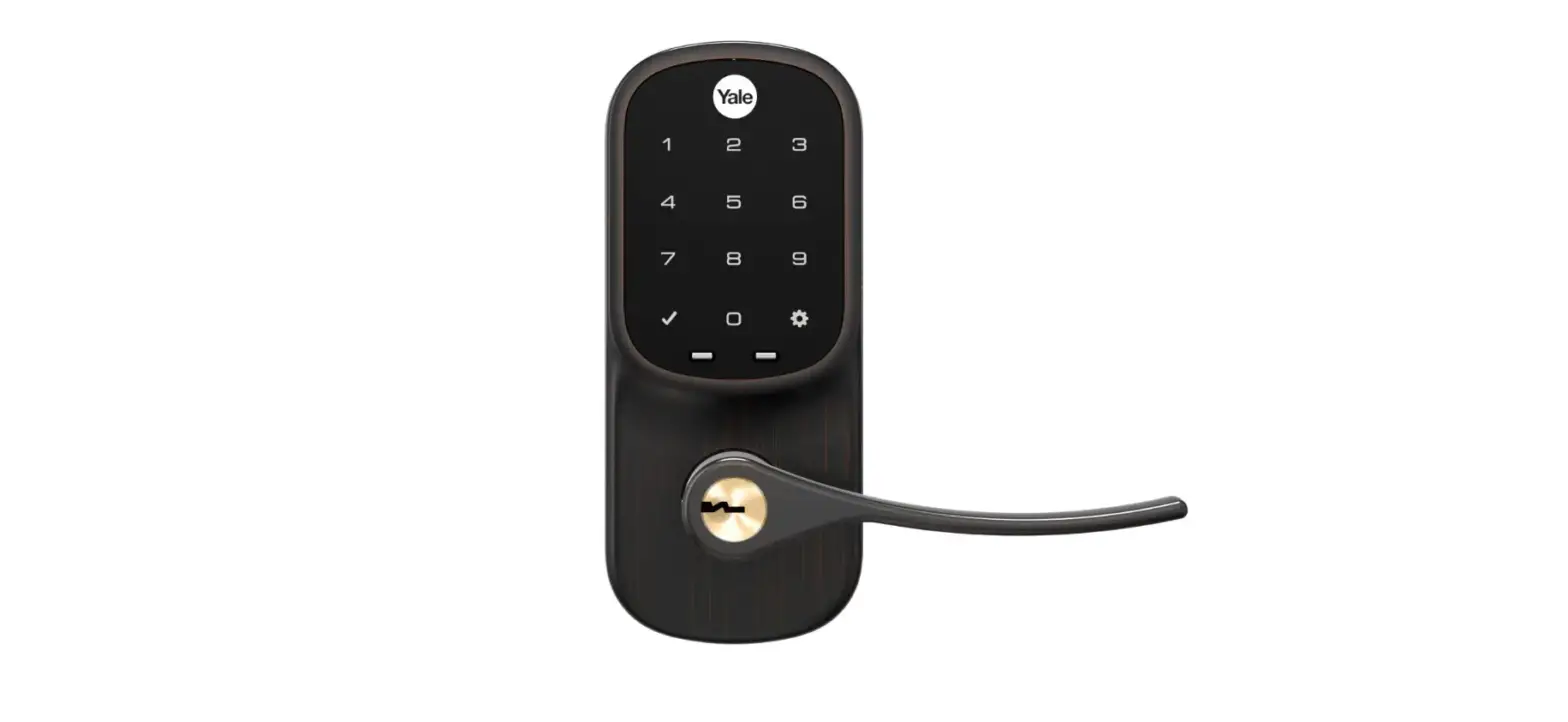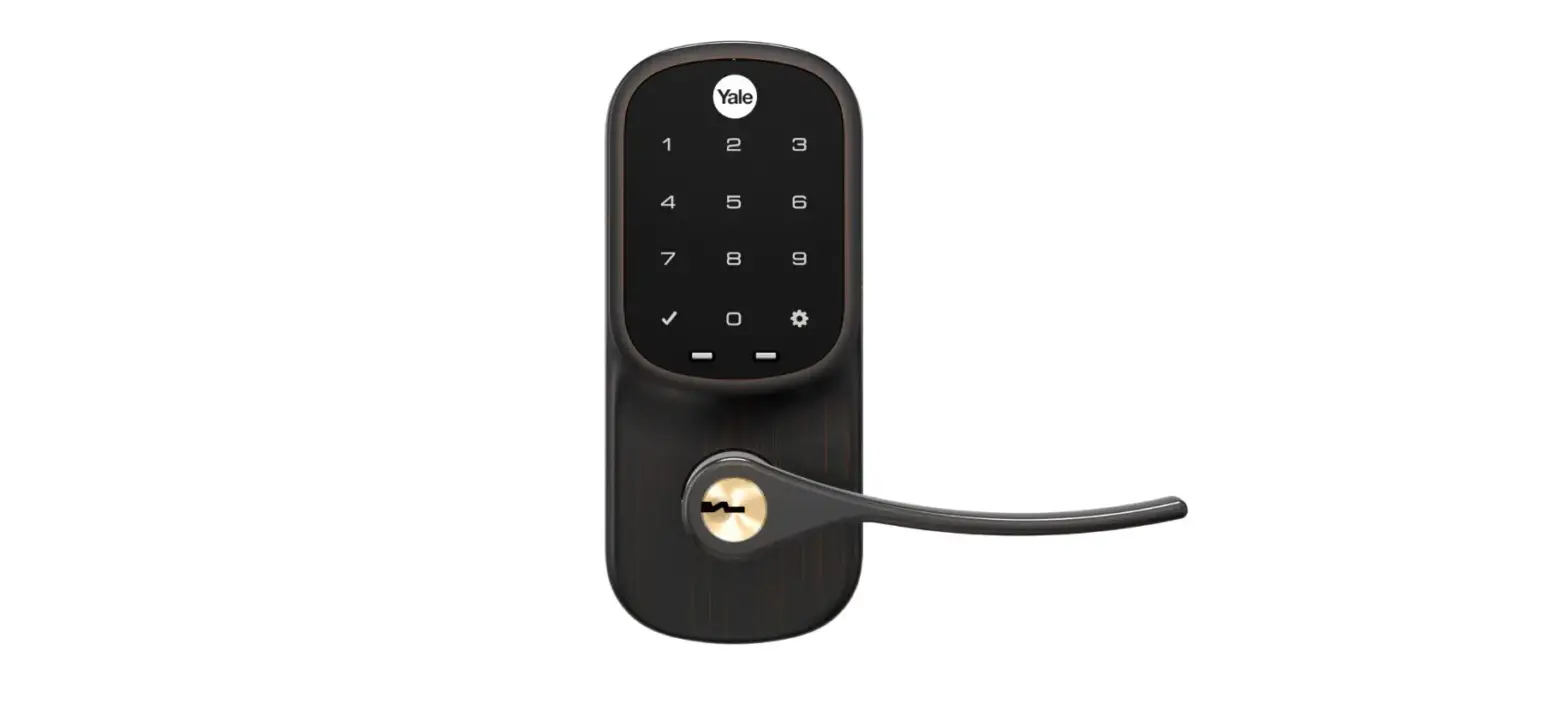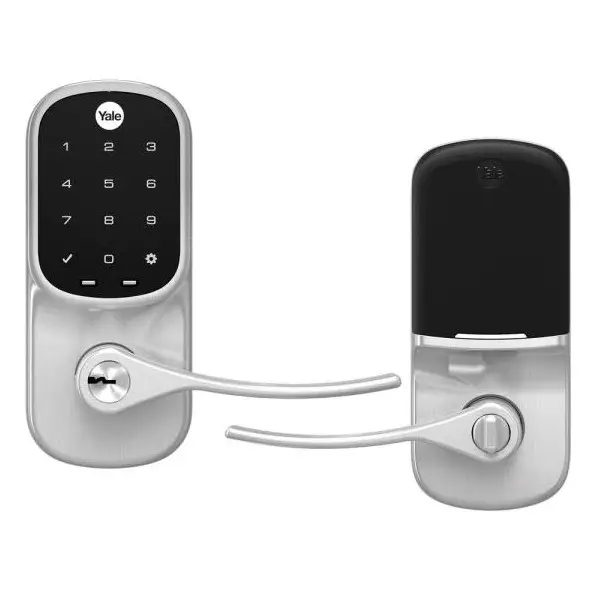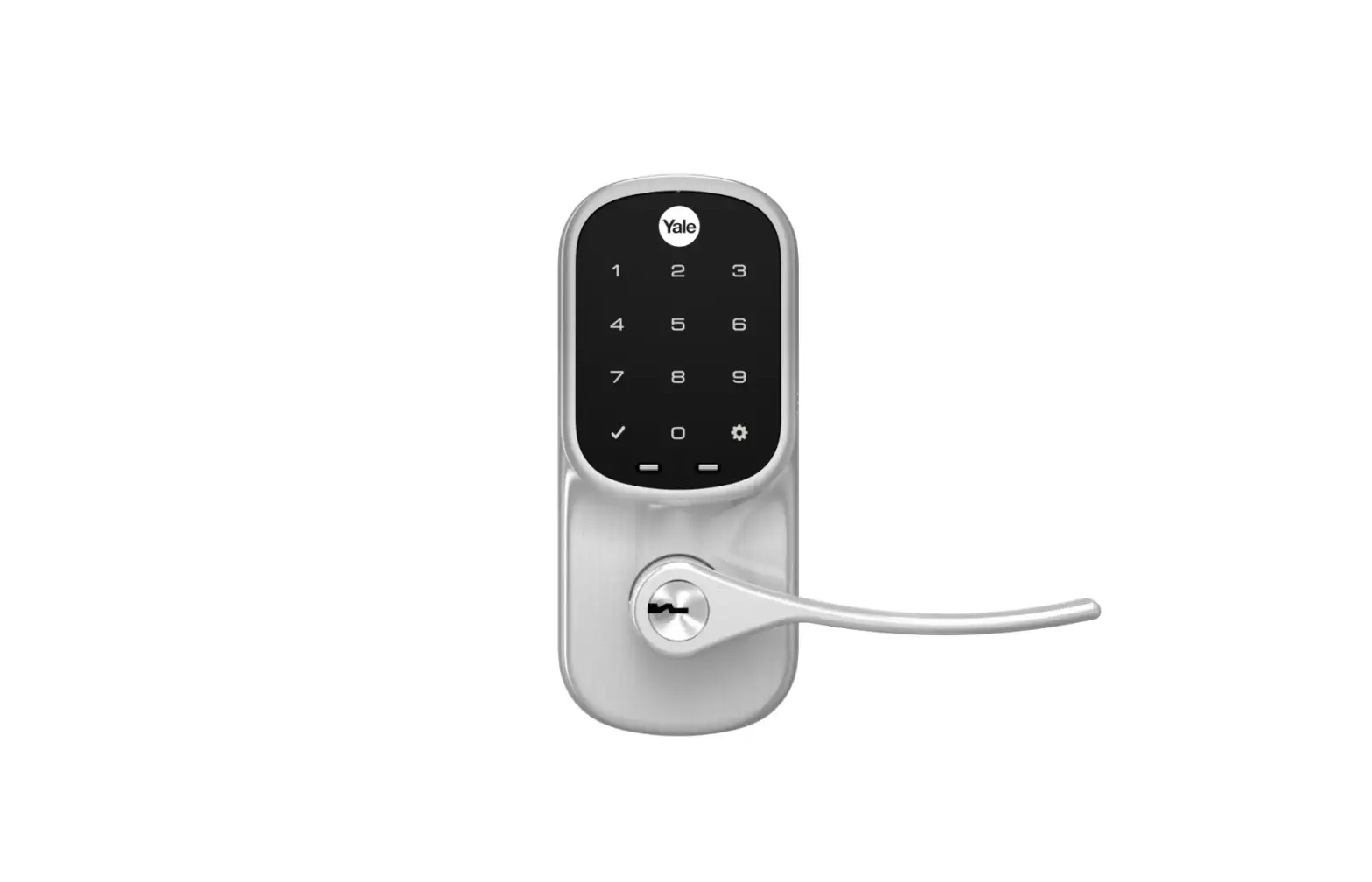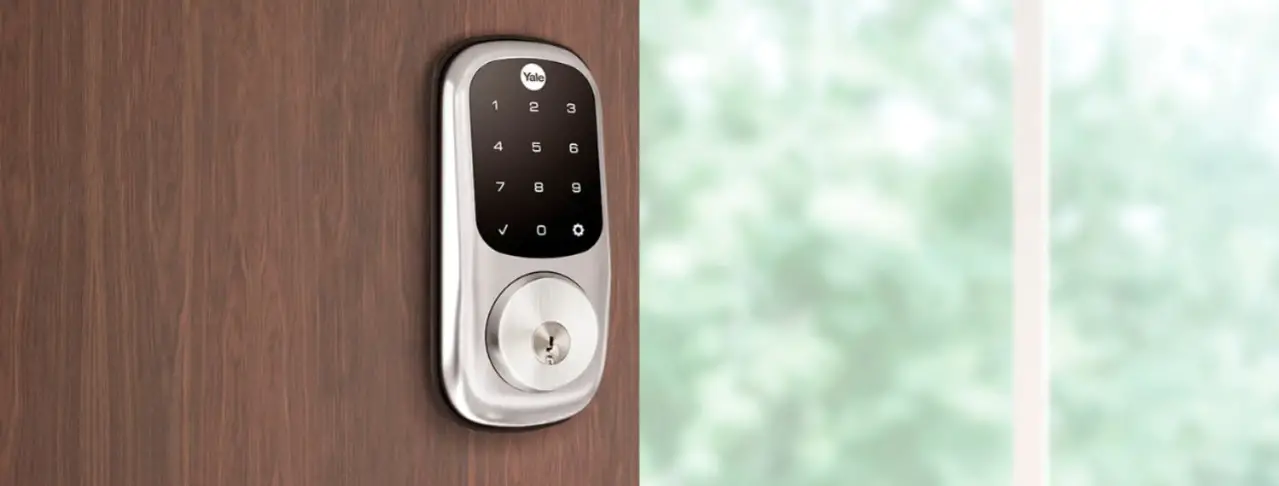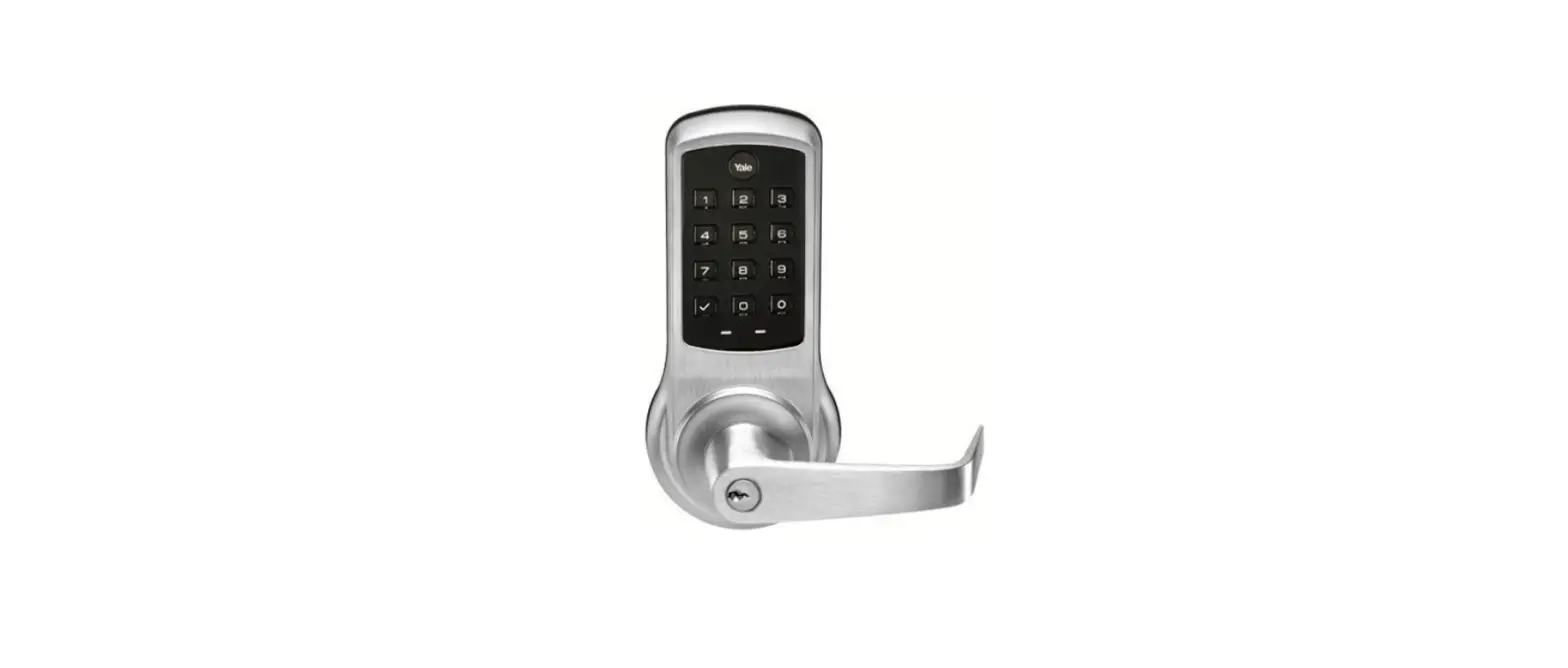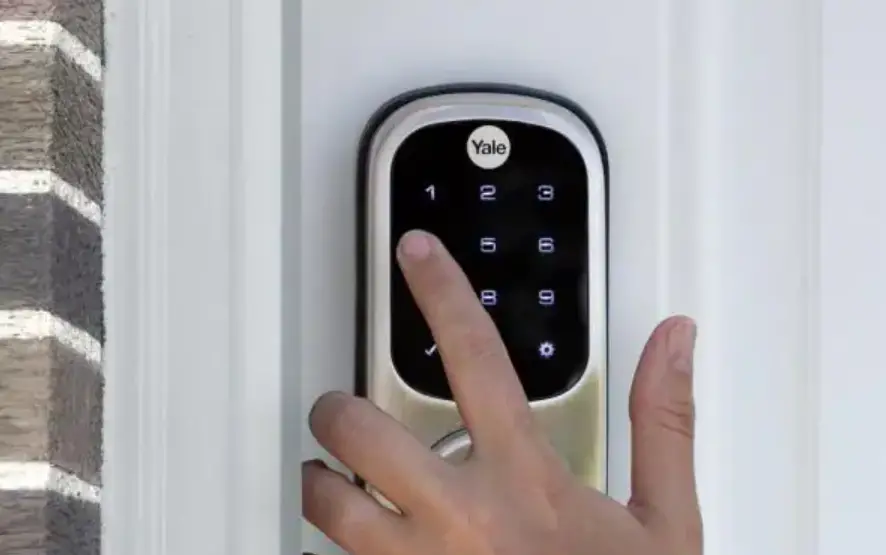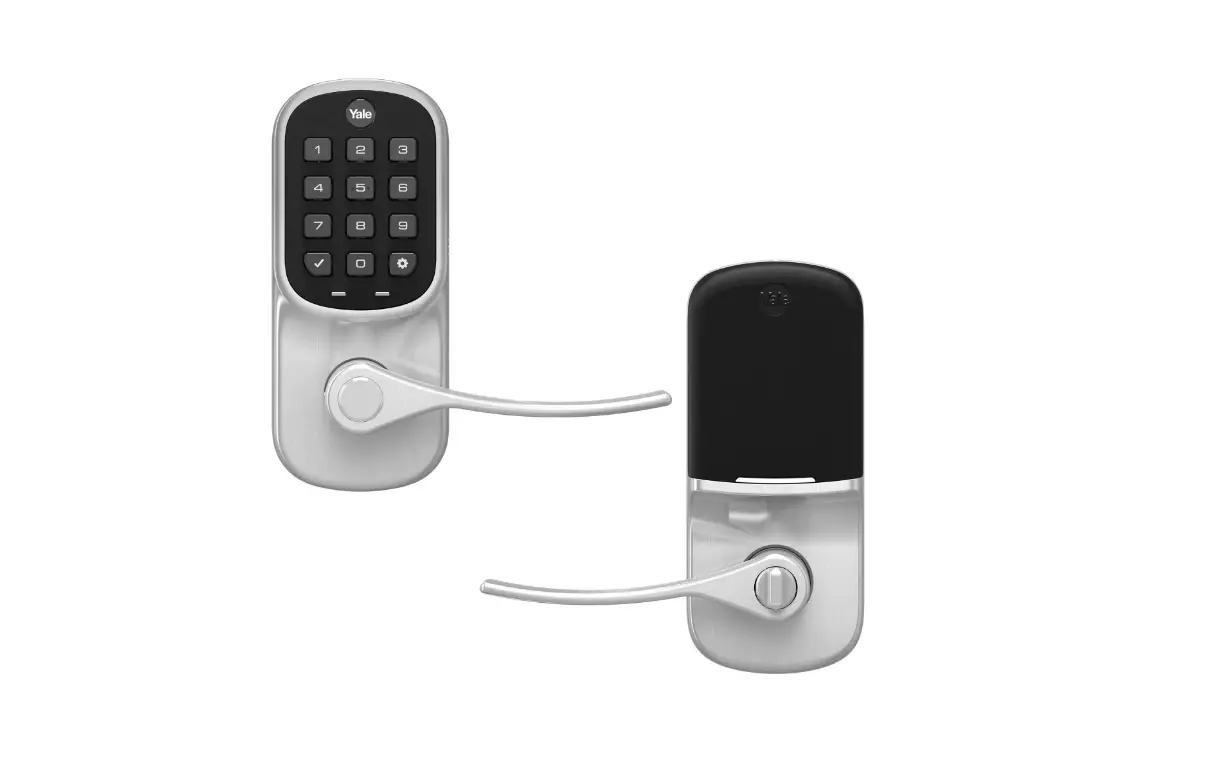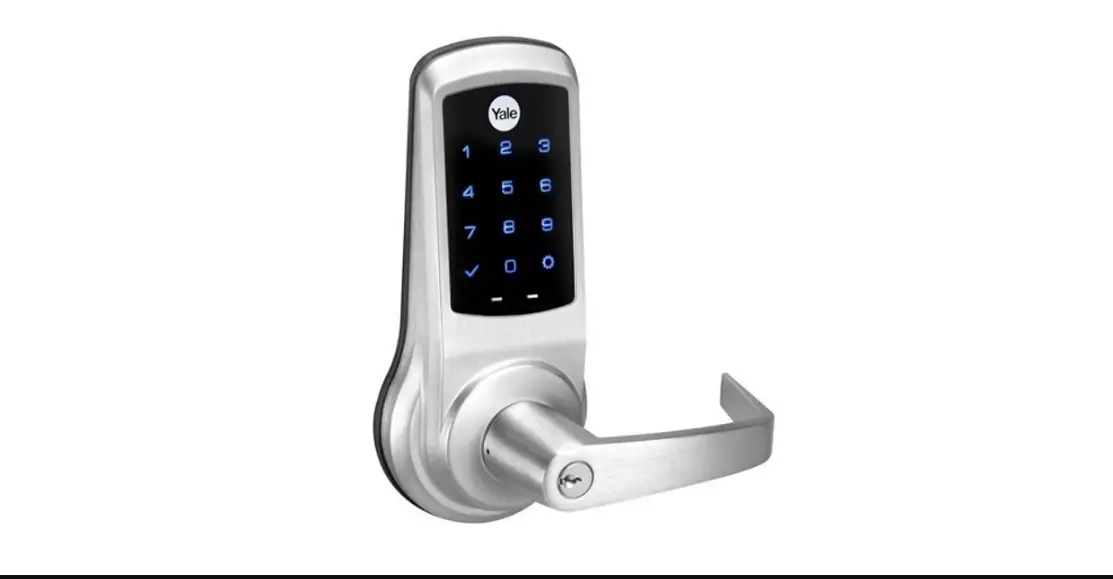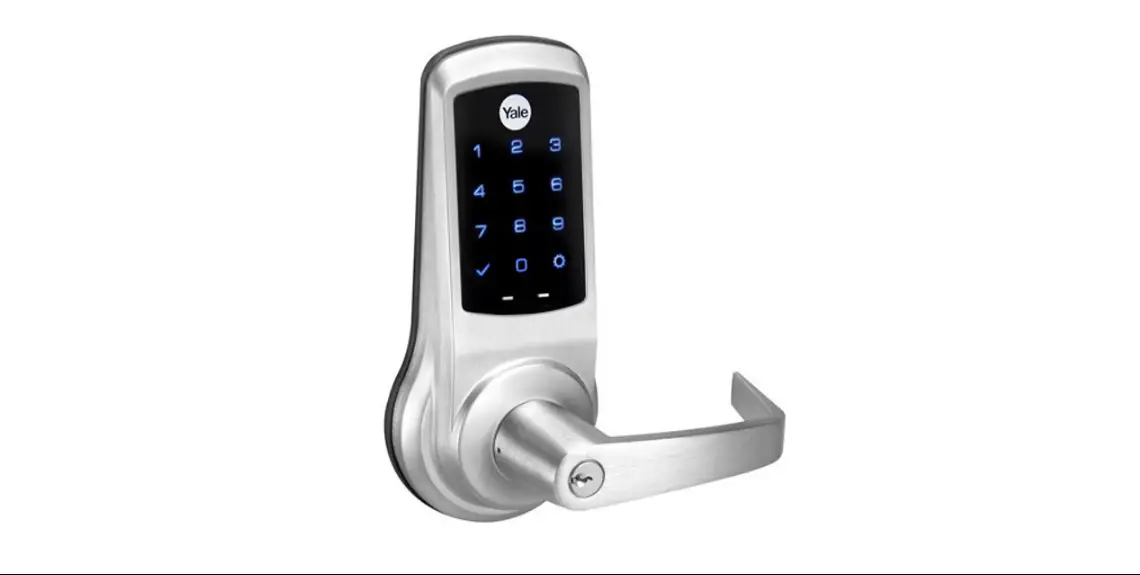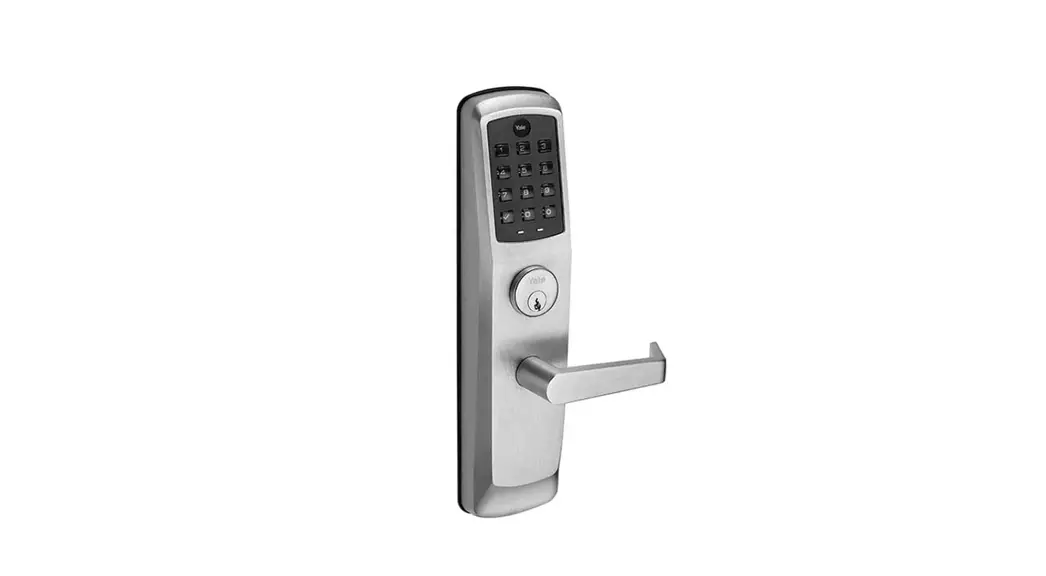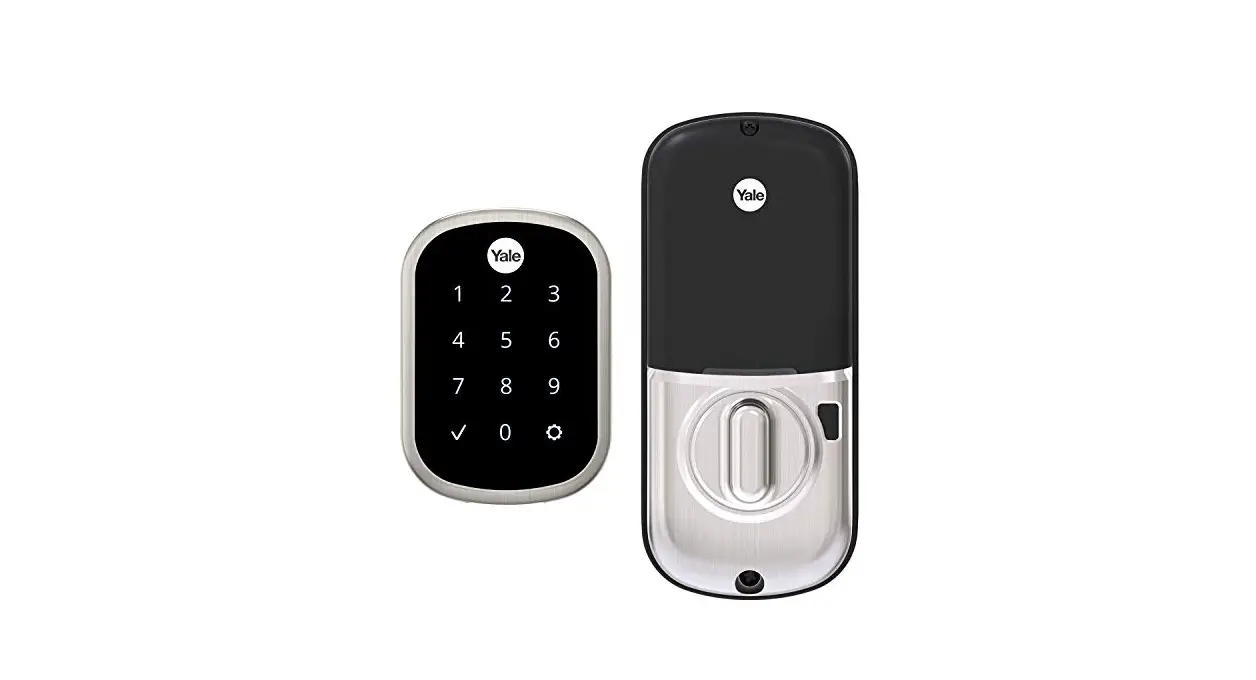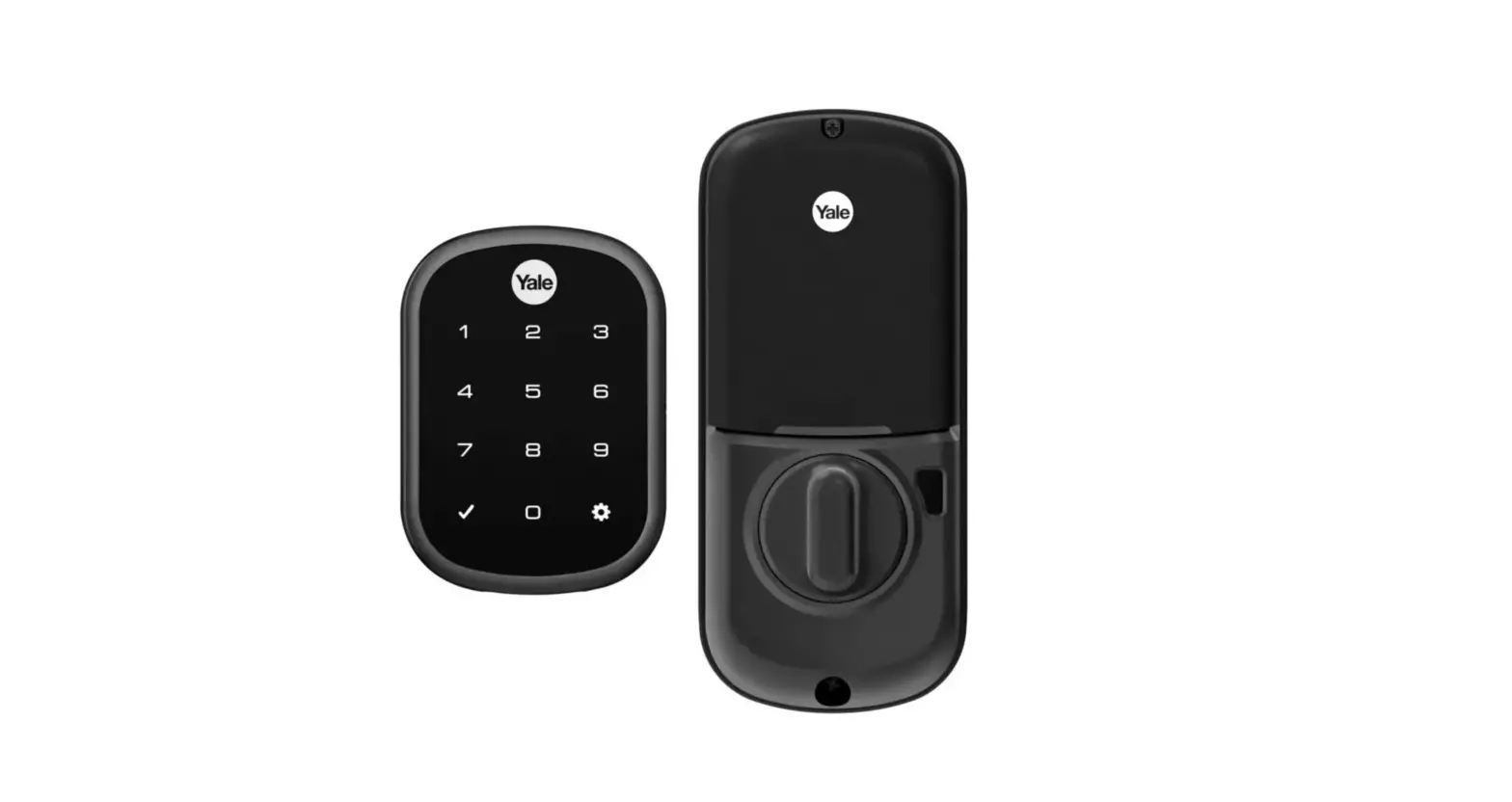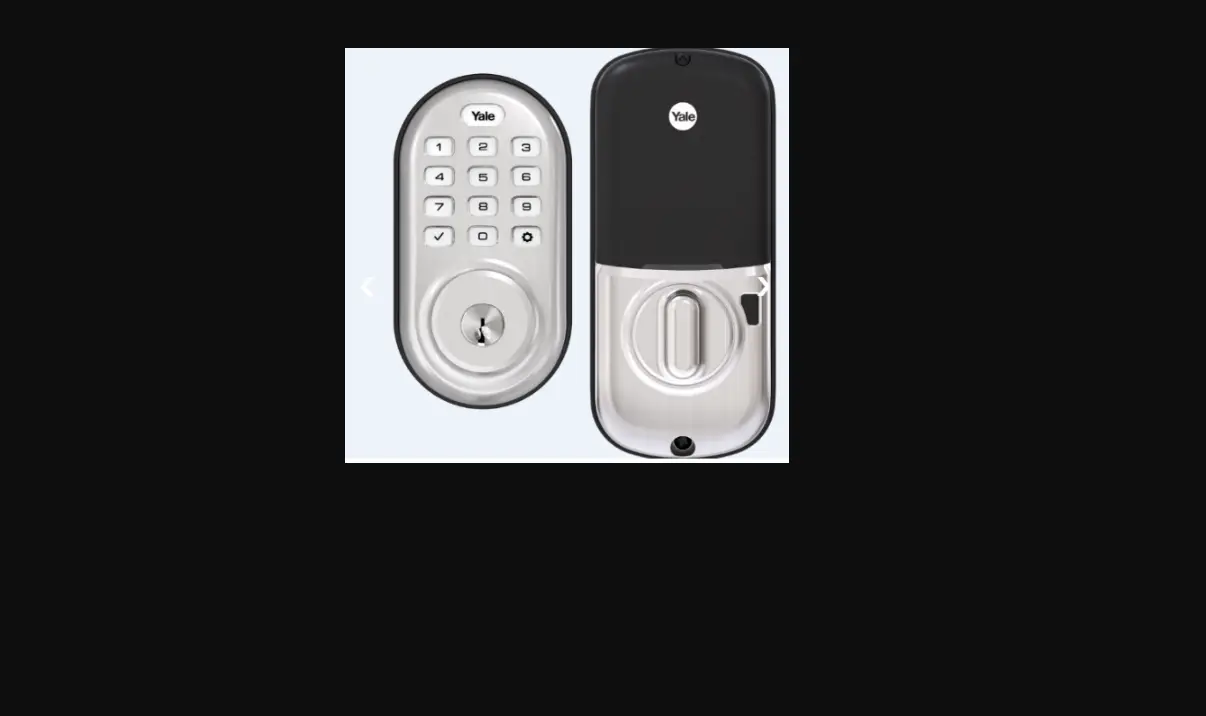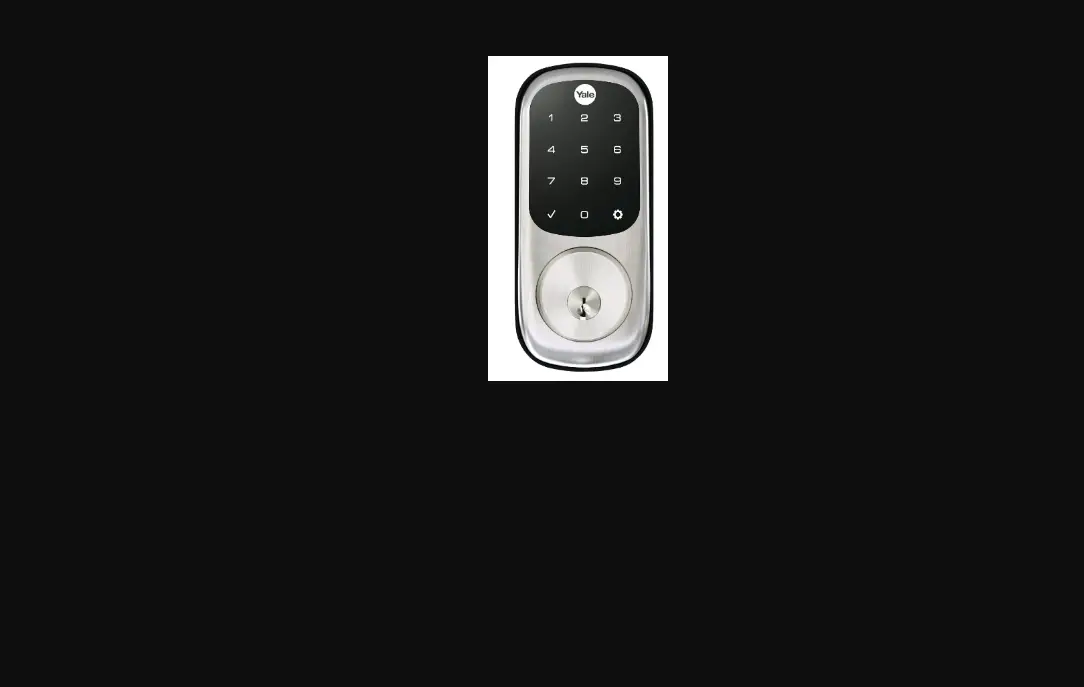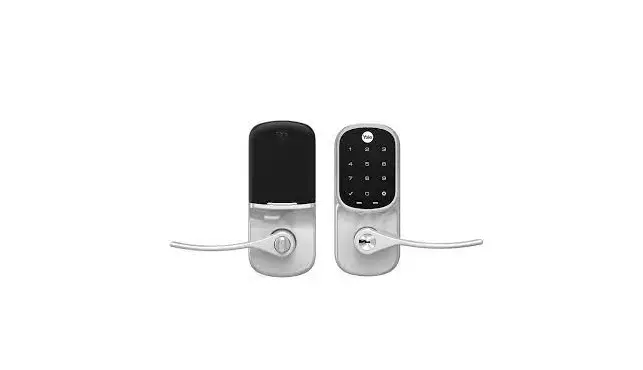
Yale YRL226 Assure Lever Touchscreen Instruction Manual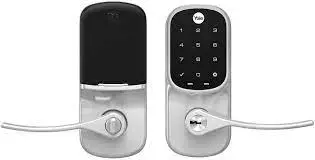
This manual will walk you through all the required steps to add your new Yale Assure Lever to your door.
- Remove existing door knob or lever
- Double check door measurements
- Install your Assure Lever
- Program your Assure Lever
- Add your Assure Lever to your smart home system or Yale Access app if purchased with Yale Smart Module or Yale Access Upgrade kit
Tools Needed
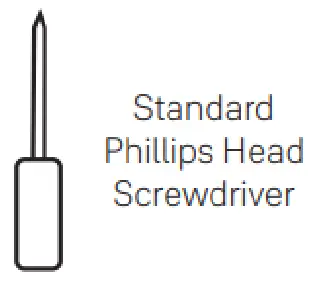
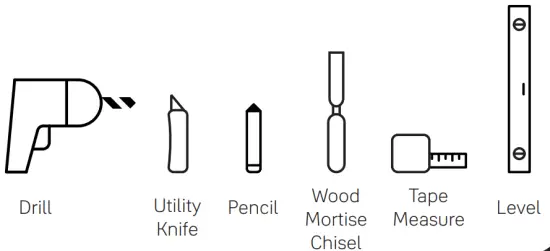
Tools Needed For New Doors Or Adjusting Existing Door
Before you begin
DOWNLOAD THE BILT APP


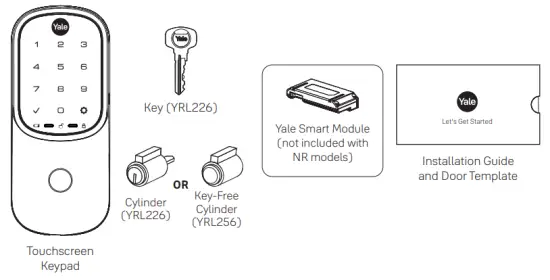
What’s In The Box
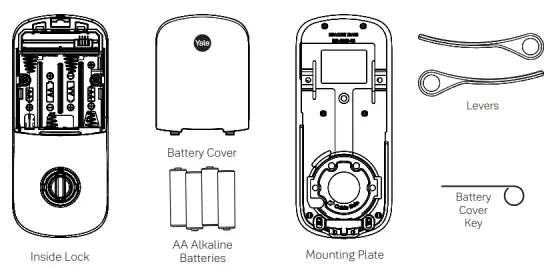
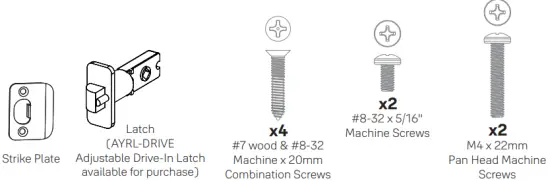
Mounting Hardware
Remove Existing Door Knob or Lever
Do not discard old lock hardware until Assure Lever has been successfully installed.
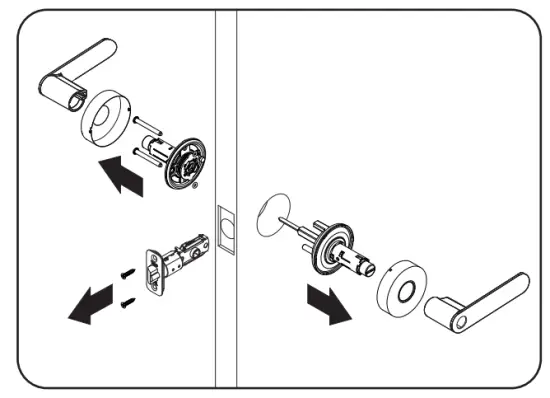
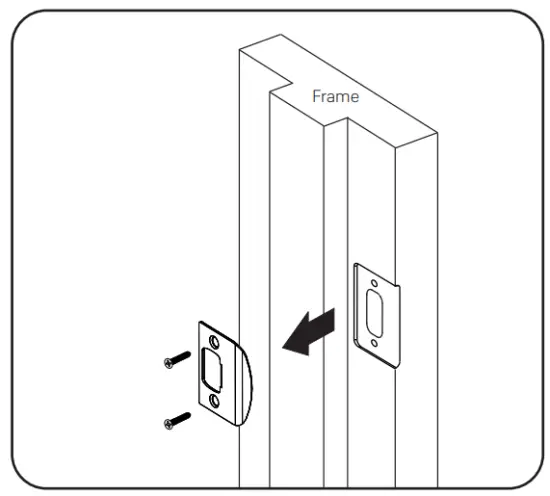
Check Door Measurements And Make Adjustments If Needed
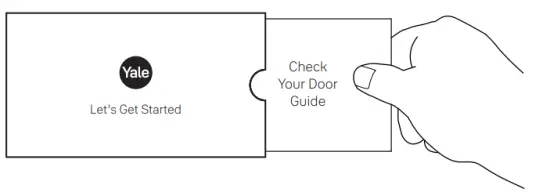
Door Checker
Use door checker from installation guide envelope to verify your door measurements and make any needed adjustments.
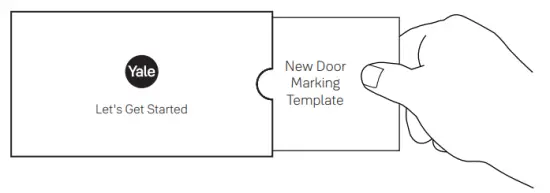
New Door Marking Template
With the door checker, use the template from installation guide envelope to prep a new door that has not been predrilled for hardware.
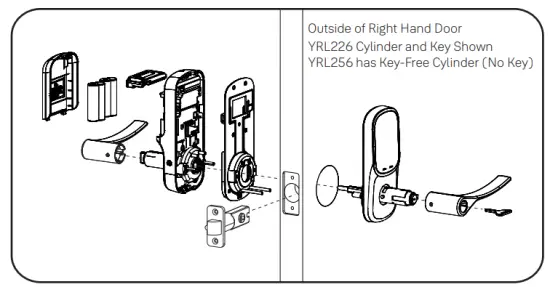
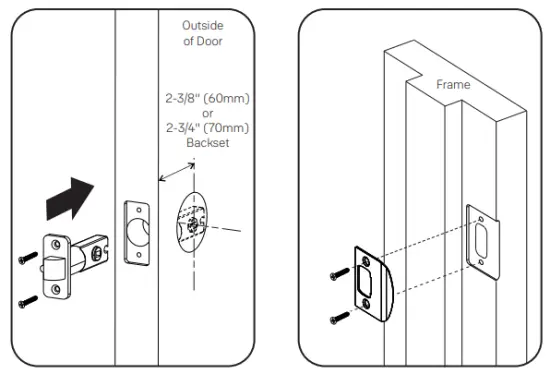
Install Latch Strike Plate and Right Hand Installation Shown
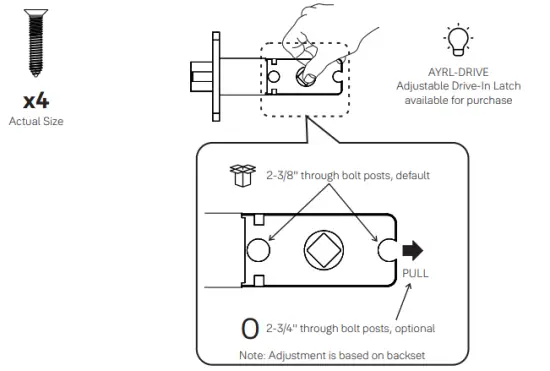
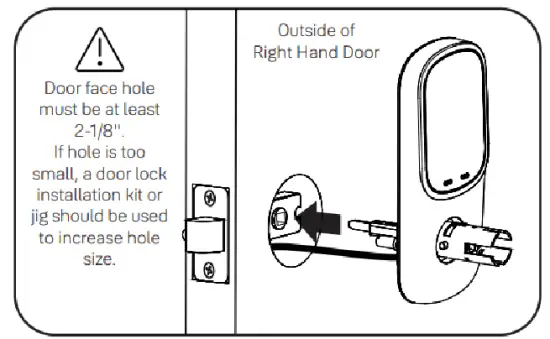
Install Touchscreen Keypad Right Hand Installation Shown
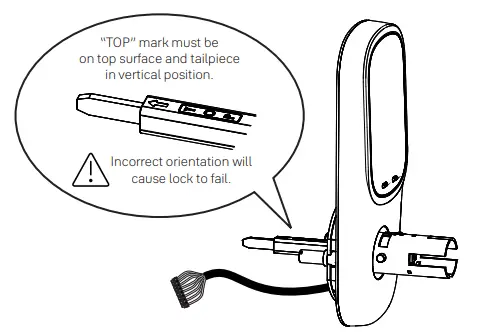
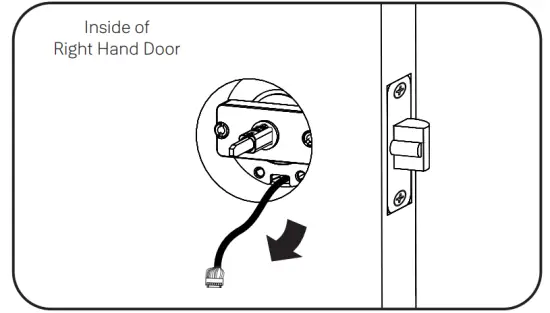
Install Inside Mounting Plate Right Hand Installation Shown
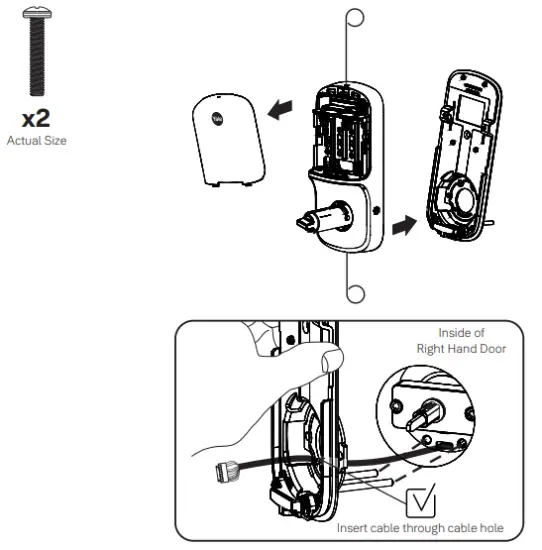
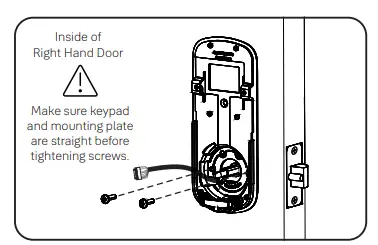
Attach Cable Right Hand Installation Shown
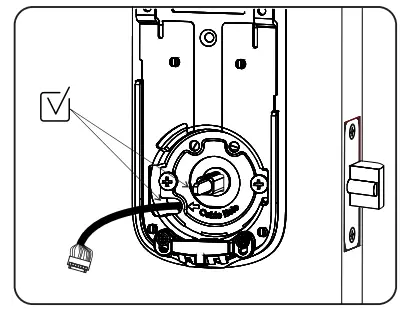
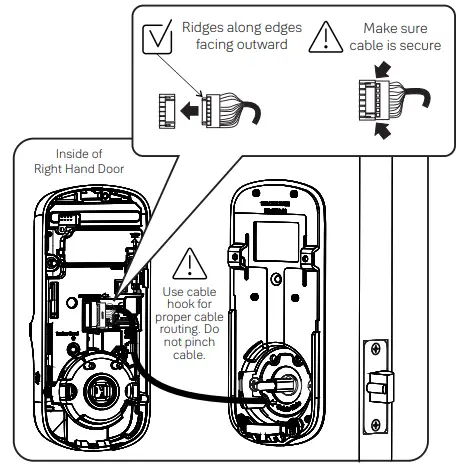
Install Inside Lock Right Hand Installation Shown
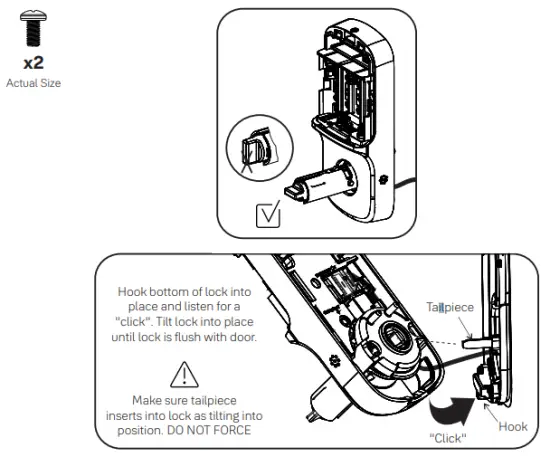
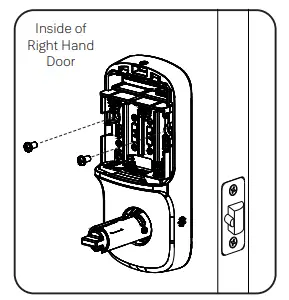
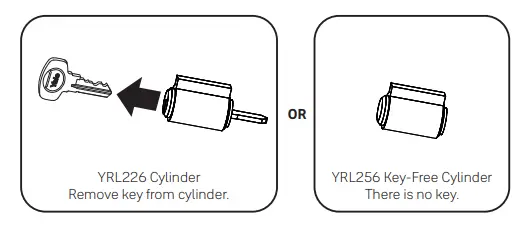
Install Cylinder (YRL226) or Key-Free Cylinder (YRL256)
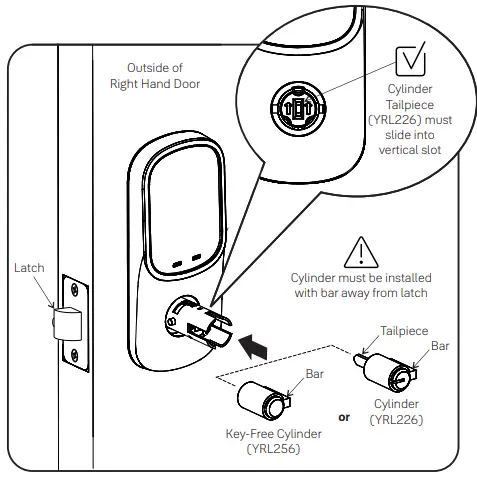
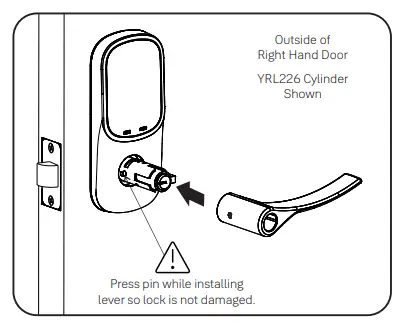
Install Outside Lever
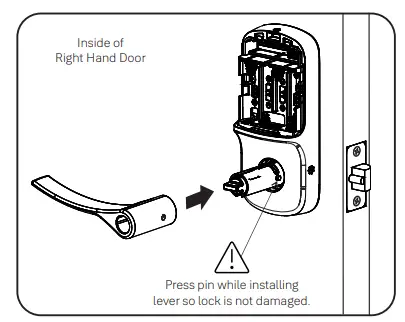
Install Inside Lever
Test Thumbturn Operation with Door Open
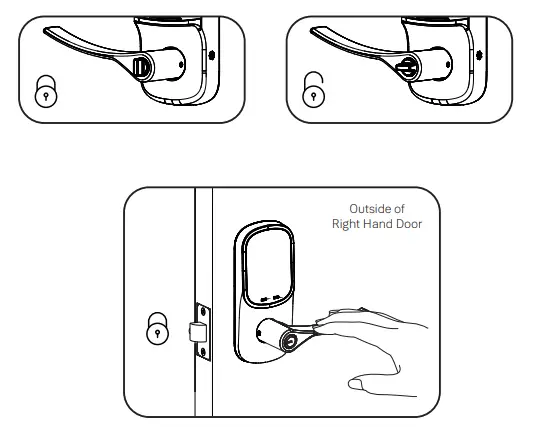
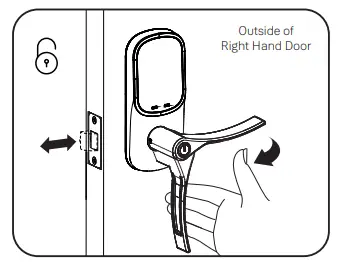
Test thumbturn and both levers in locked and unlocked positions. If operation fails, check installation beginning with Step 4 and refer to Hardware Troubleshooting.
Test Key Operation with Door Open (YRL226)
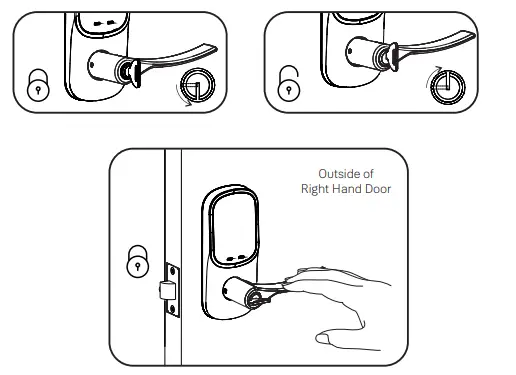
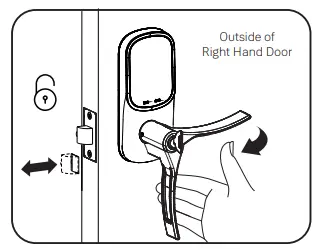
If key operation test fails, check installation beginning with Step 8.
Install Yale Smart Module Not included with NR models
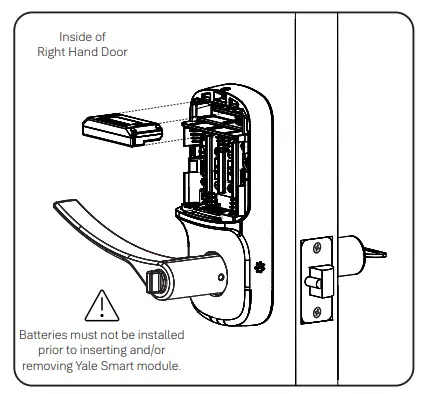
NOTE: If a Smart module was included with your lock, it is in a separate box with additional module installation instructions.
For more information about Yale Smart modules and smart home features visit: US.YaleHome.com/Smart
Install Batteries and Cover
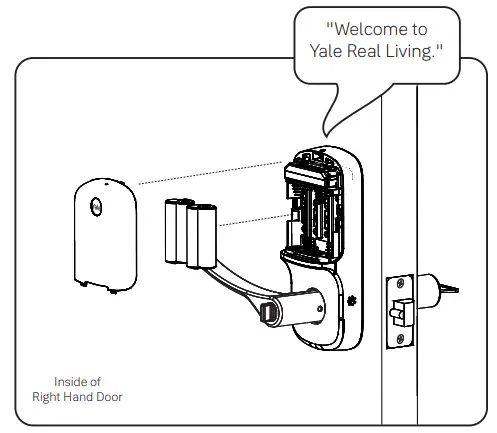
Congratulations, you’ve installed the Yale Assure Lever® Touchscreen (YRL226) or Key-Free Touchscreen (YRL256)! Using Your Lock instructions will help you customize your lock.
Test Touchscreen Operation with Door Open
A Master Entry Code must be created upon installation or after resetting the lock to factory default. Programming and use of lock is not possible until this step has been successfully completed. See Using Your Lock instructions.
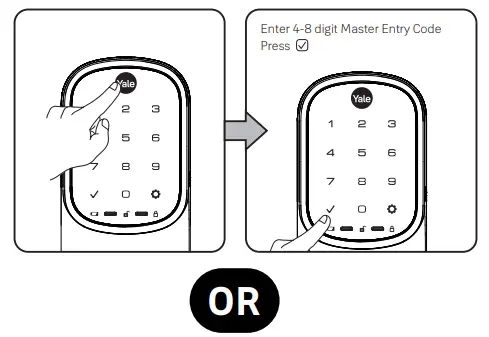
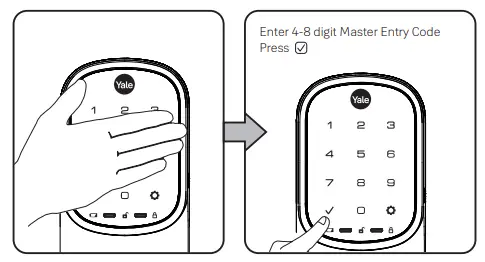
If touchscreen operation test fails, check installation beginning with Step 3
Resetting Lock to Factory Defaults
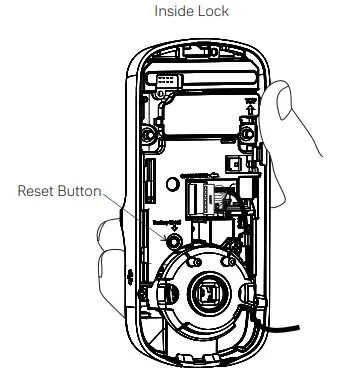
When resetting the lock, all Entry Codes, including the Master Entry Code*, are deleted. All programming features are reset to original default settings. See “Setting Definitions”.
- Remove the battery cover and batteries.
- Remove the inside lock to access the reset button.
- The reset button (see image above) is marked.
- Re-insert 3 batteries and hold the reset button for 3 seconds.
- While still holding the reset button, insert the 4th battery, and hold the reset button for an additional 3 seconds.
- Release the reset button.
- Re-install the inside lock onto the door.
*Upon reset, Master Entry Code creation is the only option available and must be performed prior to any other programming of the lock.
Hardware Troubleshooting
Cycle lock in both the locked and unlocked positions. If problems are found:
| Tailpiece and spindle will not mate and fit into the inside lock a. Make sure that your door is between 1-3/8″ and 1-3/4″ thick b. Make sure that the square shaped spindle has “Top” writing and arrow facing upwards c. Place the tailpiece in the vertical position d. Verify that the thumbturn is in the horizontal (unlocked) position |
| Thumbturn does not rotate electronically or physically a. Verify that inside of the lock is properly seated on the mounting bracket |
| I’m getting an alert when I try to lock or unlock the door electronically a. Do not turn or depress the lever during operation, this could cause a jam alarm |
| My lock is not making any sound when I touch numbers or icons on the keypad a. Use the programming tree in this manual to verify that Audio is enabled |
| When rotating the thumbturn I hear noise a. A little bit of noise is normal when operating the thumbturn |
| The locking pins will not retract when I try to install the levers a. If the thumbturn is in vertical (locked) position, rotate the thumbturn to the horizontal (unlocked) position and it will retract |
Replacing Cylinder (YRL226)
- To Remove Cylinder:
See installation Steps 7 and 8. Reverse appropriate actions to remove the outside lever handle and cylinder. - To Install New Cylinder:
A. Follow appropriate actions of installation Steps 7 and 8 to replace the
cylinder and outside lever handle.
B. Test operation of new cylinder and key by following “Testing Operation”.
Setting Definitions
| Settings | Default Setting | Definition |
| Master Entry Code | Creation required* | The Master Entry Code is used for programming and for feature settings. It must be created prior to programming the lock. The Master Code will also operate (unlock/lock) the lock. |
| All Code Lockout | Disabled | This feature is enabled by the Master Entry Code. When enabled, it restricts all Entry Code access except Master. When attempting to enter a code while the lock is in All Code Lockout mode, the RED locked padlock will appear on the screen. |
| Auto Re-lock | Disabled | After a successful code entry or manual unlock with the key (YRL226), the lock will automatically re-lock after each unlock in an effort to keep your home secure. This feature is optional, and can be turned off. In the ON mode, the lock will automatically re-lock after thirty (30) seconds. |
| Inside Indicator Light | Disabled (Off) | Located on the interior lock. Shows active status (Locked) of lock and can be enabled or disabled in the Advanced Lock Settings (Main Menu selection #3). |
| Language | English | Choosing English (1), Spanish (2) or French (3) becomes the (default) setting for the lock voice prompts. |
| One Touch Locking | Enabled | When the latch is retracted, activating the touchscreen will extend the latch (during Auto Re-lock duration or when Auto Re-lock is disabled). When One-Touch Re-lock is not in use (disabled), any valid Entry Code will re-lock the lock. |
| Shutdown Time | 60 Seconds | The lock will shutdown (flashing RED) for sixty (60) seconds and not allow operation after the Wrong Code Entry limit (5 attempts) has been met. |
| Volume | Enabled (Low) | The volume setting for Entry Code verification is set to Low (2) by default; otherwise it can be set to High (1) or Silent (3) for quiet areas. |
| Wrong Code Entry Limit | 5 Times | After five (5) unsuccessful attempts at entering a valid Entry Code, the lock will shut down and not allow operation for sixty (60) seconds. |
*The Master Entry Code must be created prior to any other programming of the lock.
Using Your Lock
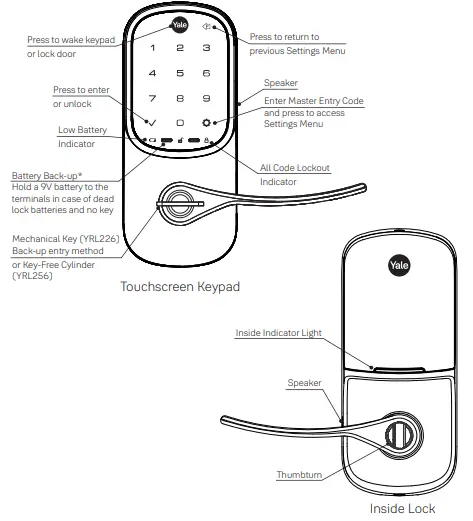
NOTE TO INSTALLER AND CONSUMER
While Yale® has included several features to prevent lockout (9-Volt battery jumper, low battery warnings), it is still possible for a lockout situation to occur. Because the YRL256 does not have a key, Yale® recommends using YRL256 in an environment where there are additional entry points into dwelling.
Creating Master Entry Code
The Master Entry Code is used to change lock settings. A security best practice is to set your Master Entry Code with 6 or more digits and create a separate code that is used daily to lock and unlock the door.
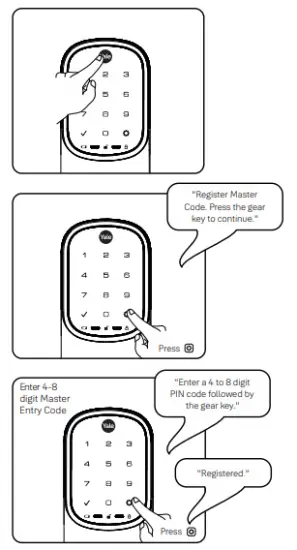
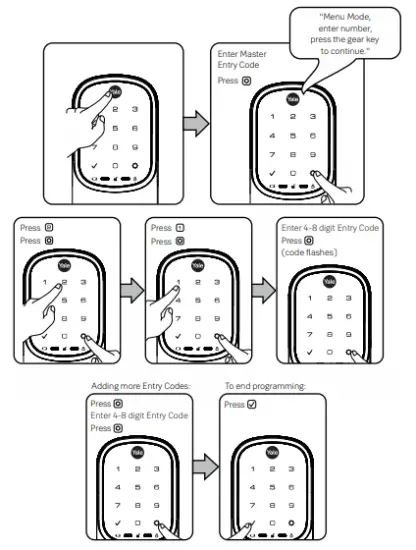
Creating Entry Codes
Master Entry Code must be created first.
*Max Entry Codes = 250 with Smart Module; 25 without.
Deleting Entry Codes
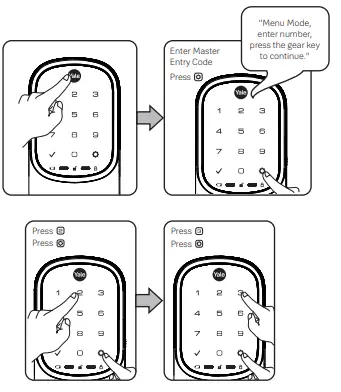
Deleting one Entry Code: To delete one Entry Code, you must enter the Entry Code you wish to delete.
To delete all Entry Codes (Does not delete Master Entry Code):
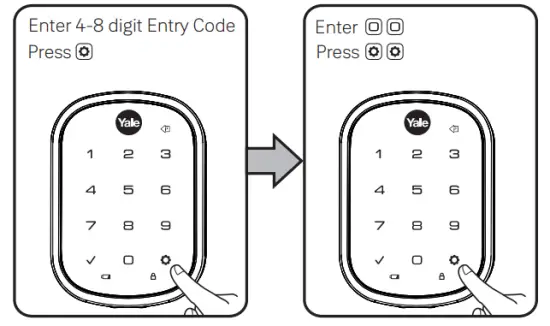
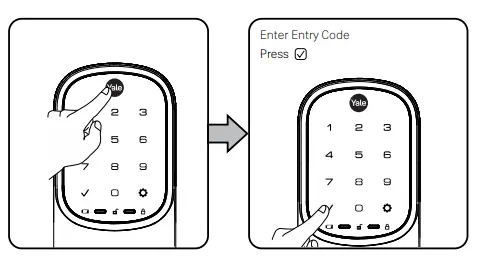
Unlocking Door with Entry Codes
Code Chart
Duplicate if necessary
| Entry Code Management | Entry Code |
| Master: Homeowner | |
| User Name: Babysitter | |
| / | / |
| / | / |
- Press Yale logo to wake up lock
 .
. - Enter Master Entry Code* followed by
 icon. Lock Response: “Welcome to the Settings Menu. Press each number to hear available settings and then press the settings icon to enter.”
 - Enter digit corresponding to the function to be performed followed by the icon . Follow the voice commands.
 .
.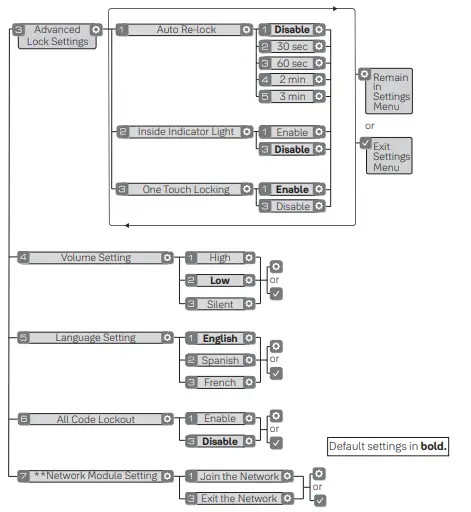
Here is an example of how to set Auto Lock to 30 seconds:
Master Entry Code  ,3,1 ,2,
*The Master Entry Code must be created prior to any other programming of the lock.
**Network Module Setting function appears only with Yale Smart module installed.
Troubleshooting
| Symptom | Suggested Action |
| Lock does not respond – door is open and accessible. |
|
| Lock does not respond –door is locked and inaccessible. |
|
| Lock is on for a while then shows no reaction. Lights dim. |
|
| Lock chimes indicating code acceptance, but door will not open. |
|
| Lock operates to allow access, but will not automatically re-lock. |
|
| Entry Codes will not register. |
|
| Upon entering an Entry Code and pressing key, the lock displays “invalid code” error or lock times out without responding. |
|
| Upon entering an Entry Code and pressing the key, red padlock icon appears and there are different tones. |
|
| Lock operates, but makes no sound. |
|
| Lock responds “Low Battery” |
|
| Upon entering an Entry Code and pressing the key, lock responds “Wrong number of digits”. |
|
| Lock shows an X on keypad after entering a code. |
|
| Deadbolt does not extend when locking the door with keypad. |
|
When batteries are replaced, Smart Module locks have a real time clock that will be set through the User Interface. It is recommended to verify correct date and time; particularly those locks operating under Daylight Savings Time.
FCC
Class B Equipment
This equipment has been tested and found to comply with the limits for a Class B digital device, pursuant to Part 15 of the FCC Rules. These limits are designed to provide reasonable protection against harmful interference in a residential installation. This equipment generates, uses, and can radiate radio frequency energy and, if not installed and used in accordance with the instructions, may cause harmful interference to radio communications. However, there is no guarantee that interference will not occur in a particular installation. If this equipment does cause harmful Interference to radio or television reception, which can be determined by turning the equipment off and on, the user is encouraged to try to correct the interference by one or more of the following measures:
- Reorient or relocate the receiving antenna.
- Increase the separation between the equipment and receiver.
- Connect the equipment into an outlet on a circuit different from that to which the receiver is connected.
- Consult the dealer or an experienced radio/TV technician for help.
Warning: Changes or modifications to this device, not expressly approved by Yale Home could void the user’s authority to operate the equipment.
Industry Canada:
This Class A digital apparatus meets all requirements of the Canadian Interference Causing Equipment Regulations.
Yale® Z-Wave® Plus Smart Module Installation Guide
Please use this procedure only when network primary controller is missing or otherwise inoperable.
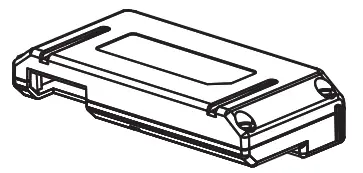
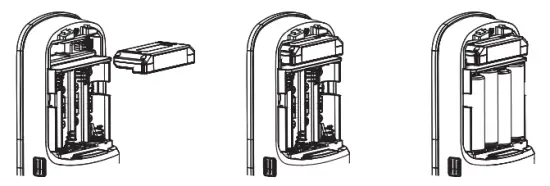
Adding a Yale Z-Wave Plus Smart Module to your Assure Lock & Z-Wave System
- Install the Yale Smart Module into the slot above the battery compartment
IMPORTANT: The batteries must be removed before removing the Yale Smart Module:- Remove battery cover
- Remove batteries
- Insert or remove Yale Smart Module
- Reinstall batteries
- Reinstall battery cover

- Open the Z-Wave system’s smart home or alarm app on your smartphone or tablet
- Follow the in-app instructions for adding a new device
- On your lock keypad, enter your master entry code followed by the icon
- Press the 7 key followed by the icon
- Press the 1 key followed by the icon
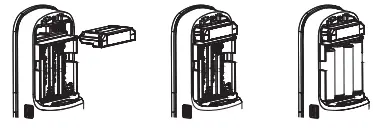
Removing a Yale Z-Wave Plus Smart Module from your Assure Lock & Z-Wave System
- On your lock keypad, enter your master entry code followed by the icon
- Press the 7 key followed by the icon
- Press the 3 key followed by the icon
- Open the Z-Wave system’s smart home or alarm app and follow the instructions for removing a device
- Remove the Yale Smart Module from the slot above the battery compartment

IMPORTANT: The batteries must be removed before removing the Yale Smart Module:- Remove battery cover
- Remove batteries
- Insert or remove Yale Smart Module
- Reinstall batteries
- Reinstall battery cover
- If you’re adding a new Yale Smart Module, follow the instructions included with it
WARNING: Changes or modifications to this device, not expressly approved by Yale Home could void the user’s authority to operate the equipment.
This device is a security enabled Z-Wave Plus product that is able to use encrypted Z-Wave Plus messages to communicate to other security enabled Z-Wave Plus products. This device must be used in conjunction with a Security Enabled Z-Wave Controller in order to fully utilize all implemented functions. This product can be operated in any Z-Wave network with other Z-Wave certified devices from other manufacturers. All non-battery operated nodes within the network will act as repeaters regardless of vendor to increase reliability of the network.
FCC
Contain FCC ID: U4A-YRHCPZW0FM Model: YRMZW2-US This equipment has been tested and found to comply with the limits for a Class B digital device, pursuant to Part 15 of the FCC Rules. These limits are designed to provide reasonable protection against harmful interference in a residential installation. This equipment generates, uses, and can radiate radio frequency energy and, if not installed and used in accordance with the instructions, may cause harmful interference to radio communications. However, there is no guarantee that interference will not occur in a particular installation. If this equipment does cause harmful Interference to radio or television reception, which can be determined by turning the equipment off and on, the user is encouraged to try to correct the interference by one or more of the following measures:
- Reorient or relocate the receiving antenna.
- Increase the separation between the equipment and receiver.
- Connect the equipment into an outlet on a circuit different from that to which the receiver is connected.
- Consult the dealer or an experienced radio/TV technician for help.
THIS DEVICE COMPLIES WITH PART 15 OF THE FCC RULES. OPERATION IS SUBJECT TO THE FOLLOWING TWO CONDITIONS. (1) THIS DEVICE MAY NOT CAUSE HARMFUL INTERFERENCE, AND (2) THIS DEVICE MUST ACCEPT ANY INTERFERENCE RECEIVED, INCLUDING INTERFERENCE THAT MAY CAUSE UNDESIRED OPERATION.
Industry Canada:
Contain IC: 6982A-YRHCPZW0FM
Model: YRMZW2-US
Section 7.1.2 of RSS-GEN Under Industry Canada regulations, this radio transmitter may only operate using an antenna of a type and maximum (or lesser) gain approved for the transmitter by Industry Canada. To reduce potential radio interference to other users, the antenna type and its gain should be so chosen that the equivalent isotropically radiated power (e.i.r.p.) is not more than that necessary for successful communication.
Section 7.1.3 of RSS-GEN This Device complies with Industry Canada License-exempt RSS standard(s). Operation is subject to the following two conditions: 1) this device may not cause interference, and 2) this device must accept any interference, including interference that may cause undesired operation of the device.
This radio transmitter 6982A-YRHCPZW0FM has been approved by Industry Canada to operate with the antenna types listed below with the maximum permissible gain indicated. Antenna types not included in this list, having a gain greater than the maximum gain indicated for that type, are strictly prohibited for use with this device.
Yale Home
24/7 Product Support : 1-855-213-5841 • US.YaleHome.com