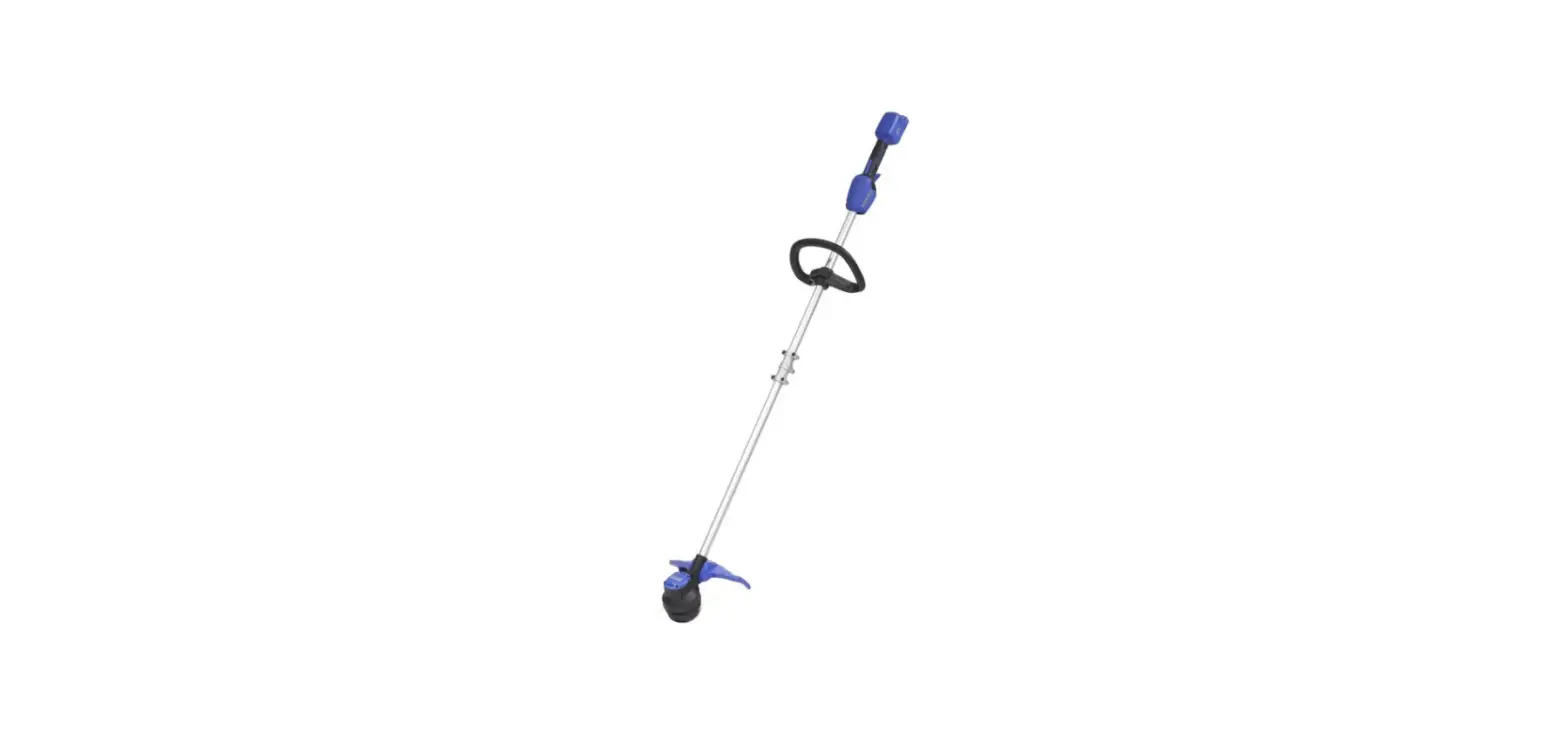
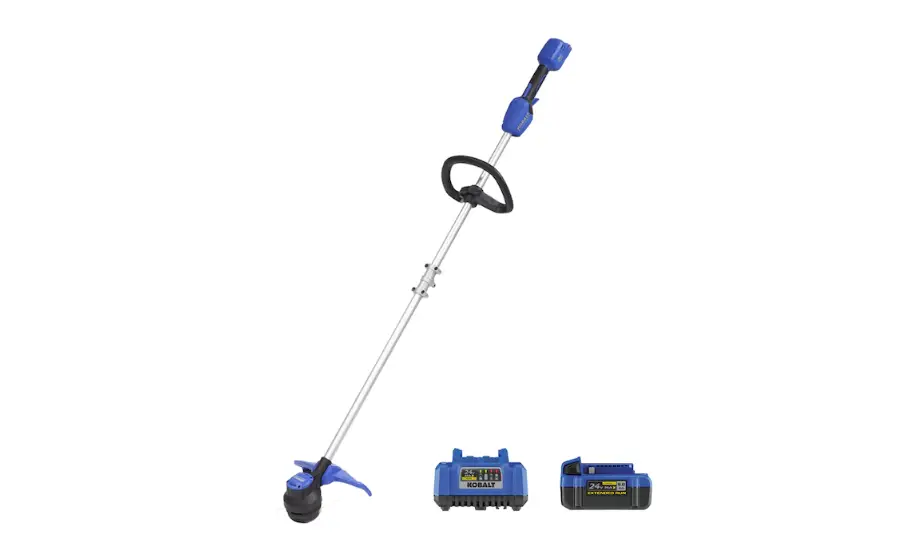
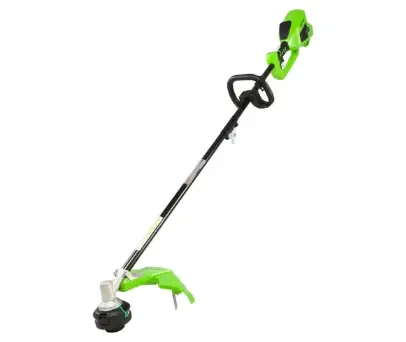
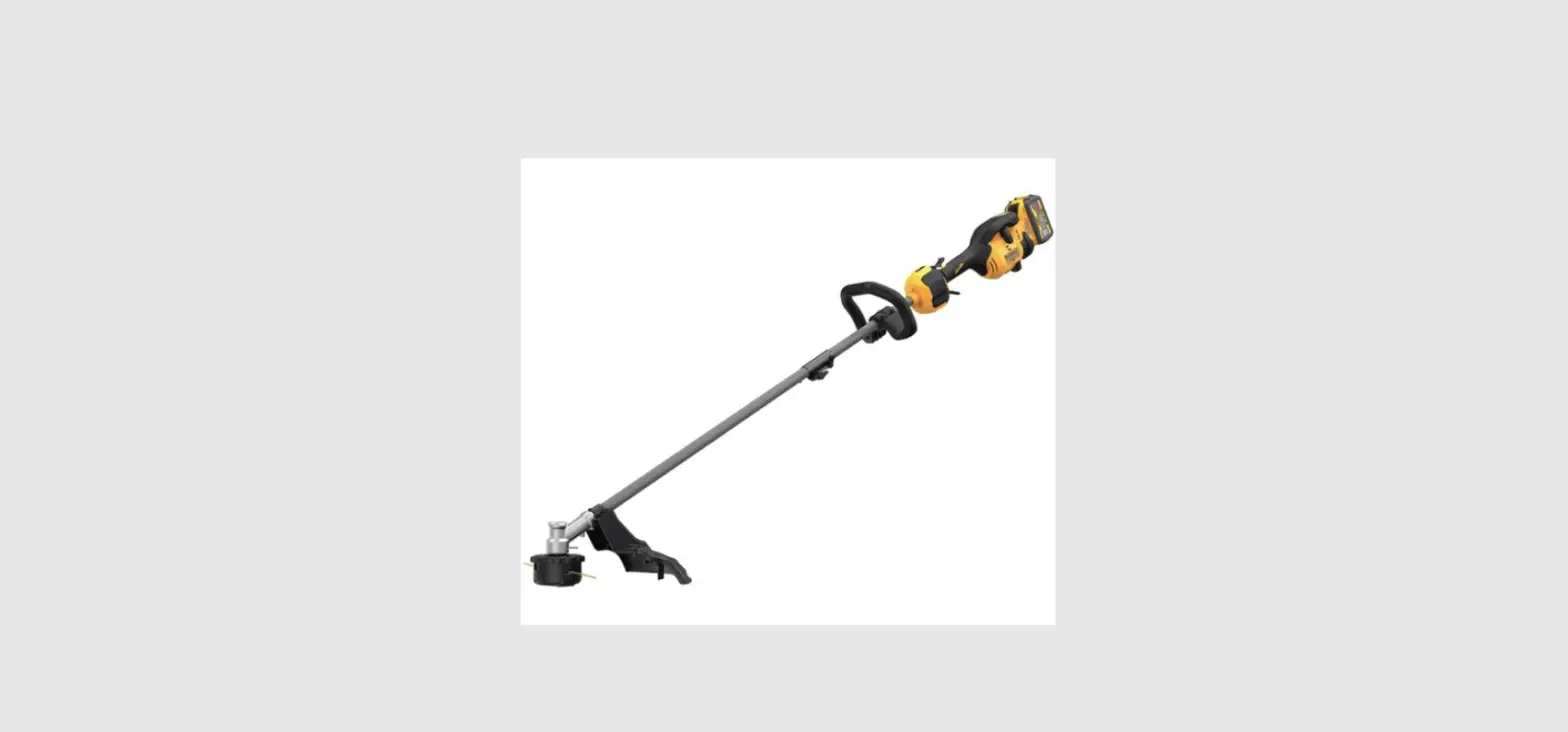
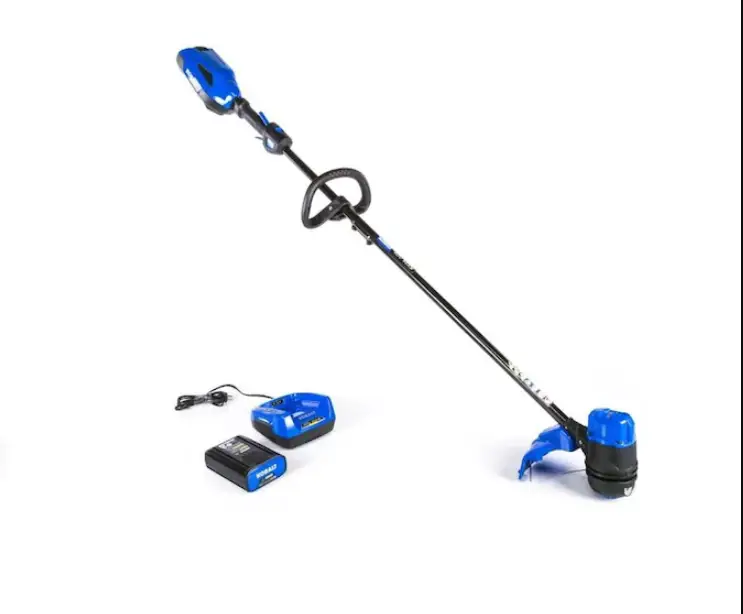
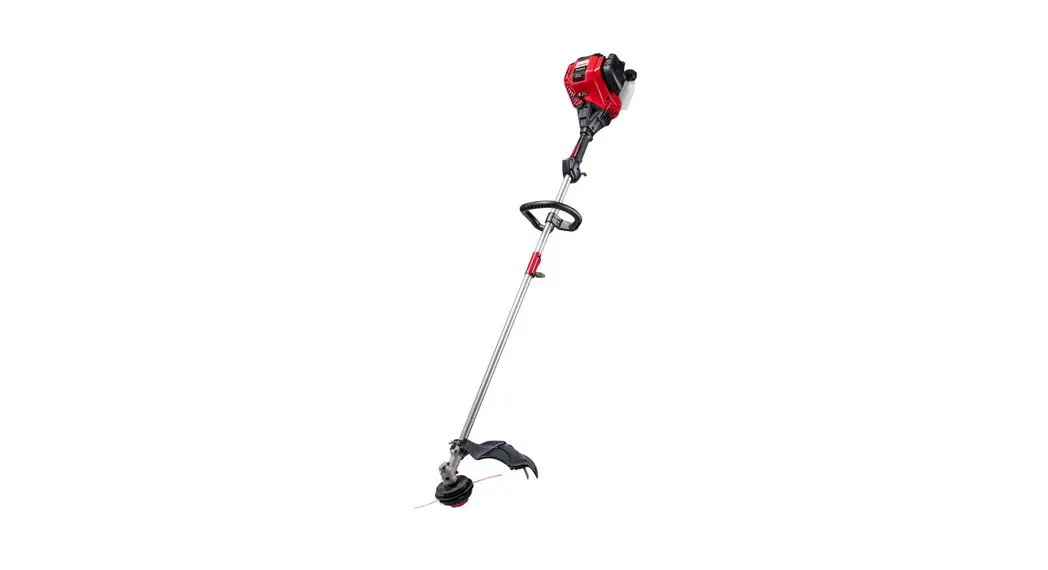
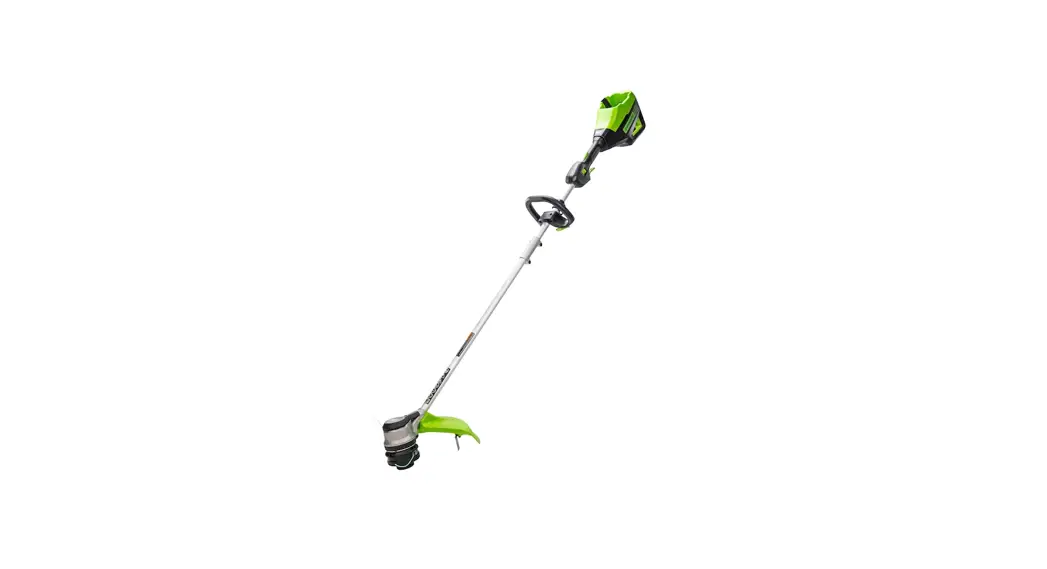
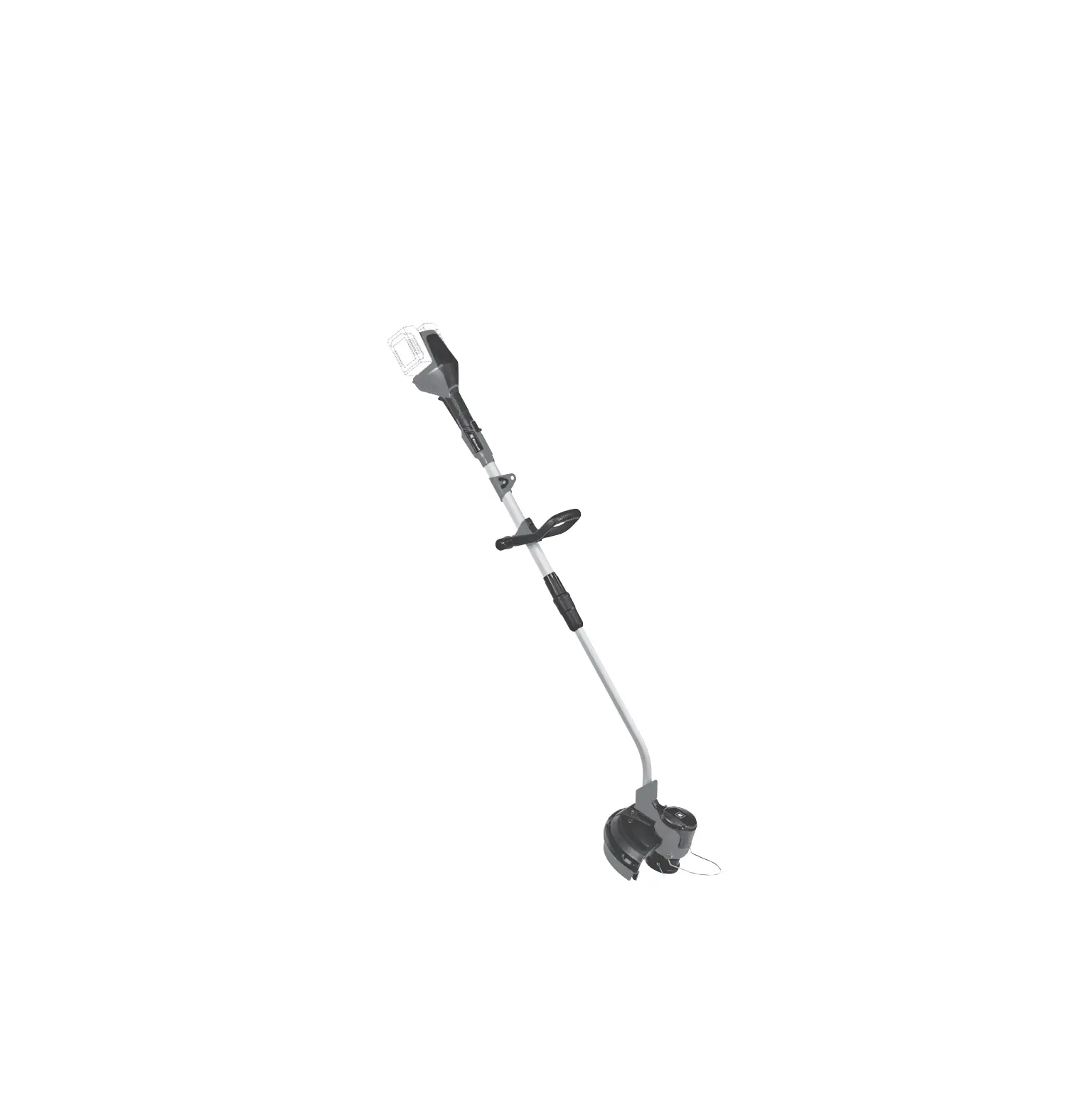
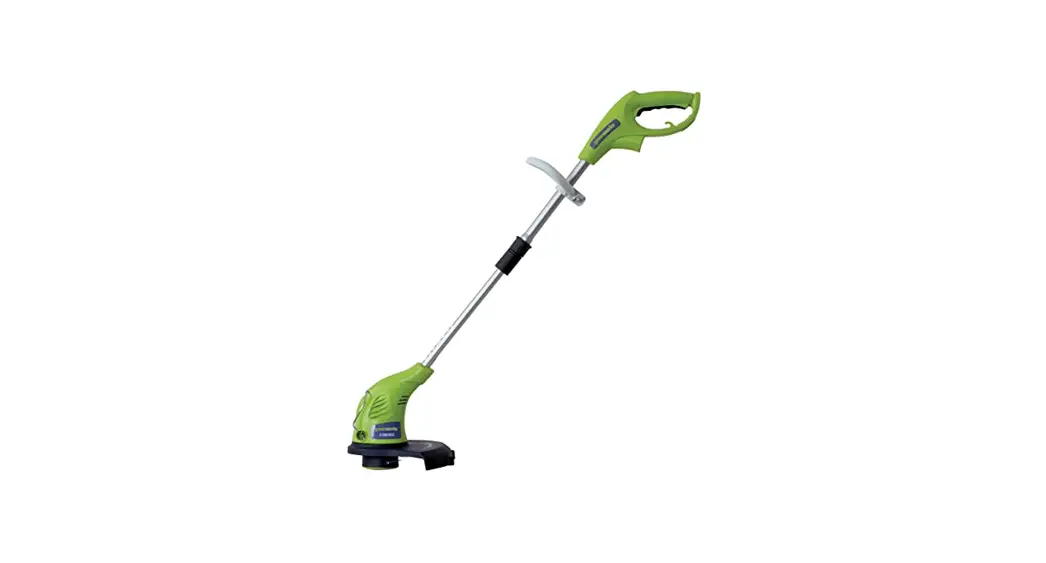
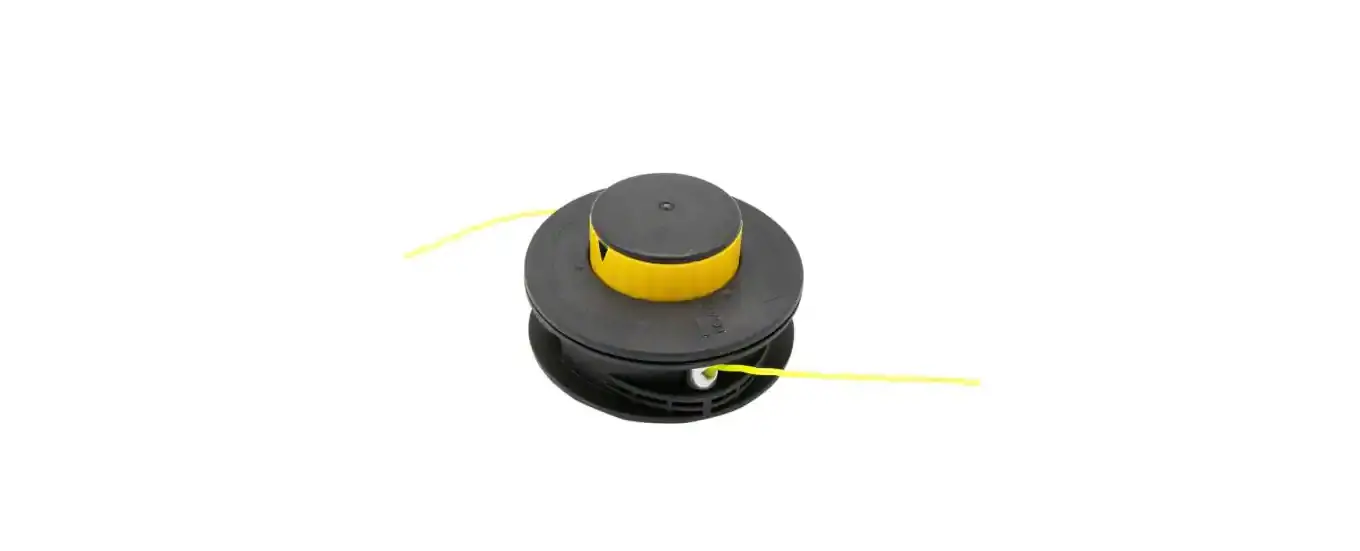
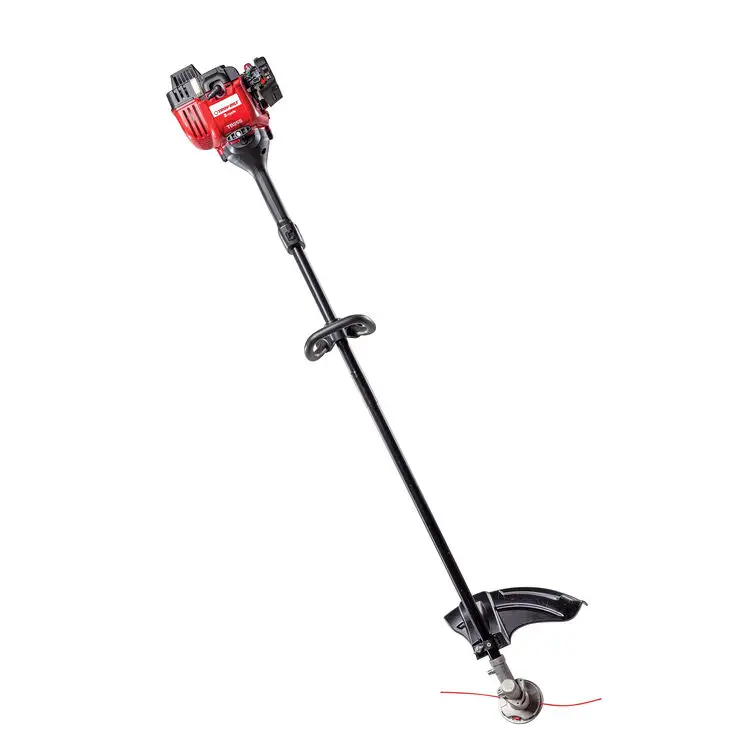
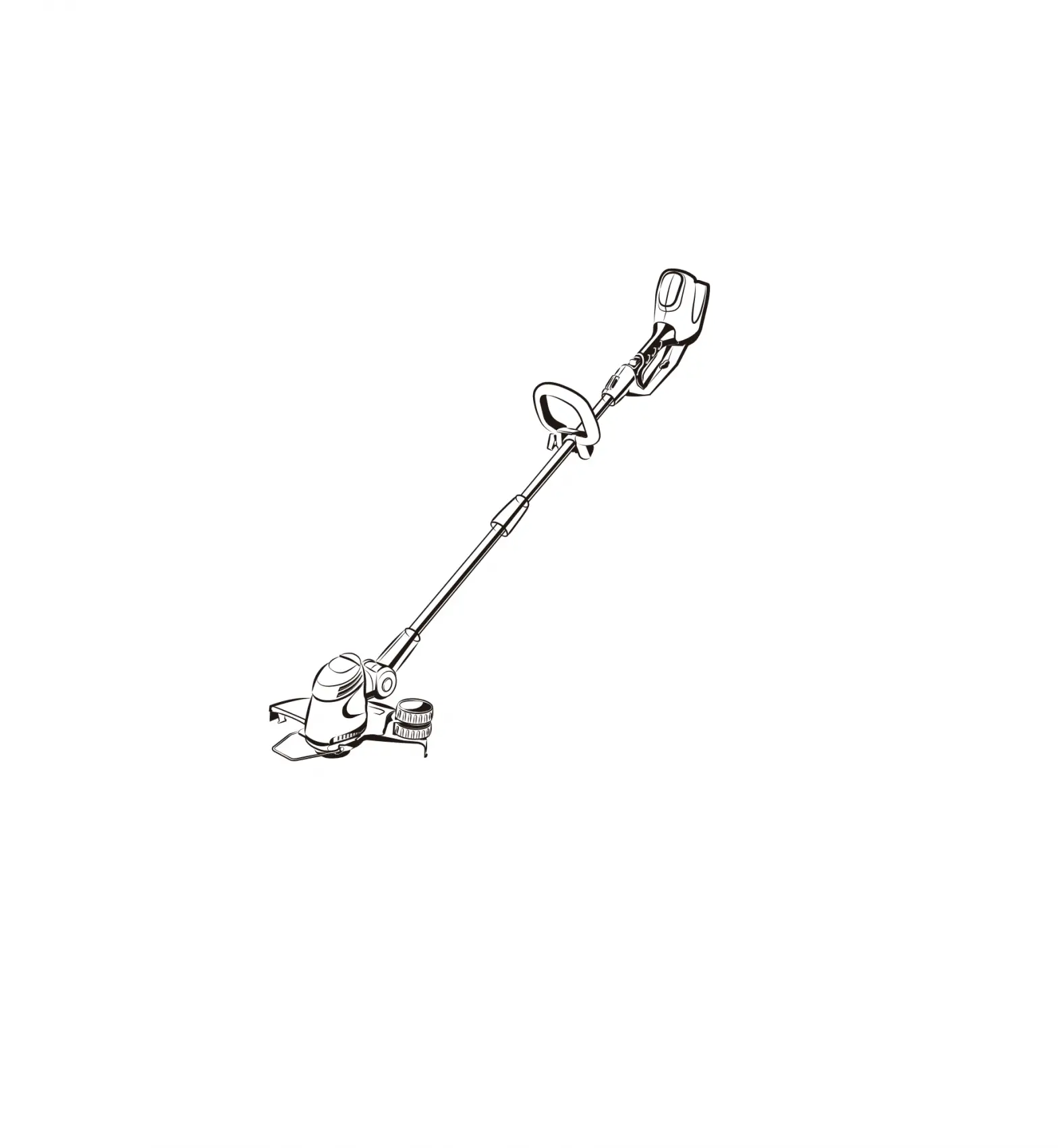
KST 224B-03 Brushless String Trimmer
Product Information
Product: Kobalt Brushless String Trimmer
Model: KST 224B-03
Item Number: 5192328/5129685
Trademark: Kobalt and logo design are trademarks or registered
trademarks of LF, LLC. All rights reserved.
Rated Voltage: Not specified
No Load Speed: Maximum 10,000 RPM
Cutting-Line Type: Not specified
Cutting Width: Not specified
Operating Temperature: Not specified
Storage Temperature: Not specified
Product Usage Instructions
- Before using the string trimmer, carefully read the entire user
manual and understand all instructions. - Attach your receipt and record the serial number and purchase
date for future reference. - If you have any questions, problems, or missing parts, contact
the customer service department at 888-3KOBALT (888-356-2258) or
[email protected]. - Know the tool by reading the manual and familiarizing yourself
with all labels affixed to the tool. - Ensure personal safety by wearing protective clothing,
including eye, ear, and head protection. - Operate the tool in a safe work area and follow all work area
safety guidelines. - Follow electrical safety guidelines and avoid using the tool in
wet conditions. - Follow the general power tool safety warnings and save all
warnings and instructions for future reference. - Properly use and care for the battery pack and charger.
- Follow all grass trimmer safety warnings.
- Take note of any additional warnings specified in the user
manual. - Before using the string trimmer, assemble it according to the
provided instructions.
ITALIAN
PUSH
KOBALT and logo design are trademarks or registered trademarks of LF,LLC.All rights reserved.
ITEM #5192328/ 5129685
BRUSHLESS STRING TRIMMER
MODEL #KST 224B-03
Español p. 23
ATTACH YOUR RECEIPT HERE Serial Number
Purchase Date
Questions, problems, missing parts? Before returning to your retailer, call our customer service department at 888-3KOBALT (888-356-2258), 8 a.m. – 8 p.m., EST, Monday – Sunday. You could also contact us at [email protected].
SS22005
TABLE OF CONTENTS
Product Specifications………………………………………………………………………….. 2 Package Contents……………………………………………………………………………….. 3 Safety Information ……………………………………………………………………………….. 4 Preparation…………………………………………………………………………………………. 9 Assembly instructions ………………………………………………………………………… 10 Operating Instructions ………………………………………………………………………… 13 Care and Maintenance……………………………………………………………………….. 20 Troubleshooting…………………………………………………………………………………. 20 Warranty…………………………………………………………………………………………… 21
PRODUCT SPECIFICATIONS
COMPONENT Rated voltage No load speed Cutting-Line Type Cutting Width Operating temperature Storage temperature
SPECIFICATION 24V d.c. 0-5500/0-6500 RPM 0.08 in. (2 mm) twisted nylon line 12 in. (30 cm) / 14 in. (35 cm) 32°F (0°C) 104°F (40°C) 32°F (0°C) 104°F (40°C)
2
PACKAGE CONTENTS
D E
C H
A
B
MAX 10,000 RPM
P
J I
PUSH
F G
PART DESCRIPTION A Lock-off button B Variable-speed trigger switch C Rear handle D Hinge E Trimmer shaft F Cutting head G Bump head H Speed mode switch
O N
M
L K
PART DESCRIPTION I Front-assist handle J Locking lever K Screw knob L Guard M Line-cutting blade N Screws (ST4x16) (2) O Screws (ST4.8×19) (2) P Gear case
WARNING
· Remove the tool from the package and examine it carefully. Inspect the tool carefully to make sure that no breakage or damage occurred during shipping. If any parts are damaged or missing, please return the product to the place of purchase. Do not discard the carton or any packaging material until all parts have been examined.
· If any part of the tool is missing or damaged, do not attach the battery to use the tool until the part has been repaired or replaced. Failure to heed this warning could result in serious injury.
3
SAFETY INFORMATION
Please read and understand this entire manual before attempting to assemble or operate this product. If you have any questions regarding the product, please call customer service at 888-3KOBALT (888-356-2258), 8 a.m. – 8 p.m., EST, Monday – Sunday. You could also contact us at [email protected].
WARNING · The operation of any power tool can result in foreign objects being thrown into your eyes,
which can result in severe eye damage. Before beginning power-tool operation, always wear safety goggles or safety glasses with side shields and a full-face shield, when needed. We recommend using a wide vision safety mask over eyeglasses or standard safety glasses with shields. Always use eye protection marked to comply with ANSI Z87.1. · Some dust created by power sanding, sawing, grinding, drilling, and other construction activities contains chemicals known to the state of California to cause cancer, birth defects, or other reproductive harm. Some examples of these chemicals are: Lead from lead-based paints Crystalline silica from bricks, cement, and other masonry products Arsenic and chromium from chemically-treated lumber · Your risk from these exposures varies, depending upon how often you do this type of work. To reduce your exposure to these chemicals: Work in a well-ventilated area. Work with approved safety equipment, such as dust masks that are specially designed to
filter out microscopic particles. Avoid prolonged contact with dust from power sanding, sawing, grinding, drilling, and
other construction activities. Wear protective clothing and wash exposed areas with soap and water. Allowing dust to get into your mouth or eyes or to lie on the skin may promote absorption of harmful chemicals.
DANGER · People with electronic devices, such as pacemakers, should consult their physician(s)
before using this product. Operation of electrical equipment in close proximity to a heart pacemaker could cause interference or failure of the pacemaker.
Know the Tool To operate this tool, carefully read this manual and all labels affixed to the tool before using it. Keep this manual available for future reference.
Important This tool should be serviced only by a qualified service technician.
Read All Instructions Thoroughly
4
SAFETY INFORMATION
Some of the following symbols may be used on this tool. Please study them and their meaning. Proper interpretation of these symbols will allow you to operate the tool better and more safely.
SYMBOL DEFINITION
SYMBOL DEFINITION
V
Volts
Direct current
n 0
/min (RPM)
Maximum speed Revolutions per Minute
A danger, warning, or caution. It means `Attention! Your safety is involved.’
To reduce the risk of injury, user must read instruction manual.
Wear eye, ear and head protection.
Do not expose to rain.
General Power Tool Safety Warnings
WARNING · Read all safety warnings, instructions, illustrations and specifications provided with
this power tool. Failure to follow all instructions listed below may result in electric shock, fire and/or serious injury.
Save all warnings and instructions for future reference
· The term “power tool” in the warnings refers to your mains-operated (corded) power tool or battery-operated (cordless) power tool.
Work Area Safety
· Keep work area clean and well lit. Cluttered or dark areas invite accidents. · Do not operate power tools in explosive atmospheres, such as in the presence of
flammable liquids, gases or dust. Power tools create sparks, which may ignite the dust or fumes. · Keep children and bystanders away while operating a power tool. Distractions can cause you to lose control.
Electrical Safety
· Power tool plugs must match the outlet. Never modify the plug in any way. Do not use any adapter plugs with earthed (grounded) power tools. Unmodified plugs and matching outlets will reduce risk of electric shock.
· Avoid body contact with earthed or grounded surfaces, such as pipes, radiators, ranges and refrigerators. There is an increased risk of electric shock if your body is earthed or grounded.
· Do not expose power tools to rain or wet conditions. Water entering a power tool will increase the risk of electric shock.
· Do not abuse the cord. Never use the cord for carrying, pulling or unplugging the power tool. Keep cord away from heat, oil, sharp edges or moving parts. Damaged or entangled cords increase the risk of electric shock.
5
SAFETY INFORMATION
· When operating a power tool outdoors, use an extension cord suitable for outdoor use. Use of a cord suitable for outdoor use reduces the risk of electric shock.
· If operating a power tool in a damp location is unavoidable, use a ground fault circuit interrupter (GFCI) protected supply. Use of a GFCI reduces the risk of electric shock.
Personal Safety
· Stay alert, watch what you are doing and use common sense when operating a power tool. Do not use a power tool while you are tired or under the influence of drugs, alcohol or medication. A moment of inattention while operating power tools may result in serious personal injury.
· Use personal protective equipment. Always wear eye protection. Protective equipment such as a dust mask, non-skid safety shoes, hard hat or hearing protection used for appropriate conditions will reduce personal injuries.
· Prevent unintentional starting. Ensure the switch is in the off-position before connecting to power source and/or battery pack, picking up or carrying the tool. Carrying power tools with your finger on the switch or energising power tools that have the switch on invites accidents.
· Remove any adjusting key or wrench before turning the power tool on. A wrench or a key left attached to a rotating part of the power tool may result in personal injury.
· Do not overreach. Keep proper footing and balance at all times. This enables better control of the power tool in unexpected situations.
· Dress properly. Do not wear loose clothing or jewelry. Keep your hair and clothing away from moving parts. Loose clothes, jewelry or long hair can be caught in moving parts.
· If devices are provided for the connection of dust extraction and collection facilities, ensure these are connected and properly used. Use of dust collection can reduce dustrelated hazards.
· Do not let familiarity gained from frequent use of tools allow you to become complacent and ignore tool safety principles. A careless action can cause severe injury within a fraction of a second.
Power tool use and care
· Do not force the power tool. Use the correct power tool for your application. The correct power tool will do the job better and safer at the rate for which it was designed.
· Do not use the power tool if the switch does not turn it on and off. Any power tool that cannot be controlled with the switch is dangerous and must be repaired.
· Disconnect the plug from the power source and/or remove the battery pack, if detachable, from the power tool before making any adjustments, changing accessories, or storing power tools. Such preventive safety measures reduce the risk of starting the power tool accidentally.
· Store idle power tools out of the reach of children and do not allow persons unfamiliar with the power tool or these instructions to operate the power tool. Power tools are dangerous in the hands of untrained users.
· Maintain power tools and accessories. Check for misalignment or binding of moving parts, breakage of parts and any other condition that may affect the power tool’s operation. If damaged, have the power tool repaired before use. Many accidents are caused by poorly maintained power tools.
· Keep cutting tools sharp and clean. Properly maintained cutting tools with sharp cutting edges are less likely to bind and are easier to control.
6
SAFETY INFORMATION
· Use the power tool, accessories and tool bits etc. in accordance with these instructions, taking into account the working conditions and the work to be performed. Use of the power tool for operations different from those intended could result in a hazardous situation.
· Keep handles and grasping surfaces dry, clean and free from oil and grease. Slippery handles and grasping surfaces do not allow for safe handling and control of the tool in unexpected situations.
Battery Tool Use and Care
· Recharge only with the charger specified by the manufacturer. A charger that is suitable for one type of battery pack may create a risk of fire when used with another battery pack.
· Use power tools only with specifically designated battery packs. Use of any other battery packs may create a risk of injury and fire.
· When battery pack is not in use, keep it away from other metal objects, like paper clips, coins, keys, nails, screws or other small metal objects, that can make a connection from one terminal to another. Shorting the battery terminals together may cause burns or a fire.
· Under abusive conditions, liquid may be ejected from the battery; avoid contact. If contact accidentally occurs, flush with water. If liquid contacts eyes, additionally seek medical help. Liquid ejected from the battery may cause irritation or burns.
· Do not use a battery pack or tool that is damaged or modified. Damaged or modified batteries may exhibit unpredictable behavior resulting in fire, explosion or risk of injury.
· Do not expose a battery pack or tool to fire or excessive temperature. Exposure to fire or temperature above 265°F (130°C) may cause explosion.
· Follow all charging instructions and do not charge the battery pack or tool outside the temperature range specified in the instructions. Charging improperly or at temperatures outside the specified range may damage the battery and increase the risk of fire.
Service
· Have your power tool serviced by a qualified repair person using only identical replacement parts. This will ensure that the safety of the power tool is maintained.
· Never service damaged battery packs. Service of battery packs should only be performed by the manufacturer or authorized service providers.
Grass Trimmer Safety Warnings
· Do not use the machine in bad weather conditions, especially when there is a risk of lightning. This decreases the risk of being struck by lightning.
· Thoroughly inspect the area for wildlife where the machine is to be used. Wildlife may be injured by the machine during operation.
· Thoroughly inspect the area where the machine is to be used and remove all stones, sticks, wires, bones, and other foreign objects. Thrown objects can cause personal injury.
· Before using the machine, always visually inspect to see that the cutter or blade and the cutter or blade assembly are not damaged. Damaged parts increase the risk of injury.
· Follow instructions for changing accessories. Improperly tightened blade securing nuts or bolts may either damage the blade or result in it becoming detached.
· Wear eye, ear, head and hand protection. Adequate protective equipment will reduce personal injury by flying debris or accidental contact with the cutting line or blade.
· While operating the machine, always wear non-slip and protective footwear. Do not operate the machine when barefoot or wearing open sandals. This reduces the chance of injury to the feet from contact with the moving cutters or lines.
7
SAFETY INFORMATION
· While operating the machine, always wear long trousers. Exposed skin increases the likelihood of injury from thrown objects.
· Keep bystanders away while operating the machine. Thrown debris can result in serious personal injury.
· Always use two hands when operating the machine. Holding the machine with both hands will avoid loss of control.
· Hold the machine by the insulated gripping surfaces only, because the cutting line or blade may contact hidden wiring. Cutting line or blades contacting a “live” wire may make exposed metal parts of the machine “live” and could give the operator an electric shock.
· Always keep proper footing and operate the machine only when standing on the ground. Slippery or unstable surfaces may cause a loss of balance or control of the machine.
· Do not operate the machine on excessively steep slopes. This reduces the risk of loss of control, slipping and falling which may result in personal injury.
· When working on slopes, always be sure of your footing, always work across the face of slopes, never up or down and exercise extreme caution when changing direction. This reduces the risk of loss of control, slipping and falling which may result in personal injury.
· Keep all parts of the body away from the cutter, line or blade when the machine is operating. Before you start the machine, make sure the cutter, line or blade is not contacting anything. A moment of inattention while operating the machine may result in injury to yourself or others.
· Do not operate the machine above waist height. This helps prevent unintended cutter or blade contact and enables better control of the machine in unexpected situations.
· When cutting brush or saplings that are under tension, be alert for spring back. When the tension in the wood fibres is released, the brush or sapling may strike the operator and/ or throw the machine out of control.
· Use extreme caution when cutting brush and saplings. The slender material may catch the blade and be whipped toward you or pull you off balance.
· Maintain control of the machine and do not touch cutters, lines or blades and other hazardous moving parts while they are still in motion. This reduces the risk of injury from moving parts.
· Carry the machine with the machine switched off and away from your body. Proper handling of the machine will reduce the likelihood of accidental contact with a moving cutter, line or blade.
· Only use replacement cutters, lines, cutting heads and blades specified by the manufacturer. Incorrect replacement parts may increase the risk of breakage and injury.
· When clearing jammed material or servicing the machine, make sure the switch is off and the battery pack is removed. Unexpected starting of the machine while clearing jammed material or servicing may result in serious personal injury.
Additional Warnings
· Use only with the battery packs and chargers listed below:
BATTERY PACK
CHARGER
KB 224-03; KB 424-03; KB 524-03; KB 624-03; KXB 424-03; KXB 824-03
KRC 2445-03; KRC 2490-03; KRC 2404-03; KDPC 124-03; KCH 2401-03; KCH 2411-03;
8
PREPARATION Know Your String Trimmer This product requires assembly. Carefully lift the tool from the carton and place it on a level work surface. Before attempting to use the string trimmer, familiarize yourself with all of its operating features and safety requirements.
WARNING · Do not allow familiarity with the trimmer to cause carelessness. Remember that one careless
moment is enough to cause severe injury. Before attempting to use any tool, be sure to become familiar with all of the operating features and safety instructions. · Do not attempt to modify this tool or create accessories not recommended for use with this tool. Any such alteration or modification is misuse and could result in a hazardous condition leading to possible serious personal injury.
9
ASSEMBLY INSTRUCTIONS This product requires assembly.
WARNING · Always remove the battery pack from the
product when you are assembling parts, making adjustments, cleaning, or when the product is not in use.
1. Unfolding the Shaft
1a
D
WARNING · In order to avoid pinching your hands or fingers,
do not hold the shaft at the joints. · Do not attempt to start the trimmer until the shaft
has been locked.
a. Remove the battery pack from the trimmer.
b. Put your trimmer on the ground and carefully
unfold the shaft. Make sure that the cable inside the shaft will not be pinched when
1b
closing the hinge (D).
c. Use a Phillips screwdriver (not included) to
secure the shaft in locked position with two
O
screws (O).
2. Mounting the Guard
WARNING
2a
G
L
· To reduce the risk of injury to persons, never
operate without guard in place. The guard must
always be on the tool to protect the user.
· Always wear gloves when mounting or replacing
the guard. Be aware of the line-cutting blade on
PUSH
the guard and protect your hands from being
injured by the blade.
F
a. Remove the battery pack from the trimmer.
b. Lift the cutting head unit (F) so that the bump
head (G) is facing upward; align the groove
P
on the bottom of the guard (L) with the raised
portion on the base of the trimmer gear case
(P), and then slide guard onto the base as
shown (Fig. 2a).
10
ASSEMBLY INSTRUCTIONS
c. Make sure that the two mounting holes in the guard are aligned with the two assembly holes
2b
in the base of the gear case. Secure the guard
N
in place by tightening the two screws (N) with
a Phillips screwdriver (not included). See
Fig. 2b.
PUSH
3. Mounting the Front-Assist Handle
3a
a. Remove the battery pack from the trimmer.
b. Remove the screw knob (K) and the adjusting
lever (J) from the front-assist handle (I). See
Fig. 3a.
c. Mount the front-assist handle (I) on the shaft
as shown in Fig. 3a.
d. Insert the locking lever (J) into the front-assist
handle, and then tighten the screw knob (K).
Make sure that the front-assist handle faces
upwards so that it points toward the rear
handle.
e. Lower the locking lever (J) to secure the front-
assist handle (I) on the shaft so that it cannot
move during operating.
3b
To Adjust the Front-Assist Handle Position
The handle should be positioned so that your arm is straight when holding the trimmer by the frontassist handle.
To adjust the front-assist handle (I) position, remove the battery pack from the trimmer, lift the locking lever (J) so that the front-assist handle (I) can be moved to the desired position along the shaft. Lower the locking lever (J) so that the handle cannot move during operation (Fig. 3b).
I J
K J
K
11
ASSEMBLY INSTRUCTIONS
4. To Attach/Remove Battery Pack
4
To Attach Battery Pack
a. Align the raised portion of the battery pack with the grooves on the battery port, then slide the battery pack onto the tool, as shown in Fig. 4.
b. Make sure that the latches on the battery pack snap into place and the battery pack is secured to the tool before beginning operation.
NOTICE: When placing the battery pack on the tool, be sure that the raised rib on the battery pack aligns with the groove on the tool and the latches snap into place properly. Improper assembly of the battery pack can cause damage to internal components.
To Remove Battery Pack
a. Press the battery-release buttons to release the battery pack. b. Pull the battery pack backward to remove it from the tool.
Battery-release Button
WARNING · Battery tools are always in operating condition. Therefore, the trigger switch should always be
in the OFF position when the tool is not in use or when carrying the tool at your side.
12
OPERATING INSTRUCTIONS
5. Holding the String Trimmer
5
WARNING · Dress properly to reduce the risk of injury when
operating this tool. Do not wear loose clothing or jewelry. Wear eye and ear/hearing protection. Wear heavy, long pants, boots and gloves. Do not wear short pants or sandals or work barefoot.
Before operating the unit, stand in the operating position and check that:
· The operator is wearing eye protection and proper clothing.
· One arm is slightly bent. The hand of that arm is holding the rear handle. · The other arm is straight. The hand of this arm is holding the front-assist handle. · The cutting head is parallel to the ground and easily contacts the grass to be cut without the
operator having to bend over.
6. To Start/Stop the String Trimmer
Before starting the string trimmer:
6
A
· Make sure that you have a secure and balanced
footing.
· Stand upright and hold the string trimmer in a
relaxed position.
· Make sure that the cutting line is not touching
the ground or any other objects.
· Hold the string trimmer with both hands. B
a. To turn the string trimmer ON, push the lock-off
button (A) to left or right and then depress the
variable-speed trigger switch (B). The variable-
speed trigger switch (B) delivers higher speed
with increased trigger pressure and lower
speed with decreased trigger pressure.
b. To turn it off, release the variable-speed trigger switch and allow the trimmer to come to a
complete stop.
WARNING · Always remove the battery pack from the string trimmer during work breaks and after
finishing work.
13
OPERATING INSTRUCTIONS
7. To Switch Speed Modes
7
Slide the speed mode switch (H) to the desired
operating speed mode. Slide the switch to position
“1” for low speed mode or position “2” for high
speed mode.
NOTICE: When in high speed mode, runtime will
be decreased as compared to when the trimmer is in low speed mode.
H
8. Using the String Trimmer
8a
WARNING · To prevent serious personal injury, remove the
battery pack from the tool before servicing, cleaning, changing attachments or removing material from the unit.
Direction of rotation
· Check the cutting head (F), guard (L) and
front-assist handle (I) and replace any parts that
are cracked, warped, bent, or damaged in any away.
Dangerous cutting area
· The line-cutting blade (M) on the edge of the
guard can dull over time. It is recommended that
you periodically sharpen it with a file or replace it with a new blade.
Best cutting area
· Always wear gloves when mounting or replacing the guard or when sharpening or replacing the line-cutting blade (M). Note the location of the blade on the guard and protect your hand from injury.
· To avoid serious personal injury, wear goggles or safety glasses at all times when operating this unit. Wear a face mask or dust mask in dusty locations. Wear proper clothing and footwear during operation to reduce the risk of injury that may be caused by flying debris.
· Clear the area to be cut before each use. Remove all objects, such as rocks, broken glass, nails, wire, or string that can be thrown or become entangled in the cutting attachment. Clear the area of children, bystanders, and pets. At a minimum, keep all children, bystanders, and pets at least 100 ft. (30.5 m) away; there still may be risk to bystanders from thrown objects.
· Bystanders should be encouraged to wear eye protection. If you are approached, stop the motor and cutting attachment immediately.
14
OPERATING INSTRUCTIONS
Tips for best trimming results
· The correct angle for the cutting attachment is parallel to the ground.
· Do not force the trimmer. Allow the very tip of the line to do the cutting (especially along walls). Cutting with more than the tip will reduce cutting efficiency and may overload the motor.
· The cutting height is determined by the distance of the cutting line from the lawn surface.
· Grass over 8 in. (20 cm) should be cut by working from top to the bottom in small increments to avoid premature line wear or motor drag.
· Slowly move the trimmer into and out of the area being cut, maintaining the cutting head position at the desired cutting height. This movement can be either a forward-backward motion or a side-to-side motion. Cutting shorter lengths produces best results.
· Trim only when grass and weeds are dry.
· Wire and picket fences can cause extra string wear or breakage. Stone and brick walls, curbs, and wood may wear strings rapidly.
· Avoid trees and shrubs. Tree bark, wood moldings, siding, and fence posts can easily be damaged by the strings.
Adjusting Cutting Line Length (Fig. 8b)
8b
The cutting head allows the operator to release
more cutting line without stopping the motor.
As line becomes frayed or worn, additional line can be released by lightly tapping the bump head (G) on the ground while operating the trimmer.
For best results, tap the bump head on bare ground or hard soil. If line release is attempted in tall grass, the motor may overheat.
Always keep the trimming line fully extended. Line
release becomes more difficult as the cutting line
G
becomes shorter.
15
OPERATING INSTRUCTIONS
Adjusting the Cutting Swath
The string trimmer is factory set at 14-inch (35 cm) cutting swath. To decrease the cutting swath from 14 to 12 inches (35 to 30 cm):
a. Remove the battery pack from the tool. b. Use a Philips head screwdriver (not included) to
loosen and remove the two screws that secure the line-cutting blade (M) to the guard (Fig. 8c). c. Move the blade and align the two holes in the blade with the other two holes in the guard (Fig. 8d). d. Insert the two screws and tighten them securely.
8c
14 inch (35cm)
M
Screws
8d
12 inch (30cm)
16
OPERATING INSTRUCTIONS
WARNING · To prevent serious personal injury, remove the battery pack from the tool before servicing,
cleaning, changing attachments or removing material from the unit.
Clean the trimmer after each use
WARNING · To prevent serious personal injury, remove the battery pack from the tool before servicing,
cleaning, changing attachments or removing material from the tool.
a. Clear any grass that may have wrapped itself around the motor shaft or cutting head.
b. Use only a clean, dry, and soft cloth to clean the tool. Never let any liquid get inside the tool. Never immerse any part of the tool into a liquid.
c. Keep the air vents free from debris at all times.
NOTICE: Obstructing the vents will prevent the air from flowing into the motor housing and may result in overheating or damage to the motor.
WARNING · Never use water for cleaning your trimmer. Avoid using solvents when cleaning plastic parts.
Most plastics are susceptible to damage from various types of commercial solvents. Use clean clothes to remove dirt, dust, oil, grease, etc.
9. Line Replacement
9a
NOTICE: Always use triangle-shaped twisted
nylon cutting line with a size that does not exceed
Tab
0.08 in. (2.0 mm). Using line other than that
specified may cause the string trimmer to overheat
or become damaged.
WARNING · Never use metal-reinforced line, wire, or rope,
etc. These can break off and become dangerous projectiles.
Wind the spool with new line
WARNING · To prevent serious personal injury, remove the battery pack from the tool before servicing,
cleaning, changing attachments or removing material from the unit.
a. Press the two release tabs on the spool base and remove the spool retainer by pulling it straight out (Fig. 9a).
b. Use a clean cloth to clean the inner surface of the spool retainer and spool base. NOTICE: Always clean the spool retainer and spool base before reassembling the cutting head.
c. Check the spool retainer and spool base for worn or damaged parts.
17
OPERATING INSTRUCTIONS
d. Fold the cutting line in half and hook the folded end of the cutting line as shown in Fig. 9b.
e. Wind the line, in two even and tight layers, onto the spool retainer.
NOTICE: Failure to wind the line in the direction indicated will cause the cutting head to operate incorrectly.
f. Place the ends of the line in two opposite eyelets (Fig. 9c).
g. Align the two tabs on the spool base with the slots on cutting head and press it until it snaps into place (Fig. 9d)
9b
Spool retainer
NOTICE: Make sure that the tabs on the spool
base snap into place, otherwise the spool will
9c
come out during operation.
Eyelets
9d
Tab 18
OPERATING INSTRUCTIONS
You can replace the new line in another way:
9e
WARNING · To prevent serious personal injury, remove the
battery pack from the tool before servicing, cleaning, changing attachments or removing material from the unit.
a. Remove the remaining lines first, if not, go directly to step b.
· Press the two release tabs on the spool base and remove the spool retainer. Remove the line.
· Reinstall the spool retainer in such a way that the threading hole on the spool retainer is aligned with one of the eyelets (Fig. 9e).
b. Rotate the bump head to make sure that the arrow on the cutting head cover is aligned with the arrow on the bump head (Fig. 9f).
9f
Arrows
c. Insert the new line into the eyelet marked LINE IN. Feed the line until the end of the line comes out of the other side eyelet of the spool base (Fig. 9f).
d. Pull the line from the other side until equal amounts of line appear on both sides.
e. Hold the spool base and rotate the bump head in the direction indicated by the arrow to wind
9g
the cutting line into the cutting head (Fig. 9g).
f. Push down on the bump head and check for proper release of the cutting line.
Threading hole
Eyelet
19
CARE AND MAINTENANCE
All maintenance should only be carried out by a qualified service technician. Before cleaning or performing any maintenance, remove battery from the tool. For safe and proper operation, always keep the tool and its ventilation slots clean.
Cleaning Always use only a soft, dry cloth to clean your string trimmer; never use detergent or alcohol. Clear any grass that may have wrapped itself around the motor shaft or cutting head. Keep the air vents free of obstructions.
Storage Clean the tool thoroughly before storing it. Store the unit in a dry, well-ventilated area, locked-up or up high, out of the reach of children. Keep away from corrosive agents, such as garden chemicals and de-icing salts.
TROUBLESHOOTING
WARNING: · Release trigger switch (B) in the OFF position and remove the battery before performing
troubleshooting procedures.
PROBLEM Tool does not work.
POSSIBLE CAUSE Low battery capacity.
CORRECTIVE ACTION Charge the battery pack.
String trimmer stops while cutting.
Cutting head will not advance the cutting line.
The motor shaft or cutting head is bound with grass.
Stop the trimmer, disconnect the battery, and remove the grass from the motor shaft and cutting head.
The motor is overloaded.
Move the cutting head to cut the grass no more than 8 in. (20 cm) of length in a single cut. Remove the cutting head from the grass and restart the tool.
The battery pack or string trimmer is too hot.
Release the trigger switch, wait for the tool to cool down, and then start the tool again.
The motor shaft or cutting head is bound with grass.
Stop the trimmer, disconnect the battery, and clean the motor shaft and cutting head.
There is not enough cutting line on the spool.
Disconnect the battery and replace the cutting line by following the section “Line Replacement” in this manual.
20
WARRANTY For 5 years from the date of purchase, this product is warranted for the original purchaser to be free from defects in material and workmanship. This guarantee does not cover damage due to abuse, normal wear, improper maintenance, neglect, unauthorized repair/alteration, or expendable parts and accessories expected to become unusable after a reasonable period of use. This warranty is limited to 90 days for commercial and rental use. If you think your product meets the above guarantee criteria, please return it to the place of purchase with valid proof of purchase and the defective product will be repaired or replaced at no charge. This guarantee gives you specific legal rights, and you may also have other rights that vary from state to state.
Lowe’s Home Centers LLC. Mooresville, NC 28117 Printed in China
21
ITALIAN
PUSH
KOBALT y el diseño del logotipo son marcas comerciales o marcas registradas de LF, LLC. Todos los derechos reservados.
ARTÍCULO #5192328/ 5129685
ORILLADORA SIN ESCOBILLAS
MODELO #KST 224B-03
ADJUNTE SU RECIBO AQUÍ Número de serie
Fecha de compra
¿Preguntas, problemas, piezas faltantes? Antes de volver a la tienda, llame a nuestro Departamento de Servicio al Cliente al 888-3KOBALT (888-356-2258), de lunes a domingo de 8 a.m. a 8 p.m., hora estándar del Este. También puede ponerse en contacto con nosotros en [email protected].
23
ÍNDICE
Especificaciones del producto……………………………………………………………… 24 Contenido del paquete ……………………………………………………………………….. 25 Información de seguridad……………………………………………………………………. 26 Preparación………………………………………………………………………………………. 32 Instrucciones de ensamblaje……………………………………………………………….. 33 Instrucciones de funcionamiento………………………………………………………….. 36 Cuidado y mantenimiento …………………………………………………………………… 43 Solución de problemas……………………………………………………………………….. 43 Garantía …………………………………………………………………………………………… 44
ESPECIFICACIONES DEL PRODUCTO
COMPONENTE Voltaje nominal Velocidad sin carga Tipo de hilo de corte Ancho de corte Temperatura de funcionamiento Temperatura de almacenaje
ESPECIFICACIONES 24 V C.C. 0 a 5500/0 a 6500 RPM Hilo de nailon torcido de 0,08 pulgadas (0,2 cm) 12 in.(30 cm) / 14i n.(35 cm) De 0° C (32 °F) a 40 °C (104 °F) De 0° C (32 °F) a 40 °C (104 °F)
24
CONTENIDO DEL PAQUETE
D E
C H
A
B
P
J I
O N
M
MAX 10,000 RPM
PUSH
F G
PIEZA DESCRIPCIÓN A Botón de bloqueo B Interruptor tipo gatillo de velocidad variable C Manija posterior D Bisagra E Eje de la orilladora F Cabezal de corte G Cabezal de alimentación por golpeteo H Interruptor de modo de velocidad
L K
PIEZA DESCRIPCIÓN I Manija de ayuda frontal J Palanca de bloqueo K Perilla con tornillo L Protector M Cuchilla del hilo de corte N Tornillos (ST4x16) (2) O Tornillos (ST4.8×19) (2) P Caja de cambios
ADVERTENCIA · Retire la herramienta del paquete y examínela cuidadosamente. Inspeccione
cuidadosamente la herramienta para asegurarse de que no se produjo ninguna ruptura o daño durante el envío. Si hay piezas faltantes o dañadas, devuelva este producto al lugar donde lo compró. No deseche la caja ni ningún material de embalaje hasta después de examinar todas las piezas. · Si falta alguna pieza o si está dañada, no coloque la batería para usar la herramienta hasta reparar o reemplazar dicha pieza. No seguir esta advertencia podría provocar lesiones graves.
25
INFORMACIÓN DE SEGURIDAD
Lea y comprenda completamente este manual antes de intentar ensamblar u operar este producto. Si tiene preguntas relacionadas con el producto, comuníquese con Servicio al Cliente al 888-3KOBALT (888-356-2258), de lunes a domingo de 8 a.m. a 8 p.m., hora estándar del Este. También puede ponerse en contacto con nosotros en [email protected].
ADVERTENCIA · La operación de cualquier herramienta eléctrica puede arrojar objetos extraños a los ojos y,
de esta manera, causar graves daños oculares. Use siempre lentes o gafas de seguridad con protecciones laterales y, cuando sea necesario, una mascarilla que cubra todo el rostro antes de comenzar a operar una herramienta eléctrica. Recomendamos usar una máscara de seguridad de visión amplia sobre los lentes o gafas de seguridad con protecciones estándar. Siempre use lentes de protección que cumplan con ANSI Z87.1. · Parte del polvo causado por el lijado eléctrico, el serruchado, la trituración, el taladro y otras actividades de construcción contiene sustancias químicas que, según el estado de California, causan cáncer, defectos congénitos u otros daños reproductivos. Estos son algunos ejemplos de dichos productos químicos: Plomo de pinturas a base de plomo Sílice cristalina de ladrillos, cemento y otros productos de mampostería Arsénico y cromo de madera tratada con químicos · El riesgo que corre debido a la exposición a estos químicos varía según la frecuencia con que realiza este tipo de trabajo. Para disminuir la exposición a estos productos químicos, realice lo siguiente: Trabaje en un área bien ventilada. Trabaje con equipo de seguridad aprobado, como las mascarillas antipolvo
especialmente diseñadas para filtrar partículas microscópicas. Evite el contacto prolongado con el polvo producido por el uso de lijas, sierras,
trituradoras, taladros eléctricos y otras actividades de construcción. Use ropa protectora y lave todas las áreas expuestas del cuerpo con agua y jabón. El ingreso de polvo a la boca o a los ojos o su contacto con la piel puede fomentar la absorción de productos químicos dañinos.
PELIGRO · Las personas con dispositivos electrónicos, como marcapasos, deben consultar a su
médico antes de usar este producto. El funcionamiento del equipo eléctrico cerca de un marcapasos cardíaco puede causar interferencias o provocar una falla del marcapasos.
Conozca la herramienta
Para operar esta herramienta, lea cuidadosamente este manual y todas las etiquetas adheridas a la herramienta antes de usarla. Guarde este manual para referencia futura.
Importante
Solo un técnico calificado puede reparar esta herramienta.
Lea por completo todas las instrucciones
26
INFORMACIÓN DE SEGURIDAD
Algunos de los siguientes símbolos pueden aparecer en esta herramienta. Obsérvelos y
aprenda su significado. La interpretación correcta de estos símbolos le permitirá utilizar la herramienta de manera más eficaz y segura.
SÍMBOLO DEFINICIÓN
SÍMBOLO DEFINICIÓN
V
Voltios
Corriente directa
n
Velocidad máxima
0
/min (RPM) Revoluciones por minuto
Peligro, advertencia o precaución. Significa “¡Atención! Su seguridad está comprometida”.
Para reducir el riesgo de lesiones, el usuario debe leer el manual de instrucciones.
Utilice protección para los ojos, los oídos y la cabeza.
No lo exponga a la lluvia.
Advertencias generales sobre la seguridad en el manejo de herramientas eléctricas
ADVERTENCIA · Lea todas las advertencias de seguridad, las instrucciones, las ilustraciones y las
especificaciones que se incluyen para esta herramienta eléctrica. No cumplir con todas las instrucciones que se detallan a continuación podría provocar descargas eléctricas, incendios o lesiones graves.
Guarde todas las advertencias e instrucciones para referencia futura
· El término “herramienta eléctrica” que aparece en las advertencias hace referencia a la herramienta eléctrica que se conecta a la línea principal (con cable) o a la herramienta eléctrica que funciona a batería (inalámbrica).
Seguridad en el área de trabajo
· Mantenga el área de trabajo limpia y bien iluminada. Las áreas oscuras o desordenadas propician los accidentes.
· No utilice herramientas eléctricas en atmósferas en las que exista riesgo de explosión, por ejemplo, en presencia de líquidos inflamables, gases o polvo. Las herramientas eléctricas producen chispas que podrían encender el polvo o humo.
· Mantenga a los niños y a otras personas alejados mientras utiliza una herramienta eléctrica. Las distracciones pueden hacerle perder el control.
27
INFORMACIÓN DE SEGURIDAD
Seguridad eléctrica
· Los enchufes de las herramientas eléctricas deben encajar en el tomacorriente. No modifique el enchufe de ninguna manera. No utilice ningún enchufe adaptador con herramientas eléctricas con puesta a tierra. Los enchufes originales y que encajan adecuadamente en los tomacorrientes reducen el riesgo de descarga eléctrica.
· Evite el contacto del cuerpo con superficies conectadas a tierra, como tuberías, radiadores, extractores o refrigeradores. Si su cuerpo tiene contacto a tierra, corre mayor riesgo de sufrir una descarga eléctrica.
· No exponga las herramientas eléctricas a la lluvia o a condiciones de humedad. Si ingresa agua en una herramienta eléctrica, aumenta el riesgo de sufrir una descarga eléctrica.
· No maltrate el cable. Nunca use el cable para transportar, jalar ni desenchufar la herramienta eléctrica. Mantenga el cable alejado del calor, el aceite, los bordes filosos o las piezas en movimiento. Los cables dañados o enredados aumentan el riesgo de descarga eléctrica.
· Si opera una herramienta eléctrica en exteriores, use la extensión eléctrica apropiada para el uso en exteriores. Usar un cable apto para exteriores reduce el riesgo de sufrir una descarga eléctrica.
· Si debe utilizar una herramienta eléctrica en un área húmeda, use un suministro protegido con un interruptor de circuito de falla de puesta a tierra (GFCI, por sus siglas en inglés). Usar un GFCI disminuye el riesgo de recibir una descarga eléctrica.
Seguridad personal
· Manténgase alerta, preste atención a lo que hace y utilice el sentido común cuando utilice una herramienta eléctrica. No utilice una herramienta eléctrica si está cansado o bajo los efectos de drogas, alcohol o medicamentos. Un momento de desatención mientras opera herramientas eléctricas puede provocar lesiones personales graves.
· Use un equipo de protección personal. Use siempre lentes de protección. Los equipos de protección, como mascarillas antipolvo, zapatos de seguridad antideslizantes, cascos protectores o auriculares de seguridad, utilizados para las condiciones adecuadas, disminuyen el riesgo de lesiones personales.
· Evite un arranque accidental. Asegúrese de que el interruptor esté en la posición de apagado antes de conectar la herramienta a la fuente de alimentación o al paquete de baterías, o antes de levantarla o transportarla. Transportar herramientas eléctricas con el dedo en el interruptor o enchufar herramientas eléctricas que tienen el interruptor encendido aumenta las posibilidades de sufrir accidentes.
· Retire todas las llaves de ajuste o llaves inglesas antes de encender la herramienta eléctrica. Dejar una llave inglesa o una llave conectada a una pieza giratoria de la herramienta eléctrica puede provocar lesiones personales.
· No se extienda demasiado. Mantenga una postura y un equilibrio adecuados en todo momento. Esto permite controlar mejor la herramienta eléctrica ante situaciones inesperadas.
· Use ropa adecuada. No use ropa holgada ni joyas. Mantenga el cabello y la ropa alejados de las piezas en movimiento. La ropa holgada, las joyas o el cabello largo pueden quedar atrapados en las piezas en movimiento.
· Si se proporcionan dispositivos para la conexión de instalaciones de extracción y recolección de polvo, asegúrese de que se conecten y se usen de manera adecuada. La recolección de polvo puede disminuir los peligros relacionados con el polvo.
· No permita que la familiaridad obtenida por el uso frecuente de herramientas ocasione el descuido y olvido de los principios de seguridad en el manejo de herramientas. Un descuido puede ocasionar una lesión grave en cuestión de segundos.
28
INFORMACIÓN DE SEGURIDAD
Uso y cuidado de las herramientas eléctricas
· No fuerce la herramienta eléctrica. Use la herramienta eléctrica adecuada para la tarea. La herramienta eléctrica adecuada realizará un trabajo de mejor calidad y más seguro, al ritmo para el cual se diseñó.
· No utilice la herramienta eléctrica si no la puede encender o apagar con el interruptor. Cualquier herramienta eléctrica que no pueda controlarse con el interruptor es peligrosa y debe repararse.
· Desconecte el enchufe de la fuente de alimentación o retire el paquete de baterías de la herramienta eléctrica (si es posible) antes de realizar cualquier ajuste, cambiar accesorios o almacenar herramientas eléctricas. Estas medidas de seguridad preventivas reducen el riesgo de provocar arranques accidentales de la herramienta eléctrica.
· Almacene las herramientas eléctricas que no estén en uso fuera del alcance de los niños y no permita que personas que no conozcan cómo usar la herramienta o estas instrucciones la utilicen. Las herramientas eléctricas son peligrosas en manos de usuarios sin capacitación.
· Realice mantenimiento a las herramientas eléctricas y a los accesorios. Revise si hay piezas móviles desalineadas o trabadas, si hay piezas rotas y cualquier otra condición que pueda afectar el funcionamiento de la herramienta eléctrica. Si se daña la herramienta eléctrica, hágala reparar antes de usarla. Muchos accidentes son producto del mantenimiento deficiente de las herramientas eléctricas.
· Mantenga las herramientas de corte afiladas y limpias. Las herramientas de corte que se mantienen adecuadamente con sus bordes de corte afilados son menos propensas a trabarse y son más fáciles de controlar.
· Use la herramienta eléctrica, los accesorios, las brocas, etc. de acuerdo con estas instrucciones, considerando las condiciones de trabajo y la tarea que desea realizar. Si la herramienta eléctrica se usa en operaciones para las cuales no se diseñó, podría crear una situación de peligro.
· Mantenga los mangos y las superficies de agarre secas, limpias y sin aceite ni grasa. Las manijas y las superficies de agarre resbaladizas no permiten manipular ni controlar la herramienta de forma segura en situaciones inesperadas.
Uso y cuidado de herramientas a batería
· Recargue solo con el cargador especificado por el fabricante. Un cargador adecuado para un tipo de paquete de baterías puede causar un riesgo de incendio si se usa con otro paquete de baterías.
· Use herramientas eléctricas solo con paquetes de baterías designados específicamente. El uso de cualquier otro paquete de baterías puede crear un riesgo de lesión e incendio.
· Cuando no se use el paquete de baterías, aléjelo de objetos metálicos, como sujetapapeles, monedas, llaves, clavos, tornillos u otros objetos metálicos pequeños que pudieran crear una conexión entre los terminales. El cortocircuito de los terminales de la batería puede causar quemaduras o un incendio.
· En condiciones de maltrato, es posible que salga líquido de la batería. Evite el contacto. Si se produce un contacto accidental, enjuague con agua. Si el líquido entra en contacto con los ojos, solicite atención médica. El líquido que sale de la batería puede provocar irritación o quemaduras.
· No utilice un paquete de baterías ni una herramienta si están dañadas o modificadas. Las baterías dañadas o modificadas pueden mostrar una conducta impredecible que podría provocar incendios, explosiones o riesgo de lesiones.
29
INFORMACIÓN DE SEGURIDAD
· No exponga el paquete de baterías ni la herramienta al fuego ni a temperaturas excesivas. La exposición al fuego o a temperaturas por encima de los 130 °C (265 °F) podría causar una explosión.
· Siga todas las instrucciones de carga y no cargue el paquete de baterías ni la herramienta fuera del rango de temperatura especificado en las instrucciones. Realizar una carga inadecuada o a temperaturas fuera del rango especificado podría dañar la batería y aumentar el riesgo de incendio.
Reparación
· Permita que solo una persona capacitada repare la herramienta eléctrica y que utilice únicamente piezas de repuesto idénticas a las de fábrica. Esto garantizará que se mantenga la seguridad de la herramienta eléctrica.
· Nunca realice el mantenimiento de los paquetes de baterías dañados. Solo el fabricante o los proveedores de servicio autorizados pueden realizarles mantenimiento.
Advertencias de seguridad para la bordeadora de césped
· No utilice la máquina en condiciones meteorológicas adversas, especialmente cuando haya riesgo de rayos. Esto disminuirá el riesgo de que le caiga un rayo.
· Inspeccione minuciosamente la zona en la que se va a utilizar la máquina en busca de animales. La fauna silvestre puede resultar herida por la máquina durante su funcionamiento.
· Inspeccione minuciosamente el área donde se utilizará la herramienta y retire las piedras, ramas, cables, huesos y cualquier otro objeto extraño que encuentre. Los objetos arrojados pueden causar lesiones personales.
· Antes de usar la máquina, siempre inspeccione visualmente para comprobar que el cortador o la cuchilla, así como el ensamble del cortador o la cuchilla no estén dañados. Las piezas dañadas aumentan el riesgo de lesiones.
· Siga las instrucciones para cambiar los accesorios. Si las tuercas o los pernos de fijación de la cuchilla no están bien apretados, pueden dañar la cuchilla o hacer que se desprenda.
· Utilice protección para los ojos, los oídos, la cabeza y las manos. Un equipo de protección adecuado reducirá las lesiones personales causadas por los desechos que salgan despedidos o por el contacto accidental con la línea de corte o la cuchilla.
· Durante el uso de la máquina, lleve siempre calzado antideslizante y de protección. No utilice la máquina si está descalzo o lleva sandalias abiertas. Esto reduce la posibilidad de que los pies se lesionen al entrar en contacto con las cuchillas o los conductos en movimiento.
· Durante el funcionamiento de la máquina, use siempre pantalones largos. La piel expuesta aumenta la probabilidad de lesiones causadas por objetos arrojados.
· Mantenga alejados a los transeúntes mientras se utiliza la máquina. Los desechos arrojados pueden provocar lesiones personales graves.
· Utilice siempre las dos manos para manejar la máquina. Sujetar la máquina con ambas manos evitará la pérdida de control.
· Sujete la máquina únicamente por las superficies de agarre aisladas, ya que la línea de corte o la cuchilla pueden entrar en contacto con cables ocultos. El contacto de la línea de corte o de las cuchillas con un cable con corriente puede hacer que las piezas metálicas expuestas de la máquina queden energizadas y podrían provocar una descarga eléctrica al operador.
· Mantenga siempre una posición correcta y utilice la máquina solo cuando esté de pie en el suelo. Las superficies resbaladizas o inestables pueden provocar una pérdida de equilibrio o de control de la máquina.
30
INFORMACIÓN DE SEGURIDAD
· No utilice la máquina en pendientes excesivamente pronunciadas. Esto aumenta el riesgo de pérdida de control, resbalones y caídas que pueden provocar lesiones
personales.
· Cuando trabaje en pendientes, asegúrese siempre de pisar bien, trabaje siempre en sentido transversal, nunca hacia arriba o hacia abajo, y extreme las precauciones al cambiar de dirección. Esto reduce el riesgo de pérdida de control, resbalones y caídas que pueden provocar lesiones personales.
· Mantenga todas las partes del cuerpo alejadas del cortador, la línea o la cuchilla cuando la máquina esté en funcionamiento. Antes de poner en marcha la máquina, asegúrese de que el cortador, la línea o la cuchilla no estén en contacto con nada. Un momento de falta de atención mientras se opera la máquina puede provocar lesiones a
usted o a otras personas.
· No utilice la máquina por encima de la altura de la cintura. Esto ayuda a evitar el contacto involuntario con la cuchilla o el cortador, y permite un mejor control de la máquina
en situaciones inesperadas.
· Al cortar arbustos o árboles jóvenes que estén bajo tensión, esté atento a los retrocesos bruscos. Cuando se libera la tensión de las fibras de la madera, la maleza o los árboles jóvenes, es posible que las ramas golpeen al operador o hagan perder el control
de la máquina.
· Tenga mucho cuidado al cortar arbustos y árboles jóvenes. El material delgado puede atrapar la cuchilla y azotarse hacia usted o hacerle perder el equilibrio.
· Mantenga el control de la máquina y no toque los cortadores, las líneas o las cuchillas, ni otras piezas móviles peligrosas mientras estén en movimiento. Esto reduce el riesgo de lesiones por las piezas móviles.
· Transporte la máquina estando apagada y lejos de su cuerpo. Un manejo adecuado de la máquina reducirá la probabilidad de un contacto accidental con un cortador, línea o
cuchilla en movimiento.
· Utilice únicamente cortadores, líneas, cabezales de corte y cuchillas de repuesto especificados por el fabricante. Las piezas de repuesto incorrectas pueden aumentar el riesgo de rotura y lesiones.
· Cuando limpie el material atascado o realice el mantenimiento de la máquina, asegúrese de que el interruptor está apagado y que se haya retirado el paquete de baterías. La puesta en marcha inesperada de la máquina mientras se limpia el material atascado o se realiza el mantenimiento puede provocar lesiones personales graves.
Advertencias adicionales
· Use solamente los paquetes de baterías y los cargadores que se indican a continuación:
PAQUETE DE BATERÍAS
CARGADOR
KB 224-03; KB 424-03; KB 524-03; KB 624-03; KXB 424-03; KXB 824-03
KRC 2445-03; KRC 2490-03; KRC 2404-03; KDPC 124-03; KCH 2401-03; KCH 2411-03;
31
PREPARACIÓN Conozca su orilladora Este producto requiere ensamblaje. Extraiga la herramienta de la caja cuidadosamente y colóquela sobre una superficie de trabajo nivelada. Antes de intentar usar la orilladora, familiarícese con todas sus características de operación y requisitos de seguridad.
ADVERTENCIA · Sea cuidadoso, incluso si está familiarizado con la orilladora. Recuerde que un momento
de descuido es suficiente para causar lesiones graves. Antes de intentar utilizar una herramienta, asegúrese de familiarizarse con todas las funciones de operación e instrucciones de seguridad. · No intente modificar esta herramienta ni crear accesorios que no sean los recomendados para esta. Cualquier alteración o modificación se considera un uso indebido y podría causar una situación peligrosa que provoque lesiones personales graves.
32
INSTRUCCIONES DE ENSAMBLAJE
Este producto requiere ensamblaje.
ADVERTENCIA · Siempre retire el paquete de baterías del
producto cuando no esté en uso o cuando esté ensamblando las piezas, realizando ajustes o limpiándolo. 1. Despliegue del eje
1a
D
ADVERTENCIA · Para evitar pellizcarse las manos o los dedos,
no sujete el eje por las uniones. · No intente poner en marcha la orilladora hasta
que el eje esté bloqueado.
a. Retire el paquete de baterías de la orilladora.
1b
b. Coloque la orilladora en el suelo y despliegue
el eje con cuidado. Asegúrese de que el cable
del interior del eje no quede pellizcado al
O
cerrar la bisagra (D).
c. Utilice un destornillador Phillips (no incluido)
para asegurar el eje en la posición bloqueada
con dos tornillos (O).
2. Montaje del protector
ADVERTENCIA
· Para reducir el riesgo de lesiones a las
personas, no trabaje nunca sin el protector
colocado. El protector debe estar siempre en la herramienta para proteger al usuario.
2a
G
L
· Siempre use guantes al montar o reemplazar la
protección. Tenga cuidado con la cuchilla del hilo
de corte del protector y evite que sus manos se
lesionen con la cuchilla.
PUSH
a. Retire el paquete de baterías de la orilladora. b. Levante la unidad del cabezal de corte (F)
de modo que el cabezal de alimentación por golpeteo (G) mire hacia arriba; alinee la ranura de la parte inferior del protector (L) con la parte elevada de la base de la caja de velocidades de la orilladora (P) y luego deslice el protector en la base, como se muestra (Fig. 2a).
F P
33
INSTRUCCIONES DE ENSAMBLAJE
c. Asegúrese de que los dos orificios de montaje del protector estén alineados con los dos
2b
orificios de ensamble de la base del eje.
N
Asegure el protector en su lugar apretando los
dos tornillos (N) con un destornillador Phillips
(no incluido). Consulte la Fig. 2b.
PUSH
3. Montaje de la manija delantera
3a
a. Retire el paquete de baterías de la orilladora. b. Retire la perilla con tornillo (K) y la palanca de
ajuste (J) de la manija delantera (I). Consulte la Fig. 3a. c. Monte la manija delantera en el eje, como se muestra en la Fig. 3a. d. Introduzca la palanca de bloqueo (J) en la manija delantera y, luego, apriete la perilla con tornillo (K). Asegúrese de que la manija delantera esté orientada hacia arriba, de modo que apunte hacia la manija posterior. e. Baje la palanca de bloqueo para asegurar la manija delantera sobre el eje, de modo que no pueda moverse durante el funcionamiento.
Cómo ajustar la posición de la manija
3b
delantera
La manija debe ubicarse de modo que el brazo que sostiene la orilladora por la manija delantera esté recto.
Para ajustar la posición de la manija delantera (I), levante la palanca de bloqueo (J) para que la manija delantera (I) pueda moverse a la posición deseada a lo largo del eje. Baje la palanca de bloqueo (J) para que la manija no pueda moverse durante el funcionamiento (Fig. 3b).
I J
K J
K
34
INSTRUCCIONES DE ENSAMBLAJE
4. Cómo fijar y retirar el paquete de baterías
4
Cómo fijar el paquete de baterías
a. Alinee la parte elevada del paquete de
baterías con las ranuras en el puerto de la
batería y luego deslice el paquete de baterías
hacia dentro de la herramienta, como se
muestra en la Fig. 4.
b. Asegúrese de que los pestillos del paquete de
baterías encajen en su lugar y que el paquete
de baterías quede fijo en la herramienta antes de comenzar la operación.
Botón de liberación de
AVISO: cuando coloque el paquete de baterías
las baterías
en la herramienta, asegúrese de que la varilla
elevada del paquete de baterías se alinee con la ranura de la herramienta y que los pestillos
encajen correctamente. Un ensamblaje incorrecto del paquete de baterías puede causar
daños en los componentes internos.
Cómo retirar el paquete de baterías
a. Presione los botones de liberación de la batería para liberar el paquete de baterías. b. Jale el paquete de baterías hacia atrás para retirarlo de la herramienta.
ADVERTENCIA · Las herramientas con batería siempre están en condiciones de operación. Por lo tanto, el
interruptor tipo gatillo debe estar siempre en la posición OFF cuando la herramienta no esté en uso o cuando transporte la herramienta a su lado.
35
INSTRUCCIONES DE FUNCIONAMIENTO
5. Cómo sostener la orilladora
5
ADVERTENCIA · Use ropa adecuada para reducir el riesgo de
lesiones cuando opere esta herramienta. No use ropa holgada ni joyas. Use protección para los ojos y las orejas. Use pantalones largos y pesados, botas y guantes. No use pantalones cortos ni sandalias, ni trabaje con los pies descalzos.
Antes de usar la unidad, colóquese en la posición de operación y verifique lo siguiente:
· El operador usa lentes de protección y ropa adecuada.
· Un brazo está ligeramente doblado. La mano de ese brazo sostiene la manija posterior. · El otro brazo está recto. La mano de este brazo sostiene la manija delantera. · El cabezal de corte se encuentra paralelo al suelo y entra en contacto fácilmente con el
césped que debe cortar, sin que el operador deba inclinarse.
6. Encendido y apagado de la orilladora
Antes de encender la orilladora, tenga en cuenta
6
lo siguiente:
A
· Asegúrese de estar en una posición segura y
equilibrada.
· Mantenga una postura recta y sujete la
orilladora en una posición relajada.
· Asegúrese de que el hilo de corte no toque el
suelo ni otros objetos.
· Sostenga la orilladora con ambas manos.
B
a. Para encender la orilladora, presione el
botón de bloqueo-apagado (A) a la izquierda
o derecha y, luego, presione el interruptor
tipo gatillo de velocidad variable (B). El
interruptor tipo gatillo de velocidad variable (B)
proporciona mayor velocidad con mayor presión en el gatillo y menor velocidad con menor
presión en el gatillo.
b. Para apagar la orilladora, suelte el interruptor tipo gatillo de velocidad variable y permita
que la herramienta se detenga por completo.
ADVERTENCIA · Siempre retire el paquete de baterías de la orilladora en los descansos y tras finalizar los
trabajos.
36
INSTRUCCIONES DE FUNCIONAMIENTO
7. Cómo cambiar los modos de velocidad
7
Deslice el interruptor de modo de velocidad (H) al
modo de velocidad de funcionamiento deseado.
Deslice el interruptor a la posición “1” para el
modo de baja velocidad o a la posición “2” para el
modo de alta velocidad.
AVISO: cuando está en modo de alta velocidad, el tiempo de ejecución se reducirá en comparación
H
con cuando la orilladora está en modo de baja
velocidad.
8. Uso de la orilladora
8a
ADVERTENCIA · Para evitar lesiones personales graves, retire el
Dirección de la rotación
paquete de baterías de la herramienta antes de
realizar el mantenimiento, limpiarlo, cambiar los
accesorios o retirar el material de la unidad.
· Verifique el cabezal de corte (F), el protector (L)
y la manija delantera (I), y reemplace las piezas
agrietadas, deformadas, curvadas o dañadas de
cualquier modo. · La hoja para corte de hilo (M) en el borde
del protector puede desafilarse con el paso del tiempo. Se recomienda que la afile
Área de corte peligrosa
Área de corte ideal
periódicamente con una lima o que la reemplace por una hoja nueva.
· Siempre use guantes cuando monte o reemplace el protector o cuando afile o reemplace
la hoja para corte de hilo (M). Localice la ubicación de la hoja en el protector y proteja sus
manos para evitar lesiones.
· Para evitar lesiones personales graves, use gafas o lentes de seguridad en todo momento
al trabajar con esta unidad. Use una máscara o mascarilla antipolvo en lugares donde hay
polvo. Use ropa y calzado adecuados durante el uso para reducir el riesgo de lesiones que
pueden originarse a causa de desechos eyectados.
· Despeje el área que va a cortar antes de cada uso. Retire todos los objetos, como rocas,
vidrios rotos, clavos, alambres o cuerdas, que puedan ser lanzados por la máquina o
que puedan enredarse en el accesorio de corte. Despeje el área de niños, transeúntes y
mascotas. Como mínimo, mantenga a todos los niños, transeúntes y mascotas al menos
a 30,5 m (100 pies) de distancia. Aun así existe el riesgo de que los objetos que lanza la
podadora impacten en los transeúntes.
· Se debe pedir a los transeúntes que usen lentes de protección. Si alguien se aproxima a
usted, detenga el motor y el accesorio de corte inmediatamente.
37
INSTRUCCIONES DE FUNCIONAMIENTO
Consejos para lograr mejores resultados de corte
· El ángulo correcto del accesorio de corte es paralelo al suelo. · No fuerce la herramienta. Permita que la punta del hilo realice el corte (especialmente
contra las paredes). Si corta con más que la punta, se reducirá la eficiencia de corte y se provocará una sobrecarga del motor. · La altura de corte se determina según la distancia del hilo de corte a la superficie del césped. · El césped de más de 20 cm debe cortarse desde la parte superior hacia la inferior en pequeños incrementos para evitar el desgaste prematuro del hilo o el arrastre del motor. · Mueva lentamente la orilladora de hilo dentro y fuera del área que cortará y mantenga la posición del cabezal de corte en la altura de corte que desea. Este puede ser un movimiento hacia delante y hacia atrás, o de un lado a otro. El corte de medidas más reducidas produce mejores resultados. · Corte el césped y las malezas solo cuando estén secos. · Las cercas de alambre y de estacas pueden causar un desgaste excesivo o roturas. Las paredes de piedra o ladrillo, los bordes y la madera puede desgastar las cuerdas rápidamente. · Evite los árboles y arbustos. Las cuerdas pueden dañar fácilmente las cortezas de los árboles, las molduras en madera, los paneles de revestimiento y los postes para cerca.
Ajuste del largo del hilo de corte (Fig. 8b)
8b
El cabezal de corte le permite al operador liberar más hilo de corte sin detener el motor.
A medida que el hilo se rasga o desgasta, puede liberarse hilo adicional si se golpea ligeramente el cabezal de alimentación por golpeteo (G) contra el suelo mientras se usa la orilladora.
Para obtener mejores resultados, golpee el
cabezal de alimentación por golpeteo contra suelo
desnudo o tierra dura. Si intenta liberar hilo en
césped alto, el motor puede sobrecalentarse.
G
Mantenga siempre el hilo de corte completamente extendido. La liberación del hilo se hace más difícil a medida que este se hace más corto.
38
INSTRUCCIONES DE FUNCIONAMIENTO
Ajuste de la amplitud de corte
La orilladora viene ajustada de fábrica a una amplitud de corte de 35,56 cm (14 pulg.). Para reducir la hilera de corte de 35,56 cm a 30,48 cm (14 pulg. a 12 pulg.):
a. Retire el paquete de baterías de la herramienta.
b. Utilice un destornillador Phillips (no se incluye) para aflojar y retirar los dos tornillos que fijan la cuchilla para corte de hilo (M) al protector (Fig. 8c).
c. Mueva la cuchilla y alinee los dos orificios de la cuchilla con los otros dos orificios del protector (Fig. 8d).
d. Inserte los dos tornillos y apriételos bien. .
8c
Tornillos
35,56 cm (14 pulg.)
M
8d
30,48 cm (12 pulg.)
39
INSTRUCCIONES DE FUNCIONAMIENTO
ADVERTENCIA Para evitar lesiones personales graves, retire el paquete de baterías de la herramienta antes de realizar el mantenimiento, limpiarlo, cambiar los accesorios o retirar el material de la unidad.
Limpie la orilladora después de cada uso.
ADVERTENCIA · Para evitar lesiones personales graves, retire el paquete de baterías de la herramienta
antes de realizar el mantenimiento, limpiarlo, cambiar los accesorios o retirar el material de la herramienta.
a. Limpie el pasto que pueda cubrir el eje del motor o el cabezal de corte. b. Use solo un paño limpio, seco y suave para limpiar la herramienta. No permita que
ingrese ningún tipo de líquido a la herramienta. No sumerja ninguna de las piezas de la herramienta en ningún líquido. c. Mantenga los conductos de ventilación libres de desechos en todo momento.
AVISO: la obstrucción de los conductos de ventilación impide que el aire fluya al armazón del motor, lo cual puede producir el sobrecalentamiento o el daño del motor.
ADVERTENCIA · Nunca utilice agua para limpiar la orilladora. Evite utilizar solventes para limpiar las piezas
de plástico. La mayoría de los plásticos son susceptibles a diferentes tipos de solventes comerciales. Utilice paños limpios para eliminar la suciedad, el polvo, el aceite, la grasa, etc.
9. Reemplazo del hilo
AVISO: siempre use hilo de corte de nailon torcido triangular de un tamaño que no supere los 2 mm. El uso de hilos diferentes de los especificados puede ocasionar que la orilladora se sobrecaliente o se dañe.
ADVERTENCIA · Nunca use hilo de metal reforzado, alambre
o cuerda, etc. Estos podrían romperse y convertirse en un proyectil peligroso.
Enrollado del carrete con el hilo nuevo
9a
Lengüeta
ADVERTENCIA · Para evitar lesiones personales graves, retire el
paquete de baterías de la herramienta antes de realizar el mantenimiento, limpiarlo, cambiar los accesorios o retirar el material de la unidad.
a. Presione las dos lengüetas de liberación en la base del carrete y retire el retenedor del carrete jalándolo hacia afuera (Fig. 9a). 40
INSTRUCCIONES DE FUNCIONAMIENTO
b. Use un paño limpio para limpiar la superficie interna del retenedor del carrete y la base del carrete.
AVISO: siempre limpie el retenedor del carrete y la base del carrete antes de volver a ensamblar el cabezal de corte.
c. Verifique si hay piezas desgastadas o dañadas en el retenedor del carrete o la base del carrete.
d. Doble el hilo de corte por la mitad y enganche el extremo plegado del hilo de corte como se muestra en la Fig. 9b.
e. Enrolle el hilo en dos capas uniformes y apretadas sobre el retenedor del carrete.
9b
Retenedor del carrete
AVISO: si no se enrolla el hilo en la dirección que 9c
se indica, el cabezal de corte funcionará incorrectamente.
f. Coloque los extremos del hilo en dos ojales opuestos (Fig. 9c).
g. Alinee las dos lengüetas de la base del carrete con las ranuras del cabezal de corte y presiónelas hasta que encajen en su lugar (Fig. 9d).
Ojales
AVISO: asegúrese de que las lengüetas de la base del carrete se fijen en su lugar o, de lo contrario, el carrete se saldrá durante el funcionamiento.
9d
Lengüeta 41
INSTRUCCIONES DE FUNCIONAMIENTO
Puede reemplazar el hilo nuevo de otra manera:
9e
ADVERTENCIA · Para evitar lesiones personales graves, retire el
paquete de baterías de la herramienta antes de realizar el mantenimiento, limpiarlo, cambiar los accesorios o retirar el material de la unidad.
a. Primero elimine los hilos restantes; de lo contrario, vaya directamente al paso b.
· Presione las dos lengüetas de liberación de la base del carrete y retire el retenedor del carrete. Retire el hilo.
· Vuelva a instalar el retenedor del carrete de tal manera que el orificio de enhebrado del retenedor del carrete quede alineado con uno de los ojales (Fig. 9e).
b. Gire el cabezal de alimentación por golpeteo para asegurarse de que la flecha de la cubierta del cabezal de corte esté alineada con la flecha del cabezal de alimentación por golpeteo (Fig. 9f).
c. Inserte el hilo nuevo en el ojal que tiene la marca ENTRADA DE HILO. Inserte el hilo hasta que el extremo final salga por el otro ojal lateral de la base del carrete (Fig. 9f).
d. Tire del hilo desde el otro lado hasta que aparezcan cantidades iguales de hilo en ambos lados.
e. Sostenga la base del carrete y gire el cabezal de alimentación por golpeteo en la dirección indicada por la flecha a fin de enrollar el hilo de corte en el cabezal de corte (Fig. 9g).
f. Empuje el cabezal de alimentación por golpeteo hacia abajo y verifique que el hilo de corte esté liberado correctamente.
9f
Flechas
9g
Orificio de roscado
Ojal
42
CUIDADO Y MANTENIMIENTO
Todo el mantenimiento debe estar a cargo solo de un técnico de servicio calificado. Antes de limpiar o realizar cualquier mantenimiento, retire la batería de la herramienta. Para un uso seguro y adecuado, siempre mantenga limpias la herramienta y sus ranuras de ventilación.
Limpieza Utilice siempre un paño suave y seco para limpiar la orilladora; no utilice nunca detergente ni alcohol. Elimine el césped que pueda haberse enredado en el eje del motor o en el cabezal de corte. Mantenga los conductos de ventilación libres de obstrucciones.
Almacenamiento Haga una limpieza profunda de la herramienta antes de almacenarla. Almacene la unidad en un lugar seco y bien ventilado, alto o con seguro y fuera del alcance de los niños. Mantenga alejado de agentes corrosivos, como productos químicos para jardín y sales descongelantes.
SOLUCIÓN DE PROBLEMAS
ADVERTENCIA: · Suelte el interruptor tipo gatillo (B) en la posición de APAGADO y retire el paquete de
baterías antes de realizar los procedimientos de solución de problemas.
PROBLEMA
CAUSA POSIBLE
ACCIÓN CORRECTIVA
La herramienta no La capacidad de la batería
funciona.
es baja.
Cargue el paquete de baterías.
La orilladora se detiene mientras corta.
El eje del motor o el cabezal Detenga la orilladora, desconecte las
de corte están atascados
baterías y quite el césped del eje del
con césped.
motor y del cabezal de corte..
El motor está sobrecargado.
Mueva el cabezal de corte para cortar el césped a no más de 20,32 cm (8 pulg.) de longitud en un solo corte. Retire el cabezal de corte del césped y vuelva a poner en marcha la herramienta.
El cabezal de corte no hace avanzar el hilo de corte.
El paquete de baterías o la orilladora está demasiado caliente.
Suelte el interruptor de gatillo, espere que la herramienta se enfríe y luego vuelva a encenderla.
El eje del motor o el cabezal Detenga la orilladora, desconecte las
de corte están atascados
baterías y quite el césped del eje del
con césped.
motor y del cabezal de corte..
No hay suficiente hilo de corte en el carrete.
Desconecte las baterías y reemplace el hilo de corte. Para ello, siga la sección “Reemplazo del hilo” de este manual.
43
GARANTÍA Este producto tiene cobertura de garantía contra defectos en materiales y mano de obra por 5 años a partir de la fecha de compra para el comprador original. Esta garantía no cubre daños debidos al maltrato, desgaste normal, mantenimiento inadecuado, negligencia, reparaciones o alteraciones no autorizadas, o piezas y accesorios prescindibles que se espera que resulten inutilizables después de un período de uso razonable. La vigencia de esta garantía se limita a 90 días para el uso comercial y de alquiler. Si considera que el producto cumple con los términos de garantía mencionados arriba, devuélvalo al lugar donde lo compró con un comprobante de compra válido y el producto defectuoso se reparará o reemplazará sin cargo. Esta garantía le otorga derechos legales específicos, pero también podría tener otros derechos que varían según el estado.
Lowe’s Home Centers LLC. Mooresville, NC 28117 Impreso en China
44