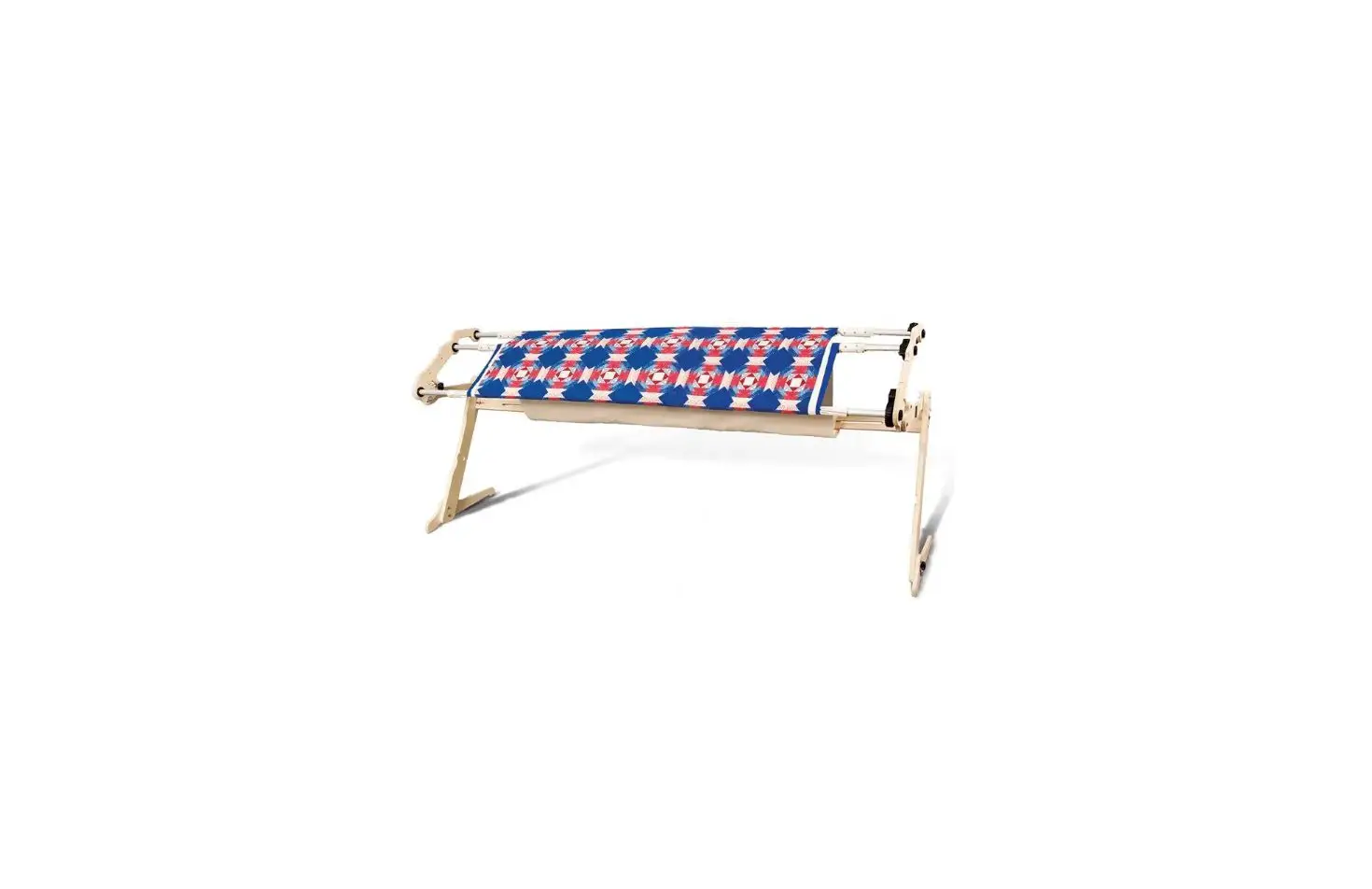
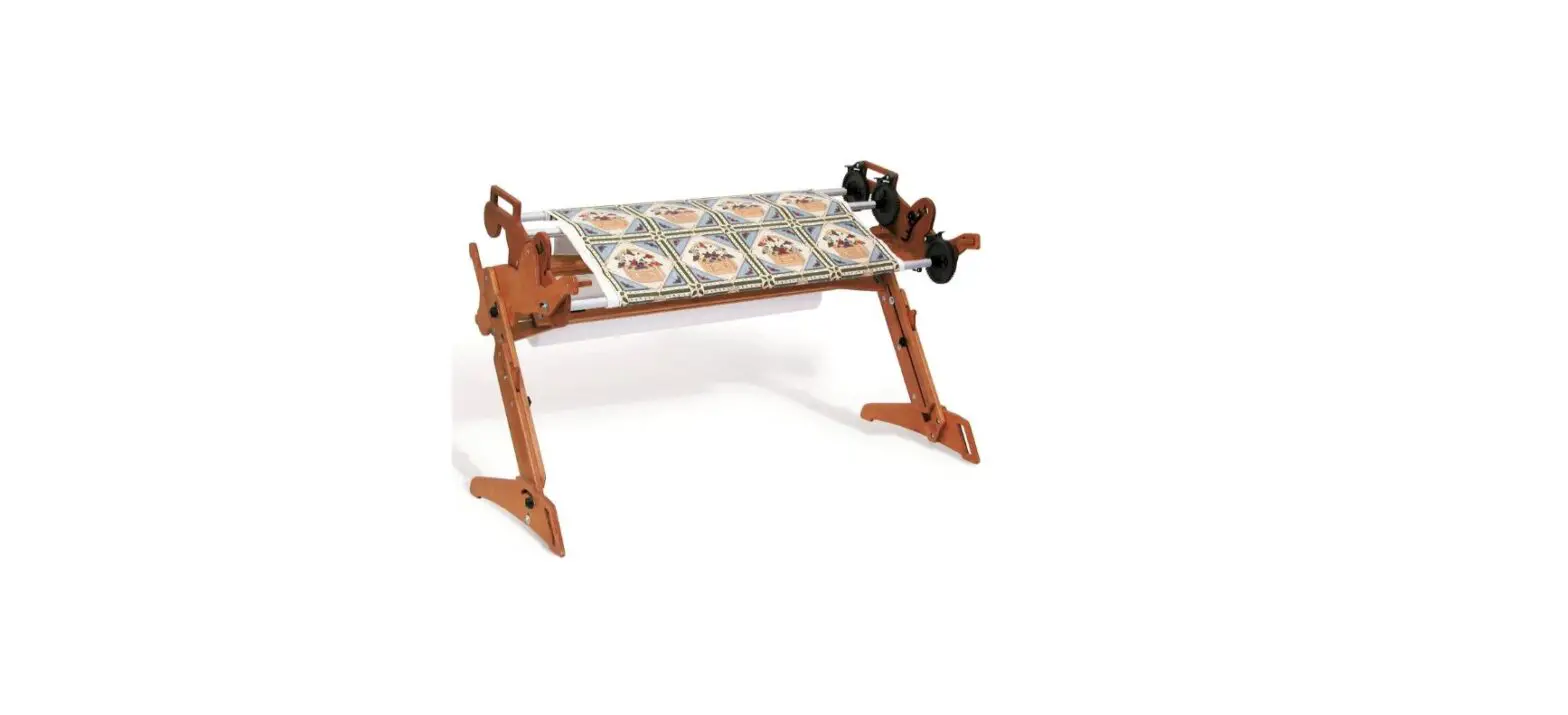
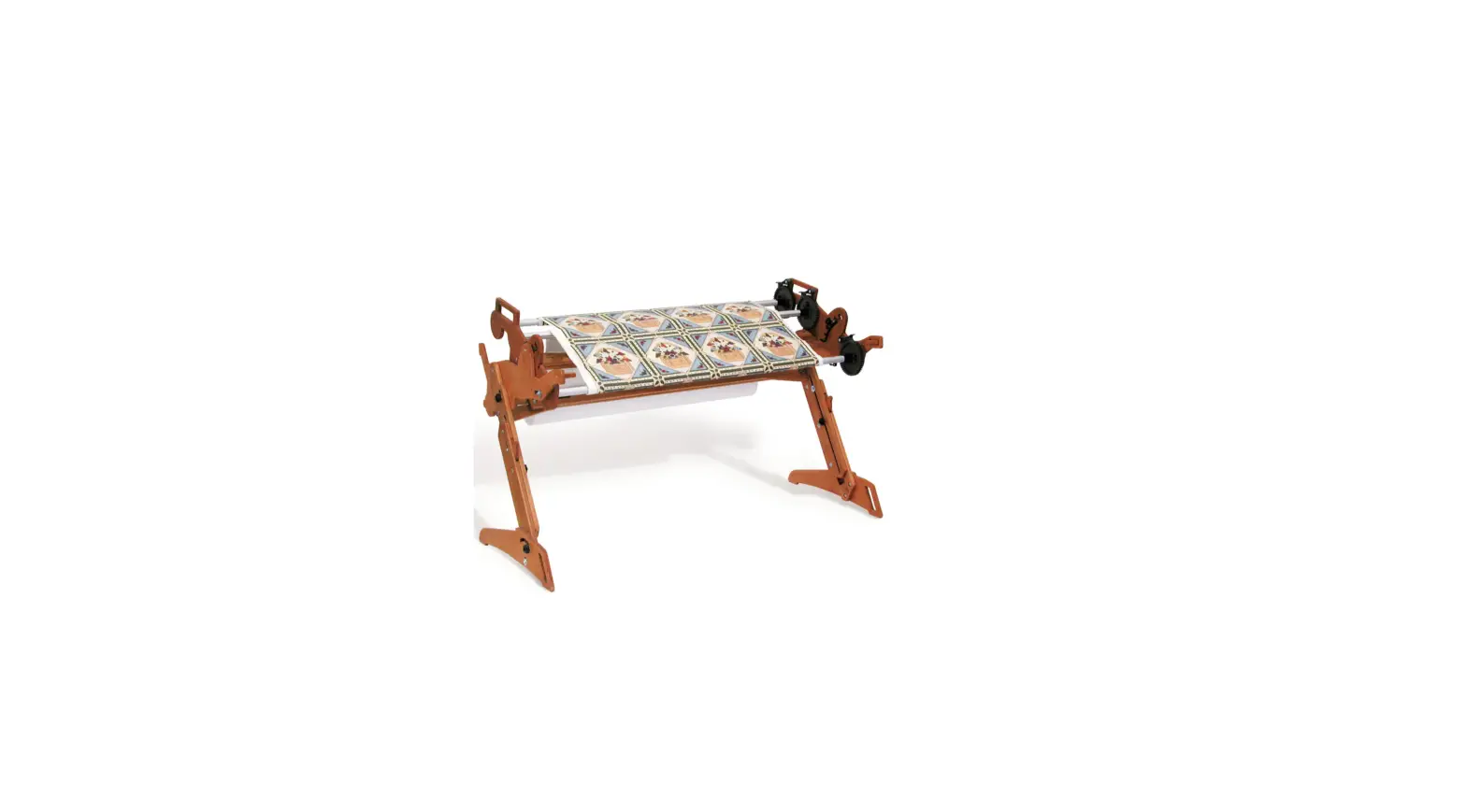
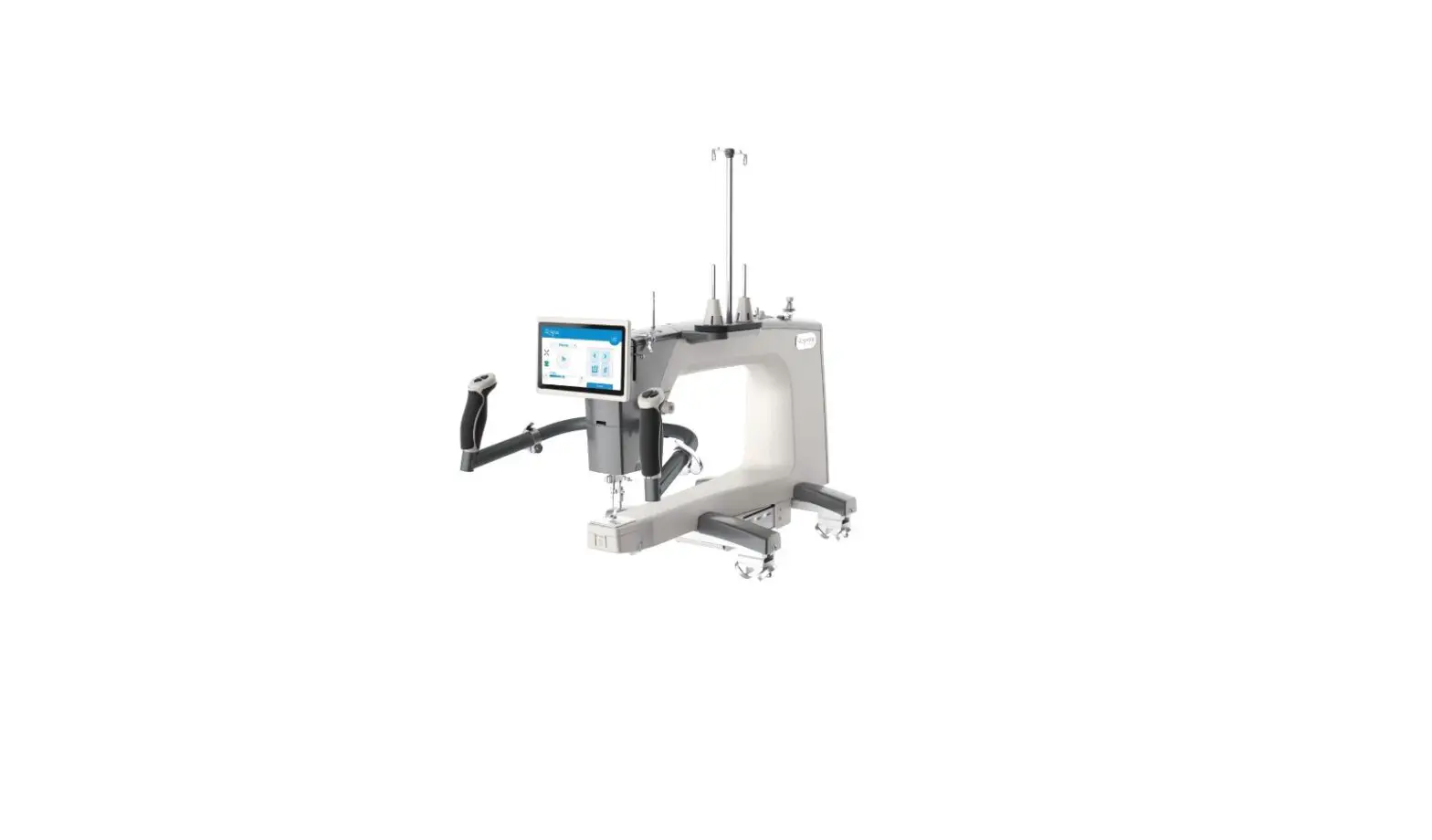
Quilter’s Evolution Hoop Frame
Product Information
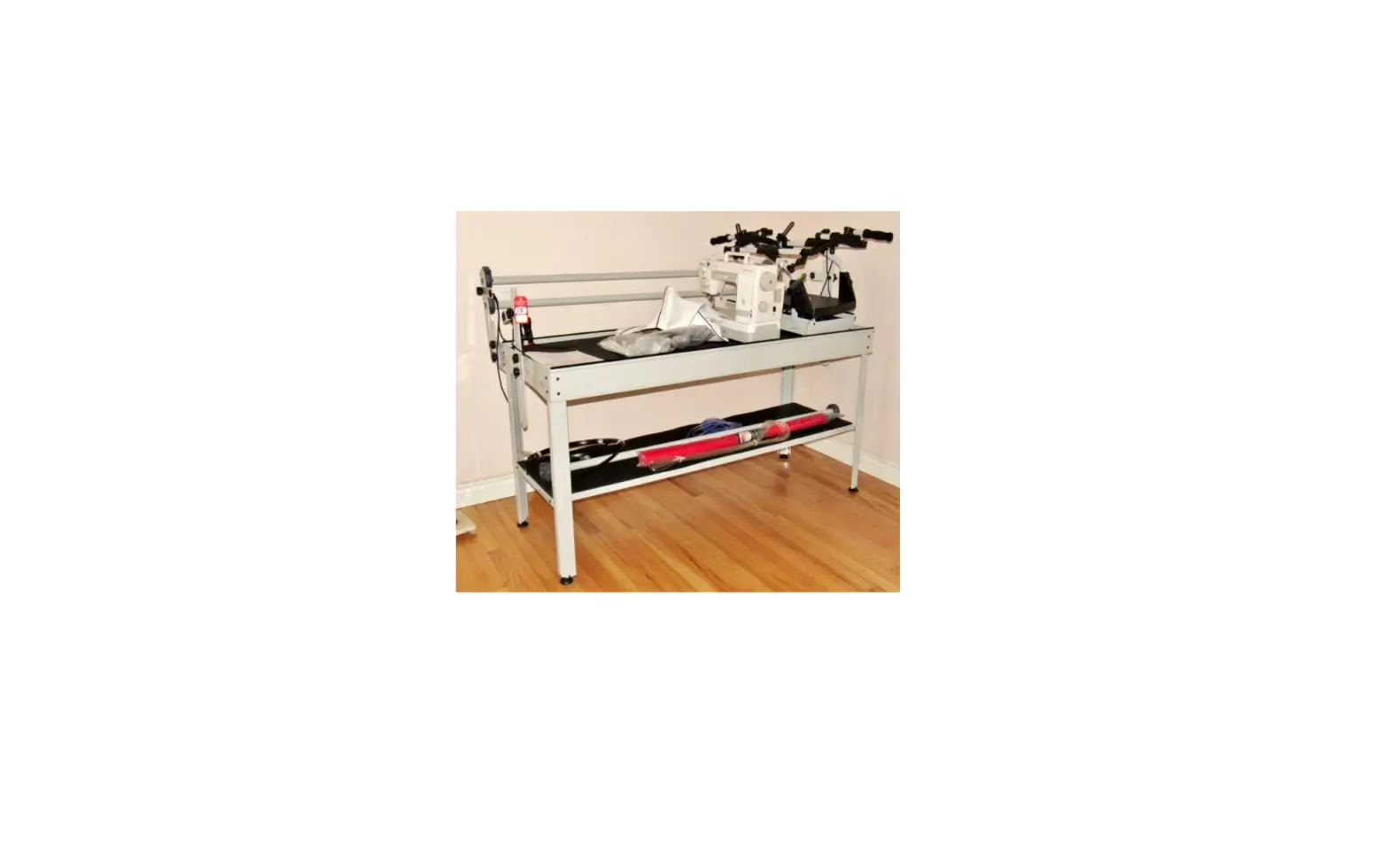
The product is a quilting frame designed for quilting projects.
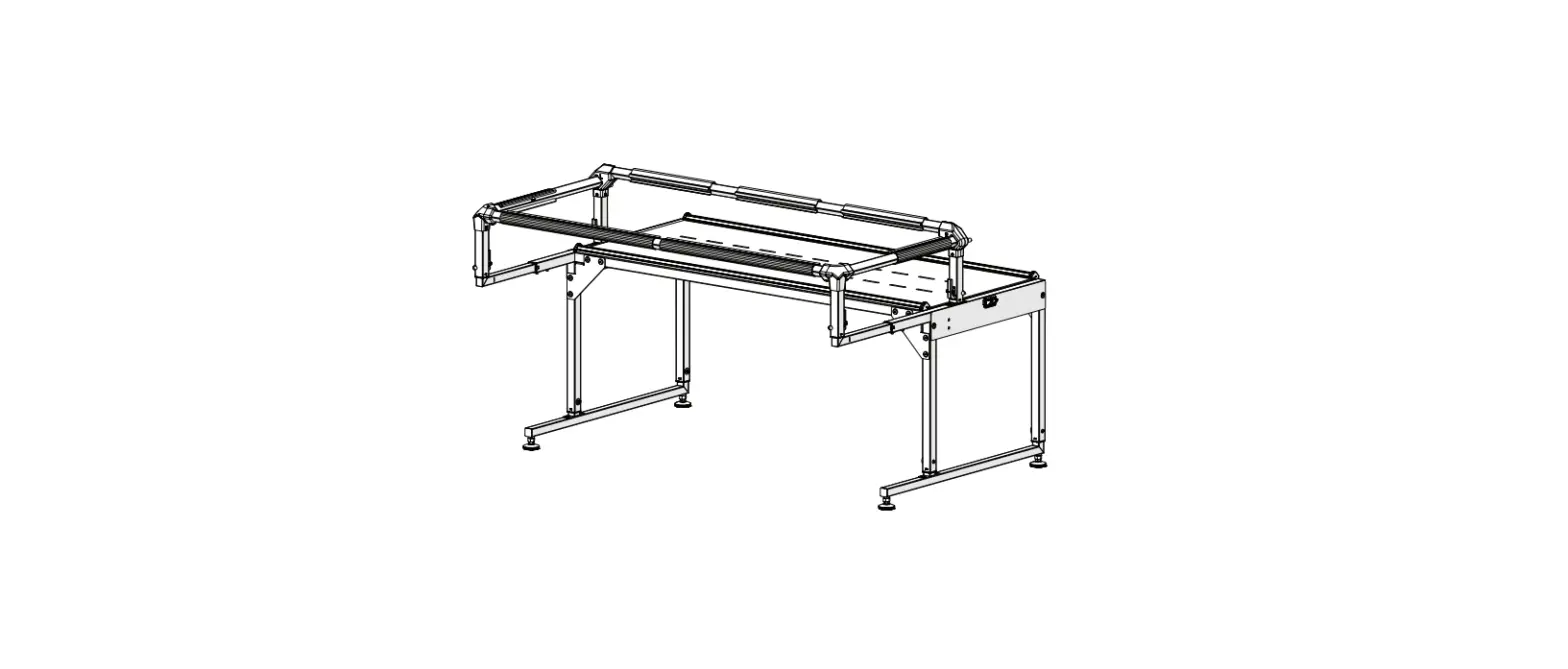
It consists of various parts, including:
- Side Rail
- Take-Up Rail
- Take-Up Rail Clamp
- Channel Lock
- Front Rail
- Bottom Carriage
- Front Rail Clamp
- Side Rail Clamp
- Tracks
- Leveling Foot
- Left Side
- Right Side
The frame is designed to hold and secure fabric for quilting. It
allows users to easily load and move the fabric while maintaining
proper tension.
Product Usage Instructions
- Before starting a new project, ensure that the frame is
level. - Measure your quilt top.
- Create a quilt sandwich by placing the backing fabric
right-side down, followed by the batting (scrim side down), and
finally the quilt top (right side up). - Check the rail height.
- Wipe down the tracks on the frame and bottom carriage with a
lint-free cloth. - Wipe down the bottom carriage wheels and your quilting machine
or top plate wheels. - Attach your fabric to the frame by following the instructions
for loading fabric on the reverse side of the manual. - Tack down your quilt at the edge of the quilt top.
- Tack down test fabric to the side of your quilt according to
the frame instructions. - Test stitch tension in the test fabric.
Quilt Dimensions (Hoop Setup)
Recommended sizing:
- Backing: 10 larger than the quilt-top, or 22–whichever is
larger. - Batting: Same size as backing. 10
Note: If using rolling setup, refer to the directions for
alternative sizing.
Record the measurements of your quilt in the provided wet-erase
marker spaces:
- Top: _____ x _____
- Batting: _____ x _____
- Backing: _____ x _____
Loading Fabric (Hoop Setup)
- Build your quilt sandwich:
- Place the backing right-side down.
- Place the batting on top of the backing, scrim (smooth) side
down. - Center the quilt top over the batting, right-side facing
up.
corner of your quilt-top is under the hopping foot.
clamps on the rails.
of your quilt.
take-up rail clamps.
down the left and top edge of the quilt.
Note: See frame instruction manual for more details on fabric
installation.
Moving Fabric (Hoop Setup)
When you’re finished with the available quilting space, follow
these steps to move the quilt to the next zone:
- Remove the clamps and bungees.
- Move the quilt so the next quilting zone is within the reach of
the sewing machine. - Secure the quilt with the clamps and bungees if needed.
Leveling Frame
If you notice an area of pulling or tugging where the machine
hits a low spot in the frame, you can adjust the height of the
leveling feet to smooth it out. Follow these steps:
- Loosen the top nut on the leveling foot with a 17 mm open-end
wrench. - Adjust the bottom nut with a 14 mm open-end wrench until the
desired height is set. - Tighten the top nut with the 17 mm open-end wrench until it is
firm against the frame leg to prevent the height from slipping over
time.
Tips & Tricks
- To convert between rolling and hoop setups, use a 2.5 mm Allen
wrench to swap rail caps. - Use leftover fabric from your quilt top to make a small
practice quilt. - After every bobbin change, pop the practice quilt onto the
frame and set your stitch tension before stitching into your
project.
Parts of the Frame
Side Rail
Take-Up Rail
Take-up Rail Clamp
Channel Lock
Front Rail
Bottom Carriage
Front Rail Clamp
Side Rail Clamp
Tracks
Leveling Foot
Left Side
Right Side
Starting a New Project?
1. Ensure your frame is level. 2. Measure your quilt top. 3. Make your quilt sandwich (see below). 4. Check your rail height. 5. Wipe down the tracks on the frame and
bottom carriage with a lint-free cloth. 6. Wipe down the bottom carriage wheels and
your quilting machine or top plate wheels.
7. Attach your fabric to the frame (see Loading Frame on reverse side).
8. Tack down your quilt at the edge of the quilt top.
9. Tack down test fabric to the side of your quilt (see frame instructions for details).
10. Test stitch tension in test fabric.
Quilt Dimensions (Hoop Setup)
Quilt Top Batting & Backing
Recommended sizing:
Backing: 10″ larger than the quilt-top, or 22″–whichever is larger.
Batting: Same size as backing. 10″
Note: If using rolling
10″
setup, see directions for
alternative sizing.
Record the measurements of your quilt here in wet-erase
marker:
Top:
_____ x _____
Batting: _____ x _____
Backing: _____ x _____
Loading Fabric (Hoop Setup)
11. Build your quilt sandwich:
a. Place the backing right-side down.
b. Place the batting on top of the backing, scrim (smooth) side down.
c. Center quilt top over the batting, right-side facing up.
Backing (Right Side Down) Batting (Scrim Side Down)
Quilt Top (Right Side Up)
12. Place your quilt onto the frame and
3
position it so the top-left corner of your
quilt-top is under the hopping foot.
2
13. While keeping the quilt free of wrinkles, install the fabric clamps on the rails.
14. If needed, use the fabric bungees to tension and hold the side of your quilt. 5
15. Secure the fabric roll from the throat of
the machine into the take-up rail clamps. 4
6
16. Starting from the bottom left corner of the quilt-top, tack down the left and top edge of the quilt.
Note: See frame instruction manual for more details on fabric installation.
Moving Fabric (Hoop Setup)
When you’re finished with the available quilting space, it’s time to move the quilt to the next zone.
11. Remove the clamps, and bungees.
22. Move the quilt so the next quilting zone is within the reach of the sewing machine.
33. Secure the quilt with the clamps and bungees if needed.
Zone A Zone D
Zone G Zone J
Zone B Zone E Zone H Zone K
Zone C Zone F Zone I Zone L
Copyright May 12, 2022
Version 1.0
Leveling Frame
If you notice an area of pulling or tugging where the machine hits a low spot in the frame, adjust the height of the leveling feet to smooth it out.
1
2
3
Loosen the top nut on the leveling foot with the 17 mm open-end wrench.
Tips & Tricks
Adjust the bottom nut with the 14 mm open-end wrench until the desired height is set.
· To Lower: Turn counterclockwise.
· To Raise: Turn clockwise.
Tighten the top nut with the
17 mm open-end wrench until it is firm against the frame leg to prevent the height from
slipping over time.
Quilt Top Batting
To convert between the rolling and hoop setups, use
a 2.5 mm Allen wrench to swap rail caps.
Backing
Use leftover fabric from your quilt top and make a small
practice quilt.
After every bobbin change, pop the practice quilt onto the frame and set your stitch tension before stitching into
your work in progress.
You can also practice stitching out patterns this
way.
Teeth
Install the bungees so the teeth bite directly into fabric, not batting. This maintains
fabric tension better, and avoids damage to the batting.
Hoop Rail Cap
Rolling Rail Cap
Attach or remove the hand wheel with a 6 mm Allen
wrench.
Rail Adjustment
Take-Up Rail: 1. Loosen knobs and open levers. 2. Set rail 1/4″ above machine bed. 3. Close knobs, tighten levers.
Hoop: 1. Adjust take-up
rail height first. 2. Loosen set screws with 4 mm Allen
wrench.
3. Loosen levers. Set so top of front rail is level with needle plate. 4. Re-tighten the set screws, close levers.
1/4″
Tacking Down Fabric
When you move to a new zone in your quilt, tack down the edges of the quilt top about a quarter inch from the batting and backing.
Channel Lock Use
Close the machine channel lock to stitch a straight horizontal line.
Close the carriage channel lock to stitch a straight vertical line.
Tip: If you won’t be quilting for the next couple of days, release your fabric
clamps to avoid stretching out your
fabric.
Copyright May 12, 2022
Version 1.0
1-800-264-0644