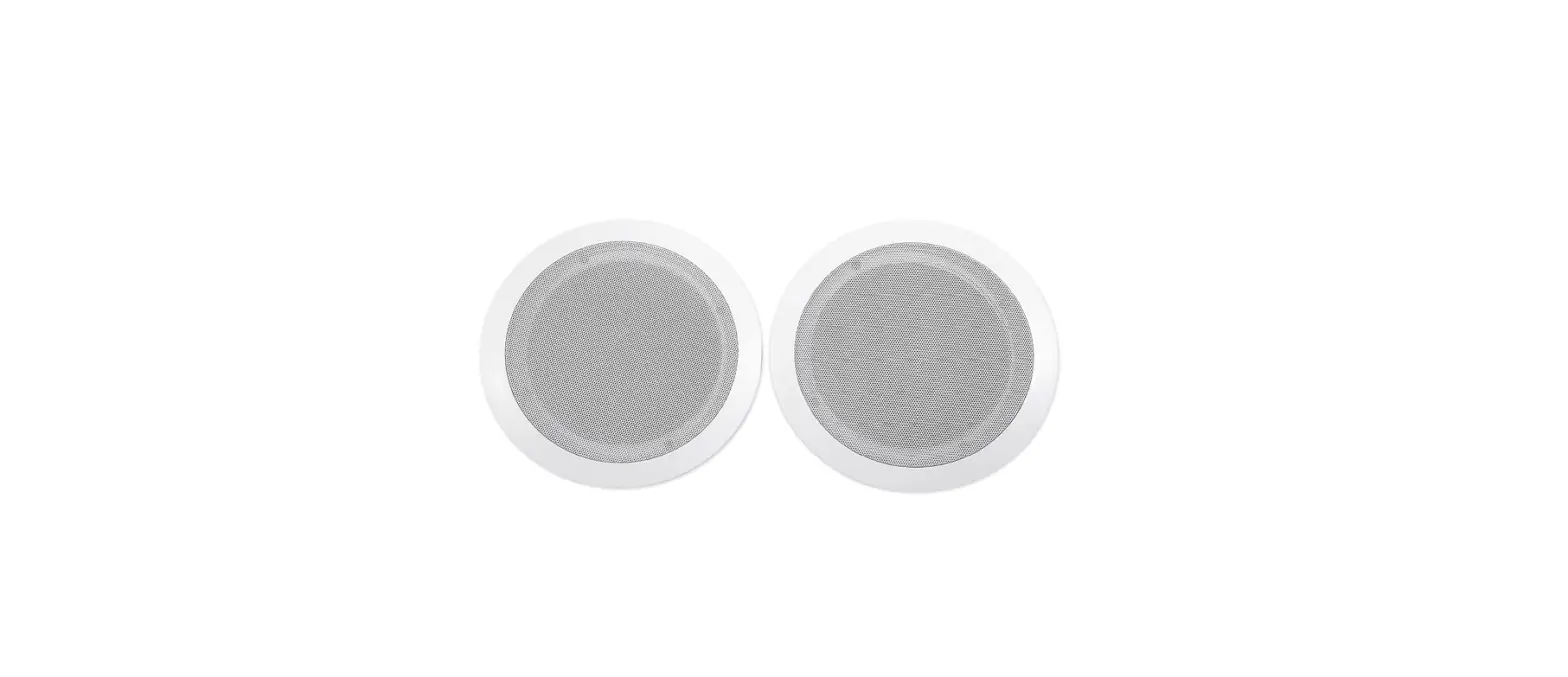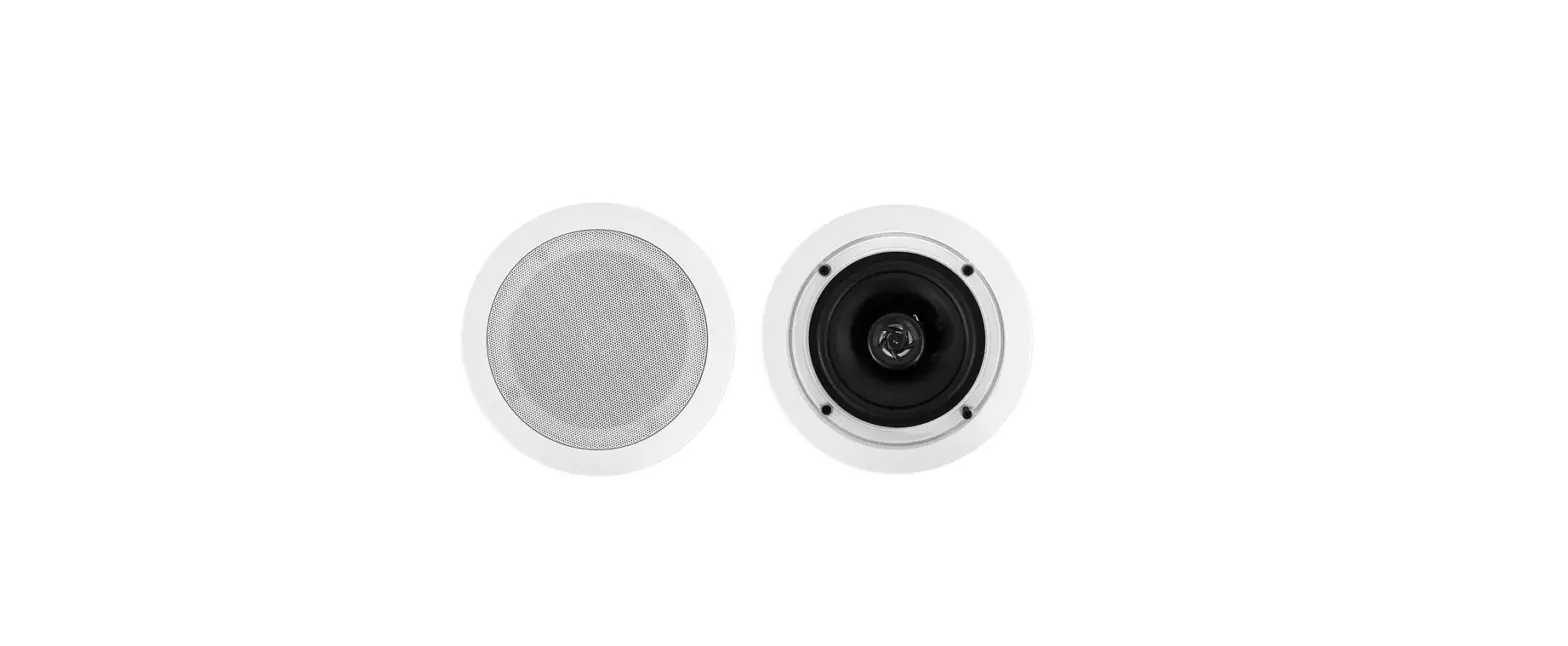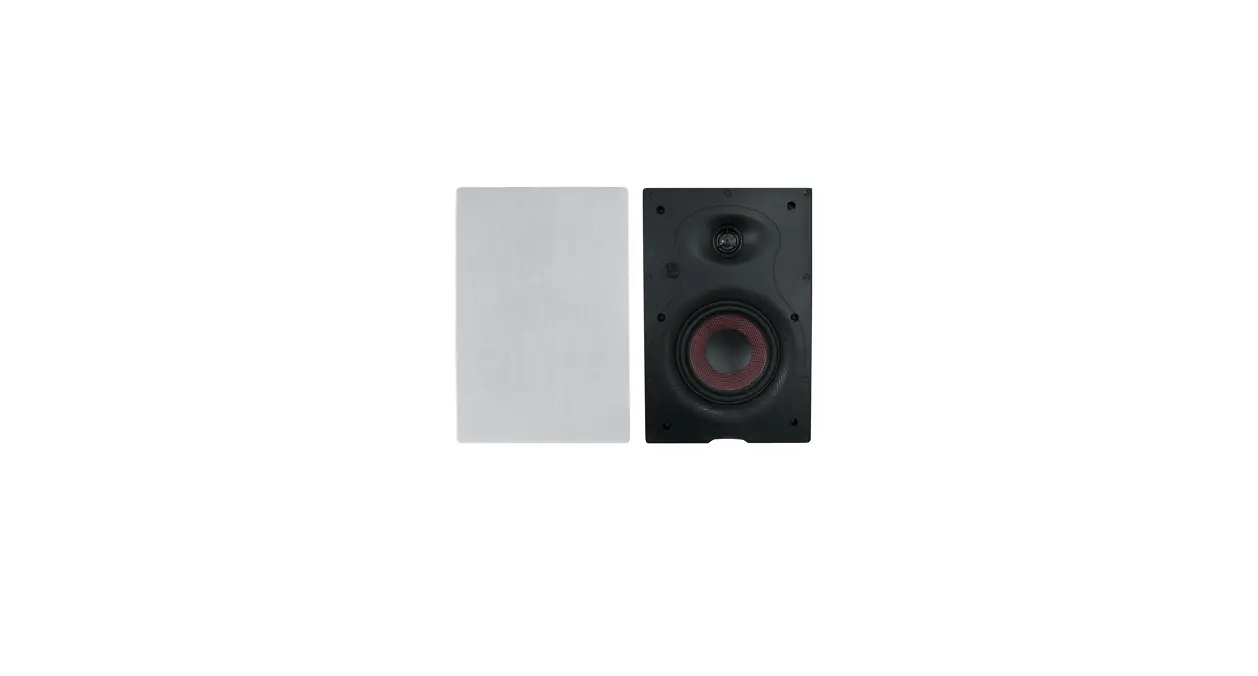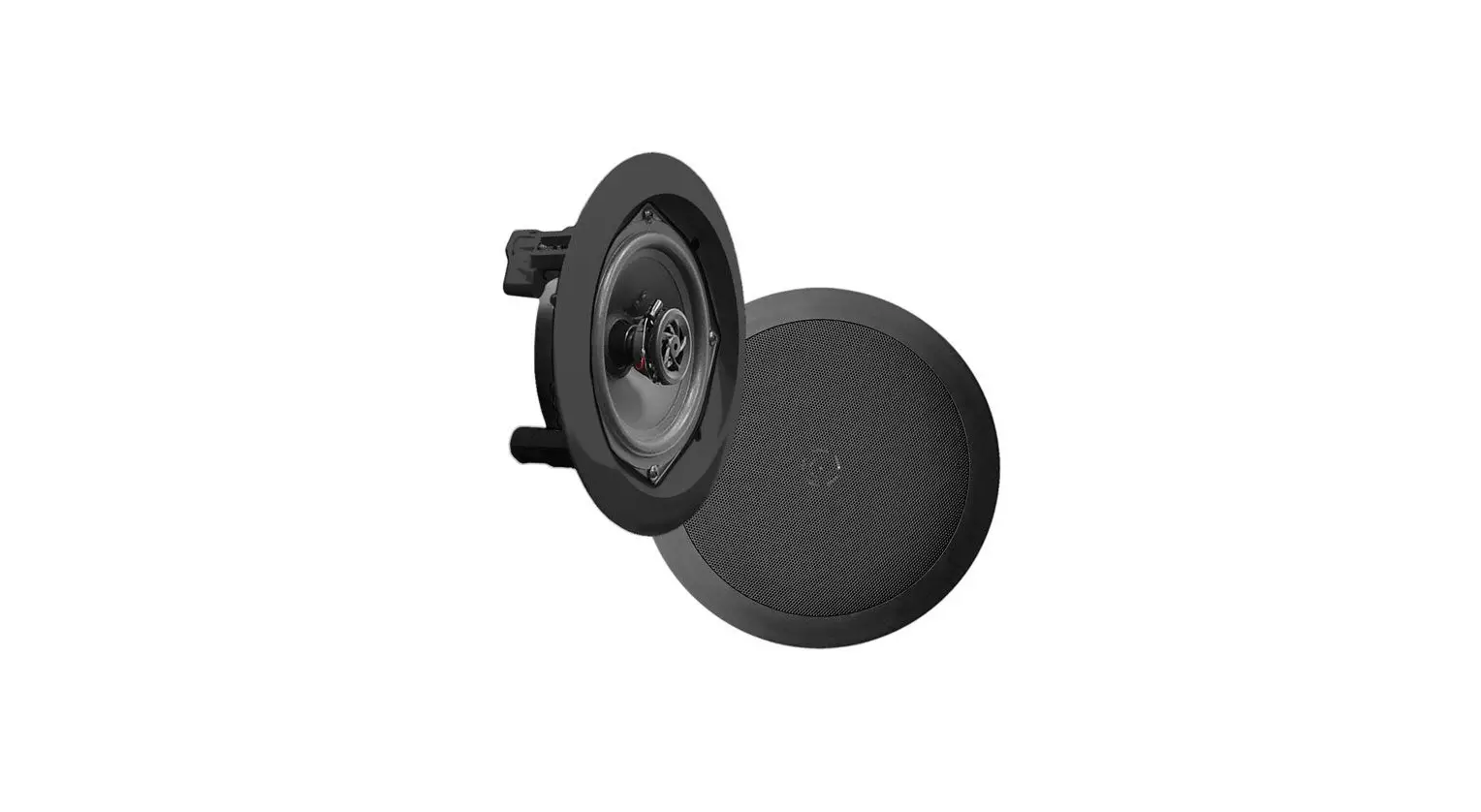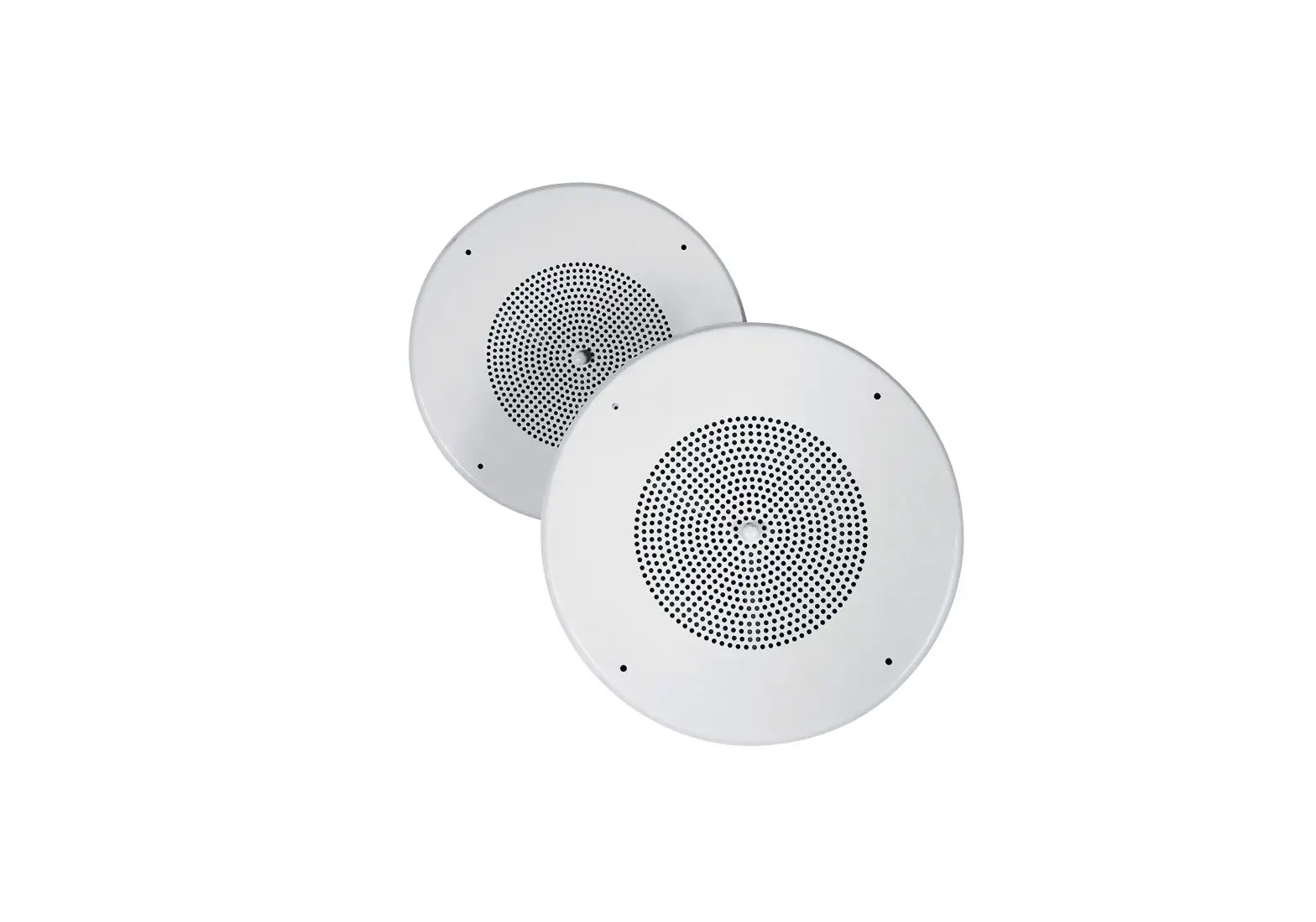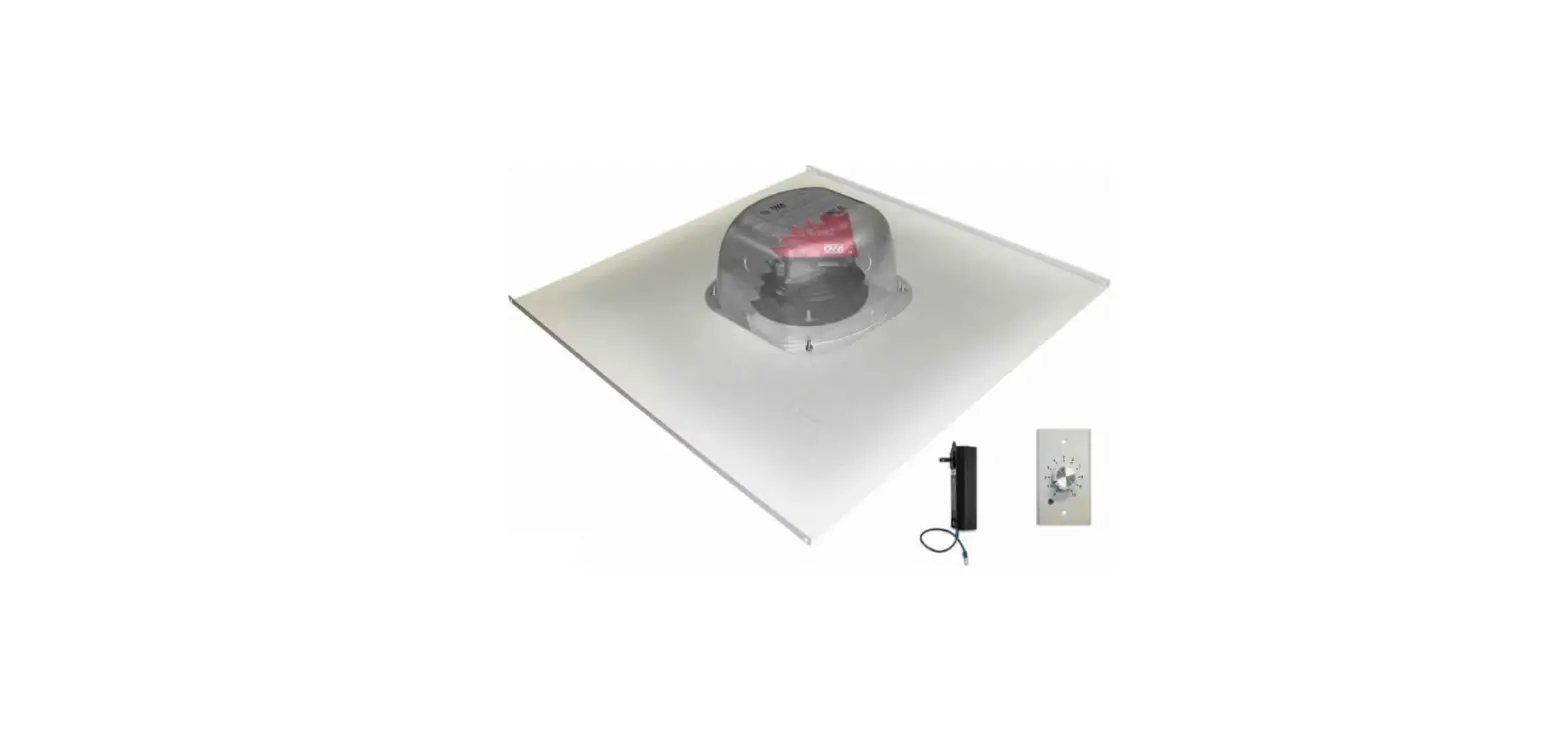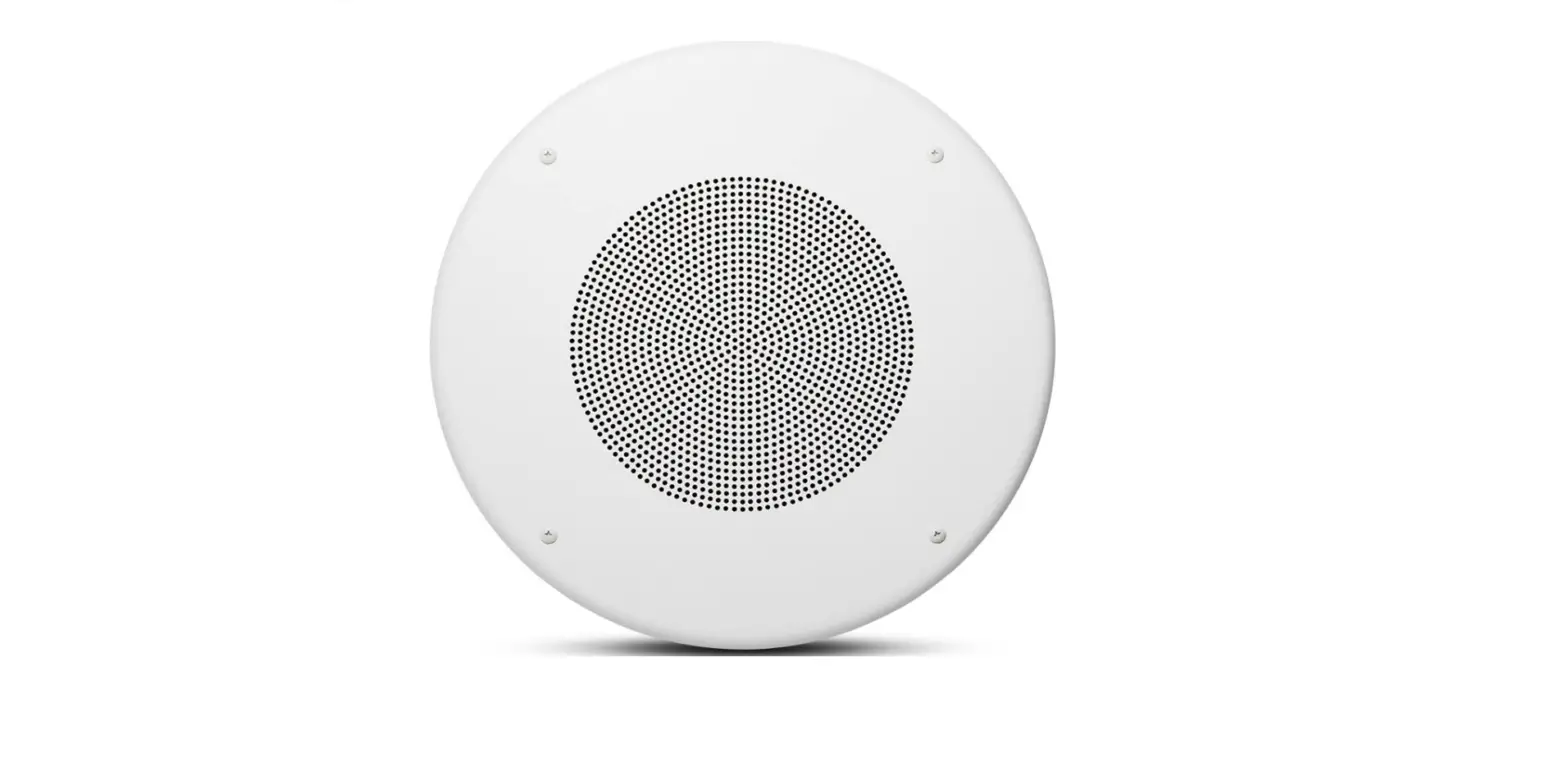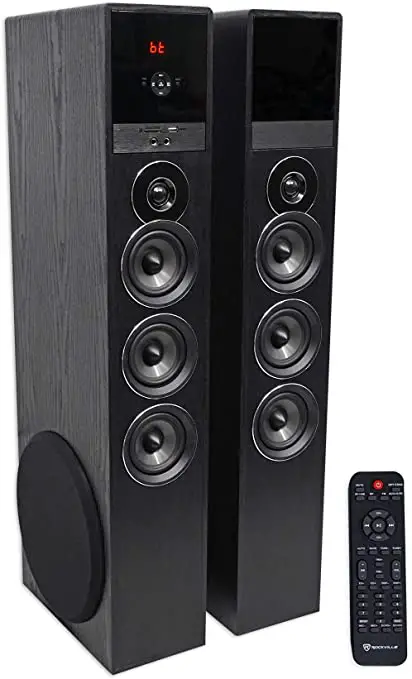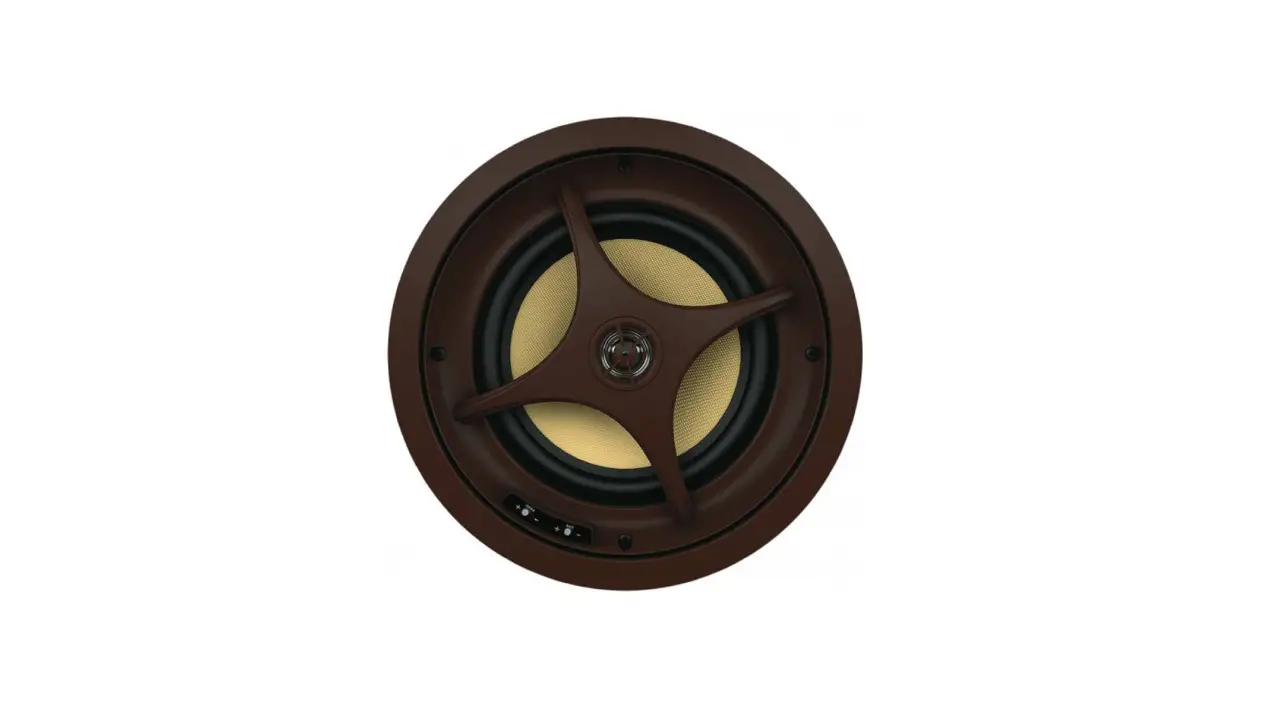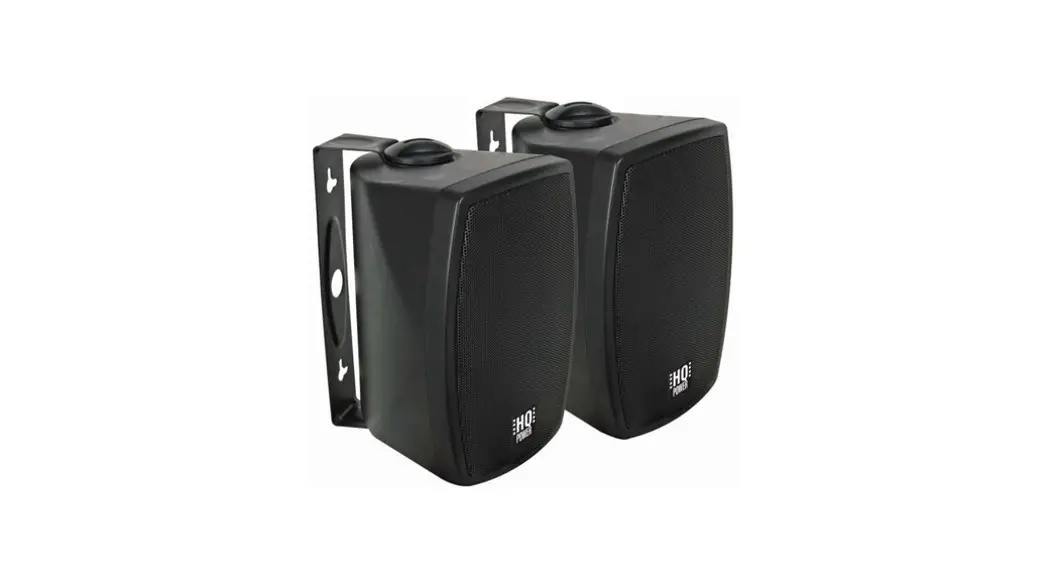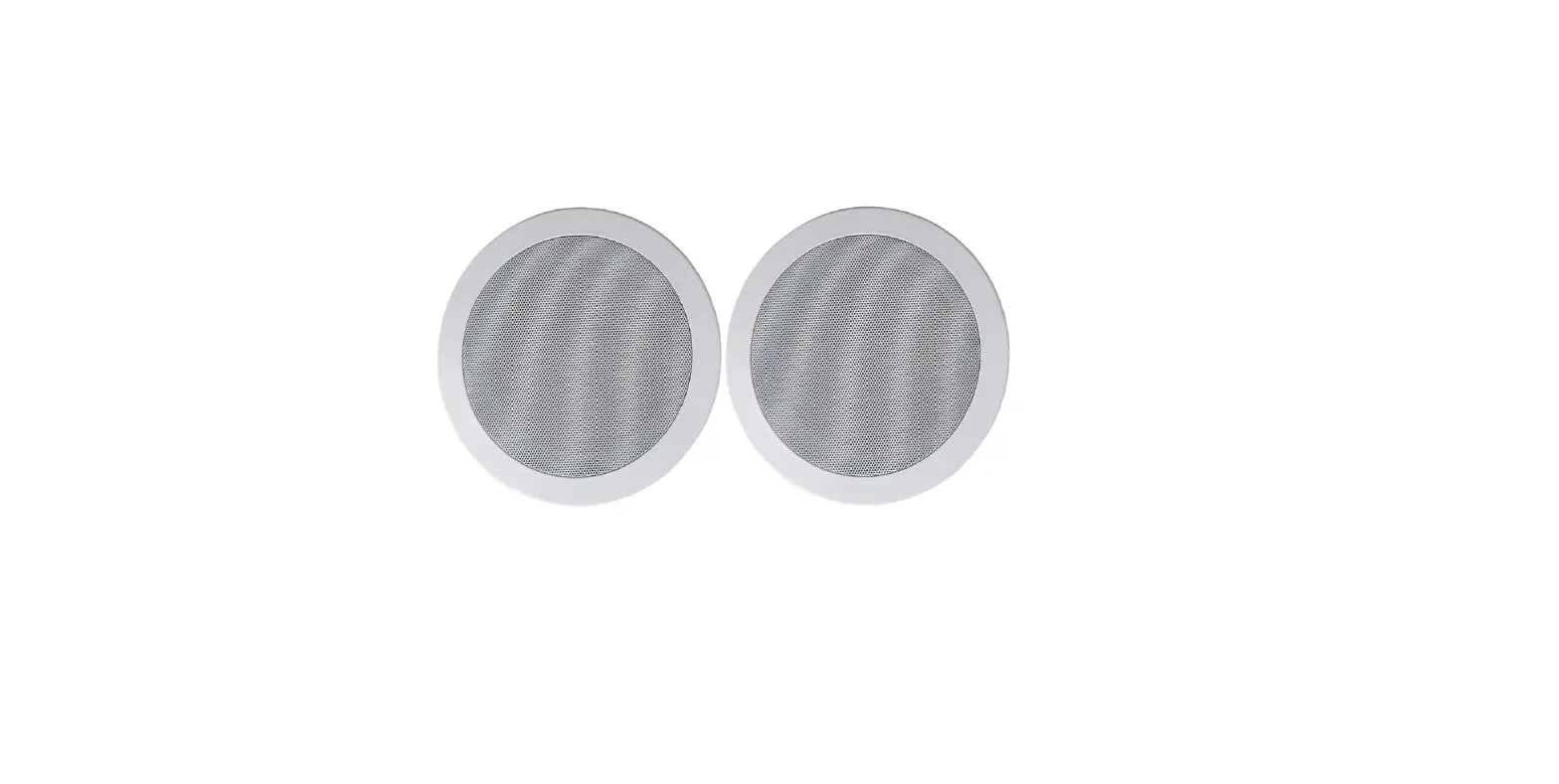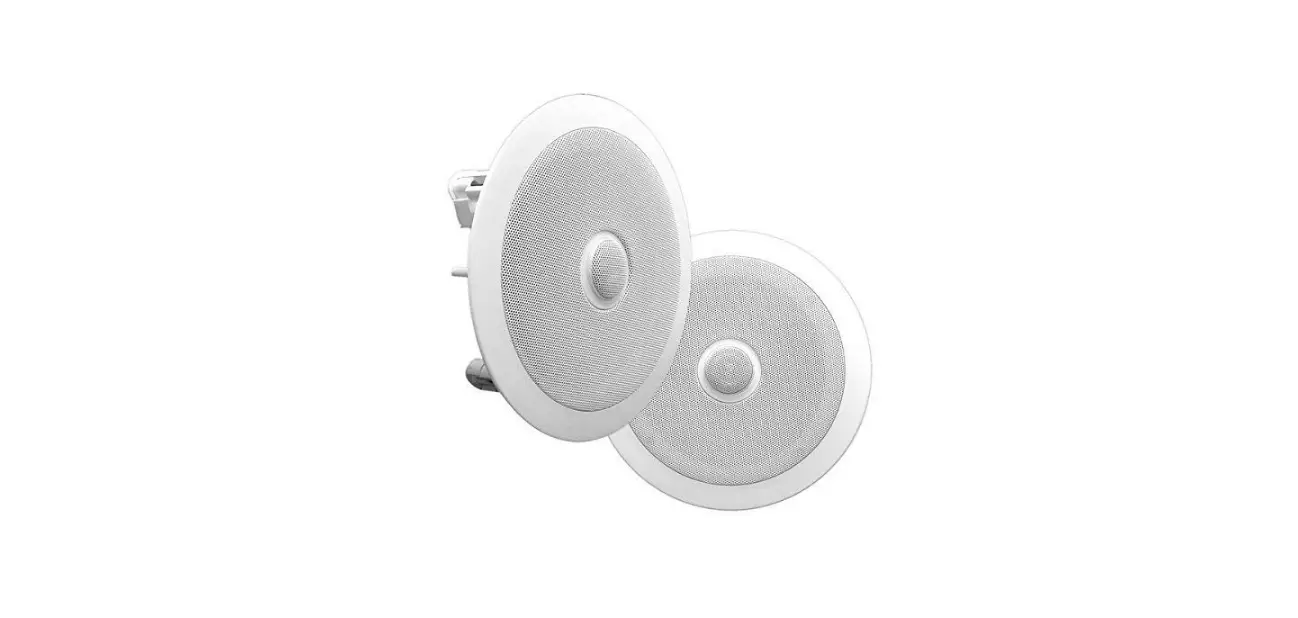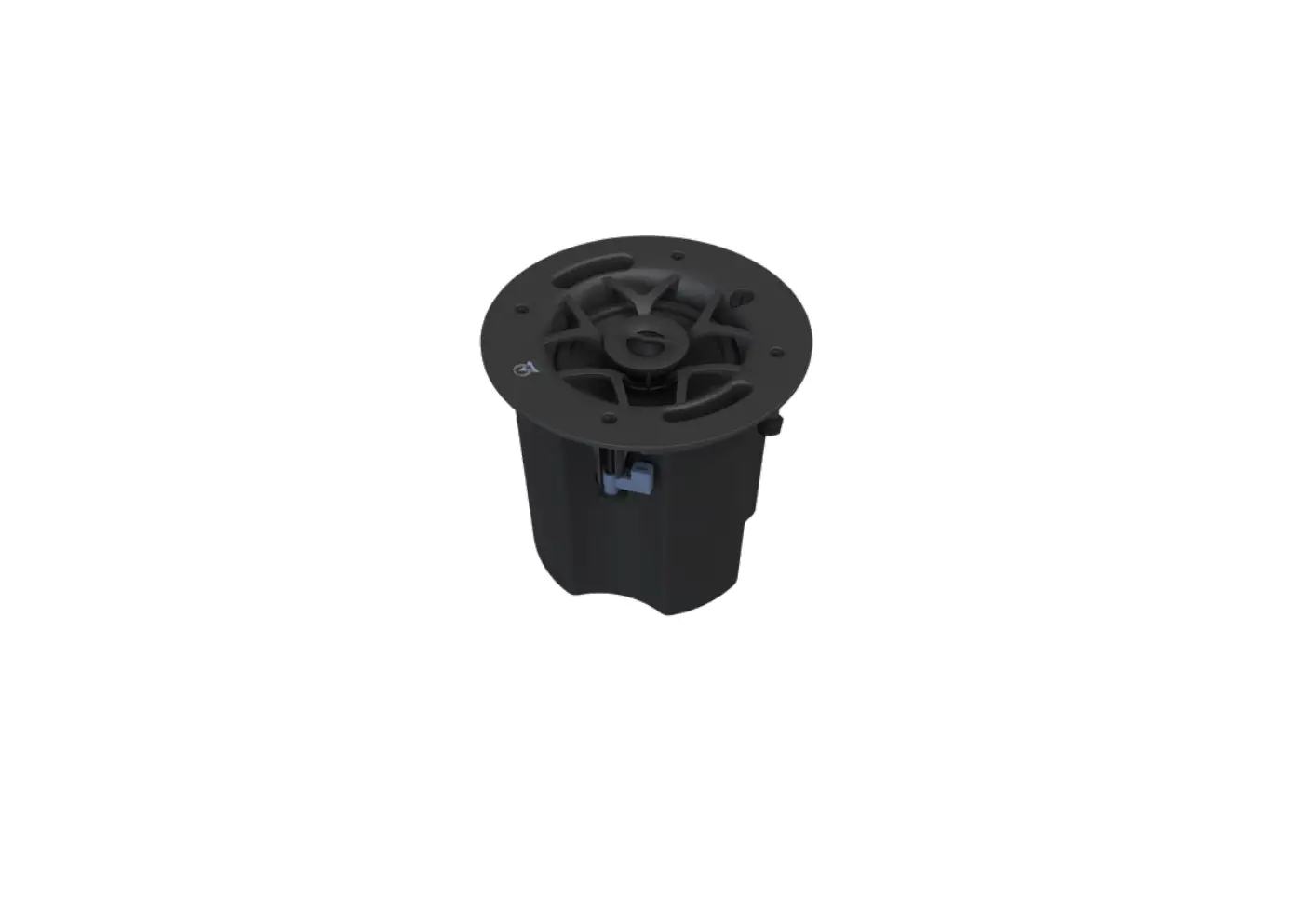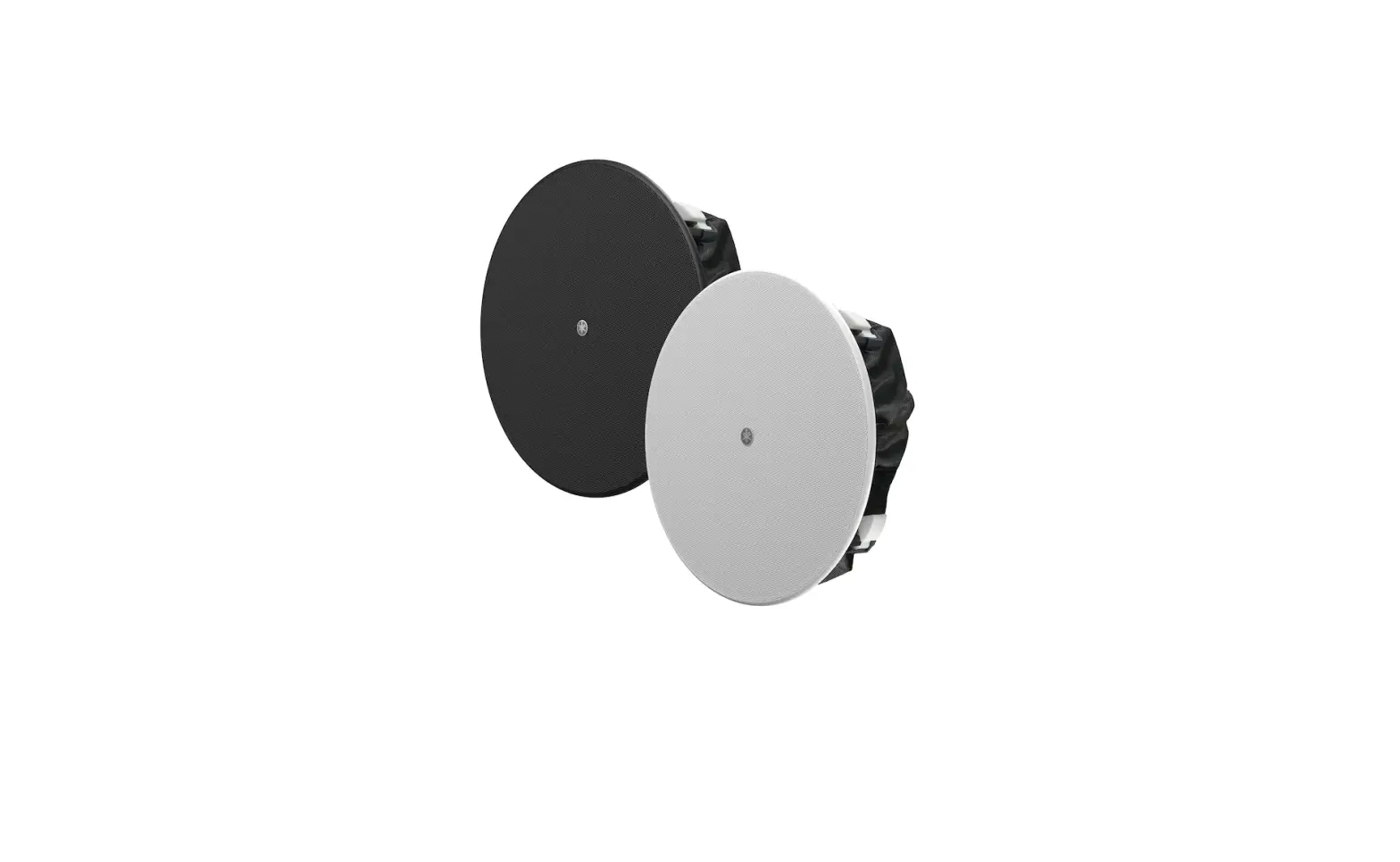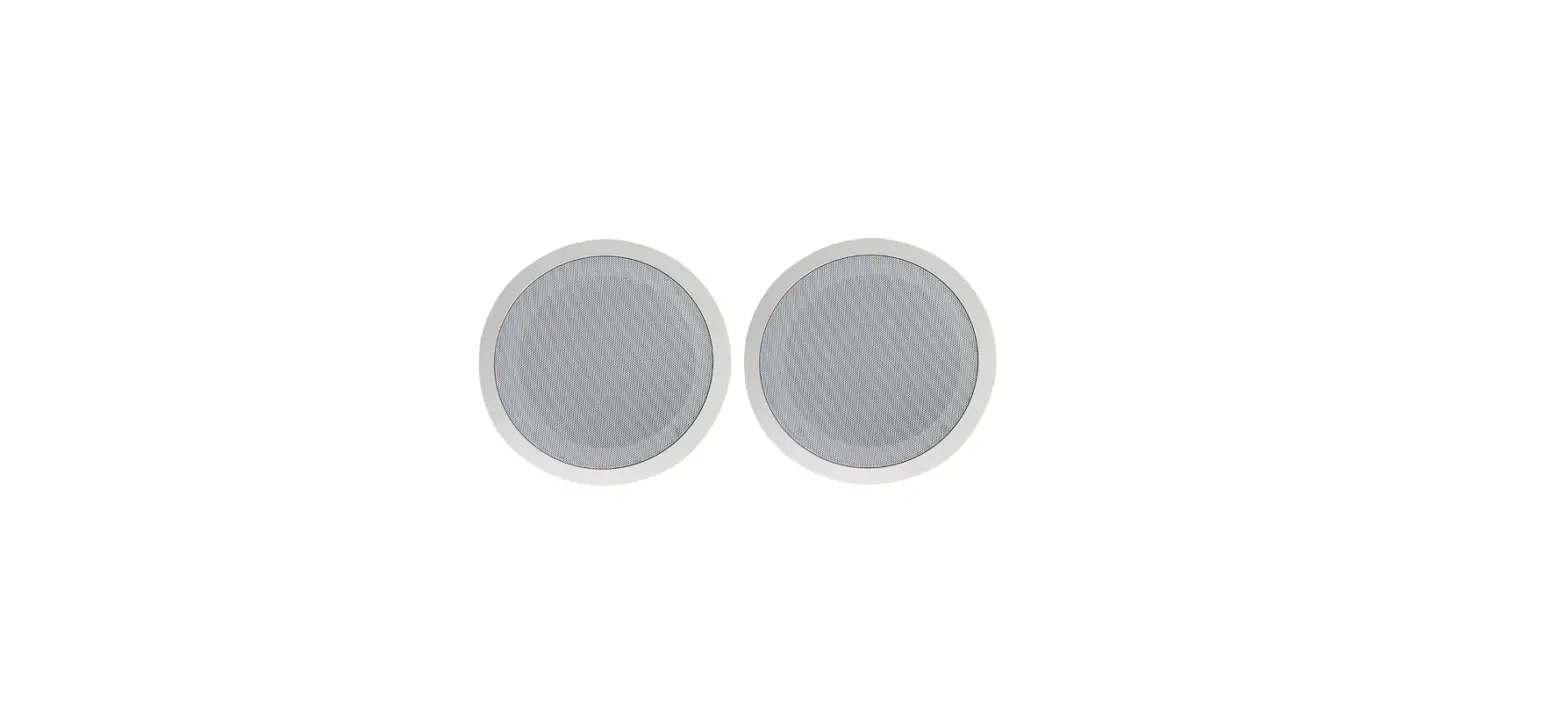

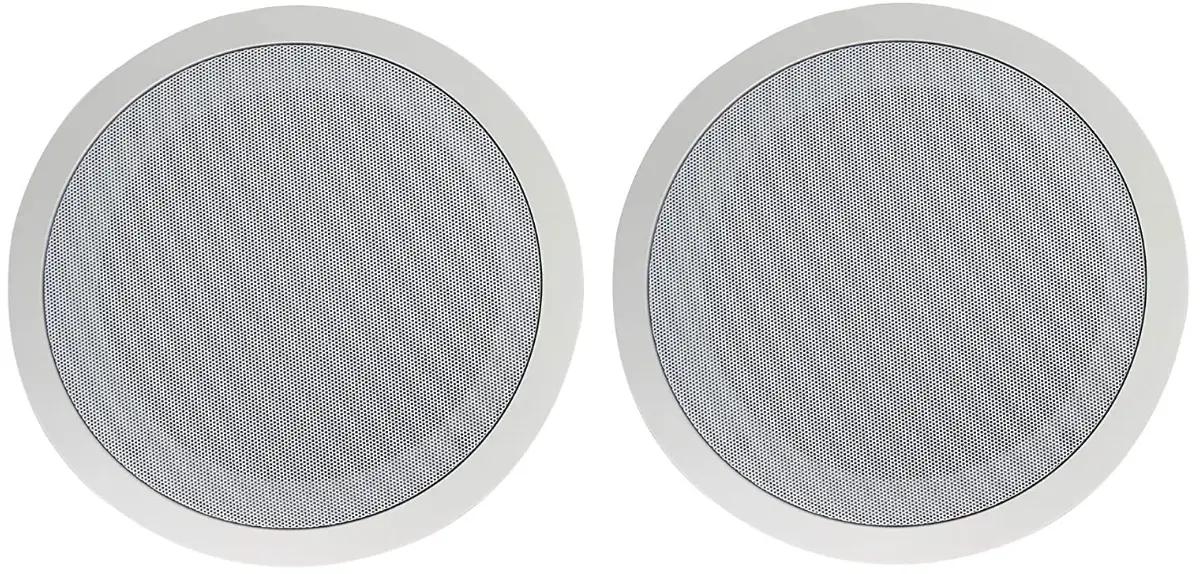
Rockville CC80T 8-inches Ceiling Speakers
ATTENTION
WATCH THIS VIDEO BEFORE USE!

Who reads manuals?
Instead, go to vimeo.com/522376444 (CC525T) vimeo.com/519161897 (CC65T/CC80T), or scan the QR codes and watch short videos, detailing how to set these items up and how to use them.
If you like to read though, we won’t stop you LOL!
Isn’t it good to have options? With Rockville we offer options.
Missing items? If you ordered a bundle that includes more than one product and you are missing part of your bundle then it just means your order shipped from two different warehouses. You will receive the remaining items very soon. If you have any concerns or inquiries, feel free to call our customer support center at 646-758-0144, Monday through Thursday, 9am to 1 Opm EST, and Fridays, 9am to 3pm EST.
Introduction
The CC-T series 70 volt in-ceiling speakers are perfect for any commercial application where you want to get amazing sound quality out of your music and have the ability to crank the volume really loud. It will obviously still handle your PA announcements and chimes, etc. We took a high quality home theater speaker and added 70 volt technology to it to give of the best of both worlds. With a selectable tap wattage that ranges from 2.5w all the way to 20w these speakers are great or any commercial application.
These ceiling speakers are precision tuned for excellent audio response at high and low volumes. If you want good musical sound you really need a 2-way speaker with a dedicated tweeter for highs and a dedicated woofer for lows. These n-ceiling speakers feature polypropylene woofer cones for clear, rich mids and deep bass. Our mylar dome tweeters provides clean, crisp highs. The included sheer grills enable flush installation and can be painted to match any decor. Our igh quality spring loaded push terminals make your wiring very secure.
Please read this guide carefully for proper use of your Rockville CC-T series in-ceiling home theater speakers. Should you eed technical assistance please call our technical help line at 1-646-758-0144, Monday through Thursday, 9am to 10pm EST., d Fridays, 9am to 3pm EST.
Installation
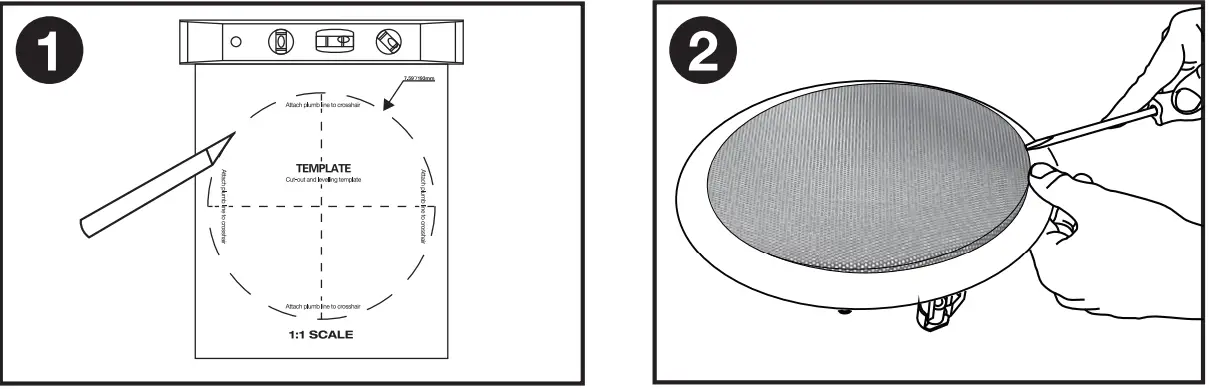
Tools needed: A dry wall knife, a level, a phillips head screwdriver, and a flat head screwdriver.
- Using the included template, cut an opening in the drywall.
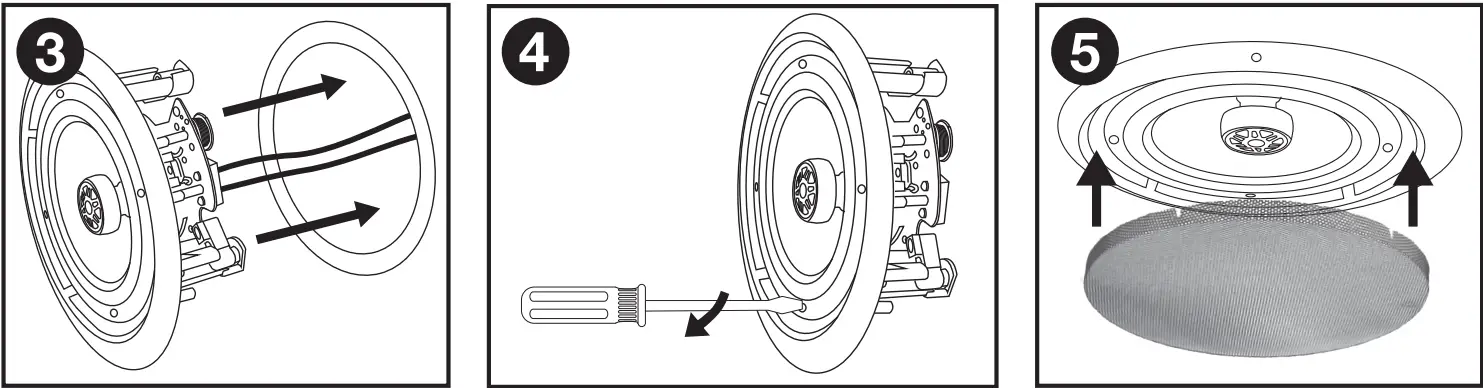
Note: Always allow at least Yi’ between a wall stud and the speaker cutout or the locking tabs will not be able to swivel into place. - To remove the grille insert a flat head screwdriver into the space between the grill and the inner lip of the speaker housing. Gently lift the grill out being careful not to bend it.
- Connect the speaker wires, set taps to the desired power setting (see diagram on next page), and insert the speaker into the cutout. Be sure to observe proper polarity.
- Screw down each of the four Phillips head screws. The locking tabs will swivel into place and secure the unit to the rear surface of the drywall. Put in the strips of adhesive to secure the grille.
- Replace the grill by gently pushing it onto the speaker face.


Features/Specifications
- 70 Volt Power Options: 20w, 15w, 10w, 5w, 2.5w
- 8 Ohm Power handling: 40W
- Polypropylene Cone
- Rubber Surround
- 8 ” Woofer
- 1 ” Aluminum Voice Coil
- ½ “Mylar Dome Tweeter
- 20 oz. Ferrite Magnet
- High Quality Spring Loaded Push Terminals Aim-able Swivel Tweeter
- Paintable Flush Mount Grills
- Frequency Response: 40Hz – 20KHz Sensitivity: 90dB@ 1 w/1 m
- Impedance: 8 Ohms
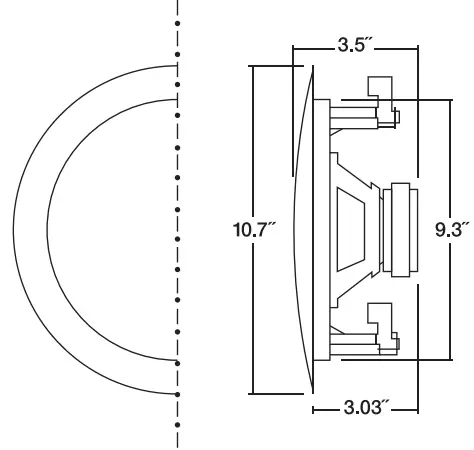
- Mounting Depth:03″
- Cut-out Diameter::r
- Color: Available in White or Black (paintable)
Setting the Taps
The tap is the selector knob at the rear of the CC-T Series speakers. It allows you to set how many watts the built-in transformer will allow the speaker to get from the amplifier. CC-T Series speakers have taps set at 2.5, 5, 10, 15, and 20 watts for 70-volt input. This range of taps allows for full customization of the sound for the space in which the speakers are installed. In a restaurant, for example, you can tap your dining room speakers at 5 watts, the speakers in the outside seating area at 10 watts, the ones in the hallway at 2.5 watts, and the speakers in the bathrooms at 5 watts. Another great feature of 70-volt speakers is that you can mix and match any type whether they are ceiling speakers (such as these), wall mounted speakers, subwoofers, etc.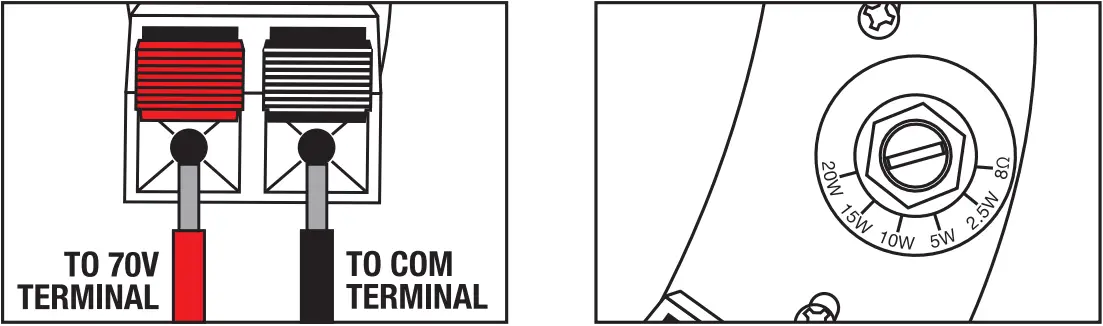
Wiring
70-volt speaker set-ups allow you to run very long lines of speaker wire without signal loss. Wire all the positive terminals of the speakers to the positive 70-volt terminal of the amplifier. The negative terminals on the speaker simply get wired to the COM (negative) terminals on the amp. You do not have to worry about impedance. The power is constant.
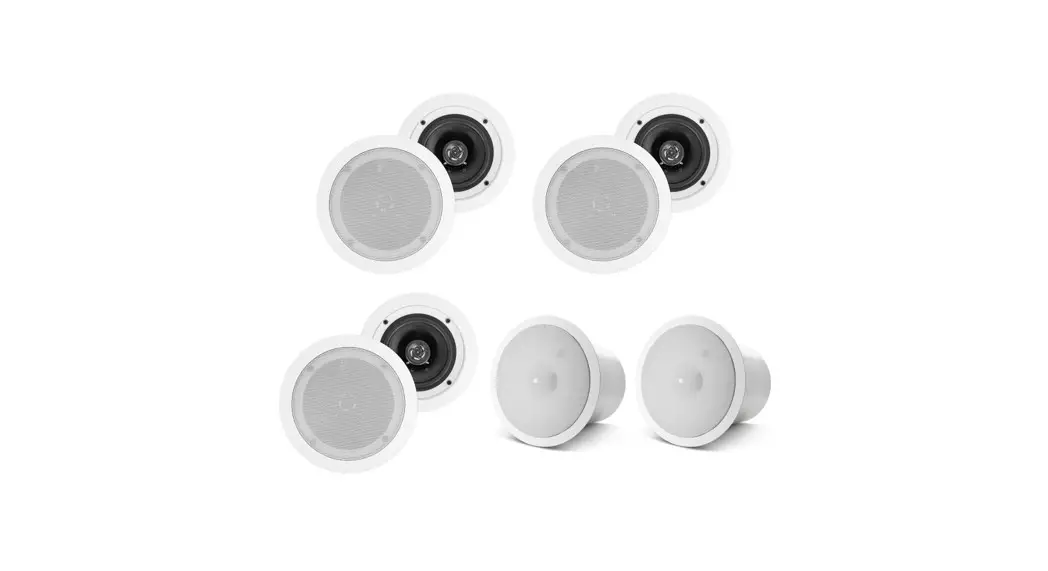
The total number of speakers multiplied by the tap value cannot exceed the output power (in watts) of your 70V amplifier. The example below shows 5 total speakers. Using the 20W taps, you will need an amplifier with at least 100 watts (5 x 20 = 100W). A good rule of thumb is to select an amplifier with 15 to 20% greater power; in this case, an amplifier that delivers about 120W.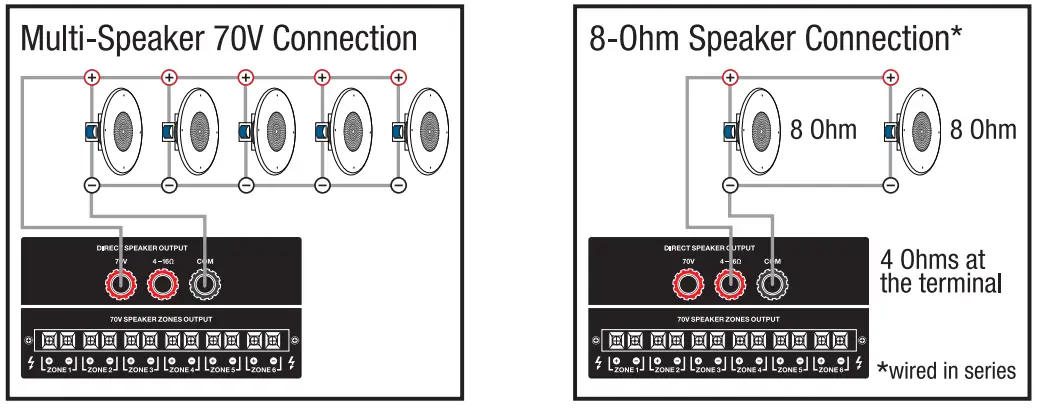
Dimensions
FAQs
For the wires, drill a hole. Shut off the breaker after making sure the amplifier is unplugged. Connect the wiring. Start attaching the wires to the speaker terminals in the ceiling. Connect the other end of the wires to the amplifier’s terminals. Try it out by turning on your breaker.
Do ceiling speakers require a power source? No, ceiling speakers typically operate as passive speakers, which means that, because they lack built-in amplifiers, they are powered by speaker wires connected to an external amplifier. Each ceiling speaker is connected to the amplifier using the binding posts.
While passive ceiling speakers require a separate amplifier to power them, active ceiling speakers have an amplifier built right into the device.
The term “mono” refers to the fact that the majority of conventional ceiling speakers only provide the left or right channel of sound.
Every TV will be equipped with an audio output. It will most likely be a digital optical output for the time being. You can listen to TV sound through your ceiling speaker system by running an analogue cable from your TV to the amplifier and switching to line output on your TV.
In reality, playing music over ceiling speakers is a terrific idea. They can make you feel like you’re at a concert hall or live performance by completely enveloping you in surround sound.
If you want a home theatre experience with a more immersive audio experience, ceiling speakers are a terrific addition. Even though they have to be made specifically for ceilings, they are a terrific addition to a surround sound system.
Installing passive speakers on walls and ceilings is common. They are not required to be hooked into a power source as a result. They only require a connection to a receiver or amplifier that has a power supply to operate.
The majority of ceiling speakers work with Atmos. If you are creating your home theatre, the majority of speaker options, including those for the ceiling, will be compatible with Dolby Atmos; however, some of the older models might not be able to support this surround sound application.
In-wall speakers can be replaced with in-ceiling speakers, and the sound they produce is very comparable. The size difference will be the most obvious. Typically, in-wall speakers are bigger than in-ceiling speakers.
If your amplifier can handle surround sound, then the answer is without a doubt yes.
Turn off each and every light. Organize your cables. Cut the wires’ ends off. View the speaker wiring schematic. Connect your wires to the appropriate sockets as soon as they arrive. The sockets are protected with cable locks.
Every TV will be equipped with an audio output. It will most likely be a digital optical output for the time being. You can listen to TV sound through your ceiling speaker system by running an analogue cable from your TV to the amplifier and switching to line output on your TV.
In reality, playing music over ceiling speakers is a terrific idea. They can make you feel like you’re at a concert hall or live performance by completely enveloping you in surround sound.
As a result, in-wall speakers usually have superior quality and power than in-ceiling speakers. When in-wall speakers are installed in multiple walls of a room or another area, they can add more sound dimensions than just a downward-firing one.
Even if ceiling speakers can handle all of the frequencies, a subwoofer will be helpful in handling the bass and low-end ones. Additionally, it significantly improves the overall sound quality of your sound system.
No, ceiling speakers typically operate as passive speakers, which means that, because they lack built-in amplifiers, they are powered by speaker wires connected to an external amplifier. Each ceiling speaker is connected to the amplifier using the binding posts.
In-wall speakers can be replaced with in-ceiling speakers, and the sound they produce is very comparable. The size difference will be the most obvious. Typically, in-wall speakers are bigger than in-ceiling speakers.
Wirelessly controlling Bluetooth ceiling speakers is usually done with a smartphone or other internet-enabled device. The Bluetooth chip in the speaker will pick up the content from the smartphone and play it through the speaker.
There is never a bass response point and a background sound field with in-ceiling speakers. For the environment, they were created.