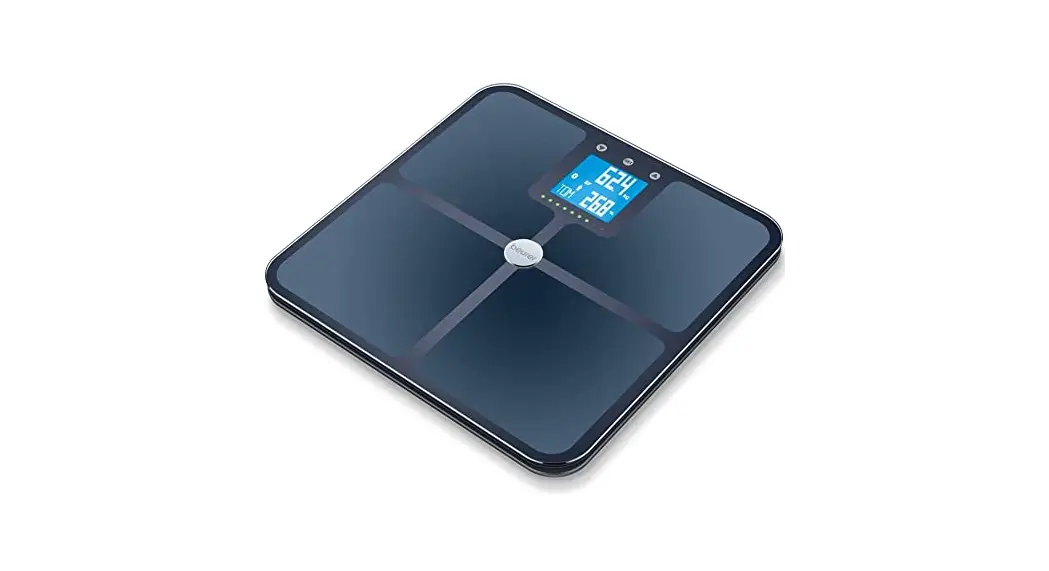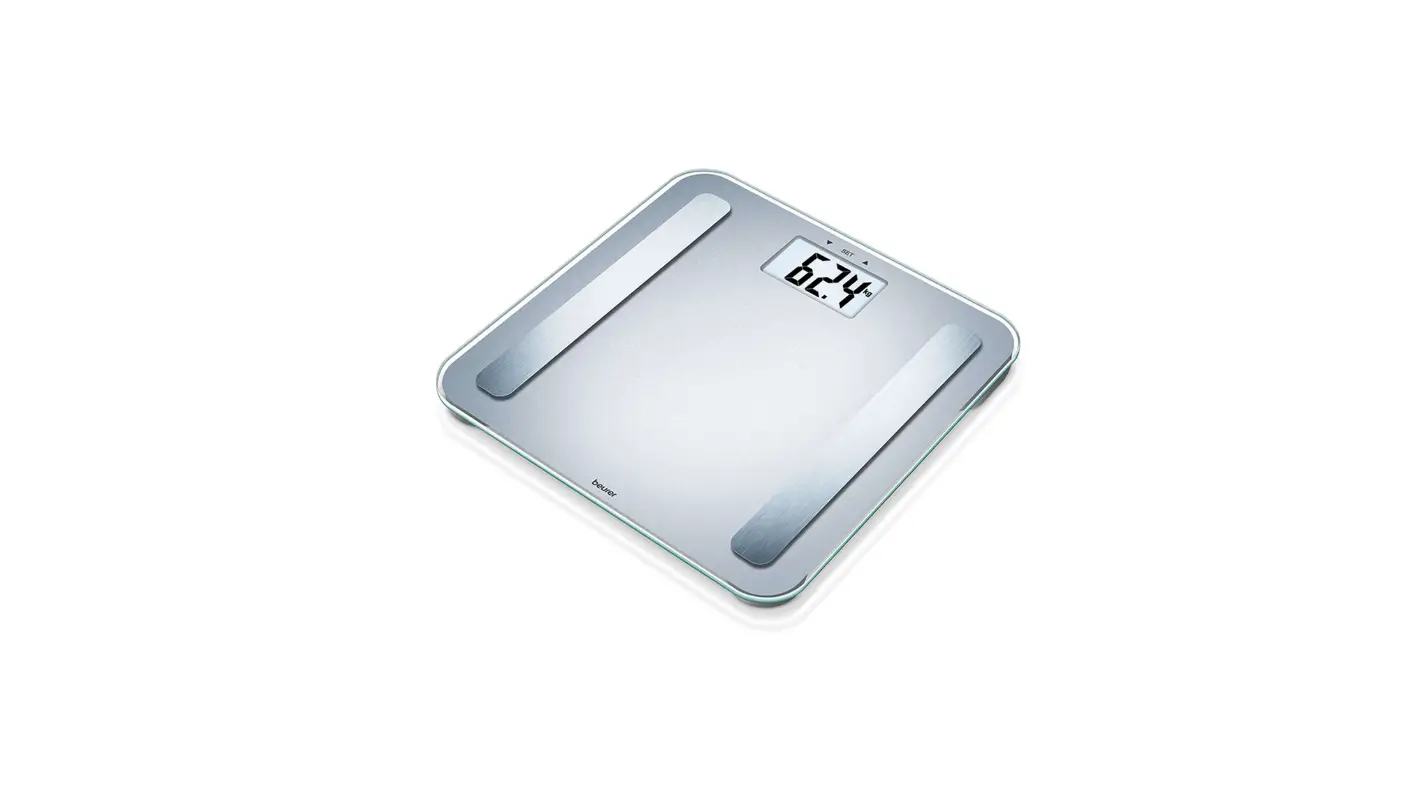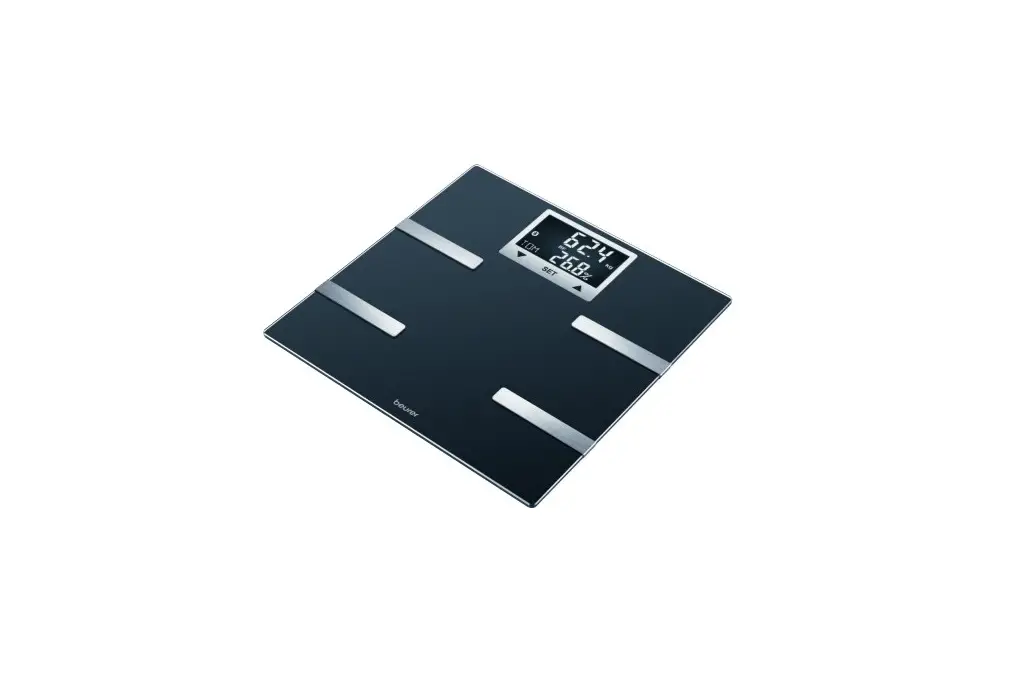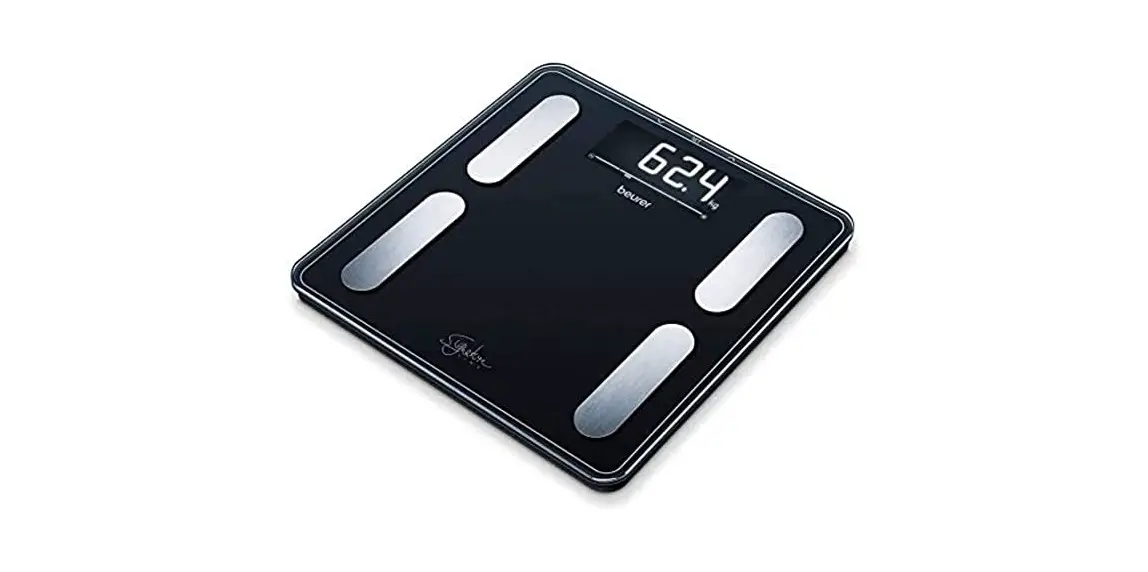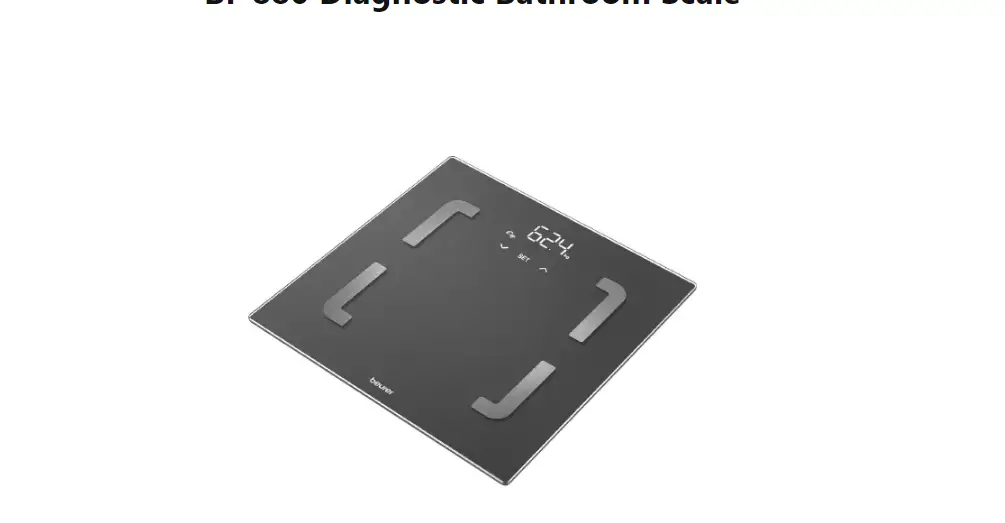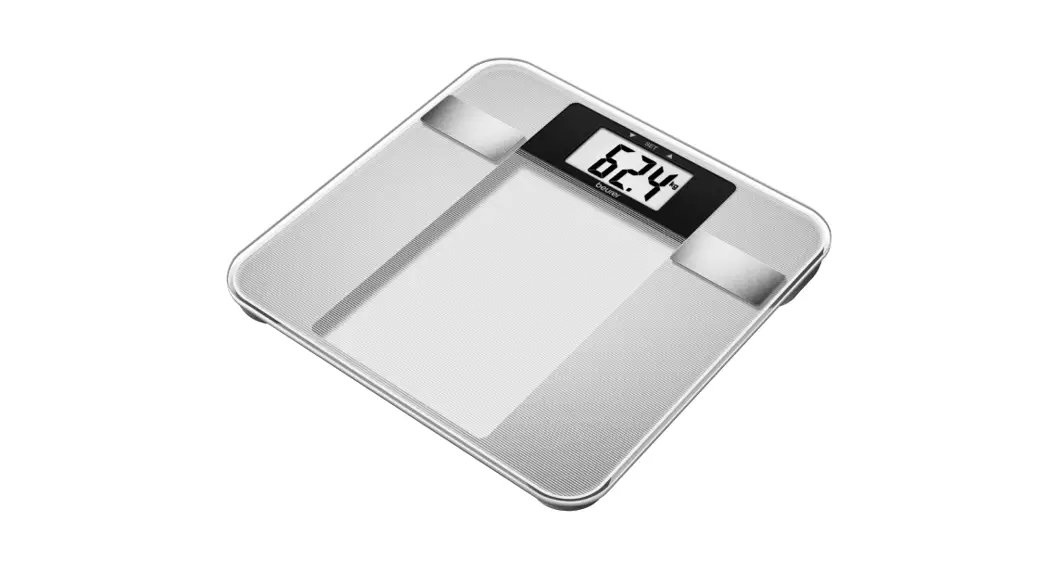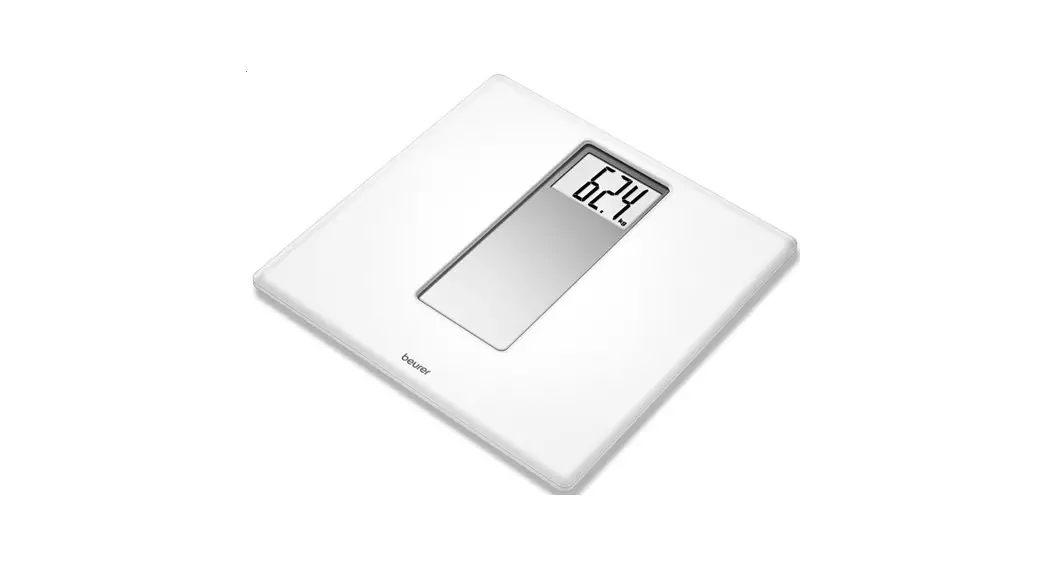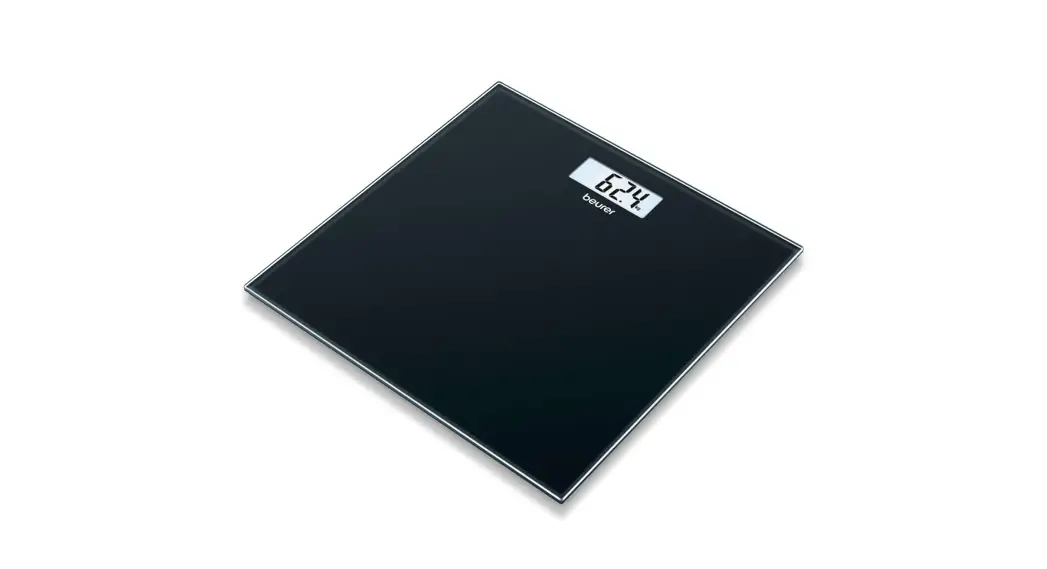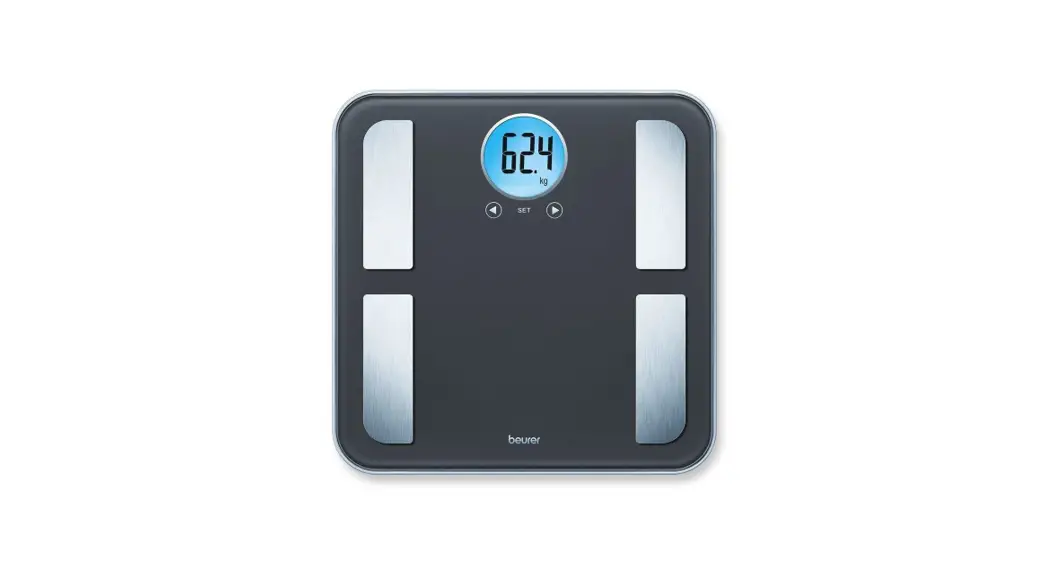

BF 180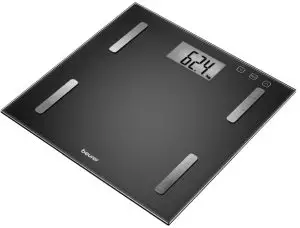 Diagnostic bathroom scale
Instructions for use
 Read these instructions for use carefully and keep them for later use, be sure to make them accessible to other users and observe the information they contain.
Getting to know your device
The measurement principle
This scale works on the principle of B.I.A. (bioelectrical impedance analysis). This involves the calculation of body content in a matter of seconds, using a current that cannot be felt, is completely harmless, and does not pose any risk.
When this measurement of the electrical resistance (impedance) is considered alongside constants and/ or individual values (age, height, gender, activity level), the body fat percentage and other variables in the body can be calculated. Muscle tissue and water conduct electricity well and therefore have a lower resistance. In contrast, bones and fat tissue have low conductivity as the fat cells and bones are barely able to conduct the current due to very high levels of resistance.
Please note that the values calculated by the diagnostic bathroom scale only represent an approximation of the actual medical analytical values for the body. Only a specialist doctor can precisely establish the body fat, body water, muscle percentage, and bone structure using medical methods (e.g. computer tomography).
Included in delivery
Check that the device packaging has not been tampered with and make sure that all contents are present. Before use, ensure that there is no visible damage to the device or accessories and that all packaging material has been removed. If you have any doubts, do not use the device and contact your retailer or the specified Customer Services address.
- BF 180 diagnostic bathroom scale
- 2 x 3V CR 2032 batteries
- These instructions for use
- 1x warranty leaflet
Signs and symbols
The following symbols are used on the device, in these instructions for use, on the packaging, and on the type plate for the device:
 | WARNING Warning notice indicating a risk of injury or damage to health. |
| IMPORTANT Safety note indicating possible damage to the device/accessory. |
 | Note Note on important information |
| Observe the instructions for use |
 | Disposal in accordance with the Waste Electrical and Electronic Equipment EC Directive – WEEE |
 | Do not dispose of batteries containing hazardous substances with household waste |
 | Dispose of packaging in an environmentally friendly manner |
| This product satisfies the requirements of the applicable European and national directives. |
 | United Kingdom Conformity Assessed Mark |
 | The products demonstrably meet the requirements of the Technical Regulations of the EAEU. |
 | The device may not be used by people with medical implants (e.g. pacemakers), as this may affect their functionality. |
 | Manufacturer |
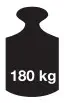 | Do not load the scale beyond 180 kg / 396 lb / 28 st. | 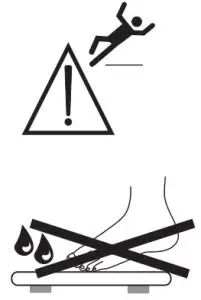 | The danger of slipping: do not step on the scale with wet feet. |
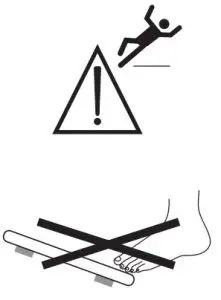 | The danger of tipping: position yourself in the center of the weighing surface. | 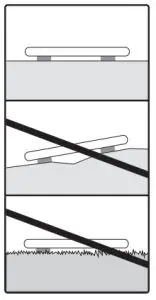 | Place the scale on an even surface. No carpet. |
Intended use
The device is only intended for weighing humans and for recording your personal fitness data. The device is only intended for private use, and not for medical or commercial purposes.
Warnings and safety notes
 WARNING
- The scale may not be used by people with medical implants (e.g. pacemakers) as this may affect their functionality.
- Do not use during pregnancy.
- Do not step onto the outer edge of the scale on just one side: danger of tipping!
- Swallowing batteries can be extremely dangerous. Keep the batteries and scale out of the reach of small children. Should a battery be swallowed, seek medical assistance immediately.
- Keep packaging material away from children (risk of suffocation).
- Important: do not step onto the scale with wet feet or if the surface of the scale is damp – the danger of slipping!
Notes on handling batteries
- If your skin or eyes come into contact with battery fluid, rinse the affected areas with water and seek medical assistance.
 Choking hazard! Small children may swallow and choke on batteries. Therefore, store batter- ies out of the reach of small children!
- Observe the plus (+) and minus (-) polarity signs.
- If a battery has leaked, put on protective gloves and clean the battery compartment with a dry cloth.
- Protect the batteries from excessive heat.
- Risk of explosion! Do not throw batteries into a fire.
- Do not charge or short-circuit batteries.
- If the device is not to be used for a relatively long period, take the batteries out of the battery compartment.
- Use identical or equivalent battery types only.
- Always replace all batteries at the same time.
- Do not use rechargeable batteries!
- Do not disassemble, open or crush the batteries.
General notes
- Please note that measuring tolerances are possible for technical reasons, as this scale is not calibrated for use in a professional medical context.
- Ages 10 to 99 years and height settings from 100 to 220 cm (3-03” to 7-03”) can be preset.
- The scale’s maximum capacity is 180 kg (396 lb / 28 st). The results for the weight measurement and bone mass calculation are displayed in 100-g increments (0.2 lb).
- measurements of body fat, body water, and muscle content are displayed in increments of 0.1%.
- The calorie requirement is indicated in increments of 1 kcal.
- When supplied to the customer, the scale is set to weigh and measure in “kg” and “cm”. On the back of the scale, there is a toggle button where you can select „pounds“ (lb) and „stones“ (st).
- Place the scale on an even, hard surface; a hard surface is crucial for achieving accurate measurements.
- Repairs may only be carried out by Beurer Customer Services or authorized retailers. Before submitting a complaint, please check the batteries first and replace them if necessary.
Storage and maintenance
The accuracy of the measurements and service life of the device depends on its careful handling:
IMPORTANT
- The device should be cleaned from time to time. Do not use any abrasive cleaning products and never submerge the device in water.
- Make sure that no liquids come into contact with the scale. Never submerge the scale in water.
Never rinse it in running water. - Do not place any objects on the scale when it is not in use.
- Do not press the button violently or with pointed objects.
- Do not expose the scale to high temperatures or strong electromagnetic fields (e.g. mobile telephones).
- Protect the device from knocks, dampness, dust, chemicals, marked temperature fluctuations, and nearby sources of heat (ovens, heaters).
Device description
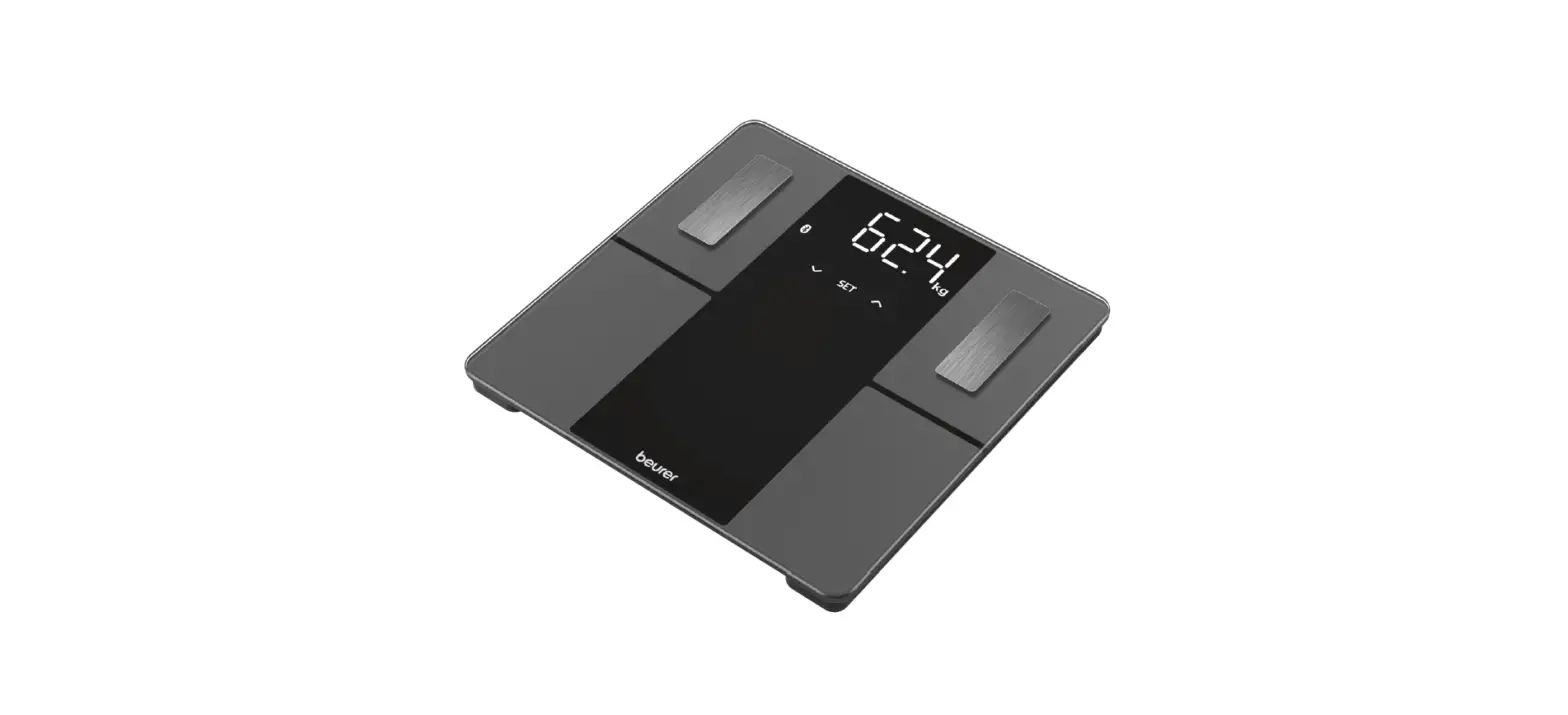
Overview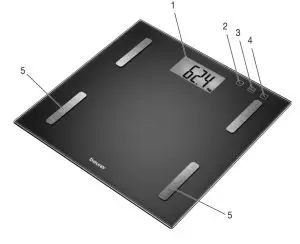
- Display
 Sensor button on the top side of the scale
- SET Sensor button on the top side of the scale
 Sensor button on the top side of the scale
- Electrodes
 Sensor button on the top side of the scale
 Sensor button on the top side of the scale
Initial use
Inserting the batteries
If present, pull the battery insulating strip off the battery compartment cover or remove the battery’s protective film and insert the battery according to the polarity. If the scale does not function, remove the batteries completely and reinsert them. As the battery compartment is secured with at least one screw, use an appropriate tool (screwdriver) for battery change.
Changing the weight unit
When supplied to the customer, the scale is set to weigh in “kg”. Switch on the scale by briefly applying pressure to the standing surface with your foot (approx. 1-2 seconds). Wait until  “ kg” appears in the display. To the rear of the scale, there is a button where you can select “pound” and “stones” (lb, st).
Positioning the scale
Place the scale on an even, hard surface; a hard surface is crucial for achieving accurate measurements.
Entering user data
To calculate your body fat percentage and additional body values, you must save personal user data.
The scale has 10 user memory spaces which allow you and members of your family to save and access personal settings, for example.
- Place the scale on an even hard surface; a hard surface is crucial for achieving accurate measurements.
- Switch on the scale by briefly applying pressure to the standing surface with your foot (approx. 1-2 seconds). Wait until
 “ kg” appears in the display.
 - Start configuring the settings by pressing the SET button. The first memory space flashes in the display.
- Press the
 button to select the desired memory space and confirm by pressing the SET button.
 - You can now implement the following settings:
 button to select the desired memory space and confirm by pressing the SET button.
| User data | Set values |
| Users/persons | 1 to 10 |
| Height | 100 to 220 cm (3‘-03“ to 7‘-03“) |
| Age | 10 to 99 years |
| Gender | male (  ), female ( ), female (  ) ) |
| Activity level | 1 to 5 |
Activity levels
The medium-term and long-term perspective is decisive when selecting the activity level.
| Activity level | Physical activity |
| 1 | None. |
| 2 | Low: little and light physical exertion (e.g. going for walks, light gardening, simple gymnastics). |
| 3 | Medium: physical exertion, at least 2 to 4 times a week for 30 minutes each. |
| 4 | High: physical exertion, at least 4 to 6 times a week for 30 minutes each. |
| 5 | Very high: intensive physical exertion, intensive training, or hard physical work for at At least 1 hour every day. |
- Modifying values: Pressor press and hold for more rapid progress.
- Confirming entries: Press the SET button.
- After the values have been set and displayed again, “0.0” appears on the display together with the symbol for the selected gender
 /
/  .
. - Then the scale is ready for measuring. If you do not carry out a measurement, the scale switches off automatically after several seconds.
Usage
9.1 Taking measurements
Place the scale on an even, hard surface; a hard surface is crucial for achieving accurate measurements.
General tips
- As far as possible, weigh yourself at the same time of day (ideally in the morning), after having been to the toilet, on an empty stomach, and without clothing, in order to obtain results which can be compared.
- An important point regarding the measurement: the calculation of body fat may only be made when barefoot; the soles of the feet may be lightly dampened where appropriate.
Results may be unsatisfactory if the soles of the feet are completely dry or have a large amount of hard skin since conductivity will be impaired. - Stand up straight and still during the measurement.
- Wait a few hours after any physical exertion to which your body is unaccustomed.
- Wait approx. 15 minutes after getting up so that the water stored in the body can disperse.
- Remember that only the long-term trend is important. Short-term changes in weight within a few days are normally caused by loss of fluids; however, body water plays an important role in terms of well-being.
Measuring weight, carrying out diagnostics
Switch on the scale (briefly step on the standing surface or press SET ). Wait until appears in the display.
- Press; SET the last selected user memory then flashes.
- All user values will then be shown in turn until “0.0” is shown on the display.
- Step onto the scale with bare feet and ensure that you are standing still with equal weight distribution and with both legs on the stainless steel electrodes.
- The measurements are displayed shortly afterward.
Note: Your feet, legs, calves, and thighs must not touch each other. Otherwise, the measurement cannot be performed correctly. The scale immediately begins to measure our weight.
The following data are displayed:
– Bodyweight in kg
– Body fat percentage BF, in %
– Water percentage , in %
– Muscle percentage , in %
– Bone mass (mineral content),  in kg
in kg
– Body mass index BMI
– Basal metabolic rate kcal, in kcal (BMR)
– Now all measured values are displayed consecutively and the scale switches off.
Only measuring weight
Step onto the scale wearing shoes. Stand still with your weight distributed equally on both feet. The scale begins to take measurements straight away.
Switching off the scale
The scale switches itself off automatically.
9.2 Evaluating the results
Body fat percentage
The following body fat percentages serve as a guideline (for further information please consult your doctor).
Male
| Age | Low | Normal | Moderate | High |
| 10–14 | <11% | 11–16% | 16.1–21% | >21.1% |
| 15–19 | <12% | 12–17% | 17.1–22% | >22.1% |
| 20–29 | <13% | 13 –18% | 18.1–23% | >23.1% |
| 30–39 | <14% | 14–19% | 19.1–24% | >24.1% |
| 40–49 | <15% | 15–20% | 20.1–25% | >25.1% |
| 50–59 | <16% | 16–21% | 21.1–26% | >26.1% |
| 60–69 | <17% | 17–22% | 22.1–27% | >27.1% |
| 70–100 | <18% | 18–23% | 23.1–28% | >28.1% |
Female
| Age | Low | Normal | Moderate | High |
| 10–14 | <16% | 16–21% | 21.1–26% | >26.1% |
| 15–19 | <17% | 17–22% | 22.1–27% | >27.1% |
| 20–29 | <18% | 18–23% | 23.1–28% | >28.1% |
| 30–39 | <19% | 19–24% | 24.1–29% | >29.1% |
| 40–49 | <20% | 20–25% | 25.1–30% | >30.1% |
| 50–59 | <21% | 21–26% | 26.1–31% | >31.1% |
| 60–69 | <22% | 22–27% | 27.1–32% | >32.1% |
| 70–100 | <23% | 23–28% | 28.1–33% | >33.1% |
Values will often be lower for fitness enthusiasts. Depending on the sporting activities performed, the training intensity, and the physical constitution, the results may still be below the stated standard values. Please note, however, that there may be a risk to health in the case of extremely low values.
Body water content
The body water content in % is normally within the following ranges:
Male
| Age | Poor | Good | Very good |
| 10–100 | <50% | 50–65% | >65% |
Female
| Age | Poor | Good | Very good |
| 10–100 | <45% | 45–60% | >60% |
Body fat contains relatively little water, therefore body water content may be below the standard values in persons with a high body fat percentage. On the other hand, endurance athletes may exceed the standard values due to having low levels of fat and a high muscle percentage. The body water calculation performed using this scale is not suitable for drawing medical conclusions, for example in the case of age-related water retention. Consult your doctor where necessary. A high body water content is generally desirable.
Muscle percentage
The muscle percentage is normally within the following ranges:
Male
| Age | Low | Normal | High |
| 10–14 | <44% | 44–57% | >57% |
| 15–19 | <43% | 43–56% | >56% |
| 20–29 | <42% | 42–54% | >54% |
| 30–39 | <41% | 41–52% | >52% |
| 40–49 | <40% | 40–50% | >50% |
| 50–59 | <39% | 39–48% | >48% |
| 60–69 | <38% | 38–47% | >47% |
| 70–100 | <37% | 37–46% | >46% |
Female
| Age | Low | Normal | High |
| 10–14 | <36% | 36–43% | >43% |
| 15–19 | <35% | 35–41% | >41% |
| 20–29 | <34% | 34–39% | >39% |
| 30–39 | <33% | 33–38% | >38% |
| 40–49 | <31% | 31–36% | >36% |
| 50–59 | <29% | 29–34% | >34% |
| 60–69 | <28% | 28–33% | >33% |
| 70–100 | <27% | 27–32% | >32% |
Bone mass
Like the rest of our body, our bones are subject to natural growth, shrinking, and aging processes. Bone mass increases rapidly during childhood and reaches its peak between the ages of 30 and 40. As we age, our bone mass then begins to reduce. You can combat this reduction to an extent with the help of a healthy diet (particularly calcium and vitamin D) and regular physical exercise. The stability of your skeleton can be further increased by means of targeted muscle build-up.
Please note that this scale does not identify the total bone mass, but rather just the mineral content of the bone (without water content and without organic substances). It is very difficult to influence the bone mass, although it does fluctuate slightly within the scope of influencing factors (weight, height, age, gender). There are no recognized guidelines or recommendations.
 IMPORTANT:
Please do not confuse bone mass with bone density.
The bone density can only be determined by means of a medical examination (e.g. computer tomography, ultrasound). It is therefore not possible to draw conclusions on changes to bones and bone hardness (e.g. osteoporosis) using this scale.
BMR
The basal metabolic rate (BMR) is the amount of energy required by the body at complete rest in order to maintain its basic functions (e.g. when lying in bed 24 hours a day). This value is primarily dependent on weight, height, and age. It is displayed on the diagnostic bathroom scale in the kcal/day unit and is calculated using the scientifically recognized Harris-Benedict equation. This is the amount of energy that is required by your body under all circumstances and must bere-supplied to the body in the form of food. If your energy intake is below this level in the longer term, this can result in damage to your health.
Body mass index (BMI)
The body mass index (BMI) is a number that is often called upon to evaluate body weight. The figure is calculated from body weight and height. The formula is body mass index = body weight: height². The measurement unit for BMI is [kg/m²]. According to the BMI, weight is classified for adults (20 years and over) using the following values:
| Category | BMI | |
| Underweight | Severely underweight | < 16 |
| Underweight | 16-16.9 | |
| Slightly underweight | 17-18.4 | |
| Normal weight | 18,5-24,9 | |
| Overweight | Overweight | 25-29,9 |
| Obese (overweight) | Class I obesity | 30-34.9 |
| Class II obesity | 35-39.9 | |
| Class III obesity | ≥ 40 |
Limitations
When calculating body fat and the other values, unusual and implausible results may occur in the case of:
- Children under approx. 10 years of age.
- Performance athletes and bodybuilders.
- Persons with a fever, persons undergoing dialysis, persons with edema symptoms, and persons suffering from osteoporosis.
- Persons taking cardiovascular medicine (affecting the heart and vascular system).
- Persons taking vasodilative or vasoconstrictive medication.
- Persons with significant anatomical abnormalities in their legs compared with their overall body height (leg length significantly shorter or longer).
Temporal context of the results
Note: Please note that only the long-term trend is important. Brief deviations in weight within a few days are normally caused by loss of fluids.
The interpretation of the results is based on changes in total body weight, percentage of body fat, body water, and muscle content, as well as on the length of time over which these changes occur.
Rapid changes within the scope of a few days are to be considered separately from medium-term changes (in the scope of weeks) and long-term changes (months).
It can be said as a basic rule that short-term changes in weight almost entirely change in water content, whereas medium-term and long-term changes may also relate to the fat percentage and the muscle percentage.
- If your weight drops in the short term but your body fat percentage increases or stays the same, you have only lost water, for example following a training session, visit to the sauna, or a diet aimed only at fast weight loss.
- If your weight increases in the medium term and your body fat percentage drops or stays the same, you may have built up valuable muscle mass.
- If your weight and body fat percentage both fall at the same time, then your diet is working – you are losing fat mass.
- Ideally, you should support your diet with physical activity, fitness, or strength training. This enables you to increase your muscle percentage in the medium term.
- Body fat, body water, and muscle percentages should not be totaled (muscle tissue also contains components made of body water).
Other functions
Replacing the batteries/low battery indicator
Your scale is equipped with a low battery indicator. If you operate the scale with flat batteries, “Lo” will appear on the display and the scale will automatically switch off. In this case, the batteries must be replaced (2x 3V CR 2032).
As the battery compartment is secured with at least one screw, use an appropriate tool (screwdriver) for battery change.
NOTE:
- When replacing the batteries, use batteries of the same type, make, and capacity.
- Do not use rechargeable batteries.
- Use batteries free from heavy metals.
Cleaning and maintenance
The device should be cleaned from time to time.
This should be done using a damp cloth and, if necessary, a small amount of detergent.
IMPORTANT
- Never use abrasive solvents or cleaning products!
- Never submerge the device in the water!
- Do not clean the device in a dishwasher!
What if there are problems?
If the scale encounters an error during measurement, the following is displayed:
| Possible causes of errors | Remedy |
| – The maximum load-bearing capacity of 180 kg was exceeded. | – Only weigh the maximum permissible weight. |
| – Not standing still. – Scale is not positioned correctly. | – Stand as still as possible. – Place the scale on a firm, even surface. |
| – The electrical resistance between the electrodes and the soles of your feed is too high (e.g. with heavily callused skin). | – Repeat weighing barefoot. – Slightly moisten the soles of your feet if necessary. Remove the calluses on the soles of your feet if necessary. |
| – Your body fat lies outside the measurable range (less than 5% or greater than 75%). | – Repeat weighing barefoot. – Slightly moisten the soles of your feet if necessary. |
Disposal
Empty, completely flat batteries must be disposed of through specially designated collection boxes, recycling points or electronics retailers. You are legally required to dispose of the batteries. The codes below are printed on batteries containing harmful substances:
Pb = Battery contains lead,
Cd = Battery contains cadmium,
Hg = Battery contains mercury.
For environmental reasons, do not dispose of the device in the household waste at the end of its service life. Dispose of the device at a suitable local collection or recycling point in your country. Dispose of the device in accordance with EC Directive – WEEE (Waste Electrical and Electronic Equipment). If you have any questions, please contact the local authorities responsible for waste disposal.
Dispose of packaging in an environmentally friendly manner.
Technical specifications
| Model: | BF 180 |
| Dimensions: | 30 x 30 x 1,9 cm |
| Weight: | 1650 g |
| Measurement range: | 5-180 kg |
| Scale interval d: | The display can be read in increments of 0.1 kg. |
| Repetition accuracy: | The measuring tolerance for repeated measurements is +/- 0.4 kg (several measurements in direct succession on the same scale with the position of scale and person the same as far as possible). |
| Absolute precision: | In comparison with a calibrated weight, the measured value is +/- 1% +0.1 kg. E.g. at 40 kg this corresponds to +/- 0.5 kg; at 100 kg this corresponds to +/- 1.1 kg. |
Subject to technical changes.
Warranty
Further information on the warranty and warranty conditions can be found in the warranty leaflet supplied.
Beurer GmbH
• 218
• 89077 Ulm, Germany
• www.beurer.com
www.beurer-gesundheitsratgeber.com
• www.beurer-healthguide.com
749.09_BF180_2021-02-22_03_IM1_BEU
 Beurer Gesundheitsratgeber
 Beurer Health Guide
 Beurer GmbH