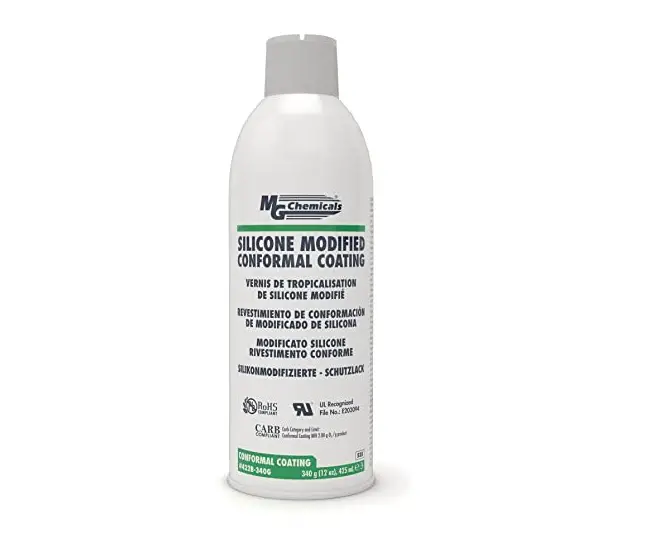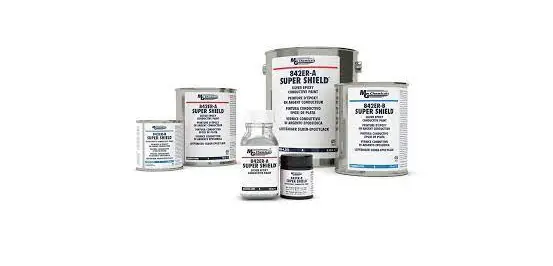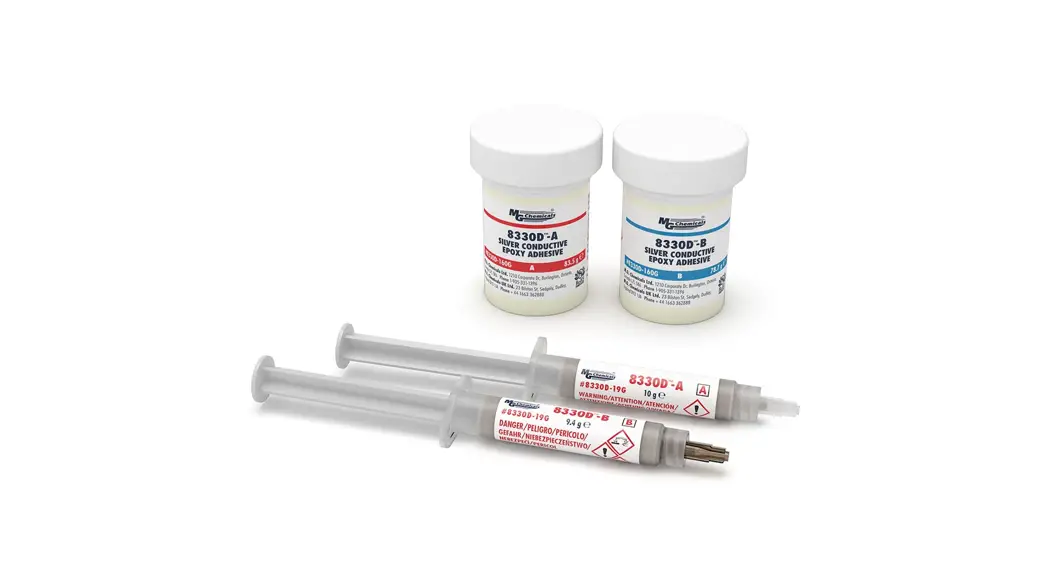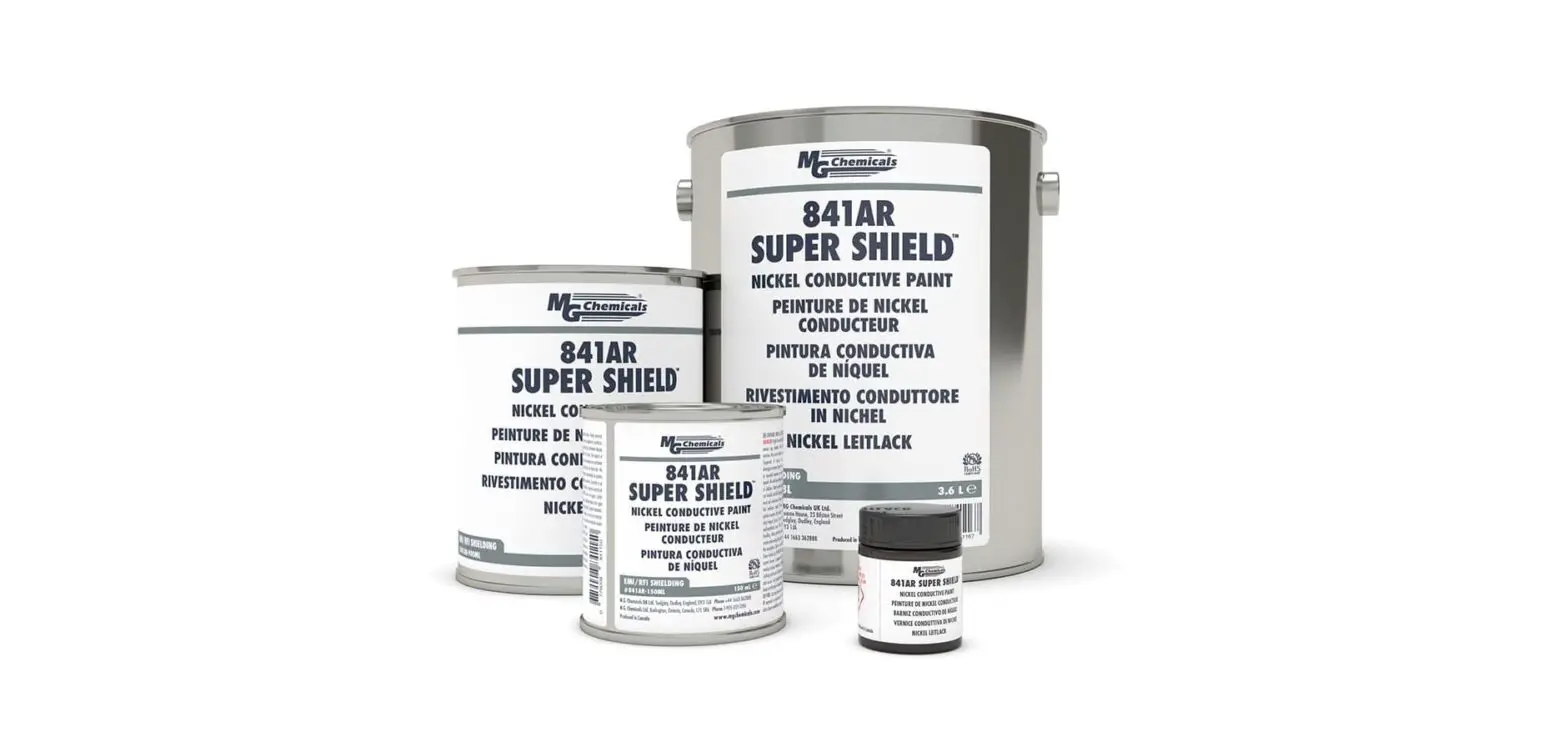

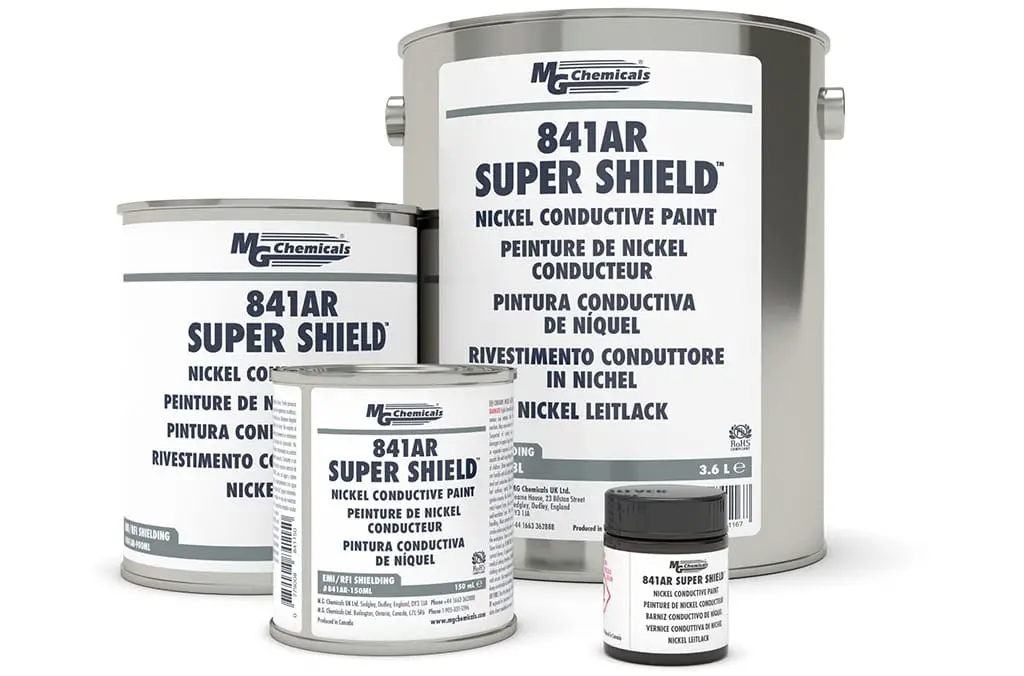
MG Chemicals 841AR Conductive Coating
Identification
Product Identifier and Other Means of Identification
- Product Name: 841AR
- Other Means of Identification: Super ShieldTM Nickel Conductive Paint / Nickel Conductive Paint
- Related Part # 841AR-15ML, 841AR-150ML, 841AR-900ML, 841AR-3.78L
Recommended Use and Restriction on Use
- Use: Electrically conductive coating and EMI/RFI shield
- Uses Advised Against: Not available
Details of Manufacturer or Importer
| Manufacturer | |
| MG Chemicals | MG Chemicals (Head Office) |
| 1210 Corporate Drive | 9347-193 Street |
| Burlington, Ontario L7L 5R6 | Surrey, British Columbia V4N 4E7 |
| CANADA | CANADA |
Emergency Phone Number
For hazardous material incidents ONLY (leaks, spills, fires, exposures or accidents) USA or CANADA— Call Verisk 3E at +1-866-519-4752 or +1-760-476-3962 (Service access code: 335388)
For emergencies involving the transport of dangerous goods; 24/7 service CANADA—Call CANUTEC collect at +1-613-996-6666 or *666 on cellular phones
Hazard(s) Identification
Classification of Hazardous Chemical
GHS Categories
| Criteria | Category | Signal Word | Pictograms | |
| Flammable Liquid | 2 | Danger | Flame | |
| Specific Target Organ Toxicity | Repeated Exposure | 1 | Danger | Health |
| Carcinogenicity | 2 | Warning | Health | |
| Sensitization | Skin | 1 | Warning | Exclamation |
| Eye Irritation | 2 | Warning | Exclamation | |
| Specific Target Organ Toxicity | Single Exposure | 3 | Warning | Exclamation |
| Hazardous to the Aquatic Environment | Chronic | 3 | none | none |
Note: The degree of severity is ranked within each hazard class from 1 (Highest Severity) to up to 5 (Lowest Severity), which is opposite to HMIS and NFPA conventions. Severity category rankings do not allow comparisons between classes.
Label Elements
| Signal Word | DANGER |
| Pictograms | Hazard Statements |
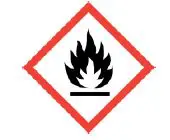 | H225: Highly flammable liquid and vapor |
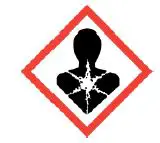 | H372: Causes damages to organs (lungs) through prolonged or repeated exposure by inhalation H351: Suspected of causing cancer |
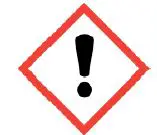 | H317: May cause allergic skin reaction H319: Causes serious eye irritation H336: May cause drowsiness or dizziness |
| Pictograms | Hazard Statements |
| none mandated | H412: Harmful to aquatic life with long lasting effects |
| Prevention | Precautionary Statements |
| P102 | Keep out of reach of children. |
| P201, P202 | Obtain special instructions before use. Do not handle until all safety precautions have been read and understood. |
| P210 | Keep away from heat, hot surfaces, sparks, flames, and other ignition sources. No Smoking. |
| P233 | Keep container tightly closed. |
| P240 | Ground and bond container and receiving equipment. |
| P241 | Use explosion-proof equipment. |
| P243 | Take action to prevent static discharges. |
| P260, P271 | Do not breathe mist, vapors, and spray. Use only outdoors or in a well- ventilated area. |
| P270 | Do not eat, drink or smoke when using this product. |
| P280 | Wear protective gloves and eye protection. |
| P272 | Contaminated work clothing should not be allowed out of the workplace. |
| P264 | Wash hands thoroughly after handling. |
| P273 | Avoid release to the environment. |
| Response | Precautionary Statements |
| P370 + P378 | In case of fire: Use dry chemical, carbon dioxide, chemical foam, or water spray to extinguish. |
| P308 + P313 | IF exposed or concerned: Get medical advice or attention. |
| P303 + P361 + P364 + P352 | IF ON SKIN (or hair): Take off immediately all contaminated clothing and wash it before reuse. Wash with plenty of water or shower. |
| P333 + P313 | If skin irritation or rash occurs: Get medical advice or attention. |
| P304 + P340 + P312 | IF INHALED: Remove person to fresh air and keep comfortable for breathing. Call a POISON CENTRE or doctor if you feel unwell. |
| Response | Precautionary Statements |
| P305 + P351 + P338 | IF IN EYES: Rinse cautiously with water for several minutes. Remove contact lenses, if present and easy to do. Continue rinsing. |
| P337 + P313 | If eye irritation persists: Get medical advice or attention. |
| Storage | Precautionary Statements |
| P403 + P235 | Store in a well-ventilated place. Keep cool. |
| P405 | Store locked up. |
| Disposal | Precautionary Statements |
| P501 | Dispose of contents in accordance to local, regional, national, and international regulations. |
Hazards Not Otherwise Classified
| Other Criteria | Hazard Statements/Precautionary Statement | Signal Word | Pictograms |
| Defats skin | Repeated exposure may cause skin dryness or cracking. | None | None |
Composition/Information on Ingredients
| CAS # | Chemical Name | % (weight) |
| 7440-02-0 | nickel | 48% |
| 616-38-6 | dimethyl carbonate | 16% |
| 67-64-1 | acetone | 13% |
| 110-43-0 | heptan-2-one a) | 10% |
| 108-65-6 | 1-methoxy-2-propanol acetate | 2% |
Also known as methyl amyl ketone (MAK)
First-Aid Measures
| IF ON SKIN (or hair) | P303 + P361 + P352, P333 + P313, P308 + P313, P363 |
| Immediate Symptoms | redness, mild irritation, dry skin |
| Response | Take off immediately all contaminated clothing. Wash with plenty of water or shower. |
| If skin irritation or rash occurs: Get medical advice or attention. | |
| IF exposed or concerned: Get medical advice or attention. | |
| Wash contaminated clothing before reuse. | |
| IF INHALED | P304 + P340, P312, P308 + P313 |
| Immediate Symptoms | cough, drowsiness, dizziness, headaches, nausea, unconsciousness |
| Response | Remove person to fresh air and keep comfortable for breathing. Call a POISON CENTRE or doctor if you feel unwell. |
| IF exposed or concerned: Get medical advice or attention. | |
| IF IN EYES | P305 + P351 + P338, P337 + P313 |
| Immediate Symptoms | irritation, redness, pain |
| Response | Rinse cautiously with water for 20 minutes or more. Remove contact lenses, if present and easy to do. Continue rinsing. |
| If eye irritation persists: Get medical advice or attention. | |
| IF SWALLOWED | P301 + P330 + P331, P308 + P313 |
| Immediate Symptoms | nausea, sore throat, abdominal pain, diarrhea, drowsiness, dizziness |
| Response | Rinse mouth. Do NOT induce vomiting. |
| IF exposed or concerned: Get medical advice or attention. |
Fire-Fighting Measures
| Extinguishing Media | In case of fire: Use dry chemical, carbon dioxide, chemical foam, or water spray to extinguish. Use water spray to cool containers. |
| Specific Hazards | Produces irritating and toxic fumes in fires or in contact with hot surfaces. May produce very toxic nickel carbonyl gas in the presence of carbon monoxide in a reducing atmosphere. The vapors are heavier than air and may accumulate in low- lying areas. Vapors may travel long distances and ignite at an ignition source, which can cause a flashback or an explosion. Prevent fire-fighting wash from entering waterway or sewer system. |
| Combustion Products | Produces carbon oxides (CO,CO2), nickel oxides fumes, and nitrogen oxides (NOx). |
| Fire-Fighter | Wear self-contained breathing apparatus and full fire-fighting turn-out gear. |
Accidental Release Measures
| Personal Protection | See personal protection recommendations in Section 8. |
| Precautions for Response | Do not breathe the mist, spray, and vapors. Remove or keep away all sources of extreme heat or open flames. |
| Environmental Precautions | Avoid releasing to the environment. Prevent spill from entering drains and waterways. |
| Containment Methods | Contain with inert absorbent (such as soil, sand, vermiculite). |
| Cleaning Methods | Collect liquid in a sealable, solvent-resistant container. Sprinkle inert absorbent compound onto spill, then sweep into the container. Wash spill area with soap and water to remove the last traces of residue. |
| Disposal Methods | Dispose of spill waste according to Section 13 |
Handling and Storage
| Prevention | Keep out of reach of children. Keep away from heat, hot surfaces, sparks, flames, and other ignition sources. No Smoking. Obtain special instructions before use. Do not handle until all safety precautions have been read and understood. Ground and bond container and receiving equipment. Use explosion- proof equipment. Take action to prevent static discharges. Do not breathe breathing mist, vapors, and spray. Use only outdoors or in a well-ventilated area. Keep container tightly closed. Do not eat, drink, or smoke when using this product. |
| Handling | Wear protective gloves and eye protection. Take off contaminated clothing and wash it before reuse. Contaminated work clothing should not be allowed out of the workplace. Wash hands thoroughly after handling. Avoid release to the environment. Collect spillage. |
| Storage | Store in a well-ventilated place. Keep cool. Store locked up. |
Exposure Controls/Personal Protection
| Chemical Name | Country/ Provinces | Long Term Exposure Limits (PEL) | Short Term Exposure Limits (STEL) |
| nickel | ACGIH | 1.5 mg/m3 | Not established |
| U.S.A. OSHA PEL | 1 mg/m3 | Not established | |
| Canada AB | 1.5 mg/m3 | Not established | |
| Canada BC | 0.05 mg/m3 | Not established | |
| Canada ON | 1 mg/m3 | Not established | |
| Canada QC | 1 mg/m3 | Not established |
| Chemical Name | Country/ Provinces | Long Term Exposure Limits (PEL) | Short Term Exposure Limits (STEL) |
| acetone | ACGIH | 500 ppm | 750 ppm |
| U.S.A. OSHA PEL | 1 000 ppm | Not established | |
| Canada AB | 500 ppm | 750 ppm | |
| Canada BC | 250 ppm | 500 ppm | |
| Canada ON | 500 ppm | 750 ppm | |
| Canada QC | 750 ppm | 1 000 ppm | |
| heptan-2-one | ACGIH | 50 ppm | Not established |
| methyl amyl ketone | U.S.A. OSHA PEL | 100 ppm | Not established |
| Canada AB | 50 ppm | Not established | |
| Canada BC | 50 ppm | Not established | |
| Canada ON | 25 ppm | Not established | |
| Canada QC | 50 ppm | Not established | |
| 1-methoxy-2-propanol | ACGIH | Not established | Not established |
| acetate | U.S.A. OSHA PEL | 50 ppm | Not established |
| Canada AB | Not established | Not established | |
| Canada BC | 50 ppm | 75 ppm | |
| Canada ON | 50 ppm | Not established | |
| Canada QC | Not established | Not established |
Note: Ingredients are listed in descending weight contribution order (from greatest to least). The ACGIH1, OSHA (Table Z-1), and Canadian provinces exposure limits were consulted. Limits from RTECS database2 and data from suppliers’ SDS were also consulted. Short term exposure limits (STEL) are for 15 min and long term permissible exposure limits (PEL) for 8 h.
Engineering Controls
| Ventilation | Keep airborne concentrations below the occupational exposure limits (OEL). |
Personal Protective Equipment
| Eye protection | Wear appropriate protective eyeglasses or chemical safety goggles. RECOMMENDATION: Ensure that glasses have side shields for lateral protection. |
| Skin Protection | For likely contacts, use of protective butyl rubber or other chemically resistant gloves. |
| Respiratory Protection | For over-exposures up to 10 x OEL of mist, vapors, and spray, wear respirator such as a half-mask respirator with organic vapor cartridges. Above 10 x OEL, use a positive-pressure, air-supplied respirator or a self-contained breathing apparatus. RECOMMENDATION: Consult your local safety supply store to ensure that your respirator has a NIOSH (U.S.) approved filter cartridges appropriate for the ingredients listed in Section 3. The respirator should be fitted to the employee by a professional. Ensure vapor cartridges are stored in sealed plastic bags when not being used. |
General Hygiene Considerations
Wash hands thoroughly with water and soap after handling.
Physical and Chemical Properties
| Physical State | Liquid | Lower Flammability Limit b) | 2% |
| Appearance | Dark grey | Upper Flammability Limit b) | 13% |
| Odor | Acetone-like | Vapor Pressure b) @20 °C | 11 kPa [86 mmHg] |
| Odor Threshold a) | 5 ppm | Vapor Density | ≥2 (Air =1) |
| pH | Not available | Relative Density @25 °C | 1.7 |
| Freezing/Melting Point | Not available | Solubility in Water | Partially miscible |
| Initial Boiling Point a) | 56 °C [132 °F] | Partition Coefficient n-octanol/water | Not available |
| Flash Point a) | -17 °C [1.4 °F] | Auto-ignition Temperature c) | ≥315 °C [≥599 °F] |
| Evaporation Rate | Fast | Decomposition Temperature | Not available |
| Flammability | Highly Flammable | Viscosity @25 °C | 1 460 cP |
- Values-based on acetone component.
- Lower and Upper Explosive Limits, and vapor pressure of mixture calculated using Le Chatelier principle and component physical values.
- The auto-ignition value is based on 1-methoxy-2-propanol acetate, which is the component with the lowest value.
Stability and Reactivity
| Reactivity | The nickel can react vigorously with acids and liberate hydrogen, which can form an explosive mixture in air. Nickel may react with carbon monoxide in a reducing atmosphere to form a very toxic nickel carbonyl gas. |
| Chemical Stability | Chemically stable at normal temperatures and pressures |
| Conditions to Avoid | Ignition sources, open flames, excessive heat, and incompatible substances |
| Incompatibilities | Oxidizing agents, strong acids, acid anydrides |
| Polymerization | Will not occur |
| Decomposition | Will not decompose under normal conditions. For thermal decomposition, see combustion products in Section 5. |
Toxicological Information
Summary of Effects and Symptoms by Routes of Exposure
| Eyes | Causes redness, severe irritation, and pain. |
| Inhalation | May cause cough, drowsiness, dizziness, headaches, nausea, or unconsciousness. |
| Ingestion | May cause nausea, sore throat, abdominal pain, and diarrhea (also see inhalation symptoms). |
| Skin | Causes skin redness, mild irritation, and dry skin. |
| Chronic | Prolonged or repeated exposure may cause skin dryness, cracking, as well as defatting the skin. Chronic inhalation exposure to nickel dust or mist may affect the central nervous system, damage lungs, and lead to hearing loss with co- exposure to loud noises. |
Acute Toxicity (Lethal Exposure Concentrations)
| Chemical Name | LD50 oral | LD50 dermal | LC50 inhalation |
| nickel | 5 000 mg/kg Rat | Not available | Not available |
| dimethyl carbonate | >6.4 g/kg Rat & Mouse | >5 000 mg/kg Rabbit | Not available |
| acetone | 5 800 mg/kg Rat | 20 mL/kg Rabbit a) | 16 000 ppm 4 h Rat a) |
| heptan-2-one | 1 670 mg/kg Rat | 12 600 mL/kg Rabbit | >16.7 mg/kg 4 h Rat (vapor) |
| 1-methoxy-2-propanol acetate | 8 532 mg/kg Rat | >5 g/kg Rabbit | Not available |
Other Toxicological Effects
| Skin corrosion/irritation | Based on available data, the classification criteria are not met. |
| Serious eye damage/irritation | Acetone is a known serious eye irritant. Contains mechanically abrasive particles. |
| Sensitization (allergic reactions) | Exposure to nickel may cause allergic skin reaction. |
841AR
| Carcinogenicity (risk of cancer) | Nickel is classified as a suspect carcinogen based on animal intratracheal instillation (intubation) or interperitoneal (in body cavity) injection studies. A reliable 2008 study by Oller et al. shows no carcinogenicity for the nickel metal via normal inhalation route. Nickel [7440-02-0] IARC Group 2B: Possibly carcinogenic to humans ACGIH A5: Not suspected as a human carcinogen CA Prop 65: Listed as a carcinogen NTP: Reasonably anticipated to be human carcinogen |
| Mutagenicity (risk of heritable genetic effects) | Based on available data, the classification criteria are not met. |
| Reproductive Toxicity (risk to sex functions) | Based on available data, the classification criteria are not met. |
| Teratogenicity (risk of fetus malformation) | Not classifiable due to lack of data |
| STOT-single exposure | Inhalation of acetone, heptan-2-one, may affect the central nervous system. |
| STOT-repeated exposure | Nickel particles can damage the respiratory tract leading to inflammation, lung fibrosis, and accumulation of nickel particles in a rat study. |
| Aspiration hazard | Based on available data, the classification criteria are not met. There is less than 10% category 1 components. |
Ecological Information
Ecological classifications are based on the IMDG/GHS criteria in conjunction with ecotoxicological data from our suppliers, the European Chemical Agency database (http://echa.europa.eu), and other reliable sources.
sufficiently soluble to give rise to an ecological hazard. The classification that follows takes into account to chronic aqueous toxicity of category 3 assignment of the EU. Acetone, heptan-2-one, and 1-methoxy-2-propanol acetate are not classifiable as environmental toxicant (with minimal LC50 of >100 mg/L).
- Acetone has a minimal LC50 96 h of 5 540 mg/L for Oncorhynchus mykiss (rainbow trout) and an EC50 48 h of 13 500 mg/L for Daphnia magna (water flea).
- Heptan-2-one has a minimal LC50 96 h of 126 mg/L for Pimephales promelas (fathead minnow).
- 1-methoxy-2-propanol acetate has a minimal LC50 96 h of ≥100 mg/L Salmo gairdneri and an EC50 48 h of >500 mg/L for Daphnia magna (water flea).
There is insufficient data to classify dimethyl carbonate for aqueous toxicity.
Acute Ecotoxicity
Category 3 Harmful to aquatic life
Chronic Ecotoxicity
Category 3 Harmful to aquatic life with long lasting effects Avoid release to the environment.
Biodegradability
Solvent part expected to be biodegradable, but not the polymer or metal filler. The volatile solvent constituents will oxidize rapidly in air by photochemical reaction.
Other Effects
Actual VOC (Volatile Organic Compounds) content according to the US (EPA) and Canadian (CEPA) authorities. Actual VOC = 14% [236 g/L]; Regulated VOC = 502 g/L
Disposal Information
Dispose of contents in accordance with all local, regional, national, and international regulations.
Transport Information
Ground
| Refer to TDG regulations (Canadian Transportation of Dangerous Goods regulations); USA DOT 49 CFR (Parts 100 to 185) Regulations. | |||
| Sizes 5 L and under | Sizes greater than 5 L | ||
| 841AR-15ML, 841AR-150ML, 841AR-900ML, 841AR-3.78L | |||
| Limited Quantity |  | UN number: UN1263 | 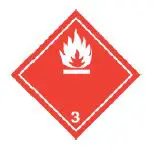 |
| Shipping Name: PAINT | |||
| Class: 3 | |||
| Packing Group: II | |||
| Marine Pollutant:No | |||
Air
| Refer to ICAO-IATA Dangerous Goods Regulations. | |||
| Sizes 0.5 L and under | Sizes up to 5 L (passenger), 60 L (cargo) | ||
| 841AR-15ML, 841AR-150ML | 841AR-900ML, 841AR-3.78L | ||
| Limited Quantity | | UN number: UN1263 | |
| Total Net QTY per | Shipping Name: PAINT | ||
| package | Class: 3 | ||
| 1.0 L | Packing Group: II | ||
| Marine Pollutant: No | |||
Sea
| Refer to IMDG regulations. | |||
| Sizes 5 L and under | Sizes greater than 5 L | ||
| 841AR-15ML, 841AR-150ML, 841AR-900ML, 841AR-3.78L | |||
| Limited Quantity | | UN number: UN1263 | |
| Shipping Name: PAINT | |||
| Class: 3 | |||
| Packing Group: II | |||
| Marine Pollutant: No | |||
Note: Shipper must be appropriately trained and certified before involvement with the transport of dangerous goods.
Regulatory Information
Canada
Domestic Substance List (DSL) / Non-Domestic Substance Lists (NDSL) All hazardous ingredients are listed on the DSL.
Hazardous Products Act (R.S.C., 1985, c. H-3)
The safety data sheet and label comply with the Hazardous Product Act and WHMIS 2015.
USA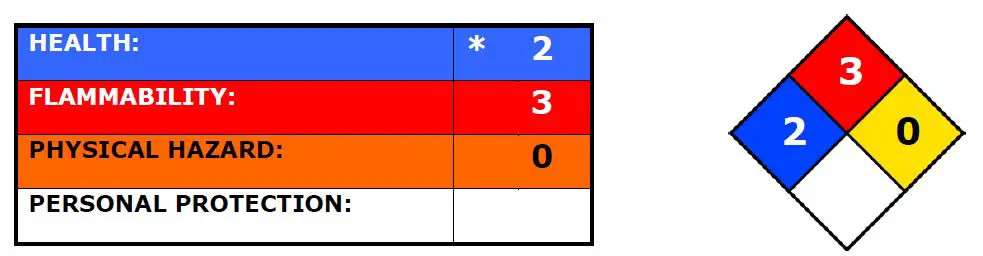
Approximate HMIS and NFPA Risk Ratings Legend:
0 (Low or none); 1 (Slight); 2 (Moderate); 3 (Serious); 4 (Severe)
CAA (Clean Air Act, USA)
This product does not contain any class 1 ozone-depleting substances. This product does not contain any class 2 ozone-depleting substances. This product does not contain products that are listed as hazardous air pollutants.
EPCRA (Emergency Planning and Right to Know Act, USA, 40 CFR 372.45)
This product contains nickel (CAS# 7440-02-0, reportable quantity = 100 lb), which is subject to the reporting requirements of section 313 Title III of the SARA of 1986 and 40 CFR part 372. This product contains acetone (CAS# 67-64-1), which is subject to the CERCLA reporting requirements at the 5 000 lb (2 268 kg) threshold.
TSCA (Toxic Substances Control Act of 1976, USA) All substances are TSCA listed.
California Proposition 65 (Chemicals known to cause cancer or reproductive toxicity, USA)
This product contains nickel, which is listed as a carcinogen.
Europe
RoHS (Restriction of Hazardous Substances Directive)
This product does not contain any lead, cadmium, mercury, hexavalent chromium, PBB’s, PBDE’s, DEHP, BBP, DBP, or DIBP and complies with European RoHS regulations.
WEEE (Waste Electrical and Electronic Equipment Directive)
This product is not a piece of electrical or electronics equipment, and is therefore not governed by this regulation.
Other Information
- SDS Prepared by MG Chemicals’ Regulatory Department
- Date of Review 26 February 2020
- Supersedes 17 October 2019
- Reason for Changes: New emergency contact number
Reference
- ACGIH 2017 TLVs and BEIs: Based on the documentation of the threshold limit values for chemical substances and physical agents & biological exposure indices, American Conference of Governmental of Industrial Hygienist Cincinnati, OH (2017).
- All toxicological data were checked against the RTECS (Registry of Toxic Effects of Chemical Substances®)
Abbreviations
| ACGIH | American Conference of Governmental Industrial Hygienists (USA) |
| ECHA | European Chemicals Agency |
| EU | European Union |
| EC50 | Half maximal effective concentration |
| EL50 | Half maximal effective loading |
| IARC | International Agency for Research on Cancer |
| NOELR | No observable effect loading ratio |
| NTP | National Toxicology Program |
| GHS | Globally Harmonized System of Classification of Labeling of Chemicals |
| LC50 | Lethal Concentration 50% |
| LCLo | Lowest published lethal concentration |
| LD50 | Lethal Dose 50% |
| OEL | Occupational Exposure Limit |
| PEL | Permissible Exposure Limit |
| SDS | Safety Data Sheet |
| STEL | Short-Term Exposure Limit |
| TCLo | Lowest published toxic concentration |
| TWA | Time Weighted Average |
| VOC | Volatile Organic Content |
Technical Queries Contact us regarding any questions, improvement suggestions, or problems with this product. Application notes, instructions, and FAQs are located at www.mgchemicals.com.
Email: [email protected]
Mailing Addresses
Manufacturing & Support Head Office 1210 Corporate Drive 9347–193rd Street Burlington, Ontario, Canada Surrey, British Columbia, Canada L7L 5R6 V4N 4E7
Disclaimer
This safety data sheet is provided as an information resource only. M.G. Chemicals, Ltd. believes the information contained herein is accurate and compiled from reliable sources. It is the responsibility of the user to query and verify any information seeming suspect where doubt on the validity may exist. The buyer assumes all responsibility of using and handling the product in accordance with local, regional, national, and international regulations.
 📧
📧 MG Chemicals