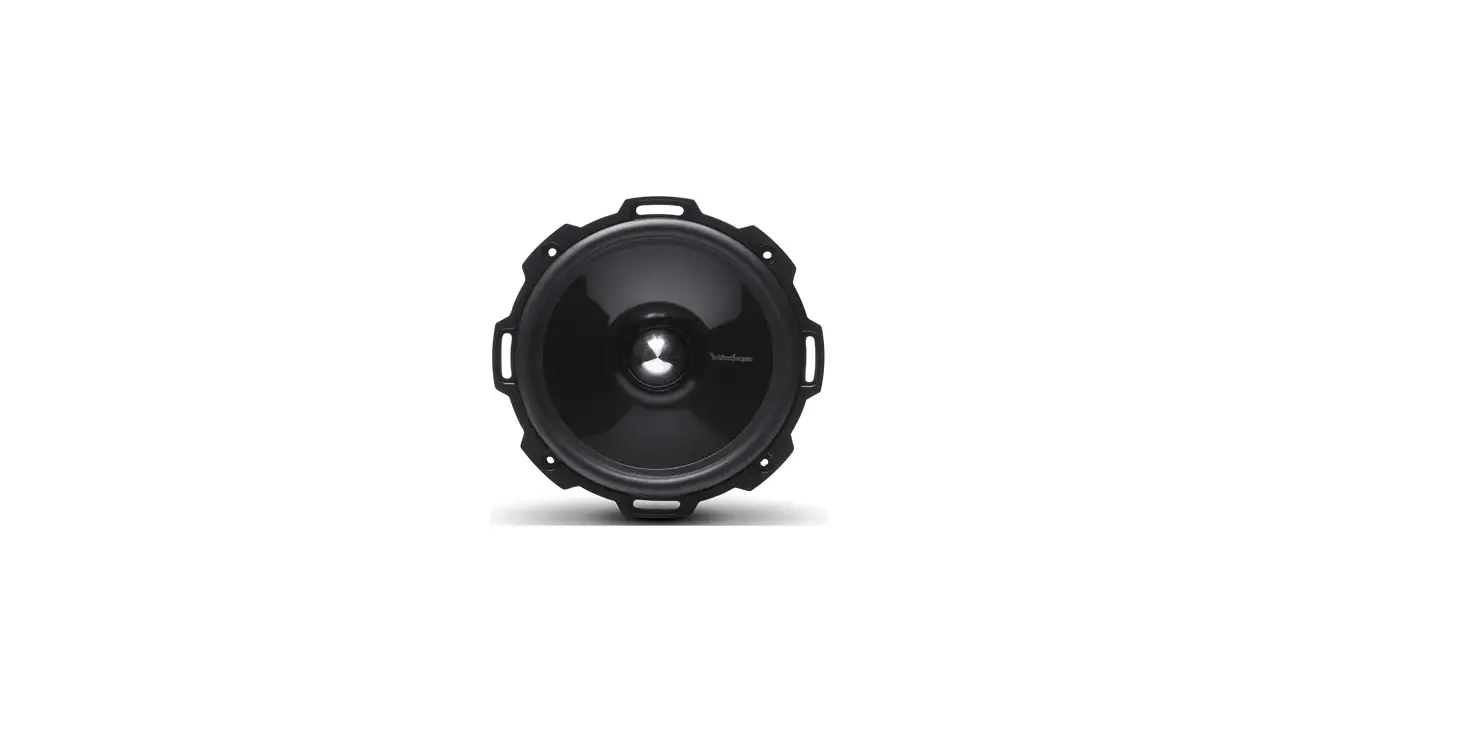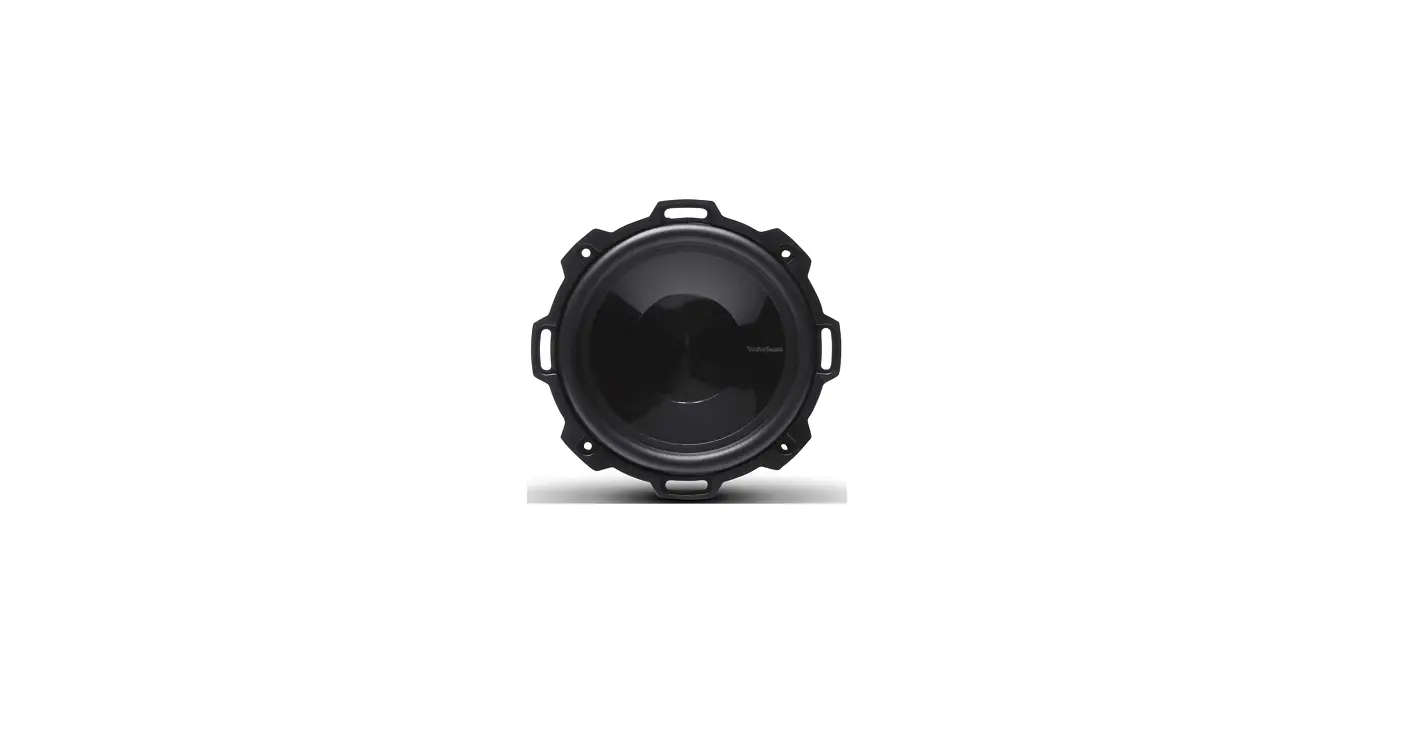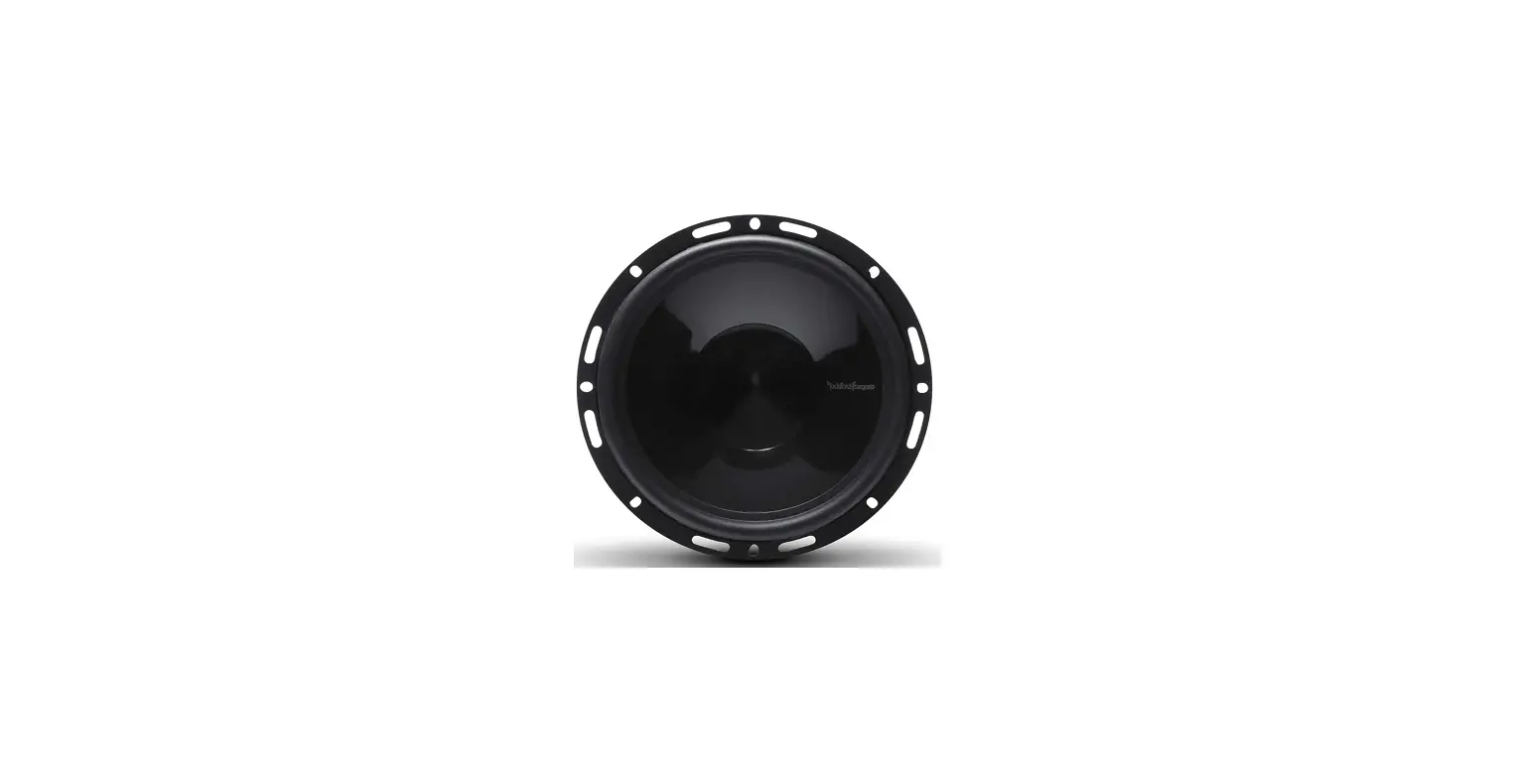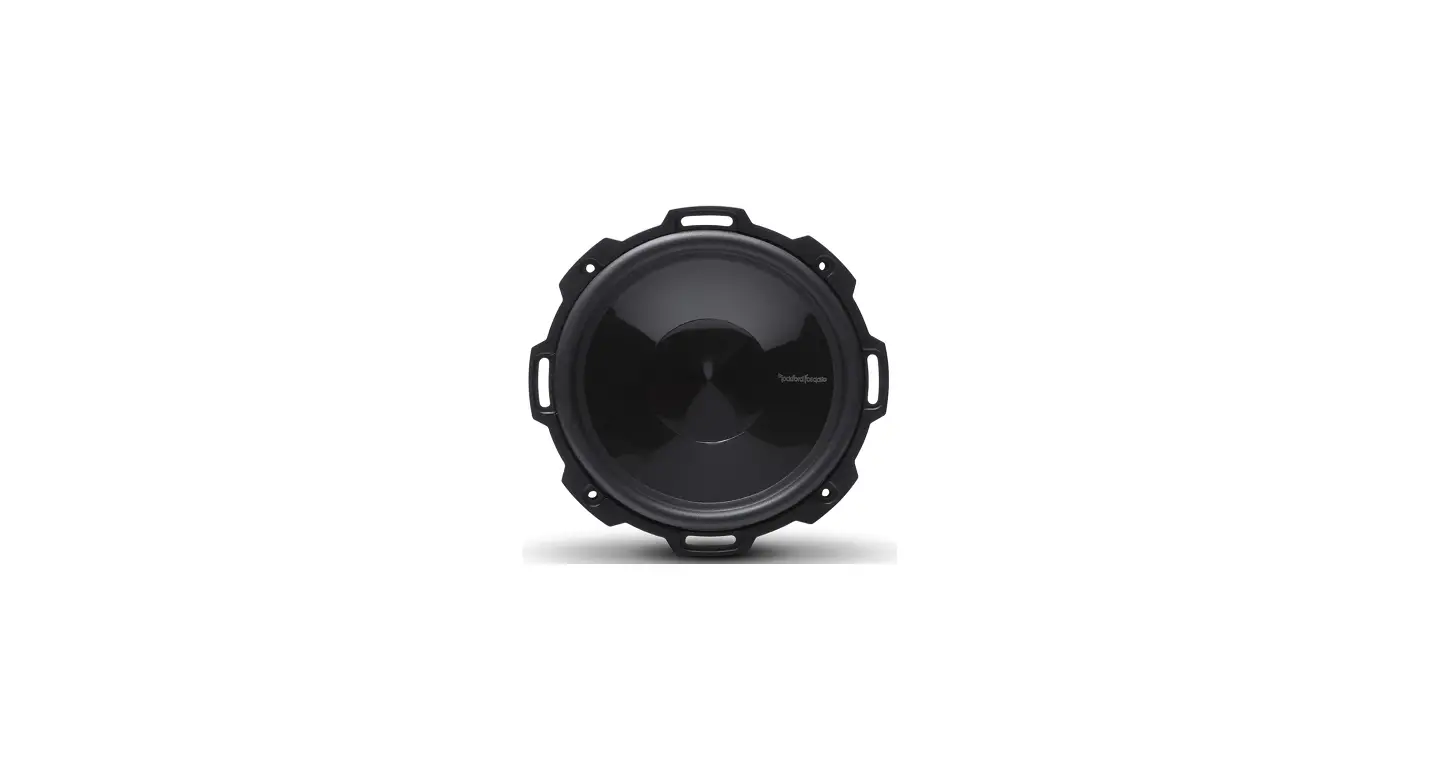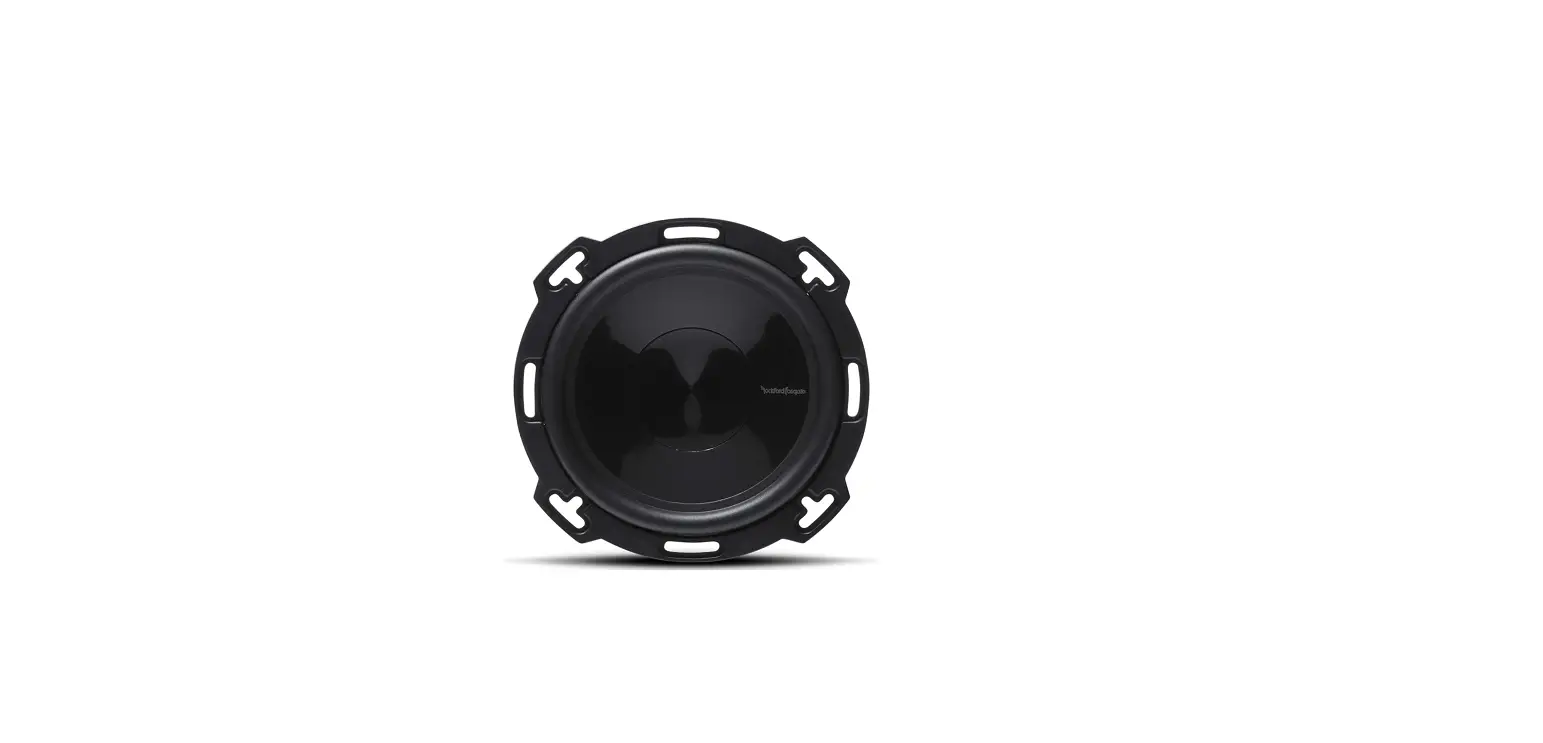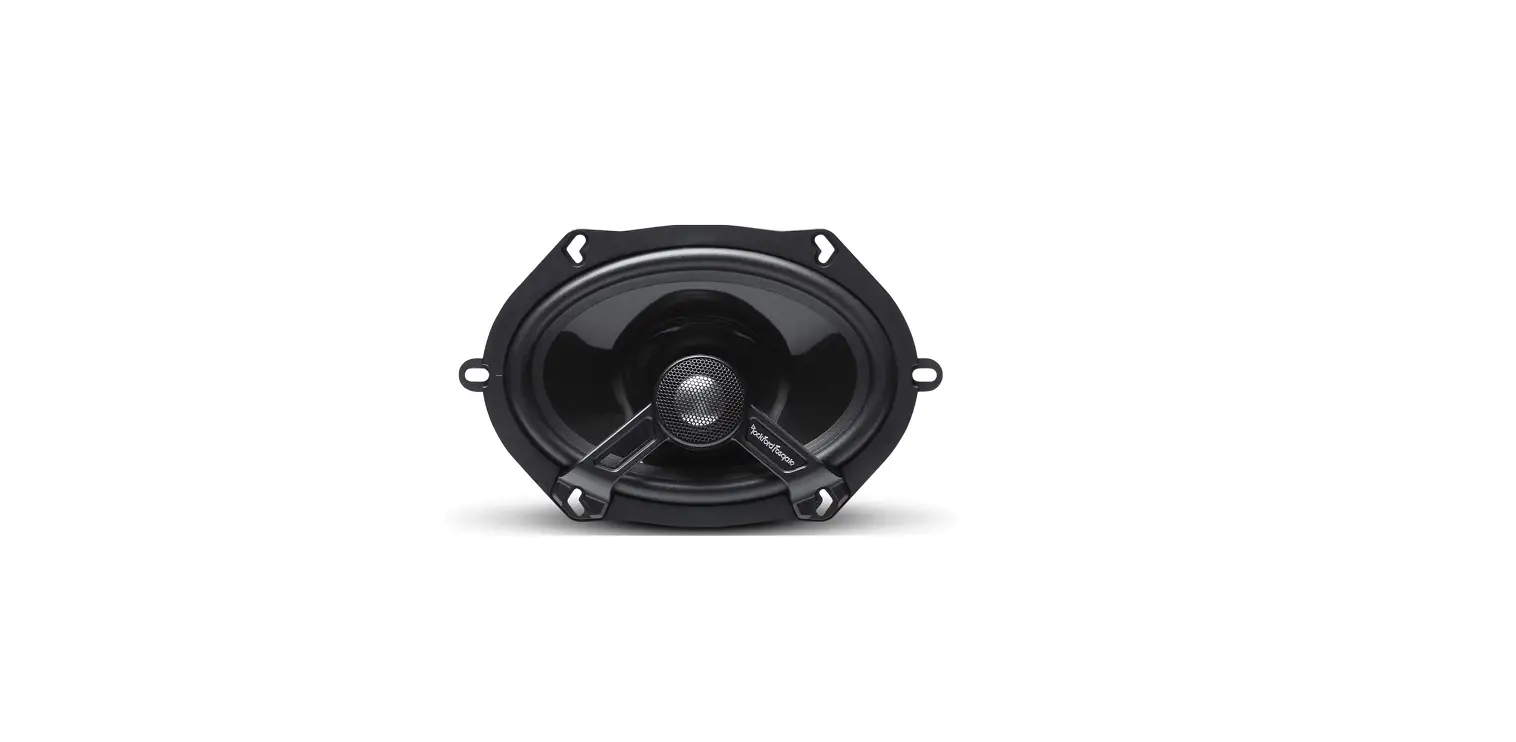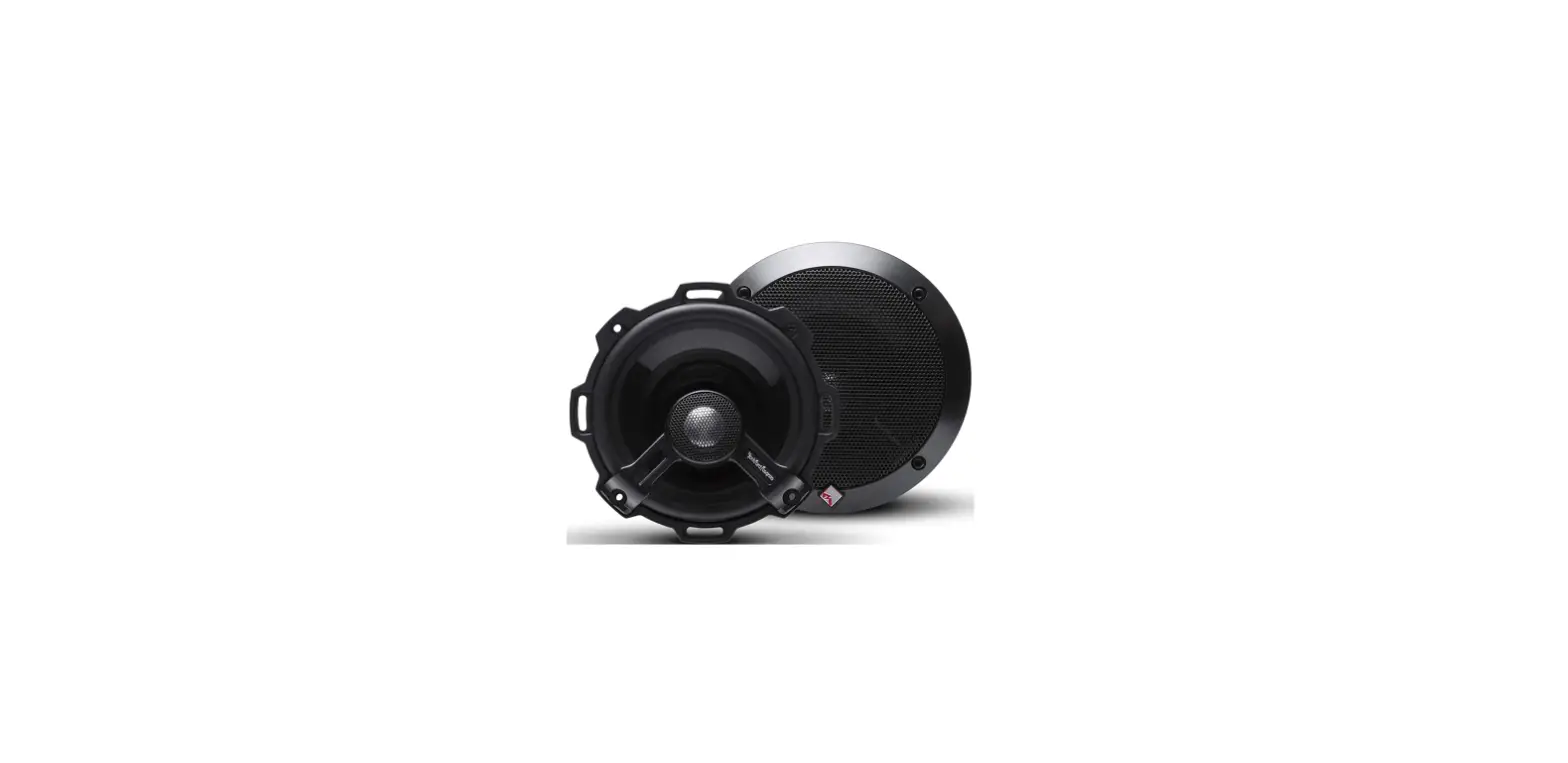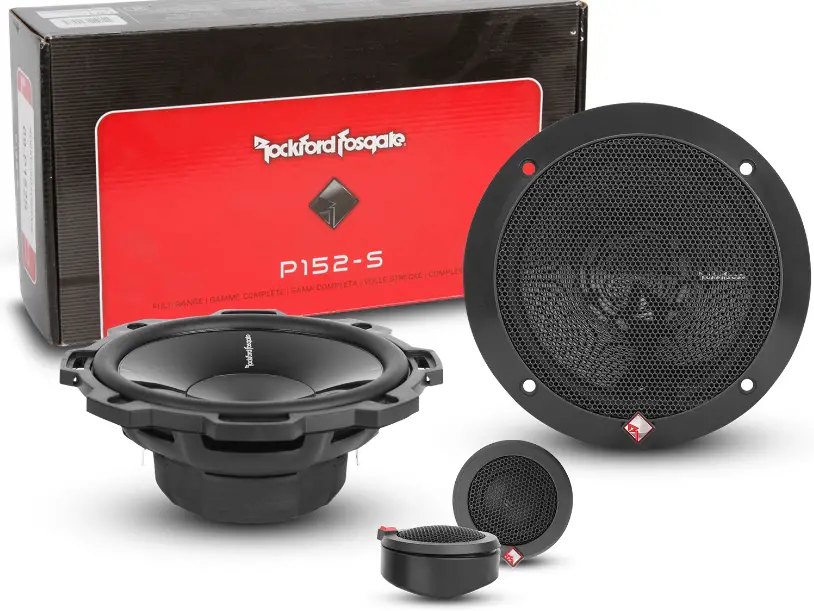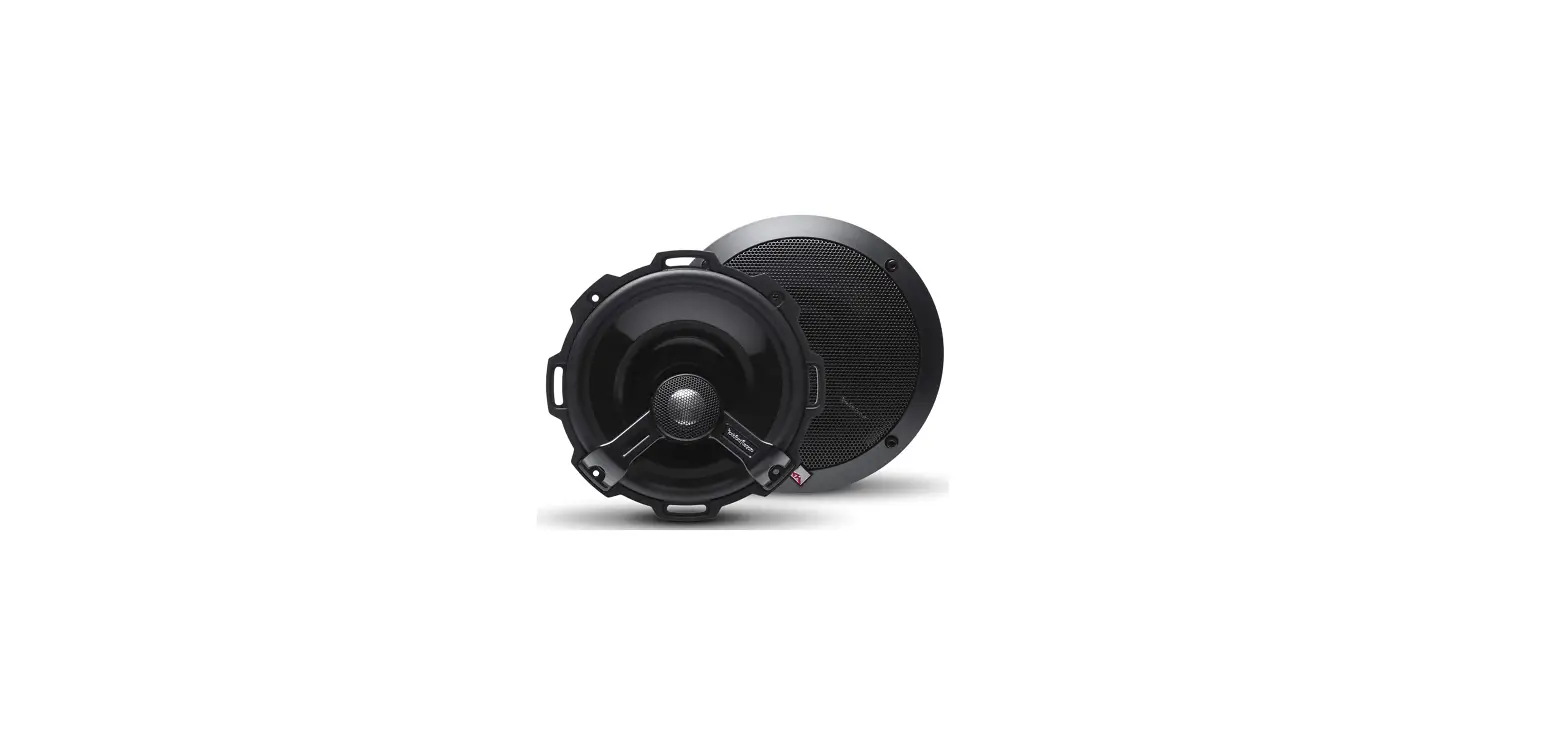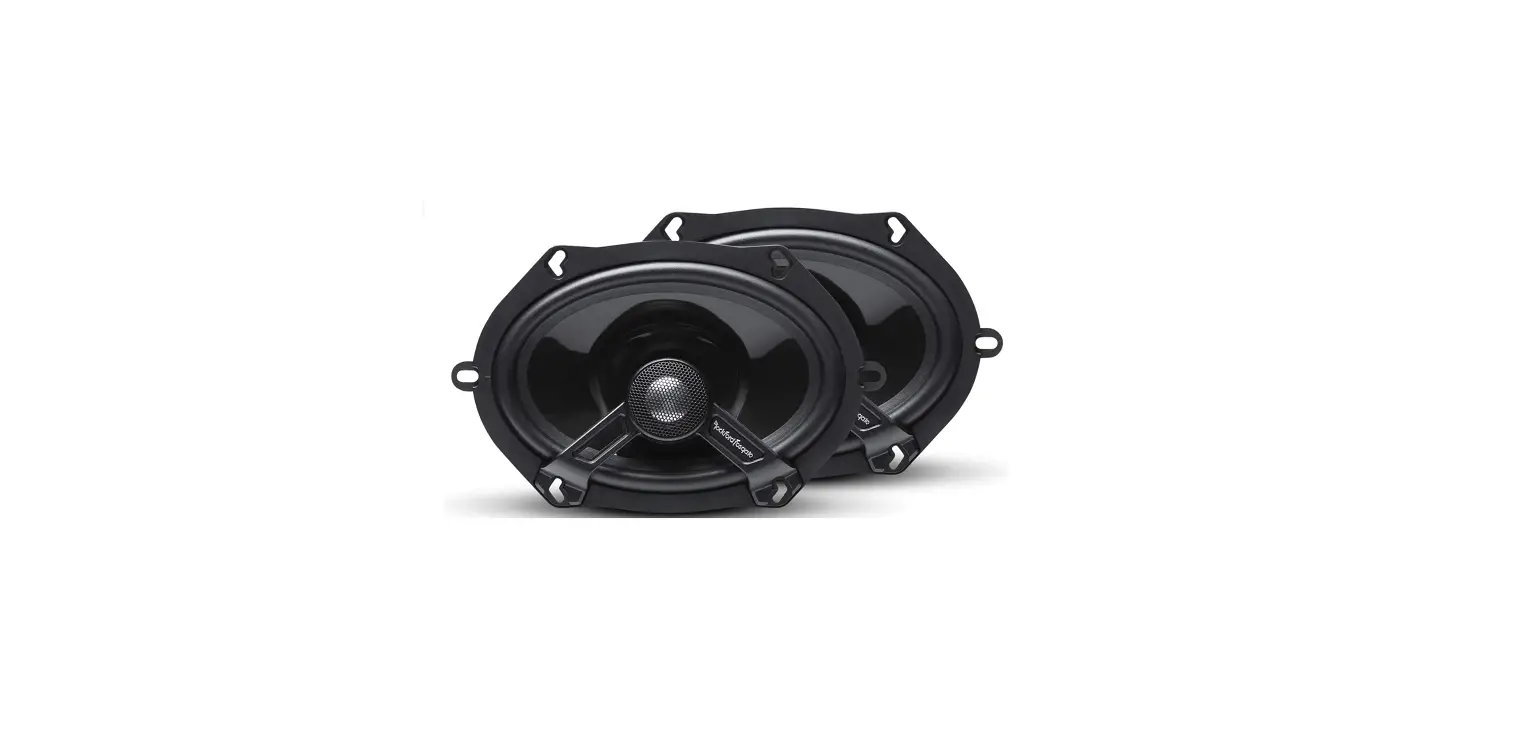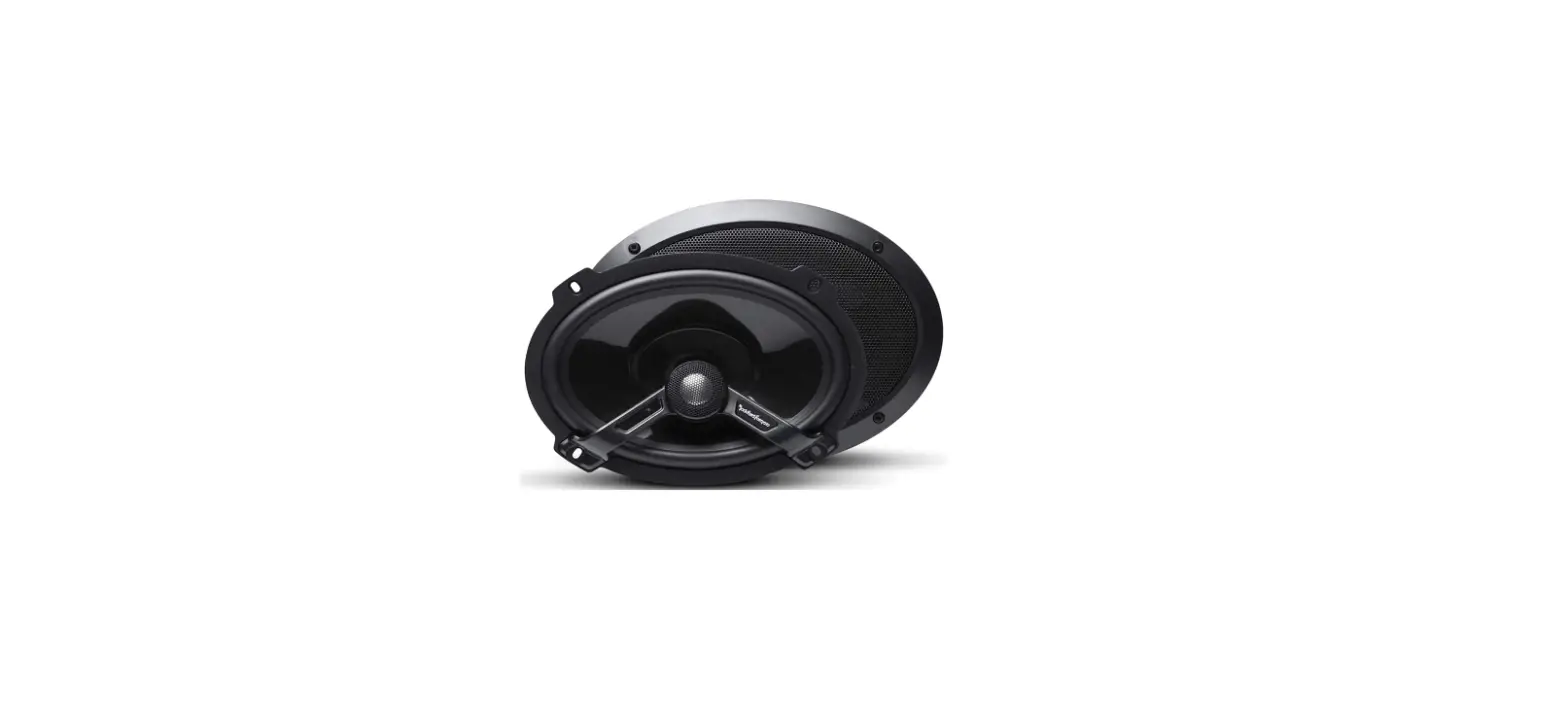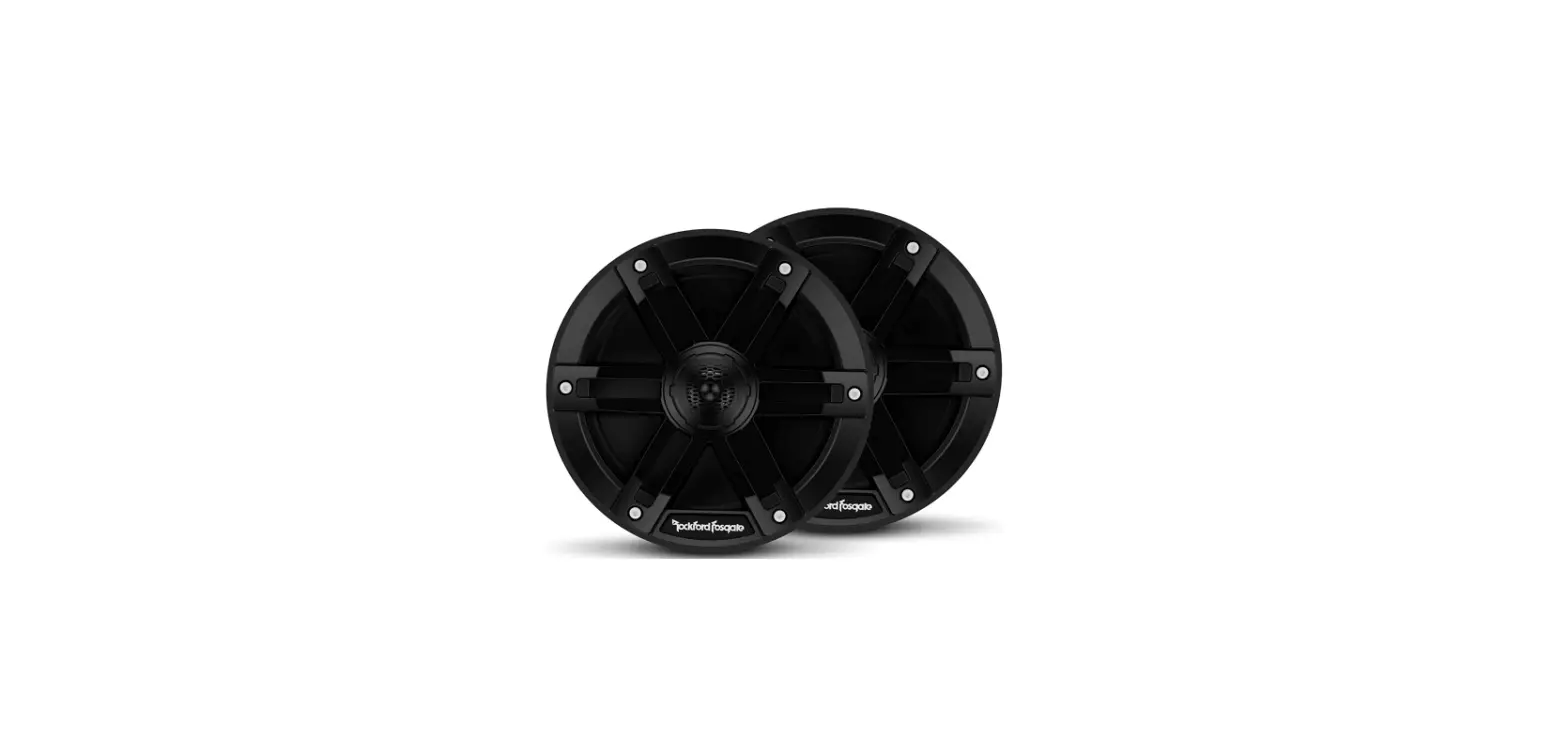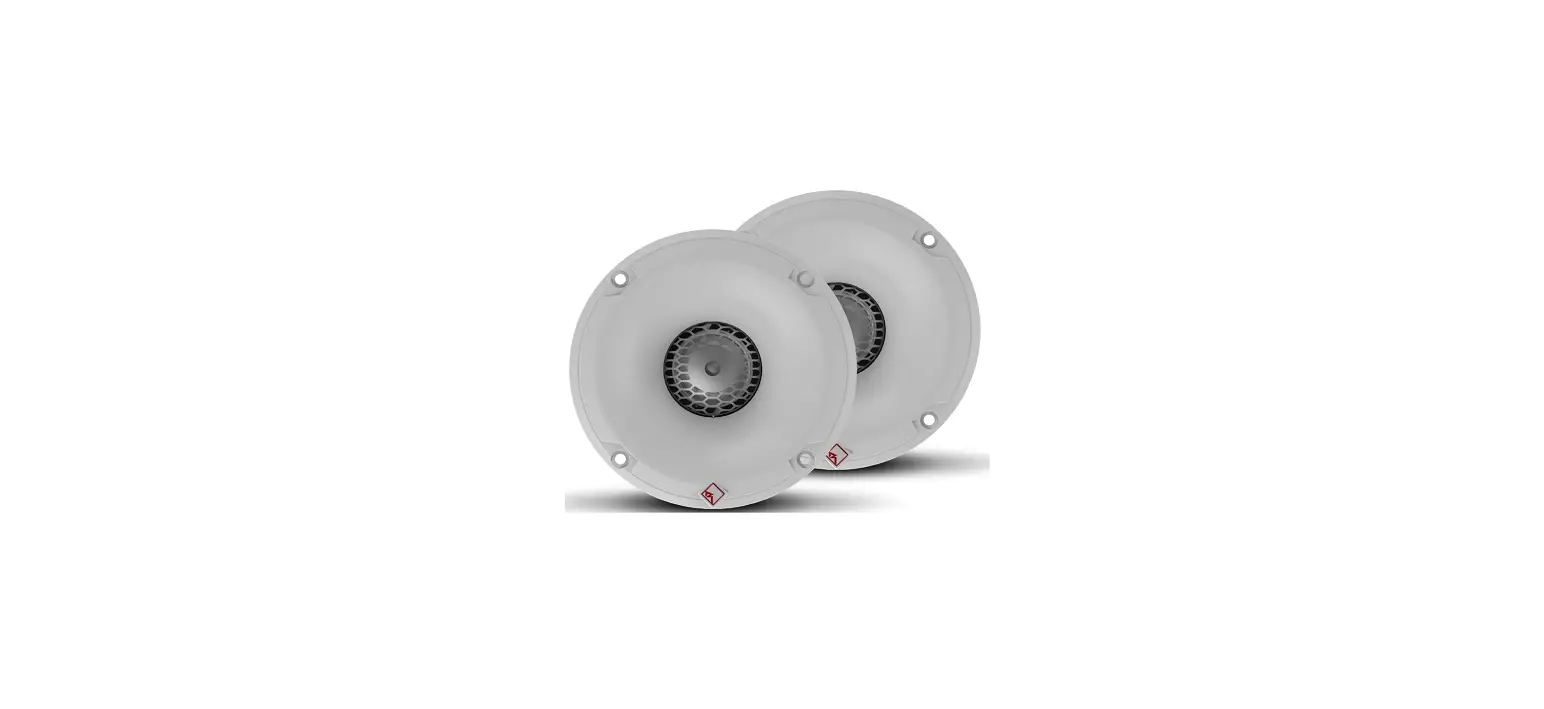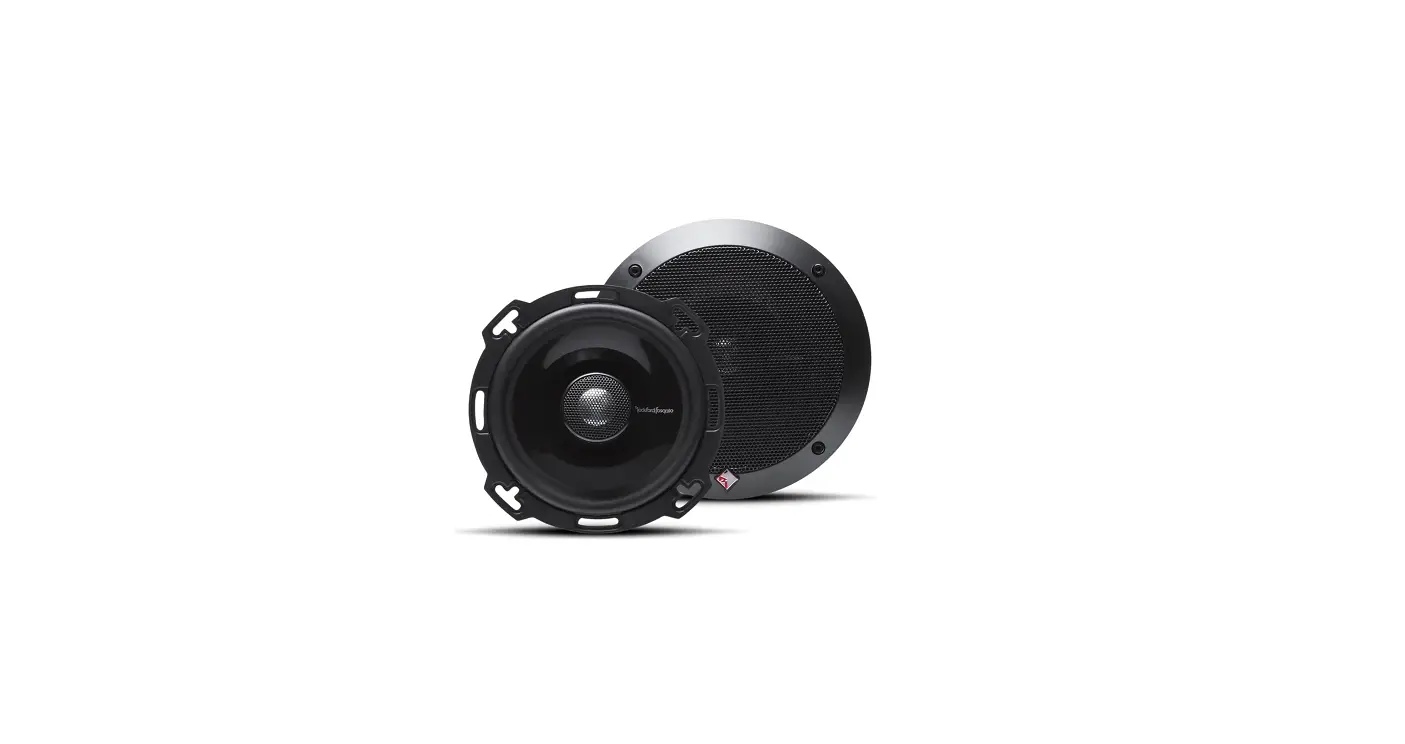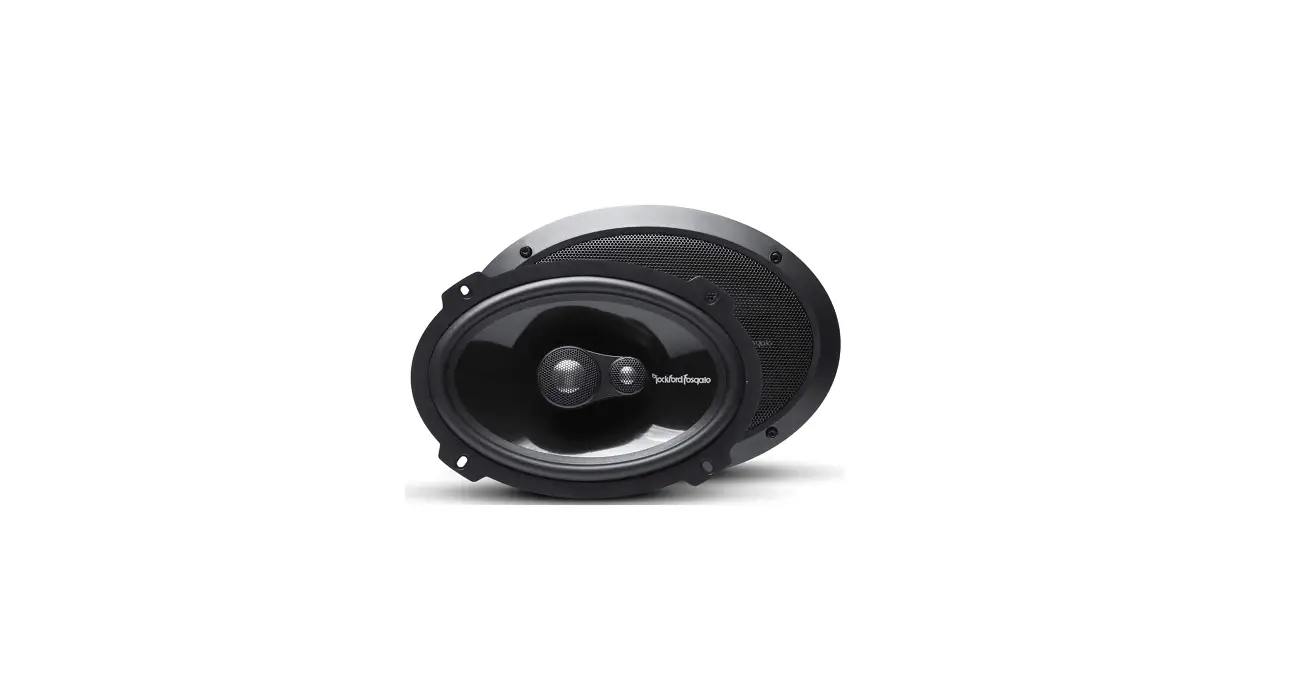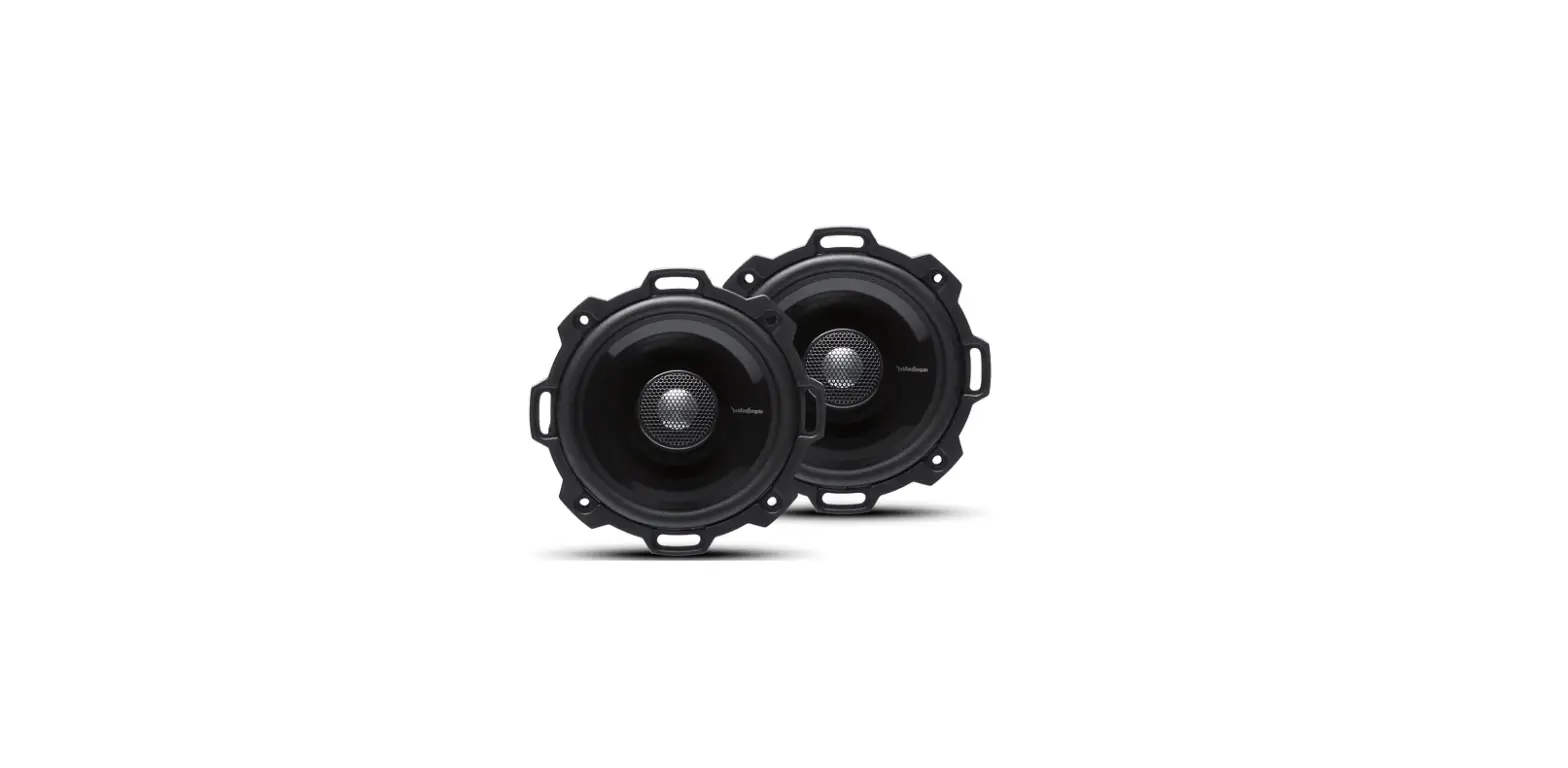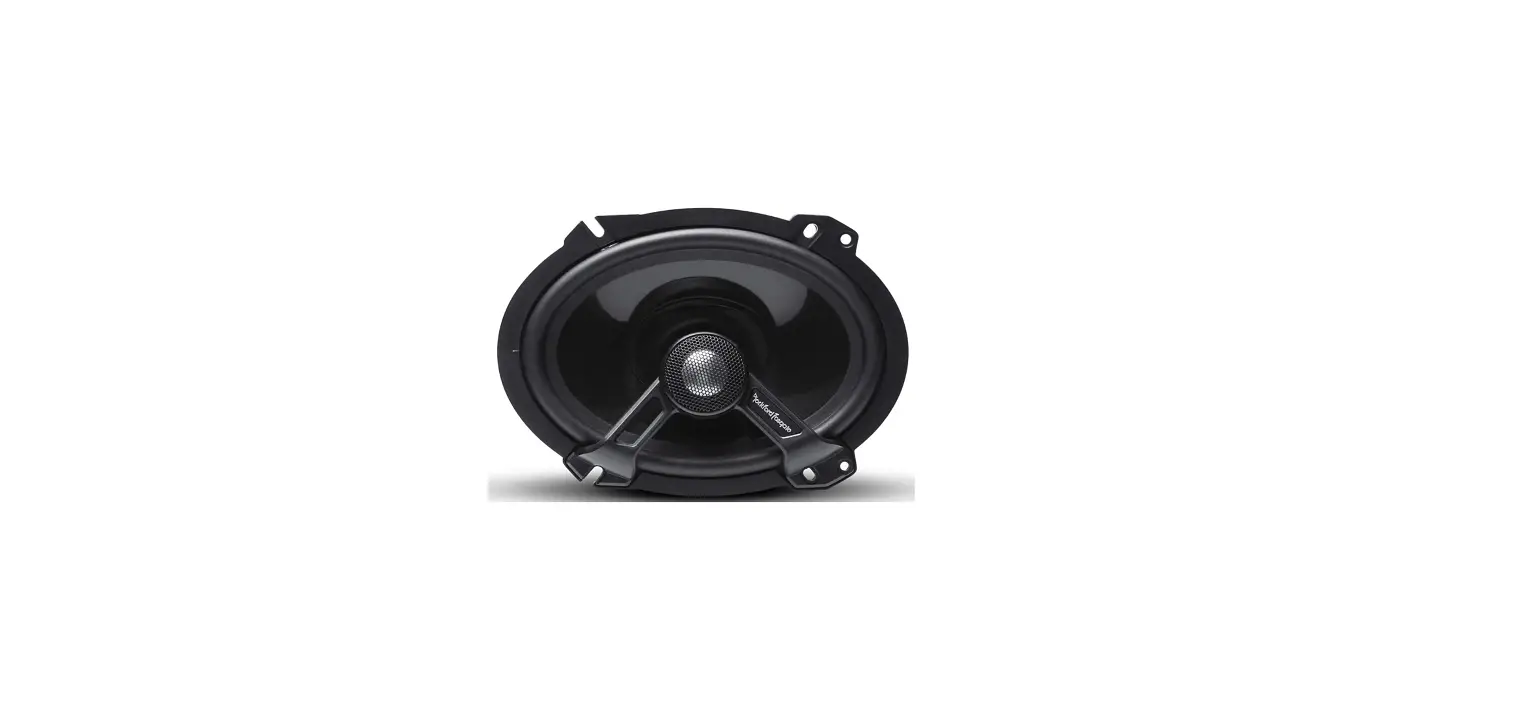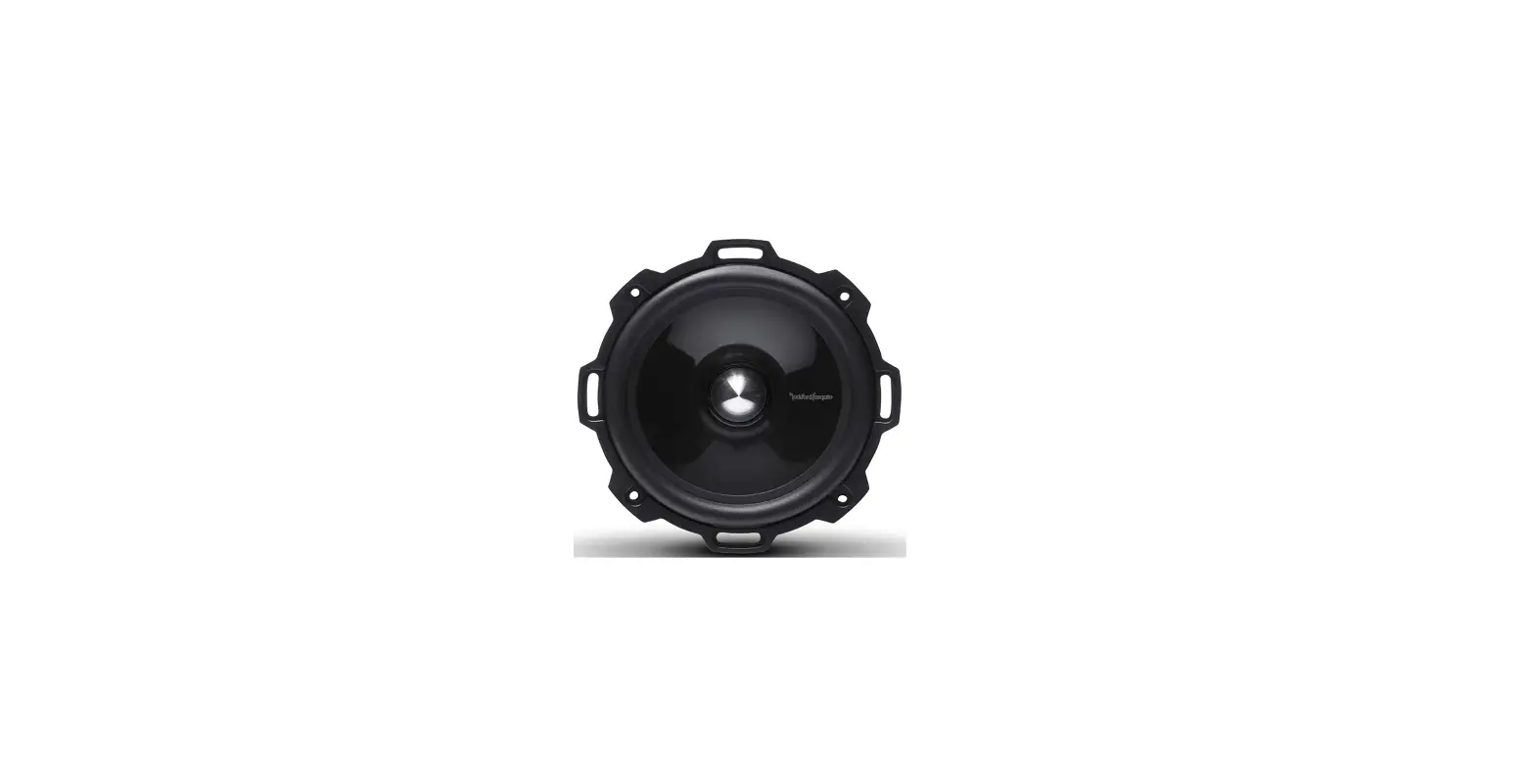

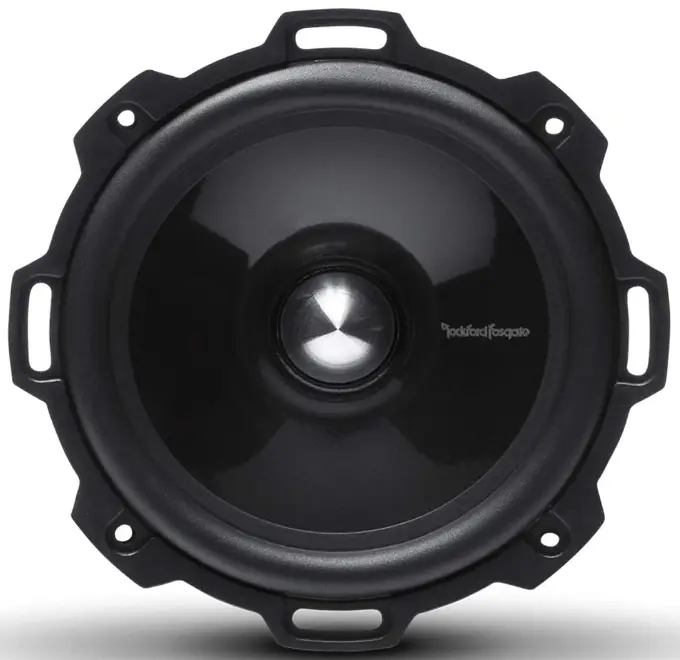
Rockford Fosgate T252-S Aluminum Component Speaker System
SAFETY
CAUTION: Before installation, disconnect the battery negative (-) terminal to prevent damage to the unit, fire and/or possible injury.
PRACTICE SAFE SOUND
Continuous exposure to sound pressure levels over 100dB may cause permanent hearing loss. High powered auto sound systems may produce sound pressure levels well over 130dB. Use common sense and practice safe sound.
CARTON CONTENTS
- Set T2 Series Speakers with Tweeters and 2-Way Crossover or (1) Set T2 Series Tweeters with HP Crossover
- Set of grilles/trim rings
- Sets of tweeter trim rings: (1 set of polished aluminum) (1 set of brushed aluminum)
- Tweeter Mounting Hardware with Surface, Angle, and Flush Mounts
- Set Adapter Plates: T252-S (5″x7″/6″x9″), T2652-S (5″x7″/6″x9″)
INSTALLATION CONSIDERATIONS
Before beginning any installation, follow these simple rules:
- Be sure to carefully read and understand the instructions before attempting to install these speakers.
- For safety, disconnect the negative lead from the battery prior to beginning the installation.
- For easier assembly, we suggest you run all wires prior to mounting your speakers in place.
- Use high quality connectors for a reliable installation and to minimize signal or power loss.
- Think before you drill! Be careful not to cut or drill into gas tanks, fuel lines, brake or hydraulic lines, vacuum lines or electrical wiring when working on any vehicle. If installation in a boat, take care not to cut or drill through the main hull.
- Never run wires underneath the vehicle. Running the wires inside the vehicle or hull area provides the best protection.
- Avoid running wires over or through sharp edges. Use rubber or plastic grommets to protect any wires routed through metal, especially the firewall.
MOUNTING
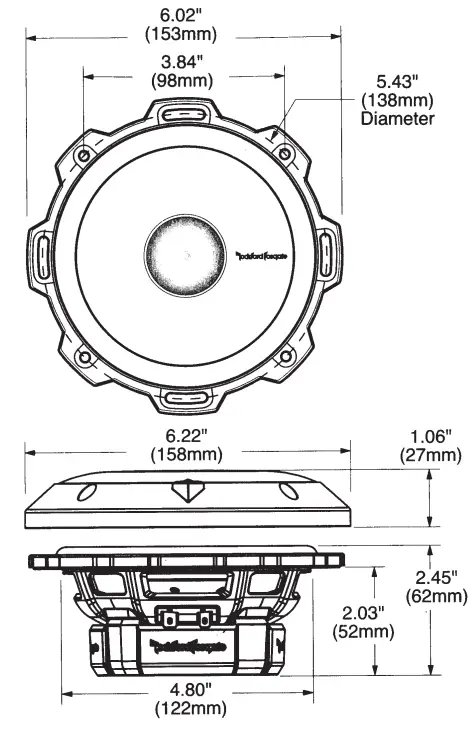
- Determine where the speakers will be mounted. Ensure an area large enough for the speaker to mount evenly. Be sure that the mounting location is deep enough for the speaker to fit; if mounting in a door, operate all functions (windows, locks, etc.) through their entire operating range to ensure there is no obstruction.
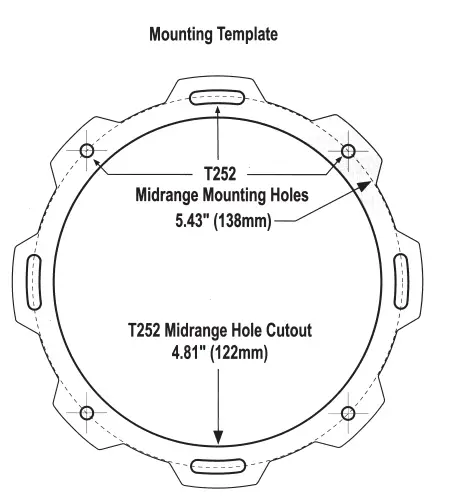
- Refer to the specification chart to determine the proper diameter hole to cut for your speaker model. The template provided also gives the proper cutout size.
- Mark the locations for the mounting screws. Drill the holes with a 1/8″ bit.
- Feed the speaker wires through the cutout and connect to the speaker terminals.
- Be sure to observe proper polarity when connecting the wires. The speaker’s positive terminal is indicated with a “+”.
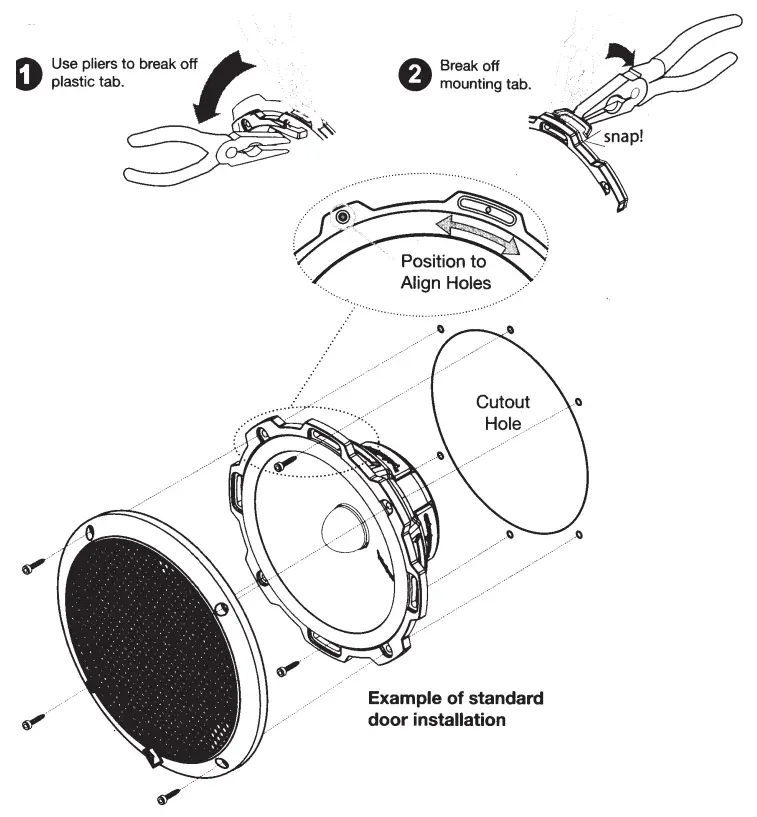
- On models with slotted holes, fit the speaker into the cutout and install the screws in the slots at the top and bottom. This will allow you to rotate the speaker to match the remaining mounting holes. When aligned, tighten the screws.
- Tighten the screws until the speaker is snug in place to prevent rattling. Do not over tighten the screws.
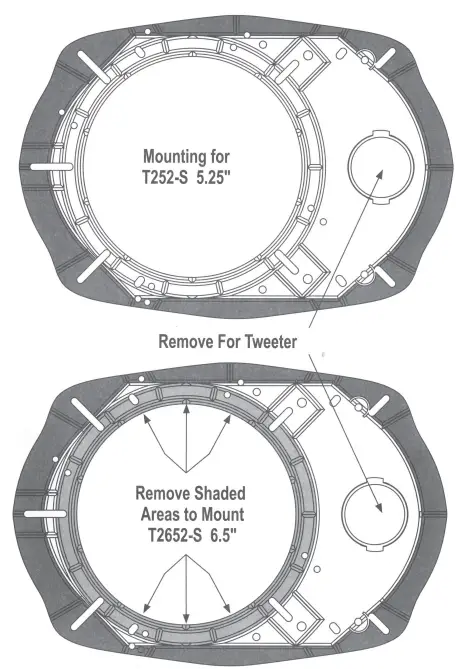
NOTE: If needed, use the adapter plate provided to mount the speaker. See Adapter Plate Templates at the end of this manual.
REMOVING TABS FOR SOME INSTALLATIONS
FEATURES
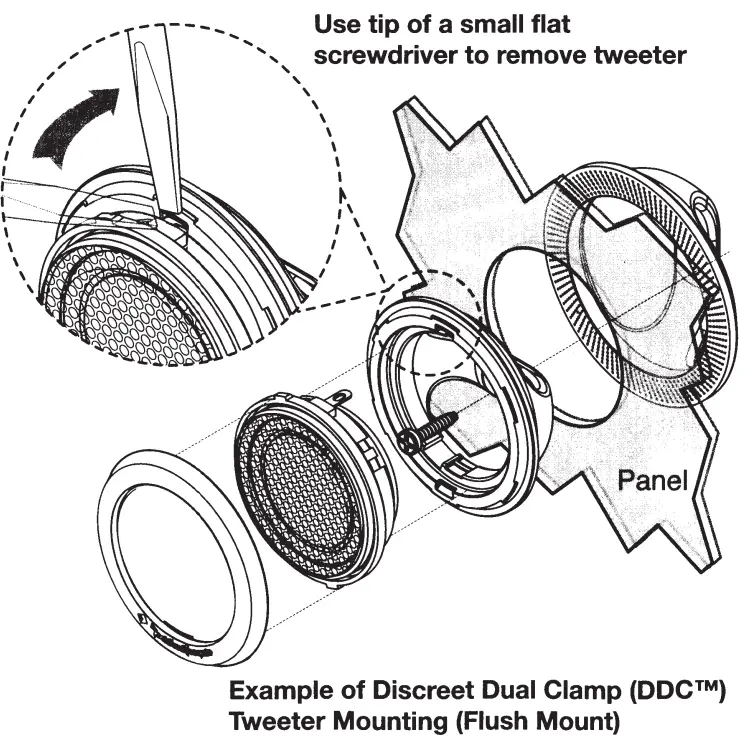
Discreet Dual Clamp (DOC™) Tweeter Mount
Every aspect of the new Tweeter design has been completely re-engineered to allow for maximum ease of installation and fitment. This optimized patent pending design provides concentric clamping pressure around the perimeter of the mounting hole.
The “mounting cups” are in fact not “cups” at all, but rather unobtrusive “clamps” that quickly and easily mount in a standard 1.75 inch (45mm) hole saw opening with a single center screw securing with balanced pressure to both faces of the mounting surface. From there, the tweeter simply snaps into place and is secured by a snap-on trim ring. Removal is easy if needed. The protective grille on the tweeter is non-removable and an intergral part of the design.
WIRING
COMPONENT WIRING
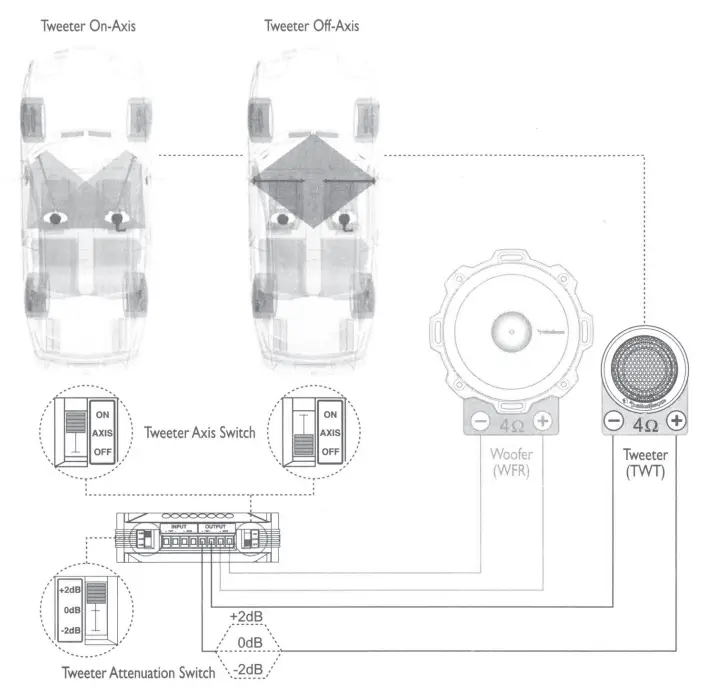
- Use illustration for proper connection.
- Be sure to maintain speaker polarity.
Axis ON-OFF Switch
- Set to ON or OFF to match position of tweeter relative to listener. Default OFF position satisfies most installations.
dB Switch
- 0dB matches the amplitude (no increase/no attenuation) of the tweeter to the same level as the mid-range (woofer).
- +2dB increases and -2dB reduces the amplitude of tweeter in relation to the mid-range, (ideal when matching offset installation like tweeters located high in door panels and midranges low in kick panels).
BI-AMP CROSSOVER WIRING
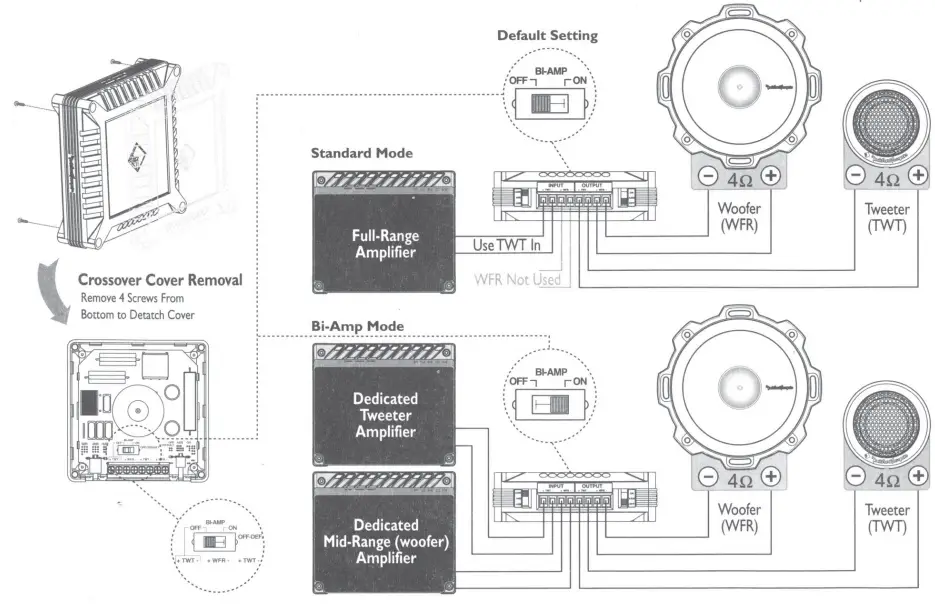
- Use illustration for proper connection and be sure to maintain speaker polarity.
- Remove 4 screws from crossover bottom to detatch cover.
- When BI-AMP switched OFF for one amplifie r, use only “TWT” input.
- When BI-AMP switched ON for two dedicated amplifier, use both “TWT” and “WFR” inputs.
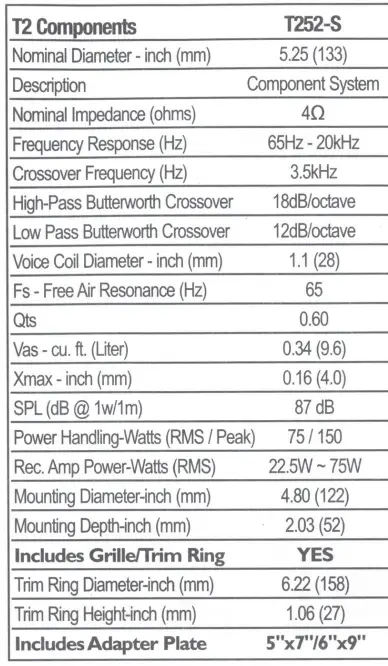
SPECIFICATIONS
Component Crossover
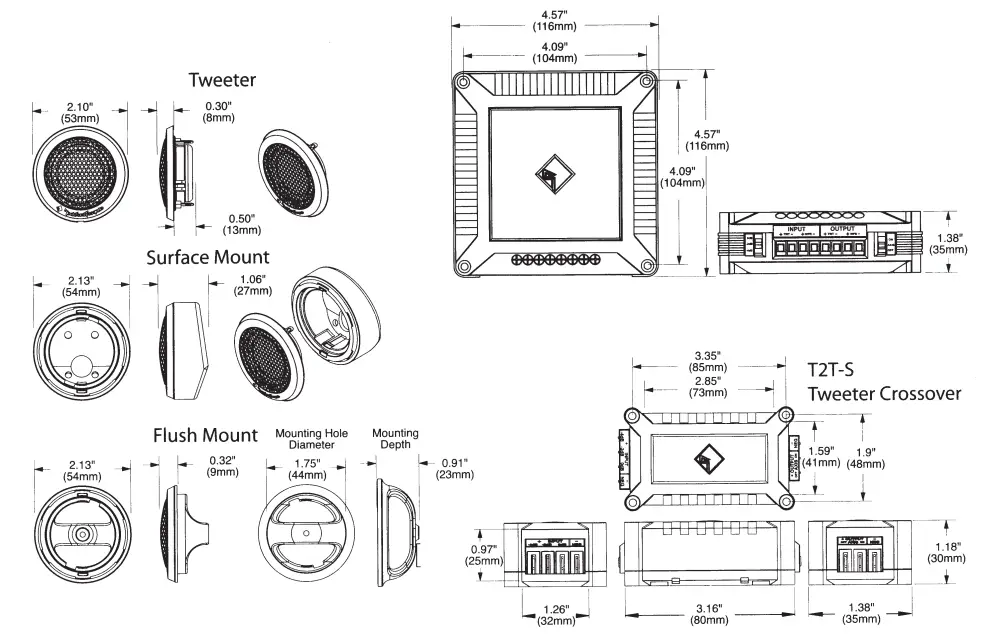
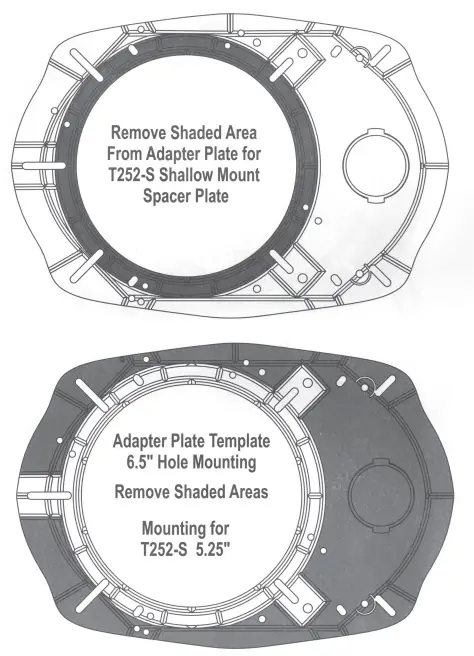
For 5″x7″ Hole Mounting • Remove Dark Shaded Areas
Component System
LIMITED WARRANTY STATEMENT
Rockford Corporation offers a limited warranty on Rockford Fosgate products on the following terms:
Length of Warranty
Speakers- I Year. Any Factory Refurbished Product- 90 days (receipt required)
What is Covered
This warranty applies only to Rockford Fosgate products sold to consumers by Authorized Rockford Fosgate Dealers in the United States of America or its possessions. Product purchased by consumers from an Authorized Rockford Fosgate Dealer in another country are covered only by that country’s Distributor and not by Rockford Corporation.
Who is Covered
This warranty covers only the original purchaser of Rockford product purchased from an Authorized
Rockford Fosgate Dealer in the United States. In order to receive service, the purchaser must provide Rockford with a copy of the receipt stating the customer name, dealer name, product purchased and date of purchase. Products found to be defective during the warranty period will be repaired or replaced (with a product deemed to be equivalent) at Rockford’s discretion.
What is Not Covered
- Damage caused by accident, abuse, improper operations, water, theft, shipping
- Any cost or expense related to the removal or reinstallation of product
- Service performed by anyone other than Rockford or an Authorized Rockford Fosgate Service Center
- Any product which has had the serial number defaced, altered, or removed
- Subsequent damage to other components
- Any product purchased outside the U.S.
- Any product not purchased from an Authorized Rockford Fosgate Dealer
Umit on Implied Warranties
Any implied warranties including warranties of fitness for use and merchantability are limited in duration to the period of the express warranty set forth above. Some states do not allow limitations on the length of an implied warranty, so this limitation may not apply. No person is authorized to assume for Rockford Fosgate any other liability in connection with the sale of the product.
How to Obtain Service
Contact the Authorized Rockford Fosgate Dealer you purchased this product from. If you need further assistance, call 1-800-669-9899 for Rockford Customer Service. You must obtain an RA# (Return Authorization number) to return any product to Rockford Fosgate. You are responsible for shipment of product to Rockford.
E.U Warranty
This product meets the current EU warranty requirements, see your Authorized dealer for details.
FAQs
A component speaker will generate music that is louder, distortion-free, and spans a wider frequency range, while each has benefits and drawbacks. Even though there are many excellent coaxial speakers on the market, they fall short of the best component speakers. A coaxial speaker has an integrated tweeter and a broad frequency range.
A automobile audio speaker that has been fine-tuned for the greatest sound is known as a component speaker. In order to pair a set of tweeters with mid-bass drivers, a crossover is often utilised. This reduces the frequency range that each speaker must accurately reproduce.
Every speaker system needs a crossover of some form. Separate outboard crossovers are included with component speaker sets, and a lot of them contain selections for the tweeter level. A modest crossover network is already built into every full-range, coaxial speaker, with the tweeter placed in front of the woofer cone.
Even though it is true that a speaker’s suspension may loosen with time, there is no need to play a speaker at half power or low volumes for an extended period of time in order to facilitate or ease into this.
The primary purpose of main speaker crossovers between 50 and 60 Hz is to block low-end bass. two speakers 3-3.5 kHz (high pass) (high pass) The midrange lies between 1 and 3.5 kHz. a three-way system using 3.5 kHz and 300 Hz.
Use a two channel amp or, if bridged, a four channel amp for an excellent component speaker setup. Now, if you want to power a subwoofer or speakers, you must choose an amp based on that arrangement.
Compared to coaxial speakers, the sound generated by component speakers is significantly clearer, more flexible, and frequently louder.
They cost more and take more effort to install, but the rewards are great. The three distinct parts of component speakers are the tweeters, midranges, and woofers. The woofers handle the low frequencies, the midranges manage the medium frequencies, and the tweeters handle the high frequencies.
In 2-way speakers, there are two separate types of drivers: the woofer and the tweeter. A tweeter is designed to reproduce high-frequency sounds, whereas a speaker known as a woofer is intended primarily to reproduce low-frequency sounds. The 3-way speaker, often known as the midrange, woofer, and tweeter drivers, produce sound.
As coffee tables, flower pot stands, or other non-amplified items, they can be used. However, if you want to utilise them as speakers and recreate sound, you’ll need an amp.
Connecting your speakers to your system and using them as you normally would is the simplest way to use them. The speakers are normally regarded as sufficiently broken in after 20 to 30 hours of nonstop use, and they frequently continue to develop and improve for the first hundred or more hours.
A set of component speakers consists of two tweeters, two mid bass drivers, and two crossovers. You will undoubtedly need a subwoofer because these do not cover the entire frequency spectrum. You will want a separate amp to power the subwoofer and component speakers.
Although less common, component speakers are frequently used by audiophiles to build high-performance automobile audio systems. These speakers can only produce high, middle, or low tones because each one only has one driver.
Crossovers, subwoofers, and tweeters are the basic components of component speakers. Every one of these units has a job to complete in order to produce a finished performance. While each element works separately, together they produce a beautiful sound. Stop right here if you still don’t understand what component speakers are.
Because of their small cones (in compared to subwoofers) and deep installation, component speakers have a restricted excursion (so the magnet may be positioned on door panels without hitting the window glass panel). Because the trunk can serve as a baffle, mounting it on the back panel enhances bass response (in sedans).