550 Portable Hardness Testing Selection
Product Information
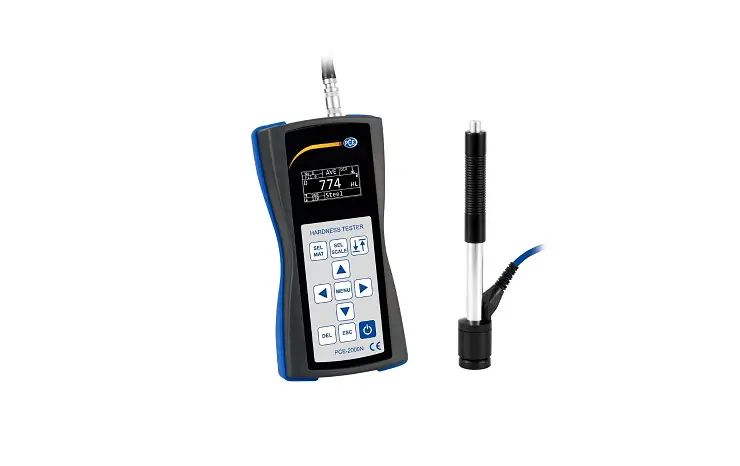
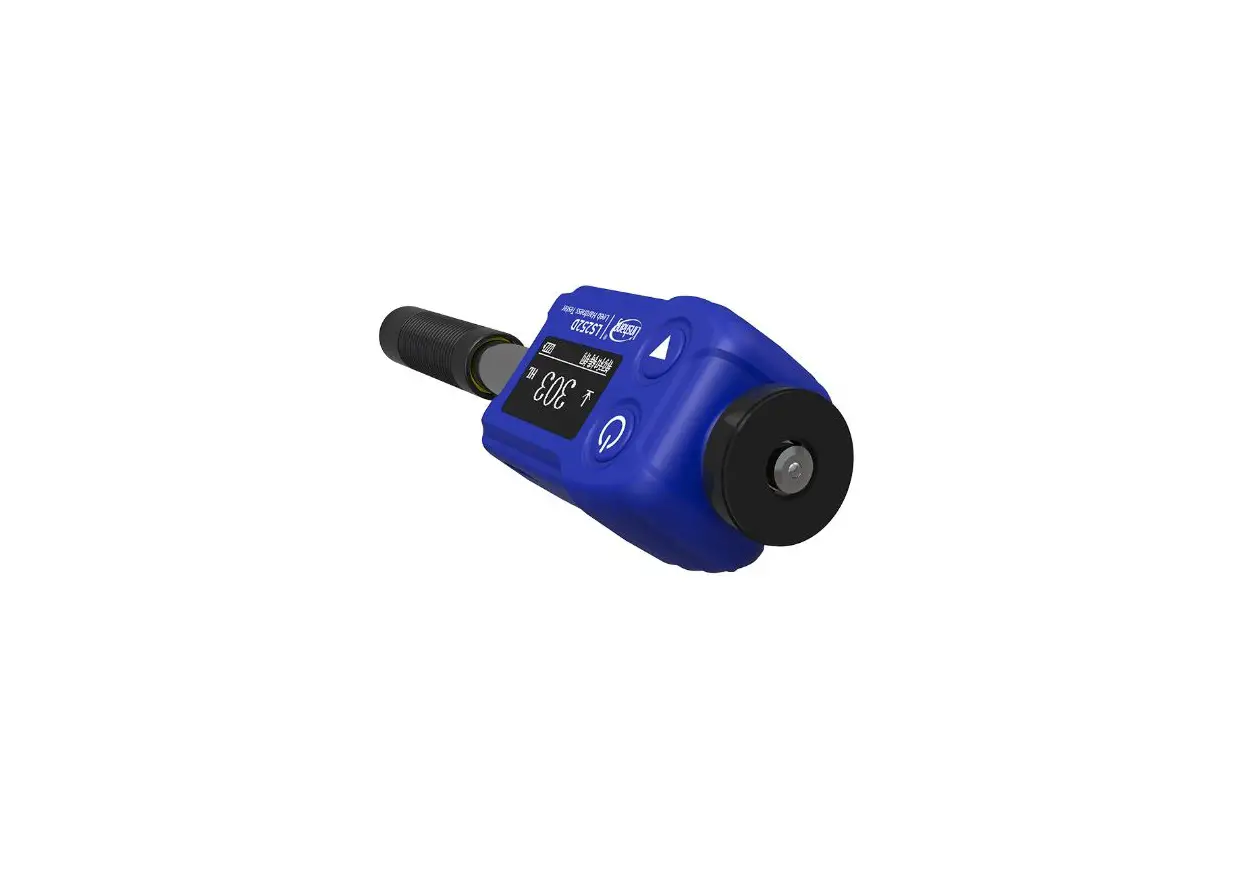
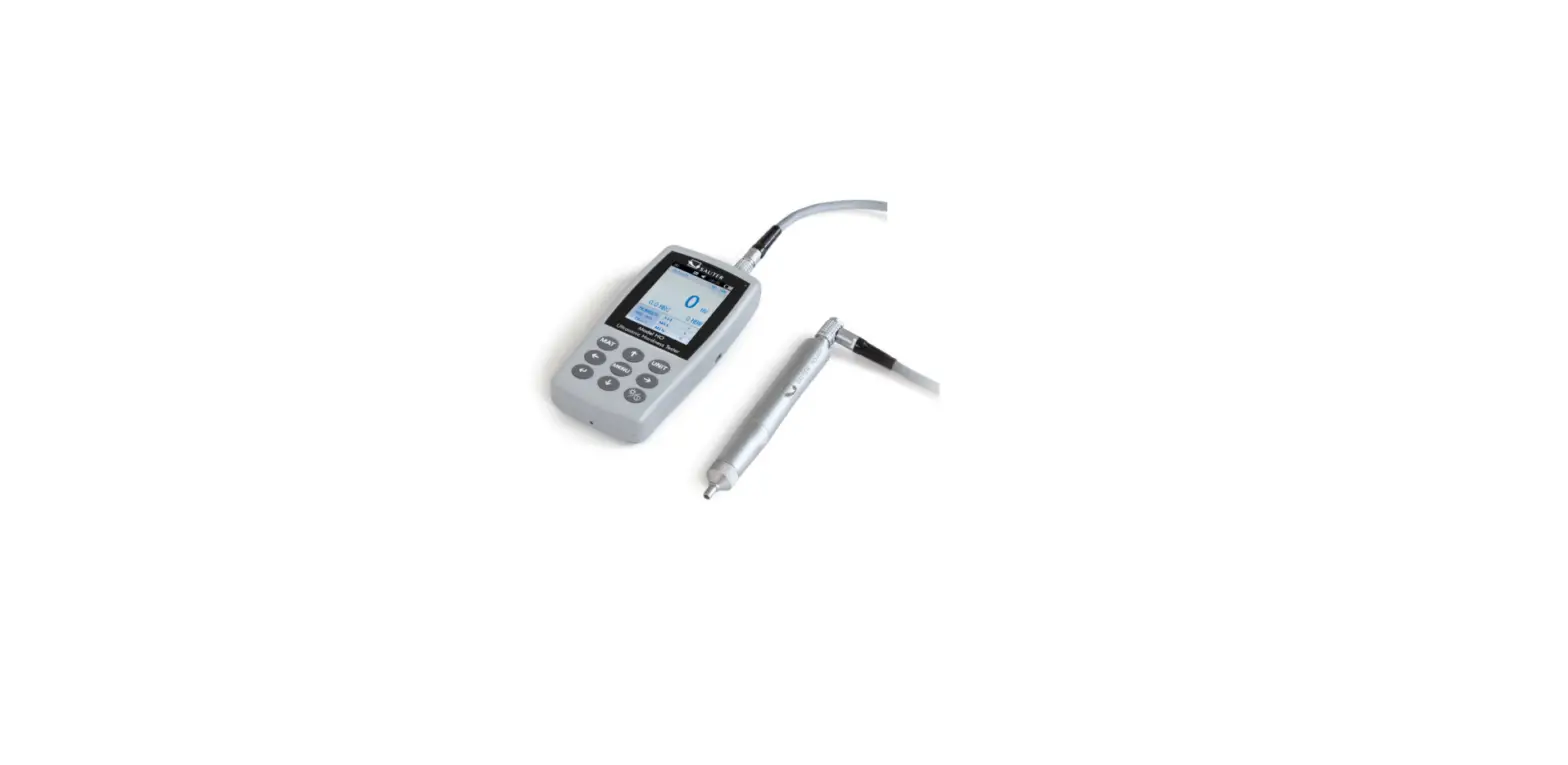
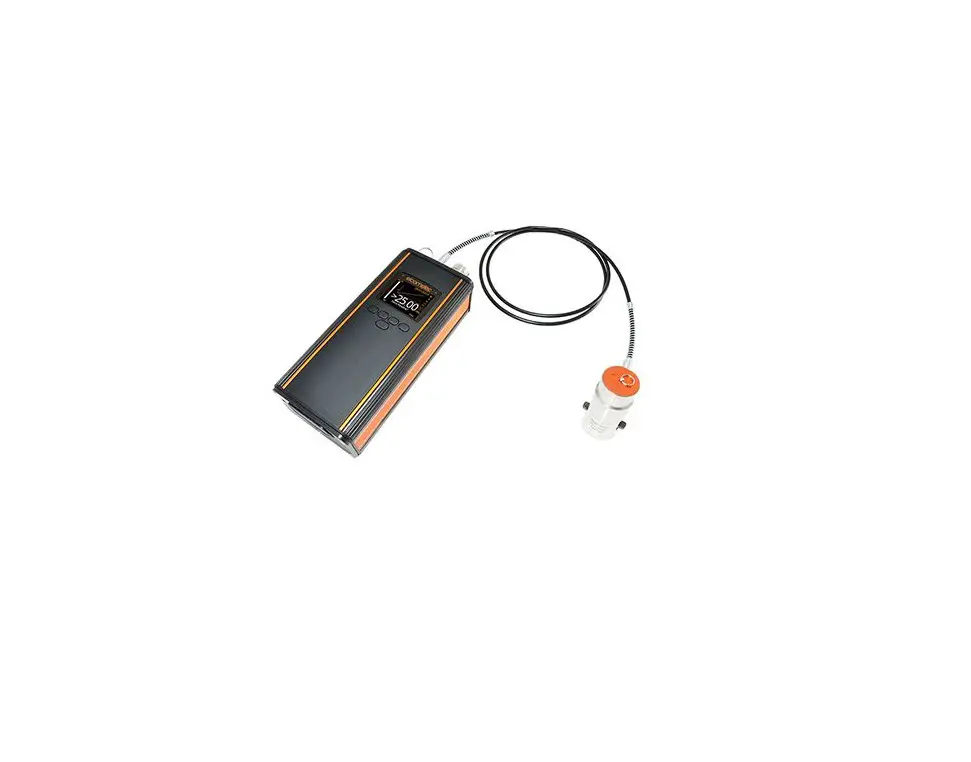
The Equotip Portable Hardness Testing device is a versatile
instrument that provides high accuracy, durability, and
functionality. The device is designed based on the Leeb method, and
it comes with the world’s broadest selection of methods, probes,
and conversion tables. The device is equipped with probes that have
an unmatched lifespan, lasting four times longer than others on the
market.
The device is ISO/IEC 17025 certified calibration laboratory
that ensures the highest accuracy and compliance with international
standards. The device can measure the hardness of various objects,
including heavy samples, casts, forgings, heat-treated surfaces,
welds, and thin samples. The device comes with three different
methods: Leeb (Rebound), Ultrasonic Contact Impedance (UCI), and
Portable Rockwell. The device also has various probes that cater to
different object types and sizes.
Product Usage Instructions
To use the Equotip Portable Hardness Testing device, follow the
below instructions:
- Select the appropriate probe and method based on the object
type and size. - Turn on the device and select the desired settings.
- Place the probe on the object surface and press the trigger to
initiate the test. - The device will display the hardness value of the object on the
screen. - Record the value and repeat the process if required.
- Turn off the device after use.
Note: The device comes with a user manual that provides detailed
instructions on how to use the device and maintain it. It is
recommended to read the manual before using the device.
Equotip Portable Hardness Testing
Selection Guide
The highest accuracy, durability, and functionality from the inventor of the Leeb method
Durability
The unmatched lifespan of probes and impact bodies, lasting four times longer than
others on the market.
Accuracy
As ISO/IEC 17025 certified calibration laboratory we pay attention to the detail to delivery
instruments with highest accuracy and in accordance with the international standards
Versatility
World’s broadest selection of methods, probes and conversion tables.
LEEB, UCI and Rockwell
Equotip 550 Method Guide
Leeb (Rebound)
For heavy samples, casts
and forgings
In the Leeb method a spring propels an impact body through a guide tube toward the test piece. Measures the loss of velocity of the impact body before and after impact. The loss of velocity correlates with the hardness of the test piece.
Ultrasonic Contact Impedance (UCI)
Very universal. Widely used for heat-treated surfaces, weld inspection.
In the UCI method, a resonator excites a rod with an 136° ISO6507-2 compliant Vickers diamond into longitudinal ultrasonic oscillation. As the diamond is forced into the material, the frequency of the rod oscillation changes in response to the contact surface between the diamond and the material under test.
Portable Rockwell
Can measure very thin and light samples
The Portable Rockwell method is the mobile adaptation of the bench-top method and measures the penetration depths of a 100° Rockwell diamond under a defined minor force before and after application of a larger force.
LEEB
UCI
Portable Rockwell
Impact devices/probes Thin objects
D DC DL S
E
C
G 10-100 N 50 N
l
Light objects
l
Objects with limited/difficult accessibility
l
l
l
Polished objects 1)
l
l
l
Small round objects 2)
l
l
l
l
l
l
l
Mid-size objects
l
l
l
l
l
l
l
l
Very hard objects
l
l
l
l
Large objects
l
l
l
l
l
l
l
l
l
Large cast objects
l
1) If only small indentation are allowed. 2) Leeb probes in combination with correct support ring. ) Depending on test object.
ScreeningEagle.com
Equotip 550 Method Guide Test Objects
Oil & Gas
Automotive Aerospace Manufacturing & Machinery
Leeb
UCI
Portable Rockwell
For heavy samples, casts and forgings
Very universal. Widely used for heat- Can measure very
treated surfaces, thin and light samples weld inspection
Weld, base material &
l
Heat Affected Zone (HAZ)
Pressure vessels
l
l
l
Pipes
l
l
l
Flanges
l
l
l
Wellhead equipment
l
l
Rock Core
l
Engine blocks
l
Shafts
l
l
l
Gears
l
l
Panels
l
Brake Systems
l
Turbine blades
l
l
l
Casing / Housing
l
Panels
l
Cast objects
l
Landing gears
l
Rolls
l
Coils
l
l
l
Bars/pipes
l
l
l
Heat treatment/Casting
l
l
Wires
l
Power Generation
Boilers Pipes
l
l
l
l
High-alloy steel (incl.
l
Superalloys) components
Generator stator wedges
l
Turbine bolts
l
Turbine stator
l
Wind turbine nose
l
ScreeningEagle.com
Equotip 550 General Probe Parameters
Probe type
D, DC, DL
C
Probe and indenter parameters
Impact energy / test force
11 Nmm
3 Nmm
E
S
G
11 Nmm
11 Nmm
90 Nmm
UCI
HV1, HV5, HV10 in one probe
(~10 N, ~50 N, ~100 N)
Indenter type
Tungsten Carbide
Polycrystalline diamond
Silicon Nitride
Tungsten Carbide
ISO 6507-2 compliant Vickers diamond (a < 0.5 mm)
Standards and accreditation
Accredited calibration ISO/IEC 17025
Yes, DIN EN ISO 16859
Yes, DIN 50159
Traceability Method Conversion
Traceable to national standards (SI)
ASTM A370 ASTM A956 DIN EN ISO 16859 GB/T 17394 JB/T 9378
ASTM E140 ISO 16265 DL/T 1845 (Leeb D only)
ASTM A370 ASTM A1038
DIN 50159 GB/T 34205
ASTM E140 ISO 16265
Portable Rockwell
50 N (10 N+40 N)
ASTM E3246 and DIN50157
compliant, 100° diamond
Yes, DIN 50157
ASTM A370 ASTM E3246
DIN 50157
ASTM E140 ISO 16265
Standard & guideline compliance
Guidelines
ASME CRTD-91 DGZfP Gudeline MC 1 VDI / VDE Gudeline 2616 Paper 1 Nordtest Technical Reports 99.12, 99.13, 99.36
ASME CRTD-91 DGZfP Gudeline MC 1 VDI / VDE Gudeline 2616 Paper 1
Measurement and reliability parameters
Measurement resolution
1 HLx/HV/HB, 0.1 HRC/HRB/HS 1 N/mm2 (Rm)
Probes’ accuracy
± 4 HLx (0.5% @850 HLx)
Measurement deviation (E)
Coefficient of variation
Lower than specified in DIN EN ISO 16859
1 HV(UCI), 0.1 HRC ± 2%
Lower than specified in DIN 50159 & GB/T 34205
ScreeningEagle.com
0.1 m, 0.1 HRC; 1 HV
± 0.8 m, ~ ± 1.0 HRC
Lower than specified in DIN 50157 & ASTM E3246
Equotip 550 Test Object Parameters
Probe type
D, DC, DL, E, S
C
UCI
Rockwell
G
HV1
HV5 HV10
50N
Min. weight of samples
of compact shape on solid support coupled on plate
Min. thickness of samples
5 kg 11 lbs
2 kg 4.5 lbs 0.05 kg 0.2 lbs
1.5 kg 3.3 lbs
0.5 kg 1.1 lbs 0.02 kg 0.045 lbs
15 kg 33 lbs
5 kg 11 lbs 0.5 kg 1.1 lbs
0.3 kg 0.66 lbs
no specific requirements
uncoupled
25 mm
15 mm
0.98 inch 0.59 inch
coupled surface layer thickness
3 mm 0.12 inch 0.8 mm 0.03 inch
1 mm 0.04 inch 0.2 mm 0.006 inch
Surface roughness requirements of samples
70 mm 2.73 inch
10 mm 0.4 inch
5 mm* 0.2 inch
10x indentation
depth
Min roughness class ISO
N7
N5
N9
N8
N10
N7
Average roughness depth Ra
2 m 80 µinch
0.4 m
7 m
5 m
16 µinch 275 µinch 125 µinch
15m 590 µinch
2m 80 µinch
Min. grit size
P120
P180
P80
P80
P60
P120
Indentation diameter at given hardness on steel
~570HLD,~300HV,~46HRC ~760HLD,~600HV,~55HRC ~840HLD,~800HV,~63HRC
540 m 450 m 350 m
380 m 320 m 300 m
1030 m 900 m
–
79.1 m 56 m 48.3 m
177.1 m 248.1 m 125.3 m 175.4 m 108.5 m 151.9 m
53.6 m 26.2 m 16.7 m
Indentation depth at given hardness on steel
~570HLD,~300HV,~46HRC
24.5 m 12.1 m
~760HLD,~600HV,~55HRC
17 m
8.6 m
~840HLD,~800HV,~63HRC
10.2 m
7.5 m
*According to DIN 50159-1, ASTM A1038 requires 15 mm/0.6 inch.
53.6 m 40.8 m
11.3 m 8 m 6.9 m
25.3 m 17.9 m 15.5 m
35.4 m 25.1 m 21.7 m
22.5 m 11 m 7 m
Minimum requirements for mass and thickness of samples according to DIN EN ISO 16859/DIN 50159-1, ASTM A956 and GB/T 17394
ScreeningEagle.com
Equotip 550 Probe Selection – Expected Impact Body Lifetime
Probe / Impact body type
C, D, DC, G, DL
S
E
Impact body tip material
Tungsten carbide Silicon nitride
Polycrystalline diamond
Various Leeb probes come with a specific impact body, which selection shall be also considered with respect to the anticipated hardness of the test object to maximize the impact body lifetime, as harder surfaces cause more impact body wear. Please note that results can vary depending on the surrounding environment (e.g. dirt, debris, handling). A rough environment will always have a negative effect on both the impact device and body. The systematic drift, shown exemplarly in the diagramme below is mainly related to wear of the impact body.
Drift HLx
Wear-and-tear curves in function of impact number 5
4
Impact device G @ 550 HLG
3
2
Impact device S @ 830 HLS
1
0
Impact device D @ 775 HLD
-1
0
50’000
100’000
150’000
200’000
250’000
300’000
Number of impacts
Selected wear-and-tear curves shown as a drift of measurements in relation to number of impacts performed.
Probe
G D D D S E
Durability test carried out on hardness level 550 HLG (~35 HRC) 600 HLD (~35 HRC) 775 HLD (~ 56 HRC) 850 HLD (~ 61 HRC) 830 HLS (~ 61 HRC) 830 HLE (~ 65 HRC)
Number of Impacts done before drift (± 4 HL)
100’000 > 300’000 > 300’000 3’000 > 200’000 > 250’000
For harder surfaces it is recommended to consider S-type or E-type Leeb probes to maximize the impact body lifetime, minimize the wear-related drift over time (extend accuracy and quality of measurements) and minimize the down-time due to service.
ScreeningEagle.com
Equotip 550 Accuracy
Instrument Daily Verification Acceptance Criteria
LEEB D
DIN EN ISO 16859-2
(ISO/IEC 17025 accreditation)
UCI
DIN 50159-2
(ISO/IEC 17025 accreditation)
Rockwell
DIN 50159-2
(ISO/IEC 17025 accreditation)
The following diagram shows the permissible maximum measurement deviation of the device from the certified value of a test block. Within this tolerance a device can be used.
Y-Values
12%
Deviation from the test block / %
10%
Rockwell
8%
UCI HV1
6%
4%
LEEB
UCI HV5 / HV10
2%
0% 0
10
20
30
40
50
60
70
80
90
*Normalized to HRC with conversion curve for Steel and Cast Steel
HRC*
ScreeningEagle.com
Equotip 550 LEEB Available Scale Conversions
Material Class
Steel and Cast Steel
Work Tool Steel
Stainless Steel
High Alloy Steels P/T91(10Cr9Mo1VNbN) P/T92 (10Cr9moW2VNbBN) P/T92 welded GH4145 C422 (22Cr12NiWMoV) 20Cr13 05Cr17Ni4Cu4Nb 14Cr12NiBmo2VN 22CR12NiWMoV Grey Cast Iron (GG) Lamellar Graphite
Nodular Cast Iron (GGG)
Cast Aluminum Alloys
Brass Copper/Zinc Alloys CuAl CuSn Alloys (Bronze) Wrought Copper Alloys
Method Vickers Brinell
Rockwell
Shore Rm 1a Rm 2b Rm 3c Vickers Rockwell Vickers Brinell
Rockwell
Unit HV HB HRB HRC HRA HS MPa MPa MPa HV HRC HV HB HRB HRC
Brinell
HBW
Brinell Vickers Rockwell G Brinell Vickers Rockwell Brinell Vickers Rockwell Brinell Rockwell Brinell Brinell
HB HV HRC HB HV HRC HB HV HRB HB HRB HB HB
Probe D/DC 81-955 81-654 38-100 20-68 * 30-99 275-2194 616-1148 449-847 80-900 21-67 85-802 85-655 46-102 20-62
DL 80-950 81-646 37-100 21-68 * 31-97 275-2297 614-1485 449-847 80-905 21-67 * * * *
S 101-964 101-640 * 22-70 61-88 28-104 340-2194 615-1480 450-846 104-924 22-68 119-934 105-656 70-104 21-64
E 84-1211 83-686 * 20-72 61-88 29-103 283-2195 616-1479 448-849 82-1009 23-70 88-668 87-661 49-102 20-64
G * 90-646 48-100 * * * 305-2194 618-1478 450-847 *
* * * *
C 81-1012 81-694 * 20-70 * 30-102 275-2194 615-1479 450-846 98-942 20-67 * * * *
130-300 130-281 140-330 280-390 240-380 280-310 265-333 280-403 256-320 90-664 90-698 21-59 95-686 96-724 21-60 19-164 22-193 24-85 40-173 14-95
60-290
45-315
* * * * * * * * * * * * * * * 20-187 21-191 * * *
*
*
* * * * * * * * * * * * * * * 20-184 22-196 * * *
*
*
23-176 22-198 *
* * * * * * * * * * 92-326 * 127-364 * 19-37 19-168 * 24-86 * *
*
*
* * * * * * * * * * * * * * * 21-167 * 23-85 * *
*
*
ScreeningEagle.com
Equotip 550 Available Scale Conversions
UCI
Material Class
Steel and cast Steel
Method Leeb Brinell
Rockwell
Rm
Aluminium
Vickers
1 point quick shift conversion curves
Titanium Ti 6Al 4V HV
Cast Iron
Incoloy 825 / 2.4858 304L/1.4307
Vickers
P91/T91
Alloy 75/2.4630
Unit HLD HB HRC HRA HRB HR15N HR15T MPa HV
HV
Conversion Range 290-890 66-737 37-85 59-99 20-70 69-94 78-96 220-2264 30-200
263-406* 141-193* 32-197* 170-244* 140-228* 140-225*
E modulus GPa
210
75 115 160 195 200 218 221
* Recommended conversion range base on 1-point quick shift conversions. Measurements outside of this range may be prone to higher measurement errors
Portable Rockwell
Material Class Steel and cast Steel
Method Leeb Vickers Brinell Rockwell
Rm
Unit HLD HV HB HRA HRB HRC HR15N HMMRC MPa
Conversion Range 290-890 30-1080 76-618 37-87 55-100 19-70 69-93 19-70 255-2180
ScreeningEagle.com