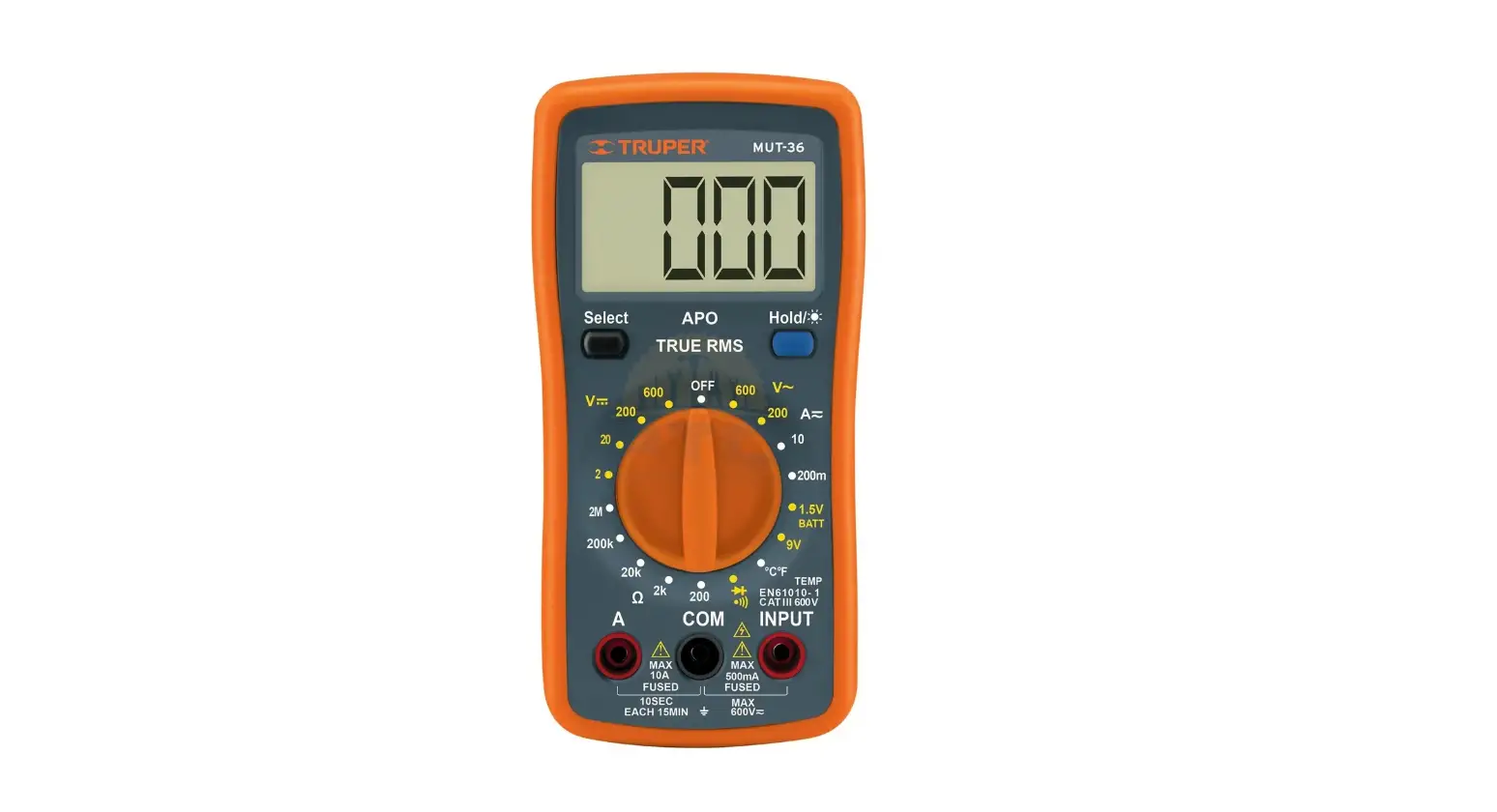
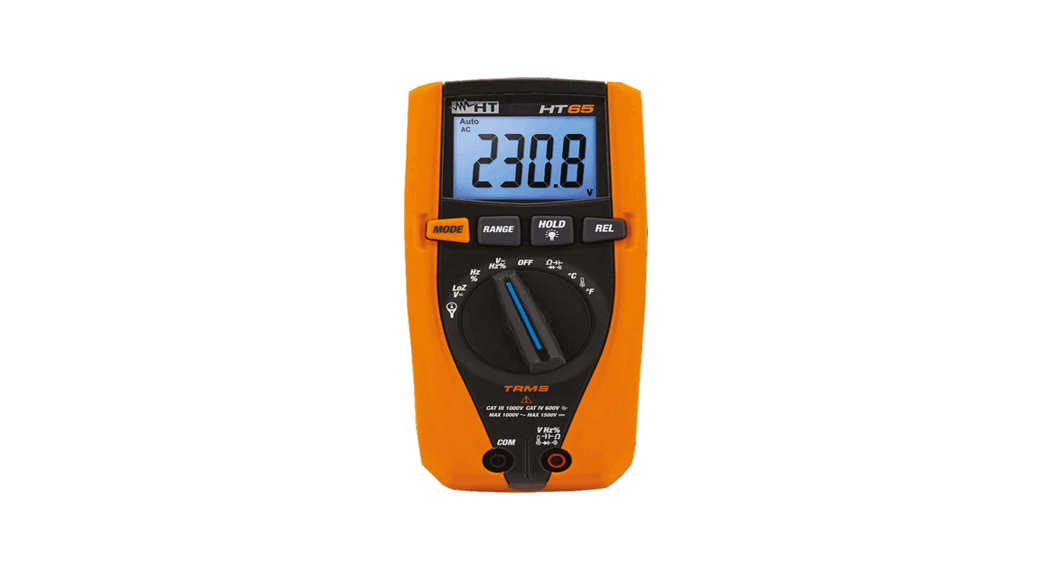
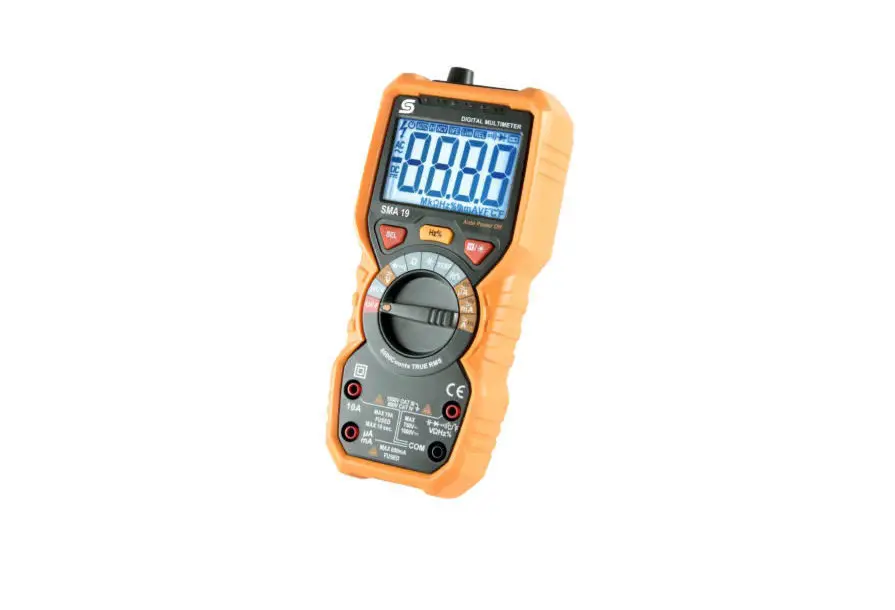
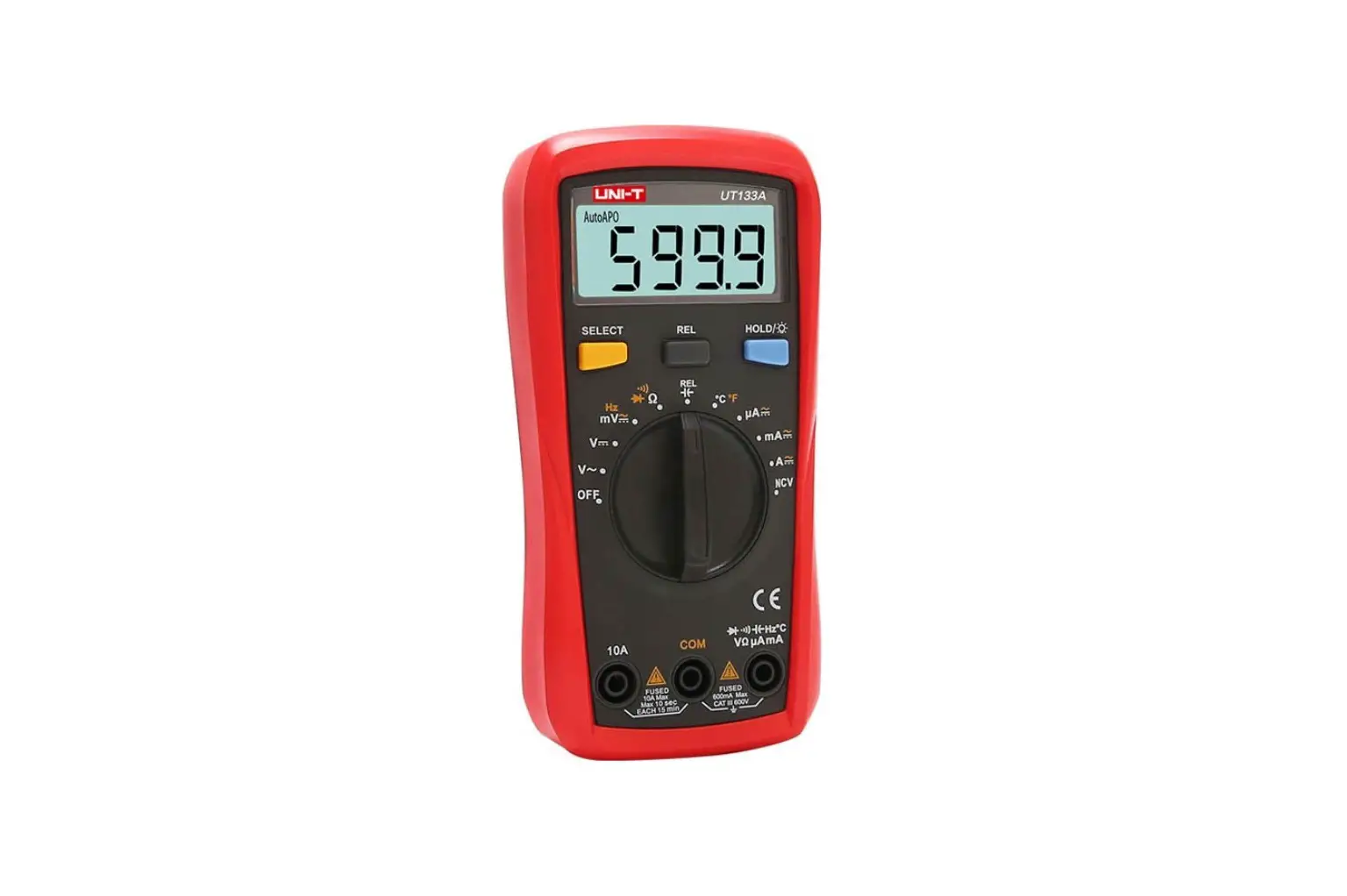
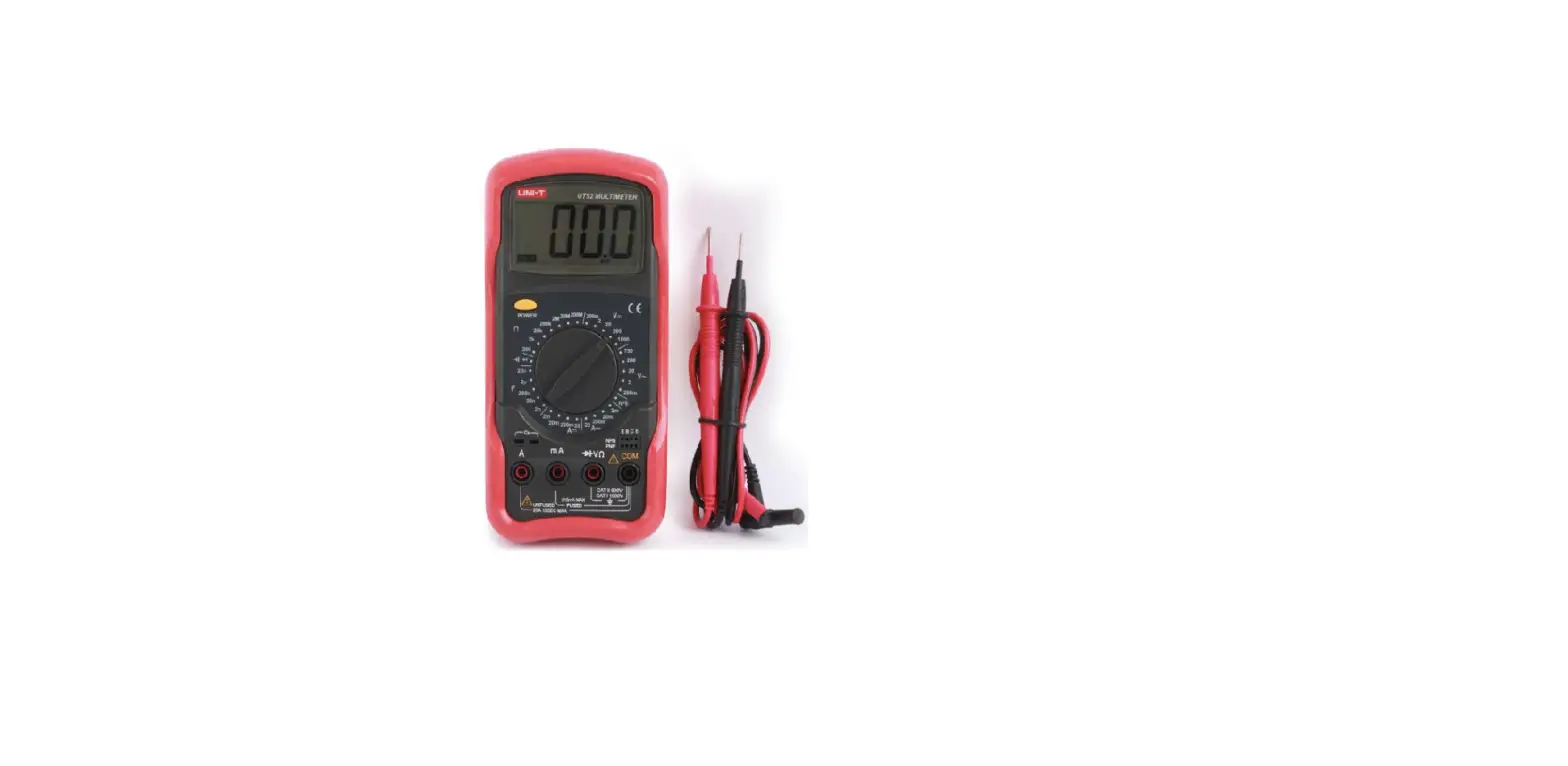
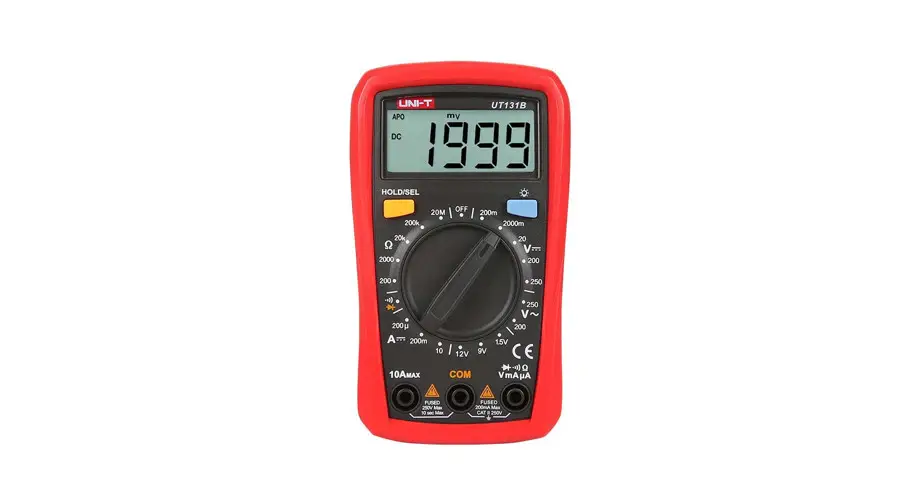
MUT-39 Digital Multimeter
Product Information
The multimeter is a compact, hand-held, and battery-operated
instrument that performs a variety of measurements including
a.c./d.c. voltage, a.c./d.c. current, resistance, audible
continuity, diode, hFE, frequency, capacitance, and temperature. It
is a 3-1/2 digit multimeter with automatic range functions and
features such as polarity indication, data retention, over-range
indication, and automatic shutdown. The design of the multimeter
complies with electronic measuring instrument standards, with
overvoltage category (CAT III 600 V, CAT II 1 000 V) and pollution
degree 2.
Product Usage Instructions
Follow the below instructions to safely and effectively use the
multimeter:
1. Inspection
- Inspect the case of the multimeter before use. Do not use if
the case is damaged or any part of it has been removed. Check for
cracks or missing plastic. - Ensure proper insulation around the connectors and test probes.
Inspect the test probes for damaged insulation or exposed metal.
Check for continuity in the test probes.
2. Voltage Measurements
- Use the appropriate terminals, functions, and range for voltage
measurements. - V– represents direct current (c.c.) voltage.
- V~ represents alternating current (c.a.) voltage.
- ~ represents either direct current (c.c.) or alternating
current (c.a.) voltage.
3. Continuity Test
- For audible continuity testing, select the “Prueba de
continuidad audible seleccionada” function. - Connect the test probes to the component being tested. If the
resistance is less than approximately 50 Ω, the buzzer will
sound.
4. Diode Test
- For diode testing, select the “Prueba de diodo seleccionada”
function. - Connect the test probes to the diode being measured. The
reading will display as a voltage drop across the diode.
5. Resistance Measurement
- For resistance measurement, use the “Auto Fluctuante”
range. - Choose the appropriate range based on the resistance to be
measured.
6. Transistor Test (hFE)
- Connect the adapter for transistor testing.
- Select the appropriate range for hFE measurement.
- Measure the hFE value of the transistor with the specified test
current.
7. Changing Fuse and Battery
To change the fuse and battery, follow these steps:
- Disconnect the test probes before opening the back cover of the
battery. - Use a suitable screwdriver to loosen the screws and remove the
lower part of the casing.
Note: The above instructions are a summary. For detailed
instructions, refer to the user manual provided with the
multimeter.
Multímetro digital Digital multimeter
INSTRUCTIVO INSTRUCTIVE 10402 MUT-39
NOTA IMPORTANTE: Este producto no debe quedar expuesto a goteo o salpicaduras por líquidos. IMPORTANT NOTE: This product shall not be exposed to liquids dripping or spatter.
1. INTRODUCCIÓN
ESPAÑOL
Este instructivo proporciona toda la información de seguridad, instrucciones de operación, especificaciones y mantenimiento del multímetro, el cual es compacto, portátil y operado con pilas.
Este instrumento lleva a cabo mediciones de tensión de c.a. / c.c. , corriente c.a. /c.c., resistencia, continuidad audible, diodo, hFE, frecuencia, capacitancia y temperatura.
El multímetro es de 3-1/2 dígitos, cuenta hasta 1 999 con algunas funciones automáticas de rango.
Tiene funciones para indicar polaridad, retención de datos, indicación de sobre rango y apagado automático. Su operación es muy sencilla y es un instrumento ideal.
El diseño del multímetro digital está en acuerdo a los instrumentos electrónicos de medición, con categoría de sobre tensión (CAT III 600 V, CAT II 1 000 V) y grado de contaminación 2.
ADVERTENCIA
Para evitar una posible descarga eléctrica o lesión personal, y evitar daños al multímetro o al equipo que se está probando, siga las siguientes reglas:
Antes de utilizar el multímetro revise la carcasa. No utilice el multímetro si está dañado o si parte de la carcasa se ha removido. Revise que no tenga grietas o le falte plástico. Revise el aislamiento alrededor de los conectores.
Inspeccione que las puntas de prueba no tengan el aislamiento dañado o metal expuesto. Revise que las puntas de prueba tengan continuidad.
No aplique más que la tensión nominal, tal como se marca en el multímetro entre las terminales o entre cualquier terminal o tierra.
Para prevenir daños al multímetro, el interruptor giratorio se debe colocar en la posición correcta y no debe haber ningún cambio mientras se lleva a cabo la medición.
Se debe tener especial cuidado cuando el multímetro esté trabajando en una tensión efectiva superior a 60 V en c.c. ó 30 V RMS en c.a., ya que existe el peligro de descarga eléctrica.
Use las terminales, funciones y rango adecuadas a las mediciones.
No utilice o almacene el multímetro en ambientes de alta temperatura, humedad, donde haya material explosivo o inflamable y campos magnéticos fuertes. El desempeño del multímetro se puede deteriorar después de mojarse.
Cuando use las puntas de prueba mantenga los dedos detrás de las guardas para dedos.
Desconecte el circuito de alimentación y descargue todos los capacitores de alta tensión antes de probar resistencia, continuidad, diodos o hFE
Cambie la pila tan pronto como aparezca el indicador de pila ” “. Cuando la pila está baja el multímetro puede producir lecturas falsas que conllevan a una descarga eléctrica y a lesiones personales.
Retire la conexión entre las puntas de prueba y el circuito que se está probando, apague la energía del multímetro antes de abrir su carcasa.
Cuando le dé servicio al multímetro use solamente piezas de repuesto del mismo número de modelo o de especificaciones eléctricas.
No se debe alterar a voluntad el circuito interno del multímetro para evitar dañarlo o tener un accidente.
Cuando dé servicio al multímetro, use un trapo suave y detergente suave para limpiar la superficie. Para evitar que la superficie del multímetro se corroa, dañe o produzca un accidente no se debe utilizar substancias abrasivas ni solventes.
El multímetro es adecuado para uso en interiores.
Apague el multímetro cuando no esté en uso y retire la pila cuando no se use en determinado tiempo. Revise la pila con frecuencia ya que puede tener fugas cuando no se utiliza en un tiempo prolongado. Cambie la pila de inmediato si aparece alguna fuga. Una pila con fuga puede dañar el multímetro.
2. CARACTERÍSTICAS GENERALES
Pantalla digital: Medida LCD: Indicación de polaridad: Indicador de sobre rango: Indicador de pila baja: Características de la pila: Selector de rango: Temperatura de operación: Temperatura de almacenaje: Medidas (A x A x P): Peso:
Cuenta 1 999 y se actualiza 2 veces / segundo 62 mm x 37 mm ” – ” Se muestra automáticamente Se muestra “OL” Se muestra ” ” 1 pila 6F22 de Carbón-Zinc de 9 V c.c. (incluida) Auto o manual 0 ºC a 40 °C, menor a 80% HR -10 °C a 50 °C, menor a 85% HR 189 mm x 89 mm x 55 mm Aproximadamente 365 g incluye pila y cubierta
3. SÍMBOLOS ELÉCTRICOS
V–
c.c. (corriente directa)
V~
c.a. (corriente alterna)
~
c.c. o c.a.
Información importante de seguridad. Vea el instructivo
Puede haber tensión peligrosa
Tierra
Pila baja
Fusible
Diodo
Prueba de continuidad audible
AUTO
Rango automático
4. DESCRIPCIÓN DE PARTES 1. LCD 2. Botón de retención de datos 3. Luz indicadora 4. Interruptor giratorio / interruptor de funciones 5. Conector de entrada 6. Funda 7. Soporte 8. Cubierta de pilas
6
7 1
2 3
4
8 5
PANTALLA LCD
% Ciclo de trabajo seleccionado ºF Prueba de grados
Fahrenheit seleccionada ºC Prueba de grados
Celsius seleccionada Prueba de transistor hFE hFE seleccionada Prueba de continuidad audible seleccionada Prueba de diodo seleccionada
AUTO Modo de auto rango seleccionado
APO Modo de apagado automático seleccionado
Retención de datos habilitado
— c.c. — Signo negativo
~ c.a.
Pila baja: cambie de inmediato
5. ESPECIFICACIONES
Se garantiza por 1 año la precisión 23 °C 5 °C menor a 80% HR
EXPLICACIÓN TÉCNICA
RMS real
· Para la medición de señal de onda no sinusoidal el método de medición del valor de True RMS es menor al método de respuesta de valor promedio.
· El multímetro RMS puede medir con precisión la señal de onda no sinusoidal, pero para probar tensión de c.a. o corriente sin la entrada de señal de c.a., el multímetro debe mostrar una lectura entre 1 a 50. Estas desviaciones en las lecturas son normales.
En la medición de rangos específicos no le afecta al multímetro medir la precisión de la corriente o la tensión. El True RMS requiere de una señal de entrada a ser medida a cierto nivel para que el rango de la tensión de c.a. y la corriente se especifique entre 2% y 100% de la escala completa.
Proporción de trabajo
· Proporción de trabajo se refiere al alto nivel dentro de un periodo de tiempo. La proporción del ciclo de trabajo de una onda cuadrada es 50%, la proporción de trabajo es 0,1 que se justifica por el nivel de 0,1 ciclos. La proporción de la duración de pulsos positivos y el ciclo de pulsos. Por ejemplo, el ancho del pulso es 1 s el periodo de señal de secuencia de pulsos 10 s ciclo de trabajo 0,1.
TENSIÓN c.c
Rango 200 mV 2 V 20 V 200 V 1 000 V
Resolución 0,1 mV 1 mV 10 mV 100 mV 1 V
Precisión (0,8% de rdg + 5 dgts)
(0,8% de rdg + 3 dgts)
(1,0% de rdg + 5 dgts)
Resistencia de entrada: 5 M en rango mV Otros rangos: 10 M Protección de sobrecarga: 250 V tensión c.c o valor pico de c.a. en un rango de 200 mV Valor pico en otros rangos 1 000 V c.c. o c.a.
TENSIÓN DE c.a. True RMS
Rango 2 V 20 V 200 V 750 V
Resolución 1 mV 10 mV 100 mV 1 V
Precisión (1,0% de rdg + 8 dgts)
(1,2% de rdg + 8 dgts)
Resistencia de entrada: 10 M Protección de sobrecarga: 1 000 V c.c. o c.a valor pico Valor máximo de respuesta de la frecuencia: ( 40 ~ 1 000) Hz
(Para onda sinusoidal estándar y onda triangular) Pantalla: RMS real (solo como referencia, cuando está sobre 200 Hz en otras ondas) En rango c.a. 750 V, se puede probar c.a. 380 V y c.a. 220 V de energía comercial, presione la tecla “HOLD” para mostrar la frecuencia de la energía comercial.
CORRIENTE c.c.
Rango 2 mA 20 mA 200 mA 20 A
Resolución 1 µA 10 µA 100 µA 10 mA
Precisión (1,2% of rdg + 8 dgts) (1,2% of rdg + 8 dgts)
Protección de sobrecarga: 250 V c.c. o c.a a valor pico. El uso de fusibles de recuperación automática después que desaparece la falla externa, el fusible se regresa a normal y el multímetro se puede utilizar normalmente. Medición máxima de caída de tensión: 200 mV Corriente máxima de entrada: 20 A (El tiempo de prueba debe estar entre 10 segundos) Respuesta de frecuencia: (40 ~ 1 000) Hz (Para onda sinusoidal estándar y onda triangular) Pantalla: True RMS (Sólo como referencia cuando está sobre 200 Hz en otras ondas)
CORRIENTE c.a.
Rango 200 mA 20 A
Resolución 100 µA 10 mA
Precisión (1,5% de rdg + 10 dgts) (2,0% de rdg + 10 dgts)
Protección en sobrecarga: 250 V RMS Use el fusible de recuperación automática después que desaparece la falla externa, el fusible regresa a normal y se puede usar el multímetro de manera normal. Medición máxima de caída de tensión: 200 mV Corriente máxima de entrada: 20 A (El tiempo de prueba debe estar entre 10 segundos) Respuesta de frecuencia: (40 ~ 1000) Hz (Para onda sinusoidal estándar y onda triangular) Pantalla: True RMS (sólo como referencia cuando está sobre 200 Hz en otras ondas)
RESISTENCIA (Auto Fluctuante)
Rango 200 2 k 20 k 200 k 2 M 20 M 200 M
Resolución 0,1 1 10 100 1 k 10 k 100 K
Precisión
(1,2% de rdg + 5 dgts)
(1,5% de rdg + 5 dgts) (2,5% de rdg + 5 dgts)
Protección en sobrecarga: 250 V c.c. y c.a. valor pico. NOTA En rango 200 las puntas de prueba deben estar en cortocircuito y medir la resistencia del conductor y restarle la medición real.
ADVERTENCIA Por seguridad, NO INGRESE ninguna tensión en el rango de resistencia.
CAPACITANCIA (Rango Automático)
Rango 20 nF 20 mF
Resolución Dividido entre
1 000
Precisión (8% de rdg + 5 dgts)
Protección en sobrecarga: 250 V c.c. y c.a. valor pico. TEMPERATURA
Rango -40 °C ~ 1 000 °C -40 °F ~ 1 832 °F
Resolución 1 °C 1 °F
Precisión (3,0% de rdg + 4 dgts)
Protección en sobrecarga: 250 V c.c. o c.a. a valor pico. DIODO Y CONTINUIDAD
Rango
Introducción
Se muestra la caída aproximada de tensión directa
Comentario
Tensión de circuito abierto: Alrededor de 1.5 V c.c.
El zumbador inter-construido va a sonar si la resistencia es menor que 30
Tensión de circuito abierto: alrededor de 0.5 V c.c.
Protección en sobrecarga: 250 V c.c. y c.a. a valor pico. Para la prueba de continuidad audible: Cuando la resistencia está entre 30 y 70 , es probable que el zumbador suene o que no suene. Cuando la resistencia es mayor a 70 , el zumbador no va a sonar.
PRUEBA DE TRANSISTOR hFE (Conecte el adaptador)
Rango PNP & NPN
hFE
Corriente de prueba
0 ~ 1 000 Ib 2 µA
Tensión de prueba Vce 1 V
FRECUENCIA (Rango automático)
Rango 0 ~ 60 MHz
Precisión (1,0% + 5)
Protección en sobrecarga: 250 V c.c. y c.a. a valor pico. PRUEBA DE TRABAJO
Rango 10 – 95%
Resolución 0,1%
Precisión (2,0% + 3 dgts)
Protección en sobrecarga: 250 V c.c. y c.a. a valor pico 6. INSTRUCCIONES DE OPERACIÓN
MEDICIÓN DE TENSIÓN
· Inserte la punta de prueba negra en el conector “COM”, y la roja en el conector “INPUT”.
· Coloque el interruptor de funciones en el rango adecuado de tensión c.c. conecte las puntas de prueba a través del circuito que se va a probar. La polaridad y tensión en el punto que se conecta la punta de prueba roja se va a mostrar en el LCD.
NOTA 1. Si se desconoce de antemano la tensión medido, debe colocar el
interruptor de funciones en el rango más alto y después cambiar al rango adecuado de acuerdo con el valor mostrado. 2. En caso que el LCD muestre “OL”, significa que está sobre el rango. Cambie el interruptor de funciones a un rango más alto.
MEDICIÓN DE RMS REAL DE TENSIÓN c.a.
· Inserte la punta de prueba negra al conector “COM” y la roja al conector “INPUT”.
· Coloque el interruptor de funciones en el rango adecuado tensión c.a. con ecte las puntas de prueba a través del circuito bajo prueba.
NOTA 1. Si se desconoce de antemano la tensión medida, debe colocar el
interruptor de funciones en el rango más alto, entonces cambiar al rango adecuado de acuerdo al valor mostrado. 2. En caso que el LCD muestre “OL”, significa que está sobre el rango. Cambie el interruptor de funciones a un rango más alto.
MEDICIÓN DE CORRIENTE c.c.
· Inserte la punta de prueba negra en el conector “COM” y la roja al conector “mA” (máximo 200 mA)
o inserte la punta de prueba roja al conector “20 A” máximo 20 A)
· Coloque el interruptor de funciones en el rango adecuado de corriente c.c. conecte las puntas de prueba a través del circuito que se está probando, el valor de la corriente y la polaridad del punto en donde se conectó la punta de prueba roja se va a mostraren LCD.
NOTA 1. Si se desconoce de antemano la corriente medida, debe colocar el
interruptor de funciones en el rango más alto, entonces cambiar al rango adecuado, de acuerdo al valor mostrado. 2. En caso que el LCD muestre “OL”, significa que está sobre el rango. Cambie el interruptor de funciones a un rango más alto. 3. Al medir 20 A la medición continua de corrientes altas puede calentar el circuito, afectar la precisión y dañar el multímetro.
MEDICIÓN DE CORRIENTE c.a.
· Inserte la punta de prueba negra en el conector “COM” y la roja al conector “mA” máximo 200 mA
o inserte la punta de prueba roja al conector “20 A” máximo 20 A
.
· Coloque el interruptor de funciones en el rango tensión c.a. adecuado; conecte las puntas de prueba a través del circuito que está siendo probado.
NOTA
1. Si se desconoce de antemano el rango de corriente medido, debe colocar el interruptor de funciones en el rango más alto, entonces cambiar al rango adecuado de acuerdo al valor mostrado.
2. En caso que el LCD muestre “OL”, significa que está sobre el rango. Cambie el interruptor de funciones a un rango más alto.
3. Ponga atención al medir 20 A la medición continua de corrientes altas puede calentar el circuito, afectar la precisión y dañar el multímetro.
MEDICIÓN DE RESISTENCIA
· Inserte la punta de prueba negra al conector “COM” y la roja al conector “INPUT”.
· Coloque el interruptor de funciones en el rango adecuado de resistencia, conecte las puntas de prueba a través de la resistencia que se va a medir.
NOTA
1. Si el valor de resistencia medido excede el valor máximo del rango seleccionado, el LCD va a mostrar “OL”, por lo tanto, debe poner el interruptor de funciones en un rango mayor. Cuando la resistencia está sobre 1 M, puede tomar al multímetro un par de segundos para estabilizarse. Esto es normal para las lecturas de alta resistencia.
2. Cuando la terminal de entrada está en circuito abierto se muestra sobre-carga.
3. Al medir resistencia en línea, confirme que el suministro eléctrico esté apagado y todos los capacitores estén liberados por completo.
MEDICIÓN DE CAPACITANCIA (Rango Automático)
· Inserte la punta de prueba roja en la terminal “INPUT” y la negra en el conector “COM”. · Coloque el interruptor de funciones en el rango 20 mF, conecte las
puntas de prueba al capacitor que se está midiendo. (NOTA: La polaridad de la punta de pruebas roja es “+”).
NOTA
1. Antes de medir, es probable que la pantalla LCD no esté en cero, la lectura residual decrece de manera gradual y se puede ignorar.
2. Al medir capacitancia muy grande, si se arrastra de manera importante o rompe la capacitancia, el LCD va a mostrar algún valor de inestabilidad.
3. Descargue por completo todos los capacitores antes de medir capacitancia para evitar algún peligro.
PRUEBA DE DIODO Y DE CONTINUIDAD
· Inserte la punta de prueba negra a la terminal “COM” y la roja al conector
“INPUT”. (NOTA: La polaridad de la punta de prueba roja es “+”).
· Coloque el interruptor de funciones en el rango ”
“, conecte las
puntas de prueba al diodo que se va a medir, la lectura es una
aproximación a la caída positiva de tensión del diodo.
· Conecte las puntas de prueba a dos puntos del circuito medido, si suena
el zumbador, la resistencia es menor a 50 aproximadamente.
MEDICIÓN DE hFE
· Coloque la perilla de rango en hFE · Verifique que el tipo de transistor sea NPN o PNP, inserte el emisor, base
y colector en el conector adecuado.
MEDICIÓN DE TEMPERATURA
· Coloque el interruptor de funciones en el rango “ºC / ºF”. · Inserte el enchufe negro (o “-“) de la sonda termopar tipo K al conector
“COM”, y el enchufe rojo (o “+”) en el conector” INPUT “. · Con cuidado, toque con un extremo de la sonda termopar el objeto que
va a medir. · Espere un momento, lea la lectura en la pantalla. · Presione el botón ” SELECT ” para seleccionar el modo “°C” ó “°F” y el
símbolo “°C” ó “°F” va a aparecer como indicador.
MEDICIÓN DE FRECUENCIA Y TRABAJO
· Coloque el interruptor de funciones en la posición requerida de “Hz Duty”.
· Conecte la punta de prueba negra al conector “COM” y la roja en el conector “INPUT” (NOTA: La polaridad de la punta de prueba roja es positiva “+”).
· Lea la lectura en la pantalla. · Presione el botón ” SELECT ” para elegir el modo “Hz” o “Duty”, y el
símbolo “Hz” o “Duty” van a aparecer como indicador.
NOTA No aplique más de 250 V RMS a la entrada. Es posible que la indicación de tensión sea mayor a 100 V RMS, pero la lectura puede estar fuera de especificación.
7. APAGADO AUTOMÁTICO Y ENCENDIDO DE LA LUZ LCD
· Después de encender, el LCD muestra “APO”, que significa que el multímetro está en modo de apagado automático.
· Cuando se apaga automáticamente el multímetro presione el botón “HOLD” para encender el multímetro.
· Presione brevemente el botón “HOLD” para apagar/encender la función “HOLD” , presione más tiempo el botón “HOLD ” para apagar/ encender la luz de fondo.
· Al presionar más tiempo el botón HOLD” en el interruptor giratorio de funciones, se puede cancelar el modo de apagado automático, los símbolos APO desaparecen de la pantalla.
8. CAMBIO DE FUSIBLE Y PILA
Si el signo ” ” aparece en la pantalla, indica que se tiene cambiar la pila. Retire los tornillos y abra la carcasa por atrás, cambie la pila baja y coloque la nueva.
El uso de fusibles de recuperación automática, después de eliminar la falla externa, hace que el fusible regrese a la normalidad y se pueda usar el multímetro normalmente. No se necesita cambiar el fusible.
El rango 20 A tiene un fusible 20 A / 250 V de rápida fusión. Cambie el fusible de acuerdo a las especificaciones: 20 A, 250 V, FAST, Min. Interrupt Rating 20 000 A, diámetro 5 mm x 20 mm
Emplea 1 pila 6F22 de Carbón-Zinc de 9 V c.c. (incluida).
ADVERTENCIA Para evitar lecturas falsas las cuales conllevan a descarga eléctrica o lesiones personales, cambie la pila tan pronto aparezca el símbolo indicador (” “).
Para prevenir daños o lesiones, instale solamente fusibles de repuesto con los niveles de amperaje, tensión e interrupción especificados.
PARA ABRIR LA CUBIERTA DE LA PILA
Para cambiar el fusible, retire los tornillos del marco de soporte, retire el multímetro de su funda, retire la cubierta trasera, cambie el fusible por uno nuevo de la misma medida. Vuelva a armar el marco de soporte, reinstale los tornillos.
Desconecte las puntas de prueba antes de abrir la cubierta trasera de las pilas.
1. El cambio de pilas y fusible solo se deben llevar a cabo después que las puntas de prueba estén desconectas y el aparato apagado.
2. Afloje los tornillos con un desarmador adecuado y retire la parte baja de la carcasa.
3. El multímetro lleva una pila de 9 V c.c. Desprenda las puntas del conector de pila de las terminales de una nueva pila y reinserte la pila en la tapa de la carcasa. Arregle las puntas de la pila nueva para que no se atoren entre el fondo de la carcasa.
PARA DESECHAR EL ARTÍCULO
Estimado cliente: En caso que desee deshacerse de este artículo, debe tener en mente que muchos de los componentes consisten de materiales con valor que se pueden reciclar. Favor de no tirarlo al bote de la basura doméstica. Pregunte a la autoridad local donde se puede reciclar.
NOTAS
1. INTRODUCTION
ENGLISH
This instructive provides all safety information, operation instructions, specifications and maintenance for the multimeter, which is compact, hand-held and battery operated.
This instrument performs a.c / d.c. voltage measurements, a.c. / d.c. current, resistance, audible continuity, diode, hFE, frequency, capacitance and temperature.
The multimeter is 3-1/2 digits, it counts to 1 999 with some automatic range functions.
It has functions to indicate polarity, data retention, over-range indication and automatic shutdown. Its operation is very simple and it is an ideal instrument.
The design of the digital multimeter is in accordance with the electronic measuring instruments, with over voltage category (CAT III 600 V, CAT II 1 000 V) and pollution degree 2.
WARNING
To avoid possible electric shock or personal injury, and possible damage to the Digital multimeter or the equipment under test, follow the following rules:
Before using the Digital multimeter inspect the case. Do not use the multimeter if damaged or part of the case has been removed. Look for cracks or missing plastic Double check insulation around the connectors.
Inspect the test probes for damaged insulation or exposed metal. Check the test probes have continuity.
Do not apply more than the rated voltage as marked on the multimeter, between the terminals or between any terminal and grounding.
The rotary switch must be placed in the correct position and there must be no changes while the measurement is being carried out.
Special care should be taken when the multimeter is working at an effective voltage higher than 60 V in c.c or 30 V RMS a.c., as there is a danger of electric shock.
Use the appropriate terminals, functions and range for the measurements. Do not use or store the multimeter in high temperature, humid environments and strong magnetic fields are present. The performance of the multimeter may deteriorate after it gets wet.
When using test probes keep fingers behind the fingers guard.
Disconnect the feeding circuit and discharge all the high voltage capacitors before testing resistance, continuity, diodes or hFE.
Replace the battery as soon as the battery indicator appears . With a los battery, the multimeter might produce false readings that can lead to electric shock and personal injury.
Remove the connection between the test probes and the circuit being tested, and turn the multimeter power off before opening the multimeter case.
When servicing the multimeter use only spare parts with the same model number or electrical specifications.
The internal circuit of the multimeter shall not be altered at will to avoid damage to the Digital multimeter and any accident.
Soft cloth and mild detergent should be used to clean the surface or the multimeter when servicing. No abrasive and solvent should be used to prevent the surface of the Digital multimeter from corrosion, damage and accident.
The multimeter is suitable for indoor use.
Turn the multimeter power off when it is not in use and take out the battery when not using for a long time. Constantly check the battery as it may leak when it has been used for a long time. Replace the battery immediately if leaking appears. A leaking battery will damage the multimeter.
2. GENERAL CHARACTERISTICS
Digital display: LCD size: Polarity indication: Over range indication: Low battery indication: Battery characteristics: Range select: Operation temperature: Storage temperature: Dimension (H x W x D): Weight:
Counts 1 999 and updates 2 times / second 62 mm x 37 mm ” – “displayed automatically “OL” displayed ” ” displayed 9 V DC Carbon-Zinc battery 6F22 (included) Auto or manual 0 ºC to 40 ºC, less than 80% HR -10 ºC to 50 ºC, less than 85% HR 189 mm x 89 mm x 55 mm Approx. 365 g, including battery and cover
3. ELECTRICAL SYMBOLS
V–
DC (direct current)
V~
AC (Alternating current)
~
DC or AC
Important safety information. Read the instructions
Dangerous voltage may be present
Earth
Low battery
Fuse
Diode
Audible continuity test
AUTO
Automatic range
4. PARTS DESCRIPTION 1. LCD 2. Data retention button 3. Indicator light 4. Rotary switch / function switch 5. Input connector 6. Cover 7. Support 8. Batteries cover
6
7 1
2 3
4
8 5
LCD SCREEN
% Selected work cycle ºF Grades test
Fahrenheit selected ºC Grades test
Celsius selected Transistor test hFE hFE selected Continuity test Audible selected Diode test selected
AUTO Auto range mode selected
APO Off mode Automatic selected
Data retention enabled
— DC — Negative sign
~ AC
Low battery Replace immediately
5. SPECIFICATIONS
Precision 23 ºC 5 ºC less than 80% HR is guaranteed for a year.
TECHNICAL EXPLANATION
Real RMS
· For the measurement of non- sinusoidal wave signal, the method of measuring the actual RMS is lower than the mean value response method.
· RMS multimeter can measure with precision non-sinusoidal wave, but to test a.c. voltage or current without the a.c. signal input, the multimeter should display a reading between 1 and 50. These deviations in reading are normal.
· When measuring specific ranges, the multimeter is not affected by the measurement pf current and voltage accuracy. The actual RMS requires an input signal to be measured at a certain level so that the range of the a.c. voltage and current is specified between 2 % and 100 % of the full scale.
Proportion of work
· Proportion of work refers to the high level within a period of time, the work cycle ratio pf a square wave is 50 %, the work ratio is 0,1 which is justified by the 0,1-cycle level. The ratio of the positive pulse duration and the pulse cycle. For example, the pulse within 1 s is the pulse sequence signal period of 1 s duty cycle 0,1.
VOLTAGE DC
Range 200 mV 2 V 20 V 200 V 1 000 V
Resolution 0,1 mV 1 mV 10 mV 100 mV 1 V
Accuracy (0,8% de rdg + 5 dgts)
(0,8% de rdg + 3 dgts)
(1,0% de rdg + 5 dgts)
Input resistance: 5 M in mV range Other ranges: 10 M Overload protection: 250 V voltage DC or peak value of AC
in a 200-mV range. Peak value in other ranges 1 000 V DC or AC
REAL RMS AC VOLTAGE
Range 2 V 20 V 200 V 750 V
Resolution 1 mV 10 mV 100 mV 1 V
Accuracy (1,0% de rdg + 8 dgts)
(1,2% de rdg + 8 dgts)
Input resistance: 10 M Overload protection: 1 000 V DC or AC at peak value Maximum frequency response value: (40 1 000) Hz (for standard sine wave and triangle wave) Display: True RMS (only as reference, when over 200 Hz in other waves) In the AC 750 V range, AC 380 V and AC 220 V commercial power can be tested, press the “HOLD” key to display the frequency of the commercial power
DC CURRENT
Range 2 mA 20 mA 200 mA 20 A
Resolution 1 µA 10 µA 100 µA 10 mA
Accuracy (1,2% of rdg + 8 dgts) (1,2% of rdg + 8 dgts)
Overload protection: 250 V DC or AC at peak value The use of automatic recovery fuses after the external fault disappears, the fuse is returned to normal and the multimeter can be used normally. Maximum voltage drop measurement: 200 mV Maximum input current: 20 A (Test time must be between 10 seconds) Frequency response: 40 1 000 Hz (For sine and standard wave and triangle wave) Display: True RMS (Only as reference when over 200 Hz in other waves.
AC CURRENT
Range 200 mA 20 A
Resolution 100 µA 10 mA
Accuracy (1,5% de rdg + 10 dgts) (2,0% de rdg + 10 dgts)
Overload protection: 250 RMS Use the automatic recovery fuse after the external fault disappears, the fuse returns to normal and the multimeter can be used normally Maximum voltage drop measurement: 200 mV Maximum input current: 20 a (test time must be between 10 seconds) Frequency response: (40 1 000) Hz (For standard sine wave and triangular wave). Display: True RMS (only as reference when over 200 Hz in other waves)
RESISTANCE (Auto-fluctuating)
Range 200 2 k 20 k 200 k 2 M 20 M 200 M
Resolution 0,1 1 10 100 1 k 10 k 100 K
Accuracy
(1,2% de rdg + 5 dgts)
(1,5% de rdg + 5 dgts) (2,5% de rdg + 5 dgts)
Overload protection: 250 v DC and AC peak value
NOTE In range 200 the test probes must be short-circuited and measure the resistance of the conductor and subtract the actual measurement.
ADVERTENCIA For safety reasons DO NOT ENTER any voltage in the resistance range
CAPACITANCE (Automatic range)
Range 20 nF 20 mF
Resolution Dividido entre
1 000
Accuracy (8% de rdg + 5 dgts)
Overload protection: 250 V DC and AC peak value TEMPERATURE
Range -40 °C ~ 1 000 °C -40 °F ~ 1 832 °F
Resolution 1 °C 1 °F
Accuracy (3,0% de rdg + 4 dgts)
Overload protection: 250 C DC or AC, at peak value DIODE AND CONTINUITY
Range
Introduction
The approximate direct voltage drop is shown
The built-in buzzer will sound if resistance is lower than 30
Comment Open circuit voltage: About 1.5 V DC
Open circuit voltage around 0.5 V DC
Overload protection: 250 V DC and AC at peak value For audible continuity test: When the resistance is between 30 and 70 , it is likely that the buzzer will or will not sound. When the resistance is greater than 70 , the buzzer will not sound.
hFE TRANSISTOR TEST (Connect the adapter)
Range PNP & NPN
hFE
Current test
0 ~ 1 000 Ib 2 µA
Voltage test Vce 1 V
FREQUENCY (Automatic range)
Range 0 ~ 60 MHz
Accuracy (1,0% + 5)
Overload Protection: 250 V DC and AC at peak value WORK TEST
Range 10 – 95%
Resolution 0,1%
Accuracy (2,0% + 3 dgts)
Overload protection: 250 V DC and AC at peak value 6. OPERATION INSTRUCTIONS
VOLTAGE MEASUREMENT
· Insert the black test probe into the “COM” connector, and the red into the “INPUT” connector. · Set the function switch to the appropriate DC voltage range, connect the test probes through the circuit to be tested. The polarity and the voltage at the point where the red probe is connected will be shown on the LCD.
NOTE 1. If the measured voltage is not known in advance, you should set the
function switch to the highest range and then switch to the appropriate range according to the value displayed. 2. In case the LCD shows “OL”, it means it is over the range. Change the function switch to a higher range.
REAL RMS MEASUREMENT OF AC VOLTAGE
· Insert the black test probe into the “COM” connector and the red test probe into the “INPUT” connector. · Connect the function switch to the appropriate a.c. voltage range, and connect the test leads through the circuit under test.
NOTE 1. If the measured voltage is not known in advance, you should set the
function switch to the highest range, then switch to the appropriate range according to the value displayed. 2. In case the LCD shows “OL”, it means it is over the range. Change the function switch to a higher range.
DC CURRENT MEASUREMENT
· Insert the black test probe into the “COM” connector and the red test probe into the “mA” connector (max. 200 mA), or insert the red test probe into the “20 A” connector (max. 20 A).
· Set the function switch to the appropriate DC current range, connect the test probes through the circuit being tested. The current value and polarity of the point where the red test probe was connected will be displayed on the LCD
NOTE 1. If the measured current is not known in advance, you should set the
function switch to the highest range; then switch to the appropriate range according to the value displayed. 2. In case the LCD shows “OL”, it means it is over the range. Change the function switch to higher range. 3. When measuring 20 A, continuous measurement of high current may heat up the circuit, affect the accuracy and damage the multimeter.
AC CURRENT MEASUREMENT
· Insert the black test probe into the “COM” test connector and the red test probe into the “mA” connector (maximum 200 mA), or insert the red test probe into the “20 A” connector (maximum 20 A).
* Set the function switch to the appropriate a.c. voltage range; connect the test probes through the circuit being tested.
NOTE
1. If the measured current range is unknown in advance, you should set the function switch to the highest range, then switch to the appropriate range according to the value displayed.
2. In case the LCD shows “OL”, it means it is over range. Change the function switch to a higher range.
3. Pay attention when measuring 20 A. Continuous measurement of high currents can heat up the circuit, affect accuracy and damage the multimeter.
RESISTANCE MEASUREMENT
· Insert the black test probe into the “COM” connector and the red test probe into the “INPUT” connector.
· Set the function switch to the appropriate resistance range. Connect the test probes through the resistance to be measured.
NOTE
1. If the measured resistance value exceeds the maximum value of the selected range, the LCD will display “OL”, therefore, you should set the function switch to a higher range. When the resistance is above 1 M, it may take the multimeter a couple of seconds to stabilize. This is normal for high resistance readings.
2. When the input terminal is in open circuit it is shown as overloaded. 3. When measuring online resistance, confirm that the power supply is off
and all capacitors are fully released.
CAPACITANCE MEASUREMENT (Automatic range)
· Insert the red test lead into the “INPUT” terminal and the black test lead into the “COM” connector · Set the function switch to the 20-mF range, connect the test probes to the capacitor being measured. (NOTE; The polarity of the red test probe is “+”).
NOTE
1. Before measuring, the LCD is probably not at zero; the residual reading gradually decreases and can be ignored.
2. When measuring very large capacitance, if the capacitance is significantly dragged or broken, the LCD will show some instability value.
3. Completely discharge all capacitors before measuring capacitance to avoid any danger.
DIODE AND CONTINUITY TEST
· Insert the black test probe into the “COM” terminal and the red test probe
into the “INPUT” connector. (NOTE: The polarity of the red test probe is
“+”).
· Place the function switch in the ”
” range, connect the test probes to
the diode to be measured. The reading is an approximation of the positive
voltage drop of the diode.
· Connect the test probes to two points on the measured circuit. If the buzzer
sounds, the resistance is less than 50 approximately.
hFE MEASUREMENT
· Set the range knob to hFE. · Verify that the transistor type is NPN or PNP. Insert the transmitter, base and manifold into the appropriate connector.
TEMPERATURE MEASUREMENT
· Place the function switch in the “ºC / ºF” range. · Insert the black plug (0″-“) of the type K thermocouple probe into the “COM” connector and the red plug (0″+”) into the “INPUT” connector. · Carefully touch one end of the thermocouple probe to the object to be measured · Wait a moment and read the reading on the display. · Press the “SELECT” button to select the “ºC or ºF” mode and the “ºC or ºF” symbol will appear as an indicator.
FREQUENCY AND WORK MEASUREMENT
· Set the function switch to the required “Hz Duty” position · Plug the black test lead into the “COM” connector and the red test lead
into the “INPUT” connector (NOTE: The polarity of the red test lead is positive “+”). · Read the reading in the display. · Press the “SELECT” button to choose the “Hz” or “Duty” mode. The “Hz” or “Duty” symbols will appear as indicator.
NOTA Do not exceed 250 V RMS at the input. The voltage indication may be higher than 100 V RMS, but the reading may be out of specification.
7. LCD AUTO POWER OFF AND LIGHT ON
· After powering up, the LCD shows “APO”, which means the multimeter is in auto-off mode.
· When the multimeter automatically turns off, press the “HOLD” button to turn the multimeter on.
· Press the “HOLD” button briefly to turn the “HOLD” function off / on. Press the “HOLD” button longer to turn the backlight on / off.
· Press the “HOLD” button on the function rotary switch longer to cancel the auto power off mode. The APO symbols disappear from the screen.
8. FUSE AND BATTERY CHANGE
If the ” ” sign appears in the display, it indicates that the battery needs to be changed. Remove the screws and open the case from the back. Replace the low battery and insert the new one.
The use of automatic recovery fuses, after eliminating the fault, causes the fuse to return to normality and the multimeter can be used normally. No need to change the fuse.
The 20 A range has a 20 A / 250 V fast blow fuse. Change the fuse according to the specifications: 20 A, 250 V, FAST, Min. Interrupt Rating 20 000 A, diameter 5 mm x 20 mm.
Uses a 6F22 9 V DC carbon-zinc battery (included).
WARNING To avoid false readings which could lead to electric shock or personal injury, change the battery as soon as the symbol (” “) appears.
To prevent damage or injury, install only replacement fuses with the specified amperage, voltage and interruption levels.
TO OPEN THE BATTERY COVER
To change the fuse, remove the screws from the support frame, remove the multimeter from its case, remove the rear cover, replace the fuse with a new one of the same sizes. Reassemble the support frame, reinstall the screws.
Disconnect the test probes before opening the rear battery cover. 1. The battery and fuse should only be changed after the test probes are disconnected and the device is switched off.
2. Loosen the screws with a suitable screwdriver and remove the lower part of the housing.
3. The multimeter has a 9 V DC battery. Remove the battery connector tips from the ends of a new battery and reinsert the battery into the housing lid. Fix the tips of the new battery so that they do not get stuck in the bottom of the housing.
TO DISPOSE OFF THE ARTICLE
Dear customer: In case you wish to dispose of this item, you should keep in mind that many of the components consist of materials with a value that can be recycled. Please do not dispose of it in the household waste. Ask your local authority where it can be recycled.
NOTES
Póliza de garantía Warranty Policy
MUT-39
10402
Garantía. Duración: 1 año. Cobertura: piezas, componentes y mano de obra contra defectos de fabricación o funcionamiento, excepto si se usó en condiciones distintas a las normales; cuando no fue operado conforme instructivo; fue alterado o reparado por personal no autorizado por Truper®. Para hacer efectiva la garantía presente el producto, póliza sellada o factura o recibo o comprobante, en el establecimiento donde lo compró o en Corregidora 35, Centro, Cuauhtémoc, CDMX, 06060, donde también podrá adquirir partes, componentes, consumibles y accesorios. Incluye los gastos de transportación del producto que deriven de su cumplimiento de su red de servicio. Tel. 800-018-7873. Made in/Hecho en China. Importador Truper, S.A. de C.V. Parque Industrial 1, Parque Industrial Jilotepec, Jilotepec, Edo. de Méx. C.P. 54257, Tel. 761 782 9100.
Warranty. Duration: 1 year. Coverage: parts, components and workmanship against manufacturing or operating defects, except if used under conditions other than normal; when it was not operated in accordance with the instructive; was altered or repaired by personnel not authorized by Truper®. To make the warranty valid, present the product, stamped policy or invoice or receipt or voucher, in the establishment where you bought it or in Corregidora 35, Centro, Cuauhtémoc, CDMX, 06060, where you can also purchase parts, components, consumables and accessories. It includes the costs of transportation of the product that derive from its fulfillment of its service network. . Phone number 800-018-7873. Made in China. Imported by Truper, S.A. de C.V. Parque Industrial 1, Parque Industrial Jilotepec, Jilotepec, Edo. de Méx. C.P. 54257, Phone number 761 782 9100.
Sello del establecimiento comercial / Stamp of the business Fecha de entrega / Delivery date
Truper, S.A. de C.V. www.truper.com 03-2023
 Truper® - Es mucha herramienta