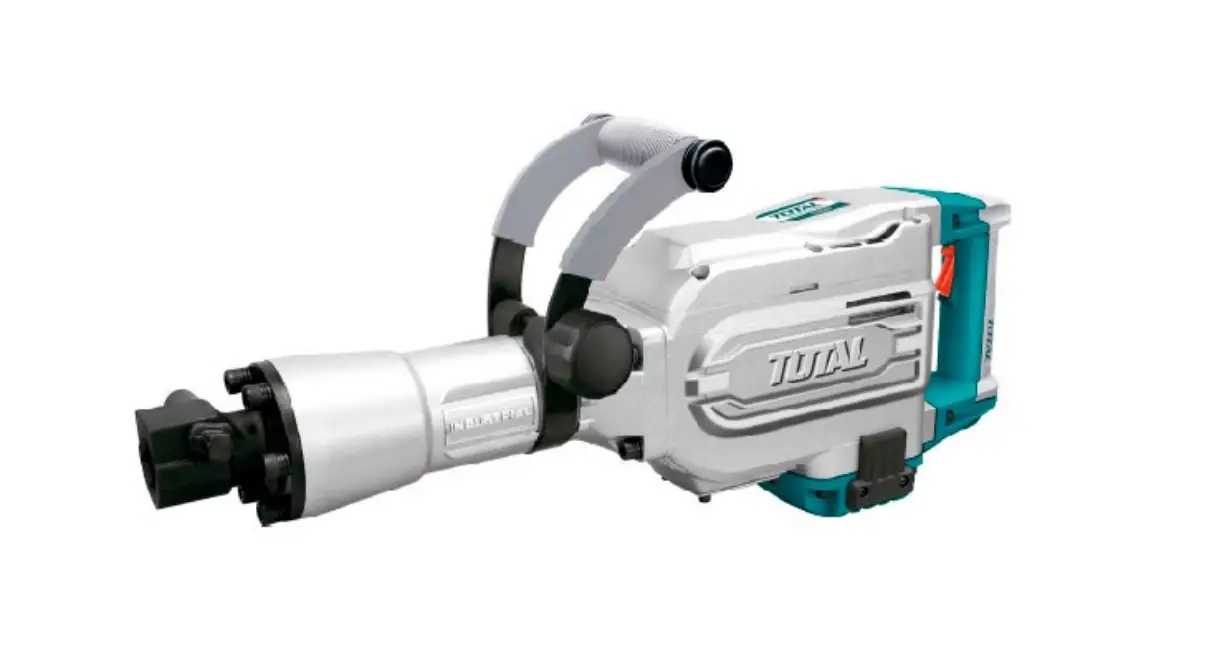
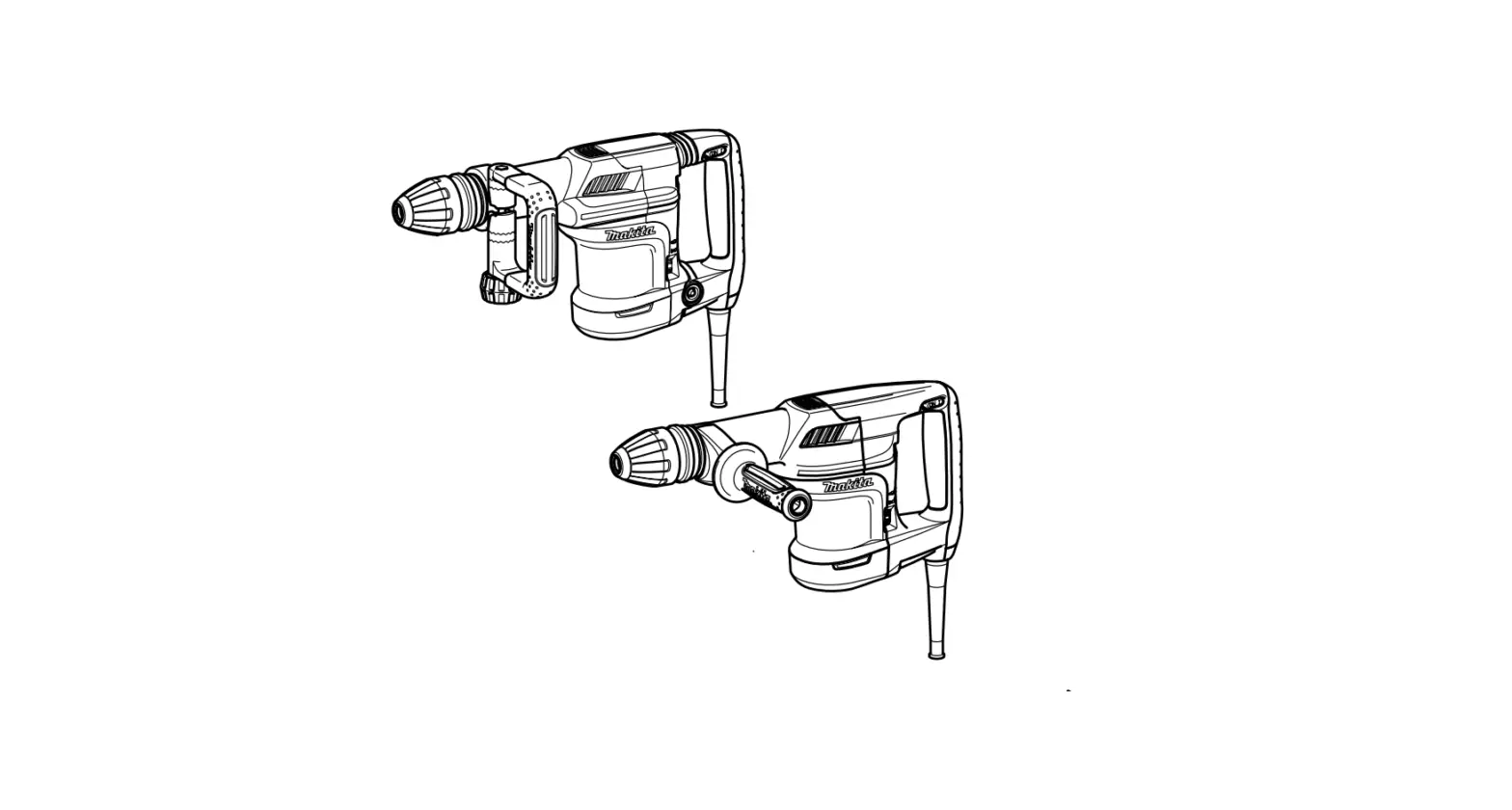
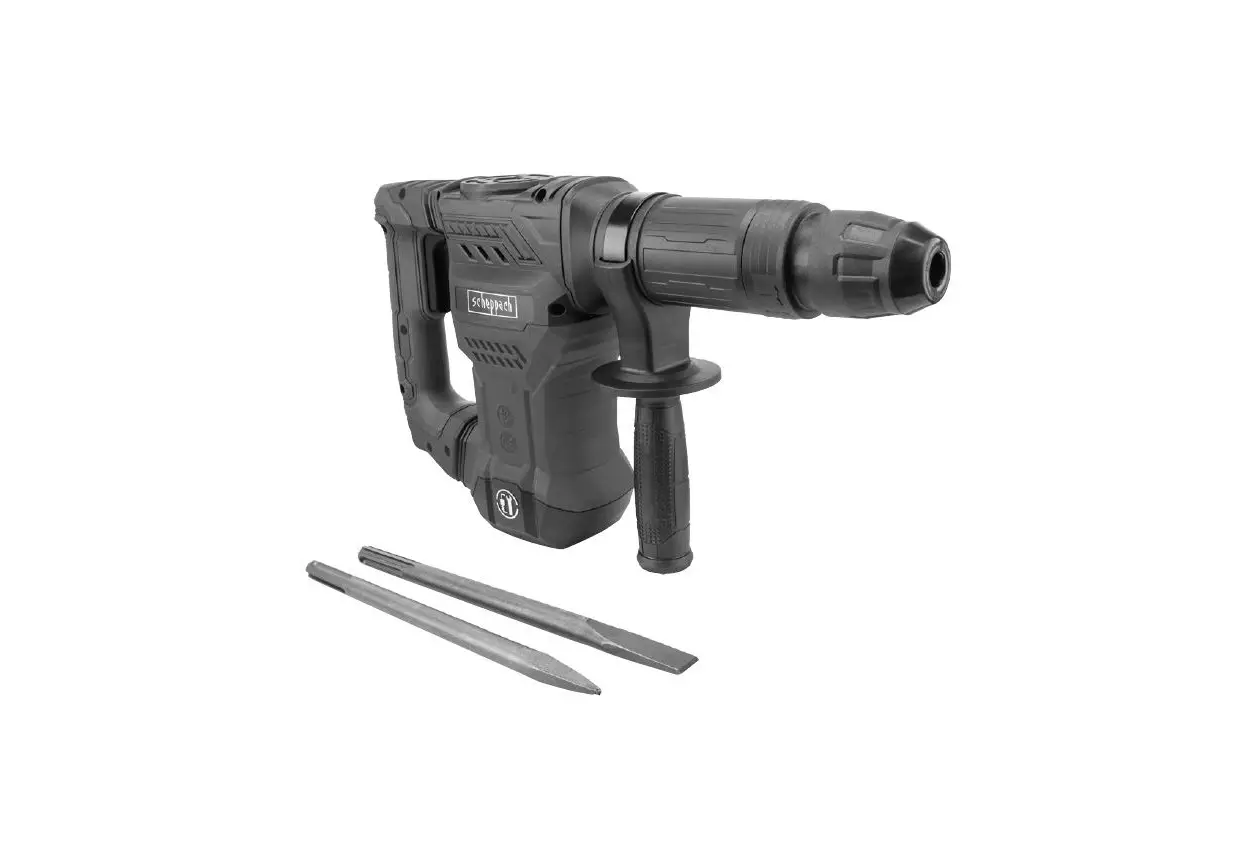
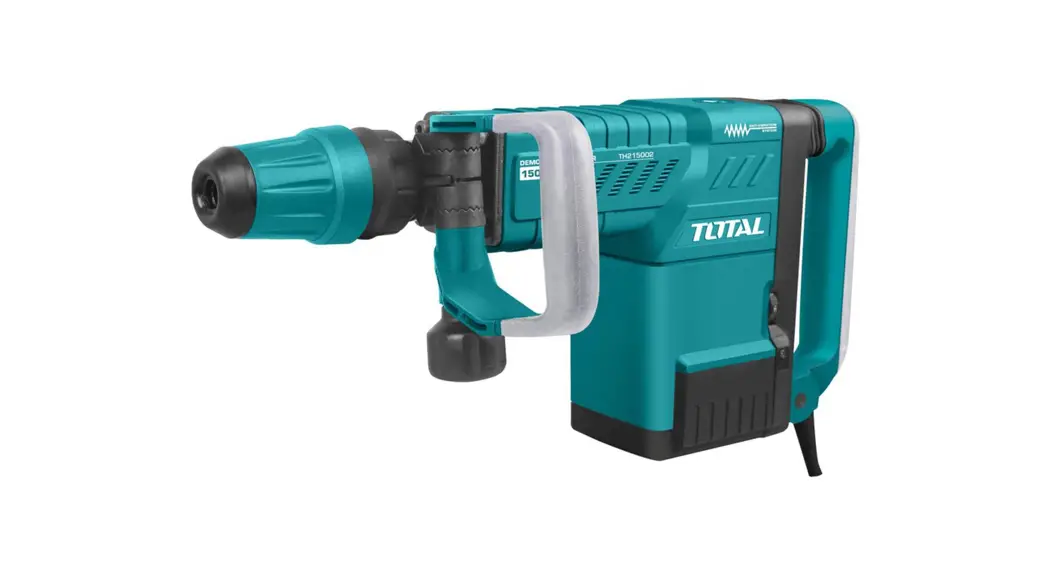
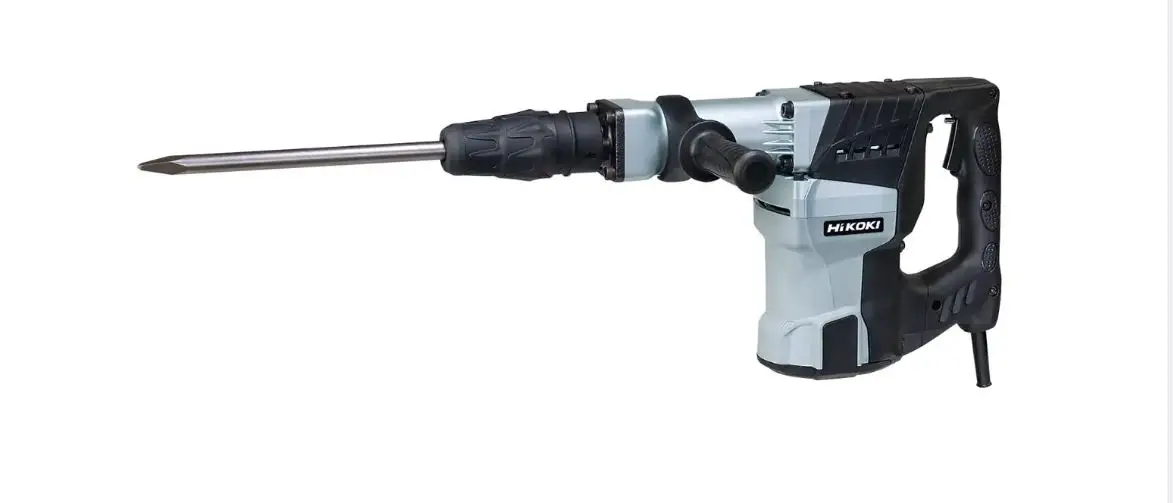
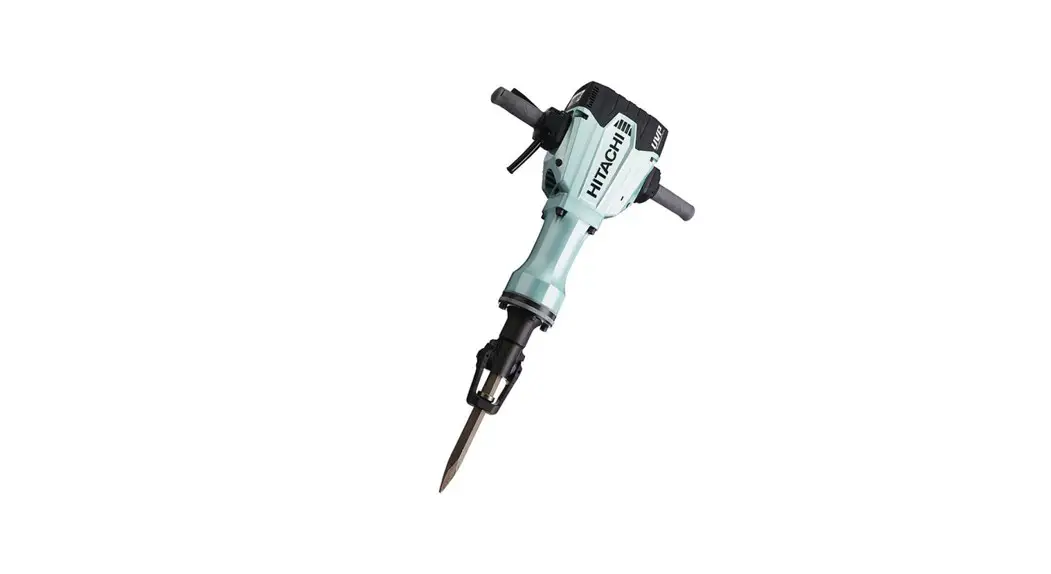
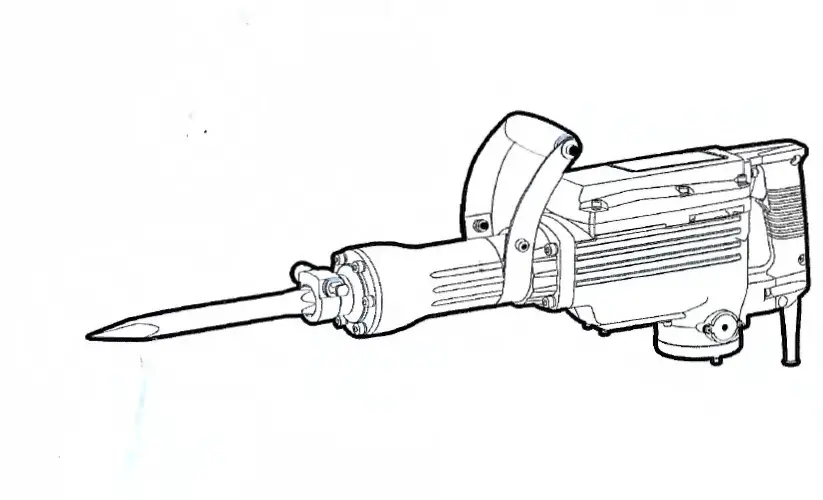
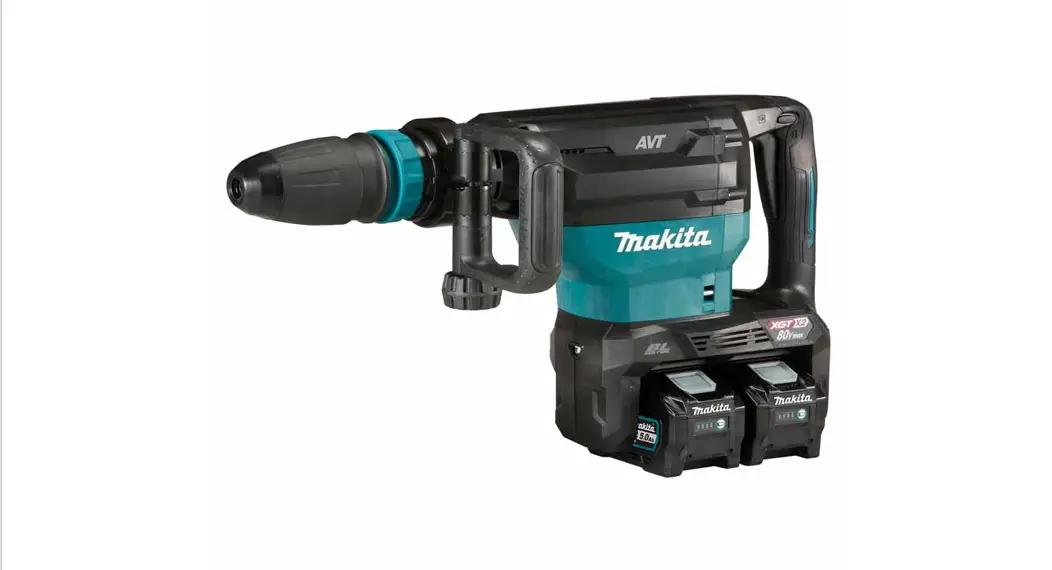
H 65SB3 Demolition Hammer
Product Information: H 65SB3 Demolition Hammer
The H 65SB3 Demolition Hammer is a power tool designed for
heavy-duty demolition work. It comes with standard accessories such
as a bull point and a case. The tool has insulated gripping
surfaces to prevent electric shock if the cutting accessory comes
in contact with hidden wiring or its own cord. It is a Class II
tool that requires ear protectors to avoid hearing loss from
exposure to noise.
The tool should be operated in a clean and well-lit work area,
away from explosive atmospheres such as flammable liquids, gases,
or dust. Children and bystanders should be kept away from the work
area to avoid distractions that could cause the operator to lose
control of the tool. The power source used should conform to the
power requirements specified on the product nameplate.
Before starting work, it is essential to confirm that electric
cables or conduits are not buried inside the wall, floor, or
ceiling where the tool will be used. The bit holder should be
correctly set, and screw tightening should be confirmed at the
start of work. When working at a highly elevated location, extra
attention should be paid to avoid accidents.
The tool should be serviced by a qualified repair person using
only identical replacement parts to maintain its safety. When not
in use, it should be stored out of reach of children and infirm
persons.
Product Usage Instructions
- Ensure that the power switch is in the OFF position before
connecting the plug to a receptacle to avoid accidents. - Select a clean and well-lit work area away from explosive
atmospheres and keep children and bystanders away from the work
area. - Confirm that electric cables or conduits are not buried inside
the wall, floor, or ceiling before starting work. - Wear ear protectors to avoid hearing loss from exposure to
noise. - Hold the tool by its insulated gripping surfaces when
performing an operation where the cutting accessory may contact
hidden wiring or its own cord. - Use an extension cord of sufficient thickness and rated
capacity if the work area is far from the power source. - When working at a highly elevated location, pay extra attention
to avoid accidents. - Do not touch the bit during or immediately after operation as
it becomes very hot and could cause serious burns. - Set the bit holder properly and confirm screw tightening at the
start of work. - Wear a mask when turning your head upward.
en
zh
H 65SB3
ko
vi
th
id
ar
en Handling instructions zh ko vi Hng dn s dng
th
id Petunjuk pemakaian
ar
English
GENERAL POWER TOOL SAFETY WARNINGS
WARNING Read all safety warnings and all instructions. Failure to follow the warnings and instructions may result in electric shock, fire and/or serious injury.
Save all warnings and instructions for future reference.
The term “power tool” in the warnings refers to your mainsoperated (corded) power tool or battery-operated (cordless) power tool.
1) Work area safety a) Keep work area clean and well lit. Cluttered or dark areas invite accidents. b) Do not operate power tools in explosive atmospheres, such as in the presence of flammable liquids, gases or dust. Power tools create sparks which may ignite the dust or fumes. c) Keep children and bystanders away while operating a power tool. Distractions can cause you to lose control.
2) Electrical safety a) Power tool plugs must match the outlet. Never modify the plug in any way. Do not use any adapter plugs with earthed (grounded) power tools. Unmodified plugs and matching outlets will reduce risk of electric shock. b) Avoid body contact with earthed or grounded surfaces, such as pipes, radiators, ranges and refrigerators. There is an increased risk of electric shock if your body is earthed or grounded. c) Do not expose power tools to rain or wet conditions. Water entering a power tool will increase the risk of electric shock. d) Do not abuse the cord. Never use the cord for carrying, pulling or unplugging the power tool. Keep cord away from heat, oil, sharp edges or moving parts. Damaged or entangled cords increase the risk of electric shock. e) When operating a power tool outdoors, use an extension cord suitable for outdoor use. Use of a cord suitable for outdoor use reduces the risk of electric shock. f) If operating a power tool in a damp location is unavoidable, use a residual current device (RCD) protected supply. Use of an RCD reduces the risk of electric shock.
3) Personal safety a) Stay alert, watch what you are doing and use common sense when operating a power tool. Do not use a power tool while you are tired or under the influence of drugs, alcohol or medication. A moment of inattention while operating power tools may result in serious personal injury. b) Use personal protective equipment. Always wear eye protection. Protective equipment such as dust mask, non-skid safety shoes, hard hat, or hearing protection used for appropriate conditions will reduce personal injuries. c) Prevent unintentional starting. Ensure the switch is in the off position before connecting to power source and/or battery pack, picking up or carrying the tool.
Carrying power tools with your finger on the switch or energising power tools that have the switch on invites accidents. d) Remove any adjusting key or wrench before turning the power tool on. A wrench or a key left attached to a rotating part of the power tool may result in personal injury. e) Do not overreach. Keep proper footing and balance at all times. This enables better control of the power tool in unexpected situations. f) Dress properly. Do not wear loose clothing or jewellery. Keep your hair, clothing and gloves away from moving parts. Loose clothes, jewellery or long hair can be caught in moving parts. g) If devices are provided for the connection of dust extraction and collection facilities, ensure these are connected and properly used. Use of dust collection can reduce dust-related hazards.
4) Power tool use and care a) Do not force the power tool. Use the correct power tool for your application. The correct power tool will do the job better and safer at the rate for which it was designed. b) Do not use the power tool if the switch does not turn it on and off. Any power tool that cannot be controlled with the switch is dangerous and must be repaired. c) Disconnect the plug from the power source and/ or the battery pack from the power tool before making any adjustments, changing accessories, or storing power tools. Such preventive safety measures reduce the risk of starting the power tool accidentally. d) Store idle power tools out of the reach of children and do not allow persons unfamiliar with the power tool or these instructions to operate the power tool. Power tools are dangerous in the hands of untrained users. e) Maintain power tools. Check for misalignment or binding of moving parts, breakage of parts and any other condition that may affect the power tools operation. If damaged, have the power tool repaired before use. Many accidents are caused by poorly maintained power tools. f) Keep cutting tools sharp and clean. Properly maintained cutting tools with sharp cutting edges are less likely to bind and are easier to control. g) Use the power tool, accessories and tool bits etc. in accordance with these instructions, taking into account the working conditions and the work to be performed. Use of the power tool for operations different from those intended could result in a hazardous situation.
5) Service a) Have your power tool serviced by a qualified repair person using only identical replacement parts. This will ensure that the safety of the power tool is maintained.
PRECAUTION Keep children and infirm persons away. When not in use, tools should be stored out of reach of children and infirm persons.
2
English
DEMOLITION HAMMER SAFETY WARNINGS
Class II tool
1. Wear ear protectors. Exposure to noise can cause hearing loss.
2. Use auxiliary handle(s), if supplied with the tool. Loss of control can cause personal injury.
3. Hold power tool by insulated gripping surfaces, when performing an operation where the cutting accessory may contact hidden wiring or its own cord. Cutting accessory contacting a “live” wire may make exposed metal parts of the power tool “live” and could give the operator an electric shock.
STANDARD ACCESSORIES
In addition to the main unit (1 unit), the package contains the accessories listed in the below. Case ……………………………………………………………….. 1 Bull Point………………………………………………………….. 1 Standard accessories are subject to change without notice.
APPLICATIONS
ADDITIONAL SAFETY WARNINGS
1. Ensure that the power source to be utilized conforms to the power requirements specified on the product nameplate.
2. Ensure that the power switch is in the OFF position. If the plug is connected to a receptacle while the power switch is in the ON position, the power tool will start operating immediately, which could cause a serious accident.
3. When the work area is removed from the power source, use an extension cord of sufficient thickness and rated capacity. The extension cord should be kept as short as practicable.
4. RCD The use of a residual current device with a rated residual current of 30mA or less at all times is recommended.
5. Do not touch the bit during or immediately after operation. The bit becomes very hot during operation and could cause serious burns.
6. Before starting to break, chip or drill into a wall, fl oor or ceiling, thoroughly confi rm that such items as electric cables or conduits are not buried inside.
7. Wear a mask when turning your head upward. 8. Properly set the bit holder. 9. At the start of work, confirm screw tightening. 10. When working at a highly elevated location, pay attention
to articles and persons below. 11. Wear protective shoes to protect your feet.
SYMBOLS
WARNING The following show symbols used for the machine. Be sure that you understand their meaning before use.
H65SB3 : Demolition Hammer
Read all safety warnings and all instructions.
Switching ON
Demolishing concrete, chiseling off concrete, grooving, bar cutting. Application examples: Installation of piping and wiring, sanitary facility installation, machinery installation, water supply and drainage work, interior jobs, harbor facilities and other civil engineering works.
SPECIFICATIONS
Voltage (by areas) Power Input* Full-load Impact Rate Weight
(110V, 220V, 230V, 240V) 1340W 1400 /min 18.0 kg
* Be sure to check the nameplate on product as it is subject to change by areas.
NOTE Due to HITACHI’s continuing program of research and development, the specifications herein are subject to change without prior notice.
MOUNTING AND OPERATION
Action Mounting a tool *1 Switch operation How to use the demolition hammer *2 Replacing carbon brushes Selecting accessories
Figure 1 2 3 4
Page 23 23 23 23 24
*1 If the tool’s entire notched portion isn’t inserted beyond the front cover’s end surface, lightly tap the tool using a hammer or other object to insert it.
*2 Operate this Demolition Hammer by utilizing its empty weight. The performance will not be better even if it is pressed or thrust forcibly against the work surface. Hold this Demolition Hammer with a force just sufficient to counteract the reaction.
Switching OFF Switch lock Switch unlock Disconnect mains plug from electrical outlet
GREASE REPLACEMENT
This Demolition Hammer is of full air-tight construction to protect against dust and to prevent lubricant leakage. Therefore, this Demolition Hammer can be used without lubrication for long periods. Replace the grease as described below. Grease Replacement Period After purchase, replace grease after every 6 months of usage. Ask for grease replacement at the nearest authorized Service Center.
3
English
MAINTENANCE AND INSPECTION
CAUTION Be sure to switch OFF and disconnect the attachment plug from the receptacle to avoid a serious accident.
1. Inspecting accessories Since use of a dull accessory, such as a bull point, a cutter, etc. will degrade efficiency and cause possible motor malfunction, sharpen or replace with a new one as soon as abrasion is noted.
2. Inspecting the mounting screws Regularly inspect all mounting screws and ensure that they are properly tightened. Should any of the screws be loose, retighten them immediately. Failure to do so could result in serious hazard.
3. Maintenance of the motor The motor unit winding is the very “heart” of the power tool. Exercise due care to ensure the winding does not become damaged and/or wet with oil or water.
4. Inspecting the carbon brushes (Fig. 4) The Motor employs carbon brushes which are consumable parts. When they become worn to or near the “wear limit” , it results in motor trouble. When an auto-stop carbon brush is equipped, the motor will stop automatically. At that time, replace both carbon brushes with new ones which have the same carbon brush Numbers shown in the Fig. 4. In addition, always keep carbon brushes clean and ensure that they slide freely within the brush holders.
5. Replacing carbon brushes Loosen the screws (Hexagon socket hd. bolt M4×8) of the cap covers, then remove the cap covers (Fig. 4). After removing the brush caps, the carbon brushes can be removed. After replacing the carbon brushes, tighten the brush caps, then mount the cap covers securely.
CAUTION In the operation and maintenance of power tools, the safety regulations and standards prescribed in each country must be observed.
NOTE Due to HITACHI’s continuing program of research and development, the specifications herein are subject to change without prior notice.
4
C
df ee
eÿ f
dd f D
fÿe dPGG f
df
d ¨PO©d
d f
f E
d
f
d
B
f
f
f
F
d
C
d
f
ef
d
f
f
D
d G
df
f
ef
f
ef
B
d d
H
d f
f
f
f
B
d
C
ee
f
f
d
f
f
C
d
D
f
f
f
d
E
fe
f
de D
ed
ef
dÿ
f
f
F
f
f
f E
dd
G
d
3$%
f
f
3$%f
df
B
dd f ed f f
F
d e f
df f G
f dd
f
5
H
ed f
d f
B
f f
f f
f
f )4# f
0/
0”
f df df
df
df
d
f
fd
f
df
f
d edf
3$% d N”
f f
eeef j e e e e
df eee eed f
f pf
f
pp f
p
7
7
7
7
8
f
pf
LH
d f
6
d
f
f
¨©di ¨©d fd fd df
.Òd
fd fdd f
d f
f df
d
f
d
f
d f
d fdf f d ~f f
dd
f e
d f f dd f ¨©f df
7
! . .
.
‘ ‘ .
1) a) . . b) . . c) . .
2) a) . . . , . b) , , , . , . c) . . d) . . , , , . . e) . . f) (RCD) . RCD .
3) a) , . . . b) . . , , , .
c) . / OFF . .
d) . , .
e) . . .
f) . . , , . , .
g) , . , .
4) a) . . , . b) . , . c) . . d) , . . e) . . . , . . f) . , . g) , . .
5) a) , . .
8
. .
1. . .
2. , . .
3. . ” ” ” ” .
1. .
2. `OFF’ . `ON’ , .
3. , . .
4. RCD 30mA .
5. . .
6. , , , .
7. . 8. . 9. . 10.
. 11. .
. .
H65SB3 :
.
Class II
(1) . …………………………………………….. 1 ………………………………………….. 1
.
, , , . : , , , , , .
( ) *
(110V, 220V, 230V, 240V) 1340W 1400 / 18.0 kg
* , .
HITACHI , .
*1 *2
1 2 3 4
23 23 23 23 24
*1
*2 . . .
, . . . 6 . .
9
, .
1. , , .
2. . , . .
3. `’. .
4. ( 4) . ` ‘ , . . 4 . , .
5. ( M4×8) ( 4). . .
.
HITACHI , .
10
Ting Vit
b) S dng thit b bo v cá nhân. Luôn luôn eo
CÁC NGUYÊN TC AN TOÀN CHUNG
kính bo v mt. Thit b bo v nh mt n ngn bi, giày an toàn
CNH BÁO! Hãy c tt c các cnh báo an toàn và tt c các hng dn. Vic không tuân theo các cnh báo và hng dn có
chng trt, nón bo h lao ng, hoc thit b bo v thính giác c s dng trong các iu kin thích hp s làm gim các thng tích cá nhân. c) Ngn chn vic vô tình m máy. m bo rng
th dn n b in git, cháy và/hoc b thng nghiêm
công tc ang v trí tt trc khi kt ni n
trng.
ngun in và/hoc b ngun pin, thu gom
Gi li tt c các cnh báo và hng dn tham kho trong tng lai.
hoc mang vác công c. Vic mang vác các công c in khi ngón tay ca bn t trên công tc hoc tip in cho các công c in khin cho công tc bt lên s dn n các
Thut ng “dng c in” có trong các cnh báo cp
tai nn.
n dng c in (có dây) iu khin bng tay hoc dng
d) Tháo mi khóa iu chnh hoc chìa vn ai c
c in (không dây) vn hành bng pin.
ra trc khi bt dng c in. Chìa vn ai c hoc chìa khóa còn cm trên mt
1) Khu vc làm vic an toàn
b phn quay ca dng d in có th gây thng
a) Gi khu vc làm vic sch và ánh sáng. Khu vc làm vic ti tm và ba bn d gây tai nn.
b) Không vn hành dng d in trong khu vc
tích cá nhân. e) Không vi tay quá xa. Luôn luôn ng vng và
cân bng. iu này giúp kim soát dng c in trong tình
d cháy n, chng hn nh ni có cht lng d
hung bt ng tt hn.
cháy, khí t hoc bi khói. Các dng d in to tia la nên có th làm bi khói bén la. c) Không tr em và nhng ngi không phn
f) Trang phc phù hp. Không mc qun áo rng lùng thùng hoc eo trang sc. Gi tóc, qun áo và gng tay tránh xa các b phn chuyn ng. Qun áo rng lùng thùng, trang sc hoc tóc dài
sS phânngtâgmnckóhthi vknhihànnbhndmngt dkimisoná. t.
có th b cun vào các b phn chuyn ng. g) Nu có các thit b i kèm ni máy hút bi và
2) An toàn v in a) Phích cm dng c in phi phù hp vi cm. Không bao gi c ci bin phích cm di mi hình thc. Không c s dng
các ph tùng chn lc khác, hãy m bo các thit b này c ni và s dng úng cách. Vic s dng các thit b này có th làm gim c hi do bi gây ra.
phích tip hp vi dng c in ni t (tip t). Phích cm nguyên bn và cm in úng loi s gim nguy c b in git. b) Tránh c th tip xúc vi các b mt ni t
4) S dng và bo dng dng c in a) Không c ép máy hot ng quá mc. S dng úng loi dng c in phù hp vi công vic ca bn. Dng c in úng chng loi s hoàn thành công
hoc tip t nh ng ng, lò si, bp ga
vic tt và an toàn hn theo úng tiêu chí mà máy
và t lnh. Có nhiu nguy c b in git nu c th bn ni hoc tip t. c) Không các dng c in tip xúc vi nc
c thit k. b) Không s dng dng c in nu công tc
không tt hoc bt c. Bt k dng c in nào không th iu khin
mNachtohmc vmàodtn.g c in s làm tng nguy c b in git. d) Không c lm dng dây dn in. Không
c bng công tc u rt nguy him và phi c sa cha. c) Luôn rút phích cm ra khi ngun in và/hoc b ngun pin khi các công c in trc khi
bao gi nm dây xách, kéo hoc rút dng c in. dây cách xa ni có nhit cao, trn trt, vt sc cnh hoc b phn chuyn ng. Dây b h hng hoc ri s làm tng nguy c b in git.
thc hin bt k iu chnh, thay i ph tùng, hoc ct gi dng c in nào. Nhng bin pháp ngn nga nh vy giúp gim nguy c dng c in khi ng bt ng. d) Ct gi dng c in không s dng ngoài
e) Khi vn hành dng c in ngoài tri, hãy s dng dây ni thích hp cho vic s dng ngoài
tm tay tr em và không c cho ngi cha quen s dng dng c in hoc cha c
tri. S dng dây ni ngoài tri thích hp làm gim nguy c b in git.
hng dn s dng này vn hành dng c in. Dng c in rt nguy him khi trong tay ngi
f) Nu không th tránh khi vic vn hành dng
cha c ào to cách s dng.
c in mt ni m thp, thì hãy s dng
e) Bo dng dng c in. Kim tra m bo
thit b dòng in d (RCD) c cung cp bo v. Vic s dng mt RCD làm gim nguy c b in git.
các b phn chuyn ng không b xê dch hoc mc kt, các b phn không b rn nt và kim tra các iu kin khác có th nh hng n quá trình vn hành máy. Nu b h hng,
3) An toàn cá nhân a) Luôn cnh giác, quan sát nhng gì bn ang làm và phán oán theo kinh nghim khi vn hành dng d in.Không c s dng dng c in khi mt mi hoc di nh hng ca ru, ma túy hoc dc phm. Mt thoáng mt tp trung khi vn hành dng c in có th dn n chn thng cá nhân nghiêm trng. 11
phi sa cha dng c in trc khi s dng. Nhiu tai nn xy ra do bo qun dng d in kém. f) Gi các dng c ct sc bén và sch s. Dng c ct có cnh ct bén c bo qun úng cách s ít khi b kt và d iu khin hn. g) S dng dng c in, các ph tùng và u cài, v.v…úng theo nhng ch dn này, lu ý n các iu kin làm vic và công vic phi thc hin. Vn hành dng c in khác vi mc ích thit k có th dn n các tình hung nguy him.
Ting Vit
5) Bo dng a) em dng c in ca bn n th sa cha chuyên nghip bo dng, ch s dng các ph tùng úng chng loi thay th. iu này giúp m bo duy trì tính nng an toàn ca dng c in.
PHÒNG NGA Gi tr em và nhng ngi không phn s tránh xa dng c. Khi không s dng, các dng c in phi c ct gi tránh xa tm tay tr em và ngi không phn s.
Chuyn i TT Khóa công tc M khóa công tc Ngt kt ni phích cm chính t cm in
PHÒNG KHI S DNG BÚA PHÁ D
Công c loi II
1. Mang dng c bo v tai. Tác ng ca ting n có th gây ic tai.
2. S dng tay nm ph kèm theo máy. Mt kim soát máy có th gây ra thng tích cá nhân.
3. Cm dng c in phn tay hãm cách in, khi thc hin công vic mà ph tùng ct có th s tip xúc vi dây in ngm hoc dây ca chính dng c. Ph tùng ct tip xúc vi dây dn “có in” có th làm cho các b phn kim loi h ca dng c tr thành “có in” và có th làm cho ngi vn hành b in git.
CÁC CNH BÁO AN TOÀN B SUNG
1. m bo rng ngun in s dng phù hp vi yêu cu ngun in có trên nhãn mác sn phm.
2. m bo rng công tc in nm v trí OFF. Nu ni phích cm vi cm trong khi công tc in v trí ON, dng c in s bt u hot ng ngay lp tc và có th gây tai nn nghiêm trng.
3. Khi khu vc làm vic cách xa ngun in, s dng mt dây ni dày và in dung phù hp. Kéo dây ni càng ngn càng tt.
4. RCD Khuyn khích s dng thit b dòng in d vi thit b có dòng in mc 30mA hoc ít hn.
5. Không chm vào mi búa trong khi hoc ngay sau khi máy hot ng. Mi búa rt nóng trong thi gian vn hành và có th gây bng nghiêm trng.
6. Trc khi bt u phá v, c hoc khoan lên tng, sàn nhà hoc trn nhà, trit xác nhn xem các hng mc nh dây cáp in hay ng dn có c chôn bên trong hay không.
7. eo mt n khi xoay u ca bn theo hng i lên. 8. Cài t chính xác ng cp mi khoan. 9. Kim tra cht ca vít trc khi bt u công vic. 10. Khi làm vic ti a im trên cao, cn chú ý n các
vt và ngi bên di. 11. Mang giày bo v bo v ôi chân ca bn.
CÁC BIU TNG
CNH BÁO Các biu tng sau ây c s dng cho máy. Hãy chc chn rng bn hiu ý ngha ca các biu tng này trc khi s dng.
CÁC PH TÙNG TIÊU CHUN
Ngoài phn chính (1 b), b sn phm này còn cha các ph tùng c lit kê trong bng di ây. Hp …………………………………………………………………. 1 im bull …………………………………………………………. 1
Ph tùng tiêu chun có th thay i mà không báo trc.
NG DNG
Phá bê tông, c bê tông, xoi rãnh, ct st thanh. Các ví d ng dng: Lp t h thng ng dn và dây dn, lp t thit b v sinh, lp t thit b, cung cp nc và công tác thoát nc, các công vic ni tht, các c s bn cng và các công tác xây dng dân dng khác.
THÔNG S K THUT
in áp (theo khu vc) Công sut* Mc ng lc ti ti a Trng lng
(110V, 220V, 230V, 240V) 1340W 1400 /phút 18,0 kg
* Hãy chc chn kim tra nhãn mác trên sn phm vì có th thay i tùy theo khu vc.
CHÚ Ý
Do chng trình nghiên cu và phát trin liên tc ca Hitachi, các thông s k thut nêu trong tài liu này có th thay i mà không thông báo tr
LP T VÀ VN HÀNH
Hành ng Lp dng c *1 Vn hành chuyn i Cách s dng búa phá d *2 Thay chi than La chn ph tùng
Hình 1 2 3 4
Trang 23 23 23 23 24
H65SB3 : Máy c phá c tt c cnh báo an toàn và tt c hng dn. Chuyn i BT
*1 Nu toàn b phn c ct rãnh ca dng c không c gn vào mt phng mút ca np trc thì gõ nh vào dng c bng búa hoc vt khác gn vào.
*2 Vn hành Búa Phá D này bng cách tn dng trng lng rng ca máy. Vic thc hin s không tt hn ngay c khi dng c b nhn hoc y mnh lên b mt công trình.
Cm Búa Phá D này bng mt lc va chng li phn lc.
12
THAY M
Búa phá d có kt cu kín khí hoàn toàn chng bi lt vào và tránh rò r du m bôi trn. Vì vy, búa phá d có th s dng mà không cn tra du m trong mt thi gian dài. Vic thay du m nh miêu t di ây. Khong thi gian thay du m Sau khi mua, hãy thay du m sau mi 6 tháng s dng. Hãy ngh thay du m ti mt Trung tâm Dch v y quyn gn nht.
BO DNG VÀ KIM TRA
CNH BÁÓ Phi chc chn ã tt in và rút phích cm ra khi cm i kèm tránh gp phi rc ri nguy him.
1. Kim tra dng c Vì s dng dng c cùn, nh mi kim, li ct cùn, v.v…s làm gim sút hiu sut và khin cho tình trng hng hóc ng c có th xy ra nên cn làm sc hoc thay th dng c ngay sau khi ý thy có mài mòn.
2. Kim tra các inh c ã lp Thng xuyên kim tra tt c các inh c ã lp và m bo rng chúng c sit cht. Nu có bt k inh c nào b ni lng, sit cht li ngay lp tc. Nu không làm nh vy có th gây nguy him nghiêm trng.
3. Bo dng ng c Cun dây ng c là “trái tim” ca dng c in. Kim tra và bo dng m bo cun dây không b h hng và/hoc m t do dính du nht hoc nc.
4. Kim tra chi than (Hình 4) ng c s dng chi than di dng các thành phn tiêu hao. Khi chúng b bào mòn hoc gn n “gii hn mài mòn” thì có th dn n nhng vn v ng c. Khi có trang b mt chi than dng t ng, ng c s dng li t ng. Ti thi im ó, hãy thay th c hai chi than bng các chi mi có mã s chi than tng t nh ã ch trên Hình 4. Ngoài ra, luôn gi chi than sch s và m bo là chúng trt t do bên trong các kp chi than.
5. Thay chi than Ni lng inh c (bu lông u lc giác M4×8) ca np y, sau ó tháo np y (Hình 4). Sau khi tháo các m chi, thì có th tháo các chi than. Sau khi thay các chi than, sit cht các m chi, và lp li chc chn np y.
CNH BÁO Trong khi vn hành và bo trì dng c in, phi tuân theo các nguyên tc an toàn và tiêu chun quy nh ca tng quc gia.
CHÚ Ý Do chng trình nghiên cu và phát trin liên tc ca Hitachi, các thông s k thut nêu trong tài liu này có th thay i mà không thông báo tr
13
Ting Vit
/
b)
c) /
“” () ()
d)
1)
a)
e)
b) f)
c)
g)
2)
a)
4)
a)
b)
b)
c)
c) /
d)
d)
e)
f) e)
(RCD)
3) a)
f)
g)
14
5) a)
H65SB3 :
1.
2.
3.
“”
“”
1.
II
2. OFF
ON 3. 4. (RCD)
(1 ) ……………………………………………………………………………1 ……………………………………………………………………1
30
5.
6. 7.
, , , :
8. 9.
10.
11.
() *
(110V, 220V, 230V, 240V) 1340W 1400 /
18.0 kg
*
15
4. ( 4)
“”
4
*1
1
23 5.
*2
2 23 3 23 4 23
( M4×8) ( 4)
24
*1
*2
6
1.
2.
3. /
16
Bahasa Indonesia
PERINGATAN UMUM KESELAMATAN
3) Keselamatan pribadi a) Tetaplah waspada, lihat apa yang Anda kerjakan,
PENGGUNAAN PERKAKAS LISTRIK
dan gunakan akal sehat saat mengoperasikan
perkakas listrik.
PERINGATAN
Jangan gunakan perkakas listrik saat Anda lelah
Bacalah semua peringatan keselamatan dan semua
atau di bawah pengaruh obat-obatan, alkohol,
petunjuk.
atau pengobatan.
Tidak mematuhi peringatan dan petunjuk dapat
Hilangnya perhatian sesaat saat mengoperasikan
mengakibatkan sengatan listrik, kebakaran, dan/atau
perkakas listrik dapat mengakibatkan cedera pribadi
cedera serius.
yang serius.
Simpan semua peringatan dan petunjuk untuk rujukan di masa yang akan datang.
b) Penggunaan peralatan pelindung pribadi. Pakai selalu pelindung mata. Peralatan pribadi seperti masker debu, sepatu
Istilah “perkakas listrik” dalam peringatan merujuk pada perkakas listrik yang dioperasikan dengan daya listrik (dengan kabel) atau perkakas listrik yang dioperasikan dengan daya baterai (tanpa kabel).
keselamatan anti licin, topi proyek, atau pelindung pendengaran yang dipakai untuk kondisi yang sesuai akan mengurangi cedera pribadi. c) Cegah penyalaan yang tidak diinginkan. Pastikan sakelar berada di posisi mati sebelum
1) Keselamatan area kerja
menyambungkan ke sumber dan/atau paket
a) Jaga agar area kerja tetap bersih dan
baterai, mengangkat atau membawa perkakas.
berpencahayaan cukup.
Membawa perkakas listrik dengan jari pada
Area yang berantakan atau gelap dapat mengundang
sakelar atau menyalakan perkakas listrik daya
kecelakaan.
yang sakelarnya masih aktif dapat mengundang
b) Jangan operasikan perkakas listrik pada
kecelakaan.
lingkungan yang mudah meledak, seperti
d) Lepaskan tombol kunci penyesuai atau kunci
di tempat yang memiliki cairan yang mudah
pas sebelum menyalakan perkakas listrik.
terbakar, gas, atau debu.
Kunci pas atau kunci yang dibiarkan terpasang
Perkakas listrik menghasilkan percikan api yang
pada bagian perkakas listrik yang berputar dapat
dapat menyalakan debu atau gas.
mengakibatkan cedera pribadi.
c) Jauhkan anak-anak dan orang-orang yang ada
e) Jangan menjangkau secara berlebihan. Jaga
di sekitar saat mengoperasikan perkakas listrik.
agar posisi kaki tetap kokoh dan seimbang
Gangguan dapat mengakibatkan Anda kehilangan
sepanjang waktu.
kendali.
Hal ini akan memungkinkan kendali perkakas listrik
2) Keselamatan listrik a) Colokan perkakas listrik harus sama dengan stopkontak. Jangan pernah sama sekali mengubah colokan karena alasan apa pun. Jangan pakai colokan adaptor apa pun dengan perkakas listrik yang dibumikan (diardekan). Colokan yang tidak dimodifikasi dan outlet yang cocok akan mengurangi risiko sengatan listrik. b) Hindari sentuhan tubuh dengan permukaan yang dibumikan atau diardekan, seperti pipa, radiator, kompor dan kulkas. Risiko sengatan listrik semakin besar jika tubuh Anda dibumikan atau diardekan. c) Jauhkan perkakas listrik dari hujan atau kondisi
yang lebih baik jika situasi yang tidak diharapkan terjadi. f) Berpakaian dengan benar. Jangan memakai pakaian yang longgar atau perhiasan. Jauhkan rambut, pakaian, dan sarung tangan dari bagian-bagian yang bergerak. Pakaian yang longgar, perhiasan, atau rambut yang panjang dapat terperangkap dalam bagian-bagian yang bergerak. g) Jika perangkat untuk mengambil dan mengumpulkan debu disediakan, pastikan perangkat tersebut telah tersambung dan digunakan dengan benar. Penggunaan alat pengumpul debu dapat mengurangi bahaya terkait debu.
basah.
4) Penggunaan dan perawatan perkakas listrik
Air yang masuk ke dalam perkakas listrik dapat
a) Jangan gunakan perkakas listrik secara paksa.
meningkatkan risiko sengatan listrik.
Gunakan perkakas listrik yang sesuai untuk
d) Jangan menyalahgunakan kabel. Jangan pernah
penggunaan Anda.
sekali-kali memakai kabel untuk mengangkut,
Perkakas listrik yang sesuai akan melakukan
menarik, atau melepaskan colokan perkakas
fungsinya dengan benar dan lebih aman sesuai
listrik.
dengan kegunaannya.
Jauhkan kabel dari panas, minyak, tepi yang
b) Jangan gunakan perkakas listrik jika sakelar
tajam, atau benda-benda yang bergerak.
tidak bisa dinyalakan dan dimatikan.
Kabel yang rusak atau semrawut meningkatkan
Perkakas listrik mana saja yang sakelarnya rusak
risiko sengatan listrik.
tidak dapat dikendalikan dan membahayakan serta
e) Saat mengoperasikan perkakas listrik di luar
harus diperbaiki.
ruangan, pakai kabel ekstensi yang sesuai
c) Lepaskan colokan dari sumber daya dan/atau
untuk digunakan di luar ruangan.
baterai dari perkakas listrik sebelum melakukan
Penggunaan kabel yang cocok untuk penggunaan di
penyesuaian, mengganti aksesori, atau
luar ruang mengurangi risiko sengatan listrik.
menyimpan perkakas listrik.
f) Jika mengoperasikan perkakas listrik di
Tindakan keselamatan pencegahan seperti itu
lingkungan yang lembap tidak dapat dihindari,
mengurangi risiko menyalanya perkakas listrik
gunakan pasokan listrik yang terlindungi oleh
secara tidak sengaja.
perangkat arus residual (RCD).
d) Simpan perkakas listrik yang tidak dipakai dari
Penggunaan RCD mengurangi risiko sengatan
jangkauan anak-anak dan jangan izinkan orang
listrik.
yang tidak mengerti penggunaan perkakas
listrik atau petunjuk ini untuk mengoperasikan
perkakas listrik.
17
Bahasa Indonesia
Perkakas listrik berbahaya jika berada di tangan pengguna yang tidak terlatih. e) Merawat perkakas listrik. Periksa bagian yang tidak selaras atau macet, komponen yang patah, dan kondisi lain apa pun yang dapat memengaruhi pengoperasian perkakas listrik. Jika rusak, perbaiki perkakas listrik sebelum digunakan. Banyak kecelakaan terjadi karena perkakas listrik yang tidak dirawat dengan baik. f) Jaga agar alat pemotong tetap tajam dan bersih. Alat potong yang dirawat dengan baik dengan bilah potong yang tajam kecil kemungkinannya macet dan lebih mudah dikontrol. g) Gunakan perkakas listrik, aksesori, mata bor dll. sesuai dengan petunjuk ini, dengan mempertimbangkan kondisi kerja dan pekerjaan yang akan dilaksanakan. Penggunaan perkakas listrik untuk pengoperasian yang berbeda dengan yang diinginkan dapat mengakibatkan situasi berbahaya.
5) Servis a) Servislah perkakas listrik Anda oleh teknisi perbaikan yang berkualifikasi hanya menggunakan komponen pengganti yang identik. Hal ini akan memastikan terjaganya keselamatan penggunaan perkakas listrik.
TINDAKAN PENCEGAHAN Jauhkan anak-anak dan orang yang tidak terkait. Saat tidak dipakai, alat harus disimpan di luar jangkauan anak-anak dan orang yang tidak terkait.
5. Jangan sentuh mata bor selama atau segera setelah perkakas dioperasikan. Mata bor dapat menjadi sangat panas selama pengoperasian dan bisa mengakibatkan luka bakar serius.
6. Sebelum memulai memecahkan, meratakan, atau mengebor dinding, lantai, atau plafon, pastikan sepenuhnya bahwa benda-benda seperti kabel listrik atau pipa kabel tidak tertanam.
7. Gunakan masker ketika menengadahkan kepala Anda. 8. Atur penyangga mata bor dengan benar. 9. Pada saat memulai pekerjaan, pastikan pengencangan
sekrup. 10. Ketika bekerja di tempat yang sangat tinggi, perhatikan
barang-barang dan orang di bawah. 11. Gunakan sepatu pelindung untuk melindungi kaki Anda.
SIMBOL
PERINGATAN Berikut simbol yang digunakan untuk mesin. Pastikan bahwa Anda memahami artinya sebelum digunakan.
H65SB3: Martil Pembongkaran
Bacalah semua peringatan keselamatan dan semua petunjuk.
Sakelar HIDUP
Sakelar MATI
PERINGATAN KESELAMATAN MARTIL PEMBONGKARAN
Kunci sakelar
1. Gunakan pelindung telinga Paparan pada suara bising dapat mengakibatkan hilangnya pendengaran.
2. Gunakan handel tambahan, apabila diberikan bersama perkakas. Kehilangan kendali dapat menyebabkan cedera pribadi.
3. Pegang bor listrik pada permukaan genggam berinsulasi ketika melaksanakan pengoperasian di mana aksesori pemotongannya dapat bersentuhan dengan kabel tersembunyi atau kabelnya sendiri. Aksesori pemotongan yang bersentuhan kabel “hidup” dapat membuat bagian logam perkakas listrik yang tersingkap menjadi “hidup” dan operator tersengat listrik.
PERINGATAN KESELAMATAN TAMBAHAN
1. Pastikan bahwa sumber listrik yang akan digunakan mematuhi persyaratan daya yang ditetapkan pada pelat nama produk.
2. Pastikan bahwa sakelar daya dalam posisi MATI. Apabila colokan tersambung ke stopkontak saat sakelar daya dalam posisi HIDUP, perkakas listrik bisa langsung menyala saat itu juga. Hal ini dapat menyebabkan kecelakaan serius.
3. Ketika tempat kerja jauh dari sumber listrik, gunakan kabel ekstensi yang ketebalan dan kapasitas dayanya memadai. Kabel ekstensi yang dipakai harus sependek dan sepraktis mungkin.
4. RCD Penggunaan perangkat arus residu dengan arus residu terukur 30mA atau kurang disarankan setiap saat.
Kunci sakelar dibuka
Putuskan colokan utama dari stopkontak listrik
Perkakas kelas II
AKSESORI STANDAR
Selain unit utama (1 unit), paket berisi aksesori yang tercantum di bawah ini. Wadah ……………………………………………………………… 1 Mata Bor …………………………………………………………… 1
Aksesori standar dapat berubah tanpa pemberitahuan.
PENGGUNAAN
Membongkar beton, memahat beton, mengukir, memotong batangan. Contoh penggunaan: Instalasi pipa dan kabel, instalasi fasilitas kebersihan, instalasi mesin, pekerjaan penyediaan air dan selokan, pekerjaan interior, pekerjaan fasilitas pelabuhan dan pekerjaan teknik sipil lainnya.
18
Bahasa Indonesia
SPESIFIKASI
Tegangan (berdasarkan wilayah)
Input Daya*
Kecepatan Impak Beban Penuh
Berat
(110V, 220V, 230V, 240V) 1340W 1400 /mnt 18,0 kg
* Pastikan memeriksa plat nama produk karena bisa berubah-ubah sesuai dengan wilayahnya
CATATAN Karena program penelitian dan pengembangan HITACHI yang terus menerus, spesifikasi di sini dapat berubah tanpa pemberitahuan sebelumnya.
PEMASANGAN DAN PENGOPERASIAN
3. Pemeliharaan motor Kumparan unit motor adalah “jantung” perkakas listrik. Berhati-hatilah untuk memastikan kumparan tidak rusak dan/atau basah karena oli atau air.
4. Memeriksa sikat karbon (Gbr. 4). Motor menggunakan sikat karbon yang merupakan sukucadang yang harus diganti. Ketika sikat aus atau mendekati “batas keausan” , ini akan menimbulkan masalah motor. Ketika sikat karbon stop otomatis dipasang, otor akan berhenti otomatis. Saat itu, ganti kedua sikat karbon dengan yang baru dengan nomor sikat karbon yang sama seperti ditujunkkan dalam Gbr. 4. Selain itu, selalu jaga agar sikat karbon tetap bersih dan pastikan bisa bergeser secara bebas di dalam penyangga sikat.
5. Mengganti sikat karbon Kendorkan sekrup (Soket heksagonal hd. bolt M4×8) dari penutup lalu lepaskan penutup (Gbr. 4). Setelah melepas penutup sikat, sikat karbon dapat dilepas. Setelah mengganti sikat karbon, kencangkan penutup sikat, lalu pasang penutup dengan aman.
Tindakan
Gambar Halaman
Memasang perkakas*1
1
23
Pengoperasian sakelar
2
23
Cara memakai martil pembongkaran*2 3
23
Mengganti sikat karbon
4
23
Memilih aksesori
24
*1 Jika bagian takik perkakas tidak dimasukkan melebihi permukaan ujung penutup depan, ketuk ringan perkakas dengan martil atau benda lain untuk memasukkannya.
*2 Operasikan Martil Pembongkaran ini dengan memanfaatkan bobot kosong. Kinerjanya tidak akan lebih baik meskipun martil ditekan dengan paksa terhadap permukaan benda kerja. Pegang Martil Pembongkaran dengan kekuatan secukupnya untuk mengimbangi reaksi.
PERHATIAN Saat mengoperasikan dan memelihara perkakas listrik, peraturan dan standar keselamatan yang ditetapkan di setiap negara harus dipatuhi.
CATATAN Karena program penelitian dan pengembangan HITACHI yang terus menerus, spesifikasi di sini dapat berubah tanpa pemberitahuan sebelumnya.
PENGGANTIAN GEMUK
Martil Pembongkaran merupakan bentuk yang memiliki konstruksi kedap udara untuk melindungi dari debu dan mencegah kebocoran pelumas. Oleh karena itu, Martil Pembongkaran dapat digunakan tanpa pelumas dalam jangka waktu lama. Ganti gemuk seperti yang dijelaskan di bawah. Periode Penggantian yang Keluarga Setelah dibeli, ganti gemuk setiap 6 bulan penggunaan. Mintalah penggantian gemuk di Pusat Layanan resmi terdekat.
PEMELIHARAAN DAN PEMERIKSAAN
PERHATIAN Pastikan mematikan daya (OFF) dan melepas colokan dari stop kontak untuk menghindari kecelakaan serius.
1. Memeriksa aksesori Karena penggunaan aksesori yang tumpul seperti mata bor, pisau pemotong, dll. dapat mengurangi efisiensi dan menyebabkan kerusakan pada motor, tajamkan atau ganti dengan yang baru segera setelah terlihat adanya abrasi.
2. Memeriksa sekrup pemasang Periksa secara rutin sekrup pemasang dan pastikan sekrup terpasang erat. Jika salah satu sekrup rusak, segera kuatkan kembali. Tidak dapat melakukan hal ini dapat mengakibatkan risiko bahaya yang serius.
19
. 1 . 2 . . . 3 . ” ” . / (4 ) 4 . ” ” . . .4
. 5 (M4 × 8 ) .(4 )
.
.
.
HITACHI
.
20
II
( ) .
1…………………………………………………………… 1…………………………………………………………..
.
. :
.
220 110) ( 240 230
1340 /1400 18.0
( )
*
* .
HITACHI .
23
1
1*
23
2
23
3
2*
23
4
24
1*
. . 2*
. .
.
.
1 . . () 2 . 3 . “” . “”
1 .
. 2 . 3 . . RCD 4 . 30 . 5 . 6 . . 7 . 8 . 9 10 . . 11
.
. :H65SB3
.
(ON)
0 (OFF)
. .
.
. 6 . 21
. ( / .
. . (
. (
.
. (
.
.
. ( .
.
: (4
(
.
.
(
.
.
/ (
.
.
(
.
.
(
.
.
.
(
.
(
.
.
(5 (
. .
.
. /
.
” ” ()
. ()
(1 . (
. (
. . (
.
. (2 (
. .
. (
.
. . (
. () (
.
. ()
. (
. ()
. ( .(RCD)
RCD .
(3 ( .
.
. . . (
.
22
1
2
1
3 180°
4
2
3
4
2 1
1 + 2 =
86
7 mm 17 mm
23
410mm : 944961 W75×410mm : 944964 410mm : 944962
200mm : 944965
250mm : 944966
380mm : 957154
6 MM: 872422 3 MM: 943277
999086
24
25
26
27
610 Code No. C99716532 M Printed in Malaysia