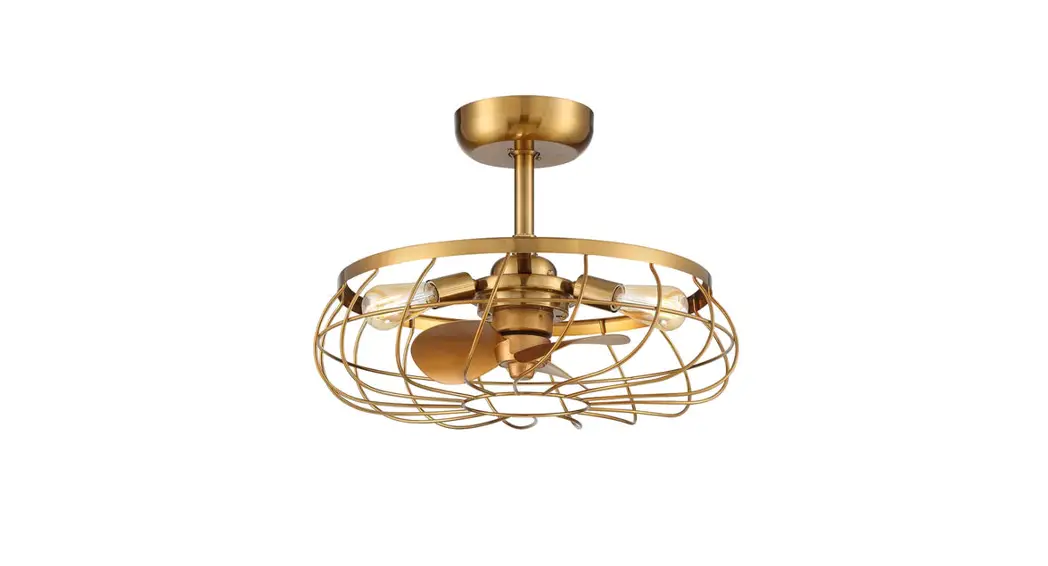
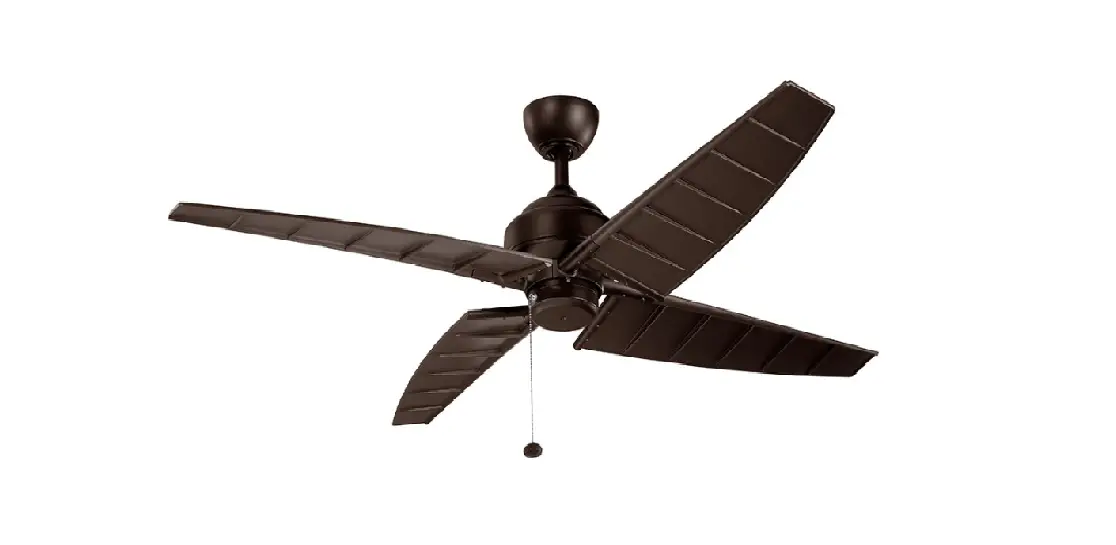
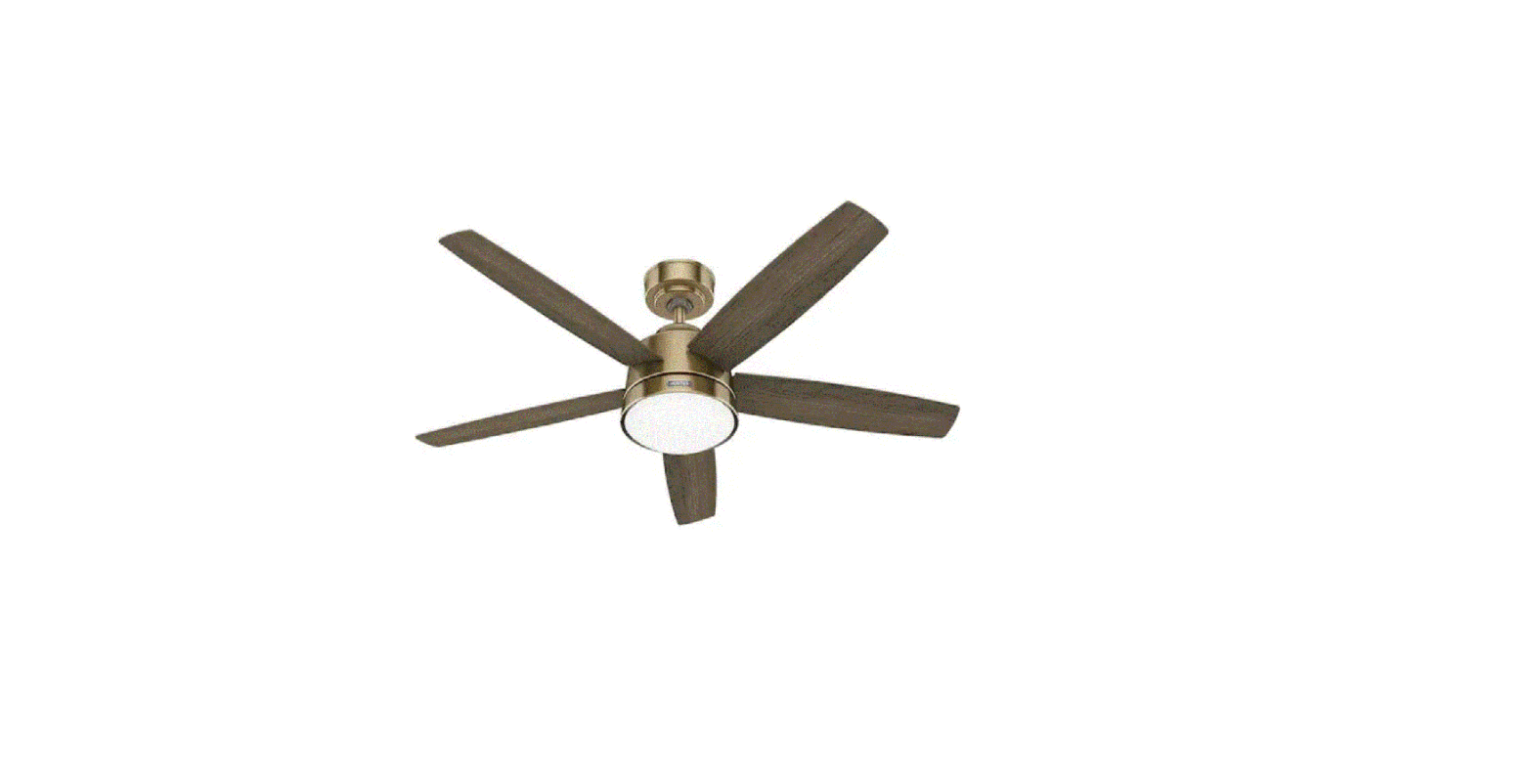
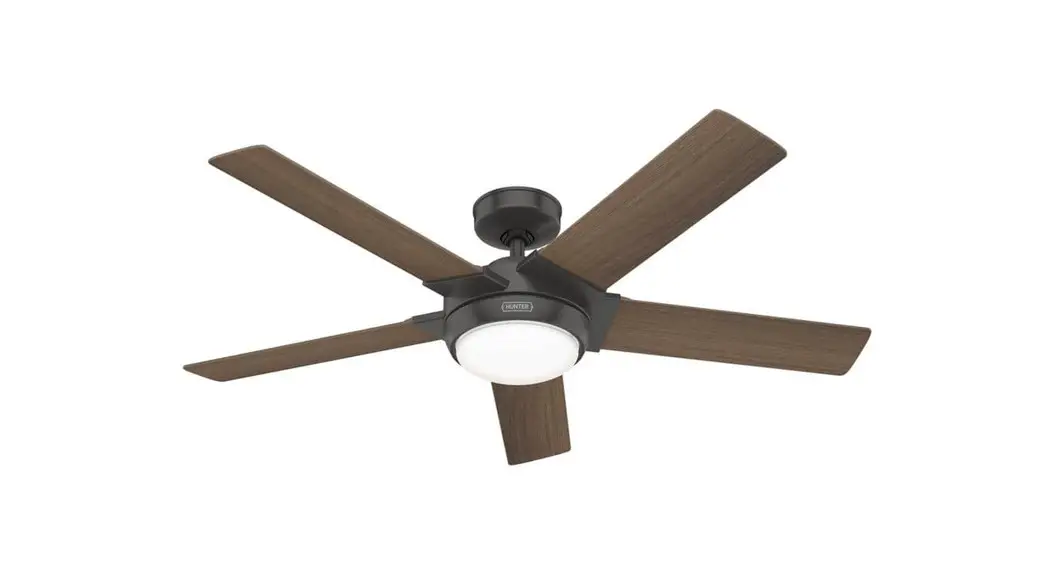
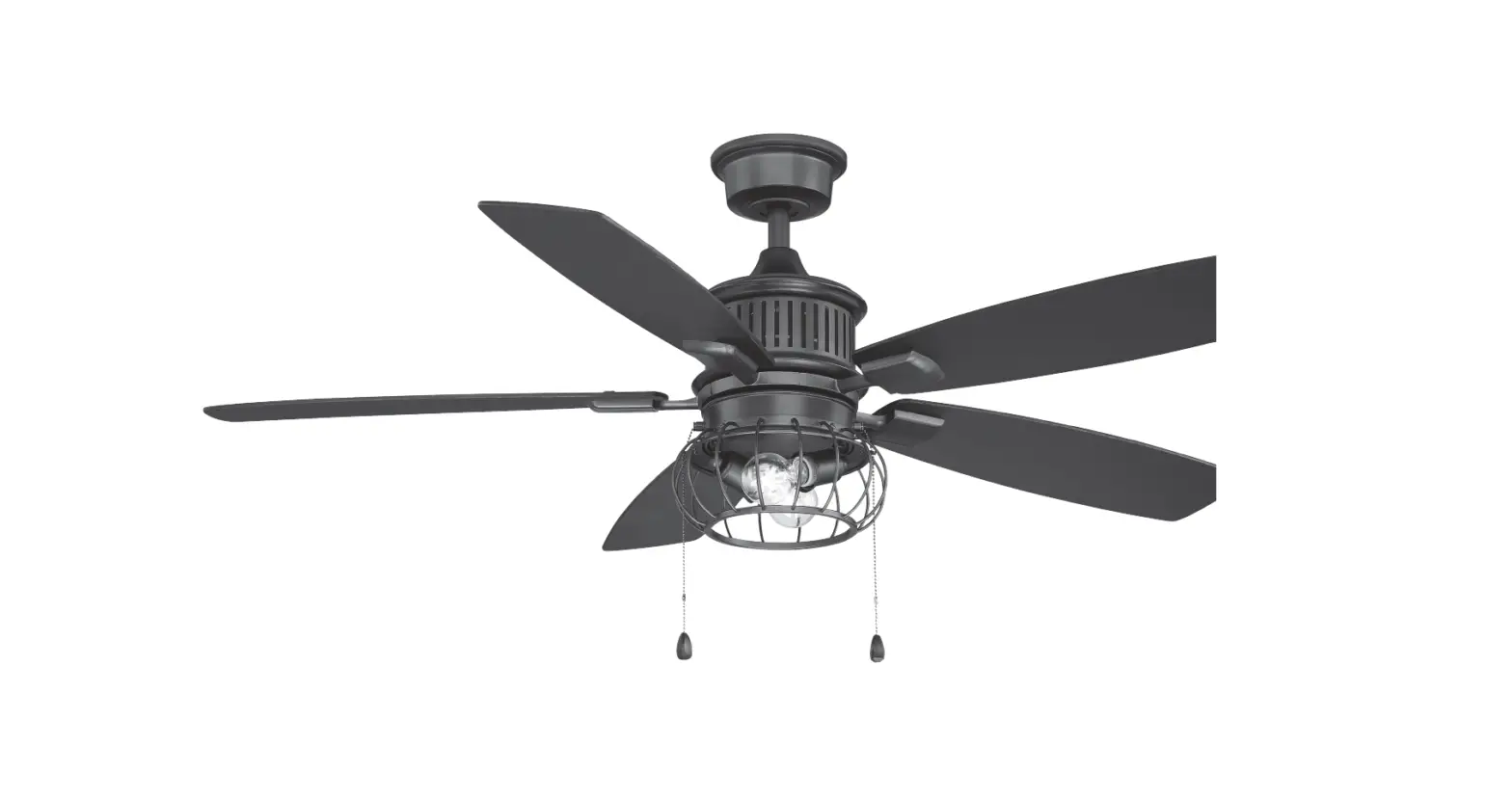
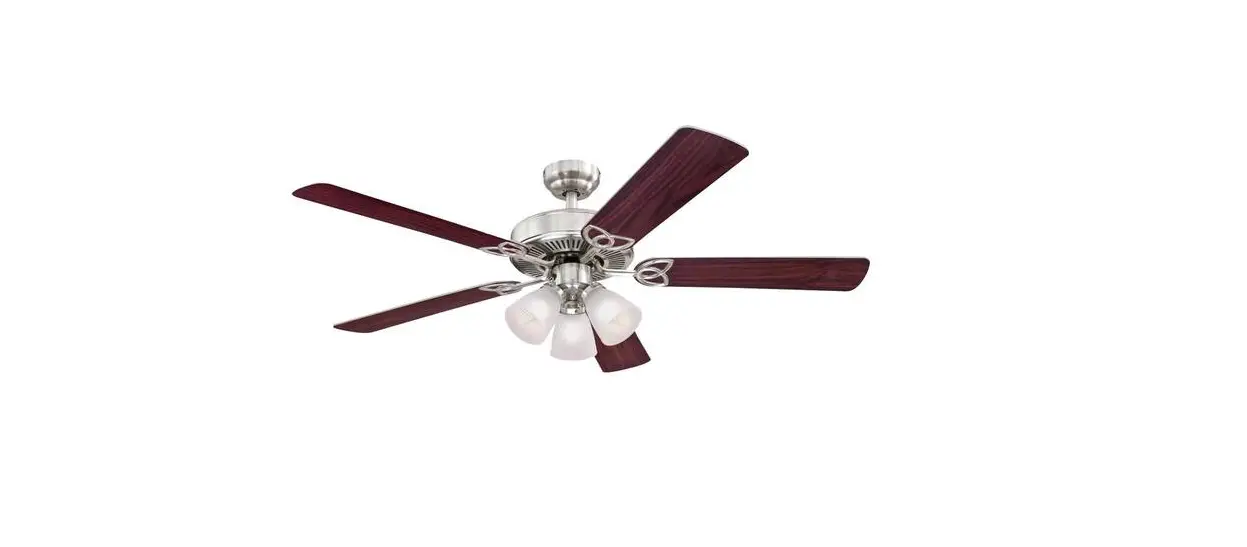
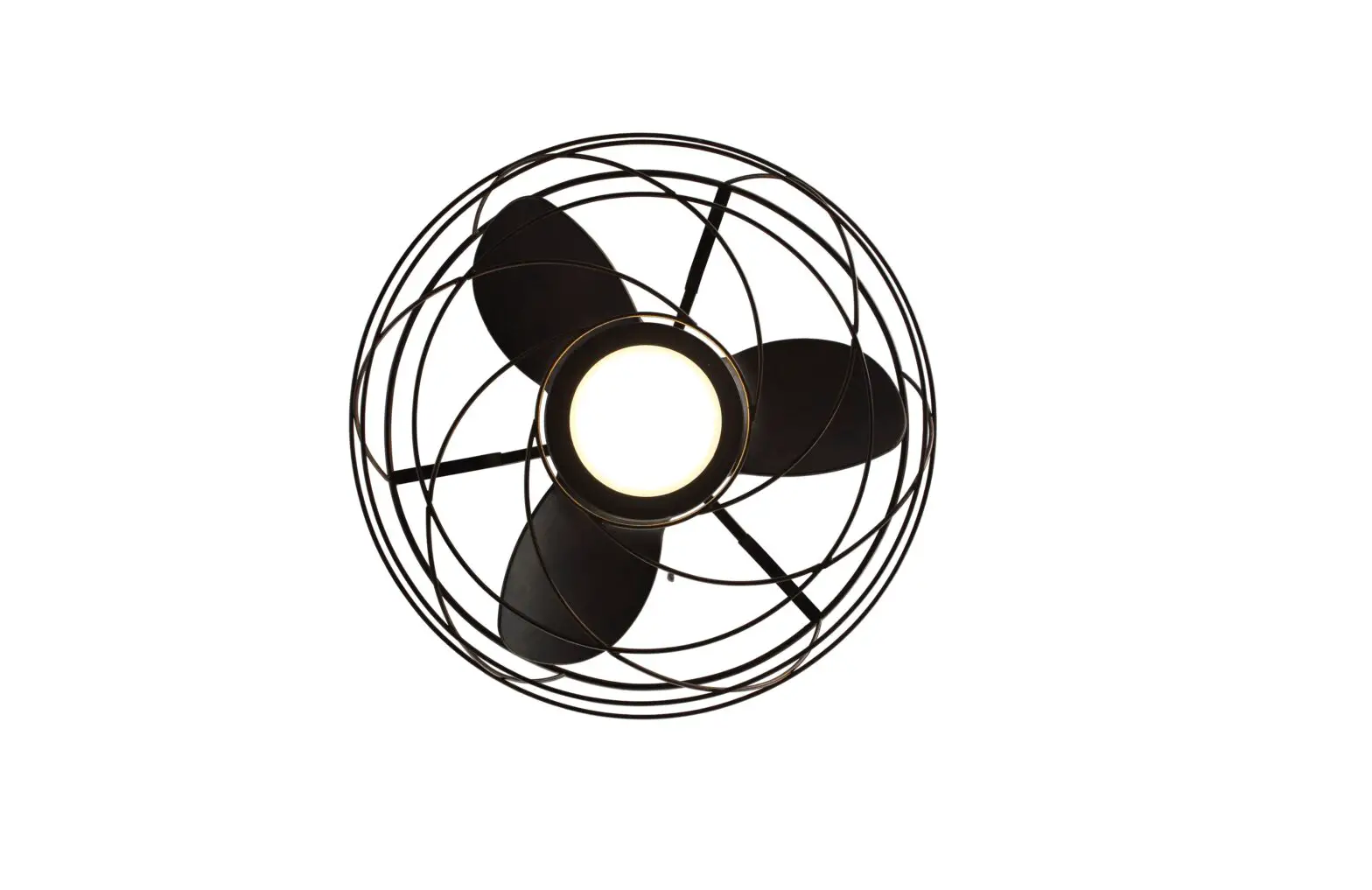
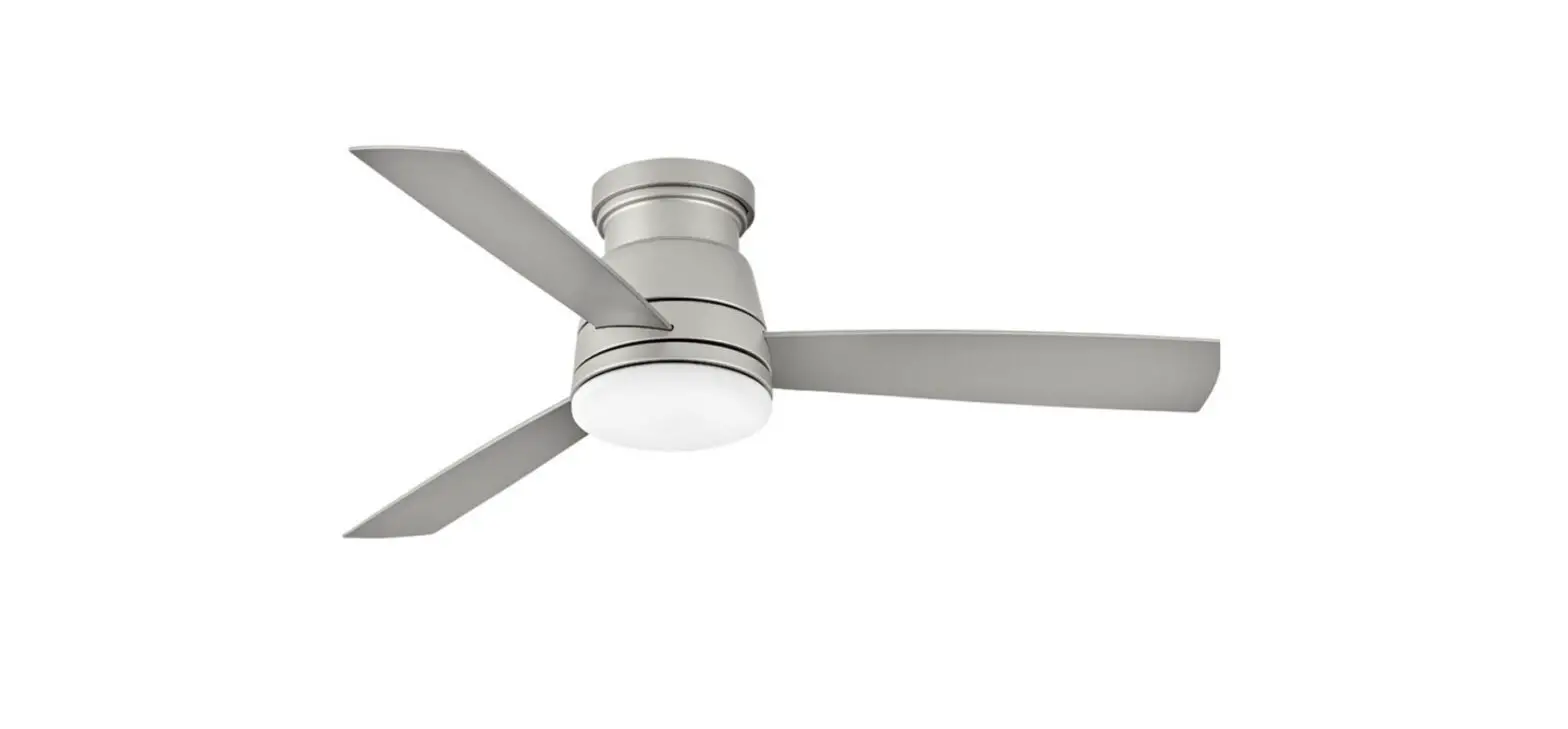
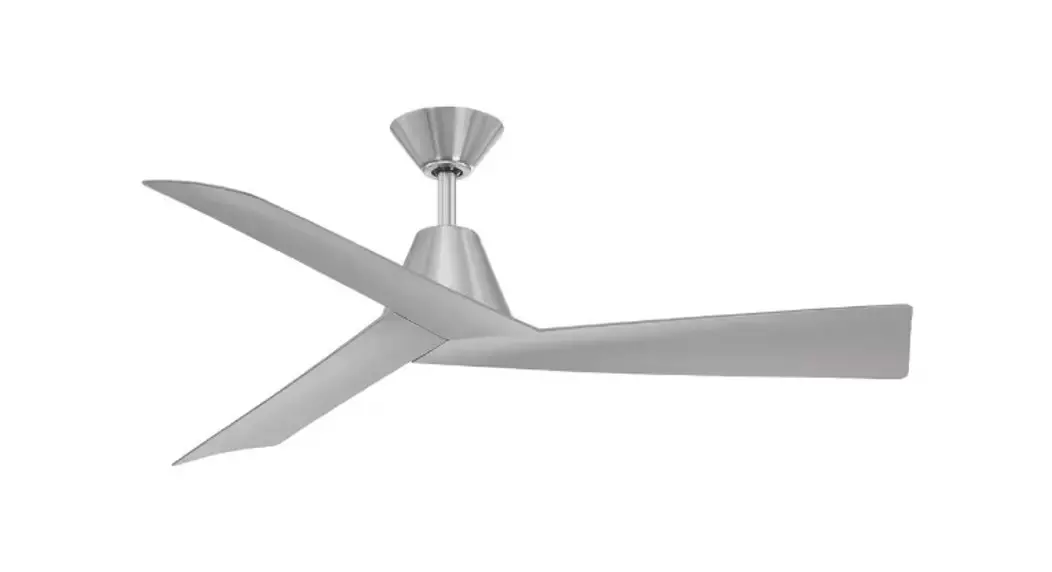
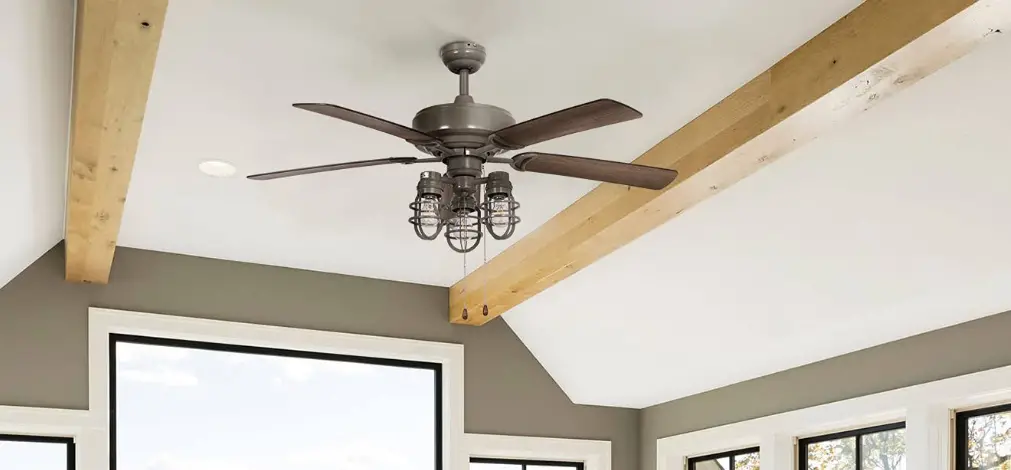
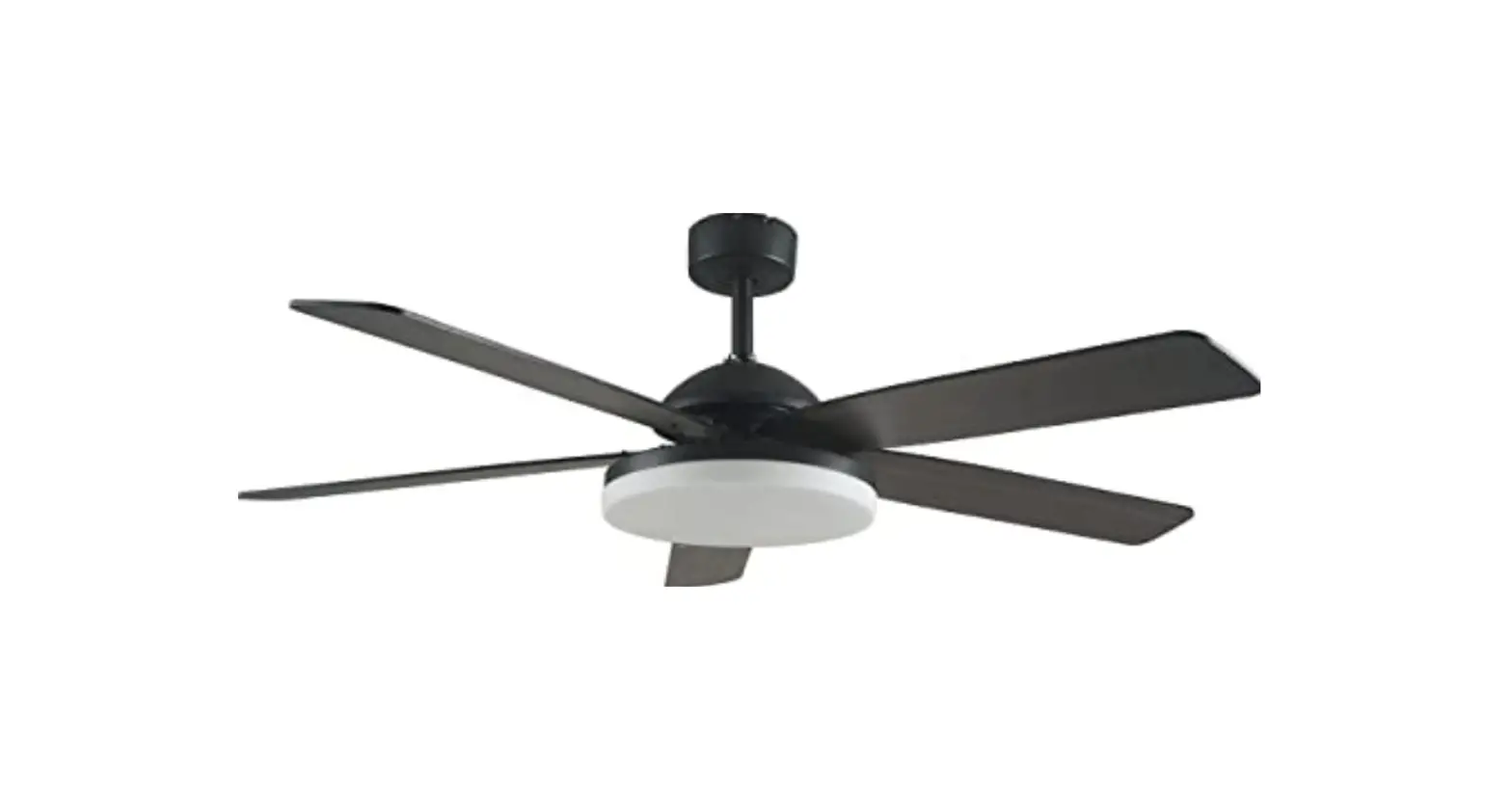
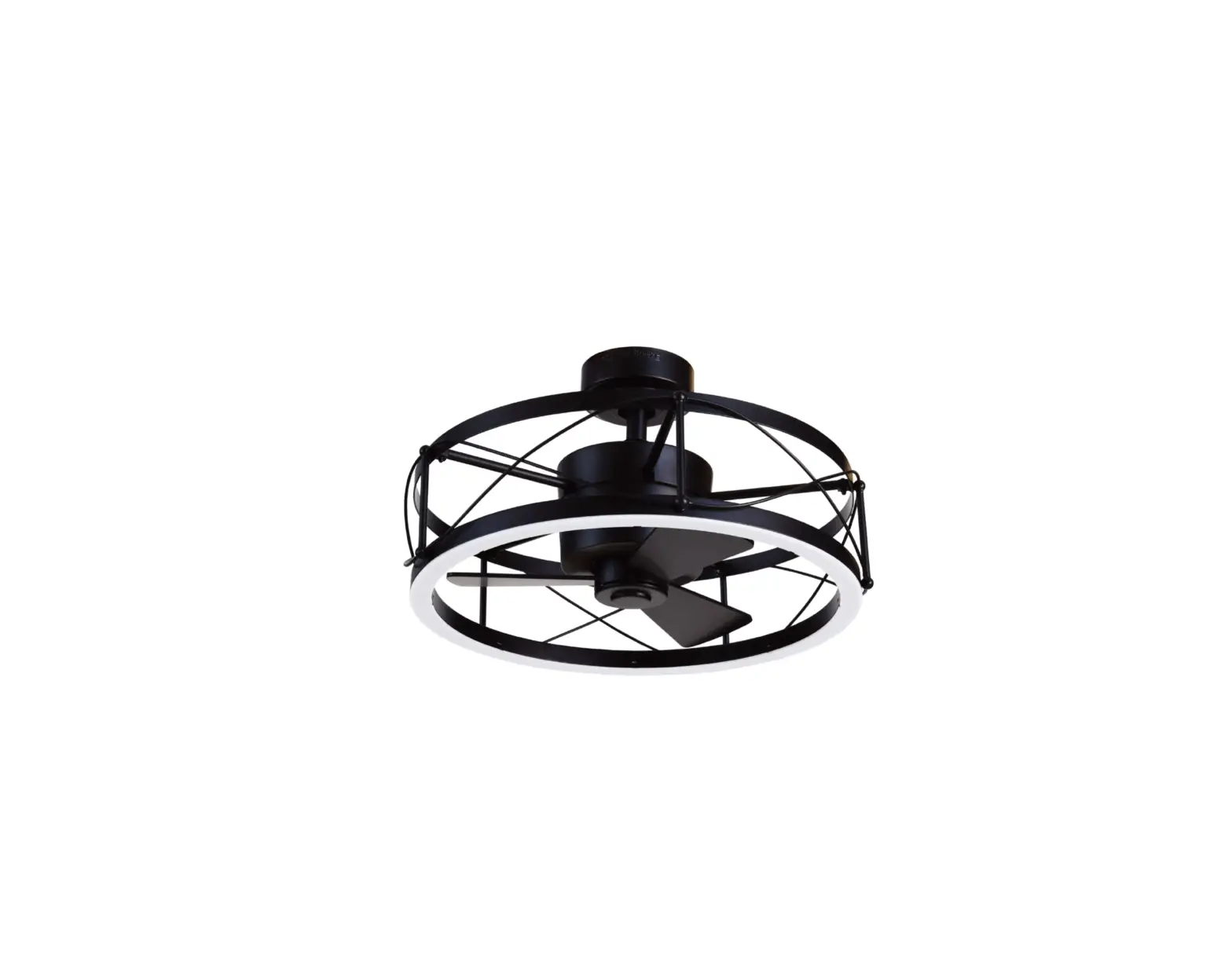
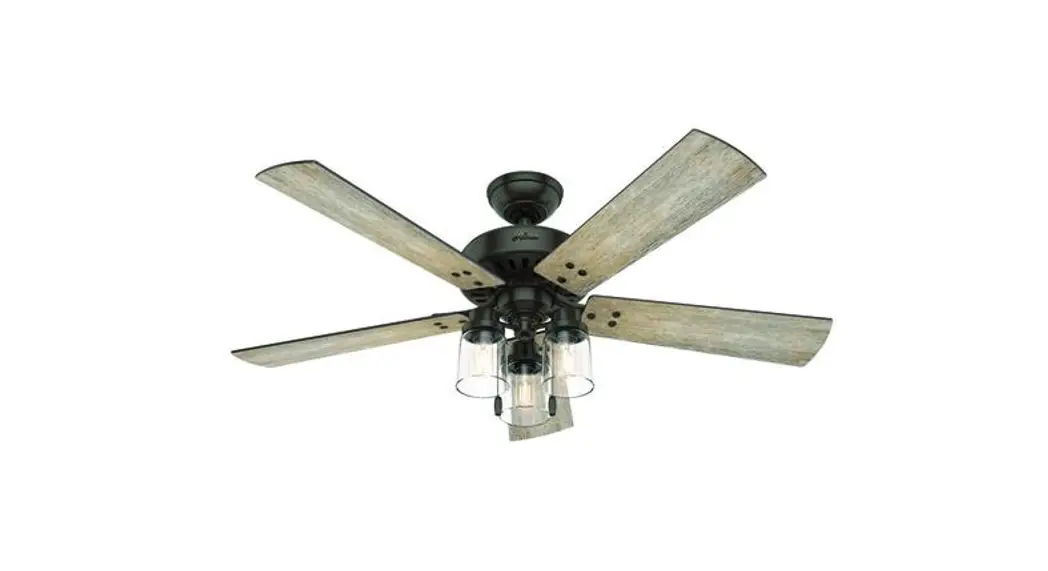
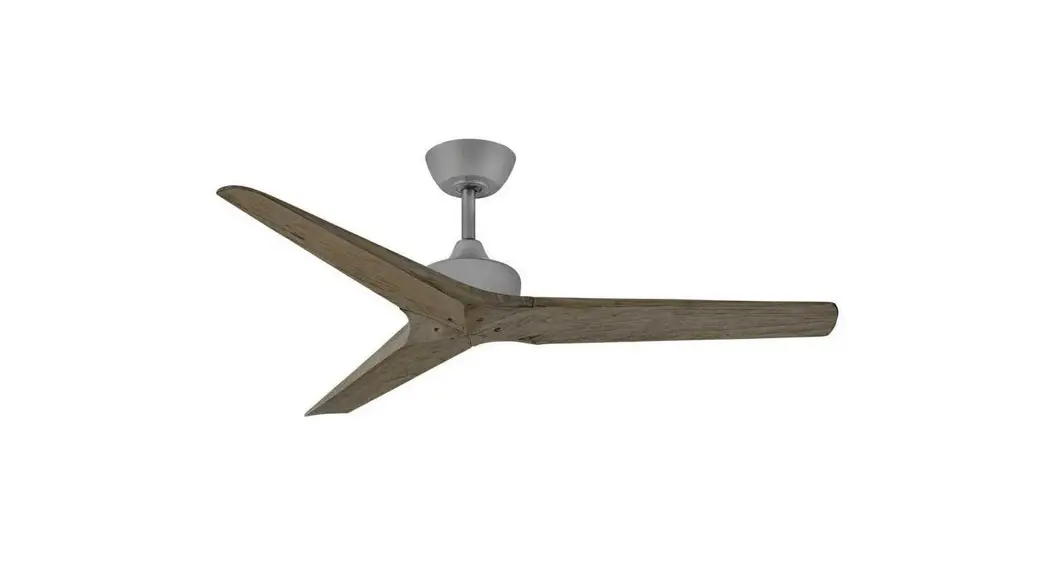
ARRANMORE LIGHTING FANS AR-2281 Santiago 22 Inch Indoor Outdoor Aged Brass Ceiling Fan
Product Information
- Model: AR-2281
- Product: SANTIAGOTM Ceiling Fan
- Manufacturer: Arranmore Lighting Company, LLC
- Patent: Pending
Warranty: Three-year warranty covering defects in materials or workmanship. The warranty does not cover changes in the finish, including rusting, pitting, corroding, tarnishing, or peeling. It also does not cover damage from improper installation, neglect, accident, misuse, exposure to extremes of heat or humidity, or any modification to the original product. Light bulbs are not included in the warranty coverage.
Contact Information
- E-mail: [email protected]
- Website: https://arranmorelighting.com
Product Usage Instructions
Safety Instructions
- Read the owner’s manual and safety information before installing the ceiling fan. Review the accompanying assembly diagrams.
- Before servicing or cleaning the unit, switch off the power at the service panel and lock the service panel disconnecting means to prevent accidental switching on of power.
- If locking is not possible, securely fasten a warning device, such as a tag, to the service panel.
- Exercise caution when cleaning, painting, or working near the fan and blades. Always turn off the power to the ceiling fan before servicing.
- Avoid inserting anything into the fan blades while the fan is operating.
- The appliance is not intended for use by young children or infirm persons without supervision. Ensure that young children do not play with the appliance.
Additional Safety Instructions
- Ensure that the electricity is turned off at the fuse box before wiring and do not operate the fan without blades to avoid possible shock.
- All wiring and installation procedures must comply with national Electrical Codes (ANSI/NFPA 70) and Local Codes.
- The ceiling fan must be grounded as a precaution against electrical shock. Electrical installation should be done or approved by a licensed electrician.
- The fan base must be securely mounted and capable of supporting at least 50 lbs (fan and accessories not exceeding 50 lbs or 22.7 kg). Refer to page 5 of the owner’s manual for support requirements. Consult a qualified electrician if unsure.
- Mount the fan with the fan blades at least 7 feet from the floor to prevent accidental contact with the ceiling fan.
- Follow the recommended instructions for wiring your ceiling fan properly. If you lack adequate knowledge or experience, consult a qualified electrician.
THANK YOU
We appreciate the trust and confidence you have placed in Arranmore Lighting Company, LLC through the purchase of this ceiling fan. We strive to continually create quality products designed to enhance your home. Visit us online at https://arranmorelighting.com to see our full line of products available for your home improvement needs. Thank you for choosing Arranmore!
Important Safety Instructions
WARNING: To avoid fire, shock, and serious personal injury, follow these instructions.
- Read your owner’s manual and safety information before installing your new fan. Review the accompanying assembly diagrams.
- Before servicing or cleaning the unit, switch the power off at the service panel and lock the service panel disconnecting means to prevent power from being switched on accidentally. When the service disconnecting means cannot be locked, securely fasten a warning device, such as a tag, to the service panel.
- Be careful of the fan and blades when cleaning, painting, or working near the fan. Always turn off the power to the ceiling fan before servicing.
- Do not insert anything into the fan blades while the fan is operating.
- The appliance is not intended for use by young children or infirm persons without supervision. Young children should be supervised to ensure that they do not play with the appliance.
Additional Safety Instructions
- 1. To avoid possible shock, be sure electricity is turned off at the fuse box before wiring, and do not operate fan without blades.
2. All wiring and installation procedures must satisfy National Electrical Codes (ANSI/ NFPA 70) and Local Codes. The ceiling fan must be grounded as a precaution against possible electrical shock. Electrical installation should be made or approved by a licensed electrician.
3. The fan base must be securely mounted and capable of reliably supporting at least 50 lbs. (fan and accessories not to exceed 50 lbs. or 22.7 kgs.). See page 5 of owner’s manual for support requirements. Consult a qualified electrician if in doubt.
4. The fan must be mounted with the fan blades at least 7 feet from the floor to prevent accidental contact with the ceiling fan.
5. Follow the recommended instructions for the proper method of wiring your ceiling fan. If you do not have adequate electrical knowledge or experience, have your fan installed by licensed electrician.
6. Suitable for use with solid-state speed controls.
7. This fan is to be used in indoor dry or damp locations only.
8. For supply connections, if the conductor of a fan is identified as a grounded conductor, then it should be connected to a grounded conductor power supply. If the conductor of a fan is identified as an ungrounded conductor, then it should be connected to an ungrounded conductor power supply. If the conductor of a fan is identified for equipment grounding, then it should be connected to an equipment-grounding conductor.
CAUTION: Changes or modifications not expressly approved by the party responsible for compliance could void the user’s authority to operate the equipment.
WARNING: TO REDUCE THE RISK OF ELECTRIC SHOCK, THIS FAN MUST BE INSTALLED WITH A GENERAL USE, ISOLATING WALL CONTROL/SWITCH.
WARNING: This product is designed to use only those parts supplied with this product and/or accessories designated specifically for use with this product. Using parts and/or accessories not designated for use with this product could result in personal injury or property damage.
WARNING: To reduce the risk of personal injury, do not bend the blade bracket (flange or blade holder) when installing the brackets, balancing the blades, or cleaning the fan. Do not insert foreign objects in between rotating fan blades.
WARNING: Mount to an outlet box marked acceptable for fan support of 22.7 kg (50 lbs) or Less.
WARNING: Do not operate this fan with a variable (Rheostat) wall controller or dimmer switch. Doing so could result in damage to the ceiling fan’s remote control unit.
This device complies with Part 15 of the FCC Rules. Operation is subject to the following two conditions:
(1) This device may not cause harmful interference, and (2) this device must accept any interference received, including interference that may cause undesired operation. If the intentional radiator can be classified as a Class B digital device or a PC peripheral, then shall include the following or equivalent:
Note: This equipment has been tested and found to comply with the limits for Class B digital devices, pursuant to part 15 of the FCC Rules. These limits are designed to provide reasonable protection against harmful interference in a residential installation.
This equipment generates, uses, and can radiate radio frequency energy and, if not installed and used in accordance with the instructions, may cause harmful interference to radio or television reception, which can be determined by turning the equipment off and on, the user is encouraged to try to correct the interference by one or more of the following measures:
- – Reorient or relocate the receiving antenna.
– Increase the separation between the equipment and the receiver.
– Connect the equipment to an outlet on a circuit different from that to which the receiver is connected.
Consult the dealer or an experienced radio/TV technician for help.
Note: For a Class A digital device, statements of 15. 105(a) must be included when appropriate for the device in question.
THREE YEAR WARRANTY
If the fan motor or any other part fails at any time within three years of the original purchase, due to a defect in materials or workmanship, we will repair or replace, at our option, the defective part, free of charge.
Because of varying climate conditions, this warranty does not cover changes on the finish, including rusting, pitting, corroding, tarnishing or peeling. This includes coastal locations where salt air can cause corrosion.
We do not manufacture light bulbs, however, we provide them with our fans as a convenience. Light bulbs are not included in the warranty coverage.
This warranty is void and does not apply to damage from improper installation, neglect, accident, misuse, exposure to extremes of heat or humidity, or as the result of any modification to the original product.
All costs of removal and re-installation of the fan are the sole responsibility of the owner of the fan and not the retailer that sold the fan or Arranmore Lighting Company, LLC.
Arranmore reserves the right to modify or discontinue any product at any time and may substitute any part under this warranty.
Under no circumstances may a fan be returned without prior authorization from Arranmore. The receipt of purchase must accompany authorized returns and must be sent freight prepaid to Arranmore. The fan to be returned must be properly packed to avoid damage in transit; Arranmore will not be responsible for any damage resulting from improper packaging.
It is understood that any repair or replacement is the exclusive remedy available from Arranmore. There is no other expressed or implied warranty. Arranmore hereby disclaims any and all implied warranties, including, but not limited to those of merchantability and fitness for a particular purpose to the extent permitted by law. Some states do not allow limitations on implied warranties. Arranmore will not be liable for incidental, consequential, or special damages arising out of or in conjunction with product use or performance, except as may otherwise be accorded by law. This warranty gives you special legal rights and you may also have other rights that vary from state to state.
A certain amount of wobble is normal and should not be considered a problem or a defect. Contact the Customer Service Team at [email protected].
This manual is designed to make it as easy as possible for you to assemble,
install, operate, and maintain your ceiling fan
Tools Needed for Assembly
(Not Included)
- One Phillips head screwdriver
- One stepladder
- One wire stripper
- One lade
- screwdriver
WARNING
Before assembling your ceiling fan, refer to the section on proper method of wiring your fan (page 10). If you feel you do not have enough wiring knowledge or experience, have your fan installed by a licensed electrician.
NOTE: Place the parts from the loose parts bags in a small container to keep them from being lost. If any parts are missing contact your local retailer.
Unpacking Instructions
For your convenience, check-off boxes are provided next to each step. As each step is completed, place a checkmark in the box. This will ensure that all steps have been completed and will be helpful in finding your place should you be interrupted. Do not install or use the fan if any part is damaged or missing. This product is designed to use only those parts supplied with this product and/or any accessories designated specifically for use with this product by arranmorelighting. Substitution of parts or accessories not designated for use with this product by arranmorelighting could result in personal injury or property damage.
Check to see that you have received the following parts:
NOTE: If you are uncertain of the part description, refer to exploded view illustration.
Energy-Efficient Use of Ceiling Fans
Ceiling fan performance and energy savings rely heavily on the proper installation and use of the ceiling fan. Here are a few tips to ensure efficient product performance. Choosing the Appropriate Mounting Location Ceiling fans should be installed, or mounted, in the middle of the room and at least 7 feet from the floor to the blade and 18 inches from the wall to the blade. If ceiling height allows, install the fan 8 feet from the floor to the blade for optimal airflow. Consult your Arranmorelighting Retailer for optional mounting accessories.
Turn it Off When Not in the Room
Ceiling fans are cool people, not rooms. If the room is unoccupied, turn off the ceiling fan to save energy.
Using the Ceiling Fan Year Round
Summer Season: Use the ceiling fan in the clockwise direction. The airflow produced by the ceiling fan creates a wind-chill effect, making you “feel” cooler. Select a fan speed that provides a comfortable breeze, lower speeds consume less energy. Winter Season: Reverse the motor and operate the ceiling fan at low speed in the counterclockwise direction. This produces a gentle updraft, which forces warm air near the ceiling down into the occupied space. Remember to adjust your thermostat when using your ceiling fan-additional energy and dollar savings could be realized with this simple step!
Electrical and Structural Requirements
Your new ceiling fan will require a grounded electrical supply line of 120 volts AC, 60 HZ, 15 Amp Circuit. Electrical code requires the use of a fan-rated outlet box to support the extra weight and motion associated with a ceiling fan. A fan-rated box will be labeled as such and typically supports up to a 70lbs ceiling fan. Fan-Rated Outlet Boxes vary in ratings and design. Ensure the ratings of your ceiling fan outlet box meet the requirements for the ceiling fan being installed. Figure 1, Figure 2, and Figure 3 depict different structural configurations that may be used for mounting the outlet box.
Low-profile use (Figure 1)
A 1 2-in.-deep pancake box is meant to be screwed to a joist or block. It’s used if only one cable is coming into the box. It is also available in a saddle-mount configuration.
Deep-profile use (Figure 2)
A 2-1 -in-deep box can be attached to blocking between joists and is roomy enough to handle more than one cable.
Electrical and Structural Requirements (Continued)
Brace use (Figure 3)
Paired with a deep box, this hanger is meant to span between two joists and takes the place of wooden blocking.
WARNING
To reduce the risk of fire, electrical shock, or personal injury, mount the fan to outlet box marked acceptable for fan support of 22.7 kg (50 lbs) or less. Use screws supplied with the outlet box. Most outlet boxes commonly used for support of light fixtures are not acceptable for fan support and may need to be replaced. Consult a qualified electrician if in doubt. If your fan is to replace an existing light fixture, turn the electricity off at the main fuse box at this time and remove the existing light fixture. Turning off the wall switch is not sufficient. To avoid possible electrical shock, be sure electricity is turned off at the main fuse box before wiring. All wiring must be in accordance with National and Local codes and the ceiling fan must be properly grounded as a precaution against possible electrical shock. To avoid fire or shock, follow all wiring instructions carefully. Any electrical work not described in these instructions should be done or approved by a licensed electrician. Do not operate this fan with a variable (Rheostat) wall controller or dimmer switch. Doing so could result in damage to the ceiling fan’s remote control unit.
How to Assemble Your Ceiling Fan
- Remove the hanger ball portion from the dow rod/hanger ball assembly by loosening the set screw in the hanger ball until the ball falls freely down the downrod. Remove the pin from the downrod, then remove the hanger ball. Retain the pin and hanger ball for reinstallation in Step 6. (Figure 1)
- Remove the hairpin clip and clevis pin from the bottom of the downrod. Retain the pin and clip for reinstallation in Step 4. (Figure 2)
- Loosen the two set screws in the downrod support of the motor assembly. Route the black, white, blue green wires through the downrod. (Figure 3)
- Slide the downrod into the downrod support on top of the motor. Install the clevis pin by aligning the holes in the downrod support with the holes in the downrod. Secure clevis pin with hairpin clip. Tighten the two set screws in the downrod support. (Figure 4)
WARNING
It is critical that the clevis pin in the downrod support is properly installed and that the set screws and nuts are securely tightened. Failure to do so could result in the fan falling.
How to Assemble Your Ceiling Fan (continued)
Route wires through ceiling canopy. (Figure 5) Reinstall the hanger ball on the downrod as follows. Route the black, white, and blue wires through the hanger ball. Position the pin through the two holes in the downrod and align the hanger ball so the pin is captured in the groove in the top of the hanger ball. Pull the hanger ball up tight against the pin. Securely tighten the set screw in the hanger ball. A loose set screw could create fan wobble. (Figure 6)
Cut off excess lead wire approximately 6 to 9 inches above the top of the downrod. Strip insulation off 1/2 inch from the end of each lead wire. (Figure 7)All set screws must be checked and retightened where necessary before installation. remove the two screws in the hanger bracket and retain the screw for later.(Figure 8)
How to Hang Your Ceiling Fan
WARNING
To avoid possible fire or shock, be sure electricity is turned off at the main fuse box before hanging. (Figure 1)
NOTE: If you are not sure if the outlet box is grounded, contact a licensed electrician for advice, as it must be grounded for safe operation.
WARNING
The fan must be hung with at least 7’ of clearance from floor to blades. (Figure 2)
- Securely attach the hanger bracket to the outlet box using the outlet box screws and washers supplied with the outlet box. (Figure 3)
- Make sure the electrical supply wires, including the hanger bracket grounding wire, are pulled through the downrod, between the hanger bracket and the outlet box so that electrical connections can be made later.
WARNING
The outlet box must be securely anchored. The hanger bracket must seat firmly against the outlet box. If the outlet box is recessed, remove the wallboard until the bracket contacts the box. If the bracket and /or outlet box are not securely attached, the fan could wobble or fall.
WARNING
Carefully lift the fan and seat the downrod/hanger ball assembly onto the hanger bracket that was just attached to the outlet box. Be sure the groove in the ball is lined up with a tab on the hanger bracket.
(Figure 4)
WARNING
Failure to seat the tab in the groove could cause damage to electrical wires and possible shock or fire hazards. To avoid possible shock, do not pinch wires between the hanger ball assembly and the hanger bracket.
How to Wire Your Ceiling Fan
Before Wiring your Fan and Lights, program your Remote Control and Receiver: This fan and lights are controlled by the handheld remote control and receiver unit that is included with your purchase. The receiver unit is first connected to the house wiring, and then to the fan and light fixture. The handheld remote control and receiver communicate via radio frequency. The frequency that they communicate is determined using dip switches that are located with both the receiver unit and the handheld remote control. (See Figure 1) The dip switches have 16 different combinations, and must be in the same position for the handheld remote and receiver to communicate. The dip switches are pre-set where all four switches are in the UP position. It is recommended that you change the switches to a unique setting before installation. This will help avoid interference or false triggers from other devices.
If you purchased multiple fans, and wish for them to operate independently from one another, set the dip switches for each remote and receiver combination to different positions. If they are set to the same positions, on more than one fan, a handheld remote can control more than one fan and lights, if they are in close proximity to one another, and are able to receive the signal from the handheld remote. If you also purchased an In-Wall remote as an accessory, ensure that the wall remote dip switches are set to the same position as the receiver unit in the fan and lights that are to be controlled.
WARNING To avoid possible electrical shock, be sure electricity is turned off at the main fuse box before wiring. (Figure 2)
NOTE: If you are not sure if the outlet box is grounded, contact a licensed electrician for advice, as it must be grounded for safe operation.
CAUTION: INCORRECT WIRE CONNECTION WILL DAMAGE THIS RECEIVER.
Slide the receiver into the hanger bracket before wiring as shown in figure 3.
How to Wire Your Ceiling Fan (continued)
NOTE: If you feel that you do not have enough electrical wiring knowledge or experience, have your fan installed by a licensed electrician. Connect green wires from the hanger bracket and motor housing to the bare (ground) wire using wire connector. Connect black wire from receiver unit marked “AC IN L” to black supply wire using wire connector. Connect white wire from receiver unit marked “AC IN N” to the white supply wire using wire connector. Connect white wire from receiver unit marked “TO MOTOR N” to the white wire from the fan using wire connector supplied with the receiver unit. Connect the black wire from receiver unit marked “TO MOTOR L” to the black wire from the fan using the wire connector supplied with the receiver unit. Lastly, connect blue wire from the receiver unit to the blue fan light wire using the wire connector supplied with the receiver unit. (Figure 4)Check to see that all connections are tight, including ground, and that no bare wire is visible at the wire connectors except for the ground wire. Do not operate the fan until the blades are in place. Noise and motor damage could result.
After connections have been made, the wires should be spread apart with the grounded conductor and the equipment-grounding conductor on one side of the outlet box and the ungrounded conductor on the other side of outlet box, then turn leads upward and carefully push leads into the outlet box, with the white and green leads to one side of the box and the black leads to the other side. (Figure 5)
How to Install Your Canopy Housing
NOTE: This step is applicable after the necessary wiring is completed.
Align the canopy hole with the screw hole of the hanger, Install using the 2 screws previously removed and lock in 2 screws to fix the canopy, taking care not to pinch the wires. Tighten screw. Figure 1)To avoid possible fire or shock, make sure that the electrical wires are completely inside the canopy housing and not pinched between the housing and the ceiling.
How to Install Your Light Bulbs
- Install light bulbs into sockets by threading them in a clockwise direction. (Figure 1)
NOTE: When relamping is required, USE ONLY MAX 8W, TYPE ST19 or ST58 or ST64 DIMMABLE LISTED LED (LIGHT) BULB.
CAUTION RISK OF FIRE. USE ONLY LED LAMPS IN THIS LIGHT KIT. INCANDESCENT AND HALOGEN LAMPS MAY CAUSE SEVERE THERMAL DAMAGE.
IMPORTANT: Using a full-range dimmer switch (not included) to control fan speed will damage the fan. To reduce the risk of fire or electrical shock, do not use a full-range dimmer switch to control the fan speed.
(Figure 1) Restore electrical power to the outlet box by turning the electricity on at the main fuse box. (Figure 2) Check to see that all connections are tight, including ground, and that no bare wire is visible at the wire connectors, except for the ground wire. Do not operate the fan until the blades are in place. Noise and fan damage could result.Do not operate this fan with a variable (Rheostat) wall controller or dimmer switch. Doing so could result in damage to the ceiling fan’s remote control unit.To make fan operational, install 6F22 9V battery (included) in hand-held remote transmitter, with fan power off. Then follow the remote code setting process. (If not used for long periods of time, remove battery to prevent damage to the transmitter). Store the remote away from excessive heat or humidly.
(Figure 3)
5. How to use the remote control (figure 5)
• To control the fan, use the Hi, Medium and Low buttons to control the speed.
• To turn the fan off, use the Off button.
• To turn the lights on and off, press the green button.
• To Dim the lights, press and hold the green button. While holding the button, the lights will cycle through the dimming range from high to low, then back to high. When the desired light level is reached, release the green button. The lights will stay at this level until changed.
Warm weather – (Forward) A downward air flow creates a cooling effect as shown in . (Figure 7) This allows you to set your air conditioner on a higher setting without affecting your comfort.
Cool-weather – (Reverse) An upward airflow moves warm air off the ceiling area as shown in. (Figure 8) This allows you to set your heatiang unit on a lower setting without affecting your comfort.
How to Install Your Remote Control
Installing Wall Holder: (Figure 1 )
Attach wall holder using the two provided screws.Periodic cleaning of your new ceiling fan is the only CAUTION
maintenance that is needed. When cleaning, use only
a soft brush or lint free cloth to avoid scratching the
finish. Abrasive cleaning agents are not required and
should be avoided to prevent damage to finish.Do not use water when cleaning your ceiling fan.
It could damage the motor or the finish and create
the possibility of electrical shock.
Replacement and disassembly diagram of fan blades
Take out the fan nut cover
clockwise, insert the screwdriver into
the empty position of the hairpin, pull
out the hairpin, and then take out the
fan blade. (Figure 1)
Align the U-slot of the fan blade with
the locating pin of the motor rotating
shaft. The pin should sink into the Uslot
of the fan, then insert the hairpin
into the side hole of the motor
rotating shaft and clamp it on the
motor rotating shaft. Finally, screw
the fan nut cover into the middle
shaft of the motor and tighten it
counterclockwise to fix the fan
blade. (Figure 2)
WARNING
The U-slot of the fan blade must
be installed on the locating pin of
the motor rotating shaft, otherwise
the fan cannot run.(Figure 2) Be careful not to tear off the balance stickers on the
fan blades. The fan blades have been calibrated for
dynamic balance, so as not to cause the lamp body
to shake when the fan is running.(Figure 1)
Troubleshooting
For your own safety turn off power at fuse box or circuit breaker before troubleshooting your fan.
Parts List
Model No. AR-2281**
Insert FINISH CODES (Refer to fan model number located on canopy)
Before discarding packaging material, be certain all parts have been removed.
HOW TO ORDER REPAIR PARTS
When ordering repair parts, always give the following information:
Part Number
Part Description
Fan Model Number
Contact Arranmore Support for replacement parts at
[email protected].
Model AR-2281**
Exploded-View Illustration
NOTE: The illustration shown is not to scale or its actual configuration may vary.
Product/parts are subject to change without notice
WARNING! SHUT POWER OFF AT FUSE OR CIRCUIT BREAKER.
NOTE: The frequencies on your Receiver and Transmitter have
been preset at the
factory. Before installing the Receiver, make sure the dip switches on the Receiver are set to the same position on the Transmitter. (Fig.1) The dip switches on the Transmitter are located on one side of the control. If you use the High End Receiver, the Receiver and Transmitter also preset at the factory. In the event of no operation, please do the Learning process at STEP 5.
1. SAFETY PRECAUTIONS:
- WARNING: HIGH VOLTAGE: Disconnect source of electrical power by removing fuse or
switching off circuit breakers.
• Do not use with solid state fans.
• Electrical wiring must meet all locaal end national electrical code requirements.
• Electrical source and fan must be 115/120 volt, 60 Hz. Maximum fan motor
amps: 1.0. Maximum light watts: 300-incandescent only.
• Household electrical power can cause serious injury or death.
NOTE: BEFORE YOU BEGIN THE INSTALLATION OF YOUR NEW REMOTE CONTROL,
MAKE SURE THE FAN IS SET TO THE HIGHEST SPEED.
2. INSTALLING THE RECEIVER (FIG 2)
a. Remove ceiling fan canopy from mounting bracket.
b. Disconnect existing wiring between ceiling fan and supply wires from junction box.
3. CONNECTING THE RECEIVER
a. Connect Green wire from fan to the bare copper (ground) from junction box.
b. Connect Black wire from Wall control unit to Black wire from junction box.
c. Connect Black wire (AC IN L) from the Receiver unit to the Black wire from Wall control.
d. Connect White wire (AC IN N) from Receiver unit to White wire from junction box.
e. Connect White wire (TO MOTOR N) from Receiver unit the White wire from fan.
f. Connect Black or Red wire (TO MOTOR L) from Receiver unit to black or Red wire from fan.
g. Connect Blue wire (FOR LIGHT) from Receiver unit to Blue wire from fan.
If other fan or supply wires are different color, consult or have a qualified electrician do the
installation.
h. After wires are connected, carefully tuck them into the junction box.
i. Lay the black antenna wire on top of Receiver unit, and insert into mounting bracket.
j. Reinstall the canopy on to mounting bracket.
4. CONNECTING THE TRANSMITTER(ln Wall Unit)
Remove wall plate, disconnect and remove the toggle switch from wall junction box.
Using the wire nuts provided, make the electrical connections to the new Transmitter unit as
shown in figure 2.
Connect black wire from wall control to black wire from junction box.
Connect another black wire from wall control to black wire from junction box(from receiver).
If your outlet box has a ground wire (green or bare copper), connect the wall transmitter’s
ground wire to it.
Otherwise connect the wall transmitter’s ground wire directly to one of the screws from the
outlet box.
Carefully tuck wire connections inside wall switch box. Secure Transmitter with the two screws
( provided). Attach wall plate over control unit with the 2 screws previously removed (FIG 3).
5. LEARINING PROCESS (FOR HIGH END RECEIVER)
There are 4 switches for 16 CODE combinations in case your house has other fans
installed, please do not use the same code.
a. Switch the main power off and switch on again, do the following learning process in 10
seconds.
b. Press the “FAN OFF” button for 3-5 seconds (FIG 4) until the fan starts to operate.
*If your fan has light, it will blink twice after the learning process.
The fan is ready to operate.
OPERATING THE TRANSMITTER
a. HI MED and LOW buttons:
These three buttons are used to select the fan speed.
Press and release the button of the desired speed setting;
Hl=Highest speed
MED=Medium speed
LOW=Lowest speed
b. “LIGHT” button: This button will turn the light on or off and will also control the
brightness setting. Press and release the button and the light will turn on or off. Press and
hold the button for the desired brightness. The light will cycle continuously between bright
and dim settings as long as the button is held down. The light key has auto resume, it will
stay at the same brightness as the last time it was turned off.
c. “FAN OFF” This button will turn the fan off.
d. This remote control unit is equipped with 16 code combinations, to prevent possible
interference from other remote units such as garage door openers, car alarm or security
systems. If your fan or light kit go on and off without using your remote control, simply change the
combination code in your Transmitter and Receiver. Memory function
If turn off fan or light by wall control, it will memorize and
recover automatically to last time’s fan speed and light
brightness when turn on them next time.
The installation of your remote control is complete, restore power to junction box.
7. TROUBLE SHOOTING GUIDE
Q. Falls to operate
A. Make sure all connection on Receiver and Transmitter are done
correctly and there are no loose wires or wire connections. Make sure
fan pull chain is set to the highest speed. Make sure code switched on
Receiver and Transmitter are set to the same code.
CAUTION:
Ceiling Angle shall Not Exceed 30 Degrees.
Questions, problems, missing parts?
Contact Customer Service
e-mail us at
[email protected]
Retain this manual for fu ture use.
 Welcome to Arranmore Lighting & Fans!