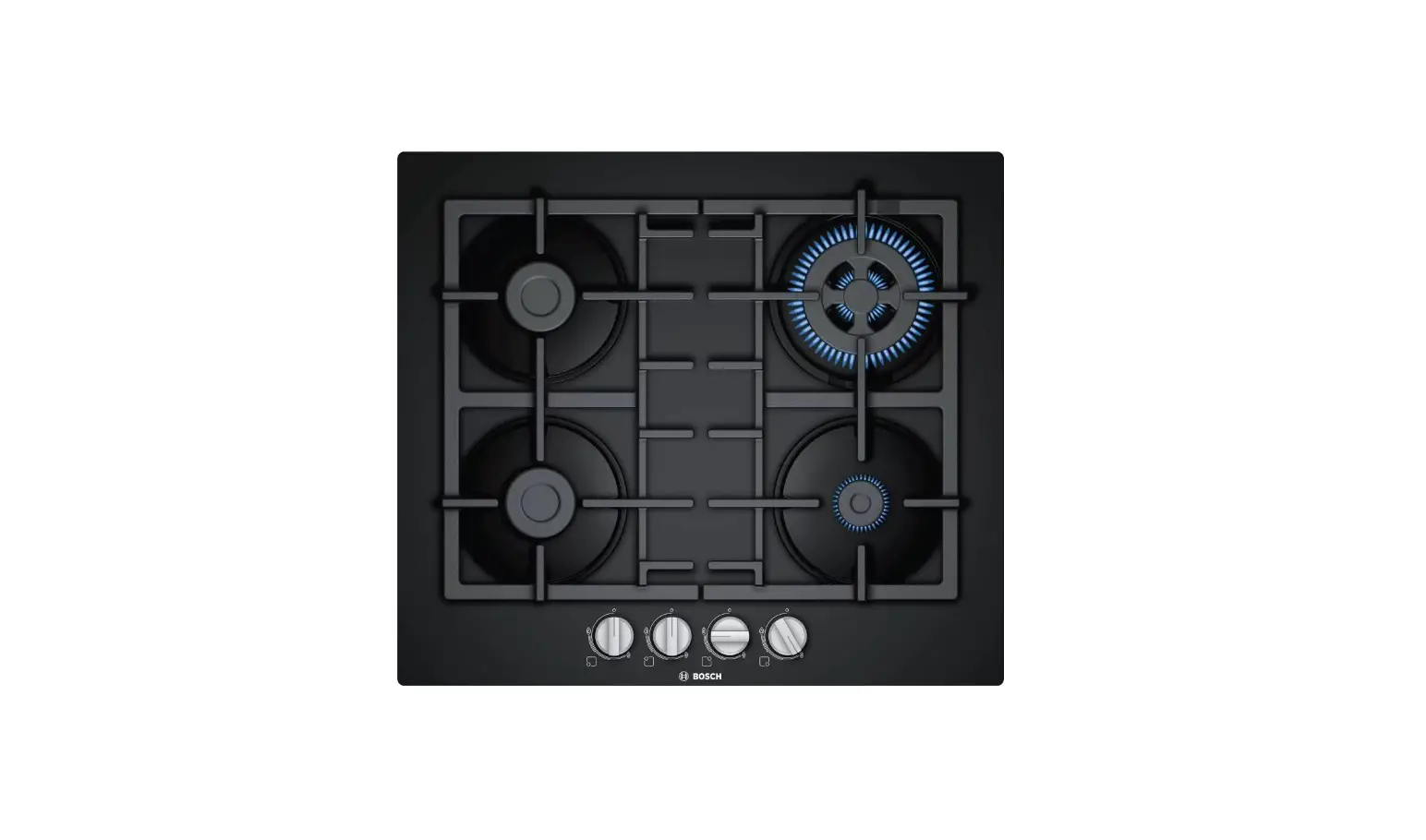
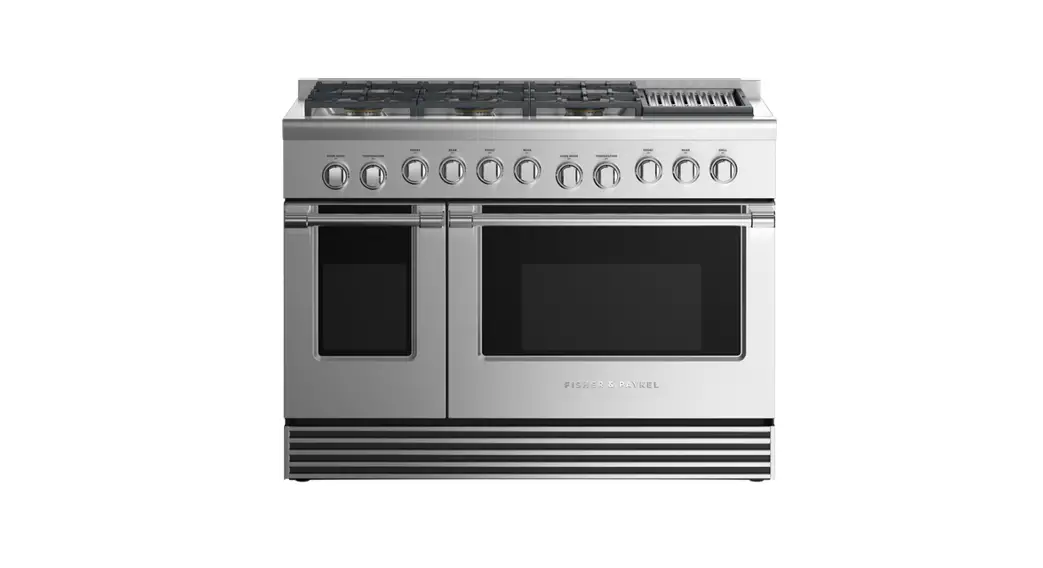
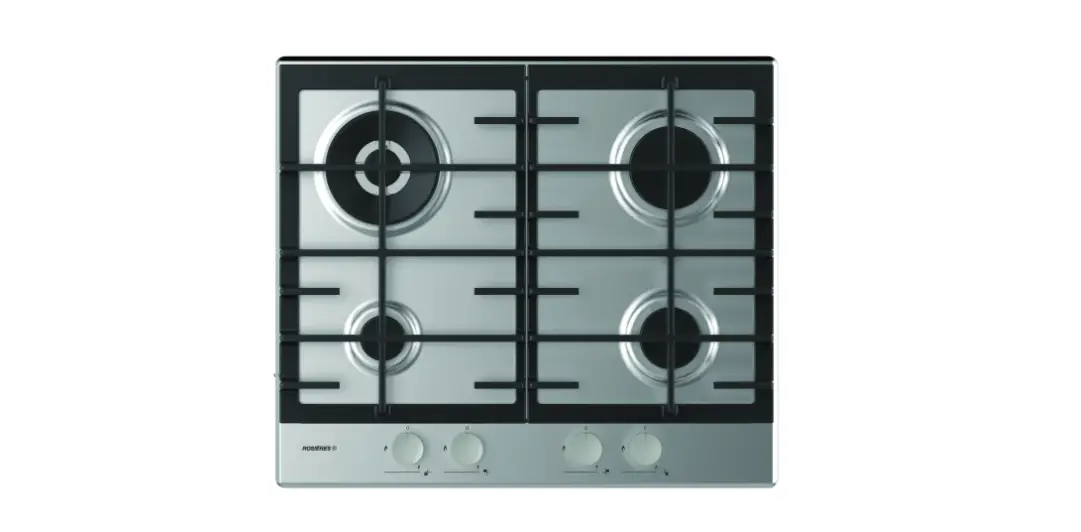
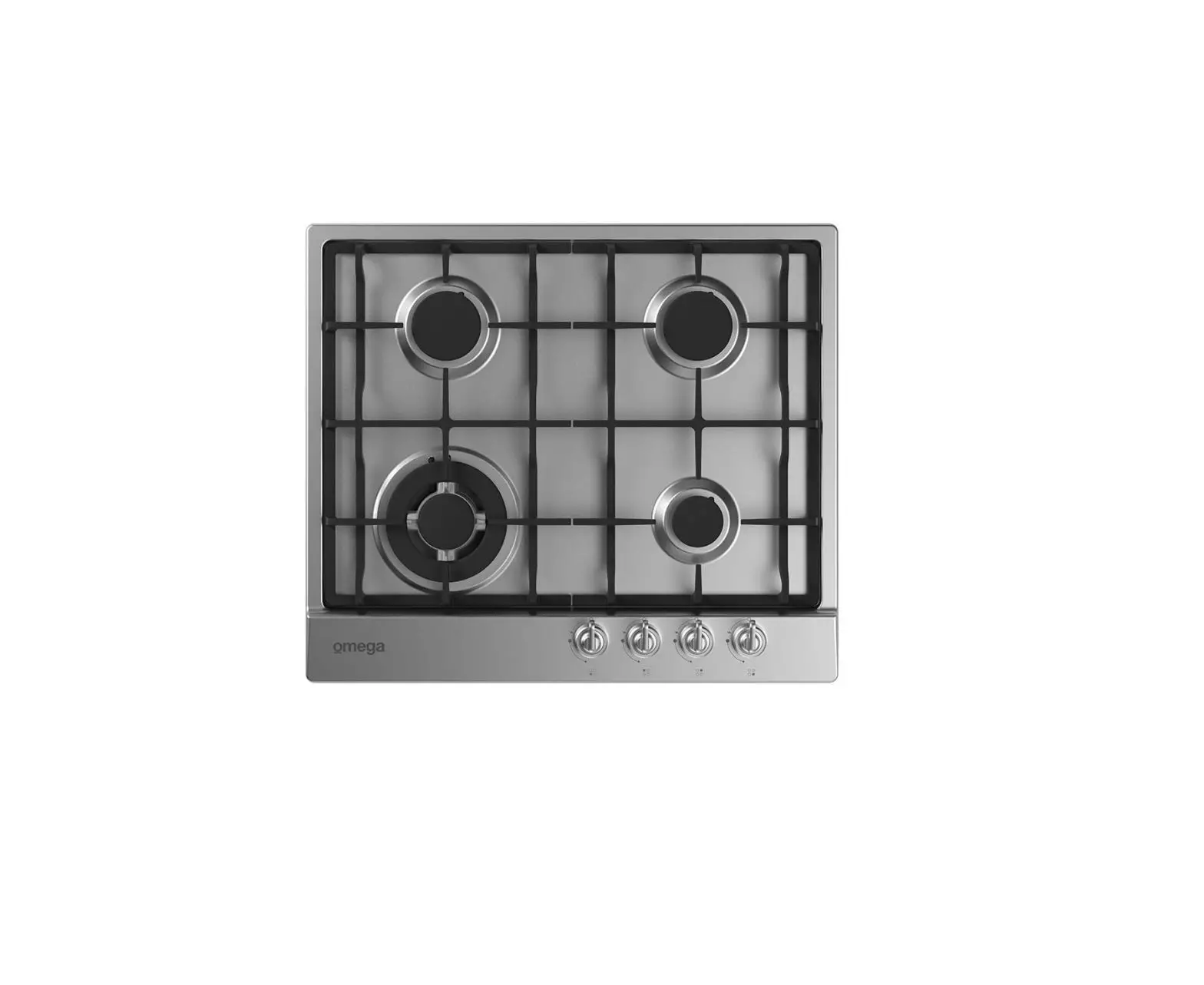
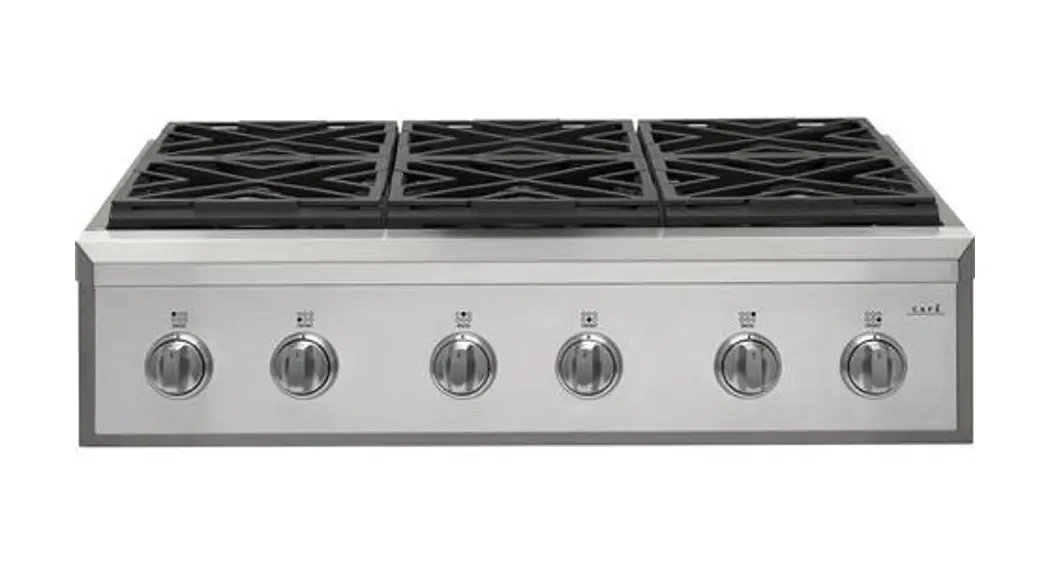
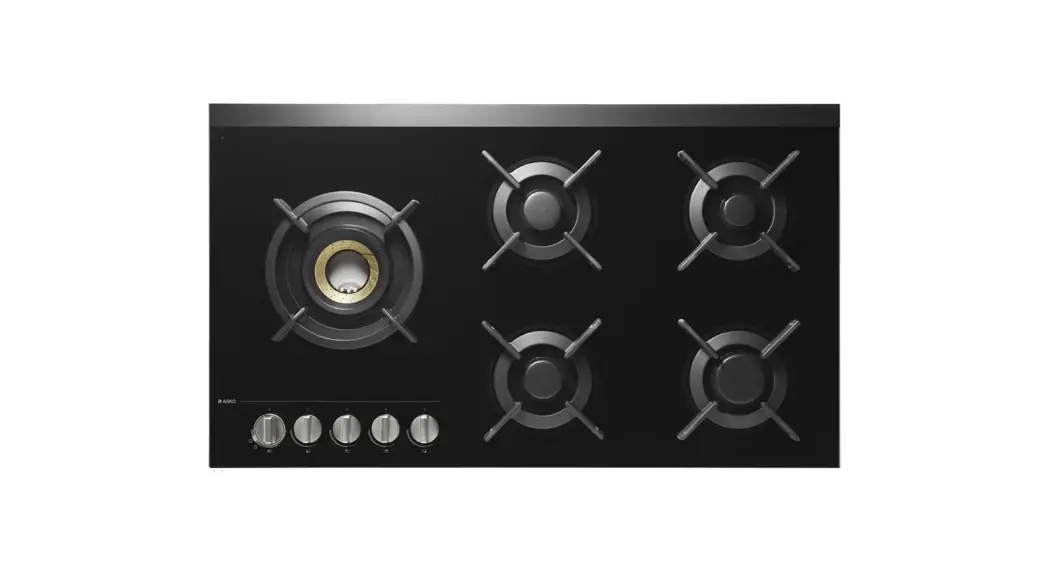
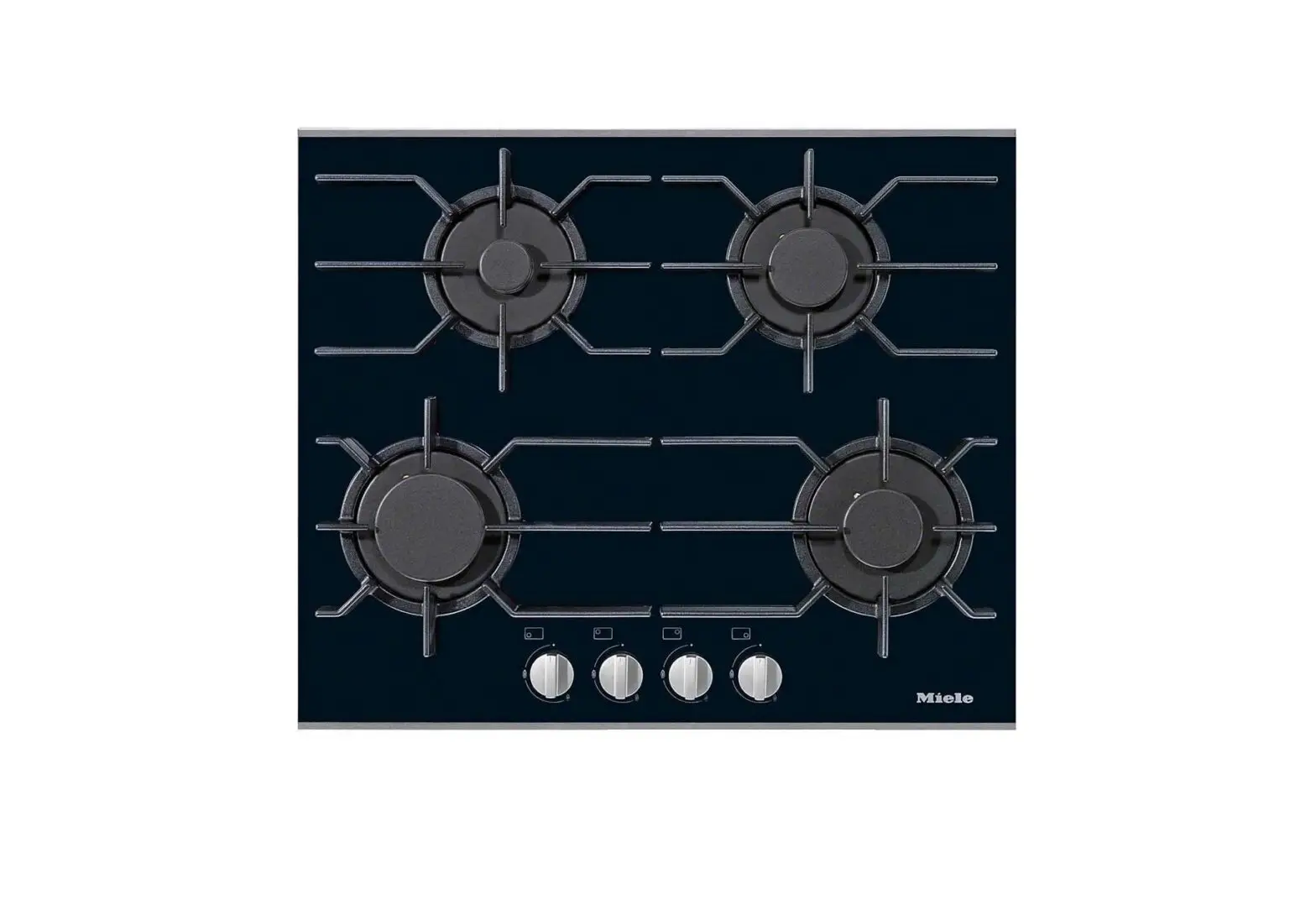
RHG6D5WC5X Gas Plate
Product Information:
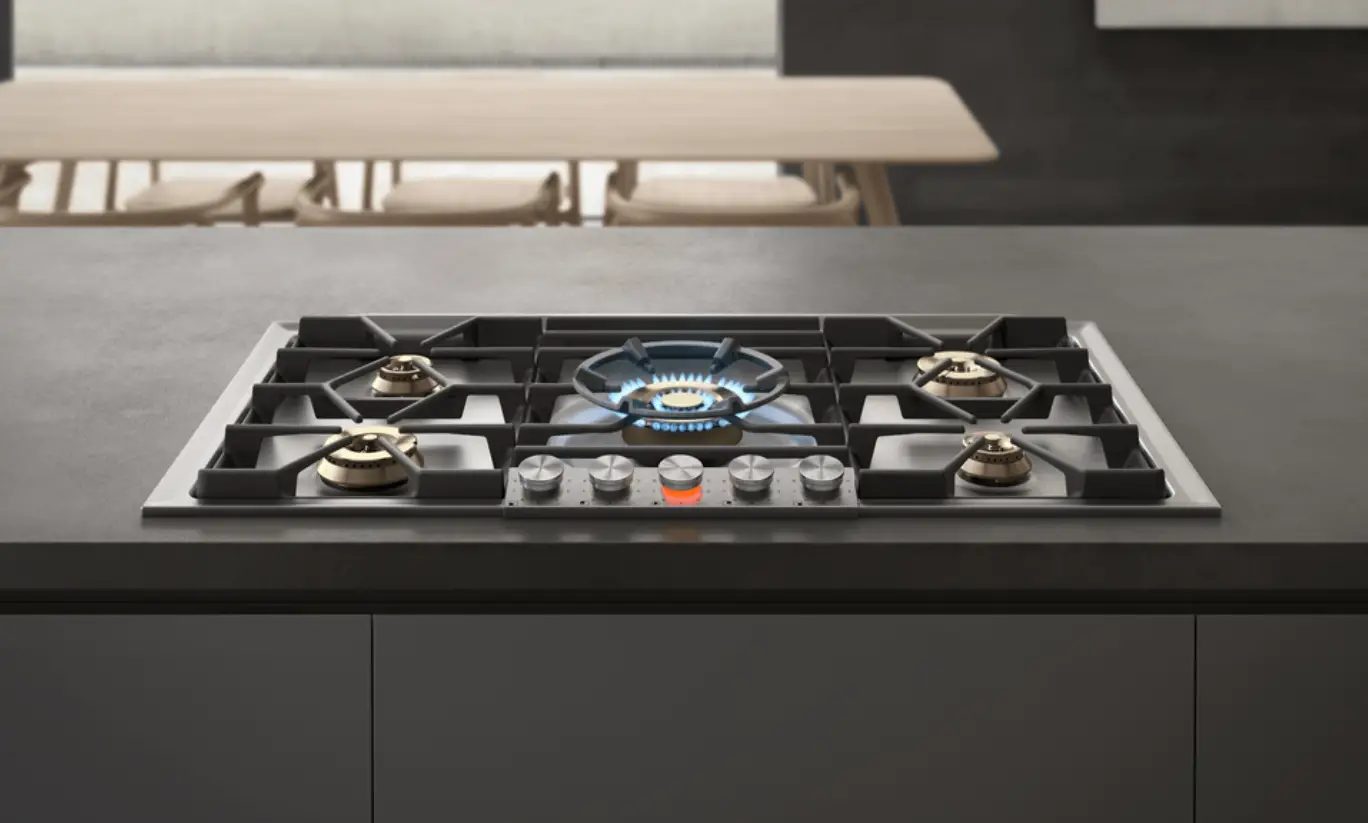
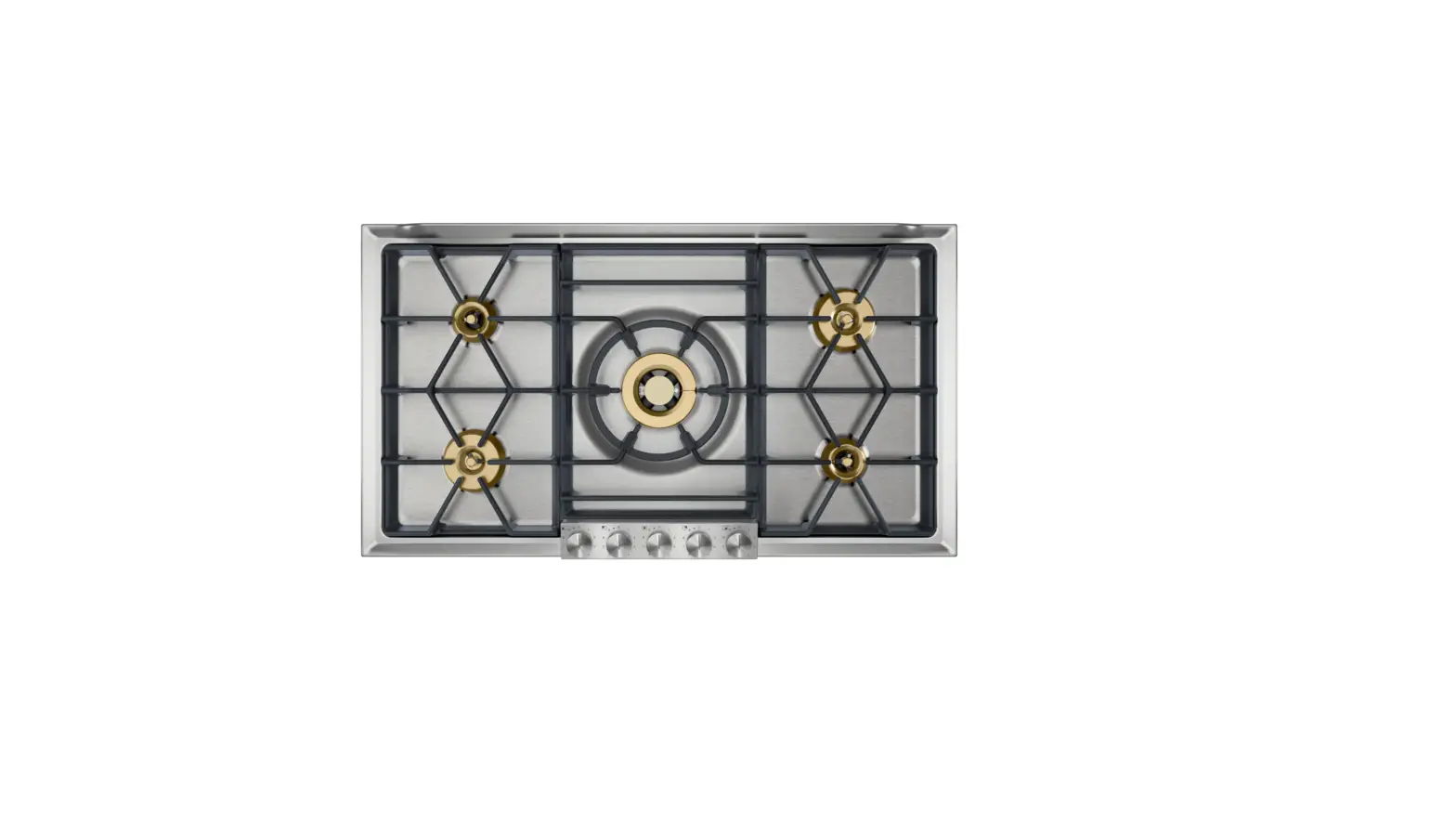
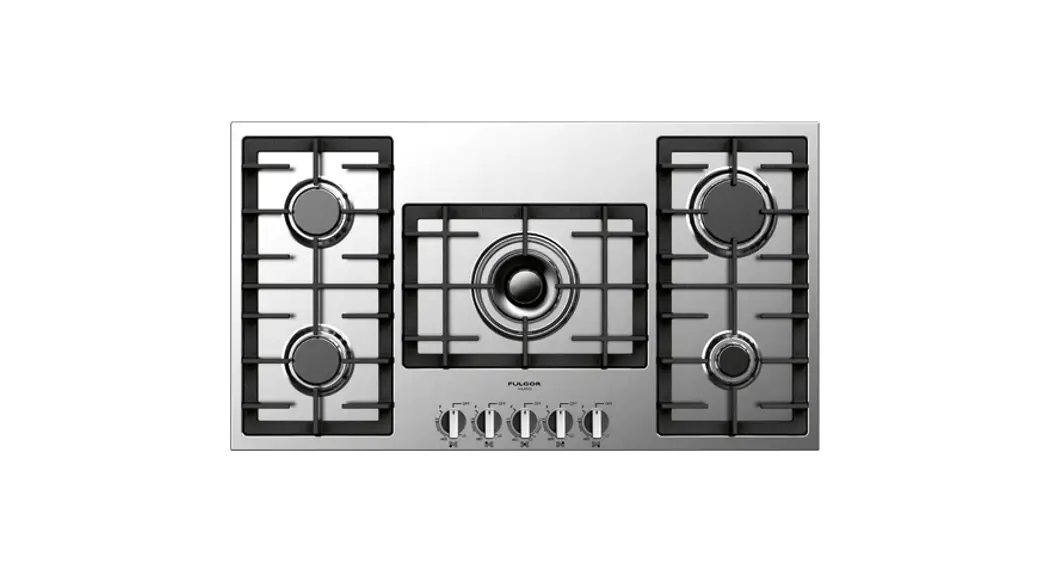
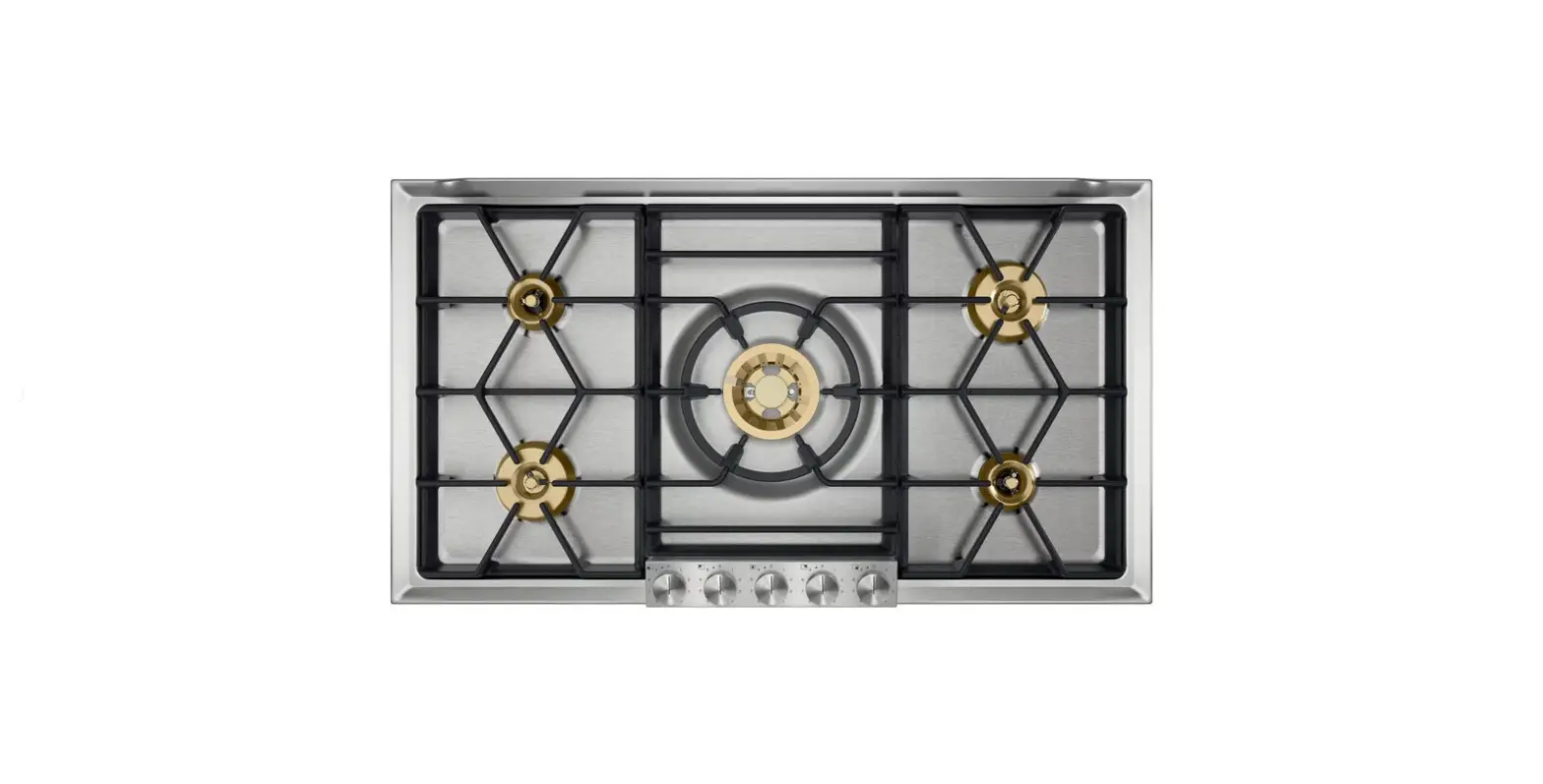
The product is a hob, also known as a cooktop or stove. It is
designed for domestic cooking purposes and comes with both gas and
electrical connections. The hob has multiple burners controlled by
individual knobs, allowing users to adjust the flame intensity. It
is important to note that the product should only be used for its
intended purpose, and any improper use may result in damage or
danger.
Product Usage Instructions:
1. Installation: – For electrical connection, follow the
instructions provided in section 1.1 of the user manual. – For gas
connection, assemble the parts in the specified sequence
illustrated in picture 5. Tighten the joints using a spanner and
ensure that the pipes are properly positioned. Connect fitting C to
the mains gas supply using rigid copper pipe or flexible steel
pipe. – Check for leaks on the pipe connections using a soapy
solution, never using a flame. Also, ensure that the flexible pipe
does not come into contact with any moving parts of the cabinet and
is not at risk of being damaged. – If there is a smell of gas near
the appliance, turn off the gas supply and contact an engineer. Do
not use a naked flame to search for a gas leak. 2. Adapting the Hob
to Different Types of Gas: – This section is not provided in the
text extract. 3. Regulating the Minimum Flame: – This section is
not provided in the text extract. 4. Use of Hob – User
Instructions: – Before using the burner, ensure that the grid is
properly centered on the hob surface. If using cast iron grids,
position them as stated underneath the grid. – The knobs control
each burner individually, as indicated in the serigraphy. There are
10 steps from the highest flame to the lowest flame. Do not switch
from 0 to 1 (clockwise). – To ignite the burner, turn the knob to
the desired flame intensity and keep it pushed for 5 seconds after
ignition. – If the burner does not light after 5 seconds, stop
operating the device and wait at least 1 minute before attempting
another ignition. 5. General Advice: – To achieve the best cooking
results, use cooking vessels with a flat surface that match the
size of the gas burner, as specified in Table A.
HOBS USER INSTRUCTIONS TABLES DE CUISSON NOTICE D’EMPLOI PIANI COTTURA ISTRUZIONI PER L’USO
KOOKPLAATS MANUAL DE UTILIZARE
GB 02 FR 06 IT 10 NL 14
USINES DE ROSIÈRES – 30, rue Y. LACELLE – Rosières – 18400 – Lunery – France
SAFETY INSTURUCTIONS
We recommend you keep the instructions for installation and use for later reference, and before installing the hob, note its serial number in case you need to get help from the after sales service. WARNING: the appliance and its accessible parts become hot during use. Care should be taken to avoid touching heating elements. Children under 8 years of age must be kept away from the appliance unless they are continuously supervised. WARNING: use only hob guards designed by the Manufacturer of the cooking appliance or indicated by the Manufacturer of the appliance in the instructions for use as suitable or hob guards incorporated in the appliance. The use of inappropriate guards can cause accidents. WARNING: unattended cooking on a hob with fat or oil can be dangerous and may result in fire. NEVER try to extinguish a fire with water, but switch off the appliance and then cover flame e.g. with a lid or a fire blanket. WARNING: danger of fire: do not store items on the cooking surfaces. WARNING: if the surface is cracked, do not touch the glass and switch off the appliance to avoid the possibility of electric shock. This appliance can be used by children aged from 8 years and above and people with reduced physical, sensory or mental capabilities or lack of experience and knowledge if they have been given supervision or instruction concerning use of the appliance in a safe way and understand the hazards involved. Children should be supervised to ensure that they do not play with the appliance. Cleaning and user maintenance shall not be made by children without supervision. CAUTION: the cooking process must be supervised. A short term cooking process has to be supervised continuously. It is strongly recommended to keep children away from the cooking zones while they are in operation or when they are switched off, so long as the residual heat indicator is on, in order to prevent the risks of serious burns. This appliance is not intended to be operated by means of an external timer or separate remote control system. If present do not to stare into halogen lamp hob elements. Connect a plug to the supply cable that is able to bear the voltage, current and load indicated on the tag and having the earth contact. The socket must be suitable for the load indicated on the tag and must be having the earth contact connected and in operation. The earth conductor is yellow-green in color. This operation should be carried out by a suitably qualified professional. In case of
incompatibility between the socket and the appliance plug, ask a qualified electrician to substitute the socket with another suitable type. The plug and the socket must be conformed to the current norms of the installation country. Connection to the power source can also be made by placing an omnipolar breaker between the appliance and the power source that can bear the maximum connected load and that is in line with current legislation. The yellow-green earth cable should not be interrupted by the breaker. The socket or omnipolar breaker used for the connection should be easily accessible when the appliance is installed. The disconnection may be achieved by having the plug accessible or by incorporating a switch in the fixed wiring in accordance with the wiring rules. If the supply cord is damaged, it must be replaced by Manufacturer, its service agent or similarly qualified people in order to avoid a hazard. The earth conductor (yellow-green) must be longer than 10 mm on the terminal block side. The internal conductors section should be appropriate to the power absorbed by the hob (indicated on the tag). The type of power cable must be HO5V2V2-F. Do not put metallic objects such as knives, forks, spoons or lids on the hob. They could heat up. Aluminum foil and plastic pans must not be placed on heating zones. After every use, some cleaning of the hob is necessary to prevent the build-up of dirt and grease. If left, this is recooked when the hob is used and burns giving off smoke and unpleasant smells, not to mention the risks of fire propagation. Never use a steam or high pressure spray to clean the appliance. Do not touch the heat zones during operation or for a while after use. Never cook food directly on the glass ceramic hob. Always use the appropriate cookware.Always place the pan in the center of the unit that you are cooking on. Do not place anything on control panel. Do not use the hob as a working surface. Do not use the surface as a cutting board. Do not store heavy items above the hob. If they drop onto the hob, they may cause damage. Do not use the hob for storage of any items. Do not slide cookware across the hob. No additional operation/setting is required in order to operate the appliance at the rated frequencies
02 GB
1. INSTRUCTIONS FOR THE INSTALLER
INSTALLING A DOMESTIC APPLIANCE CAN BE A COMPLICATED OPERATION WHICH IF NOT CARRIED OUT CORRECTLY, CAN SERIOUSLY AFFECT CONSUMER SAFETY. IT IS FOR THIS REASON THAT THE TASK SHOULD BE UNDERTAKEN BY A PROFESSIONALLY QUALIFIED PERSON WHO WILL CARRY IT OUT IN ACCORDANCE WITH THE TECHNICAL REGULATIONS IN FORCE. IN THE EVENT THAT THIS ADVICE IS IGNORED AND THE INSTALLATION IS CARRIED OUT BY AN UNQUALIFIED PERSON, THE MANUFACTURER DECLINES ALL RESPONSIBILITY FOR ANY TECHNICAL FAILURE OF THE PRODUCT WHETHER OR NOT IT RESULTS IN DAMAGE TO GOODS OR INJURY TO INDIVIDUALS.
1.1 BUILDING IN
2.1. ELECTRICAL CONNECTION
The hob may be installed in any worktop which is heat resistant to a temperature of 100°C, and has a thickness of 25-45 mm. The dimensions of the insert to be cut out of the worktop are in shown in
Figure 2. When there is an accessible space between the built-in hob and the cavity below, a dividing wall made of insulating material should be inserted (wood or a similar material) (Figure 3). If the hob is fitted next to a cabinet on either side, the distance between the hob and the cabinet must be at least 15 cm; while the distance between the cut out and the rear wall must be at least 7 cm. The distance between the hob and any other unit or appliance above it (e.g. An extractor hood) must be no less than 70 cm (Figure 4). Metal objects in the drawer may reach high temperatures due to air recirculation. It is therefore recommended to use an intermediate wood panel. Important – The diagram in figure 1 shows how the sealant should be applied. The Hob unit is fitted by attaching the Fixing Clamps supplied, using the holes at the base of the unit. When a 60 cm hob or a 75 cm hob is fitted over a built in oven, the latter must be fan cooled.
1.2. SUITABLE LOCATION
Check the data on the rating plate, located on the outside of the unit, to ensure that the supply and input voltage are suitable. Before connection, check the earthing system. By Law, this appliance must be earthed. If this regulation is not complied with, the Manufacturer will not be responsible for any damage caused to persons or property. If a plug is not already attached, fit a plug appropriate to the load indicated on the rating plate. The earth wire is coloured yellow/green. The plug should always be accessible. Where the Hob is connected direct to the electricity supply, a circuit breaker must be fitted. If the power supply cord is damaged this is to be replaced by a qualified engineer so as to prevent any potential risk. The earth wire ( green and yellow coloured ) must be at least 10 mm longer than the live and neutral wires. The section of the cable used must be of the correct size in relation to the absorbed power of the hob. Please check rating plate for the power details and ensure that the power supply cord is of the type 3×0.75 mm² H05 V2V2-F.
LIVE
L
Mains Supply EARTH
NEUTRAL N
Brown Wire Green/Yellow Wire Blue Wire
Power Cable
This appliance must be installed in accordance with the regulations in force and only used in a well ventilated space. Read the instructions before installing or using this appliance. A gas-powered cooking appliance produces heat and humidity in the area in which it is installed. For this reason you should ensure good ventilation either by keeping all natural air passages open or by installing an extractor hood with an exhaust flue. Intensive and prolonged use of the appliance may require extra ventilation, such as the opening of a window or an increase in speed of the electric fan, if you have one. If a hood can not be installed, an electric fan should be fitted to an outside wall or window to ensure that there is adequate ventilation. The electric fan should be able to carry out a complete change of air in the kitchen 3-5 times every hour. The installer should follow the relevant national standards.
2. ELECTRICAL CONNECTION (FOR U.K. ONLY)
Warning – this appliance must be earthed This appliance is designed for domestic use only. Connection to the main supply must be made by a competant electrician, ensuring that all current regulations concerning such installations are observed. The appliance must only be connected to a suitably rated spur point, a 3 pin 13 amp plug/socket is not suitable. A double pole switch must be provided and the circuit must have appropriate fuse protection. Further details of the power requirement of the individual product will be found in the users’ instruction and on the appliance rating plate. In the case of built-in product you are advised, should you wish to use a longer cable than the one supplied, that a suitably rated heat resistant type must be used.
The wiring must be connected to the mains supply as follows:
CONNECT
TO SPUR TERMINAL
Green & Yellow Wire
Earth Connection
Blue Wire
Neutral Connection
Brown Wire
Live Connection
Note: We do not advocate the use of earth leakage devices with electric cooking appliances installed to spur points because of the «nuisance tripping» which may occur. You are again reminded that the appliance must be correctly earthed, the manufacturer declines any responsibility for any event occurring as a result of incorrect electrical installation.
If an appliance is not fitted with a supply cord and a plug, or with other means for disconnection from the supply mains having a contact separation in all poles that provide full disconnection under overvoltage category III conditions, the instructions shall state that means for disconnection must be incorporated in the fixed wiring in accordance with the wiring rules.
2.2. GAS CONNECTION
These instructions are for qualified personnel, installation of equipment must be in line with the relevant national standard. (For U.K. only: by law the gas installationcommissioning must be carried out by a “Gas Safe” installer) All work must be carried out with the electricity supply disconnected. The rating plate on the hob shows the type of gas with which it is designed to be used. Connection to the mains gas supply or gas cylinder should be carried out after having checked that it is regulated for the type of gas with which it will be supplied. If it is not correctly regulated see the instructions in the following paragraphs to change gas setting. For liquid gas (cylinder gas) use pressure regulators which comply with the relevant national standards. Use only pipes,washers and sealing washers which comply with the relevant national standards.
For some models a conic link is furnished to outfit for the installation in the countries where this type of link is obligatory; in picture 7 it is pointed out how to recognize the different types of links (CY = cylindrical, CO = conic). In every case the cylindrical part of the link has to be connected to the hob. When connecting the hob to the gas supply via use offlexible hoses please ensure that the maximum distance covered by the hose does not exceed 2 metres. The flexible tube shall be fitted in such a way that it cannot come into contact with a moveable part of the housing unit (e.g. a drawer) and does not pass through any space where it may become crushed/ kinked or damaged in any way.
To prevent any potential damage to the hob please carry out the installation following this sequence (picture 5):
1)As illustrated, assemble parts in sequence: A: 1/2 Male Adaptor Cylindirical B: 1/2 Seal C: 1/2 Female Gas Adaptor Conical-Cylindirical or
Cylindirical-Cylindirical
03 GB
2)Tighten the joints with the spanner, remembering to twist the pipes into position.
3)Attach fitting C to mains gas supply using rigid copper pipe or flexible steel pipe.
IMPORTANT: carry out a final check for leaks on the pipe connections using a soapy solution. NEVER USE A FLAME. Also, make sure that the flexible pipe cannot come into contact with a moving part of the cabinet (eg.adrawer) and that it is not situated where it could be damaged.
Warning: If gas can be smelt in the vicinity of this appliance turn off the gas supply to the appliance and call the engineer directly. Do not search for a leak with a naked flame.
2.3. ADAPTING THE HOB TO DIFFERENT TYPES OF GAS
To adapt the Hob for use with different types of gas, carry out the following instructions: ·Remove the grids and burners ·Insert on hexagonal spanner (7 mm) into the burner support (Figure 6) ·Unscrew the injector and replace it with one suitable for the gas to be used (see gas type table)
2.4. REGULATING THE MINIMUM FLAME
After lighting the burners, turn the control knob to the minimum setting and then remove the knob (this can easily be removed by applying gentle pressure). Using a small «Terminal» type screwdriver the regulating screw can be adjusted as in Figure 8. Turning the screw clockwise reduces the gas flow, whilst turning it anticlockwise increases the flow Use this adjustment to obtain a flame of approximately 3 to 4 mm in length and then replace the control knob. When the gas supply available is LPG – the screw to set the idle flame must be turned (clockwise) to the end stop. When you have carried out the new gas regulation, replace the old gas rating plate on your appliance with one (supplied with hob) suitable for the type of gas for which it has been regulated.
3. USE OF HOB – USER INSTRUCTIONS
This appliance must only be used for the purpose for which it is intended, domestic cooking, and any other use will be considered improper and could therefore be dangerous. The Manufacturer will not be responsible for any damage or loss resulting from improper use.
Before using burner, be sure, grid perimeters center the burner as below figure. If you are using Cast Iron Grids; underneath the grid, position of it is stated. Be sure for the exact grid is used in correct position.
3.1. USING THE GAS BURNER
Prior to switching on the gas hob ensure that the burner caps are correctly placed within their position. This hob is fitted with electronic ignition to ignite the burner. To ignite the burners carry out the following: · Push in and turn anticlockwise to the larger flame symbol or in position 10 and keep pushed 5 seconds after ignition. The ignition system will continue to generate sparks as long as the control knob is being pressed Warning: If there is no electricity on appliance to ignite the burner a match or a lighter should be used carrying out the out the following: · Place a lighted match or lighter close to the burner · Push in and turn the knob anticlockwise to the larger flame symbol
or in position 10 and keep pushed 5 seconds after ignition Warning: In any case if after 5 seconds the burner has not lit, stop operating the device and wait at least 1 min before attempting a further ignition of the burner.
KNOBS CONTROL
Each knob controls each burner as showed in the serigraphy. The knobs have 10 steps from highest flame to lowest flame. Never try to switch from 0 to 1 (clockwise)
Indicators Burner controlled by control knob
Switched-off burner
Highest power setting and electric ignition 0
Lowest power setting
GENERAL ADVISE
For best results, use cooking vessels with a flat surface. The size of the surface should match the gas burner side as follows. Table A.
Burner Type
Ø pan/pot Power G20/20 mbar G30/28-30 mbar
(cm)
(kW) (methane)
(LPG)
AUX Auxiliary 10 – 18 1,00
95 l/h
73 g/h
SR Semi Rapid 12 – 22 1,75
167 l/h
127 g/h
R Rapid
16 – 26 2,70
257 l/h
196 g/h
DC 5 kW MONO
16 – 26
5,00 NG 4,6 LPG
476 l/h
334 g/h
Table A
For smaller containers the gas burner should be regulated so that the flame does not overlap the base of the pan. Vessels with a concave or convex base should not be used. WARNING: If a flame is accidentally extinguished, turn the knob to the off position and do not attempt to re-ignite if for at least 1 minute. If over the years the gas taps become stiff to turn it is necessary to lubricate them. Such operation must be carried out only by qualified Service Engineers.
04 GB
4. MAINTENANCE AND CLEANING
Before cleaning the hob, ensure the appliance has cooled down. Remove the plug from the socket or (if connected directly) switch off the electricity supply.
Cleaning and user maintenance shall not be made by children without supervision
Never use abrasives, corrosive detergents, bleaching agents or acids. Avoid any acid or alkaline substances (lemon, juice, vinegar etc.) on the enamelled, varnished or stainless steel sections.
When cleaning the enamelled, varnished or chrome sections, use warm soapy water or a non caustic detergent. For stainless steel use an appropriate cleaning solution.
The burners can be cleaned with soapy water. To restore their original shine, use a household stainless steel cleaner. After cleaning, dry the burners and replace. It is important the Burners are replaced correctly. Chromed grids and burners Chromed grids and burners have a tendency to discolour with use. This does not jeopardize the functionality of the hob.
Our After Sales Service Centre can provide spare parts if required.
5. AFTERCARE
Before calling out a Service Engineer please check the following: · that the plug is correctly inserted and fused; · that the gas supply is not faulty.
If the fault cannot be detected: Switch off the appliance and call the After Service Centre. DO NOT TAMPER WITH THE APPLIANCE.
6. PROTECTION OF THE ENVIRONMENT
This appliance is marked according to the European directive 2012/19/EU on Waste Electrical and Electronic Equipment (WEEE). WEEE contains both polluting substances (which can cause negative consequences for the environment) and basic components (which can be re-used). It is important to have WEEE subjected to specific treatments, in order to remove and dispose properly all pollutants, and recover and recycle all materials. Individuals can play an important role in ensuring that WEEE does not become an environmental issue; it is essential to follow some basic rules: · WEEE shall not be treated as household waste. · WEEE shall be handed over to the relevant collection points managed by the municipality or by registered companies. In many countries, for large WEEE, home collection could be present. · When you buy a new appliance, the old one may be returned to the retailer who has to collect it free of charge on a one-to-one basis, as long as the equipment is of equivalent type and has the same functions as the supplied equipment.
Declaration of compliance: This equipment, in the parts intended to come into contact with food, complies with the regulations laid down in EEC directives 89/109.
The appliance complies with European Directive 2009/142/EC (GAD) and starting from 21/04/2018 with Gas Appliances Regulation 2016/426 (GAR).
By placing the
mark on this product, we are confirming
compliance to all relevant European safety, health and environmental
requirements which are applicable in legislation for this product.
The Manufacturer will not be responsible for any inaccuracy resulting from printing or transcript errors contained in this brochure. We reserve the right to carry out modifications to products as required, including the interests of consumption, without prejiudice to the characteristics relating to safety or function.
Burner Plate Burner Type FFD AUX 1kW SR 1.75 kW R 2,7 kW DC 5 kW Mono
Nominal Heat Input
G20/20 mbar G30/28-30 mbar Installation Class Voltage V/Frequency Hz Electrical Input Power Electric Ignition Product Dimension
4Gas – L1 – Diamond AUX/SR/R/DC UH60MF YES 1 1 1 1 NG 10,45 kW LPG 10,05 kW 995 l/h 730 g/h 3
220-240V 50/60Hz 1 YES
595x505x42
5Gas – L2 – CENTRAL WOK AUX/SR/2R/DC UH75MF YES 1 1 2 1 NG 13,15 kW LPG 12,75 kW 1252 l/h 926 g/h 3
220-240V 50/60Hz 1 YES
745x505x42
This appliance has been designed for non-professional, i.e. domestic, use.
05 GB
5Gas – L3 – 4+1 AUX/2SR/R/DC
UH75MF YES 1 2 1 1
NG 12,20 kW LPG 11,80 kW
1162 l/h 857 g/h
3 220-240V 50/60Hz
1 YES 745x505x42
Table 1
CONSIGNES DE SÉCURITÉ Nous vous recommandons de conserver les instructions d’installation et d’utilisation pour pouvoir les consulter ultérieurement. Avant d’installer la table de cuisson, notez son numéro de série, au cas où vous auriez besoin de l’aide du service après-vente. AVERTISSEMENT : l’appareil et ses parties accessibles chauffent pendant l’utilisation. Évitez de toucher les éléments chauffants. Les enfants de moins de 8 ans doivent être tenus hors de portée de l’appareil, sauf s’ils sont surveillés en permanence. AVERTISSEMENT : n’utilisez qu’un dispositif de protection de votre table de cuisson conçu par le fabricant de votre appareil ou indiqué, dans le manuel d’utilisation, comme étant compatible, ou bien le dispositif de protection fourni avec l’appareil. L’utilisation d’un dispositif de protection non approprié peut causer des accidents. AVERTISSEMENT : l’utilisation de la table de cuisson sans surveillance avec manipulation de graisse ou d’huile peut être dangereux et provoquer un incendie. N’essayez JAMAIS d’éteindre un feu avec de l’eau, mais éteignez l’appareil, puis couvrez la flamme avec un couvercle ou une couverture anti-feu, par exemple. AVERTISSEMENT, risque d’incendie : ne stockez pas d’éléments sur les surfaces de cuisson. AVERTISSEMENT : si la surface est fissurée, ne touchez pas le verre de la table et éteignez l’appareil pour éviter tout risque d’électrocution. Cet appareil peut être utilisé par des enfants âgés de 8 ans et plus, par des personnes dont les capacités physiques, sensorielles ou mentales sont réduites ou par des personnes dénuées d’expérience et de connaissances, mais qui ont été informées sur la manière d’utiliser l’appareil en toute sécurité, si elles comprennent les risques impliqués. Surveillez les enfants afin qu’ils ne jouent pas avec l’appareil. L’entretien et le nettoyage ne doivent pas être effectués par des enfants sans surveillance. ATTENTION : la cuisson demande d’être surveillée. Les cuissons de courte durée doivent être surveillées en permanence. Il est chaudement recommandé d’éloigner les enfants de la zone de cuisson lorsqu’elle fonctionne ou même quand elle est éteinte, mais que l’indicateur de chaleur résiduelle est encore visible, afin d’éviter tout risque de brûlures graves. Cet appareil n’est pas conçu pour être actionné par un temporisateur externe ou un système séparé de commande à distance. Si votre table de cuisson est dotée d’éléments halogènes, n’en fixez pas la lumière. Brancher le câble d’alimentation sur une prise de courant qui supporte le voltage (le courant et la charge sont indiqués sur l’étiquette) et vérifier la présence d’une mise à la terre. La prise d’alimentation doit supporter la charge indiquée sur l’étiquette et être dotée d’une mise à la terre en état de fonctionnement. Le câble conducteur de mise à la terre est jaune et vert. Cette opération doit être exécutée par du personnel qualifié. En cas d’incompatibilité entre la prise d’alimentation et la fiche du câble de l’appareil, demander à un électricien professionnel de remplacer la prise d’alimentation par un dispositif compatible. La
fiche du câble d’alimentation et la prise d’alimentation doivent être conformes aux normes en vigueur dans le pays d’installation. Il est possible de brancher l’appareil à la prise d’alimentation en installant un disjoncteur multipolaire qui supporte la charge électrique maximale, conformément aux lois en vigueur, entre l’appareil et la prise d’alimentation. Le conducteur jaune et vert de mise à la terre ne doit pas être bloqué par le disjoncteur. La prise d’alimentation ou le disjoncteur multipolaire utilisé pour le branchement doit rester à tout moment accessible lors de l’installation de l’appareil. Le débranchement doit se faire en accédant à la prise d’alimentation ou en prévoyant un interrupteur sur le circuit électrique fixe, conforme aux normes électriques. Si le câble d’alimentation est endommagé, il doit être remplacé par le fabricant, son agent d’entretien ou des personnes dotées du même type de qualification, afin d’éviter tout risque. Le conducteur de mise à la terre (jaune et vert) doit être plus long de 10 mm du côté de la plaque à bornes. Le diamètre interne du câble conducteur doit être proportionné à la puissance absorbée par la table de cuisson (indiquée sur l’étiquette). Le câble d’alimentation requis est le suivant : H05V2V2-F. Ne déposez jamais d’objets en métal, tels que des couteaux, fourchettes, cuillers ou couvercles sur la table de cuisson. Ils pourraient devenir brûlants. Ne posez jamais de papier aluminium ou de récipients en plastique sur les zones chauffantes. Après chaque utilisation, il convient de nettoyer la table de cuisson, afin d’éviter l’accumulation de saleté et de graisse. Dans le cas contraire, les résidus risquent de brûler lors de la prochaine utilisation de la table de cuisson, causant fumées et odeurs déplaisantes, pour ne pas mentionner les risques d’incendie. N’utilisez jamais de vaporisateur, ni de jet à haute pression pour nettoyer l’appareil. Ne touchez pas les zones chauffantes pendant qu’elles fonctionnent, ni pendant un certain temps après leur utilisation. Ne faites jamais cuire d’aliments directement sur la table de cuisson vitrocéramique. Utilisez toujours des ustensiles de cuisson adéquats. Placez toujours votre casserole au centre du foyer que vous utilisez. Ne déposez jamais aucun objet sur le panneau de commande. N’utilisez jamais votre table de cuisson comme plan de travail. N’utilisez pas la surface de la table de cuisson comme planche à découper. Ne rangez pas d’objets lourds sur votre table de cuisson. S’ils tombaient sur la table de cuisson, ils risqueraient de l’endommager. N’utilisez pas la table de cuisson pour ranger des objets. Ne faites pas glisser d’ustensiles de cuisine sur la table de cuisson. Aucun réglage/opération supplémentaire n’est requis pour faire fonctionner l’appareil aux fréquences nominales
06 FR
1. INSTALLATION
La mise en place fonctionnelle des appareils ménagers dans leur environnement est une opération délicate qui, si elle n’est pas correctement effectuée, peut avoir de graves conséquences sur la sécurité des consommateurs. Dans ces conditions, il est impératif de confier cette tâche à un professionnel qui la réalisera conformément aux normes techniques en vigueur. Si malgré cette recommandation, le consommateur réalisait lui-même l’installation, le constructeur déclinerait toute responsabilité en cas de défaillance technique du produit entraînant ou non des dommages aux biens et/ou aux personnes.
1.1. ENCASTREMENT
Le meuble ou le support dans lequel doit être encastrée la table, ainsi que les parois du meuble qui pourraient juxtaposer celui-ci, doivent être d’une matière résistant à une température élevée (jusqu’à 100°C) et d’une épaisseur comprise entre 25 et 45 mm. Les dimensions d’encastrement sont indiquées sur le schéma 2. Si, en fonction de l’installation de la table, la partie inférieure de son caisson se trouve à proximité d’une zone normalement accessible lors de manipulations et/ou de rangements, placer une cloison (bois ou similaire) pour éviter tous risques de brûlure ou de détérioration (schéma 3). Si la plaque de cuisson est installée juste à côté d’un meuble, la distance entre la plaque de cuisson et le meuble doit être d’au moins 15 cm, tandis que la distance entre la découpe et le mur situé à l’arrière doit être d’au moins 7 cm. La distance entre la découpe et la paroi arrière doit être d’au moins 7 cm. La distance entre la table et tout autre appareil ou meuble situé au dessus (par exemple une hotte) doit être au moins de 70 cm (voir schéma 4). Les objets en métal contenus dans le tiroir peuvent atteindre une température très élevée, à cause du système de recirculation d’air. Il est donc recommandé d’interposer un panneau en bois. Attention : Lors de la mise en place, un soin particulier doit être porté au joint entourant le bord de la table afin d’éviter toute infiltration dans le meuble support (schéma 1). Lors de la mise en place du joint sur la partie arrière, veiller à ne pas obstruer les passages d’air nécessaires à la combustion. Le caisson de la table est équipé en dessous de 4 emplacements prévus pour recevoir les brides de fixation destinées à l’immobilisation de la table sur le meuble. Placer les 4 brides de fixation de manière à ce que la table de travail soit parfaitement plaquée au meuble.
Si c’est une table de 60 cm ou 75 cm de large qui est installée audessus du four, ce dernier doit être équipé d’une ventilation tangentielle
1.2. CARACTERISTIQUES REQUISES
Cet appareil doit être installé en conformité avec la réglementation en vigueur et utilisé uniquement dans un espace ventilé. Lisez les instructions avant d’installer ou utiliser cet appareil. Une utilisation intensive et prolongée de l’appareil peut requérir une ventilation plus importante, telle que l’ouverture d’une fenêtre ou une puissance d’aspiration plus intense de la VMC si vous en êtes équipés. S’il n’est pas possible d’installer une hotte, une VMC devrait être installée sur un mur donnant sur l’extérieur ou sur une fenêtre. La VMC devrait être en mesure d’apporter un changement complet de l’air de la cuisine 3 à 5 fois par heure. L’installateur doit installer la VMC conformément aux règles en vigueur dans le pays d’installation.
2.1. RACCORDEMENT ELECTRIQUE
“L’installation recevant l’appareil cité en référence doit être conforme à la norme en vigueur dans le pays d’installation”. Le constructeur décline toute responsabilité en cas de non respect de cette disposition. Vérifier les données sur la plaque signalétique, située à l’extérieur de l’unité, pour assurer que l’alimentation et le voltage conviennent. Avant le branchement, vérifier le système de mise à la terre. Attention : vérifier la continuité de la terre de l’installation avant de procéder au raccordement. Notre responsabilité ne saurait être engagée pour tout incident ou ses conséquences éventuelles qui pourraient survenir à l’usage d’un appareil non relié à la terre, ou relié à une terre dont la continuité serait défectueuse. Si une prise n’est pas déjà fournie, installer une prise appropriée pour la charge indiquée sur la plaque signalétique. La prise devrait toujours être accessible. Le fil de terre est de couleur jaune / vert. Lorsque la table de cuisson est reliée directement à l’approvisionnement en électricité, un disjoncteur doit être installé. Si le cordon d’alimentation est endommagé, il doit être remplacé par un technicien qualifié afin d’éviter tout risque potentiel.
Le fil de terre (couleur vert et jaune) doit être au moins 10mm plus long que les fils de phase et neutre. La section du câble utilisé doit être de la bonne taille par rapport à la puissance absorbée de la table de cuisson. Veuillez vérifier la plaque signalétique pour les détails de puissance et veiller à ce que le cordon d’alimentation électrique soit de type 3×0.75 mm² l’H05 V2V2-F.
Alimentation
PHASE L TERRE NEUTRE N
Fil Marron Fil Vert/jaune Fil Bleu
Câble électrique d’alim
Un système de déconnexion doit être incorporé dans le compteur conformément aux règles de câblage.
2.2. RACCORDEMENT GAZ
L’appareil doit être installé et raccordé conformément aux règles En vigueur dans le pays d’installa-tion. Une attention particulière sera accordée aux dispositions applicables en matière De ventilation. Tous les travaux d’installation doivent être effectués avec l’électricité déconnectée. La plaque signalétique sur la plaque indique le type de gaz qui doit être utilisé. Le raccordement au réseau d’approvisionnement en gaz cylindre doit être effectuée qu’après avoir vérifié qu’il est réglementé pour le type de gaz avec lequel il sera distribué. S’il n’est pas correctement réglementé, voir les instructions dans les paragraphes suivants pour modifier les paramètres du gaz. Pour le gaz liquide (bouteille de gaz), utiliser des régulateurs de pression conformes aux normes en vigueur. Utilisez uniquement des tuyaux, des rondelles et des rondelles d’étanchéité conformes aux normes en vigueur. Pour certains modèles un lien conique est fourni pour installation l’appareil, dans les pays où ce type de lien est obligatoire ; sur le schéma 8, il est indiqué comment reconnaître les différents types de liens (CY = cylindrique, CO = conique). Dans tous les cas, la partie cylindre du lien doit être connecté à la table. Lorsque vous connectez la table de cuisson à l’alimentation du gaz via l’utilisation de tuyaux flexibles, veuillez faire en sorte que la distance maximum couverte par le tuyau ne dépasse pas 2 mètres. Le tube flexible doit être installé de manière à ne pas entrer en contact avec un élément mobile de la cuisine (par exemple un tiroir) et à ne pas passer dans un espace pouvant être encombré. Pour éviter tout dommage potentiel à la table de cuisson, veuillez effectuer l’installation suivant les indications du schéma 5.
1) Comme illustré dans le schéma, assembler les pièces en séquence : A: ½ Adaptateur Cylindrique mâle B: ½ Obturation C: ½ Adaptateur gaz Femelle conique-cylindrique ou cylindriquecylindrique. 2) Serrer les joints avec des clés à molette, pensez à placer les tuyaux en position. 3) Fixer le raccord C au réseau d’approvisionne-ment en gaz à l’aide tuyau rigide ou en acier flexi-ble.
IMPORTANT: effectuer une dernière vérification pour détecter les fuites sur les raccords de tuyauterie en utilisant une solution savonneuse. Ne jamais utiliser une flamme. Aussi, assurez vous que le tuyau flexible ne peut pas entrer en contact avec une partie mobile du meuble de cuisine (par exemple un tiroir) et qu’il ne se trouve pas à un endroit où il pourrait être endommagé.
Attention: Si vous sentez des émanations de gaz en provenance de l’appareil, coupez immédiatement l’alimentation en gaz et appelez directement une personne qualifiée. Ne cherchez pas une fuite à l’aide d’une flamme.
07 FR
2.3. ADAPTER LA TABLE A DIFFERENTS TYPES DE GAZ
Pour adapter la table de cuisson à différents types de gaz, veuillez exécuter les instructions suivantes: · Enlever les grilles, chapeaux et corps de brûleurs · Insérez une clé à pipe (7 mm) dans le support du brûleur (schéma 6) · Dévisser le/les injecteurs et le/les remplacer par un/des injecteurs adaptés au gaz à utiliser (voir le type de gaz préconisé sur la table) · Visser le/les injecteurs à fond · Régler la bague d’air · Replacer les corps de brûleurs, le chapeau de brûleur et les grilles.
2.4. REGULER LA FLAMME AU MINIMUM
Après l’allumage du brûleur, tourner le bouton de commande au réglage minimum, puis enlever la manette de commande (ce qui peut facilement être enlevé par appliquer une légère pression). En utilisant un petit «Terminal » type tournevis, la vis de réglage peut être ajustée (cf Schéma 8). En tournant la vis dans le sens des aiguilles d’une montre, cela réduit le débit de la flamme, alors qu’en tournant dans le sens inverse, cela l’augmente. Utilisez ce réglage pour obtenir une flamme d’environ 3 à 4 mm de longueur, puis replacer la manette de commande. Lorsque l’approvisionnement en gaz disponible est du butane/propane (gaz de bouteilles), la vis pour régler la flamme au ralenti doit être tournée dans le sens des aiguilles d’une montre, jusqu’à la butée.
Lorsque vous avez effectué la régulation du gaz, remplacer l’ancienne plaque signalétique de votre appareil avec celle adaptée au type de gaz installé (fournie avec plaque de cuisson).
3. UTILISATION DE LA TABLE
Cet appareil ne doit être utilisé que pour des fins pour lesquelles il est destiné : la cuisson domestique. Toute autre utilisation sera considérée comme abusive et peut donc être dangereuse. Le fabricant ne sera pas responsable pour tout dommage ou perte découlant d’une utilisation abusive.
Avant d’utiliser le brûleur, assurez-vous que les périmètres de la grille centrent le brûleur tel qu’illustré à la figure ci-dessous. Si vous utilisez des grilles en fonte; sous la grille, leur position est indiquée. Assurez-vous que la grille adéquate est utilisée dans la bonne position.
secondes après l’allumage. Le système d’allumage continue de générer des étincelles tant que le bouton contrôle est actionné. Avertissement : Si l’appareil n’est pas alimenté en électricité pour allumer le brûleur, il convient d’utiliser une allumette ou un briquet en procédant comme suit : · Placez une allumette ou un briquet près du brûleur ; · Appuyez et tournez le bouton dans le sens inverse des aiguilles d’une montre jusqu’au symbole de flamme plus grand ou en position 10 et maintenez la poussée 5 secondes après l’allumage. Avertissement : Dans tous les cas, si au bout de 5 secondes le brûleur n’est pas allumé, cessez son fonctionnement et attendez au moins 1 minute avant de tenter un nouvel allumage du brûleur. BOUTON CONTRÔLE Chaque bouton contrôle chaque brûleur comme indiqué dans la sérigraphie. Les boutons comportent 10 étapes allant de la flamme la plus haute à la flamme la plus basse. N’essayez jamais de passer de 0 à 1 (dans le sens des aiguilles d’une montre)
Indicateurs
Brûleur contrôlé par bouton contrôle
Brûleur éteint
Puissance la plus haute et allumage électrique 0
Puissance la plus basse
3.1. UTILISATION DU BRÛLEUR À GAZ
Avant d’allumer la plaque de cuisson au gaz, s’assurer que les chapeaux du brûleur sont correctement positionnés. Cette plaque de cuisson est équipée d’un allumage électronique pour allumer le brûleur. Pour allumer les brûleurs, procédez comme suit : Appuyez et tournez dans le sens inverse des aiguilles d’une montre jusqu’au symbole de flamme plus grand ou en position 10 et maintenez la poussée 5
CONSEIL
Pour de meilleurs résultats, la taille de casseroles à fond plat doit correspondre à la taille des brûleurs comme suit :
Type de brûleurs
AUX Brûleur auxiliaire SR Brûleur semi-rapide R Brûleur rapide DC 5 kW MONO
Ø casserole (cm)
10 – 18 12 – 22 16 – 26
16 – 26
Puissance totale (kW)
G20/20 mbar (Gaz de naturel:
Méthane)
G30/28-30 mbar (Butane/Propane)
1,00 95 l/h
73 g/h
1,75 167 l/h
127 g/h
2,70 257 l/h
196 g/h
5 NG 4,6 LPG
476 l/h
334 g/h
Table A
Pour les petites casseroles/poêles, le brûleur à gaz doit être réglé de telle manière que la flamme ne chevauche pas le fond de la casserole. Les récipients à fond concave ou convexe ne doivent pas être utilisés.
ATTENTION: Si un brûleur est accidentellement éteint, tournez le bouton vers la position fermée et ne pas tenter de relancer pendant au moins 1 minute.
Si au fil des années les robinets de gaz deviennent raides, il est nécessaire de les lubrifier. Cette opération doit être effectuée que par un technicien agréé.
08 FR
4. MAINTENANCE ET ENTRETIEN
Avant de nettoyer la table de cuisson, assurez-vous que cet appareil est refroidi. Retirez la fiche de la prise ou (s’il est connecté directement), éteindre l’alimentation d’électricité. Le nettoyage et l’entretien par l’utilisateur ne doit pas être fait par des enfants sans surveillance. Ne jamais utiliser de produits abrasifs, de détergents corrosifs, agents de blanchiment ou d’acides. Éviter les substances acides ou alcalines (citron, jus, vinaigre etc…) sur l’émail ou l’acier. Lors du nettoyage de l’émail, vernis ou des sections chromées, utilisez de l’eau chaude savonneuse ou un détergent non corrosif. Pour l’acier inoxydable, utilisez une solution de nettoyage appropriée. Les brûleurs peuvent être nettoyés avec de l’eau savonneuse. Pour restaurer leur éclat d’origine, utilisez un nettoyant ménager pour acier inoxydable. Après nettoyage, séchez les brûleurs et les replacer. Il est important que les brûleurs soient remplacés correctement à leur position.
Grilles chromées et brûleurs Les grilles chromées et les brûleurs ont tendance à foncer à l’utilisation. Il s’agit d’un phénomène normal et inévitable, mais elle ne compromet pas la fonctionnalité de la table de cuisson. Si besoin, des pièces de rechange sont disponibles dans notre centre de service après-vente.
5. ASSISTANCE TECHNIQUE
Avant d’appeler le Service d’Assistance Technique, vérifier les points suivants: · La prise est bien insérée ; · L’approvisionnement en gaz n’est pas défectueux. Si la panne ne peut être identifiée: Éteignez l’appareil (ne pas l’utiliser) et appeler le Service d’Assistance Technique.
6. PROTECTION DE L’ENVIRONNEMENT
Le présent appareil est marqué conformément à la directive 2012/19/UE relative aux déchets d’équipements électriques et électroniques (DEEE). Les DEEE contiennent à la fois des substances polluantes (qui peuvent avoir des conséquences négatives sur l’environnement) et des éléments de base (réutilisables). Il est important de soumettre les DEEE à des traitements spécifiques, en vue d’extraire et d’éliminer de façon appropriée toutes les substances polluantes, puis de récupérer et recycler tous les matériaux. Chacun peut jouer un rôle important quant à la protection de l’environnement contre les DEEE. Pour atteindre cet objectif, il est impératif de suivre quelques règles élémentaires : · Les DEEE ne doivent pas être traités comme des déchets ménagers. · Ils doivent être remis aux points de collecte appropriés gérés par la municipalité ou par des sociétés immatriculées. Dans plusieurs pays, il est possible de collecter à domicile les DEEE volumineux. · Lorsque vous achetez un nouvel appareil, vous devez retourner l’ancien au vendeur qui le récupère gratuitement, au cas par cas, à condition que l’équipement soit de type équivalent et possède les mêmes fonctions que celui fourni. Déclaration de conformité: cet équipement, dans les parties destinées à entrer en contact avec les aliments, est conforme aux normes fixées par les directives CEE 89/109. L’appareil est conforme à la Directive européenne 2009/142/CE (GAD) et à partir du 21/04/2018, à la Réglementation sur les appareils à gaz 2016/426 (GAR).
En utilisant le symbol
sur ce produit, nous déclarons sur notre
propre responsabilité que ce produit est conforme à toutes les
normes Européennes relatives à la sécurité, la santé et à
l’environnement.
Le constructeur décline toute responsabilité concernant d’éventuelles inexactitudes imputables à des erreurs d’impression ou de transcription contenue dans cette notice. Le constructeur se réserve le droit de modifier les produits en cas de nécessité, même dans l’intérêt de l’utilisation, sans causer de préjudices aux caractéristiques de fonctionnement de sécurité des appareils.
Table 1
Plaque de brûleur Brûleur Type FFD Aux 1kW Sr 1,75 kW R 2,7 kW Dc 5 kW Mono
4Gas – L1 – Diamond AUX/SR/R/DC UH60MF Oui 1 1 1 1
5Gas – L2 – CENTRAL WOK AUX/SR/2R/DC UH75MF Oui 1 1 2 1
Entrée de chaleur nominale
NG 10,45 kW LPG 10,05 kW
13,15 kW 12,75 kW
G20/20 mbar G30/28-30 mbar Classe d’installation Voltage / Frequency V / Hz Puissance électrique Allumage électronique intégré Dimensions appareil (LxP) mm
995 l/h 730 g/h
3 220-240V 50/60Hz
1 Oui 595x505x42
1252 l/h 926 g/h
3 220-240V 50/60Hz
1 Oui 745x505x42
Cet appareil a été dessiné pour un usage non professionnel, usage domestique uniquement
09 FR
5Gas – L3 – 4+1 AUX/2SR/R/DC
UH75MF Oui 1 2 1 1
NG 12,20 kW LPG 11,80 kW
1162 l/h 857 g/h
3 220-240V 50/60Hz
1 Oui 745x505x42
ISTRUZIONI DI SICUREZZA
Si consiglia di conservare le istruzioni di uso e montaggio per riferimento successivo e, prima di montare il piano di cottura, annotare il suo numero di serie per richiedere assistenza al Servizio postvendita. AVVERTENZA: l’elettrodomestico e le sue parti accessibili diventano calde durante l’uso. Prestare attenzione ad evitare qualsiasi contatto con le resistenze di riscaldamento. Mantenere lontani dall’elettrodomestico i bambini di età inferiore agli 8 anni, a meno che non siano continuamente supervisionati. AVVERTENZA: utilizzare unicamente protezioni per piani di cottura progettate dal produttore della cucina o indicate dal produttore dell’elettrodomestico nelle istruzioni d’uso come adatte, o ancora protezioni incorporate nell’elettrodomestico. L’utilizzo di protezioni non adatte può provocare incidenti. AVVERTENZA: la cottura senza sorveglianza su un piano di cottura in presenza di grasso o olio nella pentola può essere pericolosa, con rischio di incendi. NON cercare MAI di spegnere un incendio con acqua, bensì spegnere l’elettrodomestico e coprire la fiamma con un coperchio o una coperta antifiamma. AVVERTENZA: pericolo di incendio: non appoggiare nulla sulle superfici di cottura. AVVERTENZA: se la superficie è crepata, non toccare la vetroceramica e spegnere l’elettrodomestico per evitare la possibilità di elettrocuzioni. L’elettrodomestico può essere utilizzato da bambini di età superiore a 8 anni e da persone con ridotte capacità fisiche, sensoriali o mentali, oppure prive di esperienza e conoscenza, se supervisionate o istruite riguardo all’uso dell’elettrodomestico in sicurezza, e se comprendono i rischi che derivano dall’uso dello stesso. I bambini dovrebbero essere supervisionati per assicurarsi che non giochino con l’elettrodomestico. La pulizia e la manutenzione da parte dell’utente non possono essere effettuate da bambini senza supervisione. ATTENZIONE: il processo di cottura deve essere supervisionato. Un processo di cottura di breve termine deve essere supervisionato in continuo. Si consiglia vivamente di tenere i bambini a distanza dalle zone di cottura quando queste sono in funzione o quando sono spente, per tutto il tempo durante il quale l’indicatore di calore residuo rimane attivo, per evitare il rischio di ustioni gravi. Questo elettrodomestico non è concepito per funzionare con temporizzatori esterni o con sistemi di comando a distanza separati. Se è presente, non guardare direttamente gli elementi riscaldati della lampada alogena. Collegare al cavo di alimentazione una spina dimensionata per la tensione, la corrente e la potenza indicate nella targhetta e dotata del contatto di terra. La presa deve essere dimensionata per la potenza indicata sulla targhetta e deve avere il contatto di terra collegato e funzionante. Il conduttore di terra è giallo-verde. Questa operazione deve essere eseguita solo da un tecnico adeguatamente addestrato. In caso di
incompatibilità tra presa e spina dell’elettrodomestico, richiedere ad un tecnico specializzato di sostituire la presa con un’altra di tipo compatibile. La spina e la presa devono essere conformi alle normative attuali del paese di installazione. Il collegamento alla rete di alimentazione può essere effettuato anche collocando un interruttore automatico onnipolare tra l’elettrodomestico e la rete di alimentazione, in grado di supportare il carico massimo collegato, in linea con la legislazione corrente. Il cavo di terra giallo-verde non deve essere interrotto dall’interruttore automatico. La presa o l’interruttore automatico onnipolare utilizzati per il collegamento devono essere facilmente accessibili al momento del montaggio dell’elettrodomestico. La disconnessione può essere eseguita con la spina accessibile o aggiungendo un interruttore sul cablaggio fisso, nel rispetto delle normative relative ai cablaggi. Se il cavo di alimentazione dell’elettrodomestico dovesse essere danneggiato, farlo sostituire dal produttore, dal suo servizio tecnico o da tecnici qualificati, per evitare rischi. Il conduttore di terra (giallo-verde) deve essere più lungo di 10 mm sul lato della morsettiera. La sezione dei conduttori interni deve essere adatta alla potenza assorbita dal piano di cottura (come indicato sulla targhetta). Il cavo di alimentazione deve essere di tipo HO5V2V2-F. Non appoggiare sul piano di cottura oggetti metallici come coltelli, forchette, cucchiai o coperchi. Potrebbero scaldarsi eccessivamente. Non appoggiare sulle zone riscaldanti pellicole di alluminio e padelle in plastica. Dopo ogni utilizzo è necessario pulire il piano di cottura per evitare l’accumulo di sporcizia e grasso. Se ci sono accumuli di questo tipo vengono cotti nuovamente quando il piano di cottura viene acceso, creando fumo e odori sgradevoli per non parlare del rischio di propagazione di incendi. Non utilizzare mai un getto di vapore o ad alta pressione per la pulizia dell’elettrodomestico. Non toccare le zone riscaldanti durante il funzionamento o per un breve periodo dopo l’uso. Non cuocere mai gli alimenti direttamente sul piano di cottura in vetroceramica. Utilizzare sempre i recipienti di cottura adatti. Mettere sempre la pentola al centro del gruppo sul quale si sta effettuando la cottura. Non appoggiare nulla sul pannello di comando. Mai utilizzare il piano di cottura come superficie di lavoro. Mai utilizzare il piano di cottura come tagliere. Non appoggiare oggetti pesanti al di sopra del piano di cottura. Se cadono sul piano possono danneggiarlo. Non utilizzare il piano di cottura per riporvi oggetti. Non fare scivolare i recipienti sul piano di cottura. Il funzionamento dell’elettrodomestico alle frequenze nominali non richiede alcuna operazione o impostazione.
10 IT
1. ISTRUZIONI PER L’INSTALLATORE
INSTALLARE UN ELETTRODOMESTICO PUÒ ESSERE UN’OPERAZIONE COMPLICATA CHE, SE NON ESEGUITA CORRETTAMENTE, PUÒ COMPROMETTERE SERIAMENTE LA SICUREZZA DELL’UTENTE. È PER QUESTA RAGIONE CHE L’OPERAZIONE DEV’ESSERE CONDOTTA DA PERSONALE PROFESSIONALMENTE QUALIFICATO CHE TENGA PRESENTE LE NORME VIGENTI. NEL CASO IN CUI QUESTO AVVISO VENGA IGNORATO E L’INSTALLAZIONE VENGA ESEGUITA DA PERSONALE NON QUALIFICATO, IL PRODUTTORE DECLINA OGNI RESPONSABILITÀ PER OGNI PROBLEMA TECNICO DEL PRODOTTO SIA IN CASO DI DANNI A COSE O PERSONE SIA IN ASSENZA DI ESSI.
1.1. INSTALLAZIONE
Il plano cottura può essere Installato In qualsiasi top che sia resistente ad una temperatura di 100°C e abbia uno spessore di 25-45 mm. La dimensione del vano di Inserimento del plano cottura è mostrata In Figura 2. Qualora sotto II plano cottura vi sia un vano accessibile bisogna predisporre un parete di divisione In materiale Isolante (legno o slmili) (Figura 3). Se il piano cottura è montato accanto a un mobile su uno dei lati, la distanza tra il piano cottura e il mobile deve essere almeno 15 cm e la distanza tra il foro e la parete posteriore deve essere almeno 7 cm. La distanza tra II plano cottura e qualsiasi altro apparecchio sopra di esso (es. una cappa) non deve essere Inferiore a 70 cm (Figura 4).
Oggetti metallici nel cassetto possono raggiungere temperature elevate a seguito del ricircolo dell’aria. Pertanto si consiglia di utilizzare una separazione intermedia in legno. Importante – Il diagramma In figura 1 mostra come deve essere applicato il sigillante.
Il piano cottura è fissato grazie a morsetti di supporto agganciati alla base.
Quando un piano cottura da 60 cm o 75 cm viene posizionato sopra un forno, la parte posteriore deve essere raffreddata ad aria.
1.2. LOCAZIONI CONSIGLIATE
Questo apparecchio può essere installato in accordo con il regolamento vigente e solo in un ambiente ben ventilato. Leggere le istruzzioni prima dell’installazione o l’uso dell’apparecchio.
Un piano gas produce umidità e calore nell’area in cui è installato. Per questa ragione bisogna garantire una buona ventilazione sia tramite passaggio di aria naturale sia grazie all’installazione di una cappa d’aspirazione. Un uso intensivo e prolungato dell’apparecchio richiede una ventilazione maggiore, come l’apertura di una finestra o aumentando la velocità di ventole di raffreddamento, se possibile. Se non vi è la possibilità di installare una cappa, un aspiratore può essere installato su una parete esterna o su una finestra affinché ci siano delle correnti d’aria nell’area. Una ventola elettrica è in grado di assicurare un cambio d’aria completo nella cucina 3-5 volte ogni ora. L’installatore dovrà seguire gli standard nazionali pertinenti.
2.1. CONNESSIONE ELETTRICA
Controllare i dati sulla placca segnaletica, situata sotto l’unità, per assicurarsi che il collegamento elettrico sia corretto. Prima della connessione, controllare l’impianto di messa a terra. Per legge, quest’apparecchio deve avere la messa a terra. Se questa operazione non viene eseguita, il produttore non sarà responsabile di eventuali danni occorsi a persone o proprietà. Se non è già applicata una spina, applicarne una appropriata come indicato sulla placca segnaletica. Il cavo di messa a terra è di color verde/giallo. La spina deve essere posizionata in modo tale che sia sempre accessibile. Qualora il piano cottura sia connesso direttamente all’alimentazione principale, bisognerà predisporre anche un salvavita. Se il cavo di alimentazione è danneggiato dovrà essere sostituito da personale qualificato in modo da prevenire qualsiasi potenziale rischio. Il cavo di messa a terra (di color verde/giallo) deve essere più lungo di almeno 10 mm rispetto ai cavi neutro e fase. La sezione del cavo usato deve essere delle giuste dimensioni in base all’assorbimento dell’apparecchio. Si prega di controllare la placca segnaletica per i dettagli riguardanti la potenza dell’aparecchio e assicurare che il cavo di connessione sia dei tipi 3×0.75 mm² H05 V2V2-F.
FASE
F Cavo Marrone
Alimentazione principale
TERRA NEUTRA
N
Cavo Verde/Giallo Cavo Blu
Cavo di alimentazione
Il mezzo di disconnessione deve essere incorporato nel cablaggio fisso in accordo con le leggi di cablaggio. Per il collegamento diretto alla rete, è necessario prevedere un dispositivo che assicuri la disconnessione dalla rete, con una distanza di apertura dei contatti che consenta la disconnessione completa nelle condizioni della categoria di sovratensione III, conformemente alle regole di installazione.
2.2. CONNESSIONE GAS
Queste istruzioni sono per personale qualificato, l’installazione dell’apparecchio deve seguire le direttive standard nazionali. (Solo per U.K.: per legge l’installazione deve essere commissionata ad un operatore “Corgi”)
Qualsiasi operazione deve essere svolta staccando la corrente elettrica. La placca segnaletica sotto il piano cottura mostra il tipo di gas con cui bisogna allacciare l’apparecchio. La connessione all’alimentazione gas principale deve essere apportata dopo aver controllato che sia regolata in base al tipo di gas previsto dall’apparecchio. Se non è regolata correttamente guardare le istruzioni nei paragrafi seguenti per cambiare le impostazioni gas.
Per il gas liquido GPL usare dei regolatori di pressione che siano conformi con gli standard nazionali. Usare solo tubazioni, guarnizioni e sigillanti che siano conformi con gli standard nazionali. Per alcuni modelli viene fornito in dotazione una raccordo conico, come attrezzatura per l’installazione, nei paesi dove è obbligatorio per legge; in Figura 7 viene mostrato come riconoscere i diversi tipi di raccordi (CY=cilindrico, CO=conico). In qualsiasi caso la parte cilindrica del raccordo sarà connessa al piano cottura. Quando la connessione del piano all’alimentazione gas verrà effettuata utilizzando manicotti flessibili assicurarsi che la distanza massima coperta dal tubo non superi i 2 metri. Il tubo flessibile deve essere sistemato in modo tale che non possa entrare in contatto con parti mobile dell’unità abitativa (ad esempio un cassetto) e non passi attraverso alcuno spazio che sia suscettibile a congestionamento. Per prevenire qualsiasi danno al piano seguire l’installazione seguendo questa sequenza (Figura 5):
1) Come illustrato, assemblare le parti in sequenza: A: 1/2 Adattatore cilindrico maschio B: ½ Sigillante C: 1/2 Adattatore gas femmina conico-cilindrico o cilindrico-cilindrico
2) Stringere le giunture con la chiave inglese, ricordando di mettere le tubature in posizione.
3) Attaccare l’elemento C all’alimentazione gas usando tubi di rame o manicotti flessibili in acciaio.
IMPORTANTE: eseguire un ultimo controllo con una soluzione a base di sapone per controllare che le tubature non perdano. Non usare mai una fiamma. Inoltre assicurarsi che il manicotto flessibile non venga a contatto con una parte mobile della cucina (es. cassetto) e che non sia situato dove possa essere danneggiato. Attenzione: se si avverte odore di gas in vicinanza dell’apparecchio spegnere l’alimentazione e chiamare il tecnico. Non cercare un’eventuale perdita con una fiamma.
11 IT
2.3. ADATTARE IL PIANO COTTURA CON DIVERSI TIPI DI GAS
Per adattare il piano cottura all’uso di diversi tipi di gas, seguire le seguenti istruzioni: · rimuovere le griglie e i bruciatori · inserire una chiave esagonale a tubo (7 mm) dentro il supporto bruciatore (Figura 6) · svitare l’iniettore e sostituirlo con uno compatibile con il tipo di gas che verrà utilizzato (vedere la tabella tipi di gas).
2.4. REGOLARE IL MINIMO DELLA FIAMMA
Dopo aver acceso i bruciatori, girare la manopola del gas sul minimo quindi rimuovere la manopola (può esere rimossa con una leggera pressione). L’apparecchio può essere usato da bambini dagli 8 anni in su e persone con ridotte capacità fisiche, sensoriali o mentali o senza esperienza e conoscenza del prodotto se supervisionate o dando loro istruzioni riguardo al funzionamento dell’apparecchio in maniera sicura e coscente del rischio possibile.
Usare una piccola estermità come un cacciavite per regolare la vite come mostrato in Figura 9. Girando la vite in senso orario si riduce il flusso di gas, viceversa in senso antiorario si aumenta il flusso – Usate questi aggiustamenti per ottenere una fiamma approssimativamente di 3/4 mm di lunghezza dopodiché riposizionare la manopola. Nel caso in cui l’alimentazione sia di tipo GPL – la vite per regolare la fiamma ideale deve essere ruotata (in senso orario) verso fine corsa.
Una volta che si è impostata la nuova regolazione, sostituire la vecchia placca segnaletica sull’apparecchio con una adatta al tipo di alimentazione gas che è stata installata.
3.1. USO DEL BRUCIATORE GAS
Prima di accendere il piano cottura a gas, accertarsi che i tappi del bruciatore siano collocati correttamente in posizione. Questo piano cottura è dotato di accensione elettronica per l’accensione del bruciatore.
Per accendere i bruciatori, procedere come segue: Premere e ruotare in senso antiorario la manopola fino al simbolo della fiamma più grande o in posizione 10, quindi tenerla premuta 5 secondi dopo l’accensione. Il sistema di accensione continuerà a generare scintille fino a quando la manopola di comando rimane premuta. Avvertenza: in mancanza di elettricità, per accendere il bruciatore utilizzare un fiammifero o un accendino, effettuando le seguenti operazioni: · Collocare un fiammifero acceso o un accendino vicino al bruciatore · Premere e ruotare in senso antiorario la manopola fino al simbolo
della fiamma più grande o in posizione 10, quindi tenerla premuta 5 secondi dopo l’accensione Avvertenza: se dopo 5 secondi il bruciatore non si è acceso, non insistere e attendere almeno 1 minuto prima riprovare ad accendere il bruciatore.
MANOPOLE DI CONTROLLO Ogni manopola controlla un bruciatore, come indicato nella serigrafia. Le manopole hanno 10 regolazioni, dalla fiamma più alta a quella più bassa. Non provare mai a passare da 0 a 1(senso orario)
3. USO DEL PIANO – ISTRUZIONI UTENTE
Quest’apparecchio deve essere utilizzato solo per gli scopi con cui è stato pensato, qualsiasi altro utilizzo può essere considerato improprio e quindi pericoloso. Il produttore non è responsabile per qualsiasi danno o perdita dovuti ad un uso inappropriato.
Questo apparecchio non è pensato per essere usato da persone (inclusi bambini) con handicap fisici, sensoriali o capacità mentali limitate, con mancanza di esperienza e conoscenza, a meno che non siano supervisionati o istruiti all’uso dell’apparecchio da una persona responsabile della loro incolumità. I bambini devono essere supervisionati per assicurare che non giochino con l’apparecchio.
Prima di utilizzare il fornello, assicurarsi che i perimetri della griglia siano posizionati al centro del fornello come nella figura sottostante. Se state utilizzando Griglie in Ghisa; la posizione della griglia è segnata al di sotto di essa. Assicurarsi che la griglia esatta sia posizionata correttamente.
Indicatori
Bruciatore controllato dalla manopola di comando
Bruciatore spento
Regolazione alla massima potenza e accensione elettrica 0
Impostazione della minima potenza
AVVISI GENERICI:
Per risultati migliori, la dimensione delle pentole deve seguire la dimensione del bruciatore come mostrato qui a seguito. Tabella A.
Tipo di bruciatore Ø / (cm)
AUX Ausiliario SR Semi rapido R Rapido
DC 5 kW MONO
10 – 18 12 – 22 16 – 26
16 – 26
Potenza (kW)
1,00 1,75 2,70
5 NG 4,6 LPG
G20/20 mbar (Metano)
95 l/h 167 l/h 257 l/h
476 l/h
G30/28-30 mbar (LPG)
73 g/h 127 g/h 196 g/h
334 g/h
Tabella A
Per contenitori più piccoli il bruciatore gas può essere regolato in modo che la fiamma non superi la pase della pentola. Recipienti con una base concava o convessa non possono essere usati. ATTENZIONE: se un bruciatore si spegne accidentalemente, riportare la monopola sulla posizione spenta e non tentare di riaccenderlo prima che sia passato 1 minuto.
Se col passare del tempo il rubinetto del gas si indurisce è necessario lubrificarlo. Questo tipo di operazione deve essere eseguita da personale qualificato.
12 IT
4. MANUTENZIONE E PULIZIA
Prima di pulire il piano cottura, assicurarsi che l’apparecchio si sia raffreddato. La pulizia e la manutenzione non dovrebbero essere fatte da bambini senza supervisione. Rimuovere la spina dalla presa corrente o (se connessa direttamente all’alimentazione generale) togliere la corrente dall’impianto generale. Non usare sostanze abrasive, detergenti corrosivi, agenti sbiancanti o acidi. Evitare ogni tipo di acido o sostanza alcalina (limone, aceto, etc.) per pulire le parti smaltate, laccate o in acciao inox. Quando bisogna pulire le parti smaltate, laccate o cromate, usare acqua calda con sapone o un detergente non corrosivo. Per l’acciaio antimacchia usare una soluzione appropriata. I bruciatori possono essere puliti con acqua e sapone. Per ripristinare la loro brillantezza originale, usare un comune prodotto di pulizia per superfici in acciaio. Dopo averli puliti, asciugarli e ricollocarli al loro posto. È importante che i bruciatori vengano riposizionati correttamente. Griglie cromate e bruciatori Le griglie cromate e i bruciatori tendono a diventare scuri con l’uso. Questo è un fenomeno normale ed inevitabile, che tuttavia non compromette assolutamente il buon funzionamento del piano cottura. In ogni caso sono disponibili, presso i centri servizio post vendita, i pezzi di ricambio.
5. RIPRISTINO
Prima di contattare un tecnico del Centro Assistenza si prega di controllare: · Che la spina sia ben inserita e collegata; · Che l’alimetazione gas non sia difettosa.
Se il malfunzionamento non è identificabile: spegnere l’apparecchio – non manometterlo – e chiamare il Centro Assistenza.
6. RISPETTO DELL’AMBIENTE
Questo apparecchio è contrassegnato in conformità alla Direttiva europea 2012/19/EU sulle apparecchiature elettriche ed elettroniche (WEEE). I WEEE contengono sia le sostanze inquinanti (che possono provocare conseguenze negative sull’ambiente) che componenti di base (che possono essere riutilizzati). È importante che i WEEE siano soggetti a rattamenti specifici, per rimuovere e smaltire correttamente tutti gli inquinanti e recuperare e riciclare tutti i materiali.
I singoli possono giocare un ruolo importante nell’assicurare che i WEEE non diventino un problema ambientale; è essenziale seguire alcune regole di base: · I WEEE non devono essere trattati come rifiuti domestici. · I WEEE devono essere portati ai punti di raccolta appositi gestiti dal comune o da società registrate. In molti Paesi, per i WEEE grandi, potrebbe essere presente la raccolta domestica. · Quando si acquista un nuovo apparecchio, quello vecchio potrebbe essere restituito al rivenditore che deve acquisirlo gratuitamente su base singola, sempre che l’apparecchio sia del tipo equivalente e abbia le stesse funzioni di quello acquistato.
Dichiarazione di conformità: questo apparacchio, nelle parti progettate per venire a contatto con cibi, è conforme con le regolamentazioni espresse nelle direttive EEC 89/109. L’elettrodomestico è conforme alla Direttiva Europea 2009/142/CE (GAD) e a partire dal 21/04/2018 con il regolamento GAR (Gas Appliances Regulation) 2016/426.
Apponendo la marcatura
su questo prodotto, dichiariamo,
sotto la nostra responsabilità, di ottemperare a tutti i requisiti relativi
alla tutela di sicurezza, salute e ambiente previsti dalla legislazione
europea in essere per questo prodotto.
// produttore non si rende responsabile per alcuna imprecisione dovuta a errori di stampa o trascrizione contenuti nel libretto. Ci riserviamo il diritto di apportare modifiche al prodotto qualora sia necessario, inclusi i consumi, senza compromettere le caratteristiche inerenti la sicurezza del funzionamento.
7. GARANZIE
Il prodotto è garantito, oltre che ai sensi di legge, alle condizioni e nei termini riportati sul certificato di garanzia convenzionale inserito nel prodotto. Il certificato dovrà essere conservato e mostrato al nostro Centro di Assistenza Tecnica Autorizzato, in caso di necessità, insieme allo scontrino comprovante l’acquisto dell’elettrodomestico. Puoi consultare le condizioni di garanzia anche sul nostro sito internet. Per ottenere assistenza compila l’apposito form on-line oppure contattaci al numero che trovi indicato nella pagina di assistenza del nostro sito internet.
Tabella 1
Piastra del bruciatore Bruciatore Genere FFD Aux 1kW Sr 1,75 kW R 2,7 kW Dc 5 kW Mono
4Gas – L1 – Diamond AUX/SR/R/DC UH60MF Sì 1 1 1 1
5Gas – L2 – CENTRAL WOK AUX/SR/2R/DC UH75MF Sì 1 1 2 1
Ingresso nominale di calore
NG 10,45 kW LPG 10,05 kW
13,15 kW 12,75 kW
G20/20 mbar G30/28-30 mbar Classe di installazione Voltaggio / Frequenza (V / Hz) Potenza elettrica in ingresso Iniezione elettrica Dimensione prodotto (mm)
995 l/h 730 g/h
3 220-240V 50/60Hz
1 Sì 595x505x42
1252 l/h 926 g/h
3 220-240V 50/60Hz
1 sì 745x505x42
Questo apparecchio è stato progettato per uso domestico e non professionale. 13 IT
5Gas – L3 – 4+1 AUX/2SR/R/DC
UH75MF Sì 1 2 1 1
NG 12,20 kW LPG 11,80 kW
1162 l/h 857 g/h
3 220-240V 50/60Hz
1 Sì 745x505x42
VEILIGHEIDSAANWIJZINGEN Wij raden u aan om de instructies voor installatie en gebruik te bewaren voor later gebruik. Noteer voordat u de kookplaat installeert het serienummer, voor het geval u hulp nodig heeft van de klantenservice. WAARSCHUWING: het apparaat en de toegankelijke onderdelen worden heet tijdens gebruik. Wees voorzichtig en raak de verwarmingselementen niet aan. Kinderen onder de 8 jaar moeten uit de buurt van het apparaat worden gehouden, tenzij ze onder voortdurend toezicht staan. WAARSCHUWING: gebruik alleen kinderbeveiligingsrekjes voor de kookplaat die ontworpen zijn door de fabrikant van het kooktoestel, of waarvan de fabrikant van het apparaat in de gebruiksaanwijzing heeft aangegeven dat ze geschikt zijn, of de kinderbeveiligingsrekjes die bijgeleverd zijn bij het apparaat. Het gebruik van ongeschikte kinderbeveiligingsrekjes kan ongelukken veroorzaken. WAARSCHUWING: bereidingen op een kookplaat met vet of olie zonder toezicht kunnen gevaarlijk zijn en brand veroorzaken. Probeer NOOIT een brand te blussen met water, maar schakel het apparaat uit en dek de vlam af bijv. met een deksel of een branddeken. WAARSCHUWING: bewaar geen voorwerpen op de kookoppervlakken. WAARSCHUWING: als het oppervlak gebarsten is, raak het glas dan niet aan en schakel het apparaat uit om de kans op een elektrische schok te voorkomen. Dit apparaat mag gebruikt worden door kinderen ouder dan 8 jaar en personen met een lichamelijke, zintuiglijke of verstandelijke beperking of gebrek aan ervaring en kennis als zij in de gaten gehouden worden of aanwijzingen hebben gekregen over hoe zij het apparaat op veilige wijze kunnen gebruiken en als zij de bijbehorende gevaren begrijpen. Kinderen moeten onder toezicht staan om ervoor te zorgen dat ze niet met het apparaat spelen. Reiniging en onderhoudswerkzaamheden mogen niet door kinderen uitgevoerd worden als zij niet onder toezicht staan. LET OP: blijf bij de kookplaat als u aan het koken bent. Ook bij een korte bereiding moet u de pannen continu in de gaten houden. Het wordt sterk om kinderen uit de buurt van de kookzones te houden wanneer deze in gebruik zijn of wanneer ze uitgeschakeld zijn en de restwarmte-indicator nog brandt, om het risico op ernstige brandwonden te voorkomen. Dit apparaat is niet bedoeld om bediend te worden door middel van een externe timer of een apart afstandsbedieningssysteem. Kijk niet in de halogeenlampen van de kookplaat, indien aanwezig. Bevestig een stekker aan de voedingskabel die in staat is de spanning, stroom en belasting te verdragen die vermeld staan op het etiket, en een aardcontact heeft. Het stopcontact moet geschikt zijn voor de belasting die op het etiket staat aangegeven en moet een goed werkende aarding hebben. De aardgeleider is groen-geel gekleurd. Dit moet worden gedaan door een gekwalificeerd
vakman. In het geval van incompatibiliteit tussen het stopcontact en de stekker van het apparaat, moet u een gekwalificeerd elektricien vragen om het stopcontact te vervangen door een ander, geschikt stopcontact. De stekker en het stopcontact moeten conform de huidige normen zijn van het land waar het apparaat geïnstalleerd wordt. Aansluiting op de stroombron kan ook tot stand worden gebracht door tussen het apparaat en de stroombron een omnipolaire stroomonderbreker aan te brengen, die de maximaal aangesloten belasting kan verdragen en voldoet aan de huidige wetgeving. De geel-groene aardkabel mag niet worden onderbroken door de stroomonderbreker. Het stopcontact of de omnipolaire stroomonderbreker die gebruikt wordt voor de aansluiting moet gemakkelijk te bereiken zijn wanneer het apparaat geïnstalleerd is. Afkoppeling is mogelijk doordat de stekker bereikbaar is of door een schakelaar in de vaste bedrading te monteren overeenkomstig de bedradingsregels. Als het netsnoer beschadigd is, moet het worden vervangen door de fabrikant, zijn servicevertegenwoordiger of ander bevoegd personeel om gevaarlijke situaties te voorkomen. De aardgeleider (geel-groen) moet langer dan 10 mm zijn aan de kant van het aansluitblok. Het gedeelte van de interne geleiders moet geschikt zijn voor het geabsorbeerde vermogen van de kookplaat (aangegeven op het label). De voedingskabel moet van het type HO5V2V2-F zijn. Leg geen metalen voorwerpen zoals messen, vorken, lepels of deksels op de kookplaat. Deze kunnen heet worden. Leg geen aluminiumfolie of zet geen kunststof pannen op de verwarmingszones. Na elk gebruik moet de kookplaat gereinigd worden om het aankoeken van vuil en vet te voorkomen. Als er vuil op de kookplaat blijft zitten, wordt dit opnieuw verwarmd als de kookplaat wordt gebruikt en geeft het verbrande voedsel rook en een onaangename geur af; bovendien ontstaat er brandgevaar. Gebruik nooit een stoom- of hogedrukreiniger om het apparaat schoon te maken. Raak de verwarmingszones niet aan tijdens gebruik en nog een tijd na gebruik. Bereid voedsel nooit rechtstreeks op de kookplaat van glaskeramiek. Gebruik altijd geschikte pannen. Plaats de pan altijd in het midden van de zone waarop u kookt. Leg niets op het bedieningspaneel. Gebruik de kookplaat niet als werkblad. Gebruik de kookplaat niet als snijplank. Bewaar geen zware voorwerpen boven de kookplaat. Als ze op de kookplaat vallen, kunnen ze schade veroorzaken. Gebruik de kookplaat niet voor het bewaren van voorwerpen. Schuif geen pannen over de kookplaat. Er zijn geen aanvullende handelingen/ instellingen nodig om het apparaat op de nominale frequenties te gebruiken
14 NL
1.RICHTLIJNEN VOOR DE INSTALLATEUR
HET INSTALLEREN VAN EEN HUISHOUDELIJK APPARAAT IS EEN COMPLEXE OPERATIE DIE, INDIEN HET NIET CORRECT WORDEN UITGEVOERD, ERNSTIGE GEVOLGEN KAN HEBBEN VOOR DE VEILIGHEID VAN DE CONSUMENT. HET IS OM DEZE REDEN DAT DE TAAK MOET WORDEN UITGEVOERD DOOR EEN GEKWALIFICEERDE PERSOON DIE DIT TOT UITVOERING ZAL BRENGEN IN OVEREENSTEMMING MET DE TECHNISCHE VOORSCHRIFTEN DIE VAN KRACHT ZIJN. IN HET GEVAL DAT DIT ADVIES WORDT GENEGEERD EN DE INSTALLATIE WORDT UITGEVOERD DOOR EEN NIET GEKWALIFICEERD PERSOON, WIJST DE FABRIKANT ELKE VERANTWOORDELIJKHEID AF VOOR ELK TECHNISCH DEFECT VAN HET PRODUCT DATAL DAN NIET LEIDT TOT SCHADE AAN GOEDEREN OF LETSELAAN PERSONEN.
1.1 INBOUWEN
Deze inbouwkookplaten zijn bestemd voor installatie in een werkblad dat bestand is tegen temperaturen van 100 °C en een dikte hebben tussen 25 en 45 mm. Voor de inbouwmaat dient u zich te houden aan de maten zoals aangegeven in figuur 2. Wanneer er een ruimte is tussen de inbouw kookplaat en de ruimte daaronder moet er een scheidingsplaat van isolatiemateriaal geplaatst worden (bijvoorbeeld hout) (figuur 3). Als het fornuis tussen twee kastjes wordt geplaatst, moet de afstand tussen het fornuis en het betreffende kastje ten minste 15 cm zijn; terwijl de afstand tussen de uitsparing en de achterwand ten minste 7 cm moet zijn. De afstand tussen de kookplaat en ieder ander apparaat erboven (bijv. een afzuigkap) mag nooit kleiner zijn dan 70 cm. (fig. 4) Metalen voorwerpen in de lade kunnen heet worden door luchtrecirculatie. Het wordt daarom aanbevolen een houten tussenplaat te gebruiken. Belangrijk : op figuur 1 kunt u zien hoe de afdichtingskit moet worden aangebracht. Het vastzetten in het meubel geschiedt door de bijgeleverde bevestigingsbeugels die aan de onderzijde op de daarvoor bestemde plaats worden vastgedraaid.
Als er een fornuis van 60 cm of 75 cm boven een ingebouwde oven wordt geplaatst, moet de oven gekoeld worden met een ventilator.
1.2. DE JUISTE OMGEVING
Dit apparaat moet worden geïnstalleerd in overeenstemming met de geldende voorschriften en alleen in een goed geventileerde ruimte. Lees de instructies voor het installeren of gebruiken van dit apparaat. Een gaskookplaat produceert tijdens het gebruik warmte en vocht in de ruimte waarin deze is geïnstalleerd. Wilt u zeker zijn van een goede ventilatie van de ruimte open daar dan de ventilatieroosters of installeer een afzuigkap met een afvoer. Bij een intensief en langdurig gebruik van het apparaat kan het nodig zijn extra te ventileren door bijvoorbeeld een raam open te zetten of de afzuigkap op de hoogste stand te zetten. Voor de installatie dient u ervoor te zorgen dat de lokale distributie omstandigheden (aard van het gas en de gasdruk) en de afstelling van het apparaat compatibel zijn. De afstellingsvoorwaarden voor deze toepassing worden vermeld op het etiket (of typeplaatje). Dit apparaat is niet aangesloten op een evacuatiesysteem. Het wordt geïnstalleerd en aangesloten in overeenstemming met de huidige installatievoorschriften met bijzondere aandacht voor de relevante eisen inzake ventilatie. In het geval dat er geen mogelijkheid is om een afzuigkap te installeren, is het nodig een elektrische ventilator te plaatsen, met afvoer of in het raam. Deze ventilator moet geschikt zijn voor een keuken en een capaciteit hebben van 3 tot 5 maal het volume van de keuken per uur. De installateur dient zich te houden aan de geldende wetgeving.
2. ELEKTRISCH GEDEELTE AANSLUITEN
” De installatie van het geciteerde apparaat dient overeen te komen met de plaatselijk geldende normen.”.
2.1. ELEKTRISCH GEDEELTE AANSLUITEN
Controleer de gegevens op het typeplaatje op het apparaat, die zich bevindt aan de binnenzijde onder in de kookplaat, en verzeker u er vervolgens van dat het apparaat goed geaard is en gevoed. Voor het aansluiten, dat wettelijk verplicht is. Opgelet : controleer de aarding van het apparaat alvorens aan te sluiten. De fabrikant is niet verantwoordelijk voor eventuele materiële of persoonlijke schade als gevolg van een gebruik van een niet geaard toestel of na beschadiging opgetreden aan het netsnoer. Voor apparaten zonder stekker dient u een stekker op het aansluitsnoer te monteren die het vermogen als aangegeven op het typeplaatje kan verwerken. De kabel moet altijd bereikbaar zijn. De aarde kabel is uitgevoerd in groengeel. Wanneer de plaat direct verbonden is met het elektriciteitsnet moet een stroomonderbreker geïnstalleerd worden.
Wanneer die voedingskabel beschadigd is, dient deze vervangen te worden door een erkende reparateur, om onnodige risico’s te vermijden. De aarde-draad (groen en geel van kleur) moet ten minste 10 mm langer zijn dan de beide andere draden. De doorsnee van de kabel moet in een goede verhouding staan tot de maximale aansluitwaarde van de kookplaat. Zie voor de netspanningsgegevens het typeplaatje op de kookplaat en controleer of het nieuwe netsnoer van het type H05 V2V2-F is.
ONDERSTROOM
HOOFDAANVOER GEAARD NEUTRAAL
L BRUINE DRAAD GROEN/GELE DRAAD
N BLAUWE DRAAD
ELECTRICITEITSKABEL
In het onwaarschijnlijke geval dat een scheur zou verschijnen op het glas, haal onmiddellijk de stekker uit het contact en neem contact op met de klantenservice. Het apparaat is niet bedoeld voor gebruik met een externe timer of afstandsbediening.
2.2. GAS AANSLUITEN
Het aansluiten van het apparaat op het gasnet of gasflessen dient te gebeuren volgens de wettelijk geldende voorschriften. Speciale aandacht zal worden besteed aan voorzieningen voor ventilatie. Alle installatie werkzaamheden dienen te worden gedaan met de stroom afgekoppeld van het stroomnet.
Op het typeplaatje is aangegeven voor welke type gas dit apparaat geschikt is. De gasaansluiting dient te gebeuren volgens de voorschriften van het land van de installatie, pas nadat u gecontroleerd hebt of het type gas uit de fabriek overeenstemt met de installatie. Als dit niet het geval is, volg de onderstaande stappen. Voor gas-vloeistof (gasfles), gebruik drukregelaars die voldoen aan de huidige normen. Gebruik alleen kranen, afdichtingsringen, fittingen en flexibele leidingen die voldoen aan de normen in het land van installatie. Voor sommige modellen is een conische koppeling voorzien voor het installeren van het apparaat, in landen waar dit type koppeling is verplicht in figuur 7, is te zien hoe de verschillende soorten koppelingen te herkennen (CY = cilindrische, CO = conische) in alle gevallen dient het cylindrische gedeelte van de koppeling verbonden te worden met de plaat. Wanneer u de kookplaat aansluit op de gastoevoer door het gebruik van slangen, mag de maximale afstand overbrugd door de slang niet meer dan 2 meter overschrijden.
Om mogelijke schade aan de kookplaat te voorkomen, voert u de installatie zoals aangegeven in schema 6 uit :
1) zoals weergegeven in het schema, monteer de delen achtereenvolgens: A: cilindrische mannelijke adaptor B: afdichting C: vrouwelijke gasadaptor cilindrisch-conisch of cilindrischcilindrisch 2) Draai de dichtingen vast. Denk eraan de buizen in positie te zetten. 3) Bevestig de aansluiting C met het gasnet met een vaste buis of flexibel staal.
Belangrijk: controleer nadat u alle installatie handelingen heeft verricht de aansluitpunten op een goede afsluiting. Gebruik hiervoor een zeepsopje. Nooit een vlam. Controleer ook of de flexibele slang niet in aanraking komt met bewegende delen van de keukenmeubelen zoals een lade zodat de slang wordt beschadigd.
Let op: als u een gasgeur ruikt die uit het toestel lijkt te komen, schakel dan onmiddellijk de gastoevoer dicht en bel een gekwalificeerde persoon. Ga niet op zoek naar een lek met een vlam.
15 NL
2.3. AANPASSEN AAN VERSCHILLENDE GASSOORTEN
Om de kookplaat aan een andere gassoort aan te passen, dient u de volgende handelingen uit te voeren. — verwijder pannendrager en branders — gebruik de bijgeleverde pijpsleutel (7mm) om via de opening (fig. 6) van de branders bij de branderbasis te komen — draai de inspuiter los en vervang deze door het passende type (zie tabel gasverbruik)
. Schroef de inspuiter goed vast — Stel de brander af.
. Zet de pannendrages en branders terug op hun plaats.
2.4. AFSTELLEN VAN DE BRANDERS
Na het aansteken van de brander, draait u de bedieningsknop op de laagste stand en verwijder de bedieningsknop, die gemakkelijk kan worden verwijderd met lichte druk. Met een kleine ‘terminal’ type schroevendraaier, kan het waakvlamschroefje worden aangepast (figuur 8). Door deze schroef in wijzerzin te draaien, vermindert het debiet van de vlam, door het draaien in tegenwijzerzin, verhoogt het debiet. Gebruik deze instelling om een vlam te verkrijgen van ongeveer 3 tot 4 mm lang, en vervang de bedieningsknop. Wanneer het beschikbare gas butaan of propaan is (flessen gas), moet het waakvlamschroefje in wijzerzin worden gedraaid tot op het einde. Zodra u klaar bent met de aanpassing van de vlam van de gasbrander, vervangt u het oude typeplaatje door het nieuwe type geïnstalleerd gas (meegeleverd met fornuis).
3. GEBRUIK VAN DE KOOKPLAAT
Dit apparaat is ontwikkeld en geproduceerd voor koken bij huishoudelijk gebruik. Elke andere vorm van gebruik is onjuist en derhalve gevaarlijk. De fabrikant kan niet aansprakelijk worden gesteld voor eventuele schade veroorzaakt door onjuist, onredelijk en onverantwoord gebruik.
Kinderen jonger dan 8 jaar moeten op veilige afstand worden gehouden, tenzij continu bewaakt. Dit apparaat is niet bedoeld voor gebruik door personen (inclusief kinderen) met een lichamelijke, zintuiglijke of verstandelijke handicap of met een gebrek aan ervaring en kennis, tenzij ze zijn opgeleid en begeleid in het gebruik van het apparaat door een persoon die verantwoordelijk is voor hun veiligheid. Bij het koken met vet of olie, loop niet weg van de kookplaat. Oververhitte vetten of oliën kunnen snel ontbranden. Probeer nooit een brand met water te blussen, maar schakel eerst het toestel uit en bedek de vlam met een deksel of een branddeken. Tijdens de werking van de kookplaat, kunnen bereikbare delen zeer heet worden, dus het is aan te raden om jonge kinderen te verwijderen. Kinderen moeten onder toezicht worden gehouden zodat ze niet met het apparaat gaan spelen.
Voor u de brander gebruikt, moet u ervoor zorgen dat de de omtrek van het rooster centraal op de brander staat, zoals weergegeven in de afbeelding. Als u een gietijzeren rooster gebruikt, moet deze in de onderste stand staan. Zorg ervoor dat het rooster in de correcet positie staat.
3.1. GEBRUIK VAN DE GASBRANDERS
Voordat u het gasfornuis inschakelt, moet u controleren of de branderdeksels in de juiste positie zijn geplaatst. Deze kookplaat is voorzien van een elektrische ontsteking om de brander te ontsteken. Doe het volgende om de branders te ontsteken: · Duw in en draai linksom naar het symbool van de grotere vlam of naar stand 10 en blijf tot 5 seconden na ontsteking induwen. Het ontstekingssysteem zal doorgaan met het genereren van vonken zolang de bedieningsknop wordt ingedrukt. Waarschuwing: Als er geen elektriciteit op het apparaat aanwezig is om de brander te ontsteken, moet een lucifer of aansteker worden gebruikt, en wel als volgt: · Houd een brandend lucifer of aansteker bij de brander · Duw de knop in en draai de knop linksom naar het grotere vlamsymbool of naar stand 10 en blijf tot 5 seconden na ontsteking induwen Waarschuwing: Als de brander na 5 seconden nog niet brandt, moet u stoppen en ten minste 1 minuut wachten voordat u nogmaals probeert de brander te ontsteken.
KNOPBEDIENING
Elke knop regelt elke brander, zoals weergegeven in de afbeelding. De knoppen hebben 10 stappen van de hoogste vlam tot de laagste vlam. Probeer nooit te schakelen van 0 naar 1 (met de klok mee)
Indicatoren Brander bestuurd met de bedieningsknop
Uitgeschakelde brander
Hoogste vermogensinstelling en elektrische ontsteking 0
Laagste vermogensinstelling
Voor optimaal gebruik van de branders raden wij u aan pannen te gebruiken die bij de branders passen. Om de branders optimaal te benutten, raden wij u aan pannen te gebruiken waarvan de diameter niet kleiner is dan hieronder aangeduid:
Brander Type
AUX Aux SR Half snel R Snel DC 5 kW MONO
Ø pannen Vermo- G20/20 mbar G30/28-30 mbar
(cm) gen (kW) (methane)
(LPG)
10 – 18 12 – 22 16 – 26
16 – 26
1,00
1,75
2,70
5 NG 4,6 LPG
95 l/h 167 l/h 257 l/h
476 l/h
73 g/h 127 g/h 196 g/h
334 g/h
Table A
In het geval dat u kleinere pannen wilt gebruiken, dient u zich er van te verzekeren dat u de vlam zo instelt dat deze net de onderzijde van de pan raakt. Het gebruik van holle of bolle pannen wordt ernstig afgeraden. WAARSCHUWING: in het geval dat de vlam een keer te groot wordt, draai dan de knop dicht en wacht minstens 1 minuut alvorens u de gaspit weer ontsteekt. Als na verloop van tijd de gaskranen moeilijk vast te draaien zijn, is het noodzakelijk deze te smeren. Dit kan enkel worden uitgevoerd door een erkende technicus.
16 NL
4. ONDERHOUD EN REINIGEN
Voordat u gaat demonteren of schoonmaken dient u de stroomvoorziening af te sluiten door de stekker uit het stopcontact te halen of de stroomtoevoer via de zekering af te sluiten. Zorg ervoor dat het apparaat volledig is afgekoeld. Reinig de geëmailleerde, verchroomde en geverfde delen met handwarm water en met een niet agressieve allesreiniger. Gebruik voor de roestvrijstalen delen een rvs reiniger die gewoon in de winkel verkrijgbaar is. Aluminium kunt u het beste reinigen door eerst met een met olie doordrenkte doek te poetsen en dit vervolgens met een alcoholhoudend middel af te nemen. Gebruik tijdens het schoonmaken nooit: schuurmiddelen, bijtende schoonmaakmiddelen, bleekmiddel of zuren. Voorkom dat er op de geëmaillerde, roestvrijstalen of geverfde delen zuren blijven liggen (azijn, citroensap etc.) De brandervoet kunt u reinigen met water en allesreinger. Als u de oorspronkelijke glans terug wilt krijgen, kunt u een speciaal schoonmaakmiddel voor aluminiumlegeringen gebruiken. De branderdeksel, gemaakt van staal met emaille, kunt u reinigen in warm water met reinigingsmiddel. U dient alle aangekoekte deeltjes te verwijderen die onregelmatigheid in de vlam kunnen veroorzaken. Na het reinigen moeten brandervoet en branderdeksel goed worden gedroogd. Let hierbij op de de buisjes in de brandervoet. Zet daarna de branders zorgvuldig op hun plaats. LET OP: Zorg er voor dat na het schoonmaken de branders op de juiste plaats zitten en dat het branderdeksel goed op de brandervoet zit. Dit om een slecht vlambeeld en schade aan de brandervoet te voorkomen. Het wordt aanbevolen om alles wat kan smelten zoals plastiek, suiker of producten met een hoog suikergehalte weg te houden van de kookplaat. – Neem een paar druppels van een specifiek reinigingsmiddel voor glazen oppervlakken – Wrijf met kracht op de vervuilde onderdelen, indien mogelijk , met een zachte doek of een licht vochtige papieren doek -Droog met een zachte doek of keukenpapier totdat het oppervlak schoon is. Indien erna nog steeds vlekken blijven: – neem opnieuw een doek met een paar druppels glasreiniger – verwijder de vlekken met een schraper in een hoek van 30 ° tot er geen hardnekkige vlekken meer zijn – Veeg met een zachte doek of keukenpapier droog totdat het oppervlak schoon is – Herhaal indien nodig het gebruik van het scheermes of schraper kan het oppervlak niet beschadigen indien een hoek van 30 ° wordt gerespecteerd. Hou het mes buiten het bereik van kinderen. Tips: Regelmatig reinigen is van essentieel belang om een beschermlaag te laten die krassen en slijtage voorkomt. Zorg ervoor dat het oppervlak schoon is voordat u de kookplaat opnieuw gebruikt. Om sporen van water en kalksteen te verwijderen, wacht tot de plaat is afgekoeld en gebruik een paar druppels witte azijn of citroensap. Veeg tenslotte de druppels weg met een papieren doek en een paar druppels van het specifieke product.
5. TECHNISCHE DIENST
Het kan natuurlijk gebeuren dat er met uw kookplaat iets niet in orde is. Alvorens de service dienst te bellen (in het geval dat de kookplaat niet goed werkt): — controleer of de stekker juist is aangesloten en in het stopcontact zit; — controleer of de gastoevoer goed is. In het geval dat er iets niet functioneert, haal dan de stroom van het apparaat. Maak het apparaat in geen geval open maar neem contact op met de Technische dienst.
6. MILIEUBESCHERMING
Dit apparaat is gemarkeerd volgens de Europese norm 2012/19/EU inzake Afval van elektrisch en elektronisch apparatuur (WEEE). WEEE bevat zowel verontreinigende substanties (die negatieve gevolgen op het milieu kunnen hebben) en basiscomponenten (die hergebruikt kunnen worden). Het is belangrijk om WEEE aan bepaalde behandelingen te onderwerpen om alle vervuilende onderdelen te verwijderen en op juist wijze afstand van te doen, en alle materialen te herstellen en te recyclen. Particulieren kunnen hier een belangrijke rol in spelen door te zorgen dat een WEEE geen milieukwestie wordt; het is essentieel de volgende basisregels te volgen: · WEEE mag niet als huishoudelijk afval worden beschouwd. · WEEE moet worden overhandigd aan relevante inzamelpunten die worden beheerd door de gemeente of door geregistreerde bedrijven. In veel landen bestaat er voor grote WEEE een ophaaldienst. · Als u een nieuw apparaat koopt, kan het oude bij de leverancier worden ingeleverd, welke het gratis bij u moet afhalen op een één-opéén basis, zolang het apparaat van soortgelijk type is en dezelfde functies heeft als de geleverde apparatuur.
Conformiteitsverklaring : dit toestel is conform aan de normen vastgelegd in de richtlijn CEE89/109 (voor wat betreft de onderdelen die in contact komen met voedingsmiddelen). Het apparaat voldoet aan de Europese Richtlijn 2009/142/EG (GAD) en vanaf 21/04/2018 aan Verordening 2016/426 betreffende gasverbrandingstoestellen (GAR).
Door het plaatsen van de
markering op dit product, verklaren
wij, op onze eigen verantwoordelijkheid, alle Europese veiligheids-,
gezondheids- en milieu-eisen na te leven opgesteld in de regelgeving
geldig voor dit product.
Table 1
Branderplaat Brander Type FFD Aux 1kW Sr 1,75 kW R 2,7 kW Dc 5 kW Mono
4Gas – L1 – Diamond AUX/SR/R/DC UH60MF JA 1 1 1 1
5Gas – L2 – CENTRAL WOK AUX/SR/2R/DC UH75MF JA 1 1 2 1
Nominale warmte-input
NG 10,45 kW LPG 10,05 kW
13,15 kW 12,75 kW
G20/20 mbar G30/28-30 mbar Installatie klasse Spanning (V) /Frequentie (Hz) Elektrisch vermogen Ontsteking Afmeting product (mmxmm)
995 l/h 730 g/h
3 220-240V 50/60Hz
1 JA 595x505x42
1252 l/h 926 g/h
3 220-240V 50/60Hz
1 JA 745x505x42
Die toestel is bestemd voor huishoudelijk gebruik, niet voor professioneel gebruik. 17 NL
5Gas – L3 – 4+1 AUX/2SR/R/DC
UH75MF JA 1 2 1 1
NG 12,20 kW LPG 11,80 kW
1162 l/h 857 g/h
3 220-240V 50/60Hz
1 JA 745x505x42
60
75
25 – 45 mm min. 5 mm
min. 10 mm
Figure 3
Figure 1
560 mm
480 mm min 600 mm
min 70 mmminm1i7n02m50mm(6m0(c7m5 )cm) min 50 mm
Figure 2
min. 50 mm
25 – 45 mm
min. 50 mm
min. 5 mm
min. 10 mm
min. 50 mm
min. 50 mm
m35m
Min. 70 cm
m35m
AB
C
1/2 GAS CONICAL
CYLINDRICAL
CYLINDRICAL
CONICAL
Figure 7 18
Figure 4 INJECTOR
Figure 5
Figure 6
Figure 8
DC 5
DC 5
DC 5
kw
kW
kW
Dual
Mono
Mono
L1
L2
L3
HOBS GAS TYPE
Gas Type
G20
G20
G25.1
G25.3
G30/G31
G30/G31
G30/G31
Burners AUX SR R
DC 5 kW MONO
Gas Pressure
20 mbar
25 mbar
25 mbar
25 mbar
28-30 mbar
37 mbar
50 mbar
Max (kW)
1
1,75
2,7 NG 5 LPG 4,6
Min (kW) 0,3 0,6 1 2,4
Injector NG Max – Min
72X (1kW-0.3kW)
97Z (1.75kW-0.5kW)
109Y (2.7kW-1kW)
166S4 (5kW-2.4kW)
Injector NG Max – Min
70X (1kW-0.3kW)
91Z (1.75kW-0.5kW)
110F3 (2.7kW-1kW)
160H3 (5kW-2.4kW)
Injector NG Max – Min
74F1 (1kW-0.3kW)
98Y (1.75kW-0.5kW)
120F2 (2.7kW-1kW)
168F3 (5kW-2.4kW)
Injector NG Max – Min
72F1 (1kW-0.3kW)
102F3 (1.75kW-0.5kW)
115F2 (2.7kW-1kW)
162F3 (5kW-2.4kW)
Injector LPG Max – Min
50 (73g/h-22g/h)
65 (127g/h-36g/h)
80 (196g/h-58g/h)
107 (334g/h-160g/h)
Injector LPG Max – Min
46 (73g/h-25g/h)
61 (127g/h-40g/h)
78 (196g/h-62g/h)
100 (334g/h-167g/h)
Injector LPG Max – Min
46H2 (73g/h-29g/h)
58M (127g/h-44g/h)
73S (196g/h-69g/h)
95 type 6 (334g/h-175g/h)
Gas Categories Countries
Gas Categories Countries
II2E+3+ G20/G25 20/25mbar 2E+ G30/G31 28-30/37mbar 3+
BE,FR
II2H3+ G20 20mbar 2H G30/G31 28-30/37mbar 3+ CY,CZ,GB,GR,IE,IT,PT,SI,ES,TR,CH
II2H3B/P G20 20mbar 2H G30/G31 30/30mbar 3B/P BG,HR,DK,EE,FI,LV,LT,NO,RO,SK,SE,CZ,SI,TR
II2H3B/P G20 20mbar 2H G30/G31 50/50mbar 3B/P
AT,CH
II2EK3B/P G20 20mbar 2E G25.3 25mbar 2K G30/G31 30/30mbar 3B/P
NL
II2HS3B/P G20 20mbar 2H G25.1 25mbar 2S G30/G31 30/30mbar 3B/P
HU
II2E3B/P G20 20mbar 2E
II2E3B/P G20 20mbar 2E
G30/G31 37/37mbar 3B/P G30/G31 50/50mbar 3B/P
PL
DE
Efficiency Decleration 2016/426
UH60MF – DIAMOND (L1)
SINGLE BURNER EFFICIENCY
AUX
SR
R
DC 5 kW
–
60% 57,6% 54,3%
AVARAGE 57,4%
UH75MF – CENTRAL WOK (L2)
SINGLE BURNER EFFICIENCY
AUX
SR
R
R DC 5 kW
–
56% 54% 54% 57,6%
AVARAGE 55,4%
UH75MF – 4+1 (L3)
SINGLE BURNER EFFICIENCY
AUX
SR
SR
R DC 5 kW
–
56%
56%
54% 57,6%
AVARAGE 55,4%
19
70010392 · A4 · 02.2022 · Rev_A
GB – IE
The manufacturer will not be responsible for any inaccuracy resulting from printing or transcript errors contained in this brochure. We reserve the right to carry out modifications to products as required, including the interests of con sumption, without prejudice to the characteri stics relating to safety or function.
FR
Le constructeur décline toute responsabilité concernant d’éventuelles inexacitudes imputables à des erreurs d’impression ou de transcription contenue dans cette notice. Le constructeur se réserve le droit de modifier les produits en cas de nécessité, même dans l’intérêt de l’utilisation, sans causer de préjudices aux caractéristiques de fonctionnement de sécurité des appareils.
IT
La Ditta costruttrice declina ogni responsabilità per eventuali errori di stampa contenuti nel presente libretto. Si riserva inoltre il diritto di apportare le modifiche che si renderanno utili ai propri prodotti senza compromettere le caratteristiche essenziali.
NL
De fabrikant stelt zich niet aansprakelijk voor eventuele drukfouten in deze brochure. Kleine veranderingen en technische ontwikkelingen zijn voorbehouden.