
TL880 TROUBLESHOOTING GUIDE
SECONDARY INFORMATION
ADDITIONAL CONFIGURATION
The following are additional configurations to verify:
| Section | Option | Value | Comments |
| 15 | 7 | OFF | Disable the Telephone Line Monitoring |
| 382 | 6 | OFF | Specifies the AC Failure delay is in minutes |
| 377 | – | 1 | Specifies the AC Failure is set to 1 minute |
| 15 | 8 | ON | Enable tamper notifications |
| 300 | 1 | Option | Configuration should be set to ALT COMM AUTO |
| 380 | 1 | ON | Enables the communication |
| 311 | 1 | Y | Enables Alarms/Restorals to be sent from the panel |
If enrolling Image Sensors on the system, assign the IS zone to a partition. In the example below, replace X with the partition desired:
| Section | Zone mask | Toggle # | Value | Comments |
| 20x | <Select zone range> | Select Image Sensor Zone | Y | This assigns the image sensor zone to partition x |
After deleting Image Sensors from the system:
| Section | Zone mask | Value | Comments |
| 560 | <Select Virtual I/P zone> | 000 | This deletes the virtual zone assigned to the image sensor |
GATEWAY LED REFERENCE
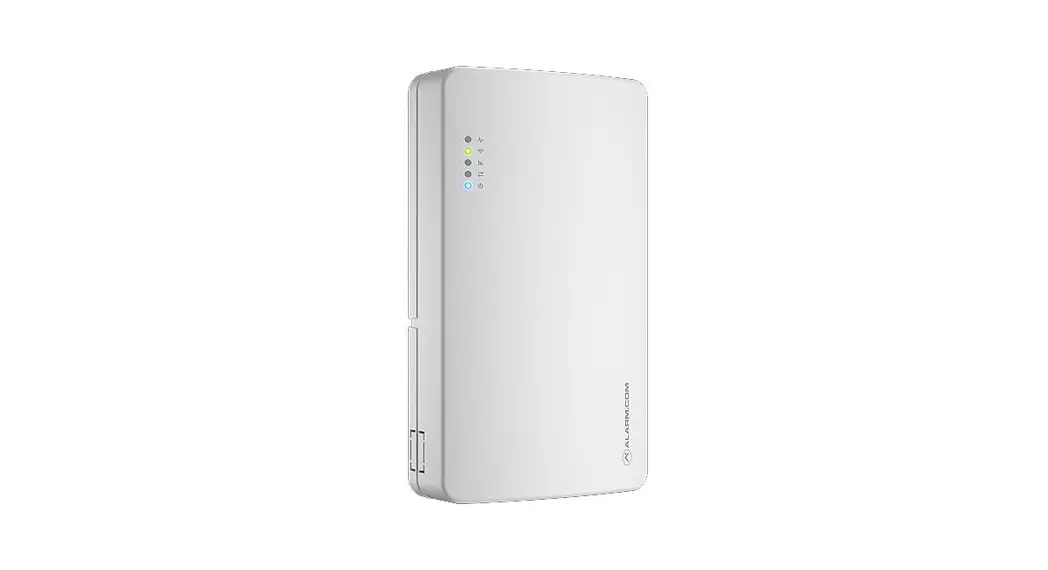
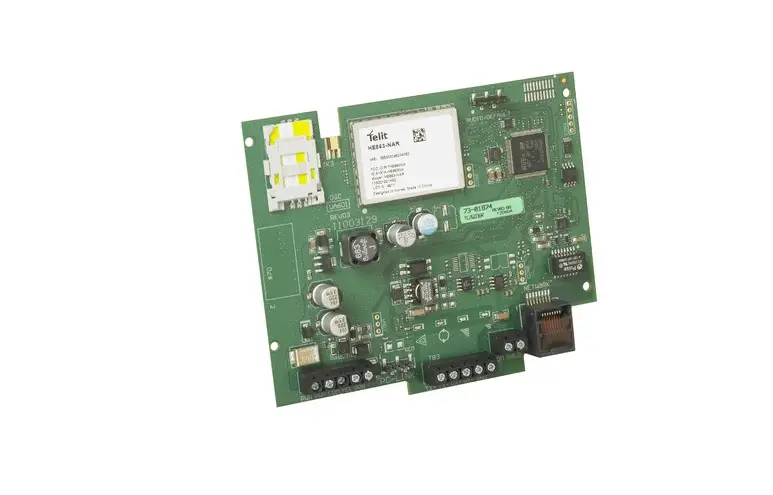
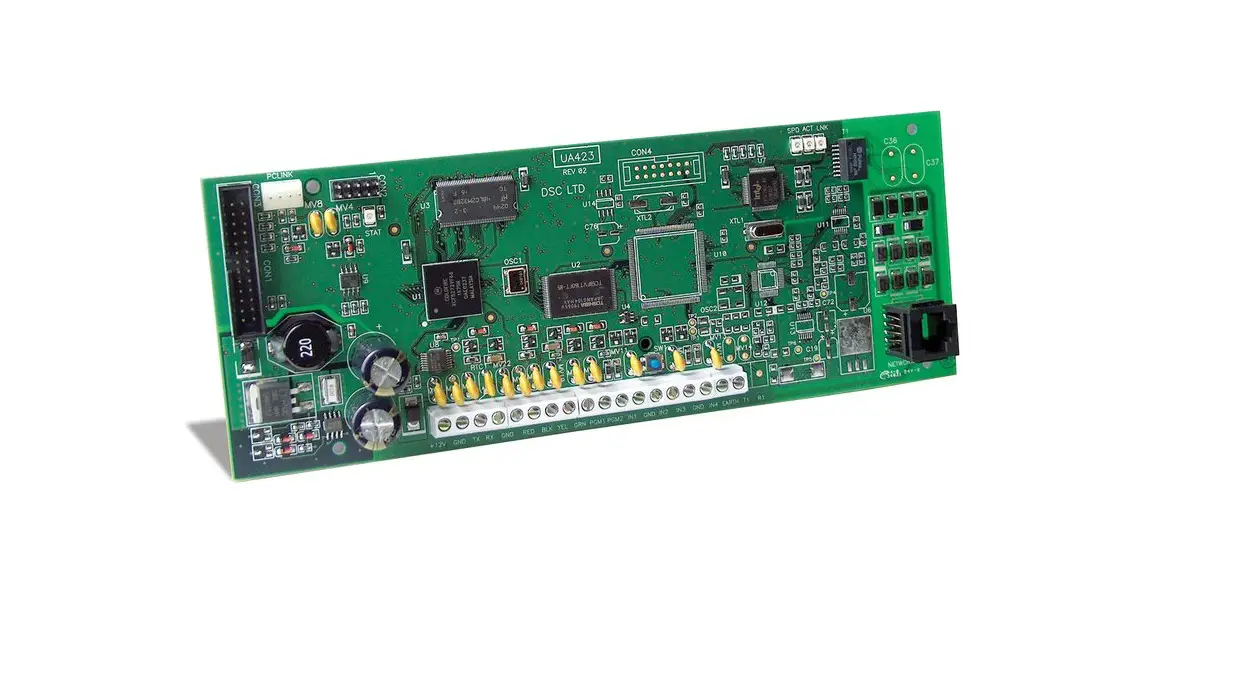
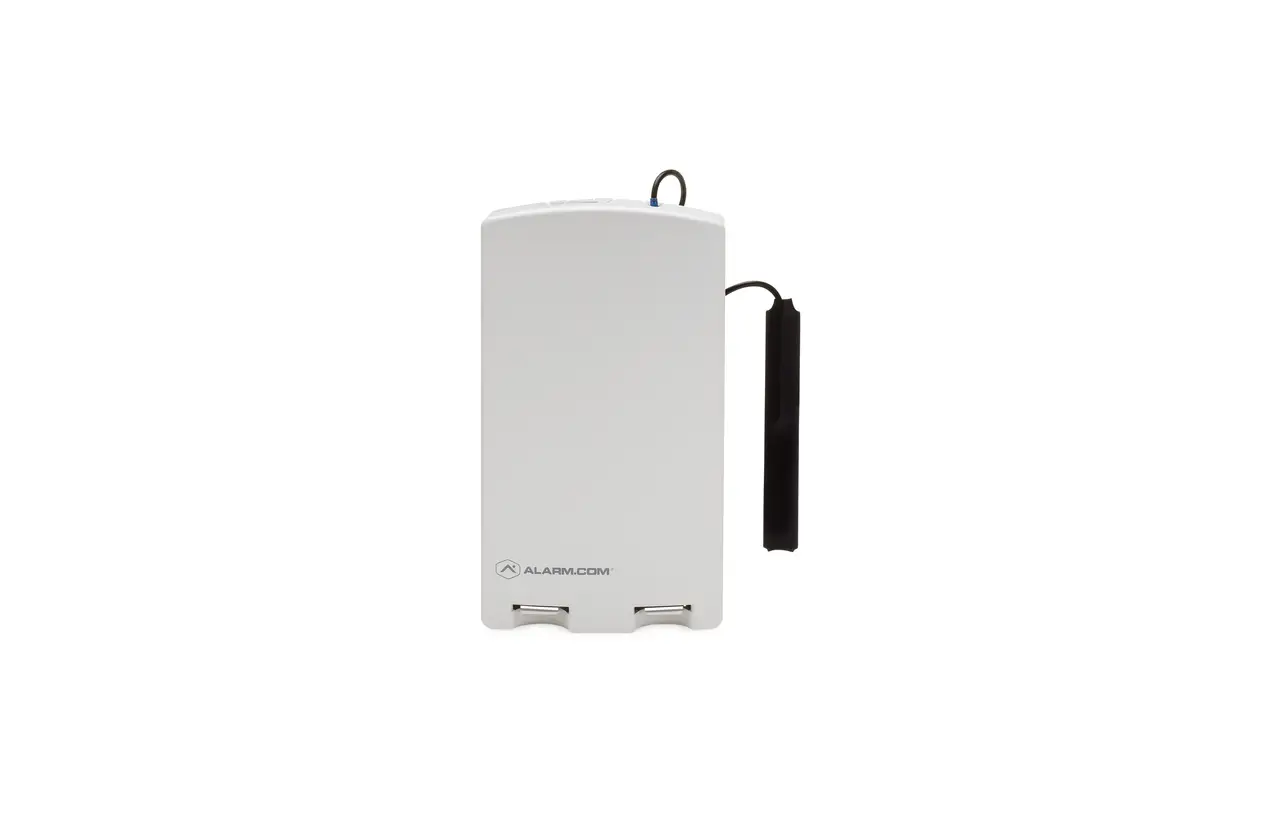
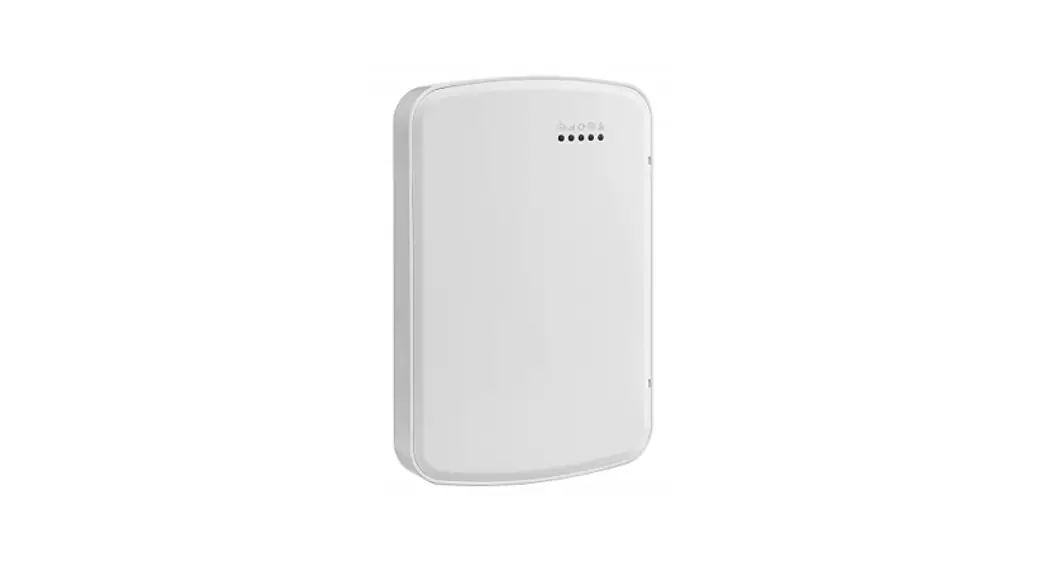
Status LEDs indicate network and module status. The following image shows the location of the status LEDs on the DSC PowerSeries Neo cellular module.
LED FUNCTIONS >
| LED | Function |
| L1 | General and cellular error LED. L1 flashes 1 to 8 times in an 8second interval to indicate the specific error. For a list of the errors and common solutions indicated by L1, see LED L1 (red). |
| L2 | For the HSPA/CDMA module (i.e., 3G8080/CD8080), L2 indicates panel communication and Z-Wave status messages. Flashes every time the module communicates with the panel and flashes in patterns to indicate ZWave status. For the Dual-Path LTE module (i.e., TL880LE/LT), L2 indicates broadbanderrors and panel communication. Flashes 2 to 8 times in an 8-second interval to indicate a specific error on the broadband path. Also flashes once every time the module communicates with the panel. |
| L3 | Cellular Communication. Flashes every time the cellular signal level is checked and when packets are exchanged with Alarm.com |
| L4 | Cellular Signal Strength Level. Flashes 0 to 5 times to indicate signal strength or toggles on/off slowly when communicating with Alarm.com servers |
| L5 | For the HSPA/CDMA module (i.e., 3G8080/CD8080), L5 indicates only Z- Wave errors. For the Dual-Path LTE module (i.e., TL880LE/LT), L5 indicates Z-Wave status and errors. |
LED DETAILS
LED L1 (RED)
L1 flashes when there is a general error or an error on the cellular path. The number of flashes indicates the error number. If there are two or more errors at the same time, the errors flash one after the other. The LED stays off for at least 4 seconds between errors.
Note: It may take up to 10 minutes before L1 detects and flashes an error code.
| LED pattern | Device error and solution |
| 1 | Module cannot communicate with the panel. 1. Verify section [382] option [5] is ON. 2. Verify panel software is version 1.11+. 3. Check the connectors (between the panel and communicator). 4. Power cycle the panel. 5. If the error persists, there may be an issue with the module or panel. |
| 2 | The SIM card is missing. The SIM card holder can be found on the module. Verify that the SIM card holder is closed securely and that there is a SIM card in the holder. |
| 3 | The module is trying to register on the cellular network. If it persists for more than a few minutes, the module is having problems registering with the cellular network. Check L4 for the signal level. o If the signal level is lower than 2 bars, change the panel’s location or use a remote antenna option. o If the signal is good, the module may be roaming on a cellular network that does not partner with our cellular providers, or the SIM card was not activated yet because the Alarm.com account was not created correctly. |
| 4 | The module is registered on the cellular network but cannot connect with Alarm.com. 1. Power down the module, wait 1 minute, restore power, and perform a communications test. 2. Verify signal strength and try a different location for the module/antenna. 3. If the problem persists, contact Technical Support. |
| 5 | The radio portion of the module is not working correctly. If this persists for more than a few minutes, the module may need to be replaced. This error is extremely rare, so verify that the module is flashing five times. |
| 6 | This is an error only if it persists for more than a minute. Otherwise, it is just an indication that the module is fixing an unusual condition regarding communication with the cellular network. |
| 7 | The module is not compatible with this panel type. Insert a compatible module |
| 8 | If it persists, the account may have been set up incorrectly. Contact Technical Support. You will be asked to |
verify the serial number of the module.
LED L2 (YELLOW)
FOR THE HSPA/CDMA MODULE (3G8080/CD8080)
L2 flashes with every communication between the module and the panel. The normal pattern calls for a series of quick flashes every 2 seconds in Idle Mode or 4 seconds in
PowerSave Mode. It also occasionally flashes in patterns to indicate Z-Wave status. The following table shows the Z-Wave errors and descriptions shown on L2.
| LED pattern | Device status or error | Description |
| 4-blink | Add mode (lasts 120 seconds or until a device is added). | In this mode, a device can be added to the local Z-Wave network. Devices cannot be added to a network if they are already a part of a network. |
| 2-blink | Delete mode (lasts 120 seconds or until a device is deleted). | In this mode, a device can be deleted from the Z-Wave network. A device can only be in one network at a time and must receive a delete command before it can be learned into a new network. |
| Solid | Successful add node/remove node/ replication (lasts 60 seconds). | After receiving this signal leave all devices by the HSPA/CDMA module for 1 minute. Locks must be left next to the module for four minutes. |
| Solid with one blink | Add node attempt failed because node already in network (lasts | The device you attempted to add to a network is already in a network, and must be |
| 60 seconds). | deleted before it can join a new network. |
FOR THE LTE MODULE (TL880LE/LT)
LED L2 indicates an error on the Broadband path and also flashes with every communication between the module and the panel when there is no error condition
present. The normal pattern calls for a series of quick flashes every 2 seconds in Idle mode or 4 seconds in PowerSave mode
| LED pattern | Device status or error |
| 1 | Flashes for each communication with the panel, except when LED is displaying a broadband error. This is normal behavior. |
| 2 | The Dual-Path LTE module cannot establish a connection with the router. 1. Verify the physical connection/wiring to the router. 2. Verify MAC filtering is disabled on the router or add the module’s MAC to the allowed list of MACs on the router. 3. Verify that DHCP is enabled on the router. |
| 3 | The Dual-Path LTE module cannot establish a connection with the internet. Verify other devices on the same network can connect, that the panel has AC power, and that there are no special firewall or network management settings running on the router. |
| 4 | The Dual-Path LTE module cannot establish communication with Alarm.com. |
| 6 | The Alarm.com backend cannot reach module due to an error with the local firewall blocking signals from reaching the module. |
LED L3 (GREEN OR YELLOW)
L3 flashes with every communication between the module and its radio unit in Idle mode, and with every communication with Alarm.com in Connected mode. In
PowerSave mode, this LED flashes in unison with LED 2.
LED L4 (GREEN OR YELLOW)
L4 indicates the LTE signal level as a number of flashes (0 to 5 bars). The number of bars may not correspond to the bars shown on your cell phone. A level of 5 bars is
obtained only in the strongest signal conditions. Signal level is updated every ten seconds if it fluctuates, or every 30 seconds if it is fairly stable. If L4 is not flashing it indicates one of the following states:
- The module is in PowerSave Mode.
- The module just powered up.
- There is no cellular coverage in the area. Alarm.com recommends a steady signal level of two or higher for proper operation of the module.
In Connected mode, LED L4 toggles on and off.
LED L5 (YELLOW)
FOR THE HSPA/CDMA MODULE (3G8080/CD8080)
L5 indicates Z-Wave errors. The following table shows the descriptions of those errors.
| LED pattern | Device status or error | Description |
| 2-blink | No other nodes are in the network (lasts until a device is added to the network). | No devices have been added that can be controlled by the HSPA/CDMA Module. |
| 5-blink | Learn mode error (lasts 60 seconds). | The device you attempted to add into a Z-Wave network was not successfully added. |
| 6-blink | No Home ID present (lasts until the module connects to Alarm.com and | When the HSPA/CDMA module first connects to Alarm.com it is configured with a necessary unique network ID.is configured). |
FOR THE LTE MODULE (TL880LE/LT)
L5 indicates Z-Wave status or errors. The possible signals and what they indicate are shown in the following table.
| LED pattern | Device status or error |
| 1 | Successfully added/removed node (last 60 seconds) |
| 2 | Delete mode |
| 3 | Add node attempt failed (last 60 seconds) because the device is already in the Z-Wave network |
| 4 | Add mode |
| 5 | Replicated mode |
| 6 | Learn mode error (lasts 60 seconds) |
| 7 | No node information |
| 8 | No other nodes are in the Z-Wave network |
VARIOUS MODULE STATES OR MODES
There are four module states, or modes, as described in the following table.
Note: If the cellular module is powered down for a short period of time, buffered messages from Alarm.com may be received when module power is restored.
Idle mode AC power is okay and the module is not currently
| talking to Alarm.com. L1 – Flashes general or cellular errors, if any L2 – Flashes broadband errors, if any; Communication with panel L3 – Communication with the radio unit L4 – Signal level (0 to 5 bars) L5 – Flashes Z-Wave state or errors, if any | |
| Powersave mode | The module just powered up, AC power is down, or AC power was recently restored and the battery is recharging. The module is fully functional and goes into Connected mode as soon as a signal needs to be sent. Press and hold the [5] key for 2 seconds to switch the module into Idle mode and update the signal level reading. The system goes into Idle mode every 2 hours to check for any incoming messages. L1 – Inactive L2 – Communication with panel L3 – Same flashing pattern as L2 L4 – Inactive L5 – Inactive |
| Connected mode | The module is currently talking to Alarm.com. The module stays in Connected mode for at least four minutes after reporting an event to Alarm.com, unless the 5 Key is pressed and held for 10 seconds, which causes the module to go back to Idle mode. L1 – Flashes general or cellular errors, if any L2 – Flashes broadband errors, if any; Communication with panel L3 – Communication with Alarm.com L4 – Alternates two seconds on, then two seconds off L5 – Flashes Z-Wave state or errors, if any |
| Sleep mode | The panel is not connected to AC power, or there is an AC power failure, and the battery level is low. The module will connect to Alarm.com to send a signal, but will otherwise draw almost no power. |