BlueTrace Modbus Sensors
BlueTrace Modbus Sensors
This manual describes the BlueTrace Modbus Sensors of GO
Systemelektronik. The BlueTrace Modbus Sensors are compact
measuring probes that come in three types of designs: Modbus Sensor
BlueTrace Oil in Water, BlueTrace Crude Oil, and BlueTrace
Turbidity. The type of version is indicated on the laser engraved
type label on the sensor body. The products of GO Systemelektronik
are constantly being developed, therefore deviations between this
manual and the delivered product can result. Please understand that
no legal claims can be derived from the contents of this
manual.
Safety Instructions
Danger: The device emits dangerous UV radiation. Use eye
protection.
Description of the Sensors
All sensor electronics are located in the sensor electronics
unit in the sensor body. All settings are stored in the memory of
the sensor electronics unit. The resistant design of the BlueTrace
Sensors allows the usage under harsh conditions, such as in
corrosive media and under high pressure. The configuration of the
sensors is done with the configuration program Modbus Tool.exe.
Modbus Tool.exe is included with the BlueTrace sensors. With Modbus
Tool.exe you can, for example, read out sensor information, assign
a Modbus address, determine the internal amplification of the input
signal, calibrate the sensor and display measurement values.
Technical Data
| Parameter | Measuring principle | Measuring ranges | Measuring accuracy | Measuring interval |
|---|---|---|---|---|
| Oil in Water | BTEX | PAH | Fluorescence measurement | typical 3% FS | 1s | |
| Crude Oil in Water | Light source < 365 nm | typical 3% FS | ||
| Turbidity |
Product Usage Instructions
- Ensure that you have eye protection when using the BlueTrace
Oil in Water Sensor and BlueTrace Crude Oil in Water Sensor as
these devices emit dangerous UV radiation. - Read the product manual before use as it contains important
safety instructions and technical information. - Choose the appropriate sensor type depending on your measuring
needs. The BlueTrace Modbus Sensors come in three types of designs:
Modbus Sensor BlueTrace Oil in Water, BlueTrace Crude Oil, and
BlueTrace Turbidity. - The type of version is indicated on the laser engraved type
label on the sensor body. - The configuration of the sensors is done with the configuration
program Modbus Tool.exe, which is included with the BlueTrace
sensors. Use Modbus Tool.exe to read out sensor information, assign
a Modbus address, determine the internal amplification of the input
signal, calibrate the sensor, and display measurement values. - Ensure that all settings are stored in the memory of the sensor
electronics unit. - The resistant design of the BlueTrace Sensors allows the usage
under harsh conditions, such as in corrosive media and under high
pressure.
BlueTrace Modbus Sensors
Manual BlueTrace Modbus Sensors
Creation date: 2.12.2022 File name: DOC BlueTrace-E-2.1-BDA.pdf
© GO Systemelektronik GmbH
DOC BlueTrace-E-2.1-BDA
Table of Contents
1 Introduction …………………………………………………………………………………………………………………………………………………………………………….2
2 Safety Instructions BlueTrace Oil in Water Sensor and BlueTrace Crude Oil in Water Sensor…………………………………………………………2
3 Description of the Sensors…………………………………………………………………………………………………………………………………………………………2 3.1 Technical Data ………………………………………………………………………………………………………………………………………………………………….3 3.2 Device Setup ……………………………………………………………………………………………………………………………………………………………………..4 3.3 Connection Assignment ……………………………………………………………………………………………………………………………………………………..4
4 Notes on Calibration…………………………………………………………………………………………………………………………………………………………………5 4.1 Calibration Oil in Water ……………………………………………………………………………………………………………………………………………………..5 4.1.1 Specifics Calibration Oil in Water …………………………………………………………………………………………………………………………………5 4.1.2 Specifics Calibration Crude Oil in Water ……………………………………………………………………………………………………………………….6 4.2 Calibration Turbidity and TSS …………………………………………………………………………………………………………………………………………….6
5 Notes on Operation…………………………………………………………………………………………………………………………………………………………………..6 5.1 Operation Oil in Water ……………………………………………………………………………………………………………………………………………………….6 5.2 Operation Crude Oil in Water ……………………………………………………………………………………………………………………………………………..6 5.3 Operation Turbidity …………………………………………………………………………………………………………………………………………………………..6
6 Maintenance ……………………………………………………………………………………………………………………………………………………………………………7 5.1 Maintenance Notes ……………………………………………………………………………………………………………………………………………………………7 6.2 Maintenance Recommendations ………………………………………………………………………………………………………………………………………..7 6.3 Cleaning the Sensor …………………………………………………………………………………………………………………………………………………………..7 6.3.1 Work Flow of the Cleaning …………………………………………………………………………………………………………………………………………..7
Appendix A Calibration of a BlueTrace Oil in Water Sensor ………………………………………………………………………………………………………….8 Appendix B EU Declaration of Conformity BlueTrace Oil in Water ………………………………………………………………………………………………10 Appendix C EU Declaration of Conformity BlueTrace Crude Oil in Water …………………………………………………………………………………….11 Appendix C EU Declaration of Conformity BlueTrace Turbidity ………………………………………………………………………………………………….12
GO Systemelektronik GmbH Faluner Weg 1 24109 Kiel Germany Tel.: +49 431 58080-0 Fax: -58080-11
www.go-sys.de
Page 1 / 12
BlueTrace Modbus Sensors
1 Introduction This manual describes the BlueTrace Modbus Sensors of GO Systemelektronik. At the completion of this manual, the following types of design were available:
Modbus Sensor BlueTrace Oil in Water BlueTrace Crude Oil BlueTrace Turbidity
Article number 461 6200 461 6300 461 6780
The type of version is indicated on the laser engraved type label on the sensor body.
High-grade steel
Titanium
The products of GO Systemelektronik are constantly being developed, therefore deviations between this manual and the delivered product can result. Please understand that no legal claims can be derived from the contents of this manual.
The documentations of GO Systemelektronik products can be found at www.go-sys.de/downloads.
The symbol The symbol The symbol
indicates a useful additional information. indicates a note to avoid incorrect operation. indicates an instruction, the non-fulfilment of which may affect the measuring operation.
2 Safety Instructions BlueTrace Oil in Water Sensor and BlueTrace Crude Oil in Water Sensor Danger: The device emits dangerous UV radiation. Use eye protection.
3 Description of the Sensors
The BlueTrace Modbus Sensors are compact measuring probes. All sensor electronics are located in the sensor electronics unit in the sensor body. All settings are stored in the memory of the sensor electronics unit. The resistant design of the BlueTrace Sensors allows the usage under harsh conditions, such as in corrosive media and under high pressure.
The configuration of the sensors is done with the configuration program Modbus Tool.exe. see Manual Modbus Tool.exe for GO Modbus Sensors Modbus Tool.exe is included with the BlueTrace sensors. With Modbus Tool.exe you can, for example, read out sensor information, assign a Modbus address, determine the internal amplification of the input signal, calibrate the sensor and display measurement values.
GO Systemelektronik GmbH Faluner Weg 1 24109 Kiel Germany Tel.: +49 431 58080-0 Fax: -58080-11
www.go-sys.de
Page 2 / 12
BlueTrace Modbus Sensors 3.1 Technical Data
Parameter Measuring principle
Measuring ranges Measuring accuracy Measuring interval
Oil in Water | BTEX | PAH
Fluorescence measurement Evaluation at 300 – 400 nm Light source < 300 nm
| 0 30 ppm | 0 – 100 ppm | 0 300 ppm |
typical 3 % FS 1 s
Parameter Measuring principle
Measuring ranges Measuring accuracy Measuring interval
Crude Oil in Water
Fluorescence measurement Evaluation at 410 nm 600 nm
Light source < 365 nm
| 0 30 ppm | 0 – 100 ppm | 0 300 ppm |
typical 3 % FS
Parameter Measuring principle
Measuring ranges [FNU] Measuring accuracy Measuring interval
Turbidity Scattered light measurement; Light source 860 nm
| 0 50 | 0 100 | 0 1000 | 0 4000 |
Temperature
Semiconductor; Bandgap Voltage
Reference
0 60 °C
TSS Model
0 5 g/l
typical 3 % FS 1 s
3 % FS 1 s
3 % FS
Voltage supply Power consumption Weight Dimensions Cable lengths Ambient temperature range Ambient pressure Body material Interface
10 32 VDC typical 0.5 W
0.6 kg see 3.2 Device Setup | 5 m | 10 m | 20 m |
-5 to +55 °C max. 6 bar
High-grade steel 1.4404; optional Titanium Modbus [RTU]
Accuracy and calibration depend on the composition of the substance.
GO Systemelektronik GmbH Faluner Weg 1 24109 Kiel Germany Tel.: +49 431 58080-0 Fax: -58080-11
www.go-sys.de
Page 3 / 12
BlueTrace Modbus Sensors 3.2 Device Setup
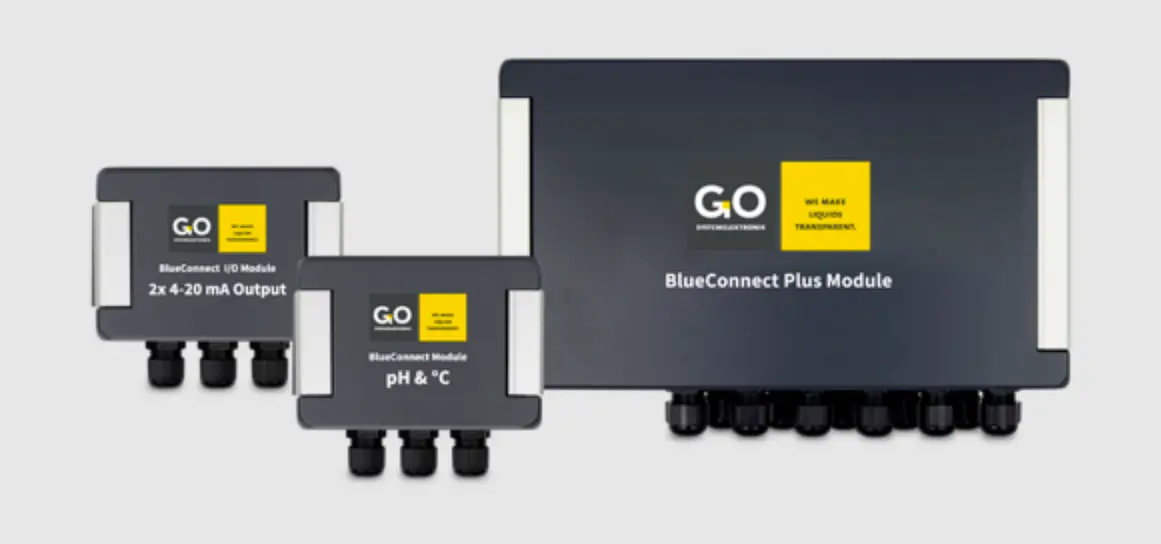
3.3 Connection Assignment Assignment at the board of the BlueConnect Module Slot X3
GN Shield (PE) BK (GND) RD (+12 V)
BN (RX/TX-)
OR (RX/TX+)
X3
GO Modbus sensors
Jumper slot assigned X20/X21
Assignment at the BlueSense Transducer Slot X1/X2
X1 / X2
Shield (PE) BN (RX/TX-) OR (RX/TX+) BK (GND) RD (+12 V)
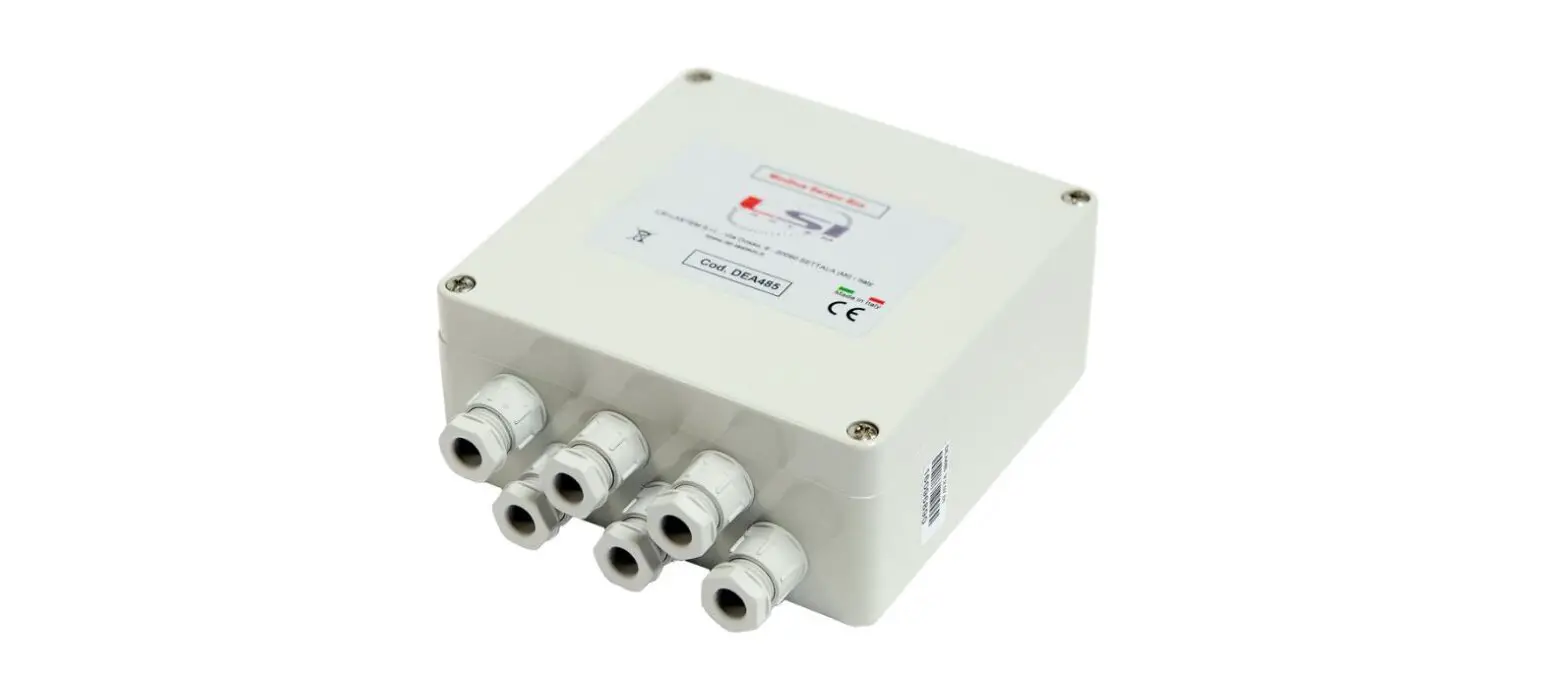
Pin assignment serial interface on the BlueBox T4
24
RS485 panel plug (M8, male)
1
3
1
GND
2
12 VDC
3
RX/TX-
4
RX/TX+
Cable socket, shielded body Article No. 338 1017
Cable colours see below
Here there is the BlueBox version with a 4-pin M8 panel plug and a 12 VDC power supply. For versions with 3-pin M8 panel plug without 12 VDC power supply, an adapter or similar must be used.
Assignment at the motherboard of the BlueBox R1 > see Manual BlueBox R1 and Panel
GO Systemelektronik GmbH Faluner Weg 1 24109 Kiel Germany Tel.: +49 431 58080-0 Fax: -58080-11
www.go-sys.de
Page 4 / 12
BlueTrace Modbus Sensors
4 Notes on Calibration 4.1 Calibration Oil in Water
If necessary, the sensor should be cleaned before calibration. see 5.3 Cleaning the Sensor
The calibration is done with the configuration programme Modbus Tool.exe from GO Systemelektronik. see Manual Modbus Tool.exe for GO Modbus Sensors
Exemplary setup:
Sample container
Sensor
Prepared sample Stirrer magnet
Dark non-reflective surface
Magnetic stirrer
Distance of the sensor from the bottom of the sample container: 8 cm Distance of the sensor from the sides of the sample container: 4 cm
Avoid ambient light, especially sunlight.
4.1.1 Specifics Calibration Oil in Water
Since the fluorescence spectrum is extremely dependent on the properties of the refined oil to be measured, the sensor functions optimally with a specific calibration to this oil. The absorption of the water also has an influence on the measurement, so that the oil should be mixed with the expected water for calibration. In low concentrations a linear behaviour can be expected, here a two-point calibration can be sufficient however, at least a three-point calibration is recommended.
450
400
350
Detector output signal (mV)
300
Hydraulic oil
250
Cooling lubricant
200
Diesel
150
100
50
0
0
50
100
150
200
250
300
Oil in water concentration (ppm)
The sensor successively measures the prepared samples; then a multi-point calibration is performed with the measurement and reference values. The measurement and reference values are entered into the BlueTrace Configuration Program. With this specific calibration, the reliable measurement of the desired oil in the expected concentrations can be guaranteed.
GO Systemelektronik GmbH Faluner Weg 1 24109 Kiel Germany Tel.: +49 431 58080-0 Fax: -58080-11
www.go-sys.de
Page 5 / 12
BlueTrace Modbus Sensors 4.1.2 Specifics Calibration Crude Oil in Water Wenden Sie sich bitte an GO Systemelektronik.
4.2 Calibration Turbidity and TSS · The BlueTrace Turbidity Sensor is already calibrated for turbidity measurement in FNU on delivery. If you want to perform your own calibration, contact GO Systemelektronik. · The calibration of the TSS measurement is customer-specific with two calculation coefficients. see Manual Modbus Tool.exe for GO Modbus Sensors there 3.3 The Parameter Window there BlueTrace Turbidity > Parameter Distance of the sensor from the bottom of the sample container: 20 cm Distance of the sensor from the sides of the sample container: 4 cm Avoid ambient light, especially sunlight.
5 Notes on Operation 5.1 Operation Oil in Water
Distance of the sensor from the bottom of the sample container: 8 cm Distance of the sensor from the sides of the sample container: 4 cm
Avoid ambient light, especially sunlight.
5.2 Operation Crude Oil in Water Distance of the sensor from the bottom of the sample container: 8 cm Distance of the sensor from the sides of the sample container: 4 cm Avoid direct sunlight.
5.3 Operation Turbidity Distance of the sensor from the bottom of the sample container: 20 cm Distance of the sensor from the sides of the sample container: 4 cm Avoid ambient light, especially sunlight.
GO Systemelektronik GmbH Faluner Weg 1 24109 Kiel Germany Tel.: +49 431 58080-0 Fax: -58080-11
www.go-sys.de
Page 6 / 12
BlueTrace Modbus Sensors
6 Maintenance
5.1 Maintenance Notes Prerequisite for a trouble-free operation is a proper installation of the sensor in the measuring location, as well as regular checking of the installation conditions. The sensor must be cleaned as part of the inspection. This cleaning must be carried out at sufficiently short intervals, depending on the external influences.
6.2 Maintenance Recommendations Although the BlueTrace Oil in Water Sensor is very easy to maintain, the following points must be noted, so that the sensor is always ready to use and gives reliable results:
Regular manual cleaning of the sapphire glass pane of the sensor see 5.3 Cleaning the Sensor
Yearly or half-yearly inspection of the system by GO Systemelektronik authorized service personnel
Ensure that the sapphire glass pane of the sensor is always in fluid. A drying out of the sapphire glass pane will lead to a build up of film (depending on the type of fluid) and then a cleaning is necessary.
BlueTrace Oil in Water BlueTrace Crude Oil in Water
Danger: The device emits dangerous UV radiation during operation. Before maintenance, the unit must be disconnected from the power supply!
6.3 Cleaning the Sensor The necessary cleaning interval may vary significantly depending upon location and given dirt level (1 week to 3 months). Note: If you want to prolong the manual cleaning interval, ask GO Systemelektronik for accessories for automated cleaning A slow, continuous change of the measurement value is an indicator of increasing impurity of the sapphire glass pane.
Caution: Never use strong organic solvents (e.g. acetone), strong acids and bases or abrasive cloths, brushes and steel wool!
Please note: Each unauthorized disassembling of the sensor head will void your warranty.
When cleaning, pay attention to any particles that may be adhering. Remove them with compressed air before using a brush or cloth so that the sapphire glass panes are not scratched during cleaning.
6.3.1 Work Flow of the Cleaning 1. Immerse the sensor in household cleaner in tap water for about 5 minutes. Then remove heavy dirt with a
soft brush or a household cloth.
2. Rinse the sensor with warm tap water.
3. Prepare a warm (approx. 50 °C) citric acid solution (concentration 2 3 %) with tap water. Immerse the sensor in this solution for 10 15 minutes. Then clean the sensor in this solution. Then clean the sapphire glass pane in this solution with a soft brush or household cloth.
4. Use a grease-free alkaline laboratory glass cleaner to prepare a warm (approx. 50 °C) solution (concentration 2 3 %) with tap water. Immerse the sensor head and spacers in this solution for 10 15 minutes.
5. Rinse the sensor with tap water.
GO Systemelektronik GmbH Faluner Weg 1 24109 Kiel Germany Tel.: +49 431 58080-0 Fax: -58080-11
www.go-sys.de
Page 7 / 12
BlueTrace Modbus Sensors Appendix A Calibration of a BlueTrace Oil in Water Sensor
Principal method Multi-point calibration with a blank sample and up to 9 different standard concentrations The number of standards depends on your measurement range. It is recommended to use at least three standards.
Chemicals: 1. Isopropanol 2. Oil that should be detected
Calibration instruments: 1. Dosing pipettes 1000 µl with pipette tips 2. 2-litre glass beakers; at least two 3. Volumetric flasks 10 ml 4. Measuring cylinders 1000 ml; at least two 5. Magnetic stirrer 6. Lint-free cloth 7. Measuring cylinder stopper 8. Laboratory stand
Preparation of the Samples Base sample (1 % concentration): 100 µl of the oil is dissolved in 10 ml Isopropanol (use the volumetric flask).
At first pipette 100 µl of the oil into the volumetric flask. Then fill the flask up to mark. The surface of the liquid has a concave meniscus, the lower part of the meniscus has to be on the mark.
The resulting base sample has a concentration of 10,000 ppm (1 %).
Blank-Sample The blank sample is the water in which the oil is to be detected. If there is no oil-free water available, tap water can be used instead. Note! You can also use DI-Water but the used water should have a composition / matrix similar as possible to the water at the measuring point.
Standard-Sample For a concentration of 10 ppm, mix 800 µl of the base sample with 800 ml Blank Sample. Other concentrations can be generated by mixing the appropriate ratios (see table below).
Concentration 1 ppm 5 ppm 10 ppm : :
Base sample 80 µl 400 µl 800 µl : :
Blank sample 800 ml 800 ml 800 ml : :
GO Systemelektronik GmbH Faluner Weg 1 24109 Kiel Germany Tel.: +49 431 58080-0 Fax: -58080-11
www.go-sys.de
Page 8 / 12
BlueTrace Modbus Sensors Variant 1 (for a concentration of 10 ppm): Fill up the measuring cylinder to 800 ml with the same water you used for your Blank Sample and transfer it into the 2-litre glass beaker. Withdraw 800 µl with the 1000 µl pipette of the 2-litre glass beaker. Pipette 800 µl of the Base Sample into the 2-litre glass beaker.
Variant 2 (for a concentration of 10 ppm): Pipette 800 µl of the Base Sample into the measuring cylinder. Fill up the measuring cylinder to 800 ml. Put a stopper on top of the measuring cylinder and shake the solution, so no oil will be attached to the wall of the measuring cylinder. Immediately transfer the solution into the 2-litre glass beaker.
ATTENTION! If you use the same measuring cylinder for all your standard samples, be sure you make your standards from the lowest to the highest oil concentration, to avoid contamination of old residuals. Additional clean the measuring cylinder before you prepare the next standard sample.
Calibration procedure On the BlueSense / BlueBox Transducer, the calibration option is selected. Firstly, the blank sample (concentration 0 ppm) is set. To do this, you put 800 ml of the blank sample in a 2litre glass beaker and place it on the magnetic stirrer. Before you dip the sensor into the beaker, clean the sensor gently from the outside, including the glass, with a lint-free cloth and a drop of Isopropanol on it. For dropping the sensor into the beaker, either hold the sensor in the beaker so that it is vertical, in the middle of the beaker and dipped about 2 3 cm into the solution. Alternatively, you install the sensor on a laboratory stand. You must ensure that the distance between the sensor and the inside beaker wall in all directions is at least 5 cm. The beaker should also be resting on a dark surface. If there are air bubbles on the sensor, they need to be removed by dipping the sensor carefully in and out of the solution. Sometimes it can help to start the magnetic stirrer, dip in the sensor near the beaker wall, and position the sensor afterwards in the middle of the beaker. Turn the stirrer on to 500 rpm. The sensor uses an internal averaging, on that account it takes a few seconds until a mV-value can be assigned to the concentration. Additionally the oil needs to be homogeneously distributed, therefore wait for at least 90 seconds until you start the calibration After the blank sample, the standard sample (e.g. concentration 10pmm) should be set. For this, the sensor should be placed like described before in a 2-litre glass beaker with the standard sample. Repeat the prior instructions including the cleaning process of the sensor. After the calibration, the sensor should once again be placed in the blank sample and the standard samples to check if the correct values are displayed on the BlueSense / BlueBox.
If you have questions: [email protected] +49(0)431-58080-17 GO Systemelektronik GmbH
GO Systemelektronik GmbH Faluner Weg 1 24109 Kiel Germany Tel.: +49 431 58080-0 Fax: -58080-11
www.go-sys.de
Page 9 / 12
BlueTrace Modbus Sensors Appendix B EU Declaration of Conformity BlueTrace Oil in Water
GO Systemelektronik GmbH Faluner Weg 1 24109 Kiel Germany Tel.: +49 431 58080-0 Fax: -58080-11 Page 10 / 12
www.go-sys.de
BlueTrace Modbus Sensors Appendix C EU Declaration of Conformity BlueTrace Crude Oil in Water
GO Systemelektronik GmbH Faluner Weg 1 24109 Kiel Germany Tel.: +49 431 58080-0 Fax: -58080-11 Page 11 / 12
www.go-sys.de
BlueTrace Modbus Sensors Appendix C EU Declaration of Conformity BlueTrace Turbidity
GO Systemelektronik GmbH Faluner Weg 1 24109 Kiel Germany Tel.: +49 431 58080-0 Fax: -58080-11 Page 12 / 12
www.go-sys.de
 sys.de - This website is for sale! - sys Resources and Information.
 GO-Systemelektronik GmbH