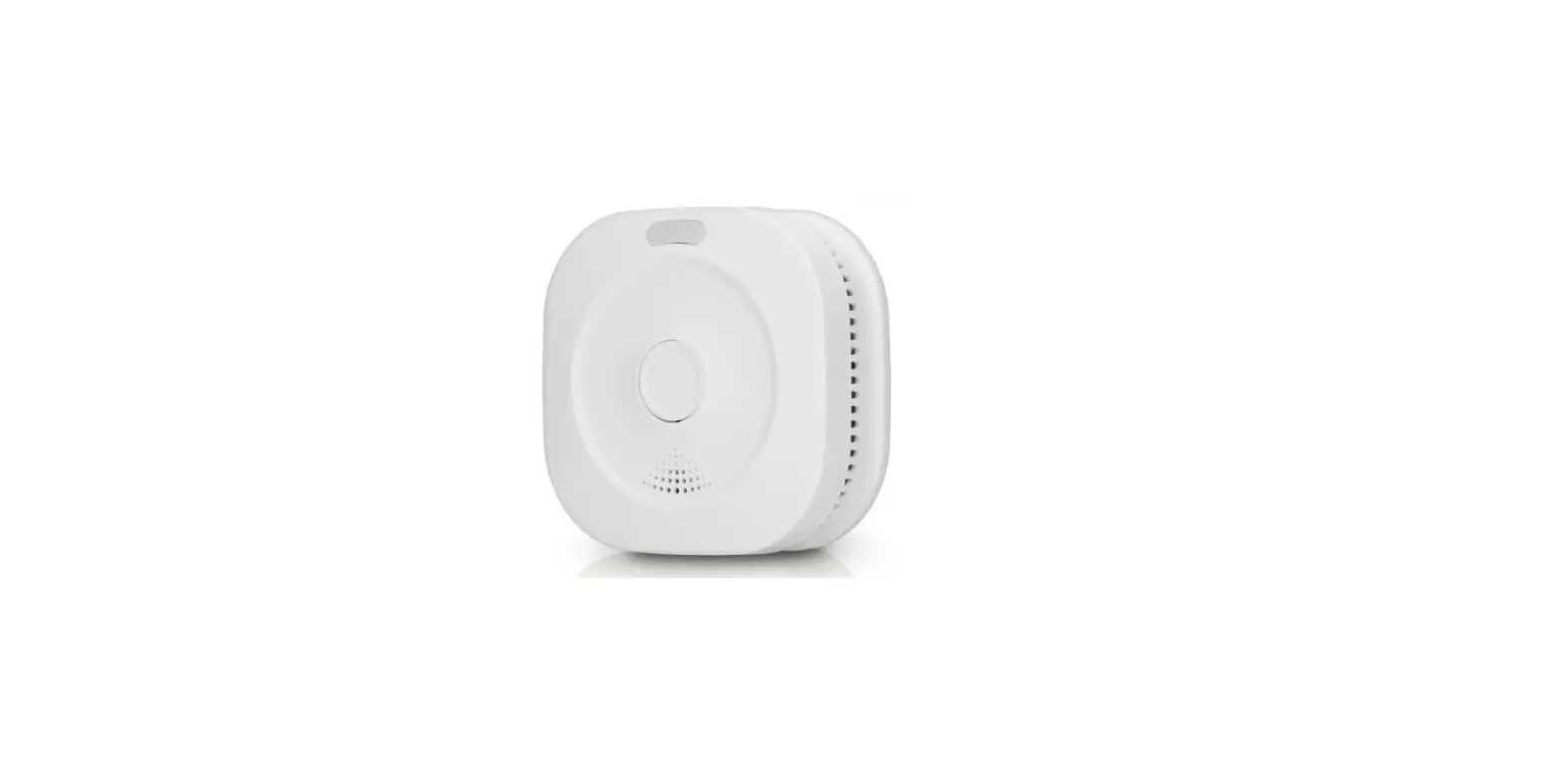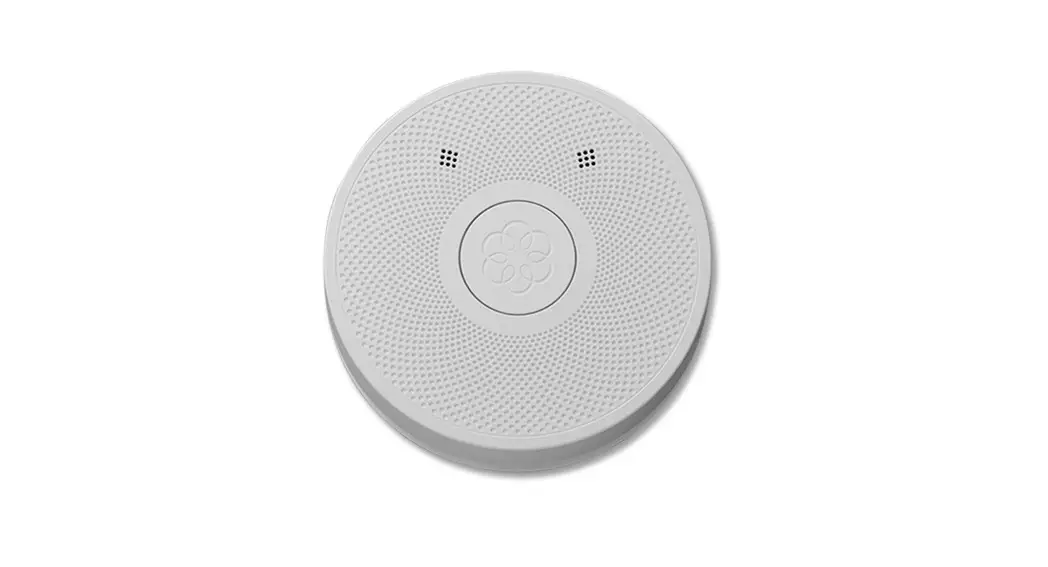

essence WeR@Home+ Smoke Alarm
Overview
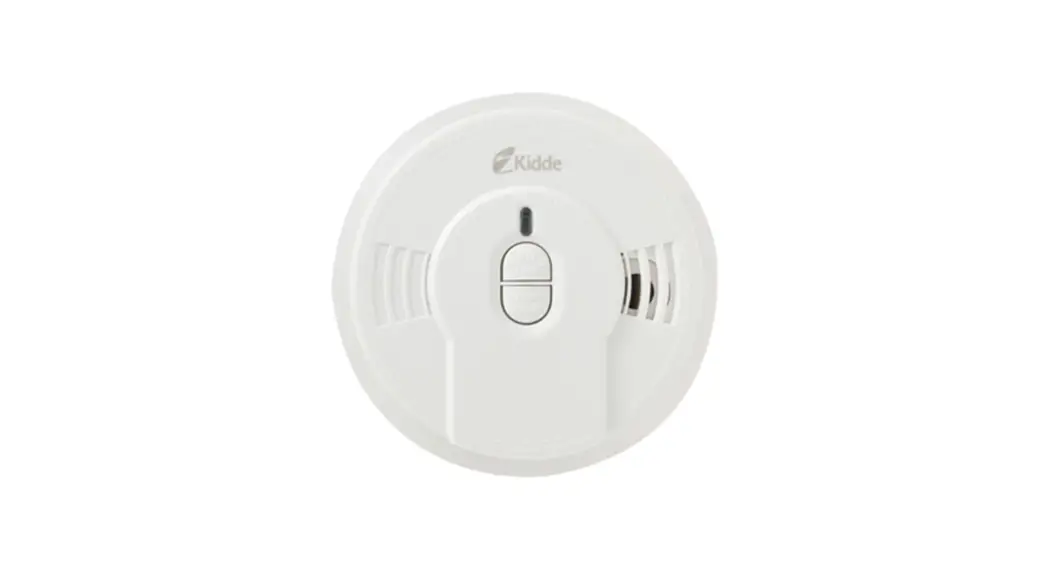
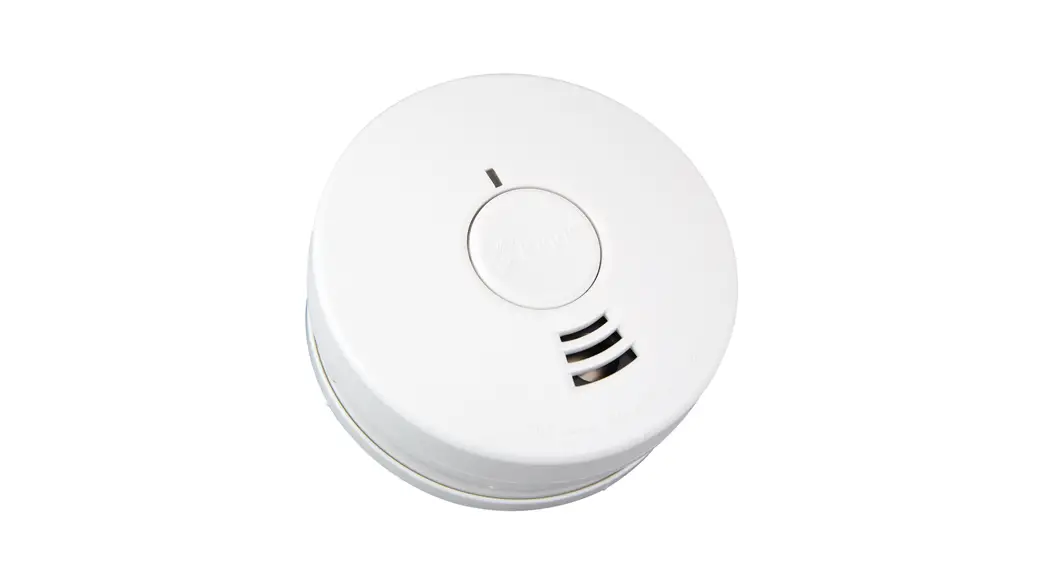
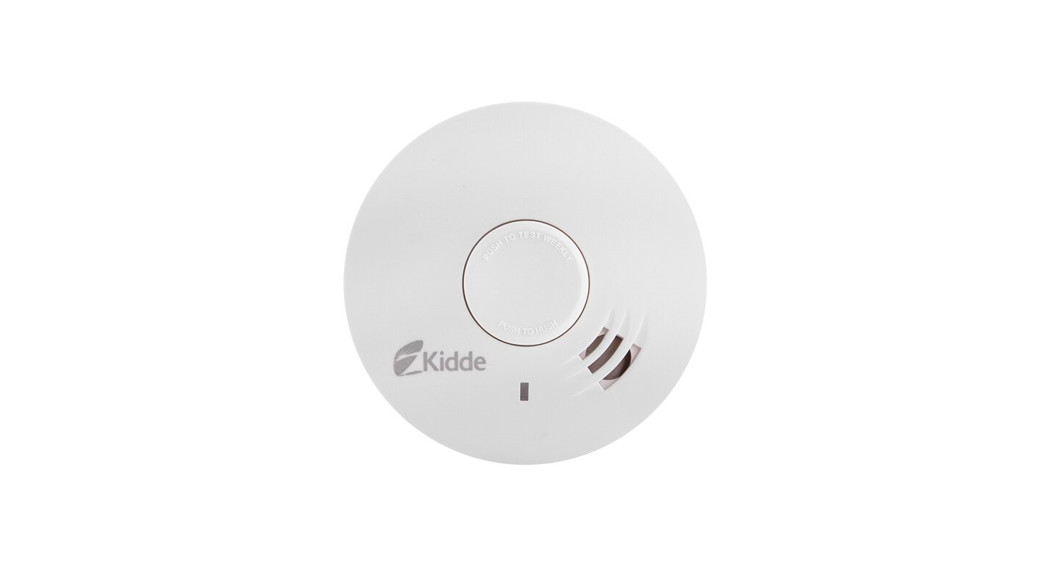
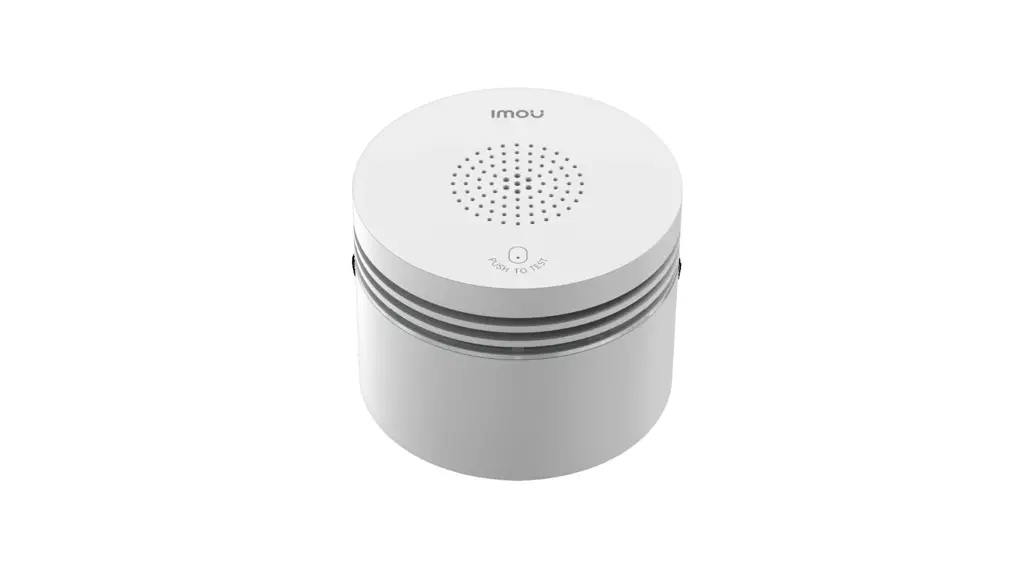
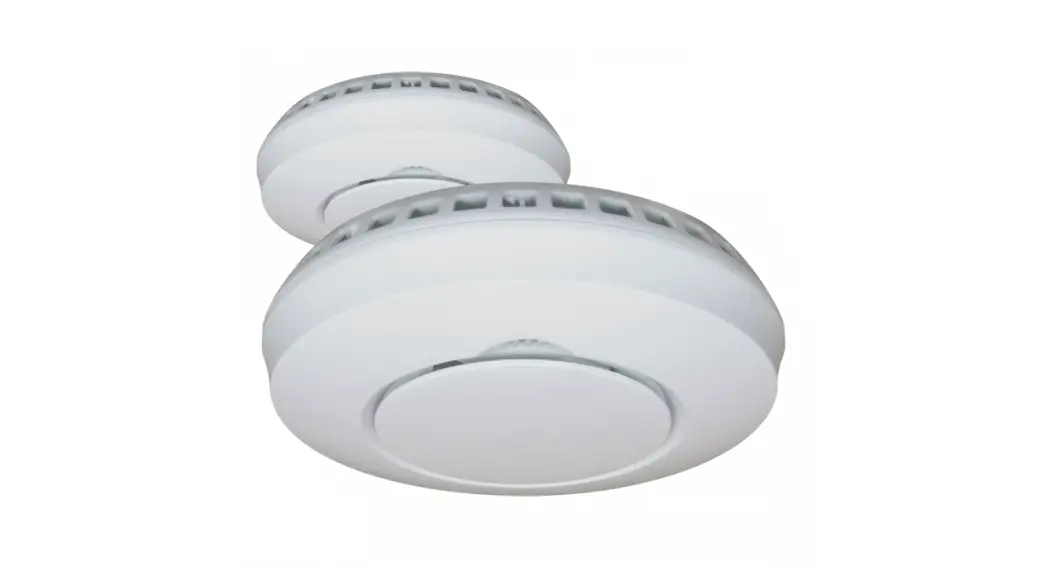
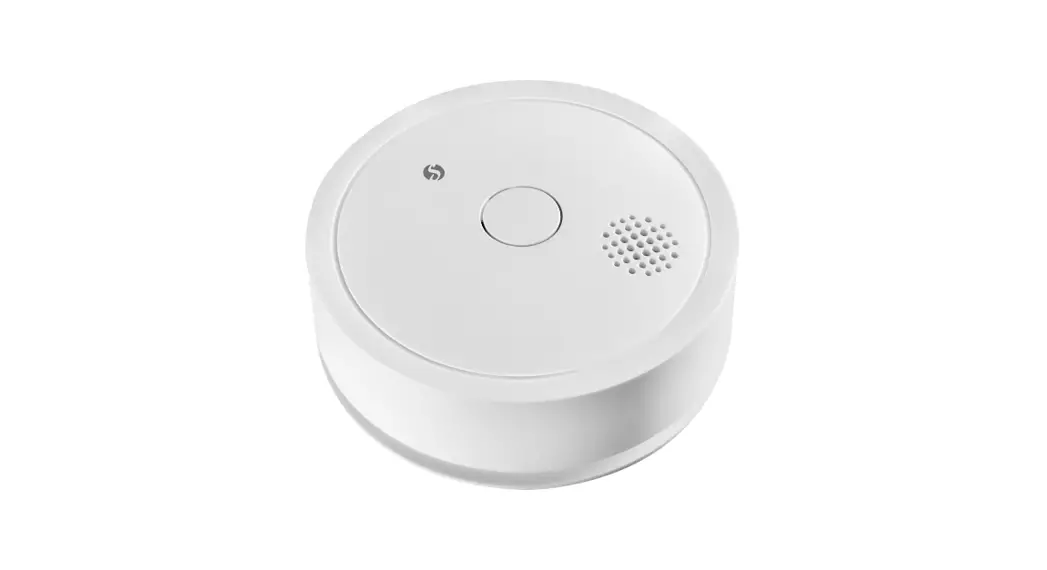
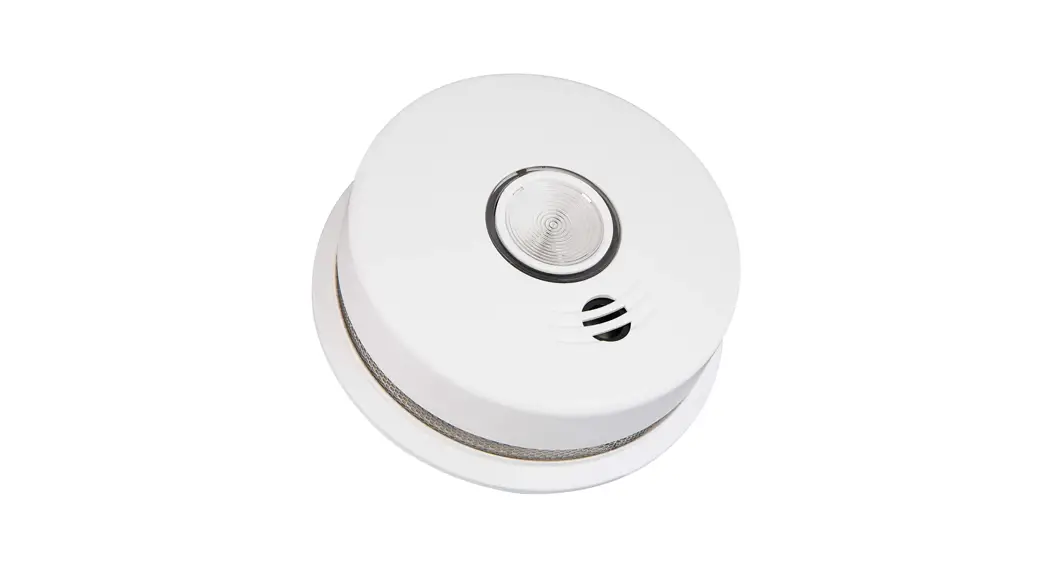
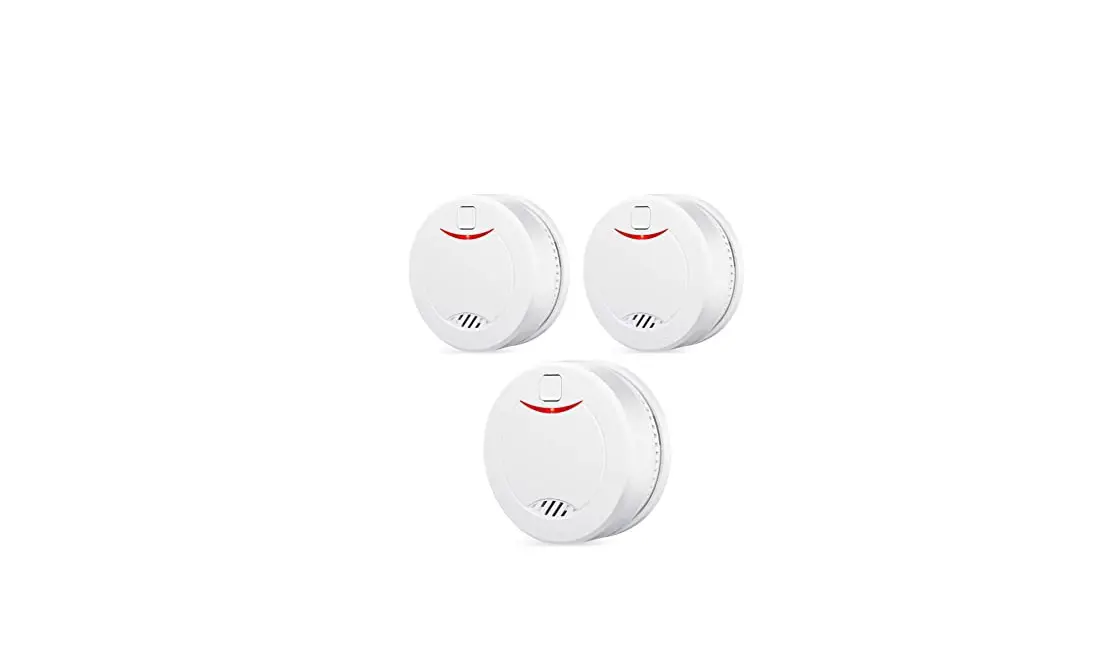
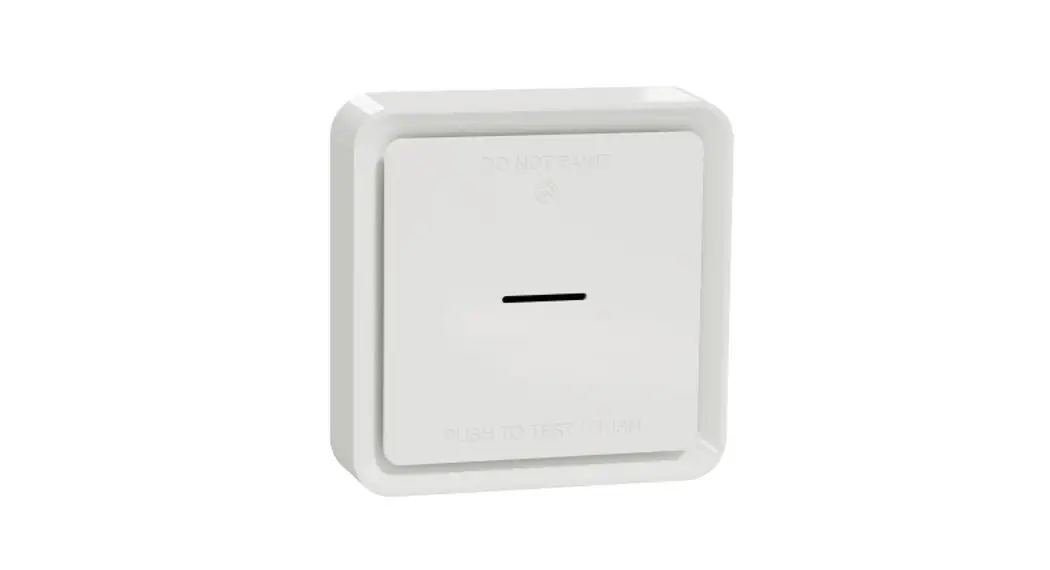
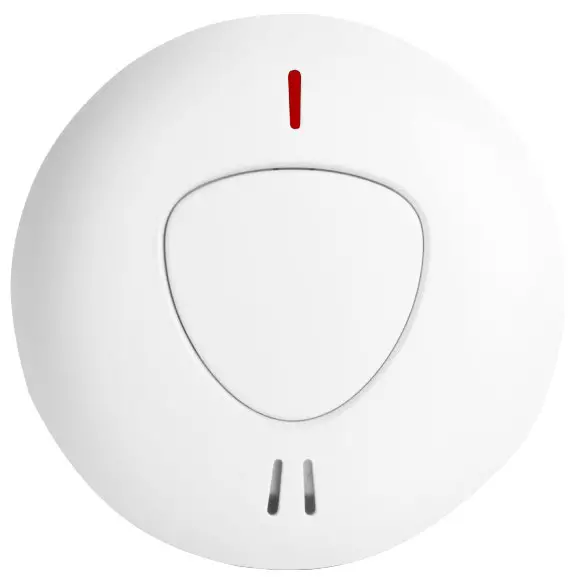
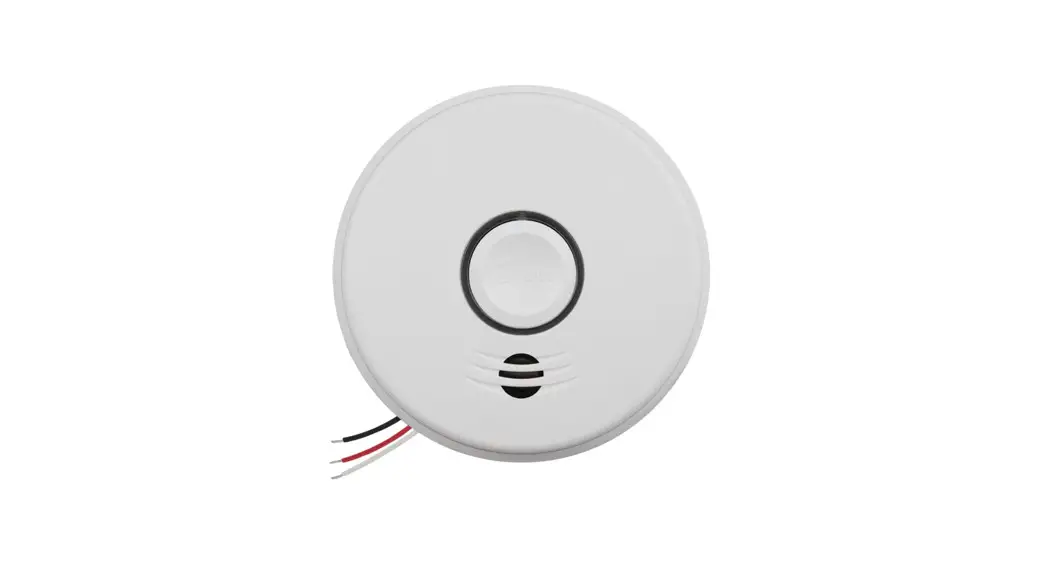
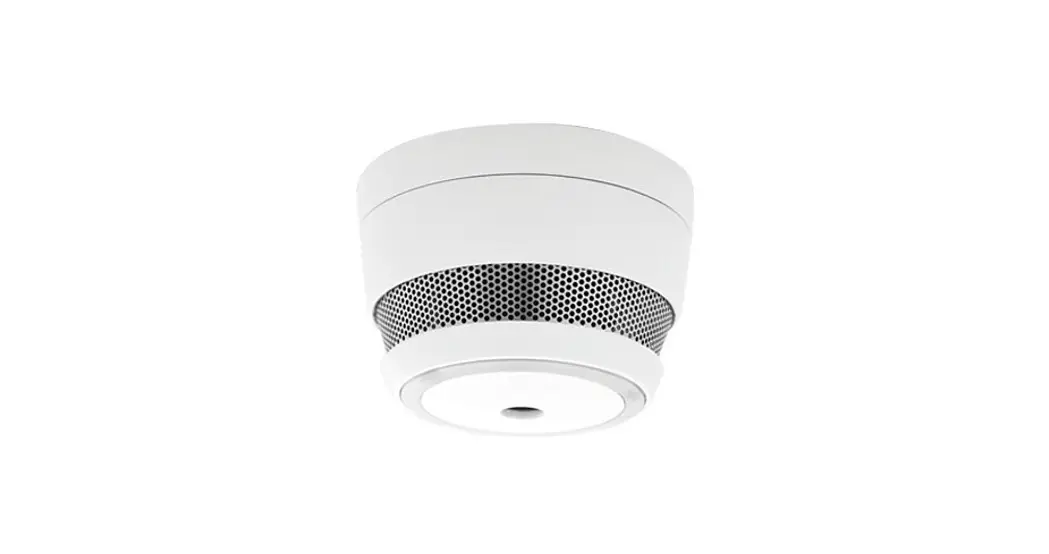
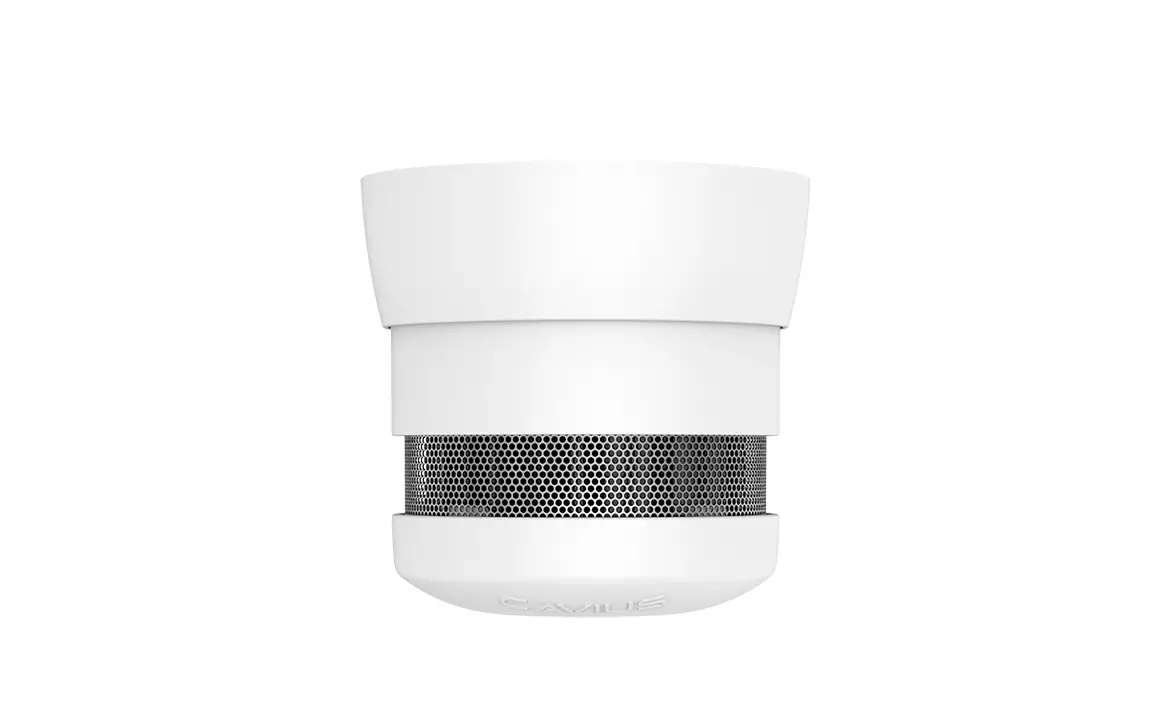
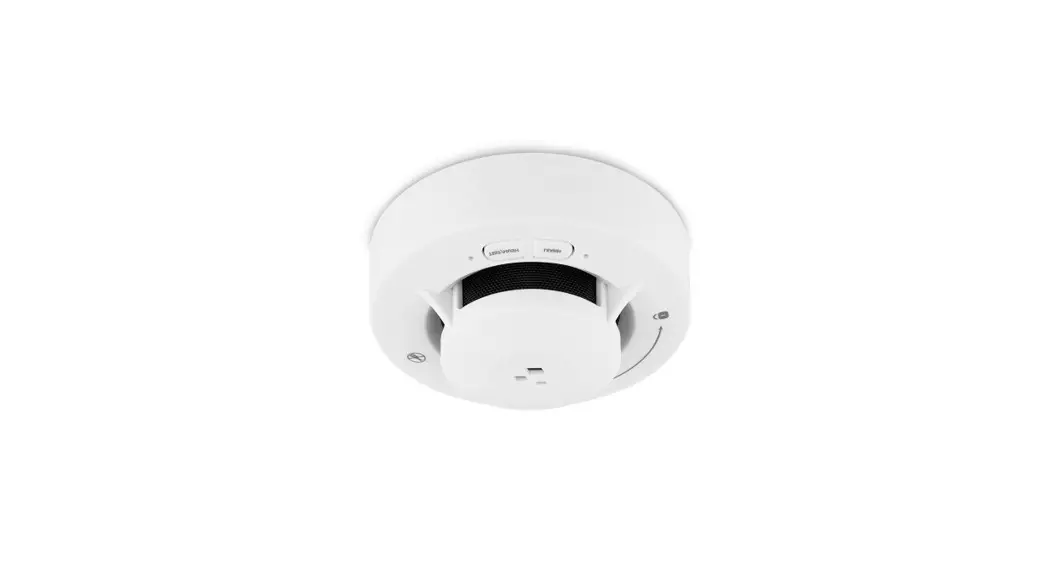
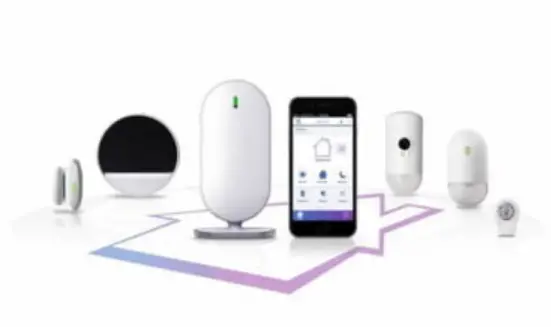
The Essence Smoke Alarm (SK) is a battery-powered, stand-alone peripheral designed to be installed on ceilings. The SK has a photoelectric smoke detection chamber. The SK is capable of bi-directional RF communications with the WeR@Home+™ hub from a remote location.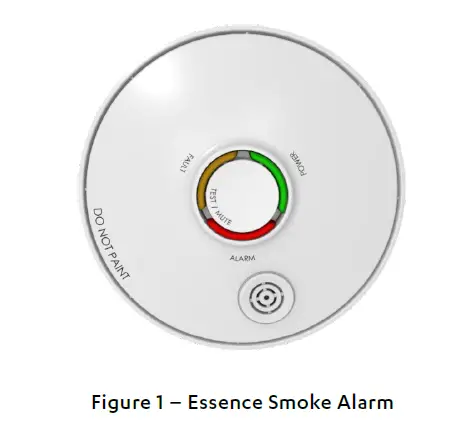
The Essence Smoke Alarm model identification number is ES800SK2.
NOTE: The images of batteries included in this user guide are for illustration purposes only. Only batteries thoroughly tested and approved by Essence should be used to meet the device’s specifications.
Installation Preparation
It is important to determine in which rooms and where in each room to install the SKs so that their positioning is most effective.
Required Equipment
Caution: Do not use the SK with smoke detector guards unless the usage has been evaluated and found suitable for the SK.
Before beginning, prepare the following equipment:
- A drill with a standard 5 mm (3/16 in.) bit
- A standard Phillips screwdriver
- Two DIN 7982 cross recessed countersunk head tapping screws (3.5 x 16 mm (.14 x .63 in.)) and wall anchors – provided
- Two 1.5V AA alkaline batteries – not provided.
Refer to Appendix A Certification Notes.
Location Recommendations
As a fire prevention device, there are standard locations and conditions for installing the SK.
Acceptable Structures for SK Usage
The SK is designed for residential units only. The SK can be used in a single-family home or in an apartment building. In multi-family buildings, each residence should install its own SKs. The SKs should be installed in the appropriate rooms, according to section 2.2.2. SKUs installed in common areas, such as on porches or in outside hallways, may not provide sufficient early warnings for residents.
WARNING! Do not use this alarm in non-residential buildings. Warehouses, industrial buildings, commercial buildings, and other non-residential buildings require special fire detection and alarm systems. See NFPA 101 (Life Safety Code), NFPA71, 72A, 72B, 72C, 72D, and 72E for fire alarm requirements in buildings not defined as “households”. The SK is not a substitute for a complete fire detection system for places where many people live or work, such as hotels, motels, dormitories, hospitals, nursing homes, and group homes of any kind, even if they once were single-family homes.
Acceptable Installation Locations
For complete coverage in residential units, SKs should be installed in all rooms in each family residence including:
- Halls and passageways
- Storage areas
- Basements
- Attics
Minimum coverage is one SK on each floor and one in each sleeping area. For optimal detection, consider the following recommendations when selecting an installation location for the SK:
- Install the SK on the ceiling.
- Install the SK in the hallway outside every separate bedroom area, as shown in Figure 2.
- Install two SKs in homes with two-bedroom areas, as shown in Figure 3.
Figure 2 shows an example of locations for installing SKs in a single residence with one bedroom. 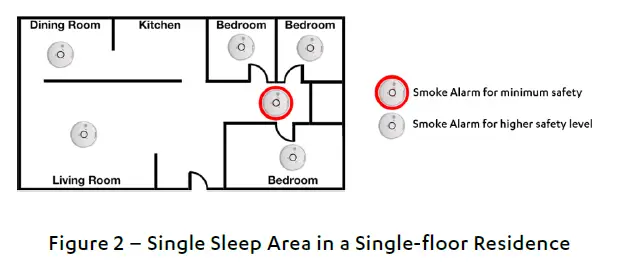 Figure 3 shows an example of locations for installing SKs in a single-floor residence with more than one bedroom.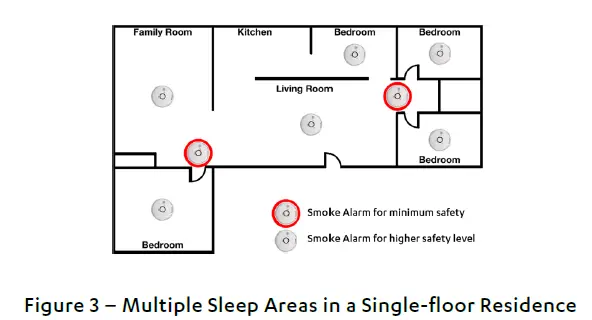
- Install an SK on every floor of a multi-floor residence, as shown in Figure 4 below.

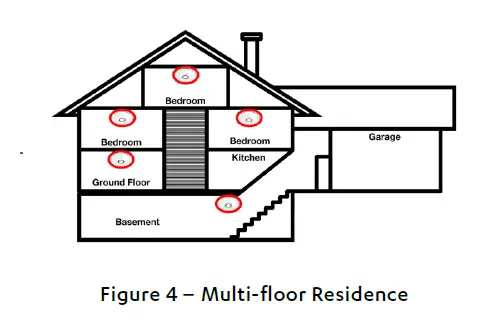
WARNING! Be sure doors or other obstructions do not block the path of smoke to the alarm.
- Install a minimum of two SKs in any household.
- Install the SK inside every bedroom.
- Install an SK at both ends of a hallway, if the hallway is more than 12 m (40 ft.) long.
- Install an SK inside every room where one sleeps with the door partly or completely closed.
- The smoke could be blocked by the door. An SK installed in a hallway may not wake up the sleeper if the door is closed.
- Install the SK in the basement at the bottom of the basement stairwell.
- For a two-floor residence, install the SK at the top of the first-to-second-floor stairwell.
- Install additional SKs in the residence in the following areas:
- Living room
- Dining room
- Family room
- Attic
- Utility
- Storage rooms
- Install the SK as close to the center of the ceiling as possible. If this is not practical, install the SK on the ceiling no closer than 10 cm (4 in.) from any wall or corner.
- If ceiling mounting is not possible and wall mounting is permitted by the local and state codes, mount the SK on a wall 10 ~ 15 cm (4 to 6 in.) from the ceiling.
- In rooms with sloped, peaked, or gabled ceilings, mount the SK 0.9 m (3 ft.) measure horizontally from the highest point of the ceiling.
Essence recommends using additional smoke alarms to obtain increased protection for areas separated by a door from the areas protected by the smoke alarms required under NFPA Standard 72, Section 2-4.1.1.
The recommended additional areas are:
- Living room
- Dining room
- Bedroom
- Kitchen
- Attic (finished or unfinished)
- Furnace rooms
- Utility room
- Basement (finished or unfinished)
- Garage (integral or attached)
- Hallways
Unacceptable Installation Locations
- False alarms occur if SKs are installed where they do not work properly. To avoid false alarms, do not install an SK in the following locations:
- Areas where combustion particles are present, such as:
- Kitchens with few windows or poor ventilation
- Garages where there may be vehicle exhaust
- Near furnaces
- Near hot water heaters
- Near space heaters
- Less than 6 m (20 ft.) from places where combustion particles are normally present, like kitchens. If a 6 m (20 ft.) distance is not possible, as in a mobile home, install the SK as far away from the combustion particles as possible, preferably on the ceiling. To prevent false alarms, provide good ventilation in such places.
Combustion particles are the by-products of something that is burning. An SK can sense combustion particles in normal air-flow paths. An SK should avoid air streams that have combustion particles. They should be located where air streams pass by kitchens.
- Damp/humid areas or near bathrooms with showers:
- Moisture in the air can enter the detection chamber. Upon cooling, water droplets can cause false alarms.
- Install SKs at least 3 m (10 ft.) from bathrooms.
- Very cold or very hot areas, including unheated buildings and outdoor rooms:
- If the temperature goes above or below the operating range of the SK, the SK will not work properly. Refer to 7 Specifications on page 26.
- Very dusty or dirty areas:
Dirt and dust can build up in the alarm’s detection chamber, making it overly sensitive. In addition, dust or dirt can block openings to the detection chamber and keep the alarm from sensing smoke.
- Drafty areas and areas near fresh air vents, air conditioners, heaters or fans:
- Fresh air vents and drafts can drive smoke away from SKs.
- Dead air spaces near the top of a peaked roof or in the corners formed by ceilings and walls:
- Dead air can prevent smoke from reaching an alarm.
- In insect-infested areas:
- If insects enter an alarm’s detection chamber, they may cause a false alarm.
- Where bugs are a problem, get rid of them before installing an alarm.
Near fluorescent lights:
- Electrical discharges from fluorescent lights can cause false alarms. Install SKs at least 1.5 m (5 ft.) from fluorescent lights.
- WARNING! To prevent injury, the SK must be securely attached to the ceiling (or wall) in accordance with the installation instructions.
Installation
To install an SK:
- Refer to 2.2 Location Recommendations on page 4 before deciding where to install the SK.
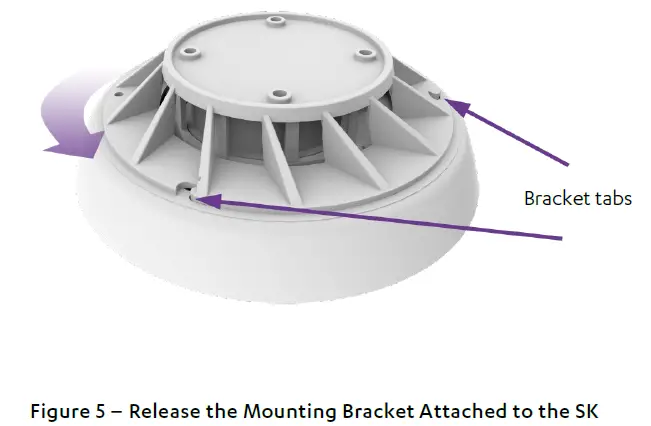
- Remove the mounting bracket from the SK by turning the bracket counter-clockwise to release the bracket tabs.

- Place the bracket in the chosen installation location.
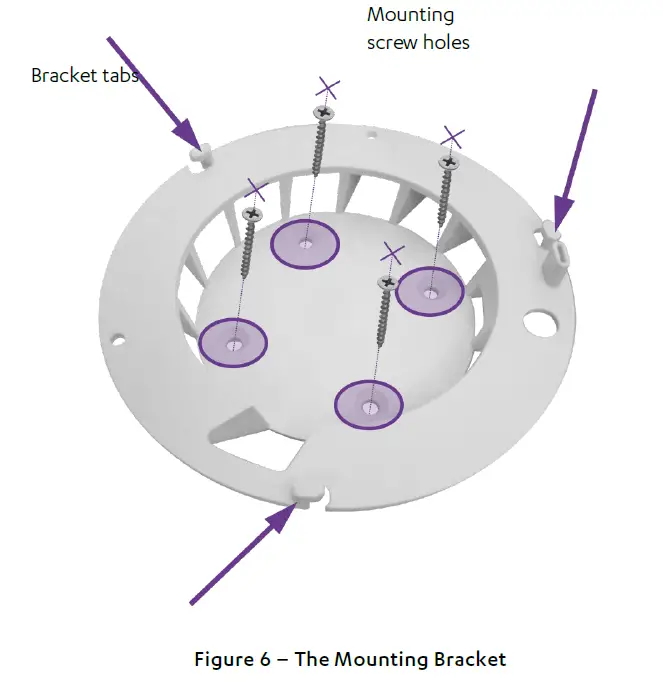
- Make a pencil mark, in each screw hole, to indicate the location of a wall anchor and screw. See the screw holes indicated in Figure 6.

- Drill a hole at each of the marks using a 5 mm (.3/16-in.) drill bit and insert the wall anchors (supplied).
Caution: When you drill the holes, prevent the dust from getting on the SK. - Mount the bracket to the ceiling (or wall) using the screws.
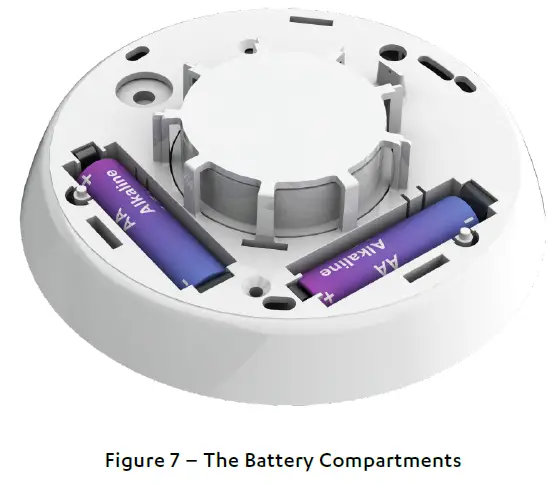
WARNING! Do not connect the SK to any other alarm or auxiliary device. Connecting anything else to the SK prevents the proper operation of the alarm. - Insert two 1.5V AA alkaline batteries into the battery compartments, according to the polarity marks (+, -).

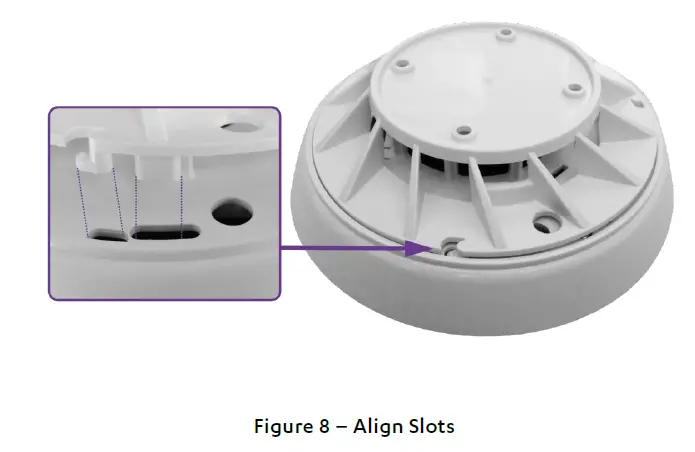
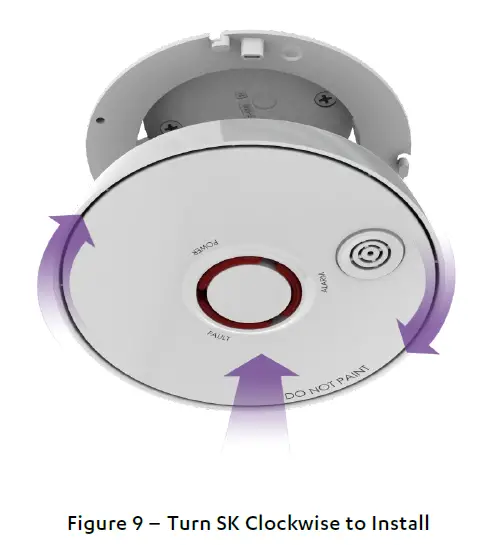
NOTE: After you insert both batteries into the SK, the tamper alarm sounds. This means the SK is working normally and indicates that the batteries are positioned correctly. - Align the SK slots with the bracket tabs, and insert the bracket tabs into the SK slots.

- Turn the SK clockwise on the bracket until you hear a click.

Testing the SK
To test the SK to ensure the installation is successful:
- Pull the SK downward to make sure it is securely attached to the mounting bracket.
WARNING! To prevent injury, the SK must be securely attached to the ceiling (or wall) in accordance with the installation instructions. - Press the TEST/MUTE button, until the alarm sounds.
The SK emits an alarm if the unit is working properly.
Operation
The SK senses the smoke that enters the smoke detection chamber. The SK does not detect gas, heat, or flames. When properly positioned, installed, and maintained, the SK is designed to give early warnings of fire by sounding an alarm. Sounding the alarm allows time for the residents to escape before the fire spreads.
When the SK detects smoke:
- An alarm is sounded.
- The alarm LED lights up Red.
- A notification is sent to the CP.
If the alarm sounds and you are not testing the SK, the SK may have detected smoke. Proceed as follows:
- Determine if:
- The alarm is real
- There is smoke
- A possible fire
- The alarm is false.
- If the alarm is triggered by a real threat of fire, evacuate as rehearsed and call the fire department.
- If the alarm is triggered by the smoke from a non-serious event such as smoke from cooking, open a window and fan the air to remove the smoke or dust. The alarm turns off as soon as the air is completely clear of smoke.
Physical Attributes
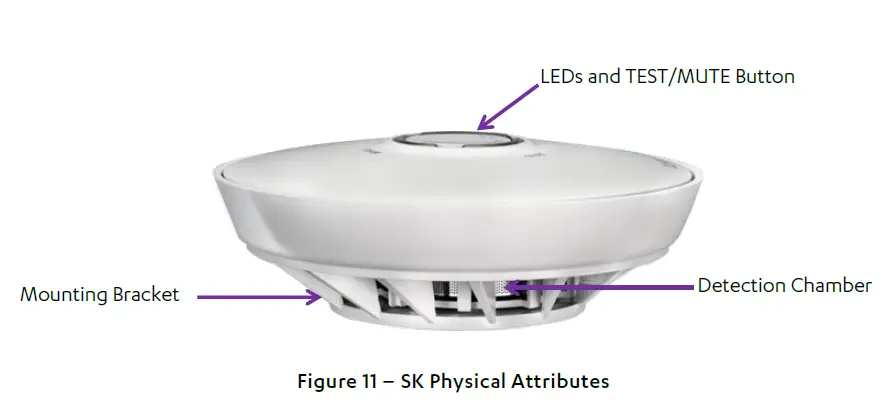
The SK includes:
- A smoke-detection chamber
- An alarm
WARNING! Do not stand close to the SK when the alarm sounds. Too much exposure to the buzzer at close range may be harmful to your hearing.
- A mounting bracket
- The TEST/MUTE button, as shown in Figure 10 on page 14, enables you to test the SK functionality. Refer to 5.3 Testing the SK on
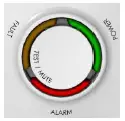
- Three LEDs to indicate the device status as follows:

- Power: Green
- Fault: Yellow
- Power: Green
- Fault: Yellow
- Alarm: Red Red
Features
The following are the characteristics and features of the SK:
- The RF connectivity with the hub can reach 500 m (1640 ft.) open air.
- Requires two 1.5V AA alkaline batteries and can remain operational for two years without an external power source.
- Essence wireless 2.4GHz communications enable the SK to send the hub alert messages.
- LTE communications allow the hub to send the user SMS and e-mail notifications.
- Warnings can be generated automatically for:
- Low battery
- Degraded smoke detection sensitivity
- Improper mounting of the device
- Tampering with the device
- Each device has a unique electronic serial number.
- The SK complies with all the following major electromagnetic standards for SKUs:
- Compatibility
- Interference
- Safety
- Security
- Reliability
- Environment
Table 1: LED Indications
| Indications | Flashing LED | Beep repeats every 25 – 35 seconds | Actions/Comments |
| Normal operation (default state) | Power – Green | No sound | |
| The battery charge is low. The batteries need to be replaced.
The low battery indication can last for up to seven days. | Fault – Yellow | One beep | Press the TEST/MUTE button to temporarily stop the LED from flashing for the next 12 hours. |
| The SK is not being tested regularly | No sound | ||
| Smoke detection sensitivity is at least 20% below the sensitivity factory setting. | One beep | Replace the SK immediately. | |
| A malfunction has occurred. | One beep | Call a technician. | |
| Smoke detection indication | Alarm – Red | The SK sounds an audible alarm of 3 beeps, a pause, and then another 3 beeps. | Push the TEST/MUTE button to suspend the alarm for five minutes. When suspended, the SK re-assesses the smoke level. If the smoke has not dissipated, the SK sounds the alarm again. |
| When the SK is removed from its bracket, the tamper switch is triggered. | A loud continuous tone | Returns to a normal state when the SK returns to its bracket. |
Alarm event reports are retrieved via the hub
- The SK only indicates one alarm at a time. The SK sounds the alarm according to priority, such as:
- First priority level: Smoke alarm
- Second priority level: Tamper alarm
- The SK reverts to the next priority level only when the status of the prior alarm is OFF.
Stopping the Alarm
WARNING! Never disable the SK or remove the battery to stop the alarm.
The SK turns off the alarm automatically when it no longer senses smoke.
- The key to stopping the alarm is to eliminate the smoke around the SK.
- To help dissipate the smoke, do the following
- Open a window (s) in the room where the SK is installed.
- Fan the air around the SK.
- If the alarm persists, clean the SK. Refer to 5.2 Cleaning the SK on page 20.
- If the alarm resumes after the SK is cleaned, verify that the location of the SK is the source of the alarm problem.
- If the location is acceptable, have the SK checked for any technical problems.
WARNING! Do not stand close to the SK when the alarm sounds. Too much exposure to the buzzer at close range may be harmful to a person’s hearing.
Silencing the Alarm
The Silence feature silences the alarm for five minutes. After five minutes, if the SK continues to sense smoke, the alarm resumes. To silence the alarm, press the Mute button on the SK.
Maintenance
Maintenance of the SK involves:
- Replacing the batteries
- Testing the SK
- Cleaning the SK
Replacing the Batteries
Replace the batteries when the SK indicates that the battery charge is low.
To replace the battery:
- Turn the SK counterclockwise until you hear a click. The SK is released from the bracket.

- Remove the old batteries.
- Insert the new batteries, according to the polarity marks (+, -).
- Align the SK slots with the bracket tabs, as illustrated in Figure 8 on page 13, and insert the bracket tabs into the SK slots.
- Turn the SK clockwise on the bracket until you hear a click.

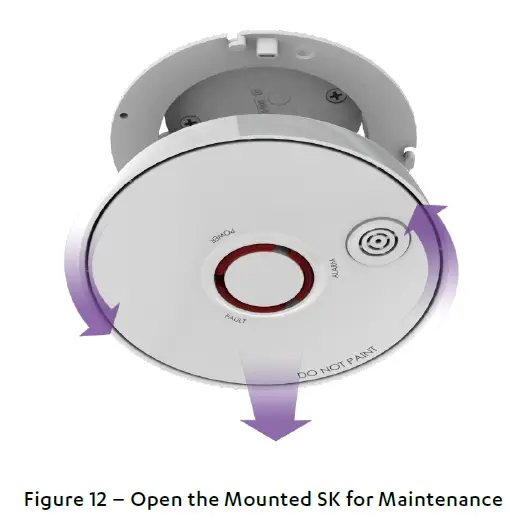
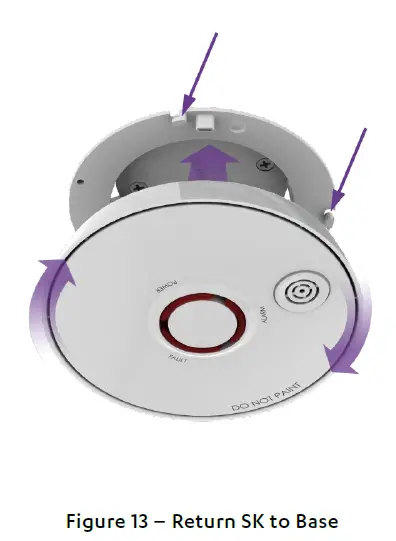
If the SK is not mounted onto the bracket correctly, a loud continuous tone is triggered.
Caution: Use only the type and make of battery specified in the device specifications listed in Table 3 on page 30. The SK may not operate properly with any other kind of battery.
Cleaning the SK
To keep the SK in working condition and clean once a year.
Caution: Never use water or cleaners to clean the SK.
To clean the SK:
- Turn the SK counterclockwise until you hear a click. The SK is released from the bracket.
- Remove the batteries.
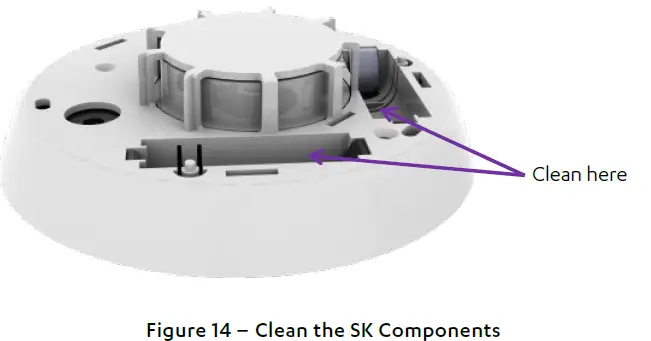
- Remove dust from SK as follows:
a. Vacuum the detection chamber, located as shown in Figure 11 on page 15.
b. Use the soft brush attachment of the vacuum cleaner to remove dust and dirt from the detection chamber.
c. Remove any dust on the SK components, especially in the battery compartments.
- Replace the batteries.
- Align the SK slots with the bracket tabs and insert the bracket tabs into the SK slots.
- Turn the SK clockwise on the bracket until you hear a click.
- Test the SK. Refer to 5.3 Testing the SK on page 21.
Testing the SK
WARNING! Never use an open flame of any kind to test the SK.
Test the SK once a month or at any time the device appears not to be working. To test the SK:
- Press the mute/test button until the buzzer sounds and all the LEDs flash.
- The Test button tests all the functions as required by Underwriters’ Laboratories.
- If the SK is working properly, the three LEDs flash rapidly and continuously.
- If the SK beeps and the LED flashes once, the SK is not working properly and needs to be repaired or serviced immediately.
- Refer to Appendix A Certification Notes on page 28.
Fire Prevention and Safety
The purpose of this section is to explain the best ways to prevent situations that can cause fires and recommendations to keep you and your family safe.
Prevention and Planning
Installing SDKs is only one step in protecting a residence from fire. Reduce the likelihood that a fire can start in one’s residence. Increase the probability that all can escape safely in the event of a fire. To reduce the likelihood of fires, implement the following tips:
- Install SKs properly. Follow all the instructions in this manual. Keep the SKs clean and test them every month.
- Replace an SK immediately if it is not working properly.
- Follow fire safety rules and prevent hazardous situations.
- Use smoking materials properly. Never smoke in bed.
- Keep matches and cigarette lighters away from children.
- Store flammable materials in proper containers. Never use them near an open flame or sparks.
- Keep electrical appliances in good condition. Do not overload electrical circuits.
- Keep stoves, fireplaces, chimneys, and barbecue grills grease free. Make sure they are properly installed and away from combustible materials.
- Keep portable heaters and open flames such as candles away from combustible materials.
- Do not allow rubbish to accumulate.
- Keep a supply of extra batteries available for the battery-powered SKs.
- Develop a family escape plan and practice it with the family.
- Draw a floor plan of the residence and find two ways to exit from each room. There should be a way to exit each bedroom without opening the door.
- Explain to the children what the SK signal means.
- Teach them that they must be prepared to leave the home by themselves if necessary.
- Show them how to check to see if doors are hot before opening them.
- Show them how to stay close to the floor and crawl if necessary.
- Show them how to use the alternate exit if the door is hot and should not be opened.
- Decide on a meeting place that is a safe distance from the residence. Make sure that all the children understand that they should go to the meeting place and wait there, in the event of a fire.
- Hold fire drills at least every six months to make sure that everyone knows what to do to escape safely, even the small children.
- Know where to go to call the Fire Department from outside the residence.
- Obtain emergency equipment, such as fire extinguishers, and teach the residents to use the equipment properly.
How to Escape if a Fire Occurs
- Review the following rules with the children each time there is a fire drill.
- Don’t panic and stay calm. Their safe escape may depend on thinking clearly and remembering what they have practiced.
- Get out of the house as quickly as possible. Follow a planned escape route. Do not stop to collect anything or to get dressed.
- Feel the doors to see if they are hot. If they are not hot, open them carefully. Do not open a door if it is hot. Use an alternate escape route.
- Stay close to the floor because smoke and hot gas rise.
- Cover your nose and mouth with a wet or damp cloth. Take short, shallow breaths.
- Keep doors and windows closed. Open them only to escape.
- Meet at the planned meeting place after leaving the house.
- Call the Fire Department as soon as possible from outside the residence. Give the emergency
- operator a name and address.
- Never go back inside a burning building.
- Contact the local Fire Department to get more information on how to prevent fires in the residence.
Limitations of SKs
Although SKs and alarms play a key role in reducing damage resulting from home fires, they can only work if they are properly located, installed, and maintained.
SKs may not be heard if residents are hearing impaired. Special SKs, such as those with both visual and audible alarms, should be installed for hearing impaired residents.
FIRE PREVENTION AND SAFETY
SKs may not wake individuals who are sound sleepers. If the sound emitted by the SK does not easily wake up children or other family members, or if there are infants or family members with mobility limitations, make sure someone is assigned to assist them in the event of an emergency or a fire drill.
Specifications
The following tables define the technical information and data about the SK.
Table 2 – SK Technical Specifications
| Device | Specifications | Requirements |
| Electrical | Power supply | Two AA alkaline batteries |
| Voltage and current ratings | Nominal voltage: 3 Quiescent current consumption: (@3V): 60µA Maximum current consumption: (@3V): 200mA | |
| Nominal battery life | Two years NOTE: The device prevents installation without batteries. | |
| System compatibility | WeR@Home+™ | |
| Wireless | Bi-directional | End-to-End bi-directional ESI protocol |
| Modulation and frequency | 2.4 Ghz DSSS (factory configured) | |
| Maximum RF range | 500 m (1640 ft.) – open air nominal | |
| Maximum transmission | 25mW (14 dBm) | |
| Encoding | 32-bit ID, over four billion combinations | |
| Environmental | Storage ambient temperature range | -20◦C – +50◦C (-4◦F – +122◦F) |
| Operating ambient temperature range | 0° – +50° C (32° – +122◦F) | |
| RF operating humidity | Up to 85% non-condensing | |
| Physical | Size | H: 46.7 mm (1.84 in.), Diameter: 135 mm (5.32 in.) |
| Weight | 210 g (0.46 lbs.) including batteries | |
| Color | Glossy White | |
| Mounting | Standard ESI 2-screws ceiling/wall mount | |
| Signals | Normal operation | Green LED flashes once every 25-35 seconds |
| Low battery warning | Buzzer beeps once every 25-35 seconds LED flashes once every 25-35 seconds | |
| Low sensitivity of alarm – due to aging devices | Every 25-35 seconds, the Buzzer beeps once with a 13-17 second delay and then the LED flashes once. | |
| Improper installation due to open tamper mechanism | Buzzer produces a loud continuous tone LED glows continuously | |
| Security and Safety | Tamper Feature | Loud continuous sound is triggered and the LED flashes continuously |
| Battery Absence | Cannot be installed without a battery | |
| Connectivity Failure | Buzzer functions even if gateway cannot be accessed | |
| Device Identification | Unique electronic serial number |
| Device | Specifications | Requirements |
| Certificates and approvals | · USA · CFR47, part 15, subpart B, class B | |
| · ICES 003 | ||
| · CFR47, part 15 subpart C | ||
| · RSS-210 | ||
| · Europe: | ||
| · EN62368–1 | ||
| · EN61000-6–3 | ||
| · EN301 489–1 | ||
· EN301–489–3 |
Table 3: Battery Specifications
| Device | Essence Part No. | Quantity | Voltage | Type | Chemistry | Approved Manufacturer | Battery Life |
| Smoke Alarm | ES800SK2 | 2 | 1.5V | AA | Alkaline | Energizer, Duracell, GP | Two years |
Appendix A Certification Notes
California State Fire Marshall requires:
Caution! As required by the California State Fire Marshall:
- Early warning” fire detection is best achieved by the installation of fire detection equipment in all rooms and areas of the household as follows:
- A smoke alarm installed in each separate sleeping area (in the vicinity, but outside of the bedrooms)
- Heat or smoke alarms in the living rooms, dining rooms, bedrooms,
- kitchens, hallways, attics, furnace rooms, closets, utility and storage rooms, basements, and attached garages.
NFPA Standard 72:
- Smoke alarms should be installed in accordance with the NFPA Standard 72 (National Fire Protection Association, Battery March Park, Quincy, MA 02169).
The NFPA Standard 72, Section 2-4 reads as follows: - “2-4.1.1 Smoke alarms shall be installed outside of each separate sleeping area in the immediate vicinity of the bedrooms and on each additional story of the family living unit including basements and excluding crawl spaces and unfinished attics.”
- The provisions of section 2-4.1.1 indicate the minimum number of smoke alarms required by this standard.
- Essence recommends using additional smoke alarms to obtain increased protection for areas separated by a door from the areas protected by the smoke alarms required under the NFPA Standard 72, Section 2-4.1.1.
- Hallways are not included in NFPA Standard 72, Section 2-4.1.1)
- Wall installations:
Wall installations are not compatible with the EN 14604 standard and are not tested by this standard.
Legal Notice
Usage of this document, and all information (including product information) provided within, are subject to the following terms and conditions, and all applicable laws. If you do not agree with these terms, please do not access or use the remainder of this document. This document contains highly confidential information, which is proprietary to Essence Security International (E.S.I.) Ltd. and/or its affiliates (hereafter, “Essence”). No part of this document’s contents may be used, copied, disclosed or conveyed to any third party in any manner whatsoever without prior written permission from Essence. The information included in this document is intended for your knowledge and for negotiation purposes only. Essence makes no implicit representations or warranties with respect to such information. The information included in this document is subject to change without notice. Any decision to rely on the information contained herein shall be at your sole responsibility, and Essence will not accept any liability for your decision to use any information or for any damages resulting therefrom. Certain laws do not allow limitations on implied warranties or the exclusion or limitation of certain damages. If these laws apply to you, some or all of the above disclaimers, exclusions, or limitations may not apply to you. By using the information contained herein, you agree that the laws of the State of Israel, without regard to principles of conflict of laws, will govern any dispute of any sort that might arise between you and Essence regarding the information contained herein, and any such dispute shall be settled exclusively in the competent courts of Tel Aviv-Jaffa, Israel. All registered or unregistered trademarks, product names, logos and other service marks mentioned within this document are the property of Essence, or their respective owners. Nothing contained herein shall be construed as conferring by implication, estoppels, or otherwise any license or right, either express or implied, under any patent or trademark of Essence or any third party. No use of any trademark may be made without the prior written authorization of Essence. This document and all of its contents are protected intellectual property of Essence. Any copying, reprinting, reuse, reproduction, adaptation, distribution or translation without the prior written permission of Essence is prohibited. Please check your End User License Agreement (EULA) for terms and conditions.
© 2021 All rights reserved to Essence Security International (E.S.I.) Ltd.
For more information, please contact:
- Essence Security International (E.S.I.) Ltd. 12 Abba Eban Avenue,
- Ackerstein Towers Bldg. D
- Herzliya Pituach, 4612001 Israel
- www.essence-grp.com
- Tel: +972-73-2447777
- Fax: +972-9-7729962
- WeR@Home+™ Smoke Alarm User Guide
 Home - Essence Group