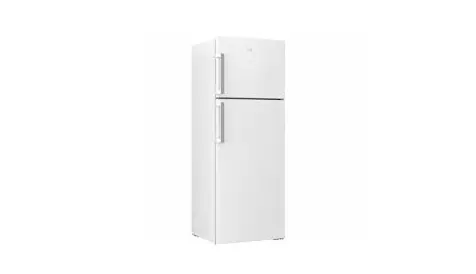
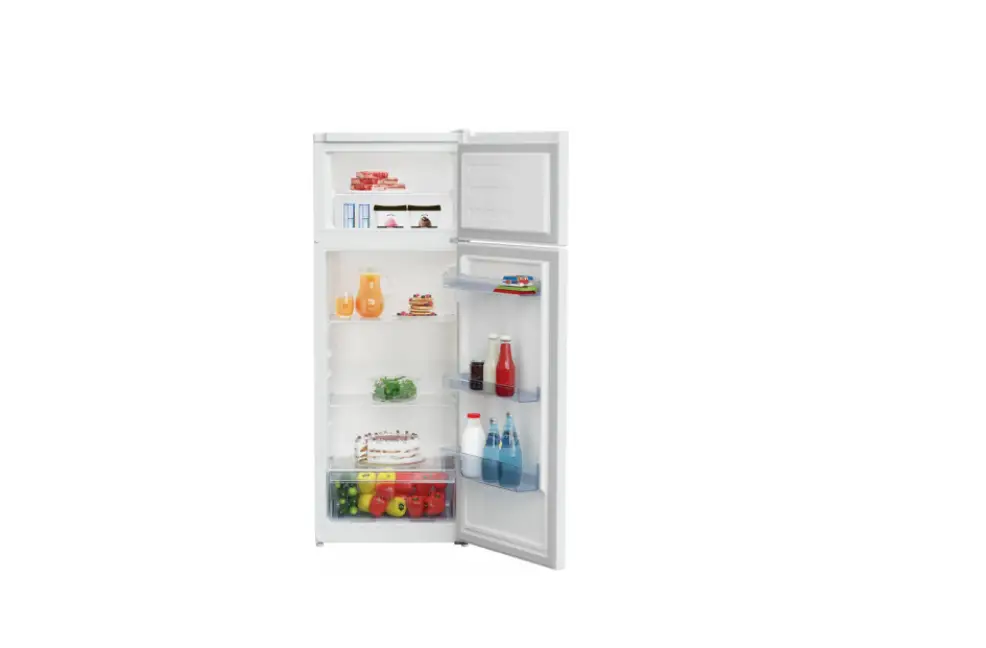
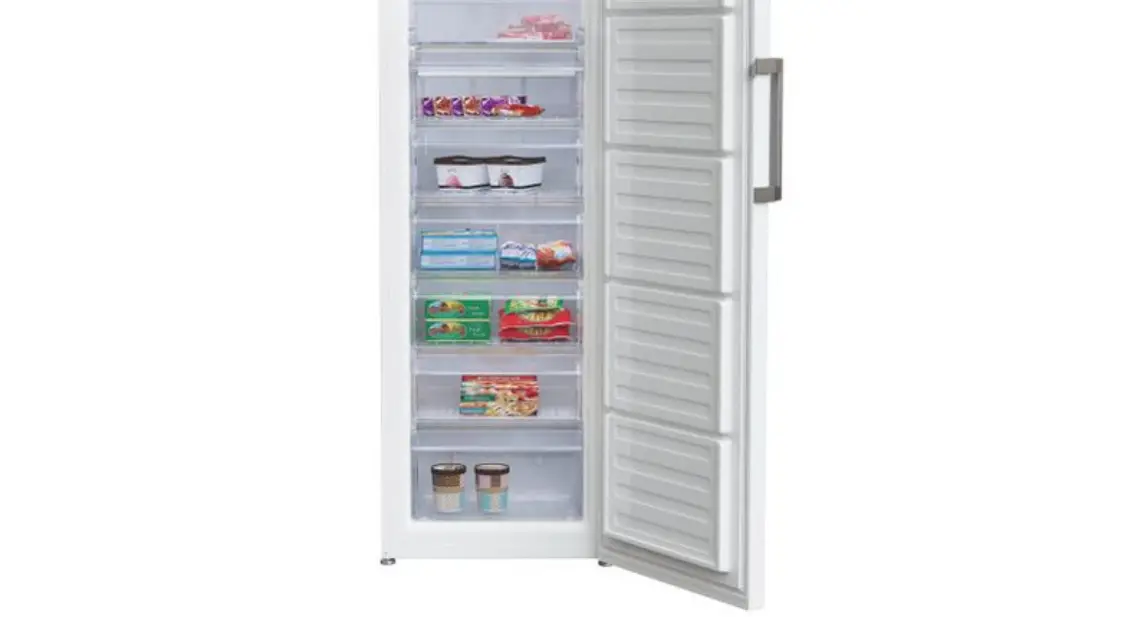
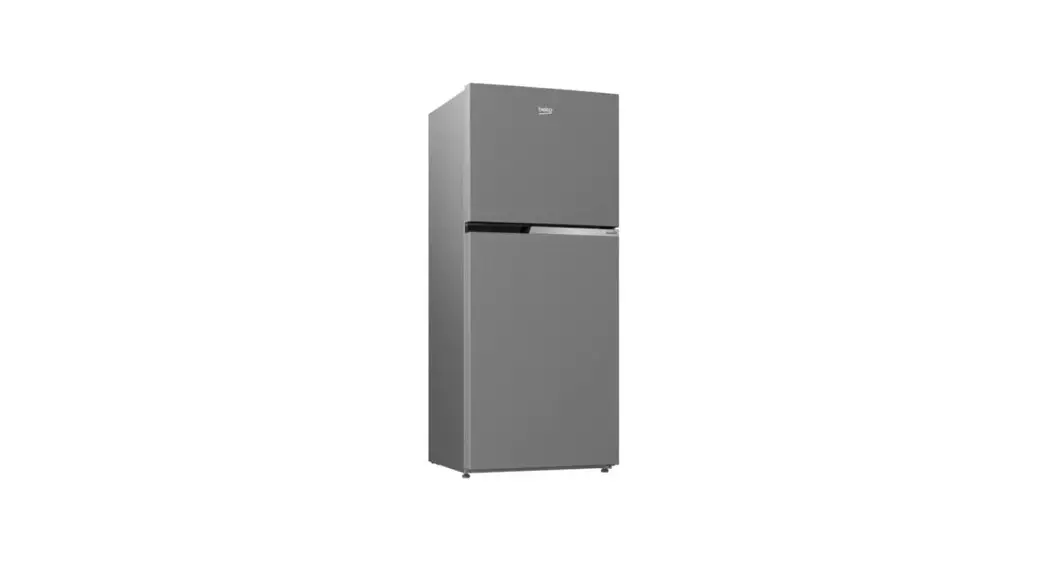
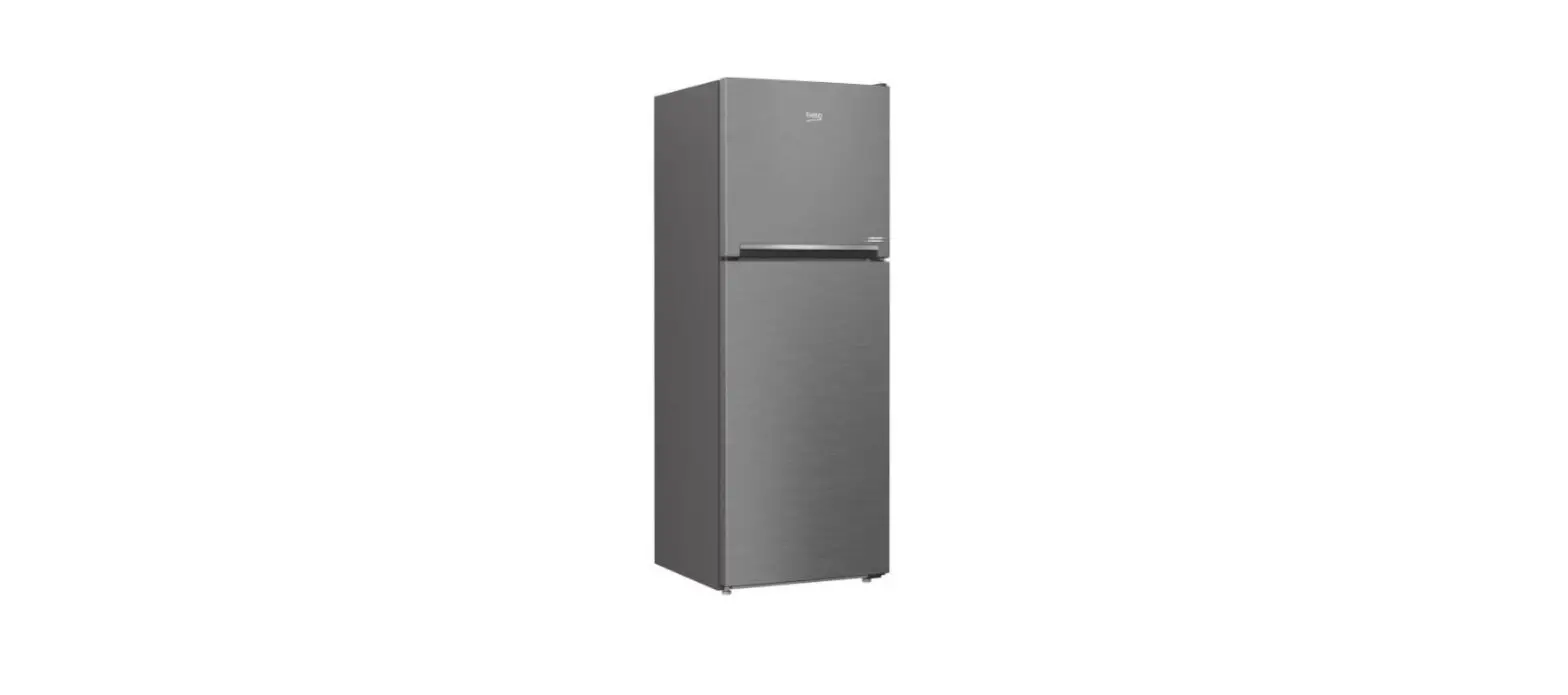
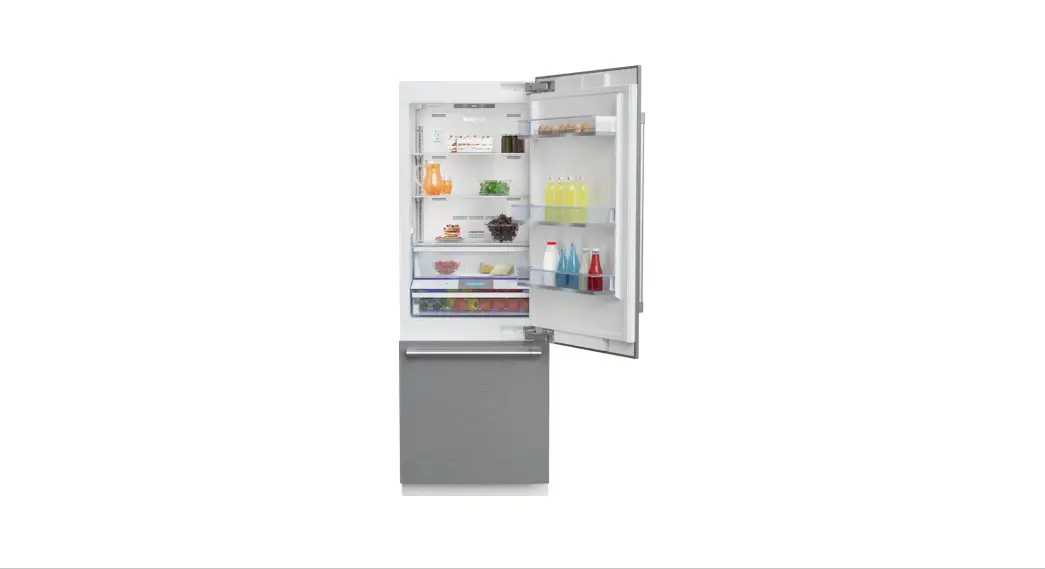
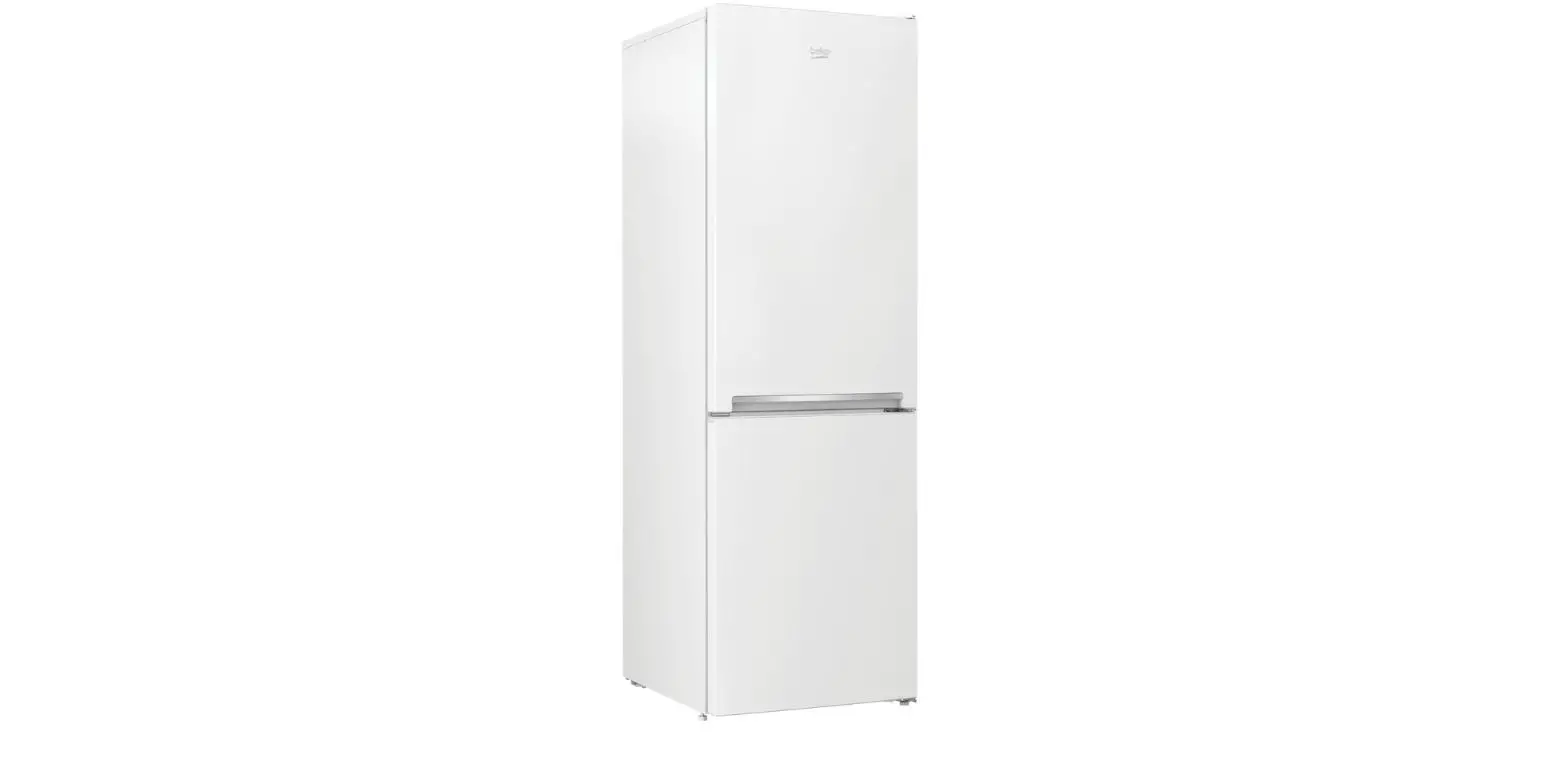
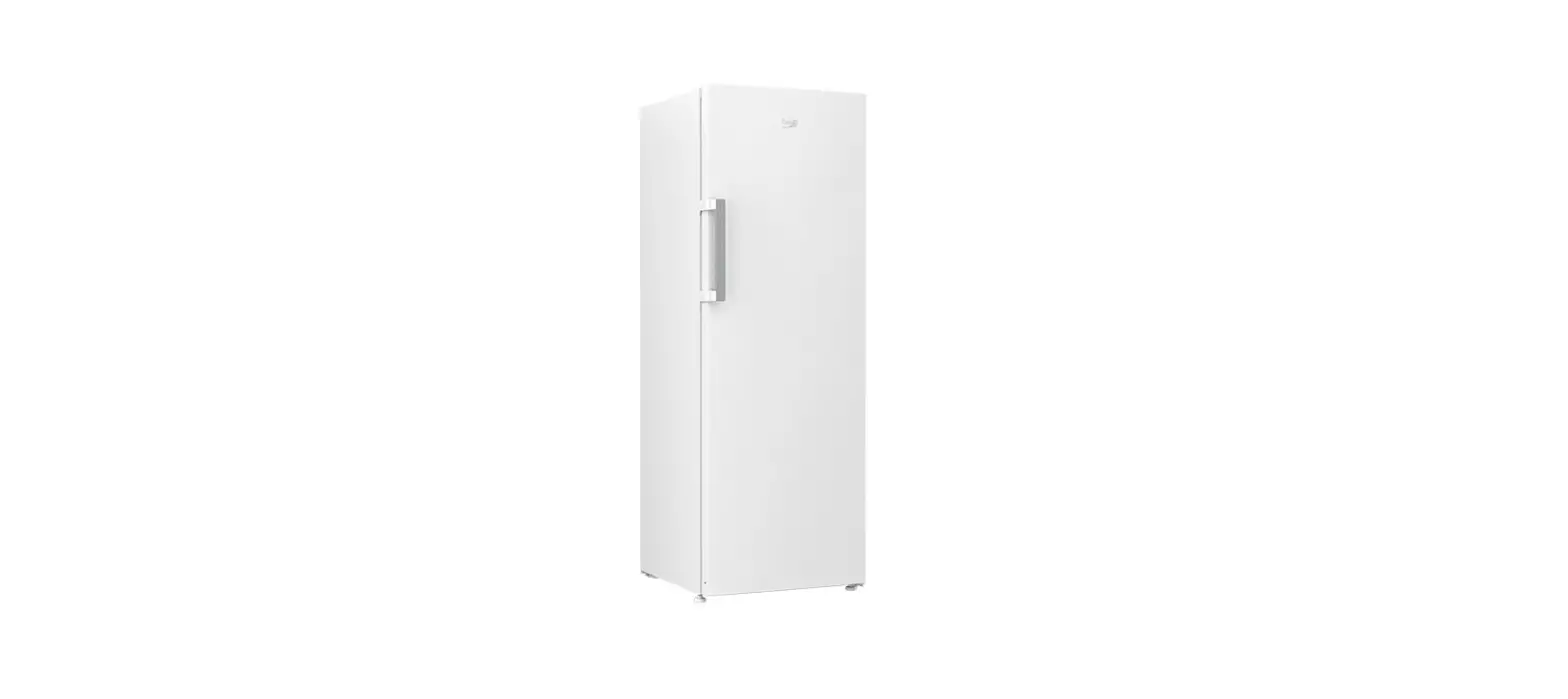
RSSE265K30WN Refrigerator 1 Door
Refrigerator
User Manual
Bedienungsanleitung
Manuel d’utilisation
Hladnjak
Korisnicki prirucnik
RSSE265K30WN
Languages: EN / DE / FR / HR
Model Number: 58 4332 0000/AA 1/2
Product Information:
The refrigerator is a modern appliance that has undergone
meticulous quality control procedures to ensure effective service.
This user manual is applicable for several other models, and any
differences between models are identified in the manual.
Important Safety Warnings:
Please read the safety instructions before installing and
operating the product. Keep the manual in an easily accessible
place as you may need it later. If you handover the product to
someone else, give the user manual as well.
Contents:
- Your appliance
- Important Safety Warnings
- Installation
- Preparation
- Using your appliance
- Maintenance and cleaning
- Troubleshooting
Product Usage Instructions:
Installation:
- Before installing and operating the product, read the manual
carefully. - Make sure you read the safety instructions.
- Disposing of the packaging and your old appliance should be
done properly. - Place and install the refrigerator in a proper location.
Preparation:
- To reverse the doors, follow the instructions in the
manual.
Using your appliance:
- Use the temperature setting knob to control the
temperature. - Defrost the refrigerator when necessary.
- Change the illumination lamp if needed.
- Adjust the legs and shelves as necessary.
Maintenance and cleaning:
- Protect plastic surfaces when cleaning.
Troubleshooting:
- If you encounter any issues, refer to the troubleshooting
section of the manual.
Refrigerator
User manual
Kühlschrank/Gefrierschrank
Bedienungsanleitung
Congélateur/Réfrigérateur
Manuel d’utilisation
Hladnjak
Korisnicki prirucnik
RSSE265K30WN
EN / DE / FR / HR
58 4332 0000/AA 1/2
Please read this user manual first! Dear Customer, We hope that your product, which has been produced in modern plants and
checked under the most meticulous quality control procedures, will provide effective service.
Therefore, read this entire user manual carefully before using the product and keep it as a reference. If you handover the product to someone else, give the user manual as well. The user manual will help you use the product in a fast and safe way. t Read the manual before installing and operating the product. t Make sure you read the safety instructions. t Keep the manual in an easily accessible place as you may need it later. t Read the other documents given with the product.
Remember that this user manual is also applicable for several other models. Differences between models will be identified in the manual. Explanation of symbols Throughout this user manual the following symbols are used:
CImportant information or useful tips. AWarning against dangerous conditions for life and property. BWarning against electric voltage.
3 EN
CONTENTS
1 Your appliance
3
2 Important Safety
Warnings
4
Intended use ……………………………………….. 4
General safety …………………………………….. 5
For products with a …………………………….9
water dispenser;………………………………….9
Child safety …………………………………………..9
Compliance with WEEE Directive and Disposing of the Waste Product: …..10
Package information…………………………10
HC warning………………………………………….10
Things to be done for energy saving11
3 Installation
12
Points to be paid attention to when the relocation of the appliance ………12
Before you start the appliance,………12
Electrical connection ………………………..13
Disposing of the packaging……………..13
Disposing of your old appliance …….13
Placing and Installation…………………….13
4 Preparation
14
Reversing the doors………………………….15
5 Using your appliance 16
Temperature Control And Adjustment …………………………………………16 Thermostat setting button……………..16 Defrost ………………………………………………… 17 Changing the illumination lamp …….17 Adjusting the legs……………………………..17
6 Maintenance and
cleaning
18
Protection of plastic surfaces ………..18
7 Troubleshooting
19
4 EN
1 Your appliance
1
*7
*2
9
*8
*8
*10
3 4 5
6
1. Temperature setting knob 2. Movable shelves 3. Defrost water collection channel –
Drain tube 4. Crisper cover 5. Crisper
6. Adjustable front feet 7. Dairy compartment 8. Adjustable door shelves 9. Egg compartment 10. Bottle shelf
*May not be available in all models
C Figures that take place in this instruction manual are schematic and may not
correspond exactly with your product. If the subject parts are not included in the product you have purchased, then it is valid for other models.
5 EN
22 Important Safety Warnings
Please review the following information. Failure to observe this information may cause
WARNING: A Do not damage the
refrigerant circuit.
injuries or material
damage. Otherwise, all
warranty and reliability
commitments
will
become invalid.
Original spare parts will
be provided for 10 years,
following the product
purchasing date.
WARNING:
Do not use
electrical
appliances inside
the food storage
A compartments
of the appliance,
unless
they
are of the type
Intended use
recommended by
WARNING:
Keep ventilation
openings, in the
A
appliance enclosure or in the built-in
structure, clear of
obstruction.
the manufacturer.
WARNING:
Do not store
explosive
A
substances as aerosol
such cans
with a flammable
propellant in this
WARNING:
appliance.
Do not use This appliance is mechanical devices intended to be used in or other means household and similar A to accelerate the applications such as defrostingprocess, staff kitchen areas in other than those shops, offices and other recommended by working environments; the manufacturer. farm houses and by
clients in hotels, motels
6 EN
and other residential t For products with a
type environments;
freezer compartment;
bed and breakfast type Do not put bottled
environments;
and canned liquid
catering and similar
beverages in the
non-retail applications. freezer compartment.
General safety
Otherwise, these may burst.
t When you want to dispose/scrap the product, we recommend you to consult the authorized service in order to learn the required information
t Do not touch frozen food by hand; they may stick to your hand.
t Unplug your refrigerator before cleaning or defrosting.
and authorized bodies. t Vapor and vaporized
t Consult your authorized service for all your questions and problems related to the refrigerator. Do not intervene or let someone intervene to the refrigerator without notifying the authorised services.
cleaning materials should never be used in cleaning and defrosting processes of your refrigerator. In such cases, the vapor may get in contact with the electrical parts and cause short circuit or electric shock.
t For products with a freezer compartment; Do not eat cone ice cream and ice cubes
t Never use the parts on your refrigerator such as the door as a means of support or step.
immediately after you t Do not use electrical
take them out of the
devices inside the
freezer compartment!
refrigerator.
(This may cause
frostbite in your mouth.)
7 EN
t Do not damage the
t Ensure highly alcoholic
parts, where the
beverages are stored
refrigerant is circulating, securely with the lid
with drilling or cutting
fastened and placed
tools. The refrigerant
upright.
that might blow out when the gas channels of the evaporator, pipe extensions or surface coatings are punctured causes skin irritations and eye injuries.
t Never store spray cans containing flammable and explosive substances in the refrigerator.
t Do not use mechanical devices or other means
t Do not cover or block
to accelerate the
the ventilation holes on defrosting process,
your refrigerator with
other than those
any material.
recommended by the
t Electrical devices must manufacturer.
be repaired by only authorised persons.
t This product is not intended to be used by
Repairs performed by
persons with physical,
incompetent persons
sensory or mental
create a risk for the user. disorders or unlearned
t In case of any failure or or inexperienced
during a maintenance or people (including
repair work, disconnect children) unless they are
your refrigerator’s mains attended by a person
supply by either turning who will be responsible
off the relevant fuse
for their safety or who
or unplugging your
will instruct them
appliance.
accordingly for use of
t Do not pull by the cable the product
when pulling off the
t Do not operate a
plug.
damaged refrigerator.
Consult with the service
8 EN
agent if you have any concerns. t Electrical safety of your refrigerator shall be guaranteed only if the earth system in your house complies with standards. t Exposing the product to rain, snow, sun and wind is dangerous with respect to electrical safety. t Contact authorized service when there is a power cable damage to avoid danger. t Never plug the refrigerator into the wall outlet during installation. Otherwise, risk of death or serious injury may arise. t This refrigerator is intended for only storing food items. It must not be used for any other purpose. t Label of technical specifications is located on the left wall inside the refrigerator.
t Never connect your refrigerator to electricity-saving systems; they may damage the refrigerator.
t If there is a blue light on the refrigerator, do not look at the blue light with optical tools.
t For manually controlled refrigerators, wait for at least 5 minutes to start the refrigerator after power failure.
t This operation manual should be handed in to the new owner of the product when it is given to others.
t Avoid causing damage on power cable when transporting the refrigerator. Bending cable may cause fire. Never place heavy objects on power cable. Do not touch the plug with wet hands when plugging the product
9 EN
t Do not plug the refrigerator if the wall outlet is loose.
t Water should not be sprayed on inner or outer parts of the product for safety purposes.
t Do not spray substances containing inflammable gases such as propane gas near the refrigerator to avoid fire and explosion risk.
t Never place containers filled with water on top of the refrigerator; in the event of spillages, this may cause electric shock or fire.
t Do not overload the refrigerator with food. If overloaded, the food items may fall down and hurt you and damage refrigerator when you open the door.
t Never place objects on top of the refrigerator; otherwise, these objects may fall down when you open or close the refrigerator’s door.
t As they require a precise temperature, vaccines, heat-sensitive medicine and scientific materials and etc. should not be kept in the refrigerator.
t If not to be used for a long time, refrigerator should be unplugged. A possible problem in power cable may cause fire.
t Refrigerator may move if adjustable legs are not properly secured on the floor. Properly securing adjustable legs on the floor can prevent the refrigerator to move.
t When carrying the refrigerator, do not hold it from door handle. Otherwise, it may be snapped.
t When you have to place your product next to another refrigerator or freezer, the distance between devices should be at least 8cm. Otherwise, adjacent side walls may be humidified.
10 EN
t The product shall never be used while the compartment which is located at the top or back of your product and in which electronic boards are available (electronic board box cover) (1) is open.
1
1
For products with a water dispenser; t Pressure for cold water
inlet shall be maximum 90 psi (6.2 bar). If your water pressure exceeds 80 psi (5.5 bar), use a pressure limiting valve in your mains system. If you do not know how to check your water
pressure, ask for the help of a professional plumber. t If there is risk of water hammer effect in your installation, always use a water hammer prevention equipment in your installation. Consult Professional plumbers is you are not sure that there is no water hammer effect in your installation. t Do not install on the hot water inlet. Take precautions against of the risk of freezing of the hoses. Water temperature operating interval shall be 33°F (0.6°C) minimum and 100°F (38°C) maximum. t Use only potable water.
Child safety
t If the door has a lock, the key should be kept away from reach of children.
t Children must be supervised to prevent
11 EN
them from tampering with the product.
Compliance with WEEE Directive and Disposing of the Waste Product:
This product complies with EU WEEE Directive (2012/19/EU). This product bears a classification symbol for waste electrical and electronic equipment (WEEE). This product has been manufactured with high quality parts and materials which can be reused and are suitable for recycling. Therefore, do not dispose the product with normal domestic waste at the end of its service life. Take it to a collection point for the recycling of electrical and electronic equipment. Please consult your local authorities to learn the nearest collection point. Help protect the environment and natural resources by recycling used products. For children’s safety, cut the power cable and break the locking mechanism of the door, if any, so that it will be non-functional before disposing of the product.
Package information
Packaging materials of the product are manufactured from recyclable materials in accordance with our National Environment Regulations. Do not dispose of the packaging materials together with the domestic or other wastes. Take them to the packaging material collection points designated by the local authorities. Do not forget…
Any recycled substance is an indispensable matter for nature and our national asset wealth.
If you want to contribute to the re-evaluation of the packaging materials, you can consult to your environmentalist organizations or the municipalities where you are located.
HC warning
If your product’s cooling system contains R600a:
This gas is flammable. Therefore, pay attention to not damaging the cooling system and piping during usage and transportation. In the event of damage, keep your product away from potential fire sources that can cause the product catch a fire and ventilate the room in which the unit is placed. Ignore this warning if your product’s cooling system contains R134a.
Type of gas used in the product is stated in the type label which is on the left wall inside the refrigerator.
Never throw the product in fire for disposal.
12 EN
Things to be done for energy saving
t Do not leave the doors of your refrigerator open for a long time.
t Do not put hot food or drinks in your refrigerator.
t Do not overload your refrigerator so that the air circulation inside of it is not prevented.
t Do not install your refrigerator under direct sunlight or near heat emitting appliances such as ovens, dishwashers or radiators. Keep your refrigerator at least 30cm away from heat emitting sources and at least 5cm from electrical ovens.
t Pay attention to keep your food in closed containers.
t For products with a freezer compartment; You can store maximum amount of food items in the freezer when you remove the shelf or drawer of the freezer. Energy consumption value stated for your refrigerator has been determined by removing freezer shelf or drawer and under maximum load. There is no harm to use a shelf or drawer according to the shapes and size of food to be frozen.
t Thawing frozen food in fridge compartment will both provide energy saving and preserve the food quality.
13 EN
3 Installation
B The manufacturer will not be liable
for any event caused by disregarding the information supplied in this user manual.
Points to be paid attention to when the relocation of the appliance
1. Your appliance should be unplugged. Before transportation of your appliance, it should be emptied and cleaned.
2. Before it is re-packaged, shelves, accessories, crisper, etc. inside your appliance should be fixed with adhesive tape and secured against impacts. Packaging should be adequate and the transportation rules on the package should be strictly observed.
3. Original packaging and foam materials should be kept for future transportations or moving.
Before you start the appliance,
Check the following before you start to use your appliance: 1. Clean the interior of the appliance as
recommended in the “Maintenance and cleaning” section.
2. Connect the plug of the appliance to the wall socket. When the fridge door is opened, fridge internal lamp will turn on.
3. When the compressor starts to operate, a sound will be heard. The liquid and gases sealed within the refrigeration system may also give rise to noise, even if the compressor is not running and this is quite normal.
4. Front edges of the appliance may feel warm. This is normal. These areas are designed to be warm to avoid condensation.
The condenser of your appliance is located on the back as shown below. In order to achieve better energy efficiency with lower energy consumption, please pull the condenser towards yourself as illustrated in picture below. *may not be available in all models
initial position
14 EN
PULL
PULL
better energy efficiency
Electrical connection
Connect your product to a grounded socket which is being protected by a fuse with the appropriate capacity. Important:
The connection must be in compliance with national regulations. t The power plug must be easily
accessible after installation.
t Electrical safety of your appliance shall be guaranteed only if the earth system in your house complies with standards.
t The voltage stated on the label located at left inner side of your product should be equal to your network voltage.
t Extension cables and multi plugs must not be used for connection.
B A damaged power cable must be
replaced by a qualified electrician.
B Product must not be operated
before it is repaired! There is the risk of electric shock!
Disposing of the packaging
The packing materials may be dangerous for children. Keep the packing materials out of the reach of children or dispose of them by classifying them in accordance with the waste instructions stated by your local authorities. Do not throw away with regular house waste, throw away on packaging pick up spots designated by the local authorities.
The packing of your appliance is produced from recyclable materials.
Disposing of your old appliance
Dispose of your old appliance without giving any harm to the environment. t You may consult your authorized
dealer or waste collection center of your municipality about the disposal of your appliance.
Before disposing of your appliance, cut out the electric plug and, if there are any locks on the door, make them inoperable in order to protect children against any danger.
Placing and Installation
A If the entrance door of the room
where the appliance will be installed is not wide enough for the appliance to pass through, then carefully remove the doors of your appliance and pass it sideways through the door. 1. Install your appliance to a place that
allows ease of use.
2. Keep your appliance away from heat sources, humid places and direct sunlight.
3. There must be appropriate air ventilation around your appliance in order to achieve an efficient operation. If the appliance is to be placed in a recess in the wall, there must be at least 5 cm distance with the ceiling and at least 5 cm with the wall. Do not place your product on the materials such as rug or carpet.
4. Place your appliance on an even floor surface to prevent jolts.
15 EN
4 Preparation
t Your refrigerator should be installed at least 30 cm away from heat sources such as hobs, ovens, central heater and stoves and at least 5 cm away from electrical ovens and should not be located under direct sunlight.
t The ambient temperature of the room where you install your refrigerator should at least be 10°C. Operating your refrigerator under cooler conditions is not recommended with regard to its efficiency.
t Please make sure that the interior of your refrigerator is cleaned thoroughly.
t If two refrigerators are to be installed side by side, there should be at least 2 cm distance between them.
t When you operate your refrigerator for the first time, please observe the following instructions during the initial six hours.
t The door should not be opened frequently.
t It must be operated empty without any food in it.
t Do not unplug your refrigerator. If a power failure occurs out of your control, please see the warnings in the “Recommended solutions for the problems” section.
t Original packaging and foam materials should be kept for future transportations or moving.
t The baskets/drawers that are provided with the chill compartment must always be in use for low energy consumption and for better storage conditions.
t Food contact with the temperature sensor in the freezer compartment may increase energy consumption of the appliance. Thus any contact with the sensor(s) must be avoided.
t In some models, the instrument panel automatically turns off 5 minutes after the door has closed. It will be reactivated when the door has opened or pressed on any key.
t Due to temperature change as a result of opening/closing the product door during operation, condensation on the door/body shelves and the glass containers is normal
16 EN
Reversing the doors
1
8 2
3
7
6 4
5
9
11 12
10
16 15
14
13
17
17 EN
5 Using your appliance
Temperature Control And Adjustment
Warm 1 23
(Or) Min.
Cold 4 5
Max.
The operating temperature is regu lated by the temperature control.
Warm 1 23
(Or) Min.
Cold 4 5
Max.
1=Lowest cooling setting (Warmest setting).
5=Highest cooling setting (Coldest setting).
The average temperature inside the fridge should be around +5°C.
Please choose the setting according to the desired temperature.
Please note that there will be different temperatures in the cooling area.
The coldest region is immediately above the vegetable compartment.
The interior temperature also depends on ambient temperature, the frequency with which the door is opened and the amount of foods kept inside.
Frequently opening the door causes the interior temperature to rise.
For this reason, it is recommended to close the door again as soon as possible after use.
Thermostat setting button
The interior temperature of your refrigerator changes for the following reasons; t Seasonal temperatures,
t Frequent opening of the door and leaving the door open for long periods,
t Food put into the refrigerator without cooling down to the room temperature,
t The location of the refrigerator in the room (e.g. exposing to sunlight).
t You may adjust the varying interior temperature due to such reasons by using the thermostat. Numbers around the thermostat button indicates the cooling degrees.
t If the ambient temperature is higher than 25°C, turn the thermostat button to maximum position.
t If the ambient temperature is lower than 25°C, turn the thermostat button to minimum position.
18 EN
Defrost
The fridge compartment defrosts automatically. The thawing water flows through the drain channel into a collection container at the rear of the device.
During defrosting, water droplets form at the back of the fridge due to the evaporator.
If not all of the drops run down, they may freeze again after defrosting but will be thawed during the next defrost cycle.
Check the flow of the thawed water from time to time.It may become blocked occasionally.
Changing the illumination lamp
To change the Bulb/LED used for illumination of your refrigerator, call your AuthorisedService.
The lamp(s) used in this appliance is not suitable for household room illumination. The intended purpose of this lamp is to assist the user to place foodstuffs in the refrigerator/ freezer in a safe and comfortable way.The lamps used in this appliance have to withstand extreme physical conditions such as temperatures below -20 °C.
(only chest and upright freezer)
Adjusting the legs
If your refrigerator is unbalanced; You can balance your refrigerator by turning its front legs as illustrated in the figure. The corner where the leg exists is lowered when you turn in the direction of black arrow and raised when you turn in the opposite direction. Taking help from someone to slightly lift the refrigerator will facilitate this process.
19 EN
6. Maintenance and cleaning
Cleaning your fridge at regular intervals will ex-
tend the service life of the product.
B WARNING:
Unplug the product before cleaning it.
t Never use gasoline, benzene or similar substances for cleaning purposes.
t Never use any sharp and abrasive tools, soap, household cleaners, detergent and
wax polish for cleaning. t For non-No Frost products, water drops
and frosting up to a fingerbreadth
occur on the rear wall of the Fridge
compartment. Do not clean it; never
apply oil or similar agents on it. t Only use slightly damp microfiber cloths
to clean the outer surface of the product.
Sponges and other types of cleaning
cloths may scratch the surface t Dissolve one teaspoon of bi-carbonate in
half litre of water. Soak a cloth with the
solution and wrung it thoroughly. Wipe
the interior of the refrigerator with this
cloth and the dry thoroughly. t Make sure that no water enters the lamp
housing and other electrical items. t If you will not use the refrigerator for a
long period of time, unplug it, remove all
food inside, clean it and leave the door
ajar. t Check regularly that the door gaskets
are clean. If not, clean them.
t To remove door and body shelves, remove all of its contents.
t Remove the door shelves by pulling them up. After cleaning, slide them from
top to bottom to install. t Never use cleaning agents or water
that contain chlorine to clean the outer
surfaces and chromium coated parts of
the product. Chlorine causes corrosion
on such metal surfaces.
6.1 Avoiding bad odours t Materials that may cause odour
are not used in the production of our refrigerators. However, due to inappropriate food preserving conditions and not cleaning the inner surface of the refrigerator as required can bring forth the problem of odour. Pay attention to following to avoid this problem: t Keeping the refrigerator clean is important. Food residuals, stains, etc. can cause odour. Therefore, clean the refrigerator with bi-carbonate dissolved in water every few months. Never use detergents or soap. t Keep the food in closed containers. Microorganisms spreading out from uncovered containers can cause unpleasant odours. t Never keep the food that have passed best before dates and spoiled in the refrigerator.
6.2 Protecting the plastic surfaces
Do not put liquid oils or oil-cooked meals in your refrigerator in unsealed containers as they damage the plastic surfaces of the refrigerator. If oil is spilled or smeared onto the plastic surfaces, clean and rinse the relevant part of the surface at once with warm water.
20 EN
7 Troubleshooting
Check this list before contacting the service. Doing so will save you time and money. This list includes frequent complaints that are not related to faulty workmanship or materials. Certain features mentioned herein may not apply to your product. The refrigerator is not working. t The power plug is not fully settled. >>> Plug it in to settle completely into the socket. t The fuse connected to the socket powering the product or the main fuse is blown. >>>
Check the fuses. Condensation on the side wall of the cooler compartment (MULTI ZONE, COOL, CONTROL and FLEXI ZONE). t The door is opened too frequently >>> Take care not to open the product’s door too
frequently. t The environment is too humid. >>> Do not install the product in humid environments. t Foods containing liquids are kept in unsealed holders. >>> Keep the foods containing
liquids in sealed holders. t The product’s door is left open. >>> Do not keep the product’s door open for long
periods. t The thermostat is set to too low temperature. >>> Set the thermostat to appropriate
temperature. Compressor is not working. t In case of sudden power failure or pulling the power plug off and putting back on,
the gas pressure in the product’s cooling system is not balanced, which triggers the compressor thermic safeguard. The product will restart after approximately 6 minutes. If the product does not restart after this period, contact the service. t Defrosting is active. >>> This is normal for a fully-automatic defrosting product. The defrosting is carried out periodically. t The product is not plugged in. >>> Make sure the power cord is plugged in. t The temperature setting is incorrect. >>> Select the appropriate temperature setting. t The power is out. >>> The product will continue to operate normally once the power is restored. The refrigerator’s operating noise is increasing while in use. t The product’s operating performance may vary depending on the ambient temperature variations. This is normal and not a malfunction. The refrigerator runs too often or for too long. t The new product may be larger than the previous one. Larger products will run for longer periods. t The room temperature may be high. >>> The product will normally run for long periods in higher room temperature. t The product may have been recently plugged in or a new food item is placed inside. >>> The product will take longer to reach the set temperature when recently plugged in or a new food item is placed inside. This is normal.
21 EN
t Large quantities of hot food may have been recently placed into the product. >>> Do not place hot food into the product.
t The doors were opened frequently or kept open for long periods. >>> The warm air moving inside will cause the product to run longer. Do not open the doors too frequently.
t The freezer or cooler door may be ajar. >>> Check that the doors are fully closed. t The product may be set to temperature too low. >>> Set the temperature to a higher
degree and wait for the product to reach the adjusted temperature. t The cooler or freezer door washer may be dirty, worn out, broken or not properly settled.
>>> Clean or replace the washer. Damaged / torn door washer will cause the product to run for longer periods to preserve the current temperature. The freezer temperature is very low, but the cooler temperature is adequate. t The freezer compartment temperature is set to a very low degree. >>> Set the freezer compartment temperature to a higher degree and check again. The cooler temperature is very low, but the freezer temperature is adequate. t The cooler compartment temperature is set to a very low degree. >>> Set the freezer compartment temperature to a higher degree and check again. The food items kept in cooler compartment drawers are frozen. t The cooler compartment temperature is set to a very low degree. >>> Set the freezer compartment temperature to a higher degree and check again. The temperature in the cooler or the freezer is too high. t The cooler compartment temperature is set to a very high degree. >>> Temperature setting of the cooler compartment has an effect on the temperature in the freezer compartment. Wait until the temperature of relevant parts reach the sufficient level by changing the temperature of cooler or freezer compartments. t The doors were opened frequently or kept open for long periods. >>> Do not open the doors too frequently. t The door may be ajar. >>> Fully close the door. t The product may have been recently plugged in or a new food item is placed inside. >>> This is normal. The product will take longer to reach the set temperature when recently plugged in or a new food item is placed inside. t Large quantities of hot food may have been recently placed into the product. >>> Do not place hot food into the product.
22 EN
Shaking or noise. t The ground is not level or durable. >>> If the product is shaking when moved slowly,
adjust the stands to balance the product. Also make sure the ground is sufficiently durable to bear the product. t Any items placed on the product may cause noise. >>> Remove any items placed on the product. The product is making noise of liquid flowing, spraying etc. t The product’s operating principles involve liquid and gas flows. >>> This is normal and not a malfunction. There is sound of wind blowing coming from the product. t The product uses a fan for the cooling process. This is normal and not a malfunction. There is condensation on the product’s internal walls. t Hot or humid weather will increase icing and condensation. This is normal and not a malfunction. t The doors were opened frequently or kept open for long periods. >>> Do not open the doors too frequently; if open, close the door. t The door may be ajar. >>> Fully close the door. There is condensation on the product’s exterior or between the doors. t The ambient weather may be humid, this is quite normal in humid weather. >>> The condensation will dissipate when the humidity is reduced. The interior smells bad. t The product is not cleaned regularly. >>> Clean the interior regularly using sponge, warm water and carbonated water. t Certain holders and packaging materials may cause odour. >>> Use holders and packaging materials without free of odour. t The foods were placed in unsealed holders. >>> Keep the foods in sealed holders. Micro-organisms may spread out of unsealed food items and cause malodour. Remove any expired or spoilt foods from the product. The door is not closing. t Food packages may be blocking the door. >>> Relocate any items blocking the doors. t The product is not standing in full upright position on the ground. >>> Adjust the stands to balance the product. t The ground is not level or durable. >>> Make sure the ground is level and sufficiently durable to bear the product. The vegetable bin is jammed. t The food items may be in contact with the upper section of the drawer. >>> Reorganize the food items in the drawer. If The Surface Of The Product Is Hot.
23 EN
t High temperatures may be observed between the two doors, on the side panels and at the rear grill while the product is operating. This is normal and does not require service maintenance!Be careful when touching these areas.
A WARNING:
If the problem persists after following the instructions in this section, contact your vendor or an Authorised Service. Do not try to repair the product.
24 EN
Sehr geehrter Kunde, Wir möchten Ihnen eine optimale Effizienz Ihres Produkts bieten, welches in modernen Betrieben mit akribischen Qualitätskontrollen hergestellt wurde. Hierzu bitten wir Sie die Bedienungsanleitung vollständig und gründlich durchzulesen und das Handbuch als Referenzquelle aufzubewahren. Wenn Sie das Produkt wiederum an eine andere Person weitergeben, geben Sie auch dieses Handbuch zusammen mit dem Produkt weiter.
Das Benutzerhandbuch gewährleistet die schnelle und sichere Anwendung des Produkts. t Vor der Installation und Anwendung des Produkts, lesen Sie bitte diese
Bedienungsanleitung sorgfältig durch. t Beachten Sie auf alle Fälle die Anleitung im Zusammenhang mit der Sicherheit. t Da Sie diese Bedienungsanleitung auch in der Zukunft benötigen werden, sollte es
leicht zugänglich aufbewahrt werden. t Lesen Sie auch die, mit dem Produkt mitgelieferten, sonstigen Belege durch.
Beachten Sie, dass diese Anleitung für mehrere Produktmodelle anwendbar ist. Differenzen zwischen den Modellen sind eindeutig aufgeführt.
Symbole und Erläuterungen In dieser Bedienungsanleitung befinden sich folgende Symbole:
C Wichtige Informationen oder hilfreiche Tipps.
A Risiken für Gesundheit und Produkt.
B Stromschlagrisiko. Verpackung des Produktes, produziert aus wiederverwertbarem Materialien entsprechend der nationalen Umweltschutzgesetze.
1 Hinweise zu Sicherheit
und Umwelt
3
2 Ihr Kühlschrank/
Gefrierschrank
8
3 Installation
9
Wenn Sie den Kühlschrank versetzen möchten: …………………………………………………. 9
Vor dem Einschalten …………………………….. 9
Elektrischer Anschluss…………………………. 9
Verpackungsmaterialien entsorgen…10
Altgeräte entsorgen……………………………..11
Aufstellung und Installation ……………….11
Füße einstellen ……………………………………..11
4 Vorbereitung
13
5 Verwendung Ihres Kühl/
Gefrierschranks
14
Kühlen……………………………………………………. 15
Lebensmittel einlagern ……………………… 15
Beleuchtung auswechseln ……………….. 16
Tür-offen-Warnung…………………………….. 16
6 Pflege und Reinigung
17
7 Problemlösung
18
2 / 25 DE
Kühlschrank/Bedienungsanleitung
1 Hinweise zu Sicherheit und Umwelt
D eser Abschn tt b etet d e zur Verme dung von Verletzungen und Mater alschäden erforderl chen S cherhe tsanwe sungen. Be N chtbeachtung d eser Anwe sungen erlöschen jegl che Garant eansprüche. Best mmungsgemäßer E nsatz
ACHTUNG: Stellen S e s cher, dass d e Entlüftungsöffnungen am Aufstellort des Gerätes n cht block ert s nd.
ACHTUNG: Um den Auftauvorgang zu beschleun gen, ke ne anderen mechan schen Geräte oder
A Geräte verwenden, d e n cht vom Hersteller empfohlen s nd.
ACHTUNG: Dem Kühlm ttelkre slauf ke ne Schäden zufügen.
ACHTUNG: In den Lebensm ttelaufbewahrungsfächern ke ne Geräte verwenden, d e n cht vom Hersteller empfohlen s nd. D eses Gerät st für d e pr vate Nutzung oder für den Gebrauch be folgenden ähnl che Anwendungen konz p ert worden – In Personalküchen n Geschäften, Büros und anderen Arbe tsumgebungen; – In Bauernhöfen, Hotels, Motels und anderen Unterkünften, für den Gebrauch der Kunden; – Umgebungen m t Übernachtung und Frühstück; – Be Cater ng und ähnl che Non-Reta lAnwendungen.
1.1 Allgeme ne S cherhe tsh nwe se
t D eses Produkt darf n cht von Personen m t körperl chen, sensor schen oder mentalen E nschränkungen, e nem Mangel an Erfahrung und W ssen oder von K ndern verwendet werden. Das Gerät darf nur dann von solchen Personen benutzt werden, wenn d ese von e ner für hre S cherhe t verantwortl chen Person beaufs cht gt werden oder angele tet worden. K nder dürfen n cht m t d esem Gerät sp elen.
t Z ehen S e be Fehlfunkt onen den Netzstecker des Gerätes.
t Warten S e nach Z ehen des Netzsteckers m ndestens 5 M nuten, bevor S e hn w eder anschl eßen.
t Z ehen S e den Netzstecker, wenn S e das Gerät n cht nutzen.
t Berühren S e den Netzstecker n emals m t feuchten oder gar nassen Händen. Z ehen S e be m Trennen n emals am Kabel, gre fen S e mmer am Stecker.
t W schen S e den Netzstecker vor dem E nstecken m t e nem trockenen Tuch ab.
t Schl eßen S e den Kühlschrank n cht an lose Steckdosen an.
t Das Gerät muss be Aufstellung, Wartungsarbe ten, Re n gung und be Reparaturen vollständ g vom Stromnetz getrennt werden.
t Falls das Produkt längere Ze t n cht benutzt w rd, z ehen S e den Netzstecker und nehmen S e sämtl che Lebensm ttel aus dem Kühlschrank.
t Verwenden S e das Produkt n cht, wenn das Fach m t Le terplatten m unteren h nteren Bere ch des Gerätes
Kühlschrank/Bedienungsanleitung
3 / 25 DE
Sicherheits- und Umweltschutzanweisungen
(Abdeckung des Fachs m t der elektr schen Karte) (1) geöffnet st.
1
1
t Benutzen S e ke ne Dampfre n ger oder ähnl che Gerätschaften zum Re n gen oder Abtauen Ihres Gerätes. Der Dampf kann n Bere che e ndr ngen, d e unter Spannung stehen. Kurzschlüsse oder Stromschläge können d e Folge se n!
t Lassen S e n emals Wasser d rekt auf das Gerät gelangen; auch n cht zum Re n gen! Es besteht Stromschlaggefahr!
t Verwenden S e das Produkt be Fehlfunkt onen n cht; es besteht Stromschlaggefahr! Wenden S e s ch als erstes an den autor s erten Kundend enst.
t Stecken S e den Netzstecker des Gerätes n e ne geerdete Steckdose. D e Erdung muss durch e nen qual f z erten Elektr ker vorgenommen werden.
t Falls das Gerät über e ne LEDBeleuchtung verfügt, wenden S e s ch zum Auswechseln sow e m Falle von Problemen an den autor s erten Kundend enst.
t Berühren S e gefrorene Lebensm ttel n cht m t feuchten Händen! S e können an Ihren Händen festfr eren!
t Geben S e ke ne Flüss gke ten n Flaschen oder Dosen n den T efkühlbere ch. S e können platzen!
t Geben S e Flüss gke ten n aufrechter Pos t on n den Kühlschrank; zuvor den Deckel s cher verschl eßen.
t Sprühen S e ke ne entflammbaren Substanzen n d e Nähe des Gerätes, da s e Feuer fangen oder explod eren könnten.
t Bewahren S e ke ne entflammbaren Mater al en oder Produkte m t entflammbaren Gasen (Sprays etc.) m Kühlschrank auf.
t Stellen S e ke ne m t Flüss gke ten gefüllten Behälter (z. B. Vasen) auf dem Gerät ab. Falls Wasser oder andere Flüss gke ten an unter Spannung stehende Te le gelangen, kann es zu Stromschlägen oder Bränden kommen.
t Setzen S e das Gerät ke nem Regen, Schnee, d rekten Sonnenl cht oder W nd aus; d es kann d e elektr sche S cherhe t gefährden. Versch eben S e das Gerät n cht durch Z ehen an den Türgr ffen. D e Gr ffe könnten s ch lösen.
t Achten S e darauf, dass weder Ihre Hände noch andere Körperte le von bewegl chen Te len m Inneren des Gerätes e ngeklemmt oder gequetscht werden.
t Achten S e darauf, n cht auf d e Tür, Schubladen oder ähnl che Te le des Kühlschranks zu treten; lehnen S e s ch n cht daran an. Andernfalls könnte das Gerät umk ppen, Te le könnten beschäd gt werden.
t Achten S e darauf, das Netzkabel n cht e nzuklemmen.
4 / 25 DE
Kühlschrank/Bedienungsanleitung
Sicherheits- und Umweltschutzanweisungen
t E n-, Zwe – und Dre -Sterne-Fächer
t Ihr Side by Side Kühl-
e gnen s ch n cht zum E nfr eren
Gefrierkombination benötigt einen
fr scher Lebensm ttel.
Festwasseranschluss.Sollte kein t Falls das Kühlgerät lange Ze t leer
Wasserhahn in der Umgebung des
ble bt, sollten S e es abschalten,
Gerätes verfügbar sein und Sie
abtauen, re n gen, trocknen und d e
müssen ihn nachträglich durch
t Tür geöffnet lassen, dam t s ch ke n
einen Fachmann installieren
Sch mmel m Gerät b ldet.
lassen, beachten Sie bitte, dass
t Achten S e be m Aufstellen des
bei Fußbodenheizungen keine
Gerätes darauf, dass das Netzkabel
Löcher in die Betondecke gebohrt
n cht e ngeklemmt oder anderwe t g
werden können, da ansonsten
beschäd gt w rd.
die Heizungsanlage beschädigt
t Platz eren S e n cht mehrere
werden kann.
Mehrfachsteckdosen oder Netzte le
t K nder m Alter von 3 b s 8 Jahren
h nter dem Gerät.
dürfen Kühlgeräte e n- und ausräumen. t Verme den S e durch E nhaltung
1.1.1 Wichtige Hinweise zum
der folgenden Anwe sungen Lebensm ttelkontam nat on: t Durch langes Öffnen der Tür kann d e Temperatur n den Fächern des Gerätes drast sch anste gen. t Re n gen S e d e Oberflächen, d e m t Lebensm tteln n Berührung kommen, sow e zugängl che Able tungssysteme regelmäß g. t Re n gen S e Wassertanks, wenn d ese 48 Stunden lang n cht benutzt wurden; spülen S e das an d e Wasserversorgung angeschlossene Wassersystem durch, falls 5 Tage lang ke n Wasser entnommen wurde. t Bewahren S e rohes Fle sch und F sch n gee gneten Behältern m Kühlschrank auf, dam t d ese n cht
Kältemittel
Wenn das Gerät über ein Kühlsystem mit R600a-Gas verfügt, achten Sie darauf, das Kühlsystem und den dazugehörigen Schlauch während der Benutzung und des Transports nicht zu beschädigen. Dieses Gas ist leicht entflammbar. Bei Beschädigungen des Kühlsystems halten Sie das Gerät von potenziellen Zündquellen (z. B. offenen Flammen) fern und sorgen für eine gute Belüftung des Raumes.
Das Typenschild an der
C linken Innenwand des Kühlschranks gibt die Art des im Gerät verwendeten Gases an.
m t anderen
1.1.2 Modelle mit
t Lebensm tteln n Berührung kommen. t Zwe -Sterne-Gefr erfächer e gnen
s ch zur Aufbewahrung von T efkühlkost, zur Lagerung oder Herstellung von Spe see s und zur Herstellung von E swürfeln.
Wasserspender
t Der Druck für d e Kaltwasserzufuhr sollte max mal 90 ps (620kPa) betragen. Wenn der Wasserdruck n Ihrem Haushalt 80 ps (550 kPa) überste gt, verwenden S e b tte
e n Druckbegrenzungsvent l n
Kühlschrank/Bedienungsanleitung
5 / 25 DIhErem Le tungssystems. Sollten S e
Sicherheits- und Umweltschutzanweisungen
n cht w ssen, w e der Wasserdruck gemessen w rd, z ehen S e b tte e nen Fach nstallateur h nzu. t Sollte für Ihr Le tungssystem das R s ko e nes Wasserschlags (Druckstoß) bestehen, verwenden S e stets e ne gee gnete Druckstoßs cherung. Wenden S e s ch b tte an e nen Fach nstallateur, falls S e s ch über d e Wasserschlaggefährdung n Ihrem Le tungssystem n cht s cher se n sollten. t Nutzen S e n emals d e Warmwasserzufuhr für den E nbau. Treffen S e gee gnete Vors chtsmaßnahmen zum Schutz der Le tungen gegen mögl ches E nfr eren. D e für den Betr eb zuläss ge Wassertemperatur l egt m Bere ch von m ndestens 0,6°C (33°F) b s h n zu max mal 38°C (100°F ). t Nutzen S e ausschl eßl ch Tr nkwasser.
1.2 Bestimmungsgemäßer Einsatz
t D eses Gerät st für den E nsatz m Haushalt vorgesehen. Er e gnet s ch n cht zum kommerz ellen E nsatz.
t Das Produkt sollte ausschl eßl ch zum Lagern von Lebensm tteln und Getränken verwendet werden.
t Bewahren S e ke ne empf ndl chen Produkte, d e kontroll erte Temperaturen erfordern (z. B. Impfstoffe, wärmeempf ndl che Med kamente,San tätsart kel etc.) m Kühlschrank auf.
t Der Hersteller haftet n cht für jegl che Schäden, d e durch
M ssbrauch oder falsche Handhabung entstehen. t Or g nalersatzte le stehen für e nen Ze traum von 10 Jahre beg nnend m t dem Kaufdatum zur Verfügung.
1.3 Sicherheit von Kindern
Bewahren Sie Verpackungsmaterialien außerhalb der Reichweite von Kindern auf.
Lassen Sie Kinder nicht mit dem Gerät spielen.
Falls das Gerät mit einer abschließbaren Tür ausgestattet ist, bewahren Sie den Schlüssel außerhalb der Reichweite von Kindern auf.
1.4 Einhaltung von
WEEE-Vorgaben und
Altgeräteentsorgung
Dieses Gerät erfüllt die Vorgaben
der EU-WEEE-Direktive (2012/19/
EU). Das Gerät wurde mit einem
Klassifizierungssymbol für elektrische
und elektronische Altgeräte (WEEE)
gekennzeichnet.
Dieses Gerät wurde aus
hochwertigen Materialien
hergestellt,
die
wiederverwendet
und
recycelt werden können.
Entsorgen Sie das Gerät am
Ende seiner Einsatzzeit nicht mit dem
regulären Hausmüll. Bringen Sie das
Gerät zu einer Sammelstelle zum
Recycling von elektrischen und
elektronischen Geräten.
Ihre Stadtverwaltung informiert Sie
gerne über geeignete Sammelstellen in
Ihrer Nähe.
6 / 25 DE
Kühlschrank/Bedienungsanleitung
Sicherheits- und Umweltschutzanweisungen
1.5 Einhaltung von RoHS-Vorgaben
t D eses Gerät erfüllt d e Vorgaben der EU-WEEE-D rekt ve (2011/65/ EU). Es enthält ke ne n der D rekt ve angegebenen gefährl chen und unzuläss gen Mater al en.
1.6 Hinweise zur Verpackung
t D e Verpackungsmater al en des Gerätes worden gemäß nat onalen Umweltschutz best mmungen aus recycl ngfäh gen Mater al en hergestellt. Entsorgen S e Verpackungsmater al en n cht m t dem regulären Hausmüll oder anderen Abfällen. Br ngen S e Verpackungsmater al en zu gee gneten Sammelstellen; Ihre Stadtverwaltung berät S e gern.
Kühlschrank/Bedienungsanleitung
7 / 25 DE
2 Ihr Kühlschrank/Gefrierschrank
1
*7
*2
9
*8
*8
*10
3 4 5
6
Temperatureinstellung Knopf Bewegliche Regale Tauwassersammelkanal –
Abflussrohr Crisper Abdeckung Crisper
Einstellbare Vorderfüße Butter- und Käsefach Verstellbare Türablagen Eierhalter Flaschenregal
* Möglicherweise nicht für alle Modelle verfügbar.
C
Abbildungen und Angaben in dieser Anleitung sind schematisch und können etwas von Ihrem Produkt abweichen. Wenn die Teile nicht im gekauften Produkt enthalten sind, gelten sie für andere Modelle.
8 / 25 DE
Kühlschrank/Bedienungsanleitung
3 Installation
HINWEIS:
B Der Hersteller haftet n cht, falls d e Angaben n d eser Anle tung n cht berücks cht gt werden.
3.1. Wenn Sie den Kühlschrank versetzen möchten:
Ziehen Sie zuvor den Netzstecker. Der Kühlschrank sollte geleert und gesäubert werden, bevor Sie ihn transportieren oder versetzen.
Sichern Sie die beweglichen Teile im Inneren (z. B. Ablagen, Zubehör, Gemüsefach etc.) vor dem Verpacken mit Klebeband, schützen Sie solche Teile vor Stößen. Umwickeln Sie die Verpackung mit kräftigem Klebeband oder stabilen Schnüren, beachten Sie die Transporthinweise auf der Verpackung.
Originalverpackung und Schaumstoffmaterialien sollten zum zukünftigen Transport des Gerätes aufbewahrt werden.
3.2. Vor dem Einschalten
Beachten Sie Folgendes, bevor Sie Ihren Kühlschrank benutzen: Bringen Sie die beiden Kunststoffkeile
wie nachstehend abgebildet an. Die Kunststoffkeile sorgen für den nötigen Abstand zwischen Kühlschrank und Wand, damit die Luft frei zirkulieren kann. (Die Abbildung dient lediglich zur Orientierung und kann daher etwas von Ihrem Gerät abweichen.)
Bitte bringen Sie die beiden Kunststoffkeile wie in der Abbildung gezeigt an. Die Kunststoffkeile sorgen für den richtigen Abstand zwischen Kühlschrank und Wand und damit für die richtige Luftzirkulation.
(Die Abbildung dient lediglich zur Orientierung und muss nicht exakt mit Ihrem Gerät übereinstimmen.
Reinigen Sie das Innere des Kühlschranks wie im Abschnitt ,,Wartung und Reinigung” beschrieben.
Schließen Sie den Netzstecker des Kühlschranks an eine Steckdose an. Beim Öffnen der Tür leuchtet die Innenbeleuchtung auf.
Beim Anspringen des Kompressors sind Geräusche zu hören. Die Flüssigkeiten und Gase im Kühlsystem können auch leichte Geräusche erzeugen, wenn der Kompressor nicht läuft. Dies ist völlig normal.
Die Vorderkanten des Kühlgerätes können sich warm anfühlen. Dies ist normal. Diese Bereiche wärmen sich etwas auf, damit sich kein Kondenswasser bildet.
3.3. Elektrischer Anschluss
Schließen Sie das Gerät an eine geerdete (Schuko-) Steckdose an. Diese Steckdose muss mit einer passenden Sicherung abgesichert werden. Wichtig:
t Der Anschluss muss gemäß lokaler Vorschriften erfolgen.
t Der Netzstecker muss nach der Installation frei zugänglich bleiben.
Kühlschrank/Bedienungsanleitung
9 / 25 DE
Installat on
Der Kondensator Ihres Geräts bef ndet s ch an der Rückse te, s ehe unten. Um e ne höhrere Energ eeff z enz m t gesenktem Stormverbrauch zu erz elen, z ehen S e den Kondensator b tte zu s ch heran, w e m B ld unten dargestellt. * Möglicherweise nicht für alle Modelle verfügbar.
v initial position
PULL
PULL
better energy efficiency
t Die elektrische Sicherheit des Gerätes ist nur dann gewährleistet, wenn das hausinterne Erdungssystem den zutreffenden Normen entspricht.
t Die auf dem Typenschild an der linken Innenwand des Gerätes angegebene Spannung muss mit Ihrer Netzspannung übereinstimmen.
t ;VN”OTDIMVTTEàSGFOLFJOF 7FSMÊOHFSVOHTLBCFMPEFS .FISGBDITUFDLEPTFOWFSXFOEFU XFSEFO
HINWEIS:
B E n beschäd gtes Netzkabel muss unverzügl ch durch e nen qual f z erten Elektr ker ausgetauscht werden.
)*/8&*4Das Gerät darf vor
B Abschluss der Reparaturen n cht mehr betr eben werden! Es besteht Stromschlaggefahr!
3.4. Verpackungsmaterialien
entsorgen
Das Verpackungsmaterial kann eine
Gefahr für Kinder darstellen. Halten
Sie
Verpackungsmaterialien
von
Kindern fern oder entsorgen Sie das
Verpackungsmaterial gemäß gültigen
Entsorgungsbestimmungen. Entsorgen Sie
das Verpackungsmaterial über geeignete
Sammelstellen (Ihre Stadtverwaltung
informiert Sie gerne), nicht über den
regulären Hausmüll.
Die Verpackung Ihres Gerätes wurde aus
recyclingfähigen Materialien hergestellt.
10 / 25 DE
Kühlschrank/Bedienungsanleitung
Installat on
3.5. Altgeräte entsorgen
Entsorgen Sie Altgeräte auf umweltfreundliche Weise. t Bei Fragen zur richtigen Entsorgung
wenden Sie sich bitte an Ihren Händler, an eine Sammelstelle oder an Ihre Stadtverwaltung.
Bevor Sie das Gerät entsorgen, schneiden Sie den Netzstecker ab und machen die Türverschlüsse (sofern vorhanden) unbrauchbar, damit Kinder nicht in Gefahr gebracht werden.
3.7. Füße einstellen
Wenn Ihr Kühlschrank nicht absolut gerade steht:
Sie können den Kühlschrank wie in der Abbildung gezeigt durch Drehen der Frontfüße ausbalancieren. Wenn Sie in Richtung des schwarzen Pfeils drehen, senkt sich die Ecke, an der sich der Fuß befindet. Beim Drehen in Gegenrichtung wird die Ecke angehoben. Diese Arbeit fällt erheblich leichter, wenn ein Helfer das Gerät etwas anhebt.
3.6. Aufstellung und Installation
)*/8&*4: Falls d e Türbre te n cht bre t genug st, um das Gerät durchzuführen, heben
A S e d e Tür des Geräts aus und versuchen S e es se tl ch durch zusch eben; falls d es auch n cht funkt on ert, wenden S e s ch an den Kundend enst.
Stellen Sie Ihren Kühlschrank an einer gut erreichbaren Stelle auf.
Platzieren Sie den Kühlschrank nicht in der Nähe von Wärmequellen oder dort, wo er Feuchtigkeit oder direktem Sonnenlicht ausgesetzt ist.
Damit das Gerät richtig arbeiten kann, müssen Sie ausreichend Platz um das Gerät herum freilassen, damit eine ordentliche Belüftung gewährleistet ist. Wenn Sie den Kühlschrank in einer Nische aufstellen, müssen Sie einen Abstand von mindestens 5 cm zur Decke und 5 cm zu den Wänden einhalten. Stellen Sie das Gerät nicht auf Materialien wie Teppichen oder Teppichböden auf.
Stellen Sie Ihren Kühlschrank auf einem ebenen Untergrund auf, damit er nicht wackelt.
Kühlschrank/Bedienungsanleitung
11 / 25 DE
Installat on
1
8 2
3
7
6 4
5
9
11 12
10
16 15
14
13
17
12 / 25 DE
Kühlschrank/Bedienungsanleitung
4 Vorbereitung
t Ihr Kühlschrank / Gefrierschrank sollte mindestens 30 cm von Hitzequellen wie Kochstellen, Öfen, Heizungen, Herden und ähnlichen Einrichtungen aufgestellt werden. Halten Sie mindestens 5 cm Abstand zu Elektroöfen ein, vermeiden Sie die Aufstellung im direkten Sonnenlicht.
t Die Zimmertemperatur des Raumes, in dem der Kühlschrank / Gefrierschrank aufgestellt wird, sollte mindestens 5 °C betragen. Im Hinblick auf den Wirkungsgrad ist der Betrieb des Kühlschrank / Gefrierschranks bei geringerer Umgebungstemperatur nicht ratsam.
t Sorgen Sie dafür, dass das Innere Ihres Kühlschrank / Gefrierschranks gründlich gereinigt wird.
t Falls zwei Kühlschränke nebeneinander platziert werden sollen, achten Sie darauf, dass sie mindestens 2 cm voneinander entfernt aufgestellt werden.
t Wenn Sie den Kühlschrank / Gefrierschrank zum ersten Mal in Betrieb nehmen, halten Sie sich bitte an die folgenden Anweisungen für die ersten sechs Betriebsstunden.
t Die Kühlschrank / Gefrierschranktür sollte nicht zu häufig geöffnet werden.
t Der Kühlschrank / Gefrierschrank muss zunächst vollständig leer arbeiten.
t Ziehen Sie nicht den Netzstecker. Falls der Strom ausfallen sollte, beachten Sie die Warnhinweise im Abschnitt ,,Empfehlungen zur Problemlösung”.
t Originalverpackung und Schaumstoffmaterialien sollten zum zukünftigen Transport des Gerätes aufbewahrt werden.
t Bei einigen Modellen schaltet sich das Bedienfeld 5 Minuten nach dem Schließen der Tür automatisch ab. Es schaltet sich wieder an, wenn die Tür geöffnet wurde oder indem man auf einen beliebigen Schalter drückt.
t Temperaturschwankungen aufgrund des Öffnens/Schließens der Kühlschranktür können zur Kondensation an den Böden in der Tür und im Kühlschrankinnern sowie an den Glasbehältern führen.
Kühlschrank/Bedienungsanleitung
13 / 25 DE
5 Verwendung Ihres Kühl/Gefrierschranks
Beim häufigen Öffnen der Tür steigt die
Innentemperatur an.
Aus diesem Grund empfehlen wir, die Tür
möglichst schnell wieder zu schließen.
Die
Innentemperatur
Ihres
Kühlschranks hängt teilweise von
folgenden Einflüssen ab:
t 4BJTPOBMF5FNQFSBUVSFO
t )ÊVGJHF5àSÚGGOVOHFO
0GGFOTUFIFO der Tür über längere Zeit,
Die Betriebstemperatur wird über die Temperatursteuerung reguliert.
Warm
Cold
1 23 (Or) Min.
4 5 Max.
0=Systemkühlung ist deaktiviert. 1=Schwächste Kühlung (wärmste Einstellung) 5=Stärkste Kühlung (kälteste Einstellung)
Die Durchschnittstemperatur im
Inneren des Kühlschranks sollte bei etwa
+5 °C liegen.
Bitte wählen Sie die der gewünschten
Temperatur entsprechende Einstellung.
Bitte beachten Sie, dass im Kühlbereich
unterschiedliche
Temperaturen
herrschen.
Der kälteste Bereich befindet sich
unmittelbar über dem Gemüsefach.
Die Innentemperatur hängt auch von der
Umgebungstemperatur ab, außerdem
davon, wie oft die Tür geöffnet wird und
wie viel Lebensmittel im Inneren gelagert
werden.
t &JOMBHFSOWPO-FCFOTNJUUFMO
PIOF diese zuvor auf Raumtemperatur abkühlen zu lassen,
t 1MBU[JFSVOHEFT,àIMTDISBOLT innerhalb des Raumes (z. B. im direkten Sonnenlicht).
t ;VN”OQBTTFOEFS*OOFOUFNQFSBUVS an solche Einflüsse benutzen Sie das Thermostat. Die Zahlen rund um die Thermostateinstelltaste zeigen die Kühlungsleistung an.
t ‘BMMTEJF6NHFCVOHTUFNQFSBUVS mehr als 32 °C beträgt, wählen Sie die höchstmögliche Thermostateinstellung.
t 4PGFSOEJF6NHFCVOHTUFNQFSBUVS weniger als 25 °C beträgt, wählen Sie die geringste Thermostateinstellung.
C
Abbildungen und Angaben in dieser Anleitung sind schematisch und können etwas von Ihrem Produkt abweichen. Wenn die Teile nicht im gekauften Produkt enthalten sind, gelten sie für andere Modelle.
14 / 25 DE
Kühlschrank/Bedienungsanleitung
Nutzung des Kühlschrank/Gefrierschranks
5.1. Kühlen
Lebensmitteln lagern Der Kühlbereich ist für die kurzfristige
Lagerung von frischen Lebensmitteln und Getränken vorgesehen.
Lagern Sie Milchprodukte im dafür vorgesehenen Bereich des Kühl-/ Gefrierschranks.
Flaschen können Sie im Flaschenhalter oder in der Flaschenablage der Tür aufbewahren.
Rohes Fleisch geben Sie am besten in einen Polyethylen-Beutel (PE) und lagern es im untersten Bereich des Kühl-/ Gefrierschranks.
Lassen Sie heiße Speisen und Getränke immer erst auf Raumtemperatur abkühlen, bevor Sie diese in den Kühl-/ Gefrierschranks stellen.
t”DIUVOH Lagern Sie hochprozentigen Alkohol nur aufrecht stehend und fest verschlossen.
t”DIUVOH Lagern Sie keine explosiven Substanzen oder Behälter mit brennbaren Treibgasen (Sprühsahne, Sprühdosen usw.) im Kühlgerät. Es besteht Explosionsgefahr.
5.2. Lebensmittel einlagern
KühlbereichTürablagen
Kleine, verpackte Lebensmittelprodukte oder Getränke (zum Beispiel Milch, Saft und Bier)
Gemüsefach Gemüse und Früchte
Gerät abtauen Das Gerät taut automatisch ab.
Eierbehälter Eier
KühlbereichAblagen
Lebensmittel
in
Pfannen, Töpfen, auf
abgedeckten Tellern,
in
geschlossenen
Behältern
Kühlschrank/Bedienungsanleitung
15 / 25 DE
Nutzung des Kühlschrank/Gefrierschranks
5.3. Beleuchtung auswechseln
Die Innenbeleuchtung Ihres Kühlschranks sollte ausschließlich vom autorisierten Kundendienst ausgetauscht werden.
Die Glühbirnen für dieses Haushaltsgerät sind für Beleuchtungszwecke nicht geeignet. Die beabsichtigte Aufgabe dieser Lampe ist es den Benutzer zu ermöglichen die Plazierung der Lebensmittel in den Kühlschrank / Eiskühltruhe sicher und bequem vorzunehmen.
Die in diesem Gerät verwendeten Lampen müssen extremen physikalischen Bedingungen, wie z. B. Temperaturen von -20 °C, standhalten.
5.4. Tür-offen-Warnung
E n S gnal ertönt, wenn d e Tür des Kühlschrank / Gefr erschranks oder des T efkühlfachs für e ne best mmte Ze t geöffnet ble bt. D eses Tons gnal verstummt, sobald S e e ne bel eb ge Taste drücken oder d e Tür w eder schl eßen.
16 / 25 DE
Kühlschrank/Bedienungsanleitung
6 Pflege und Reinigung
Eine regelmäßige Reinigung erhöht die Lebensdauer des Geräts.
B HINWEIS: Trennen S e Ihren Kühlschrank vor der Re n gung vom Netz.
t Verwenden S e zur Re n gung auf ke nen Fall scharfen oder sp tzen Gegenstände, Se fe, Hausre n gungsm ttel, Re n gungsm ttel, Gas, Benz n, Lack u. Ä.
t Schütten S e e n Teelöffel Karbonat n e nen halben L ter Wasser. Nehmen S e e n Tuch, tauchen S e es n d ese Flüss gke t und wr ngen S e es gut kräft g. W schen S e m t d esem Tuch das Innere des Geräts und trocknen S e es gründl ch.
t Achten S e darauf, dass das Gehäuse der Leuchte und sonst ge elektr schen Te le n cht m t Wasser n Berührung kommen.
t Re n gen S e d e Tür m t e nem feuchten Tuch. Entnehmen S e den Inhalt vom Innenraum und den Türen. Entfernen S e d e Regale nach oben hebend. Nach der Re n gung und dem Trocknen legen S e es w eder e n, ndem S e es nach unten sch eben.
t Verwenden S e auf ke nen Fall be der Re n gung der Außenfläche des Geräts und den verchromten Te len chlorhalt gem Wasser oder Re n gungsm ttel. Chlor führt be d eser Art von Oberflächen zur Verrostungen.
6.1.Vermeidung von schlechtem Geruch
Be der Herstellung Ihres Geräts wurden ke nerle Mater al en verwendet, d e Geruch verursachen könnten. Jedoch können aufgrund von ungee gneter Lagerung von Lebensm tteln und unsachgemäßer Re n gung der Innense te Gerüche entstehen.
Zur Verme dung d eses Problems re n gen S e es regelmäß g alle 15 Tage. t Bewahren S e d e Spe sen n
geschlossenen Behältern auf. Lebensm ttel, d e n offenen Behältern aufbewahrt werden, können durch d e Verbre tung von M kroorgan smen Gerüche verursachen. t Ke ne Lebensm ttel deren Aufbewahrungsdauer abgelaufen st m Kühlschrank aufbewahren.
6.2. Schutz von
Kunststoffoberflächen
Das Ausschütten von Öl kann den
Kunststoffoberflächen
Schaden
zufügen, daher sollte hier mit lauwarmem
Wasser gereinigt werden.
Kühlschrank/Bedienungsanleitung
17 / 25 DE
7 Problemlösung
Bitte arbeiten Sie diese Liste durch, bevor Sie sich an den Kundendienst wenden. Dies kann Ihnen Zeit und Geld sparen. In der Liste finden Sie häufiger auftretende Probleme, die nicht auf Verarbeitungs- oder Materialfehler zurückzuführen sind. Nicht alle hier beschriebenen Funktionen sind bei jedem Modell verfügbar.
Der Kühlschrank arbeitet nicht. t Der Netzstecker ist nicht richtig eingesteckt. >>> Stecken Sie den Netzstecker
bis zum Anschlag in die Steckdose.
t Die entsprechende Haussicherung ist herausgesprungen oder durchgebrannt. >>> Überprüfen Sie die Sicherung.
Kondensation an den Seitenwänden des Kühlbereiches (Multizone, Kühlkontrolle und FlexiZone). t Die Tür wurde häufig geöffnet. >>> Verzichten Sie auf häufiges Öffnen der
Kühlschranktür.
t Die Luftfeuchtigkeit in der Umgebung ist zu hoch. >>> Stellen Sie Ihren Kühlschrank nicht an Orten mit hoher Luftfeuchtigkeit auf.
t Lebensmittel mit hohem Flüssigkeitsanteil werden in offenen Behältern aufbewahrt. >>> Bewahren Sie Lebensmittel mit hohem Flüssigkeitsanteil nicht in offenen Behältern auf.
t Die Kühlschranktür steht offen. >>> Schließen Sie die Kühlschranktür.
t Das Thermostat ist auf eine sehr geringe Temperatur eingestellt. >>> Stellen Sie das Thermostat entsprechend nach.
t Der Kompressor läuft nicht. t Eine Schutzschaltung stoppt den Kompressor bei kurzzeitigen
Unterbrechungen der Stromversorgung und wenn das Gerät zu oft und schnell ein- und ausgeschaltet wird, da der Druck des Kühlmittels eine Weile lang ausgeglichen werden muss. Der Kühlschrank beginnt nach etwa sechs Minuten wieder zu arbeiten. Bitte wenden Sie sich an den Kundendienst, falls Ihr Kühlschrank nach Ablauf dieser Zeit nicht wieder zu arbeiten beginnt.
t Der Kühlschrank taut ab. >>> Dies ist bei einem vollautomatisch abtauenden Kühlschrank völlig normal. Das Gerät taut von Zeit zu Zeit ab.
t Der Netzstecker ist nicht eingesteckt. >>> Überprüfen Sie, ob der Netzstecker richtig eingesteckt wurde.
t Die Temperatur ist nicht richtig eingestellt. >>> Wählen Sie eine geeignete Temperatur.
t Der Strom ist ausgefallen. >>> Sobald die Stromversorgung wiederhergestellt ist, nimmt der Kühlschrank den Betrieb wieder auf.
18 / 25 DE
Kühlschrank/Bedienungsanleitung
Problemlösung
Das Betriebsgeräusch nimmt zu, wenn der Kühlschrank arbeitet.
t Das Leistungsverhalten des Kühlgerätes kann sich je nach Umgebungstemperatur ändern. Dies ist völlig normal und keine Fehlfunktion.
Der Kühlschrank arbeitet sehr intensiv oder über eine sehr lange Zeit.
t Ihr neues Gerät ist vielleicht etwas breiter als sein Vorgänger. Große Kühlgeräte arbeiten oft etwas länger.
t Die Umgebungstemperatur ist eventuell sehr hoch. >>> Bei hohen Umgebungstemperaturen arbeitet das Gerät etwas länger.
t Der Kühlschrank wurde möglicherweise erst vor Kurzem in Betrieb genommen oder mit Lebensmitteln gefüllt. >>> Wenn der Kühlschrank erst vor Kurzem in Betrieb genommen oder mit Lebensmitteln gefüllt wurde, dauert es einige Zeit, bis er die eingestellte Temperatur erreicht. Dies ist normal.
t Kurz zuvor wurden größere Mengen warmer Speisen in den Kühlschrank gestellt. >>> Geben Sie keine warmen oder gar heißen Speisen in den Kühlschrank.
t Die Türen wurden häufig geöffnet oder längere Zeit nicht richtig geschlossen. >>> Der Kühlschrank muss länger arbeiten, weil warme Luft in den Innenraum eingedrungen ist. Verzichten Sie auf häufiges Öffnen der Türen.
t Die Türen des Kühl- oder Tiefkühlbereiches wurden nicht richtig geschlossen. >>> Vergewissern Sie sich, dass die Türen richtig geschlossen wurden.
t Die Kühlschranktemperatur ist sehr niedrig eingestellt. >>> Stellen Sie die Kühlschranktemperatur höher ein. Warten Sie dann ab, bis die gewünschte Temperatur erreicht ist.
t Die Türdichtungen von Kühl- oder Gefrierbereich sind verschmutzt, verschlissen, beschädigt oder sitzen nicht richtig. >>> Reinigen oder ersetzen Sie die Dichtung. Beschädigte oder defekte Dichtungen führen dazu, dass der Kühlschrank länger arbeiten muss, um die Temperatur halten zu können.
Die Temperatur im Tiefkühlbereich ist sehr niedrig, während die Temperatur im Kühlbereich normal ist.
t Die Tiefkühltemperatur ist sehr niedrig eingestellt. >>> Stellen Sie die Tiefkühltemperatur wärmer ein, prüfen Sie die Temperatur nach einer Weile.
Die Temperatur im Kühlbereich ist sehr niedrig, während die Temperatur im Tiefkühlbereich normal ist.
t Die Kühltemperatur ist sehr niedrig eingestellt. >>> Stellen Sie die Kühlbereichtemperatur wärmer ein, prüfen Sie die Temperatur nach einer Weile.
Im Kühlbereich gelagerte Lebensmittel frieren ein.
t Die Kühltemperatur ist sehr niedrig eingestellt. >>> Wählen Sie eine höhere Kühlbereichtemperatur, prüfen Sie die Temperatur nach einer Weile.
Kühlschrank/Bedienungsanleitung
19 / 25 DE
Problemlösung
Die Temperatur im Kühl- oder Tiefkühlbereich ist sehr hoch. t Die Kühltemperatur ist sehr hoch eingestellt. >>> Die Kühlbereichtemperatur
wirkt sich auf die Temperatur des Tiefkühlbereichs aus. Ändern Sie die Temperatur des Kühl- oder Tiefkühlbereichs und warten Sie, bis die entsprechenden Fächer eine geeignete Temperatur erreicht haben.
t Türen wurden häufig geöffnet oder längere Zeit nicht richtig geschlossen. >>> Verzichten Sie auf häufiges Öffnen der Türen.
t Die Tür steht offen. >>> Schließen Sie die Tür komplett.
t Der Kühlschrank wurde möglicherweise erst vor Kurzem in Betrieb genommen oder mit Lebensmitteln gefüllt. >>> Dies ist normal. Wenn der Kühlschrank erst vor Kurzem in Betrieb genommen oder mit Lebensmitteln gefüllt wurde, dauert es einige Zeit, bis er die eingestellte Temperatur erreicht.
t Kurz zuvor wurden größere Mengen warmer Speisen in den Kühlschrank gestellt. >>> Geben Sie keine warmen oder gar heißen Speisen in den Kühlschrank.
t Vibrationen oder Betriebsgeräusche. t Der Boden ist nicht eben oder nicht stabil genug. >>> Falls der Kühlschrank
bei leichten Bewegungen wackelt, gleichen Sie ihn mit Hilfe seiner Füße aus. Achten Sie außerdem darauf, dass der Boden eben ist und das Gewicht des Kühlschranks problemlos tragen kann.
t Gegenstände, die auf dem Kühlschrank abgestellt wurden, können Geräusche verursachen. >>> Nehmen Sie die Gegenstände vom Kühlschrank.
Fließ- oder Spritzgeräusche sind zu hören.
t Aus technischen Gründen bewegen sich Flüssigkeiten und Gase innerhalb des Gerätes. Dies ist völlig normal und keine Fehlfunktion.
Der Kühlschrank pfeift. t Zum gleichmäßigen Kühlen werden Ventilatoren eingesetzt. Dies ist völlig
normal und keine Fehlfunktion. Kondensation an den Kühlschrankinnenflächen. t Bei heißen und feuchten Wetterlagen treten verstärkt Eisbildung und
Kondensation auf. Dies ist völlig normal und keine Fehlfunktion.
t Türen wurden häufig geöffnet oder längere Zeit nicht richtig geschlossen. >>> Verzichten Sie auf häufiges Öffnen der Türen. Schließen Sie geöffnete Türen.
t Die Tür steht offen. >>> Schließen Sie die Tür komplett. Feuchtigkeit sammelt sich an der Außenseite des Kühlschranks oder an den
Türen.
t Eventuell herrscht hohe Luftfeuchtigkeit; dies ist je nach Wetterlage völlig normal. Die Kondensation verschwindet, sobald die Feuchtigkeit abnimmt.
20 / 25 DE
Kühlschrank/Bedienungsanleitung
Problemlösung
Unangenehmer Geruch im Kühlschrank. t Der Kühlschrank wurde nicht regelmäßig gereinigt. >>> Reinigen Sie das
Innere des Kühlschranks regelmäßig mit einem Schwamm, den Sie mit lauwarmem Wasser oder einer Natron-Wasser-Lösung angefeuchtet haben.
t Bestimmte Behälter oder Verpackungsmaterialien verursachen den Geruch. >>> Verwenden Sie andere Behälter oder Verpackungsmaterial einer anderen Marke.
t Lebensmittel wurden in offenen Behältern in den Kühlschrank gegeben. >>> Lagern Sie Lebensmittel in geschlossenen Behältern. Mikroorganismen, die aus unverschlossenen Behältern entweichen, können üble Gerüche verursachen.
t Nehmen Sie Lebensmittel mit abgelaufenem Mindesthaltbarkeitsdatum sowie verdorbene Lebensmittel aus dem Kühlschrank.
Die Tür lässt sich nicht schließen. t Lebensmittelpackungen verhindern ein vollständiges Schließen der Tür. >>>
Entfernen Sie die Verpackungen, welche die Tür blockieren.
t Der Kühlschrank steht nicht vollständig eben auf dem Boden. >>> Gleichen Sie den Kühlschrank mit Hilfe der Füße aus.
t Der Boden ist nicht eben oder nicht stabil genug. >>> Achten Sie darauf, dass der Boden eben ist und das Gewicht des Kühlschranks problemlos tragen kann.
Das Gemüsefach klemmt. t Lebensmittel berühren eventuell den oberen Teil der Schublade. >>> Ordnen
Sie die Lebensmittel in der Schublade anders an.
Kühlschrank/Bedienungsanleitung
21 / 25 DE
Veuillez d’abord lire ce manuel d’utilisation ! Chère cliente, cher client, Nous aimerions que vous soyez entièrement satisfait de notre appareil, fabriqué
dans des infrastructures modernes et ayant fait l’objet d’un contrôle de qualité minutieux.
À cet effet, veuillez lire en intégralité le manuel d’utilisation avant d’utiliser cet appareil, et conservez-le pour références ultérieures. Si vous offrez cet appareil à une autre personne, remettez-lui également le manuel d’utilisation.
Le manuel d’utilisation garantit l’utilisation rapide et sécurisée du réfrigérateur. t Veuillez lire le manuel d’utilisation avant d’installer et d’utiliser le réfrigérateur,
t Respectez toujours les instructions de sécurité en vigueur,
t Tenez le manuel d’utilisation à portée pour références ultérieures,
t Veuillez lire tous les autres documents fournis avec l’appareil,
Veuillez noter que ce manuel d’utilisation peut se rapporter à plusieurs modèles de cet appareil. Le manuel indique clairement toutes les différences entre les modèles.
Symboles et commenta res Les symboles su vants sont ut l sés dans le manuel d’ut l sat on :
C A
Informat ons mportantes et rense gnements ut les,
Avert ssement relat f aux cond t ons dangereuses pour la v e et la propr été,
B R sque d’électrocut on,
L’emballage de l’appare l a été fabr qué à part r de matér aux recyclables, conformément à la lég slat on nat onale en mat ère d’env ronnement,
Table des matières
1 Instructions en matière de sécurité et d’environnement 3
Sécurité générale………………………………….. 3 Utilisation prévue……………………………………7 Sécurité enfants ……………………………………. 8 Conformité avec la directive DEEE et mise au rebut de votre ancien appareil 8 Conformité avec la directive RoHS ……. 8 Informations relatives à l’emballage….. 8
4 Préparation
13
5 Utilisation de
votre réfrigérateur
15
Réfrigération………………………………………… 16
Disposition des denrées…………………….. 16
6 Entretien et nettoyage 17
7 Dépannage
18
2 Votre réfrigérateur
9
3 Installation
10
Éléments à prendre en considération lors du déplacement de votre réfrigérateur10
Avant de mettre votre réfrigérateur en marche ……………………………………………………10
Branchement électrique ……………………..11
Mise au rebut de l’emballage ………………11
Mise au rebut de votre ancien réfrigérateur…………………………………………. 12
Disposition et Installation………………….. 12
2 / 24 FR
Le réfrigérateur/Le guide d’utilisation
1. Instructions en matière de sécurité et
A d’environnement
Cette sect on fourn t les nstruct ons de sécur té nécessa res à la prévent on des r sques de blessures ou de dommage matér el. Le non-respect de ces nstruct ons annule tous les types de garant e de l’appare l.
REMARQUE : Ne pas ut l ser des appare ls électr ques non prévus par le fabr cant dans les compart ments de conservat on des al ments. REMARQUE : Ne pas ut l ser des
1.1. Sécurité générale
appare ls électr ques
REMARQUE :
A Assurez-vous que
les trous d’aérat on ne sont pas fermés
A quand le d spos t f est dans son boît er ou est nstallé à sa place.
REMARQUE : Ne pas ut l ser tout d spos t f mécan que ou un autre d spos t f hors des
A recommandat ons du fabr cant pour accélérer le processus de décongeler.
non prévus par le fabr cant dans les compart ments de conservat on des al ments. Ce d spos t f est conçu pour l’usage domest que ou les appl cat ons s m la res su vantes : -Pour être ut l sé dans la cu s ne de personnel dans les magas ns, bureaux et autres env ronnements de trava l ; -Pour être ut l sé par les cl ents dans les ma sons de campagne et hôtels et les autres env ronnements d’hébergement ;
t Cet appareil ne doit
pas être utilisé par des
personnes atteintes de
déficience physique,
Le réfrigérateur/Le guide d’utilisation
3 / 24 FR
Instructions en matière de sécurité et d’environnement
sensorielle ou mentale, des personnes sans connaissances suffisantes et inexpérimentées ou par des enfants. Il ne doit être utilisé par ces personnes que si elles sont supervisées ou sous les instructions d’une personne responsable de leur sécurité. Ne laissez pas les enfants jouer avec l’appareil. t En cas de dysfonctionnement, débranchez l’appareil. t Après avoir débranché l’appareil, patientez 5 minutes avant de le rebrancher. Débranchez l’appareil lorsqu’il n’est pas utilisé. Évitez de toucher le cordon d’alimentation avec des mains humides ! Ne le débranchez jamais en tirant le câble, mais plutôt en tenant la prise. t Évitez de brancher le réfrigérateur lorsque la prise est instable.
t Débranchez l’appareil pendant l’installation, l’entretien, le nettoyage et la réparation.
t Si l’appareil ne sera pas utilisé pendant une longue période, débranchez-le et videz l’intérieur.
t N’utilisez pas la vapeur ou de matériel de nettoyage à vapeur pour nettoyer le réfrigérateur et faire fondre la glace. La vapeur peut atteindre les zones électrifiées et causer un court-circuit ou l’électrocution !
t Ne lavez pas l’appareil par pulvérisation ou aspersion d’eau ! Risque d’électrocution !
t Ne jamais utiliser le produit si la section située dans sa partie supérieure ou inférieure avec cartes de circuits imprimés électroniques à l’intérieur est ouverte (couvercle de cartes de circuits imprimés électroniques) (1).
4 / 24 FR
Le réfrigérateur/Le guide d’utilisation
Instructions en matière de sécurité et d’environnement
1 1
t En cas de dysfonctionnement, n’utilisez pas l’appareil car il peut entraîner une électrocution. Contactez le service agréé avant de procéder à toute intervention.
t Branchez votre appareil à une prise de mise à la terre. La mise à la terre doit être effectuée par un technicien qualifié.
t Si l’appareil possède un éclairage de type LED, contactez le service agréé pour tout remplacement ou en cas de problème.
t Évitez de toucher les aliments congelés avec des mains humides ! Ils pourraient coller à vos mains !
t Ne placez pas de boissons en bouteille ou en canette dans le compartiment de congélation. Elles risquent d’exploser !
t Placez les boissons verticalement, dans des récipients convenablement fermés.
t Ne pulvérisez pas de substances contenant des gaz inflammables près du réfrigérateur pour éviter tout risque d’incendie et d’explosion.
t Ne conservez pas de substances et produits inflammables (vaporisateurs, etc.) dans le réfrigérateur.
t Ne placez pas de récipients contenants des liquides au-dessus du réfrigérateur. Les projections d’eau sur des pièces électrifiées peuvent entraîner des électrocutions et un risque d’incendie.
Le réfrigérateur/Le guide d’utilisation
5 / 24 FR
Instructions en matière de sécurité et d’environnement
t L’exposition du produit à la pluie, à la neige, au soleil et au vent présente des risques pour la sécurité électrique. Quand vous transportez le réfrigérateur, ne le tenez pas par la poignée de la porte. Elle peut se casser.
t Évitez que votre main ou toute autre partie de votre corps ne se retrouve coincée dans les parties amovibles de l’appareil.
t Évitez de monter ou de vous appuyer contre la porte, les tiroirs ou toute autre partie du réfrigérateur. Cela peut faire tomber l’appareil et l’endommager.
t Évitez de coincer le câble d’alimentation.
1.1.1 Avertissement sur l’usage de fluides frigorigènes S votre réfr gérateur possède un système de refro d ssement ut l sant le gaz R600a, év tez d’endommager le système de refro d ssement et sa tuyauter e pendant l’ut l sat on et le transport de l’appare l. Ce gaz est nflammable. S le système de refro d ssement est endommagé, élo gnez l’appare l des flammes et aérez la p èce mméd atement.
L’étiquette en dessous du com-
C partiment fraicheur indique le type de gaz utilisé. 1.1.2 Pour les modèles avec distributeur d’eau reliés à l’eau courante t La pression de l’eau fro-
ide à l’entrée ne doit pas excéder 90 psi (6.2 bar). Si votre pression d’eau dépasse 80 psi (5,5 bar), utilisez une soupape de
6 / 24 FR
Le réfrigérateur/Le guide d’utilisation
Instructions en matière de sécurité et d’environnement
limitation de pression sur votre réseau de conduite. Si vous ne savez pas comment vérifiez la pression de l’eau, demandez l’assistance d’un plombier professionnel. t S’il existe un risque d’effet coup de bélier sur votre installation, utilisez systématiquement un équipement de protection contre l’effet coup de bélier sur celleci. Consultez des plombiers professionnels si vous n’êtes pas sûr de la présence de cet effet sur votre installation. t Ne l’installez pas l’arrivée d’eau chaude. Prenez des précautions contre le risque de congélation des tuyaux. L’intervalle de fonctionnement de la température des eaux doit être de 33 F (0,6°C) au moins et de 100 F (38 C) au plus. t Utilisez uniquement de l’eau potable.
1.2. Utilisation prévue t Cet appareil est exclu-
sivement conçu pour un usage domestique. Il n’est pas destiné à un usage commercial. t Il doit être exclusivement utilisé pour le stockage des denrées et des boissons. t Les produits qui nécessitent un contrôle de température précis (vaccins, médicaments sensibles à la chaleur, matériels médicaux, etc.) ne doivent pas être conservés dans le réfrigérateur. t Le fabricant ne sera pas tenu responsable de tout dommage résultant d’une mauvaise utilisation ou manipulation. t Les pièces détachées d’origine sont disponibles pendant 10 ans, à compter de la date d’achat du produit.
Le réfrigérateur/Le guide d’utilisation
7 / 24 FR
Instructions en matière de sécurité et d’environnement
1.3. Sécurité enfants t Conservez les matériaux
d’emballage hors de la portée des enfants. t Ne laissez pas les enfants jouer avec l’appareil. t Si la porte de l’appareil est dotée d’une serrure, gardez la clé hors de la portée des enfants.
1.4. Conformité avec la directive DEEE et mise au rebut de votre ancien appareil
Cet appare l est conforme à la d rect ve DEEE de l’Un on européenne (2012/19/UE). Il porte un symbole de class f cat on pour la m se au rebut des équ pements électr ques et électron ques (DEEE).
Le présent produ t a été fabr qué avec des p èces et du matér el de qual té supér eure suscept bles d’être réut l sés et adaptés au recyclage. Ne le mettez pas au rebut avec les ordures ménagères et d’autres déchets à la f n de sa durée de v e. Rendez-vous dans un po nt de collecte pour le recyclage de tout matér el électr que et électron que. Rapprochez-vous des autor tés de votre local té pour plus d’ nformat ons concernant ces po nts de collecte.
1.5. Conformité avec la directive RoHS
t Cet appare l est conforme à la d rect ve DEEE de l’Un on européenne (2011/65/UE). Il ne comporte pas les matér aux dangereux et nterd ts ment onnés dans la d rect ve.
1.6. Informations relatives à l’emballage
t Les matér aux d’emballage de cet appare l sont fabr qués à part r de matér aux recyclables, conformément à nos réglementat ons nat onales en mat ère d’env ronnement. Ne mettez pas les matér aux d’emballage au rebut avec les ordures ménagères et d’autres déchets. Amenez-les plutôt aux po nts de collecte des matér aux d’emballage, dés gnés par les autor tés locales.
8 / 24 FR
Le réfrigérateur/Le guide d’utilisation
2 Votre réfrigérateur
1
*7
*2
9
*8
*8
*10
3 4 5
6
Bandeau indicateur de commande électronique
Clayettes en verre réglables
Voie de récupération de l’eau de dégivrage – Tube d’écoulement
Couvercle du bac à légumes
Bac à légumes
Pieds réglables Sections pour Beurre et Fromages Balconnet de porte Support à oeufs Clayette range-bouteilles
*Peut ne pas être possible dans tous les modèles.
C
Les illustrations présentées dans cette notice d’utilisation sont schématiques et peuvent ne pas correspondre exactement à votre produit. Si des pièces présentées ne sont pas comprises dans le produit que vous avez acheté, elles sont valables pour d’autres modèles.
Le réfrigérateur/Le guide d’utilisation
9 / 24 FR
3 Installation
AVERTISSEMENT Dans l’hypothèse ou l’ nformat on contenue dans
B ce manuel n’a pas été pr se en compte par l’ut l sateur, le fabr cant ne sera aucunement responsable en cas de problèmes.
Éléments à prendre en considération lors du déplacement de votre réfrigérateur
Votre réfrigérateur doit être débranché.Avant le transport de votre réfrigérateur, vous devez le vider et le nettoyer.Avant d’emballer votre réfrigérateur, vous devez fixer ses étagères, bac, accessoires, etc, avec du ruban adhésif afin de les protéger contre les chocs.
L’emballage doit être solidement attaché avec du ruban adhésif épais ou avec un cordage solide. La règlementation en matière de transport et de marquage de l’emballage doit être strictement respectée.
L’emballage et les matériaux de protection d’emballage doivent être conservés pour les éventuels transports ou déplacements à venir.
a)Vous pouvez installer les 2 cales en plastique comme illustré dans le schéma. Les cales en plastique maintiendront la distance nécessaire entre votre réfrigérateur et le mur pour permettre une bonne circulation de l’air. (Le schéma présenté est fourni à titre indicatif et peut ne pas correspondre exactement avec votre produit.)
Nettoyez l’intérieur du réfrigérateur tel qu’indiqué dans la section « Entretien et nettoyage ».
Insérez la prise du réfrigérateur dans la prise murale. Lorsque la porte du réfrigérateur est ouverte, la lampe interne du réfrigérateur s’éclaire.
Lorsque le compresseur commence à fonctionner, il émettra un son. Le liquide et les gaz intégrés au système du réfrigérateur peuvent également faire du bruit, que le compresseur soit en marche ou non. Ceci est tout à fait normal.
Les parties antérieures du réfrigérateur peuvent chauffer. Ce phénomène est normal. Ces zones doivent en principe être chaudes pour éviter tout risque de condensation.
Avant de mettre votre réfrigérateur en marche
2-a
Vérifiez les points suivants avant de commencer à utiliser votre réfrigérateur Fixez les câles en plastique tel
qu’indiqué sur le schéma ci-dessous. Les câles en plastique servent à maintenir une distance permettant la circulation de l’air entre le réfrigérateur et le mur. (Cette image n’est donnée qu’à titre indicatif ; elle n’est pas identique à votre produit.)
10 / 24 FR
Le réfrigérateur/Le guide d’utilisation
Installation
C) Le condenseur de votre appare l est s tué à l’arr ère, tel que l’ nd que le schéma c -dessous. Pour garant r un me lleur rendement énergét que assoc é à une fa ble consommat on de l’énerg e, t rez le condenseur vers vous tel qu’ nd que le schéma c -dessous. * Peut ne pas être possible dans tous les modèles.
2-b
PULL
PULL
v
initial position
better energy efficiency
Branchement électrique
Branchez votre réfrigérateur à une prise électrique protégée par un fusible ayant une capacité appropriée. Important :
t Le branchement doit être conforme aux normes en vigueur sur le territoire national.
t La fiche du câble d’alimentation doit être facilement accessible après installation.
t La sécurité électrique du réfrigérateur n’est assurée que si le système de mise à la terre de votre domicile est conforme aux normes en vigueur.
t La tension indiquée sur l’étiquette située sur la paroi gauche interne de votre produit doit correspondre à celle fournie par votre réseau électrique.
t -FTSBMMPOHFTFUQSJTFTNVMUJWPJFT
OFEPJWFOUQBTÐUSFVUJMJTÏTQPVS
CSBODIFSMBQQBSFJM
AVERTISSEMENT:
B Un câble d’alimentation endommagé doit être remplacé par un électricien qualifié.
AVERTISSEMENT: L’appareil ne doit pas être mis
B en service avant d’être réparé ! Cette précaution permet d’éviter tout risque de choc électrique!
Mise au rebut de l’emballage
Les matériaux d’emballage peuvent être dangereux pour les enfants. Tenez les matériaux d’emballage hors de portée des enfants ou jetez-les conformément aux consignes établies par les autorités locales en matière de déchets. Ne les jetez pas avec les déchets domestiques,déposez-les dans les centres de collecte désignés par les autorités locales.
L’emballage de votre appareil est produit à partir de matériaux recyclables.
Le réfrigérateur/Le guide d’utilisation
11 / 24 FR
Installation
Mise au rebut de votre ancien réfrigérateur
Débarrassez-vous
de
votre
ancien réfrigérateur sans nuire à
l’environnement.
t Vous pouvez consulter le service après-
vente agrée ou le centre chargé de la
mise au rebut dans votre municipalité
pour en savoir plus sur la mise au rebut
de votre produit.
Avant de procéder à la mise au rebut de votre machine, coupez la prise électrique et, le cas échéant, tout verrouillage susceptible de se trouver sur la porte. Rendez-les inopérants afin de ne pas exposer les enfants à d’éventuels dangers.
Disposition et Installation
Une ventilation d’air autour du réfrigérateur doit être aménagée pour obtenir un fonctionnement efficace. Si le réfrigérateur est placé dans un enfoncement du mur, il doit y avoir un espace d’au moins 5 cm avec le plafond et d’au moins 5 cm avec le mur. Ne placez pas l’appareil sur des revêtements tels qu’un tapis ou de la moquette.
Placez le réfrigérateur sur une surface plane afin d’éviter les à-coups.
AVERTISSEMENT: S la porte d’entrée de la p èce où sera nstallé le réfr gérateur
B n’est pas assez large pour la sser passer le réfr gérateur, appelez le serv ce après-vente qu ret rera les portes du réfr gérateur et le fera entrer latéralement dans la p èce.
Installez le réfrigérateur dans un emplacement qui permette une utilisation pratique.
Maintenez le réfrigérateur éloigné de toutes sources de chaleur, des endroits humides et de la lumière directe du soleil.
12 / 24 FR
Le réfrigérateur/Le guide d’utilisation
4 Préparation
t Votre réfrigérateur doit être installé à au moins 30 cm des sources de chaleur telles que les plaques de cuisson, les fours, appareils de chauffage ou cuisinières, et à au moins 5 cm des fours électriques. De même, il ne doit pas être exposé à la lumière directe du soleil.
t Veuillez vous assurer que l’intérieur de votre appareil est soigneusement nettoyé.
t La température ambiante de la pièce où vous installez le réfrigérateur doit être d’au moins 5°C. Faire fonctionner l’appareil sous des températures inférieures n’est pas recommandé et pourrait nuire à son efficacité.
t Si deux réfrigérateurs sont installés côte à côte, ils doivent être séparés par au moins 2 cm.
t Lorsque vous faites fonctionner le réfrigérateur pour la première fois, assurez-vous de suivre les instructions suivantes pendant les six premières heures.
t La porte ne doit pas être ouverte fréquemment.
t Le réfrigérateur doit fonctionner à vide, sans denrées à l’intérieur.
t Ne débranchez pas le réfrigérateur. Si une panne de courant se produit, veuillez vous reporter aux avertissements dans la section « Solutions recommandées aux problèmes ».
t L’emballage et les matériaux de protection d’emballage doivent être conservés pour les éventuels transports ou déplacements à venir.
t Les paniers/tiroirs fournis avec le compartiment rafraîchissement doivent être utilisés de manière continue pour une consommation énergétique minimale et de meilleures conditions de conservation.
t Le contact entre le capteur de température et les denrées alimentaires à l’intérieur du compartiment de congélation peut augmenter la consommation énergétique de l’appareil. Pour cette raison, les contacts avec les capteurs doivent être évités.
t Dans certains modèles, le tableau de bord s’éteint automatiquement 5 minutes après la fermeture de la portière. Il est réactivé à l’ouverture de la portière ou lorsqu’on appuie sur n’importe quelle touche.
t En raison des variations de température dues à l’ouverture ou à la fermeture de la porte de l’appareil en fonctionnement, il est normal que la condensation se forme sur la porte, les étagères ou les récipients en verre.
Le réfrigérateur/Le guide d’utilisation
13 / 24 FR
1
8 2
3
7
6 4
5
9
11 12
10
16 15
14 / 24 FR
14
13
17
Le réfrigérateur/Le guide d’utilisation
5 Utilisation de votre réfrigérateur
La température de fonctionnement est réglée à l’aide de la commande de température.
Warm
Cold
1 23 (Or) Min.
4 5 Max.
0=Le système se refroidit. 1 = Réglage de réfrigération le plus faible (Réglage le plus chaud). 5 = Réglage de réfrigération le plus fort (Réglage le plus froid).
La température médiane à l’intérieur du réfrigérateur doit être proche de +5 °C.
Veuillez choisir le réglage en fonction de la température désirée.
Vous remarquerez qu’il y a plusieurs températures différentes dans la zone de réfrigération.
La zone la plus froide est située directement au-dessous du bac à légumes.
La température intérieure est également fonction de la température ambiante, la fréquence d’ouverture de la porte et la quantité de denrées stockées à l’intérieur.
Si la porte est ouverte fréquemment, la température intérieure monte.
Pour cette raison, il est recommandé de refermer la porte aussitôt que possible après utilisation.
La température intérieure de votre réfrigérateur change pour les raisons suivantes:
t 5FNQÏSBUVSFTTBJTPOOJÒSFT
t 0VWFSUVSFGSÏRVFOUFEFMBQPSUFFU porte laissée ouverte pendant de longues périodes,
t %FOSÏFTJOUSPEVJUFTEBOTMF réfrigérateur sans refroidissement à la température ambiante,
t &NQMBDFNFOUEVSÏGSJHÏSBUFVSEBOTMB pièce (ex :. exposition à la lumière du soleil).
t 7PVTQPVWF[SÏHMFSMFTEJGGÏSFOUFT températures intérieures dues à de telles raisons en utilisant le thermostat. Les numéros entourant le bouton du thermostat indiquent le niveau de refroidissement.
t 4JMBUFNQÏSBUVSFBNCJBOUFFTU supérieure à 32° C, tournez le bouton du thermostat à la position maximale.
t 4JMBUFNQÏSBUVSFBNCJBOUFFTU inférieure à 25° C, tournez le bouton du thermostat à la position minimale.
C
Les illustrations présentées dans cette notice d’utilisation sont schématiques et peuvent ne pas correspondre exactement à votre produit. Si des pièces présentées ne sont pas comprises dans le produit que vous avez acheté, elles sont valables pour d’autres modèles.
Le réfrigérateur/Le guide d’utilisation
15 / 24 FR
Utilisation du réfrigérateur
Réfrigération
Disposition des denrées
Conservation des denrées Le compartiment réfrigérateur est
destiné à la conservation à court terme d’aliments frais et boissons.
Conservez les produits laitiers dans le compartiment prévu à cet effet dans le réfrigérateur/congélateur.
Les bouteilles peuvent être stockées sur la clayette support bouteilles ou dans le balconnet range bouteilles de la porte.
La viande crue sera conservée de manière optimale dans un sac en polyéthylène dans le compartiment situé tout en bas du réfrigérateur.
Laisser refroidir les aliments et boissons à la température ambiante avant de les mettre dans le réfrigérateur.
t”UUFOUJPO Conservez l’alcool à forte concentration debout et bien fermé uniquement.
t”UUFOUJPO Ne conservez pas de substances explosives ni de récipients à gaz propulseurs inflammables (crème en bombe, bombes aérosols etc.) Un risque d’explosion existe.
Cas er à oeufs
Clayettes du compart ment de réfr gérat on
Balconnets de la porte du compart ment de réfr gérat on
OEufs
Nourr ture dans des casseroles, ass ettes couvertes et réc p ents fermés
Produ ts ou bo ssons de pet te ta lle et sous emballage (comme du la t, des jus de fru ts ou de la b ère)
Bac à légumes Fru ts et légumes
Dégivrage de l’appareil L’appareil dégivre automatiquement.
16 / 24 FR
Le réfrigérateur/Le guide d’utilisation
6 Entretien et nettoyage
Le nettoyage régulier du produit prolonge sa durée de vie.
B “7&35*44&.&/5 Débranchez l’al mentat on avant de nettoyer le réfr gérateur.
t N’ut l sez jama s d’out ls po ntus et abras fs, de savon, de produ ts nettoyage domest ques, d’essence, de carburant, du c rage ou des substances s m la res pour le nettoyage du produ t.
t Fa tes d ssoudre une cu llérée à café de b carbonate dans de l’eau. Trempez un morceau de t ssu dans cette eau et essorez-le. Nettoyez so gneusement l’appare l avec ce ch ffon et ensu te avec un ch ffon sec.
t Ve llez à ne pas mou ller le logement de la lampe a ns que d’autres composants électr ques.
t Nettoyez la porte à l’a de d’un torchon hum de. Ret rez tous les al ments de l’ ntér eur af n de démonter la porte et les étagères du châss s. Relevez les étagères de la porte pour les démonter. Nettoyez et séchez les étagères, pu s ref xez-les en les fa sant gl sser à part r du haut.
t N’ut l sez pas d’eau contenant du chlore, ou des produ ts de nettoyage pour les surfaces externes et les p èces chromées de l’appare l. Le chlore entraîne la corros on de ce type de surfaces métall ques.
t Év tez d’ut l ser des objets tranchants ou abras fs, du savon, des produ ts ménagers de nettoyage, des détergents, de l’essence, du benzène, de la c re, ect. ; autrement, les marques sur les p èces en plast que pourra ent s’effacer et les p èces elles-mêmes pourra ent présenter des déformat ons. Ut l sez de l’eau t ède et un torchon doux pour nettoyer et sécher.
6.1.Prévention des mauvaises odeurs
À sa sort e d’us ne, cet appare l ne cont ent aucun matér au odorant. Cependant; la conservat on des al ments dans des sect ons nappropr ées et le mauva s nettoyage de l’ ntér eur peuvent donner l eu aux mauva ses odeurs.
Pour év ter cela, nettoyez l’ ntér eur à l’a de de b carbonate d ssout dans l’eau tous les 15 jours. t Conservez les al ments dans des
réc p ents fermés. Des m croorgan smes peuvent prol férer des réc p ents non fermés et émettre de mauva ses odeurs. t Ne conservez pas d’al ments pér més ou avar és dans le réfr gérateur.
6.2. Protection des surfaces en plastique
Si de l’huile se répand sur les surfaces en plastique, il faut immédiatement les nettoyer avec de l’eau tiède, sinon elles seront endommagées.
Le réfrigérateur/Le guide d’utilisation
17 / 24 FR
7 Dépannage
Veuillez vérifier la liste suivante avant d’appeler le service après-vente. Cela peut vous faire économiser du temps et de l’argent. Cette liste regroupe les problèmes les plus fréquents ne provenant pas d’un défaut de fabrication ou d’utilisation du matériel. Il se peut que certaines des fonctions décrites ne soient pas présentes sur votre produit.
Le réfrigérateur ne fonctionne pas. t La fiche n’est pas insérée correctement dans la prise. >>>Insérez
correctement la fiche dans la prise.
t Est-ce que le fusible ou le fusible principal a sauté ? >>>Vérifiez le fusible. Condensation sur la paroi intérieure du compartiment réfrigérateur. .6-5*;0/&
$00-$0/530-FU’-&9*;0/&
t La porte a été ouverte souvent. >>>Evitez d’ouvrir et de fermer trop fréquemment la porte du réfrigérateur.
t L’environnement est très humide. >>>N’installez pas votre réfrigérateur dans des endroits très humides.
t La nourriture contenant du liquide est conservée dans des récipients ouverts. >>>Ne conservez pas de la nourriture contenant du liquide dans des récipients ouverts.
t La porte du réfrigérateur est laissée entrouverte. >>>Fermez la porte du réfrigérateur.
t Le thermostat est réglé à un niveau très froid. >>>Réglez le thermostat à un niveau adapté.
t Le compresseur ne fonctionne pas.
t Le dispositif de protection thermique du compresseur sautera en cas de coupures soudaines du courant ou de débranchement intempestif, en effet la pression du liquide réfrigérant du système de refroidissement ne sera pas équilibrée. Le réfrigérateur recommencera à fonctionner normalement après 6 minutes environ. Veuillez contacter le service après-vente si le réfrigérateur ne redémarre pas après cette période.
t Le réfrigérateur est en mode dégivrage. >>>Cela est normal pour un réfrigérateur à dégivrage semi-automatique. Le cycle de dégivrage se déclenche régulièrement.
t Le réfrigérateur n’est pas branché à la prise. >>>Assurez-vous que la prise est branchée dans la prise murale.
t Les réglages de température ne sont pas effectués correctement. >>>Sélectionnez la température appropriée.
t Il y a une panne de courant. >>>Le réfrigérateur recommence à fonctionner normalement après le retour du courant.
18 / 24 FR
Le réfrigérateur/Le guide d’utilisation
Dépannage
Le niveau sonore augmente lorsque le réfrigérateur est en marche.
t Les caractéristiques de performance du réfrigérateur peuvent changer en raison des variations de la température ambiante. Cela est normal et n’est pas un défaut.
Le réfrigérateur fonctionne fréquemment ou pendant de longue périodes.
t Votre nouveau réfrigérateur est peut être plus large que l’ancien. Les grands réfrigérateurs fonctionnent plus longtemps.
t La température de la pièce est probablement élevée. >>>Il est normal que l’appareil fonctionne plus longtemps quand la température ambiante est élevée.
t Le réfrigérateur pourrait y avoir été branché tout récemment ou pourrait avoir été chargé de denrées alimentaires. >>>Quand le réfrigérateur a été branché ou récemment rempli avec de la nourriture, il met plus de temps à atteindre la température réglée. Ce phénomène est normal.
t D’importantes quantités de denrées chaudes ont peut être été introduites dans le réfrigérateur récemment. >>>Ne mettez pas de nourriture chaude dans le réfrigérateur.
t Les portes ont peut être été ouvertes fréquemment ou laissées entrouvertes pendant une durée prolongée. >>>L’air chaud qui entre dans l’appareil oblige le réfrigérateur à travailler sur de plus longues périodes. N’ouvrez pas les portes fréquemment.
t La porte du réfrigérateur est probablement entrouverte. >>>Vérifiez que les portes sont bien fermées.
t Le réfrigérateur est réglé à une température très basse. >>>Réglez la température du réfrigérateur à un degré supérieur et attendez que la température réglée soit atteinte.
t Le joint de la porte du réfrigérateur ou du congélateur peut être sale, déchiré, rompu ou mal en place. >>>Nettoyez ou remplacez le joint. Tout joint endommagé/déchiré fait fonctionner le réfrigérateur pendant une période de temps plus longue afin de conserver la température actuelle.
La température du congélateur est très basse alors que celle du réfrigérateur est correcte.
t La température du congélateur est réglée à une température très basse. >>>Réglez la température du congélateur à un degré supérieur et vérifiez.
Le réfrigérateur/Le guide d’utilisation
19 / 24 FR
Dépannage
La température du réfrigérateur est très basse alors que celle du congélateur est correcte. t La température du réfrigérateur est réglée à une température très basse.
>>>Réglez la température du réfrigérateur à un degré supérieur et vérifiez. Les denrées conservées dans les tiroirs du compartiment de réfrigération sont congelées.
t La température du réfrigérateur est réglée à une température très basse. >>>Réglez la température du réfrigérateur à un niveau inférieur et vérifiez.
La température dans le réfrigérateur ou le congélateur est très élevée. t La température du réfrigérateur est réglée à une température très basse.
>>>Le réglage du compartiment réfrigérant a un effet sur la température du congélateur. Changez les températures du réfrigérateur ou du congélateur et attendez que les compartiments atteignent une température suffisante.
t Les portes ont peut être été ouvertes fréquemment ou laissées entrouvertes pendant une durée prolongée. >>>N’ouvrez pas les portes fréquemment.
t La porte est entrouverte. >>>Refermez complètement la porte.
t Le réfrigérateur a été récemment branché ou rempli avec de la nourriture. >>>Ce phénomène est normal. Lorsque le réfrigérateur vient d’être branché ou récemment rempli avec de la nourriture, il met plus de temps à atteindre la température réglée.
t D’importantes quantités de denrées chaudes ont peut être été introduites dans le réfrigérateur récemment. >>>Ne mettez pas de nourriture chaude dans le réfrigérateur.
t Vibrations ou bruits t Le sol n’est pas plat ou stable. >>>Si le réfrigérateur balance lorsqu’il est
déplacé lentement, équilibrez-le en ajustant sa base. Assurez-vous que le sol est plat et suffisamment solide pour supporter le poids et le volume de l’appareil.
t Les éléments placés sur le réfrigérateur peuvent faire du bruit. >>>Enlevez les éléments du haut du réfrigérateur.
Le réfrigérateur produit des bruits semblables à de l’eau qui coule, à la pulvérisation d’un liquide, etc.
t Des écoulements de gaz et de liquides surviennent dans le réfrigérateur, de par ses principes de fonctionnement Cela est normal et n’est pas un défaut.
Un sifflement sort du réfrigérateur. t Les ventilateurs sont utilisés pour refroidir le réfrigérateur. Cela est normal et
n’est pas un défaut.
20 / 24 FR
Le réfrigérateur/Le guide d’utilisation
Dépannage
Condensation sur les parois intérieures du réfrigérateur. t Un temps chaud et humide augmente la formation de givre et de
condensation. Cela est normal et n’est pas un défaut.
t Les portes ont peut être été ouvertes fréquemment ou laissées entrouvertes pendant une durée prolongée. >>>N’ouvrez pas les portes fréquemment. Refermez-les si elles sont ouvertes.
t La porte est entrouverte. >>>Refermez complètement la porte. De l’humidité est présente à l’extérieur ou entre les portes du réfrigérateur.
t Il y a peut être de l’humidité dans l’air; ceci est tout à fait normal par un temps humide. Lorsque l’humidité est faible, la condensation disparaîtra.
Présence d’une mauvaise odeur dans le réfrigérateur. t Il n’y a pas de nettoyage régulier effectué. >>>Nettoyez régulièrement
l’intérieur du réfrigérateur avec une éponge, de l’eau tiède ou du carbonate dissout dans l’eau.
t Certains récipients ou matériaux d’emballage peuvent provoquer ces odeurs. >>>Utilisez un autre récipient ou changez de marque de matériau d`emballage.
t Les denrées sont mises au réfrigérateur dans des récipients sans couvercle. >>>Conservez les aliments liquides dans des récipients fermés. Les microorganismes issus de récipients non fermés peuvent dégager des odeurs désagréables.
t Enlevez les aliments périmés et pourris du réfrigérateur. La porte ne se ferme pas.
t Des récipients empêchent la fermeture de la porte. >>>Retirez les emballages qui obstruent la porte.
t Le réfrigérateur n’est pas complètement vertical sur le sol. >>>Ajustez les pieds du réfrigérateur pour l’équilibrer.
t Le sol n’est pas plat ou solide. >>>Assurez-vous que le sol est plat et qu’il peut supporter le poids du réfrigérateur.
Les bacs à légumes sont coincés. t Il se peut que les denrées touchent le plafond du tiroir. >>>Disposez à
nouveau les denrées dans le tiroir.
Le réfrigérateur/Le guide d’utilisation
21 / 24 FR
Molimo prvo procitajte ovaj prirucnik! Postovani kupci, Nadamo se da e vam nas proizvod, proizveden u suvremenim postrojenjima i
provjeren po strogim procedurama kontrole kvalitete, pruziti ucinkovit rad. Zbog toga vam preporucujemo da pazljivo procitate cijeli prirucnik proizvoda
prije uporabe te da ga cuvate na pristupacnom mjestu zbog budue uporabe.
Ovaj prirucnik t e vam pomoi da koristite svoj ureak brzo i sigurno. t Procitajte prirucnik prije instaliranja i rada s vasim proizvodom. t Slijedite upute, posebno one vezane za sigurnost. t Cuvajte prirucnik na lako dostupnom mjestu jer bam moze zatrebati kasnije. t Osim toga, takoer procitajte druge dokumente dostavljene s vasim proizvodom.
Molimo imajte na umu da ovaj prirucnik moze vrijediti i za druge modele.
Simboli i njihovi opisi Ovaj korisnicki prirucnik sadrzi sljedee simbole:
C Vazne informacije ili korisni savjeti za uporabu. A Upozorenja protiv opasnosti po zivot i imovinu. B Upozorenje protiv elektricnog napona.
SADRZAJ
1 Vas hladnjak
3
2 Vazna sigurnosna
upozorenja
4
Predviena namjena…………………………..4
Za proizvode s rasprsivacem za vodu;9
Sigurnost djece ……………………………………9
Usklaenost s Direktivom o elektricnom i elektronickom opremom
(WEEE) i zbrinjavanju otpada: …………10
Usklaenost s Direktivom o zabrani uporabe odreenih opasnih tvari u elektricnoj i elektronickoj opremi
(RoHS): …………………………………………………10
Upozorenje za HC ………………………………10
Stvari koje se trebaju uraditi za ustedu
energije………………………………………………..10
4 Priprema
15
Mijenjanje smjera otvaranja vrata ….16
5 Upotreba hladnjaka/
zamrzivaca
17
Hlaenje ………………………………………………18
Stavljanje hrane …………………………………18
6 Odrzavanje i cisenje 19 Zastita plasticnih povrsina ……………..19
7 Preporucena rjesenja za
probleme
20
3 Instalacija
12
Stvari kojih se treba pridrzavati kod ponovnog transporta vaseg
hladnjaka……………………………………………..12
Prije ukljucivanja vaseg hladnjaka….12
Elektricno spajanje ……………………………13
Odlaganje pakiranja…………………………..13
Odlaganje stalnog hladnjaka …………..13
Postavljanje i instalacija …………………..14
Promjena lampice za osvjetljenje ….14
Upozorenje o otvorenim vratima ……14
Prilagoavanje nogu …………………………14
2 HR
1 Vas hladnjak
1
*7
*2
9
*8
*8
*10
3 4 5
6
1. Gumb Postavka Temperature 2. Pokretne Police 3. Odmrzavanje Prikupljanje Kanal
Za Vodu – Odvodnu Cijev 4. Jasnije Poklopac 5. Jasnije
6. Podesive Prednje Noge 7. Mlijecni Pretinac 8. Police Podesive Vrata 9. Jaje Pretinac 10. Polica Za Boce
* Mozda nije dostupno kod svih modela.
C Slike koje se nalaze u ovom prirucniku su shematske i mozda se ne ogovaraju u potpunosti vasem proizvodu. Ako dijelovi naslova nisu sadrzani u proizvodu koji ste kupili, onda to vrijedi za ostale modele.
3 HR
2 Vazna sigurnosna upozorenja
Molimo
pregledajte
sljedee informacije.
Nepridrzavanje
ovih
informacija
moze
uzrokovati
ozljede
ili materijalnu stetu.
U suprotnom e sva
upozorenja i obveze
za pouzdanost postati
nevaljane.
Originalni
rezervni
dijelovi bit e dostupni
10 godina od datuma
kupovine proizvoda.
POZOR:
A Nemojte ostetiti sklop rashladnog
sredstva.
POZOR:
Ne
koristite
elektricne ureaje
A unutar odjeljaka za cuvanje hrane u ureaju, osim
ako nisu tip koji
je
preporucio
proizvoac.
Predviena namjena
POZOR: Ventilacijski otvori
A ureaja trebaju biti u kuistu ili unutar ugradbene strukture, te ne smije biti prepreka.
Ovaj ureaj namijenjen je uporabi u kuanstvu te za primjenu u prostorima poput: – kuhinja za osoblje, u trgovinama, uredima i drugim radnim okruzenjima; – od strane gostiju u
POZOR:Ne koristite mehanicke ureaje ili druga
A sredstva za ubrzanje postupka odmrzavanja, osim onih koje
hotelima, motelima ili drugim vrstama slicnih usluznih objekata; – u usluznim objektima poput pansiona. – za cetering i slicne primjene razlicite od
je preporucio
maloprodaje.
proizvoac.
4 HR
Opa sigurnost
t Ne dodirujte smrznutu
t Kad budete zeljeli
hranu rukom; moze vam
odloziti ureaj,
se zalijepiti za ruku.
preporucujemo da konzultirate ovlasteni
t Iskljucite svoj hladnjak prije cisenja ili
servis da biste saznali
odmrzavanja.
potrebne informacije i ovlastena tijela. t Konzultirajte se s ovlastenim servisom za
t Para i rasprsujua sredstva za cisenje se nikada ne smiju koristiti tijekom postupka
sva pitanja i probleme
cisenja i odmrzavanja
vezane za hladnjak.
u vasem hladnjaku. U
Nemojte intervenirati
takvim slucajevima, para
ili dopustiti da netko
moze doi u kontakt s
intervenira na hladnjaku elektricnim dijelovima i
bez prethodnog obavjestavanja ovlastenih servisa. t Za proizvode u odjeljku skrinje; Ne jedite
uzrokovati kratki spoj ili strujni udar. t Nikada ne koristite dijelove vaseg hladnjaka, kao sto su
kornete sladoleda i
vrata, za pridrzavanje ili
kockice leda odmah nakon vaenja kad ih izvadite iz odjeljka hladnjaka! (To moze uzrokovati ozljede od hladnoe u vasim ustima.) t Za proizvode s odjeljkom sa skrinjom; ne stavljajte tekuinu u bocama i konzervama u odjeljak skrinje. U suprotnom bi mogli puknuti.
za stajanje na njima. t Ne koristite elektricne
ureaje unutar hladnjaka. t Ne osteujte dijelove gdje cirkulira rashladno sredstvo pomou alata za busenje ili rezanje. Rashladno sredstvo koje moze eksplodirati kad se plinski kanali isparivaca, produzetka
5 HR
cijevi ili povrsinskih
t Nikada ne drzite
premaza probuse, moze konzerve sa sprejevima
uzrokovati iritaciju koze i koji sadrze zapaljive
ozljede oka.
i eksplozivne tvari u
t Ne pokrivajte i ne
hladnjaku.
blokirajte otvore za
t Ne koristite mehanicke
ventilaciju na vasem
ureaje ili druge nacine
hladnjaku bilo kakvim
za ubrzavanje procesa
materijalom.
topljenja, osim onih koje
t elektricne aparate
preporuca proizvoac.
smiju popravljati samo t Ovaj ureaj nije
ovlastene osobe.
namijenjen uporabi od
Popravke koje izvrse
strane osoba s fizickim
nestrucne osobe mogu osjetilnim ili mentalnim
predstavljati rizik za
nedostacima ili osoba
korisnika.
bez znanja ili iskustva
t U slucaju bilo kakvog kvara tijekom odrzavanja ili popravke, otpojite hladnjak s napajanja ili iskljucivanjem odgovarajueg
(ukljucujui djecu), osim ako su pod nadzorom osobe koja e biti odgovorna za njihovu sigurnost ili koja e ih valjano uputiti o uporabi proizvoda.
osiguraca ili
t Ne ukljucujte osteeni
iskljucivanjem vaseg
hladnjak. Konzultirajte
ureaja iz struje.
se sa serviserom
t Kod iskljucivanja utikaca, ako imate bilo kakvih
nemojte povlaciti za
nedoumica.
kabel.
t Za elektricnu sigurnost
t Pia s visokim udjelom alkohola potrebno je pravilno spremiti, u uspravnom polozaju
vaseg hladnjaka se jamci samo ako je uzemljenje u vasoj kui u skladu sa standardima.
i s cvrsto zatvorenim
poklopcem.
6 HR
t Izlaganje proizvoda kisi, da biste ukljucili hladnjak
snijegu, suncu i vjetru
nakon nestanka el.
je opasno u pogledu elektricne sigurnosti. t Kad je osteen kabel, javite se ovlastenom
energije. t Ukoliko se ureaj
da nekom drugom, korisnicki prirucnik se
servisu da izbjegnete
mora predati novom
opasnost.
vlasniku.
t Nikada ne ukljucujte
t Pazite da ne ostetite
hladnjak u zidnu uticnicu tijekom instalacije. Inace moze doi do opasnosti po zivot ili ozbiljne ozljede.
kabel kod prijevoza hladnjaka. Presavijanje kabela moze uzrokovati pozar. Nikada ne stavljajte teske
t Hladnjak je namijenjen samo drzanju hrane. Ne smije se koristiti u bilo koje druge svrhe.
predmete na kabel napajanja. Ne dodirujte utikac mokrim rukama kad ukljucujete ureaj.
t Naljepnica s tehnickim
specifikacijama se nalazi
na lijevoj stjenci unutar
hladnjaka.
t Nikada ne spajajte
hladnjak na sustave za ustedu energije; oni mogu ostetiti hladnjak. t Ako na hladnjaku postoji plavo svjetlo, nemojte gledati u plavo svjetlo optickim alatima. t Za hladnjake kojima se upravlja manualno, sacekajte bar 5 minuta
t Ne ukljucujte hladnjak ako je elektricna uticnica labava.
t Voda se ne smije spricati izravno na unutarnje ili vanjske dijelove proizvoda zbog sigurnosnih razloga.
7 HR
t Nemojte spricati tvari t Hladnjak se moze
koje sadrze zapaljive
pomaknuti ako podesive
plinove kao sto je
noge nisu pravilno
propan blizu hladnjaka
pricvrsena na podu.
da biste izbjegli
Pravilno pricvrsivanje
opasnost od pozara i
podesivih nogu na
eksplozije.
podu moze sprijeciti
t Nikada na hladnjak
pomicanje hladnjaka.
ne stavljajte posude s t Kad nosite hladnjak,
vodom, jer inace mogu
nemojte ga drzati
uzrokovati elektricni
za rucku vrata. U
udar ili pozar.
suprotnom, moze
t Nemojte prepuniti
puknuti.
hladnjak s previse hrane. t Kad morate staviti
Ako se prepuni, hrana
svoj proizvod pored
moze pasti i ozlijediti vas drugog hladnjaka ili
kad otvorite vrata. Nikad skrinje, udaljenost
ne stavljajte predmete
izmeu ureaja treba
na hladnjak, inace ti
biti najmanje 8 cm. U
predmeti mogu pasti
suprotnom, susjedne
kad otvarate ili zatvarate bocne stjenke se mogu
vrata hladnjaka.
navlaziti.
t Proizvodi za koje je
t Nikad ne koristite
potrebna precizna
proizvod ako dio koji
kontrola temperature,
se nalazi na vrhu ili
cjepiva, lijekovi osjetljivi poleini proizvoda ima
na toplinu, znanstveni
elektronicke tiskane
materijali, itd. se ne
plocice unutar otvora
smiju drzati u hladnjaku. (poklopac elektronicke
t Ako se nee koristiti
tiskane plocice)(1).
dulje vrijeme, hladnjak
se treba iskljuciti.
Mogui problem na
kabelu napajanja moze
uzrokovati pozar.
8 HR
za sprjecavanje vodenog
udara. Posavjetujte
1
se s profesionalnim
vodoinstalaterom ako
niste sigurni postroji li
efekt vodenog udara u
instalacijama.
t Ne instalirajte na
1
ulaznom otvoru za vruu
vodu. Poduzmite mjere
opreza zbog opasnosti
od zamrzavanja
cijevi. Radni interval
Za proizvode s rasprsivacem za vodu;
t Tlak na ulaznom otvoru hladne vode treba biti maksimalno 90
temperature vode treba biti minimalno 33°F (0.6°C) i maksimalno 100°F (38°C). t Koristite samo pitku vodu.
psi (6.2 bar). Ako tlak Sigurnost djece
vode premasi (5,5 bar) tada na cijevima za opskrbu vodom koristite tlacno-granicni ventil. Ako ne znate kako provjeriti tlak vode tada potrazite pomo kod profesionalnog
t Ako vrata imaju bravu, kljuc se treba drzati podalje od dosega djece.
t Djeca moraju biti pod nadzorom da bi se sprijecilo neovlasteno koristenje proizvoda.
vodoinstalatera.
t Ako u instalacijama
postoji opasnost od
efekta vodenog udara
tada u instalacijama
uvijek koristite opremu
9 HR
Usklaenost s Direktivom o elektricnom i elektronickom opremom
(WEEE) i zbrinjavanju
otpada:
Ovaj proizvod usklaen
jes EU Direktivom WEEE
(2012/19/EU). Ovaj
proizvod
nosi
lasifikacijsku oznaku za
elektricni i elektronski
otpad (WEEE).
Ovaj je proizvod
proizveden s visokokvalitetnim
dijelovima i materijalima koji se mogu
ponovno upotrijebiti i prikladni su za
reciklazu. Ne odlazite otpadne ureaje
s normalnim otpadom iz kuanstva i
drugim otpadom na kraju servisnog
vijeka. Odnesite ga u sabirni centar za
recikliranje elektricne i elektronicke
opreme. Obratite se lokalnim vlastima
da biste saznali vise informacija o
sabirnim centrima.
Usklaenost s Direktivom o zabrani uporabe odreenih opasnih tvari u elektricnoj i elektronickoj opremi
(RoHS):
Proizvod koji ste kupili usklaen je s
EU Direktivom RoHs (2011/65/EU). Ne sadrzi stetne i zabranjene materijale
navedene u Direktivi. Podaci o pakiranju Ambalazni
materijali proizvoda proizvedeni su od reciklirajuih materijala sukladno nasim nacionalnim propisima o zastiti okolisa. Ambalazne materijale ne odlazite skupa s kunim ili drugim
otpadom. Odnesite ih u sabirne centre ambalaznog otpada koje su odredile
lokalne vlasti.
10
Upozorenje za HC
Ako rashladni sustav vaseg ureaja sadrzi R600a:
Ovaj plin je zapaljiv. Zato pazite da tijekom uporabe i transporta ne ostetite sustav za hlaenje i cijevi. U slucaju osteenja, drzite ureaj podalje od potencijalnog izvora plamena koji moze dovesti do toga da ureaj zapali, te prozracujete sobu u kojoj se nalazi ureaj. Ignorirajte ovo upozorenje ako rashladni sustav vaseg ureaja sadrzi R134a.
Vrsta plina koja se koristi u proizvodu je navedena na tipskoj plocici koja je na lijevoj stjenci unutar hladnjaka.
Nikada kod odlaganja ne bacajte ureaj u vatru.
Stvari koje se trebaju uraditi za ustedu energije
t Ne ostavljajte vrata vaseg hladnjaka otvorena dulje vrijeme.
t Ne stavljajte toplu hranu ili pia u hladnjak.
t Nemojte prepuniti hladnjak tako da se ne sprjecava cirkuliranja zraka u unutrasnjosti.
t Ne postavljajte vas hladnjak izravno na suncevu svjetlost ili blizu ureaja koji emitiraju toplinu kao sto su penice, perilice sua ili radijatori.
t Pazite da drzite svoju hranu u zatvorenim posudama.
t Za ureaje s odjeljkom skrinje; mozete spremiti maksimalnu kolicinu hrane u skrinju kad uklonite policu ili ladicu skrinje. Vrijednost potrosnje energije koja je navedena za vas hladnjak je odreena tako da je
HR
uklonjena polica ili ladica skrinje i pod maksimalnim optereenjem. Ne postoji opasnost od uporabe police ili ladice prema oblicima i velicinama hrane koja e biti zamrznuta. t Topljenje smrznute hrane u odjeljku hladnjaka e osigurati ustedu energije u sacuvati kvalitetu hrane.
11 HR
3 Instalacija
B Molimo imajte na umu da se proizvoac nee smatrati
odgovornim ukoliko se ne budete pridrzavali informacija navedenih u korisnickom prirucniku.
Stvari kojih se treba pridrzavati kod ponovnog transporta vaseg hladnjaka
1. Vas hladnjak mora biti ispraznjen i ocisen prije bilo kakvog transporta.
2. Police, dodaci, odjeljak za povre itd. u vasem hladnjaku moraju biti cvrsto pricvrseni ljepljivom trakom zbog treskanja prije ponovnog pakiranja.
3. Pakiranje se mora pricvrstiti ljepljivom trakom i mora se pridrzavati pravila o transportu ispisanih na pakiranju.
Molimo ne zaboravite… Svaki reciklirani materijal je
nezamjenjiv izvor za prirodu i za nase nacionalne izvore.
Ako zelite pridonijeti reciklazi materijala pakiranja, mozete dobiti dodatne informacije od ureda za okolis ili lokalnih vlasti.
Prije ukljucivanja vaseg hladnjaka
Prije pocetka uporabe vaseg hladnjaka provjerite sljedee: 1. Je li unutrasnjost hladnjaka suha i
moze li zrak slobodno cirkulirati sa straznje strane?
2. Prednji krajevi hladnjaka mogu
biti topli na opip. To je normalno. Ova podrucja su napravljena da
budu topla da bi se se izbjegla kondenzacija. Mozete postaviti 2 plasticna klina kako je prikazano na slici. Plasticni klinovi e dati osigurati potrebnu udaljenost izmeu vaseg hladnjaka i zida da bi se omoguilo
cirkuliranje zraka. (Slika s ilustracijom
je samo primjer i ne odgovara u potpunosti vasem proizvodu.)
3. Cut ete buku kad kompresor pocne raditi. Tekuine i plinovi zabrtvljeni u rashladnom sustavu takoer mogu stvarati buku, cak i kad kompresor ne
radi i to je potpuno normalno.
4. Prednji krajevi hladnjaka mogu
biti topli na opip. To je u normalno. Ova podrucja su napravljena da
budu topla da bi se se izbjegla
kondenzacija.
12 HR
t Kondenzator vaseg ureaja nalazi se na straznjoj strani kako je prikazano u nastavku. Kako biste ucinkovitije trosili energiju s manjom potrosnjom, povucite kondenzator prema sebi kako je prikazano na slici u nastavku.
*Mozda nije dostupno kod svih modela.
PULL
initial position
PULL
better energy efficiency
Elektricno spajanje
Spojite svoj proizvod u uzemljenu uticnicu koja je zastiena osiguracem odgovarajueg kapaciteta. Vazno: t Spoj mora biti u skladu s nacionalnim
zakonskim odredbama. t Kabel napajanja mora biti lako
dostupan nakon postavljanja. t Navedeni napon mora biti jednak
naponu el. energije. t Produzni kabeli i razvodnici se ne
smiju koristiti za spajanje.
B Osteeni kabel napajanja mora zamijeniti kvalificirani elektricar.
B Proizvod ne smije raditi prije popravke! Postoji opasnost od elektricnog udara!
Odlaganje pakiranja
Materijali pakiranja mogu biti opasni za djecu. Cuvajte materijale pakiranja dalje od dohvata djece ili ih odlozite svrstavanjem u skladu s uputama o odlaganju. Nemojte ih odlagati s normalnim otpadom iz kuanstva.
Pakiranje vaseg hladnjaka je proizvedeno od recikliranih materijala.
Odlaganje stalnog hladnjaka
Odlaganje vaseg starog stroja bez stete za okolis. t O odlaganju vaseg hladnjaka
se mozete konzultirati s vasim ovlastenim dobavljacem ili centrom za sakupljanje otpada u vasoj opini.
Prije odlaganja vaseg hladnjaka, odrezite elektricni utikac i, ukoliko postoje bilo kakve brave na vratima, onesposobite ih da biste zastitili djecu od bilo kakve opasnosti.
13 HR
Postavljanje i instalacija
A Ako ulaz u prostoriju gdje e
biti postavljen hladnjak nije dovoljno sirok da hladnjak kroz njega proe, pozovite ovlasteni servis da skine vrata vaseg hladnjaka tako da kroz vrata proe bocno. 1. Instalirajte vas hladnjak na mjesto
koje dopusta laku uporabu.
2. Drzite vas hladnjak podalje od izvora topline, vlaznih mjesta i direktne sunceve svjetlosti.
3. Da bi se postigao ucinkoviti rad, oko vaseg hladnjaka mora postojati odgovarajua ventilacija.Ako se hladnjak treba postaviti u otvor u zidu, mora postojati udaljenost najmanje 5 cm od plafona i 5 cm od zida.
4. Ako je pod prekriven tepihom, vas ureaj mora biti podignut od poda 2.5 cm.Stavite svoj hladnjak na ravnu povrsinu poda da biste sprijecili udarce.
Promjena lampice za osvjetljenje
Da biste zamijenili lampicu koja se koristi za osvjetljavanje, molimo nazovite svoj ovlasteni servis.
Lampa koja se koristi u ovom ureaju nije podesna za uporabu za osvjetljenje doma. Predviena namjena ove lampe je da pomogne korisniku da stavi hranu u hladnjak/skrinju na siguran i ugodan nacin.
Svjetiljke ovog ureaja moraju podnijeti ekstremne uvjete poput temperatura nizih od -20 °C.
Upozorenje o otvorenim vratima
Kad vrata hladnjaka ili odjeljka skrinje vaseg ureaja ostanu otvorena odreeno vrijeme, zacut e se zvucno upozorenje. Ovaj zvucni signal upozorenja se nee cuti kad se pritisne oznaka ili kad se vrata zatvore.
Prilagoavanje nogu
Ako vas hladnjak nije u ravnotezi; Mozete postaviti hladnjak u ravnotezu okretanjem prednjih nozica kako je prikazano na slici. kut gdje se nalaze noge je spusten kad okrenete u smjeru crne strelice a dize se kad okrenete u suprotnom smjeru. Ovaj postupak e biti laksi ako nekoga zamolite da malo podigne hladnjak.
14 HR
4 Priprema
t Vas hladnjak se treba postaviti najmanje 30 cm od izvora topline kao sto su plamenici, penice, grijalice i stednjaci i najmanje 5 cm dalje od elektricnih penica te se ne smiju stavljati na direktnu suncevu svjetlost.
t sobna temperatura u prostoriji u koju postavite hladnjak treba biti najmanje 10°C. Rad vaseg hladnjaka u hladnijim uvjetima od navedenih se ne preporuca vezano za ucinkovitost.
t Pazite da se unutrasnjost vaseg hladnjaka temeljito cisti.
t Ako se dva hladnjaka trebaju instalirati jedan do drugog, izmeu njih treba postojati razmak od najmanje 2 cm.
t Kada prvi put ukljucite hladnjak, molimo pridrzavajte se sljedeih uputa tijekom prvih sest sati.
t Vrata se ne smiju cesto otvarati.
t Mora raditi prazan, bez ikakve hrane u njemu.
t Ne iskljucujte vas hladnjak. Ako doe do nestanka el. energije na koji ne mozete utjecati, molimo pogledajte upozorenja u dijelu “Preporucena rjesenja problema”.
t Originalno pakiranje i materijali od pjene se trebaju cuvati zbog budueg transporta ili selidbe.
t Kod nekih modela instrument ploca iskljucuje se 5 minuta nakon sto se vrata zatvore. Ona e se ponovo aktivirati kada se vrata otvore ili kada se pritisne bilo koji gumb.
t S obzirom na promjenu temperature uslijed otvaranja/zatvaranja vrata proizvoda tijekom rada, kondenzacija na vratima/policama i staklenom spremniku normalna je pojava.
15 HR
Mijenjanje smjera otvaranja vrata
Nastavite po rednim brojevima
1
8 2
3
7
6 4
5
9
11 12
10
16 15
16 HR
14
13
17
5 Upotreba hladnjaka/zamrzivaca
Temperatura rada regulira se tipkom
za kontrolu temperature.
Warm
Cold
1 23 45
(Or) Min.
Max.
0 = Sustav hlaenja iskljucen je. 1 = Najniza postavka hlaenja
(najtoplija postavka). 5 = Najvisa postavka hlaenja
(najhladnija postavka).
Prosjecna temperatura unutar
hladnjaka treba biti oko +5°C.
Molimo odaberite postavku prema zeljenoj temperaturi.
Molimo imajte na umu da e u prostoru za hlaenje biti razlicitih
temperatura.
Najhladniji dio je odmah iznad odjeljka za povre.
Unutarnja temperatura takoer ovisi o temperaturi okoline, ucestalosti otvaranja vrata i kolicini hrane koja se
nalazi unutra.
Cesto otvaranje vrata dovodi do rasta
unutarnje temperature. Zbog tog razloga, preporucamo
zatvaranje vrata nakon uporabe sto je cese mogue.
Unutarnja temperatura vaseg hladnjaka se mijenja zbog sljedeih
razloga: t 5FNQFSBUVSFHPEJÝOKJIEPCB
t FTUPPUWBSBOKFWSBUBJPTUBWMKBOKF vrata otvorenima na duze razdoblje,
t )SBOBLPKVTFTUBWMKBVIMBEOKBLCF[
da se ohladi na sobnu temperaturu,
t -PLBDJKBIMBEOKBLBVTPCJ OQS
izlaganje suncu).
t .PäFUFQSJMBHPEJUJSB[MJJUF temperature unutrasnjosti zbog takvih razloga uz pomo
termostata. Brojevi oko tipki termostata oznacavaju razinu hladnoe.
t “LPKFUFNQFSBUVSBPLPMJOFWFBPE
32 °C, okrenite tipku termostata na maksimalni polozaj.
t “LPKFUFNQFSBUVSBPLPMJOFNBOKB
od 25 °C, okrenite tipku termostata na minimalni polozaj.
C Slike koje se nalaze u ovom prirucniku su shematske i mozda se ne ogovaraju u potpunosti vasem proizvodu. Ako dijelovi naslova nisu sadrzani u
proizvodu koji ste kupili, onda to vrijedi za ostale modele.
17 HR
Hlaenje
Stavljanje hrane
Spremanje hrane Odjeljak hladnjaka sluzi za
kratkotrajnu pohranu svjeze hrane i pia.
Spremajte mlijecne proizvode u predvieni odjeljak u hladnjaku/ zamrzivacu.
Boce se mogu drzati u drzacu za boce
ili na policama za boce na vratima. Sirovo meso najbolje je drzati u
plasticnoj vreici u odjeljku na samom dnu hladnjaka/zamrzivaca.
Pustite vruu hranu i pia da se ohlade na sobnu temperaturu prije nego sto ih stavite u hladnjak/zamrzivac.
t1BäOKB
Koncentrirani alkohol stavljajte samo uspravno i cvrsto zatvoren.
t1BäOKB Ne drzite eksplozivne tvari ili spremnike sa zapaljivim plinom (slag u
spreju, sprejevi, itd.) Postoji opasnost
od eksplozije.
Polica za jaja
Police odjeljka hladnjaka
Jaje
Hrana u loncima, pokrivenim tanjurima i zatvorenim posudama
Police vrata odjeljka hladnjaka
Odjeljak za povre
Mala i pakirana hrana ili pia (kao sto su mlijeko, voni sok i pivo)
Povre i voe
Odmrzavanje ureaja
Ureaj se odleuje automatski.
18 HR
6 Odrzavanje i cisenje
A Nikada za cisenje nemojte koristiti benzin ili slicne materijale.
B Savjetujemo da iskljucite ureaj iz struje prije cisenja.
C Nikada za cisenje nemojte koristiti ostre predmete ili abrazivne tvari, sapun, tekuinu za cisenje kuanstva, deterdzent ili vosak za poliranje.
C Koristite mlaku vodu za cisenje kutije hladnjaka i osusite ga krpom.
C Koristite ocijeenu vlaznu krpu potopljenu u otopini jedne zlicice sode bikarbone na pola litre vode da biste ocistili unutrasnjost i osusite je krpom.
B Pazite da voda ne ue u kuiste lampe i druge elektricne dijelove.
B Ako se aparat nee koristiti dulje vrijeme, iskljucite ga, izvadite svu hranu, ocistite ga i ostavite vrata otvorena.
C Provjeravajte brtve na vratima redovito da biste bili sigurni da su cisti i da na njima nema komadia hrane.
C Da biste skinuli police s vrata, izvadite sav sadrzaj i tada jednostavno gurnite policu vrata gore iz osnove.
C Nikad ne upotrebljavajte sredstva za cisenje ili vodu koja sadrzi klor za cisenje vanjskih povrsina
ili kromiranih dijelova proizvoda.
Klor uzrokuje koroziju na takvim metalnim povrsinama.
CNe koristite ostre i abrazivne alate ili sapun, sredstva za cisenje u kuanstvu, deterdzente, benzin,
benzen, vosak i sl. jer u protivnom naljepnice na plasticnom dijelu se mogu odlijepiti te moze doi do deformacija. Za cisenje koristite toplu vodu te osusite mekanom
krpom.
Zastita plasticnih povrsina
C Ne stavljajte tekue ulje ili jela kuhana na ulju u vas hladnjak u
nezatvorenim posudama jer oni mogu ostetiti plasticne povrsine hladnjaka. U slucaju prolijevanja ili razmazivanja ulja na plasticnim povrsinama, odmah ocistite i isperite odgovarajue dijelove povrsine
toplom vodom.
19 HR
7 Preporucena rjesenja za probleme
Molimo provjerite popis prije zvanja servisa. To vam moze ustedjeti vrijeme i novac. Popis sadrzi ceste reklamacije koje nisu posljedica osteenja u proizvodnji ili uporabi. Neke od opisanih mogunosti mozda ne postoje na vasem proizvodu.
Hladnjak ne radi t +FMJIMBEOKBLQSBWJMOPVLMKVFOOBOBQBKBOKF 6LMKVJUFVUJLBVVUJOJDVV[JEV t +FMJQSFHPSJPPTJHVSBVUJOJDFOBLPKVKFQSJLMKVFOWBÝIMBEOKBL 1SPWKFSJUF
osigurac. kondenzacija na bocnoj stjenci odjeljka hladnjaka. (MULTI ZONA, UPRAVLJANJE HLAENJEM i FLEKSI ZONA) t +BLPIMBEOBPLPMJOBFTUPPUWBSBOKFJ[BUWBSBOKFWSBUB+BLPWMBäOBPLPMJOB
Cuvanje hrane koja sadrzi tekuinu u otvorenim posudama. Ostavljanje vrata odskrinutim. t 1SFCBDJWBOKFUFSNPTUBUBOBIMBEOJKJTUVQBOK t 4NBOKJWBOKFWSFNFOBLBETVWSBUBPUWPSFOBJMJSKFBVQPSBCB t 1SFLSJWBOKFISBOFTQSFNMKFOFVPUWPSFOJNQPTVEBNBPEHPWBSBKVJN materijalom. t 0CSJÝJUFLPOEFO[BUQPNPVTVIFLSQFJQSPWKFSJUFVLPMJLPTFJEBMKFKBWMKB Kompresor ne radi t ;BÝUJUOJUFSNJLJEJPLPNQSFTPSBFQSFHPSJUJUJKFLPNOBHMJIOFTUBOBLBFM energije ili iskljucivanja prikljucaka jer tlak rashladnog sredstva u sustavu za hlaenje hladnjaka nije joos izbalansiran. t 7BÝIMBEOKBLFQPFUJTSBEPNPUQSJMJLFOBLPONJOVUB.PMJNPOB[PWJUF servis ako se vas hladnjak ne ukljuci na kraju ovog razdoblja. t )MBEOKBLKFVDJLMVTVPENS[BWBOKB5PKFOPSNBMOP[BIMBEOKBLTQPUQVOP automatskim odmrzavanjem. Ciklus za odmrzavanje se dogaa periodicki. t 7BÝIMBEOKBLOJKFVLMKVFOVVUJOJDV1B[JUFEBKFVUJLBEPCSPVUBLOVUV[JEOV uticnicu. t +FMJUFNQFSBUVSBQSBWJMOPQPTUBWMKFOB %PÝMPKFEPOFTUBOLBTUSVKF;PWJUF vaseg dobavljaca el.energije.
20 HR
Hladnjak radi cesto ili dugotrajno. t 7BÝOPWJIMBEOKBLKFNPäEBÝJSJPEQSFUIPEOPH5PKFVQPUQVOPTUJOPSNBMOP
Vei hladnjaci rade dulje. t 4PCOBUFNQFSBUVSBKFNPäEBWJTPLB5PKFQPUQVOPOPSNBMOP t )MBEOKBLKFNPäEBOFEBWOPQSJLMKVFOOBFMFOFSHJKVJMJKFNPäEBOBQVOKFO
hranom. Potpuno hlaenje hladnjaka moze trajati nekoliko sati dulje. t .PäEBTVOFEBWOPVIMBEOKBLTUBWMKFOFWFMJLFLPMJJOFUPQMFISBOF5PQMBISBOB
uzrokuje dulji rad hladnjaka dok ne dostigne sigurnu temperaturu za cuvanje. t 7SBUBTVNPäEBFTUPPUWBSBOBJMJPTUBWMKFOBPEÝLSJOVUBEVMKFWSJKFNF5PQMJ[SBL
koji je usao u hladnjak uzrokuje da hladnjak radi dulje vrijeme. Rjee otvarajte vrata. t 7SBUBÝLSJOKFJMJIMBEOKBLBTVNPäEBCJMBPEÝLSJOVUB1SPWKFSJUFKFTVMJWSBUBWSTUP zatvorena. t )MBEOKBLKFQPTUBWMKFOOBWSMPOJTLVUFNQFSBUVSV1SJMBHPEJUFUFNQFSBUVSV hladnjaka na topliju razinu dok se ne postigne temperatura. t #SUWBWSBUBIMBEOKBLBJMJÝLSJOKFNPäFCJUJQSMKBWB
QPIBCBOB
PÝUFFOBJMJOJKF dobro sjela. Ocistite ili zamijenite brtvu. Osteena/pokidana brtva uzrokuje dulji rad hladnjaka da bi se odrzala trenutna temperatura. Temperatura hladnjaka je vrlo niska dok je temperatura frizidera dovoljna. t 5FNQFSBUVSBIMBEOKBLBKFQPTUBWMKFOBOBWSMPOJTLVUFNQFSBUVSV1SJMBHPEJUF temperaturu hladnjaka na topliji stupanj i provjerite. Temperatura frizidera je vrlo niska dok je temperatura hladnjaka dovoljna. t 5FNQFSBUVSBIMBEOKBLBKFQPTUBWMKFOBOBWSMPOJTLVUFNQFSBUVSV1SJMBHPEJUF temperaturu hladnjaka na topliji stupanj i provjerite. Hrana koja se cuva i ladicama hladnjaka se smrzava. t 5FNQFSBUVSBIMBEOKBLBKFQPTUBWMKFOBOBWSMPOJTLVUFNQFSBUVSV1SJMBHPEJUF temperaturu hladnjaka na topliji stupanj i provjerite. Temperatura u hladnjaku ili skrinji je previsoka. t 5FNQFSBUVSBIMBEOKBLBKFQPTUBWMKFOBOBWSMPWJTPLVUFNQFSBUVSV Prilagoavanje hladnjaka ima utjecaja na temperaturu skrinje. Mijenjajte temperaturu hladnjaka ili skrinje dok temperatura hladnjaka ili skrinje ne dosegne dovoljnu razinu. t .PäEBTVWSBUBPEÝLSJOVUB;BUWPSJUFWSBUBEPLSBKB t .PäEBTVOFEBWOPVIMBEOKBLTUBWMKFOFWFMJLFLPMJJOFUPQMFISBOFFLBKUFEPL hladnjak ili skrinja ne dosegnu zeljenu temperaturu. t )MBEOKBLKFNPäEBVLMKVFOOFEBWOP1PUQVOPIMBFOKFIMBEOKBLBNPäF potrajati zbog velicine.
21 HR
Iz hladnjaka dolazi buka slicna sekundama oja se cuje iz analognog sata. t 0WBCVLBEPMB[JJ[FMFLUSPNBHOFUTLPHWFOUJMBIMBEOKBLB&MFLUSPNBHOFUTLJ
ventil sluzi osiguravanju prolaska rashladnog sredstva kroz odjeljak koji se moze prilagodit