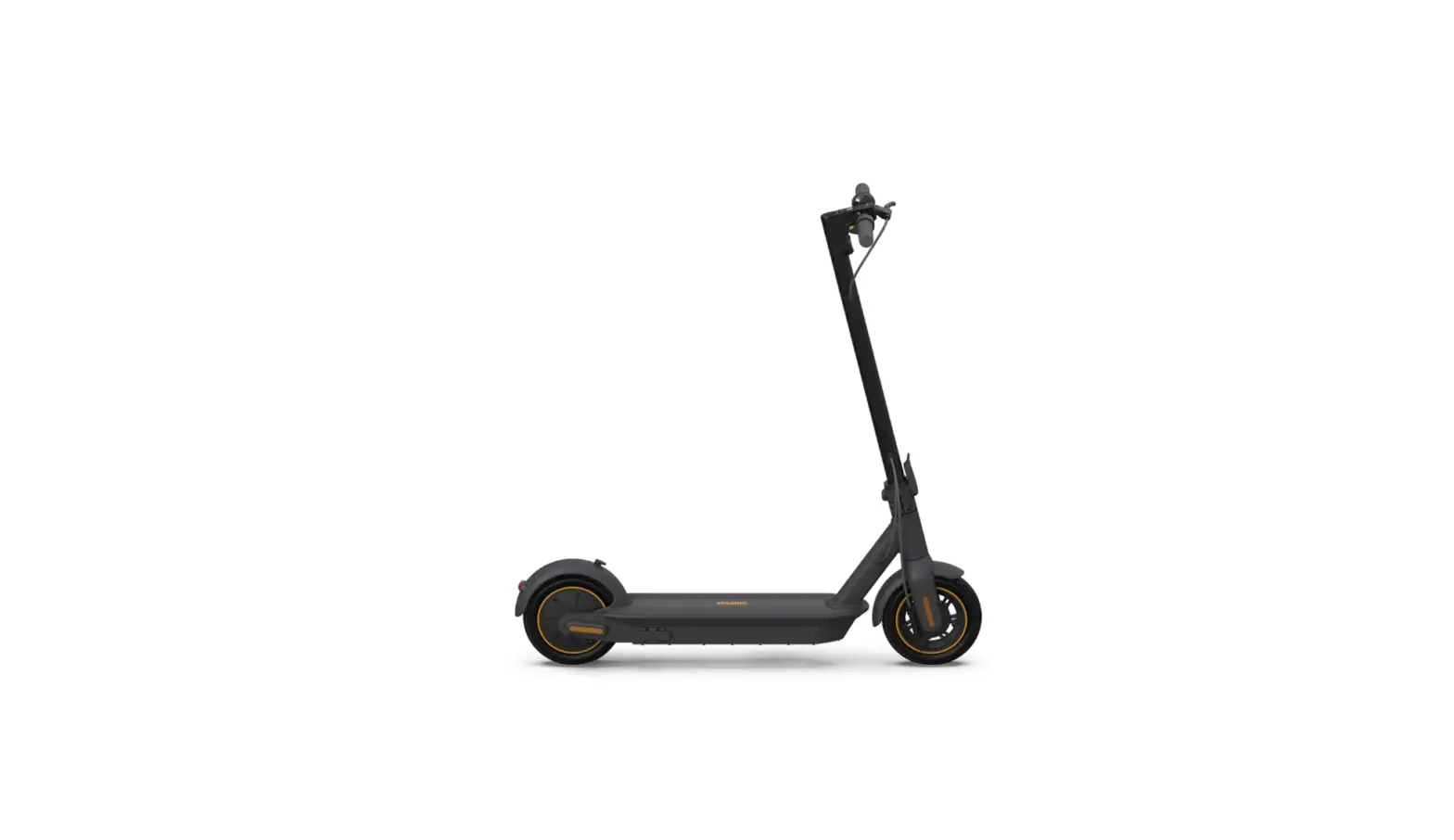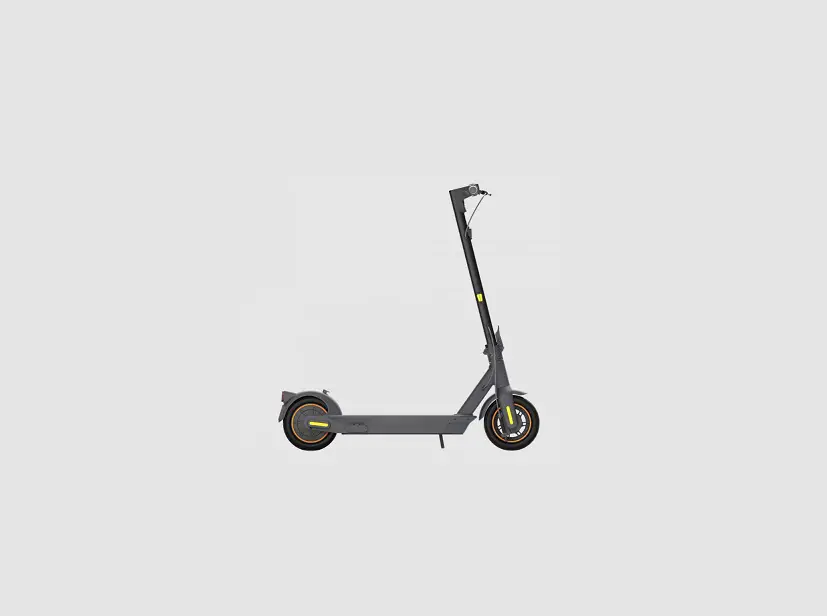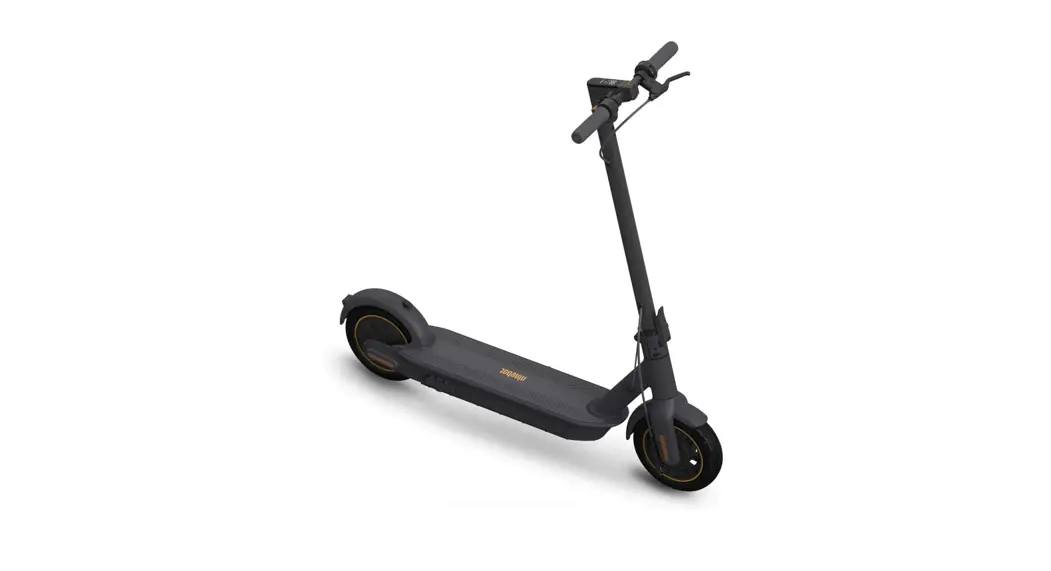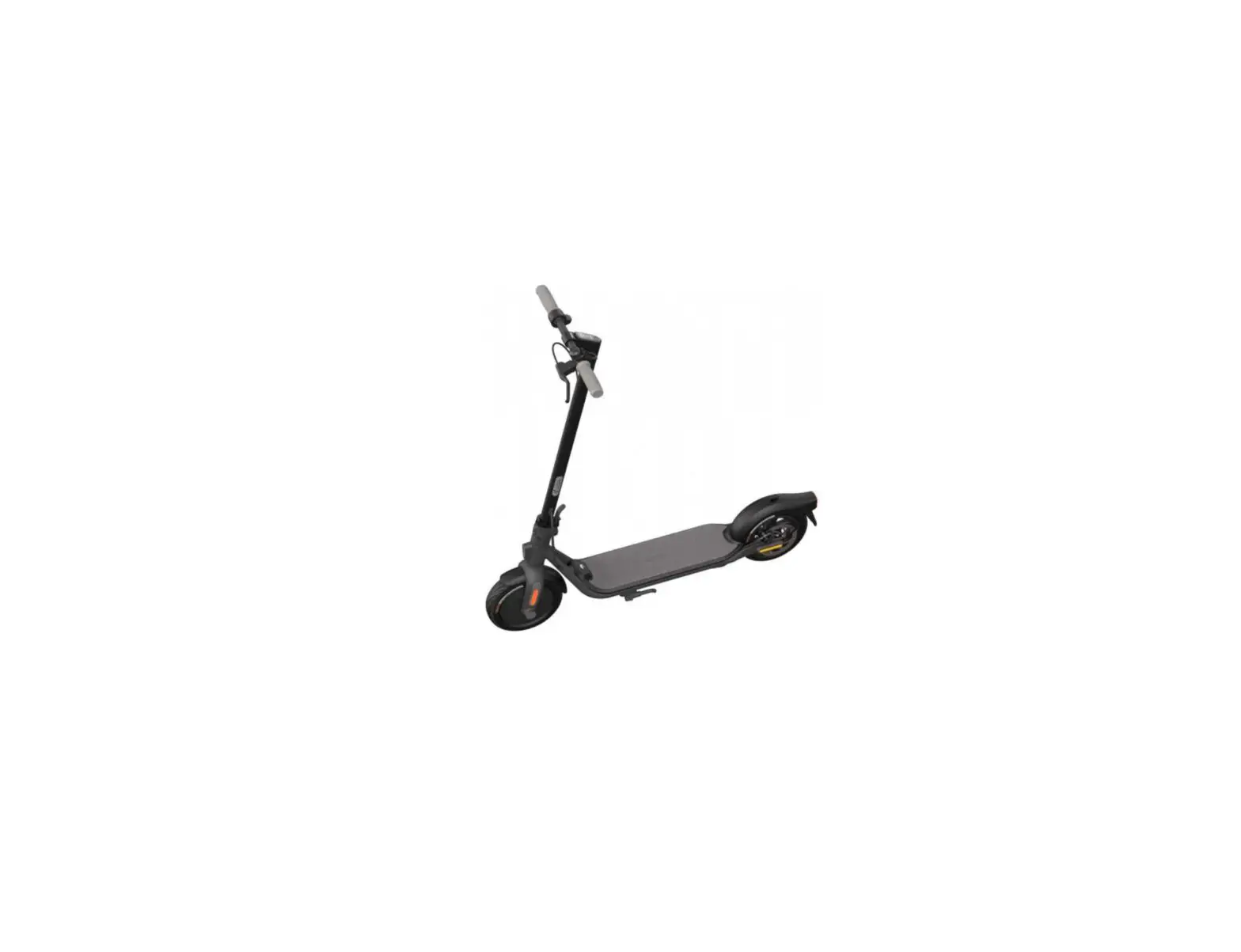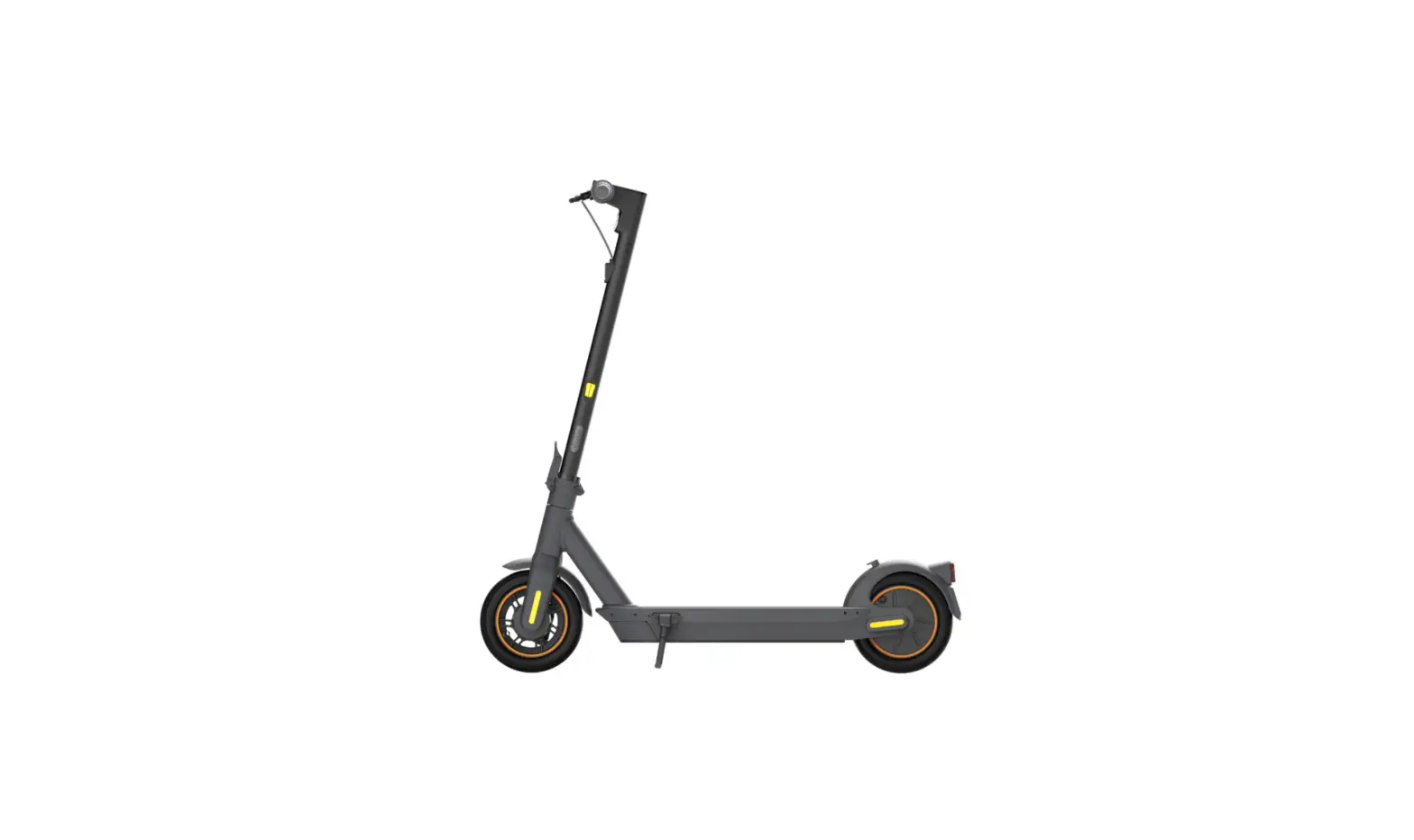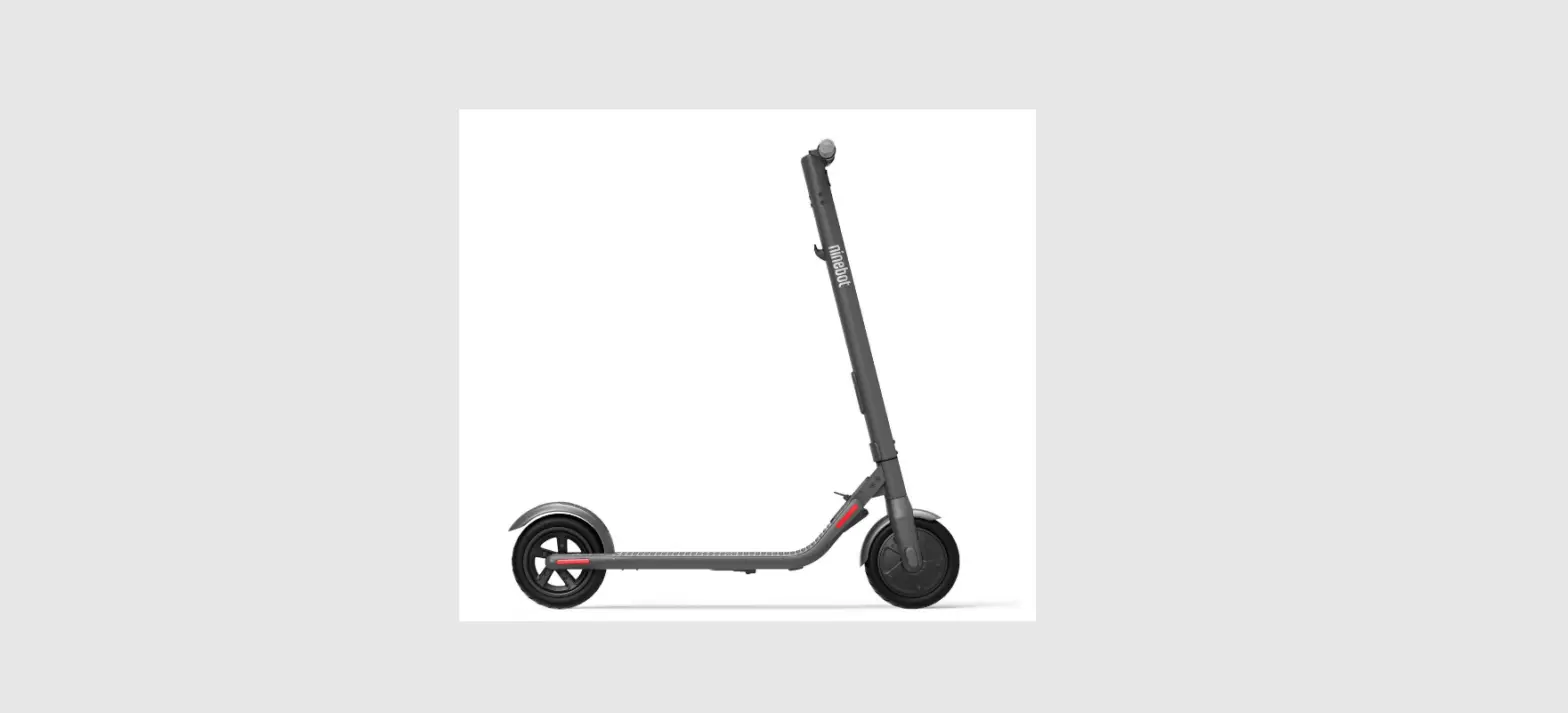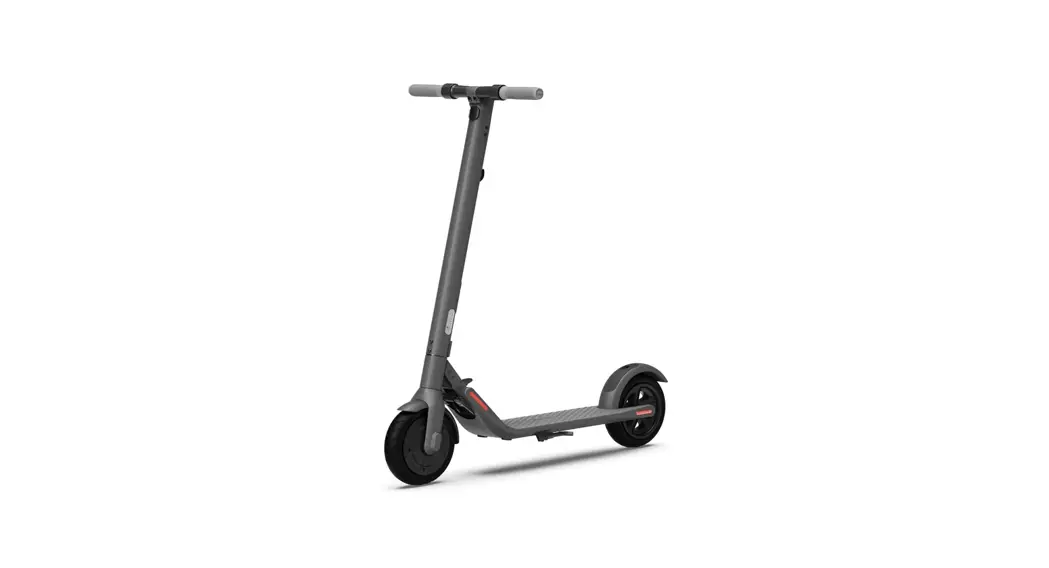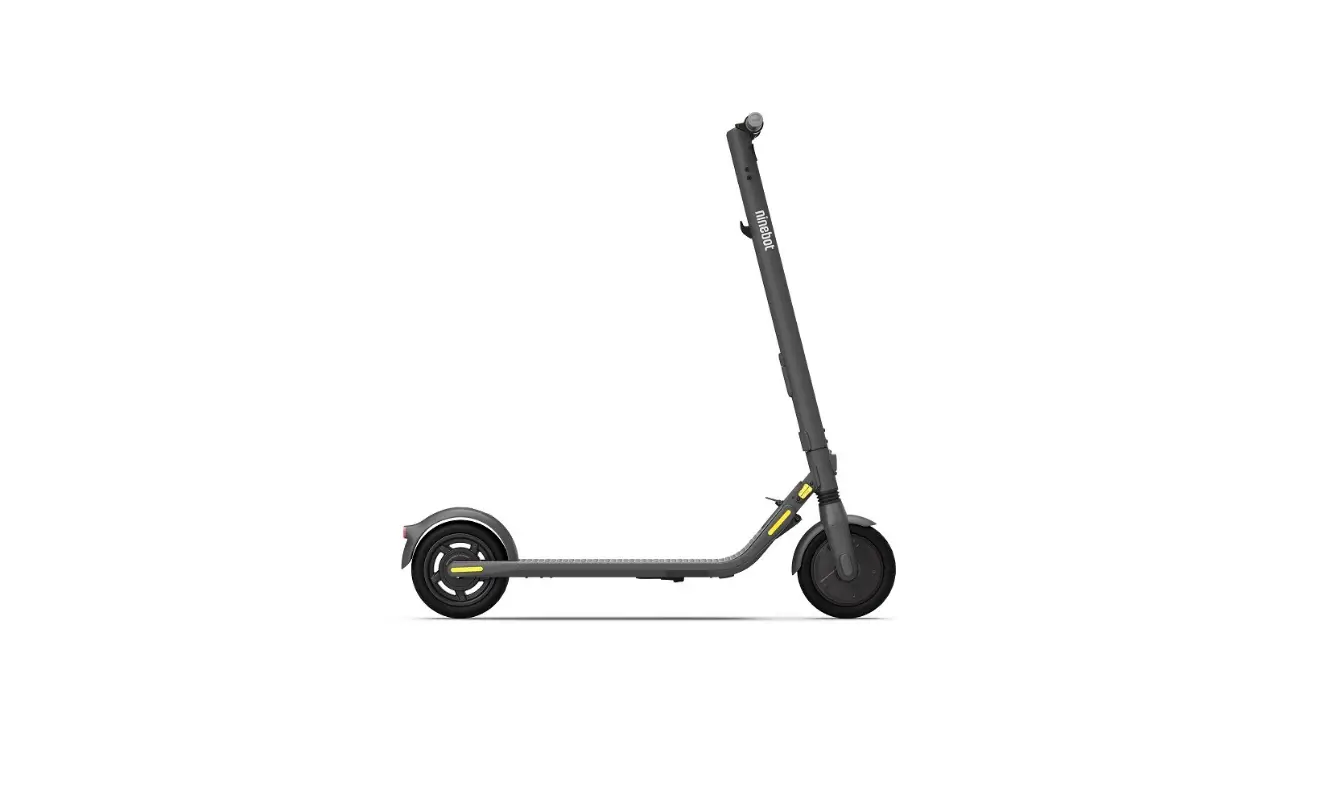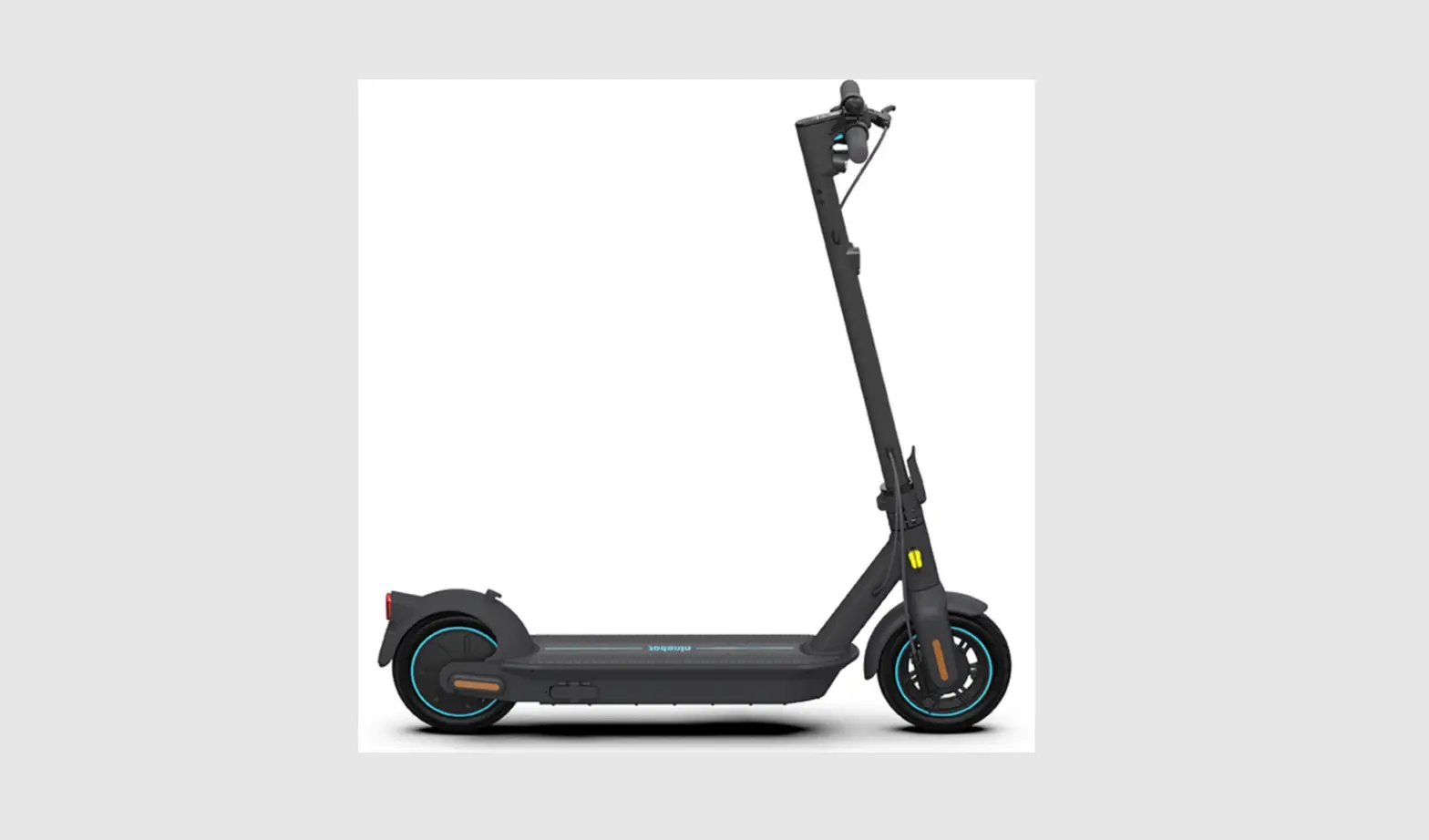

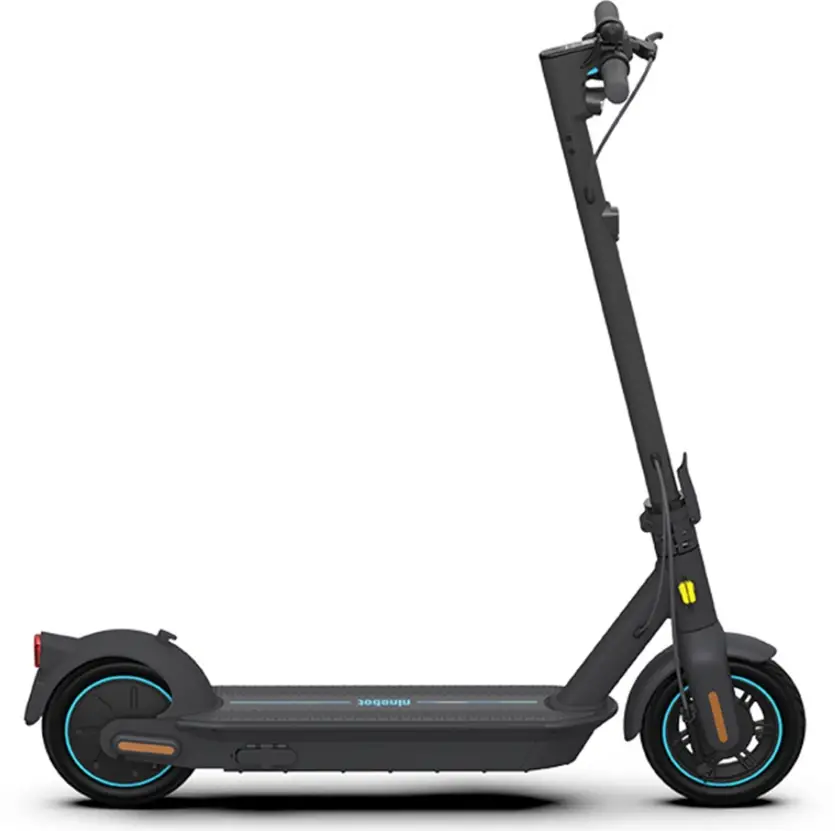
NINEBOT G30D KICK SCOOTER MAX 
The manufacturer reserves the right to make changes to the product, release Firmware updates, and update this manual at any time. Visit www.segway.comor check the Segway-Ninebot App to download the latest user materials. YOu must install the App, activate your KickScooter, and obtain the latest updates and safety instructions.
DIAGRAM 
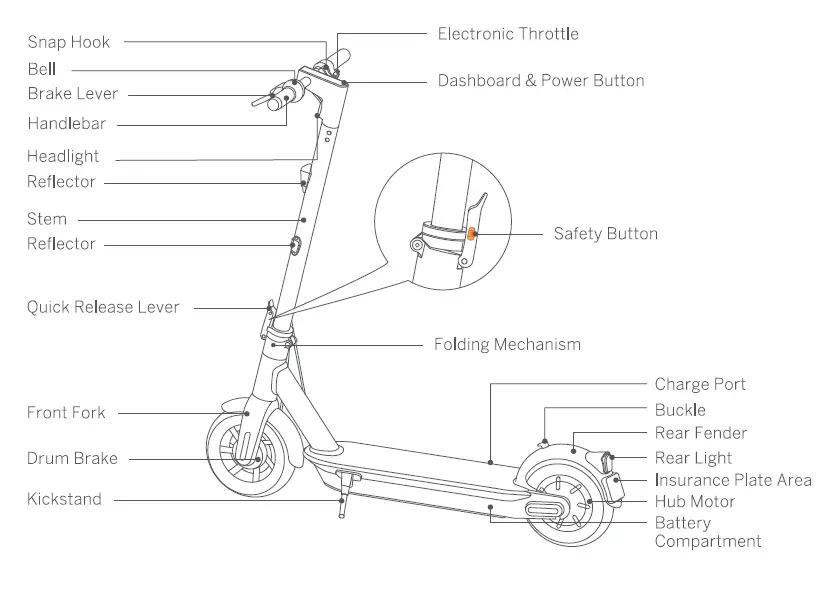
Dashboard & Power Button
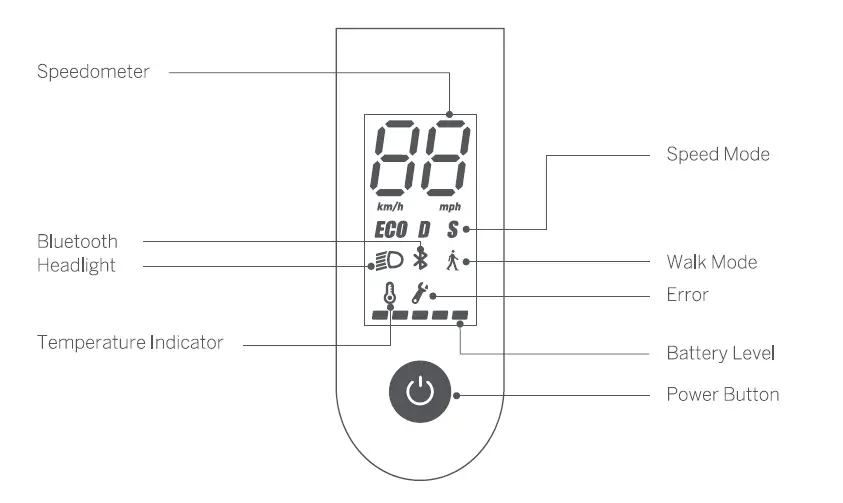
- Power Button: Press the button to turn the KickScooter on press and hold the button for 3 seconds to turn the KickScooter off. When the KicksScooter is on, press the button to turn the headlight and rear light on/off; press twice to switch between speed modes.
- Speedometer: Display the current speed of the KickScooter, as well as display error codes.
- Speed Mode: “ECO” for Energy saving mode (smooth acceleration, suitable for beginners).
- “D” for Standard mode.
- “S” for Sport mode (powerful, only recommended for skilled riders).
- Bluetooth: The icon indicates that the KickScooter has been successfully connected to the mobile device.
- Walk Mode: Max. speed is 3.1 mph (5 km/h).
- G3OE I1: The headlight and rear light are flashing and can’t be turned off.
- G30D II: the headlight and rear light are always on and can’t be turned off How to enable it in the Segway-Ninebot App: Tap the slide menu > Settings> Walk Mode.
- Error: The wrench icon indicates that the KickScooter has detected an error.
- Temperature Indicator: The thermometer icon always on indicates that the battery temperature has reached 122°F (50°C) or is below 32″F (O°C).
- At this point, the vehicle cannot accelerate normally and may not be charged. Do not use it until the temperature is loweredM to normal range.
- Battery Level: The battery power is indicated by 5 bars, each representing approximately 20% of a full battery.
SPECIFICATIONS
|
Product | Ninebot KickScooter Max | ||
| Model | G30E II | G30D II | |
| Length x Width x Height | Approx 45.9 x 18.6 x 47.4 in (1167 x 472 x 1203 mm) | ||
| Folded: Length x Width x Height | Approx. 45.9 x 18.6 x 210 in (1167 x 472 x 534 mm) | ||
| Net Weight | Approx 43.9 lbs (19.9 kg) | ||
| Rider | Payload | 66-220 lbs (30-100 kg) | |
| Recommended Age | 14-60 years | ||
| Required Height | 4’3″-ff6″ (130-200 cm) | ||
|
Machine Parameters | Max. Speed | Approx. 15.5mph (25 km/h) | Approx. 12.4 mph (20 km/h) |
| Typical Range | Approx. 40.4 miles (65 km) | ||
| Max. Slope | Approx. 20% | ||
| Traversable Terrain | Asphalt/flat pavement: obstacles< 0.4 in (1 cm): gaps< 1.2 in (3 cm) | ||
| Operating Temperature | 14-104’F(-10-40’C) | ||
| Storage Temperature | -4-122’F(-20-50’C) | ||
| IP Rating | IPX5 | ||
| Duration of Charging | Approx. 6 h | ||
|
Battery | Nominal Voltage | 36V= | |
| Max. Charging Voltage | 42V= | ||
| Charging Temperature | 32-104’F (0-40’C) | ||
| Nominal Energy | 551 Wh | ||
| Nominal Capacity | 15300 mAh | ||
| Battery Management System | Over-heating, short circuit. over-discharge, over-current, and over-charge protection | ||
| Motor | Nominal Power | 350 W (0.35 kW) | |
|
Charger | Output Power | 121 W (0121kW) | |
| Input Voltage | 100-240 V – | ||
| Output Voltage | 42V= | ||
| Output Current | 2.9 A | ||
| Features | Brake Light | LED rear light | |
| Riding Modes | Energy-saving mode, Standard mode, and Sport mode | ||
| Tire | Tire Pressure | 32-37 psi | |
| Tires | Tubeless tire, Material: Natural carbon-black synthetic rubber, 60/70-6.5. Straight nozzle | ||
Typical Range: tested while riding under full power, Ib5 Ibs (/5 kg) load, (25C), 60% of max, Speed on average on pavement. Some of the factors that affect range include speed. a number of starts and stops, ambient temperature, etc.
- This product is certified to ANS/CAN/UL-2272 by TUV Rheinland.
- The battery complies with ANSI/UL 2271.
- Important WEEE information.
WEEE Disposal and Recycling Information Correct Disposal of this product. This marking indicates that this product should not be disposed of with other household wastes throughout the EU. To prevent possible harm to the environment or human health from uncontrolled waste disposal. recycle it responsibly to promote the sustainable reuse of materials resources. To return your used device, please use the return and collection systems or contact the retailer where the product was purchased. They can take this product for environmentally safe recycling. Battery recycling information for the European Union.
Batteries or packaging for batteries is labeled in accordance with European Directive 2006/66/EC and amendment 2013/56/EU concerning batteries and accumulators and waste batteries and accumulators. The Directive determines the framework for the return and recycling of used batteries and accumulators as applicable throughout the European Union. This labelis applied to various batteries to indicate that the battery is not to be thrown away. but rather reclaimed upon the end of life per this Directive. In accordance with the European Directive 2006/66/EC and amendment 2013/56/EU. batteries and accumulators are labeled to indicate that they are to be collected separately and recycled at end of life. The label on the battery may also include a chemical symbol for the metal consumed in the battery (Pb for lead, Hg for mercury. and Cd for cadmium). Users of batteries and accumulators must not dispose of batteries and accumulators as unsorted municipal waste. but use the collection framework available to customers for the return and recycling. and treatment of batteries and accumulators. Customer participation is important to minimize any potential effects of batteries and accumulators on the environment and human health due to the potential presence of hazardous substances. Before placing electrical and electronic equipment (EEE) in the waste collection stream or in waste collection facilities, the end-user of equipment containing batteries and/or accumulators must remove these batteries and accumulators for separate collection.
Restriction of Hazardous Substances (RoHS) Directive
This Ninebot (Changzhou) Tech Co.. Ltd. product, with included parts (cables, cords, and so on) meets the requirements of Directive 2011/65/EU on the restriction of the use of certain hazardous substances in electrical and electronic equipment (“RoHS Recast” or “RoHS 2”).
Radio Equipment Directive
Segway-Ninebot EMEA. Dynamostraat 7, 1014 BN Amsterdam, The Netherlands
The company “Ninebot (Changzhou) Tech Co.. Ltd.” hereby declares that this device complies with the essential requirements and other relevant provisions of the RED directive 2014/53/EU. the machinery directive 2006/42/EC and the RoHS directive 2011/65/EU.
The declaration of conformity can be viewed at the following address: http://eu-en.segway.com/support-instructions
| Bluetooth | Frequency Band(s) | 2.4000-2.4835GHz |
| Max. RF Power | 20mW |