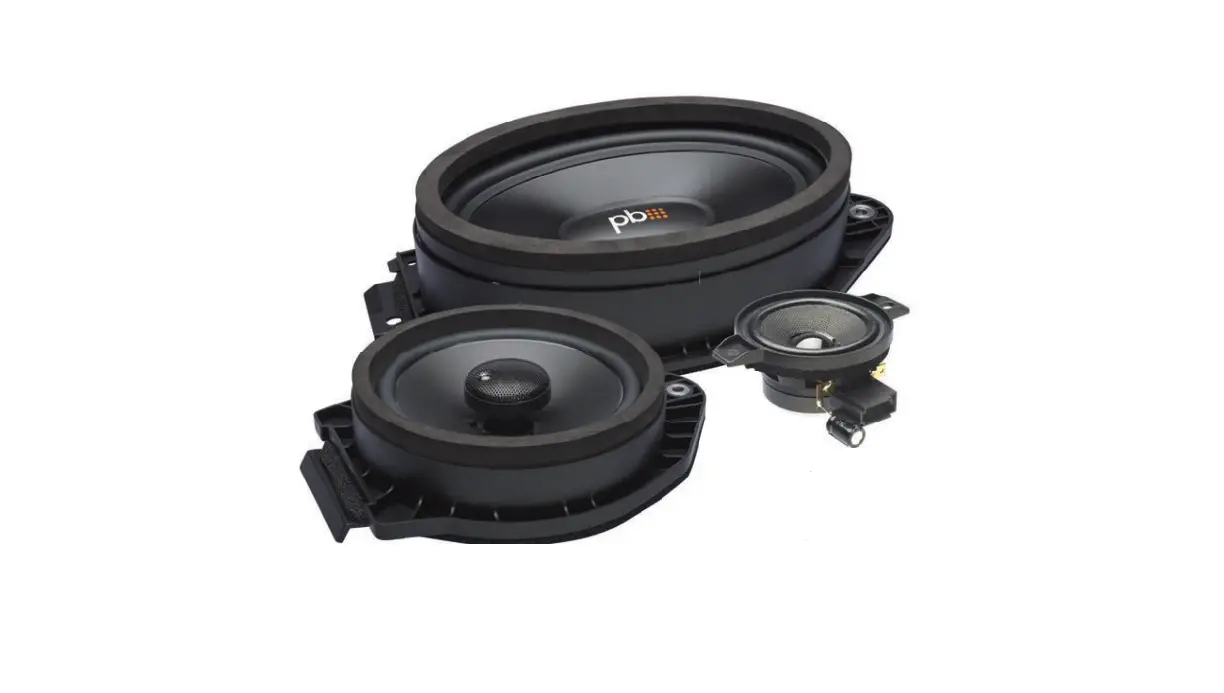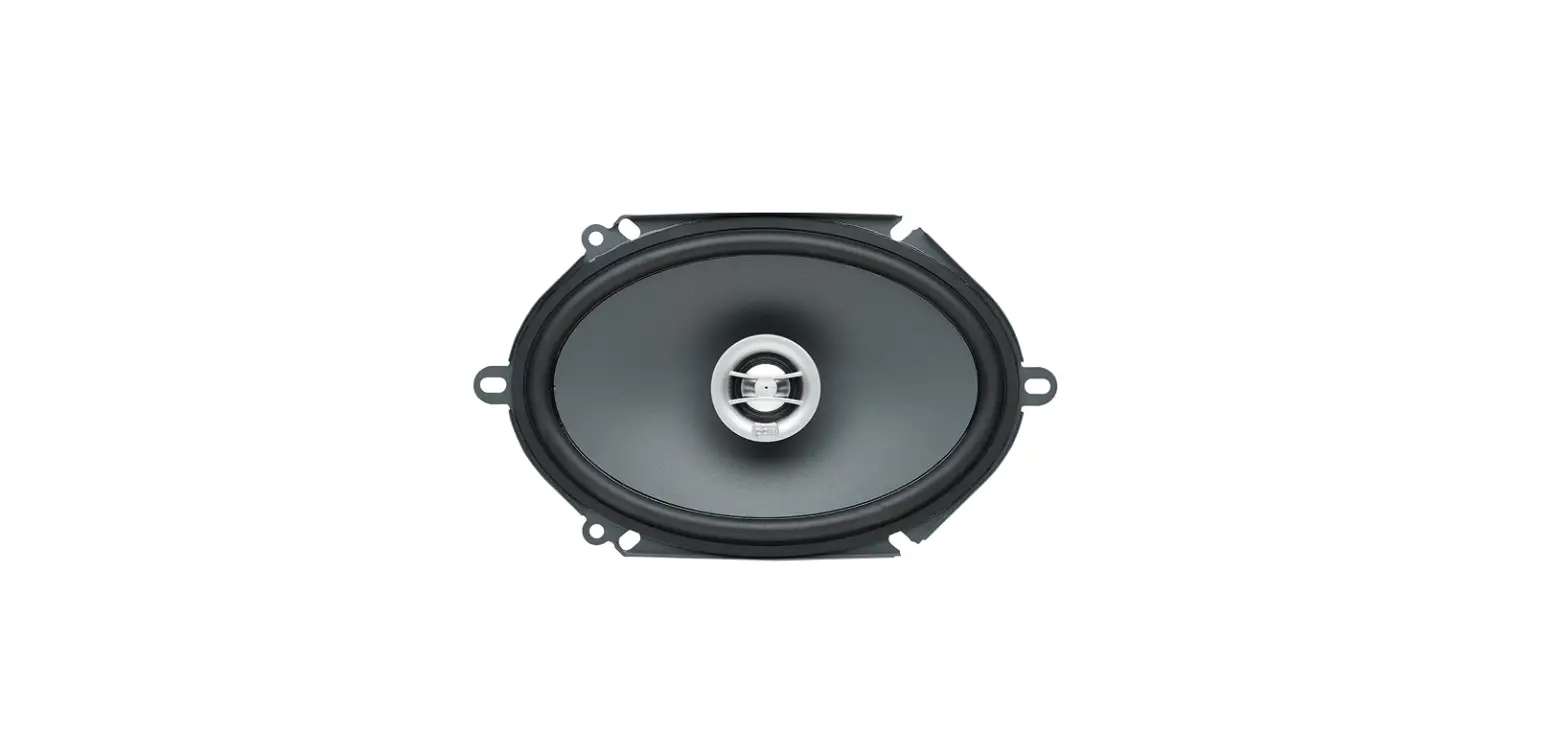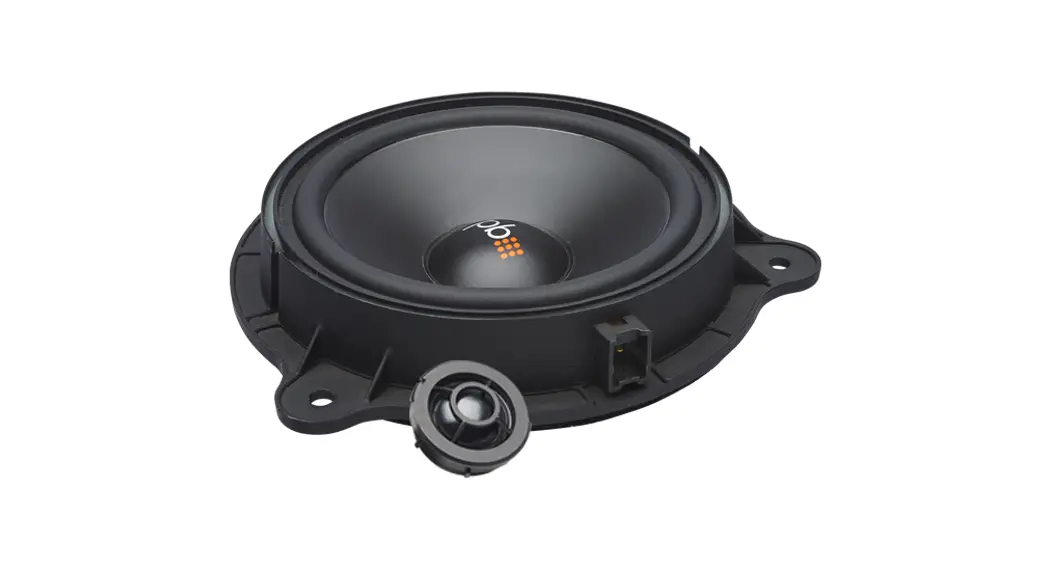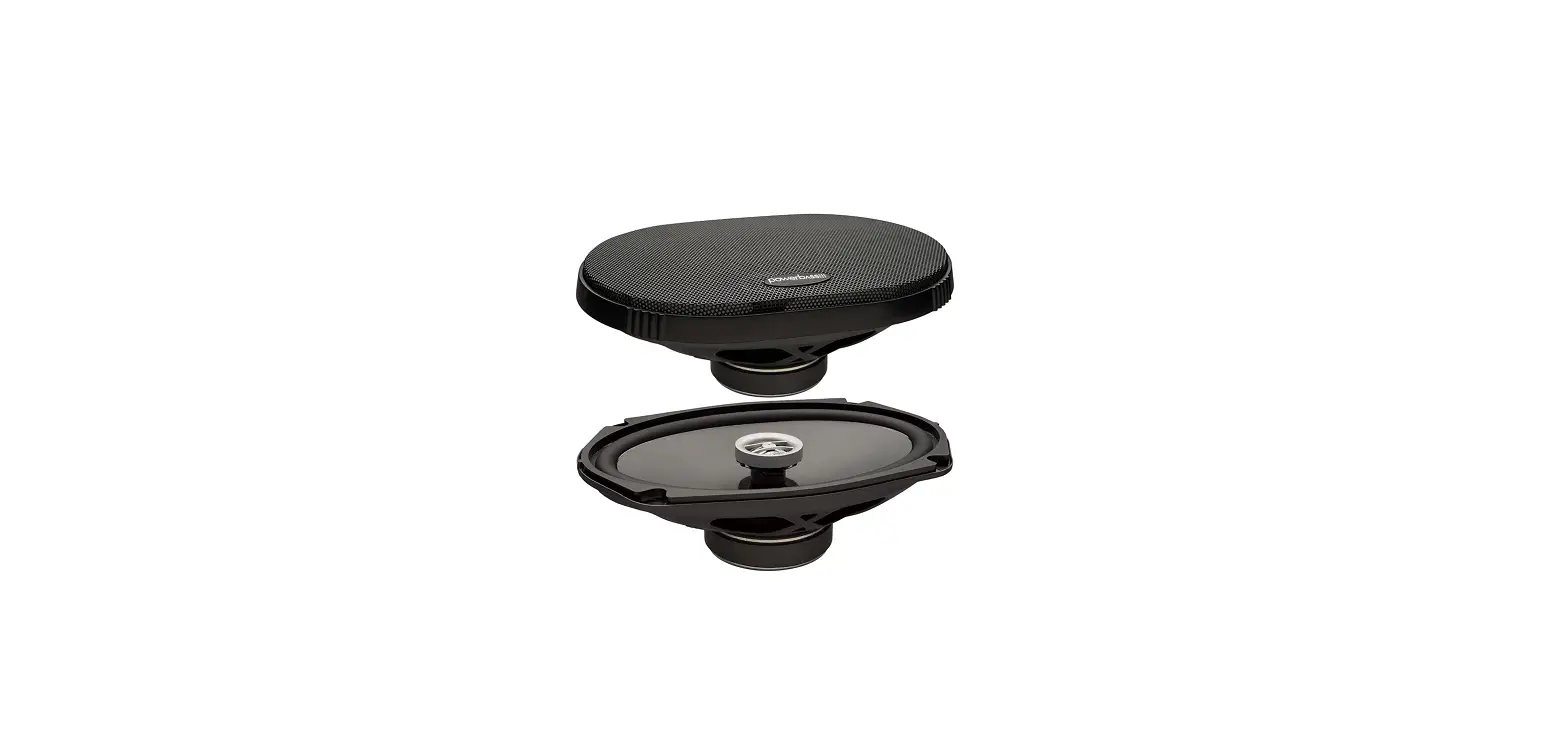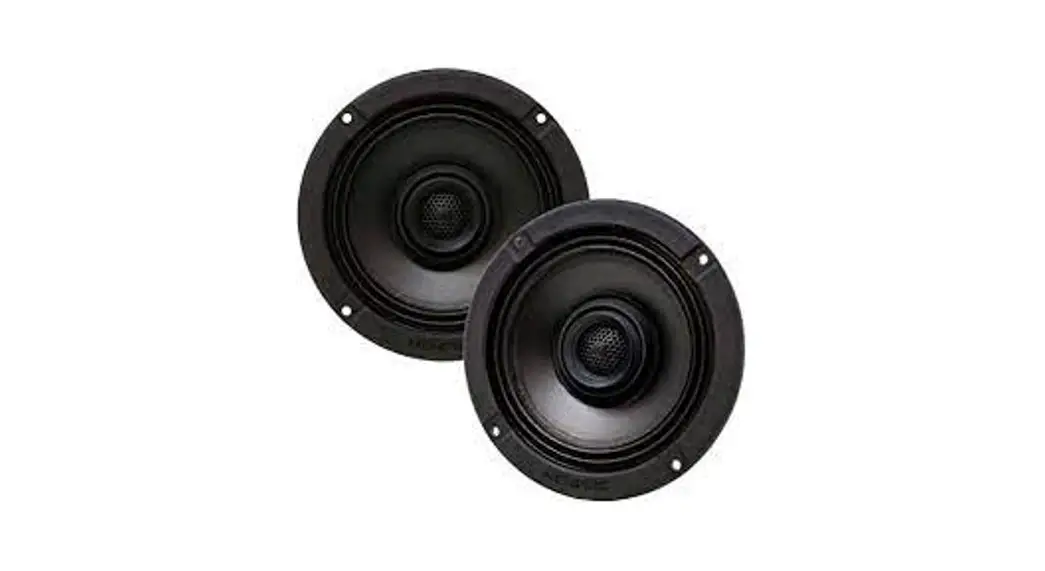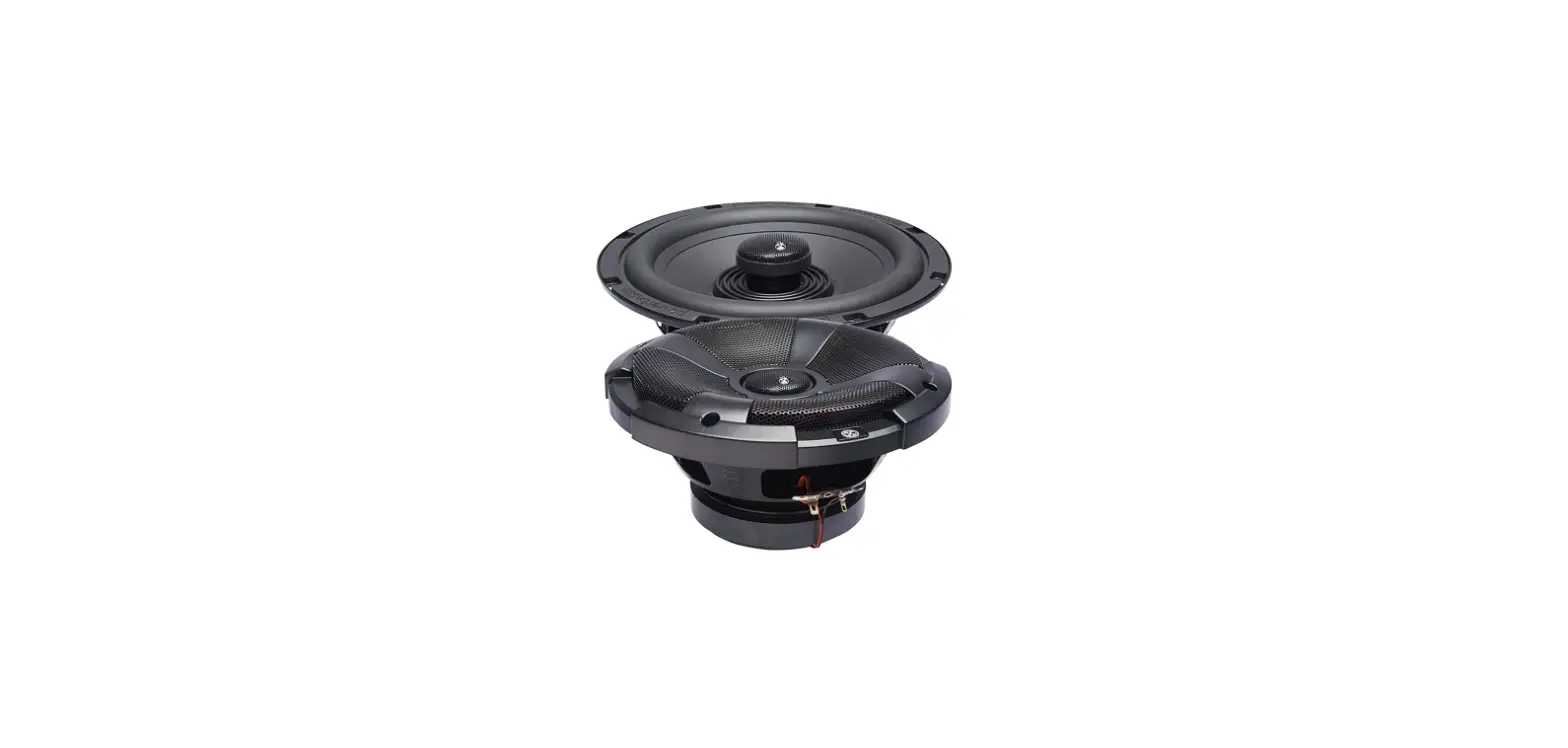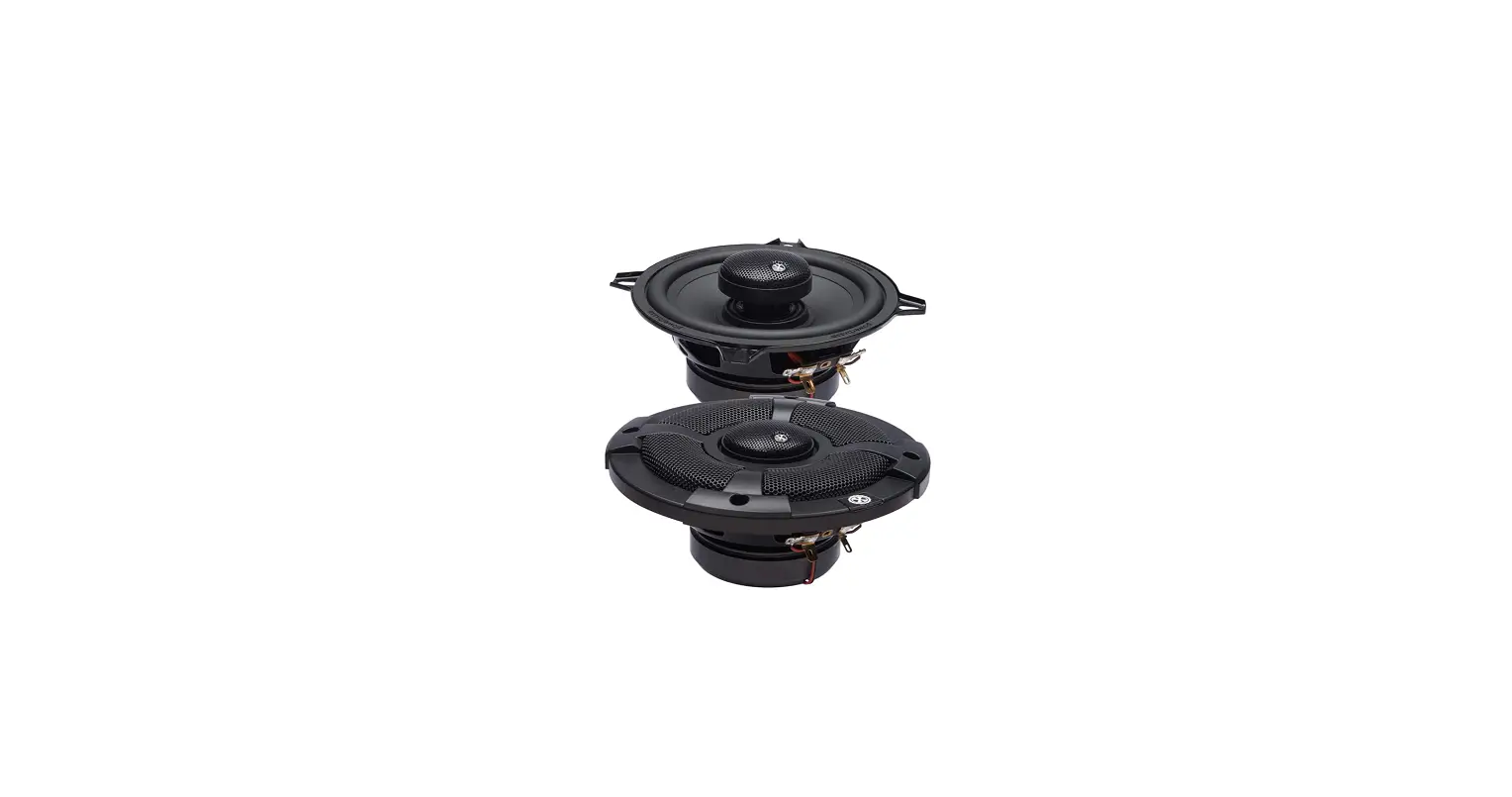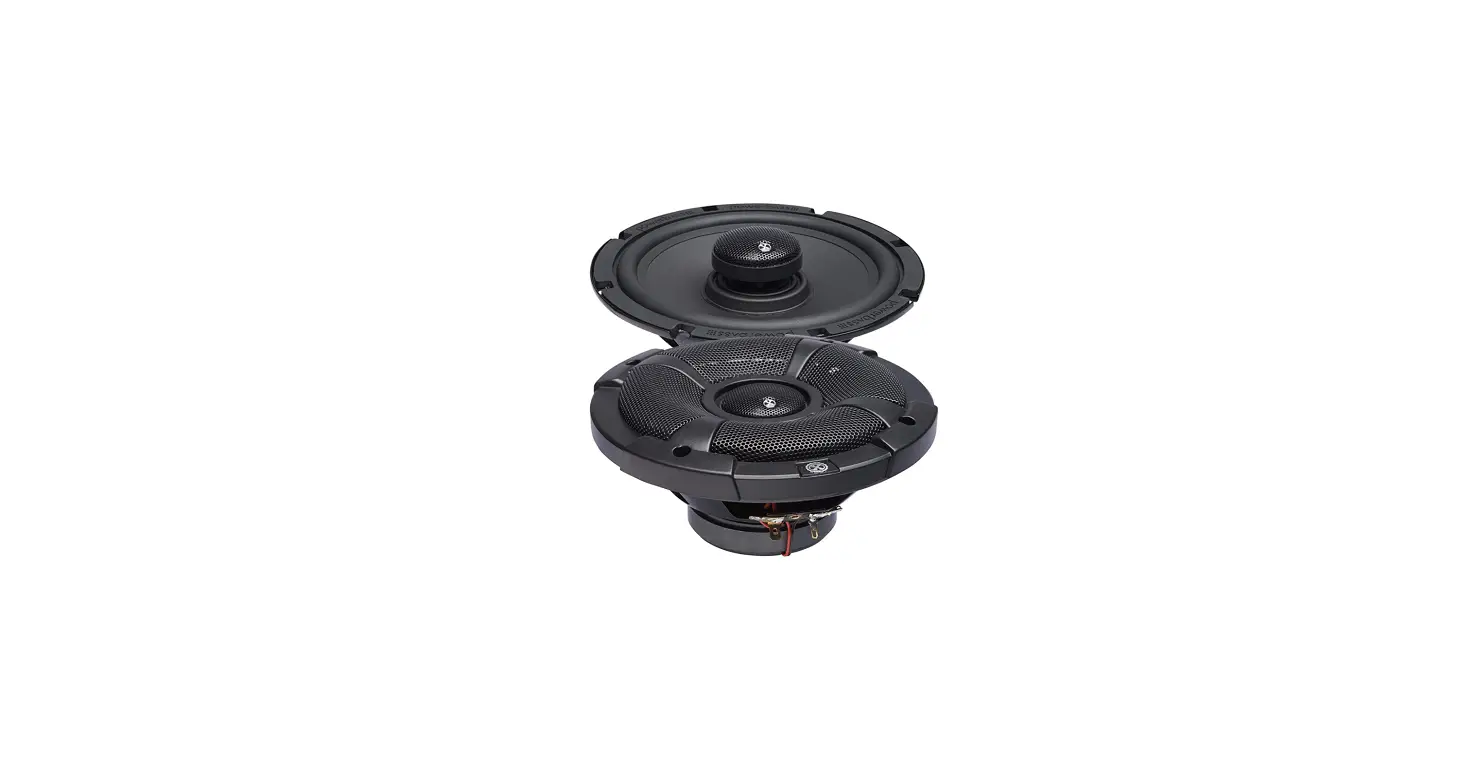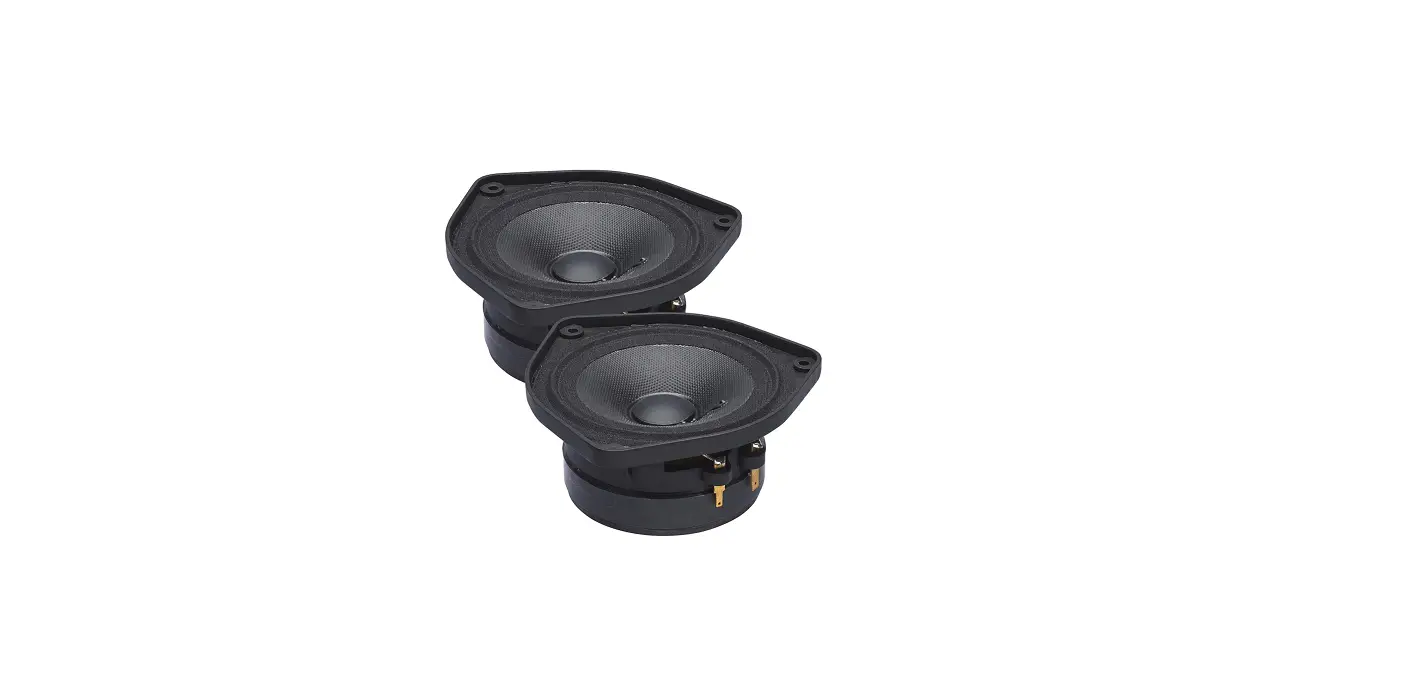
 PowerBass OE-400 4” Midrange OEM Replacement Speaker
 PowerBass OE-400 4” Midrange OEM Replacement Speaker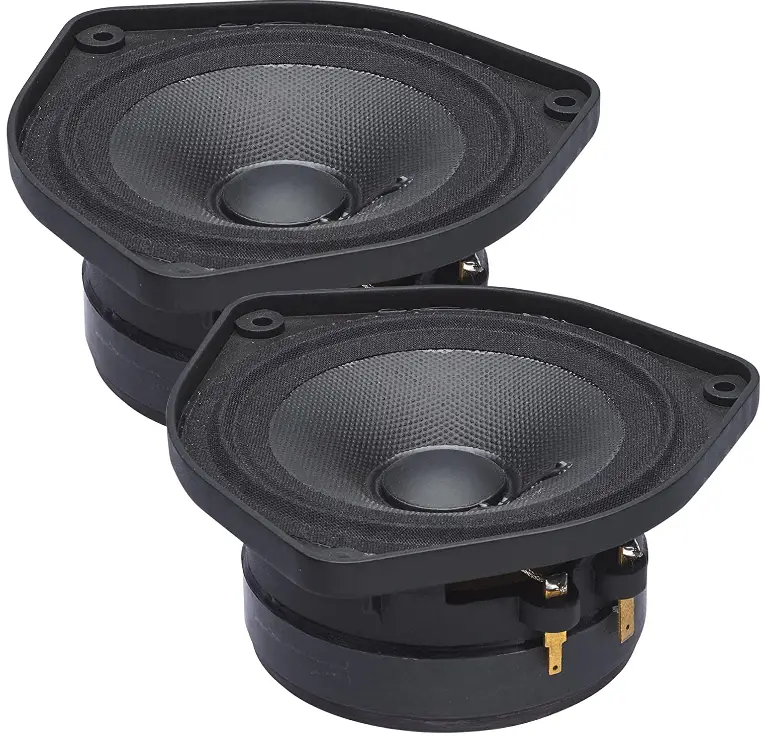
INTRODUCTION
Congratulations on your purchase of Powerbass Autosound speakers. You now own a speaker of uncom-promising design and engineering from a factory that truly believes in the relentless pursuit of perfection. Incorporating the highest quality parts and state-of-the-art materials, these speakers display the ultimate balance between high fidelity, extreme performance and long-lasting reliability.
At Powerbass USA, Inc. we are confident you will have many years of outstanding enjoyment from your superior SPEAKER investment. For maximum performance we recommend that you have your new PowerBass Autosound speakers installed by an Authorized PowerBass Dealer.
To learn more about PowerBass, please visit us on the World Wide Web at http://www.powerbassusa.com
Caution
Continuous exposure to sound pressure levels in excess of 100 dB can cause permanent hearing loss. PowerBass Autosound Speakers are capable of producing sound pressure levels well over 170 dB. Please observe all local sound ordinances while listening to your PowerBass Autosound system. PowerBass USA, Inc. accepts no liability for hearing loss, bodily injury, or property damage due to the result of use or misuse of this product.
POWERBASS AUTOSOUND OE FULL RANGE FEATURES
- Advanced Injection Molded Cone: An injection molded PP cone was developed for better bass performance while minimizing distortion. This ultra lightweight cone is resistant to elements of the environment while giving the listener impeccable listening experience over the factory speakers. (OE-400 uses a Pressed Paper Cone)
- Aluminum Hard Dome Tweeter: Ferrofluid enhanced aluminum dome tweeters deliver sharp clarity and crisp treble reproduction. The low profile design makes upgrading factory speakers a simple non-evasive task.
- Wave Guide Tweeter Lens: A specially engineered tweeter wave guide provides smooth and uniform response giving more high frequency sound propagation.
High Power 2-ohm Prime Voice Coil: These highly efficient 2-ohm coils were designed for greater efficiency and are compatible with most premium factory sound systems to make your vehicle sound better than ever. features a Dual 4-OHM voice coil design, allowing for 2-OHM or 8-OHM impedances - High Damping Butyl Rubber Surround: Butyl rubber was chosen to ensure linear travel throughout the entire frequency range resulting in more bass output and higher efficiency while reducing distortion. Non-resonant
- Basket Treatment: Each steel speaker basket has been treated with a proprietary resonant damping material making the speaker platform acoustically “dead”.
- Additional Features: Acoustically transparent speaker grills*, professional mounting hardware and splice-in speaker wiring harnesses add further value to your speaker investment.
SPECIFICATIONS

- Grills Not Included on some models
- Dual 4-OHM voice coil, 2-OHM or 8-OHM use
Before beginning your installation, thoroughly read this guide and keep it as a reference. It will give you tips on proper placement, wiring, and installation as well as how to obtain the best sound from the PowerBass speakers you have selected.
INSTALLATION EXPERIENCE
Installation of PowerBass Autosound Speakers requires experience with a variety of mechanical and electrical procedures. This manual only provides general installation and operation instructions. If you have any reserva-tions about your installation skills or lack of the proper tools, please contact your local PowerBass Autosound dealer for assistance.
TIPS TO GET THE MOST OUT OF YOUR POWERBASS SYSTEM
Your PowerBass Autosound speakers have been meticulous engineered and designed to handle high power musical reproduction. Despite their rugged construction, it is possible to damage your speaker if they are improperly used. In general, you will hear distortion as a so-called warning before any damage occurs. If you hear distortion in your system, immediately reduce the musical level to the point where the sound retains its clarity.
- Be sure you supply the speakers with enough unclipped amplifier power to drive them properly. (More damage can be done to a speaker by under-powering and clipping your amplifier than any other way!)
- To avoid any possible sound cancellation from the front of the speaker to that of the rear of the speaker, cut a panel of Masonite or MDF to firmly mount the speaker if the vehicle’s original cutout is too big.
- When connecting speaker wires from the amplifier or head unit to that of the speaker itself, pay attention to the polarity of the connection. This will insure optimum sound reproduction and performance.
- Do not mount any speakers or external crossovers where they will get wet.
PREPARING FOR INSTALLATION
NOTE: The tools listed below may be required for proper installation.
- An electric drill with drill bits
- Phillips-head and standard screwdrivers
- Wire strippers
- Crimping tool and needle-nose pliers
INSTALLATION PRECAUTIONS
NOTE: Proceed only if you are a qualified installer otherwise; let your dealer do it.
- Always wear protective eyewear when using tools.
- Turn off all stereo and other electrical devices before you begin.
- Disconnect the (-) negative lead from your vehicle’s battery.
- Keep the speakers in the package until final installation.
- Check to see if there is enough clearance behind the mounting surface before installing the speakers.
- When running speaker wires through sheet metal, be sure to use grommets to properly insulate the wires from metal edges.
- Since these speakers utilize a unique low profile tweeter housing that has minimal tweeter protrusion, original factory mounting cutouts can still be used with the factory grills in many cases.
- These PowerBass Autosound speakers can be used above or below the mounting hole. Typically, your vehicle factory’s speaker cutouts will accommodate these new speakers without any modifications. When the speaker has been correctly installed, there should be no air leaks between the front and back of the speaker.
- For door installations, check the clearance of the window and roll-up mechanisms throughout the entire range of the window’s travel to make sure that all obstacles clear the speaker structure.
- Check the available mounting depth before installing the speaker. Use care when removing factory grills, door panels and factory speakers.
WIRING DIAGRAM

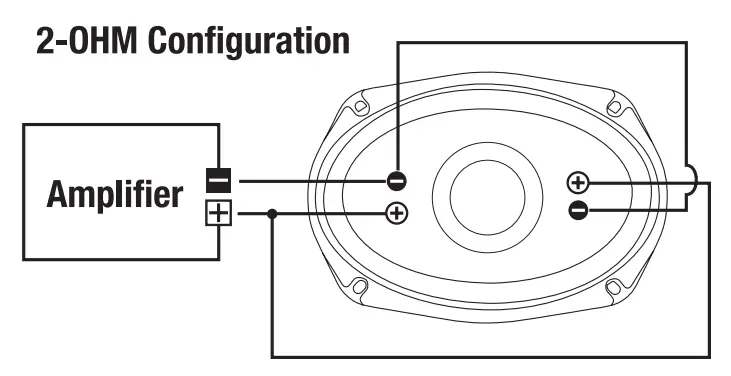
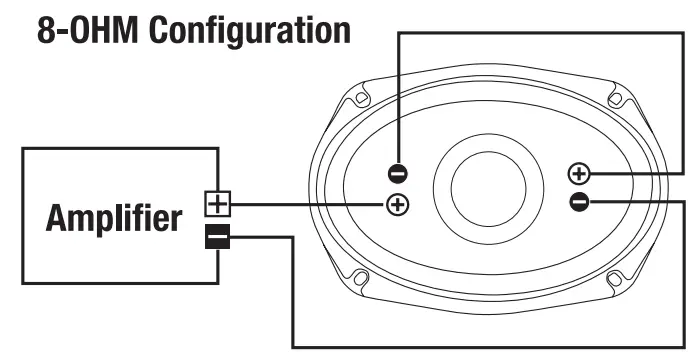
Wiring has been designed to work with multiple impedance requirements. The dual voice coil dsign can be wired into two different configurations depending on the impedance requirement of your OEM amplifier.
Both coils must be wired in one of the above configurations to ensure proper operation of this speaker.
POWERBASS AUTOSOUND LIMITED WARRANTY POLICY
PowerBass USA, Inc. offers limited warranty on PowerBass products under normal use on the following terms:
PowerBass Autosound Speakers are to be free of defects in material and workmanship for a period of one (1) year.
This warranty applies only to PowerBass products sold to consumers by Authorized PowerBass Dealers in the United States of America. Products purchased by consumers from a PowerBass dealer in another country are covered only by that country’s Distributor and not by PowerBass USA.
This warranty covers only the original purchaser of PowerBass product. In order to receive service, the purchaser must provide PowerBass with the receipt stating the consumer name, dealer, product and date of purchase.
Products found to be defective during the warranty period will be repaired or replaced (with a product deemed to be equivalent) at PowerBass’s discretion and will not be liable for incidental or consequential damages. PowerBass will not warranty this product under the following situations:
- Speakers received with bent frames or water damage
- Abuse such as holes in the cone, surround or ripped spider
- Voice coil damage due to amplifier clipping or distortion
- Product that has not been installed according to this owners manual
Any implied warranties including warranties of fitness for use and merchantability are limited in duration to the period of the express warranty set forth above. Some states do not allow limitations on the length of an implied warranty, so this limitation may not apply. No person is authorized to assume for PowerBass any other liability in connection with the sale of this product.
Please call (909) 923-3868 for PowerBass Customer Service. You must obtain an RA# (Return Authorization Num-ber) to return any product to PowerBass. The RA number must be prominently marked on the outside of the shipping carton or the delivery will be refused. Please pack your return carefully; we are not responsible for items damaged in shipping. Return the defective product along with a copy of the original dated retail sales receipt, plus $12.00 for handling and diagnostic evaluation to:
PowerBass USA, Inc., Attn: Returns (RA#__________) 2133 S. Green Privado, Ontario, CA 91761
Residents of HI, AK and US territories will be charged for return shipping. All inquires regarding service and warranty should be sent to the above address.
Removed or altered serial numbers will void this warranty
FAQs
What is the purpose of a PowerBass OE-400 midrange speaker?
A midrange is made to accurately reproduce sound frequencies that typically fall between 250 Hz and 2,000 Hz. It is also known as a squawker to stick with the “animal noise” theme.
What size speaker is best for PowerBass OE-400 midrange?
The normal frequency range of a midrange speaker is from 5,000–6,000 Hz to 300–500 Hz. Sizes for 50-100 Hz. range from 5 inches to at least 12 inches. For playing the lowest frequencies in music, subwoofers are employed.
Do PowerBass OE-400 mid-range speakers need an enclosure?
In order to prevent the pressure from the bass driver from interfering with the midrange driver’s cone, midrange drivers need their own chamber. However, volume should not be overlooked because it also influences the sound signature.
What is the frequency range of a PowerBass OE-400 midrange speaker?
The term “midrange frequencies” can also refer to the frequency range between 300Hz and 5,000Hz.
What is a PowerBass OE-400 midrange speaker called?
A loudspeaker driver that reproduces sound in the 250 to 2000 Hz range is known as a mid-range speaker. It’s sometimes referred to as a squawker.
Do PowerBass OE-400 midrange speakers sound better in a box?
You won’t lose the midrange if you use a speaker in a box. You will simply get more bass, which might drown out some midrange but leaves it in place all the same. More often than not, a speaker will sound better in a box as opposed to free air or an infinite baffle.
Where do you mount PowerBass OE-400 midrange speakers?
A straight path from the speakers to the listening area should be created. The tweeter should be positioned less than 2″ from the midrange for the finest synergy between the two. Place the tweeter more than 7″ away from the midrange if you are unable to place it closer than 2″.
What is PowerBass OE-400 mid speaker setting?
Midrange music includes instruments like the guitar (275 Hz), flute (800 Hz), and piano, and is audible between 250 and 4,000 Hz. Last but not least, all treble sounds range from 4,000 to 20,000 Hz, but 12,000 Hz is typically the upper limit for musical instruments.
Are PowerBass OE-400 mid-range speakers loud?
You are only picking up a small percentage of the song’s frequencies, therefore they will probably sound worse than your typical car speakers. Furthermore, trying to drive a midrange speaker with the full spectrum of frequencies may result in distortion, overheating, and eventually speaker failure.
What sounds are in the PowerBass OE-400 midrange?
You are only picking up a small percentage of the song’s frequencies, therefore they will probably sound worse than your typical car speakers. Furthermore, trying to drive a midrange speaker with the full spectrum of frequencies may result in distortion, overheating, and eventually speaker failure.
What is PowerBass OE-400 midrange equalizer?
Mid-range frequencies vary from 600 Hz to 3,000 Hz. Vocal sounds fall within this range, which is the range that we are accustomed to hearing. The majority of instruments, including pianos and guitars, are performed in this range. Upper mid-range frequencies span from 3,000 Hz to 8,000 Hz.
What’s the difference between midrange and component speakers?
Mid-range speakers, also referred to as component speakers, are typically cone-shaped. They are intended to generate better sound quality than coaxial speakers and are typically installed in conjunction with woofers, tweeters, and other speakers.
What are PowerBass OE-400 midrange speakers good for?
Mid-range speakers are designed to handle the 500 Hz–4 kHz region of the spectrum, which is considered the “middle” range. Given that most audible sounds, including those from musical instruments and human voices, are produced within this frequency range, it is likely the most significant range of frequencies.
Do you need a crossover for PowerBass OE-400 midrange speakers?
A crossover is required for sound to be directed to the proper driver in every audio system, including the one in your car. High, midrange, and low frequencies should be delivered to tweeters, woofers, and subs, respectively. The interior of every full-range speaker is a crossover network.
What is the best size for a PowerBass OE-400 midrange speaker?
Depending on the used tweeter and woofer, you typically want a midrange that is between 4.5″ and 2.5″ for controlled dispersion.