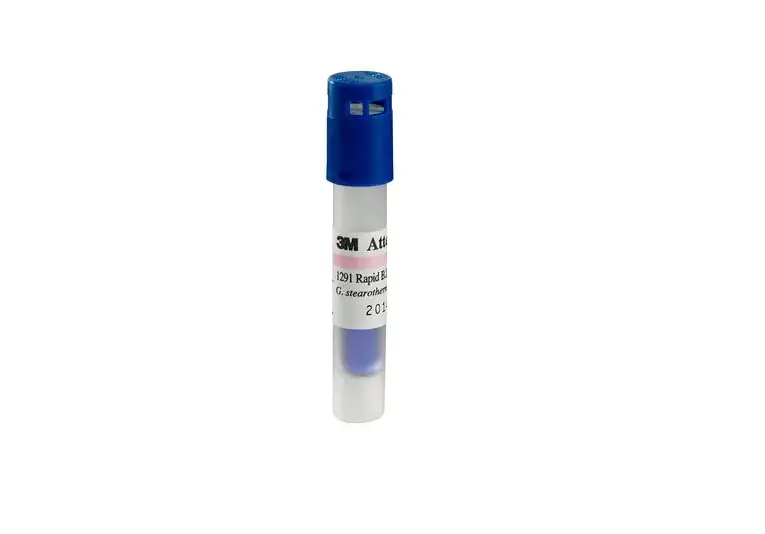
BI-DSBI-12 Dual-Species Biological Indicator
Product Information: Biological Indicator
The Biological Indicator is a tool used to monitor the
sterilization process in healthcare organizations. It is
recommended by the AAMI (Association for the Advancement of Medical
Instrumentation) and the Joint Commission on Accreditation of
Health Care Organizations. The indicator helps ensure that
sterilizers, including those using ethylene oxide, steam, and dry
heat, are effectively sterilizing medical equipment and
implants.
Usage Instructions:
Step 1: Placement of Biological Indicators within the
Sterilizer
- For steam sterilization:
- Place the biological indicator in the center of the largest
individual pack within the load or the test pack. - Position it within the coldest areas of the chamber, usually
near the chamber drain at the bottom/front of the sterilizer. - Also, place it in the warmest area of the chamber, typically
the top rear of the sterilizer. - If using immediate use (flash) sterilization with an instrument
tray, place one or more biological indicators in the tray along
with the items being sterilized. Position the tray at the coldest
portion of the sterilizer near the chamber drain at the
bottom/front of the sterilizer.
- Place the biological indicator in the center of the largest
- For dry heat sterilization:
- Place the biological indicator in the coolest portion of the
chamber as specified by the sterilizer manufacturer.
- Place the biological indicator in the coolest portion of the
Step 2: Transfer of Duo-Spore Biological Indicators
Following Sterilization
If you are using kits with prepaid culture service (1-Test
[26909200], 4-Test [26909300], 12-Test [26909400], and 10-Test Pack
[26906700]), follow the test instructions included in those
products. Otherwise, follow these instructions:
- Position the media tube in the test tube rack.
- Peel open the Duo-Spore glassine envelope at the indicated end,
about 1/4 or just above the spore strip. - Loosen and remove the media tube cap. While holding the cap,
turn the partially opened glassine envelope upside down above the
media tube and slowly peel apart until the spore strip drops into
the media. - Immediately replace the media tube cap and incubate the tube at
the appropriate temperature for five days:- For steam processed or ethylene oxide gas processed indicators,
follow the recommended incubation temperature. - For dry heat processed indicators, follow the recommended
incubation temperature.
- For steam processed or ethylene oxide gas processed indicators,
- To ensure the viability of the Duo-Spore biological indicator
and growth-promoting abilities of the culture medium, a
non-processed control strip (not exposed to sterilant) should be
cultured with each test series using the same instructions as above
(steps a-d).
Step 3: Interpretation of Results
After incubation begins, observe the cultures each day. Some
sublethally damaged spores may require up to 5 days of incubation.
The presence of turbidity and a color change from red to
yellow/orange indicate positive cultures. Contamination is
indicated by the presence of cocci or gram-negative organisms.
Rod-shaped, gram-positive, spore-forming organisms are indicative
of the organisms used in the Duo-Spore biological indicator. If
sterilization failure is evident, follow the proper recall and
testing procedures designated by your facility.
duo-spore®
Biological Indicator
Duo-Spore Biological Indicator Instructions for Use
Duo-Spore is a dual-species biological indicator used for the direct monitoring of steam, ethylene oxide and dry heat sterilization. It consists of a chromatography paper strip impregnated with bacterial spores of Geobacillus stearothermophilus (highly resistant to moist heat) and Bacillus atrophaeus (highly resistant to ethylene oxide gas and dry heat). The paper strip containing the spores is enclosed in a peel-open glassine envelope which protects the strip from contamination, but allows free access of sterilant to the spores. Each lot of Duo-Spore is calibrated to conform to recommended performance requirements for biological monitors.
Use of Duo-Spore Biological Indicator
As recommended by AAMI and Joint Commission on Accreditation of Health Care Organizations (1,2), Biological monitoring should be conducted daily with ethylene oxide sterilizers, and at least weekly and preferably daily with steam and dry heat sterilizers. Monitoring should be conducted with each load containing implants.
Placement of Biological Indicators within the Sterilizer
The following guidelines are suggested for placement of biological indicators in the sterilizer to accurately monitor the sterilization process.
For steam sterilization [see applicable AAMI document (2)]:
a. In the center of the largest individual pack within the load or the test pack. b. Within the coldest areas of the chamber and region of greatest air accumulation, usually near the chamber drain at the bottom/front of
the sterilizer. c. Within the warmest area of the chamber, usually the top rear of the sterilizer. d. In an instrument tray processed by immediate use (flash) sterilization, one or more biological indicators should be placed in the tray
along with the items being sterilized and the tray placed at the coldest portion of the sterilizer, usually near the chamber drain at the bottom/front of the sterilizer.
For ethylene oxide sterilization (3,4,5): a. Within any material pack or test pack which will be very difficult to penetrate with any of the essential agents, i.e., ethylene oxide, moisture, or heat. b. In or close to the geometric center of the load usually the hardest area to penetrate. c. In the bottom/front of the chamber, usually the coldest area of the sterilizer. d. In the top/rear of the chamber, usually the area of poorest humidity within the chamber.
For dry heat sterilization (6): a. The biological indicator in a typical sterilization package or tray should be placed in the coolest portion of the chamber, as identified by the sterilizer manufacturer.
Transfer of Duo-Spore Biological Indicators Following Sterilization
Customers using kits with the prepaid culture service (1-Test [26909200], 4-Test [26909300], 12-Test [26909400] and 10-Test Pack [26906700]) should refer to the test instructions included in those products. For all others, follow the transfer instructions on page 4:
After the sterilization process, the Duo-Spore biological indicator should be kept away from dust and contamination. Transfers should be performed in a clean, dust-free environment isolated from other activities; aseptic technique should be used. Avoid contaminating the paper strip while placing into the culture tube. To ensure a high recovery, culturing in Propper Culture Media (Reorder# 26910700 and 26910800) is recommended. If an alternative media is used, outgrowth rates may vary, depending on the source and type of media used. To transfer the Duo-Spore biological indicator:
a. Position the media tube in the test tube rack. b. Peel open the Duo-Spore glassine envelope at the indicated end about 1/4″ or to just above the spore strip. c. Loosen and remove the media tube cap. While holding the cap, turn the partially opened glassine envelope upside down above the
media tube and slowly peel apart until the spore strip drops into the media. d. Immediately replace the media tube cap and incubate the tube at the appropriate temperature for five days:
Steam processed Ethylene oxide gas or dry heat processed
55-60°C 33-37°C
e. To ensure the viability of the Duo-Spore biological indicator and growth-promoting abilities of the culture medium, a non-processed control strip (not exposed to sterilant) should be cultured as indicated above (a-d) with each test series.
1 of 2
Interpretation or Results
Cultures should be observed each day after incubation begins.
For Steam cycles, Geobacillus stearothermophilus growth will be observed as sediment, and a color change from red to yellow if Propper Culture Media is used. This signifies a positive test result. Most positive tests will occur within 24 hours of transfer. G. stearothermophilus spores will grow at 55°C but not at 35°C.
For Ethylene Oxide and Dry Heat cycles, Bacillus atrophaeus growth will be evident as an orange pigmented pellicle, and a color change to yellow/orange if Propper Culture Media is used. This signifies a positive test result. Most positive tests will occur in 24 – 48 hours. B. atrophaeus will grow at 35°C but not at 55°C.
The sublethally damaged spores may require longer periods of incubation, up to 5 days.
All positive cultures should be gram-stained upon observation of turbidity and a color change from red to yellow/orange. The presence of cocci or gram-negative organisms is evidence of contamination. Rod-shaped, gram positive, spore forming organisms are indicative of the organisms employed in the Duo-Spore biological indicator. Should sterilization failure be evident, the proper recall and testing procedures should be instituted immediately as designated by your facility.
Performance Characteristics of Duo-Spore Biological Indicators
Duo-Spore biological indicators have been manufactured to provide a high level of sterilization quality assurance. Extensive testing is conducted to assure that each lot of Duo-Spore biological indicators conforms to the standards and continues to meet these standards throughout the life of the product. The performance parameters of each lot can be found on the included Certification Card.
Performance Characteristics of Duo-Spore Biological Indicators
To ensure that the proper levels of resistance are maintained for the life of the product, store the product in a cool, dry place or refrigerate.
Although the test organisms employed in Duo-Spore biological indicators are non-pathogenic, it is recommended that all positive cultures be autoclaved at 250°F (121°C) for 30 min. before discarding.
References
1. Joint Commission on Accreditation of Healthcare Organizations, January 1, 2020. Comprehensive Accreditation Manual for Hospitals. JCAHO.
2. Association for the Advancement of Medical Instrumentation. Comprehensive Guide to Steam Sterilization and Sterility Assurance in Healthcare Facilities, AAMI/ANSI ST-79: 2017.
3. Association for the Advancement of Medical Instrumentation. Ethylene Oxide sterilization in Healthcare Facilities: Safety and Effectiveness, AAMI/ANSI ST-41: 2008/(R) 2018.
4. Association for the Advancement of Medical Instrumentation. Table Top dry heat (heated air) sterilization and sterility assurance in health care facilities, AAMI/ANSI ST-40: 2004/(R) 2018
5. Reich, R.R., 1980. Effect of Sublethal Ethylene Oxide Exposure on Bacillus subtillis Spores and Biological Indicator Performance. Journal of the Parental Drug Association, vol. 34(3)
2 of 2