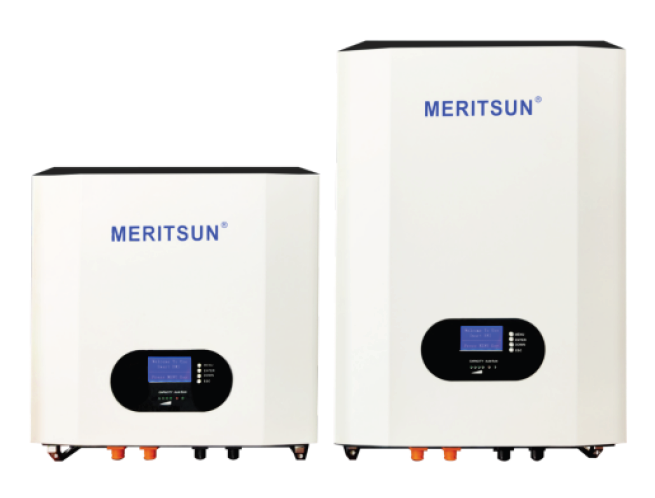
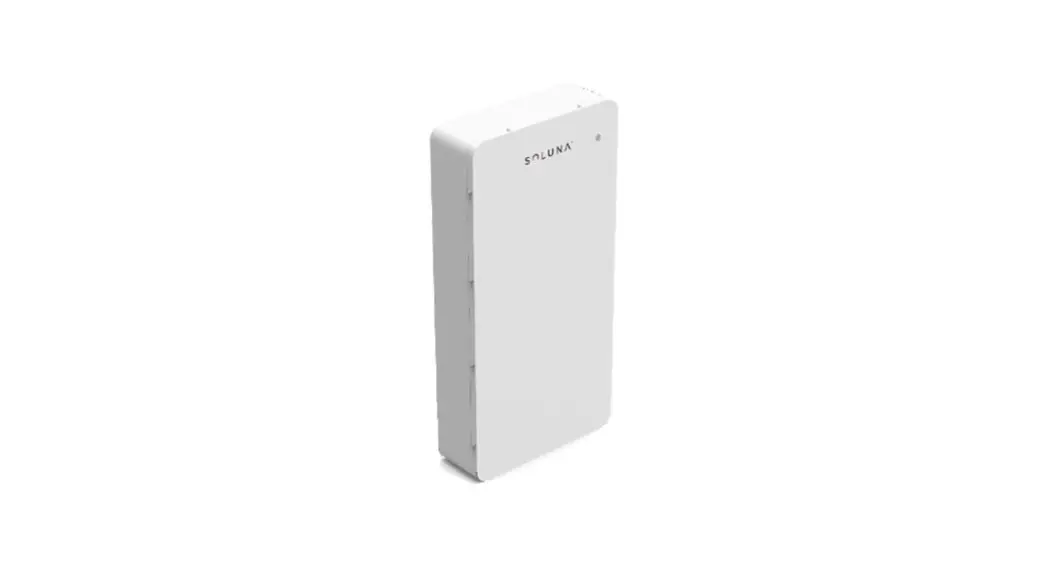
SG48100M Integrated Lithium-ion Battery Pack
Product Information
| Product Name | 48V100Ah Lithium Battery |
|---|---|
| Product Model | SG48100M |
| Product Specifications | 51.2V100Ah |
| Compilation Date | 2022-12-12 |
Product Usage Instructions
To use the 48V100Ah Lithium Battery, please follow the
instructions below:
- Make sure the battery is mounted on a wall using the
appropriate mounting brackets. - Connect the positive (+) and negative (-) terminals of the
battery to the respective terminals of the device or system you
want to power. - Ensure that the battery is within the recommended working range
of 20% to 95% state of charge (SOC). - If charging the battery, connect the charging source to the
recommended charging voltage of 54.5V and observe the maximum
cut-off voltage for charging of 57.6V. - If discharging the battery, monitor the standard discharge
current of 50A and ensure the discharge cut-off voltage does not
fall below 43.2V. - Keep the battery within the recommended working temperature
range of -10°C to +45°C and avoid exposing it to extreme
temperatures outside the range. - For storage, maintain the battery at a temperature between 0°C
and +30°C and avoid prolonged exposure to high humidity
levels. - Use the provided communication modes (RS232, RS485, or CAN) and
set the communication protocol according to customer requirements,
if necessary. - Monitor the battery’s state of health (SOH), state of charge
(SOC), and other parameters using the display function on the panel
or through the communication interface.
Note: Please refer to the complete user manual for detailed
safety instructions and additional information about the battery
system.
Sun Gold Power Co.,Ltd
www.sungoldpower.com
Integrated Lithium-ion Battery Pack for Wall-Mounted User Manual
ProductName: 48V100Ah LithiumBattery ProductModel: SG48100M ProductSpecifications: 51.2V100Ah CompilationDate: 2022-12-12
Sun Gold Power Co.,Ltd
www.sungoldpower.com
Catalogue
1. Document description ………………………………………………………………………………………………………………3 2. Definition of Terms …………………………………………………………………………………………………………………3 3. Battery system performance parameters……………………………………………………………………………………..3 4. Outline and Structural Dimensions of Battery System ………………………………………………………………….5 5. Definition of battery system interface ………………………………………………………………………………………..6
5.1. Panel Schematic………………………………………………………………………………………………………………6 5.2. Module Panel Description ………………………………………………………………………………………………..6 6. Functional block diagram …………………………………………………………………………………………………………7 7. Battery Management System Specifications ……………………………………………………………………………….7 7.1. Basic parameter settings …………………………………………………………………………………………………..7 7.2. Interface ……………………………………………………………………………………………………………………….10 7.2.1. Interface diagram ……………………………………………………………………………………………………….10 7.2.2. Interface Definition……………………………………………………………………………………………………..11 7.3. Communication description……………………………………………………………………………………………11 7.3.1. RS232 communication………………………………………………………………………………………………..11 7.3.2. RS485 communication………………………………………………………………………………………………..12 7.3.3. CAN communication ………………………………………………………………………………………………….12 8. Product function and performance description …………………………………………………………………………..13 8.1. Charging performance …………………………………………………………………………………………………..13 8.2. Discharging performance……………………………………………………………………………………………….13 9. Using & Maintenance Suggestions …………………………………………………………………………………………..14 9.1. LED indication description…………………………………………………………………………………………….14 9.2. Buzzer action description……………………………………………………………………………………………….15 9.3. Key Description ……………………………………………………………………………………………………………15 9.4. Sleep and wake up ………………………………………………………………………………………………………..16 9.4.1. hibernate …………………………………………………………………………………………………………………..16 9.4.2. Wake ………………………………………………………………………………………………………………………16 9.5. DIP switch settings ……………………………………………………………………………………………………….16 9.6. The routine maintenance of the battery part can be carried out by referring to the table …………….18 10. Packing List ………………………………………………………………………………………………………………………..18 11. Storage, maintenance and transportation …………………………………………………………………………………19 11.1. Storage ………………………………………………………………………………………………………………………19 11.2. Transportation…………………………………………………………………………………………………………….19 12. Maintain ……………………………………………………………………………………………………………………………..19 13. Battery usage precautions ……………………………………………………………………………………………………..20 14. Product Liability ………………………………………………………………………………………………………………….20
2
Sun Gold Power Co.,Ltd
www.sungoldpower.com
1. Document description
This specification covers the performance indexes, technical requirements and safety issue of the 48V100Ah
2. Definition of Terms
BMS Battery Management System
DOD Depth Of Discharge
EOL End Of Life
OCV Open Circuit Voltage
SOC State Of Charge
SOH EMC
State Of Health Electro Magnetic Compatibility
Nominal Appropriate voltage approximation to identify or identify a cell or an electrochemical system. voltage
Capacity (The amount of power a battery can provide when fully charged under specified conditions. Usually expressed in Ah.)
Energy Unit
The energy that can be provided by a fully charged battery under specified conditions. Usually expressed in Wh or kWh.
“V” (Volt) ( Voltage unit) “A” (Ampere) (Current unit) “Ah” (Ampere-Hour) (unit of charge)
“Wh” (Watt-Hour) (electrical energy unit) “” (Ohm) (resistance unit) ” °C” (degree Celsius) (temperature unit) “mm” (millimetre) (length unit) “s” (second) (Time unit) “kg” (kilogram) (Weight unit)
“Hz” (Hertz) (Frequency unit)
3. Battery system performance parameters
No.
Item
Technical parameter
1 Battery Type
Lithium iron phosphate battery
2 Rated capacity 3 Nominal voltage 4 Recommended charging voltage 5 Charging Limited Voltage
100Ah 51.2V 54.5V 42V
6 SOC working range
0~100%
7 Standard discharge current
50A
3
Note / @25±20.5C100%DOD
Recommended range of use 20%~95%
Sun Gold Power Co.,Ltd 8 Maximum continuous discharge current 9 Standard charging current 10 Maximum continuous charge current 11 Maximum cut-off voltage for charging 12 Charge cut-off current 13 Disharge cut-off voltage 14 PACK cycle life 15 Thermal management method 16 IP protection class 17 Flammability rating
18 Total system mass
100A 50A
100A 57.6V
5A 43.2V 7000 Natural heat dissipation IP65 battery box plastic parts UL94 V-0 Around 43KG
www.sungoldpower.com
0.05C magnification 80%DOD
25±2, 0.5C charge/0.5C discharge
19 Battery system shell material 20 Shipping SOC 21 DimensionL*W*H mm 22 Design life 23 Parallel function 24 Anti-theft function 25 Display function 26 Charging current limit function
27 Communication mode
28 Communication protocol 29 Storage ambient temperature
30 Working temperature
31
Relative humidity of working environment
299U Q235A
Color can be customized
SOC45-55%
450*500*140mm±2mm 15 Year
Supports up to 16 batteries in parallel
sensor G-sensor anti-theft function
English smart display
Current limit 20A
RS232
RS485
Charging current limit can be set according to customer requirements
Communication mode can be set according to customer requirements
CAN
Support multiple protocols
Communication protocol can be set according to customer requirements
-10~+45
Recommended storage temperature 0~+30
Battery charging:0 45
Battery discharging:-20 +60
Best Use Relative Humidity 85% 95
4
Sun Gold Power Co.,Ltd
www.sungoldpower.com
4. Outline and Structural Dimensions of Battery System
5
Sun Gold Power Co.,Ltd
5. Definition of battery system interface 5.1. Panel Schematic
www.sungoldpower.com
5.2. Module Panel Description
1. P+
2. P+
3. P-
4.P-
5. ON/OFF
6.RUN
7. ALM
8. SOC
9. RS485 10. CAN
11.GROUND SCREW 12.RS232
13.DISplay
14. DRY CONTACT 15.ADD
16.SWITCH
17. REWET
6
Sun Gold Power Co.,Ltd
6. Functional block diagram
The functional block diagram is shown in the figure below
www.sungoldpower.com
7. Battery Management System Specifications 7.1. Basic parameter settings
NO.
Indicator item
Cell overcharge alarm
voltage
Cell overcharge Cell overcharge protection
protection
voltage
Cell overcharge protection
1
delay
Single Overvoltage
overcharge protection release voltage Cell
Protection
Capacity release
Released
Discharge release
Cell over-discharge alarm
Cell overdischarge
protection
2
voltage() Cell over-discharge protection voltage
Monomer over-discharge protection delay
Cell over-
Cell over-discharge
discharge
protection release voltage
protection released
(Release when charging)
Factory default parameters
3600mV
Is it possible to set Can be set
3650mV 4.0S
3380mV SOC96%
2700mV 2500mV
1.0S 2800mV
Can be set Can be set Can be set Can be set > 1A Can be set Can be set Can be set Can be set
Plug into the charger to activate
7
Note
After 30 seconds of overdischarge protection, if it still cannot recover, it will enter low power consumption mode
Sun Gold Power Co.,Ltd
www.sungoldpower.com
3
Overall overcharge protection
Overall overcharge warning voltage
Overall overcharge protection voltage
Overall overcharge protection delay
57.6V 58.4V 1.0S
Can be set Can be set Can be set
Overall
Overall overcharge protection release voltage
54.1V
Can be set
overvoltage protection
Capacity release
SOC96%
Can be set
released
Discharge release
> 1A Discharge current > 1A
Overall
over-discharge
warning voltage
43.2V
Can be set
Overall
overdischarge protection
Overall over-discharge protection voltage
40V
Can be set
4
Overall over-discharge
protection delay
Overall over-
Overall over-discharge
discharge
protection release voltage
protection released
Release when charging
Charging current limit function
Charging current limit
Charge overcurrent 1 alarm
Charge overcurrent protection
5
current
Charge overcurrent 1 protection current
Charge overcurrent 1 protection delay
1.0S 44.8V
Can be set Can be set
Plug into the charger to activate
105A 110A 1.0S
20A Can be set Can be set Can be set
Charging overcurrent 1protection
released
Discharge overcurrent 1
protection 6
Automatic release)
Discharge release
Discharge overcurrent 1 alarm current)
Discharge overcurrent 1 protection current)
Discharge overcurrent 1 protection delay
1min Automatically cancel after 1min
> 1A Discharge current > 1A
105A
Can be set
110A
Can be set
1.0S
Can be set
Discharge overcurrent 1
protection released
Discharge overcurrent 2
7
Discharge
overcurrent 2
protection
released
Automatic release
Charge release Discharge overcurrent 2
protection current Discharge overcurrent 2
protection delay
Automatic release
charge release
1min Automatically cancel after 1min
> 1A Charge current > 1A
120A
Can be set
100mS
Can be set
1min Automatically cancel after 1min
> 1A Charge current > 1A
8
Short circuit
Short circuit protection function
(Have)
After 30 seconds of overdischarge protection, if it still cannot recover, it will enter low power consumption mode
Appearing 10 times in a row will lock the status and will no longer automatically release
Appearing 10 times in a row will lock the status and will no longer automatically release
Appearing 10 times in a row will lock the status and will
no longer automatically
release
8
Sun Gold Power Co.,Ltd
www.sungoldpower.com
protection
Short circuit protection current
350A
Short circuit protection delay
300US
When there is charging,
the short circuit
Short circuit protection released
protection is released After the load is
removed, it will
automatically disarm
MOS over temperature alarm temperature) 90
Can be set
9
MOS high temperature protection
MOS over temperature protection temperature) MOS protection release temperature)
115
85
Can be set Can be set
Charging low temperature warning temperature)
Charging low temperature protection temperature)
Charging low temperature protection release temperature
0 Can be set -5 Can be set 0 Can be set
Charging high temperature
alarm temperature
Charging high temperature
protection temperature)
Charging high temperature
protection release
10
Cell temperature protection
temperature Discharge low temperature
alarm temperature
Discharge low temperature
protection temperature
(Discharge low temperature
protection release
temperature
Discharge high temperature
alarm temperature
Discharge high temperature
protection temperature
Discharge high temperature
protection release
temperature
Ambient low temperature
alarm temperature
Ambient low temperature
protection temperature
Ambient cryogenic
Ambient 11 temperature
alarm
protection release temperature
Ambient high temperature alarm temperature
Ambient high temperature
protection temperature
Ambient high temperature
protection release
temperature
12
Current consumption
Self-consumption current during operation
Low power mode current
50 55
Can be set Can be set
50
Can be set
-15 -20
Can be set Can be set
-15
Can be set
60 65
Can be set Can be set
55
Can be set
-15 -20
Can be set Can be set
-15
Can be set
65 75
Can be set Can be set
65
Can be set
45mAwith display 40mA(without display) 200A
9
Sun Gold Power Co.,Ltd
13
Equalization function
Equalization turn-on voltage Open differential pressure
14
Capacity default settings
15 Sleep function
16
Differential pressure alarm
17
Cell failure protection
Low battery warning
Full capacity setting Sleep voltage Delay
Overpressure alarm Overpressure recovery
Monomer differential pressure
18
Full charge judgment
Full charge voltage Cut off current
7.2. Interface
7.2.1. Interface diagram
www.sungoldpower.com
3500mV 30mV SOC5%
Can be set Can be set Can be set
100AH
Can be set
3150mV
Can be set
5min
Can be set
800mV
500mV
1V Voltage difference>1V
56V
(No alarm when charging)
Charge and discharge are not
allowed
2A
CAN and RS485 interface
dry contact
Parallel communication port
RS232 communication interface
10
Sun Gold Power Co.,Ltd
7.2.2. Interface Definition
RS232–Using 6P6C vertical RJ11 socket
RJ11
Definition description
2
NC
3
TX
4
RX
5
GND
www.sungoldpower.com
RS485 and CAN interface
RS485–Using 8P8C vertical RJ45 socket
RJ45 Pin
Definition description
18
RS485-B1
27 36 45
RS485-A1 GND NC
CAN–Using 8P8C vertical RJ45 socket
RJ45 Pin 9101114 16
12
Definition description NC
CANL
13
CANH
15
GND
Parallel communication port
RS485–Using 8P8C vertical RJ45 socket
RJ45Pin
Definition description
18
RS485-B
27
RS485-A
36
GND
45
NC
RS485–Using 8P8C vertical RJ45 socket
RJ45 Pin
Definition description
916
RS485-B
1015
RS485-A
1114
GND
1213
NC
7.3. Communication description
7.3.1. RS232 communication
The BMS can communicate with the host computer through the RS232 interface, so as to monitor
11
Sun Gold Power Co.,Ltd
www.sungoldpower.com
various information of the battery on the host computer side, including battery voltage, current, temperature, status, SOC, SOH and battery production information, etc. The default baud rate is 9600bps.
7.3.2. RS485 communication
With dual RS485 interface, you can view the information of PACK, the default baud rate is 9600bps. To communicate with the monitoring device through RS485, the monitoring device is used as the host to poll data according to the address, and the address setting range is 2~15.
7.3.3. CAN communication CAN communication, baud rate 500K
12
Sun Gold Power Co.,Ltd
8. Product function and performance description
8.1. Charging performance
Standard charging current 25example:0.2C20A Standard charging voltage54V Standard charging mode and charging curve
www.sungoldpower.com
8.2. Discharging performance
Discharge curve at different magnification
13
Sun Gold Power Co.,Ltd
9. Using & Maintenance Suggestions
www.sungoldpower.com
9.1. LED indication description
Table 1 LED working status indication
Condition Shutdown Standby
Normal /Alarm/ Protect
Hibernat e
Normal
Alarm
Normal
Charging
Dischargi ng
Invalid
Alarm
Overcha rge
protecti on
Tempera ture,
overcurr ent, fail
safe Normal
Alarm Undervo
ltage protecti
on
Tempera ture,
overcurr ent, short
circuit, reverse connecti on, fail
safe
RUN
black flash1
flash1) Always bright) Always bright Always bright
black
flash3 flash3) black
black
black
ALM
black black flash3 black 3 flash3
black
Always bright black flash3
black
Always bright
Always bright
LED Battery indicator LED
black black black black
According to the battery indicator
black
black
According to the battery indicator (battery indication maximum LED flashes 2)
Alwa ys
bright
Alwa ys
bright
Alwa ys
bright
Always bright
Always bright
Always bright
black black black black black
black
(According to the battery indicator)
black black black black
black
black
black black black black
black
black
black black black black
black
black
Illustrate Annihilate Standby mode Module low voltage (The highest power LED flashes (flashing 2), the overcharge alarm ALM does not flash) (If there is no utility power, the indicator light is in standby state)
Stop charging
Stop discharge
Stop discharge
Stop charging and discharging
Table 2 Description of capacity indication
Condition
Charging
Discharging
Capacity indicator L6 L5 L4 L3 L2 L1 L6 L5 L4 L3 L2 L1
017% black black black black black flash2
black black black black
black
Always bright
Electri city
%
1733%
black
black
black
Always black flash 2 bright
black
black
black
black
Always bright
Always bright
3350%
black
black
black
flash 2
Alway s
bright
Always bright
14
black
black
black
Alway s
bright
Always bright
Always bright
Sun Gold Power Co.,Ltd
www.sungoldpower.com
5066% 66-83%
black
black
flash 2
Alway s
bright
Alway s
bright
Always bright
black
black
Alway Alway Alway
s
s
s
flash 2 bright bright bright
Always bright
black
black
Alway Alway
s
s
bright bright
Always bright
Alway Alway Alway
s
s
s
bright bright bright
Always bright
Always bright
Always bright
83-100%
Alway Alway Alway Alway
s
s
s
s Always
flash 2 bright bright bright bright bright
Alway Alway Alway Alway
s
s
s
s
bright bright bright bright
Always bright
Always bright
Running lights
Always bright
flash3
Table 3 LED flashing description
Flashing method flash 1 flash 2
flash 3
Bright 0.25S 0.5S
0.5S
Black 3.75S 0.5S
1.5S
Note The LED indicator alarm can be enabled or disabled through the host computer, and the factory default is enabled.
9.2. Buzzer action description
1) In case of failure, it will beep for 0.25S every 1S;
2) During protection, it will beep for 0.25S every 2S (except for overvoltage protection);
3) When alarming, it will beep every 3S for 0.25S (except overvoltage alarm);
4) The buzzer function can be enabled or disabled by the host computer, and the factory default is disabled.
9.3. Key Description
1)When the BMS is in the dormant state, press the button (3~6S) and release it, the protection board will be activated, and the LED indicators will light up in sequence from “RUN” for 0.5 seconds. 2)When the BMS is activated, press the button (3~6S) and release it, the protection board is put to sleep, and the LED indicators light up sequentially for 0.5 seconds from the lowest battery light.
3)When the BMS is activated, press the button (6~10S) and release it, the protection board will be reset, and all the LED lights will light up at the same time for 1.5 seconds. After the BMS is reset, it still retains the parameters and functions set by the host computer. If it is necessary to restore the initial parameters, it can be achieved through the “restore default value” of the host computer, but the relevant operation records and stored data remain unchanged (such as power, cycle times, etc.). , protection records, etc.).
15
Sun Gold Power Co.,Ltd
www.sungoldpower.com
9.4. Sleep and wake up
9.4.1. hibernate
When any of the following conditions are met, the system enters a low-power mode: 1. The single or overall over-discharge protection has not been released within 30 seconds. 2. Release the button after pressing the button for 3 seconds.
3. The minimum cell voltage is lower than the sleep voltage, and the duration reaches the sleep delay time (at the same time, no communication, no protection, no balance, and no current are satisfied).
4. The standby time is more than 24 hours (no communication, no charging and discharging, no mains power).
5. Forced shutdown through the host computer software.Before entering the sleep mode, make sure that the input terminal is not connected to an external voltage, otherwise it will not be able to enter the low power consumption mode.
9.4.2. wake
When the system is in low-power mode and meets any of the following conditions, the system will exit the low-power mode and enter the normal operation mode:
1. Connect the charger, the output voltage of the charger must be greater than 48V.
2. Press the button for 3S and release the button.
3. Connect to the communication line and open the software of the upper computer (it enters the sleep state due to over-discharge protection, this method cannot wake up the protection board).
Remarks:
After the single or overall over-discharge protection, it enters the low-power mode, wakes up regularly every 4 hours, and turns on the charge and discharge MOS. If it can be charged, it will exit the dormant state and enter normal charging; if it cannot be charged after 10 consecutive automatic wake-ups, it will no longer automatically wake up. When the system is defined as the end of charging, the recovery voltage is not reached after 2 days of standby (standby time setting value), and the charging is forced to resume until the end of charging again.
9.5. DIP switch settings
16
Sun Gold Power Co.,Ltd
www.sungoldpower.com
When the battery packs are used in parallel, different PACK can be distinguished by their hardware addresses, and the hardware address of each PACK in the entire battery stack is unique. The hardware addresses can be set in sequence through the DIP switches on the board. Refer to the following for the definition of the switches. surface.
17
Sun Gold Power Co.,Ltd
www.sungoldpower.com
9.6. The routine maintenance of the battery part can be carried out by referring to
the table
Period
Item
Treatment measures
Per month
(Operating environment)
Keep away from heat sources and avoid direct sunlight
Visual inspection If the appearance is damaged, leaked or deformed, the faulty battery pack should be disconnected, photographed and replaced.
Each quarter
Clean appearance
Clean the exterior with a cotton cloth. Due to the high voltage of the battery pack, care should be taken when cleaning.
Connection Status
Check the bolts at each terminal and retighten them if they are loose.
If the temperature of the connection line exceeds 40°C (feeling hot), check the cause
Every half year Voltage detection At the end of charging, measure and record the busbar voltage and the positive and negative terminal voltages of the battery pack. The voltages of the two are consistent. Otherwise, check whether the cable at the corresponding connection is faulty.
In the first year, real-time data collection at the end of discharge was performed at least every six months.
Beginning in the second year, on-site capacity determination will be conducted every three months. If a certain battery cell is frequently overcharged and over-discharged in the historical alarm information viewed through the RS232 interface, it means that the battery cell has touched the charging protection point and the discharging protection point for a long time. This situation may lead to insufficient backup time, it is recommended to replace it in time
The final state of charge and discharge can be judged by the capacity light, refer to the definition of LED light capacity status light.
10. Packing List
NO.
Material name
1
48100Ah lithium iron phosphate battery
See below for packing list
Specification/Module 48100
Number 1 set/box
2
Positive and negative output lines
One end crimped 25-8, one end waterproof plug, 25mm2 flame retardant cable, 500mm long one red and one black.
1 set/1 module
3
RS485 cascade communication line
0.5 meters long, with RJ45 crystal heads at both ends.
1root/2 modules
4
RS485 USB RS232 USB
1.5 meters long, one end is the corresponding crystal head, and the other end is the USB interface.
1 set/8 module
5
Product manual
/
1
6
Certificate
/
1
7
Wall bracket and supporting M10 expansion bolt
Wall bracket and supporting M10 expansion bolt
1 set
18
Sun Gold Power Co.,Ltd
8 M6 * 12 composite bolt
9
Dry contact terminal
www.sungoldpower.com
M6 * 12 composite bolt
4pc
Matching according to the number of dry nodes of the BMS
1pc
11.Storage, maintenance and transportation 11.1. Storage
1. The battery pack is usually stored at a state of charge of 20% to 40% in a clean, dry, ventilated and rain-proof room with an ambient temperature of -5°C to 35°C and a relative humidity of not more than 75%, and should be placed flat. Pad height, not less than 100MM from the ground;
2. Batteries cannot be stored with active chemicals or dusting items;
3. The battery cannot be subjected to any mechanical shock or heavy pressure;
4. The battery should avoid direct sunlight, keep away from the fire source, and the distance from the heat source should not be less than 2M;
5. From the date of manufacture, every 3 months of storage should be charged with a current of 0.2~0.5C for 30~60min, and the temperature range is 25±5.5.
11.2. Transportation
The battery pack should be packaged and shipped. During transportation, avoid severe vibration, shock or extrusion, and avoid sun and rain. Batteries can be transported by vehicles such as cars, trains, ships, and planes.
12. Maintain
The battery pack should remain at 40% – 60% of state of charge;
When the battery is not in use for a long time, it is recommended to charge it with 0.2c current every three months or so.
During the maintenance process, do not install or remove the battery in the battery pack by yourself, otherwise the battery performance will be reduced;
Any battery in the battery pack shall not be disassembled or replaced without authorization, and dissection of the battery is strictly prohibited.
19
Sun Gold Power Co.,Ltd
www.sungoldpower.com
13.Battery usage precautions
Please read the instruction manual and precautions carefully before use. When used correctly according to the product characteristics, the battery will be a safe, reliable and convenient storage battery.
Warn! Improper use of lithium-ion batteries can result in personal injury or fire!
1. When charging the battery, pay attention to ensure that the polarity is correct, and do not reverse the charging of the battery;
2. Do not expose the battery to adverse environments, such as extreme temperatures, deep cycling, frequent overcharge/overdischarge;
3. If you find that the battery is abnormal, please stop using it immediately and report it to a professional for treatment;
4. Ensure that batteries and battery management systems are kept away from dangerous goods or dangerous materials;
5. It isforbidden to short-circuit the battery; 6. It is forbidden to burn or destroy the battery, which may cause the release or burning of harmful
gases; 7. Do not disassemble, squeeze, pierce or burn. 8. Rain is prohibited; 9. It is forbidden to be directly exposed to sunlight; 10. Prohibit exposure to temperatures above 60°C; 11. It is forbidden to discard the battery in the garbage; 12. It is forbidden to use other types of batteries in series or in parallel with lithium-ion batteries; 13. It is forbidden to use new and old batteries (groups) in series or in parallel.
14. Product Liability
Consumers must strictly abide by the requirements of this product specification to use this product. Misuse may lead to serious accidents.The company is not responsible for any accidents caused by the operation and use that are not strictly in accordance with this product specification.The company reserves the right to change the contents of this specification without prior notice; the final interpretation right of this information belongs to the company.
20
 Home Solar System Kit,Power Inverter,Solar Inverter,Off Grid Inverter