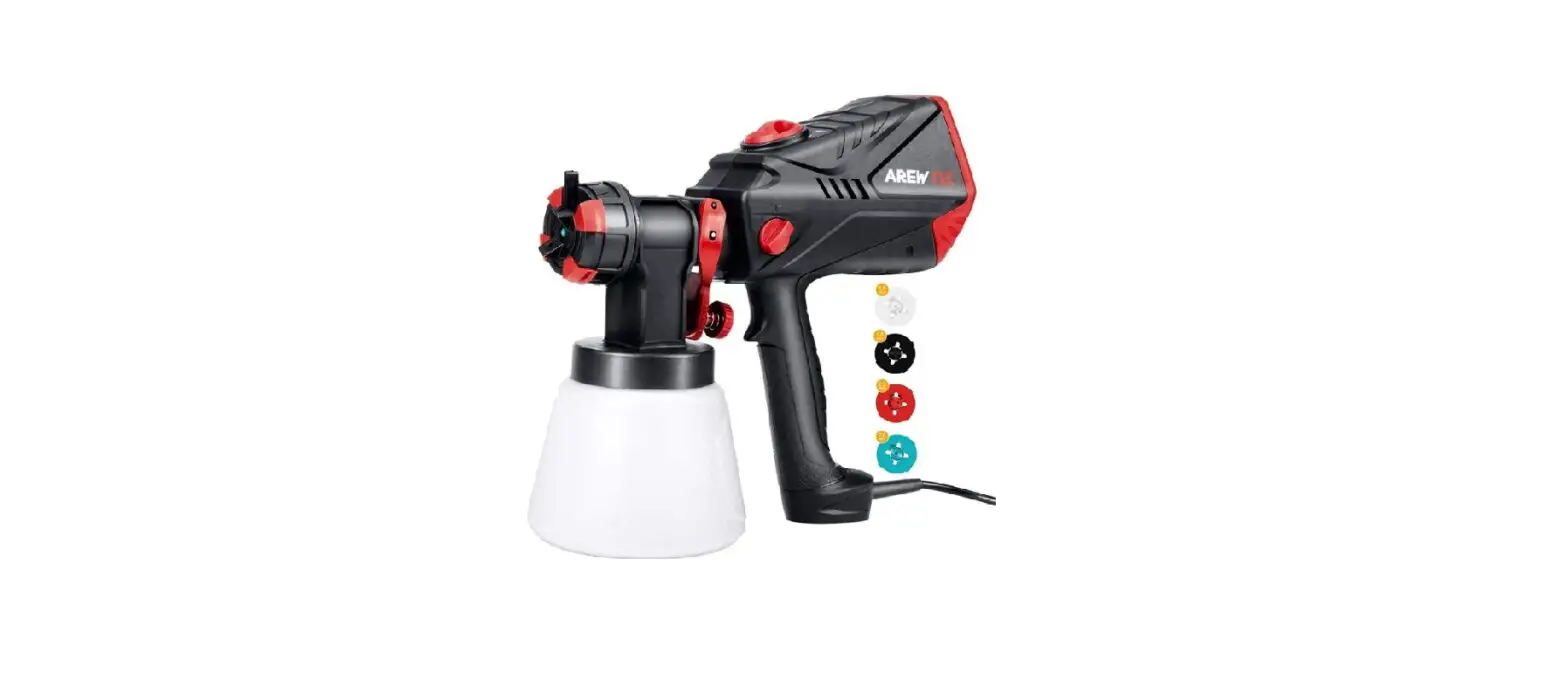
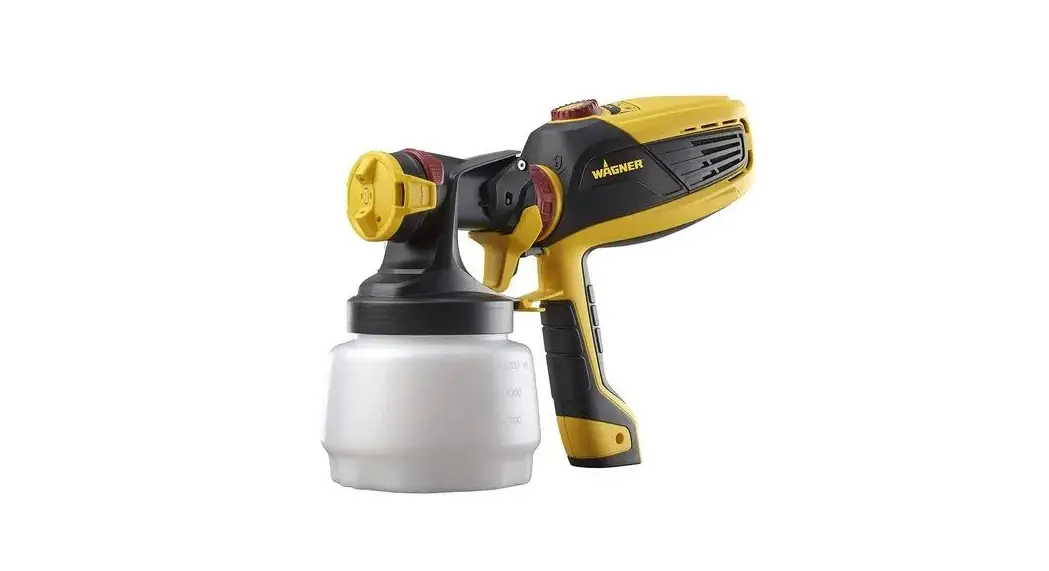
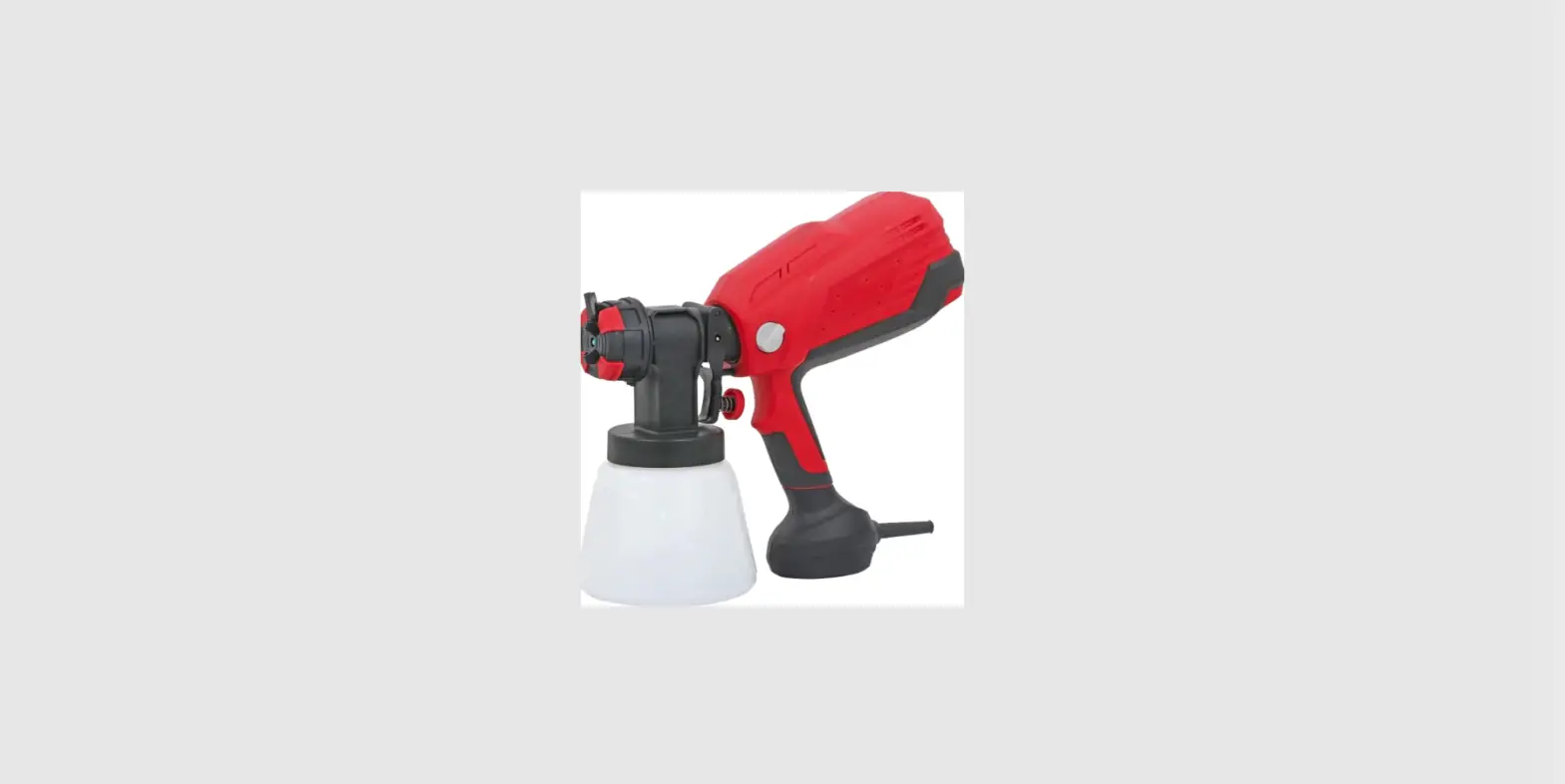
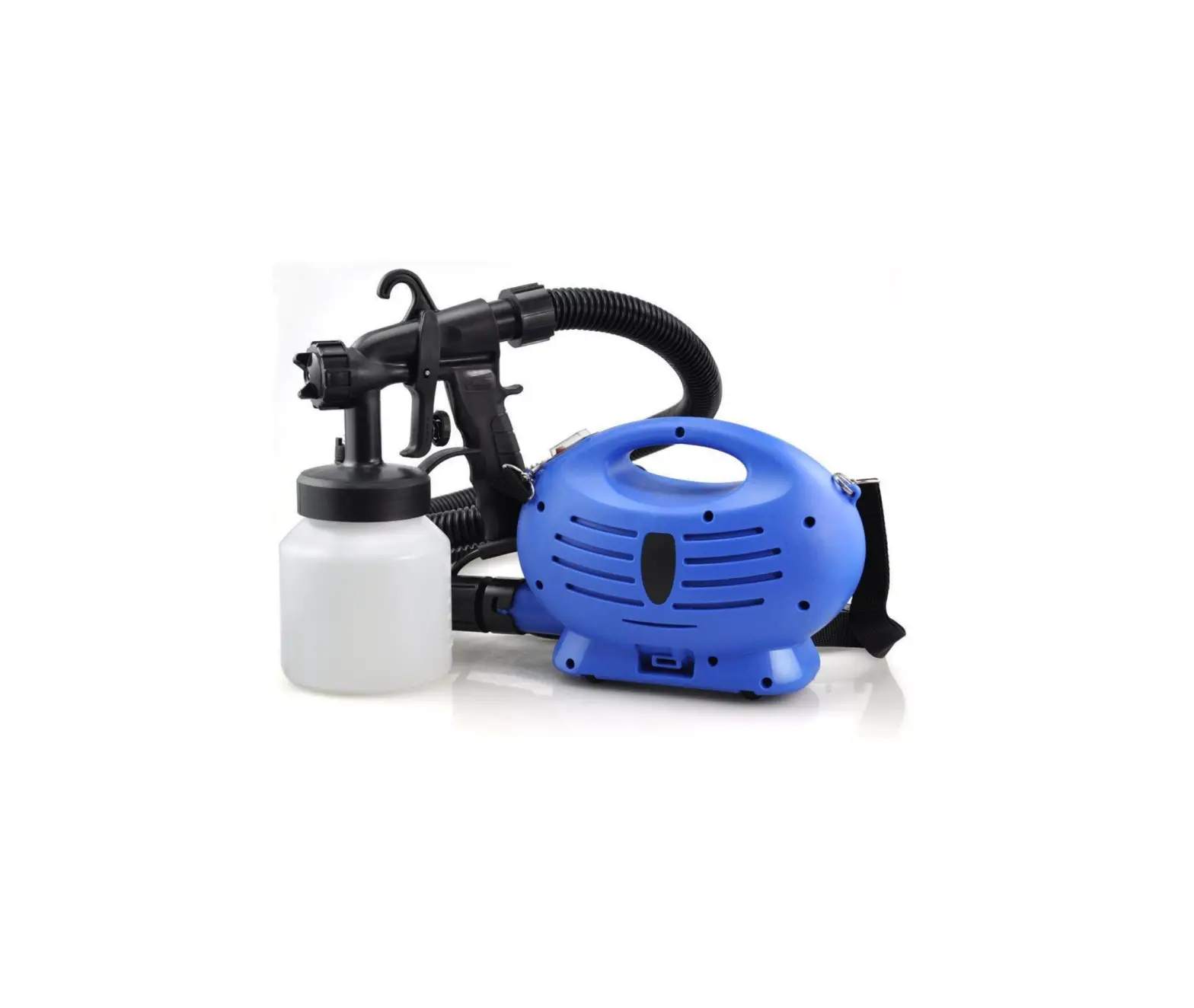
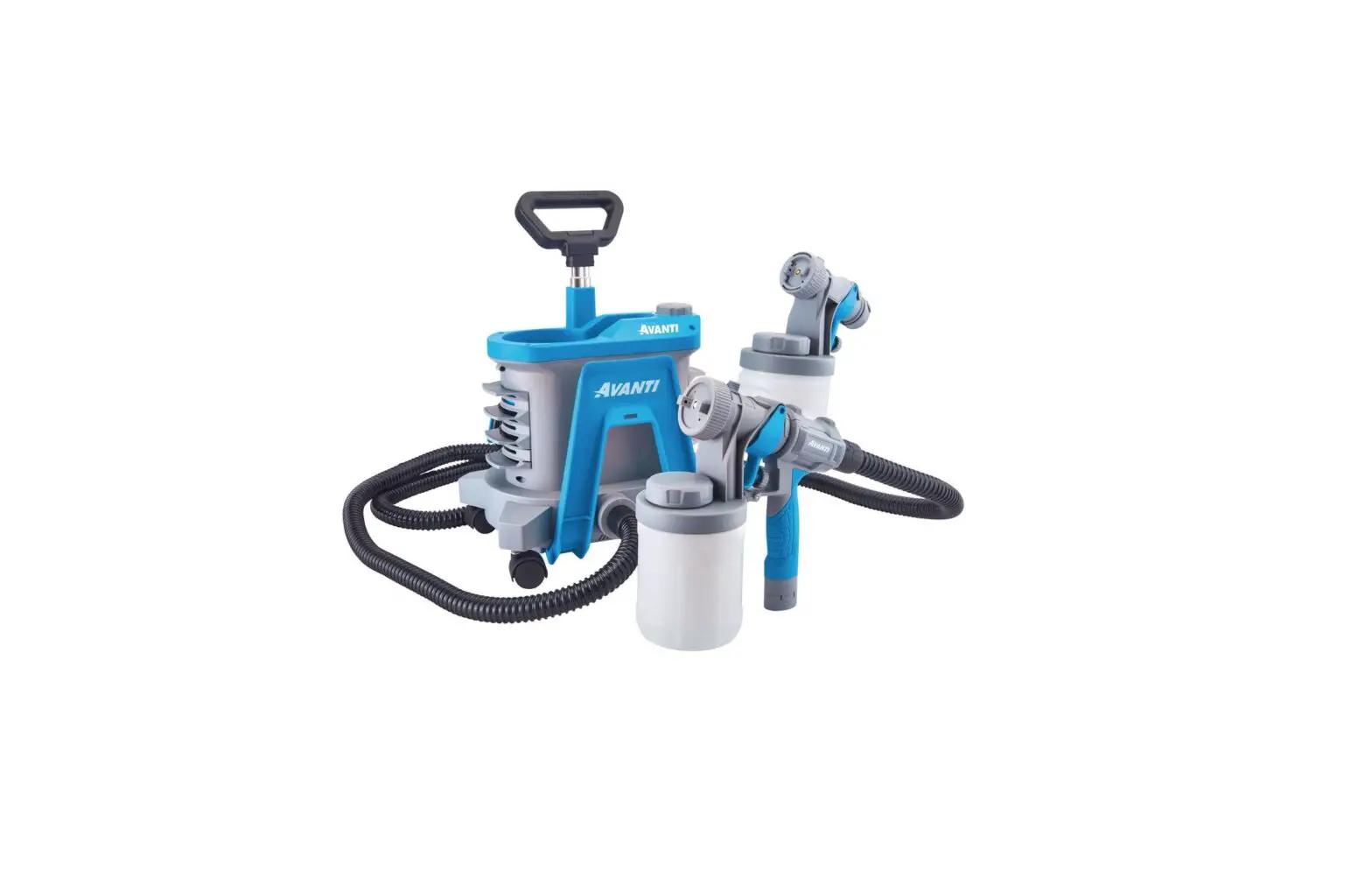
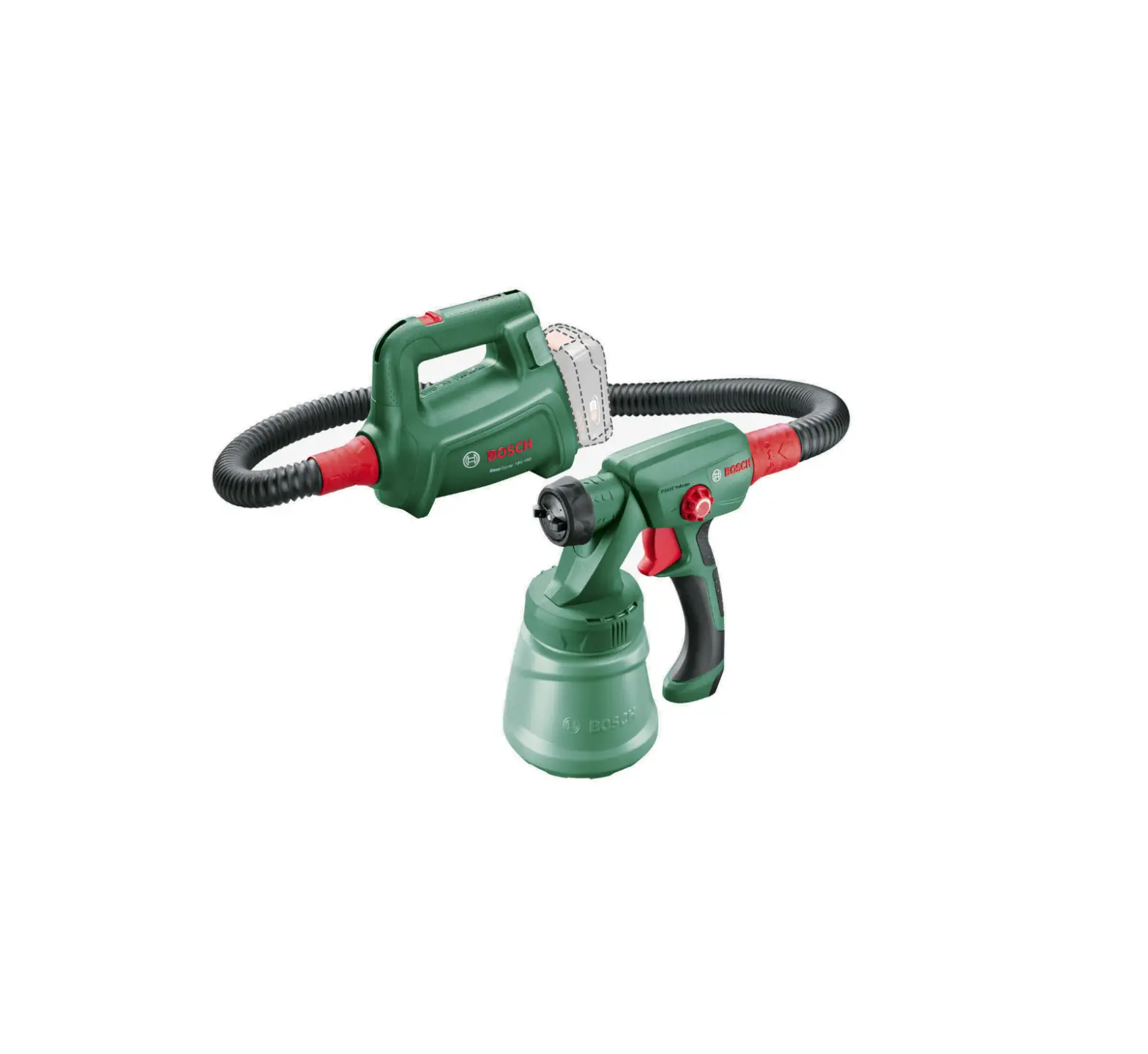
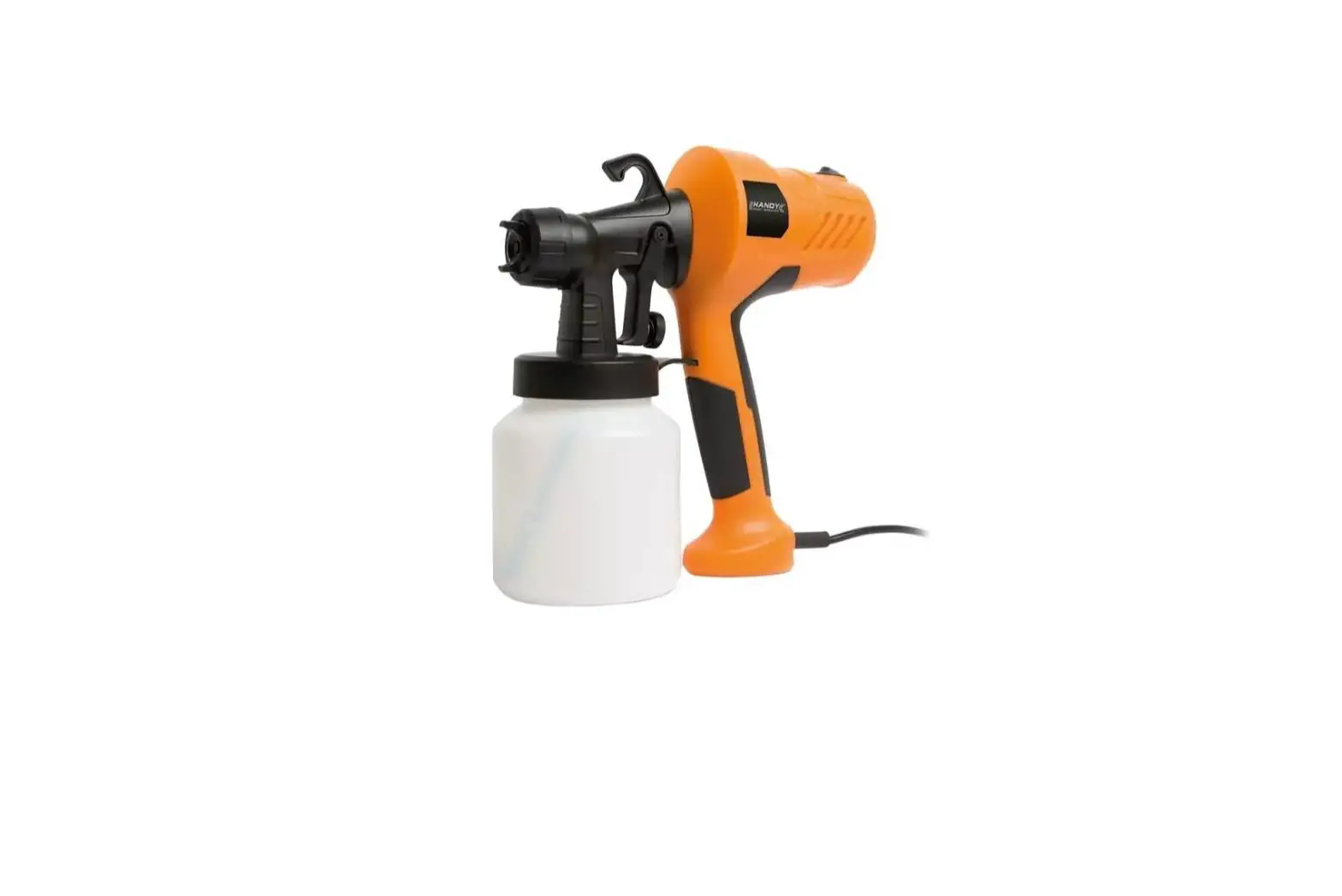
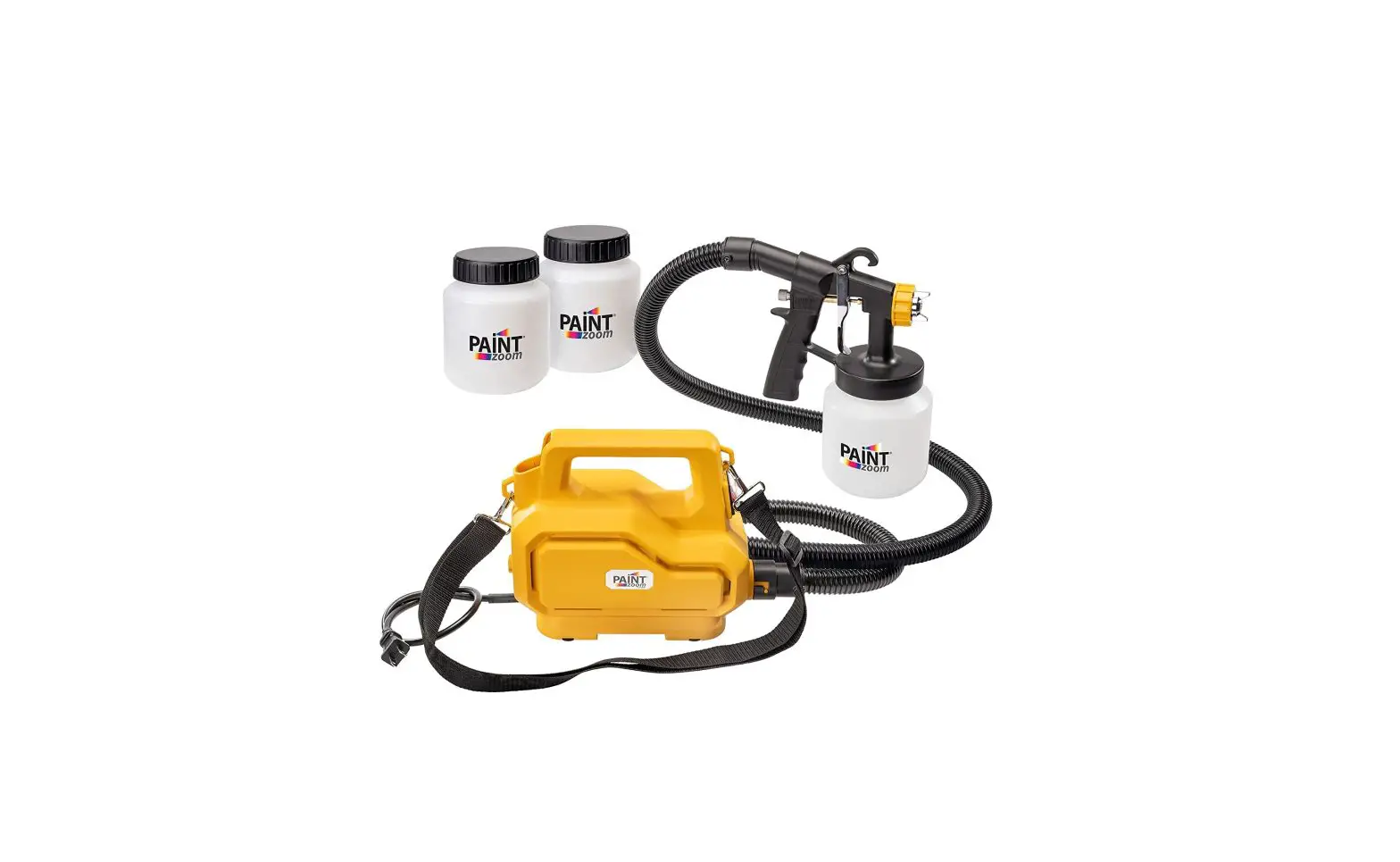
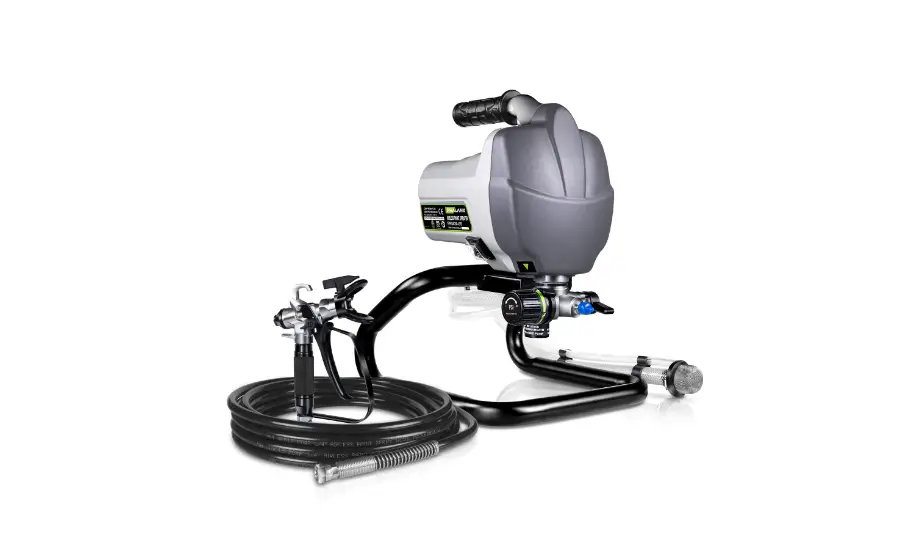
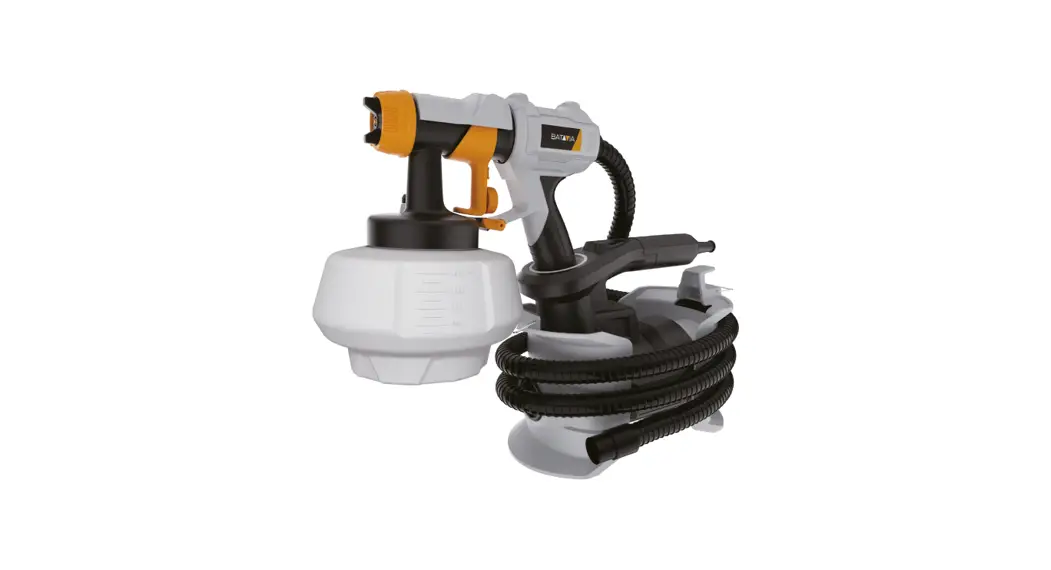
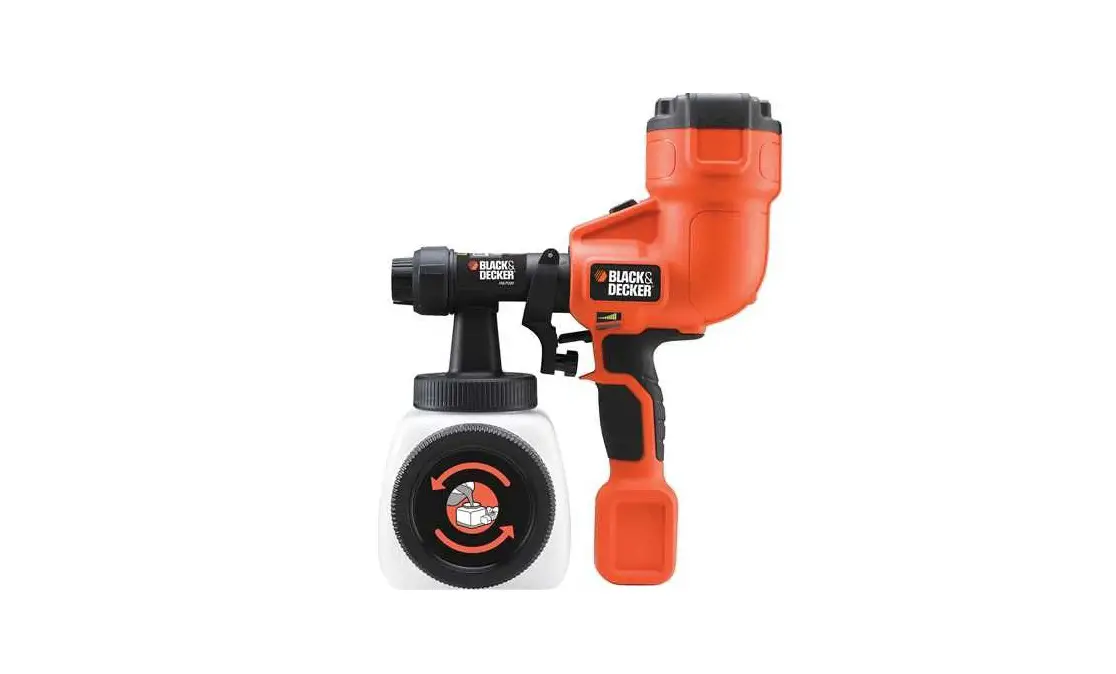
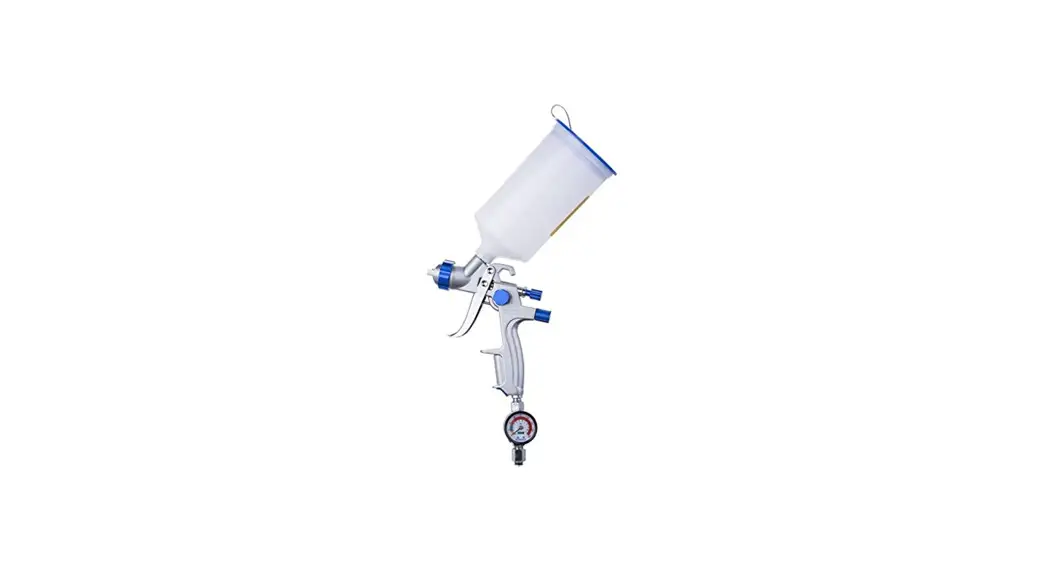
GT26001196 HVLP Power Paint Sprayer
Product Information
Model: GT26001196
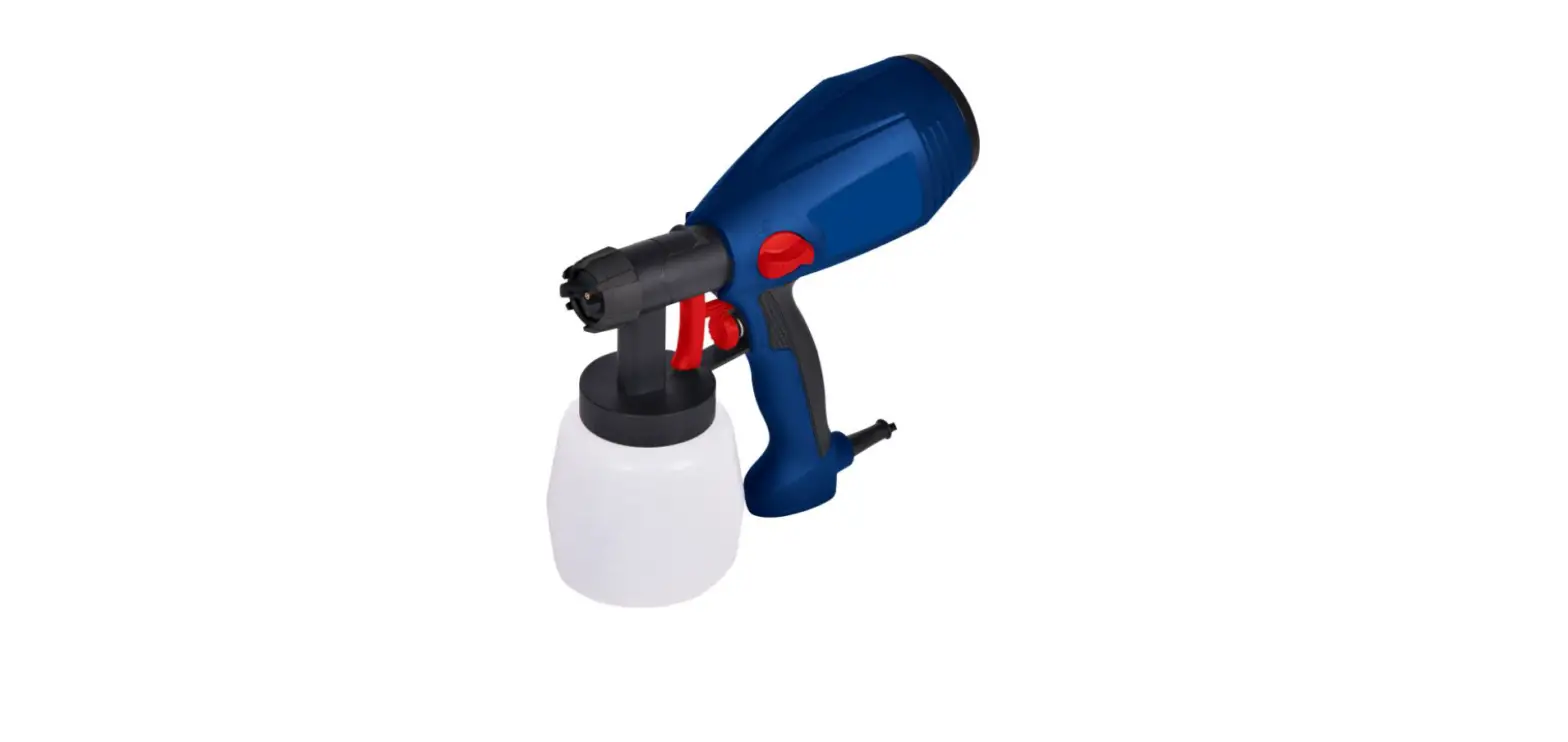
This is an electric spray gun designed for various applications
such as dust-spraying and washing. It comes with interchangeable
nozzles for different purposes.
Product Usage Instructions
1. Changing the Dust-Spray Nozzle:
- Press and rotate the nut anticlockwise as shown in the
picture. - Take out the spray head.
- Change the dust-spray nozzle.
- Tighten the nut clockwise to secure the nozzle.
2. Changing the Washing Nozzle:
- Press and rotate the nut anticlockwise as shown in the
picture. - Take out the spray head.
- Change the washing nozzle.
- Tighten the nut clockwise to secure the nozzle.
Note: Please refer to the provided Operating
Manual for detailed safety information and guidelines before using
the device. Keep the Operating Manual in a safe place for future
reference.
Safety Information
Explanation of Symbols:
- Danger of electrical shock: Indicates
potential danger related to electrical shock. Follow instructions
to avoid injuries. - Tips and useful information: Provides
additional tips and useful information for operation. - Suitable for low-viscosity materials:
Indicates that the device and accessories are designed for
processing low-viscosity materials like paints and glazes.
General Safety Instructions:
- Safety at the workplace:
- Keep the workplace clean and well lit.
- Avoid using the tool in hazardous areas containing flammable
liquids, gases, or dusts. - Keep children and others away from the tool during
operation.
- Safety of Persons:
- Be attentive and work sensibly with the power tool.
- Wear personal safety equipment, such as safety goggles, dust
masks, non-slip safety shoes, and ear protection. - Avoid accidental starting-up by ensuring the tool is switched
off before connecting it to the power supply or carrying it. - Remove setting tools or wrenches before switching on the power
tool. - Maintain a secure standing position for better control of the
tool.
Note: Always follow the safety instructions
provided in the Operating Manual for safe and proper usage of the
electric spray gun.
ELECTRIC SPRAY GUN Read user’s manual carefully before operating!
Model: GT26001196
Original instruction manualOther languages are translation of the original instruction manualSave the instruction manual for future reference
A
B
C
A +
B
–
A B
Change dust-spray nozzle Press and rotate the nut anticlockwise as shown on the picture. Take out the spray head and change the dust-spray nozzle, then tighten the nut clockwise
Change washing nozzle Press and rotate the nut anticlockwise as shown on the picture. Take out the spray head and change the washing nozzle, then tighten the nut clockwise
Please read the Operating Manual carefully and observe the safety information before starting the device. Store the Operating Manual in a safe place close to the product in case it needs to the
used by someone else
Contents
1. Explanation of symbols used………………………………………………………………………………………2 2. General Safety Instructions…………………………………………………………………………………………2 3. Safety Instructions for Spray Guns………………………………………………………………………………4 4. Description/Scope of delivery……………………………………………………………………………………..6 5. Coating Materials Suitable for Use………………………………………………………………………………6 6. Coating Materials Not Suitable for Use………………………………………………………………………..6 7. Preparation of the Coating Material…………………………………………………………………………….6 8. Start-up……………………………………………………………………………………………………………………….7 9. Adjusting the desired Spray Setting …………………………………………………………………….7 10. Adjusting the Material Volume (Fig.6)………………………………………………………………………..7 11. Spray Technique…………………………………………………………………………………………….8 12. Interruption of Work till 4 Hours……………………………………………………………………….8 13. Taking Out of Operation and Cleaning………………………………………………………………………..8 14. Maintenance………………………………………………………………………………………………….9 15. Spare Parts List ………………………………………………………………………………………………9 16. Accessories…………………………………………………………………………………………………….9 17. Correction of Malfunctions………………………………………………………………………………………….10 18. Technical Data………………………………………………………………………………………………..11 19. Environmental protection……………………………………………………………………………………………11
1. Explanation of symbols used
This symbol indicates a potential danger for you or for the device. Under this symbol you can find important information On how to avoid injuries and damage to the device.
Danger of electrical shock
Indicates tips for use and other particularly useful information.
Devices and accessories marked with this symbol are suitable for processing low-viscosity materials such as paints, glazes and wall paints specifically designed for this purpose. If a material bears this logo, it is particularly well suited for use with the relevant device.
2. General Safety Instructions
Caution!
Read all safety warnings and all instructions. Failure to follow the warnings Save all warnings and instructions for future reference. The term “power tool” in the warnings refer to your mains-operated (corded) Power tool or battery-operated (cordless) power tool.
1. Safety at the workplace a) Keep your workplace clean and well lit. Disorder or unlit workplaces may result in accidents. b) Never use the tool in hazardous areas that contain flammable liquids, gases or dusts. Power tools generate sparks that can ignite the dust or vapors. c) Keep children and other persons away when using the power tool. You can lose control of the tool if you are distracted.
2. Electrical Safety a) The tool plug must fit into the socket, the plug may not be modified in any form. Do not use adaptor plugs together with protective-earthed tools. plugs and suitable sockets reduce the risk of an electric shock. b) Avoid physical contact with earthed surfaces such as pipes, heating elements, stoves and refrigerators. The risk through electric shock increases if your body is earthed. c) Keep the equipment away from rain and moisture. The risk of an electric shock increases if water penetrates electrical equipment. d) Do not misuse the mains lead by carrying the tool by the lead, hanging it from the lead or by pulling on the lead to remove the plug. Keep the lead away from heat, oil, sharp edges or moving tool parts. Damaged or twisted leads increase the risk of an electric shock. e) If you work outdoors with a power tool, only use extension cables suitable for outdoor use. The use of an extension lead that is suitable for outdoors reduces the risk of an electric shock. f) If you cannot avoid using the tool in a damp environment, use a residual current operated circuit-breaker. Using a residual current operated circuit-breaker avoids the risk of electric shock.
3. Safety of Persons a) Be attentive. Pay attention to what you are doing and work sensibly with a power tool. Do not use the tool if you are tired or under the influence of drugs, alcohol or medication. Just a moment of inattentiveness while using the tool can lead to serious injuries.
b) Wear personal safety equipment and always wear safety goggles Wearing personal protective equipment, such as dust mask,
non-slip safety shoes, safety helm or ear protection, depending on the type of power tools, reduces the risk of injury.
c) Avoid accidental starting-up. Make sure that the electric tool is switched off before you connect it to the power supply, pick it up or carry it. Accidents can occur if you carry the power tool while your finger is on the switch or if you connect the power tool to the power supply which it is on.
d) Remove setting tools or wrenches before switching on the power tool. A tool or wrench that is in a rotating tool part can lead to injuries.
e) Avoid an unnatural posture. Ensure that you are standing securely and have your balance at all times. This ensures that you can control the tool better in unexpected situations.
f) Wear suitable clothing. Do not wear wide clothing or jewellery. Keep your hair, clothes and gloves away from moving parts. Loose clothing, jewellery or long hair can be caught in moving parts.
g) Do not lull yourself into a false sense of security and do not think yourself above the safety rules for electric tools, even if you are familiar with the electric tool following extensive practical experience. Careless use can lead to serious injuries in fractions of a second.
Usage and treatment of the electric tool
3. Usage and treatment of the electric tool
a) Do not overload the tool. Use the power tool designed for the work that you are doing. You work better and safer in the specified performance range if you use the suitable power tool.
b) Do not use power tools whose switch is defective. A power tool that cannot be switched on or off is dangerous and has to be repaired.
c) Remove the plug from the socket before carrying out tool settings, changing accessories or putting the tool away. This precautionary measure prevents unintentional starting of the tool.
d) Store unused power tools so that they are inaccessible to children. Do not let persons use the tool who are not familiar with it or who have not read these instructions. Power tools are dangerous when they are used by inexperienced persons.
e) Take proper care of your tools. Check whether the moving parts function trouble-free and do not jam, whether parts are broken or damaged so that the tool function is impaired. Have damaged parts repaired before using the tool. Many accidents have their origin in power tools that have been maintained badly.
f) Use the power tool, accessories, insert tools, etc. in accordance with these instructions and in a fashion specified for this special tool type. Take the working conditions and the activity to be carried out into consideration. The use of power tools for purposes other than the intended ones can lead to dangerous situations.
g) Keep the handles and grip surfaces dry, clean and free of oil and grease. Slippery handles and grip surfaces hamper safe operation and control of the electric tool in unforeseen situations.
5. Service a) Have your tool repaired only by qualified specialist personnel and only with original spare parts. This ensures that the tool safety is maintained. b) If the supply cord is damaged, it must be replaced by the manufacturer, its service agent or similarly persons in order to avoid a hazard.
3. Safety Instructions for Spray Guns
· The device may not be used in workplaces covered by the explosion-protection regulations. · There must be no sources of ignition such as, for example, open fies, smoke of lit cigarettes, cigars and tobacco pipes, sparks,
glowing wires, hot surfaces, etc. in the vicinity during spraying.
· Do not spray any substances whose hazard potential is not known. · Before working on the spray gun remove the power plug from the socket. · Do not use the spray guns to spray flammable substan es. · The spray guns are not to be cleaned with flammable solvents. · Caution against dangers that can arise from the sprayed substance and observe the text and information on the containers or the
specifications given by the substance manufacturer.
· Caution! Wear breathing equipment: Paint mist and solvent vapors are damaging to health. Always wear breathing equipment
and only work in well ventilated rooms or using supplementary ventilating equipment. It is advisable to wear working clothing, safety glasses, ear protection and gloves.
CAUTION: DANGER OF INJURY! Never point the spray stream towards human beings or animals.
Sockets and plugs must be masked. Risk of an electric shock as a Consequence of sprayed material entering the socket!
Attention! Never operate the device if the nozzle seal is either damaged or missing. If the nozzle seal is either missing or damaged liquids can enter the device and increase the risk of an electric shock. Check the nozzle seal before each use.
· When working indoors as well as outdoors ensure that no solvent vapours are sucked in by the spray gun. · When working outdoors, be aware of the wind direction. Wind can carry the coating substance across greater distances – thus
causing damage. When working indoors, provide for adequate ventilation.
· Do not let children handle the device. · Never open the device yourself in order to carry out repairs in the electrical system!
The units may only be used with a functional valve. If paints rises in the ventilating hose (Fig. 1, item 11) do not operate the unit further! Dismantle and clean the ventilating hose, valve and diaphragm and replace the diaphragm if necessary.
· Do not lay the spray gun.
With original WAGNER accessories and spare parts, you have the guarantee that all safety regulations are fulfilled,
4. Description/ Scope of delivery
1) Nozzle 3) Union nut 5) Trigger 7) Material volume adjustment 9) Mains lead
Scope of delivery (Fig. 1) 2) Air Cap 4) Spray gun front part 6) Spray gun rear part 8) Air filer cover 10) Container
5. Coating Materials Suitable for Use
Water- and solvent-based paints, finishes, primers, 2-component paints, clear finishes, automotive finishes, staining sealers and wood sealer-preservatives. All coating materials with the red Perfect Spray logo
6. Coating Materials Not Suitable for Use
Wall paints without the red Perfect Spray logo.
Alkali and acidic paints. Flammable materials.
7. Preparation of the Coating Material
The enclosed spray attachment can be used to spray paints, varnishes and glazes that are undiluted or slightly diluted. Detailed information is available in the technical data sheet of the manufacturer ( Internet download).
7.1 Measure the viscosity of the paint.
To determine this first thoroughly stir the paint. Dip the viscosity cup into the paint and fill just below the cups rim. Raise the cup and measure the time taken for the paint to run out .This will give a D.I.N. The maximum viscosity for this product is max 30 seconds 7.2 If the D.I.N. is less than 30 seconds no thinning is required. If D.I.N. is more than 30 seconds, thin the paint to reach 30
D.I.N. Thin by adding the correct thinner, a small amount at a time. Check manufacturer’s instructions to ensure you are
using the correct thinner and that the paint can be thinned. Stir paint thoroughly before and after thinning. Caution! Do not thin beyond paint manufacturer’s recommendation. 7.3 Stir the material up and put the required amount into the paint container.
Thinning recommendation
Sprayed material
Glazes
undiluted
Wood preservatives, mordants, oils, disinfection agents, plant undiluted
protective agents
Paints containing solvents and water-soluble paints,
dilute by 5 – 10%
primers, vehicle coating paints, thick-film glazes
Wall paints with the red Perfect Spray logo
dilute in accordance with manufacturer’s instructions
7.4 If the convey capacity is too low, add 5 – 10% dilution step-by-step until the convey capacity fulfils our requirements. When diluting, pay attention that the spray material and the diluting agent correspond. Lumps can develop that can lead to clogging of the spray gun.
8. Start-up
Before connecting to the mains supply, be sure that the supply voltage is identical with the value given on the rating plate.
· Unscrew the container from the spray gun.
·Warning! Before any spraying , please always do a test to make sure the paint thickness meets your requirement. It is advisable to
test the spray gun on cardboard or a similar surface to find the correct setting.
· Aligning suction tube. (Fig. 2) If the suction tube is positioned correctly, the container contents can be sprayed without almost any
residue. When working on lying objects: Turn the suction tube forwards. (Fig. 2 A) Spraying work when working on overhead objects: Turn the suction tube rearwards.(Fig. 2 B)
· Set the container on a sheet of paper, pour in the prepared coating material and screw the container tightly onto the spray gun.
· Connect the front part with the rear part of the gun (Fig. 3).
· Put the machine down only on a level, clean surface. Otherwise the machine could tip over!
· Pull the trigger guard. The has a two-stage trigger guard. In the first stage the turbine is started. If the trigger guard is pressed
further, the material is transported.
· Adjust the spray setting on the spray gun according to step 9.
9. Adjusting the desired Spray Setting
Three different spray jet settings can be chosen on the spray gun, depending on the application and target object.
WARNING! Danger of injury! Never pull the trigger guard while adjusting the air cap.
Turn the air cap (1) to the desired spray setting position (arrow).
Fig. 4 A = vertical fit jet
for horizontal surfaces
Fig. 4 B = horizontal fit jet
for vertical surfaces
Fig. 4 C = circular jet
for corners, edges and hard-to-reach surfaces
10. Adjusting the Material Volume (Fig. 6)
10. Adjusting the Material Volume (Fig. 6)
Set the material volume by turning the regulator on the trigger guard of the spray gun.
– turn to the left
lower material volume
+ turn to the right
higher material volume
11. Spray Technique
· The spray result depends heavily on the smoothness and cleanliness of the surface to be sprayed. Therefore the surface should be carefully prepared and kept free of dust. ·Please always cover off the vicinity of the spray surface thoroughly and generously. When spraying in enclosures, surfaces not covered can become contaminated. The spray surface must be clean, dry and grease-free. If necessary, roughen smooth surfaces and then remove the sanding dust.. · Cover screw threads or similar parts of the target object. · It is advisable to test the spray gun on cardboard or a similar surface to find the correct setting. Important: Begin spraying outside of the target area and avoid interruptions inside the target area. ·Hold the Spray Gun about 5 – 15 cm from the surface. Paint will begin to run on the surface if you are holding the gun too close or moving the gun too slowly. Excessive paint will result in runs and insufficient paint will result in a thin, dusted finish · Correct (Fig. 7a) Be sure to hold the spray gun at an even distance of approx. 5 – 15 cm to the target object. · Incorrect (Fig. 7b) Heavy spray fog build-up, uneven surface quality. · Move the spray gun evenly cross-wise or up-and-down, depending on the spray pattern setting. · An even movement of the spray gun results in an even surface quality. · When coating material builds up on the nozzle (A) and air cap (B) (Fig. 8), clean both parts with a solvent or water. · Overlapping
Each pass of the Spray Gun needs to overlap the previous by approximately 1/3. A cross pattern is recommended. Start with horizontal passes and finish with light vertical passes. When spraying a long job such as a fence, it is best to work in sections of approximately one meter. Ensure sufficient overlap when starting a new section.
12. Interruption of Work till 4 Hours
· Turn the machine off. · When processing 2-component varnishes, clean the device immediately.
13. Taking Out of Operation and Cleaning
Proper cleaning is the prerequisite for problem-free operation of the paint application device. No warranty claims are accepted in case of improper or no cleaning. 1) Unplug the power plug. Vent the container in case of longer breaks and after the work has been terminated. This can be done by brie- y turning open and then closing the container or by pulling the trigger guard and letting the paint into the original paint container. 2) Divide the spray gun. Press the hook (Fig. 3 b “click”) slightly downwards. Turn the gun front part and gun rear part against each other and take them apart.
3) Unscrew the container. Empty any remaining coating material back into the material tin. 4) Pour solvent or water into the container. Screw the container back on. Do not use flammable materials for cleaning purposes 5) Assemble the gun again (Fig. 3). 6) Insert the power plug, turn on the machine and spray the solvent or water into a container or a cloth. 7) Repeat the above procedure until the solvent or water emerging from the nozzle is clear. 8) Turn off the machine and emove the plug. 9) Screw of the container and empty it. Pull out the suction tube with container seal. CAUTION! Never clean seals, diaphragm and nozzle or air holes of the spray gun with metal objects.
The ventilation hose and diaphragm are only solvent-resistant to a limited extent. Do not immerse in solvent, only wipe. 10) Clean the outside of the spray gun and container with a cloth soaked in solvent or water. 11) Unscrew the union nut (Fig. 10, 1) and remove the air cap (2) and nozzle (3). Clean the air cap, nozzle with a brush and solvent or water.
14.Maintenance
WARNING! Never operate the machine without the air filter: dirt could be sucked in and interfere with the function of the machine. Disconnect plug before changing parts.
· Change the air filter if it is soiled (Fig. 9).
· In order to mount the gun more easily apply lubricating grease (enclosed) liberally to the O-ring at the gun front part. (Fig. 10, Item 5)
15. Spare Parts List
Pos. 1 2 3 4 5 6 7 8 9 10 11 12 13 14 15 16 17
Spare Parts List (Fig. 10) Designation Union nut Air cap Nozzle O-ring Material volume regulation with spring, complete Spray gun rear part Suction tube Container seal Container with cover 2.2 nozzle 1.8 nozzle 1.5 nozzle Clean the connector Dust blowing joint Through needle Cleaning brush Viscosity cup
16. Accessories
The additional spray accessories offers the right tool for each work
We recommend against using the with the Wall Extra I-Spray spray attachment.
17. Troubleshooting
Problem No coating material emerges from the nozzle
Coating material drips from the nozzle
Atomisation too coarse
Spray jet pulsates
Coating material causes “paint tears” Too much fog of coating material (Overspray)
Cause ·Nozzle clogged · Feed tube clogged · Material volume setting turned
too far to the left (-) · Feed tube loose · No pressure build-up in container · Nozzle loose · Nozzle worn · Nozzle seal is missing or worn · Coating material assembly at air
cap, nozzle or needle · Viscosity of coating material too high · Material volume too large
Material volume adjusting screw turned too far to the right (+) · Nozzle contaminated · Air filer heavily soiled · Too little pressure build-up in container · Coating material in container running out · Air filer heavily soiled · Nozzle seal is missing or worn · Too much coating material applied.
· Distance to the object too large · Too much coating material applied
Paint in the ventilating hose
· Diaphragm soiled · Diaphragm defective
18. Technical Data
Technical Data
Max. viscosity
120 DIN-s
Power source
120 V 60 Hz
Power consumption 450W
Weight
1.3 kg
Remedy Clean Clean
Turn to the right (+) Insert and tighten Tighten container Tighten Change Insert an intact nozzle seal Clean
Thin Turn material volume adjusting screw to the left (-) Clean Change Tighten container
Refill Change Insert an intact nozzle seal Turn material volume adjusting screw to the left (-) Reduce distance Turn material volume adjusting screw to the left (-) Clean the diaphragm Replace the diaphragm
19. Environmental protection
The device and all accessories and packaging have to be recycled in an environmentally friendly manner. Do not dispose of the appliance with household waste. Support environmental protection by taking the appliance to a local collection point or obtain information from a specialist retailer. Leftover paint and solvents may not be emptied into drains, the sewage system or disposed of as household rubbish. It has to be disposed of separately as special waste. Please pay special attention to the instructions on the product packaging.
To reduce the risk of injury, user must read instruction manual before use. Observe all safety notes.
Class II appliance
Wear a dust mask Always use eye/ear protection, and wear a safety helmet.
Always wear tight-fitting working clothing
Warning
Wear protective gloves.