Electric Fence Energizer Systems User Manual
Energizer Systems
Two basic energizer types
 When the sun shines, the solar panel recharges the internal battery
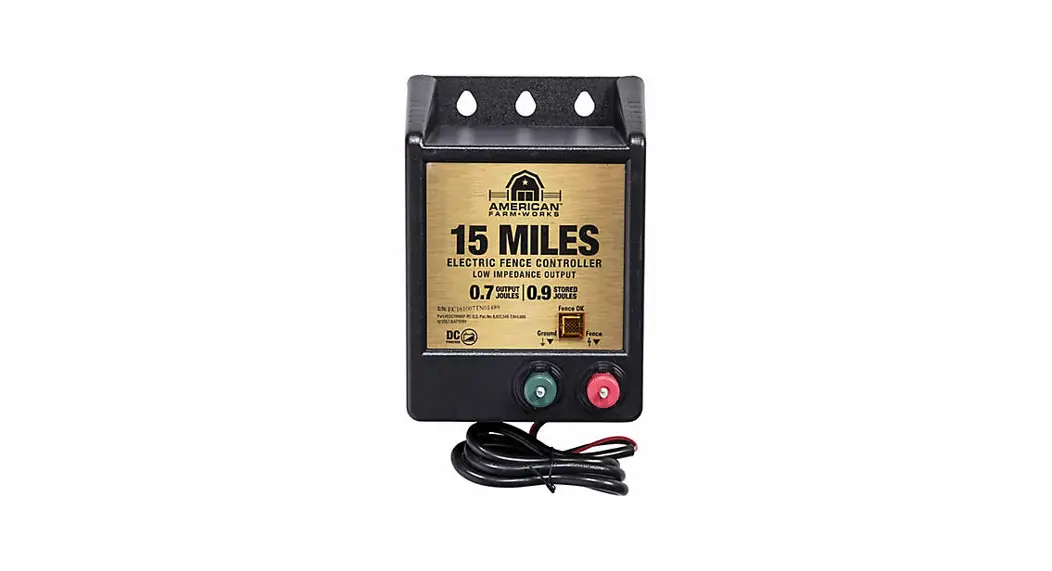
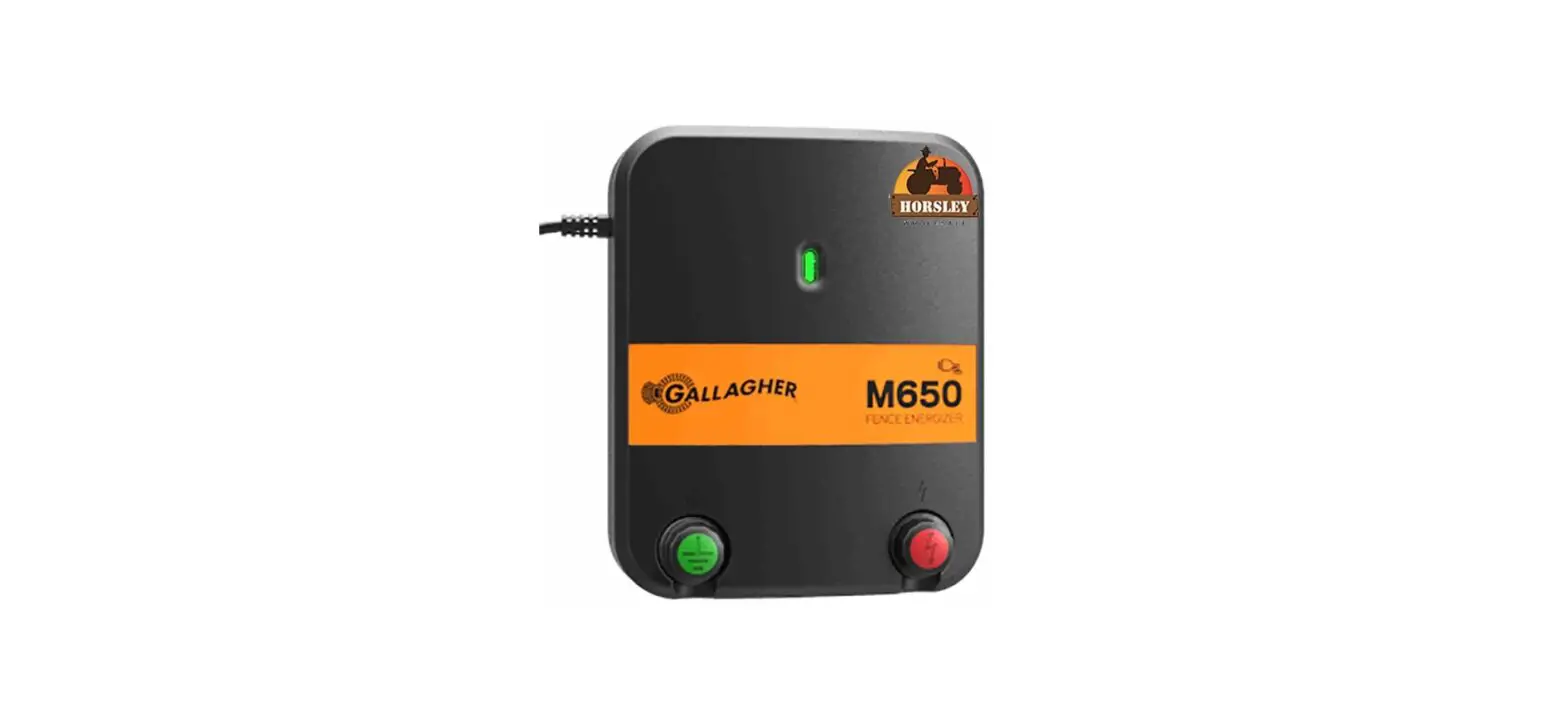
 Energy input is 110V AC (plug-in) or (battery) DC.
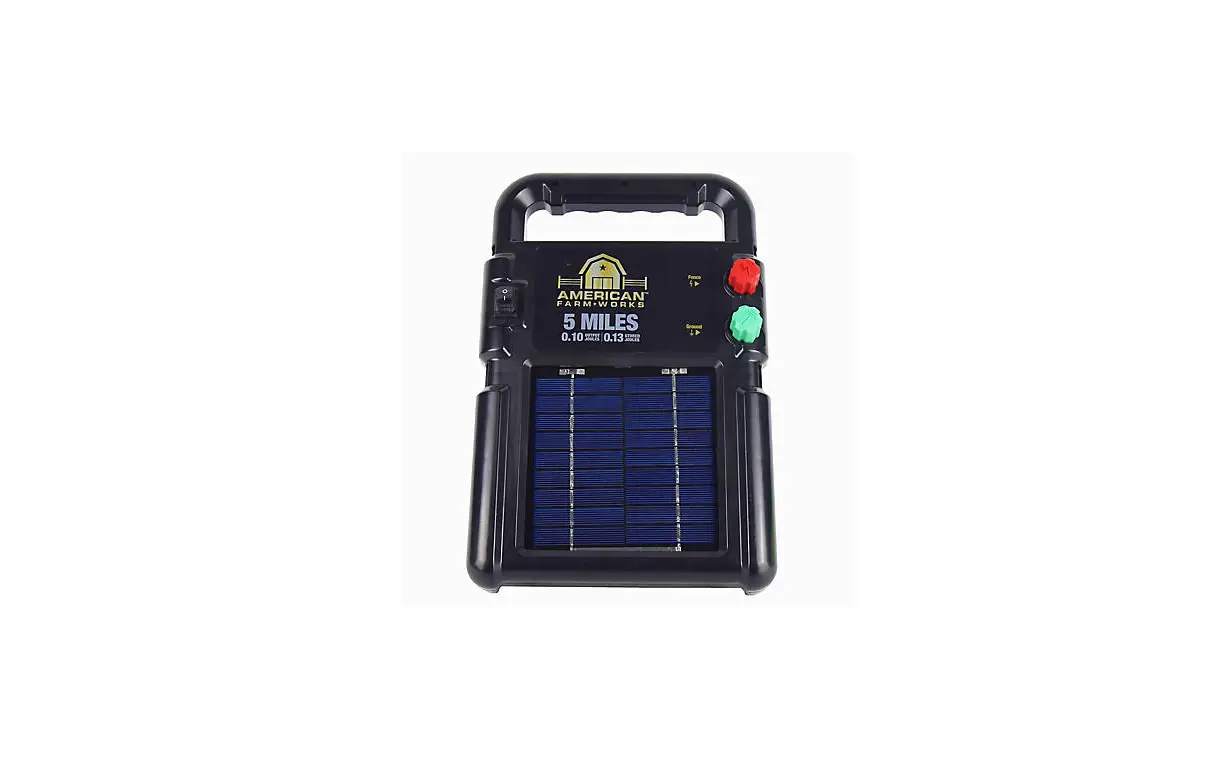
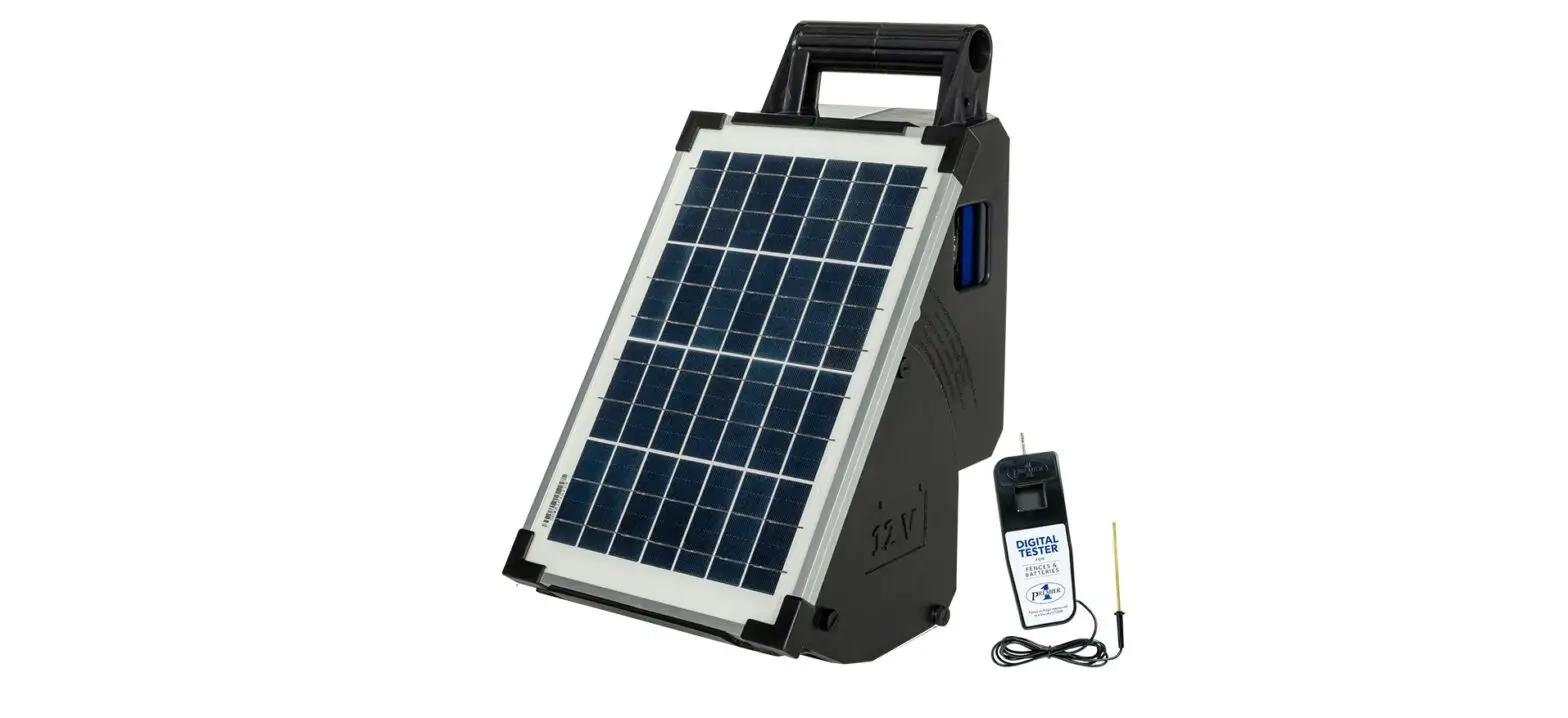
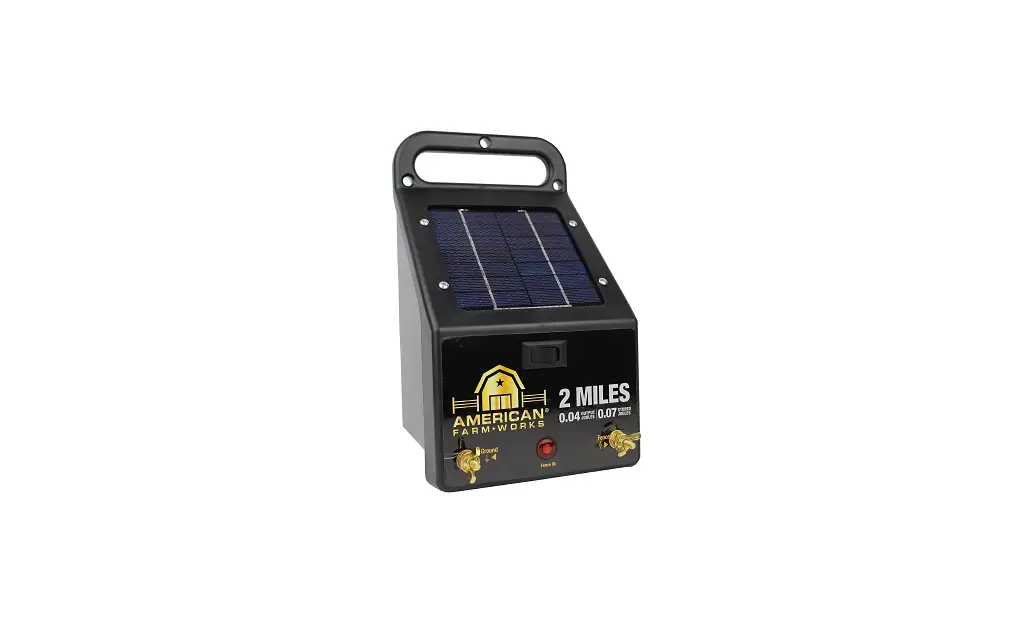
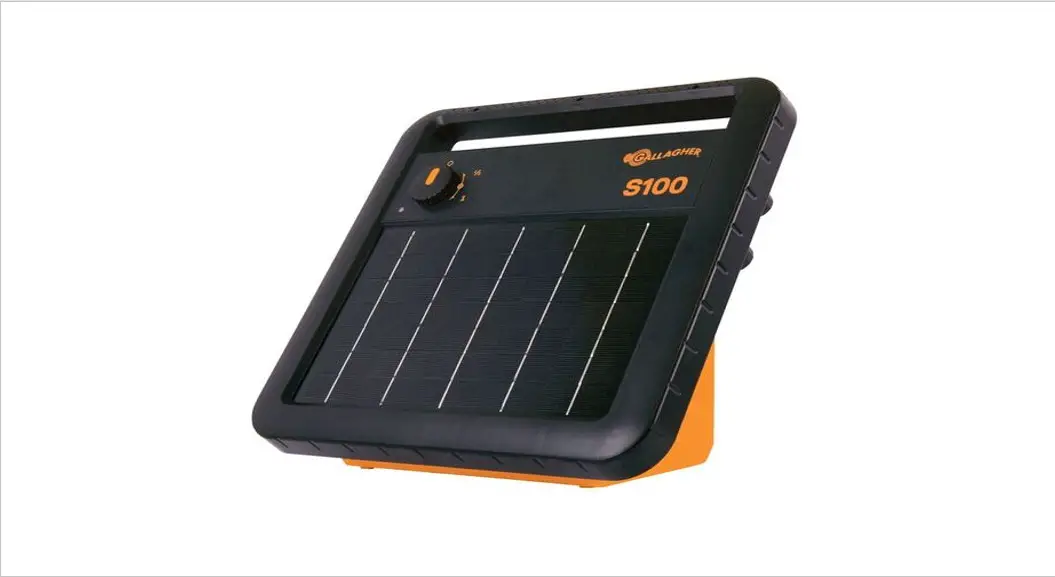
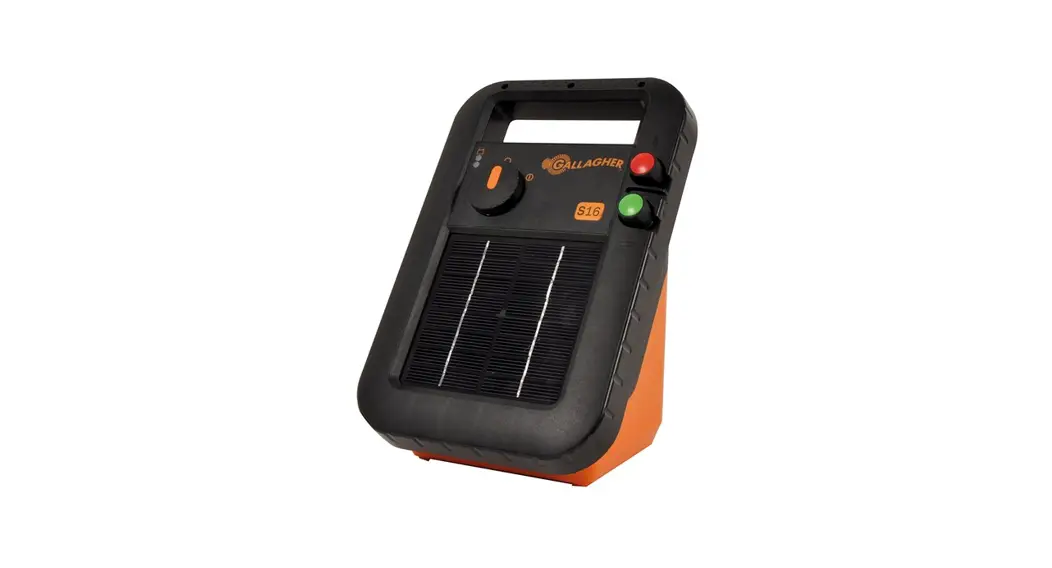
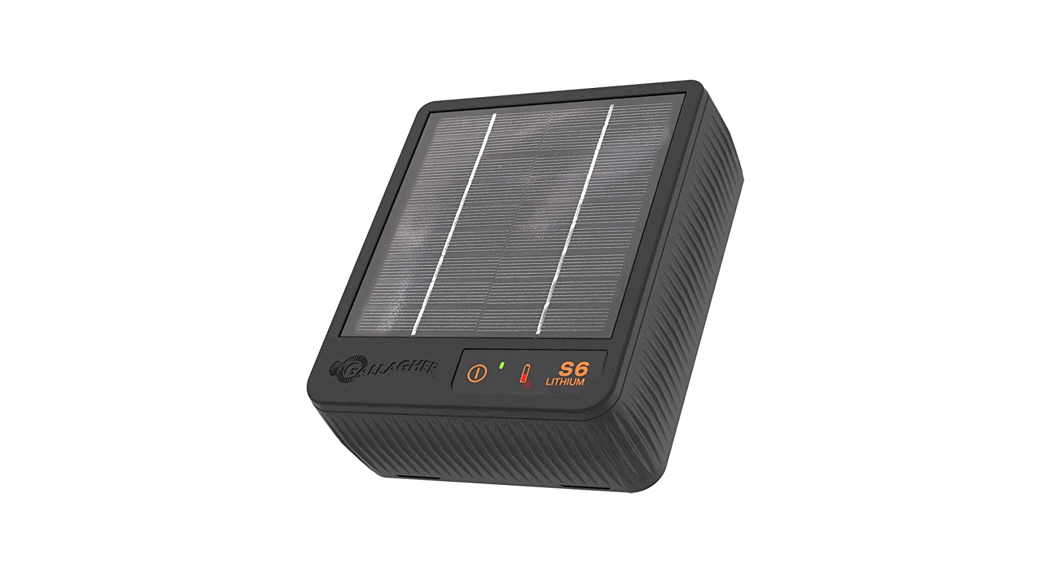
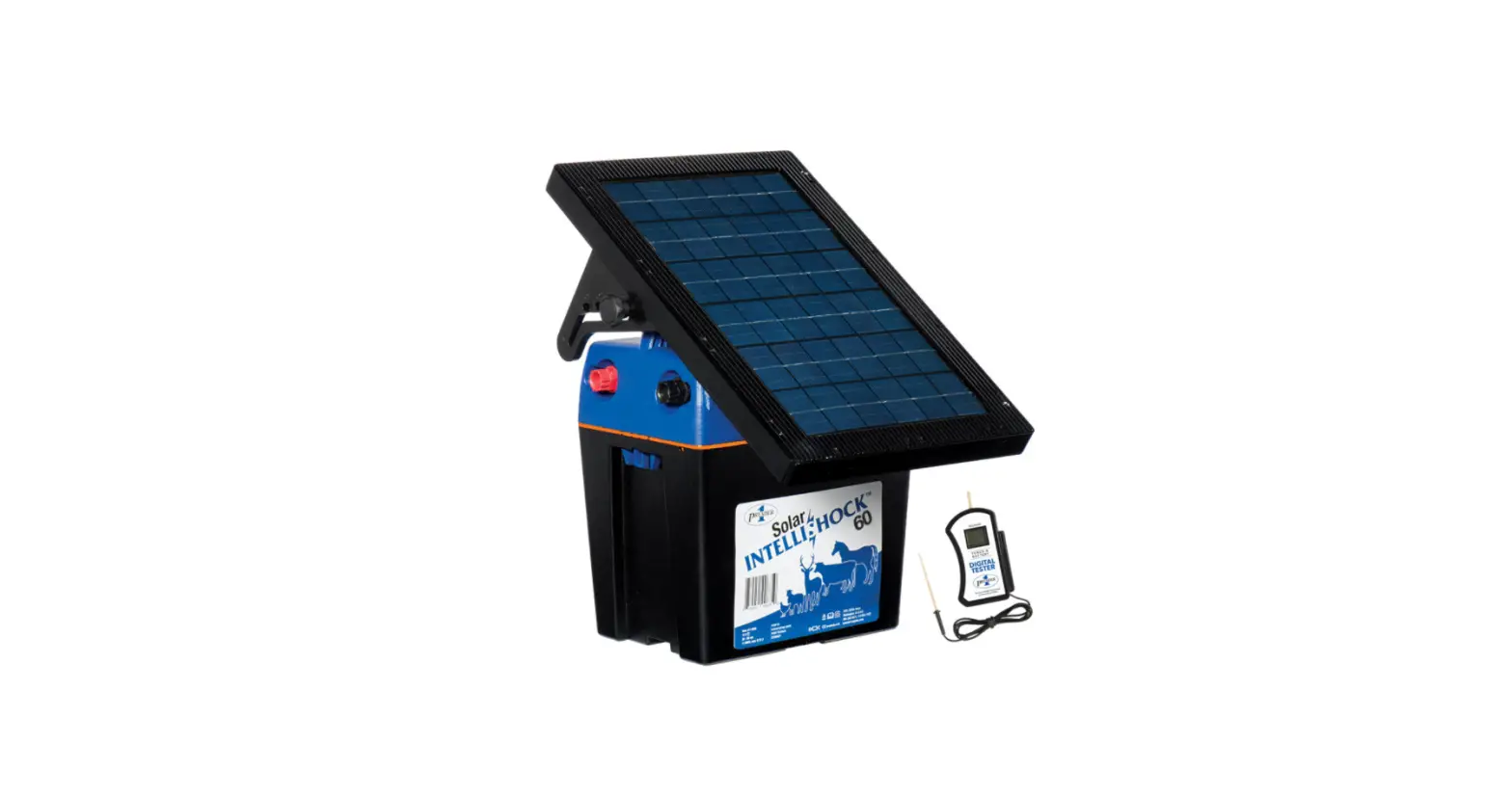
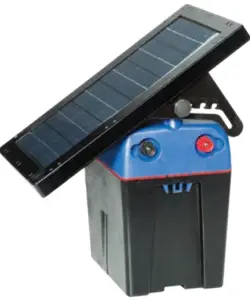
All-in-One Solar
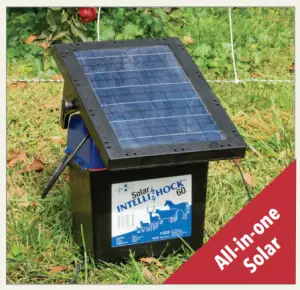
- Very portable and quick to set up, operable in minutes.
- Cost more per joule— require battery, solar panel, large case.
- Limitations on output also limit the length of weed-laden fence that can be properly energized.
- Batteries are less effective in colder temperatures (deplete faster).
- Solar panels must be kept free of dust, debris, snow and ice. And must be kept in full sun (to recharge the included internal battery).
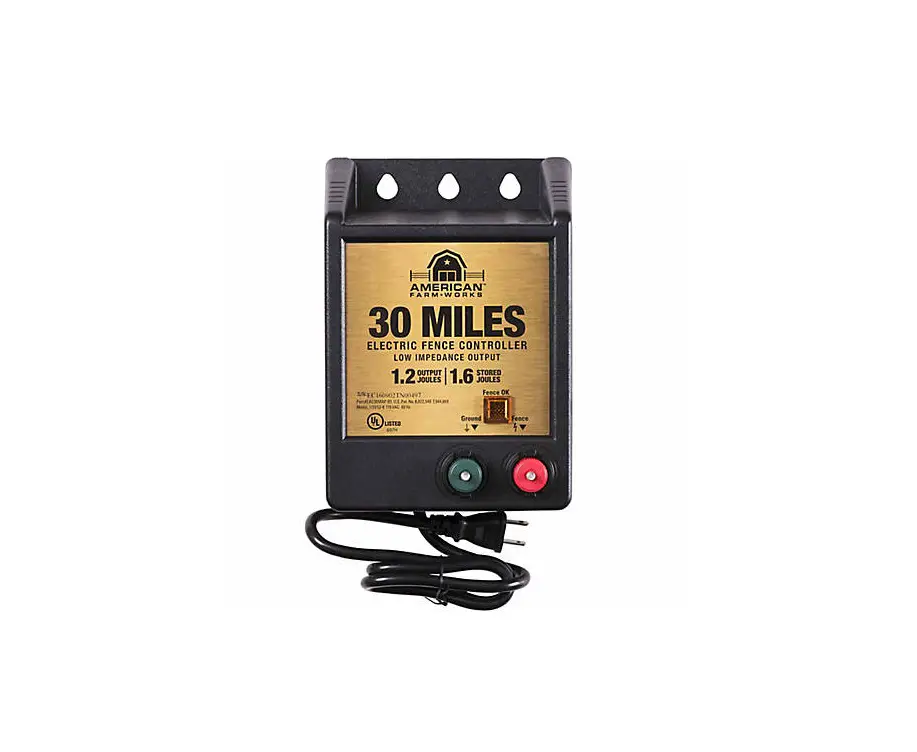
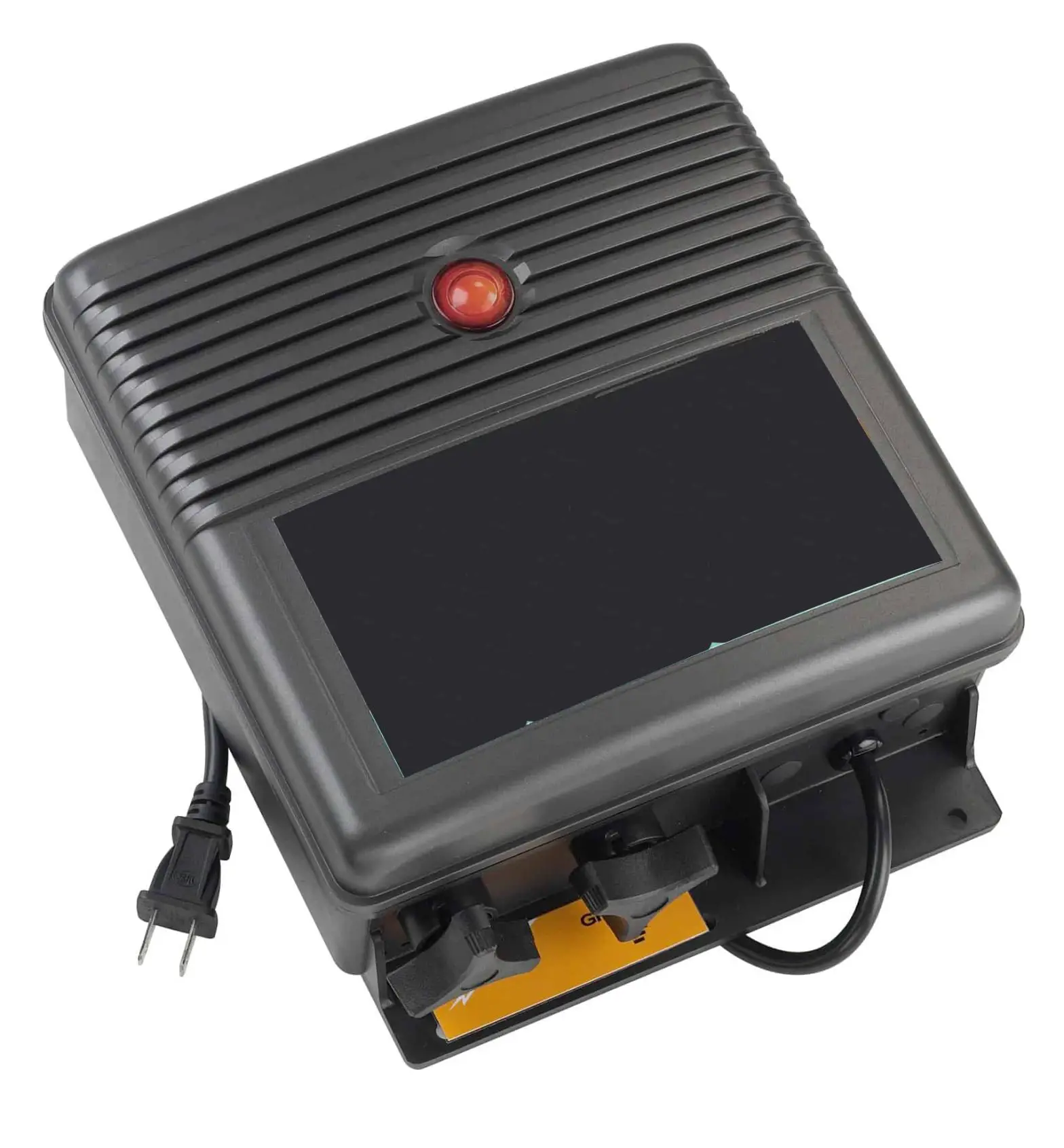
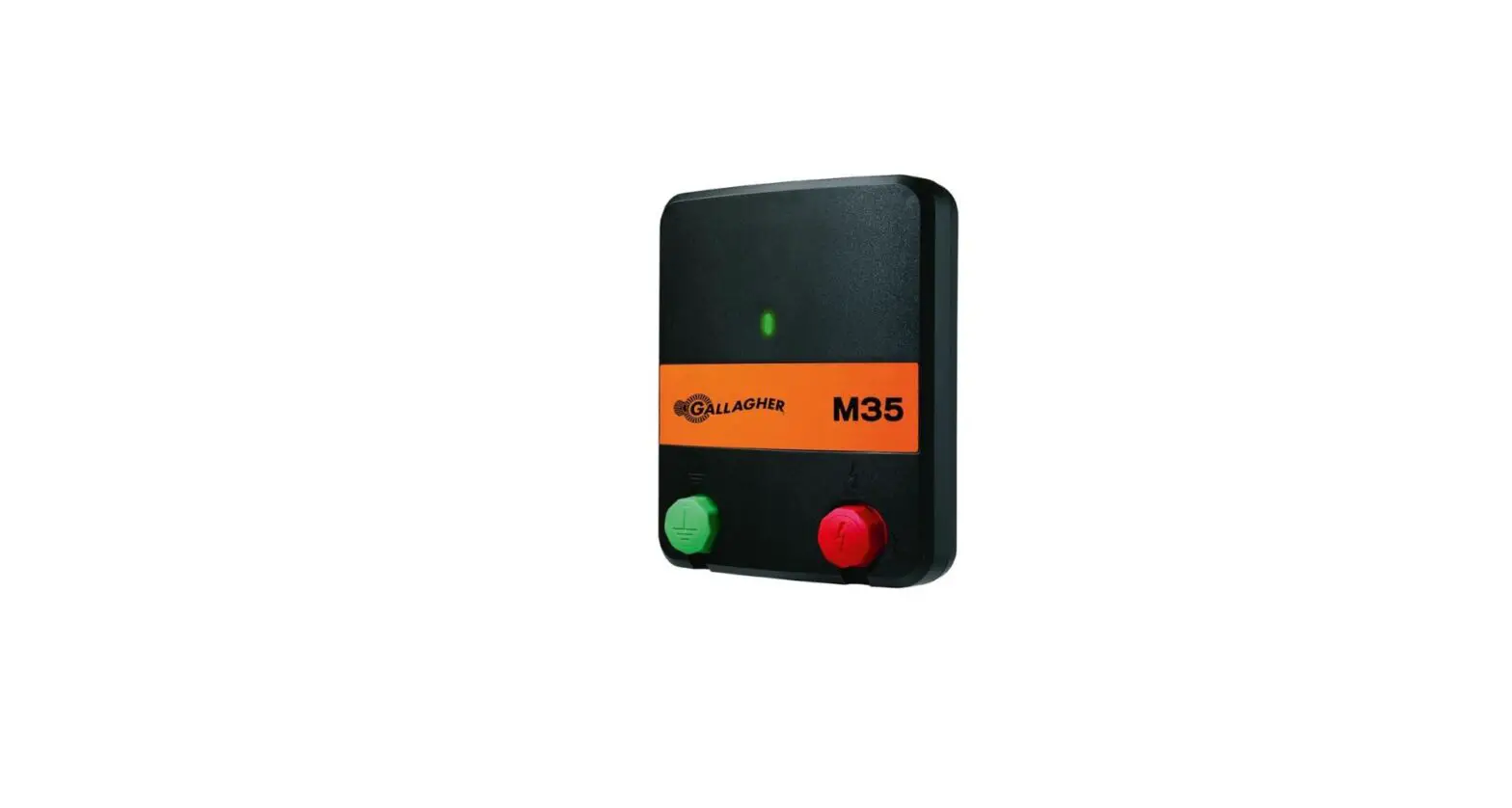
Plug-in & Battery
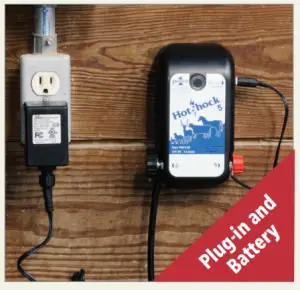
- Less cost to purchase and operate per joule of output than All-in-One Solar.
- Best for fences that experience high weed contact.
- Best for use in shaded areas or in low sunlight locations.
- Not as convenient as solar units.
- Less attractive to vandals and thieves.
- AC/DC combination energizers adapt to either battery or plug-in power.
- 110V systems often require insulated wire and buried cable to power fence lines. Battery systems do not.
ENERGIZER TIPS
- Install enough footage of ground rod(s).
- Use a low-impedance pulse type energizer.
- Do not overdraw from a 12v battery (below 40%).
- Fences connect to an energizer, not an outlet!
- Fence testers are your best friend, use them—often.
- Use insulated wire that is designed for electric fences.
- Buy a larger energizer than necessary. The additional output allows for future fence line expansion.
Users like the “plug-and-play” simplicity of solar.
Solar IntelliShock® 60
Shipped immediately in sturdy packaging. Directions were clear and concise along with videos available. Has worked like a champ!
– Michelle W., Alabama
Patriot P5
This is my second charger, we’re dividing our chickens up. I love Premier products! The staff is very helpful. I live in coyote country; we haven’t lost a chicken to a predator yet!
– Cheryl W., Minnesota
Energizer FAQs
Q. Which energizer is right for you?
A. Use a plug-in unit if your fence will rarely be moved, or is close to an electrical outlet. For fences far away from an outlet
- DC battery
Uses a 12 volt deep-cycle battery that is regularly switched out and recharged. - Premier solar units
An all-in-one kit. Units are operable in 5 minutes
Q. Should I buy an energizer kit or just the energizer?
A. New users often buy a kit because they contain the components needed to energize a fence. However, we also know that:
- Some already own an energizer—call us and ask if it’s suitable for your fence.
- Some may need larger energizers than provided in a kit. If so, call us to determine a best-fit solution for you.
What to consider before buying an energizer system
- What animal will be fenced? Animals vary in their resistance to electricity due to weight or hair coat. Higher resistance requires more joules.
- Power source: Plug-in if close to an outlet. Otherwise use battery units.
- Amount of wet/green weed contact with the energized wires. This is very important! A roll of netting covered with weeds on wet soil may leak or drain away more energy than a 0.6-joule energizer can provide!
- How high above the soil will the lowest live wire be? Low wires (3″) cause much more leakage from weed contact than higher wires (>18″).
- Cost: The most expensive energizer is the one that’s too small and therefore results in broken fences, escaped animals or predator attacks.
- Total length of fence: This is actually of minimal importance! Why? Because even small units will energize very long fences that stop animals—if there are no leaks of energy to the soil via weeds or poor quality insulators and conductors. However, that applies to ideal conditions. We tend to think of what species to fence (this dictates fence design), soil-type, and then length.
- Climate: Low-impedance units are ideal for places where the grass stays green all season. As soils become dry, the output needed increases in order to provide a deterring pulse at the far end of the fence.
- Soil: If the ground dries throughout the season or is rocky, set up Pos/Neg fences to overcome soil resistance.
Fence Energizer FAQs
Q. What is a fence energizer?
A. A box that takes in electrical energy from an outside source (either a battery or a 110 volt outlet).
The energizer then pushes the energy out through the fence (positive) terminal in very brief, high voltage, high amperage pulses. The ground (negative) terminal’s purpose is to absorb any excess pulse energy back into the energizer.
Q. What is an electric fence?
A. An extension of the 2 terminals (fence and ground/earth) of the energizer. The earth/negative terminal is extended by driving metal rods into the soil and connecting them to the terminal with conductive wire.
The outbound/positive/fence terminal is extended by attaching conductive wires to it. They are suspended above the soil and kept separate from the soil by insulators or nonconductive posts.
Q. How high is the voltage of a pulse?
A. Up to 14,000 volts. That sounds extreme—but static electricity is often as much as 25,000 volts.
Q. How brief is the electric pulse?
A. Less than 3/10,000 of a second.
Q. Will I feel anything if I touch a terminal when the energizer is on?
A. Yes and no. You will feel nothing if you touch only the ground terminal. But if you accidentally touch both at the same time (we strongly advise against this!) you will feel the full impact of the pulse.
We never contact the terminals (on or off) without first touching both terminals with insulated metal wire (to displace the charge)!
Q. What happens when grass touches an energized fence wire?
A. The fence wire is “pressurized” with excess electrons from the pulse. Green vegetation is a conductor— particularly when wet. When it contacts an energized wire, the pressurized energy (measured in volts) is pushed down through the moisture in the stem to the soil. Folks call this a “leak” (similar to a hole in a water hose) or a “short.”
Q. What happens when an animal touches energized wires?
A. The high voltage of the pulse pushes electrons through the animal’s point of contact (often the nose or ears), then through the body’s tissue and fluids and out through the feet/ hooves/paws into the soil moisture.
Q. Why is animal weight a factor?
A. The weight of a heavy animal compresses the soil. This reduces electrical resistance of the topsoil and increases the joules of energy that can flow through the animal. This explains why heavy animals are more affected by electric fence and light animals less so.
Weight (or the lack of it) explains why calves, lambs or goat kids seem to be less affected by a pulse than adult cattle, sheep, goats or horses
Q. Why is grass color a factor in choosing a suitable energizer?
A. Green grass indicates the soil is moist, so the soil will have less resistance to a pulse.
Brown grass indicates the opposite.
Q. Which species are most affected by an electric fence pulse?
A. In order from most to least affected: pigs, horses, cattle, canines (wet noses, bare pads), raccoons, sheep, goats, deer, geese, chickens and rabbits.
This assumes adult animals are contacting the fence with their nose, beak or paw
Q. I’m confused by all the energizers that Premier offers. Why so many?
A. Some users have strong preferences based on prior experience.
Q. Why is Premier’s energizer know-how so unique?
A. Other firms may supply more units— but no one supplies more units (50,000) direct to end-users and tracks the results.
We know what failed, when and why. Often the energizer is not the problem. See troubleshooting.
When you join our community of satisfied customers, you tap into that experience and expertise.
2-Year Energizer Warranty
When you buy an energizer from Premier, you purchase more than an energizer.
You obtain these benefits:
- If an energizer fails within 2 years of its date of purchase, we will replace the failed module or unit at our cost.
Your credit card will be charged for the replacement but you will receive full credit when the failed item is back at Premier. Your only cost is shipping the failed item to us. If the original energizer is over 2 years old, we will repair it, but you pay for the repair cost and freight.
Note: Policy does not apply to failure due to abuse or neglect. Warranty does not cover batteries. - Free next-day air shipment of warranty replacement energizers.
If you think your energizer has failed, call us at 1-800-282-6631.
We’ll help you test your energizer to ensure that it has truly failed. This is important as we’ve found that 25% of the units returned to us work fine; the fence was at fault, not the energizer. - Free technical support.
We provide free advice before you purchase an energizer and free support afterwards for as long as you wish. All you have to do is call. - Solar energizer packages.
With larger energizers (over 1 joule), the panel, battery and energizer need to be correctly sized for each situation. Call us and talk to our consultants. - Three-year assurance against energizer obsolescence.
Premier’s “contract” with customers includes repair or replacement of any nonworking units for up to 3 years. During the 2-year warranty period, Premier pays for the replacement cost.
Energizer Systems
To Reduce Risk & Liability
Are electric fences a serious safety risk to humans?
Because touching an electric fence is painful and the voltages are high, most assume that the risks from an energized fence must also be high.
That’s a myth. Consider that millions of people throughout the world are “exposed” to millions of miles of electric fences every day—yet there is less than one death or serious injury per year worldwide—and the fence is often not the cause. Compare that to the number of annual injuries and deaths that occur from exposure to tractors, skid loaders, PTO shafts, balers, mowers, combines, bulls, stallions, etc.
This is not to suggest that there is no risk at all. There is, indeed, a small level of risk. And with risk, there is also liability
To reduce the risk…
- Be especially careful not to touch an energized wire with the head or spine. For reasons not fully understood, this contact point is worse than contact with hands, arms, feet or legs.
- Never approach a fence without footwear. Also, wear footwear that fully encloses the foot (not sandals). Why? Most footwear are poor conductors (rubber soles). So they reduce (by absorbing it) the energy that will pass through your body if you touch a fence with your hands or head.
- Never energize barbed wire. Animals and humans can become entangled and repeatedly shocked—and thus die.
- Hang warning signs on all areas and fences where children and adults may encounter electric fencing.
- Use smaller energizers on fences located near children and untrained adults. (Most experts agree that small energizers are safer than large units as long as animal control isn’t put at risk.)
- Make the fence as visible as possible to both humans and animals. Use conductors and posts that can be seen both day and night, and against all backgrounds. That’s why Premier has long advised the use of white/black conductors for contrast and visibility.
- If possible, do not energize wires lower than 12″. This allows humans who might contact a wire enough space to fall away from energized wires.
- Build fences so all energized wires are on the inside of your boundary fence (less likely to be touched, and anyone who touches them without your permission is trespassing). We prefer offset internal energized wires on our perimeter fences.
- Never connect 2 energizers to the same fence. It doubles the pulse frequency (unsafe!), not the output.
- The shock from electric fences can panic animals (e.g. horses) and cause them to crash into fences (or people) resulting in injury to one or both.
To reduce this risk:- Do not install electrified wires on feedlot fences, corral fences or around riding arenas.
- Reduce the available volts and joules on fences that enclose very small areas (e.g. night pens) to lessen the likelihood of animal stress and possible panic.
What NOT to do!
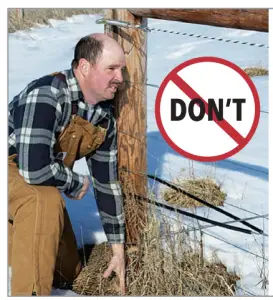
- Never place your head or upper spine near an electrified wire.
Accidental head or neck contact can occur when pushing a voltage probe into the soil. Be careful when doing so to avoid head-to-wire contact! - Never attempt to step over or climb through an energized fence of any kind.
- Never encourage anyone to touch an electric fence.
What TO do!
- Instruct all visitors and children to never touch electric fence.
Warning: In 1991 an accidental fatality occurred when a young child’s head contacted an electrified fence while the child was crawling on wet grass. The fence was correctly installed and functioning properly. The energizer was a UL approved unit. As a result, Premier strongly advises against allowing toddlers access to any electrified fences. Also, due to this incident and others, experts now suggest that human contact by an energized wire to the head and neck may be the most dangerous point of contact. We urge all to especially avoid this kind of contact.
Solar Energizer Systems
Why your location is important when choosing solar energizers
Q. Region, season and angle of the panel appear to be critical factors in solar energizer success. Why?
A. The maps (below) depict the differing hours of solar insolation for a region in winter and summer. Solar insolation is the hours of sun available per average day that have sufficient intensity to enable a solar panel to charge a battery. Three important things to note:
- Summer insolation hours (below) for all areas are much higher than winter hours. For southeast Iowa it’s 5.5 hours in summer and less than 3 hours in winter.
- The hours available are very different depending on where you live. In summer Michigan has 5 hours vs 7.5 hours in Arizona!
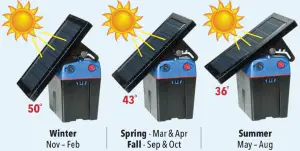
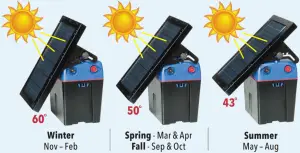
- Ideally the solar panel should be angled to meet the sun. That means nearly flat in summer and nearly vertical in winter—and always facing south.
Q. Why are identical energizers sold in Michigan and Arizona?
A. It suits suppliers to keep things simple. Yes, the panel and battery are probably too small for Michigan (except in mid-summer) and too large for Arizona (except mid-winter). That’s why many farmstore solar energizers often disappoint users.
And it’s the extra sunlight in the Southwest that may damage the battery in summer by overcharging it. (Premier’s solar units are fitted with a regulator to prevent this.)
Q. What powers a solar energizer at night and on days that are cloudy/rainy/snowy?
A. A direct current battery. All solar units have one or two inside the case. The battery must be large enough to supply the energizer for several sunless days in a row. (We size ours for no less than 4 sunless days.)
Q. 21 sunless days from a 5 ampere-hr battery and a 5 watt panel?
A. That’s what a Premier competitor claims for their 0.5 joule energizer. For the same size unit, Premier offers a 12 amp-hr battery, 10 watt panel and suggests only 4 days.
Explanation?
A normal 0.5 joule energizer consumes 50 milliamperes hr. That means 21 sunless days extract 25 amperes from a battery.
The misleading unit with 1/5 the battery and half the panel size reduces pulse energy as the battery voltage declines. In a day without sun the pulse is only 0.25 joules, then 0.10, then 0.05, etc. That’s not a pulse that will protect your animals. We would not rely on such units to protect our livestock, gardens, tree plantings, etc.
Summer vs Winter Sunlight
The maps below indicate the hours of summer and winter sunlight available per average day that have sufficient intensity to enable a 12v solar panel to recharge a 12v battery (defined as the hours of solar insolation).
Why is this important?
- Because a solar energizer with the right panel and battery size for New England may overcharge a battery in Arizona, unless it’s equipped with a voltage regulator. Premier’s solar energizers come installed with such a regulator.
- Solar panels that are right for Arizona are too small for Vermont—thus reducing battery life by undercharging.
- A solar panel sized for summer usage may be too small for winter. Putting it simply, the same solar unit cannot fit all situations. That’s why solar farmstore energizers disappoint users so often.
Summer Sunlight
(hours available per average day)
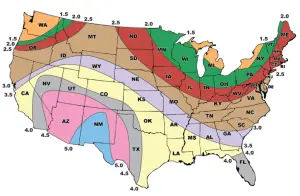
 In summer months, a solar panel should be oriented due south, and almost parallel to the ground.
Winter Sunlight
(hours available per average day)
In winter months, the panel will be close to vertical— to better catch the sun low in the horizon.
Solar Energizer FAQs
Solar energizer best practices
- When not in use, turn off the unit and face panel toward the sun to recharge its battery.
If in use, leave the energizer turned on and face its panel (see diagram below) toward the sun. - If an energizer tests less than 2000v across the energizer terminals (while disconnected from the fence/ground), test the battery with a battery meter or fence and battery tester to make sure it is fully charged.
- Check batteries to make sure there is no corrosion on the terminals.
- Reduce risk of rodents chewing on wiring harnesses by keeping it above the ground.
- Do not allow livestock or poultry access to the energizer.
Q. How do solar energizers compare to other fence energizers?
A.
- Their output is identical—a brief high voltage pulse of energy.
- Their input source is a DC battery.
- When the sun shines, the solar panel recharges the battery—which eliminates the hassle of carrying the battery to/from a recharger.
- They’re larger in physical size than 110 volt energizers—because of the solar panel, battery and case.
- They are more expensive per unit of output—again because of battery, solar panel and larger case
Q. How do solar energizers differ from one another?
A
- Pulse energy output (joules).
- Battery draw (in mA/hr).
- Pulse rate per minute.
- Size of battery.
- Size of solar panel (in watts and volts) per milliampere of draw.
- Number of days the battery will last on its own without sunlight.
- Cost/joule of output and durability.
Q. What are the negatives of solar?
A
- Expensive per joule of output.
- Usually have less frequent pulses— which reduces its ability to stop animals and their predators.
- More maintenance including:
- Keeping panel free of dust, debris, snow and ice.
- Keeping panel fully exposed to the sun—unshaded by trees, grass, fence posts or buildings.
- During winter the capability of the battery is lower—just when available sunlight to recharge batteries is also low.
Q. Are solar energizers less $$?
A. No. They require the additional inputs of batteries and a solar panel to operate. These add to up-front costs.
Q. Are they less costly to operate?
A. No. The cheapest energizer to operate plugs into 110-volt AC current. Surprised? A Kube 4000 provides 10 times more pulse energy than most farmstore solar units. Yet it uses under 70 watts/day. That’s $2.50 per year! By comparison the battery in a farmstore solar fence energizer may cost $24 and need replacing every 2 years—a yearly cost of $12.
Q. How are our energizers different?
A. In summary:
- Premier’s solar units offer higher pulse output, 0.25 to 2.0 joules.
- We also offer “X” energizers for areas with less sunlight and/or colder temperatures.
- Larger solar panels and larger batteries per unit of output.
- Lower cost per joule of output.
Correct placement of energizer and solar panel is critical to the best operation of the unit!
- Position the energizer so that the solar panel faces due south.
- The sun’s position above the horizon dictates the proper angle for the solar panel. Use the diagram below to determine the best angle to maximize solar collection—this depends on season and location.
Note: Due to lack of sunlight in the northern USA during winter, recharge batteries externally to properly power the energizer.
Suggested Panel Angle
NORTHERN USA
Suggested Panel Angle
SOUTHERN USA