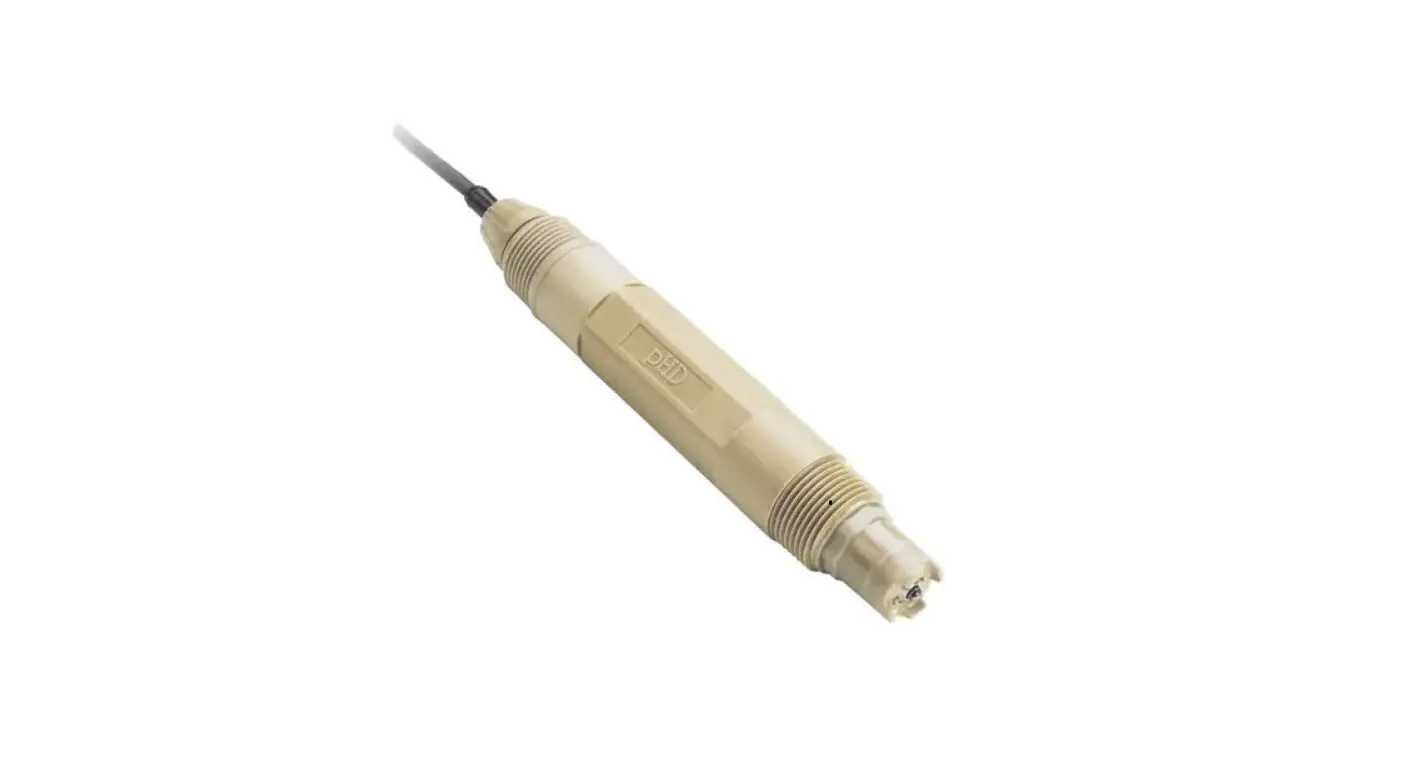
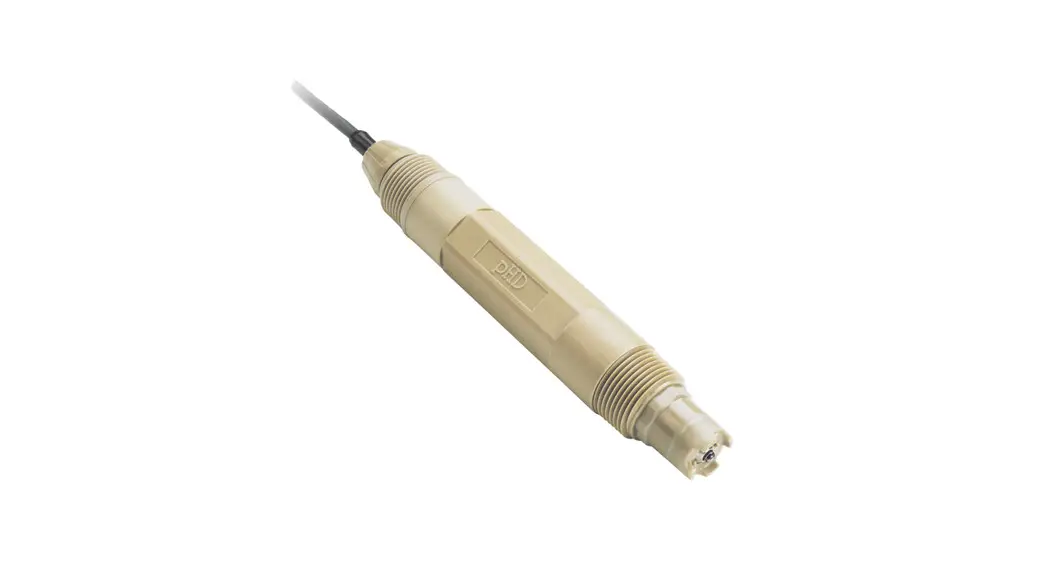
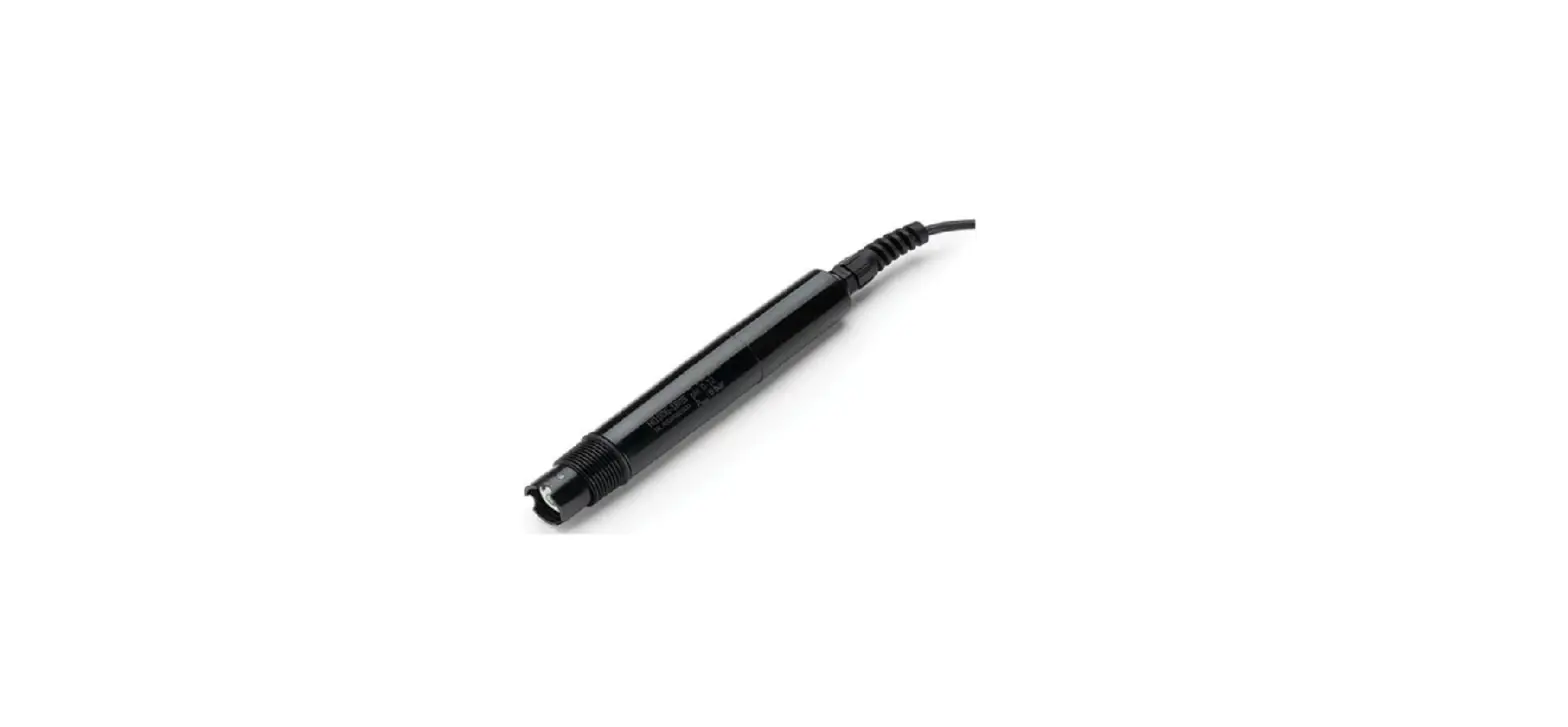
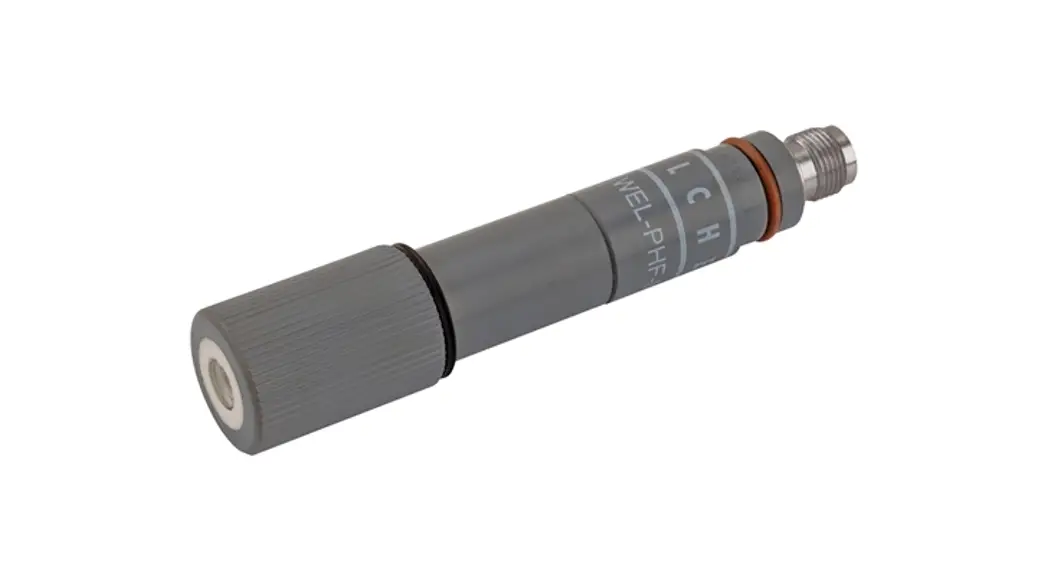
28392 Differential pH and ORP Probes
PRODUCT INFORMATION
This manual covers USABlueBook differential measurement pH and
ORP probes. The probes come in different models with various
features:
- Model 28392/28393, 28388/28389, and 28218/28219
- Differential pH and ORP probes
- Probes with encapsulated preamplifiers (28388, 28389, 28392,
28393) - Probes with encapsulated two-wire transmitters (28218 and
28219)
Specifications:
| Measuring Ranges | pH: 0 to 14.00 pH ORP: 28389/28393: +1999 mV 28219: 0-1000 mV / +500 mV field selectable |
|---|---|
| Flow Rate | 10 ft./sec max. Flow should be as low as possible in low conductivity water and in solutions with high suspended solids |
| Wetted Materials | Not specified |
| Transmission Distance | 5-wire Probes: 900 meters (3000 ft.) 2-wire Probes: Limited only by cable resistance and voltage of power supply |
| Sensitivity | pH: Less than 0.005 pH ORP: Less than 0.5mV |
| Stability | 0.03 pH / 2mV per day, non-cumulative |
| Probe Cable | 15 ft. (4.6 m) |
| 28218 Output | Span: 1.14mA / pH Offset: 12mA @ 7pH +1.14mA Max Load: 450 Ohms |
| 28219 Output | Span (0-1000mV): 1.6mA / 100mV Span (+500mV): 1.6mA / 100mV Offset (0-1000mV): 12mA @ 500mV +1mA Offset (+500mV): 12mA @ 0mV +1mA Max Load: 450 Ohms |
PRODUCT USAGE INSTRUCTIONS
Installation
General Instructions
Follow the general instructions provided in the user manual for
installation.
ORP 4-20 mA Probes (28219)
These probes have four wires: black, red, green, and white.
Connect the red wire to the +24 Vdc terminal and the black wire to
the 24 Vdc common terminal via the load in the loop.
Submersion Mounting Differential Probes
Refer to the user manual for instructions on submersion mounting
of the differential probes.
Flow-through Tee Mounting Differential Probes
- Apply pipe sealant to the electrode end of the probe.
- Screw the probe into a standard 1-1/2 NPT tee (28388/28389,
28218/28219) or 1 NPT tee (28392/28393). Be careful not to
over-thread the probe into the tee to avoid damaging the glass at
the end of the probe.
Please refer to the user manual for detailed instructions and
safety precautions.
Note: Do not discard the protective cap(s) that came with
the sensor. If the sensor is removed from the process for an
extended period of time, thoroughly clean the sensor, put a piece
of cotton ball with a few drops of water into the protective cap,
and replace it on the sensor. This keeps the junction from drying
out, which causes slow response when put back into operation or
causes permanent damage to the sensor. Sensors should not be left
in dry lines or empty tanks for extended periods. Do not store the
sensors in a dry or humid location. When storing, check the
protective cap(s) regularly to make sure the cotton ball remains
moist. Improper storage of sensors voids the warranty.
OPERATING INSTRUCTION MANUAL
MODEL 28392/28393, 28388/28389, 28218/28219 DIFFERENTIAL PH & ORP PROBES
REV. 3.2 02/2023
USABlueBook
Tel: (800) 548-1234 Fax: (847) 689-3030 www.usabluebook.com
1. GENERAL INFORMATION
This manual covers USABlueBook differential measurement pH and ORP probes.
All mounting configurations are described.
Both those probes with encapsulated preamplifiers and those with encapsulated two-wire transmitters are covered. If your probe has five wires it has an encapsulated preamplifier (28388, 28389, 28392, 28393). If your probe has two wires, or in the case of an ORP probe four wires, it has an encapsulated two-wire transmitter (28218 and 28219).
The output from a two-wire transmitter type is non-isolated and un-calibrated. The system must provide 24 Vdc, with “low” isolated from earth ground, and a means of calibrating for offset and span.
NOTE: Do not discard the protective cap(s) that came with the sensor. If the sensor is removed from the process for an extended period of time, thoroughly clean the sensor, put a piece of cotton ball with few drops of water into the protective cap and replace it on the sensor. This keeps the junction from drying out which causes slow response when put back into operation or causes permanent damage to the sensor. Sensors should not be left in dry lines or empty tanks for extended periods.
Do not store the sensors in a dry or humid location. When storing, check the protective cap(s) regularly to make sure the cotton ball remains moist. Improper storage of sensors voids the warranty.
USABlueBook Differential pH and ORP Probes
Page 1
2. SPECIFICATIONS
MEASURING RANGES
pH:
0 to 14.00 pH
ORP: 28389/28393: +1999 mV
28219: 0-1000 mV / +500 mV field selectable
FLOW RATE
10 ft./sec max. Flow should be as low as possible in low conductivity water and in solutions with high suspended solids
WETTED MATERIALS
28388/28399/28218/28219: Ryton®, Kynar, glass, titanium palladium alloy and Viton® (Platinum for ORP probes).
28392/28393: Ryton (PPS) body, ceramic junction, glass electrode, Viton®, titanium, (Platinum for ORP probe).
TRANSMISSION DISTANCE
5-wire Probes: 900 meters (3000 ft.)
2-wire Probes: Limited only by cable resistance and voltage of power supply
SENSITIVITY pH: Less than 0.005 pH ORP: Less than 0.5mV
STABILITY 0.03 pH / 2mV per day, non-cumulative
USABlueBook Differential pH and ORP Probes
PRESSURE LIMIT 100 psig @ 65°C 40 psig @ 95°C
TEMPERATURE LIMITS -5 to 95°C (23 to 203°F)
POWER SUPPLY LIMIT 24VDC ± 4V
PROBE CABLE 15 ft. (4.6 m)
AUTOMATIC TEMPERATURE COMPENSATION -5 to 95°C (23 to 203°F)
28218: OUTPUT SPAN: 1.14mA / pH OUTPUT OFFSET: 12mA @ 7pH +1.14mA MAX LOAD: 450 Ohms
28219: OUTPUT SPAN:
0-1000mV: 1.6mA / 100mV +500mV: 1.6mA / 100mV OUTPUT OFFSET: 0-1000mV: 12mA @ 500mV +1mA +500mV: 12mA @ 0mV +1mA MAX LOAD: 450 Ohms
Page 2
3. INSTALLATION
3.1. General Instructions
Specific instructions for each type of probe are given in the following pages. Common to all probes are the following instructions: a) If the distance between the probe and the instrument is such that a direct connection is not possible, the probe cable should be routed to a junction box with a terminal strip. The box should be well sealed and away from corrosion danger. Be sure that you have sufficient slack cable to allow for probe removal for calibration and servicing. b) Route the interconnect cable from the junction box to the instrument, preferably in metal conduit. Do not run the power cable or control cables in the same conduit with the probe interconnect cable. c) Remove the protective plastic caps from the end of the probe before placing in service. d) For best results probes should always be mounted vertically with electrodes down. If this is not possible, the probe must be at least 15° above horizontal.
3.2. ORP 4-20 mA Probes
a) ORP 4-20 mA probes (28219) have four wires; black, red, green and white. The red wire is to be connected to the +24 Vdc terminal and the back wire to the 24 Vdc common terminal via the load in the loop.
b) For an instrument with a range of 0 to 1000 mV the green and white wires are to be shorted. c) For an instrument with a range of 500 to 500 mV the green and white wires are to be isolated from
each other.
3.3. Submersion Mounting Differential Probes
a) Apply a thread sealant to the thread on the cable end of the probe and screw a 1-1/2″ x 1″ NPT reducer onto the probe, supplied from your own hardware. Route the sensor cable through an appropriate length of 1″ pipe and using thread sealant, screw the pipe into the reducer. 28392 and 28393 have 1″ threads on the probe itself and do not require the use of a reducer. The cable end of the probe should not be exposed to the process. A cable strain relief fitting should be used on the upper end of the pipe as well as a wire bracket to aid in supporting the assembly.
3.4. Flow-through Tee Mounting Differential Probes
a) Apply pipe sealant to the electrode end of the probe and screw it into any standard 1-1/2″ NPT tee (28388/28389, 28218/28219) or 1″ NPT tee (28392/28393). Be careful to not over-thread the probe into the tee, causing the glass at the end of the probe to become damaged from contacting the inside wall of the tee.
USABlueBook Differential pH and ORP Probes
Page 3
4. SERVICE AND MAINTENANCE
4.1. Probe Cleaning
a) The probe should be kept reasonably clean to avoid measurement errors. Frequency of cleaning can only be determined by experience. To clean proceed as follows:
b) Rinse with clean warm water. c) Soak the end of the probe in warm water and dish detergent for 3 or 4 minutes. d) Brush the end of the probe, particularly the three electrodes with a soft bristle brush such as a tooth
brush. Take care not to scratch the glass electrode. e) If the probe is still not clean, it may have to be cleaned with acid. CAUTION: Do not acid clean
probes used in processes containing cyanide solutions. Some experimentation may be required to determine the most suitable acid for your process. Use the most dilute acid which is effective. Normally 10 parts of water to one part muriatic acid is sufficient. Do not use hydrofluoric acid. f) Soak the probe for not more than 5 minutes in the chosen acid; then rinse thoroughly with clean warm water and soak in water for 3-5 minutes. g) Calibrate the system in accordance with the instrument instruction manual.
4.2. Replacement of Salt Bridge for Differential Probes
a) If the system cannot be calibrated after cleaning the probe, it may be necessary to replace the standard cell solution (7pH buffer). Salt bridges are also available (Part No. 28391 for 1-1/2″ body probes, Part No. 28361 for 1″ body probes). Proceed as follows:
b) Hold the probe vertically with the sensor face up. Using a small hex wrench (or phillips screwdriver for 1″ body probes), remove salt bridge by turning counter-clockwise, taking care not to damage the glass electrode. Discard the used salt bridge.
c) Up-end the probe and pour out the contents of the standard electrode chamber. Flush the chamber with a small amount of pH 7 buffer or distilled water.
d) Refill the chamber with 7pH buffer solution up to the tip of the electrode inside the chamber. DO NOT OVERFILL. It is important to leave space for the salt bridge thread and a small amount of air.
e) Screw the new salt bridge into the cavity until finger tight. Now perform a ¼ turn with wrench (or phillips screwdriver).
4.3. Storage
a) Do not discard the protective cap(s) that came with the sensor. If the sensor is removed from the process for an extended period of time, thoroughly clean the sensor, put a piece of cotton ball with few drops of water into the protective cap and replace it on the sensor. This keeps the junction from drying out which causes slow response when put back into operation or causes permanent damage to the sensor. Sensors should not be left in dry lines or empty tanks for extended periods.
b) Do not store the sensors in a dry or humid location. When storing, check the protective cap(s) regularly to make sure the cotton ball remains moist. Improper storage of sensors voids the warranty.
USABlueBook Differential pH and ORP Probes
Page 4
5. TROUBLESHOOTING AND SERVICE
5.1. Checking 5-wire Differential Probes (28388/28389, 28392/28393)
The probe can be checked by a few simple measurements. Two pH buffer solutions, 7 pH and either 4 pH or 10 pH, and a multimeter are required. For ORP probes two calibration solutions, 200 and 600 mV, are required. Millivolt solutions may be ±20% of nominal value. Actual value is noted on the bottle.
5.1.1. pH probes (28388, 28392)
a) Clean the probe as described in Section 4.1. If the system cannot be calibrated, replace the salt bridge and 7pH buffer solution as described in 4.2. If the system still can’t be calibrated check the probe as follows:
b) Disconnect red, green, yellow and black wires at the junction box. If you are not using a junction box, disconnect at the instrument after shutting off the power.
c) Place the probe in 7 pH buffer. Allow enough time for the temperature of the probe and buffer to stabilize at room temperature.
d) Measure the resistance between the yellow and black wires to check the probe’s temperature compensator. The resistance should be between 250 and 350 ohms at 25°C. If the resistance is within specifications the probes thermistor is functioning correctly.
e) Reconnect the yellow and black wires and restore power to the instrument.
f) Measure the voltage between the red and green wires. If it is not within 50 to +50 millivolts with the probe in 7 pH buffer, the probe is defective. If the voltage is OK proceed to the next step.
g) Rinse the probe and place it in 4 pH or 10 pH buffer. Allow it to stabilize then check the voltage again between the red and green wires. If the voltage is between 100 and 230 millivolts (negative in 10 pH buffer, positive in 4 pH buffer) the probe is within specifications.
5.1.2. ORP probes (28389, 28393)
a) Clean the probe as described in Section 4.1. If the system cannot be calibrated, replace the salt bridge and 7pH buffer solution as described in 4.2. If the system still can’t be calibrated check the probe as follows:
b) Disconnect red, green, yellow and black wires at the junction box. If you are not using a junction box, disconnect at the instrument after shutting off the power.
c) Place the probe in 200 mV solution. Allow enough time for the temperature of the probe and solution to stabilize at room temperature.
d) Measure the resistance between the yellow and black wires to check the probe’s temperature compensator. The resistance should be between 250 and 350 ohms at 25°C. If the resistance is within specifications the probes thermistor is functioning correctly.
e) Reconnect the yellow and black wires and restore power to the instrument.
f) Measure the voltage between the red and green wires. The reading should be between 160 and 240 mV; otherwise, the probe is defective. If the voltage is OK proceed to the next step.
g) Rinse the probe and place it in 600 mV solution. Allow it to stabilize then check the voltage again between the red and green wires. If the voltage is between 560 and 640 mV, the probe is within specifications.
USABlueBook Differential pH and ORP Probes
Page 5
5.2. Checking Probes 28218/28219 (4-20 mA output)
The operation of the 2-wire, 4-20 mA, probe can be checked by a few simple measurements. Two pH buffer solutions, 7 pH and either 4 pH or 10 pH, and a dc milliammeter are required.
5.2.1. 28218 pH Probe
a) Disconnect the red wire at the instrument or power supply and connect it to the milliammeter (-) black.
b) Connect the milliammeter (+) red to the instrument or power supply red wire output terminal.
c) Rinse the probe and place it in 7 pH buffer. Allow the temperature of the buffer and probe to stabilize at room temperature.
d) Check the offset of the probe by reading the milliammeter. The reading should be between 11 and 13 mA. If not the probe is defective. If the offset is OK, note the exact reading and proceed to the next step.
e) Rinse the probe and place it in 4 pH or 10 pH buffer. Allow the temperature of the probe and buffer to stabilize at room temperature. Now check the span of the probe by reading the milliammeter.
If the probe is in 4 pH buffer, the reading should be between 2.85 and 3.99 lower than the reading obtained in (d).
If the probe is in 10 pH buffer, the reading should be between 2.85 and 3.99 higher than the reading obtained in (d).
o If this test is not satisfied, the probe is defective.
If you wish to check the temperature compensator, proceed to step (f).
If the span of the probe drops below 2.85mA than the probe still can be used adjustments will have to be made to the receiving device to compensate for the low span.
f) To check the operation of the temperature sensor in the probe, heat the buffer used in step (e) with the probe in it to about 50°C. The milliammeter reading should be within ±0.15 mA of the reading observed in step (e).
5.2.2. 28219 ORP Probe
a) Disconnect the red wire at the instrument or power supply and connect it to the milliammeter (-) black. Connect the milliammeter (+) red to the instrument or power supply red wire output terminal.
b) For a probe with range of 500 to 500 mV (white and green wire open):
1. Rinse the probe and place it in the 200 mV solution. The milliammeter should read between 13.7 and 16.7 mA.
2. Rinse the probe and place it in the 600 mV solution. The meter should read between 19.44 and 23.8 mA.
c) For a probe with range of 0 to 1000 mV: (white and green wire joined):
1. Rinse the probe and place it in the 200 mV solution. The milliammeter should read between 6.4 and 8.0 mA.
2. Rinse the probe and place it in the 600 mV solution. The meter should read between 12.2 and 15.0 mA.
USABlueBook Differential pH and ORP Probes
Page 6
5.3. Customer Service
If a problem has not been resolved with the above procedures, a telephone consultation with USABlueBook will provide the answer.
USABlueBook 800-548-1234 [email protected]
5.4. Parts and Accessories
Description
Part #
pH 7, 500 mL Buffer Solution
40470
pH 7, 4L Buffer Solution
40475
pH 4, 500 mL Buffer Solution
40460
pH 4, 4L Buffer Solution
40465
pH 10, 500 mL Buffer Solution
40480
pH 10, 4L Buffer Solution
40477
200mV ORP Standard Solution, 500 mL
40423
400mV ORP Standard Solution, 500 mL
40424
600mV ORP Standard Solution, 500 mL
40425
Salt bridge kit for 1″ probes (Package of 3 salt bridges; pH7 buffer fill solution not included) 28361
Salt bridge kit for 1.5″ probes (Package of 3 salt bridges; pH7 buffer fill solution not included) 28391
Junction box with terminal strip
22950
50 ft. 5-wire Interconnect cable dressed both ends
28400
USABlueBook Differential pH and ORP Probes
Page 7
6. DRAWINGS
WIRING
USABlueBook Differential pH and ORP Probes
Page 8
DIFFERENTIAL PROBE MOUNTING OPTIONS
USABlueBook Differential pH and ORP Probes
Page 9
INSTALLATION OF SALT BRIDGE IN A DIFFERENTIAL PROBE
USABlueBook Differential pH and ORP Probes
Page 10
 Welcome to USABlueBook.com | USABlueBook.com