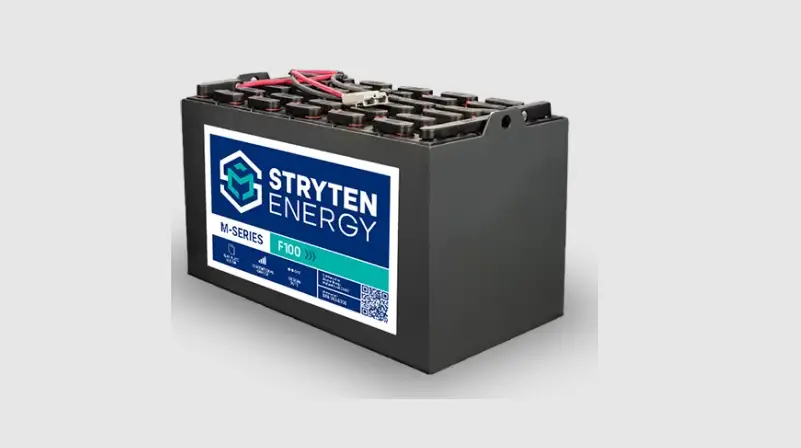
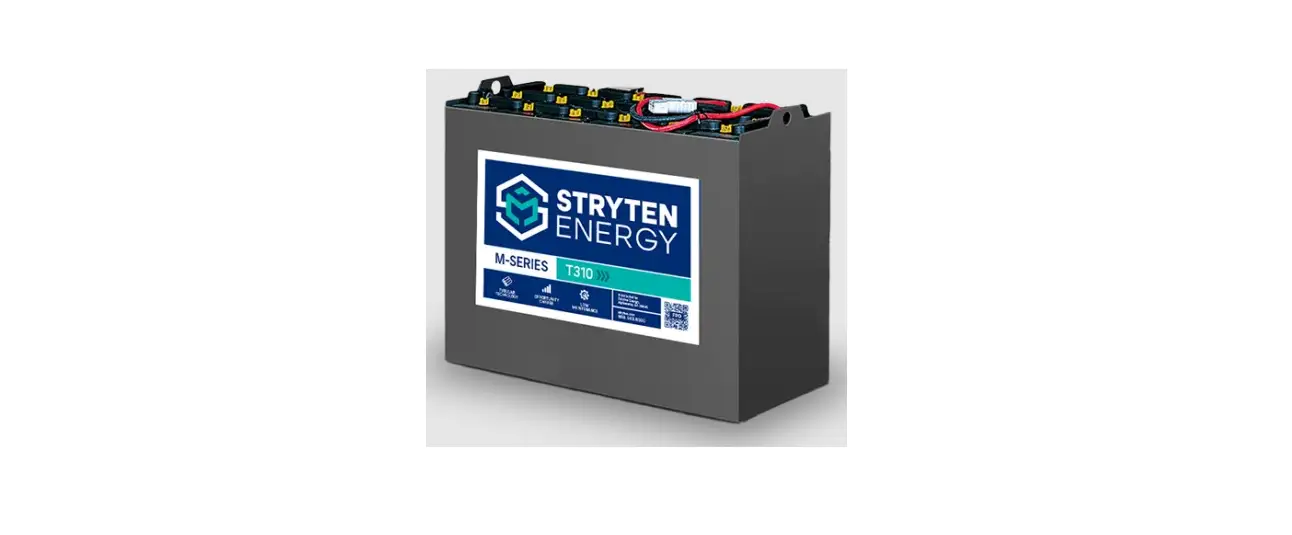
M-Series Railway Diesel Starting Batteries
Product Information: M-Series SLS Railway Diesel Starting
Batteries
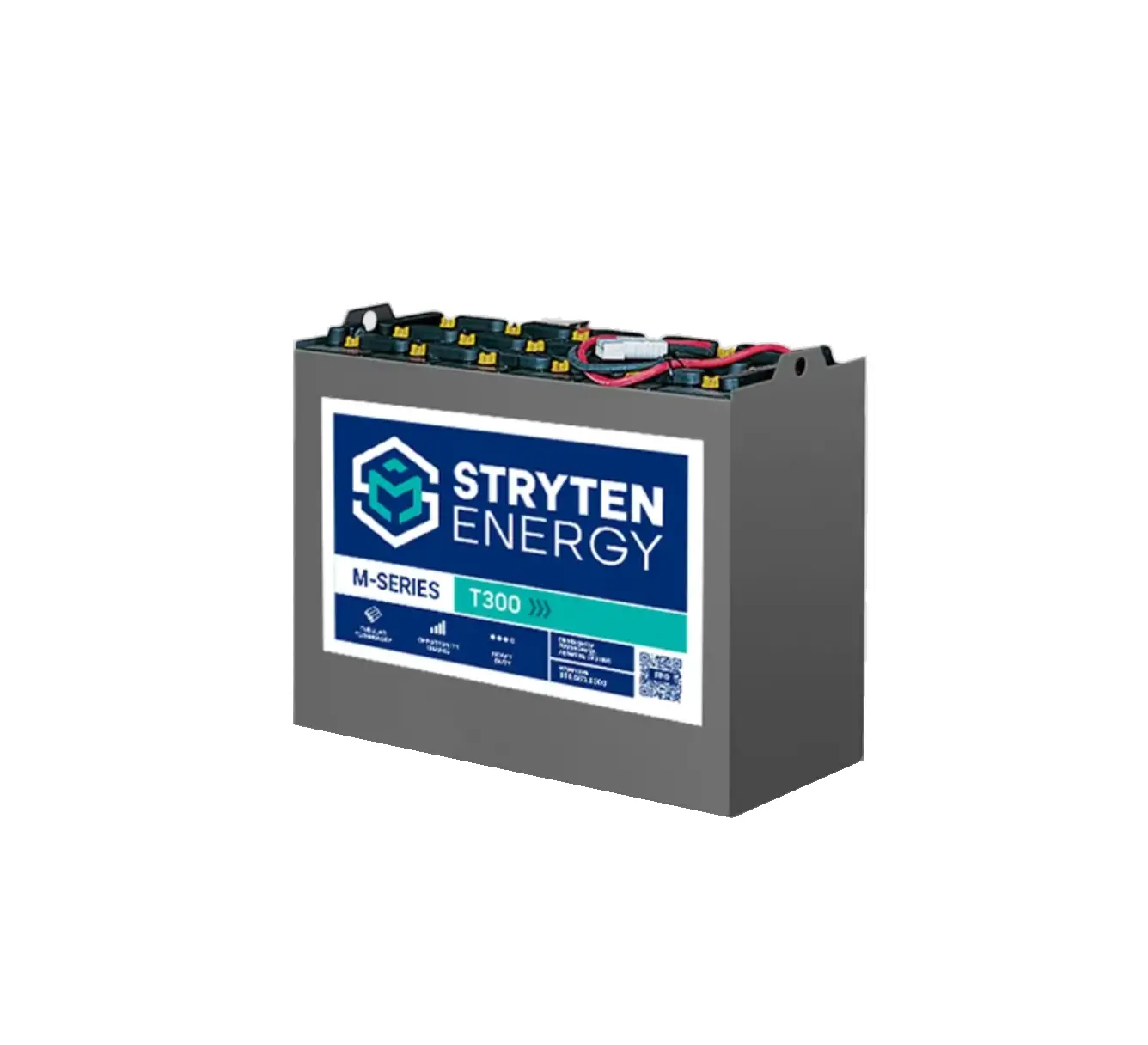
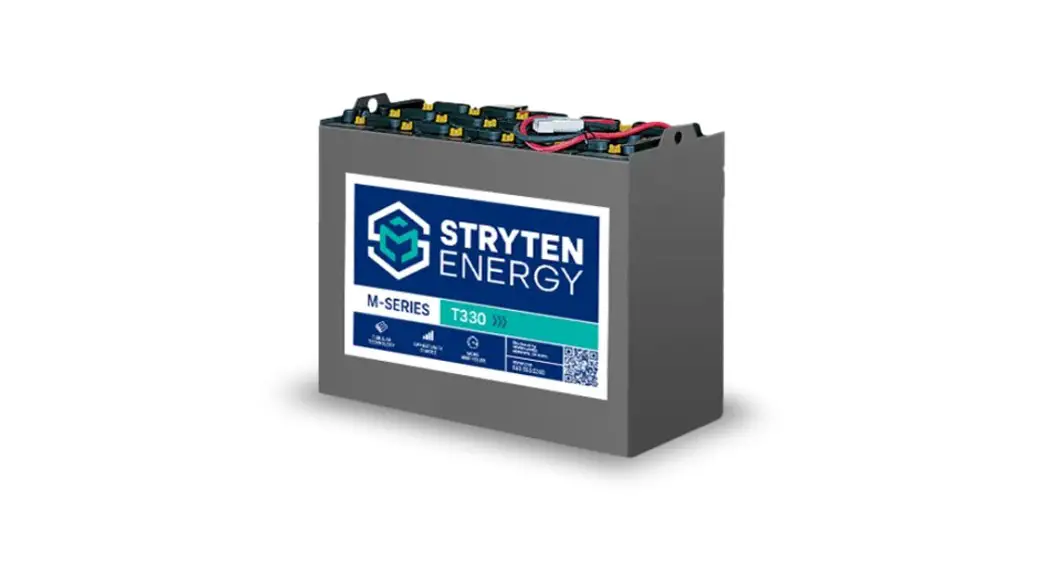
The M-Series SLS Railway Diesel Starting Batteries are designed
specifically for railway diesel engines. These batteries provide
reliable starting power to ensure smooth engine ignition. The
batteries are built with high-quality materials and advanced
technology to deliver optimal performance and durability.
Safety Guidelines:
- Do not use chain or wire rope slings for handling the
batteries. - Inspect the batteries upon delivery for any possible damage
caused during transit. - Review and adhere to the safety guidelines listed in Section 1
of the user manual before placing the batteries in service.
Initial Charge:
Upon receipt, it is recommended to install and charge the
batteries as soon as possible. Connect the battery positive (+)
terminal to the charger positive (+) terminal and the battery
negative (-) terminal to the charger negative terminal.
Constant voltage charging method is recommended. Refer to Table
A in Section 3.1 for the recommended voltages and charge times for
the initial charge. Select the highest voltage allowed by your
system to perform the initial charge in the shortest time
period.
Installing the Battery (Blocking):
Properly block the battery in the compartment to prevent
shifting and potential damage. Securely block all trays, ensuring a
clearance of about 1/8 inch between the blocking and the battery
trays.
Terminal Connections:
Make original connections clean and tight. Regularly inspect and
clean terminal connections to reduce corrosion. Grease connections
with NO-OX grease after cleaning with household ammonia or baking
soda in water (1 lb/gal water).
Voltage Regulator:
The battery is part of a total system, and the voltage regulator
controls the input from the generating system. Ensure that the
voltage regulator is in satisfactory operating condition and
adjusted to the correct operating voltage. Incorrect regulation or
adjustment can lead to insufficient or excessive charging,
affecting the battery’s performance and lifespan.
Refer to Section 6.0 for recommended float voltage ranges at
various ambient temperature ranges.
M-SERIES
SLS
SLS
RAILWAY DIESEL STARTING BATTERIES
CAUTION – READ THE ENTIRE INSTALLATION AND OPERATING INSTRUCTIONS BEFORE PLACE BATTERIES IN SERVICE
Previously Element SLS.
1 . SAFETY
· Assign battery and charger care to properly trained personnel. Follow your company’s Safety Instructions when working with or near diesel starting batteries. Thoroughly familiarize yourself with industry and government guidelines (OSHA, ANSI, etc.) for charging, handling and maintaining diesel batteries.
· In normal use, the Element battery will not generate or release hydrogen gas, will not release acid mist, and will not leak acid. This is because Element batteries are designed differently than conventional lead acid batteries, in order to operate with low maintenance. However, there is the possibility that under abnormal operating conditions, or as a result of damage, misuse and/ or abuse, these potentially hazardous conditions (hydrogen gassing, acid mist, and leaking electrolyte) could occur.
· Batteries contain sulfuric acid, which can cause burns and other serious injury. In the event of contact with sulfuric acid, flush immediately and thoroughly with water. Secure medical attention immediately.
· When working with batteries wear rubber apron and rubber gloves. Wear safety goggles or other eye protection.
· Batteries could generate explosive gases, which when released, can explode and cause blindness and other serious injury. If the safety vent opens while the explosive gases are being generated (e.g. In the event of a charger malfunction), these explosive gases will be released. Keep sparks, flames, and smoking materials away from the
CAUTION: Do not use chain or wire rope slings.
battery area.
· Lift batteries with a hoist, crane, lift truck, or similar equipment. Move batteries on trucks, conveyors or rollers. Make sure equipment is of ample strength and properly installed.
· Never lay metal tools, such as wrenches or other material on top of a battery.
· Disconnect the battery from the locomotive when performing maintenance and repair on the motor or the electrical system.
· Open or “break” the battery circuit before attempting repairs to terminal connections.
2.0 RECEIVING BATTERIES
Immediately upon delivery, examine the battery for possible damage caused in transit. Damaged packing material or staining from leaking electrolyte could indicate rough handling.
If there is evident damage, the receipt should be signed and both copies (carrier’s and receiving copies) marked “Shipment Received Damaged”. The carrier should be called immediately and asked to make a “Carrier’s Inspection for Damage Report”. If “concealed” damage is later detected, the carrier should be called immediately and requested to make a “Carrier’s Inspection for Concealed Damage Report”. After inspection by the carrier, arrangements should be made with the local Stryten Energy representative to have the battery repaired before placing it in service.
BEFORE PLACING BATTERIES IN SERVICE, REVIEW AND ADHERE TO THE SAFETY GUIDELINES LISTED IN SECTION 1
1
M-SERIES
SLS
3.0 INITIAL CHARGE
Batteries lose some charge during shipment as well as during the period prior to installation. A battery should be installed and given its initial charge as soon after receipt as possible. Battery positive (+) terminal should be connected to the charger positive (+) terminal and the battery negative (-) terminal should be connected to the charger negative terminal.
3.1 Constant Voltage Method
Constant voltage is the only recommended charging method.
Determine the maximum voltage that may be applied to the system equipment. This voltage, divided by the number of cells connected in series (16 cells per battery tray) will establish the maximum volts per cell (VPC) that is available.
Table A lists the recommended voltages and charge times for the initial charge. Select the highest voltage the system allows to perform the initial charge in the shortest time period.
TABLE A Initial Charge (77°F)
VOLTS PER CELL
VOLTS PER BATTERY
TIME-HRS (MINIMUM)
2.30
36.80
24
2.35
37.60
12
NOTE: Time periods listed in Table A are for77°F (25°C). For other temperatures, a compensation factor of 0.003 V/°F (0.0055V/°C) per cell is recommended. The minimum voltage is 2.20 VPC, temperature correction does not apply below this voltage. The maximum voltage is 2.35 VPC, temperature correction does not apply above this voltage.
Vcorrected = V25°C – ((Tactual – 25°C) x (.0055V/°C))
or
Vcorrected = V77°F – ((Tactual – 77°F) x (.003V/°F))
See Section 6.0 Voltage Regulator for recommended float voltage ranges at various ambient temperature ranges.
4.0 INSTALLING THE BATTERY (BLOCKING)
Negligence in properly blocking the battery in the compartment could permit battery shifting and may cause damage. All trays should be securely blocked, but care should be taken to avoid over tight wedging. Clearance of about 1/8″ should be left between the blocking and the battery trays.
5.0 TERMINAL CONNECTIONS
Make original connections clean and tight. Inspect terminal connections regularly and keep them clean and tight. Corrosion can be reduced by greasing connections with “NO-OX” grease after cleaning with household ammonia or baking soda in water (1 lb/gal water).
6.0 VOLTAGE REGULATOR
The battery is only one part of a total system, all of the parts of which are interrelated and interdependent. The battery simply stores energy in a chemical form for use when the generating system is not running. It is not a source of power, but merely a reservoir. The battery supplies power for starting, but as soon as the engine is running, the generating system must replace the power withdrawn from the battery.
Input from the generating system to the battery is controlled by the voltage regulator. It is important to make sure that the regulator is known to be in a satisfactory operating condition and adjusted to the correct operating voltage.
If the voltage regulator is not in good operating condition or is adjusted to an incorrect operating voltage, the battery will not function satisfactorily because the charge it receives will be insufficient (undercharge) or excessive (overcharged). In severe cases of bad regulation and overcharging, failure can take place within a year.
A bad regulator or one set too low can cause undercharge a condition that will literally starve the battery to death. In this case, more power is drawn out of the battery than is replaced. As a result, the battery gradually runs down until it is so low
2
M-SERIES
SLS
that it fails completely. Undercharge is indicated by decreasing open circuit voltage readings.
The correct operating or battery float voltage to be set on the regulator is that which will maintain the battery in a fully charged condition. This correct setting depends on two factors operating temperature and locomotive work schedule. It is recommended that voltage regulator adjustments be made while the engine is at operating speeds.
See Section 7 for temperature compensated operating/float voltages.
7.0 OPERATING VOLTAGES
7.1 Single Step Charging
Correct battery float voltage at different environmental temperatures are as follows:
TEMPERATURE
Greater than 90° F 65°F to 90°F 50°F to 65°F Less than 50°F
FLOAT VOLTAGE (VOLTS PER CELL)
2.20 2.23 2.23 2.27 2.27 2.31 2.31 2.35
The effect of the locomotive work schedule on the correct float voltage is determined with experience. If the battery is used for starting very frequently, float voltages should be set at the higher end of the range indicated at the appropriate temperature; similarly, for infrequent battery usage, float voltages should be set at the lower end of the range.
7.2 Two Step Charging
For two step charging the following strategy should be followed:
Bulk Charge: Charge at temperature compensated constant voltage between 2.33 and 2.38 vpc. Charge for 6 hours or until current decreases to Current stated in Table B or until temperature reaches 104°F (40°C). Switch to float charge.
TABLE B
BATTERY
CURRENT (AMPS)
SLS 710
21.3
SLS 550
16.5
SLS 520
15.6
SLS 500
15.0
SLS 500E
15.0
Float Charge: Charge at temperature compensated constant voltage between 2.20 and 2.35 vpc. If temperature exceeds 131 deg F (55 deg C), decrease voltage to 2.20 vpc.
The maximum charge rate for each battery type is:
SLS 710….180 amps SLS 550….138 amps SLS 520….132 amps SLS 500…..125 amps SLS 500E…125 amps
Voltage tolerances +/- 1% and current tolerances +/0.5 amp.
CHART 1 TWO STEP CHARGING
3
M-SERIES
SLS
8.0 VENTILATION
Clean all ventilating openings to remove any collection for dirt or dust that might prevent the free circulation of air. As explained in Section 1.0, explosive gases can be produced if abnormal operating conditions exist (e.g. charger malfunction).
9.0 MAINTENANCE
Because this is an Element battery, there is little to do regarding maintenance operations. The top of the battery should be kept clean and dry and may be washed to remove any accumulated foreign matter. In the unlikely event of an accidental contamination with electrolyte or lead, contain the spill and notify your local Stryten Energy representative who is equipped to handle any environmental concerns. Spill kits can be ordered through your local sales representative by calling 1-888-563-6300.
Never attempt to add water to the battery it has been designed to function without any such additions over its entire life. Any attempt to remove the vent caps shall void the warranty.
9.1 Each Shop Visit Tray Covers Remain in Place
· Check the battery State of Charge (SOC) by measuring the Open Circuit Voltage (OCV) with “No Load” attached to the battery. A fully charged battery will show an OCV of 68.8 volts per set or 34.4 volts per tray. If the battery is more then 15% discharged, with OCV less than 67.8 volts per set or 33.9 volts per tray, apply a “Boost Charge” of 2.35 volts per cell or 75.2 volts per set until the charge current is reduced to a value that is equal to 3 amps per 100 Amp-hour of the C/8 capacity rating.
· Monitor the battery temperature to make sure it does not exceed 104° F (40° C).
9.2 Annual Health Check Tray Covers Removed
· Check the SOC by measuring the OCV with “No Load” attached to the battery per the Shop Visit instructions (Section 9.1).
· Check all inter-cell connections and terminal connections to assure a torque reading of 100 in lbs. Confirm this torque reading by turning the torque wrench clockwise only. Do not re-torque by first loosing and re-tightening.
· Check the OCV of all cells. It should be 2.15 volts per cell with “No Load” attached to the battery. No cell should read lower than 30 millivolts from the average OCV of all the cells in the battery system.
· Re-torque the tray bolts to 160 in-lbs.
· Clean all of the terminal connections with ScotchBrite® Green and apply Sanchem Inc. NO-OX-ID® “A” grease to them.
10.0 STORAGE OF SPARE BATTERIES
Spare charged batteries should be given regular good housekeeping care. A clean, cool, dry place, free from dust and debris, should be selected for storage space.
If stored at temperatures of 77°F (25°C) or below, the battery should receive an initial charge (see Section 3.0) within 3 months and recharged at 3-month intervals thereafter. Storage at elevated temperatures will result in accelerated rates of self-discharge. For every 18°F (10°C) increase above 77°F (25°C), the time interval for initial/maintenance charging should be halved. Thus, if a battery were stored at 95°F (35°C), the initial charge should be performed within 1.5 months and recharged at 1.5-month intervals thereafter.
Storage beyond these periods without proper charge can result in excessive sulphation of plates and positive grid corrosion, which is detrimental to battery performance and life. Failure to charge accordingly may void the battery’s warranty.
11.0 REMEMBER THESE IMPORTANT FACTS
For maximum battery life and performance, always be aware of these potential problem areas and take the appropriate action to correct them should they occur.
SHORT CIRCUITS: Cause electrical leaks that run batteries down.
CARELESSNESS: Running battery down with lights or accessories left on when engine is not running.
POOR, DIRTY CONNECTIONS: Corrosion builds up resistance that impedes (often stops) the flow of power to and from the battery.
4
M-SERIES
SLS
LOW REGULATOR SETTINGS: Limit the flow of recharging current to the battery thereby starving it.
HIGH OR UNCONTROLLED REGULATOR: Permits excessive flow of current to the battery causing excessive loss of water and premature failure.
12.0 WARRANTY AND RECORDS
Diesel starting batteries are warranted against manufacturing defects or factors under Stryten Energy control. There are many factors under the control of the battery user that can damage the battery.
The most important user-controlled factor is the battery float voltage set on the voltage regulator of the locomotive generating or charging system. Many battery users routinely keep records of monthly readings of voltage regulator output with the engine at idle and at operating speed. As explained in Section 7.0, correct adjustment of the battery float voltage is critical in ensuring battery performance. To keep the warranty valid, quarterly records of voltage regulator output or battery float voltages, together with the temperature range for which adjustment is made, must be kept.
Such records can alert the user to the existence of abnormal conditions in his application that can adversely affect the battery. Preventive actions can then be taken promptly to ensure the battery is not damaged.
13.0 RECYCLING
U.S. Federal and State Regulations require that lead acid batteries be handled and disposed of in compliance with strict guidelines. Stryten Energy offers disposal service for lead acid batteries. In the USA, call 1-888-438-5865 to arrange pick-up or to get additional information. In Canada, call 1-800-231-9081. In Mexico, call 1-630-862-2225.
For additional information: In the USA, call 1-800-462-7245 In Canada, call 1-800-268-2698 In Mexico, call 1-771-791-4972
POST THESE INSTRUCTIONS IN BATTERY MAINTENANCE AREA.
STRYTEN ENERGY USA/PR 877.462.4636 CAN 800.268.2698 MEX +52 5543527927
©2022 Stryten Energy Alpharetta, GA 30005. SE1052 02/23
5