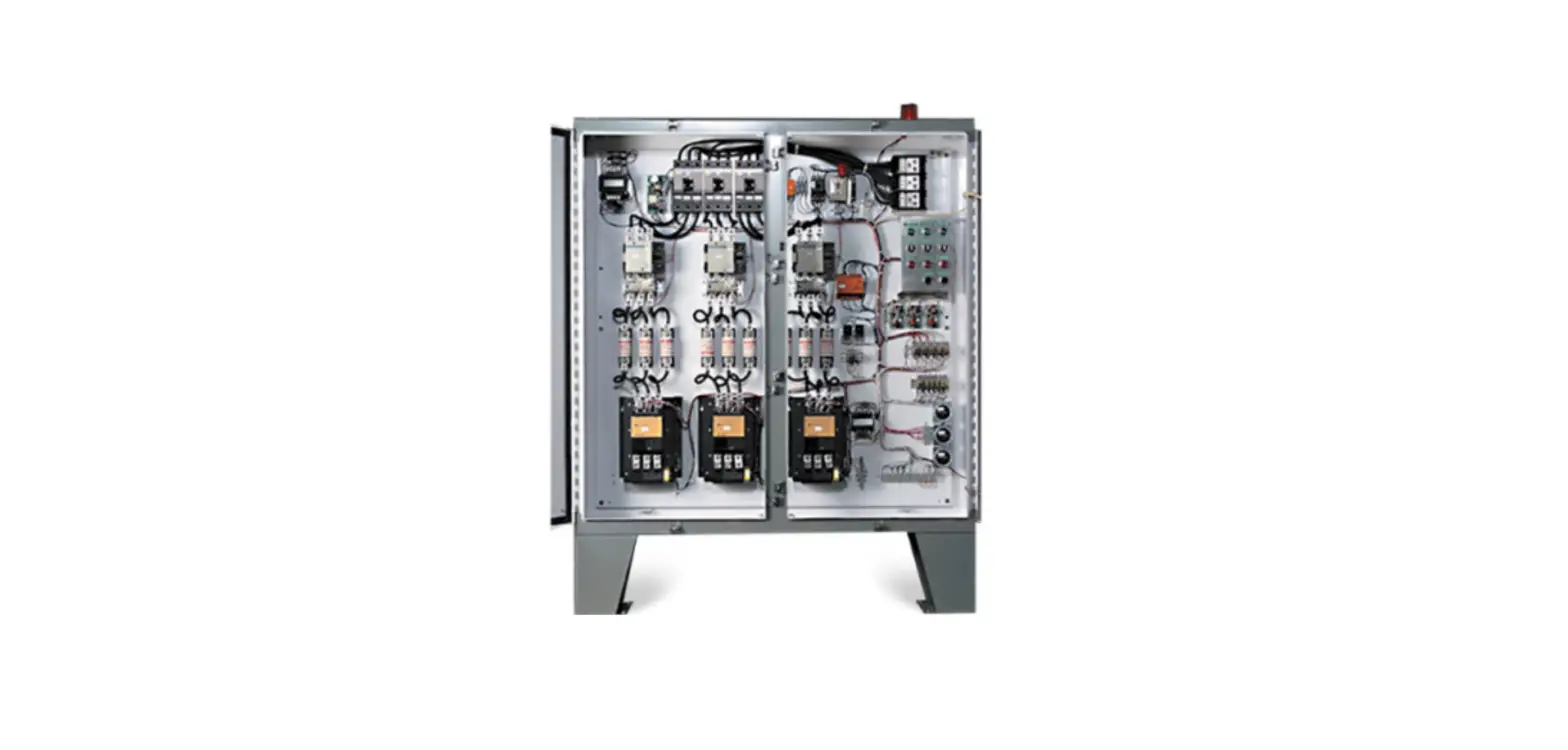
S1501 Production Controller
Product Information:
The product is a FW Murphy Controller, which is an electrical
control panel used for monitoring and controlling various systems
in an engine or machinery. It is designed to handle electrical
signals and provide accurate measurements and control functions.
The controller is susceptible to electrical noise, which can affect
its performance and cause malfunctions or damage. Therefore, it is
important to understand and mitigate the effects of electrical
noise when wiring the controller.
Electrical Noise:
Electrical noise refers to any unwanted electrical signal that
can interfere with the proper functioning of the FW Murphy
Controller. This noise can come from various sources, including
power line disturbances, ignition systems, electrostatic discharge,
and other external factors. Electrical noise can lead to issues
such as fluctuating readings, nuisance shutdowns, incorrect valve
or motor operations, and erroneous displayed values.
Noise Reduction:
To reduce the effects of electrical noise on the FW Murphy
Controller, certain measures can be taken:
- Eliminate or reduce power line disturbances by addressing
issues such as power-switching operations, heavy loads turning on
or off, lightning-induced surges, etc. - Avoid wiring the controller in close proximity to ignition
systems or other noise sources. - Minimize electrostatic discharge by controlling factors such as
dry atmosphere, high personnel activity, nylon or wool carpeting,
etc. - Ensure proper grounding of the controller by following
single-point grounding practices. - Use shielded wires to minimize interference from external noise
sources. - Properly route control wiring and keep it away from other
potential noise sources. - Consider using suppression diodes for pilot loads to suppress
voltage spikes.
Product Usage Instructions:
When wiring the FW Murphy Controller, follow these
guidelines:
Wiring the Controller:
1. Use stranded wire for better flexibility and durability.
2. Connect the controller directly to the battery post for a
reliable power source.
3. Ensure correct wiring connections between the battery,
starter, alternator, engine controller, and FW Murphy
Controller.
4. For field modifications, follow suitable single-point
grounding practices to maintain proper grounding.
5. Avoid wiring the controller in close proximity to ignition
systems or other noise sources.
6. Keep control wiring well away from potential noise
sources.
Noise Suppression:
1. Use shielded wires to minimize interference from external
noise sources.
2. Consider using suppression diodes for pilot loads to suppress
voltage spikes.
3. Keep control wiring well away from potential noise
sources.
Following these wiring practices and noise reduction techniques
will help ensure optimal performance and reliability of the FW
Murphy Controller.
Wiring The FW Murphy Way
Electrical Noise
Eliminating/Reducing Electrical Noise
Any electrical signal that is present in an environment and is capable of adversely affecting another electrical signal is considered noise, even if that signal serves a useful purpose in the system. For example, if the signal from the AC power mains is coupled to the signal from a pressure transducer and causes the pressure reading to fluctuate, then the AC power is considered to be noise to the pressure signal.
This points out three things about noise: · There must be a noise source. · There must be a victim. · There must be a coupling path.
Further, this gives us three areas where noise can be reduced: · SOURCE By de-coupling, shielding or simply making a noiseless design. · COUPLING PATH By spacing or shielding if the coupling path is radiation, or filtering if the coupling path is conduction. · VICTIM By de-coupling, isolating, shielding or by circuit design using less susceptible circuits.
There are many noise sources to be aware of. Power line disturbances range from slow over-or-under voltage to sharp, extremely narrow transients. The sources of such disturbances are often power-switching operations, heavy loads turning on or off, power semi-conductor operation, circuit breakers or fuses blowing, lightning induced surges, etc.
Ignition systems are well-known noise sources. Because of their pulsed nature, they occupy a wide frequency bandwidth, which creates a threat to a large number of circuits. A lightning stroke creates a huge electromagnetic field and induces surge voltages in power and communication lines.
Electrostatic discharge (ESD) creates a number of problems (malfunctions or permanent damage) in electronic circuits. Dry atmosphere, high personnel activity, nylon or wool carpeting, etc. aggravate static discharges.
All of the above noise sources may cause permanent damage or malfunctions including nuisance shutdowns, erroneously displayed values, or valves and motors being turned on and off at the wrong time.
Early Start Eliminating/Reducing Electrical Noise
While you may not be able to change how susceptible a design is to noise, there is plenty that you can do to reduce the effects of noise on the design. A few extra minutes and attention to details during wiring can save you a service call and make your customer much happier.
1. Separate the Wiring Break the noise-coupling path. Do not route cables from one group (AC power, DC control, low voltage analog signal, etc.) parallel with cables from another group. Never run AC and DC handling wiring together. If cables from one group must cross cables from another group only cross at right angles. Route cables along frame members and metal surfaces. Avoid open space hanging. Space low voltage analog signal cables away from all other cable groups 3″ for every 12″ of parallel run (1 foot of separation for every 4 feet of run.) Space all other cable groups away from other cable groups 1″ for every 3 feet of parallel run.
2. Use Suppression Diodes Eliminate noise at its source. Place suppression diodes across all DC inductive loads. These loads include pilot relays, solenoid valves, starter solenoids, etc.
3. Wire DIrectly to the Battery Break the noise-coupling path. To minimize noise from battery chargers, alternators and power droops during starting, hook the power cables from the control panel power terminals directly to the battery posts with large gauge wire. Standby chargers should also be wired directly to the battery post using separate cables from the control panel’s power cables.
Wiring The FW Murphy Way Electrical Noise
1 of 5
WRONG Not Wired Directly to Battery Post
Battery
Starter
FW Murphy Controller
RIGHT Correctly Wired to Battery Post
Battery Starter
FW Murphy Controller
Battery
Battery Charger
FW Murphy Controller
Battery
Junction Box
Alternator
ENGINE
Battery
Battery Charger
FW Murphy Controller
Battery
Junction Box
Alternator
ENGINE
Engine Controller
FW Murphy Controller
Engine Controller
FW Murphy Controller
4. Use Shielded Wires Break the noise-coupling path. Shielded cable should be used for the magnetic pickup (speed signal), low level analog signal cables (thermocouples, etc.) and other sensitive cables. The shield should be grounded at the panel end. Do not allow any other ground connection to the shield.
5. Eliminate Ground Loops Break the noise-coupling path. Use a single point ground. The ideal single point signal ground network is one in which separate ground conductors extend from one point on the facility ground to the return side of each of the numerous circuits located throughout a facility. This type of ground network requires a very large number of conductors and is not generally economically feasible. In lieu of the ideal network, various degrees of approximation to singlepoint grounding are employed.
WRONG Not a Single-Point Ground
Battery
Battery Charger
FW Murphy Controllers
IDEAL Single-Point Ground
Battery Battery Charger
FW Murphy Controllers
Starter Engine FW Murphy Controller Controller
Starter Engine FW Murphy Controller Controller
SUITABLE for FIELD Modified Single-Point Ground
Battery Battery Charger
FW Murphy Controllers
Starter
Engine FW Murphy Controller Controller
6. Use Extra Care with Spark Ignition Engines Eliminate noise at its source. Use noise suppression spark plugs and spark plug wires. Break the noise-coupling path. Route all wires at least 10″ away from the ignition system, the further away the better. Magnetos and ignition coils produce high voltage, high frequency, high-energy noise. Keep your control cables well away from the ignition system.
Wiring The FW Murphy Way Electrical Noise
2 of 5
Good Wiring Practices
It’s not just good wiring practice it also makes sense. To get the most out of any control panel, don’t overload the circuits and always use the proper wire for the signal being measured or current load required.
1. Pilot Loads Know what the controller’s outputs are rated for. If in doubt or if you need to switch more current than the controller is rated for, wire a relay to controller and use the relay to switch the heavy load. This moves the noisy heavy current away from the controller and can make your wiring easier.
2. Use Stranded Wire Solid wire transmits vibration and is more likely to crystallize and break when subjected to movement.
USE STRANDED WIRE
Control Panel Wire Directly to the Battery
ESC
HOME
ACK
SETUP
Fn
ENTER
RESET
RUN STOP
TEST
TIMER “O”
Noise Suppression Spark Plugs & Wires
Use Shielded Wires
KEEP CONTROL WIRING WELL AWAY
Use Suppression Diodes Pilot Loads
700
800
900
250 270
600
230 TEMPERATURE
200
170
MURPHY SWICHGAGE® C TULSA, U.S.A.
F
350
700
900
800
250 270
600
230 TEMPERATURE
200
170
MURPHY SWICHGAGE® C TULSA, U.S.A.
F
350
700
900
800
250 270
600
230 TEMPERATURE
200
170
MURPHY SWICHGAGE® C TULSA, U.S.A.
F
350
250 270
600
230 TEMPERATURE
200
170
MURPHY SWICHGAGE® C TULSA, U.S.A.
F
350
700
800
900
SEPARATE THE WIRING Analog Input Signals
Digital Input Signals Ouput Signals
Cross Wires at Right Angles Keep Wires Close to Metal Surfaces Maintain Spacing Between Wire Groups
Wiring The FW Murphy Way Electrical Noise
3 of 5
Relentless Noise Issues
Noise troubleshooting can become very frustrating at times, particularly when you have tried absolutely everything. Step back, and answer these simple questions.
· What and where is the source? · What is the frequency range? · Which coupling path(s) can the noise possibly take?
The noise problem can cause you to commit two errors:
· You do not collect enough data to prepare one or more plans of attack. · You bring either too many or not enough pieces of equipment but leave behind the one precious
accessory that will not exist at the site.
Remember collect detailed information in advance. Ask the user to determine a possible correlation between cause and effect.
· Is the failure intermittent or continuous? · Does the failure correlate with a specific time of day? With the operation of local / portable
radio transmitter? With certain loads on/off the power line?
What instrumentation is available at the site?
· An oscilloscope? · Volt/ohm meter?
Make sure you bring whatever is needed.
If there are clues that a nearby radio transmitter could be the problem, get transmission data from the FCC (http://www.fcc.gov/) or other source:
· Transmitter power. · Transmitter frequency. · Transmitter distance and direction from the site.
In most cases, some rough prediction can be done in advance. Based on the information, make a hypothesis about what the source and coupling paths could be. Finally, plan some advance strategies for diagnosis and fix. Do not stick to one plan. Plan some “what if” actions.
· Upon arriving at the site visually inspect the victim. · Are there power line filters? Do they address both common and differential mode noise? · Are the filters mounted correctly? · Examine the grounding scheme. Multiple ground loops usually exist. · Examine interconnecting control and signal cables. Are they shielded? How/where are the shields
grounded? Are they near other power cables carrying large currents?
· Are there other heavy-load users on the victim power branch circuit? · Are there any nearby portable radio transmitters? · Are there any nearby radars? FM/TV transmitters? · Any nearby air conditioners? Arc welders? Neon signs? Heaters, etc.?
If the failure is either always there or occurs at several times within a reasonable period, it can be probed and demonstrated over and over. A continuous problem is a blessing for a troubleshooter because it allows him to find the source faster and evaluate the fixes more easily.
Unfortunately, intermittent problems constitute a large share of field calls, and this implies a longer preliminary routine to locate the cause. A patient search is needed to find evidence of a correlation between the failure and an intermittent operation (turn on, turn off or changes in loading) of some equipment in the surroundings.
Wiring The FW Murphy Way Electrical Noise
4 of 5
Relentless Noise Issues continued
Ultimately, it may occur that no correlation can be found within a reasonable investigation time. This will be a case to search for the possibility of rare power line disturbances or short ESD (Electrostatic Discharge) transients.
Once the source is identified, you will search out and fix coupling paths. This may be done through:
· Shielding of case and cables. · Physical relocation and/or reorientation. · Filtering. · Checking of grounding conductors.
There is obviously a more direct solution: stop noise generation at the source. This is generally not feasible because the source is out of reach or impossible to modify or because the generation of noise is a normal product of its function.
The key things to remember are the basic, source, victim and coupling path. Careful consideration and solid troubleshooting should allow you to fix any noise problem.
Wiring The FW Murphy Way Electrical Noise
5 of 5