
Ambu 2023 Medicare Inpatient New Technology Add on Payments
Effective October 1, 2021, the Centers for Medicare and Medicaid Services (CMS), the federal agency that administers the Medicare program, has granted a New Technology Add-on Payment (NTAP) for a single-use duodenoscope such as the aScope™ Duodeno, which is used in performing endoscopic retrograde cholangiopancreatography (ERCP) procedures in the hospital inpatient setting. The NTAP status applies to the original Medicare program and can remain in effect for up to three years from the time of marketing authorization.1
HOW NTAP PAYMENTS WORK
- for items and services furnished by the hospital, such as operating rooms, room and board, nursing services, and diagnostic tests. This fixed payment is known as a Medicare Severity Diagnosis-Related Group (MS-DRG). When a new technology is adopted for patient treatment, the Medicare program may authorize an additional payment to the hospital in addition to the MS-DRG payment to help cover the costs of that new technology if certain criteria are met.2 This additional payment is called a New Technology Add-on Payment (NTAP).
- The NTAP amount that a hospital receives is based on the cost of the new technology. In the updated final rule for fiscal year 2023 that kept NTAP reimbursement only for the aScope™ Duodeno, the Medicare program set a value of $1,296.75, which is 65 percent of the average cost of aScope Duodeno.1 In order to receive a NTAP payment, the hospital’s costs for an inpatient discharge must exceed the applicable MS-DRG payment.
- Under the Medicare regulations, if NTAP reimbursement is available, the amount that will be paid is the lesser of the following:
- 65% of the amount the cost of the case exceeds the MS-DRG payment
- 65% of the cost of the new technology ($1,296.75 for the aScope Duodeno)1
- To illustrate how NTAP payments can be determined, suppose that a Medicare beneficiary is discharged and the applicable MS-DRG payment is $6,921. The NTAP payment would be determined as follows:
Example 1: If the hospital’s costs are $6,000, then no NTAP payment would be made because the costs are below the MS-DRG payment that would be made. NTAP payments are made only when the hospital’s total costs exceed the MS-DRG schedule amount.
Example 2: If the hospital’s costs are $7,500, then a partial NTAP payment would be made by Medicare. In this scenario, the hospital incurred $579 in costs in excess of the MS-DRG payment. Therefore, because the excess cost is less than 65% of the cost of the new technology ($1,296.75), the Medicare program would pay the hospital an additional $376.35, or 65% of the excess cost.
Example 3: If the hospital’s costs were $10,000, then the hospital would receive the full NTAP payment. Its excess costs are $3,079, which is greater than the sum of the MS-DRG payment and the NTAP allowable amount. In this scenario, the Medicare program will compare (1) 65% of the costs above the MS-DRG rate ($2,001.35) with (2) 65% of the cost of the new technology ($1,296.75) and pay the lesser amount. Since 65% of the cost of the aScope™ Duodeno is less than 65% of the additional costs that exceed the MS-DRG payment, the hospital would receive the full NTAP payment of $1,296.75, and the total reimbursement to the hospital would be $8,217.75 .
Coding for the aScope Duodeno
HCPCS Code for Reporting the aScope Duodeno
| HCPCS Code | Descriptor |
| C1748 | An endoscope, single-use (i.e. disposable), upper GI, imaging/illumination device (insertable) |
Revenue Codes
| Revenue Codes | Descriptor |
| 272 | Sterile supplies |
| 2783 | Other implants |
ICD-10-PCS Code5
All cases using the aScope™ Duodeno should be identified using one of the following two special ICD–10– PCS codes:
| ICD-10PCS Codes | Descriptor |
| XFJB8A7 | Inspection of hepatobiliary duct using single-use duodenoscope, new technology group 7 |
| XFJD8A7 | Inspection of pancreatic duct using single-use duodenoscope, new technology group |
| 0FD48ZX | Extraction of the gallbladder, via natural or artificial opening endoscopic, diagnostic |
| ICD-10PCS Codes | Descriptor |
| 0FD58ZX | Extraction of right hepatic duct, via natural or artificial opening endoscopic, diagnostic |
| 0FD68ZX | Extraction of left hepatic duct, via natural or artificial opening endoscopic, diagnostic |
| 0FD78ZX | Extraction of common hepatic duct, via natural or artificial opening endoscopic, diagnostic |
| 0FD88ZX | Extraction of the cystic duct, via natural or artificial opening endoscopic, diagnostic |
| 0FD98ZX | Extraction of the common bile duct, via natural or artificial opening endoscopic, diagnostic |
| 0FDC8ZX | Extraction of the ampulla of Vater, via natural or artificial opening endoscopic, diagnostic |
| 0FDD8ZX | Extraction of the pancreatic duct, via natural or artificial opening endoscopic, diagnostic |
| 0FDF8ZX | Extraction of accessory pancreatic duct, via natural or artificial opening endoscopic, diagnostic |
| 0FJ48ZZ | Inspection of the gallbladder, via natural or artificial opening endoscopic |
| 0FJB8ZZ | Inspection of hepatobiliary duct, via natural or artificial opening endoscopic |
| 0FJD8ZZ | Inspection of the pancreatic duct, via natural or artificial opening endoscopic |
| 0FB48ZX | Excision of the gallbladder, via natural or artificial opening endoscopic, diagnostic |
| 0FB58ZX | Excision of right hepatic duct, via natural or artificial opening endoscopic, diagnostic |
| 0FB68ZX | Excision of left hepatic duct, via natural or artificial opening endoscopic, diagnostic |
| 0FB78ZX | Excision of common hepatic duct, via natural or artificial opening endoscopic, diagnostic |
| 0FB88ZX | Excision of the cystic duct, via natural or artificial opening endoscopic, diagnostic |
| 0FB98ZX | Excision of the common bile duct, via natural or artificial opening endoscopic, diagnostic |
| 0FBC8ZX | Excision of ampulla of Vater, via natural or artificial opening endoscopic, diagnostic |
| 0FBD8ZX | Excision of the pancreatic duct, via natural or artificial opening endoscopic, diagnostic |
| 0FBF8ZX | Excision of the accessory pancreatic duct, via natural or artificial opening endoscopic, diagnostic |
| 0FN98ZZ | Release common bile duct, via natural or artificial opening endoscopic |
| 0FNC8ZZ | Release ampulla of Vater, via natural or artificial opening endoscopic |
| 0FND8ZZ | Release pancreatic duct, via natural or artificial opening endoscopic |
| 0FNF8ZZ | Release accessory pancreatic duct, via natural or artificial opening endoscopic |
| 4A0C8BZ | Measurement of biliary pressure, via natural or artificial opening endoscopic |
| 0FF78ZZ | Fragmentation in the common hepatic duct, via natural or artificial opening endoscopic |
| 0FF98ZZ | Fragmentation in the common bile duct, via natural or artificial opening endoscopic |
MEDICARE HOSPITAL INPATIENT PAYMENT
The information in this guide is based on some typical MS-DRG assignments for inpatient hospitalizations that may include the use of a disposable duodenoscope. The assignment of a MS-DRG to a given discharge is based on a wide range of diagnoses and services, and as a result Ambu cannot guarantee that this list is exhaustive, or that coverage will be guaranteed for any MS-DRG assignment in a reimbursement claim.
MS-DRG Description Hospital Inpatient Medicare National Average Payment
| DRG | Descriptor | Average Medicare Payment5 |
| 435 | Malignancy of the hepatobiliary system or pancreas with Major Complication or Comorbidity (MCC) | $11,146 |
| 436 | Malignancy of the hepatobiliary system or pancreas with Complication or Comorbidity (CC) | $7,016 |
| 437 | Malignancy of the hepatobiliary system or pancreas without CC/MCC | $5,393 |
| 438 | Disorders of the pancreas except for malignancy with MCC | $10,567 |
| 439 | Disorders of the pancreas except for malignancy with CC | $5,546 |
| DRG | Descriptor | Average Medicare Payment5 |
| 440 | Disorders of the pancreas except malignancy without CC/MCC | $3,866 |
| 441 | Disorders of the liver except for malignancy, cirrhosis, alcoholic hepatitis with MCC | $12,081 |
| 442 | Disorders of the liver except for malignancy, cirrhosis, alcoholic hepatitis with CC | $6,031 |
| 443 | Disorders of the liver except for malignancy, cirrhosis, alcoholic hepatitis with CC | $4,156 |
| 444 | Disorders of the biliary tract with MCC | $10,614 |
| 445 | Disorders of the biliary tract with CC | $7,011 |
| 446 | Disorders of the biliary tract without CC/MCC | $5,175 |
About the aScope Duodeno
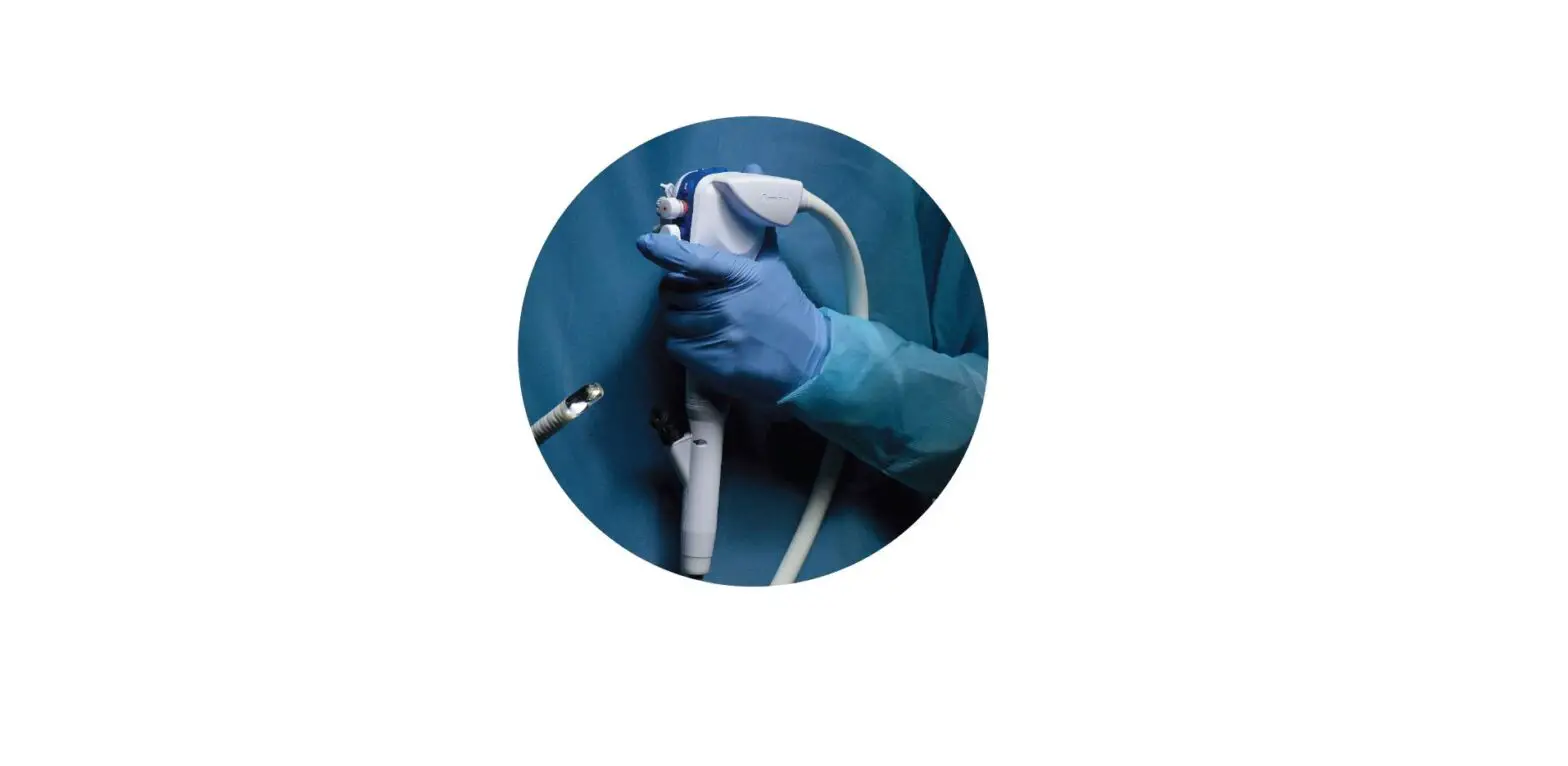
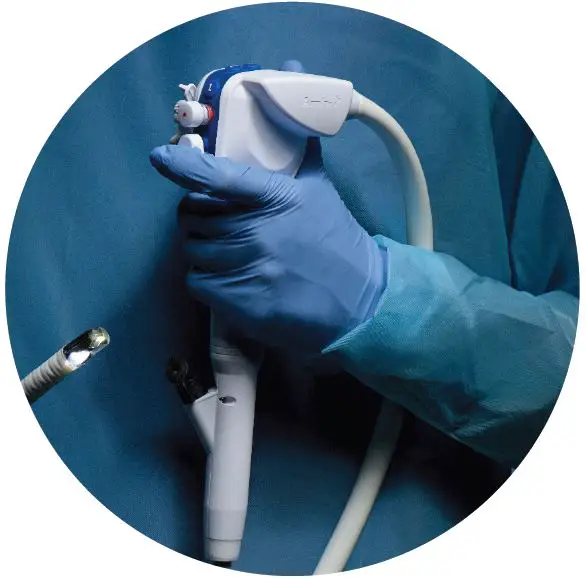
The aScope Duodeno is a single-use sterile duodenoscope that seamlessly integrates into existing hospital systems and offers an intuitive, lightweight design with similar functionality to reusable duodenoscopes. The aScope Duodeno is part of a system includes a reusable process unit, the Ambu® aBox™ Duodeno. Duodenoscopes are used for visual examination of the duodenum and play a key role in diagnosis and treatment of conditions like gallstones, pancreatitis, and tumors or cancer in the bile duct and pancreas.
INDICATIONS FOR USE
- The aScope Duodeno is designed to be used with the aBox Duodeno, endoscopic accessories (e.g. biopsy forceps) and other ancillary equipment (e.g. video monitor) for endoscopy and endoscopic surgery within the duodenum.
- The aBox Duodeno is designed to be used with the aScope Duodeno, endoscopic accessories (e.g. biopsy forceps) and other ancillary equipment (e.g. medical grade video monitor) for endoscopy and endoscopic surgery within the duodenum.
DISCLAIMER
The reimbursement information provided in this Guide was obtained from third-party sources and information that is publicly available on the internet. The reported Medicare national average payments are subject to change and may vary based on geographic location and other individual factors. Information in this Guide is not legal advice, nor is it advice about how to code or complete claims for payment. It is the provider’s responsibility to report the appropriate codes based on the procedures furnished to a specific patient and the patient’s medical condition. Providers are also responsible for submitting claims for these services consistent with the specific payer billing requirements.
Payer billing, coding, and coverage requirements vary from payer to payer and are updated and change over time. Ambu encourages providers to verify current billing, coding and coverage policies and requirements with the specific payer if the provider has questions. Providers may also contact the American Gastroenterology Association (AGA), the American Society for Gastrointestinal Endoscopy (ASGE) and/or the American Medical Association (AMA).
Ambu does not promote the use of its products outside of the FDA cleared indications for use and labeling.
- FY 2023 Medicare Inpatient Prospective Payment System Final Rule; Vol. 87, No. 153. CMS-1771-F (2022); available at: https://www.govinfo.gov/content/pkg/FR-2022-08-10/pdf/2022-16472.pdf.
- Social Security Act, § 1886(d)(5)(K).
- Items that are insertable may be billed with revenue code 0278 per the National Uniform Billing Committee (NUBC)’s Updated Guidance on Other Implant Revenue Code (0278) effective July 1,
2020 available at https://www.nubc.org/system/files/media/file/2020/04/Guidance%20on%200ther%20Implant%20RC0278.pdf. - 487 FR 48780
- 52023 CMS IPPS Final Rule, Tables 1B and 5 (available on CMS website), 87 Fed. Reg. 48780 (Aug. 10, 2022). Payment rounded to nearest dollar and assumes the hospital received the full update.
Payment will vary based on geographic location and other factors.
For more information, please contact (800) 262-8462, select option 7 or email [email protected].
Trademarks, registered or otherwise, are the property of their respective owner(s)
Distributed by Ambu Inc.
- © 2023 Ambu Inc.
- US: Rx only
- PUB – 001243 – V06 – 03/2023 – Ambu USA. Technical data may be modified without further notice.
Ambu, Inc.
- 6721 Columbia Gateway Drive
- Suite 200
- Columbia, MD 21046
- Tel. 800 262 8462
- Fax 800 262 8673
- ambuUSA.com.
 Ambu USA - The Single-Use Endoscopy Leader