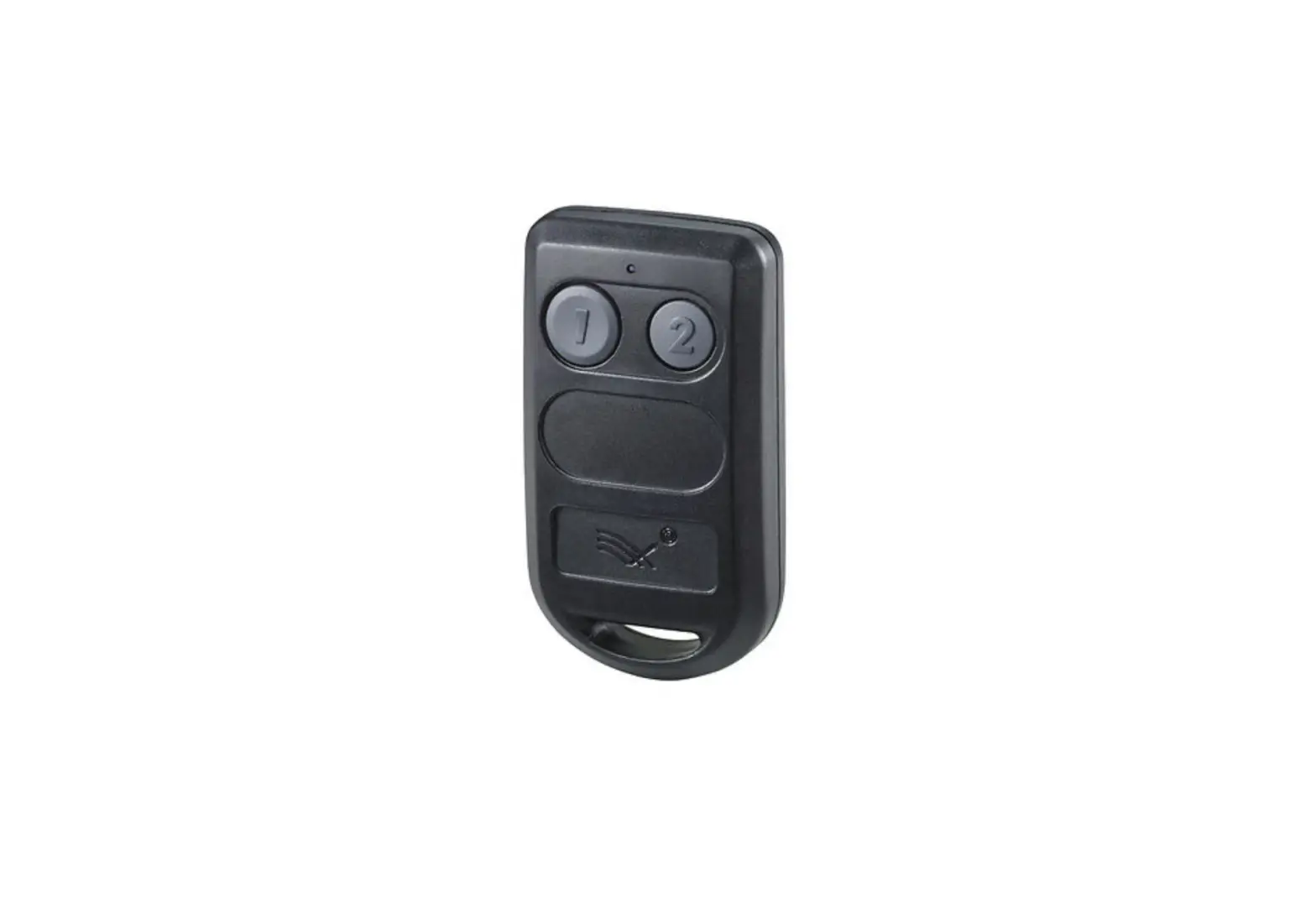
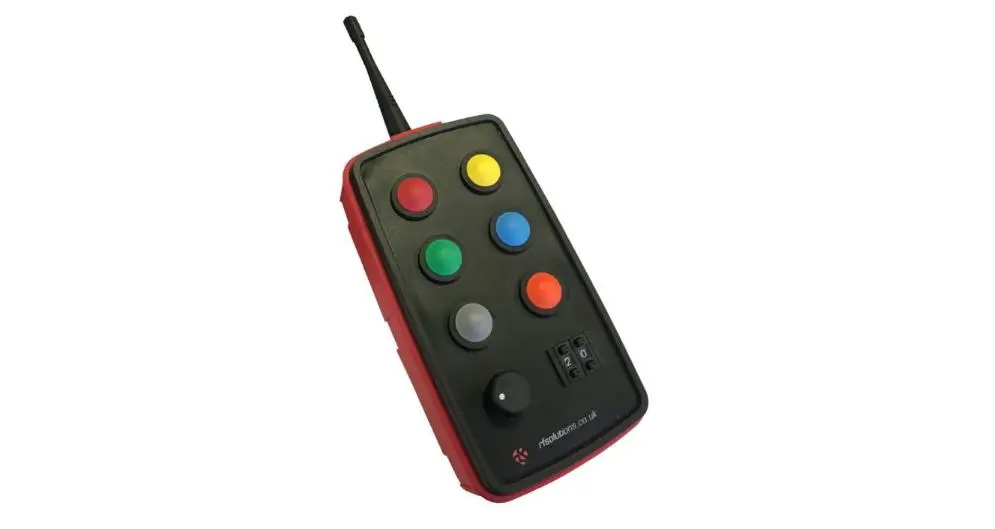
LTCM 310U SMD Mountable Radio Transmitter
USER MANUAL Transceiver Module LTCM 300U / LTCM 310U
COPYRIGHT 2017 Magnum First. Cannot be duplicated
without written permission.
Observe precautions! Electrostatic sensitive
devices!
Magnum First
1 Seneca Street, 29thFloor M55
Buffalo, NY 14203
Phone: 716-293-1588
Email: [email protected]
Website: www.magnumfirst.com
Subject to modifications
LTCM 310U User Manual – Version 1.2 March 13, 2018 Page
1/27
The user manual is applicable for the following module
variants:
- LTCM 300U
- LTCM 310U
2 GENERAL DESCRIPTION
2.1 Basic functionality
The Transceiver Module LTCM 300U/LTCM 310U is a high-performance
RF transceiver module designed for industrial applications. It
supports data rates up to 500 kbps and operates in the 902-928 MHz
ISM frequency band.
2.2 Technical data
The technical data for the module is as follows:
- Frequency range: 902-928 MHz
- Modulation: FSK/GFSK
- Data rate: up to 500 kbps
- Output power: up to +20 dBm
- Sensitivity: -120 dBm
- Supply voltage: 2.0-3.6 VDC
- Current consumption: 25 mA (TX), 22 mA (RX)
2.3 Physical dimensions
The physical dimensions of the module are as follows:
- LTCM 300U: 25.4 x 18.0 x 3.0 mm
- LTCM 310U: 25.4 x 18.0 x 5.0 mm
2.4 Environmental conditions
The module is designed to operate in the following environmental
conditions:
- Operating temperature: -40°C to +85°C
- Storage temperature: -40°C to +125°C
- Humidity: 10% to 90% non-condensing
- Vibration: 10 Hz to 150 Hz, 2g acceleration
- Shock: 1000g acceleration, 0.5ms pulse width
3 FUNCTIONAL DESCRIPTION
3.1 Pin out
The module has the following pin out:
- VDD: Power supply input (2.0-3.6 VDC)
- GND: Ground
- SDA: Serial data input/output
- SCL: Serial clock input
- IRQ: Interrupt request output
- GIO1-2: General purpose input/output pins
3.2 Pin description and operational characteristics
The pin descriptions and operational characteristics for the
module are as follows:
- GPIO supply voltage – IOVDD: This pin provides
the supply voltage for the GPIO pins. The voltage range is 1.8-3.6
VDC.
3.3 Absolute maximum ratings (non operating)
The absolute maximum ratings for the module are as follows:
- Supply voltage: -0.3 VDC to +4.0 VDC
- Storage temperature: -55°C to +150°C
- Vibration: 2000g acceleration, 0.3ms pulse width
- Shock: 5000g acceleration, 0.1ms pulse width
3.4 Maximum ratings (operating)
The maximum ratings for the module during operation are as
follows:
- Supply voltage: 2.0-3.6 VDC
- Operating temperature: -40°C to +85°C
3.5 System environment
The module requires a microcontroller or other host system to
control its operation.
3.6 Serial Interface
The module uses a standard I2C interface for serial
communication.
3.7 Built-in Repeater
The module has a built-in repeater function that allows it to
extend the range of a wireless network.
3.8 Smart Acknowledge
The module supports a Smart Acknowledge feature that ensures
reliable data transmission by automatically requesting
retransmission of lost packets.
3.9 Remote Management
The module supports remote management through a serial
interface, allowing for configuration and monitoring of the
module’s operation.
3.10 Suggested reset circuitry
The module requires an external reset circuit to ensure proper
operation during power-up and after a software reset.
4 APPLICATIONS INFORMATION
4.1 Antenna options
The module supports the following antenna options:
- Whip antenna
- External antenna (ANT-916-CW-RCS, ANT-916-CW-HWR-RPS Linx
Technologies)
4.1.1 Overview
The module has a U.FL connector for connecting an external
antenna. A whip antenna is included with the module.
4.1.2 Whip antenna
The whip antenna is a 1/4 wave monopole antenna with a gain of 0
dBi. It should be connected to the module’s U.FL connector using a
U.FL to SMA adapter.
4.1.3 External Antenna (ANT-916-CW-RCS, ANT-916-CW-HWR-RPS Linx
Technologies)
The external antennas are designed for use with the module and
provide improved range and performance compared to the whip
antenna.
4.2 Recommendations for laying a whip antenna
When laying out a whip antenna, the following guidelines should
be followed:
- The antenna should be placed as high as possible
- The antenna should be placed away from metal objects and other
sources of interference - The antenna should be oriented vertically
4.3 Power supply requirements
The module requires a power supply voltage of 2.0-3.6 VDC. The
power supply should be capable of providing a minimum current of
100 mA.
Product Usage Instructions
To use the Transceiver Module LTCM 300U/LTCM 310U, follow these
steps:
- Connect the power supply to the VDD and GND pins
- Connect the microcontroller or host system to the SDA, SCL,
IRQ, and GPIO pins - Connect an antenna to the U.FL connector, using either the
included whip antenna or an external antenna - Configure the module using the remote management feature, if
desired - Begin transmitting and receiving data using the serial
interface
USER MANUAL Transceiver Module LTCM 300U / LTCM 310U Nov 2, 2017
COPYRIGHT 2017 Magnum First. Cannot be duplicated without written permission.
Observe precautions! Electrostatic sensitive devices!
Magnum First 1 Seneca Street, 29thFloor M55
Buffalo, NY 14203
Phone
716-293-1588
www.magnumfirst.com
Subject to modifications LTCM 310U User Manual – Version 1.2 March 13, 2018 Page 1/27
USER MANUAL Transceiver Module LTCM 300U / LTCM 310U Nov 3, 2017
TABLE OF CONTENT
1
MODULE VARIANTS AND RELATED DOCUMENTS ………………………………………. 3
2
GENERAL DESCRIPTION ……………………………………………………………………. 3
2.1 Basic functionality …………………………………………………………………………… 3
2.2 Technical data ……………………………………………………………………………….. 4
2.3 Physical dimensions …………………………………………………………………………. 5
2.4 Environmental conditions ………………………………………………………………….. 5
3
FUNCTIONAL DESCRIPTION ……………………………………………………………….. 6
3.1 Pin out…………………………………………………………………………………………. 6
3.2 Pin description and operational characteristics …………………………………………. 6
3.2.1 GPIO supply voltage – IOVDD ………………………………………………………….. 7
3.3 Absolute maximum ratings (non operating)…………………………………………….. 7
3.4 Maximum ratings (operating) ……………………………………………………………… 7
3.5 System environment………………………………………………………………………… 8
3.6 Serial Interface ………………………………………………………………………………. 8
3.7 Built-in Repeater …………………………………………………………………………….. 9
3.8 Smart Acknowledge …………………………………………………………………………11
3.9 Remote Management ……………………………………………………………………….11
3.10 Suggested reset circuitry ………………………………………………………………11
4
APPLICATIONS INFORMATION…………………………………………………………….12
4.1 Antenna options ……………………………………………………………………………..13
4.1.1 Overview…………………………………………………………………………………..13
4.1.2 Whip antenna …………………………………………………………………………….13
4.1.3 External Antenna (ANT-916-CW-RCS, ANT-916-CW-HWR-RPS Linx
Technologies) …………………………………………………………………………………….. 14
4.2 Recommendations for laying a whip antenna …………………………………………..15
4.3 Power supply requirements………………………………………………………………..17
4.4 Layout recommendations ………………………………………………………………….17
4.4.1 Recommended foot pattern…………………………………………………………….18
4.5 Soldering information……………………………………………………………………….21
4.6 Tape & Reel specification …………………………………………………………………..22
4.7 Transmission range …………………………………………………………………………23
5
AGENCY CERTIFICATIONS …………………………………………………………………23
5.1 FCC (United States) Certification …………………………………………………………23
5.2 FCC Regulatory Statements ………………………………………………………………25
5.3 IC (Industry Canada) Certification ……………………………………………………….26
5.4 Industry Canada Regulatory Statements ………………………………………………..27
Magnum First 1 Seneca Street, 29thFloor M55 Buffalo, NY 14203
Phone 716-293-1588 [email protected] www.magnumfirst.com
Subject to modifications LTCM300U/ LTCM 310U User Manual March 13, 2018 Page 2/27
USER MANUAL Transceiver Module LTCM 300U / LTCM 310U Nov 3, 2017
1 MODULE VARIANTS AND RELATED DOCUMENTS
This document describes operation of LTCM 310U/LTCM 300U modules available in variations for following frequencies:
LTCM 300U: LTCM 310U:
902.875 MHz 902.875 MHz
In addition we recommend following our application notes, in particular
AN101: Power Supply Layout Layout considerations for Line-Power
AN102: Antenna Basics Basic Antenna Design Considerations for EnOcean based Products
AN105: 315 MHZ Internal Antenna Design Considerations for EnOcean based Products
The specification of the serial protocol ESP3 can be found here: http://www.enocean.com/en/enocean_modules/tcm-310/
2 GENERAL DESCRIPTION
2.1
Basic functionality
LTCM 300U is a SMD mountable radio transmitter module enabling the realization of gateways for 902 MHz radio systems. It provides a bi-directional radio interface and a bi-directional serial interface. Radio messages are sent transparently through the serial interface in both directions from and to an externally connected host processor or host PC. In addition control commands can be sent from the host, e.g. to configure the repeater functionality or to manage Smart Ack functions. TCM 300U can act as postmaster for up to 20 bi-directional sensors using Smart Ack technology.
Magnum First 1 Seneca Street, 29thFloor M55 Buffalo, NY 14203
Phone 716-293-1588 [email protected] www.magnumfirst.com
Subject to modifications LTCM300U/ LTCM 310U User Manual March 13, 2018 Page 3/27
USER MANUAL Transceiver Module LTCM 300U / LTCM 310U Nov 3, 2017
Features Smart Ack controller functionality Transparent radio channel Programmable repeater functionality (1 / 2 Level) ESP3 support (EnOcean Serial Protocol V3) Not API programmable!
2.2
Technical data
Antenna
Frequency
Data rate/Modulation type Receiver Sensitivity (at 25 °C)
Conducted Output Power Power Supply Start-up Time Serial Interface Current Consumption
Dimensions of PCB Operating temperature Radio Regulations
LTCM 310 U : external whip or 50 antenna mountable
LTCM 300U:
external whip or Helical antenna
LTCM 300U: 902.875 MHz (FSK) LTCM 310U: 902.875 MHz (FSK)
125 kbps
typ. -98 dBm (902.875 MHz) 1) 7 dBm @ 902.875 MHz 2.6V … 3.5 V <500ms UART Receive mode: 33 mA Transmit mode: 24 mA 22x19x3 mm 0 to +65 °C
FCC CFR-47 Part 15 (LTCM 310U / LTCM 300U)
Magnum First 1 Seneca Street, 29thFloor M55 Buffalo, NY 14203
Phone 716-293-1588 [email protected] www.magnumfirst.com
Subject to modifications LTCM300U/ LTCM 310U User Manual March 13, 2018 Page 4/27
USER MANUAL Transceiver Module LTCM 300U / LTCM 310U Nov 3, 2017
2.3
Physical dimensions
Unless otherwise specified dimensions are in mm. Tolerances: PCB outline dimensions ±0.2 mm All other tolerances ±0.1 mm
1) @ 0.1% telegram error rate based on transmitted sub-telegrams
PCB Dimension Weight
LTCM 300 (pads on bottom side of PCB!)
22 x 19 x 3.1 mm 1.9 g
2.4
Environmental conditions
Operating temperature Storage temperature Storage temperature in tape & reel package Humidity
-0 °C … +65 °C -40 °C … +85 °C -20 °C … +50 °C 0% … 93% r.H., non-condensing
Magnum First 1 Seneca Street, 29thFloor M55 Buffalo, NY 14203
Phone 716-293-1588 [email protected] www.magnumfirst.com
Subject to modifications LTCM300U/ LTCM 310U User Manual March 13, 2018 Page 5/27
USER MANUAL Transceiver Module LTCM 300U / LTCM 310U Nov 3, 2017
3 FUNCTIONAL DESCRIPTION
3.1
Pin out
n.c. n.c. n.c. GND n.c. n.c. GND RESET GND
GND 1
VDD n.c.
RF_WHIP GND
RF_50 GND
RVDD
Antenna balun
26
XTAL 16MHz
EO3000I
TOP VIEW
18
9
DVDD GND IOVDD n.c. n.c. n.c. n.c. READ_EN
n.c. n.c. n.c. n.c. n.c. n.c. SER_RX SER_T X GND
The figure above shows the pin out of the LTCM 300U hardware.
3.2
Pin description and operational characteristics
HW Symbol GND VDD RVDD DVDD
IOVDD
RESET READ_EN
SER_RX
Magnum First 1 Seneca Street, 29thFloor M55 Buffalo, NY 14203
Pin #
Function
Characteristics
1, 5, 7, 17, 24, Ground connection Must be connected to GND; see 4.3
26, 28, 31
2
Supply voltage 2.6 V … 3.5 V
8
RF supply voltage Leave open
regulator output
25
Digital supply volt- 1.8 V
age
Output current: max. 5 mA
regulator output
23
GPIO supply volt- Must be connected to desired inter-
age
face supply voltage (see 3.4) See
also 3.2.1.
27
Reset input
External 10 k pull-down parallel to
>10nF capacitor recommended.
18
In read mode, the HIGH: read mode active
firmware version LOW: operating mode
and configuration Digital input, external 10 k pull-
area can be read down parallel to >10nF capacitor
from the module recommended.
15
UART input
See 3.6
Phone 716-293-1588 [email protected]
www.magnumfirst.com
Subject to modifications LTCM300U/ LTCM 310U User Manual March 13, 2018 Page 6/27
USER MANUAL Transceiver Module LTCM 300U / LTCM 310U Nov 3, 2017
SER_TX RF_WHIP RF_50 n.c.
16
UART output
4
RF output
6
RF output
3, 9-14, 19-22, Not connected 29,30, 32-34
See 3.6 Output for whip antenna 50 Ohm output for external antenna Do not connect!
3.2.1 GPIO supply voltage – IOVDD
For digital communication with other circuitry the pins of the serial interface UART may be operated from supply voltages different from DVDD. Therefore an interface voltage supply pin IOVDD is available which must be connected either to DVDD or to an external supply within the tolerated voltage range of IOVDD.
If DVDD=0 V (e.g. in any sleep mode or if VDD<VOFF) and IOVDD is supplied, there may be unpredictable and varying current from IOVDD caused by internal floating nodes. It must be taken care that the current into IOVDD does not exceed 10 mA while DVDD=0 V.
If DVDD=0 V and IOVDD is not supplied, do not apply voltage to any above mentioned pin. This may lead to unpredictable malfunction of the device.
IOVDD voltage must not exceed VDD voltage! A malfunction of the module may be caused by such inverse supply!
3.3
Absolute maximum ratings (non operating)
Symbol Parameter
VDD
Supply voltage at VDD
IOVDD GPIO supply voltage
GND
Ground connection
VIND1 Voltage at RESET, and UART
Min -0.5 -0.5
0 -0.5
Max 5.5 3.6 0 3.6
Units V V V V
3.4
Maximum ratings (operating)
Symbol Parameter
VDD
Supply voltage at VDD LTCM 300U
IOVDD GPIO supply voltage (see also 3.2.1)
GND
Ground connection
VIND1 Voltage at RESET, and UART
VDDR Max. ripple at VDD
Min
Max
Units
2.6
3.6
V
1.7
3.6
V
0
0
V
0
3.6
V
50 mVpp
Magnum First 1 Seneca Street, 29thFloor M55 Buffalo, NY 14203
Phone 716-293-1588 [email protected] www.magnumfirst.com
Subject to modifications LTCM300U/ LTCM 310U User Manual March 13, 2018 Page 7/27
USER MANUAL Transceiver Module LTCM 300U / LTCM 310U Nov 3, 2017
3.5
System environment
In the figure below, LTCM 300U is shown in a typical system environment.
LTCM310
LSTM300 With API SmartAck
LTCM310
3.6
Serial Interface
LTCM 300U provides a bi-directional serial interface which conforms to the EnOcean ESP3 specification. For details regarding ESP3 please refer to the ESP3 specification1. The data rate on the serial interface is 58.8 kbit/s which is usually interoperable with systems running at 57.6 kbit/s.
Direction
TX (sent by module) RX (received by module)
Nominal serial data rate
58823 bit/s (=57600 bit/s + 2.1%) 58823 bit/s
Tolerance
< 50 ppm < 5%
The following ESP3 commands are supported:
Type 1 Radio command for transparent mode Type 2 Responses Type 4 Event
o SA_CONFIRM_LEARN to confirm/discard learn in/out o CO_READY to indicate wake up from deep sleep initiated by CO_WR_SLEEP o CO_DUTYCYCLE_LIMIT to inform about a current limitation due to duty cycle Type 5 Common commands o CO_WR_SLEEP to enter energy saving mode (deep sleep mode) o CO_WR_RESET to reset the device o CO_RD_VERSION to read SW/HW versions, chip ID etc. o CO_RD_SYS_LOG to read system log from device data base o CO_WR_SYS_LOG to reset system log from device data base o CO_WR_BIST to perform flash BIST operation o CO_WR_IDBASE to write ID range base number o CO_RD_IDBASE to read ID range base number o CO_WR_REPEATER to configure repeater functionality o CO_RD_REPEATER to read repeater state
Magnum First 1 Seneca Street, 29thFloor M55 Buffalo, NY 14203
Phone 716-293-1588 [email protected] www.magnumfirst.com
Subject to modifications LTCM300U/ LTCM 310U User Manual March 13, 2018 Page 8/27
USER MANUAL Transceiver Module LTCM 300U / LTCM 310U Nov 3, 2017
o CO_WR_FILTER_ADD to add filter to filter list or to selective repeating
(up to 30 filters are supported)
o CO_WR_FILTER_DEL to delete filter from filter list or from selective repeating
o CO_WR_FILTER_DEL_ALL to delete all filter
o CO_WR_FILTER_ENABLE to enable/disable supplied filters
o CO_RD_FILTER to read supplied filters
o CO_WR_WAIT_MATURITY to wait maturity time before returning radio telegrams
o CO_WR_MEM for writing into memory
o CO_RD_MEM for reading memory
o CO_RD_MEM_ADDRESS to get addresses of special areas
o CO_RD_DUTYCYCLE_LIMIT to read information about current duty cycle limitations
Type 6 Smart Acknowledge commands
o
SA_WR_LEARNMODE to set/reset Smart Acknowledge learn mode
o
SA_RD_LEARNMODE to get learn mode
o
SA_WR_LEARNCONFIRM to add or delete a mailbox of a client
o
SA_WR_RESET to send a reset command to a client
o
SA_RD_LEARNEDCLIENTS to get learned mailboxes/clients
o
SA_WR_POSTMASTER to activate/deactivate post master functionality
Type 7 Remote Management messages up to 256 Bytes
All configuration values set via ESP3 commands are held in RAM and will therefore be lost after RESET or after a deep sleep phase. Only Smart Ack mailboxes are stored in FLASH and are available also after RESET or a deep sleep phase.
After sending a CO_WR_RESET command, the following CO_READY event indicates wake up reason 06 meaning “A memory request from the CPU core does not correspond to any valid memory location.” This is caused by the real reset cause used when CO_WR_RESET will be performed. It is not a SW/HW malfunction.
3.7
Built-in Repeater
LTCM 300U provides the option to activate a one or two-level repeater for EnOcean radio telegrams.
1-level repeater: If a received telegram is a valid and original (not yet repeated), the telegram is repeated after a random delay. This delay will be chosen such that the maximum TX maturity time (as standardized in ISO 14543-3-10) of 40ms will not be exceeded.
2-level repeater: If a received telegram is valid and original or repeated once, the telegram is repeated after a random delay. This delay will be chosen such that the maximum TX maturity time (as standardized in ISO 14543-3-10) of 40ms will not be exceeded.
Repeated telegrams are marked as “repeated” by an increased repeater counter. Configuration of the repeater functionality is done via serial interface commands.
Magnum First 1 Seneca Street, 29thFloor M55 Buffalo, NY 14203
Phone 716-293-1588 [email protected] www.magnumfirst.com
Subject to modifications LTCM300U/ LTCM 310U User Manual March 13, 2018 Page 9/27
USER MANUAL Transceiver Module LTCM 300U / LTCM 310U Nov 3, 2017
When using repeaters, care must be taken to ensure that regulatory transmitter duty cycle limits (if applicable) are not exceeded.
2-level repeating function should only be activated after careful study of the radio conditions! Otherwise the system function can be compromised by collisions of telegrams.
For detailed recommendations regarding the usage of repeaters please refer to our application note EnOcean Wireless Systems – Installation Notes (PDF), 09/2010.
LTCM300U also provides selective repeating. It is possible to add filters and these will be applied during repeating. Selective repeating can be done based on:
Sender ID Destination ID RORG dBm value
It is possible to define white lists or black lists for selective repeating and for filtering of received radio telegrams passed via ESP3 independently.
Magnum First 1 Seneca Street, 29thFloor M55 Buffalo, NY 14203
Phone 716-293-1588 [email protected]
www.magnumfirst.com
Subject to modifications LTCM300U/ LTCM 310U User Manual March 13, 2018 Page 10/27
USER MANUAL Transceiver Module LTCM 300U / LTCM 310U Nov 3, 2017
3.8
Smart Acknowledge
LTCM 300U provides a post master function with 20 mailboxes for sensors using Smart Acknowledge technology. For more information on smart acknowledge please refer to the EnOcean End Equipment Profiles (EEP) 2.6 specification.
When teaching-in a device using Smart Acknowledge please take care to switch off all LTCM 300U devices which are not continuously powered. Otherwise these LTCM 300U modules could be declared postmaster. If power supply to such postmaster will be switched off then Smart Acknowledge would not work due to the absence of the postmaster.
Smart Ack radio telegrams will be received and internally processed (post master, mailbox, etc.). There is no forwarding of such telegrams to the serial ESP3 interface.
3.9
Remote Management
LTCM 300U provides a transparent radio channel also for remote management messages with a message length of up to 256 bytes. This enables an external micro controller connected to LTCM 300U to handle remote management request from external devices or to control other devices via remote management.
For more information on remote management please refer to the EnOcean End Equipment Profiles (EEP) 2.5 specification.
3.10 Suggested reset circuitry In order to ensure reliable operation it is recommended to connect both the reset and the READ_EN input with a 10 k resistor in parallel with a 10 nF capacitor to ground. This avoids spurious signal detection in very noisy environments.
The suggested circuit is shown below.
Magnum First 1 Seneca Street, 29thFloor M55 Buffalo, NY 14203
Phone 716-293-1588 [email protected] www.magnumfirst.com
Subject to modifications LTCM300U/ LTCM 310U User Manual March 13, 2018 Page 11/27
USER MANUAL Transceiver Module LTCM 300U / LTCM 310U Nov 3, 2017
4 APPLICATIONS INFORMATION
Magnum First 1 Seneca Street, 29thFloor M55 Buffalo, NY 14203
Phone 716-293-1588 [email protected] www.magnumfirst.com
Subject to modifications LTCM300U/ LTCM 310U User Manual March 13, 2018 Page 12/27
USER MANUAL Transceiver Module LTCM 300U / LTCM 310U Nov 3, 2017
4.1 Antenna options
4.1.1 Overview Several antenna types have been investigated by Magnum First. Please refer to our application notes AN102, and AN105 (EnOcean Website) which give an overview on our recommendations. All LTCM 300U and LTCM310U modules have been approved with whip antenna, and LTCM 310U with helical antenna in addition.
902.875 MHz modules (LTCM 300U / LTCM 310U) please note that a full approval is needed if modules are used with antennas other than the specified antennas.
4.1.2 Whip antenna
902.875 MHz Antenna: 64 mm wire, connect to RF_WHIP Minimum GND plane: 50 mm x 50 mm Minimum distance space: 10 mm
Antenna Test Procedure: For production, the optimum antenna length 64mm should be used, two bridgeable (short, few mm optional soldering) in production fine tuning elements (e.g. L+/- 5%) to increase the tolerances for the later mass production (different PCB materials or suppliers, specific device mounting undergrounds) can also be implemented like in the ex-ample shown below:
The inspection will be 5% of the production batch to make sure the length and the part number is correct.
Magnum First 1 Seneca Street, 29thFloor M55 Buffalo, NY 14203
Phone 716-293-1588 [email protected] www.magnumfirst.com
Subject to modifications LTCM300U/ LTCM 310U User Manual March 13, 2018 Page 13/27
USER MANUAL Transceiver Module LTCM 300U / LTCM 310U Nov 3, 2017
4.1.3 External Antenna (ANT-916-CW-RCS, ANT-916-CW-HWR-RPS Linx Technologies)
The RCS Series is ideally suited for products requiring an attractive, yet compact, ¼-wave antenna in a right-angle form factor. The antennas attach via a Part 15 compliant RP-SMA connector.
The HWR Series ½-wave center-fed dipole antennas deliver outstanding performance in a rugged and cosmetically attractive package. The articulating base allows the antenna to tilt 90 degrees and rotate 360 degrees. The antenna’s internal counterpoise eliminates external ground plane dependence and maximizes performance. HWR Series antennas attach via a standard SMA or Part 15 compliant RP-SMA connector. Custom colors and connectors are available for volume OEM customers.
RCS Series Electrical Specifications Center Frequency: 916MHz Recom. Freq. Range: 886946MHz
Wavelength: ¼-wave VSWR: < 1.9 typical at center Peak Gain: 3.3dBi Impedance: 50-ohms Oper. Temp. Range: 20°C to +85°C Connector: RP-SMA
HWR Series Electrical Specifications Center Frequency: 916MHz Recom. Freq. Range: 900930MHz Bandwidth: 30MHz Wavelength: ½-wave
VSWR: 2.0 typical Peak Gain: 1.2dBi Impedance: 50-ohms Connection: RP-SMA Oper. Temp. Range: 30°C to +80°C
Mounting 50 W antennas For mounting the receiver at bad RF locations (e.g. within a metal cabinet), an external 50W antenna may be connected. The whip antenna must be removed
Modification procedure: LTCM 300U: Remove whip antenna, then mount RP-SMA connector. LTCM 310U: Remove whip antenna, then mount RP-SMA connector. LSTM 300U: Remove whip antenna, then mount RP-SMA connector.
The module should provide soldering pads for an RP- SMA connector, e.g. from Molex, LLC:
Part number : 0733910320
Magnum First 1 Seneca Street, 29thFloor M55 Buffalo, NY 14203
Phone 716-293-1588 [email protected] www.magnumfirst.com
Subject to modifications LTCM300U/ LTCM 310U User Manual March 13, 2018 Page 14/27
USER MANUAL Transceiver Module LTCM 300U / LTCM 310U Nov 3, 2017
4.2
Host PCB Trace Layout Considerations
4.3
Positioning the whip antenna
Positioning and choice of receiver and transmitter antennas are the most important factors in determining system transmission range.
For good receiver performance, great care must be taken about the space immediately around the antenna since this has a strong influence on screening and detuning the antenna. The antenna should be drawn out as far as possible and must never be cut off. Mainly the far end of the wire should be mounted as far away as possible (at least 15 mm) from all metal parts, ground planes, PCB strip lines and fast logic components (e.g. microprocessors). Do not roll up or twist the whip antenna!
Radio frequency hash from the motherboard desensitizes the receiver. Therefore: PCB strip lines on the user board should be designed as short as possible A PCB ground plane layer with sufficient ground via is strongly recommended Keep antenna away from noise generating parts of the circuit. Problems may especially
occur with switching power supplies!
Magnum First 1 Seneca Street, 29thFloor M55 Buffalo, NY 14203
Phone 716-293-1588 [email protected] www.magnumfirst.com
Subject to modifications LTCM300U/ LTCM 310U User Manual March 13, 2018 Page 15/27
USER MANUAL Transceiver Module LTCM 300U / LTCM 310U Nov 3, 2017
4.3.1 Recommendations for laying a whip antenna
PCB with GND PCB without GND
Antenna too close to GND area
Antenna end led back to foot point Antenna too close
to GND area
Magnum First 1 Seneca Street, 29thFloor M55 Buffalo, NY 14203
Phone 716-293-1588 [email protected]
www.magnumfirst.com
Subject to modifications LTCM300U/ LTCM 310U User Manual March 13, 2018 Page 16/27
USER MANUAL Transceiver Module LTCM 300U / LTCM 310U Nov 3, 2017
4.4
Power supply requirements
In order to provide a good radio performance, great attention must be paid to the power supply and a correct layout and shielding. It is recommended to place a 22 µF ceramic capacitor between VDD and GND close to the module (material: X5R, X7R, min 6.3 V to avoid derating effects).
In addition, an HF SMD EMI Suppression Ferrite Bead such as the Würth WE-CBF HF SMD EMI Suppression Ferrite Bead (Würth order number 742863160) shall be inserted in the power supply line.
For best performance it is recommended to keep the ripple on the power supply rail below 10 mVpp (see 3.4).
All GND pins must be connected to GND. Be careful not to create loops! The ground must be realized ideally on both sides of the PCB board with many vias. At least there must be a short star connection. Otherwise RF performance can be reduced!
4.5
Layout recommendations
The length of lines connected to I/Os should not exceed 5 cm.
It is recommended to have a complete GND layer in the application PCB, at least in the area below the module and directly connected components (e.g. mid-layer of your application PCB).
Due to unisolated test points there are live signals accessible on the bottom side of the module.
Please follow the following advices to prevent interference with your application circuit:
We suggest avoiding any copper structure in the area directly underneath the module (top-layer layout of your application PCB). If this is not possible in your design, please provide coating on top of your PCB to prevent short circuits to the module. All bare metal surfaces including vias have to be covered (e.g. adequate layout of solder resist).
It is mandatory that the area marked by the circle in the figure below is kept clear of any conductive structures in the top layer and 0.3 mm below. Otherwise RF performance will be degraded!
Furthermore, any distortive signals (e.g. bus signals or power lines) should not be routed underneath the module. If such signals are present in your design, we suggest separating them by using a ground plane between module and these signal lines.
Magnum First 1 Seneca Street, 29thFloor M55 Buffalo, NY 14203
Phone 716-293-1588 [email protected] www.magnumfirst.com
Subject to modifications LTCM300U/ LTCM 310U User Manual March 13, 2018 Page 17/27
USER MANUAL Transceiver Module LTCM 300U / LTCM 310U Nov 3, 2017
4.5.1 Recommended foot pattern Top layer
Magnum First 1 Seneca Street, 29thFloor M55 Buffalo, NY 14203
Phone
716-293-1588
www.magnumfirst.com
Subject to modifications LTCM300U/ LTCM 310U User Manual March 13, 2018 Page 18/27
USER MANUAL Transceiver Module LTCM 300U / LTCM 310U Nov 3, 2017
Solder resist top layer
Magnum First 1 Seneca Street, 29thFloor M55 Buffalo, NY 14203
Phone 716-293-1588 [email protected] www.magnumfirst.com
Subject to modifications LTCM300U/ LTCM 310U User Manual March 13, 2018 Page 19/27
USER MANUAL Transceiver Module LTCM 300U / LTCM 310U Nov 3, 2017
Solder paste top layer
The data above are also available as EAGLE library.
In order to ensure good solder quality a solder mask thickness of 150 µm is recommended.
In case a 120 µm solder mask is used, it is recommended to enlarge the solder print. The pads on the solder print should then be 0.1 mm larger than the pad dimensions of the module as specified in chapter 2.3. (not relative to the above drawing).
Nevertheless an application and production specific test regarding the amount of soldering paste should be performed to find optimum parameters.
Magnum First 1 Seneca Street, 29thFloor M55 Buffalo, NY 14203
Phone 716-293-1588 [email protected] www.magnumfirst.com
Subject to modifications LTCM300U/ LTCM 310U User Manual March 13, 2018 Page 20/27
USER MANUAL Transceiver Module LTCM 300U / LTCM 310U Nov 3, 2017
4.6
Soldering information
LTCM 300U shall be soldered according to IPC/JEDEC J-STD-020C standard.
LTCM 300U shall be handled according to Moisture Sensitivity Level MSL4 which means a floor time of 72 h. LTCM 300U may be soldered only once, since one time is already consumed at production of the module itself.
Once the dry pack bag is opened, the desired quantity of units should be removed and the bag resealed within two hours. If the bag is left open longer than 30 minutes the desiccant should be replaced with dry desiccant. If devices have exceeded the specified floor life time of 72 h, they may be baked according IPC/JEDEC J-STD-033B at max. 90°C for less than 60 h.
Devices packaged in moisture-proof packaging should be stored in ambient conditions not exceeding temperatures of 40 °C or humidity levels of 90% r.H.
LTCM 300U modules shall be soldered within 6 months after delivery!
Magnum First 1 Seneca Street, 29thFloor M55 Buffalo, NY 14203
Phone 716-293-1588 [email protected] www.magnumfirst.com
Subject to modifications LTCM300U/ LTCM 310U User Manual March 13, 2018 Page 21/27
USER MANUAL Transceiver Module LTCM 300U / LTCM 310U Nov 3, 2017
4.7
Tape & Reel specification
Magnum First 1 Seneca Street, 29thFloor M55 Buffalo, NY 14203
Phone 716-293-1588 [email protected]
www.magnumfirst.com
Tape running direction
Subject to modifications LTCM300U/ LTCM 310U User Manual March 13, 2018 Page 22/27
USER MANUAL Transceiver Module LTCM 300U / LTCM 310U Nov 3, 2017
4.8
Transmission range
The main factors that influence the system transmission range are type and location of the antennas of the receiver and the transmitter, type of terrain and degree of obstruction of the link path, sources of interference affecting the receiver, and “Dead” spots caused by signal reflections from nearby conductive objects. Since the expected transmission range strongly depends on this system conditions, range tests should categorically be performed before notification of a particular range that will be attainable by a certain application.
The angle at which the transmitted signal hits the wall is very important. The effective wall thickness and with it the signal attenuation varies according to this angle. Signals should be transmitted as directly as possible through the wall. Wall niches should be avoided. Other factors restricting transmission range:
Switch mounted on metal surfaces (up to 30% loss of transmission range) Hollow lightweight walls filled with insulating wool on metal foil False ceilings with panels of metal or carbon fiber Lead glass or glass with metal coating, steel furniture
The distance between LSTM300U receivers and other transmitting devices such as computers, audio and video equipment that also emit high-frequency signals should be at least 0.5 m
5 AGENCY CERTIFICATIONS
The modules have been tested to fulfil the approval requirements for FCC/IC (LTCM 300U / LTCM 310U) based on the built-in firmware.
5.1
FCC (United States) Certification
LTCM 3OOU / LTCM 310U LIMITED MODULAR APPROVAL This is an RF module approved for Limited Modular use operating as an intentional transmitting device with respect to 47 CFR 15.247(a-c) and is limited to OEM installation. The module is optimized to operate using small amounts of energy, and may be powered by a battery. The module transmits short radio packets comprised of control signals, (in some cases the control signal may be accompanied with data) such as those used with alarm systems, door openers, remote switches, and the like. The module does not support continuous streaming of voice, video, or any other forms of streaming data; it sends only short packets containing control signals and possibly data. The module is designed to comply with, has been tested according to 15.247(a-c), and has been found to comply with each requirement. Thus, a finished device containing the LTCM 300U / LTCM 310U radio module can be operated in the United States without additional Part 15 FCC approval (approval(s)
Magnum First 1 Seneca Street, 29thFloor M55 Buffalo, NY 14203
Phone
716-293-1588
www.magnumfirst.com
Subject to modifications LTCM300U/ LTCM 310U User Manual March 13, 2018 Page 23/27
USER MANUAL Transceiver Module LTCM 300U / LTCM 310U Nov 3, 2017
for unintentional radiators may be required for the OEM’s finished product), under Magnum’s FCC ID number. This greatly simplifies and shortens the design cycle and development costs for OEM integrators. The module can be triggered manually or automatically, which cases are described below.
Manual Activation The radio module can be configured to transmit a short packetized control signal if triggered manually. The module can be triggered, by pressing a switch, for example. The packet contains one (or more) control signals that is(are) intended to control something at the receiving end. The packet may also contain data. Depending on how much energy is available from the energy source, subsequent manual triggers can initiate the transmission of additional control signals. This may be necessary if prior packet(s) was(were) lost to fading or interference. Subsequent triggers can also be initiated as a precaution if any doubt exists that the first packet didn’t arrive at the receiver. Each packet that is transmitted, regardless of whether it was the first one or a subsequent one, will only be transmitted if enough energy is available from the energy source.
Automatic Activation The radio module also can be configured to transmit a short packetized control signal if triggered automatically, by a relevant change of its inputs or in response to receiving a signal from another transmitter, for example. Again, the packet contains a control signal that is intended to control something at the receiving end and may also contain data. As above, it is possible for the packet to get lost and never reach the receiver. However, if enough energy is available from the energy source, and the module has been configured to do so, then another packet or packets containing the control signal may be transmitted at a later time. The device is capable to operate as a repeater, which can receive signals from the following list of FCC/IC approved transmitters, and retransmit the signals.
LSTM 300U: (902.875 MHz)
LSTM 300U LTCM 300U LTCM 310U
FCC ID:2ANUH-LSTM300U FCC ID:2ANUH-LSTM300U FCC ID:2ANUH-LSTM300U
IC:23260-LSTM300U IC:23260-LSTM300U IC:23260-LSTM300U
OEM Requirements In order to use Magnum’s FCC ID number, the OEM must ensure that the following conditions are met:
End users of products, which contain the module, must not have the ability to alter the firmware that governs the operation of the module. The agency grant is valid only when the module is incorporated into a final product by OEM integrators.
The end-user must not be provided with instructions to remove, adjust or install the module.
The Original Equipment Manufacturer (OEM) must ensure that FCC labeling requirements are met. This includes a clearly visible label on the outside of the final product. Attaching a label to a removable portion of the final product, such as a battery cover, is not permitted. The label must include the following text:
Magnum First 1 Seneca Street, 29thFloor M55 Buffalo, NY 14203
Phone 716-293-1588 [email protected] www.magnumfirst.com
Subject to modifications LTCM300U/ LTCM 310U User Manual March 13, 2018 Page 24/27
USER MANUAL Transceiver Module LTCM 300U / LTCM 310U Nov 3, 2017
LSTM 300U:
Contains FCC ID: 2ANUH-LSTM300U The enclosed device complies with Part 15 of the FCC Rules. Operation is subject to the following two conditions: (i.) this device may not cause harmful interference and (ii.) this device must accept any interference received, including interference that may cause undesired operation.
When the device is so small or for such use that it is not practicable to place the statement above on it, the information required by this paragraph shall be placed in a prominent location in the instruction manual or pamphlet supplied to the user or, alternatively, shall be placed on the container in which the device is marketed. However, the FCC identifier or the unique identifier, as appropriate, must be displayed on the device.
The user manual for the end product must also contain the text given above.
Changes or modifications not expressly approved by Magnum could void the user’s authority to operate the equipment.
The module must be used with only the following approved antenna(s).
Part Number N.A. ANT-916-CW-RCS ANT-916-CW-HWR-RPS
Type Wire/Monopole RP-SMA Antenna RP-SMA Antenna
Gain 1.0 dBi 3.3 dBi 1.2 dBi
5.2
FCC Regulatory Statements
This device complies with part 15 of the FCC rules. Operation is subject to the following two conditions: (1) This device may not cause harmful interference, and (2) this device must accept any interference received, including interference that may cause undesired operation. Any changes or modifications not expressly approved by manufacturer could void the user’s authority to operate the equipment.
IMPORTANT! Any changes or modifications not expressly approved by the party responsible for compliance could void the user’s authority to operate this equipment.
NOTE: This equipment has been tested and found to comply with the limits for a Class B digital device, pursuant to part 15 of the FCC Rules. These limits are designed to provide reasonable protection against harmful interference in a residential installation.
Magnum First 1 Seneca Street, 29thFloor M55 Buffalo, NY 14203
Phone 716-293-1588 [email protected] www.magnumfirst.com
Subject to modifications LTCM300U/ LTCM 310U User Manual March 13, 2018 Page 25/27
USER MANUAL Transceiver Module LTCM 300U / LTCM 310U Nov 3, 2017
This equipment generates, uses and can radiate radio frequency energy and, if not installed and used in accordance with the instructions, may cause harmful interference to radio communications. However, there is no guarantee that interference will not occur in a particular installation.
If this equipment does cause harmful interference to radio or television reception, which can be determined by turning the equipment off and on, the user is encouraged to try to correct the interference by one or more of the following measures:
Reorient or relocate the receiving antenna. Increase the separation between the equipment and receiver. Connect the equipment into an outlet on a circuit different from that to which the re-
ceiver is connected. Consult the dealer or an experienced radio/ TV technician for help.
5.3
IC (Industry Canada) Certification
In order to use Magnum’s IC number, the OEM must ensure that the following conditions are met:
Labeling requirements for Industry Canada are similar to those required by the FCC. The Original Equipment Manufacturer (OEM) must ensure that IC labeling requirements are met. A clearly visible label on the outside of a non-removable part of the final product must include the following text:
LTCM 300U:
Contains IC: 23260-LSTM300U Contient le module d’émission IC: 23260-LSTM300U LTCM 310U:
Contains IC: 23260-LSTM300U Contient le module d’émission IC: 23260-LSTM300U
The OEM must sign the OEM Limited Modular Approval Agreement with Magnum
Pour utiliser le numéro IC Magnum, le OEM doit s’assurer que les conditions suivantes sont remplies:
Les exigences d’étiquetage pour Industrie Canada sont similaires à ceux exigés par la FCC. Le fabricant d’équipement d’origine (OEM) doit s’assurer que les exigences en matière d’étiquetage IC sont réunies. Une étiquette clairement visible à l’extérieur d’une partie non amovible du produit final doit contenir le texte suivant:
LTCM 300U:
Contains IC: 23260-LSTM300U Contient le module d’émission IC: 23260-LSTM300U LTCM 310U:
Magnum First 1 Seneca Street, 29thFloor M55 Buffalo, NY 14203
Phone 716-293-1588 [email protected] www.magnumfirst.com
Subject to modifications LTCM300U/ LTCM 310U User Manual March 13, 2018 Page 26/27
USER MANUAL Transceiver Module LTCM 300U / LTCM 310U Nov 3, 2017
Contains IC: 23260-LSTM300U Contient le module d’émission IC: 23260-LSTM300U
L’OEM doit signer l’accord OEM limitée Approbation modulaire avec Magnum
5.4
Industry Canada Regulatory Statements
This device complies with Industry Canada licence-exempt RSS standard(s). Operation is subject to the following two conditions: (1) this device may not cause interference, and (2) this device must accept any interference, including interference that may cause undesired operation of the device.
Le présent appareil est conforme aux CNR d’Industrie Canada applicables aux appareils radio exempts de licence. L’exploitation est autorisée aux deux conditions suivantes: (1) l’appareil ne doit pas produire de brouillage, et (2) l’utilisateur de l’appareil doit accepter tout brouillage radioélectrique subi, meme si le brouillage est susceptible d’en compromettre le fonctionnement.
IMPORTANT! Tous les changements ou modifications pas expressément approuvés par la partie responsable de la conformité ont pu vider l’autorité de l’utilisateur pour actioner cet équipment.
This Class B digital apparatus complies with Canadian ICES-003. Cet appareil numérique de la classe B est conforme à la norme NMB-003 du Canada
Magnum First 1 Seneca Street, 29thFloor M55 Buffalo, NY 14203
Phone 716-293-1588 [email protected] www.magnumfirst.com
Subject to modifications LTCM300U/ LTCM 310U User Manual March 13, 2018 Page 27/27
 Application Notes - EnOcean
 BMS | Building Management Systems | Magnum First