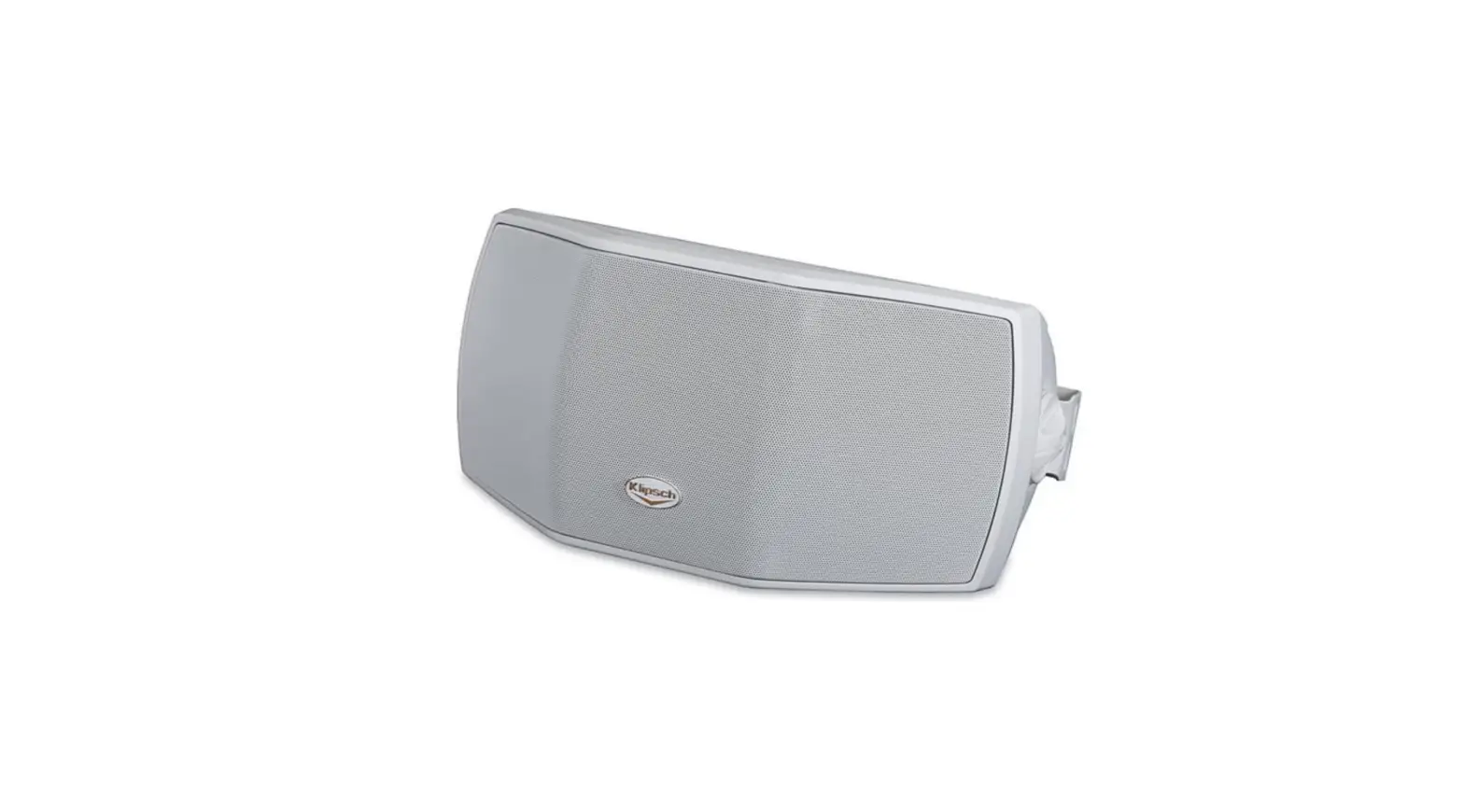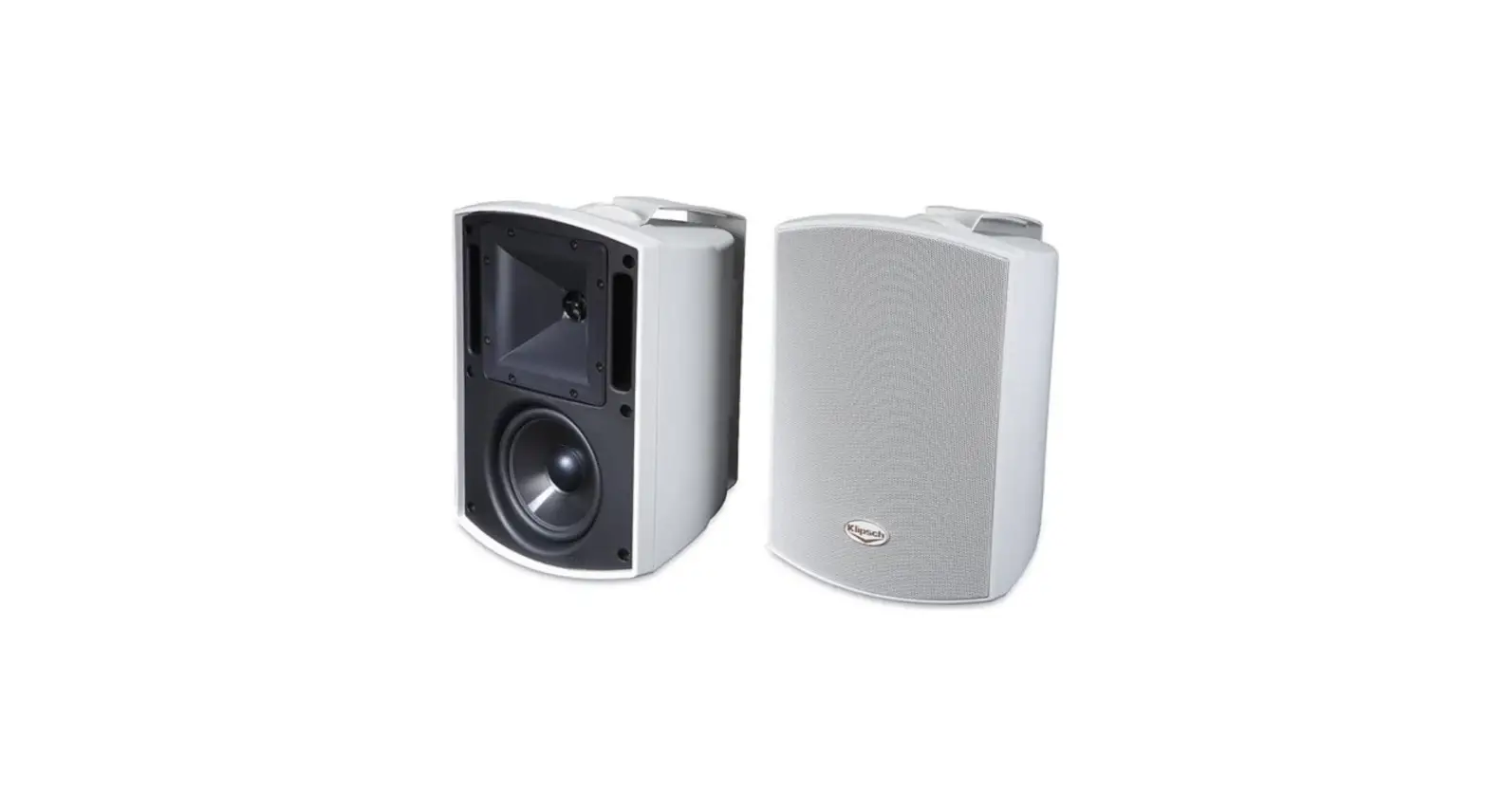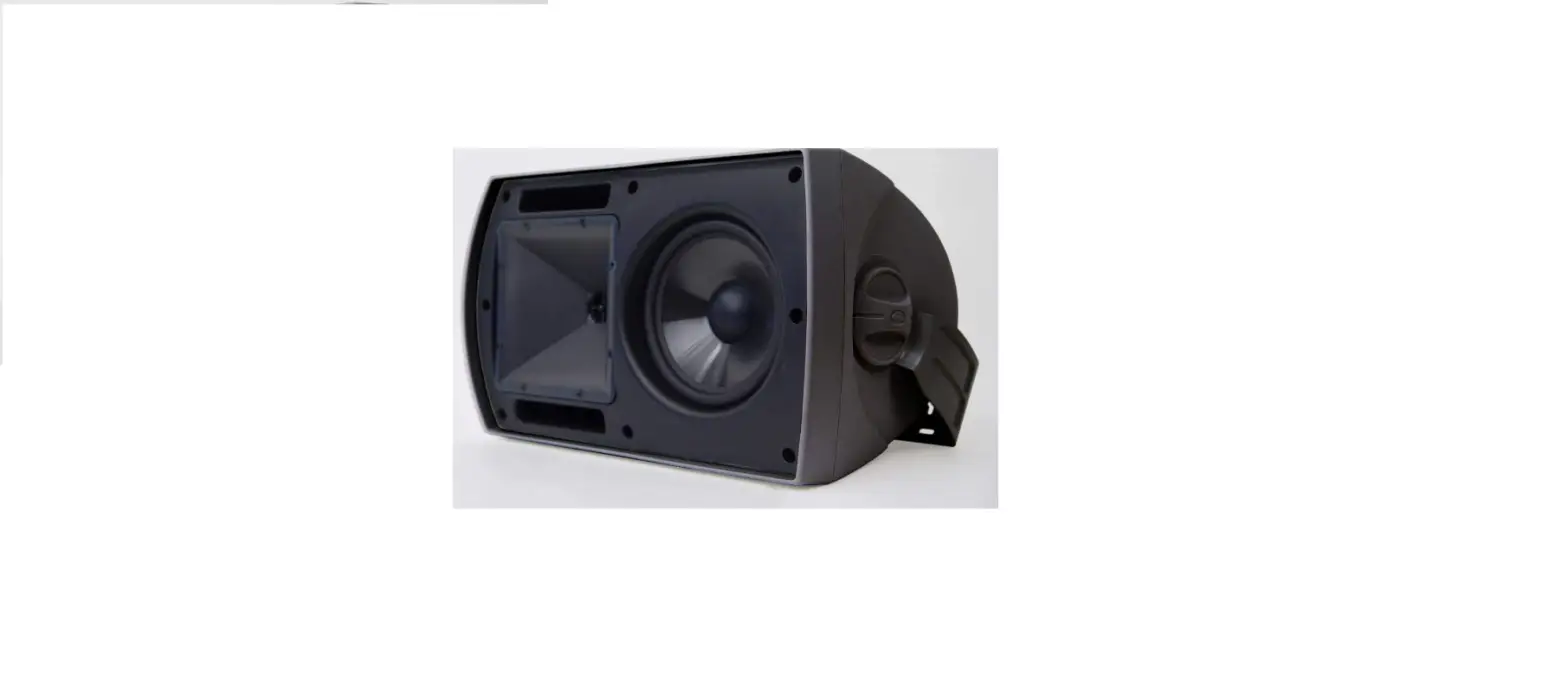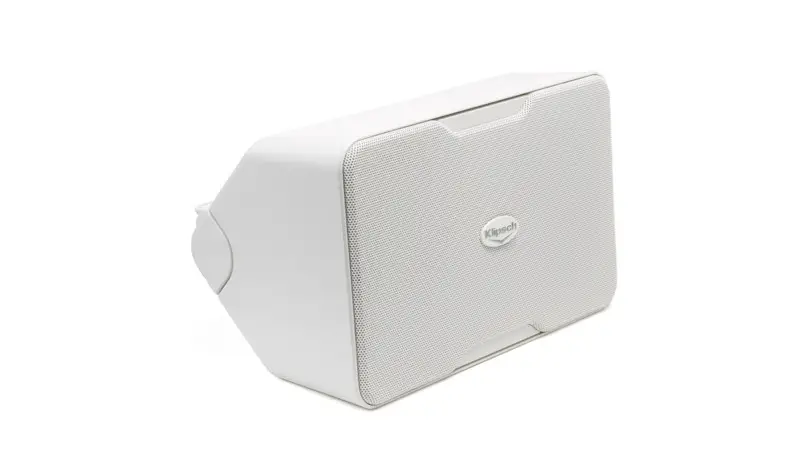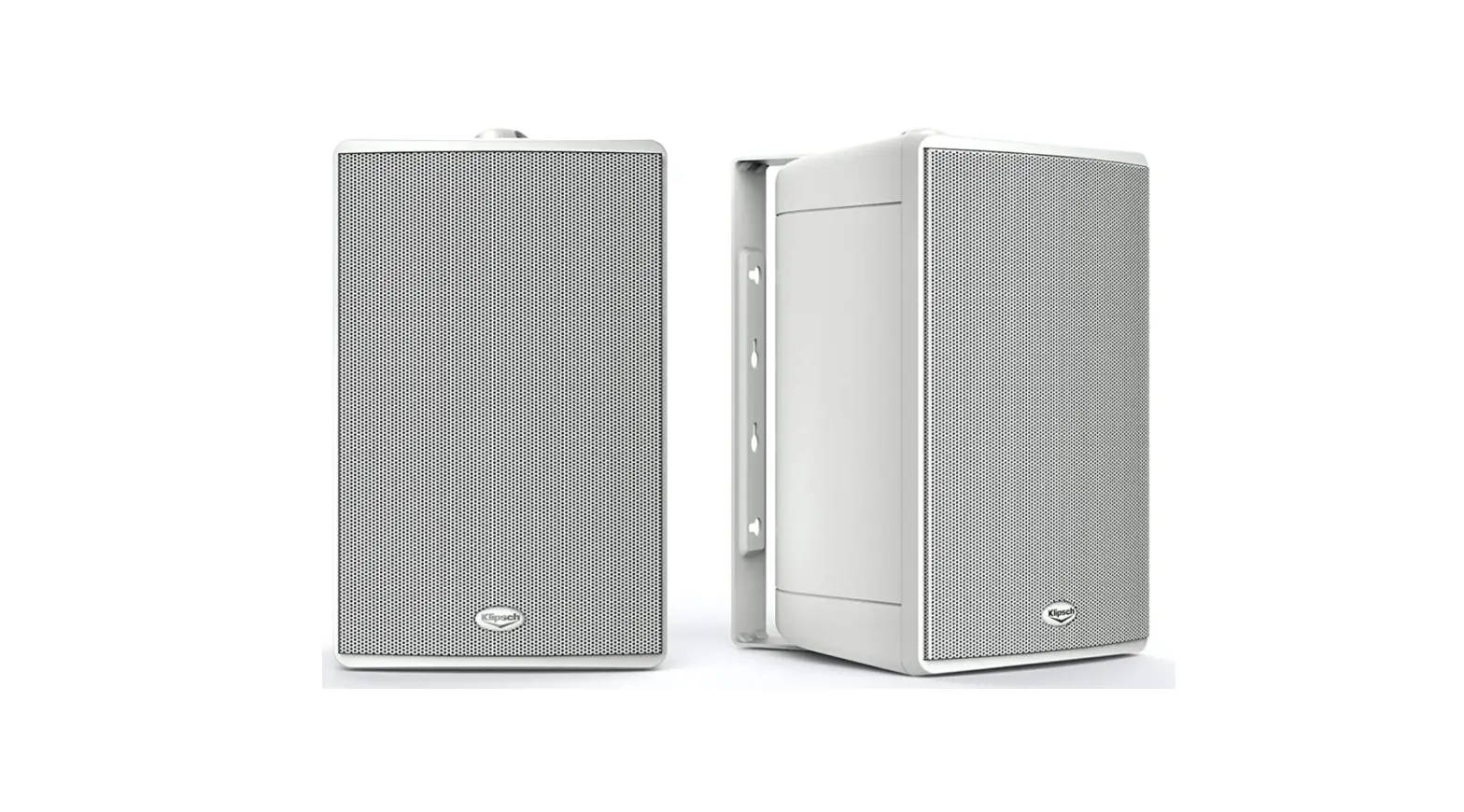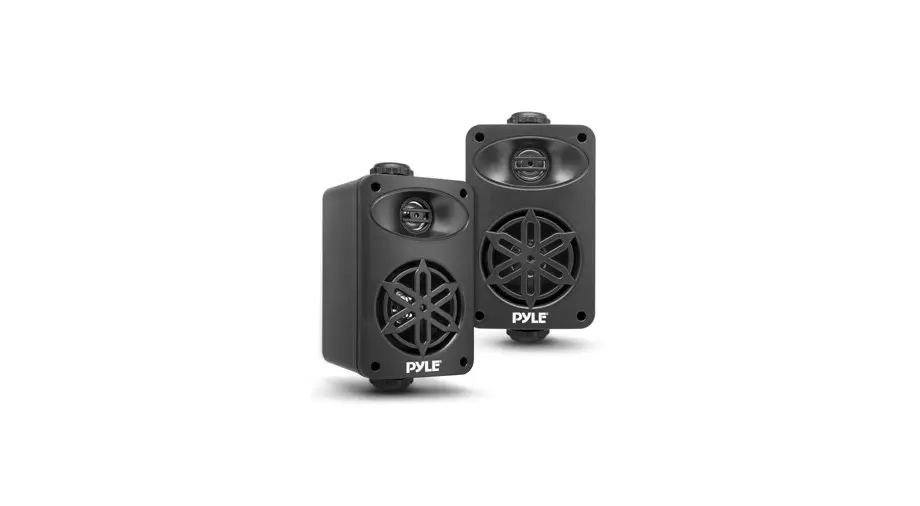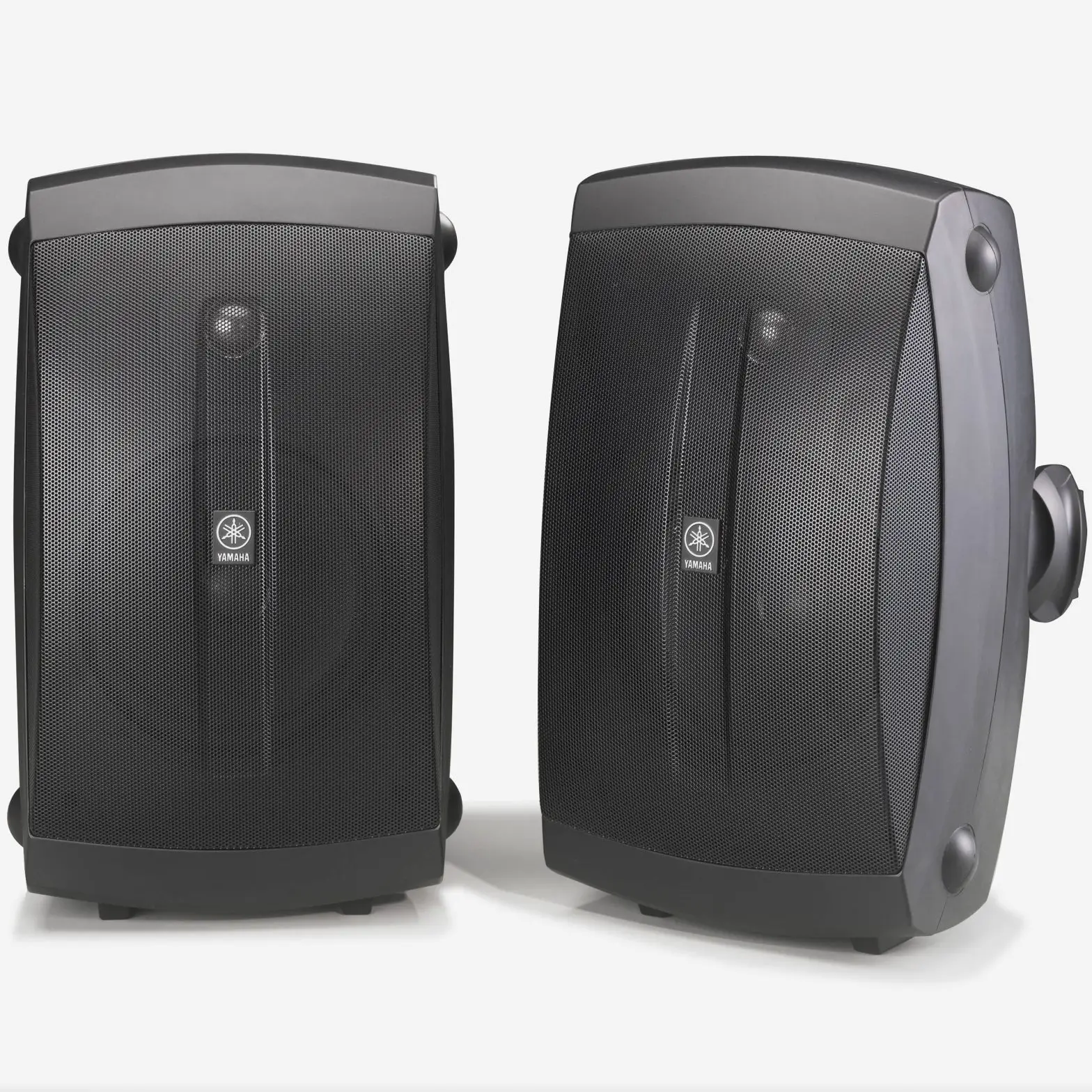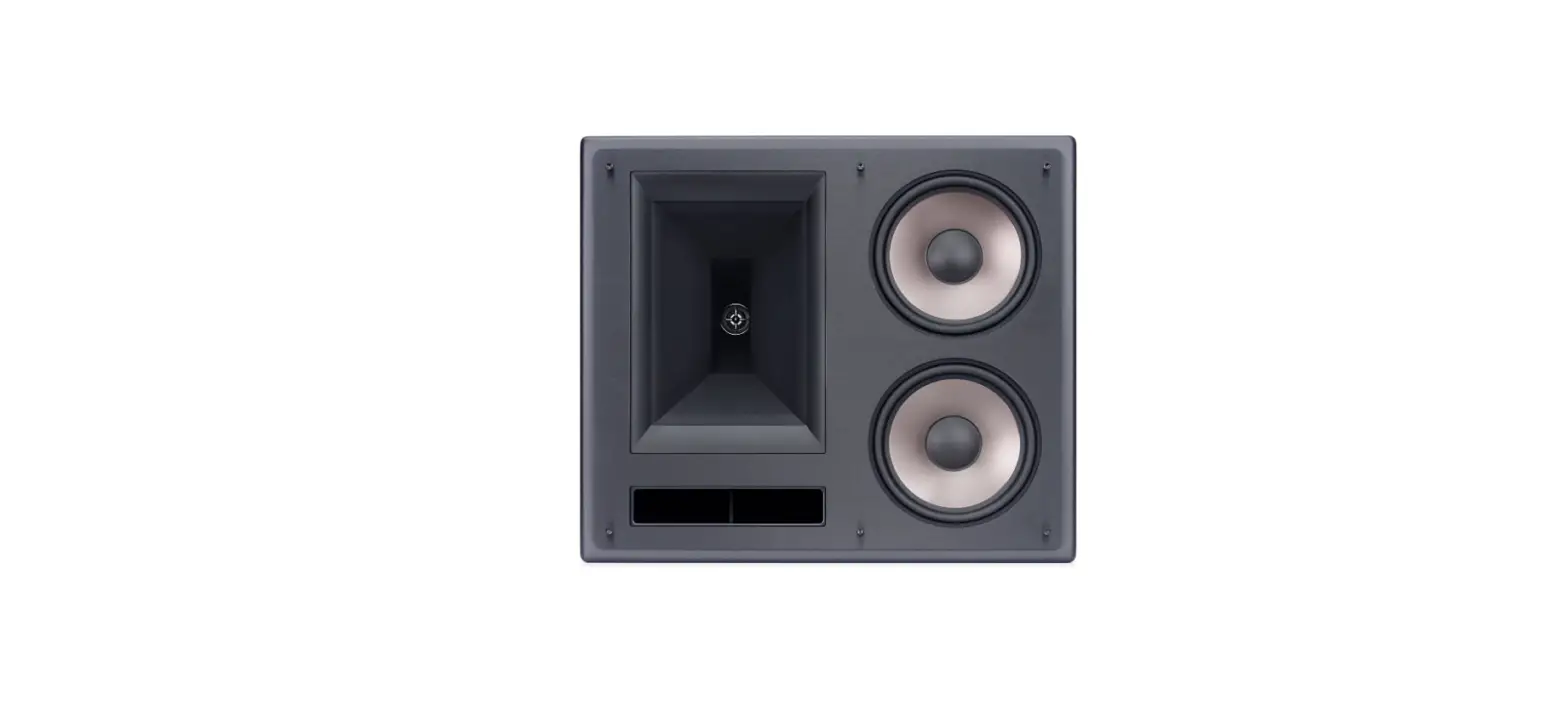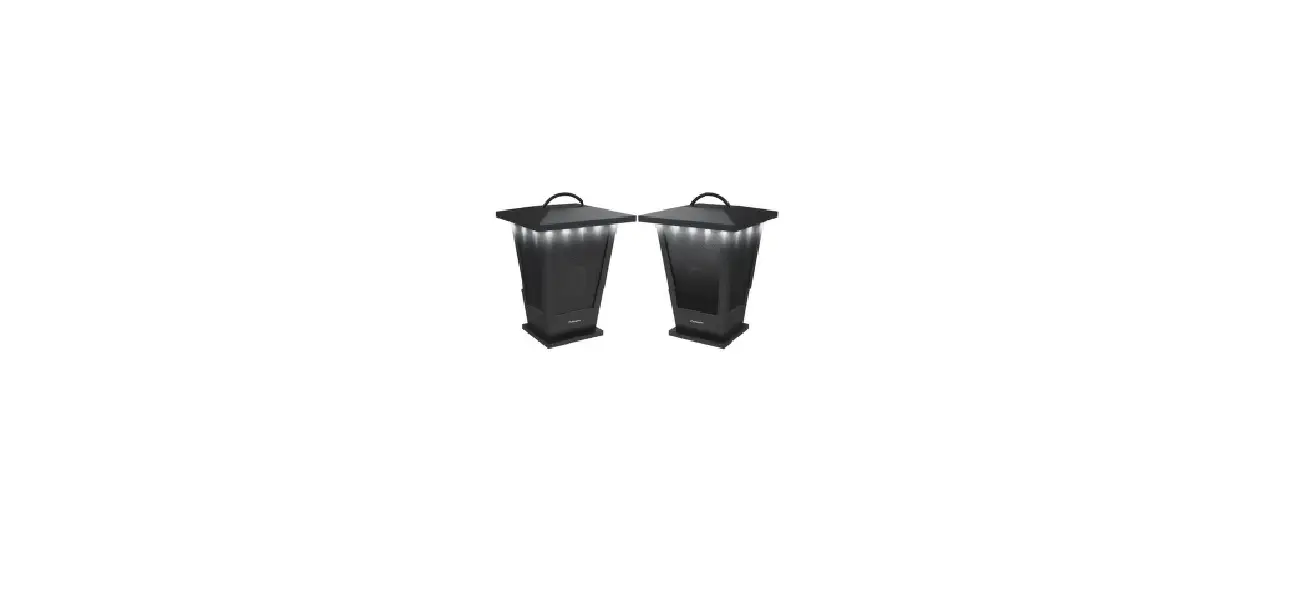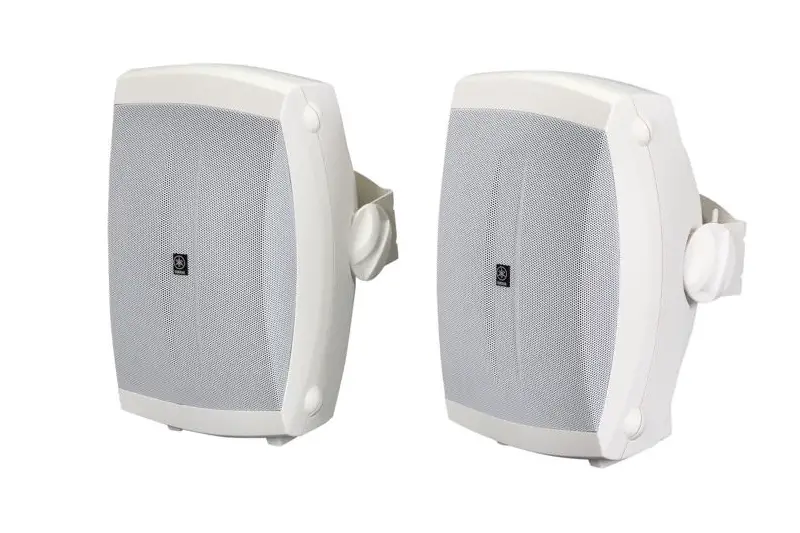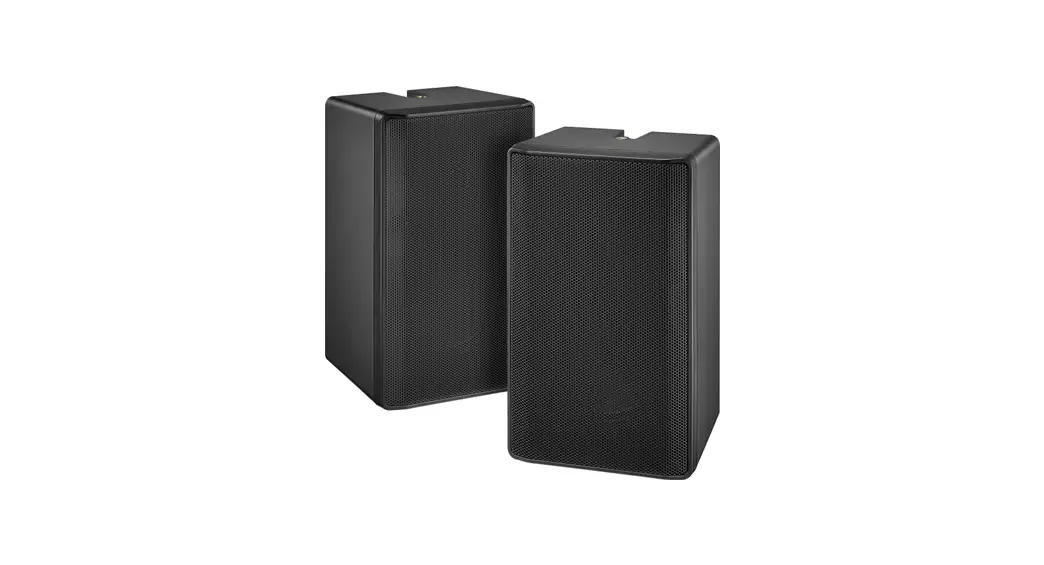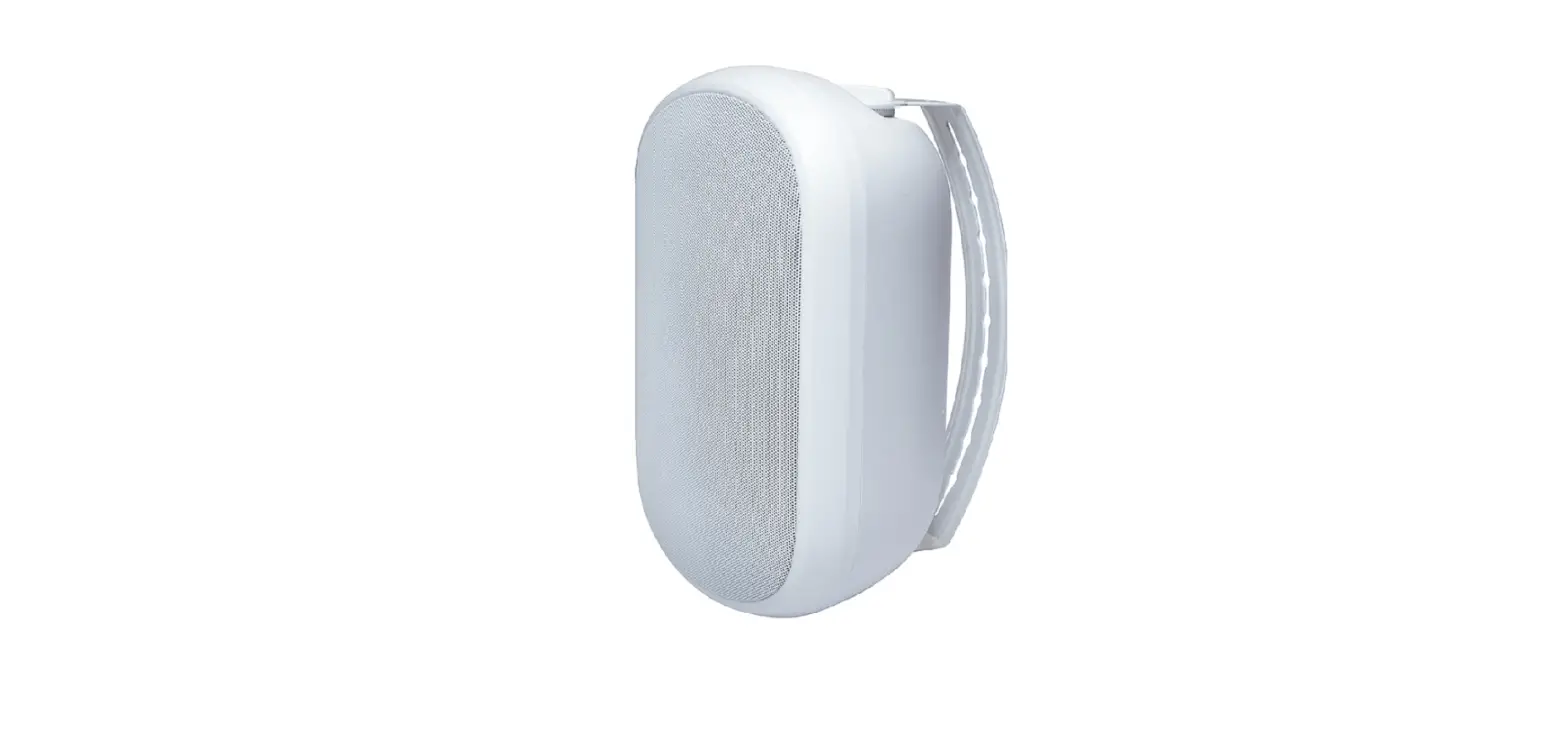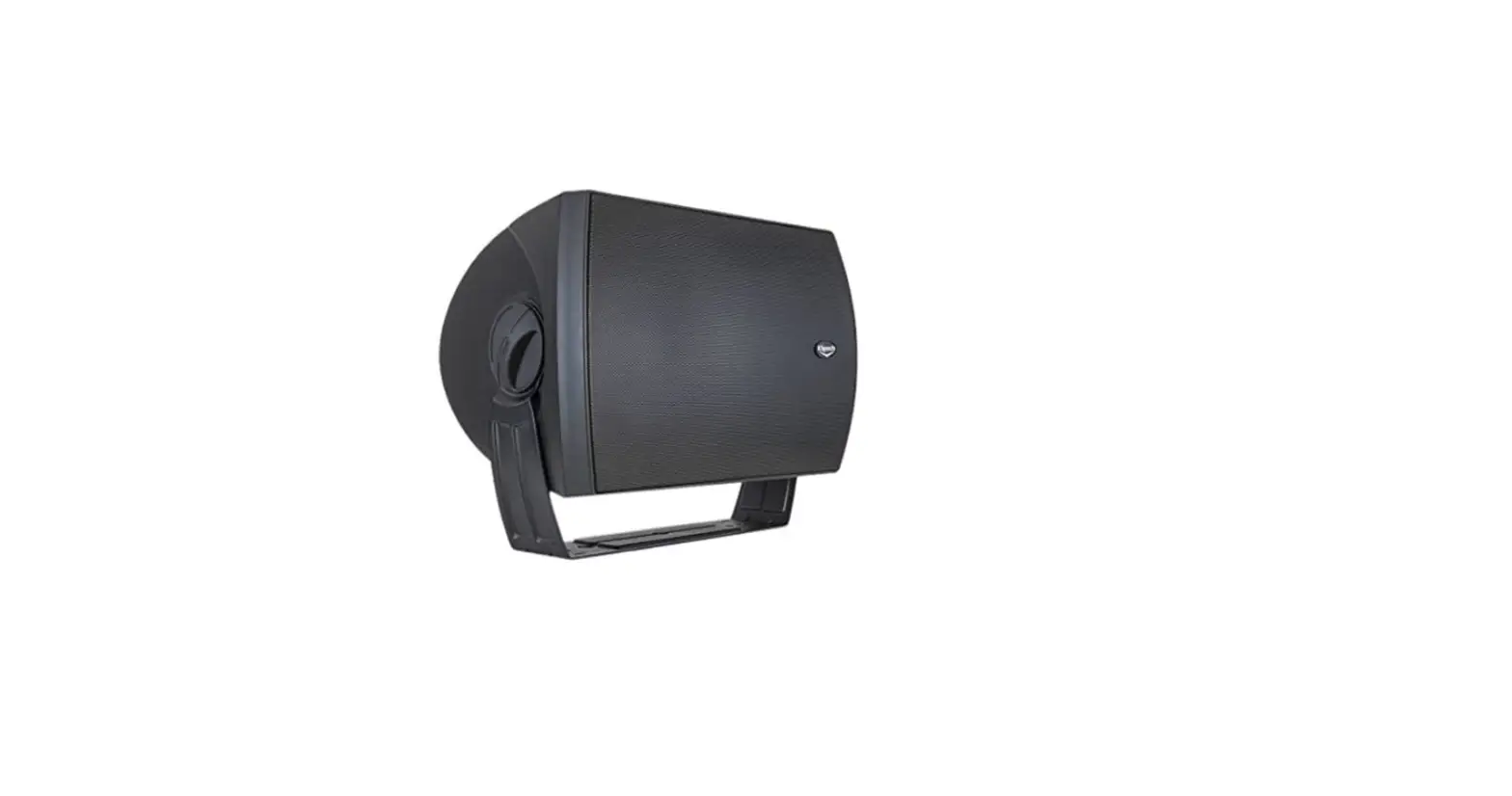

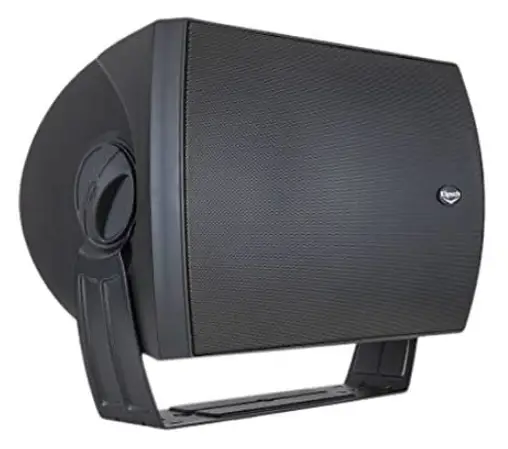
Klipsch CA-800T Indoor/Outdoor Speaker
SPECIFICATION
- FREQUENCY RESPONSE: 80Hz-20kHz ± 3dB
- SENSITIVITY: 94dB @ 1 watt/1 meter
- NOMINAL IMPEDANCE: 8 ohms
- CROSSOVER FREQUENCY: 2700Hz
- POWER HANDLING: 75W (300 watts peak)
- ENCLOSURE/MATERIAL TYPE: Sealed/ABS
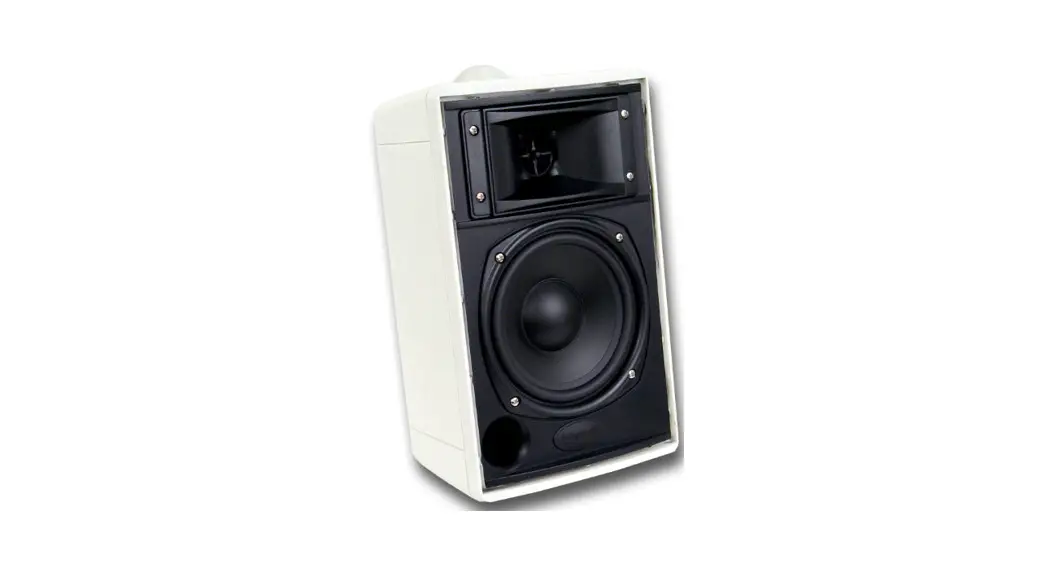
- DRIVE COMPONENTS: Two-way system using two 1″ (2.54cm) polymer dome tweeters with two 90˚x 90˚ Tractrix® Horns and one 5″ (12.7cm) IMG woofer
- WIRE GAUGE ACCOMMODATED: 12
- WEIGHT: 10 lbs. (4.54kg)
- HEIGHT: 8″ (20.32cm)
- WIDTH: 15.75″ (40cm)
- DEPTH: 8.75″ (22.23cm)
- FINISH: White enclosure and grille
INTRODUCTION
The AW-525 all-weather loudspeaker provides Klipsch-quality sound to patios, terraces, balconies, gardens, or poolside areas. It is clean, clear, and dynamic. Because of its high efficiency, this full-range model can produce substantially more sound per watt, making it suitable for usage in open areas.
IMPORTANT SAFETY INSTRUCTIONS
- READ these instructions.
- KEEP these instructions.
- HEED all warnings.
- FOLLOW all instructions.
- DO NOT use this apparatus near water.
- CLEAN ONLY with dry cloth.
- DO NOT block any ventilation openings. Install in accordance with the manufacturer’s instructions.
- DO NOT install near any heat sources such as radiators, heat registers, stoves, or other apparatus (including amplifiers) that produce heat.
- DO NOT defeat the safety purpose of the polarized or grounding type plug. A polarized plug has two blades with one wider than the other. A grounding type plug has two blades and a third grounding prong. The wider blade or the third prong are provided for your safety. If the provided plug does not fit into your outlet, consult an electrician for replacement of the obsolete outlet.
- PROTECT the power cord from being walked on or pinched, particularly at plugs, convenience receptacles, and the point where they exit from the apparatus.
- ONLY USE attachments/accessories specified by the manufacturer.
- USE only with a cart, stand, tripod, bracket, or table specified by the manufacturer, or sold with the apparatus. When a cart is used, use caution when moving the cart/apparatus combination to avoid injury from tip-over.
- UNPLUG this apparatus during lightning storms or when unused for long periods of time.
- REFER all servicing to qualified service personnel. Servicing is required when the apparatus has been damaged in any way, such as power-supply cord or plug is damaged, liquid has been spilled or objects have fallen into the apparatus, the apparatus has been exposed to rain or moisture, does not operate normally, or has been dropped.
This symbol indicates that there are important operating and maintenance instructions in the literature accompanying this unit.
This symbol indicates that dangerous voltage constituting a risk of electric shock is present within this unit.
WARNING: To reduce the risk of fire or electrical shock, do not expose this apparatus to rain or moisture.
WARNING: Voltages in this equipment are hazardous to life. No user-serviceable parts inside. Refer all servicing to qualified service personnel.
CAUTION: Changes or modifications not expressly approved by the manufacturer could void the user’s authority to operate this device.
ABOUT YOUR KLIPSCH PURCHASE
Thank you for your purchase of Klipsch outdoor loudspeakers. After reading this manual and connecting your system, you will hear the result of over 55 years of stringent engineering and class-leading research and development. Like all Klipsch products, your outdoor loudspeakers feature Klipsch Tractrix® Horn-loaded Technology—the guiding design for the first Klipschorn® developed in 1946 and for every product that has followed. Horn-loading allows your speakers to deliver high sensitivity, low distortion, flat frequency response and wide dispersion, which translates to unequaled power, detail and dynamics, the hallmarks of “The Klipsch Sound.” Please be sure to fill out the warranty card at the back of this manual or online at www.klipsch.com so we are better able to serve you. Again, thank you for choosing Klipsch and we hope that your speakers bring life to your music for many years.
KLIPSCH REFERENCE ALL-WEATHER LOUDSPEAKERS
(AW-400, AW-500, AW-525, AW-650, AW-500-SM models)
The Klipsch Reference All-Weather loudspeakers are two-way designs using a high-performance bass driver for the low frequencies. A Tractrix Horn with a 90˚ x 90˚ coverage pattern attached to a 1” diameter compression driver for clean and efficient reproduction of the high and midrange frequencies.
(AW-800-SW)
The AW-800-SW is an innovative approach that delivers low frequency sound in outdoor applications. This subwoofer has been designed to complement any of the Reference All-Weather two-way speakers and deliver strong bass response in a variety of applications. It incorporates both a low-pass crossover as well as a high-pass crossover. This ensures a seamless blend between the subwoofer and the models used for high-frequency reproduction and allows for simple wiring configurations.
Klipsch Reference All-Weather loudspeakers are constructed from UV-resistant, glass-rein-forced polypropylene and are remarkably durable against the elements. They can be paint-ed to match any trim or siding color.
PLACEMENT
The Reference All-Weather models are perfect for patios, decks, swimming pools, porches or any other place where exposure to the elements makes conventional loudspeaker usage unsuitable.
(AW-400, AW-500, AW-525, AW-650, AW-500-SM models)
To achieve the best performance from your speakers, place the pair on the same wall facing the listening area and space them six to fifteen feet apart. In the case of the
AW-500-SM, only one of these may be used in some installations. It is best to center the speaker on the listening area in these cases. When two are used, follow the same placement guidelines for the other models. For a higher quality stereo image, angle down, or toe in, the speakers toward the primary listening area. This is especially important in installations that place the speakers well above ear level. Some additional bass will result if you place the speakers in a corner or near a wall. This provides greater bass coupling due to the additional reflected energy from the walls.
(AW-800-SW)
The AW-800-SW can be installed in a large variety of locations due to bass frequencies being less directional than high frequencies. You will achieve better results if it is installed in a corner or near a wall where additional energy can be reflected from the walls.
WALL MOUNTING
Included with your speakers are “C” style mounting brackets constructed of weather-resistant, powder-coated zinc. These brackets attach to the speaker with the supplied low-profile knobs that thread onto the top and bottom studs protruding from the cabinet. This allows the speaker to be angled to the left or right when mounted vertically, or up and down when mounted horizontally.
After determining the desired location and orientation of your speakers, remove the bracket from the loudspeaker and use it as a template to mark the location of the mounting holes. Check the alignment of the holes with a torpedo level before drilling the pilot hole. Use #10-12 2.5” –3” long pan head screws to attach the bracket into a wall stud. Affix the speaker to the bracket with the supplied knobs. Be sure to leave enough clearance between the end of the bracket and any adjacent wall or ceiling for installation of the knobs.
If a wall stud is not available, use the appropriate type of drywall or masonry anchor to support the weight of the speaker, allowing for a generous safety margin. Please consult your dealer, custom installer or building contractor in these situations. You may also use an optional wall or ceiling mount that will fit the provided 3/8” – 16 inserts. Please see your authorized Klipsch dealer to see which model is right for you.
CONNECTIONS
Note: Proper connection of your speakers to your amplifier or receiver is vital to obtaining good sound quality. Please follow these directions carefully. Sloppy connections can cause amplifier malfunction or damage. We recommend that you use 16-gauge or heavier stranded copper wire. Use a lower gauge (heavier) wire for longer runs to reduce the amount of amplifier power lost due to the wire’s resistance.
BUT FIRST: TYPES OF CONNECTORS
Bare wire. Pull the two conductors apart for about an inch and strip approximately 1/4-inch of insulation from the end of each. (A wire stripper will simplify this, but you can use an ordinary pocket knife to cut around and through the insulation down to the wire.) Twist the strands of wire on each individual conductor tightly together. Loosen the nuts on a pair of binding posts until the holes through the metal posts are exposed, then insert the bare wire through the holes. Screw the nuts down finger-tight on the wire. Make sure that no strands of wire are touching from one binding post to the other or to any strands from the other conductor. Failure to observe this precaution at either end of the connection can result in amplifier malfunction or damage.
Pins. Many pre-made speaker cables are terminated with metal pins. Loosen the nuts on a pair of binding posts until the holes through the metal posts are exposed, then insert the pins through the holes. Screw the nuts down finger-tight on the pins — do not overtighten. Make sure that there is no metal-to-metal contact between the two pins or binding posts. Failure to observe this precaution at either end of the connection can result in amplifier malfunction or damage.
Spade lugs. Some speaker cables are terminated with U-shaped connectors called spade lugs. Loosen the nuts on a pair of binding posts and slip the spade lugs around the metal posts. Screw the nuts down finger-tight on the lugs and inspect to ensure they have remained firmly in place. Make sure that there is no metal-to-metal contact between the two lugs or binding posts. Failure to observe this pre-caution at either end of the connection can result in amplifier malfunction or damage.
OTHER TYPES OF SPECIALTY CONNECTORS ARE AVAILABLE TO FACILITATE HOOKING UP YOUR SPEAKERS. PLEASE CONSULT YOUR AUTHORIZED KLIPSCH DEALER FOR SUGGESTIONS AND FURTHER DETAILS.
SPEAKERS TO AMPLIFIER: KEEPING IT STRAIGHT
(AW-400, AW-500, AW-525, AW-650 models)
One of the most important things about hooking up your speakers is keeping them in the same polarity, or phase. If they are connected out of phase, bass and sound imaging will be degraded. The easiest way to ensure that your speakers are wired in phase is to always connect the positive and negative output terminals on your amplifier or receiver to the matching input terminals on your speakers: positive (“+”, color-coded red) to positive and negative (“–”, color-coded black) to negative. (See Figure 1.)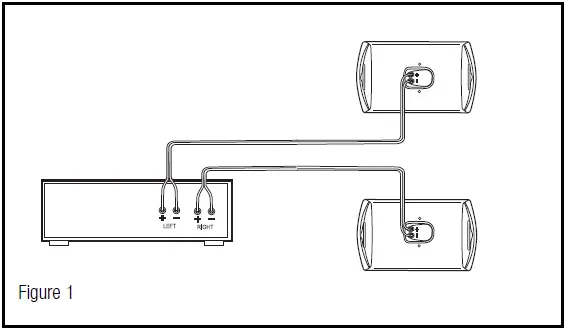
(AW-500-SM model)
The AW-500-SM can operate in two modes. When using one speaker, flip the switch to the “Stereo” position and connect the “Front” or “Main” left and right channels of your system’s power amplifier to both inputs (See Figure 2A). When using more than one AW-500-SM, flip the switch to the “Mono” position and connect either output of your system’s power amplifier to either input cup (See Figure 2B).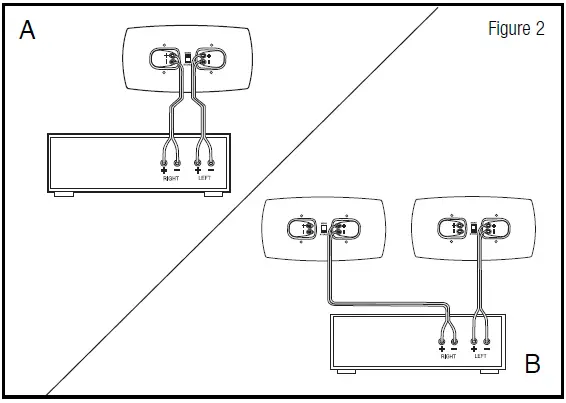
(AW-800-SW)
The AW-800-SW can operate in two modes. If the amplifier you are using is mono, flip the switch to the left and connect the output of your system’s amplifier to either of the two input connectors (See Figure 3A). For stereo use, flip the switch to the right and connect the output of your system’s amplifier to both input connectors (See Figure 3B).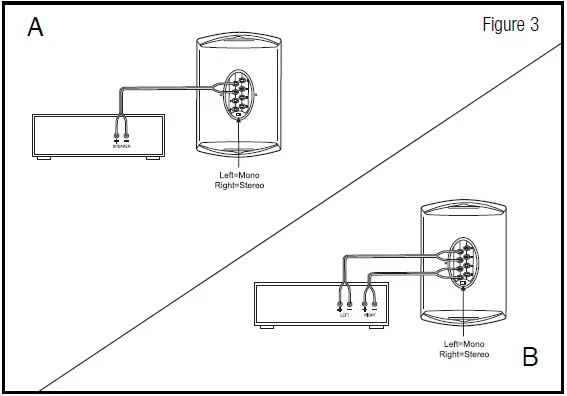
OUTDOOR SPEAKERS
You can then connect two all-weather series speakers to the right and left outputs of the AW-800-SW (See Figure 4).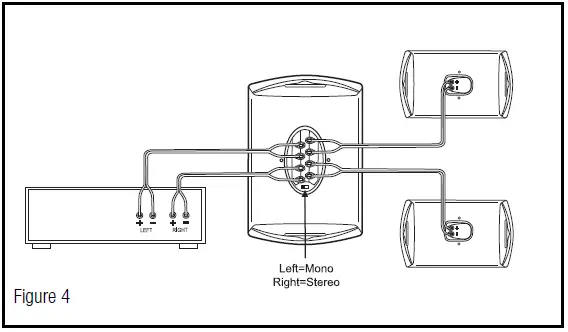
An optional Weatherization and Safety kit is available from your Klipsch dealer. You may want to install this in instances where the speaker connections are directly exposed to the elements. This kit also includes a security cable that provides a secondary measure of safety.
PAINTING
The grille and cabinet of your speakers may be painted. For best results, lightly sand all surfaces to be painted (cabinet and grille) with 300-400 grit sandpaper. Wash these sur-faces with a moistened cloth dipped into a mild detergent to remove any fingerprints or grease. Allow speaker to dry before painting.
Care must be taken to mask off the front of the speaker to protect the tweeter, woofer and front panel form over spray. This will maintain the existing uniform dark color behind the grille and protect the woofer and tweeter from being damaged by the paint. Affix masking tape to the inboard wall of the grille groove and attach plastic or newspaper to the tape to cover the entire front panel of the speaker. Also, before painting, mask the speaker wire binding posts on the rear of the cabinet to preserve their color-coding and conductivity. Make sure that the black and red knobs are screwed down to cover the threaded metal shafts and wrap the knobs securely in masking tape.
Remove the grille before painting. For best results, use several light coats of paint instead of one heavy coat. This will help prevent the perforations in the grille from becoming clogged with paint.
LIMITED LIFETIME WARRANTY FOR KLIPSCH-BRANDED IN-WALL, IN-CEILING AND OUTDOOR SPEAKERS
Klipsch warrants to the original retail purchaser that this product is to be free from defective materials and workmanship for the life of the product, if it is properly used and maintained. If this product proves defective in either material or workmanship, Klipsch, at its option, will (a) repair the product, or (b) replace the product, at no charge for parts or labor. If the product model is no longer available and cannot be repaired effectively or replaced with an identical model, Klipsch at its sole option may replace the unit with a current model of equal or greater value. In some cases, modification to the mounting surface may be required where a new model is substituted. Klipsch assumes no responsibility or liability for such modification. To obtain a repair or replacement under the terms of this warranty, please contact our customer service group at 1-800-KLIPSCH. You will be required to submit a copy of the original receipt via fax or email. The receipt must reflect that you are the original purchaser, the product was bought from an authorized Klipsch retailer, and the product is still within warranty. You will be issued a return authorization number (RA#) and asked to ship the defective product, together with proof of purchase and RA#, prepaid insured to the address set forth Klipsch 137 Heampstead #278 Hope, AR 71801. Freight collect shipments will be refused. Risk of loss or damage in transit is to be borne by the purchaser. Once Klipsch receives the defective product, a repair or replacement order will be initiated.
Limitations:
- This limited warranty does not cover failure of the product resulting from improper installation, misuse, abuse, accident, neglect, mishandling, or wear from ordinary use or environmental deterioration.
- This limited warranty does not cover cosmetic damage, including paint damage, or consequential damage to other components or premises which may result for any reason from the failure of the product.
- This limited warranty is null and void for products not used in accordance with Klipsch’s instructions.
- This limited warranty is null and void for products with altered or missing serial numbers and for products not purchased from an authorized dealer.
- This limited warranty terminates if you sell or otherwise transfer this product to another party.
THIS WARRANTY GIVES YOU SPECIFIC LEGAL RIGHTS, AND YOU MAY ALSO HAVE OTHER RIGHTS WHICH VARY FROM STATE TO STATE, JURISDICTION TO JURISDICTION OR COUNTRY TO COUN-TRY. KLIPSCH’S RESPONSIBILITY FOR MALFUNCTIONS AND DEFECTS IN HARDWARE IS LIMITED TO REPLACEMENT OR REPAIR AS SET FORTH IN THIS WARRANTY STATEMENT. FOR CANADIAN CUSTOMERS, KLIPSCH DISCLAIMS ALL OTHER WARRANTIES AND CONDITIONS, EXPRESS OR IMPLIED, STATUTORY OR OTHERWISE, FOR THE PRODUCT. FOR U.S. CUSTOMERS, ALL EXPRESS AND IMPLIED WARRANTIES FOR THE PRODUCT, INCLUDING BUT NOT LIMITED TO ANY IMPLIED WARRANTIES OF MERCHANTABILITY AND FITNESS FOR A PARTICULAR PURPOSE ARE LIMITED IN TIME TO THE TERM OF THIS WARRANTY. SOME STATES, JURISDICTIONS OR COUNTRIES DO NOT ALLOW THE EXCLUSION OF CERTAIN IMPLIED WARRANTIES OR CONDITIONS, OR LIMITA-TIONS ON HOW LONG AN IMPLIED WARRANTY OR CONDITIONS LASTS, SO THIS LIMITATION MAY NOT APPLY TO YOU. KLIPSCH DOES NOT ACCEPT LIABILITY FOR SPECIAL, INDIRECT, CON-SEQUENTIAL OR INCIDENTAL DAMAGES, INCLUDING WITHOUT LIMITATION, ANY LIABILITY FOR THIRD PARTY CLAIMS AGAINST YOU FOR DAMAGES OR FOR PRODUCTS NOT BEING AVAILABLE FOR USE. THE MAXIMUM LIABILITY FOR WHICH KLIPSCH MAY BE RESPONSIBLE WILL BE NO MORE THAN THE AMOUNT YOU PAID FOR THE PRODUCT THAT IS THE SUBJECT OF THE CLAIM. SOME STATES, JURISDICTIONS OR COUNTRIES DO NOT ALLOW THE EXCLUSION OR LIMITATION OF SPECIAL, INDIRECT, INCIDENTAL OR CONSEQUENTIAL DAMAGES, SO THE ABOVE LIMITATION OR EXCLUSION MAY NOT APPLY TO YOU.
WARRANTY OUTSIDE THE U.S. AND CANADA
The Warranty on this product if it is sold to a consumer outside of the United States and Canada shall comply with applicable law. To obtain any applicable warranty service, please contact the dealer from which you purchased this product, or the distributor that supplied this product.
ARCHITECTURAL SPEAKERS
FREQUENTLY ASKED QUESTIONS
What mounting hardware is included with this speaker?
A C-style mounting bracket and stainless-steel hardware will be included with the AW-500-SM.
Are Klipsch speakers high end?
For more than 50 years, Klipsch has been a leader in the high-end speaker industry, and its products are renowned for their excellent sound, high quality, and dependability.
Do movie theaters use Klipsch speakers?
The powerful, intricate soundtracks of today’s demanding films must be played back on the highest caliber, horn-loaded speakers, according to Mulhearn. “Perhaps that explains why Klipsch cinema equipment are installed in one out of every two new theatres in North and South America.
Can indoor speakers be used outdoors?
Although indoor speakers can be used outside, they are more susceptible to weather damage than equipment built for outdoor usage. Make sure to bring indoor speakers inside when not in use if you use them outside.
How many watts do I need for outdoor speakers?
Outdoor speakers have wattages that range from 60 to 300 watts. For settings under 300 square feet, two 60-watt speakers spaced 20 feet apart offer enough coverage.
What are the 4 types of speakers?
Traditional loudspeakers, in-wall/ceiling speakers, soundbars, and subwoofers are the four basic speaker kinds now available in homes. Each variety of speaker has a distinct function and is advantageous in certain contexts.
Can outdoor speakers stay out in winter?
During the cold, the parts within your outdoor speaker may crack. The components could be harmed if you use the speakers and crank up the volume. Never turn on the speakers when it is below freezing. Use ought to be kept to a minimum below 50 degrees Fahrenheit.
Do I need an amplifier for outdoor speakers?
The majority of outdoor speakers are passive devices, which means they will require power because they lack built-in amplification.
Does more watts mean better sound?
Yes, it is true that speakers play louder and clearer at higher power levels (watts). However, slight variations in power don’t produce much of an audible difference. The power would need to double in order to perceptibly hear a change (a 3dB increase).
Which sound quality is best?
The ideal audio file format for sound quality is lossless. AIFF, WAV, or FLAC are a few of these. Because they are as good as or better than CD-quality, these files are referred to as “hi-res.”
Is 2 way or 4-way speakers better?
Two parts, a tweeter for high frequency and a mid-range, make up a two-way speaker. The 4-way speaker is slightly better for high range sound than the 2 way since it has a bass and a mid-range component in addition to 2 tweeters, but it is not significantly better overall.
Where should you not put speakers?
Walls also reflect sound. At least two to three feet should separate speakers from the closest wall (especially if your speaker is in a corner). Many speakers have bass ports that face the back. A rear bass port that is too close to a wall will reflect sound waves, blurring time.
What’s the difference between indoor and outdoor speakers?
An indoor speaker and an outdoor speaker differ mostly in their designs. Outdoor systems must endure, withstanding weather conditions like rain, hail, snow, and errant kickballs. That implies that the materials employed to build them must be robust.