Variable Speed Pump
Product Information
The Variable Speed Pump is a high-performance pump designed for
various applications. It offers adjustable speed settings to
optimize water flow and energy efficiency. This user manual
provides detailed instructions on installation, operation,
maintenance, servicing, troubleshooting, and replacement parts.
Safety Instructions
Before using the Variable Speed Pump, please read and follow all
safety instructions provided in the manual. These instructions
ensure safe and proper usage of the product.
Pump Overview
The Variable Speed Pump consists of a control panel and a
powerful pump. The control panel allows you to adjust the speed
settings and monitor the operation of the pump. The pump is
designed for efficient water circulation in various systems.
Controller Overview
The controller is an integral part of the Variable Speed Pump.
It provides a user-friendly interface for controlling the pump’s
speed and accessing various settings and features.
Control Panel Overview
The control panel displays important information about the
pump’s operation, such as current speed, flow rate, and system
status. It also includes buttons for adjusting the speed settings
and navigating through the menu options.
The keypad on the control panel allows you to navigate through
the menu options and adjust the pump’s settings. Use the arrow keys
to move up, down, left, or right, and press the enter button to
select an option.
Installation
Proper installation is crucial for the optimal performance of
the Variable Speed Pump. Follow the step-by-step instructions
provided in the manual to ensure a safe and accurate installation.
Make sure to comply with all local regulations and guidelines.
Operating the Pump
To operate the Variable Speed Pump:
- Ensure that the power supply is connected and turned on.
- Press the power button on the control panel to turn on the
pump. - Use the arrow keys to adjust the speed settings according to
your requirements. - Press the enter button to confirm the selected speed.
- The pump will start running at the desired speed.
Speed Priorities
The Variable Speed Pump allows you to set speed priorities for
different operating conditions. Refer to the manual for
instructions on how to configure speed priorities based on your
specific needs.
Operating the Pump While Running
You can adjust the speed settings of the pump while it is
running. Use the arrow keys to increase or decrease the speed as
desired. Press the enter button to confirm the new speed
setting.
Maintenance
Regular maintenance is essential to keep the Variable Speed Pump
in optimal condition. Follow the maintenance instructions provided
in the manual to ensure proper cleaning, inspection, and
lubrication of the pump components. Regularly check for any signs
of wear or damage and address them promptly.
Servicing
If servicing is required, refer to the manual for detailed
instructions on how to perform various servicing tasks. Only
qualified personnel should perform servicing procedures to ensure
safety and maintain product warranty.
Troubleshooting
If you encounter any issues with the Variable Speed Pump, refer
to the troubleshooting section in the manual. It contains a list of
common errors and alarms, along with possible solutions to resolve
them. Follow the provided guidelines to troubleshoot and resolve
any problems effectively.
Errors and Alarms
The Variable Speed Pump is equipped with an error and alarm
system to alert users of any malfunctions or abnormal conditions.
The manual provides a comprehensive list of error codes and alarm
indications, along with recommended actions to address them.
Replacement Parts
In case of any component failure or damage, refer to the manual
for a list of available replacement parts. It provides detailed
information on how to identify and replace faulty components for
proper functioning of the Variable Speed Pump.
Pump Performance Curves
The manual includes pump performance curves that provide
detailed information about the pump’s flow rate, pressure, and
efficiency at different speed settings. Refer to these curves to
understand the pump’s capabilities and select the optimal speed for
your specific application.
Pump Dimensions
The manual provides accurate dimensions of the Variable Speed
Pump, including height, width, and depth. Use these dimensions for
proper placement and installation of the pump in your system.
Limited Warranty
The Variable Speed Pump comes with a limited warranty. Refer to
the manual for detailed information on the warranty coverage,
terms, and conditions. Make sure to follow the warranty guidelines
for any claims or repairs.
INSTALLATION AND USER’S INSTRUCTIONS
VARIABLE SPEED PUMP
1
TABLE OF CONTENTS
SAFETY INSTRUCTIONS ……………………………………………………………………………………………………………………………….. 3 PUMP OVERVIEW …………………………………………………………………………………………………………………………………………… 6
Pump Overview …………………………………………………………………………………………………………………………………………………………………………………6 General Features………………………………………………………………………………………………………………………………………………………………………………………………….. 6 Controller Features ………………………………………………………………………………………………………………………………………………………………………………………………. 6
Controller Overview ………………………………………………………………………………………………………………………………………………………………………….7
CONTROL PANEL OVERVIEW ……………………………………………………………………………………………………………………… 7
Keypad Navigation……………………………………………………………………………………………………………………………………………………………………………8
INSTALLATION ……………………………………………………………………………………………………………………………………………….. 8
Location ………………………………………………………………………………………………………………………………………………………………………………………………8 Piping ………………………………………………………………………………………………………………………………………………………………………………………………….. 9 Fittings and Valves……………………………………………………………………………………………………………………………………………………………………………9 Electrical Requirements ……………………………………………………………………………………………………………………………………………………………….. 10 Wiring Overview and Installation………………………………………………………………………………………………………………………………………………… 10
OPERATING THE PUMP ……………………………………………………………………………………………………………………………….11
Setting the Clock……………………………………………………………………………………………………………………………………………………………………………. 11 Using the Default Schedule…………………………………………………………………………………………………………………………………………………………. 12 Custom Schedules and Quick Clean ………………………………………………………………………………………………………………………………………… 12
Speed Priorities ……………………………………………………………………………………………………………………………………………………………………………………………………14 Operating the Pump While Running ………………………………………………………………………………………………………………………………………….. 15
MAINTENANCE ………………………………………………………………………………………………………………………………………………15
Pump Strainer Basket…………………………………………………………………………………………………………………………………………………………………… 15 Cleaning the Pump Strainer Basket ………………………………………………………………………………………………………………………………………….. 15 Winterizing ………………………………………………………………………………………………………………………………………………………………………………………. 16
SERVICING ……………………………………………………………………………………………………………………………………………………..17
Electric Motor Care ……………………………………………………………………………………………………………………………………………………………………….. 17 Shaft Seal Replacement………………………………………………………………………………………………………………………………………………………………. 17 Pump Disassembly ……………………………………………………………………………………………………………………………………………………………………….. 18 Pump Reassembly ………………………………………………………………………………………………………………………………………………………………………… 18 Restart Instructions ……………………………………………………………………………………………………………………………………………………………………….. 19
TROUBLESHOOTING…………………………………………………………………………………………………………………………………….20
Errors and Alarms …………………………………………………………………………………………………………………………………………………………………………. 21
REPLACEMENT PARTS………………………………………………………………………………………………………………………………..22
Pump Performance Curves …………………………………………………………………………………………………………………………………………………………. 23 Pump Dimensions …………………………………………………………………………………………………………………………………………………………………………. 23
Limited Warranty……………………………………………………………………………………………………………………………………………25
2
SAFETY INSTRUCTIONS
IMPORTANT NOTICE
This manual offers installation and operation instructions of this pump for user. This manual includes important information about correct installation, operation and safe use of this pump. This manual should be left to the owner of the pump or near the pump after installation. This manual contains important information to help you with operation and maintenance.
Read and follow all safety instructions before installing the pump.
WARNING
WARNING indicates a hazardous situation which, if not avoided, could result in death or serious injury.
! CAUTION
CAUTION indicates a hazardous situation which, if not avoided, could result in minor or moderate injury.
! NOTICE
NOTICE indicates special instructions not related to hazards.
Do not permit children to operate this pump. To reduce the risk of property damage or injury, do not attempt to change the backwash (multiport, slide, or full
flow) valve position with the pump running.
RISK OF ELECTRIC SHOCK, FIRE, PERSONAL INJURY, OR DEATH. Connect only to a branch circuit that is
protected by a ground-fault circuit interrupter (GFCI). Contact a qualified electrician if you cannot verify that the circuit is protected by a GFCI. A GFCI should be provided by the installer and should be tested on a routine basis. To test the GFCI, push the test button. The GFCI should interrupt power. Push the reset button. Power should be restored. If the GFCI fails to operate in this manner, the GFCI is defective. If the GFCI interrupts power to the pump without the test button being pushed, a ground current is flowing, indicating the possibility of electrical shock. Do not use the device. Disconnect the device and have the problem corrected by a qualified service representative before using.
3
General Warnings
The control unit on the pool pump motor contains hazardous voltage. Never open the inside of the drive motor enclosure.
The pump is not submersible. The pump is capable of high flow rates. Be careful when installing and programming to limit pumps performance
potential with questionable or old equipment. Code requirements for electrical connection differ from country to country, state to state, as well as local
municipalities. Install equipment in accordance with the National Electrical Code and all applicable local codes and ordinances. Always disconnect electrial power at the fuse box or circuit breaker panel before handling electrical connections or performing maintenance on this pump.
IMPORTANTFAILURE TO FOLLOW ALL INSTRUCTIONS AND WARNINGS CAN RESULT IN SERIOUS BODILY INJURY OR DEATH. THIS PUMP SHOULD BE INSTALLED AND SERVICED ONLY BY A QUALIFIED POOL SERVICE PROFESSIONAL INSTALLERS, POOL OPERATORSAND OWNERS MUST READ THESE WARNINGS AND ALL INSTRUCTIONS IN THE OWNER’S MANUAL BEFORE USING THIS PUMP. THESE WARNINGS AND THE OWNER’S MANUAL MUST BE LEFT WITH THE POOL OWNER.
RISK OF SUCTION ENTRAPMENT HAZARD, WHICH, IF NOT AVOIDED, CAN RESULT IN SERIOUS INJURY OR DEATH: STAY OFF THE MAIN DRAINANDAWAY FROMALL SUCTION OUTLETS! THIS PUMP PRODUCES HIGH LEVELS OF SUCTION AND CREATES A STRONG VACUUM AT THE MAIN DRAIN AT THE BOTTOM OF THE BODY OF WATER. THIS SUCTION IS SO STRONG THAT IT CAN TRAP ADULTS OR CHILDREN UNDER WATER IF THEY COME IN CLOSE PROXIMITY TO A DRAIN OR A LOOSE OR BROKEN DRAIN COVER OR GRATE.
THE USE OF UNAPPROVED COVERS OR ALLOWING USE OF THE POOL OR SPA WHEN COVERS ARE MISSING, CRACKED OR BROKEN CAN RESULT IN BODY OR LIMB ENTRAPMENT, HAIR ENTANGLEMENT, BODY ENTRAPMENT, EVISCERATION AND/OR DEATH.
The suction at a drain or outlet can cause:
Hair Entanglement: Hair can be entangled in suction outlet cover.
Body Suction Entrapment: A differential pressure applied to a large portion of the body or limbs can reuslt in an
entrapment.
Disembowelment: A negative pressure applied directly to the intestines through an unprotected suction outlet
sump or suction outlet cover which is damaged, broken, cracked, or unsecured can result in disembowelment.
Mechanical Entrapment: When jewelry, hair decorations, finger, toe or knuckle are sucked into an opening of an
outlet or drain cover. This hazard occurs when the drain cover is missing, broken, loose, cracked, or not properly secured.
In order to reduce the risk of injury caused by the danger of suction ENTRAPMENT HAZARD: Each suction cover must be installed at least three (3′) feet apart, as measured from the nearest point to nearest
point.
Regularly inspect all covers for cracks, damage and advanced weathering. Failure to keep suction outlet components clear of debris, such as leaves, dirt, hair, paper and other material can
result in an increased potential for suction entrapment.
Replace drain covers as necessary. Installation of a vacuum release or vent system, which relieves entrapping suction, is recommended.
4
IMPORTANT: DANGEROUS PRESSURE: STAND CLEAR OF PUMP AND FILTER DURING START UP When pressure testing a system with water, air is often trapped in the system during the filling process. This air will compress when the system is pressurized. Should the system fail, this trapped air can propel debris at a high speed and cause injury. Every effort to remove trapped air must be taken, including opening the bleed valve on the filter and loosening the pump basket lid while filling the pump.
SAVE THESE INSTRUCTIONS
5
PUMP OVERVIEW
Pump Overview
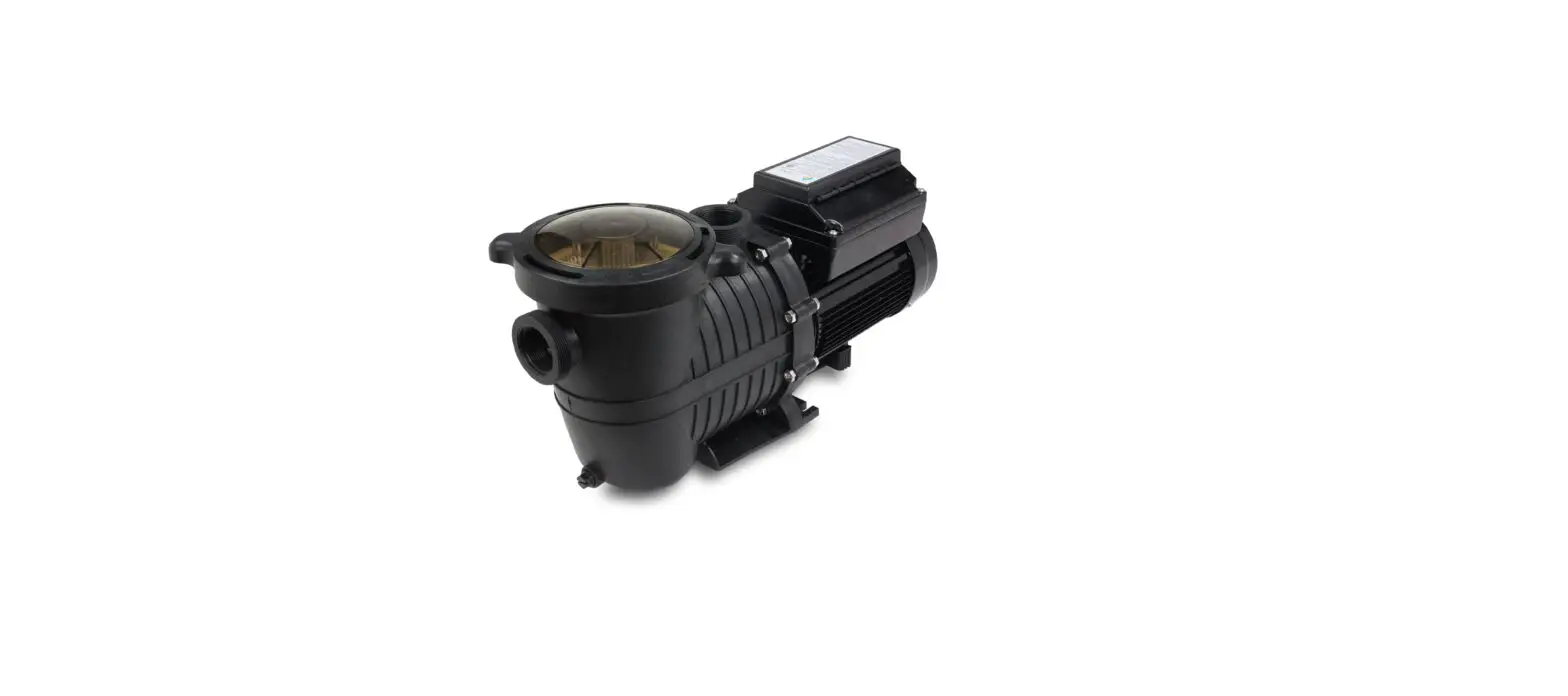
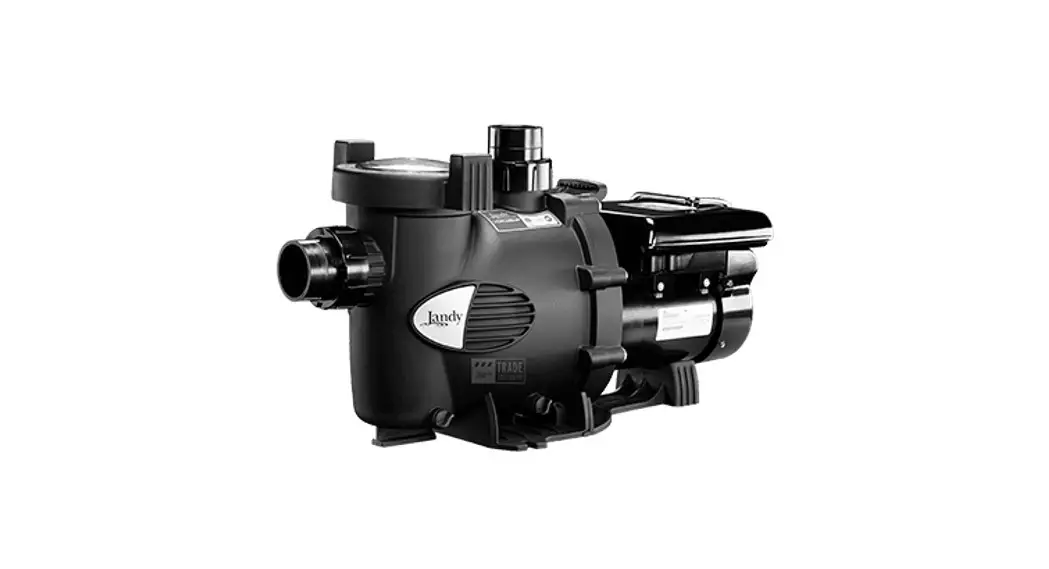
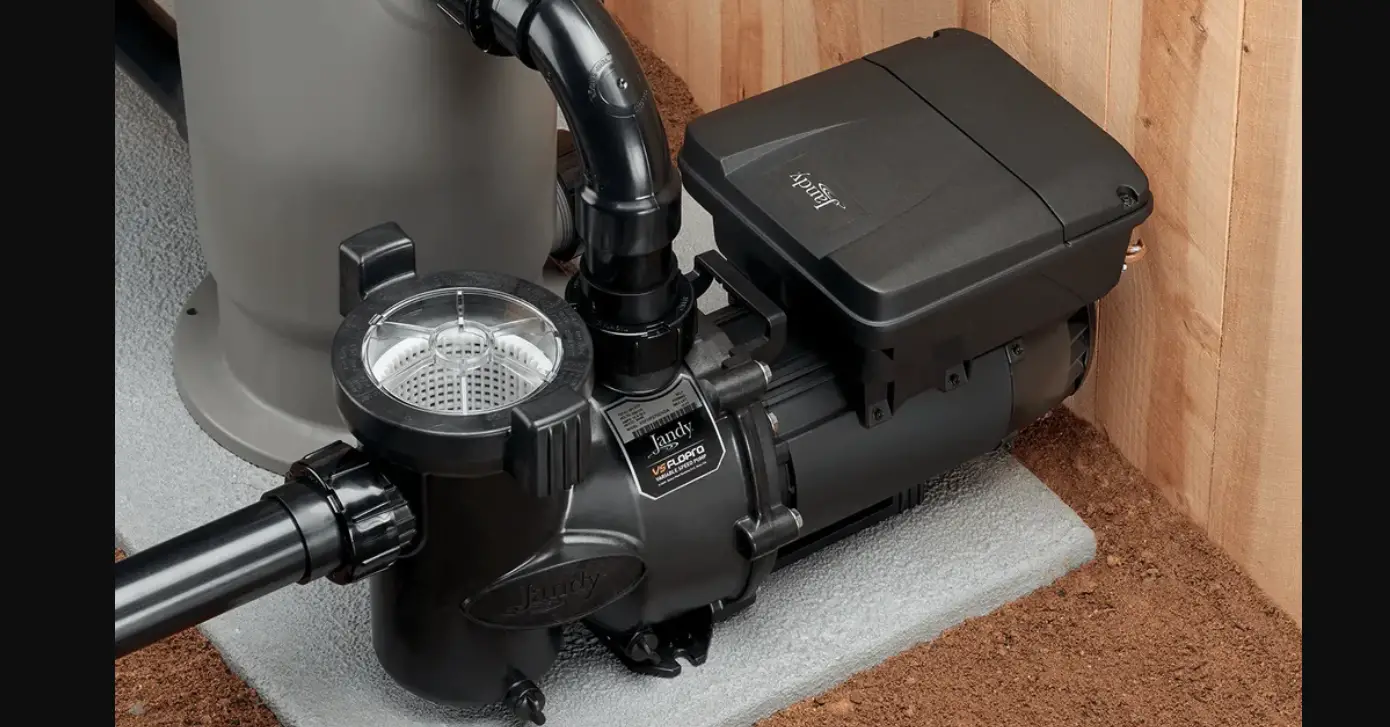
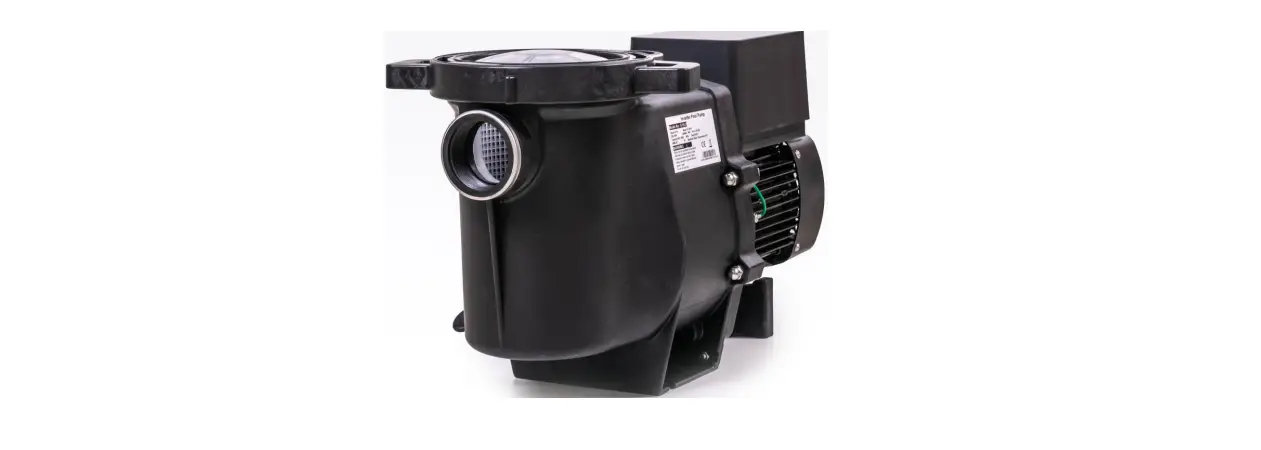
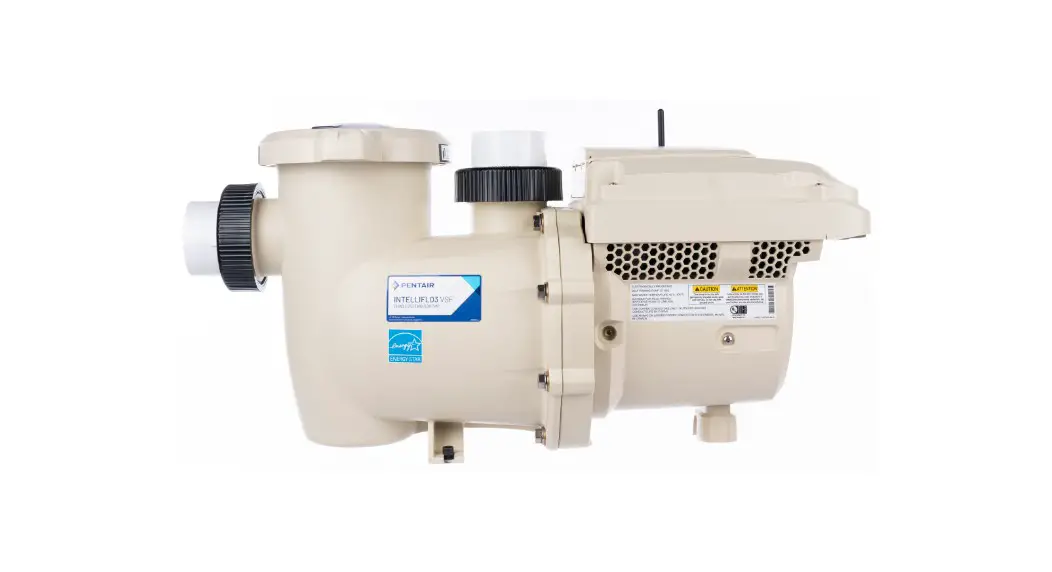
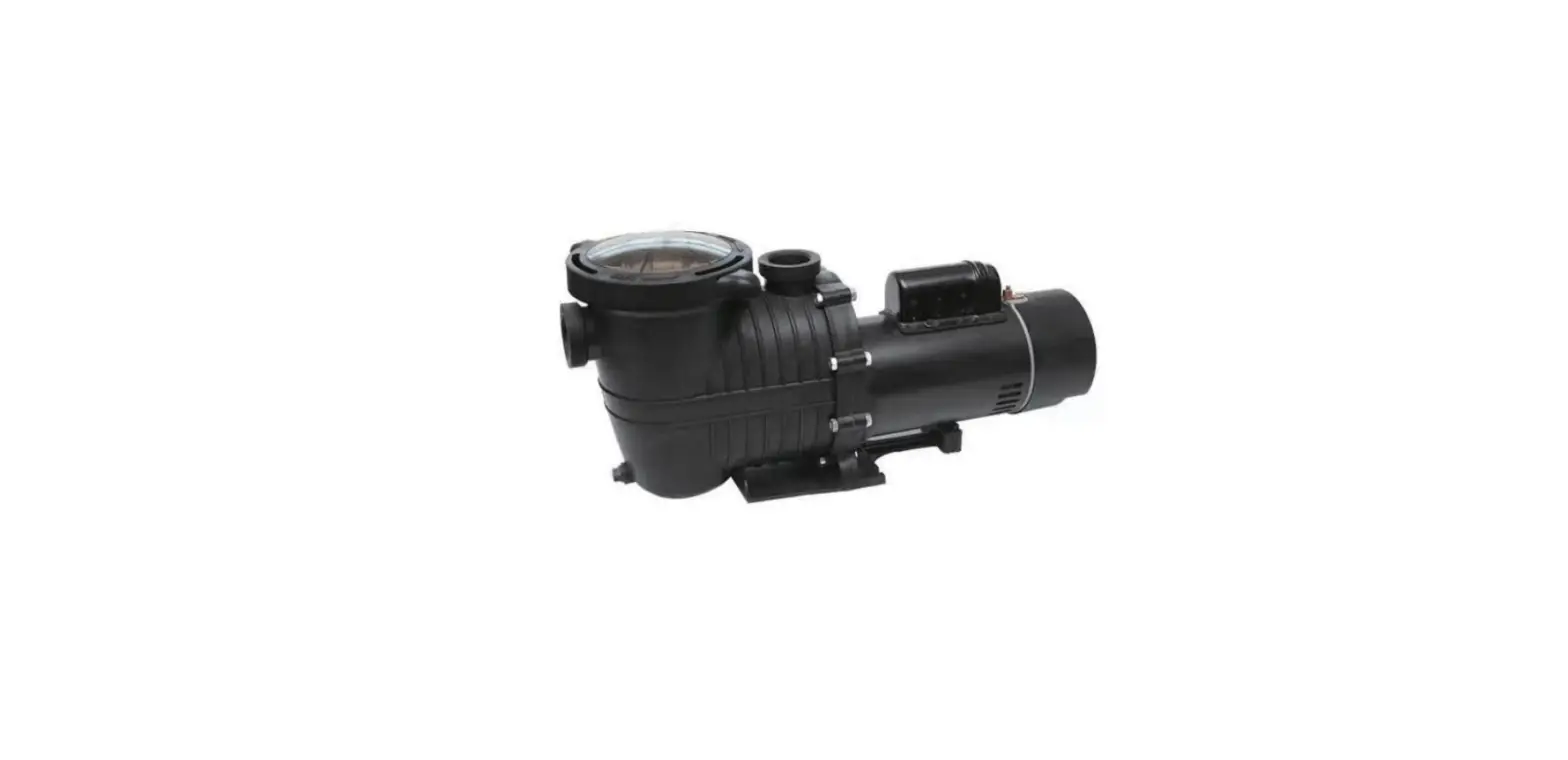
Variable speed pump is the perfect choice for all in-ground swimming pools. It is specially designed for all kinds of ground swimming pools. It is also your best choice. Thick walled body parts, a heavy duty TEFC motor, and highly engineered hydraulics make this rugged and tested design perfect for any pool, spa, water feature, or fountain.
VARIABLE SPEED PUMP
General Features
Extremely quiet operation Unionized fittings (1.5″ and 2″) for simple replacement Strainer cover kit for easy cleaning and maintenance Super-duty totally enclosed fan cooled (TEFC) motor for long life Integral volute and pot reduce hydraulic noise See-through lid permits easy inspection of strainer basket Self-priming for quick, easy start-up ETLUS/CETL Listed
Controller Features
Simple user interface IPX6 certified UV and rain-proof enclosure Onboard time of day schedule Adjustable priming mode Programmable quick clean mode Diagnostic alarm display and retention Active power factor correction Accepts 230V, 50/60Hz input power Auto power limiting protection circuit One week. clock retention for power outages
6
Controller Overview
The Variable Speed Pump uses a premium efficiency variable speed motor that provides tremendous program flexibility in terms of motor speed and duration settings. The pump is intended to run at the lowest speeds needed to maintain a sanitary environment, which in turn minimizes energy consumption. Pool size, the presence of additional. This pump is for use with 230 Vrms nominal, and in pool pump applications ONLY. Connection to the wrong voltage, or use in other application may cause damage to equipment or personal injury. The integrated electronics interface controls the speed settings as well as the run durations. The pump can operate at speeds ranging between 450 and 3450 RPM and will operate within the voltage range of 230 Vrms at either 50 or 60Hz input frequency. Program customization may require some trial-and-error to determine the most satisfactory settings as dictated by the conditions. In most cases, setting the pump at the lowest speed for the longest duration is the best strategy to minimize energy consumption. However, conditions may require running the pump at a higher speed for some duration of time each day to maintain proper filtration to achieve satisfactory sanitation.
NOTICE: Optimize the pump to suit individual pool conditions. Specific conditions including pool size, other devices, features and environmental factors can all impact the optimal settings.
CONTROL PANEL OVERVIEW
If power is connected to the Variable Speed Pump motor, pressing any of the following buttons referred to in this section could result in the motor starting. Failure to recognize this could result in personal injury or damage to equipment.
7
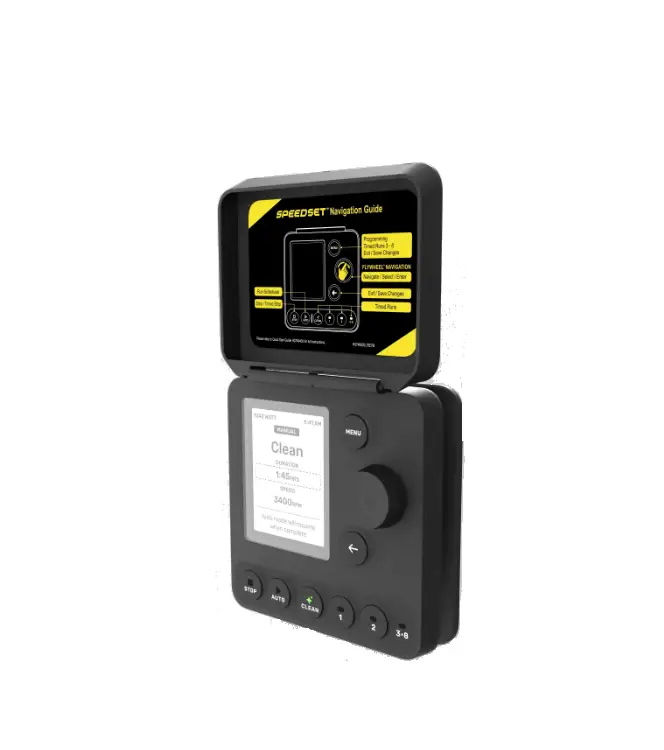
Keypad Navigation
1. Speed Buttons – Used to select the run speed desired. The LED above the Speed Buttons will illuminate when that speed is selected or is currently running. A flashing LED indicates is active on that speeds channel.
2. Mode select Button Choose manual and schedule 3. Start/Stop Button – Used to Start and Stop the pump. When the pump is stopped and the LED is not
illuminated, the pump is unable to run from any type of input. 4. Display Mode LED Indicators – An illuminated LED indicates the information being displayed on the screen at
any specific point. A flashing LED indicates that the parameter is currently being edited. 5. Display Button – Used to toggle between the different available display modes. This button is also used to set the
24-hour clock and screen resolution. 6. Quick Clean Button – Used to run a selected speed and duration programmed for Quick Clean. When the LED is
illuminated the Quick Clean schedule is active. 7. “<” and “>” Arrows – Choose between a 12 or 24 hour time format. 8. “+” and “-” Arrows – Used to make on screen adjustments to the pump settings. The “+” arrow increases
the value of a given setting, while “-” decreases the value of a given setting. Pressing and holding down either arrow button will increase or decrease the incremental changes faster.
INSTALLATION
Location
NOTICE: Do not install this pump within an outer enclosure or beneath the skirt of a hot tub or spa unless marked accordingly.
NOTICE: Ensure that the pump is mechanically secured to the equipment pad.
Be sure the pump location meets the following requirements: 1. Install the pump as close to the pool or spa as possible. To reduce friction loss and improve efficiency, use short,
direct suction and return piping. 2. Install a minimum of 5 feet (1.52 meters) from the inside wall of the pool and spa. Canadian installations require a
minimum of 9.8 feet (3 meters) from the inside wall of the pool. 3. Install the pump a minimum of 3 feet (.9 meters) from the heater outlet. 4. Do not install the pump more than 10 feet (3.1 meters) above the water level. 5. Install the pump in a well ventilated location protected from excess moisture (i.e. rain gutter downspouts, sprinklers,
etc.). 6. Install the pump with a rear clearance of at least 3 inches (7.6 cm) so that the motor can be removed easily for
maintenance and repair. See Figure 1.
8
Piping
1. For improved pool plumbing, it is recommended to use a larger pipe size. 2. Piping on the suction side of the pump should be the same or larger than the return line diameter. 3. Plumbing on the suction side of the pump should be as short as possible. 4. For most installations, always INSTALL a valve on both the pump suction and return lines so that the pump can be
isolated during routine maintenance. However, we also recommend that a valve, elbow or tee installed in the suction line should be no closer to the front of the pump than five (5) times the suction line diameter. See Figure 2.
Example: A 2.5 inch pipe requires a 12.5 inch (31.8 cm) straight run in front of the suction inlet of the pump. This will help the pump prime faster and last longer. NOTICE: DO NOT install 90° elbows directly into the pump inlet or outlet.
Fittings and Valves
1. Do not install 90° elbows directly into pump inlet. 2. Flooded suction systems should have gate valves installed on suction and discharge pipes
for maintenance, however, the suction gate valve should be no closer than five times the suction pipe diameter as described in this section. 3. Use a check valve in the discharge line when using this pump for any application where there is significant height to the plumbing after the pump. 4. Be sure to install check valves when plumbing in parallel with another pump. This helps prevent reverse rotation of the impeller and motor.
9
Electrical Requirements
1. All installation must conform to the National Electrical Code and all applicable local codes and ordinances. 2. A means for disconnection must be incorporated in the fixed wiring in accordance with the wiring rules.
RISK OF ELECTRICAL SHOCK OR ELECTROCUTION. Variable Speed Pump must be installed by a licensed electrician or a qualified service professional. All installation must conform to the National Electrical Code and all applicable local codes and ordinances. Improper installation will cause electrical hazards, which could cause death or serious injury of users, installers or others due to electric shock, and may also cause property damage.
Always disconnect power to the pump at the circuit breaker before servicing the pump. Failure to do so could result in death or serious injury to service people, pool users or others due to electric shock and/or property damage. Read all servicing and safety instructions before working on the pump.
Wiring Overview and Installation
Power should be turned off when installing, servicing, or repairing electrical components. Observe all warning notices posted on the existing equipment, pump, and in these installation instructions.
The pump must be wired according to the local electrical codes and standards. Always refer to the National Electrical Code. This pump should be installed by a licensed electrician. The pump accepts 230V, 50 or 60Hz single phase input power. The terminal block connections are capable of handling up to 12AWG solid or stranded wire. There are also fast-on type quick connectors, however, check the local electrical codes for the desired connection method. The connections must be permanently made to the grounding terminal (see Figure 3) in the field wiring compartment according to the local electrical code. The drive will operate on 2-phase Line-Line-Ground electrical systems as well as Line-Neutral-Ground systems. This pump must be permanently connected by a circuit breaker as specified in the local electrical code.
1. Be sure all electrical breakers and switches are turned off before wiring motor. Always wait five (5) minutes after disconnecting the power from the pump before opening or servicing the drive.
2. Choose a wire size for the pump in accordance with the current National Electrical Code and all applicable local codes and ordinances. When in doubt use a heavier gauge (larger diameter) wire. Be sure the wiring voltage is within the operating range.
3. Be sure all electrical connections are clean and tight. 4. Cut wires to the appropriate length so they do not overlap or touch when connected to the terminal board. 5. Permanently ground the motor using the ground screw located on the inside rear of the controller interface (see
Figure 3). Use the correct wire size and type specified by the current National Electrical Code. Be sure the ground wire is connected to an electrical service ground. 6. Bond the motor to all metal parts of the pool structure and to all electrical equipment, metal conduit and metal piping within 5 feet (1.5 M) of the inside walls of the swimming pool, spa or hot tub in accordance with the current National Electrical Code. UL requires use of a solid copper bonding conductor not smaller than 8 AWG. See Figure 3.
10
NOTICE: For Canada, a 6 AWG or larger solid copper bonding conductor is required. 7. The pump should be permanently connected to either a circuit breaker, 2-pole timer or 2-pole relay. If AC power is supplied by a GFCI circuit breaker, use a dedicated circuit breaker 3-that has no other electrical loads. 8. Connect the pump permanently to a circuit. Make sure no other lights or appliances are on the same
The field wiring compartment has a 1/2″ NPT threaded conduit port for the liquid tight fitting. The bonding lug should be used to bond the motor frame to the equipment pad.
OPERATING THE PUMP
Setting the Clock
When the pump is first installed, it is necessary to set the clock. Any daily schedule set by the user must be based on. To Set the Clock: 1. When power is applied to the pump, the Time LED light will begin blinking and you must press the Display button
within 5 seconds to enter the clock setup mode. (If Display button is not pressed within 5 seconds, you may press “<” and “>” together for 3 seconds to begin again. The time LED light will begin blinking. Quickly press the Display button within 5 seconds to enter the clock setup mode.) 2. Use the arrows to choose between a 12 or 24 hour time format. 3. Use the “+” and “-” buttons to change the displayed time to the correct time of day. In the 12 hour time format AM/PM will display in the bottom left corner. 4. To exit the clock setup mode, press and hold the Display button until the TIME light goes out. The clock is now set. 5. In Schedule mode, Press START and allow pump to run on Default Schedule for at least one OFF-ON cycle. If motor does not start, press any speed button. ATTENTION: Steps 1-4 are used for Schedule Mode and Manual Mode. Step 5 is only used for Schedule Mode. During a power outage, the drive will retain the clock setting in memory for as long as 24 hours. If the power is out longer than 24 hours the clock will have to be set again. NOTICEWhen power is returned to the pump after a prolonged outage (24+ hours) the clock will automatically set itself to the Speed 1 start time, blink and advance. The pump will also run the associated schedule from that start time.
11
Using the Default Schedule
The default schedule is designed to provide enough daily turnover to service a typical pool. See Table 2 for default schedule.
Table 2: Default Schedule. SPEED 1 is set to begin at 8:00am and run at 3000 RPM for a duration of 2 hours. When SPEED 1 is complete the pump immediately begins running the default SPEED 2. SPEED 2 is factory default to 1500 RPM and will last for 10 hours. When SPEED 2 has completed its run the pump will run SPEED 3 at 2500 RPM for a duration of two hours. When SPEED 3 has completed its run the pump will run SPEED 4 at 1000 RPM for a duration of four hours. After 18 hours of run time and completing its run of SPEED 4, the pump will enter a stationary/paused state for the next 6 hours. The pump will restart at 8:00am the next morning and cycle through the default schedule again. The pump will continue to run in this in this manner until a custom schedule is programmed into the drive by the user.
NOTICE: The Start/Stop button must be pressed, and the LED lit, for the pump to run.
SPEED 1 AND PRIMING
The installer should set the priming speed to be sufficient for priming the pump from a fresh install,but not so fast that there is a substantial waste of energy. The time the pump needs to achieve prime can change based on local environmental conditions such as water temperature, atmospheric pressure, and your pool’s water level. All of these things should be taken into consideration when setting the priming speed, however in most cases the pump will not need to run at 3450 RPM to successfully prime itself. Please test and verify chosen priming speeds more than once, letting the water drain from the system in between each test. Turn on pump and switch to Manual mode to test Priming by operating SPEED1.Take note of the time that the water filled the PUMP HOUSING, then stop the pump. Re-start the pump to set the SPEED1/Priming duration.
Custom Schedules and Quick Clean
To customize the run schedule for your Variable Speed Pump, the pump must be stopped. Be sure that the Start/Stop button LED is not illuminated. Programming a Custom Schedule:
NOTICE: When programming, the LED light next to the parameter (“Speed”, “Time” and “Duration”) you are setting will blink. 1. Stop the pump if it is running by pressing the Start/Stop button. 2. Press the “1” button. The LED above the selected SPEED will begin to blink and the “Speed” parameter LED will blink while editing. See Figure 7.
12
Figure 7: Setting Speed 3. Use the “+” and “-” arrows to adjust the speed in RPM for SPEED 1.
NOTICE: Speed is adjusted up or down by increments of 10 RPM. 4. Press the “1” button again and the display will change to SPEED 1 start time. The “Time” parameter LED will begin
to blink. See Figure 8.
Figure 8: Setting Start Time 5. Use the “+” and “-” arrows to adjust the daily start time for SPEED 1. 6. Press the “1” button again and the display will change to SPEED 1 duration. The “Duration” parameter LED will
begin to blink. See Figure 9.
Figure 9: Setting Duration 7. Use the “+” and “-” arrows to adjust the duration for SPEED 1 in hours and minutes.
NOTICE: The duration parameter is adjusted in 15 minute increments. 13
8. Pressing the “1” button will continue to cycle through these parameters, but the changes are immediately saved as they are adjusted.
9. Press the “2” button. The LED above SPEED 2 will begin to flash and the corresponding parameter LED will flash while editing.
10. Use the “+” and “-” arrows to adjust the speed in RPM for SPEED 2. 11. Press the “2” button again and the display will change to SPEED 2 duration.
NOTICE: SPEEDs 2 and 3 do not have a start time, as they begin their duration immediately after the previous SPEED finishes. 12. Use the “+” and “-” arrows to adjust the duration for SPEED 2 in hours and minutes. 13. Repeat steps 9-12 to program SPEED 3-4 and QUICK CLEAN. NOTICE: Remember that the duration allowed for SPEED 3 will be limited to the remaining time in a 24 hour day. Any time in the 24 hour day not programmed into SPEEDs 1-4, the pump will remain in a stationary state. [SPEED 1 + SPEED 2 + SPEED 3 +SPEED 4 <24 Hours ] 14. Press the Start/Stop button and ensure the LED is lit. The pump is now on and will run the custom user-programmed schedule. NOTICE: If the pump has been stopped via the Start/ Stop button, the pump will not run until the pump is turned back on by the Start/Stop button. If the Start/Stop LED is illuminated then the pump is on and will run the programmed schedule.
Speed Priorities
For schedule duration settings, SPEEDS are prioritized as follows: SPEED 1 -> SPEED 2 -> SPEED 3 -> SPEED 4. SPEED 1 is the highest priority, while SPEED 4 is the lowest.
The drive will not allow a user to program a schedule of more than 24 hours. When the 24th hour of duration is programmed it will take time from the lower priority speeds in order to add them to the SPEED currently being adjusted.
Example:
Starting Schedule (Before Adjustment) SPEED 1 duration = 18 hours SPEED 2 duration = 2 hours SPEED 3 duration = 2 hours
If the user reprograms SPEED 1 to run for 22 hours, SPEED 2 (lower priority speed) will automatically adjust to a 1 hour duration and SPEED 4 (lowest priority speed) will adjust to a
0 hour duration. End Schedule (After Adjustment)
SPEED 1 duration = 22 hours SPEED 2 duration = 1 hour SPEED 3 duration = 1 hours SPEED 4 duration = 2 hours SPEED 4 duration = 0 hours
14
Operating the Pump While Running
If power is connected to the pump motor, pressing any of the following buttons referred to in this section could result in the motor starting. Failure to recognize this could result in personal injury or damage to equipment. Pressing the Display button will cycle through the current parameters.
Speed — current run speed Time — current time of day Duration — amount of time remaining at the current run speed Watts — amount of watts currently being consumed
Pressing any of the Speed Buttons (“1”, “2”, “3”, “4”, “Quick Clean”) while the pump is running will act as temporary override. It will run the speed and duration that is programmed for that button. Once completed it will default back to the appropriate point in the programmed schedule.
NOTICE: If you adjust the speeds of the schedule while the pump is running, it will run the adjusted speed for the rest of the current duration, but will not save the adjustments.
MAINTENANCE
DO NOT open the strainer pot if Variable Speed Pump fails to prime or if pump has been operating without water in the strainer pot. Pumps operated in these circumstances may experience a build up of vapor pressure and may contain scalding hot water. Opening the pump may cause serious personal injury. In order to avoid the possibility of personal injury, make sure the suction and discharge valves are open and strainer pot temperature is cool to touch, then open with extreme caution.
To prevent damage to the pump and for proper operation of the system, clean pump strainer and skimmer baskets regularly.
Pump Strainer Basket
The pump strainer basket (or `strainer pot’, `hair and lint pot’), is located in front of the volute. Inside the chamber is the basket which must be kept clean of leaves and debris at all times. View basket through the `See Through Lid’ to inspect for leaves and debris. Regardless of the length of time between filter cleaning, it is most important to visually inspect the basket at least once a week.
Cleaning the Pump Strainer Basket
1. Press the Start/Stop button to stop the pump and turn off the pump at the circuit breaker. 2. Relieve pressure in the system by allowing the water to cool. 3. Gently tap the clamp in a counter-clockwise direction to remove the clamp and lid. 4. Remove debris and rinse out the basket. Replace the basket if it is cracked.
15
5. Put the basket back into the housing. Be sure to align the notch in the bottom of the basket with the rib in the bottom of the volute.
6. Fill the pump pot and volute up to the inlet port with water. 7. Clean the cover, O-ring, and sealing surface of the pump pot.
NOTICE: It is important to keep the lid O-ring clean and well lubricated. 8. Reinstall the lid by placing the lid on the pot. Be sure the lid O-ring is properly placed. Seat the clamp and lid on the
pump then turn clockwise until the handles are horizontal. 9. Turn the power on at the house circuit breaker. Reset the pool time clock to the correct time, if applicable. 10. Open the manual air relief valve on top of the filter. 11. Stand clear of the filter. Start the pump. 12. Bleed air from the filter until a steady stream of water comes out. Close the manual air relief valve.
THIS SYSTEM OPERATES UNDER HIGH PRESSURE. When any part of the circulating system (e.g., Lock Ring, Pump, Filter, Valves, etc.) is serviced, air can enter the system and become pressurized. Pressurized air can cause the lid to separate which can result in serious injury, death, or property damage. To avoid this potential hazard, follow above instructions.
Winterizing
You are responsible for determining when freezing conditions may occur. If freezing conditions are expected, take the following steps to reduce the risk of freeze damage. Freeze damage is not covered under warranty. To prevent freeze damage, follow the procedures below: 1. Press the Start/Stop button to stop the pump and shut off electrical power for the pump at the circuit breaker. 2. Drain the water out of the pump housing by removing the two thumb-twist drain plugs from the housing. Store the
plugs in the pump basket. 3. Cover the motor to protect it from severe rain, snow and ice.
NOTICE: Do not wrap motor with plastic or other air tight materials during winter storage. The motor may be covered during a storm, winter storage, etc., but never when operating or expecting operation. NOTICE: In mild climate areas, when temporary freezing conditions may occur, run your filtering equipment all night to prevent freezing.
Strainer Pot Assembly 16
SERVICING
Be sure that disconnect power to the Variable Speed Pump at the circuit breaker and disconnect the communication cable before servicing the pump. Electrical shock can cause serious or fatal injury. Read all servicing instructions
before working on the pump. DO NOT open the strainer pot if pump fails to prime or if pump has been operating without water in the strainer pot. Pumps operated in these circumstances may experience a build up of vapor pressure and may contain scalding hot water. Opening the pump may cause serious personal injury. In order to avoid the possibility of personal injury, make sure the suction and discharge valves are open and strainer pot temperature is cool to touch, then open with extreme caution. Be sure not to scratch or mar the polished shaft seal faces; seal will leak if faces are damaged. The polished and
lapped faces of the seal could be damaged if not handled with care.
Electric Motor Care
Protect from heat
1. Shade the motor from the sun. 2. Any enclosure must be well ventilated to prevent overheating. 3. Provide ample cross ventilation.
Protect against dirt
1. Protect from any foreign matter. 2. Do not store (or spill) chemicals on or near the motor. 3. Avoid sweeping or stirring up dust near the motor while it is operating. 4. If a motor has been damaged by dirt it may void the motor warranty. 5. Clean the lid and clamp, O-ring, and sealing surface of the pump pot.
Protect against moisture
1. Protect from splashing or sprayed water. 2. Protect from extreme weather such as flooding. 3. If motor internals have become wet – let them dry before operating. Do not allow the pump to operate if it has been
flooded. 4. If a motor has been damaged by water it may void the motor warranty.
Shaft Seal Replacement
The Shaft Seal consists primarily of two parts, a rotating member and a ceramic seal. The pump requires little or no service other than reasonable care, however, a Shaft Seal may occasionally become damaged and must be replaced.
NOTICE: The polished and lapped faces of the seal could be damaged if not handled with care. 17
Pump Disassembly
All moving parts are located in the rear sub-assembly of this pump. Tools required:
3/8 inch socket or open end wrench. Phillips screwdriver. Flat blade screwdriver.
To remove and repair the motor subassembly, follow the steps below: 1. Press the Start/Stop button to stop the pump and turn off the pump circuit breaker at the main panel. 2. Drain the pump by removing the drain plugs. 3. Remove the 4 bolts that hold the main pump body (strainer pot/volute) to the rear sub-assembly. 4. GENTLY pull the two pump halves apart, removing the rear sub-assembly. 5. To unscrew the impeller from the shaft, insert a Phillips screwdriver into the hole of the motor fan and twist the
impeller counter-clockwise. See Figure 10.
6. Place the seal plate face down on a flat surface and tap out the ceramic seal. 7. Remove the graphite seal ring on the impeller shaft. 8. Clean the seal plate, seal housing, and the impeller shaft.
DO NOT run the pump dry. If the pump is run dry, the mechanical seal will be damaged and the pump will start leaking. If this occurs, the damaged seal must be replaced. ALWAYS maintain proper water level. If the water level falls below the suction port, the pump will draw air through the suction port, losing the prime and causing the pump to run dry, resulting in a damaged seal. Continued operation in this manner could cause a loss of pressure, resulting in damage to the pump case, impeller and seal and may cause property damage and seal and may cause property damage and personal injury.
Pump Reassembly
1. When installing the replacement seal into the seal plate, use soapy water to wet the rubber boot before pressing it into the seal plate. 18
2. Remount the seal plate to the motor mounting plate. 3. Before installing the rotating part of the seal on the impeller shaft, wet the impeller shaft with soapy water and slide
the seal to the impeller shaft end. Remove the dirt from the contact surface of the seal with a clean cloth. 4. Screw impeller onto the motor shaft (clockwise to tighten).
NOTICE: Insert a Phillips screwdriver into the hole of the motor fan.
5. Remount the diffuser onto the seal plate. 6. Grease the diffuser quad ring and seal plate O-ring prior to reassembly. 7. Assemble the motor sub-assembly to the strainer pot-pump body. Tighten the bolts until all 4 bolts are in place and
finger tightened. 8. Fill the pump with water. 9. Reinstall the pump lid and plastic clamp; see the next section, `Restart Instructions’. 10. Re-prime the system.
Restart Instructions
If Variable Speed Pump is installed below the water level of the pool, close return and suction lines prior to opening hair and lint pot on pump. Make sure to re-open valves prior to operating.
Priming the Pump
The pump strainer pot must be filled with water before the pump is initially started. Follow these steps to prime the pump: 1. Remove the pump lid plastic clamp. Remove the pump lid. 2. Fill the pump strainer pot with water. 3. Reassemble the pump cover and plastic clamp onto the strainer pot. The pump is now ready to prime. 4. Open the air release valve on the filter, and stand clear of the filter. 5. Turn on the power to the pump. 6. Press the Start/Stop button on the drive keypad. If the pump is currently scheduled to run it will start.
NOTICE: If the pump is not scheduled to start, press a Speed button to begin a manual override that will start the pump. 7. When water comes out of the air release valve, close the valve. The system should now be free of air and recirculating water to and from the pool.
19
TROUBLESHOOTING
Diagnosing certain symptoms may require close interaction with, or in close proximity to, components that are energized with electricity. Contact with electricity can cause death, personal injury, or property damage. When trouble shooting the pump, diagnostics involving electricity should be cared for by a licensed professional.
Problem Pump failure.
Possible Cause Pump will not prime – Air leak, too much air.
Pump will not prime – Not enough water.
Pump strainer gasket is clogged. Pump strainer gasket is defective.
Reduced capacity Air pockets or leaks in suction line.
and/or head.
Clogged impeller.
Pump strainer clogged.
Pump fails to start. Mains Voltage is not present
Pump shaft is locked
Pump shaft is damaged
Pump runs then stops.
Over temperature FAULT Over current FAULT
Corrective Action Check suction piping and valve glands on any suction gate valves. Secure lid on pump strainer pot and be sure lid gasket is in place. Check water level to be sure skimmer is not drawing air.
Be sure the suction lines, pump, strainer, and pump volute are full of water. Be sure valve on suction line is working and open (some systems do not have valves). Check water level to make sure water is available through skimmer.
Clean pump strainer pot.Replace gasket.
Check suction piping and valve glands on any suction gate valves. Secure lid on pump strainer pot and be sure lid gasket is in place. Check water level to be sure skimmer is not drawing air. Turn off electrical power to the pump. Disassemble (see page 14, `Pump Disassembly’) Clean debris from impeller. If debris cannot be removed, complete the following steps:
1. Remove left hand thread anti-spin bolt and o-ring. 2. Remove, clean, and reinstall impeller. Reassemble
(see page 15, `Pump Reassembly’) Clean suction trap.
1. Replace fuse, reset breaker/GFCI. 2. Tighten mains wire connections.
Check if the pump can be rotated by hand and remove any blockage.
Replace pump.
Check that back of pump is free from dirt and debris. Use compressed air to clean.
Pump will automatically restart after one (1) minute.
Pump is noisy.
Debris in contact with fan
Debris in strainer basket Loose mounting
Check that back of pump is free from dirt and debris. Use compressed air to clean. Clean strainer basket. Check that mounting bolts of pump and pump are tight.
20
Troubleshooting (Cont.)
Problem
Possible Cause
Pump runs without Impeller is loose
flow.
Air leak
Clogged or restricted plumbing
Corrective Action
Check that pump is spinning by looking at fan on back of Variable Speed Pump. If so, check that pump impeller is correctly installed. Check plumbing connections and verify they are tight. Check for blockage in strainer or suction side piping. Checked for blockage in discharge piping including partially closed valve or dirty pool filter.
Errors and Alarms
If an alarm is triggered the drive’s LCD screen will display the fault code text and the Variable Speed Pump will stop
running. Disconnect power to the pump and wait until the keypad LEDs have all turned o ff. At this point, reconnect power to the pump. If the error has not cleared then proper troubleshooting will be required. Use the error description table below to begin troubleshooting.
Fault Code
Description
Fault Code
Description
E-01
Inverter unit protection
E-11
Phase loss at input side
E-02
Acceleration over current
E-12
Phase failure at output side
E-03
Deceleration over current
E-14
Module overheating
E-04
Constant speed over current
E-16
Communication fault
E-05
Acceleration over voltage
E-17
Current detection fault
E-06
Deceleration over voltage
E-24
Inverter hardware fault
E-07
Constant speed over voltage
E-08 E-09
Under voltage fault Motor overload
E-10
Inverter overload
E-16 –Communication Link between the HMI and Motor control has been lost: Check the jacketed wire on the
back side of the keypad inside the drive top cover. Ensure that the 5 pin connector is properly plugged into the socket
and that there is no damage to the cable.
E-01,02,03,04,05,06,07,09,10,24 – Internal Errors: If this error displays multiple times, then there may be a problem with the pump’s rotating assembly. Please disassemble the pump and investigate to see if there is a problem with the impeller or mechanical seal. See page 9 “Pump Disassembly” for instructions for disassembling the pump.
E-08 — Absolute AC Under Voltage Detected: This indicates that the supply voltage has dropped below the operating range of 200v. This could be caused by normal voltage variation and will clear itself. Otherwise there could be excess voltage sag caused by improper installation or improper supply voltage.
E-14 — Module overheating: Should be caused by high ambient temperature or overload.
21
13
REPLACEMENT PARTS
Variable Speed Pump Replacement Parts List
Ref.
No. Part No.
Description
Qty.
1 9.01.010000.009
Strainer cover Kit
1
2 9.01.010000.015
cover O-ring
1
3 9.01.010000.002
Basket
1
4a 9.01.010000.001
Strainer Housing for PL2515 Series
1
4b 9.01.020000.001
Strainer Housing for PL2517, PL2518,PL2516,PL2519
1
5 9.01.010000.003
Diffuser
1
6a 9.01.010000.010
Impeller for PL2517 or PL2515
1
6b 9.01.010000.011
Impeller forPL2518
1
6c 9.01.010000.012
Impeller for PL2516
1
6d 9.01.010000.013
Impeller for PL2519
1
7 9.01.010000.004
Seal Plate
1
8 9.01.010000.005
Mounting Plate
1
9 9.01.010000.006
Mounting Foot
1
10 9.01.010000.007
Supporting Foot
1
11 9.01.010000.008
Drain Plug with O-ring 2pcs
1
12a 9.01.000020.001/005
Motor Drive PL2517 or PL2515
1
12b 9.01.000020.002
Motor Drive PL2518
1
12c 9.01.000020.003
Motor Drive PL2516
1
12d 9.01.000020.004
Motor Drive PL2519
1
13a 9.01.001300.001
Motor M13CU
1
13b 9.01.001500.001
Motor M15CU
1
13c 9.01.001800.001
Motor M18CU
1
13d 9.01.002200.001
Motor M22CU
1
14 9.01.010000.014
Seal Assembly
1
15 9.01.010000.017
Seal Plate o-ring
1
16 9.01.010000.016
Diffuser O-ring
1
17 9.01.010000.018
Housing Cap Screw kit (3/8-16X2 4pcs)
1
18 9.01.010000.019
Motor Cap Screws kit (3/8-16X1 4pcs)
1
19 9.01.010000.020
Mounting Foot Screws kit (ST6.3X25 2pcs)
1
14
Pump Performance Curves
PL2515
Model Specifcationes
Overall Ratings
Model
Input Voltage Input Frequency Input Current Maximum Continuous Load Speed Range Environmental Rating Port Size
PL2515 230 V Single phase, 50 or 60 Hz 5.5A 1.5HP 450 – 3450 RPM NEMA Type 3 1.5″x1.5″
Pump Dimensions
Pump Performance Curves
PL2517
15
PL2518
PL2516
Pump Dimensions
PL2519
Model Specifcationes
Overall Ratings
Model Input Voltage Input Frequency Input Current Maximum Continuous Load Speed Range Environmental Rating Port Size
PL2517
5.5A 1HP
PL2518
PL2516
230 V Single phase, 50 or 60 Hz
7A
8A
1.5HP
2HP
450 – 3450 RPM
NEMA Type 3
2″x2″
PL2519
10A 3HP
Limited Warranty
Service Information
Inyo Holdings LLC is staffed with trained personnel to provide customers with reliable pool service. Whether you need technical advice, repair, or genuine factory replacement parts, please contact us. Phone: Email:
Limited Warranty
Limited Two-Year Warranty
Inyo Holdings LLC warrants this product to be free from defects in material or workmanship for a period of two(2) years following the date of purchase. This limited warranty does not cover failures due to abuse, accidental damage, or when repairs have been made or attempted by anyone other.
Legal Disclaimer
Inyo Holdings LLC is owned and with legitimate use by Inyo Holdings LLC. Any other company name, brand, product name, trademarks, or product model numbers referenced in this manual are owned by respective trademark holders. The seller’s use of any trademark of others does not imply its affiliation, partnership, dealership, joint venture with or endorsement by others and is only for informational purposes.
27