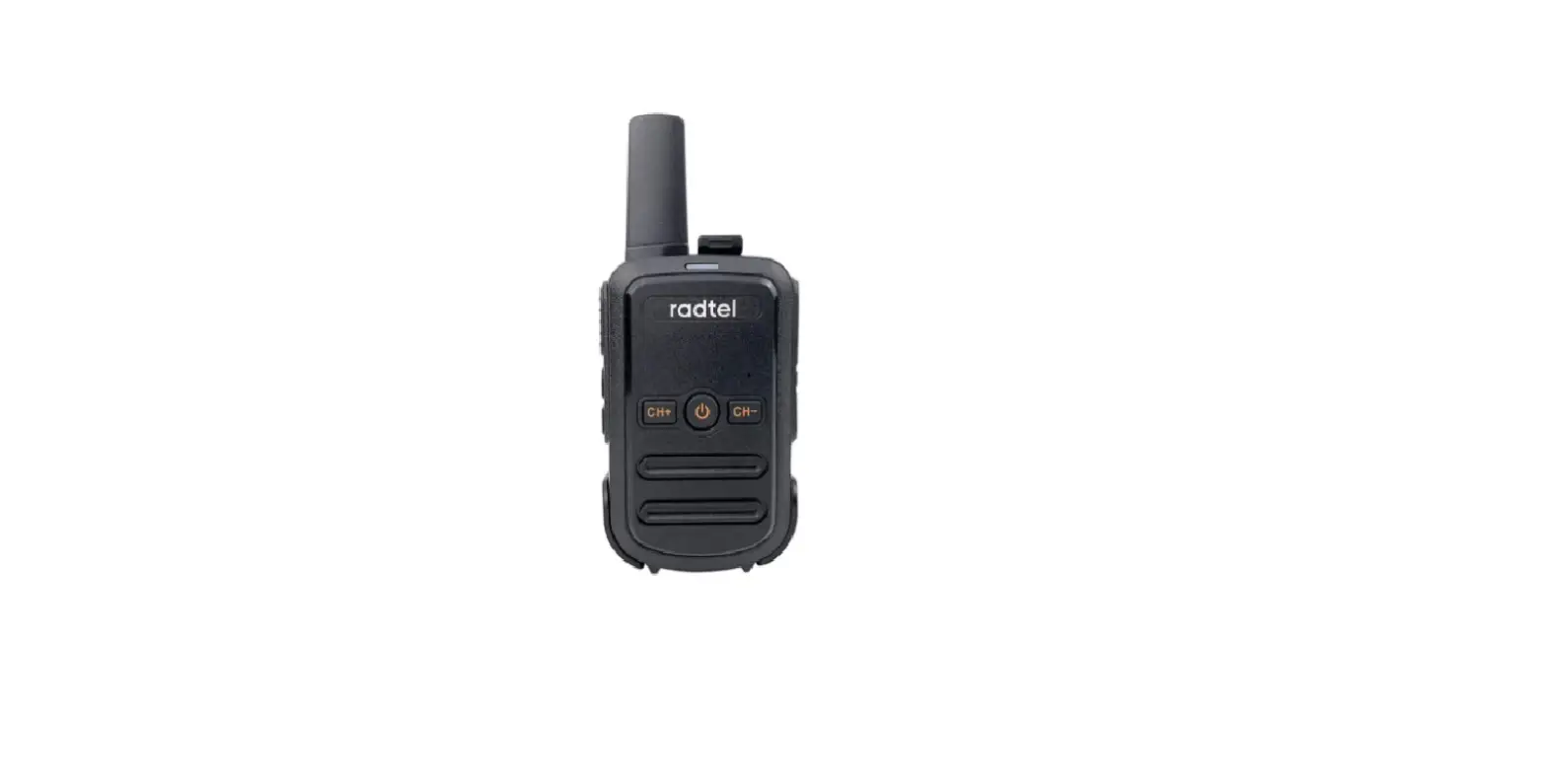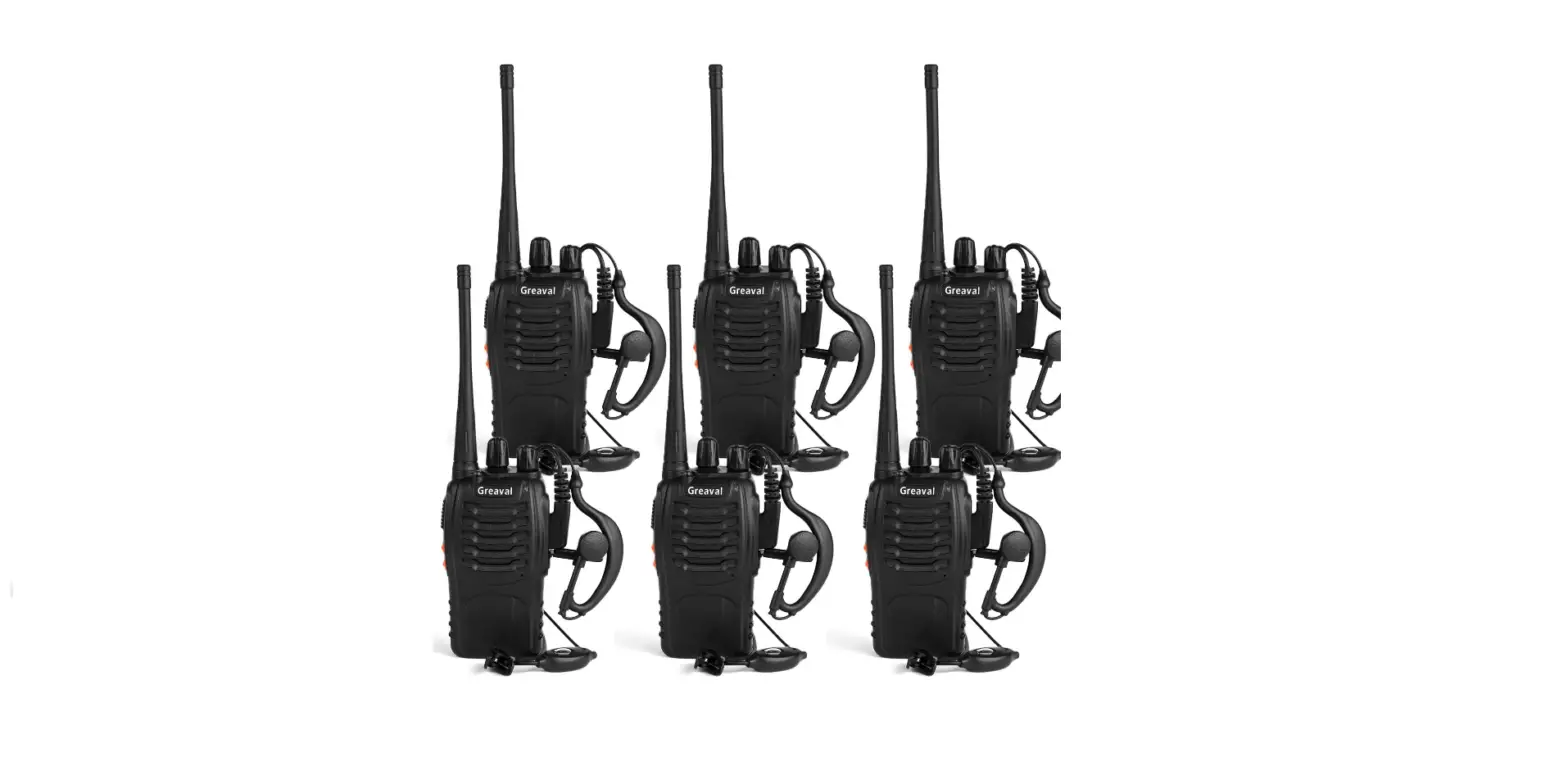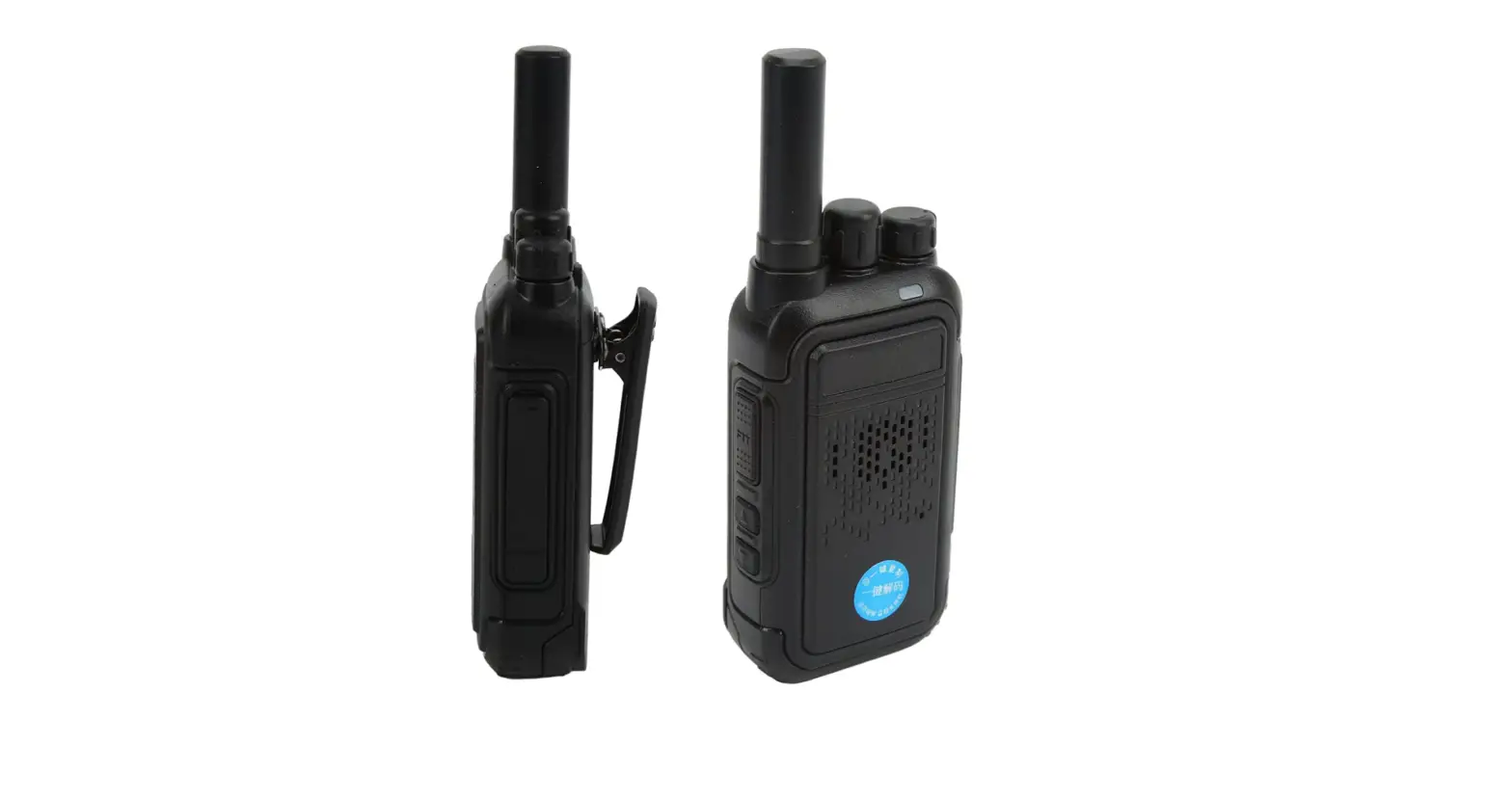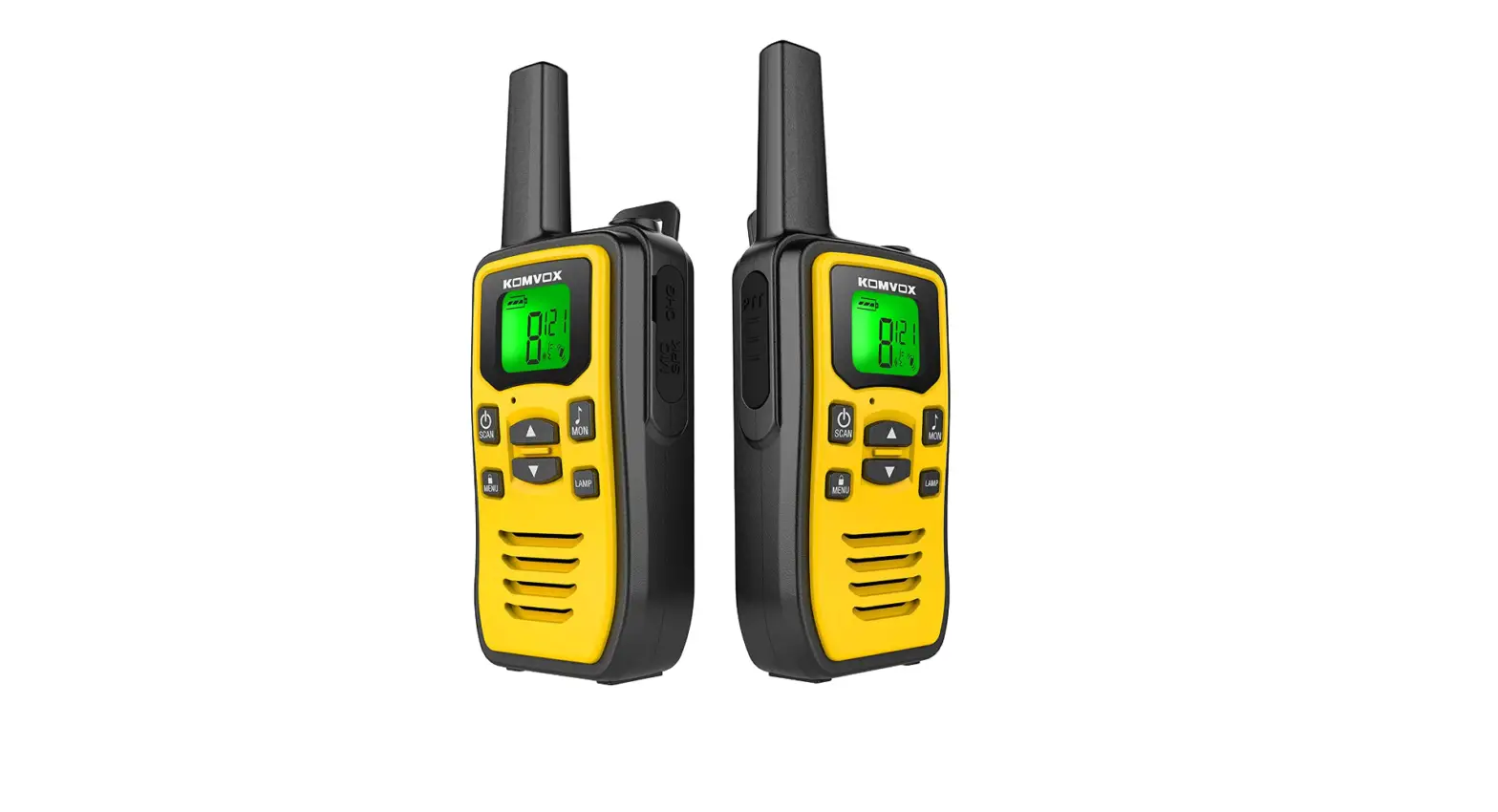

KOMVOX Rechargeable Walkie Talkies
Specifications
- DIMENSIONS:97 x 1.38 x 2.17 inches
- WEIGHT:25 kg
- VOLTAGE: 5V
- NUMBER OF CHANNELS: 22
- TALKING RANGE: 10 km
Introduction
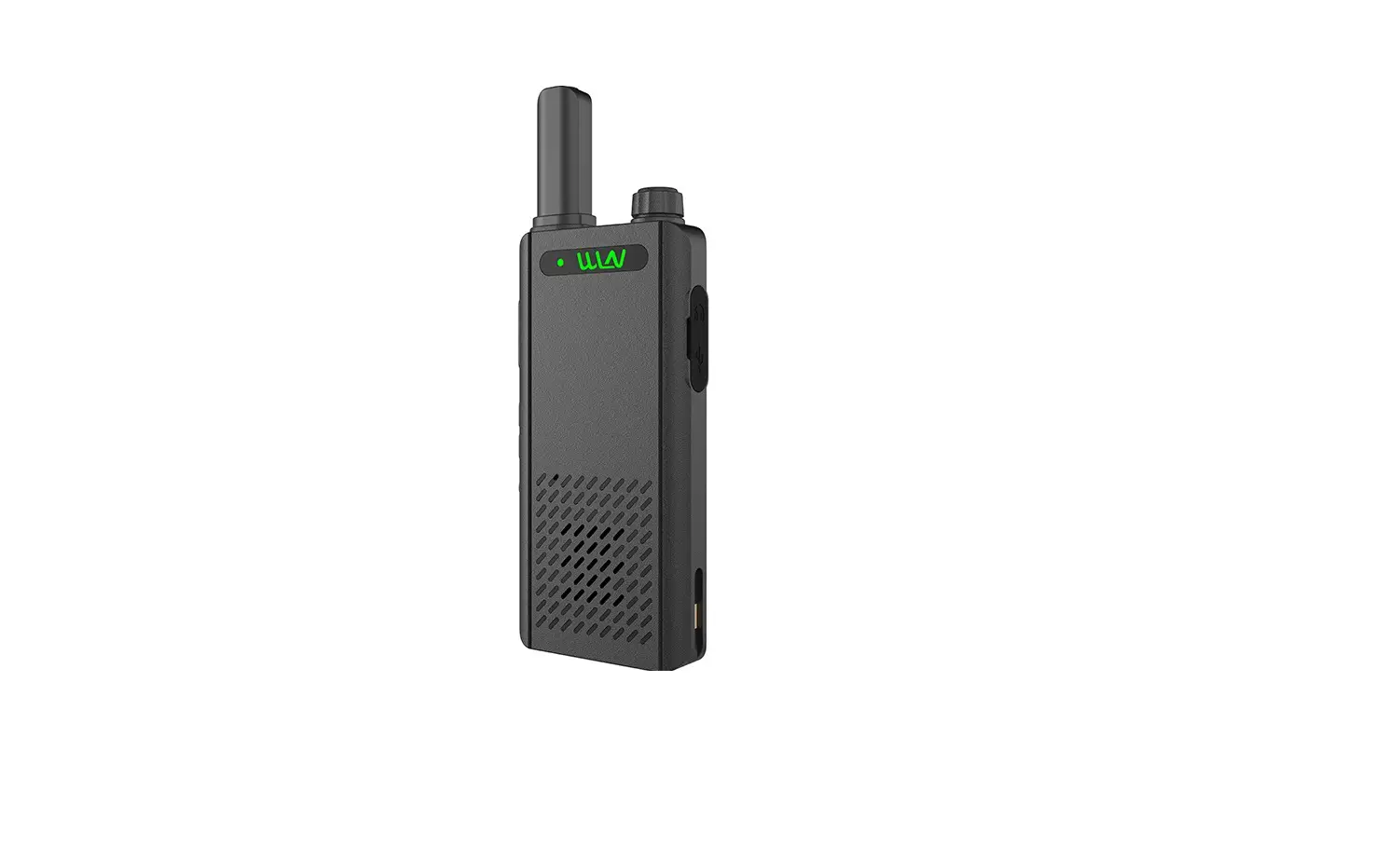
With KOMVOX two-way radios, you can prepare for the outdoors without sacrificing communication. Clear point-to-point connection, as well as enhanced reception, transmission, and sound quality, are all features of this license-free radio. If you connect to the same channels/frequencies, you can connect to any other FRS or GMRS two-way radios.
You can choose from up to 2,662 channels using the private codes to silence other discussions.
- VOX (Voice Activated)
- Easy Voice and Sound Activation Transmission (eVOX) for hands-free operation has three sensitivity settings.
- Support for Micro-USB Charging
- It is compatible with smartphone chargers and can support Micro-USB charging.
For your test, we have 6 basic AA rechargeable batteries prepared. The best rechargeable batteries are advised for a better user experience.
The built-in flashlight’s white LED option can be used to illuminate your path during nighttime activities or power shortages.
A USB charging cable is ready for you. Any 5V USB charging port, such as the one on your smartphone, can be used to recharge it.
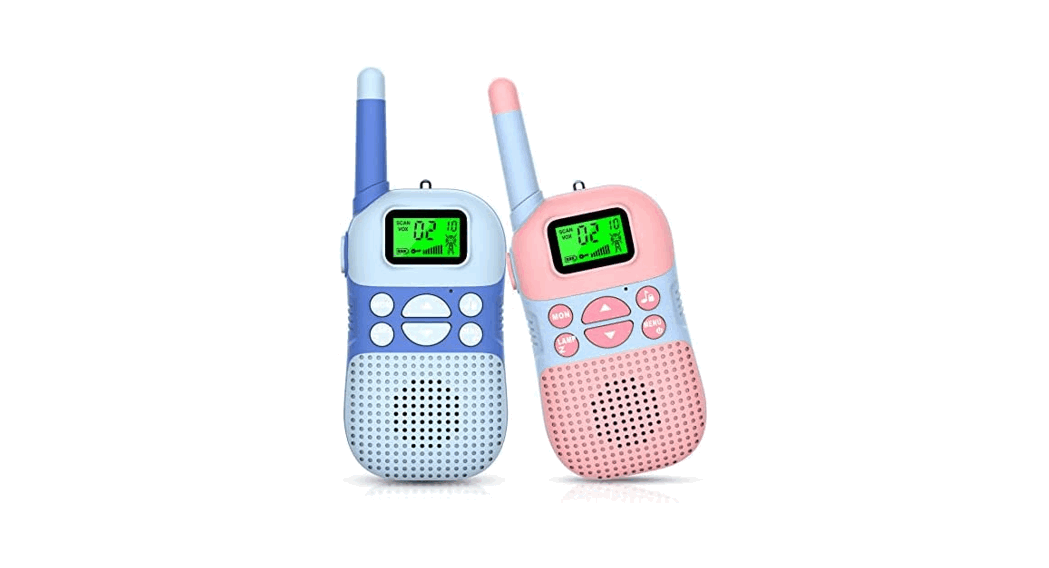
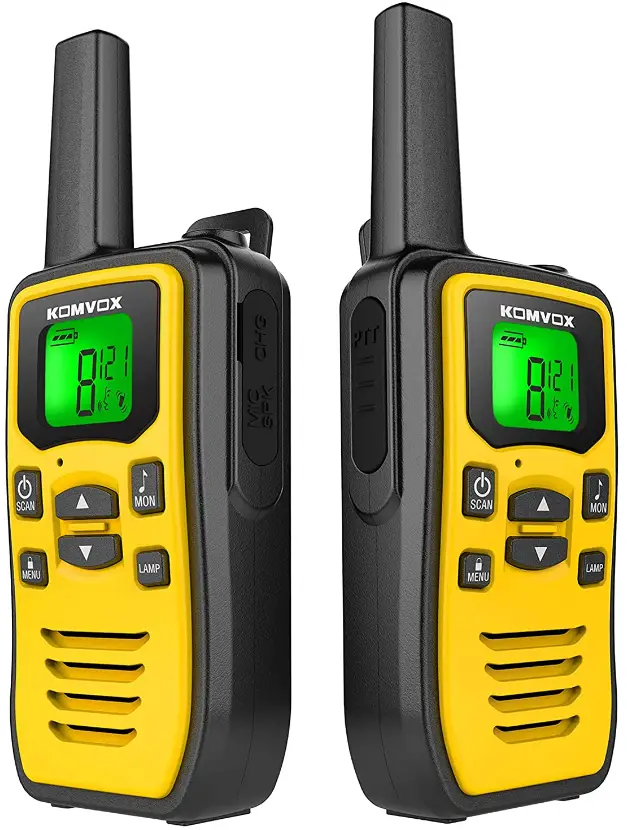
22 (Family Radio Service) channels are available on these walkie talkies, along with a channel search option to look for activity. The two-way radio may support USB charging and is rechargeable. PTT (push-to-talk) button; 8 volume controls, 10 call tone options; internal LED torch; the faceplate’s bright yellow color makes it highly visible.
What’s in the Box?
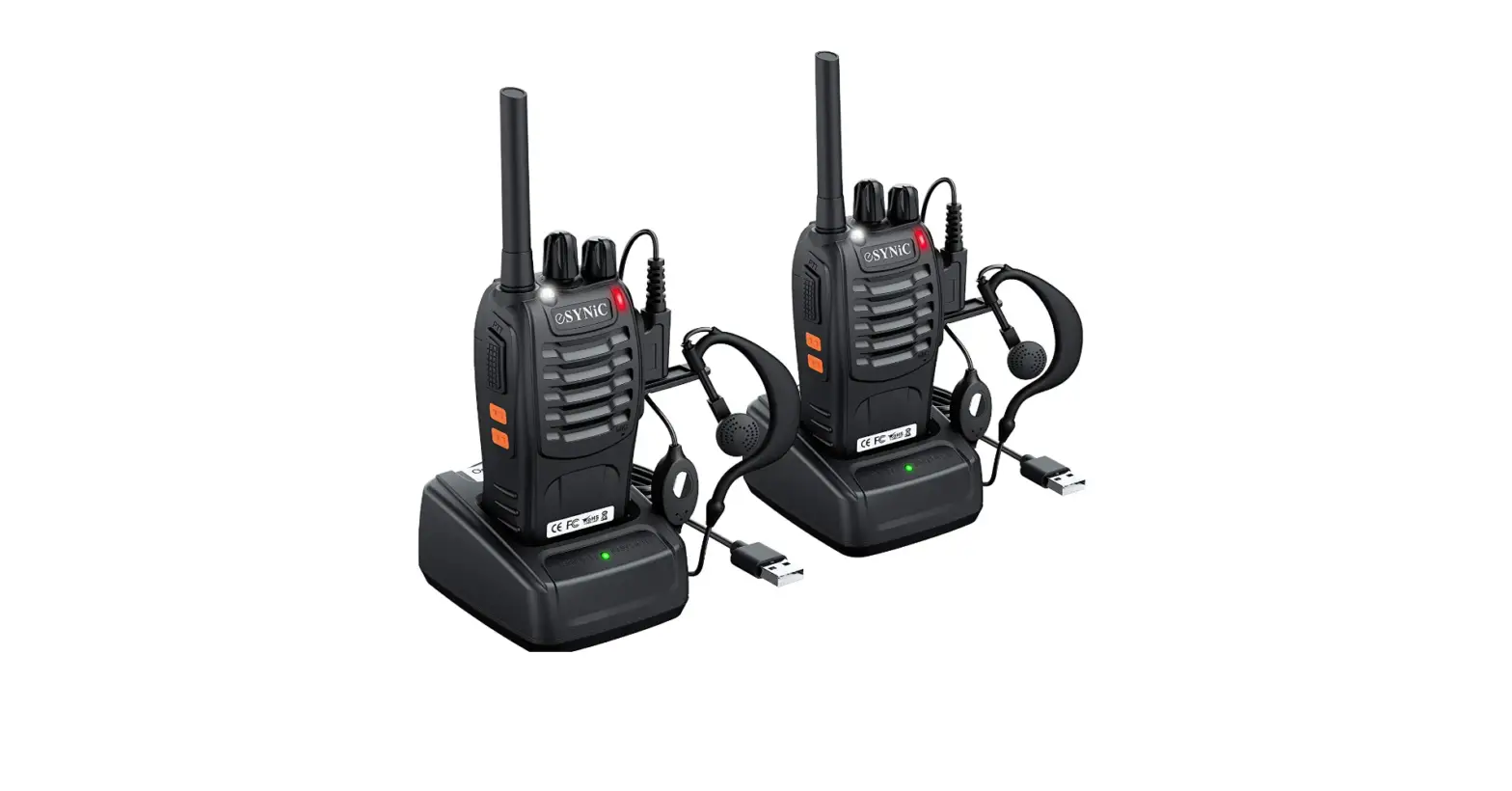
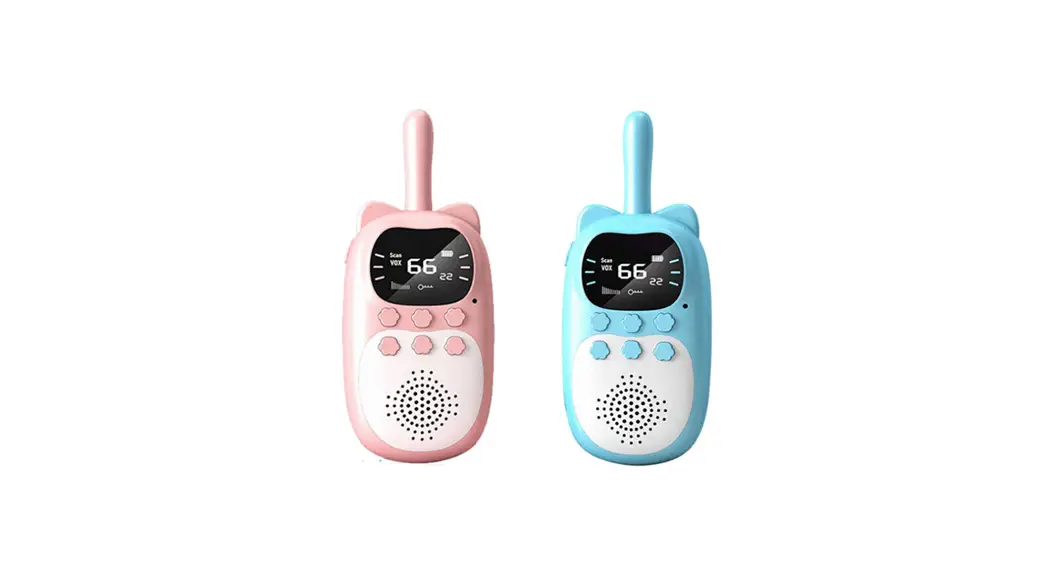
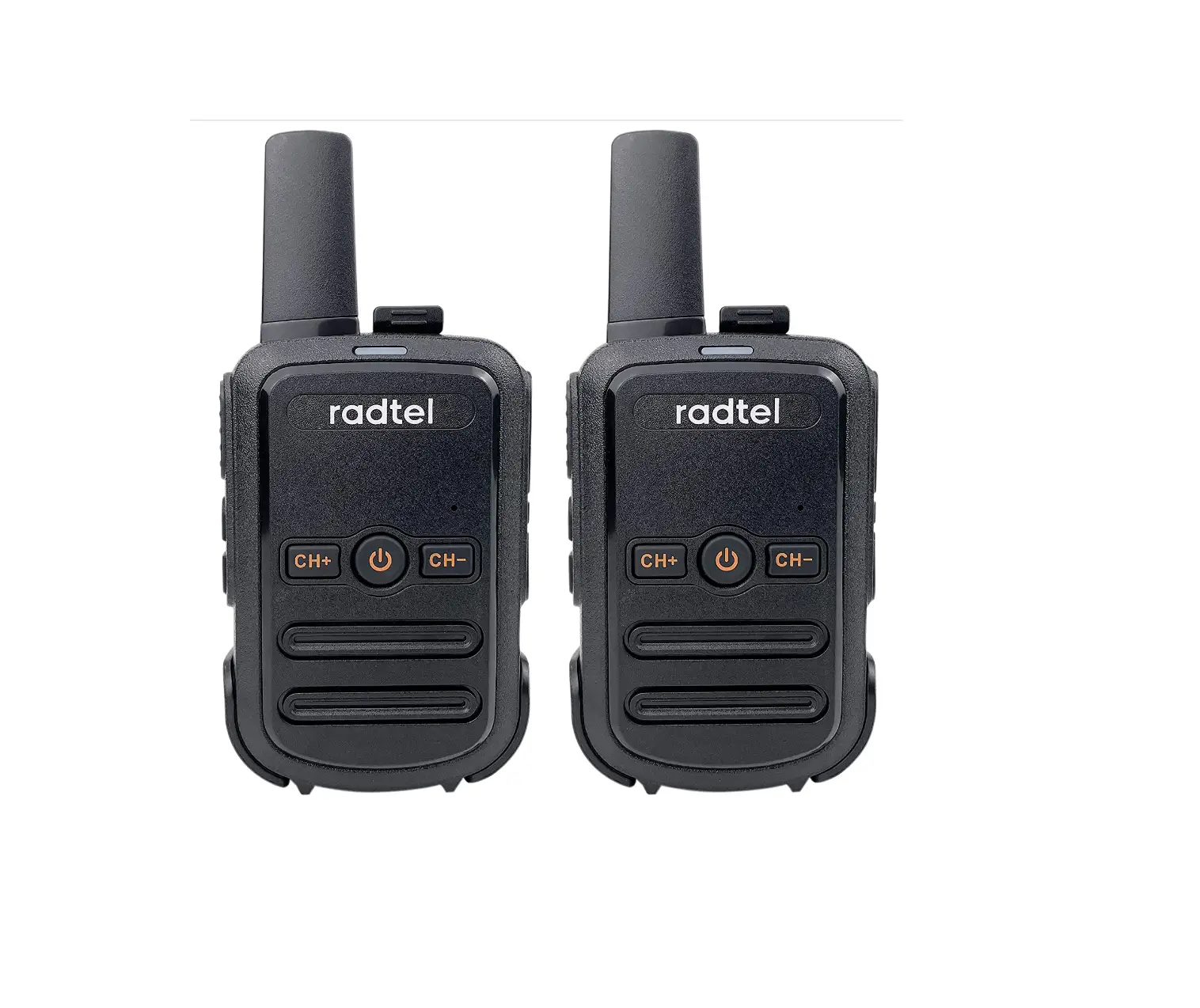
- KOMVOX rechargeable walkie talkie x 1 pair
- Charging wire x 1
- User manual x 1
How to use the KOMVOX rechargeable walkie talkies?
Turn on the walkie talkies by pressing the power button. To scan the frequency channel use the power button. The two way radio also comes with an lamp for emergency cases, which can be accessed by pressing the LAMP button.
Frequently Asked Questions
Yes, they will function in two distinct vehicles. We used walkie talkies the entire time we were travelling in two separate vans. If you hear other radios in some places, simply switch the channel and you’ll be OK.
Yes, by setting them to the same channel.
It is 3 mm. It works with the majority of commercially available smartphone earpieces. You must set the earphone to VOX before using it.
To raise volume, press the arrow or button on the front of the walkie-talkie.
Yes, these can be used in Europe.
No, you don’t have to reprogram the radio, in case if the batteries die.
No license is required to operate these walkie talkies.
Police radios are priced around P25 (Project 25). For public safety authorities, these radios include standards that were intended to provide digital voice and data communication systems. Additionally, police radios have GPS, Bluetooth, LTE, and WiFi capabilities.
Two-way radios are challenging to find. Even after the development of cell phones, two-way radios, often known as walkie-talkies, continue to be widely used. They are used by the military, law enforcement, event planners, security personnel, and many others. It is incredibly tough to track down two-way radios.
Compared to UHF, VHF frequencies have stronger object penetration. VHF also has a greater range. If there were no obstructions between VHF and a UHF wave, the VHF wave would go approximately twice as far.
You can use a scanner radio to listen to police conversation in your neighborhood or, if you choose, in another precinct. You have access to international channels. For even more insight, you may sign up for breaking news alerts. You can download the program for free, but while using it, you will hear advertisements.
The affordable gadgets can pick up any unencrypted public safety radio transmission. Police radio frequency receivers in vehicles are prohibited in a few areas in an effort to reduce the use of these devices by criminals, but monitoring is otherwise permitted.
When two-way radios are operating on the same radio frequency, they can talk to one another. As a result, as long as they are using the same frequency, walkie talkies can connect with each other indefinitely.
Despite the fact that these frequencies follow “line-of-sight” pathways, radio signals can pass through a variety of non-metallic materials and can be picked up through walls or other barriers.
While UHF radio transmissions travel between 300 megahertz and 3 gigahertz, VHF radio waves operate in the range of 30-300 megahertz. These radio waves cross lines of sight, making them perfect for short-range local communications.