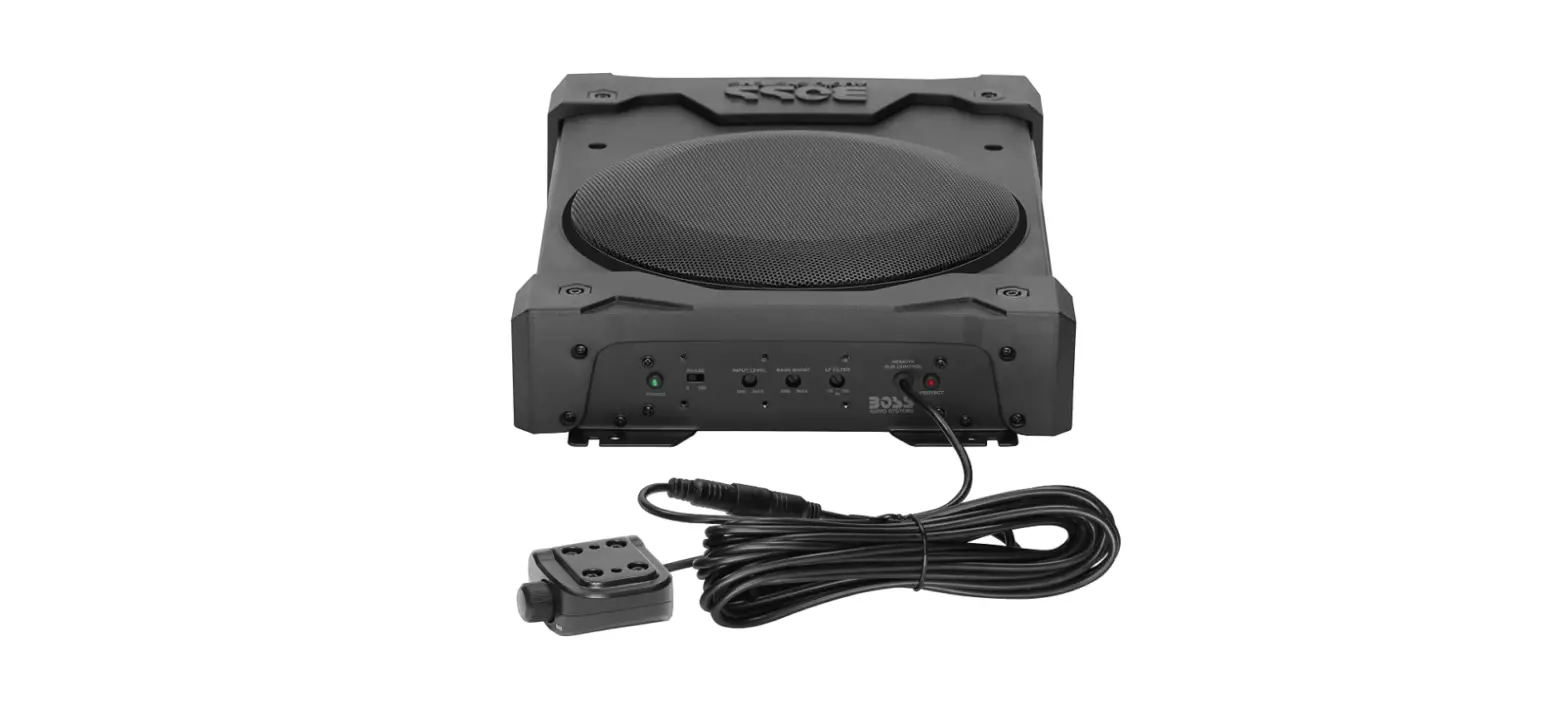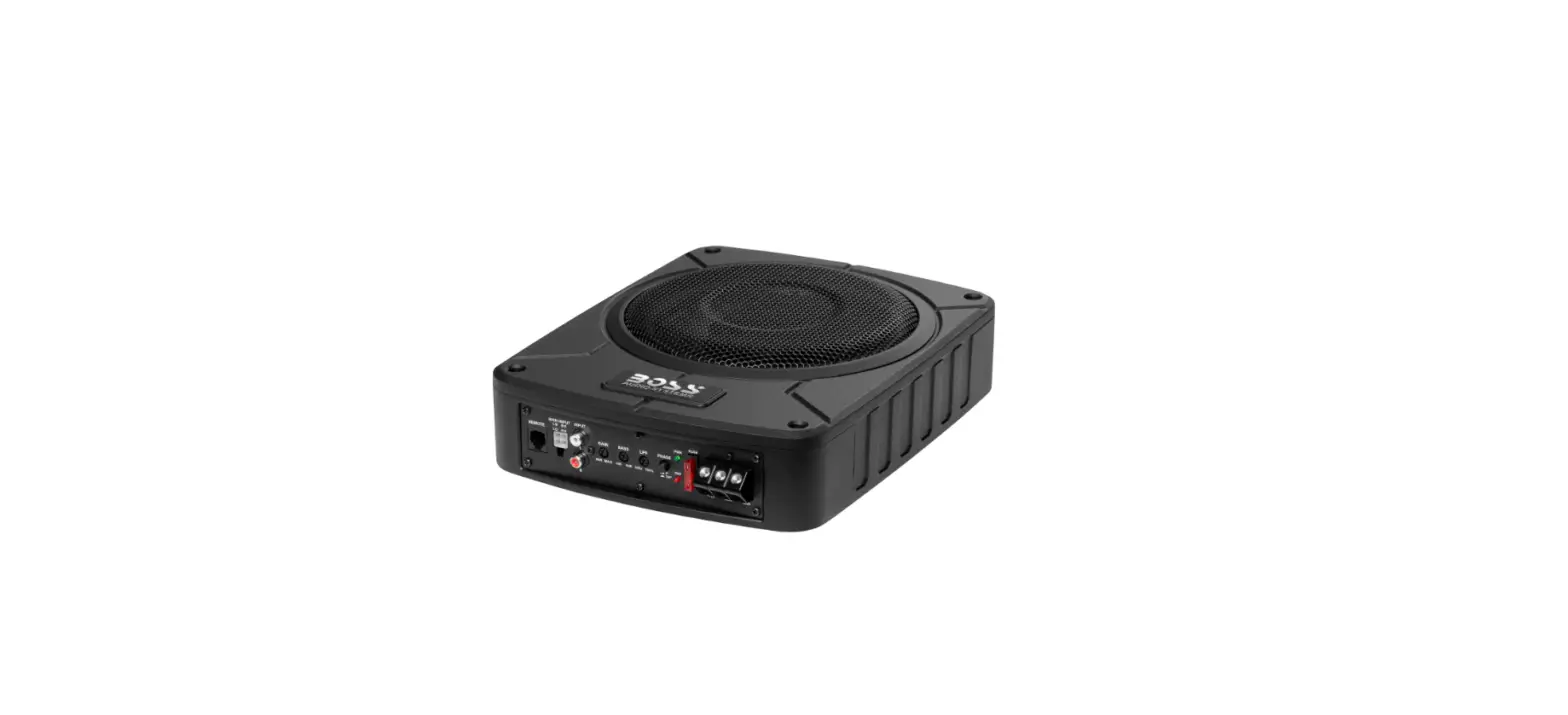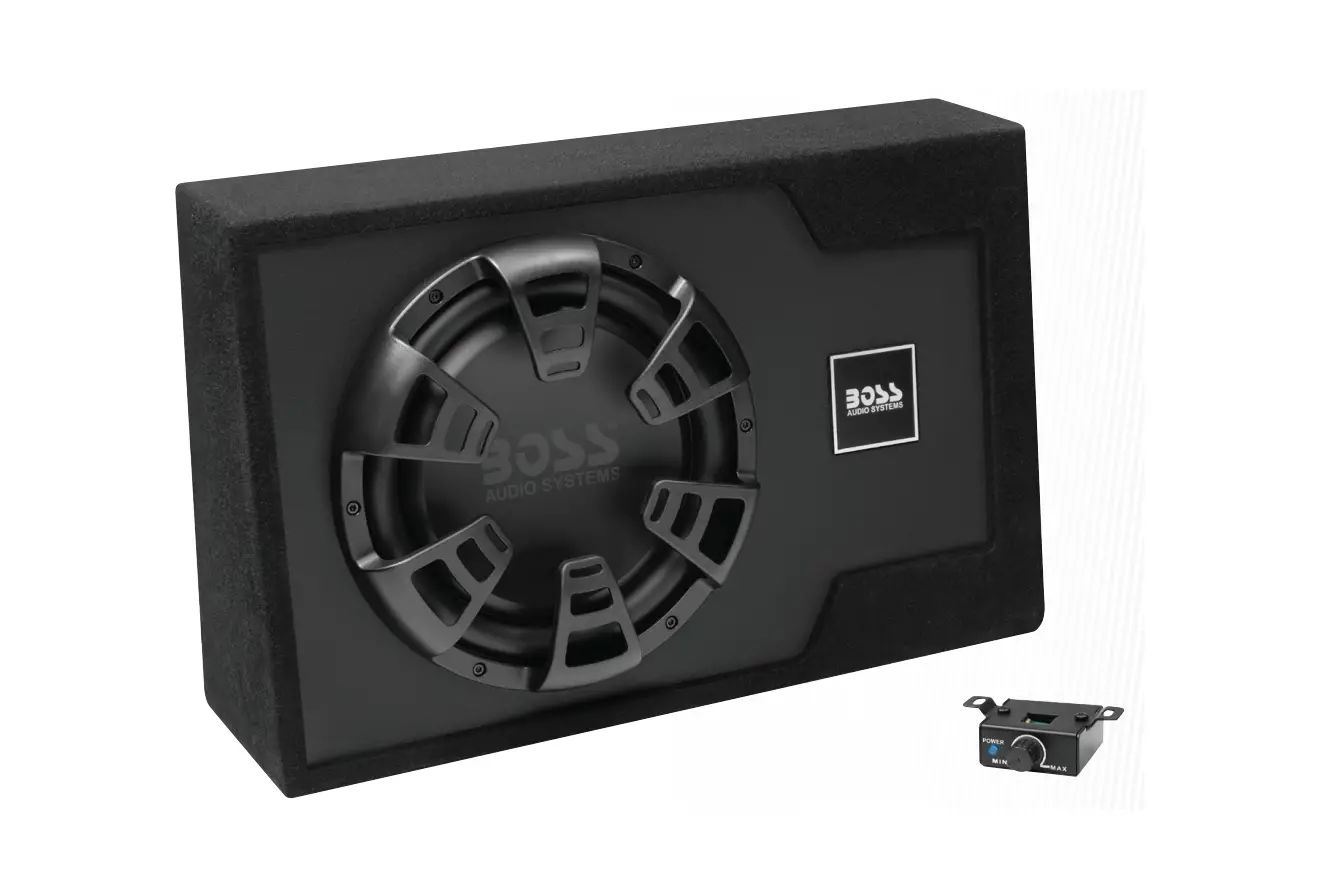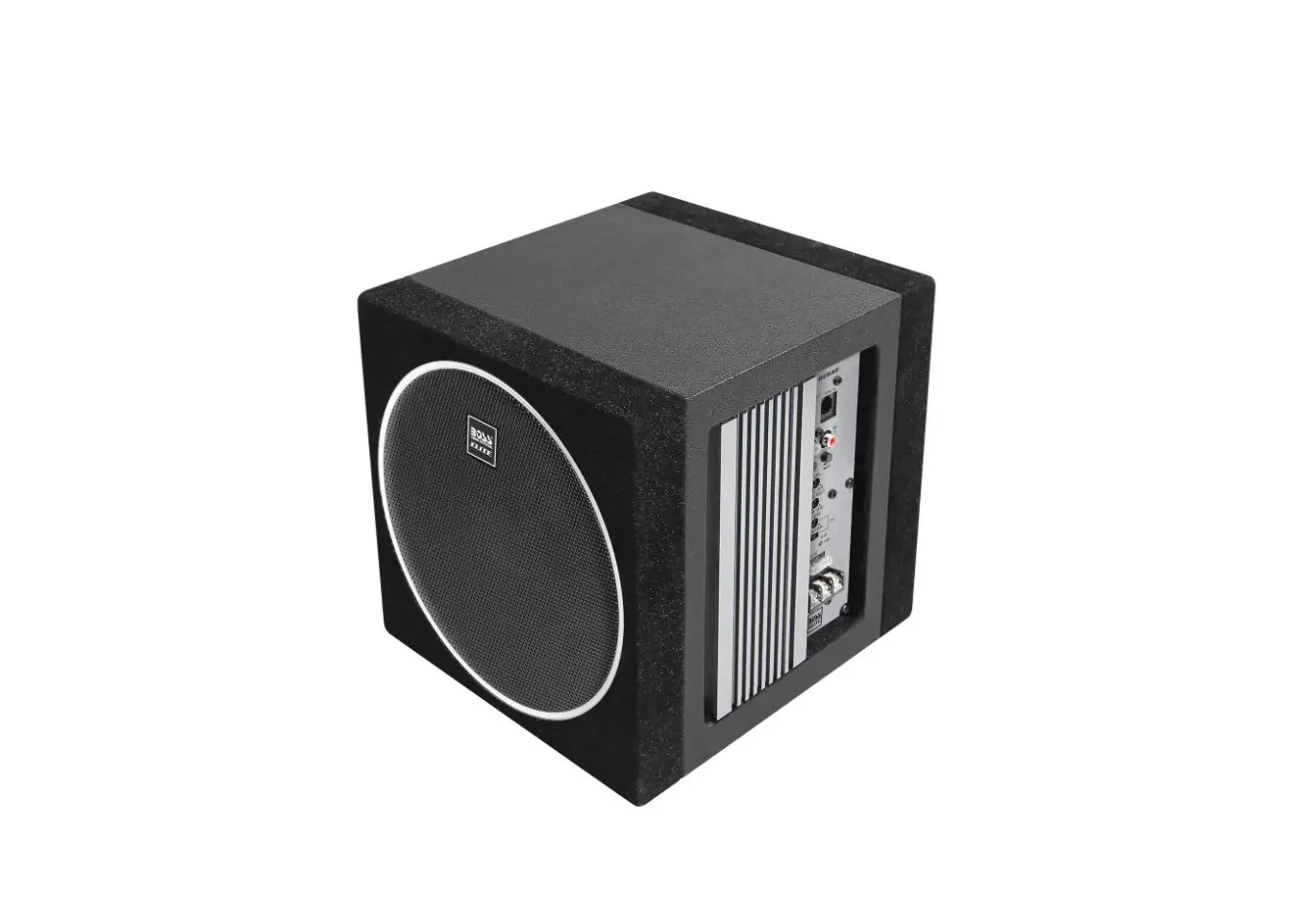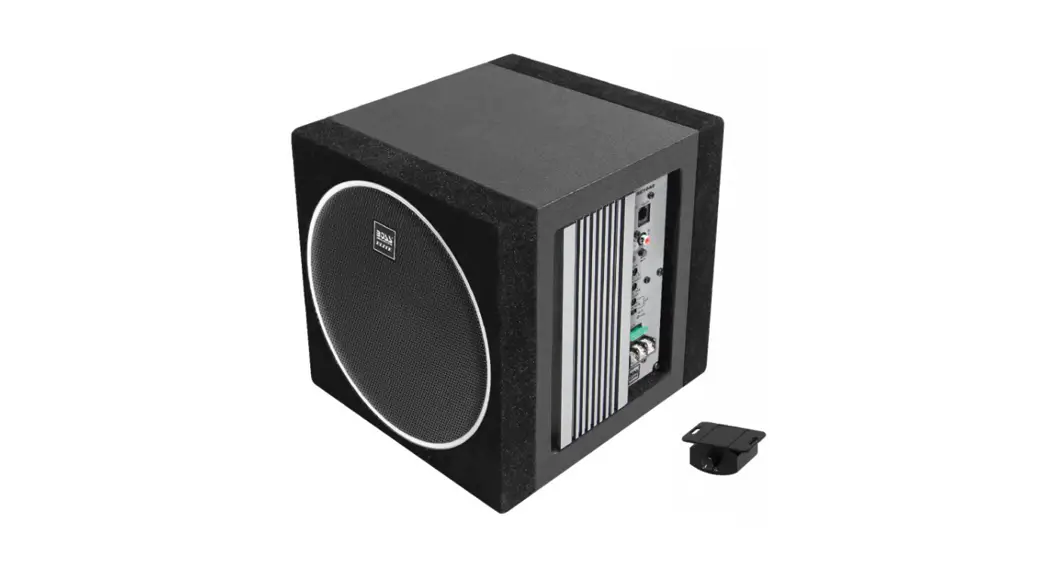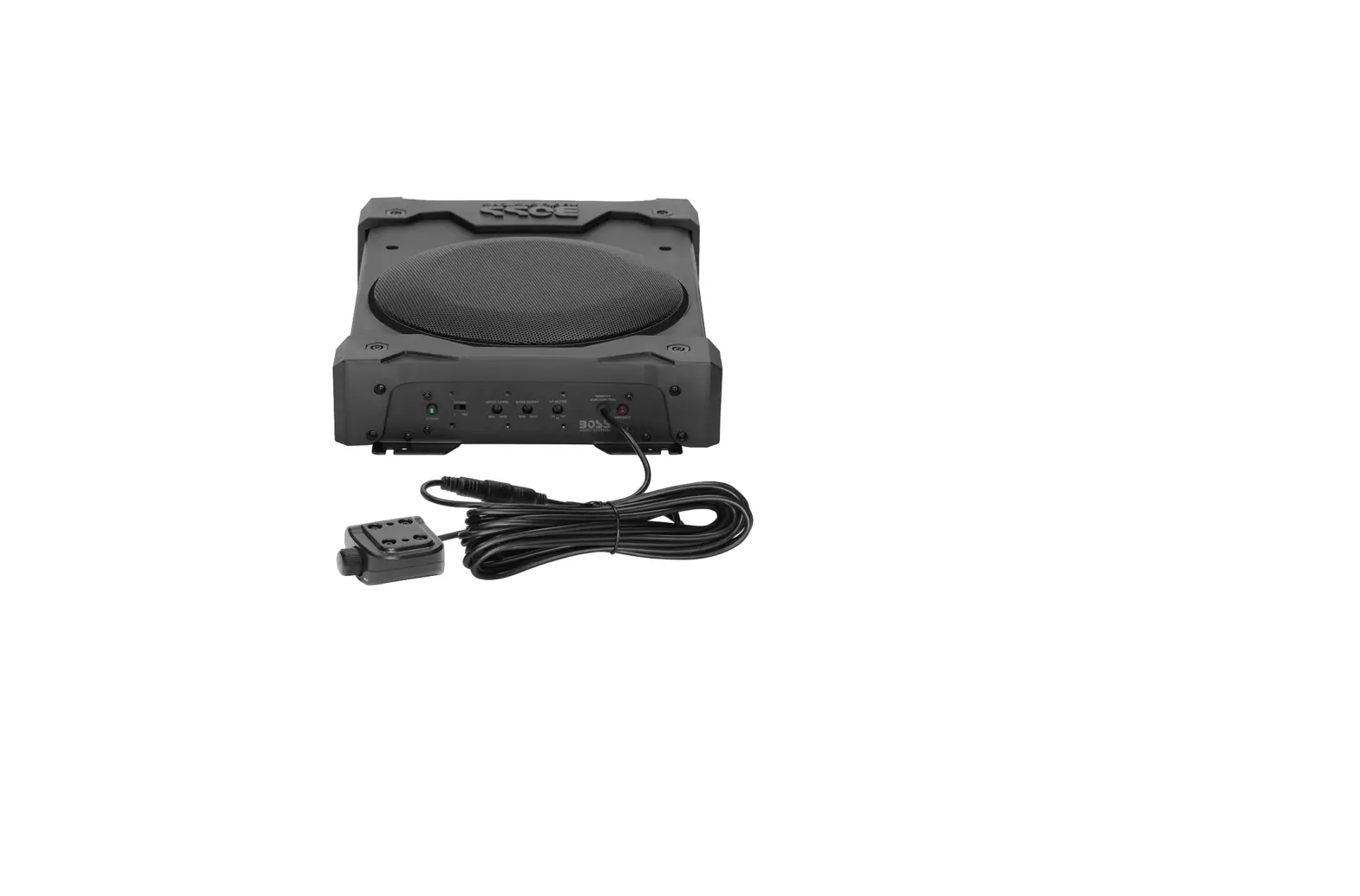

BOSS Audio Systems BPS80 Amplified Subwoofer
INTRODUCTION
This is perfect for vehicles with little space because it combines an amplifier and a subwoofer into one unit. There are a few installation alternatives with a slim design. Accept the Bass. The subwoofer is powered by an 800 watt maximum internal amplifier. An electronic circuit known as a low-pass filter eliminates all notes below the filter’s chosen frequency. The Low-pass filter is generally used to prevent high notes from coming through your subwoofer (s). High-level inputs are a frequent term for speaker level inputs. It will be utilized to link your factory radio or an aftermarket radio without low-level (RCA) inputs to the BPS80.
Line level inputs, also referred to as RCA inputs or low-level inputs, connect the BPS80 to the source device using RCA connection cables. The majority of aftermarket radios include multiple RCA output pairs that can link to various amplifiers. With Variable Bass Boost, you can customize the low bass within the boost range to your preferences. When buying through Amazon.com, BOSS Audio Systems offers a strong 3 year platinum online dealer warranty. We strongly advise having this product professionally installed to ensure proper and secure functionality.
WHAT IS INCLUDED?
When first unpacking your new amplified subwoofer, please check first that the package contains all of the items below. If something is missing, contact the store where you purchased the product. BPS80 amplified subwoofer Remote subwoofer level control Remote subwoofer control cable High level input harness/wire Mounting EVA pads and screws
FEATURES
Your new BPS80 Powered Subwoofer features the following:
- RCA low level input
- High level input
- Green LED power status indicator
- Red LED protect status indicator
- Phase selector switch: 0 or 180º
- Adjustable input sensitivity: 0.1V-1V
- Variable bass boost
- Low pass filter (50 – 100Hz)
- Soft delay remote turn-on
- Remote sub-woofer control
- Thermal, short and overload protection circuit
GENERAL PRECAUTIONS
Before installing and using your new amplified subwoofer, please become familiar with all the information contained in this manual. Please keep this manual in a safe place for future reference. Do not open or attempt to repair this unit yourself. Dangerous high voltages are present which may result in electric shock. Refer any repairs to a qualified service technician. To avoid risk of electronic shock or damage to the unit, do not permit any of this equipment to become damp or wet from water or drinks. If this does occur, immediately unplug the power wires and send the product to your local dealer or service center as soon as possible. If there is smoke or any peculiar odor present during use or if there is damage to any of the component enclosures, immediately unplug the power cord and send the product to your local dealer or service center as soon as possible .
PROTECTION CIRCUITRY
The built-in amplifier incorporates special protection circuitry which will disable the amplifier if any of the following should occur:
- Input overload
- Short circuit
- Extremely high temperatures
If any of these conditions is detected, the amplifier will go into a self- preservation mode, and the PROTECT LED on the control panel will glow in RED color.
WHAT SHOULD I DO IF THE POWER STATUS LED IS RED?
If you observe that the POWER STATUS LED IS RED, please check the system carefully to determine what has caused the protection circuit to engage. To reset the amplified subwoofer when it is in PROTECT mode, turn the power off to the system (usually by turning off the head unit or other signal source which feeds the amplifier) and then turn it on again., If the internal amplifier has shut down due to thermal overload, you should first allow it to cool down before restarting. If the shutdown was due to either an input overload or a short circuit, be sure to correct these conditions before attempting to power up the subwoofer again.
INSTALLATION PRECAUTIONS
Before you drill or cut any holes, investigate your car’s layout very carefully. Take special care when you work near the gas tank, fuel lines, hydraulic lines and electrical wiring. Never operate the subwoofer when it is unmounted. Attach all audio system components securely within the amplifier to prevent damage, especially in an accident. Do not mount this product so that wire connections are unprotected, in a pinched condition, in contact with any metal surfaces in your vehicle, or likely to be damaged by nearby objects. Before making or breaking power connections in your system, disconnect the vehicle battery. Confirm that your head unit or other equipment is turned off while connecting the input jacks and speaker terminals. If you need to replace the power fuse, replace it only with a fuse identical to that supplied with the product. Using a fuse of a different type or rating may result in damage to your audio system or your amplifier which is not covered by the manufacturer’s warranty.
FUSES
Power fuses protect both the amplifier and the electrical system of your car from fault conditions. If you must replace a fuse in your BPS80 powered subwoofer, use a fuse of exactly the same type and rating. Using a different type or rating of fuse may result in damage to your amp or vehicle or cause a fire.
MOUNTING THE SUBWOOFER
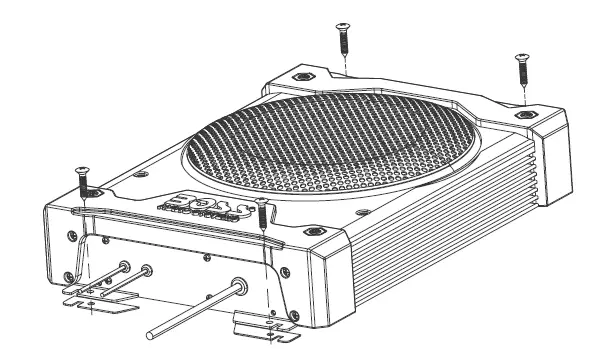
- Find a suitable location in the vehicle in which to mount the amplifier. A typical location is shown below:

- Make sure there is sufficient air circulation around the intended mounting location. Position the subwoofer enclosure where you wish to install it. Make some small marks to identify the position and remove the unit.
- Please follow below to install:
- Thoroughly clean the area you plan to attach the subwoofer, using a vacuum cleaner.
- Place an EVA pad below each mounting leg, and attach the amplified subwoofer to the surface below using the (4) self-tapping screws provided. Of course, before you drill or cut any holes, investigate your car’s layout very carefully.
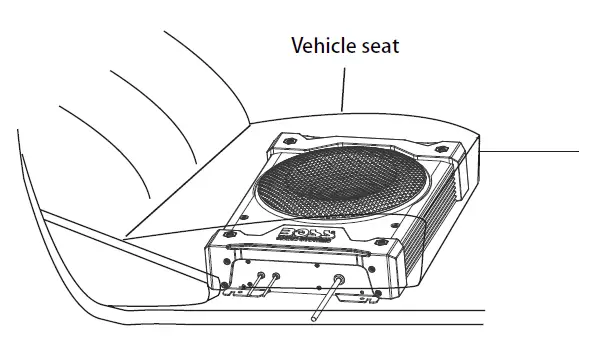
Take special care when you work near the gas tank, fuel lines, hydraulic lines and electrical wiring.
CONNECTING THE SUBWOOFER
Before doing any wiring, look through this manual and identify the diagrams to follow for power, input and speaker connections for your particular installation. Be sure you understand all the connections before you proceed.
- Connect the ground terminal to the closest point on the chassis of the vehicle. Keep this ground wire to less than 39” (100 cm) in length. Use 8 gauge (or heavier) wire.
- Connect the remote terminal to the remote output of the head unit using 16 gauge (or heavier) wire.
- Connect an empty fuse holder within 18” (45 cm) of the car battery, and run 8 gauge (or heavier) cable from this fuse to the amplifier location.
- Check that the fuse holder is empty. Then connect the fuse holder to the “BATT+” connection on the amplifier.
- Connect all line inputs and outputs (if used) using high-quality cables. Connect all speakers, following the diagrams in this manual. Be sure to observe proper polarity to avoid audio phase problems.
- Insert fuse(s) into the battery fuse holder(s).
- Recheck all connections before powering up the subwoofer.
- Set all level controls to minimum position, and set all crossover controls/switches to the desired frequency points.
- Power up the head unit and the subwoofer. Then set the volume control on the head unit to about 3/4 volume, and adjust the subwoofer’ controls to just below the level of distortion.
- Further fine tuning of the various controls may be necessary to obtain best results.
Don’t misuse the level control! Do not mistake the input level control for a volume control! It is designed ONLY to match the output level of your audio source to the input level of your subwoofer. Do not adjust this input level to maximum unless your input level requires it. Ignoring these instructions will result in an input overload to the amplifier in the subwoofer, and excessive audio distortion. It can also cause the protection circuit to engage.
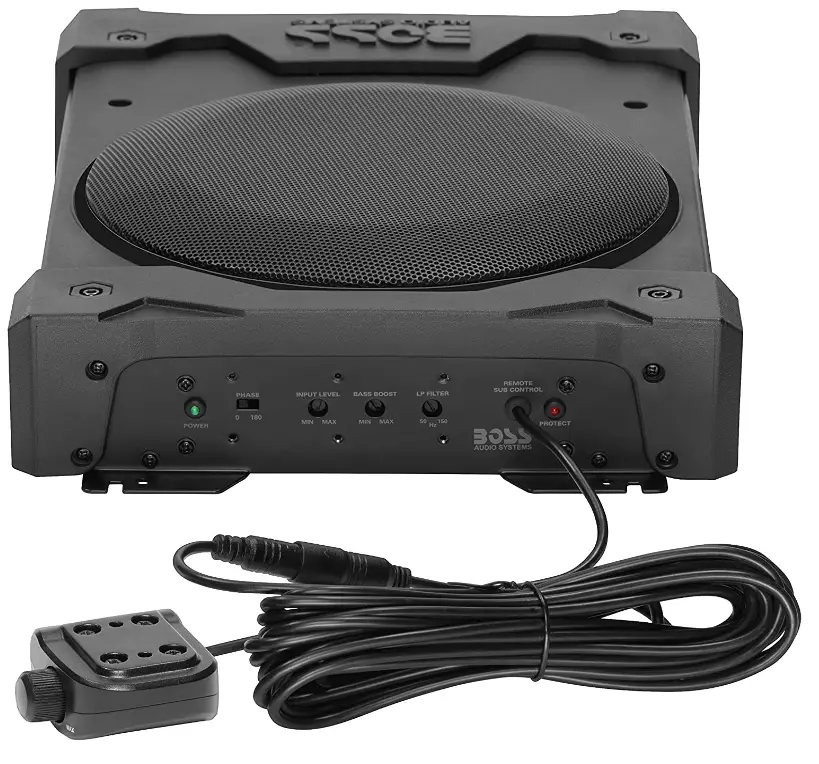
FRONT PANEL CONTROLS AND FEATURES
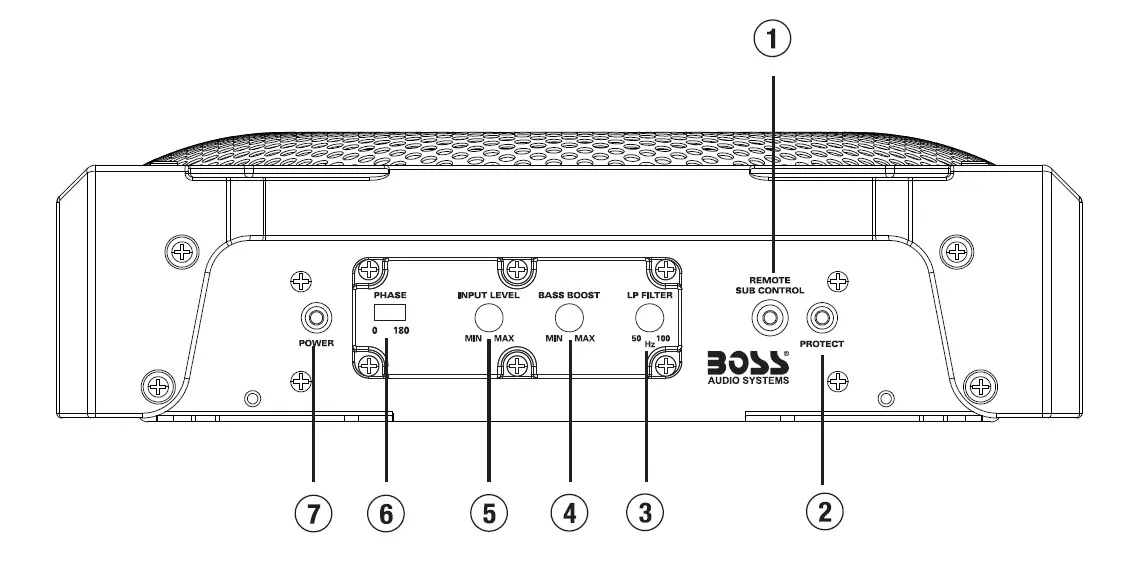
REMOTE LEVEL CONTROL PORT
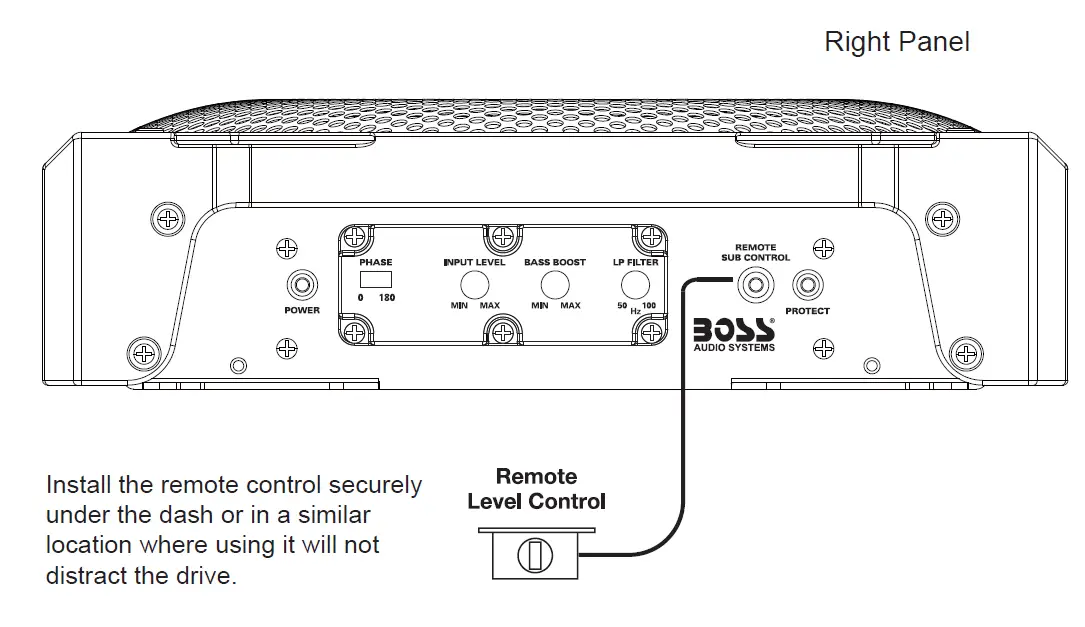
Attach the included remote level control to the port to control the volume level of the subwoofer independently.
PROTECT STATUS LED
This LED will be red if one of the protection circuits comes on.
LOW PASS FILTER
This control permits you define the frequency range you want the subwoofer amplifier to receive. The subwoofer will reproduce all sound BELOW the frequency you set.
If the rest of your system is weak on the mids, you may wish to set this control relatively high. If the midrange is well covered by the rest of your system, you will probably want the subwoofer to only receive lower frequency signal.
BASS BOOST
The bass boost feature will increase the sound level in the bass frequencies.
INPUT GAIN CONTROL
After you have installed your system, turn this control to minimum:
- Turn the head unit on (and the subwoofer will turn on via the remote connection). Turn the head unit volume to about 2/3 full level.
- Slowly turn up the subwoofer input gain control until you hear a small amount of distortion. Then reduce the level until the distortion is completely gone. Leave the control at this setting.
PHASE SHIFT
Use this switch to help compensate for time alignment problems in the system. Such problems usually result from having the subwoofer at a different distance from the listener than the other speakers in the system.
POWER STATUS LED
This LED is green when power is on and no problems are present.
REAR PANEL CONTROLS AND FEATURES
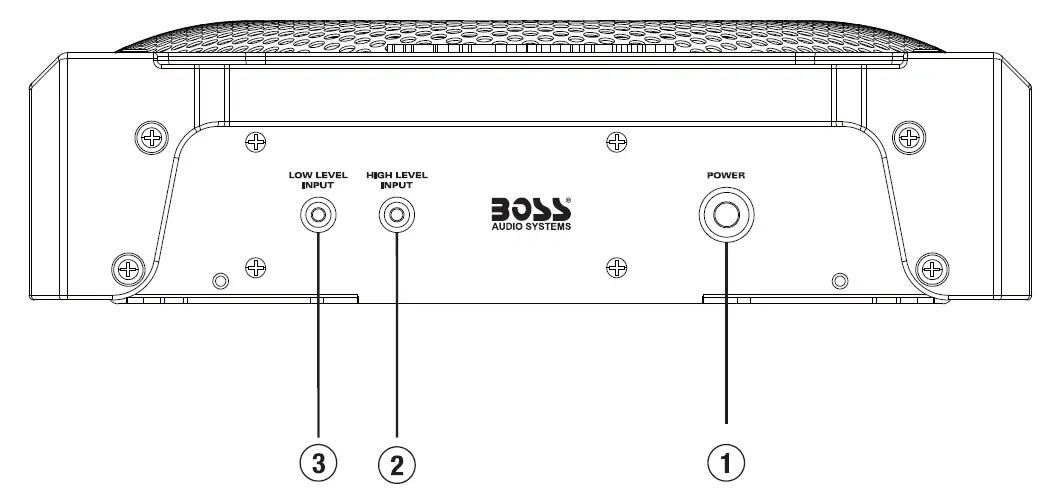
POWER
Connect the power cable terminals as per the wiring label on the power cable. Namely, RED to BATT +12V, BLACK to a good chasis ground, BLUE to remote The fuse is rated at 20A. Do not use a fuse with a different value and NEVER replace the fuse with a wire or coin.
HIGH LEVEL (SPEAKER LEVEL) INPUTS
If your head unit does not have RCA outputs, you can use the speaker outputs for the audio source for the BPS80.Use the supplied cable and wire harness and connect the outputs properly as shown in the connection diagram in this manual.
LOW LEVEL RCA INPUTS
Low level inputs are the recommended way to introduce the audio signal to the subwoofer if RCA outputs are present on your head unit or other signal source (such as a sound processor).
LOW LEVEL INPUT WIRING
Low-level (RCA) input wiring is preferred for best audio performance. Most trunk or hatchback installations will require a 15-20 foot RCA cable, while pickup trucks and under-seat installations will require a 6-12 foot RCA cable. Always use a high- quality cable
NOTE: Do not connect BOTH the high level and low level inputs from your receiver to your amplifier at the same time!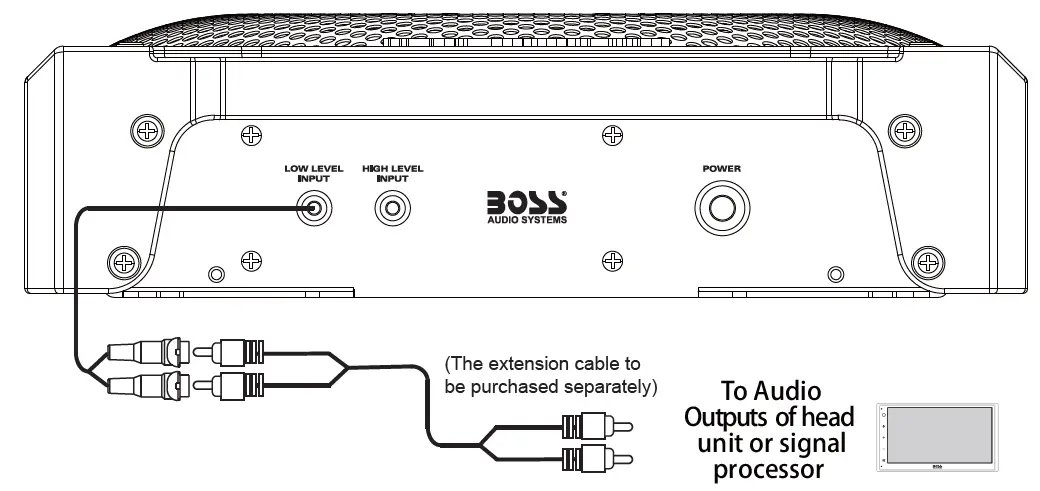
HIGH LEVEL INPUT WIRING
The high level input(s) should only be used when your receiver lacks RCA outputs. If the RCA outputs are not present, connect the speaker outputs from the receiver to the high level input connector of the amplifier. Be sure to observe polarity to avoid audio phase problems.
NOTE: Do not connect BOTH the high level and low level inputs from your receiver to your amplifier at the same time!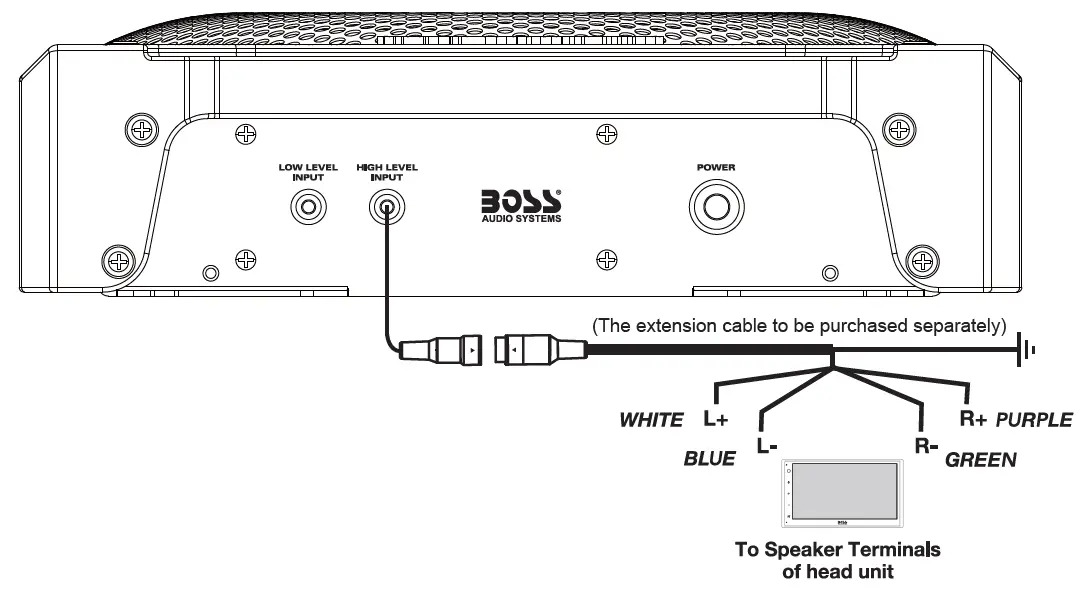
POWER CONNECTIONS
Connect the ground terminal to the closest point on the chassis of the vehicle. Keep this ground wire to less than 39” (100 cm) in length. Use 8 gauge (or heavier) wire. Connect the remote terminal to the remote output of the head unit using 16 gauge (or heavier) wire. Connect an empty fuse holder within 18” (45 cm) of the car battery, and run 8 gauge (or heavier) cable from this fuse to the amplifier location. Then connect the fuse holder to the “BATT+” connection on the subwoofer rear panel.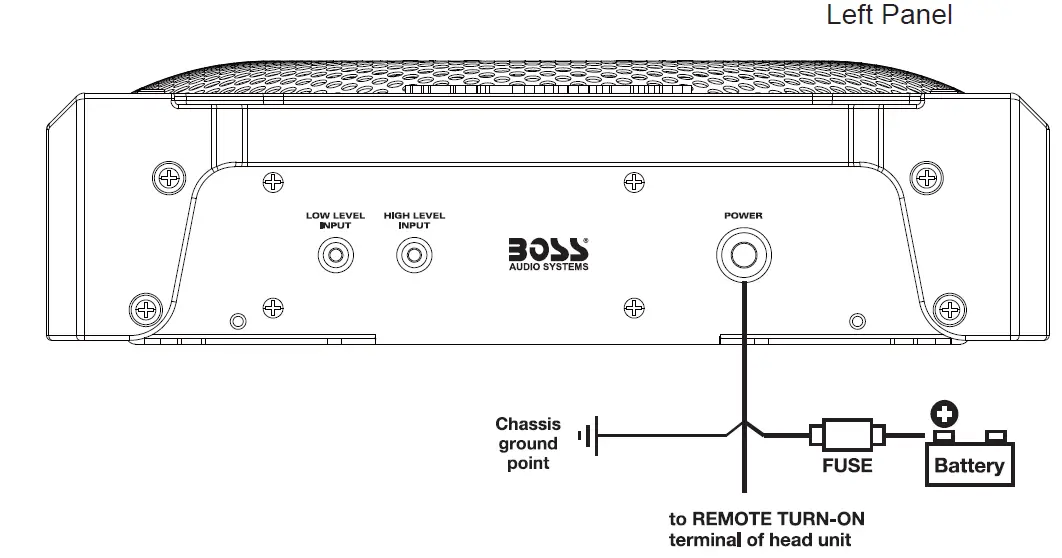
REMOTE LEVEL CONTROL CONNECTION
TROUBLESHOOTING
If you experience operation or performance problems with this product, compare your installation with the electrical wiring diagram on the previous pages. If problems persist, read the following troubleshooting tips which may help eliminate the problems.
| Amplifier will not power up. | Check to make sure you have a good ground connection. Check that the Remote Input (Turn-On) has at least 3VDC. Check that there is battery power on the (+) terminal. Check that there is at least 12v. Check all fuses, replace if necessary. Make sure that the Protection LED is not illuminated. If it is lit, shut off the amplifier briefly, and then repower it. |
| Protection LED comes on when amplifier is powered up. | Turn down the volume control on the head unit to prevent overdriving. Reset the amplifier. If the Protection LED still comes on, then the amplifier is faulty and needs servicing. |
| No output. | Check that all fuses are OK. Check that unit is properly grounded. Check that the Remote Input (Turn-On) has at least 3VDC. Check that the RCA audio cables are plugged into the proper inputs. Check all speaker wiring. |
| Low output. | Reset the Level Control. Check the Crossover Control settings. |
| High hiss in the sound. | Disconnect all RCA inputs to the power sub’s control panel. If the hiss disappears, then plug in the component driving the amplifier and unplug its inputs. If the hiss disappears at this point, go on until the faulty/noisy component is found. It is best to set the amplifier’s input level control as low as possible. The best subjective signal-to-noise ratio is achieved in this manner. Try to set the head unit as high as possible (without distortion) and the amp input level as low as possible. |
| Squealing noise is present. | Check for improperly grounded RCA interconnects. |
| Distorted sound. | Check that the Input Level Control is set to match the signal level of the head unit. Always try to set the Input Level as low as possible. Check that all crossover frequencies are properly set. Check for short circuits on the speaker leads. |
| Amplifier gets very hot. | Check that the minimum speaker impedance for the amp model is correct. Check that there is good air circulation around the amp. In some applications, it may be necessary to add an external cooling fan. |
| Engine noise (static type) | This is usually caused by poor quality RCA cables, which can pick up radiated noise. Use only the best quality cables, and route them away from power cables. |
| Engine noise (alternator whine) | Check that the RCA grounds are not shorted to the vehicle chassis. Check that the head unit is properly grounded. |
SPECIFICATIONS
- MAXIMUM POWER: 400W
- THD: <0.5%
- SIGNAL-TO-NOISE RATIO: >68dB
- FREQUENCY RESPONSE: 20Hz – 100Hz
- INPUT SENSITIVITY, HIGH LEVEL:4V
- INPUT SENSITIVITY, LOW LEVEL: 90mV
- LOW PASS FILTER: 50Hz -100Hz
- BASS BOOST: 0 to +12dB
- FUSE RATING: 20A
- DIMENSIONS: 10-1/4” x 14-3/8” x 3” (260 x 365 x 76mm)
FAQs
How can I get the finest sound out of my subwoofer?
Your subwoofer should be positioned facing outward into the rest of the room and within 8–12 inches of a wall for the best sound quality.
Why doesn’t my powered subwoofer function?
Your subwoofer was likely blown if it ceased functioning. Check by unplugging and replugging the subwoofer.
Is the Boss amp brand reliable?
Great solid state amplifiers from Boss are well recognized for coming in combination and head unit varieties.
What setting should my subwoofer be on?
Simply adjust the subwoofer volume in a radio or computer system such that it sounds best from the chair you often sit in.
Can I always have the powered subwoofer on?
Yes, as long as your subwoofer includes an auto standby mode, you can leave it on constantly. Subwoofers that are in standby use less energy and last longer.
What happens if a subwoofer is overpowered?
Turning it up is nice, but doing so causes the sound to get distorted. In addition to sounding horrible, doing this repeatedly can harm your speakers and subwoofers.
How can I tell if my subwoofer is functioning?
To determine whether your sub has blown, test the sound at a low volume. If the sound is distorted or nonexistent, your subwoofer may be partially blown.
The boss audio system is it water resistant?
BOSS Audio Systems Marine delivers watertight and water-resistant marine audio equipment that has been thoroughly researched and developed to endure the challenging marine environment.
Are subs with more power better?
In general, a more powerful subwoofer is favored over a less powerful subwoofer since it will play louder and handle lower frequencies with more accuracy.
What subwoofer wattage is ideal?
What is the subwoofer’s wattage? Generally speaking, it is preferable to use at least 300 watts.
How good of a signal-to-noise ratio should a subwoofer have?
For a phono, a good signal to noise ratio is typically thought to be 60 dB or higher.
Can I connect the pre out of my subwoofer?
Subwoofers have their own internal amplifier, therefore using a pre-out connection in this situation is frequently advantageous.
How can one obtain deep bass?
Use a low-pass filter to remove the higher frequencies from the bass notes before shaping the sound with the amplitude and filter envelopes for deep bass.
How long does it take for subwoofers to break in?
We recommend a solid break in time of 20–24 hours. Overnight, you can set it up with a strong, clear signal. You are now prepared to install and continue your journey.
Do subwoofers get too hot?
Due to the plateaus in the signal, the subwoofer moves less than usual when clipping is present.