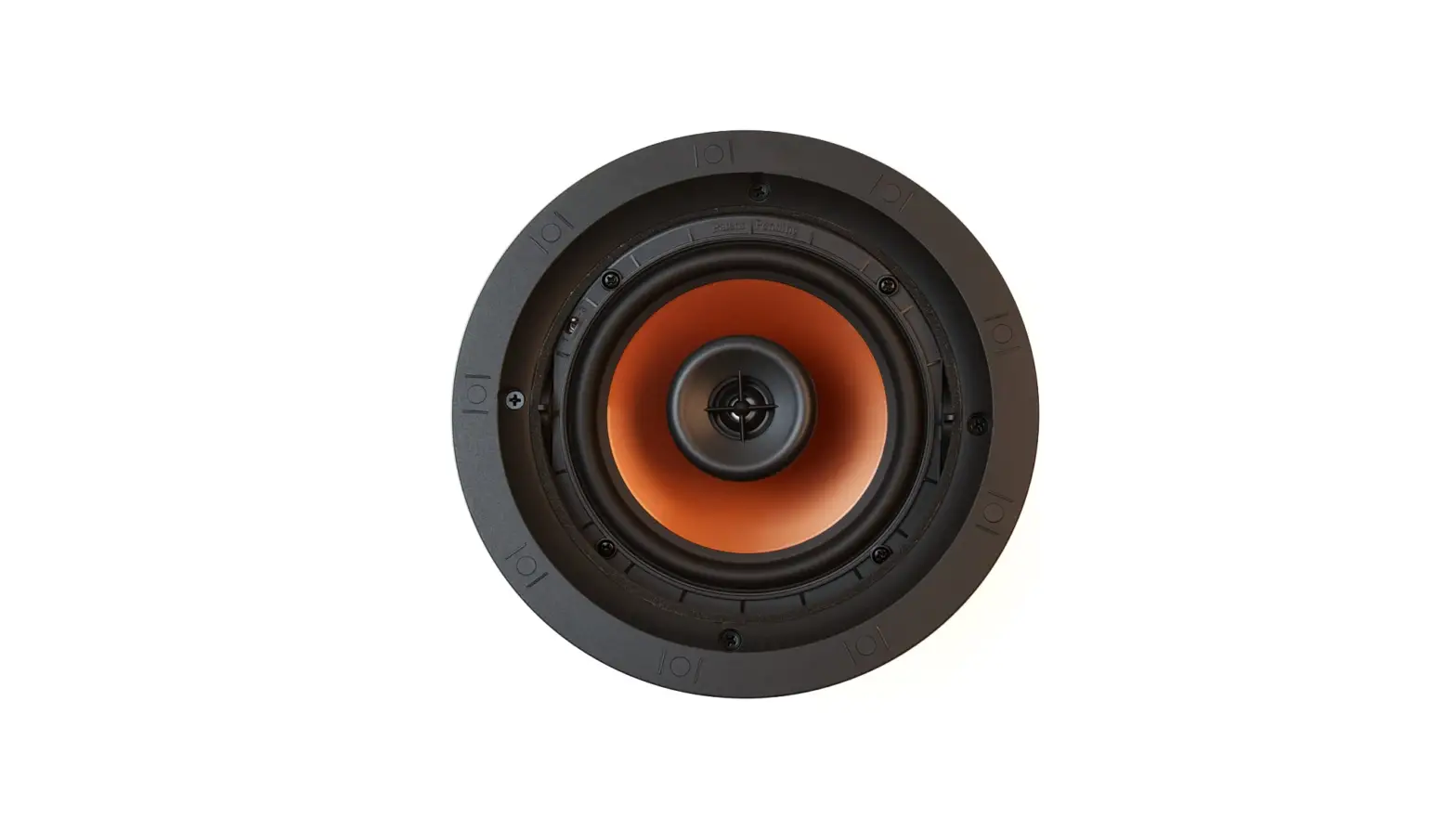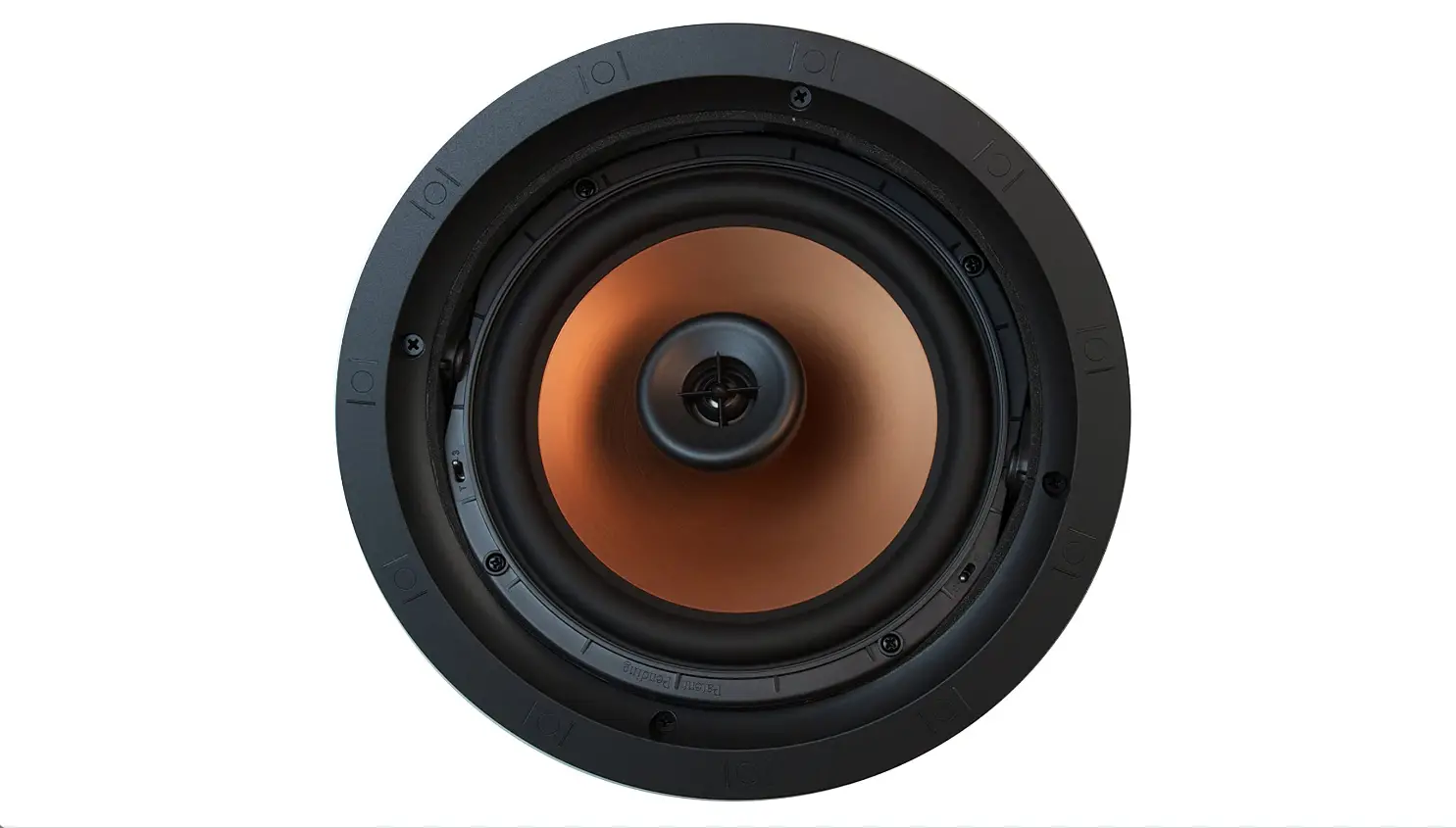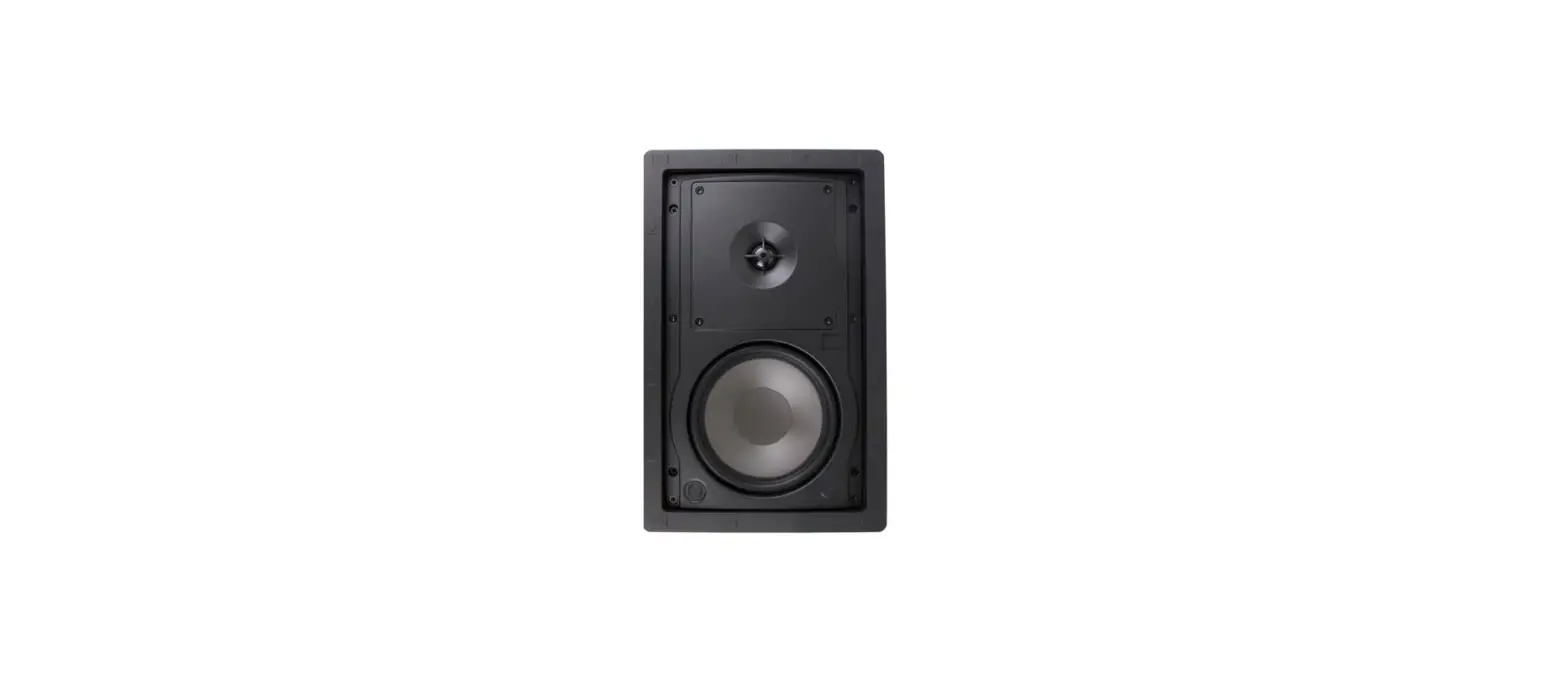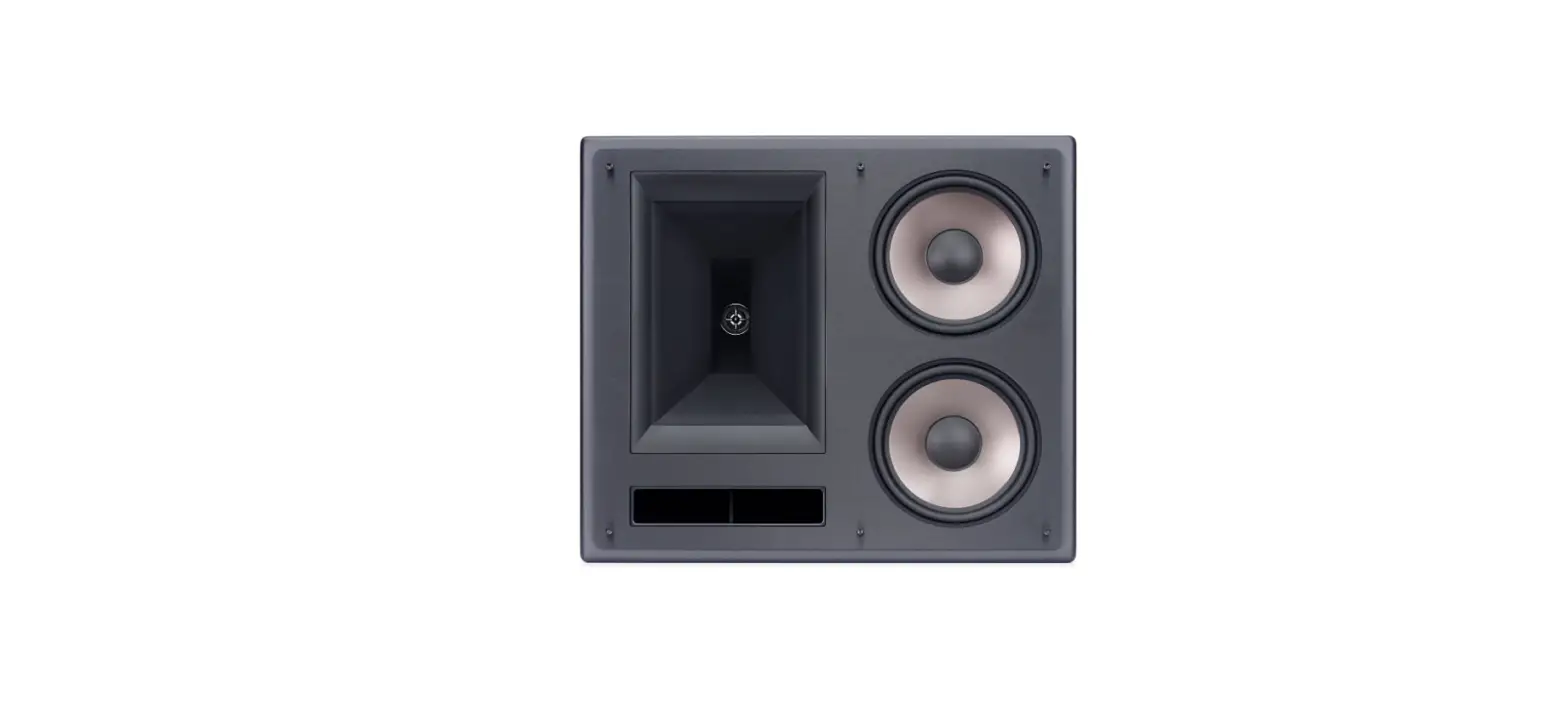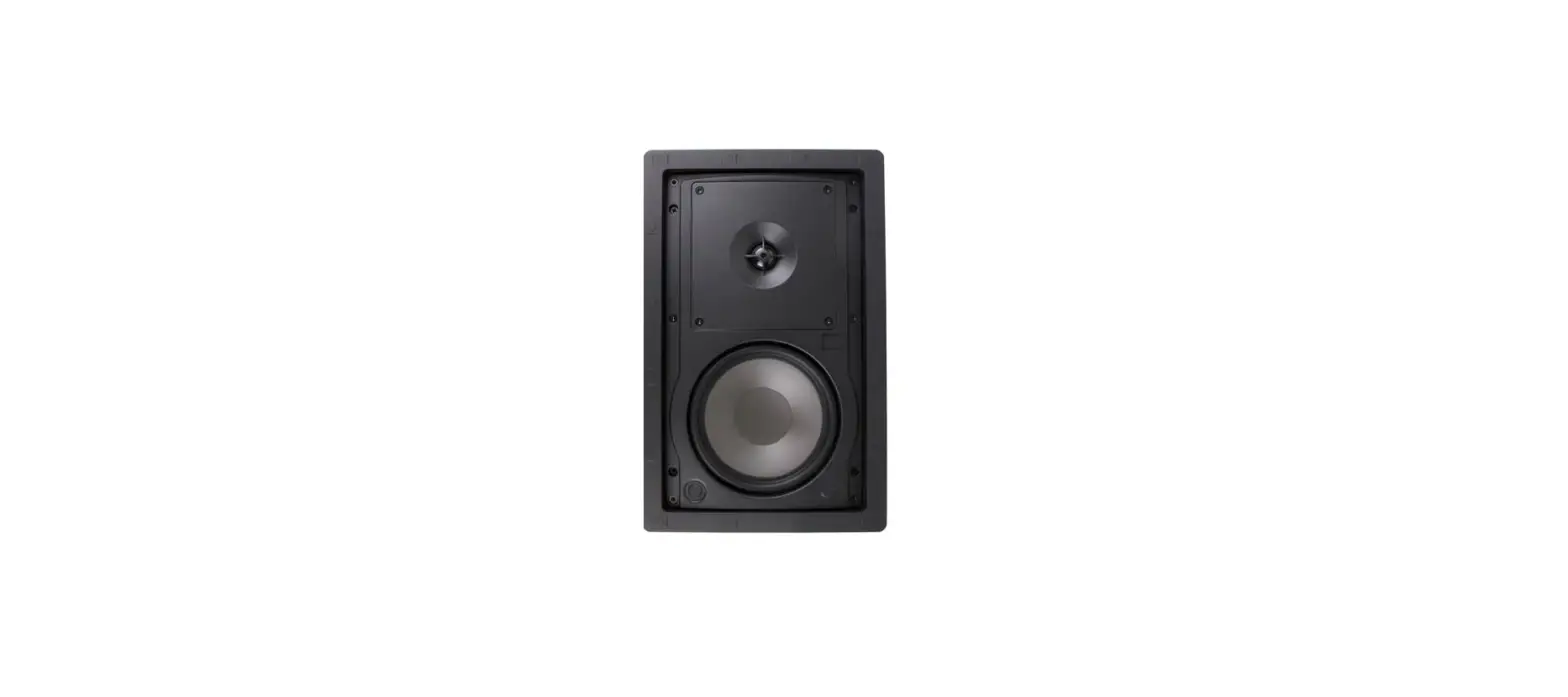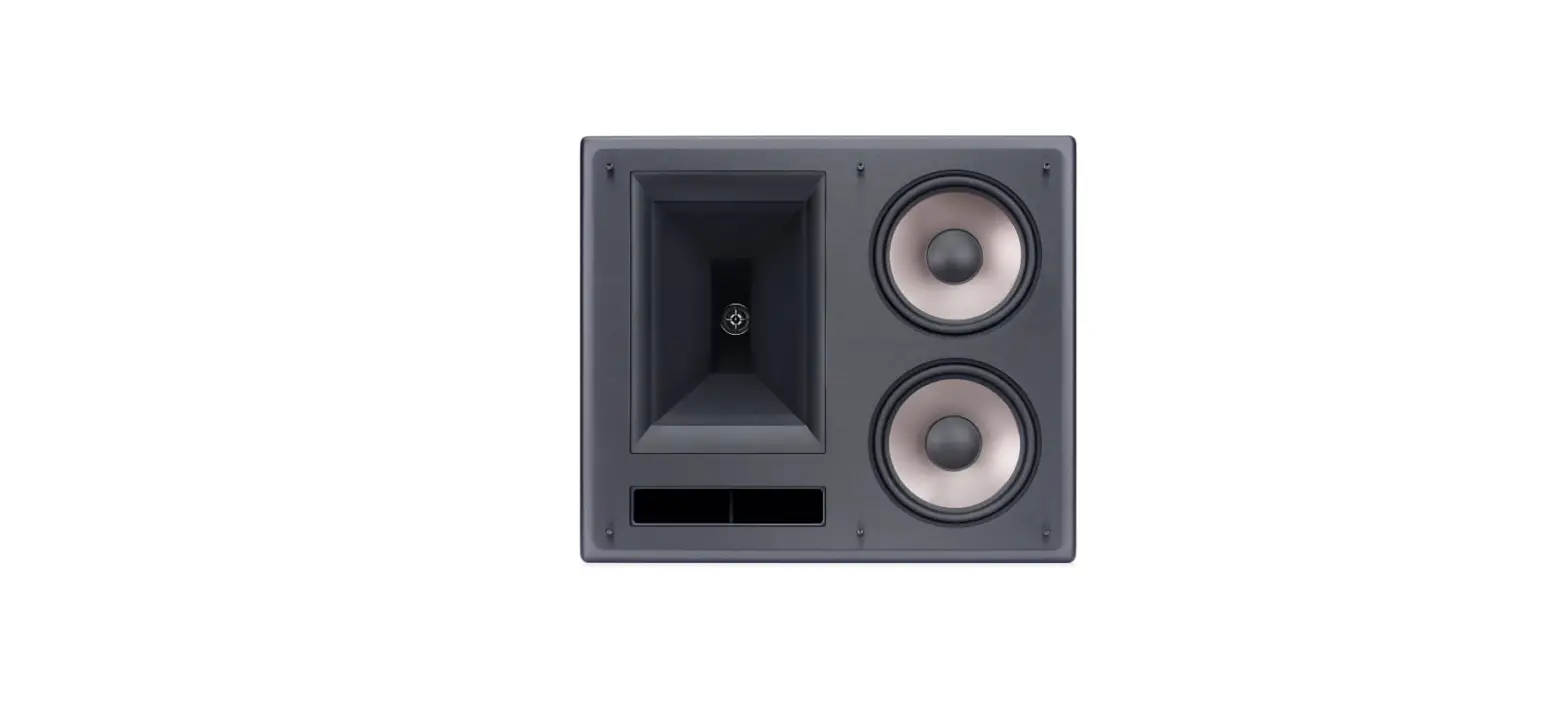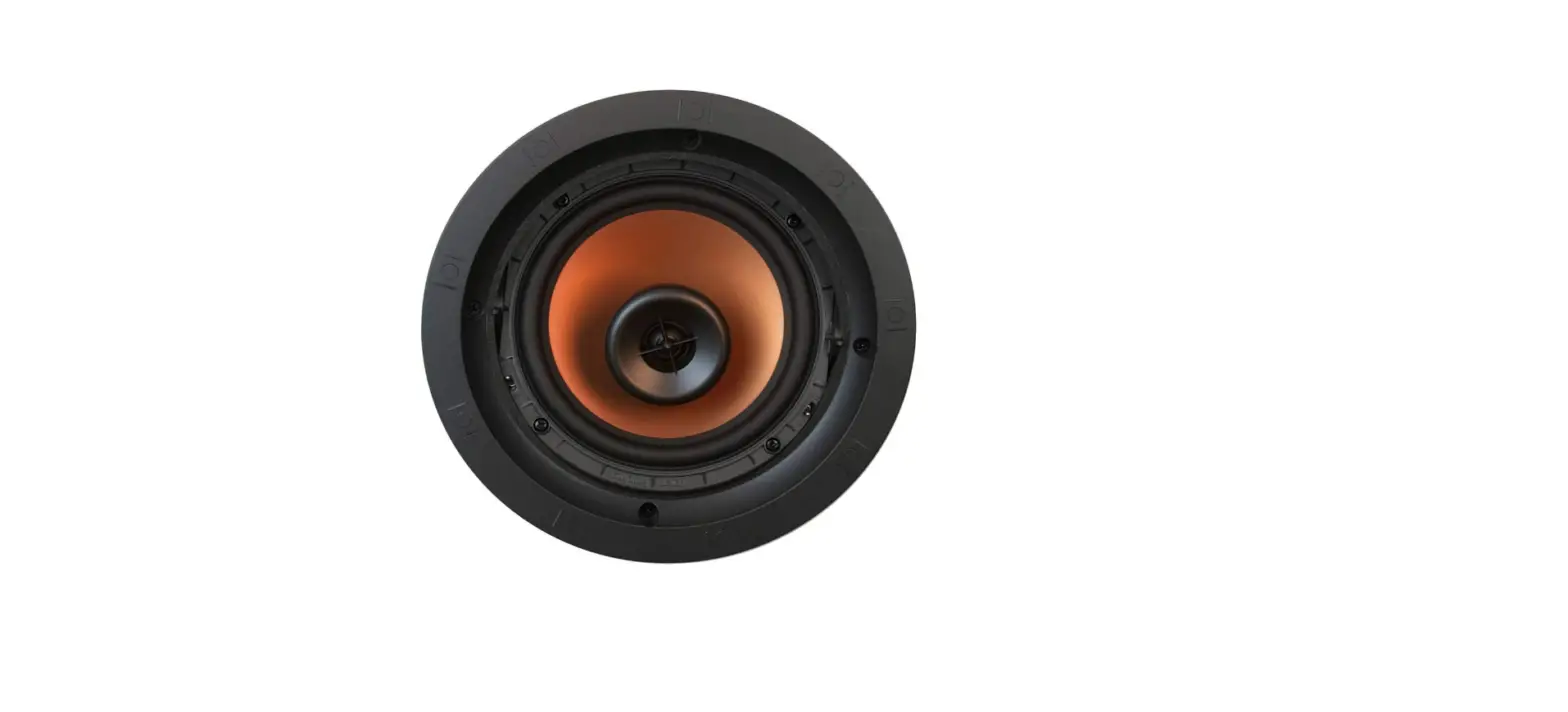
 Klipsch CDT-5650-C II In-Ceiling Speaker
 Klipsch CDT-5650-C II In-Ceiling Speaker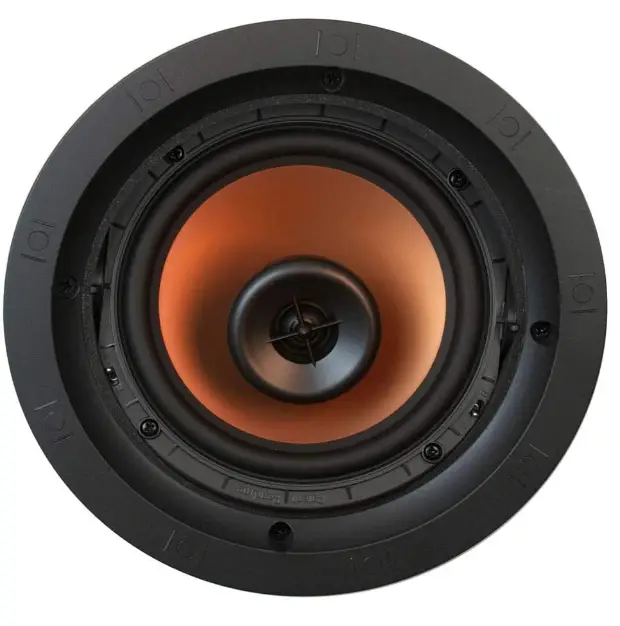
Specifications
- FREQUENCY RESPONSE: 63Hz – 23KHz +/– 3dB
- SENSITIVITY: 94dB @ 2.83V / 1m
- NOMINAL IMPEDANCE: 8 ohms compatible
- CROSSOVER FREQUENCY: 2440Hz
- POWER HANDLING: 50W RMS / 200W Peak
- RECOMMENDED AMPLIFIER POWER: 100 W
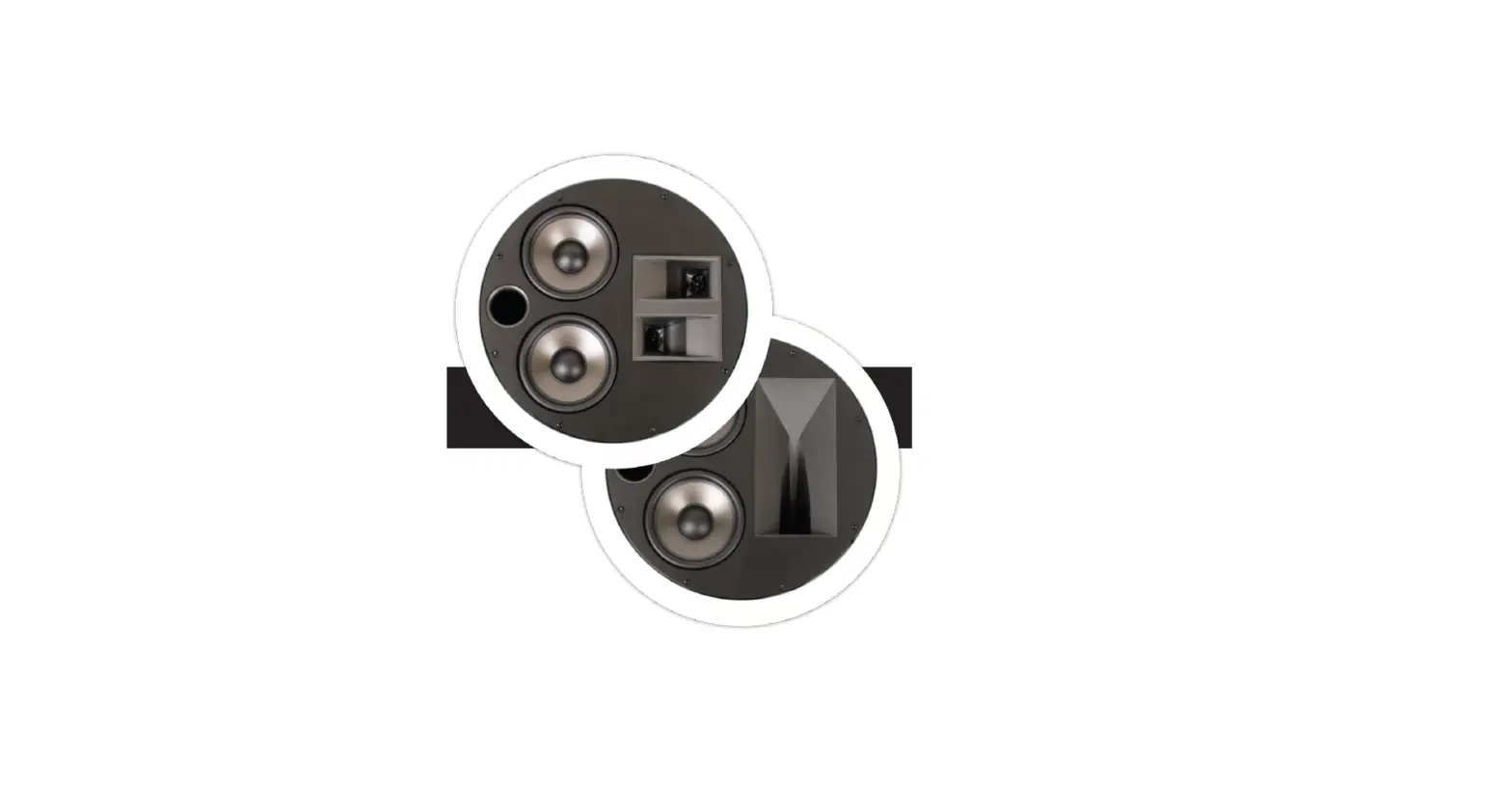
- HIGH FREQUENCY DRIVER: 1” (2.54cm) titanium diaphragm compression driver mated to a swiveling 100° round Tractrix® Horn
- LOW FREQUENCY DRIVER:5” (16.51cm) pivoting Cerametallic™ cone woofer
- ENCLOSURE MATERIAL/TYPE: ABS/Infinite baffle, front flush with wall
- WIRE GAUGE ACCOMMODATED: 12 ga
- DIAMETER: 9.5” (24.13cm)
- CUTOUT DIMENSIONS:3” (21.08cm)
- MOUNTING DEPTH:5” (11.43cm)
- WEIGHT: 7 lbs. (3.18kg)
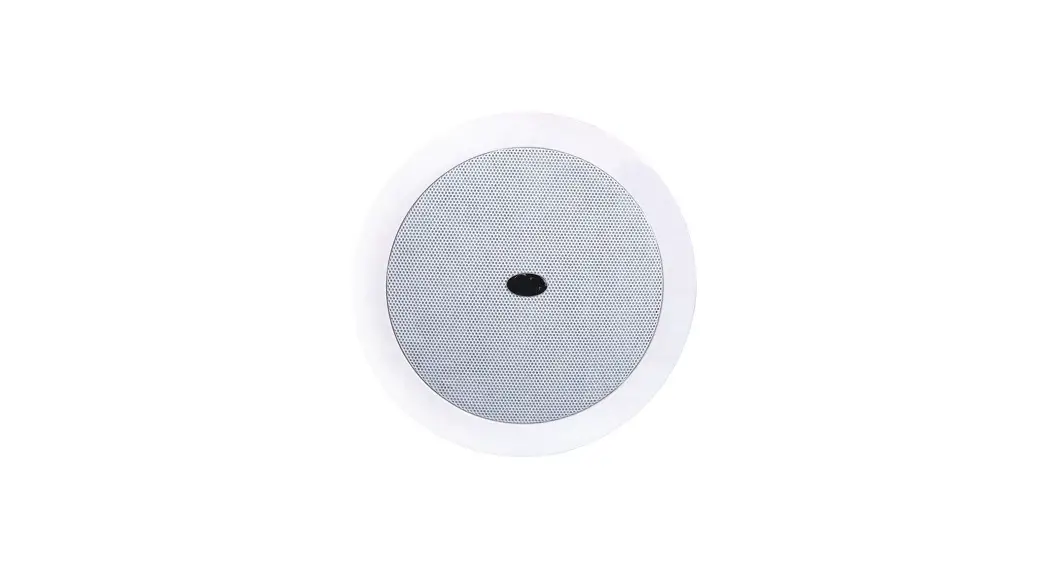
- FINISH: White paintable frame and grille
- INSTALLATION KIT: IK-650-C (sold separately)
- FIRE RATED ENCLOSURE: ME-650-C (sold separately)
- BUILT FROM: 2012
Introduction
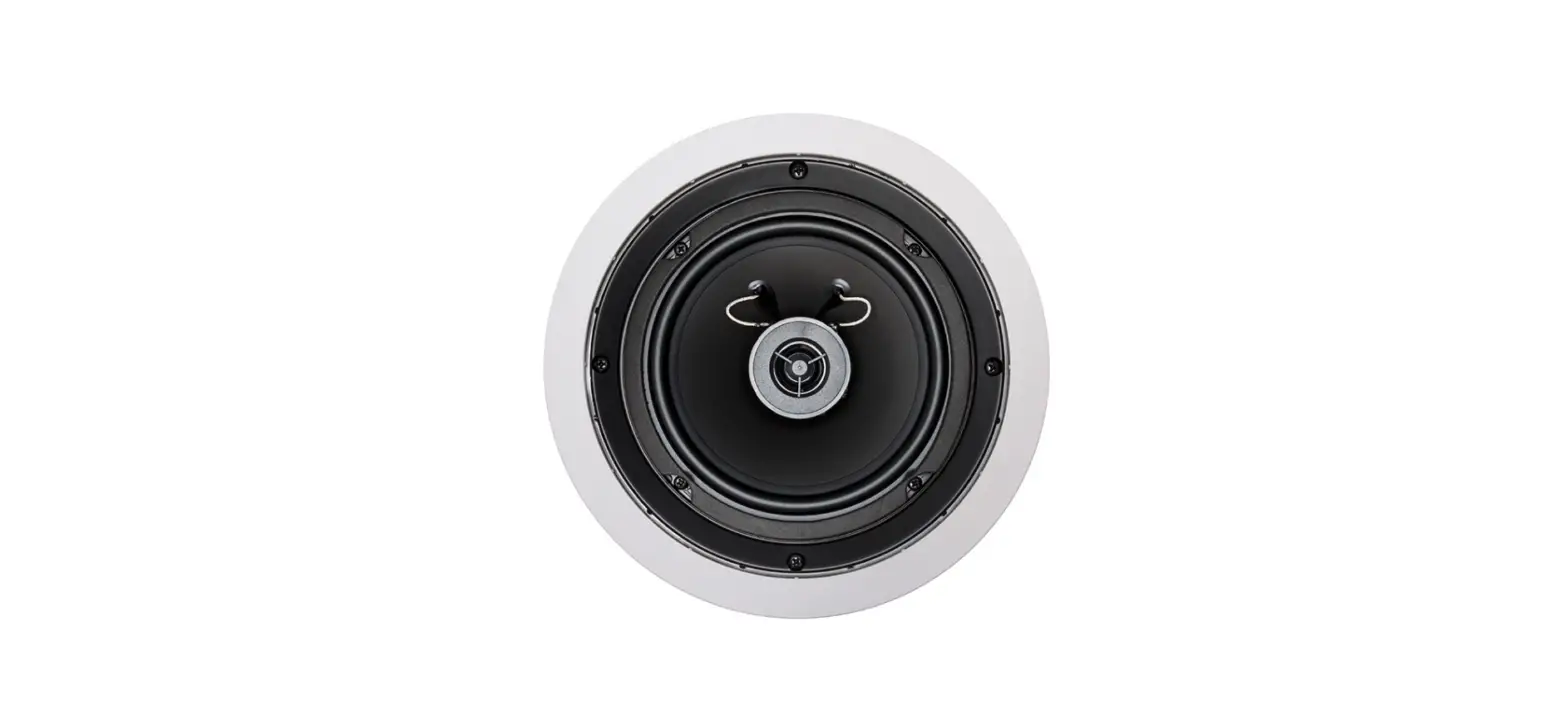
Klipsch created the CDT-5650-C II to satisfy consumer demand for a high-performance in-ceiling loudspeaker that readily overcomes the inherent restrictions of fixed positions as integrated whole-house audio systems gain popularity.
The Klipsch CDT-5800-C II preserves the basic technology of a 6.5″ Cerametallic woofer and a premium 1″ Titanium compression driver (tweeter) coupled to a proprietary Tractrix® Horn. With improvements to both high frequency and low frequency reproduction as well as a new low-profile, more attractive grille, it remains a high-performance option for anything from 2-channel music playing to full, large room surround sound application.
The acoustic output is increased while distortion is greatly reduced via Klipsch horn-loaded technology. The symmetrical, 100° Tractrix Horn compression driver (tweeter) and woofer can be separately pointed toward the primary listening area thanks to proprietary Controlled Dispersion Technology. While the woofer can pivot 15 degrees in any direction and spin 360 degrees, the tweeter can swivel. Compared to usual friendly, broad dispersion, standard dome tweeters, the horn-loaded tweeter’s finely regulated dispersion ensures that high frequencies are channeled towards the listening area more effectively. This results in an overall sound with a more realistic impact, more detail, and improved vocal clarity. The woofer’s capacity to additionally direct more narrowly dispersed midbass frequencies is paired with this.
The one-inch, solid-formed, extremely light metallic diaphragm functions with the Tractrix Horn in conjunction with a precise phasing stopper at the horn throat to provide a highly effective driver with great transient response and minimal distortion. By guaranteeing the most exact diaphragm excursion, the new Linear Travel Suspension improves high-frequency detail and smoothness.
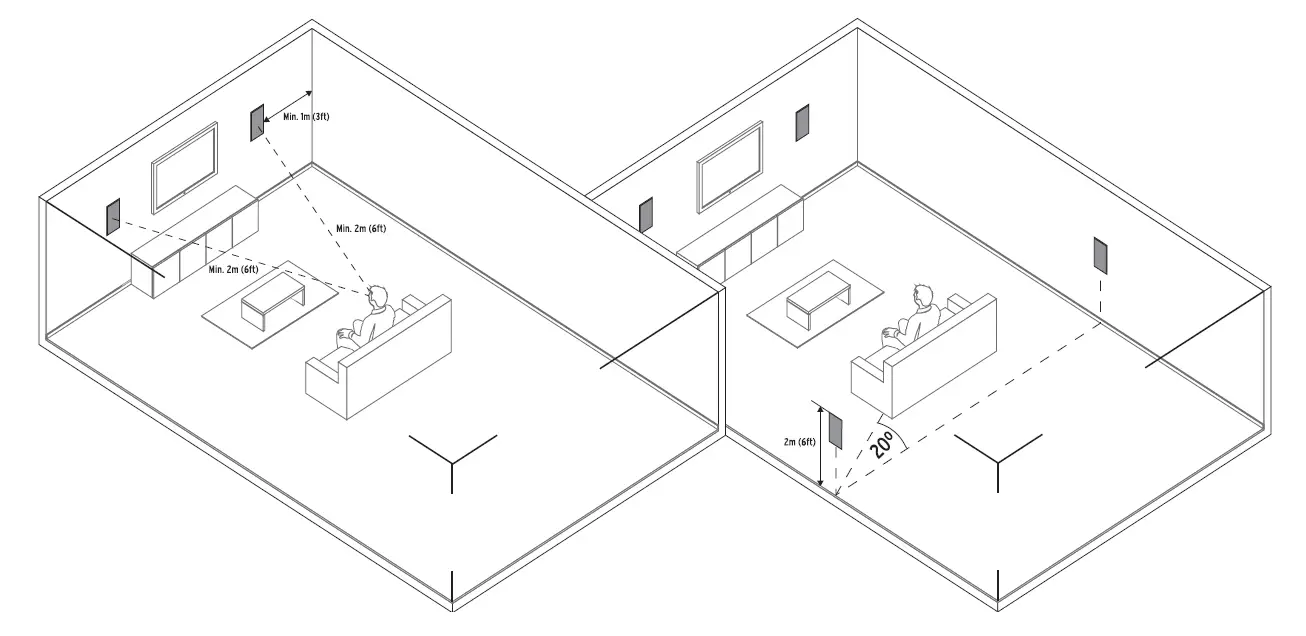
PLACEMENT
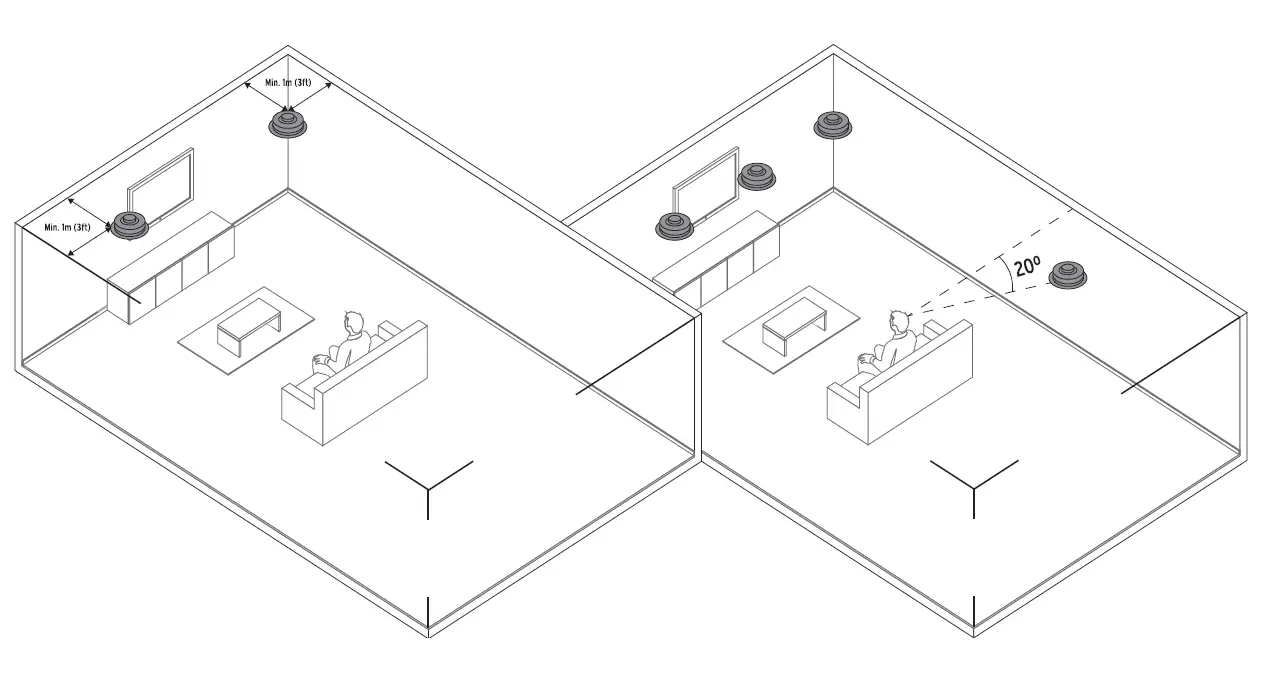
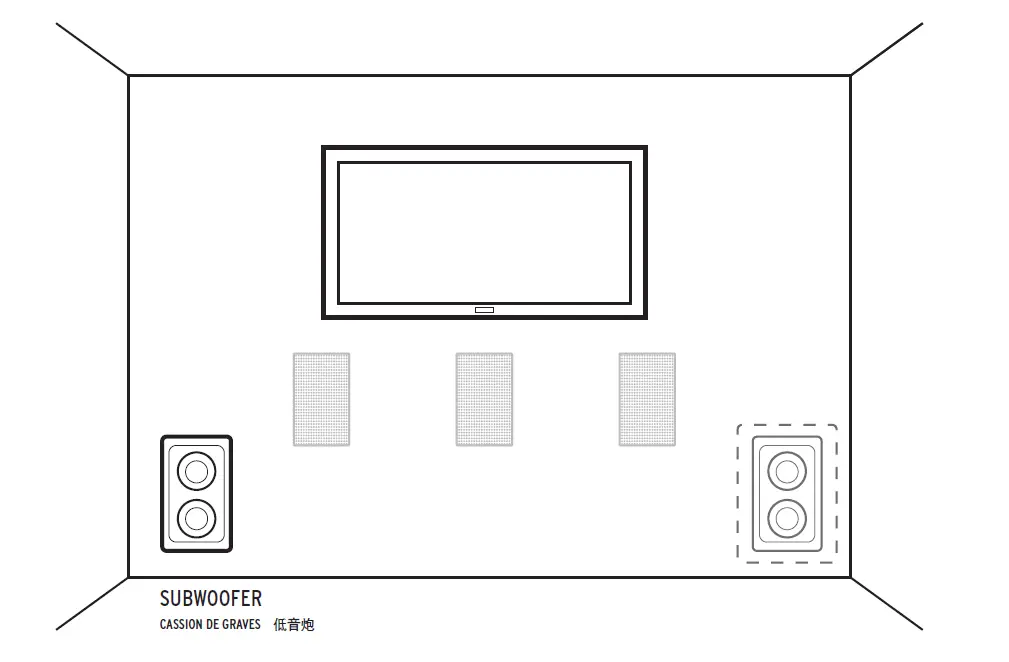
CUT OUT
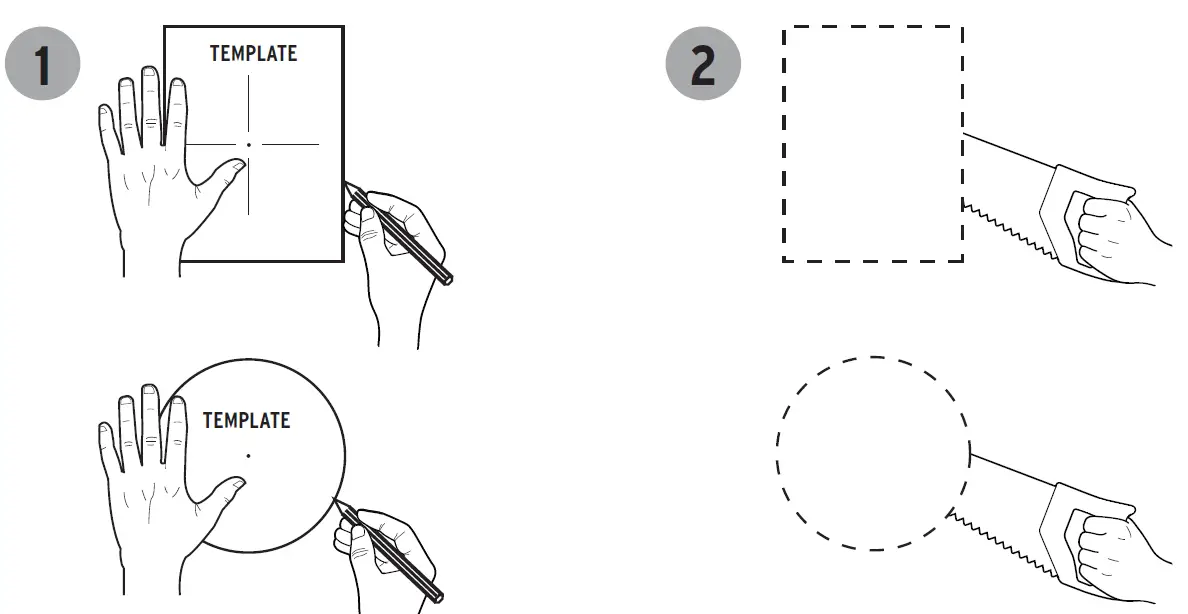
CONNECTIONS
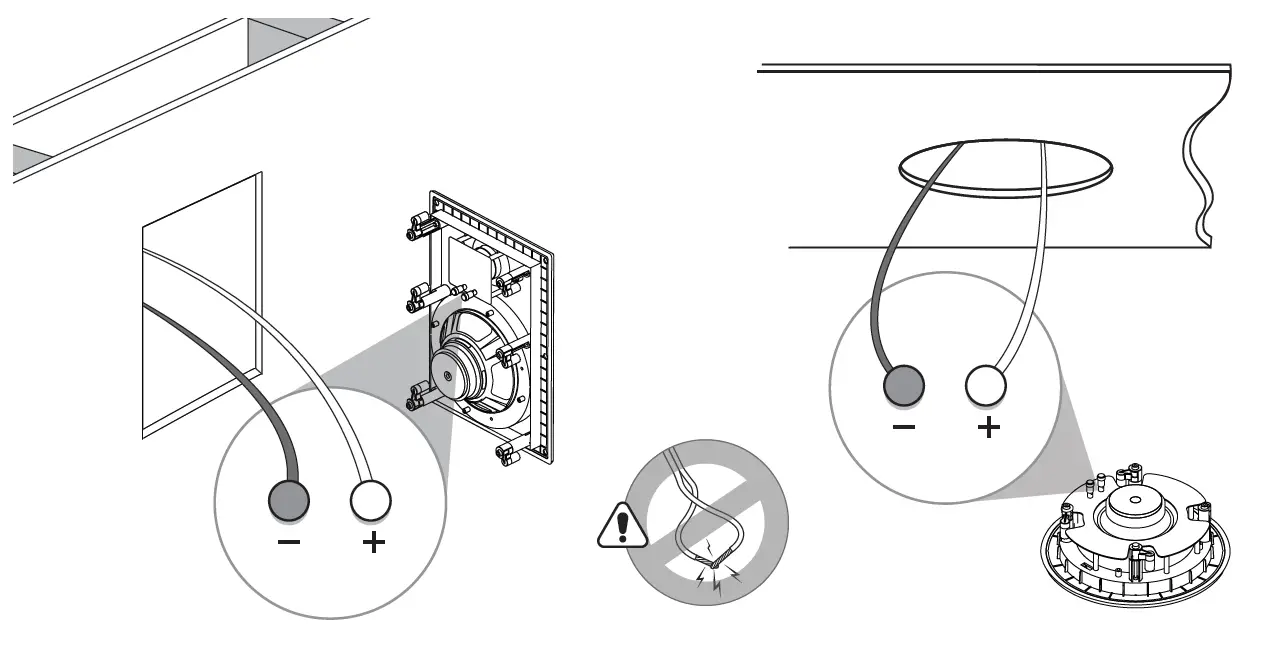
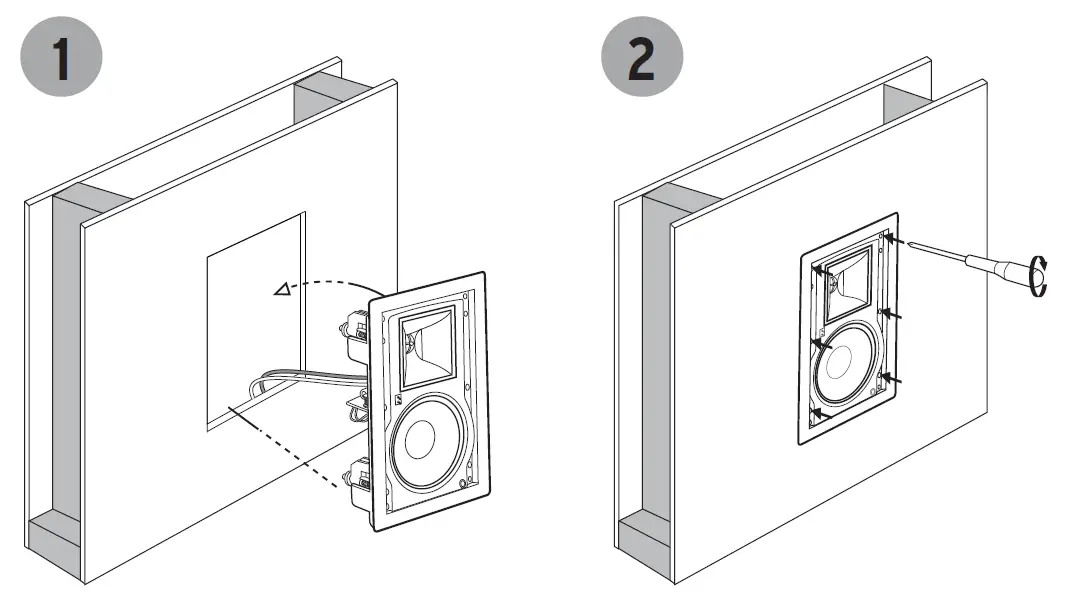
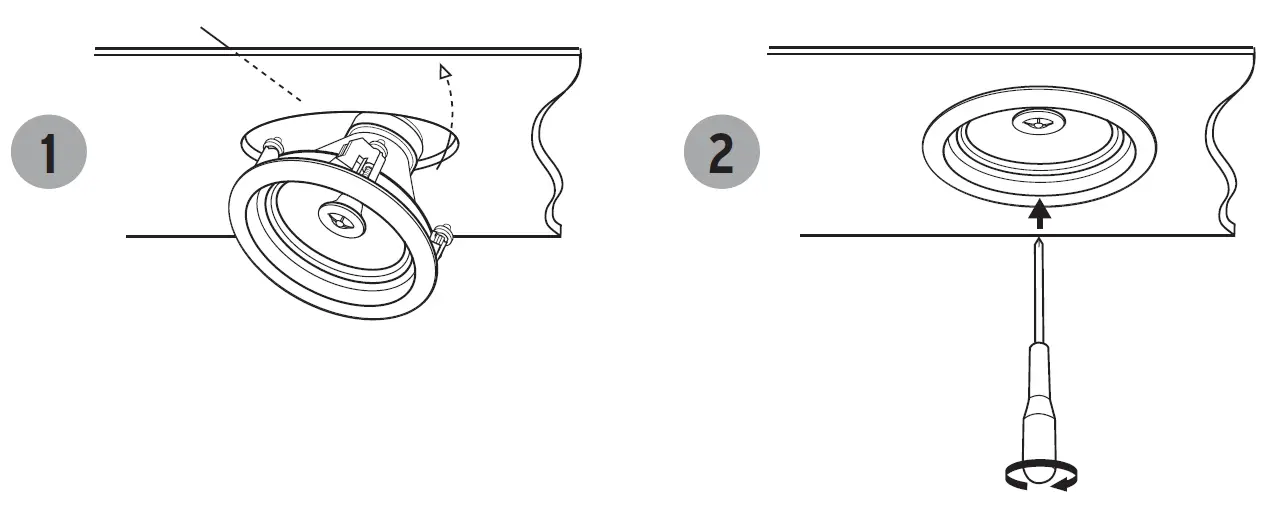
INSTALLATION
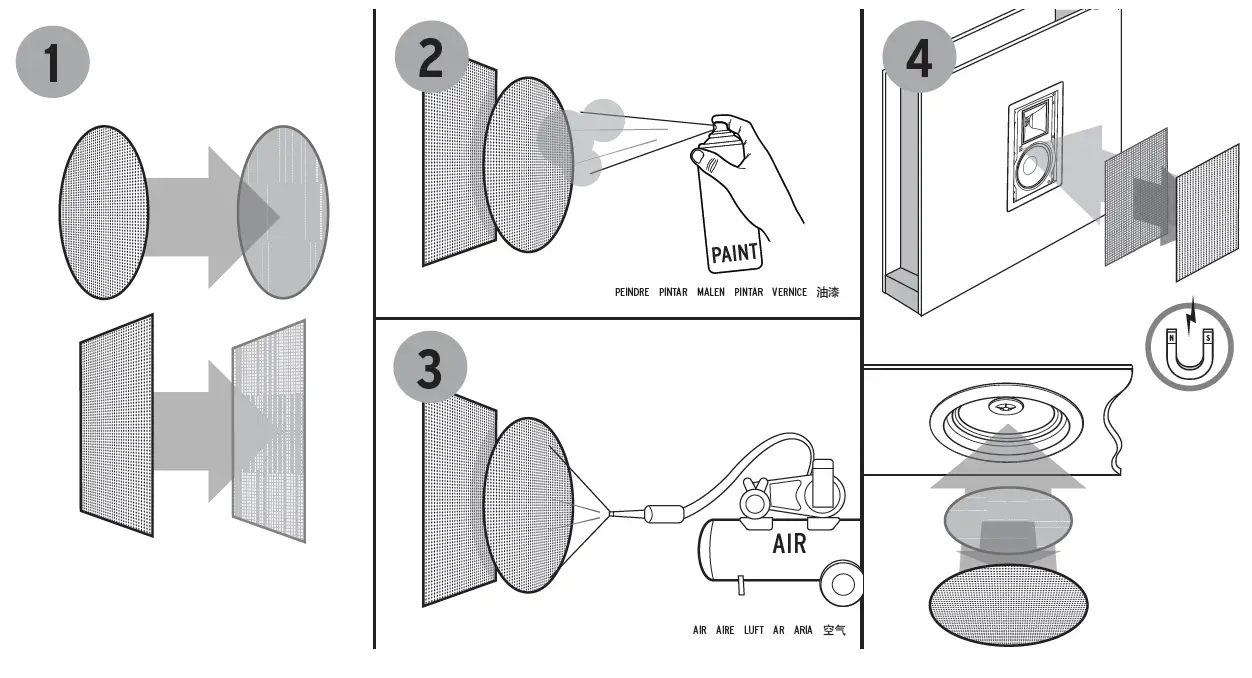
PAINTING
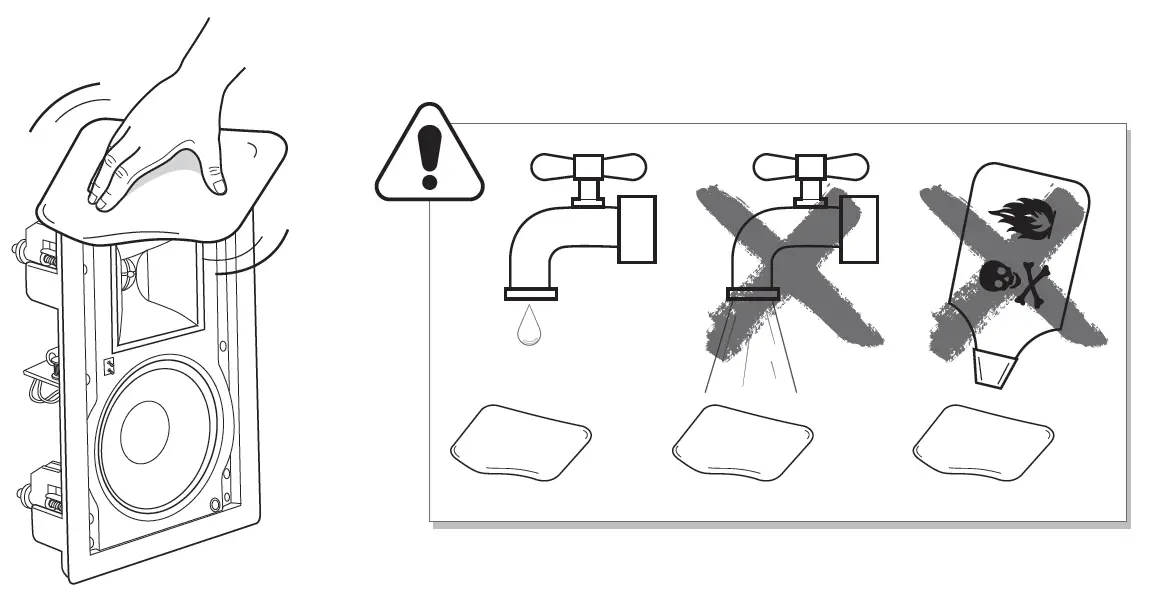
CARE AND CLEANING
FREQUENTLY ASKED QUESTIONS
Are Klipsch ceiling speakers good?
The mids and lows are the centerpieces of the audio, which is clear and precise. For in-ceiling speakers, there is also an unexpectedly large quantity of bass.
Are Klipsch speakers high end?
For more than 50 years, Klipsch has been a leader in the high-end speaker industry, and its products are renowned for their excellent sound, high quality, and dependability.
Do Klipsch ceiling speakers need a box?
Building backer boxes is not required if you are not soundproofing (adding insulation is not soundproofing). The sound of three different types of IB speakers shouldn’t be much impacted by the boxes if they are of a reasonable size.
Is it worth getting ceiling speakers?
Most inexpensive ceiling speakers offer great sound quality and value for the money. There is therefore no need to be concerned about it using up the entire budget if you’re attempting to stay to a strict budget when upgrading your home audio.
Are speakers better in the ceiling or wall?
In-wall speakers have greater space for additional sound technologies and features because they are larger. In-wall speakers are frequently more potent and of greater quality as a result than in-ceiling speakers.
Do you need a subwoofer with ceiling speakers?
Even if ceiling speakers are capable of producing all the bass and low-end frequencies, a subwoofer will be helpful in handling them. Additionally, it significantly improves the overall sound quality of your sound system.
How many watts should my ceiling speakers be?
You need a stereo with at least 25 watts per channel with effective speakers or 40 watts per channel with non-efficient speakers for a space that is 18 feet by 18 feet and has 9-foot ceilings.
How many speakers should I put in my ceiling?
As a general rule, use one pair of ceiling speakers in spaces larger than 3 m2, and two pairs in spaces larger than 5 m2 for a more well-balanced sound.
Do Atmos speakers need to be in ceiling?
The same place should be used for on-wall or in-wall add-on modules. Speakers that support Dolby Atmos ought to be placed with the driver facing upward. It’s possible that a home theatre system already has overhead speakers that can be used to provide overhead audio in particular situations.
How do I get the best sound out of my ceiling speakers?
To ensure a balanced sound, your in-ceiling speakers should be distributed evenly across the space. A single ceiling speaker could be adequate in a compact area. For the best sound dispersion in this scenario, install the speaker as close to the room’s center as you can.
Is it better to have speakers higher or lower?
Remember that speakers are typically made to sound best when they are level with your ears when you are listening to them, whether you have them on stands, a shelf, or mounted on the wall.
Where is the best place for ceiling speakers?
For the optimum sound distribution, try to install a single stereo speaker in the middle of the ceiling, if at all possible.
Are ceiling speakers OK for surround sound?
Naturally, “yes” is the response. To add that immersive extra layer of sound, simply point your in-ceiling stereo speakers in the desired location before configuring your system.