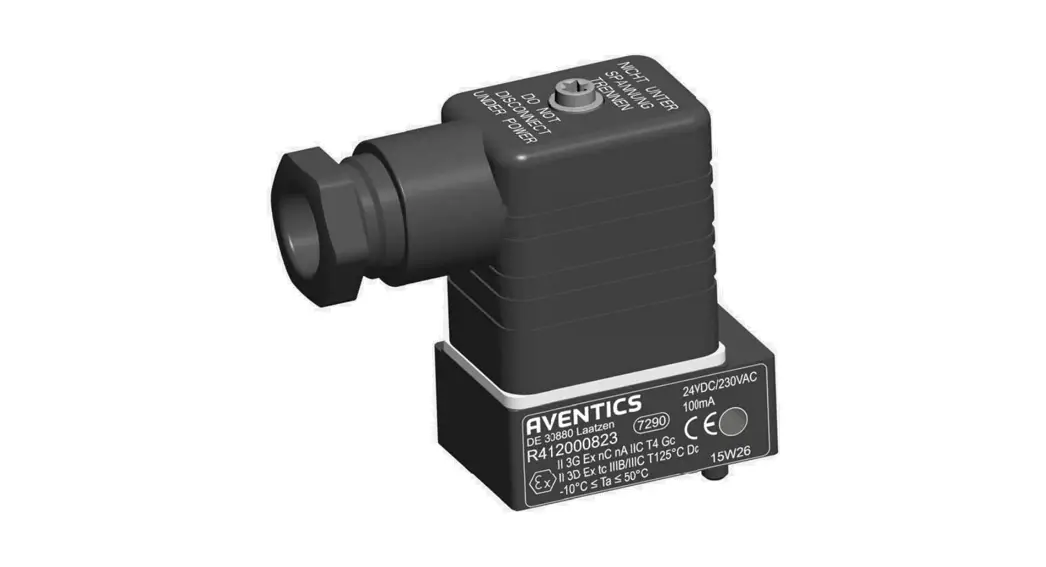
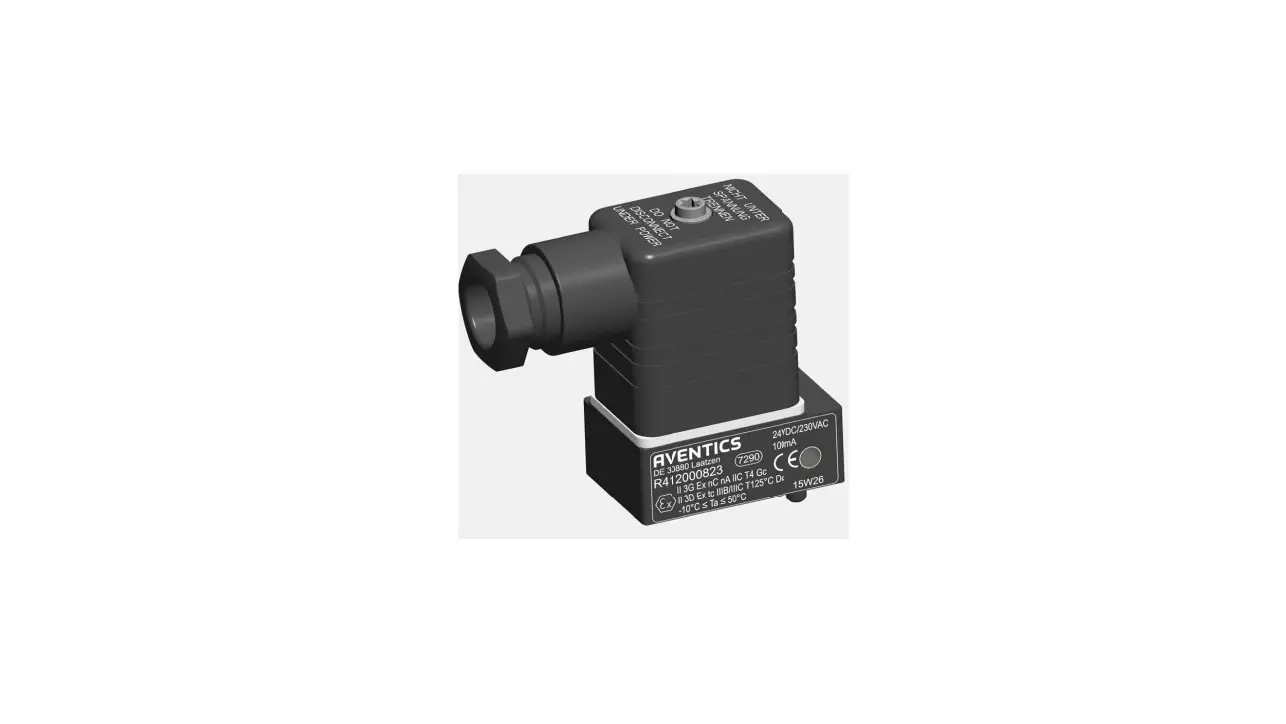
ST6 Sensor ATEX Certified
AVENTICSTM ST6
| Language | Product Information |
|---|---|
| German | Zu diesem Produkt: – Identifikation des Produkts – Einbau – Sensor einbauen – Pflege und Wartung – Entsorgung – Fehlersuche und Fehlerbehebung – Technische Daten |
| English | About this product: – Product identification – Installation – Installing the sensor – Maintenance and servicing – Disposal – Troubleshooting and problem solving – Technical specifications |
| French | A propos de ce produit: – Identification du produit – Installation – Installation du capteur – Entretien et maintenance – Élimination – Dépannage et résolution des problèmes – Spécifications techniques |
| Italian | Informazioni sul prodotto: – Identificazione del prodotto – Installazione – Installazione del sensore – Manutenzione e assistenza – Smaltimento – Risoluzione dei problemi e risoluzione dei problemi – Specifiche tecniche |
| Spanish | Sobre este producto: – Identificación del producto – Instalación – Instalación del sensor – Mantenimiento y servicio – Eliminación – Solución de problemas y resolución de problemas – Especificaciones técnicas |
| Swedish | Om denna produkt: – Produktidentifiering – Installation – Installera sensorn – Underhåll och service – Avyttring – Felsökning och problemhantering – Tekniska specifikationer |
| Russian | О продукте: – Идентификация продукта – Установка – Установка датчика – Обслуживание и техническое обслуживание – Утилизация – Устранение неполадок и устранение проблем – Технические характеристики |
Montageanleitung | Assembly instructions | Instructions de montage Istruzioni di montaggio | Instrucciones de montaje | Monteringsanvisning |
AVENTICSTM ST6
R412027630-BAL-001-AB 2022-09, Replaces: 2020-03
DE/EN/FR/IT/ES/SV/RU
Sensor, ATEX-zertifiziert Sensor, ATEX-certified Capteur, certifié ATEX Sensore, certificato ATEX Sensor, con certificación ATEX Sensor, ATEX-certifierad , ATEX
II 2G Ex ia IIC T4 Gb II 2D Ex ia IIIC T135 °C Db TÜV 19 ATEX 246390 UL22UKEX2386
Inhaltsverzeichnis
1 Zu dieser Dokumentation ………………………………………………………………………………………………………………………………………………………………………….. 3 1.1 Gültigkeit der Dokumentation …………………………………………………………………………………………………………………………………………………………………… 3 1.2 Weiterführende Dokumentation………………………………………………………………………………………………………………………………………………………………… 3 1.3 Darstellung von Informationen ………………………………………………………………………………………………………………………………………………………………….. 3 1.3.1 Warnhinweise ……………………………………………………………………………………………………………………………………………………………………………. 3 1.3.2 Symbole……………………………………………………………………………………………………………………………………………………………………………………. 3
2 Sicherheitshinweise………………………………………………………………………………………………………………………………………………………………………………….. 3 2.1 Zu diesem Kapitel ……………………………………………………………………………………………………………………………………………………………………………………. 3 2.2 Bestimmungsgemäße Verwendung……………………………………………………………………………………………………………………………………………………………. 3 2.3 Nicht bestimmungsgemäße Verwendung …………………………………………………………………………………………………………………………………………………… 3 2.4 Qualifikation des Personals ……………………………………………………………………………………………………………………………………………………………………….. 3 2.5 Allgemeine Sicherheitshinweise…………………………………………………………………………………………………………………………………………………………………. 3 2.6 Produkt- und technologieabhängige Sicherheitshinweise ………………………………………………………………………………………………………………………………. 3 2.6.1 Vor dem Einbau………………………………………………………………………………………………………………………………………………………………………….. 3 2.6.2 Während des Betriebs …………………………………………………………………………………………………………………………………………………………………. 3 2.7 ATEX Hinweise zum Explosionsschutz ………………………………………………………………………………………………………………………………………………………. 3 2.7.1 Erklärungen zur Kennzeichnung ……………………………………………………………………………………………………………………………………………………. 3
3 Lieferumfang…………………………………………………………………………………………………………………………………………………………………………………………… 4
4 Zu diesem Produkt …………………………………………………………………………………………………………………………………………………………………………………… 4 4.1 Identifikation des Produkts ……………………………………………………………………………………………………………………………………………………………………….. 4
5 Einbau ……………………………………………………………………………………………………………………………………………………………………………………………………. 4 5.1 Sensor einbauen ……………………………………………………………………………………………………………………………………………………………………………………… 4
6 Pflege und Wartung …………………………………………………………………………………………………………………………………………………………………………………. 4
7 Entsorgung……………………………………………………………………………………………………………………………………………………………………………………………… 4
8 Fehlersuche und Fehlerbehebung ……………………………………………………………………………………………………………………………………………………………….. 4
9 Technische Daten …………………………………………………………………………………………………………………………………………………………………………………….. 4
AVENTICSTM ST6 | R412027630-BAL-001-AB | Deutsch
2
1 Zu dieser Dokumentation
1.1 Gültigkeit der Dokumentation
Die Anleitung enthält wichtige Informationen, um den Sensor sicher und sachgerecht zu installieren und zu bedienen.
1.2 Weiterführende Dokumentation
Der Sensor ist eine Anlagenkomponente. u Beachten Sie auch die Dokumentation des Anlagenherstellers.
1.3 Darstellung von Informationen
1.3.1 Warnhinweise In dieser Dokumentation stehen Warnhinweise vor einer Handlungsabfolge, bei der die Gefahr von Personen- oder Sachschäden besteht. Die beschriebenen Maßnahmen zur Gefahrenabwehr müssen eingehalten werden. Aufbau von Warnhinweisen
SIGNALWORT
Art und Quelle der Gefahr Folgen bei Nichtbeachtung u Maßnahmen zur Gefahrenabwehr
Bedeutung der Signalwörter
GEFAHR
Unmittelbar drohende Gefahr für das Leben und die Gesundheit von Personen. Das Nichtbeachten dieser Hinweise hat schwere gesundheitliche Auswirkungen zur Folge, bis hin zum Tod.
WARNUNG
Möglicherweise drohende Gefahr für das Leben und die Gesundheit von Personen. Das Nichtbeachten dieser Hinweise kann schwere gesundheitliche Auswirkungen zur Folge haben, bis hin zum Tod.
VORSICHT
Möglicherweise gefährliche Situation. Das Nichtbeachten dieser Hinweise kann leichte Verletzungen zur Folge haben oder zu Sachbeschädigungen führen.
ACHTUNG
Möglichkeit von Sachbeschädigungen oder Funktionsstörungen. Das Nichtbeachten dieser Hinweise kann Sachbeschädigungen oder Funktionsstörungen zur Folge haben, jedoch keine Personenschäden.
1.3.2 Symbole
Empfehlung für den optimalen Einsatz unserer Produkte. Beachten Sie diese Informationen, um einen möglichst reibungslosen Betriebsablauf zu gewährleisten.
2 Sicherheitshinweise
2.1 Zu diesem Kapitel
Das Produkt wurde entsprechend dem heutigen Stand der Technik und den anerkannten sicherheitstechnischen Regeln hergestellt. Trotzdem besteht die Gefahr von Personen- und Sachschäden, wenn Sie die folgenden allgemeinen Sicherheitshinweise und die Warnhinweise vor Handlungsanweisungen in dieser Dokumentation nicht beachten. 1. Lesen Sie daher diese Anleitung gründlich und vollständig, bevor Sie mit dem
Sensor arbeiten. 2. Bewahren Sie die Anleitung so auf, dass sie jederzeit für alle Benutzer zugäng-
lich ist.
3. Geben Sie den Sensor an Dritte stets zusammen mit der Betriebsanleitung weiter.
2.2 Bestimmungsgemäße Verwendung
1. Setzen Sie den Sensor ausschließlich im industriellen Bereich ein. 2. Halten Sie die in den technischen Daten genannten Leistungsgrenzen ein. 3. Setzen Sie den Sensor in explosionsgefährdeter Umgebung nur innerhalb der
zugelassenen Bereiche gemäß ausgewiesener Klasse ein.
2.3 Nicht bestimmungsgemäße Verwendung
Als nicht bestimmungsgemäße Verwendung gilt, wenn Sie den Sensor · außerhalb der Anwendungsgebiete verwenden, die in dieser Anleitung ge-
nannt werden, · unter Betriebsbedingungen verwenden, die von den in dieser Anleitung be-
schriebenen abweichen.
2.4 Qualifikation des Personals
Der Einbau und die Inbetriebnahme erfordert grundlegende elektrische und pneumatische Kenntnisse. Der Einbau und die Inbetriebnahme darf daher nur von einer Elektro- oder Pneumatikfachkraft oder von einer unterwiesenen Person unter der Leitung und Aufsicht einer Fachkraft erfolgen. Eine Fachkraft ist, wer aufgrund seiner fachlichen Ausbildung, seiner Kenntnisse und Erfahrungen sowie seiner Kenntnisse der einschlägigen Bestimmungen die ihm übertragenen Arbeiten beurteilen, mögliche Gefahren erkennen und geeignete Sicherheitsmaßnahmen treffen kann. Die Fachkraft muss die einschlägigen fachspezifischen Regeln einhalten und die Qualifikation einer befähigten Person nach den Technischen Regeln für Betriebssicherheit (TRBS 1203) besitzen.
2.5 Allgemeine Sicherheitshinweise
1. Beachten Sie die Vorschriften zur Unfallverhütung und zum Umweltschutz im Verwenderland und am Arbeitsplatz.
2. Sie dürfen das Gerät grundsätzlich nicht verändern oder umbauen. 3. Verwenden Sie das Gerät ausschließlich im Leistungsbereich, der in den tech-
nischen Daten angegeben ist. 4. Belasten Sie das Produkt unter keinen Umständen in unzulässiger Weise me-
chanisch. Die Gewährleistung erlischt bei fehlerhaftem Einbau.
2.6 Produkt- und technologieabhängige Sicherheitshinweise
2.6.1 Vor dem Einbau u Schalten Sie den relevanten Anlagenteil drucklos und spannungsfrei, bevor
Sie den Sensor montieren bzw. Stecker anschließen oder ziehen.
2.6.2 Während des Betriebs 1. Nehmen Sie den Sensor erst in Betrieb, wenn er komplett montiert, korrekt
angeschlossen und getestet worden ist. 2. Beachten Sie die Einsatzbedingungen und Daten, die aus den Aufdrucken
bzw. Typenschildern des jeweiligen Sensors hervorgehen. 3. Trennen Sie keine Stecker bzw. Leitungen unter Spannung.
2.7 ATEX Hinweise zum Explosionsschutz
Halten Sie die in den nachfolgenden Hinweisen genannten Bedingungen und Grenzwerte unbedingt ein. Andernfalls entspricht der Sensor nicht den Anforderungen an den Explosionsschutz.
Die Sensoren sind gemäß der beigefügten Konformitätserklärung zertifiziert und gekennzeichnet. Sie sind einsetzbar · mit Gasen, Nebeln und Dämpfen der Zonen 1 und 2 · mit brennbaren Stäuben der Zonen 21 und 22
2.7.1 Erklärungen zur Kennzeichnung
Information zum Jahr der Herstellung des Sensors: Im 5-stelligen Datumscode im Typenschild geben die ersten beiden Stellen das Jahr und die letzten beiden die Woche an.
AVENTICSTM ST6 | R412027630-BAL-001-AB | Deutsch
3
II 2G Ex ia IIC T4 Gb II 2D Ex ia IIIC T135°C Db
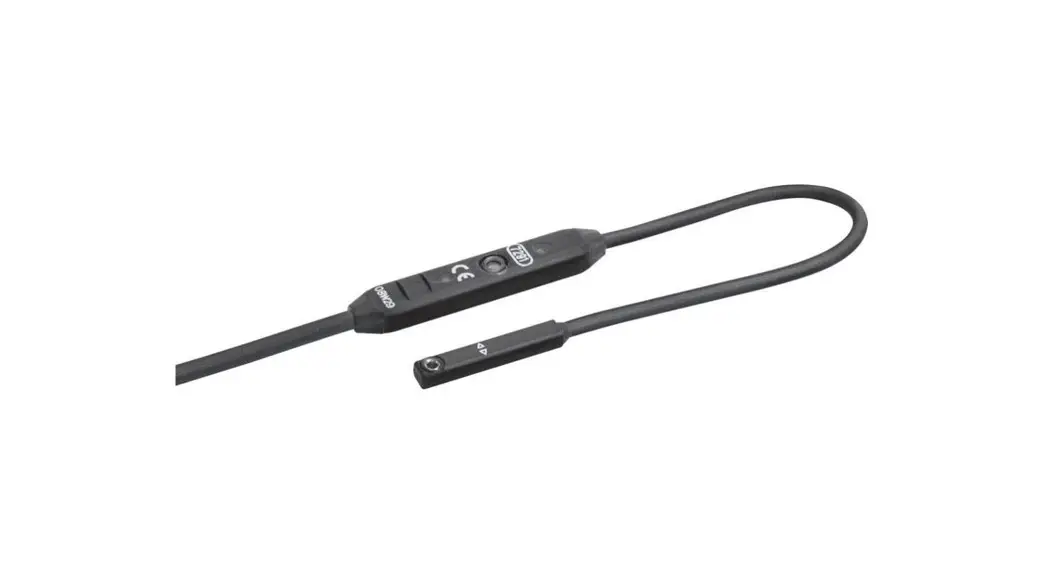
Aufgrund der geringen Baugröße des Sensors ist die ATEX-Kennzeichnung auf einer Kabelfahne dargestellt.
WARNUNG
Gefahr der Entstehung einer Zündquelle durch unzulässige Betriebsbedingungen, Anschlüsse und Parameter! Betreiben des Sensors unter unzulässigen Betriebsbedingungen kann zur Explosion führen. 1. Beachten Sie die zulässigen Betriebsbedingungen, insbesondere Umge-
bungstemperatur sowie den mechanischen Schutz des Gerätes. 2. Der Sensor in ATEX-Ausführung ist ausschließlich für einen vollständigen
Einbau in passende T-Nuten bestimmt. 3. Beachten Sie den eingeschränkten Temperaturbereich unter ATEX-Bedin-
gungen. 4. Trennen Sie die Steckverbinder und das Verbindungskabel nicht bei anlie-
gender Spannung vom Sensor. 5. Verwenden Sie nur Verbindungskabel, die für die Ex-Schutzzonen zugelas-
sen sind. 6. Beachten Sie bei Installation, Wartung oder Reparatur die entsprechenden
Ex-Vorschriften, insbesondere EN 6007914.
Bei den NAMUR-Ausführungen der magnetischen Zylindersensoren handelt es sich um eigensichere elektrische Betriebsmittel gemäß der NAMUR-Norm EN 60947-5-6, die an Trennschaltverstärkern mit ExKonformitätsbescheinigung betrieben werden dürfen.
ten Person (nach TRBS 1203 oder gleichwertig) durchgeführt bzw. beaufsichtigt werden.
3. Vergleichen Sie vor der Installation die Angaben auf dem Gerät mit den Angaben in der Betriebsanleitung.
VORSICHT
Verletzungsgefahr beim Einbau unter Druck und elektrischer Spannung
Beim Einbau unter Druck und elektrischer Spannung kann es zu Verletzungen kommen.
u Schalten Sie vor dem Einbau alle relevanten Anlagenteile drucklos und spannungsfrei.
5.1 Sensor einbauen
Die Einbaulage ist beliebig. Beim Einbau und Anschluss des Sensors müssen Sie folgende Punkte berücksichtigen: 1. Bauen Sie den Sensor mechanisch sowie vor UV-Licht geschützt ein (je nach
Anforderungen/Betriebsbedingungen). 2. Verlegen Sie die Leitungen geschützt und sorgen Sie für Zugentlastung. 3. Beachten Sie die maximalen Leistungsdaten (Ui, Ii, Pi, Li, Ci) des Trennschalt-
verstärkers. 4. Beachten Sie das Anschlussbild des Sensors. 5. Verbinden oder trennen Sie die Leitungen bzw. Stecker nicht unter Spannung.
NAMUR-Sensoren sind als passive Geräte zu betrachten und benötigen deshalb keine weiteren Schutzbeschaltungen.
1. LED
2. MD = 0,4 Nm
3 Lieferumfang
· 1 x Sensor · 1 x Betriebsanleitung
4 Zu diesem Produkt
Der Sensor dient zur Erfassung von magnetischen Feldern in explosionsgefährdeten Bereichen.
Abb. 2: Sensor einbauen
Gehen Sie wie folgt vor: 1. Legen Sie den Sensor in die T-Nut ein. 2. Drehen Sie die Schraube fest (Anzugsmoment MD = 0,4 Nm).
4.1 Identifikation des Produkts
u Beachten Sie die Angaben auf dem Produkt und der Verpackung.
6 Pflege und Wartung
Die Sensoren sind wartungsfrei.
5 Einbau
brn
1
+
7 Entsorgung
u Entsorgen Sie das Produkt nach den nationalen Bestimmungen Ihres Landes.
blu
4
8 Fehlersuche und Fehlerbehebung
u Tauschen Sie bei Störungen oder Ausfall den Sensor aus.
Abb. 1: Anschlussbild Sensor Pin-/Aderbelegung
2
3
1
4
1 (brn) 4 (blu)
1
L+
2
nicht belegt
3
nicht belegt
4
M
1. Beachten Sie die Ex-Vorschriften gemäß EN 60079-14.
2. Die elektrische Installation muss unter Beachtung der einschlägigen nationalen Vorschriften von einer Elektrofachkraft mit der Qualifikation einer befähig-
9 Technische Daten
Allgemein
maximale Eingangsspannung maximaler Eingangsstrom maximale Eingangsleistung wirksame innere Induktivität wirksame innere Kapazität Umgebungstemperatur Kabellänge
Ui = 20 V DC Ii = 60 mA Pi = 100 mW Li = 10 µH Ci = 130 nF 25 °C … +80 °C R412027174 R412027173
5 m 0,3 m/M12
AVENTICSTM ST6 | R412027630-BAL-001-AB | Deutsch
4
ATEX Zone 1 und 2 Zone 21 und 22
II 2G Ex ia IIC T4 Gb II 2D Ex ia IIIC T135°C Db
Weitere technische Daten entnehmen Sie bitte dem Online-Katalog.
AVENTICSTM ST6 | R412027630-BAL-001-AB | Deutsch
5
AVENTICSTM ST6 | R412027630-BAL-001-AB | Deutsch
6
Contents
1 About this documentation…………………………………………………………………………………………………………………………………………………………………………. 8 1.1 Documentation validity ……………………………………………………………………………………………………………………………………………………………………………. 8 1.2 Related documents………………………………………………………………………………………………………………………………………………………………………………….. 8 1.3 Presentation of information ………………………………………………………………………………………………………………………………………………………………………. 8 1.3.1 Warnings…………………………………………………………………………………………………………………………………………………………………………………… 8 1.3.2 Symbols ……………………………………………………………………………………………………………………………………………………………………………………. 8
2 Notes on safety………………………………………………………………………………………………………………………………………………………………………………………… 8 2.1 About this chapter …………………………………………………………………………………………………………………………………………………………………………………… 8 2.2 Intended use …………………………………………………………………………………………………………………………………………………………………………………………… 8 2.3 Improper use ………………………………………………………………………………………………………………………………………………………………………………………….. 8 2.4 Personnel qualifications ……………………………………………………………………………………………………………………………………………………………………………. 8 2.5 General safety instructions………………………………………………………………………………………………………………………………………………………………………… 8 2.6 Safety instructions related to the product and technology ……………………………………………………………………………………………………………………………… 8 2.6.1 Before installation ………………………………………………………………………………………………………………………………………………………………………. 8 2.6.2 During operation………………………………………………………………………………………………………………………………………………………………………… 8 2.7 ATEX information on explosion protection ………………………………………………………………………………………………………………………………………………… 8 2.7.1 Explanations concerning identification…………………………………………………………………………………………………………………………………………… 8
3 Scope of delivery ……………………………………………………………………………………………………………………………………………………………………………………… 9
4 About this product …………………………………………………………………………………………………………………………………………………………………………………… 9 4.1 Product identification ………………………………………………………………………………………………………………………………………………………………………………. 9
5 Installation ……………………………………………………………………………………………………………………………………………………………………………………………… 9 5.1 Installing sensors……………………………………………………………………………………………………………………………………………………………………………………… 9
6 Care and maintenance ………………………………………………………………………………………………………………………………………………………………………………. 9
7 Disposal………………………………………………………………………………………………………………………………………………………………………………………………….. 9
8 Troubleshooting………………………………………………………………………………………………………………………………………………………………………………………. 9
9 Technical data …………………………………………………………………………………………………………………………………………………………………………………………. 9
AVENTICSTM ST6 | R412027630-BAL-001-AB | English
7
1 About this documentation
1.1 Documentation validity
These instructions contain important information on the safe and appropriate installation and operation of the sensor.
2.2 Intended use
1. The sensor is only intended for industrial applications. 2. Use within the limits listed in the technical data. 3. Only use the sensor in an explosive environment within the approved areas
according to the designated class.
1.2 Related documents
The sensor is a system component. u Also observe the documentation from the system manufacturer.
1.3 Presentation of information
2.3 Improper use
It is considered improper use if the sensor · is used for any application not stated in these instructions, or · is used under operating conditions that deviate from those described in these
instructions.
1.3.1 Warnings In this documentation, there are warning notes before the steps whenever there is a risk of personal injury or damage to equipment. The measures described to avoid these hazards must be followed.
Structure of warnings
SIGNAL WORD
Hazard type and source Consequences of non-observance u Precautions
Meaning of the signal words
DANGER
Immediate danger to the life and health of persons. Failure to observe these notices will result in serious health consequences, including death.
WARNING
Possible danger to the life and health of persons. Failure to observe these notices can result in serious health consequences, including death.
CAUTION
Possible dangerous situation. Failure to observe these notices may result in minor injuries or damage to property.
NOTICE
Possibility of damage to property or malfunction. Failure to observe these notices may result in damage to property or malfunctions, but not in personal injury.
1.3.2 Symbols
Recommendation for the optimum use of our products. Observe this information to ensure the smoothest possible operation.
2 Notes on safety
2.1 About this chapter
The product has been manufactured according to the accepted rules of safety and current technology. Even so, there is a risk of injury or damage if the following general safety instructions and the specific warnings given before the steps in this documentation are not observed. 1. Read these instructions completely before working with the sensor. 2. Keep these instructions in a location where they are accessible to all users at
all times. 3. Always include the operating instructions when you pass the sensor on to
third parties.
2.4 Personnel qualifications
Installation and commissioning require basic electrical and pneumatic knowledge. Installation and commissioning may therefore only be carried out by qualified electrical or pneumatic personnel or an instructed person under the direction and supervision of qualified personnel. Qualified personnel are those who can recognize possible dangers and institute the appropriate safety measures, due to their professional training, knowledge, and experience, as well as their understanding of the relevant regulations pertaining to the work to be done. Qualified personnel must observe the rules relevant to the subject area and have qualifications according to the Technical Rules for Operational Safety (TRBS 1203).
2.5 General safety instructions
1. Observe the regulations for accident prevention and environmental protection for the country where the device is used and at the workplace.
2. Do not modify or convert the device. 3. Only use the device within the performance range provided in the technical
data. 4. Do not place any improper mechanical loads on the product under any cir-
cumstances. The warranty will not apply if the product is incorrectly installed.
2.6 Safety instructions related to the product and technology
2.6.1 Before installation u Make sure the relevant system component is without pressure or voltage be-
fore assembling the sensor or when connecting and disconnecting plugs.
2.6.2 During operation 1. Only take the sensor into operation after it has been completely mounted,
correctly connected, and tested. 2. Observe the operating conditions and data printed on the relevant sensor or
stated on its rating plate. 3. Do not disconnect plugs or lines when the sensor is under voltage.
2.7 ATEX information on explosion protection
Always observe the conditions and limits specified in the following notices. Otherwise the sensor does not meet the requirements for explosion protection.
The sensors are certified and labeled according to the enclosed declaration of conformity. They can be used · with gases, mists, or vapors in zones 1 and 2 · with flammable dust particles in zones 21 and 22
2.7.1 Explanations concerning identification
Year of manufacture of the sensor: The first two digits in the 5-digit date code on the rating plate indicate the year and the last two digits indicate the week.
II 2G Ex ia IIC T4 Gb II 2D Ex ia IIIC T135°C Db
AVENTICSTM ST6 | R412027630-BAL-001-AB | English
8
Due to the small size of the sensor, the ATEX identification is located on a cable flag.
WARNING
Danger of an ignition source due to impermissible operating conditions, connections, and parameters!
Operating the sensor under impermissible operating conditions can result in an explosion.
1. Observe the permissible operating conditions, in particular the ambient temperature and the mechanical protection for the device.
2. The ATEX sensor is only intended for complete installation in suitable Tslots.
3. Note the limited temperature range for ATEX conditions.
4. Do not disconnect the plug connectors and the connecting cable from the sensor if it is under voltage.
5. Only use connecting cables that are approved for explosion protection zones.
6. Observe the relevant Ex guidelines for installation, maintenance, and repair, especially EN 60079-14.
The NAMUR versions of the magnetic cylinder sensors are intrinsically safe electrical equipment according to the NAMUR standard EN 60947-5-6, which may be operated on isolating amplifiers with Ex-conformity certification.
CAUTION
Danger of injury if installed under pressure or voltage Installing when under pressure or voltage can lead to injuries. u Make sure that all relevant system parts are without pressure and voltage
before installation.
5.1 Installing sensors
Any mounting orientation may be used. Always observe the following points for installation and connection of the sensor: 1. Install the sensor protected against mechanical impact and UV light (depend-
ing on the requirements/operating conditions). 2. Install lines with protection and provide for strain relief. 3. Observe the maximum power data (Ui, Ii, Pi, Li, Ci) of the isolating amplifier. 4. Observe the sensor porting configuration. 5. Do not connect or separate the lines or plugs under voltage.
NAMUR sensors are to be regarded as passive devices and therefore require no further protective circuits.
1. LED
2. MD = 0,4 Nm
3 Scope of delivery
· 1 x sensor · 1 set of operating instructions
4 About this product
The sensor is used to detect magnetic fields in explosive areas.
4.1 Product identification
u Observe the information on the product and packaging.
Fig. 2: Installing sensors Proceed as follows: 1. Insert the sensor in the T-slot. 2. Tighten the screw (tightening torque MD = 0.4 Nm).
6 Care and maintenance
The sensors are maintenance-free.
5 Installation
brn
1
+
7 Disposal
u Dispose of the product in accordance with the national regulations in your country.
blu
4
Fig. 1: Sensor porting configuration
Pin/wire allocation
2
1
1 (brn)
2
3
1
3
4 (blu)
4
4
L+ not assigned not assigned M
1. Observe the Ex guidelines as per EN 60079-14.
2. The installation of electrical devices must be carried out in accordance with applicable national regulations and performed or supervised by an electrical specialist (in compliance with TRBS 1203 or equivalent).
3. Compare the information on the device with the information in the operating instructions before installation.
8 Troubleshooting
u Replace the sensor in the event of malfunctions or failure.
9 Technical data
General
Maximum input voltage Maximum input current Maximum input power Effective internal inductance Effective internal capacity Ambient temperature Cable length
Ui = 20 V DC Ii = 60 mA Pi = 100 mW Li = 10 µH Ci = 130 nF 25 °C … +80 °C R412027174 R412027173
5 m 0.3 m/M12
ATEX Zone 1 and 2 Zone 21 and 22
II 2G Ex ia IIC T4 Gb II 2D Ex ia IIIC T135°C Db
Further technical data can be found in our online catalog.
AVENTICSTM ST6 | R412027630-BAL-001-AB | English
9
AVENTICSTM ST6 | R412027630-BAL-001-AB | English
10
Sommaire
1 A propos de cette documentation……………………………………………………………………………………………………………………………………………………………….. 12 1.1 Validité de la documentation …………………………………………………………………………………………………………………………………………………………………….. 12 1.2 Documentation supplémentaire ………………………………………………………………………………………………………………………………………………………………… 12 1.3 Présentation des informations …………………………………………………………………………………………………………………………………………………………………… 12 1.3.1 Avertissements ………………………………………………………………………………………………………………………………………………………………………….. 12 1.3.2 Symboles ………………………………………………………………………………………………………………………………………………………………………………….. 12
2 Consignes de sécurité ……………………………………………………………………………………………………………………………………………………………………………….. 12 2.1 A propos de ce chapitre…………………………………………………………………………………………………………………………………………………………………………….. 12 2.2 Utilisation conforme ………………………………………………………………………………………………………………………………………………………………………………… 12 2.3 Utilisation non conforme ………………………………………………………………………………………………………………………………………………………………………….. 12 2.4 Qualification du personnel ………………………………………………………………………………………………………………………………………………………………………… 12 2.5 Consignes générales de sécurité ………………………………………………………………………………………………………………………………………………………………… 12 2.6 Consignes de sécurité selon le produit et la technique …………………………………………………………………………………………………………………………………… 12 2.6.1 Avant le montage……………………………………………………………………………………………………………………………………………………………………….. 12 2.6.2 Lors du fonctionnement ………………………………………………………………………………………………………………………………………………………………. 12 2.7 ATEX Remarques concernant la protection contre l’explosion ………………………………………………………………………………………………………………………. 12 2.7.1 Explications concernant le marquage : …………………………………………………………………………………………………………………………………………… 13
3 Fourniture ………………………………………………………………………………………………………………………………………………………………………………………………. 13
4 A propos de ce produit………………………………………………………………………………………………………………………………………………………………………………. 13 4.1 Identification du produit …………………………………………………………………………………………………………………………………………………………………………… 13
5 Montage…………………………………………………………………………………………………………………………………………………………………………………………………. 13 5.1 Montage du capteur ………………………………………………………………………………………………………………………………………………………………………………… 13
6 Entretien et maintenance ………………………………………………………………………………………………………………………………………………………………………….. 13
7 Mise au rebut…………………………………………………………………………………………………………………………………………………………………………………………… 13
8 Recherche et élimination de défauts ……………………………………………………………………………………………………………………………………………………………. 13
9 Données techniques …………………………………………………………………………………………………………………………………………………………………………………. 14
AVENTICSTM ST6 | R412027630-BAL-001-AB | Français
11
1 A propos de cette documentation
1.1 Validité de la documentation
Cette notice contient des informations importantes pour installer et utiliser le capteur de manière sûre et conforme.
1.2 Documentation supplémentaire
Le capteur est un composant d’installation. u Tenir également compte de la documentation du fabricant de l’installation.
1.3 Présentation des informations
1.3.1 Avertissements Cette documentation contient des remarques d’avertissement préalables aux séquences de travail lorsqu’un risque de dommage corporel ou matériel subsiste. Les mesures décrites pour éviter ces risques doivent être suivies. Structure des avertissements
MOT-CLE
Type et source de risque Conséquences du non-respect u Précautions
Signification des mots-clés
DANGER
Danger immédiat pour la vie et la santé des personnes. Le non-respect de ces consignes entraînera de graves conséquences pour la santé, voire la mort.
AVERTISSEMENT
Danger potentiel pour la vie et la santé des personnes. Le non-respect de ces consignes peut entraîner de graves conséquences pour la santé, voire la mort.
ATTENTION
Situation dangereuse potentielle. Le non-respect de ces consignes risque d’entraîner de légères blessures ou des dommages matériels.
AVIS
Possibilité de dommages matériels ou de dysfonctionnement. Le non-respect de ces consignes risque d’entraîner des dommages matériels ou des dysfonctionnements, mais pas de blessures.
1.3.2 Symboles
Recommandation pour une utilisation optimale de nos produits. Respecter ces informations pour garantir un fonctionnement optimal.
2 Consignes de sécurité
2.1 A propos de ce chapitre
Ce produit a été fabriqué conformément aux techniques les plus modernes et aux règles de sécurité technique reconnues. Des dommages matériels ou corporels peuvent néanmoins survenir si les consignes de sécurité générales suivantes ainsi que les avertissements précédant les instructions de la présente documentation ne sont pas respectés. 1. Lire entièrement et soigneusement la présente notice avant de travailler avec
le capteur. 2. La conserver de sorte qu’elle soit accessible à tout instant à tous les utilisa-
teurs.
3. Toujours transmettre le capteur aux tierces personnes accompagné de la notice d’instruction respective.
2.2 Utilisation conforme
1. Employer le capteur uniquement dans le domaine industriel. 2. Respecter les limites de puissance indiquées dans les données techniques. 3. Dans un environnement explosible, le capteur doit uniquement être utilisé
dans les zones homologuées correspondant à la classe indiquée.
2.3 Utilisation non conforme
Une utilisation non conforme du capteur correspond à : · une utilisation en dehors des domaines d’application cités dans la présente
notice. · une utilisation déviant des conditions de fonctionnement décrites dans la pré-
sente notice.
2.4 Qualification du personnel
Le montage et la mise en service exigent des connaissances électriques et pneumatiques fondamentales. Le montage et la mise en service ne doivent donc être effectués que par un personnel spécialisé en électronique ou pneumatique ou par une personne instruite et sous la direction et la surveillance d’une personne spécialisée. Une personne spécialisée est capable de juger des travaux qui lui sont confiés, de reconnaître d’éventuels dangers et de prendre les mesures de sécurité adéquates grâce à sa formation spécialisée, ses connaissances et son expérience, ainsi qu’à ses connaissances des directives correspondantes. Une personne spécialisée doit respecter les règles spécifiques correspondantes et posséder une qualification l’autorisant à effectuer des travaux selon les règles techniques pour la sécurité de fonctionnement (TRBS 1203).
2.5 Consignes générales de sécurité
1. Respecter les consignes de prévention d’accidents et de protection de l’environnement dans le pays d’utilisation et au poste de travail.
2. En règle générale, ne pas modifier ni transformer l’appareil. 3. Utiliser l’appareil uniquement dans le champ de travail indiqué dans les don-
nées techniques. 4. Ne surcharger en aucun cas le produit de manière mécanique de par une utili-
sation non conforme. La garantie n’est plus valable en cas de montage incorrect.
2.6 Consignes de sécurité selon le produit et la technique
2.6.1 Avant le montage u Mettre la partie concernée de l’installation hors tension et hors pression,
avant de monter le capteur ou de brancher ou débrancher le connecteur.
2.6.2 Lors du fonctionnement 1. Ne mettre le capteur en service que lorsqu’il est complètement monté, cor-
rectement raccordé et après avoir été testé. 2. Observer les conditions d’utilisation et les données techniques indiquées sur
les imprimés / plaques signalétiques du capteur respectif. 3. Ne pas débrancher des conduites ou des connecteurs sous tension.
2.7 ATEX Remarques concernant la protection contre l’explosion
Impérativement respecter les conditions et les valeurs limites indiquées dans les remarques suivantes. Dans le cas contraire, le capteur ne satisfait pas aux exigences de protection contre l’explosion.
Les capteurs sont certifiés et marqués conformément à la déclaration de conformité ci-jointe. Ils sont utilisables : · en présence de gaz, de brumes et de vapeurs dans les zones 1 et 2 · en présence de poussières inflammables dan les zones 21 et 22
AVENTICSTM ST6 | R412027630-BAL-001-AB | Français
12
2.7.1 Explications concernant le marquage :
Information concernant l’année de construction du capteur : les deux premiers chiffres du code à 5 chiffres de la plaque signalétique correspondent aux derniers chiffres de l’année de construction, tandis que les deux derniers indiquent la semaine de l’année.
II 2G Ex ia IIC T4 Gb II 2D Ex ia IIIC T135°C Db
En raison de la taille réduite du capteur, le marquage ATEX a été apposé sur une étiquette du câble.
AVERTISSEMENT
Risque de formation d’une source d’inflammation en présence de conditions de fonctionnement, de raccords et de paramètres non autorisés ! Le fonctionnement du capteur dans des conditions de fonctionnement non autorisées peut provoquer une explosion. 1. Respecter les conditions de fonctionnement autorisées, et particulière-
ment la température ambiante ainsi que la protection mécanique de l’appareil. 2. Le capteur en version ATEX est exclusivement destiné à un montage complet dans des rainures en T adaptées. 3. Respecter la plage de température limitée dans les conditions ATEX. 4. Ne pas retirer les raccords enfichables et le câble de connexion du capteur lorsque celui-ci est sous tension. 5. Utiliser exclusivement des câbles de connexion homologués pour les zones à risque d’explosion. 6. Lors de l’installation, de la maintenance ou de la réparation, impérativement respecter les consignes antidéflagrantes respectives, en particulier la norme EN 60079-14.
Les versions NAMUR des capteurs de proximité magnétiques sont des moyens d’exploitation électriques à sécurité intrinsèque selon la norme NAMUR EN 60947-5-6, qui peuvent être exploités avec des amplificateurs de commutation avec certificat de conformité ATEX.
3 Fourniture
· 1 × capteur · 1× notice d’instruction
Broche/affectation des conducteurs
2
3
1
4
1 (brn) 4 (blu)
1
L+
2
Non affecté
3
Non affecté
4
M
1. Respecter les prescriptions en matière d’atmosphère explosible selon EN 60079-14.
2. L’installation électrique doit être effectuée ou supervisée par un électricien qualifié (selon les règles techniques pour la sécurité de fonctionnement TRBS 1203 ou similaire) et dans le respect des normes nationales en vigueur.
3. Avant toute installation, comparer les indications faites sur l’appareil avec celles contenues dans la notice d’instruction.
ATTENTION
Risque de blessure en cas de montage sous pression et sous tension électrique
Un montage sous pression et sous tension électrique peut entraîner des blessures.
u Avant le montage, mettre toutes les parties pertinentes de l’installation hors tension et hors pression.
5.1 Montage du capteur
La position de montage est indifférente. Lors du montage et du raccordement du capteur, respecter les points suivants : 1. Monter le capteur mécaniquement et de façon à ce qu’il soit protégé des
rayons UV (selon les exigences / conditions de fonctionnement). 2. Poser les conduites de manière à ce qu’elles soient protégées et assurer une
décharge de traction. 3. Respecter les caractéristiques de performance maximales (Ui, Ii, Pi, Li, Ci) de
l’amplificateur de commutation. 4. Respecter le schéma de raccordement du capteur. 5. Ne pas connecter ou déconnecter des conduites ou des connecteurs sous ten-
sion.
Les capteurs NAMUR sont conçus en tant que dispositifs passifs et ne nécessitent donc aucun autre circuit de protection.
1. LED
2. MD = 0,4 Nm
4 A propos de ce produit
Le capteur est destiné à détecter des champs magnétiques dans des atmosphères explosibles.
4.1 Identification du produit
u Les indications figurant sur le produit et sur l’emballage doivent être respectées.
5 Montage
brn
1
+
Fig. 2: Montage du capteur Procéder comme suit : 1. Insérer le capteur dans la rainure en T. 2. Serrer la vis à fond (couple de serrage MD = 0,4 Nm).
6 Entretien et maintenance
Les capteurs sont sans entretien.
blu
4
Fig. 1: Schéma de raccordement du capteur
7 Mise au rebut
u Eliminer le produit selon les dispositions nationales du pays concerné.
8 Recherche et élimination de défauts
u En cas de défaillances ou de pannes, remplacer le capteur.
AVENTICSTM ST6 | R412027630-BAL-001-AB | Français
13
9 Données techniques
Généralités
Tension d’entrée maximale Courant d’entrée maximal Puissance d’entrée maximale Inductance interne effective Capacité interne effective Température ambiante Longueur de câble
Ui = 20 V CC Ii = 60 mA Pi = 100 mW Li = 10 µH Ci = 130 nF 25°C … +80°C R412027174 R412027173
5m 0,3m/M12
ATEX Zones 1 et 2 Zones 21 et 22
II 2G Ex ia IIC T4 Gb II 2D Ex ia IIIC T135°C Db
De plus amples données techniques sont disponibles dans notre catalogue en ligne.
AVENTICSTM ST6 | R412027630-BAL-001-AB | Français
14
AVENTICSTM ST6 | R412027630-BAL-001-AB | Français
15
Indice
1 Sulla presente documentazione………………………………………………………………………………………………………………………………………………………………….. 17 1.1 Validità della documentazione …………………………………………………………………………………………………………………………………………………………………… 17 1.2 Ulteriore documentazione ………………………………………………………………………………………………………………………………………………………………………… 17 1.3 Presentazione delle informazioni ……………………………………………………………………………………………………………………………………………………………….. 17 1.3.1 Avvertenze ………………………………………………………………………………………………………………………………………………………………………………… 17 1.3.2 Simboli……………………………………………………………………………………………………………………………………………………………………………………… 17
2 Indicazioni di sicurezza ……………………………………………………………………………………………………………………………………………………………………………… 17 2.1 Sul presente capitolo ……………………………………………………………………………………………………………………………………………………………………………….. 17 2.2 Utilizzo a norma ………………………………………………………………………………………………………………………………………………………………………………………. 17 2.3 Utilizzo non a norma ………………………………………………………………………………………………………………………………………………………………………………… 17 2.4 Qualifica del personale ……………………………………………………………………………………………………………………………………………………………………………… 17 2.5 Avvertenze di sicurezza generali…………………………………………………………………………………………………………………………………………………………………. 17 2.6 Indicazioni di sicurezza sul prodotto e sulla tecnologia…………………………………………………………………………………………………………………………………… 17 2.6.1 Prima del montaggio…………………………………………………………………………………………………………………………………………………………………… 17 2.6.2 Durante il funzionamento ……………………………………………………………………………………………………………………………………………………………. 17 2.7 ATEX Indicazioni sulla protezione contro le esplosioni …………………………………………………………………………………………………………………………………. 17 2.7.1 Informazioni sull’etichettatura ……………………………………………………………………………………………………………………………………………………… 17
3 Fornitura ………………………………………………………………………………………………………………………………………………………………………………………………… 18
4 Descrizione del prodotto …………………………………………………………………………………………………………………………………………………………………………… 18 4.1 Identificazione del prodotto………………………………………………………………………………………………………………………………………………………………………. 18
5 Montaggio ……………………………………………………………………………………………………………………………………………………………………………………………… 18 5.1 Installazione del sensore …………………………………………………………………………………………………………………………………………………………………………… 18
6 Cura e manutenzione………………………………………………………………………………………………………………………………………………………………………………… 18
7 Smaltimento …………………………………………………………………………………………………………………………………………………………………………………………… 18
8 Ricerca e risoluzione errori…………………………………………………………………………………………………………………………………………………………………………. 18
9 Dati tecnici ……………………………………………………………………………………………………………………………………………………………………………………………… 18
AVENTICSTM ST6 | R412027630-BAL-001-AB | Italiano
16
1 Sulla presente documentazione
1.1 Validità della documentazione
Queste istruzioni contengono informazioni importanti per installare ed azionare il sensore nel rispetto delle norme e della sicurezza.
2.2 Utilizzo a norma
1. Impiegare il sensore esclusivamente in ambienti industriali. 2. Rispettare i limiti di potenza riportati nei dati tecnici. 3. Negli ambienti a pericolo di esplosione utilizzare il sensore soltanto all’interno
delle aree consentite secondo la classe specificata.
1.2 Ulteriore documentazione
Il sensore è un componente dell’impianto. u Osservare anche la documentazione del costruttore dell’impianto.
1.3 Presentazione delle informazioni
2.3 Utilizzo non a norma
Per uso non a norma si intende l’impiego del sensore · al di fuori degli ambiti d’applicazione riportati in queste istruzioni, · in condizioni di funzionamento che deviano da quelle riportate in queste istru-
zioni.
1.3.1 Avvertenze In queste istruzioni le azioni da eseguire sono precedute da note di avviso, se esiste pericolo di danni a cose o persone. Le misure descritte per la prevenzione di pericoli devono essere rispettate.
Struttura delle avvertenze
PAROLA DI SEGNALAZIONE
Natura e fonte del pericolo Conseguenze di una mancata osservanza u Precauzioni
Significato delle parole di segnalazione
PERICOLO
Pericolo immediato per la vita e la salute delle persone. La mancata osservanza di queste avvertenze causa gravi conseguenze per la salute, inclusa la morte.
AVVERTENZA
Possibile pericolo per la vita e la salute delle persone. La mancata osservanza di queste avvertenze può causare gravi conseguenze per la salute, inclusa la morte.
ATTENZIONE
Possibile situazione pericolosa. La mancata osservanza di questi avvertimenti può causare lesioni di lieve entità o danni materiali.
NOTA
Possibilità di danni materiali o malfunzionamenti. La mancata osservanza di questi avvisi può causare danni materiali o malfunzionamenti, ma non lesioni alle persone.
1.3.2 Simboli
Si raccomanda di attenersi al corretto utilizzo dei nostri prodotti. Rispettare il presente documento al fine di garantire il funzionamento regolare.
2 Indicazioni di sicurezza
2.1 Sul presente capitolo
Il prodotto è stato fabbricato in base alla tecnica più attuale ed alle norme di sicurezza tecnica riconosciute. Nonostante ciò esiste il pericolo di danni a persone e cose, se non vengono osservate le istruzioni ed avvertenze di sicurezza generali illustrate nella presente documentazione, prima di intraprendere qualsiasi azione. 1. Leggere perciò attentamente queste istruzioni in ogni parte prima di adopera-
re il sensore. 2. Conservare le istruzioni in modo che siano sempre accessibili a tutti gli utenti. 3. Consegnare il sensore a terzi sempre con le relative istruzioni per l’uso.
2.4 Qualifica del personale
Il montaggio e la messa in funzione richiedono conoscenze basilari elettriche e pneumatiche. Il montaggio e la messa in funzione devono perciò essere eseguiti solo da personale specializzato in materia elettrica e pneumatica o da una persona istruita sotto la guida e la sorveglianza di personale qualificato. Per personale specializzato si intendono coloro i quali, grazie alla propria formazione professionale, alle proprie conoscenze ed esperienze e alle conoscenze delle disposizioni vigenti, sono in grado di valutare i lavori commissionati, individuare i possibili pericoli e adottare le misure di sicurezza adeguate. Il personale specializzato deve rispettare le norme specifiche vigenti e possedere la qualifica di persona competente secondo (TRBS 1203).
2.5 Avvertenze di sicurezza generali
1. Osservare le prescrizioni antinfortunistiche e di protezione ambientale vigenti nello stato in cui l’apparecchio viene usato e sul posto di lavoro.
2. Non è consentito in generale modificare o trasformare l’apparecchio. 3. Impiegare l’apparecchio esclusivamente nel campo di potenza riportato nei
dati tecnici. 4. Non sottoporre in nessun caso il prodotto a sollecitazioni meccaniche. La garanzia decade in caso di montaggio scorretto.
2.6 Indicazioni di sicurezza sul prodotto e sulla tecnologia
2.6.1 Prima del montaggio u Togliere l’alimentazione elettrica e pneumatica della parte rilevante dell’im-
pianto prima di montare il sensore o di collegare/scollegare i connettori.
2.6.2 Durante il funzionamento 1. Mettere in funzione il sensore solo dopo averlo completamente montato, de-
bitamente cablato e provato. 2. Rispettare le condizioni di impiego e i dati risultanti dalle etichette o dalla tar-
ghetta di identificazione dei rispettivi sensori. 3. Non staccare connettori o cavi in tensione.
2.7 ATEX Indicazioni sulla protezione contro le esplosioni
Attenersi rigorosamente alle condizioni e ai valori limite specificati nelle seguenti indicazioni. Diversamente il sensore non corrisponde ai requisiti di protezione contro le esplosioni.
I sensori sono certificati e contrassegnati in base alla dichiarazione di conformità allegata. Possono essere utilizzati · con gas, nebbie e vapori delle zone 1 e 2 · con polveri infiammabili delle zone 21 e 22
2.7.1 Informazioni sull’etichettatura
Informazioni sull’anno di produzione del sensore: nel codice data a 5 cifre della targhetta di identificazione, le prime due posizioni indicano l’anno mentre le ultime due la settimana.
II 2G Ex ia IIC T4 Gb II 2D Ex ia IIIC T135°C Db
AVENTICSTM ST6 | R412027630-BAL-001-AB | Italiano
17
Date le dimensioni ridotte del sensore, la marcatura ATEX è riportata in una banderuola attaccata al cavo.
AVVERTENZA
Pericolo di creazione di una fonte combustibile causata da condizioni di esercizio, raccordi e parametri non consentiti!
L’impiego del sensore in condizioni di esercizio non consentite può provocare un’esplosione.
1. Rispettare le condizioni di esercizio consentite, in particolare la temperatura ambiente e la protezione meccanica dell’apparecchio.
2. Il sensore nell’esecuzione ATEX è destinato esclusivamente ad un montaggio completo in scanalature a T adatte.
3. Rispettare il campo temperatura consentito in conformità alle condizioni ATEX.
4. Non rimuovere i connettori e il cavo di collegamento dal sensore in presenza di tensione.
5. Utilizzare soltanto cavi di collegamento omologati per le zone di protezione Ex.
6. Durante l’installazione, la manutenzione o la riparazione, attenersi assolutamente alle rispettive norme Ex, in particolare EN 6007914.
Le esecuzioni NAMUR dei sensori per cilindri magnetici sono dispositivi elettrici a sicurezza intrinseca secondo la norma NAMUR EN 60947-5-6 che possono essere utilizzati in amplificatori di isolamento con certificato di conformità Ex.
ATTENZIONE
Pericolo di ferimento in caso di montaggio con pressione e tensione elettrica attivate
Il montaggio in pressione o in tensione elettrica può provocare ferimenti.
u Prima del montaggio togliere l’alimentazione elettrica e pneumatica di tutte le parti rilevanti dell’impianto.
5.1 Installazione del sensore
La posizione di montaggio è a piacere. Per il montaggio e il collegamento del sensore tenere presente i punti seguenti: 1. Montare il sensore in posizione protetta meccanicamente e da luce UV (a se-
conda delle esigenze/condizioni di esercizio). 2. Posare i cavi protetti e provvedere a uno scarico della trazione. 3. Attenersi ai dati prestazionali massimi (Ui, Ii, Pi, Li, Ci) dell’amplificatore di iso-
lamento. 4. Attenersi allo schema di collegamento del sensore. 5. Non collegare né staccare connettori o cavi in tensione.
I sensori NAMUR sono da considerarsi apparecchi passivi e pertanto non richiedono ulteriori circuiti di protezione.
1. LED
2. MD = 0,4 Nm
3 Fornitura
· 1 sensore · 1 esemplare delle istruzioni per l`uso
4 Descrizione del prodotto
Il sensore è destinato al rilevamento di campi magnetici in aree a rischio di esplosione.
Fig. 2: Installazione del sensore
Procedere nel modo seguente: 1. Inserire il sensore nella scanalatura a T. 2. Serrare la vite a fondo (coppia di serraggio MD = 0,4 Nm).
4.1 Identificazione del prodotto
u Fare riferimento alle indicazioni riportate sul prodotto e sull’imballaggio.
6 Cura e manutenzione
I sensori sono esenti da manutenzione.
5 Montaggio
brn
1
+
blu
4
7 Smaltimento
u Smaltire il prodotto secondo le disposizioni nazionali del proprio paese.
8 Ricerca e risoluzione errori
u In caso di guasto o di avaria, sostituire il sensore.
Fig. 1: Schema di collegamento sensore
Occupazione dei pin/dei fili
2
1
1 (brn)
2
3
1
3
4 (blu)
4
4
L+ Non occupato Non occupato M
1. Attenersi alle norme Ex secondo EN 60079-14.
2. L’installazione elettrica deve essere eseguita o sorvegliata da personale elettrico specializzato con qualifica di persona competente (secondo TRBS 1203 o equivalente) in osservanza alle disposizioni nazionali specifiche.
3. Prima dell’installazione confrontare le indicazioni sull’apparecchio con quelle nelle istruzioni d’uso.
9 Dati tecnici
Generalità Tensione massima di ingresso Corrente massima di ingresso Potenza massima di ingresso Induttanza interna effettiva Capacità interna effettiva Temperatura ambiente Lunghezza cavo
ATEX Zone 1 e 2 Zone 21 e 22
Ui = 20 V DC Ii = 60 mA Pi = 100 mW Li = 10 µH Ci = 130 nF 25 °C … +80 °C R412027174 R412027173
5 m 0,3 m/M12
II 2G Ex ia IIC T4 Gb II 2D Ex ia IIIC T135°C Db
AVENTICSTM ST6 | R412027630-BAL-001-AB | Italiano
18
Per ulteriori dati tecnici consultare il catalogo online.
AVENTICSTM ST6 | R412027630-BAL-001-AB | Italiano
19
AVENTICSTM ST6 | R412027630-BAL-001-AB | Italiano
20
Índice
1 Acerca de esta documentación …………………………………………………………………………………………………………………………………………………………………… 22 1.1 Validez de la documentación …………………………………………………………………………………………………………………………………………………………………….. 22 1.2 Documentación adicional …………………………………………………………………………………………………………………………………………………………………………. 22 1.3 Presentación de la información ………………………………………………………………………………………………………………………………………………………………….. 22 1.3.1 Advertencias ……………………………………………………………………………………………………………………………………………………………………………… 22 1.3.2 Símbolos …………………………………………………………………………………………………………………………………………………………………………………… 22
2 Indicaciones de seguridad………………………………………………………………………………………………………………………………………………………………………….. 22 2.1 Acerca de este capítulo …………………………………………………………………………………………………………………………………………………………………………….. 22 2.2 Utilización conforme a las especificaciones ………………………………………………………………………………………………………………………………………………….. 22 2.3 Utilización no conforme a las especificaciones ……………………………………………………………………………………………………………………………………………… 22 2.4 Cualificación del personal………………………………………………………………………………………………………………………………………………………………………….. 22 2.5 Indicaciones de seguridad generales …………………………………………………………………………………………………………………………………………………………… 22 2.6 Indicaciones de seguridad según producto y tecnología ………………………………………………………………………………………………………………………………… 22 2.6.1 Antes del montaje ………………………………………………………………………………………………………………………………………………………………………. 22 2.6.2 Durante el funcionamiento ………………………………………………………………………………………………………………………………………………………….. 22 2.7 ATEX: indicaciones para la protección contra explosiones ………………………………………………………………………………………………………………………………. 22 2.7.1 Explicación sobre el marcado ……………………………………………………………………………………………………………………………………………………….. 22
3 Volumen de suministro……………………………………………………………………………………………………………………………………………………………………………… 23
4 Sobre este producto …………………………………………………………………………………………………………………………………………………………………………………. 23 4.1 Identificación del producto ……………………………………………………………………………………………………………………………………………………………………….. 23
5 Montaje………………………………………………………………………………………………………………………………………………………………………………………………….. 23 5.1 Montaje del sensor…………………………………………………………………………………………………………………………………………………………………………………… 23
6 Cuidado y mantenimiento …………………………………………………………………………………………………………………………………………………………………………. 23
7 Eliminación de residuos …………………………………………………………………………………………………………………………………………………………………………….. 23
8 Localización de fallos y su eliminación………………………………………………………………………………………………………………………………………………………….. 23
9 Datos técnicos …………………………………………………………………………………………………………………………………………………………………………………………. 23
AVENTICSTM ST6 | R412027630-BAL-001-AB | Español
21
1 Acerca de esta documentación
1.1 Validez de la documentación
Estas instrucciones contienen información importante para instalar y utilizar el sensor de un modo seguro y apropiado.
1.2 Documentación adicional
El sensor es un componente de la instalación. u Tenga también en cuenta la documentación del fabricante de la instalación.
1.3 Presentación de la información
1.3.1 Advertencias Esta documentación incluye avisos de advertencia antes de los pasos siempre que exista riesgo de daños personales o materiales en el equipo. Se deberán cumplir las medidas descritas para evitar dichos peligros. Estructura de las advertencias
PALABRA DE ADVERTENCIA
Tipo de peligro y origen Consecuencias derivadas de la no observancia u Precauciones
Significado de las palabras de advertencia
PELIGRO
Riesgo inmediato para la vida y la salud de las personas. No respetar estas indicaciones tendrá consecuencias graves, incluida la muerte.
ADVERTENCIA
Posible riesgo para la vida y la salud de las personas. No respetar estas indicaciones puede tener consecuencias graves, incluida la muerte.
ATENCIÓN
Posible situación peligrosa. No respetar estas indicaciones podría ocasionar lesiones personales leves o daños materiales.
NOTA
Posibilidad de averías o daños materiales. No respetar estas indicaciones podría ocasionar averías o daños materiales, pero no lesiones personales.
1.3.2 Símbolos
Recomendaciones para una utilización óptima de nuestros productos. Tenga en cuenta esta información para garantizar el mejor funcionamiento posible.
3. Entregue el sensor a terceras personas siempre junto con las instrucciones de servicio.
2.2 Utilización conforme a las especificaciones
1. Haga uso del sensor únicamente en el ámbito industrial. 2. Respete los límites de potencia mencionados en los datos técnicos. 3. Instale el sensor solamente en entornos con riesgo de explosión dentro de las
zonas permitidas y según la clase identificada.
2.3 Utilización no conforme a las especificaciones
Se considera utilización no conforme a las especificaciones aquellos casos en que el sensor: · se utiliza fuera de los campos de aplicación que se nombran en estas instruc-
ciones, · se utiliza en condiciones de funcionamiento que difieren de las que se descri-
ben en estas instrucciones.
2.4 Cualificación del personal
El montaje y la puesta en servicio requiere conocimientos fundamentales de electricidad y neumática. Solamente personal cualificado en electrónica o neumática o bien otra persona supervisada y controlada por una persona cualificada podrá realizar el montaje y la puesta en servicio. Por personal cualificado se entiende una persona que, en virtud de su formación especializada, sus conocimientos y experiencia, así como su conocimiento acerca de las normas vigentes, puede evaluar los trabajos que se le han encomendado, detectar potenciales peligros y adoptar medidas de seguridad adecuadas. Un especialista debe cumplir con las reglas específicas del sector y contar con la cualificación de “persona capacitada” conforme a las reglas técnicas alemanas de seguridad laboral (TRBS 1203).
2.5 Indicaciones de seguridad generales
1. Observe las prescripciones vigentes para evitar accidentes y respetar el medio ambiente en el país en el que se vaya a utilizar el sistema y en el puesto de trabajo.
2. Como norma general, no está permitido modificar ni transformar el aparato. 3. El aparato se debe utilizar exclusivamente en el campo de potencia que viene
indicado en los datos técnicos. 4. En ninguna circunstancia debe someter el producto a cargas no admisibles. La garantía se anula en caso de montaje defectuoso.
2.6 Indicaciones de seguridad según producto y tecnología
2.6.1 Antes del montaje u Desconecte la presión y la corriente de la pieza relevante de la instalación an-
tes de montar el sensor y enchufar o desenchufar conectores.
2.6.2 Durante el funcionamiento 1. No ponga el sensor en servicio mientras no esté totalmente montado y co-
rrectamente conectado, y no lo haya probado. 2. Tenga en cuenta las condiciones de utilización y los datos que se indican en las
impresiones y placas de características del sensor. 3. No desconecte ningún conector ni cable que esté bajo tensión.
2.7 ATEX: indicaciones para la protección contra explosiones
2 Indicaciones de seguridad
2.1 Acerca de este capítulo
El producto ha sido fabricado conforme al estado actual de la técnica y las reglas de seguridad técnica acreditadas. Sin embargo, existe riesgo de daños personales y materiales si no se observan las siguientes indicaciones de seguridad generales y las indicaciones de advertencia que figuran delante de las instrucciones de actuación de esta documentación.
1. Por tanto, lea estas instrucciones con detenimiento y por completo antes de trabajar con el sensor.
2. Guarde estas instrucciones en un lugar al que siempre puedan acceder fácilmente todos los usuarios.
Respete las condiciones y los valores límite mencionados en las siguientes notas. De lo contrario, el sensor no se corresponde con los requisitos para la protección contra explosiones.
Los sensores están certificados y marcados conforme a la declaración de conformidad adjunta. Se pueden utilizar: · con gases, neblinas y vapores de las zonas 1 y 2 · con polvo combustible de las zonas 21 y 22
2.7.1 Explicación sobre el marcado
Información sobre el año de fabricación del sensor: en el código de fecha de 5 posiciones de la placa de características, las dos primeras posiciones indican el año, y las dos últimas, la semana.
AVENTICSTM ST6 | R412027630-BAL-001-AB | Español
22
II 2G Ex ia IIC T4 Gb II 2D Ex ia IIIC T135°C Db
Debido al reducido tamaño de montaje del sensor, la identificación ATEX se indica en la etiqueta del cable.
ADVERTENCIA
Peligro de que se genere una fuente de ignición por condiciones de servicio, conexiones y parámetros no admisibles La utilización del sensor en condiciones de servicio no admisibles puede provocar una explosión. 1. Tenga en cuenta las condiciones de servicio admisibles, particularmente la
temperatura ambiente así como la protección mecánica del aparato. 2. El sensor en versión ATEX está proyectado exclusivamente para montaje
completo en las correspondientes ranuras en T. 3. Tenga en cuenta los rangos de temperatura limitados que se especifican en
las condiciones ATEX. 4. No desconecte el conector por enchufe y el cable de unión si el sensor se
encuentra bajo corriente. 5. Use solamente cables de unión que estén permitidos para zonas con peli-
gro de explosión. 6. En los trabajos de instalación, mantenimiento y reparación, tenga en cuen-
ta las correspondientes disposiciones sobre atmósferas explosivas, en especial la norma EN 6007914.
En las versiones NAMUR de los sensores cilíndricos magnéticos, se trata de materiales eléctricos con seguridad intrínseca según la norma NAMUR EN 60947-5-6, que pueden funcionar en amplificadores seccionadores con certificado de conformidad para zonas con peligro de explosión.
2. La instalación eléctrica debe ser realizada o, dado el caso, supervisada conforme a las disposiciones nacionales vigentes por personal técnico electricista que cuente con la cualificación de “persona capacitada” conforme a la norma alemana TRBS 1203 o equivalente.
3. Antes de proceder a la instalación, compare los datos que figuran en el aparato con los de las instrucciones de servicio.
ATENCIÓN
Peligro de lesiones por montaje con presión o tensión eléctrica
En caso de realizar el montaje con presión o tensión eléctrica se pueden producir lesiones.
u Antes de iniciar el montaje, desconecte la tensión y la corriente eléctrica de todos los componentes de la instalación que corresponda.
5.1 Montaje del sensor
La posición de montaje es indiferente. Al montar y conectar el sensor, hay que tener en cuenta los siguientes puntos: 1. Monte el sensor de forma que quede protegido tanto mecánicamente como
de la luz ultravioleta (en función de los requisitos/condiciones de servicio). 2. Tienda los cables de manera que queden protegidos y disponga de descarga
de tracción. 3. Tenga en cuenta los datos de potencia máxima (Ui, Ii, Pi, Li, Ci) del amplificador
seccionador. 4. Tenga en cuenta el diagrama de conexión del sensor. 5. Con conecte ni desconecte los cables o conectores bajo tensión.
Los sensores NAMUR se deben considerar aparatos pasivos y, por tanto, no necesitan más circuitos de protección.
1. LED
2. MD = 0,4 Nm
3 Volumen de suministro
· 1 sensor · 1 manual de instrucciones de servicio
4 Sobre este producto
El sensor sirve para registrar campos magnéticos en zonas con riesgo de explosión.
Fig. 2: Montaje del sensor
Proceda como se explica a continuación: 1. Introduzca el sensor en la ranura en T. 2. Apriete los tornillos (par de apriete MD = 0,4 Nm).
4.1 Identificación del producto
u Tenga en cuenta los datos que figuran en el producto y en el embalaje.
6 Cuidado y mantenimiento
Los sensores están exentos de mantenimiento.
5 Montaje
brn
1
+
7 Eliminación de residuos
u Elimine el producto de acuerdo con las especificaciones de su país.
blu
4
8 Localización de fallos y su eliminación
u Sustituya el sensor en caso de averías o fallo.
Fig. 1: Diagrama de conexión del sensor
Ocupación de conductores/pines
2
1
1 (brn)
2
3
1
3
4 (blu)
4
4
L+ no ocupado no ocupado M
1. Tenga en cuenta las disposiciones sobre atmósferas explosivas conforme a la norma EN 60079-14.
9 Datos técnicos
Generalidades
Tensión de entrada máxima Corriente de entrada máxima Potencia de entrada máxima Inductancia interna efectiva Capacidad interna efectiva Temperatura ambiente
Ui = 20 V DC Ii = 60 mA Pi = 100 mW Li = 10 µH Ci = 130 nF 25 °C … +80 °C
AVENTICSTM ST6 | R412027630-BAL-001-AB | Español
23
Generalidades Longitud de cable
R412027174 R412027173
5 m 0,3 m/M12
ATEX Zona 1 y 2 Zona 21 y 22
II 2G Ex ia IIC T4 Gb II 2D Ex ia IIIC T135°C Db
Puede consultar más datos técnicos en el catálogo online.
AVENTICSTM ST6 | R412027630-BAL-001-AB | Español
24
AVENTICSTM ST6 | R412027630-BAL-001-AB | Español
25
Innehåll
1 Om denna dokumentation ………………………………………………………………………………………………………………………………………………………………………… 27 1.1 Dokumentationens giltighet ……………………………………………………………………………………………………………………………………………………………………… 27 1.2 Övrig dokumentation……………………………………………………………………………………………………………………………………………………………………………….. 27 1.3 Presentation av informationen…………………………………………………………………………………………………………………………………………………………………… 27 1.3.1 Varningar ………………………………………………………………………………………………………………………………………………………………………………….. 27 1.3.2 Symboler…………………………………………………………………………………………………………………………………………………………………………………… 27
2 Säkerhetsföreskrifter………………………………………………………………………………………………………………………………………………………………………………… 27 2.1 Om detta kapitel ……………………………………………………………………………………………………………………………………………………………………………………… 27 2.2 Tillåten användning …………………………………………………………………………………………………………………………………………………………………………………. 27 2.3 Ej tillåten användning……………………………………………………………………………………………………………………………………………………………………………….. 27 2.4 Personalens kvalifikationer………………………………………………………………………………………………………………………………………………………………………… 27 2.5 Allmänna säkerhetsföreskrifter ………………………………………………………………………………………………………………………………………………………………….. 27 2.6 Produkt- och teknikrelaterade säkerhetsföreskrifter ……………………………………………………………………………………………………………………………………… 27 2.6.1 Innan montering ………………………………………………………………………………………………………………………………………………………………………… 27 2.6.2 Under drift ………………………………………………………………………………………………………………………………………………………………………………… 27 2.7 ATEX Information om explosionsskydd …………………………………………………………………………………………………………………………………………………….. 27 2.7.1 Förklaring till märkningen ……………………………………………………………………………………………………………………………………………………………. 27
3 Leveransomfattning …………………………………………………………………………………………………………………………………………………………………………………. 28
4 Om denna produkt …………………………………………………………………………………………………………………………………………………………………………………… 28 4.1 Produktidentifikation ……………………………………………………………………………………………………………………………………………………………………………….. 28
5 Montering ………………………………………………………………………………………………………………………………………………………………………………………………. 28 5.1 Montera sensor ……………………………………………………………………………………………………………………………………………………………………………………….. 28
6 Skötsel och underhåll ……………………………………………………………………………………………………………………………………………………………………………….. 28
7 Avfallshantering ………………………………………………………………………………………………………………………………………………………………………………………. 28
8 Felsökning och åtgärder ……………………………………………………………………………………………………………………………………………………………………………. 28
9 Tekniska data ………………………………………………………………………………………………………………………………………………………………………………………….. 28
AVENTICSTM ST6 | R412027630-BAL-001-AB | Svenska
26
1 Om denna dokumentation
1.1 Dokumentationens giltighet
Denna bruksanvisning innehåller viktig information om hur man installerar och manövrerar sensorn säkert och fackmannamässigt.
1.2 Övrig dokumentation
Sensorn är en systemkomponent. u Beakta även dokumentationen från systemtillverkaren.
1.3 Presentation av informationen
1.3.1 Varningar I denna dokumentation finns det varningsmeddelanden före varje steg då det finns risk för personskada eller skada på utrustningen. De åtgärder som beskrivs för att undvika dessa faror måste följas. Varningarnas struktur
SIGNALORD
Typ av fara och källa Konsekvenser av underlåtenhet u Försiktighetsåtgärder
Signalordens betydelse
FARA
Omedelbar fara för människors liv och hälsa. Underlåtenhet att följa dessa meddelanden kommer att leda till allvarliga hälsokonsekvenser, inklusive dödsfall.
VARNING
Möjlig fara för människors liv och hälsa. Underlåtenhet att följa dessa meddelanden kan leda till allvarliga hälsokonsekvenser, inklusive dödsfall.
SE UPP
Potentiellt farlig situation. Underlåtenhet att följa dessa meddelanden kan leda till lättare personskador eller skada på egendom.
OBS!
Möjlig fara för egendomsskada eller felfunktion. Underlåtenhet att följa dessa meddelanden kan leda till skada på egendom eller funktionsfel, men inte till personskador.
1.3.2 Symboler
Rekommendation för optimal användning av våra produkter. Observera denna information för att säkerställa smidigast möjliga drift.
2 Säkerhetsföreskrifter
2.1 Om detta kapitel
Produkten har tillverkats i enlighet med befintlig, aktuell teknik gällande säkerhetstekniska föreskrifter. Trots detta finns risker för person- och sakskador, om inte följande allmän säkerhetsinformation och varningsinformation för handhavande i denna dokumentation beaktas. 1. Läs därför igenom hela bruksanvisningen noggrant innan du börjar arbeta
med sensorn. 2. Förvara denna anvisning så att den alltid är tillgänglig för alla användare. 3. Bifoga alltid denna bruksanvisning om sensorn överlämnas till någon annan.
2.2 Tillåten användning
1. Sensorn får endast användas inom industrin. 2. Håll dig inom de effektgränser som anges i tekniska data. 3. Använd endast sensorn i potentiellt explosiva atmosfärer inom de godkända
områdena i enlighet med den angivna klassen.
2.3 Ej tillåten användning
Ej tillåten användning innebär att sensorn används · utanför det användningsområde som denna bruksanvisning anger, · under driftsvillkor som avviker från dem som anges i denna bruksanvisning.
2.4 Personalens kvalifikationer
Montering och driftstart kräver grundläggande elektriska och pneumatiska kunskaper. Montering och driftstart får därför endast utföras av en fackman inom el och pneumatik eller av en person under ledning och uppsikt av en sådan person. Med fackman avses en person som till följd av sin yrkesutbildning, sina kunskaper och erfarenheter liksom sin kännedom om tillämpliga bestämmelser kan bedöma anförtrott arbete, upptäcka möjliga faror och vidta nödvändiga säkerhetsåtgärder. Fackmannen måste iaktta tillämpliga yrkesmässiga regler och inneha kvalifikationer enligt de tekniska reglerna för driftsäkerhet (TRBS 1203).
2.5 Allmänna säkerhetsföreskrifter
1. Följ de föreskrifter som gäller i Sverige och på arbetsplatsen för att undvika olyckor och för att skydda miljön.
2. Apparaten får aldrig förändras eller byggas om jämfört med den ursprungliga konfigurationen.
3. Apparaten får endast användas inom de effektområden som anges i tekniska data.
4. Produkten får under inga omständigheter belastas mekaniskt på ett otillåtet sätt.
Garantin upphör att gälla vid felaktig montering.
2.6 Produkt- och teknikrelaterade säkerhetsföreskrifter
2.6.1 Innan montering u Gör den aktuella anläggningsdelen trycklös och spänningsfri, innan sensorn
monteras eller hankontakterna ansluts eller tas bort.
2.6.2 Under drift 1. Starta inte sensorn förrän den är färdigmonterad, korrekt ansluten samt
testad. 2. Observera användningsförhållanden och information som finns tryckt på
respektive sensor eller på sensorns typskylt. 3. Separera inga hankontakter eller anslutningskontakter under spänning.
2.7 ATEX Information om explosionsskydd
Följ alltid de villkor och gränsvärden som anges i följande information. Annars uppfyller sensorn inte kraven för explosionsskydd.
Sensorerna är märkta och certifierade enligt den bifogade försäkran om överensstämmelse. De kan användas · med gas, dimma och ånga i zonerna 1 och 2 · med brännbart damm i zonerna 21 och 22
2.7.1 Förklaring till märkningen
Information om tillverkningstid för sensorn: i den femsiffriga datumkoden på typskylten anger de första båda siffrorna tillverkningsåret och de sista båda siffrorna tillverkningsveckan.
II 2G Ex ia IIC T4 Gb II 2D Ex ia IIIC T135°C Db
På grund av sensorns lilla format är ATEX-märkningen placerad på en kabelflagga.
AVENTICSTM ST6 | R412027630-BAL-001-AB | Svenska
27
VARNING
Risk för antändning av tändkällor på grund av otillåtna användningsförhållanden, anslutningar och parametrar!
Explosion kan uppstå om sensorns används på ett icke tillåtet sätt.
1. Respektera tillåtna användningsförhållanden, speciellt omgivningstemperatur samt mekanisk skydd för apparaten.
2. Sensor i ATEX-utförande är endast avsedd för komplett montering i passande T-spår.
3. Observera det begränsade temperaturområdet vid ATEX-förhållanden. 4. Separera inte snabbanslutningen och kabeln från sensorn under spänning. 5. Använd endast kablar som är godkända för Ex-skyddszoner. 6. Observera tillämpliga Ex-regler vid installation, underhåll eller reparation,
speciellt EN 6007914.
NAMUR-utförandena av magnetcylindersensorerna är egensäker elektrisk utrustning i enlighet med NAMUR-standarden EN 60947-5-6, som kan drivas på isolerande kopplingsförstärkare med ett Excertifikat för överensstämmelse.
5.1 Montera sensor
Monteringsläget är valfritt.
Vid montering och anslutning av sensorerna måste du obeservera följande punkter:
1. Montera sensorn mekaniskt skyddad och även skyddad från UV-ljus (beroende på krav/driftsförhållanden).
2. Placera anslutningskontakterna skyddat och sörj för dragavlastning. 3. Beakta maximala effektdata (Ui, Ii, Pi, Li, Ci) på KOLLA. 4. Notera sensorns anslutningsbild. 5. Anslut eller koppla inte bort anslutningskontakterna eller hankontakterna
under spänning.
NAMUR-sensorer ska betraktas som passiva apparater och kräver därför inga ytterligare kortslutningsskydd.
1. LED
2. MD = 0,4 Nm
3 Leveransomfattning
· 1 x sensor · 1 x bruksanvisning
4 Om denna produkt
Sensorn är avsedd för registrering av magnetfält i områden med explosionsrisk.
4.1 Produktidentifikation
u Observera anvisningarna på produkten och förpackningen.
Bild 2: Montera sensor Gör så här: 1. Lägg i sensorn i T-spåret. 2. Dra åt skruven (åtdragningsmoment MD = 0,4 Nm).
6 Skötsel och underhåll
Sensorerna är underhållsfria.
5 Montering
brn
1
+
blu
4
7 Avfallshantering
u Avfallshantera produkten enligt gällande, nationella föreskrifter.
8 Felsökning och åtgärder
u Byt ut sensorn vid störningar eller om den slutar att fungera.
Bild 1: Anslutningsbild sensor
Stift-/ledningsanslutning
2
3
1
4
1 (brn) 4 (blu)
1
L+
2
ej använd
3
ej använd
4
M
1. Observera Ex-standarder enligt EN 60079-14.
2. Den elektriska installationen får endast göras resp. kontrolleras av en kvalificerad elektriker och enligt gällande nationella regler (enligt TRBS 1203 eller motsvarande).
3. Jämför uppgifterna på apparaten med uppgifterna i bruksanvisningen innan installationen utförs.
SE UPP
Risk för personskador vid montering under tryck och elektrisk spänning
Om montering sker under tryck eller elektrisk spänning kan detta leda till personskador.
u Gör alla relevanta anläggningskomponenter ström- och trycklösa innan monteringen.
9 Tekniska data
Allmänt
maximal ingångsspänning maximal ingångsström maximal ingångseffekt effektiv inre induktivitet effektiv inre kapacitet Omgivningstemperatur Kabellängd
Ui = 20 V DC Ii = 60 mA Pi = 100 mW Li = 10 µH Ci = 130 nF 25 °C … +80 °C R412027174 R412027173
5 m 0,3 m/M12
ATEX Zon 1 och 2 Zon 21 och 22
II 2G Ex ia IIC T4 Gb II 2D Ex ia IIIC T135°C Db
Ytterligare tekniska data finns i online-katalogen.
AVENTICSTM ST6 | R412027630-BAL-001-AB | Svenska
28
AVENTICSTM ST6 | R412027630-BAL-001-AB | Svenska
29
1 ………………………………………………………………………………………………………………………………………………………………………….. 31 1.1 …………………………………………………………………………………………………………………………………………………… 31 1.2 ………………………………………………………………………………………………………………………………………………………….. 31 1.3 ………………………………………………………………………………………………………………………………………………………………. 31 1.3.1 ……………………………………………………………………………………………………………………………………………………………………. 31 1.3.2 …………………………………………………………………………………………………………………………………………………………………………………. 31
2 …………………………………………………………………………………………………………………………………………………………………….. 31 2.1 …………………………………………………………………………………………………………………………………………………………………………………….. 31 2.2 ……………………………………………………………………………………………………………………………………………………………. 31 2.3 ……………………………………………………………………………………………………………………………………………………….. 31 2.4 ……………………………………………………………………………………………………………………………………………………………………. 31 2.5 ……………………………………………………………………………………………………………………………………………………….. 31 2.6 , …………………………………………………………………………………………………….. 31 2.6.1 …………………………………………………………………………………………………………………………………………………………………….. 31 2.6.2 …………………………………………………………………………………………………………………………………………………………… 31 2.7 ATEX ……………………………………………………………………………………………………………………………………………………….. 32 2.7.1 ………………………………………………………………………………………………………………………………………………………… 32
3 …………………………………………………………………………………………………………………………………………………………………………………….. 32
4 ……………………………………………………………………………………………………………………………………………………………………………………. 32 4.1 …………………………………………………………………………………………………………………………………………………………………….. 32
5 …………………………………………………………………………………………………………………………………………………………………………………………………. 32 5.1 …………………………………………………………………………………………………………………………………………………………………………………… 32
6 ………………………………………………………………………………………………………………………………………………………… 33
7 …………………………………………………………………………………………………………………………………………………………………………………………… 33
8 …………………………………………………………………………………………………………………………………………………….. 33
9 ………………………………………………………………………………………………………………………………………………………………… 33
AVENTICSTM ST6 | R412027630-BAL-001-AB |
30
1
1.1
.
1.2
. u , –
.
1.3
1.3.1 , , . .
u
. , .
. , .
. .
. , .
1.3.2 . .
2
2.1
. , ,
, . 1.
. 2. , –
. 3.
.
2.2
1. . 2. ,
. 3. –
.
2.3
· , , · , –
.
2.4
. , , , . , , , . (TRBS 1203).
2.5
1. , .
2. .
3. , .
4. .
.
2.6 ,
2.6.1 u , –
.
2.6.2 1. ,
, , . 2. , . 3. , .
AVENTICSTM ST6 | R412027630-BAL-001-AB |
31
2.7 ATEX
, . . . · , , 1 2 · , 21 22
2.7.1 : 5- , .
II 2G Ex ia IIC T4 Gb II 2D Ex ia IIIC T135°C Db
ATEX .
, ! . 1. , , –
. 2. ATEX – . 3. ATEX. 4. . 5. , . 6. , , , , EN 60079-14.
NAMUR NAMUR EN 60947-5-6, Ex.
3
· 1x · 1x
5
brn
1
+
blu
4
. 1:
/
2
1
1 (brn)
2
3
1
3
4 (blu)
4
4
L+
M
1. , , 60079-14.
2. , ( TRBS 1203 ), .
3. .
, , . u –
.
5.1
. : 1.
( / ). 2. , , . 3. (Ui, Ii, Pi, Li, Ci) . 4. . 5. , .
NAMUR .
1. LED
2. MD = 0,4 Nm
4
.
4.1
u , .
. 2:
: 1. – . 2. ( MD = 0,4 ).
AVENTICSTM ST6 | R412027630-BAL-001-AB |
32
6
.
7
u , .
8
u
9
Ui = 20 . Ii = 60 Pi = 100 Li = 10
Ci = 130 25 °C … +80 °C R412027174 R412027173
5 0,3 /M12
ATEX
1 2 21 22
II 2G Ex ia IIC T4 Gb II 2D Ex ia IIIC T135°C Db
-.
AVENTICSTM ST6 | R412027630-BAL-001-AB |
33
AVENTICSTM ST6 | R412027630-BAL-001-AB |
34
Import into the United Kingdom is done by:
Emerson Automation Fluid Control & Pneumatics UK Ltd 2 Pit Hey Place, West Pimbo Skelmersdale | WN8 9PG United Kingdom
Emerson Automation Solutions
AVENTICS GmbH Ulmer Straße 4 30880 Laatzen, GERMANY phone +49 511 2136-0 fax +49 511 2136-269 www.emerson.com/aventics [email protected]
Further addresses: www.emerson.com/contactus
The data specified above only serve to describe the product. No statements concerning a certain condition or suitability for a certain application can be derived from our information. The given information does not release the user from the obligation of own judgement and verification. It must be remembered that our products are subject to a natural process of wear and aging.
An example configuration is depicted on the title page. The delivered product may thus vary from that in the illustration.
Translation of the original operating instructions. The original operating instructions were created in the German language.
Subject to modifications. © All rights reserved by AVENTICS GmbH, even and especially in cases of proprietary rights applications. This document may not be reproduced or given to third parties without our consent.
The Emerson logo is a trademark and service mark of Emerson Electric Co. AVENTICS is a mark of one of the Emerson Automation Solutions family of business units. All other marks are property of their respective owners.
 AVENTICS – Smart, reliable solutions for pneumatic automation | Emerson US