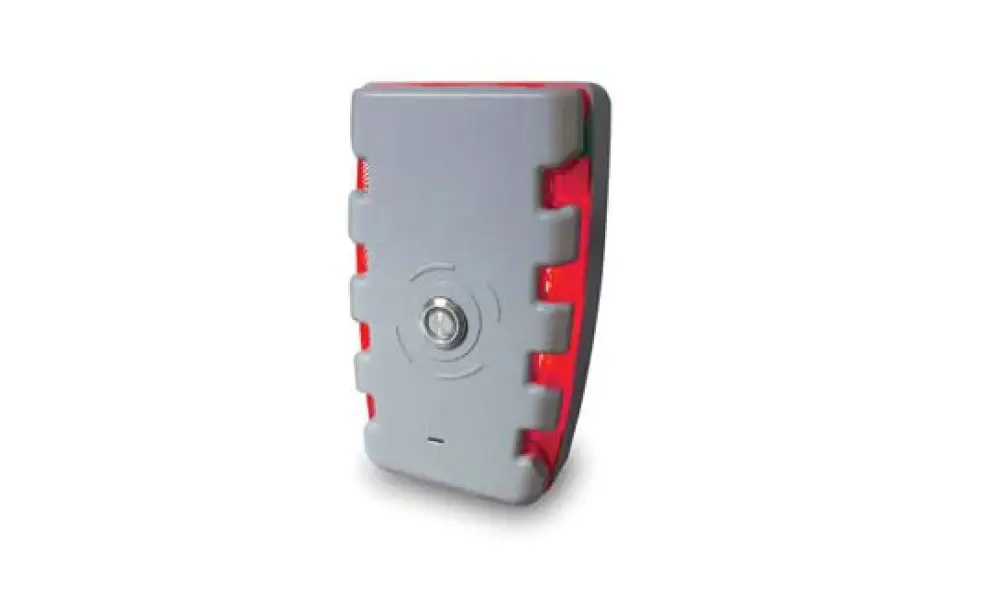
RSAFE RFID Safety Sensor
Installation use and maintenance
RFID
Safety Sensor
ReeR S.p.A. – Via Carcano, 32 – 10153 Torino, Italy – Internet: www.reersafety.com – e-mail: [email protected]
RFID SAFETY SENSOR
1
8541613 – 12/01/2023 – Rev.0
RFID SAFETY SENSOR
LIST OF CONTENTS
INTRODUCTION ……………………………………………………………………………………………………………. 4
PURPOSE OF THIS DOCUMENT………………………………………………………………………………………………………. 4 GLOSSARY …………………………………………………………………………………………………………………………………… 5 CONTENTS OF THE PACKAGE…………………………………………………………………………………………………………. 5
SAFETY ……………………………………………………………………………………………………………………….. 6
SIMBOLOGY ………………………………………………………………………………………………………………………………… 6 PRECAUTIONS ……………………………………………………………………………………………………………………………… 6 CAUTIONS BEFORE INSTALLATION …………………………………………………………………………………………………. 6 LIST OF APPLICABLE STANDARDS …………………………………………………………………………………………………… 7 DISPOSAL OF MATERIALS ……………………………………………………………………………………………………………… 8
USER INFORMATION…………………………………………………………………………………………………………………. 8 UKCA DECLARATION OF CONFORMITY …………………………………………………………………………………………… 8 EC DECLARATION OF CONFORMITY ……………………………………………………………………………………………….. 9
GENERAL DESCRIPTION ……………………………………………………………………………………………….. 10
MECHANIC ………………………………………………………………………………………………………………………………… 10 CODIFICATION OF R-Safe RFID MODELS………………………………………………………………………………………… 11
OPERATION ……………………………………………………………………………………………………………….. 12
ACTIVATION CONDITIONS (Standard EN ISO 14119) ………………………………………………………………………. 12 1) Gate closed, actuator in safe area ……………………………………………………………………………………… 12 2) Gate open, actuator leaving safe area ……………………………………………………………………………….. 12 3) Gate fully open, actuator in hazardous area ……………………………………………………………………….. 12
ACTIVACTION DISTANCES (Standard EN ISO 14119) ……………………………………………………………………….. 13 OSSD outputs – logical states and activation distance …………………………………………………………………….. 14 SERIAL MODE (R-Safe RFID Plus models) ………………………………………………………………………………………. 15
SERIAL mode connection using “Splitter” connectors – sample…………………………………………………….. 15 Maximum cable lengths and connections……………………………………………………………………………………… 16
RFID Connector models (max. 260m)………………………………………………………………………………………… 16 Special connection for the auxiliary power supply ……………………………………………………………………… 17 RFID cable models (max. 200m) ……………………………………………………………………………………………….. 17 SERIAL mode connection using “Splitter” connectors – schematic ………………………………………………… 18 STATUS output transmission protocol ………………………………………………………………………………………….. 19 SERIAL STATUS MODE ………………………………………………………………………………………………………………… 20
INSTALLATION ……………………………………………………………………………………………………………. 21
MECHANICAL INSTALLATION……………………………………………………………………………………………………….. 21 Precautions ……………………………………………………………………………………………………………………………. 21 Assembly……………………………………………………………………………………………………………………………….. 21 Areas of electromagnetic interference ……………………………………………………………………………………… 22 Multiple systems ……………………………………………………………………………………………………………………. 22
8541613 – 12/01/2023 – Rev.0
2
RFID SAFETY SENSOR
ELECTRICAL CONNECTIONS …………………………………………………………………………………………………………. 24 Precautions ……………………………………………………………………………………………………………………………. 24 Warnings concerning connecting cables ……………………………………………………………………………………. 24 R Safe RFID Basic models Pinout ………………………………………………………………………………………………. 24 R-Safe Plus models Pinout ……………………………………………………………………………………………………….. 25
OPERATING MODES (R-Safe RFID Basic) …………………………………………………………………………. 26
AUTOMATIC MODE ……………………………………………………………………………………………………………………. 26
OPERATING MODES (R-Safe RFID Plus)……………………………………………………………………………27
MANUAL MODE …………………………………………………………………………………………………………………………. 27 Manual mode with EDM………………………………………………………………………………………………………….. 27 Manual mode without EDM …………………………………………………………………………………………………….. 28 Correct RESTART pulse ……………………………………………………………………………………………………………. 28
AUTOMATIC MODE ……………………………………………………………………………………………………………………. 29 Limitations concerning the use of Automatic mode …………………………………………………………………. 29 Automatic mode with EDM ……………………………………………………………………………………………………… 29 Automatic mode without EDM…………………………………………………………………………………………………. 30
SERIAL CONNECTION MODE (R-safe RFID Plus only)……………………………………………………………………….. 31 Configuration as first sensor in a serial connection ………………………………………………………………….. 31 Configuration for teaching a new ID to the sensor ……………………………………………………………………… 31
INPUT/OUTPUT ………………………………………………………………………………………………………….. 32
SAFETY INPUTS (R-safe RFID Plus only) …………………………………………………………………………………………. 32 INPUT1 / INPUT2 ……………………………………………………………………………………………………………………. 32 EXTERNAL DEVICE MONITORING / RESTART ……………………………………………………………………………… 32
STATUS OUTPUT ………………………………………………………………………………………………………………………… 32 OSSD SAFETY OUTPUTS ………………………………………………………………………………………………………………. 32
Electrical characteristics of OSSD safety outputs ………………………………………………………………………… 32 OSSD dynamic tests ………………………………………………………………………………………………………………… 33
LED SIGNALS……………………………………………………………………………………………………………….34 TECHNICAL FEATURES …………………………………………………………………………………………………. 35 MECHANICAL DIMENSIONS ………………………………………………………………………………………….. 36 MAINTENANCE …………………………………………………………………………………………………………… 37
TEACH-IN PROCEDURE ……………………………………………………………………………………………………………….. 37 CHECKLIST AFTER INSTALLATION …………………………………………………………………………………………………. 37
ACCESSORIES ……………………………………………………………………………………………………………… 38 WARRANTY ……………………………………………………………………………………………………………….. 39
3
8541613 – 12/01/2023 – Rev.0
RFID SAFETY SENSOR
INTRODUCTION
Dear customer, ReeR congratulates you on purchasing this product.
PURPOSE OF THIS DOCUMENT
Please read this manual before using the R-Safe RFID safety sensor Maintain the manual and the Quick Installation Guide in an easily accessible place for
reference when required. This document explains the operation of the ReeR R-Safe RFID safety sensor
(sensor/actuator) for guarding dangerous access points protected by mobile guards.
The tasks described in this manual are intended to be carried out only by personnel with
a professional technical qualification and trained in safety technology.
The manual shows specifically:
a general description of R-Safe RFID sensor a list of R-Safe RFID models the activation mode (according to EN ISO 14119:2013) the mechanical installation (according to EN 60204, IEC 60947-5-2) the electrical connections the programming procedure of the actuator by the sensor the operating modes of the device the technical specifications of the device
8541613 – 12/01/2023 – Rev.0
4
GLOSSARY
RFID SAFETY SENSOR
BREAK condition
CLEAR condition
GUARD condition GENERIC ACTUATOR (LOW) TEACH-IN ACTUATOR (HIGH) UNIQUE ACTUATOR (HIGH) EDM
MTTFd
OSSD
PDDB
PFHd
PL
SIL
RISK TIME
RFID
RFID Actuator
RFID Sensor
Sao
Sar START/RESTART INTERLOCK
OSSD outputs LOW switching distance > Sar
OSSD outputs LOW waiting for RESTART switching distance < Sao
OSSD outputs HIGH switching distance < Sao
The safety sensor accepts only Generic R-SAFE RFID actuator (G) TEACH-IN -> The safety sensor accepts only one Teach-In R-SAFE RFID actuator (T) individually configured by the sensor during the Teach-In process The safety sensor accepts only one Unique R-Safe RFID actuator (U) previously configured by ReeR (at factory). Sensor and actuator cannot be unpaired or individually substituted External Device Monitoring: control of external contactors switching through the feedback input
Mean Time to Dangerous Failure
Output Signal Switching Device
Proximity Device with a Defined Behavior under fault conditions
Probability of a dangerous failure per Hour
Performance Level
Safety Integrity Level The maximum period during which OSSD(s) modify their behavior (caused by the reaction to actuator presence and safety inputs level) Radio Frequency Identification wireless system
Passive part of the sensor that contains the unique identification code programmed into non-volatile memory The RFID Sensor is responsible to scan the presence of a passive actuator, using the ISO/IEC 14443-4:2018-4 protocol Assured operating distance: switching distance below which the ON state is defined with absolute certainty Assured release distance: is the switching distance beyond which the OFF state is defined with absolute certainty Interlock function (manual reset required): when starting or restarting the machine
Table 1
CONTENTS OF THE PACKAGE
R-Safe RFID sensor and/or actuator (depending on the R-Safe model) This manual (or the Quick Installation Guide) Safety caps (covering the fastening screws)
5
8541613 – 12/01/2023 – Rev.0
SAFETY
RFID SAFETY SENSOR
SIMBOLOGY
This symbol indicates an important warning for personal safety. Failure to comply with
this warning may result in high level risk for exposed personnel.
This symbol indicates an important warning for the proper operation of the device.
PRECAUTIONS
The operations indicated in this document must only be carried out by qualified
personnel. Such personnel must have the necessary requirements to be able to operate on the electronic equipment to be installed in order to avoid any risky situation. ReeR declines any liability for malfunctioning of equipment installed by unqualified staff.
Any use other than those indicated in this manual may be considered as potentially
dangerous for the installer and the machine operator.
For safety reasons, please contact your country’s safety authorities or the relevant
industry association if necessary.
For applications in the food industry, consult the manufacturer to verify compatibility
between sensor materials and chemical agents used.
For installation, observe the regulations of the standards EN 60204 / EN ISO 14119 /
IEC 60947-5-2.
Disconnect the product from the power supply before starting installation.
The strict and complete observance of all the standards, indications and prohibitions set
forth in this manual is a prerequisite for its proper operation. ReeR S.p.A. therefore, declines any liability in case of non-respect, even partial, of these indications.
CAUTIONS BEFORE INSTALLATION
Before installing the R-Safe RFID safety system, you must verify all of the conditions listed below:
The protection level (SIL3, Maximum SIL 3, PLe) of the RFID system must be compatible
with the danger level of the system to be controlled.
Comply with standard EN ISO 14119: 2013 on interlocking devices associated with
guards.
The safety system must only be used as a stop device and not as a device for controlling
the machine.
The machine control must be electrically actuated. Do not use the device in environments with intensive magnetic fields. Protect sensor and actuator from strong shocks and vibrations. Do not use R-Safe RFID near storages of flammable material.
8541613 – 12/01/2023 – Rev.0
6
RFID SAFETY SENSOR
LIST OF APPLICABLE STANDARDS
R-Safe RFID is designed and manufactured in compliance with the following European Directives:
2006/42/EC “Machinery Directive” 2014/30/EU “Electromagnetic Compatibility Directive” 2011/65/UE “Restriction of the use of certain hazardous substances”
And complies with the following standards:
EN ISO 13849-1:2015 EN ISO 14119: 2013 CEI EN 60204-1 IEC 60497-5-1: 2019 IEC 60497-5-2: 2019 IEC 60497-5-3: 2014 EN 60068-2-27: 2009 IEC 61508-1:2010 IEC 61508-2:2010 IEC 61508-3:2010 IEC 61508-4:2010 IEC 62061:2021
Safety of machinery – Safety-related parts of control systems Part 1: General principles for design Safety of machinery – Interlocking devices associated with guards Principles for design and selection
Safety of machinery – Electrical equipment of machines
Low-Voltage Switchgear and Controlgear – Part 5: Control Circuit Devices and Switching Elements Section 1: Electromechanical Control Circuit Devices Low-Voltage Switchgear and c – Part 5: Control Circuit Devices and Switching Elements – Section 2: Proximity switches Low-Voltage Switchgear and Controlgear – Part 5: Control Circuit Devices and Switching Elements Section 3: Requirements for proximity devices with defined behavior under fault conditions (PDDB)
Environmental testing – Part 2-27: Tests – Test Ea and guidance: Shock
Functional safety of electrical/electronic/programmable electronic safety-related systems – Part 1: General requirements Functional safety of electrical/electronic/programmable electronic safety-related systems – Part 2: Requirements for electrical/electronic/programmable electronic safety-related systems Functional safety of electrical/electronic/programmable electronic safety-related systems – Part 3: Software requirements Functional safety of electrical/electronic/programmable electronic safety-related systems – Part 4: Definitions and abbreviations
Safety of machinery – Functional safety of safety-related control systems
Table 2
7
8541613 – 12/01/2023 – Rev.0
RFID SAFETY SENSOR
DISPOSAL OF MATERIALS
USER INFORMATION
For Countries in the European Union: Pursuant to the Directive no. 2012/19/EU on waste electrical and electronic equipment (WEEE). The crossed out wheelie-bin symbol on the equipment or its packaging means that when the product reaches the end of its useful life it must be collected separately from other waste. Proper separate collection of the discarded equipment for later environment-friendly recycling, processing and disposal, helps to avoid any negative impact on the environment and health and encourages re-use and recycling of the materials the equipment is made of. In each Member State of the European Union this product is required to be disposed of in accordance with Directive 2012/19/EU as implemented in the Member State where the product is disposed of. For further information please contact ReeR or your local dealer.
UKCA DECLARATION OF CONFORMITY
ReeR declares that R-Safe RFID safety sensors comply with following UK legislation:
S.I. 2008 No. 1597 – The Supply of Machinery (Safety) Regulations S.I. 2016 No. 1101 – Electrical Equipment (Safety) Regulations S.I. 2016 No. 1091 – Electromagnetic Compatibility Regulations S.I. 2012 No. 3032 – The Restriction of the Use of Certain Hazardous Substances in
Electrical and Electronic Equipment Regulations
Please refer to the link https://www.reersafety.com/en/certifications/ to download the
complete UKCA Declaration of Conformity.
8541613 – 12/01/2023 – Rev.0
8
EC DECLARATION OF CONFORMITY
RFID SAFETY SENSOR
9
8541613 – 12/01/2023 – Rev.0
RFID SAFETY SENSOR
GENERAL DESCRIPTION
The R-Safe RFID safety sensor consists of a passive actuator (TAG) and a active RFID reader (SENSOR):
The RFID reader (properly mounted in front of the actuator) identification is possible via an RF signal.
The RFID reader enquires the actuator and waits for a code to be transmitted from the actuator.
The presence of a correct response allows the sensor to decide to set the logic level of the OSSD to high (LL1).
This product features the following electrical characteristics: Power supply: 24VDC Start/restart interlock (RESTART/AUTOMATIC) External relay monitoring (EDM) Two OSSD outputs, 300mA @ 24VDC Status output, 100mA @ 24VDC. Status output functionality for PLC Two safety inputs for serial connection Standalone Risk time: 70 ms
Three types of sensors are available (EN ISO 14119:2013 standard): 1) GENERIC -> The safety sensor accepts any ReeR RFID generic actuator (low coding level). 2) TEACH-IN -> The safety sensor accepts only one ReeR Teach-In R-SAFE RFID actuator (T) individually paired with the the sensor during the Teach-In process (high coding level). 3) UNIQUE -> The safety sensor accepts only one Unique R-SAFE RFID actuator (U) previously configured by ReeR (at factory). Sensor and actuator cannot be unpaired or individually substituted (high coding level).
MECHANIC
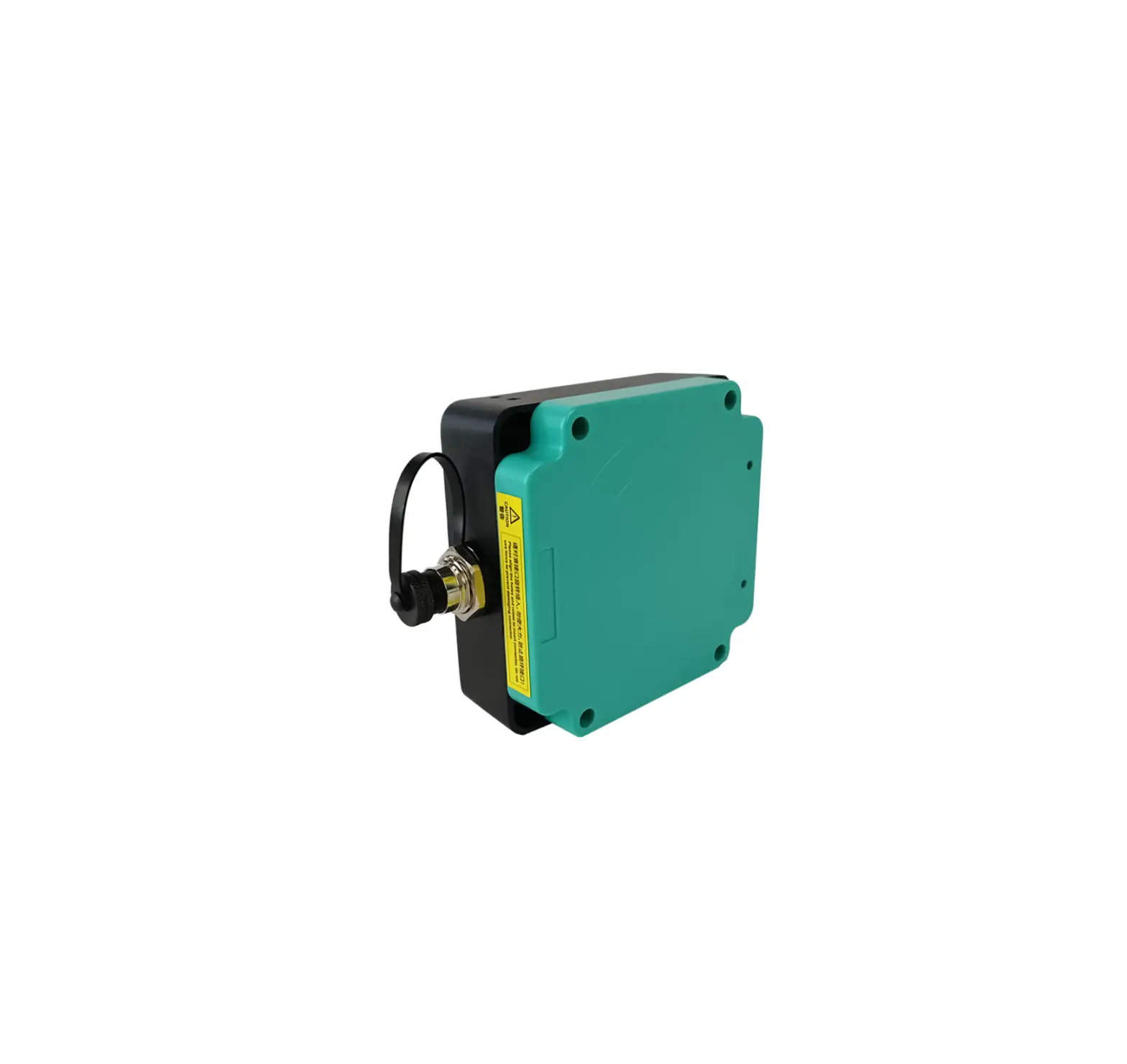
The R-Safe RFID sensor and actuator transponder are equipped with a hermetically sealed plastic housing. The sensor is equipped with cable, connector or directly with pig-tail cable with connector for external connections. The sensor complies with IP67 (IP69K for special models).
Figure 1
8541613 – 12/01/2023 – Rev.0
10
CODIFICATION OF R-Safe RFID MODELS
RFID SAFETY SENSOR
Product
Model
RFID Combo Sensor
+ Actuator
Plus Basic
Mechanical Characteristics
Mode
Dimensions
C
S
Plus
RFID Sensor
S
Basic
RFID Actuator
–
A
LEGENDA: Plus = 8 poles
Basic = 5 poles
C = Combo S = Sensor A = Actuator
S
S
S = Small: Holes spacing 22mm
Table 3
Operating Characteristics
G T U
G T
G T
Wiring
C P 1 3 5 X C P 1 3 5 X
No wiring
G = Generic T = Teach-In U = Unique
C = M12 Connector P = Pigtail 1 = 1m cable 3 = 3m cable 5 = 5m cable X = 10m cable
11
8541613 – 12/01/2023 – Rev.0
RFID SAFETY SENSOR
OPERATION
The RFID safety sensor is made up of a passive actuator (TAG) and an active RFID reader. The RFID reader must be mounted on a safety gate (or door, or mobile protection) in the front of the actuator to enable identification by means of an RF signal.
It is recommended to mount the sensor on the fixed part of the safety gate in order to
make wiring easier.
ACTIVATION CONDITIONS (Standard EN ISO 14119)
1) Gate closed, actuator in safe area
In this operating condition the reader/actuator distance is defined as < Sao: switching distance below which is defined the ON state; the OSSD safety outputs are active; led -> green.
2) Gate open, actuator leaving safe area
In this operating condition the reader/actuator distance is defined as >Sao: switching distance at which the ON state is about to end; the OSSD safety outputs are still active but once the limit zone Sar is reached, they will be switched OFF; led -> green or red
3) Gate fully open, actuator in hazardous area
In this operating condition the reader/actuator distance is defined as >Sar: switching distance at which the OSSD safety outputs are switched OFF and RFID signals the hazardous situation; led -> red
1
2
3
Figure 2 – Activation conditions
8541613 – 12/01/2023 – Rev.0
12
RFID SAFETY SENSOR
ACTIVACTION DISTANCES (Standard EN ISO 14119)
The following figure shows the activation distances in function of the three axis (X, Y, Z):
X axis: Sao = 10mm; Sar = 25mm Y axis: Sao = 5mm; Sar = 25mm Z axis: Sao = 5mm; Sar = 25mm
Figure 3 – Activation distances
LEGENDA: Sao Sar
Assured operating distance Assured release distance
13
8541613 – 12/01/2023 – Rev.0
RFID SAFETY SENSOR
OSSD outputs – logical states and activation distance
The following figure shows the electrical operation of the OSSD outputs and the STATUS and EDM signals as a function of the SENSOR/ACTUATOR actuation distance (refer to the “ELECTRICAL CONNECTIONS” section for the pinout of the device):
Figure 4 – OSSD outputs – logic levels
Figure 5 – OSSD / EDM / STATUS – logic levels
8541613 – 12/01/2023 – Rev.0
14
RFID SAFETY SENSOR
SERIAL MODE (R-Safe RFID Plus models)
In serial mode a maximum to 16 R-Safe RFID Plus sensors can be connected in series.
For a quicker and safe connection, ReeR recommends using its splitter connectors as
showed in Figure 6 and Figure 9.
In serial connection, the device can only operate in Automatic operation mode. If one or more sensor is deactivated (actuation distance = Sar) all downstream sensors
outputs will be deactivated with the programmable controller opening its OSSD outputs.
The next two sections extend the information on the use of the “STATUS” signal in serial mode. Serial connection: with an increase of the length and of the current drawn (load +
sensors), there corresponds a voltage drop in the system. Should this voltage be less than 20 VDC, an additional power supply must be provided.
The following schematic shows an example of series connection of 4 sensors (using the ReeR splitter connectors) with a Programmable Logic Controller.
SERIAL mode connection using “Splitter” connectors – sample
Figure 6 – Serial mode (Automatic)
15
8541613 – 12/01/2023 – Rev.0
RFID SAFETY SENSOR
In order to guarantee the highest level of safety (PL e), it is necessary to include a safety
device (PLe), such as a safety module or programmable controller (e.g., ReeR MOSAIC M1S) at the end of the chain to evaluate the condition of the static OSSD outputs.
Maximum cable lengths and connections
RFID Connector models (max. 260m) Depending on the length of the links of the serial chain and single connections, it is mandatory to ensure that the connecting cables have a 0.25mm2 cross-section and the power supply is 24VDC, as shown in the following table:
Connection Type Serial connection Serial connection
Single sensor Single sensor Single sensor
Length 160m >160m 260m 50m 100m
>50m <100m
Power supply Power supply
Voltage
Auxiliary
24VDC
None
24VDC
Yes
24VDC 24VDC
None None
24VDC
Yes
Table 4
Max. Load Current –
–
0.5A 0.25A
0.5A
Note
–
Auxiliary power supply cable required
–
Auxiliary power supply cable required
Figure 7 – Auxiliary power supply
8541613 – 12/01/2023 – Rev.0
16
Special connection for the auxiliary power supply
RFID SAFETY SENSOR
Figure 8 – Special connection for the auxiliary power supply
RFID cable models (max. 200m)
Depending on the length of the links of the serial chain and single connections, it is mandatory to ensure that the connecting cables have a 0.14mm2 cross-section and the power supply is 24VDC, as shown in the following table:
Connection Type Serial connection
Length 80m
Power supply Voltage
24VDC
Serial connection >80m 200m
24VDC
Single sensor Single sensor
30m 60m
24VDC 24VDC
Single sensor >30m <80m
24VDC
Power supply Auxiliary None
Yes
None None
Yes
Table 5
Max. Load Current –
–
0.5A 0.25A
0.5A
Note
Auxiliary power supply cable required
Auxiliary power supply cable required
17
8541613 – 12/01/2023 – Rev.0
RFID SAFETY SENSOR
SERIAL mode connection using “Splitter” connectors – schematic
Figure 9 – Serial mode wiring (Automatic)
8541613 – 12/01/2023 – Rev.0
18
RFID SAFETY SENSOR
STATUS output transmission protocol
A system STATUS output is available in the RFID sensor for diagnostics. The output signal is a 24 VDC square waveform (Figure 10) that corresponds to the status of the sensor chain.
Figure 10 – STATUS serial asynchronous transmission
The timing requirements for data transmission are not critical to the safety of the device,
as “STATUS” is not a safety signal. The following table shows the timing requirements.
Figure 11 – Serial bit encoding
Time requirement IDLE
P_Start P_status center Bit 0 P_status center Bit 1
Intercharacter Delay retransmission
Description High level Low level Rise edge Fall edge High Level High Level
Table 6 – Serial status timing requirements
Bit Timing (ms) Continuous 150 ±10 150 ±10 150 ±10 5000 150 ±10
19
8541613 – 12/01/2023 – Rev.0
RFID SAFETY SENSOR
SERIAL STATUS MODE
The serial output waveform containing the sensor’s STATUS is shown in “Figure 13” for three sensors connected in serial modality. The first and second sensors are in CLEAR status with the actuator inside the Sao distance. The third sensor has its transponder at the Sar distance; therefore, it is in BREAK status.
Figure 12 – Serial status modality encoding
Figure 13 – Serial status waveform output
8541613 – 12/01/2023 – Rev.0
20
INSTALLATION
RFID SAFETY SENSOR
MECHANICAL INSTALLATION
Precautions
Before installing the product, it is important to perform a specific risk analysis in
accordance with the requirements of the Machinery Directive (2006/42/EC).
ReeR guarantees the functional safety of R-Safe RFID, but is not responsible for the
performance of the system in which it is installed.
Respect the correct activation direction described below. Remove power supply from the product before proceeding with mechanical installation. It is not permitted to fix sensor and actuator with less than two screws (EN ISO 14119). Follow the installation rules described in the standard EN ISO 14119. The use of anti-unscrewing screws is mandatory (EN ISO 14119). Fasten the devices to the gate using M4 x 20 screws or alternatively 3.5 x 19 cylinder
head self-threading screws with a tightening torque of 0.8 … 1.5Nm.
Assembly
Place the sensor and actuator as shown in the following figures. Follow the instructions below in particular:
Mount the sensor to the fixed part of the safety gate/door and the actuator to the
moving part.
For actuation direction 1, place the sensor and actuator facing each other with the
centering marks at a distance d corresponding to: 6mm < d < 10mm
For actuation directions 2 and 3, place the sensor and actuator facing each other with the
centering marks at a distance d corresponding to: 2mm < d < 10mm
At the end of the assembly, plug the supplied caps into the housing of the fixing screws
as shown in the assembly diagram. These plugs reduce the risk of tampering with the product as indicated in the EN ISO 14119 standard.
Figure 14 – Actuation direction
For each type of installation, check carefully that the sensor activation side lobes do not
cause an unintentional activation (-> “Areas of electromagnetic interference”).
21
8541613 – 12/01/2023 – Rev.0
RFID SAFETY SENSOR
Figure 15 – Assembly Areas of electromagnetic interference The side lobes of the sensor field may influence the transponder behavior, depending on the actuator position.
To avoid influence of the side lobes, observe the specified distances between sensor and
actuator.
Figure 16 – Detection field of the sensor
Multiple systems With applications involving multiple sensors mounted close together, a minimum distance L = 150mm between the sensors must be observed in order to avoid interference (Figure 17).
8541613 – 12/01/2023 – Rev.0
22
RFID SAFETY SENSOR
Figure 17
With gate closed, make sure that the SENSOR/ACTUATOR distance is Sao
(-> TECHNICAL SPECIFICATIONS).
With gate opened, make sure that the SENSOR/ACTUATOR distance is Sar (with a
protected area that does not present any danger to the operator) (-> TECHNICAL SPECIFICATIONS).
The nominal values of the OSSD’s switch-on and switch-off distances are stated assuming
a non-magnetic material support for the actuator and sensor. These reference values may vary depending on the support materials used.
At the end of the assembly, plug the supplied caps into the housing of the fixing screws
as shown in the assembly diagram. These plugs reduce the risk of tampering with the product as indicated in the EN ISO 14119 standard.
23
8541613 – 12/01/2023 – Rev.0
RFID SAFETY SENSOR
ELECTRICAL CONNECTIONS
Precautions
Carry out all connections before supplying power to the product. The 0VDC connection must be common to all system components. Make sure that the connector is screwed in all the way to ensure correct operation of the
product.
The R-Safe RFID sensor must be supplied with a voltage of 24VDC +/- 20 %.
(IEC 60947-5-2).
Warnings concerning connecting cables
Conductor size: 0.25 … 2.5 mm2. We recommend the use of separate power supplies for the product and for other
electrical power equipment (electric motors, inverters, frequency converters) or other sources of disturbance.
For connections longer than 20m, use cables with a cross-section of at least 0.5mm2
(AWG16), (1mm2 with lengths over 50m).
R Safe RFID Basic models Pinout
NUMBER COLOR
1
Brown
2
White
3
Blue
4
Black
5
Grey
M12 – 5 POLES CONNECTOR / CABLE
SIGNAL
TYPE
DESCRIPTION
24VDC
Input
24VDC power supply
OSSD1
Output Safety output OSSD1
0VDC
Input
0VDC power supply
OSSD2
Output Safety output OSSD2
STATUS
Output
Sensor status output
Table 7 – R-Safe Basic models Pinout
ELECTRICAL LEVEL 19,2VDC … 28,8VDC
PNP active high 0VDC
PNP active high PNP active high
8541613 – 12/01/2023 – Rev.0
24
R-Safe Plus models Pinout
RFID SAFETY SENSOR
NUMBER 1 2 3 4 5 6 7 8
COLOR Brown White Blue Black Grey
Pink Violet Orange
M12 – 8 POLES CONNECTOR / CABLE
SIGNAL
TYPE
DESCRIPTION
24VDC INPUT1 0VDC
Input Input Input
24VDC power supply OSSD input for serial
connection 1 0VDC power supply
OSSD1
Output Safety output OSSD1
STATUS
Output
INPUT2
Input
OSSD2
Output
EDM/RESTART/SERIAL Input
Sensor status output
OSSD input for serial connection 2
Safety output OSSD2
Feedback K1K2 / Restart / Serial connection input
* Digital input.
Table 8 – R-Safe Plus models Pinout
ELECTRICAL LEVEL 19,2VDC … 28,8VDC
Digital input * 0VDC
PNP active high PNP active high Digital input * PNP active high Digital input *
25
8541613 – 12/01/2023 – Rev.0
RFID SAFETY SENSOR
OPERATING MODES (R-Safe RFID Basic)
AUTOMATIC MODE
When the sensor is configured in “Automatic” the device behavior is the following: A safety gate opening (sensor/actuator distance > Sar) will deactivate the OSSD
outputs. At the safety gate closure (sensor/actuator distance < Sao) will reactivate the OSSD
outputs.
Figure 18 – Automatic mode
Respect the pinout described in Table 7
8541613 – 12/01/2023 – Rev.0
26
OPERATING MODES (R-Safe RFID Plus)
RFID SAFETY SENSOR
MANUAL MODE
Use in manual mode (start/restart interlock activated) is mandatory if the safety device
monitors a guard to protect a hazardous area and a person, after passing the guard, can stand in the hazardous area without being detected.
The RESTART control button must be installed outside the hazardous area in a position
where the hazardous area and the entire working area concerned are clearly visible.
Manual mode with EDM
R-Safe RFID can operate in MANUAL MODE using an external RESTART command.
A safety gate opening (reader/actuator distance > Sar) will deactivate the OSSD outputs.
At the safety gate closure (reader/actuator distance < Sao), to reactivate the OSSD outputs it will be necessary to press the N.O. RESTART button connected to 24VDC and release it.
The EDM input is only recognized as properly set if, after the sensor activation and after
setting the safety inputs, at least one valid start pulse is detected.
Use an external normally open pushbutton, whose temporary closure generates the
RESTART command (sequence 0 1 0).
The RESTART command must be connected in series with the K1/K2 control contacts of
the external contactors connected to 24VDC (pin 8).
SIGNAL / (pin) INPUT 1 / (2) INPUT 2 / (6) EDM/RST INPUT / (8)
Figure 19 – Manual mode with EDM
CONNECTED TO / (pin) STATUS / (5) OSSD2 / (7)
24VDC / (1) – through the N.C. contact series of K1/K2 and RESTART command
Table 9 – Manual mode with EDM
27
8541613 – 12/01/2023 – Rev.0
RFID SAFETY SENSOR
Manual mode without EDM
R-Safe RFID can operate in MANUAL MODE using an external RESTART command.
A safety gate opening (reader/actuator distance > Sar) will deactivate the OSSD outputs.
At the safety gate closure (reader/actuator distance < Sao), to reactivate the OSSD outputs it will be necessary to press the N.O. RESTART button connected to 24VDC and release it.
Use an external normally open pushbutton, whose temporary closure generates the
RESTART command (sequence 0 1 0).
The RESTART command must be connected to 24VDC (pin 8).
Figure 20 – Manual mode without EDM
SIGNAL / (pin) INPUT 1 / (2) INPUT 2 / (6) EDM/RST INPUT / (8)
CONNECTED TO / (pin) STATUS / (5) OSSD2 / (7)
24VDC / (1) – through the RESTART command
Table 10 – Manual mode without EDM
Correct RESTART pulse
The valid start pulse is detected when after a rising edge, a falling edge between 30ms and 5s is detected:
Figure 21 – Correct RESTART pulse
8541613 – 12/01/2023 – Rev.0
28
AUTOMATIC MODE
RFID SAFETY SENSOR
Limitations concerning the use of Automatic mode
Use in manual mode (start/restart interlock activated) is mandatory if the safety device
monitors a guard to protect a hazardous area and a person, after passing the guard, can stand in the hazardous area without being detected.
Automatic mode with EDM
In “Automatic mode with EDM”, the “EDM input” terminal must be connected to 24VDC
through N.C. K1/K2 contact (in this way monitoring of the external contacts is enabled).
A safety gate opening (reader/actuator distance > Sar) will deactivate the OSSD
outputs.
The safety gate closure (reader/actuator distance < Sao) will reactivate the OSSD
outputs only if the EDM signal is correct.
The following figure shows the connections to perform in order to enable the
monitoring of the K1/K2 external contacts.
Figure 22 – Automatic mode with EDM
SIGNAL / (pin) INPUT 1 / (2) INPUT 2 / (6) EDM/RST INPUT / (8)
CONNECTED TO / (pin) OSSD1 / (4) OSSD2 / (7)
24VDC / (1) – through the N.C. contact series of K1/K2
Table 11 – Automatic mode with EDM
The following table illustrates the electrical behavior of the EDM input with reference to the OSSD condition:
OSSD outputs (pin 4, 7) OFF ON
EDM input (pin 8) Closed contact Open contact
Table 12 EDM input
29
8541613 – 12/01/2023 – Rev.0
RFID SAFETY SENSOR
The time allowed to elapse from the activation of the OSSD outputs and the opening of
the FBK contacts must be t <500ms (Figure 23).
Figure 23 – Correct EDM timing Automatic mode without EDM When the sensor is configured IN “Automatic without EDM” the monitoring of external K1/K2 contacts is disabled, the “EDM input” must be connected directly to +24VDC. A safety gate opening (reader/actuator distance > Sar) will deactivate the OSSD
outputs. At the safety gate closure (reader/actuator distance < Sao) will reactivate the OSSD
outputs.
Figure 24 – Automatic mode – no EDM
SIGNAL / (pin) INPUT 1 / (2) INPUT 2 / (6) EDM/RST INPUT / (8)
CONNECTED TO / (pin) OSSD2 / (7) OSSD1 / (4) 24VDC / (1)
Table 13
8541613 – 12/01/2023 – Rev.0
30
SERIAL CONNECTION MODE (R-safe RFID Plus only)
RFID SAFETY SENSOR
Configuration as first sensor in a serial connection
In the serial connection mode (-> SERIAL MODE), it is mandatory to configure the first sensor as in the following diagram to enable the communication protocol.
Figure 25 – First sensor in a serial connection
SIGNAL / (pin) INPUT 1 / (2) INPUT 2 / (6) EDM/RST/SERIAL INPUT / (8)
CONNECTED TO / (pin) 24VDC / (1) 24VDC / (1) STATUS / (5)
Table 14 – First sensor in a serial connection
Configuration for teaching a new ID to the sensor
For the teach-in model, the sensor can be programmed with a new ID. This function will be realized by the user during the start-up phase (-> TEACH-IN PROCEDURE), configuring the sensor as in the following diagram.
Figure 26 – Enabling new ID assignment
31
8541613 – 12/01/2023 – Rev.0
RFID SAFETY SENSOR
SIGNAL / (pin) INPUT 1 / (2) INPUT 2 / (6) EDM INPUT / (8)
CONNECTED TO / (pin) OSSD1 / (4) STATUS / (5) 24VDC / (1)
Table 15
INPUT/OUTPUT
SAFETY INPUTS (R-safe RFID Plus only)
INPUT1 / INPUT2 R-Safe RFID Plus is equipped with two PNP active high safety inputs. The INPUT1 / INPUT2 input are used to receive the external OSSD’s signal from another sensor (when a serial connection is requested).
EXTERNAL DEVICE MONITORING / RESTART The EDM/RESTART input is used to monitor the feedback connection of any external contactors (connector pin 8). This signal is PNP active high.
STATUS OUTPUT
The system has a status digital output with the following characteristic: PNP active high, 0 … +24VDC Maximum load: 100 mA Overload protection
The Status output gives real-time information of the passive RFID actuator presence.
When several RFIDs are connected in series, please refer to the “SERIAL MODE” section
for the use of the STATUS output.
The status output has no safety-related function.
OSSD SAFETY OUTPUTS
Two static outputs (connector pin 4 and 7) are provided, based on the C-type interface for which functional safety aspects are ensured by an internal dynamic test (ZVEI Classification – CB24I).
Electrical characteristics of OSSD safety outputs The OSSD requirements listed in the table below are required by IEC 60947-5-2.
Off-state current Voltage drop Load capacitance
VALUE 0.5 mA 3,5V DC
300 nF
NOTE @ 24VDC @ 24VDC @ VCC max … VCC min
Table 16 – OSSD safety outputs
8541613 – 12/01/2023 – Rev.0
32
RFID SAFETY SENSOR
OSSD dynamic tests R-Safe RFID performs a dynamic test on OSSD outputs (ZVEI Classification – CB24I). According to ZVEI sources of interface type C are subdivided into classes according to the timing characteristics of the test pulses. The test pulses time is shown in the following figure.
Figure 27 – Timing of OSSD test pulses
The requirements for test pulses are listed in the following table (ZVEI Classification CB24I):
ZVEI Classification Class 2
Test pulse duration (ti) 100 µs
Phase shift (tc) 500 ms
Test pulse interval (T) 1s
Maximum duration (ti) 120 µs
Maximum shift (tc) 510 ms
Maximum interval (T) 1.1 ms
Minimum duration (ti) 80 µs
Minimum shift (tc) 490 ms
Minimum interval (T) 0.9 ms
Table 17 – Timing requirements for OSSD pulse test
33
8541613 – 12/01/2023 – Rev.0
RFID SAFETY SENSOR
LED SIGNALS
The R-Safe RFID sensor provides a multi-colored LED to notify its condition in real time.
CONFIGURED MODE (POWER UP) Single sensor with EDM in AUTO mode Single sensor without EDM in AUTO mode
Single sensor in MANUAL mode First sensor of serial connection
Sensor of serial connection
LED COLOR Yellow Yellow Yellow Yellow Yellow
NUMBER OF BLINKS 2 3 4 5 6
Table 18 – RFID operating mode signals (at power up)
COLOR (NORMAL OPERATION)
RED GREEN YELLOW GREEN / RED – Blinking Blinking GREEN Blinking YELLOW Blinking RED
SENSOR STATUS
BREAK GUARD RESTART GUARD / INPUT OFF PROGRAMMING CONFIG
FAIL
MEANING
OSSD outputs LOW OSSD outputs HIGH Waiting for Restart One or more sensors in the chain is in BREAK state Actuator programming (TEACH-IN) Configuration type (-> Table 18)
Error condition
Table 19 – RFID status signals (in normal operation)
ERROR (DIAGNOSTIC) OSSD outputs error
Safety input incongruency
EDM error
Overvoltage detected
Internal error Wrong transponder (actuator) Incorrect wire Configuration Antenna overvoltage detected
COLOR Red
Red
Red
Red
Red Red Red Red
BLINKING 1
2
3
4
5 6 7 10
CORRECTIVE ACTION
Check OSSD connections (4, 7) Check sensor series connections
(Input 2, 6 / OSSD 4, 7) Check EDM connections (8)
Check connections / Send product to ReeR Send product to ReeR
Replace actuator
Check connections
Send product to ReeR
Table 20 – RFID error signals (diagnostic)
8541613 – 12/01/2023 – Rev.0
34
RFID SAFETY SENSOR
TECHNICAL FEATURES
SAFETY CHARACTERISTICS PL Category PFHd SFF SIL Maximum SIL Hardware fault tolerance Mission time Coding Low Coding High ELECTRICAL CHARACTERISTICS Rated Power supply Power consumption Protection class Rated surge voltage Rated insulation voltage EDM Safety input OSSD safety outputs (n° / type) Status output (n° / type) Restart MECHANICAL CHARACTERISTICS Housing material Cover material Assured release sensing distance (Sar)
Assured operating distance (Sao)
Free Zone Minimum mounting distance between sensors Mounting type Connector Connection cable length Weight ENVIRONMENTAL CHARACTERISTICS Operating temperature Storage temperature Altitude Humidity Pollution degree
Protection degree
Shock resistance Vibration Vibration amplitude Vibration cycle duration Air pressure FCC Certification TIME CHARACTERISTICS Switch-on delay Standalone Risk time Additional Risk time (series connection) Risk time for 4 sensors Risk time for 8 sensors Risk time for 16 sensors Switch-on time (actuator)
VALUE
STANDARD
PL e ISO 13849-1
4
10E-8 to10E-7
90% … 99 %
IEC 61508-1
3
3
EN 62061
1 20 years
EN ISO 13849-1 EN 62061
Yes Type Generic Yes Teach-in / Unique types
ISO 14119-1
VALUE
STANDARD
24 VDC +/-20%
IEC 60947-5-2
0.5 W
III
IEC 60947-5-2
Max 1 kV
IEC 60947-5-2
Max 300 V
IEC 60947-5-2
FBK input for external relay monitoring
EN 61131-2
2 / Active High
EN 61131-2
2 / 300 mA@24VDC
Active High
1 / 100 mA@24VDC
Active High
N.O. Restart input in series with EDM
VALUE
STANDARD
Polyketone (POK)
UL
Polyketone (POK)
UL
25 mm
10mm (X axis); 5mm (Y axis); 5mm (Z axis) -> “ACTIVACTION DISTANCES (Standard EN ISO 14119)”
50 mm
ISO 14119-1
150 mm
ISO 14119-1
Fitting with M4 x 20 anti-unscrewing screws M12x1: 5-pin (BASIC); 8-pin (PLUS) 30 m Cable: 200 g / Connector: 80 g VALUE -25 … +70 °C -25 … +70 °C 2000 m 50% @70°C / 90% @20°C 2
IP65/IP67
30g / 11ms 10 … 55Hz 1 mm 5 min 860 … 1060 hPa FCC ID: XXXXXXXX VALUE 10s typical, 15s max. 70ms (Stand-alone device) 12ms (Additional risk time delay per device) Rt= 70ms+(3x12ms) = 106ms Rt= 70ms+(7x12ms) = 154ms Rt= 70ms+(15x12ms) = 250ms 250ms
UNI 5931
STANDARD IEC 60068-2 IEC 60068-2 EN 60947-1 IEC 60068-2 EN 60947-1 EN 60947-1 EN 60529:1991 + A1:2000 + A2:2013 IEC 60068-2-27 IEC 60068-2-27 IEC 60068-2-27 IEC 60068-2-6 IEC 60068-2 FCC Part 5 §15 STANDARD
EN 60947-5-3
35
8541613 – 12/01/2023 – Rev.0
RFID SAFETY SENSOR
MECHANICAL DIMENSIONS
8541613 – 12/01/2023 – Rev.0
(Dimensions in mm) 36
MAINTENANCE
RFID SAFETY SENSOR
TEACH-IN PROCEDURE
The Teach-in coding sensor can be only programmed (by the user during the start-up phase) using a TEACH-IN coding actuator. For start-up teach-in procedure, the sensor must be wired following the configuration in the section (“Configuration for teaching a new ID to the sensor”, page 31).
Power on the R-Safe RFID sensor (Figure 28, condition A). After power on, the sensor will be ready for pairing with the actuator (Figure 28,
condition B). When the actuator is approaching the RFID sensor at a distance < 2mm, the
sensor is programmed after 5 seconds (Figure 28, condition C).
All the conditions are signaled in real-time by the multicolor LED based on the RFID
sensor.
Figure 28 – Teach-in signals
CONDITION A WAITING FOR POWER ON
CONDITION B SWITCHED ON, WAITING FOR PROGRAMMING
CONDITION C PROGRAMMED, WAITING FOR A RESTART
Table 21 – Teach-in procedure
CHECKLIST AFTER INSTALLATION
The R-Safe RFID safety sensor is able to detect in real time the faults. To guarantee the system perfect operation perform the following checks at start up and at least every year:
OPERATION / CONTROL 1. Verify the correct fixing of the device (sensor and actuator) 2. Verify that anti-unscrewing screws and safety caps are well mounted 3. Verify that the activation/deactivation distances are correct 4. Verify that the connector is well screwed 5. Verify that the sensor’s LED lights on correctly 6. Operate a complete System Test (i.e. opening the safety gate and verifying
that the hazardous machine stop its operation) 7. With a series configuration perform the above controls for ALL the sensors
COMPLETE
37
8541613 – 12/01/2023 – Rev.0
RFID SAFETY SENSOR
ACCESSORIES
MODEL
CFM5P3 CFM5P5 CFM5P10 CD3 CD5 CD10
CFM8P3 CFM8P5 CFM8P10 CF8P3 CF8P5 CF8P10
CRY12-885 CRY12-855
ITEM 5 poles
2 Male/Female connectors – Straight M12, 5poles with 3m cable 2 Male/Female connectors – Straight M12, 5poles with 5m cable 2 Male/Female connectors – Straight M12, 5poles with 10m cable Female connector – Straight M12, 5poles with 3m cable Female connector – Straight M12, 5poles with 5m cable Female connector – Straight M12, 5poles with 10m cable
8 poles 2 Male/Female connectors – Straight M12, 8poles with 3m cable 2 Male/Female connectors – Straight M12, 8poles with 5m cable 2 Male/Female connectors – Straight M12, 8poles with 10m cable Female connector – Straight M12, 5poles with 3m cable (for R-Safe) Female connector – Straight M12, 5poles with 5m cable (for R-Safe) Female connector – Straight M12, 5poles with 10m cable (for R-Safe)
Splitter connectors Splitter connector M12, Female-Male-Female (First for R-Safe) Type A Splitter connector M12, Female-Male-Female (Central for R-Safe) Type B
CODE
1390908 1390909 1390911 1330969 1330950 1330956
1295100 1295101 1295102 1295103 1295104 1295105
1295107 1295106
8541613 – 12/01/2023 – Rev.0
38
RFID SAFETY SENSOR
WARRANTY
ReeR guarantees that every new R-Safe RFID system is free from defects in materials and manufacturing for a period of 12 (twelve) months from the time it is released by the factory if used under normal conditions. During this period, ReeR is committed to eliminate any defects in the product by repairing or replacing defective parts, completely free of charge, both for material and labour. However, ReeR reserves the right to proceed, instead of repairing it, to replace the entire defective equipment with one having the same or equal characteristics. The validity of the warranty is subject to the following conditions:
The failure must be reported by the user to ReeR within twelve months from the date of
delivery of the product.
The equipment and its components are in the same condition as delivered by ReeR. Failure or malfunction has not originated directly or indirectly from:
Use for inappropriate purposes; Failure to comply with the rules of use; Negligence, lack of expertise, incorrect maintenance; Repairs, modifications, adaptations not performed by ReeR personnel, tampering,
etc.; Accidents or shocks (even if due to transport or causes of force majeure); Other causes independent of ReeR.
The repair will be carried out at the ReeR laboratories where the material must be delivered or shipped: the shipping costs and the risks of any damage or loss of material during shipment are the responsibility of the customer. All replaced products and components become ReeR property. ReeR does not recognize any other warranties or rights except those expressly described above; in no case can claims for damages for expenses, activity interruption, or other factors or circumstances be made in any way related to the failure of the product or one of its parts.
The strict and complete observance of all the standards, indications and prohibitions set
forth in this manual is an essential requirement for the proper operation of the light curtain. ReeR s.p.a., therefore, disclaims any liability in case of non-respect, even partial, of these indications.
Features subject to change without notice. · Full or partial reproduction is prohibited without ReeR’s permission.
8541613 – 12/01/2023 – Rev.0
39
RFID SAFETY SENSOR
8541613 – 12/01/2023 – Rev.0
40
This device complies with Part 15 of the FCC Rules. Operation is subject to the following two conditions: (1) this device may not cause harmful interference, and (2) this device must accept any interference received, including interference that may cause undesired operation
NOTE: This equipment has been tested and found to comply with the limits for a Class B digital device, pursuant to Part 15 of the FCC Rules. These limits are designed to provide reasonable protection against harmful interference in a residential installation. This equipment generates, uses and can radiate radio frequency energy and, if not installed and used in accordance with the instructions, may cause harmful interference to radio communications. However, there is no guarantee that interference will not occur in a particular installation. If this equipment does cause harmful interference to radio or television reception, which can be determined by turning the equipment off and on, the user is encouraged to try to correct the interference by one or more of the following measures: — Reorient or relocate the receiving antenna. — Increase the separation between the equipment and receiver. — Connect the equipment into an outlet on a circuit different from that to which the receiver is connected. — Consult the dealer or an experienced radio/TV technician for help.
Warning: changes or modifications not expressly approved by the party responsible for compliance could void the user’s authority to operate the equipment
Radiation Exposure Statement This equipment complies with FCC radiation exposure limits set forth for an uncontrolled environment. This equipment should be installed and operated with minimum distance 20cm between the radiator and your body.
 ReeR - Industrial Safety Automation