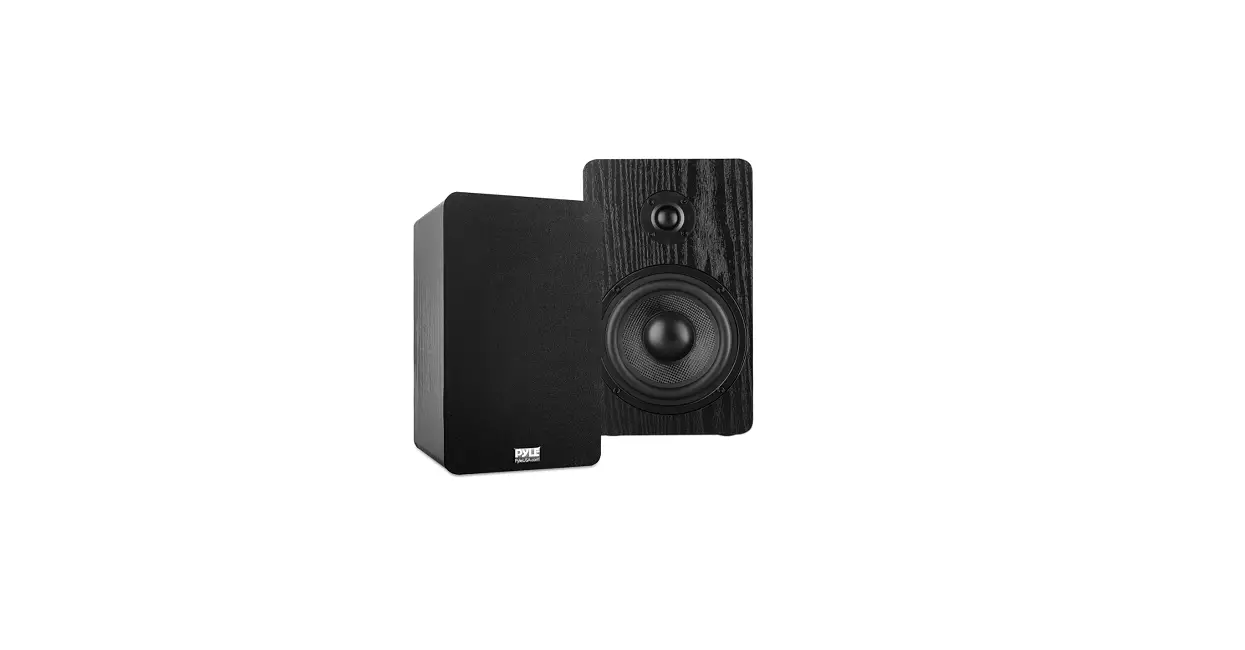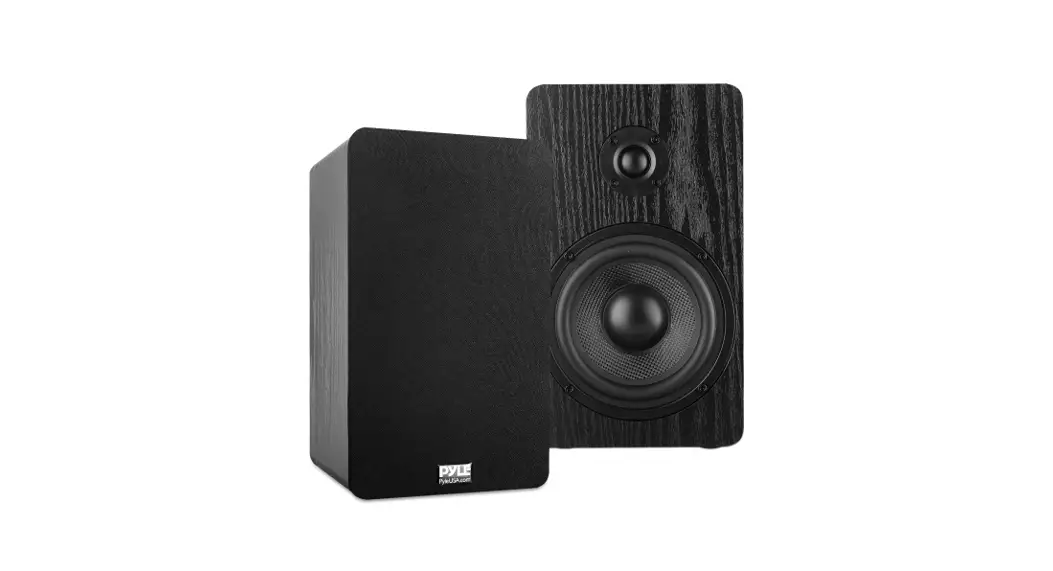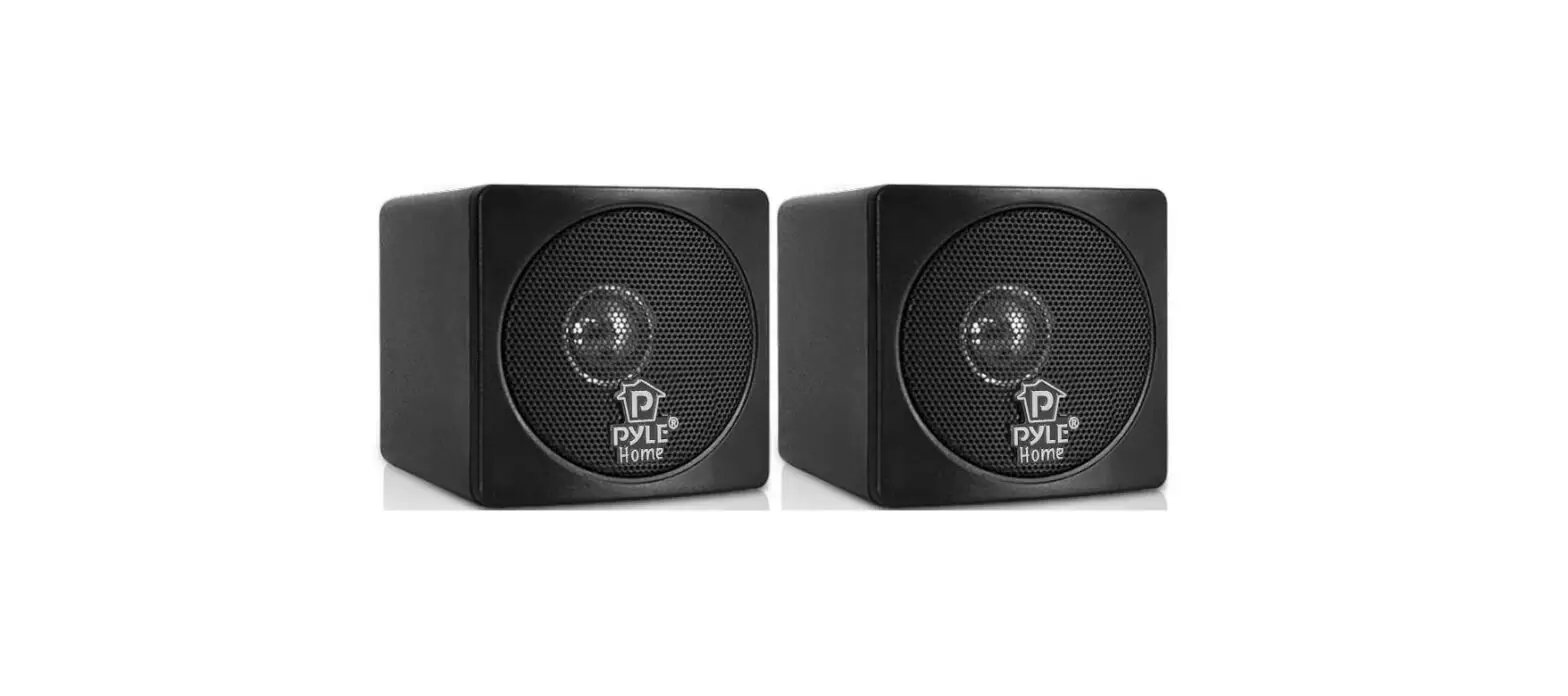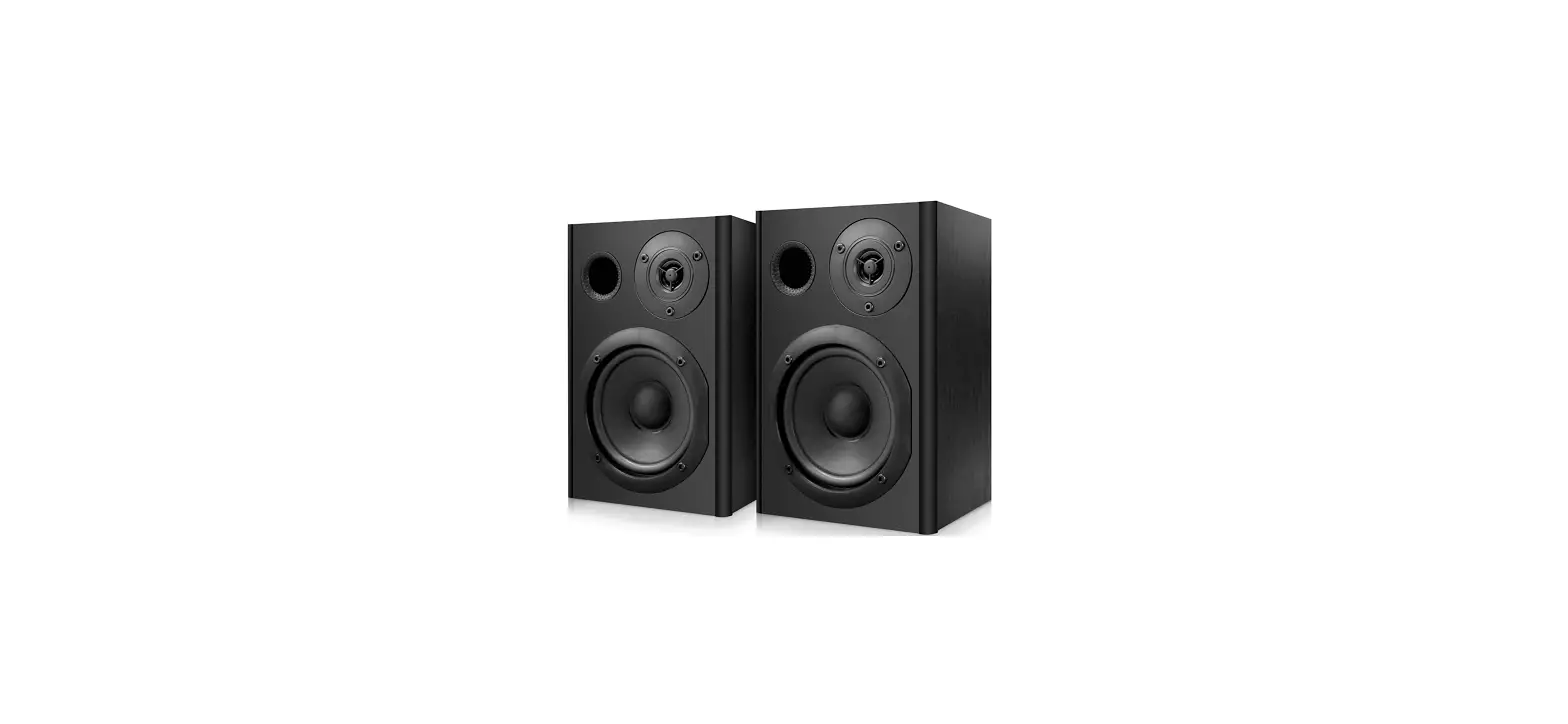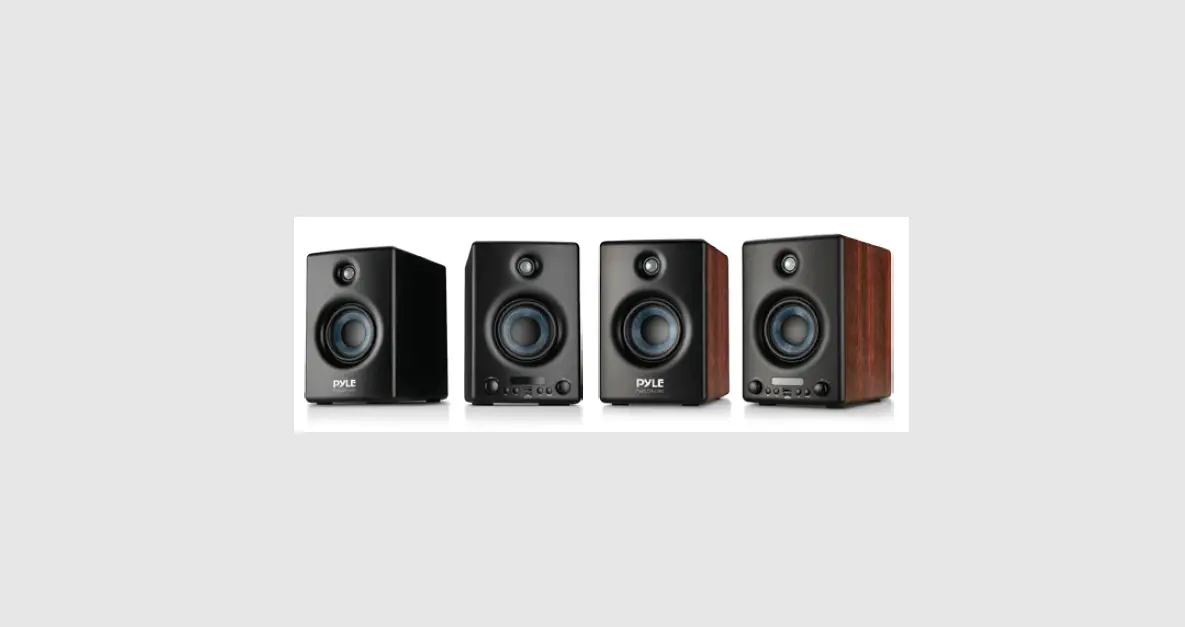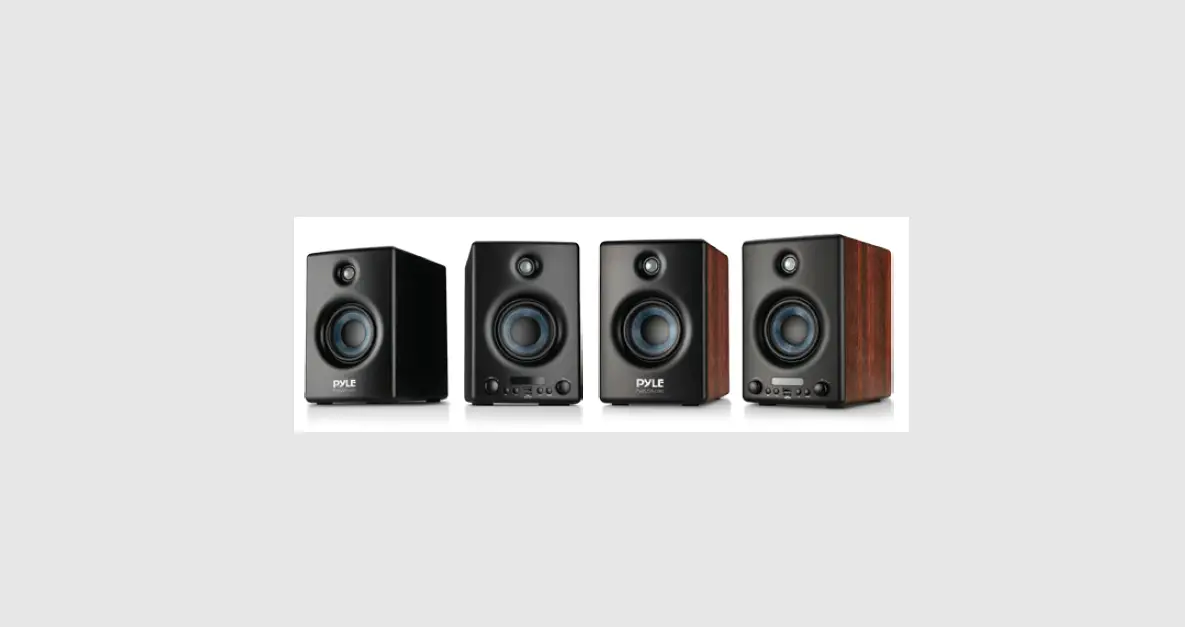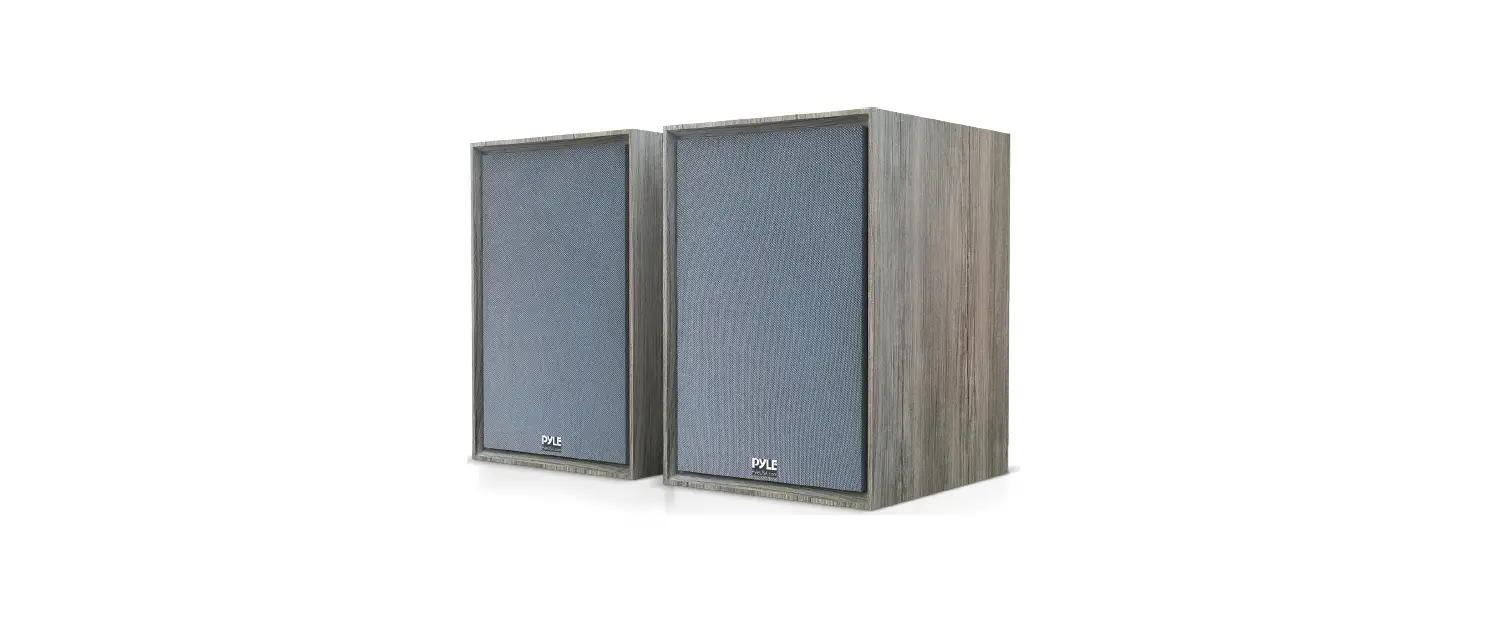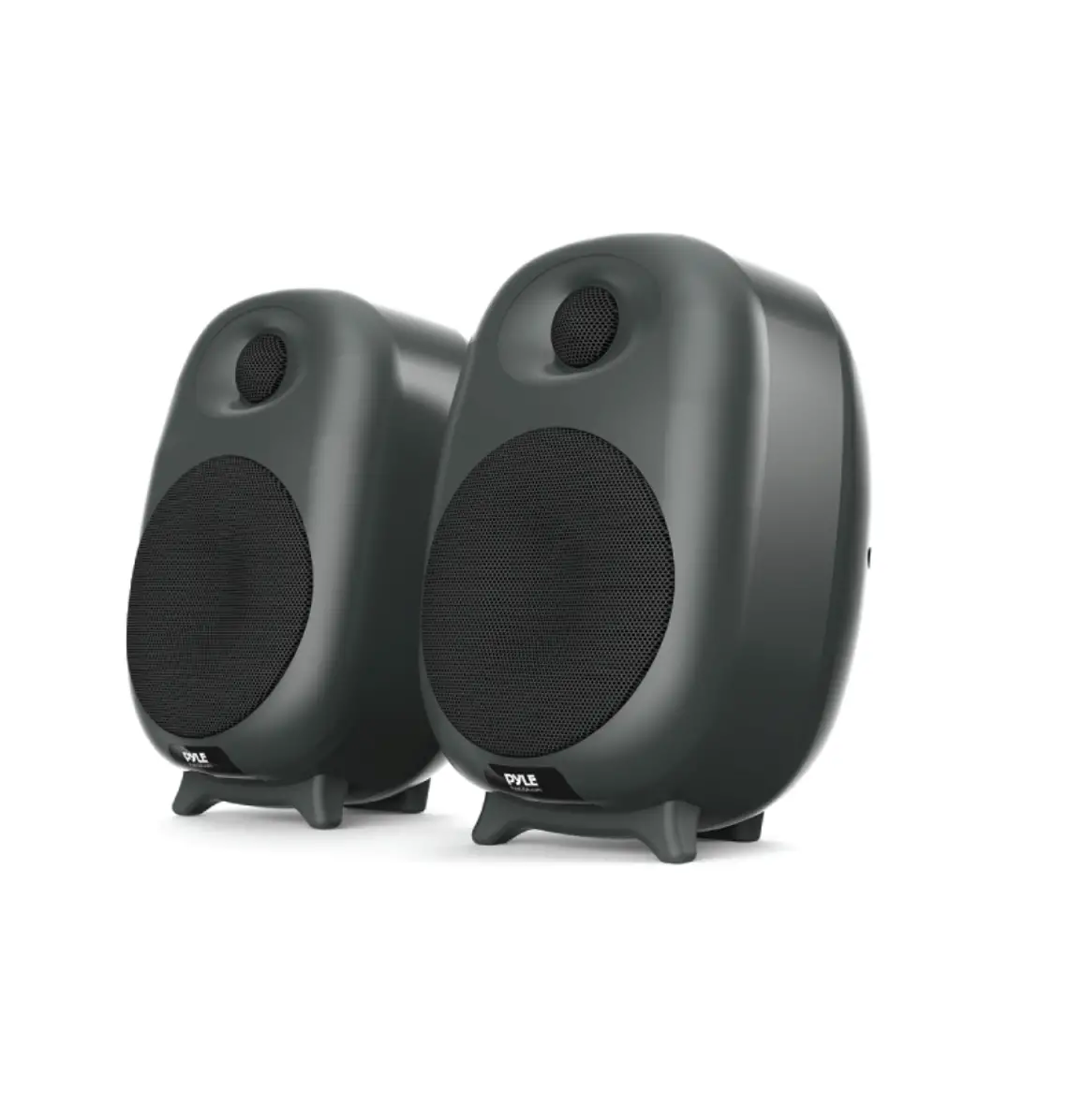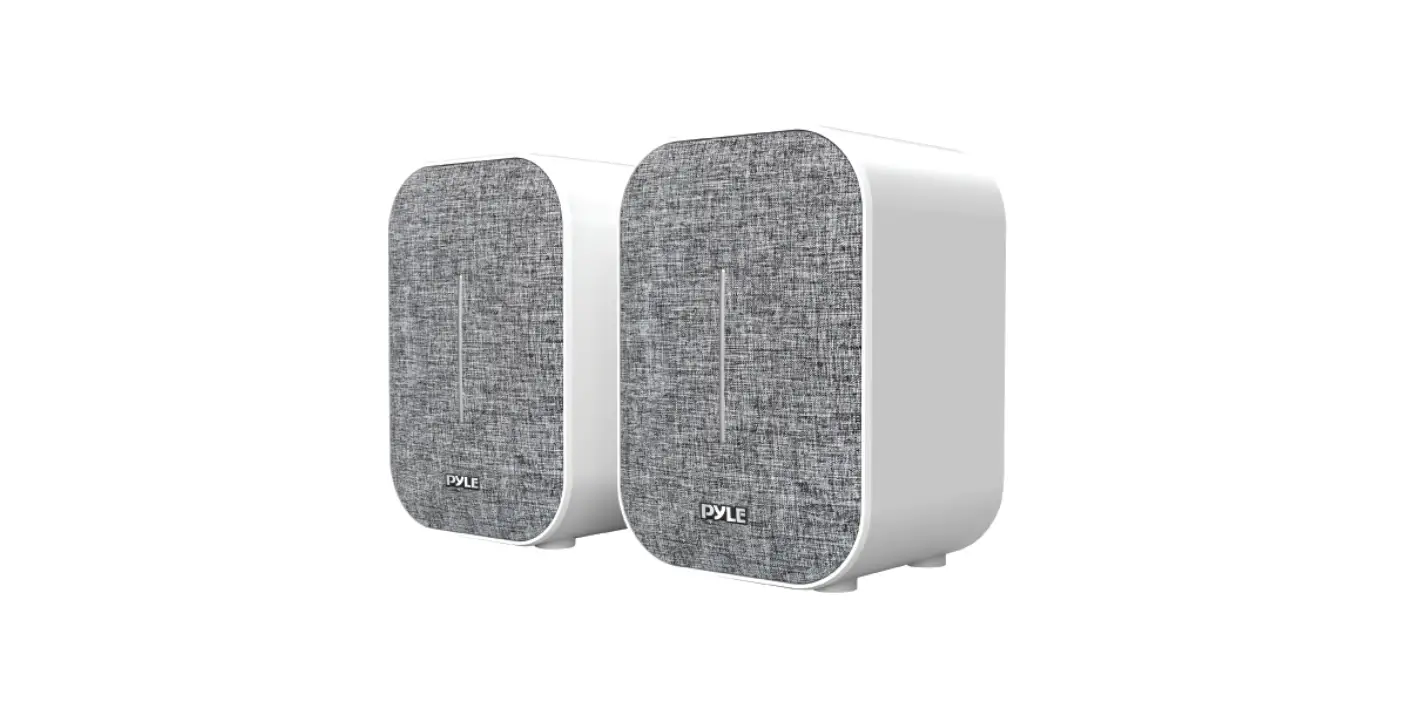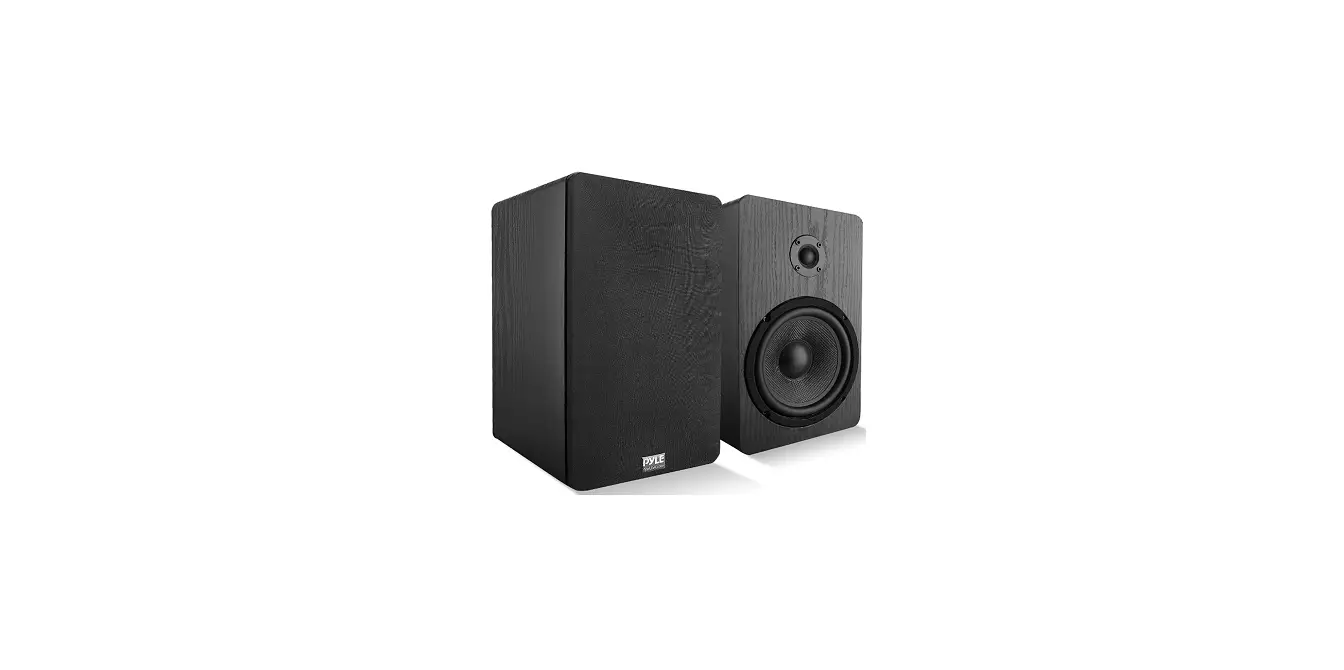
 Pyle PSMSP6 Home Theater Wooden Bookshelf Speakers
 Pyle PSMSP6 Home Theater Wooden Bookshelf Speakers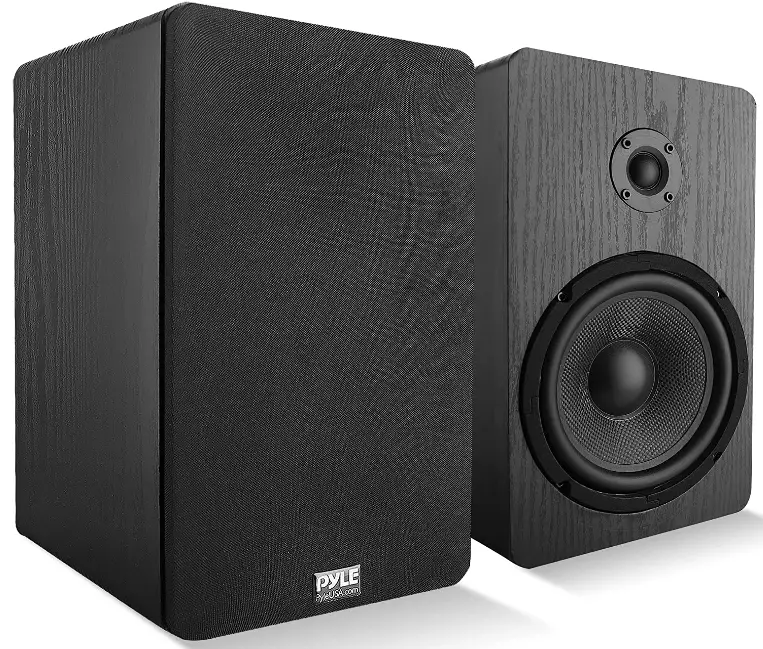
To ensure you will be completely satisfied with this product, read and understand this manual carefully before use. Keep the manual in a safe place. The Operating Manual must be passed on to all subsequent users.
IMPORTANT SAFETY PRECAUTIONS
- Make sure to match your speaker and amplifier power ratings.
- Failure to do so can result in permanent damage to your speakers.
- Distortion is an indication that the amplifier or speaker is operating beyond its design limits. If you hear distortion, immediately turn down the volume to avoid permanent damage.
- Do not place these speakers on an unstable cart, stand, bracket or table.
- The speaker may fall, causing serious injury to a child or adult and serious damage to the unit.
- Do not use these speakers near water; for example, near a bathtub, sink, in a wet basement, or near a swimming pool.
- The speakers should be situated away from heat sources such as radiators, heat registers, stoves, or other devices that produce heal.
- Clean only with a soft damp cloth.
CONNECTING THE SPEAKERS
These speakers are passive and thus require an amplifier or receiver to give them power. They can be connected to any 4 or 8-ohm amplifier.
When using the Home Theater Bookshelf Speakers 4 ohm model, you can connect one speaker per amp channel. When using the 8-ohm model, you can connect up to 2 speakers per channel as long as your amp is 4 to 8 ohm capable. If your speakers are relatively close to the signal source (50 feet or less), 16 gauge wire can be used. For longer distances, 12 or 14 gauge wire is recommended. Be sure to observe proper polarity by ensuring that the wire from the red speaker terminal is connected to the red or positive terminal of the signal source and that the wire from the black speaker terminal is connected to the black or negative terminal of the signal source.
The Home Theater Bookshelf Speakers features 5-way binding posts which can accept various types of connections: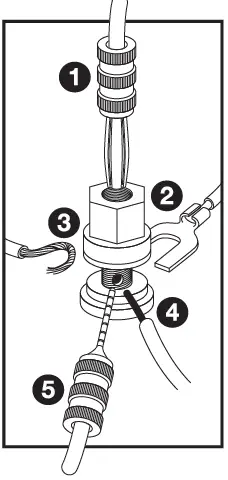
- Banana plugs can be inserted into the open end of the binding post.
- Spade tenninals can be placed around the metal post and clamped by the screw down cap.
- Looped wire can be wrapped around the binding post and clamped by the screw down cap.
- Straight wire can be inserted into the hole drilled through the bottom of the binding post and clamped down by the screw cap.
- Pin connectors can be inserted into the hole drilled through the bottom of the binding post and clamped down by the screw cap.
FEATURES
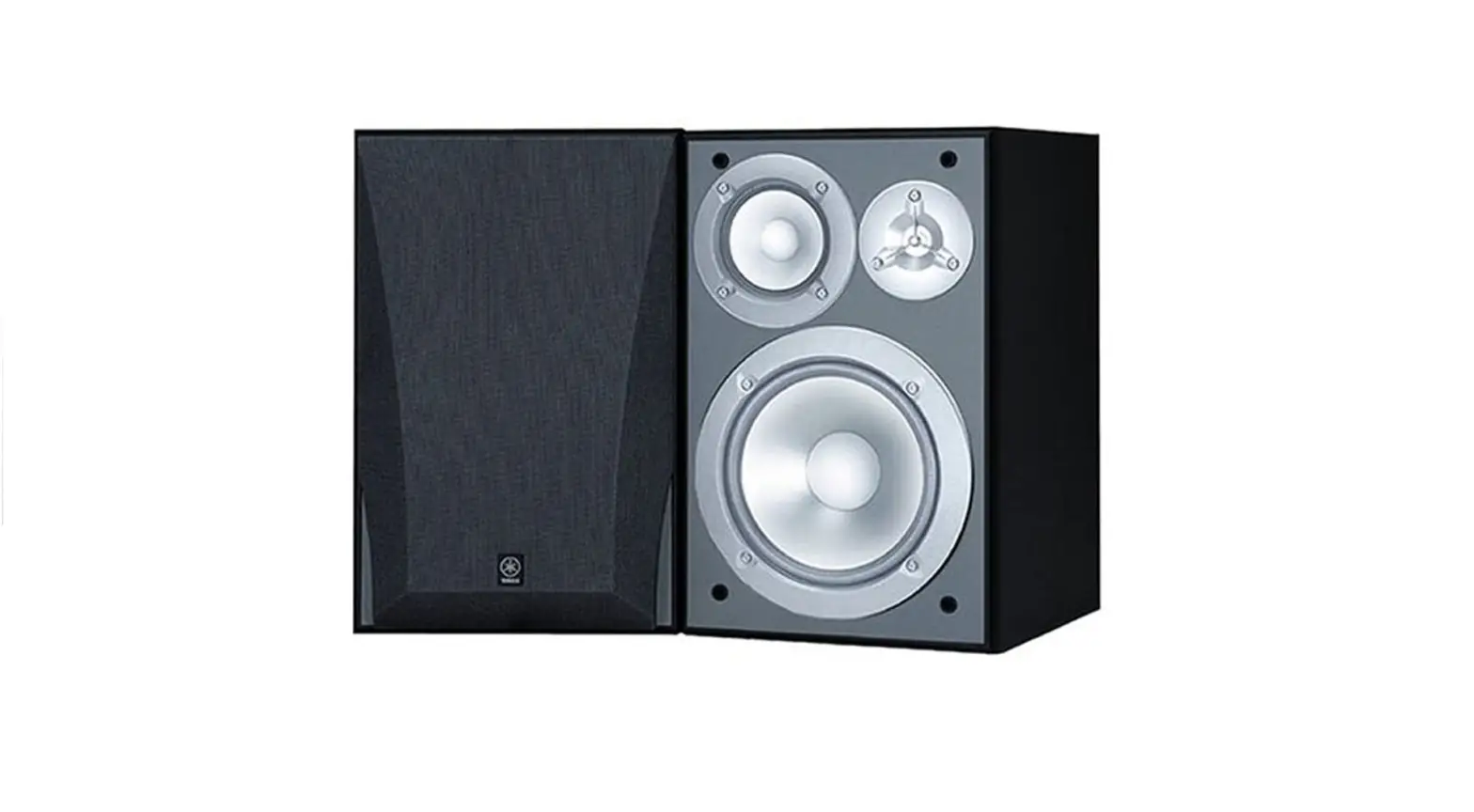
- Audiophile-Grade Black Woven Glass Fiber Woofer Cone
- Ultra-Stiff Polypropylene Dust Cap on Woofer
- Rubber Surrounds on Woofer
- Silk Dome Tweeter gives Crisp and Realistic Sounding Highs
- Gold-Plated 5-Way Binding Post Terminals can Accept Banana, Bare Wire, Spade Terminals and more
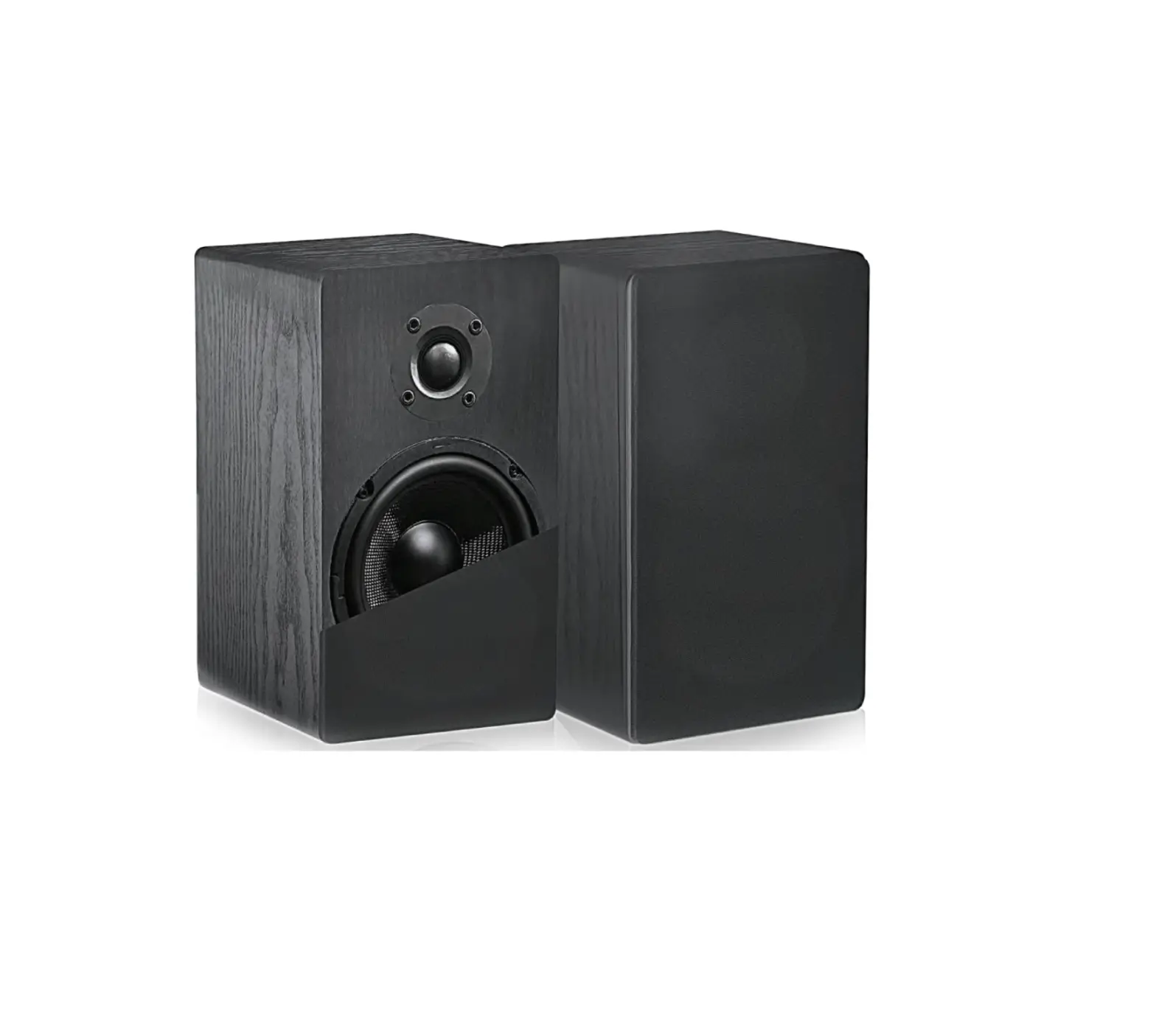
- Detachable Magnetic Grill
- Wall Mount Hanging Bracket
- 1” Aluminum Voice Coil
MAGNETIC GRILLS
The grills included with your Home Theater Bookshelf Speakers speakers use high strength magnets to hold them in place. They can be easily removed for cleaning or for aesthetic purposes. To remove them, place one finger on each top corner of the grill and gently pull the grill towards you. To replace, position the grill squarely over the face of the speaker and it will attach itself. Align the grill if needed.
POSITIONING THE SPEAKERS
To place the speakers, start with them placed directly in front of your primary listening position. Make sure the tweeters are as close to ear level as possible. As you are listening to music, make sure to pay close attention to the quality and separation of vocals and instruments. You can move the speakers closer together or further apart to optimize your listening experience, but make sure they are set as far away from the listener as each other.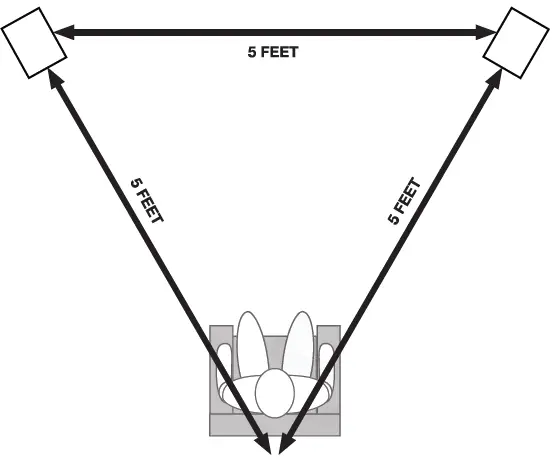
Always listen to several musical selections so that you hear lows (bass), (vocals and horns), and highs (treble) from a variety of instruments and vocalists. Allow your speakers a “break in” period before permanently positioning them. To break-in your speakers: at a moderate to low level, play a variety of music through the speakers over a day or two. This will help to prepare them for regular use and optimal performance.
CABINET CARE
The finish of your Home Theater Bookshelf Speakers speakers can be maintained by periodically wiping it down with a lightly dampened fiber cloth. The grills can be brushed or vacuumed to remove dust.
TROUBLESHOOTING
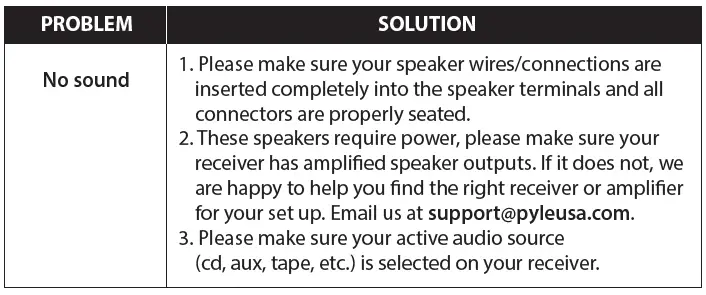
SPECIFICATIONS
- Construction Material: Top Quality 12mm MDF with Beautiful Wood Grain Finish
- MAX Power: 240W
PSMSP6
- RMS Power: 50W each, 100W per Pair
- Woofer:5” Woven Glass Fiber Cone
- Tweeter:75” Silk Dome Tweeter
- Crossover Slope: 12dB/Octave
- Frequency Response: 65Hz – 20KHz
- Sensitivity: 87dB 1W/1m
- Impedance: 8 ohms
- Product Dimensions (L x W x H):8” x 7.1” x 6.4” –inches
Support
Questions? Issues?
We are here to help!
- Phone: (1) 718-535-1800
- Email: [email protected]
California Prop 65 Warning
Warning: This Product contains Bisphenol A (BPA) which is known to the state of California to cause cancer birth defects and other reproductive harm. Do not ingest.
FAQs
Do bookshelf speakers need to be away from the wall?
Both bookshelf speakers should be situated two to three feet from the back wall and at an equal distance from the side walls for the best sound. Audiophiles refer to the ideal listening spot in a space where the sound is most balanced as the “Sweet Spot.”
Can bookshelf speakers be placed on a shelf?
Bookshelf speakers should not be placed on the ground; instead, they should be placed on a shelf, table, or other elevated surface. They are made with the intention of enhancing sound in tiny to medium-sized settings.
Can I lay my bookshelf speakers on their side?
Yes. Although it’s not ideal, bookshelf speakers can be positioned on their side. It’s probable that this will have a detrimental effect on sound quality. While not ideal, horizontal positioning might be acceptable if your goal is casual listening.
Should you mount speakers on wall?
A person could desire to wall mount speakers for a variety of reasons. Smaller rooms can benefit from speaker wall mounting, which also shields speakers from nosy kids and animals. Additionally, it’s a simple method for positioning smaller satellites at the ideal altitude for the best audio quality.
Where should I mount my speakers on the wall?
Install the front speakers at or slightly above ear level on the same wall as the TV.
Directly beneath the TV screen, place the centre channel speaker. Place the two surround sound speakers to the left and right of the selected seat in the room, 12 to 18 inches above ear level.
What happens if speakers are too close to wall?
Getting too close to a sidewall, where the wall is now impacting and being seen by the entire front driver assembly in the speaker, might start amplifying frequencies other than bass frequencies, even though getting close to a rear wall normally solely amplifies bass.
What should I put under my bookshelf speakers?
Good Energies Speaker isolation pads are used to isolate speakers from each other or from shelves, preventing any vibration or movement.
How high should bookshelf speakers be mounted?
Additionally, utilising an average ear height of between 91 and 96.5 centimetres (36 and 38 inches) is frequently just as acceptable as measuring the distance from your ears to the floor if more than one person will be listening to the speakers or if you frequently have guests around.
How far should speakers be from wall?
Keep in mind that walls also reflect sound. At least two to three feet should separate speakers from the closest wall (especially if your speaker is in a corner). Many speakers have bass ports that face the back. A rear bass port that is too close to a wall will reflect sound waves, blurring time.
What are bookshelf speakers used for?
They are made to produce a loud sound in tiny and medium-sized spaces. Despite their modest size, some modern versions may sound loud and strong enough even in bigger spaces. There are essentially no restrictions because you may purchase multiple bookshelf speakers to ensure a room-filling sound in a large room.
Do you need an amplifier for bookshelf speakers?
An amp is not necessary for the operation of active bookshelf speakers. But an amplifier is necessary for passive bookshelf speakers to function effectively. Bookshelf speakers that are active already have an amplifier installed; passive speakers do not. It will be incredibly silent if a passive bookshelf speaker is utilised without an amp.
How do you hide wall mounted speakers?
To completely conceal your speakers, place them behind tapestries or acoustic artwork on the wall. Put your speakers in an alcove or recessed shelf if you have one in your wall. After that, advance the speakers past the wall. Overhang them with a flag, fabric, or thin tapestry.
How far away should surround speakers be?
The stereo speakers’ spacing should correspond to how far away from the television you are seated. Each stereo speaker needs to be 3 feet away from the television, for instance, if you are sitting 6 feet from the television.
Can in-wall speakers be mounted sideways?
Great inquiry. The speakers must be positioned horizontally for optimal stereo performance because sound propagates more to the sides of the speakers. Vertical mounting is also an option, although the stereo effect will be reduced.
Where do bookshelf speakers go?
So, complete the home design before you start placing your speakers! The placement of the loudspeakers in respect to the listening position is one of the High Fidelity golden standards. Bookshelf loudspeakers should be angled toward the optimum listening position at 10 and 10.